
16 Vintage Bedroom Ideas for Cozy, Elegant & Timeless Style

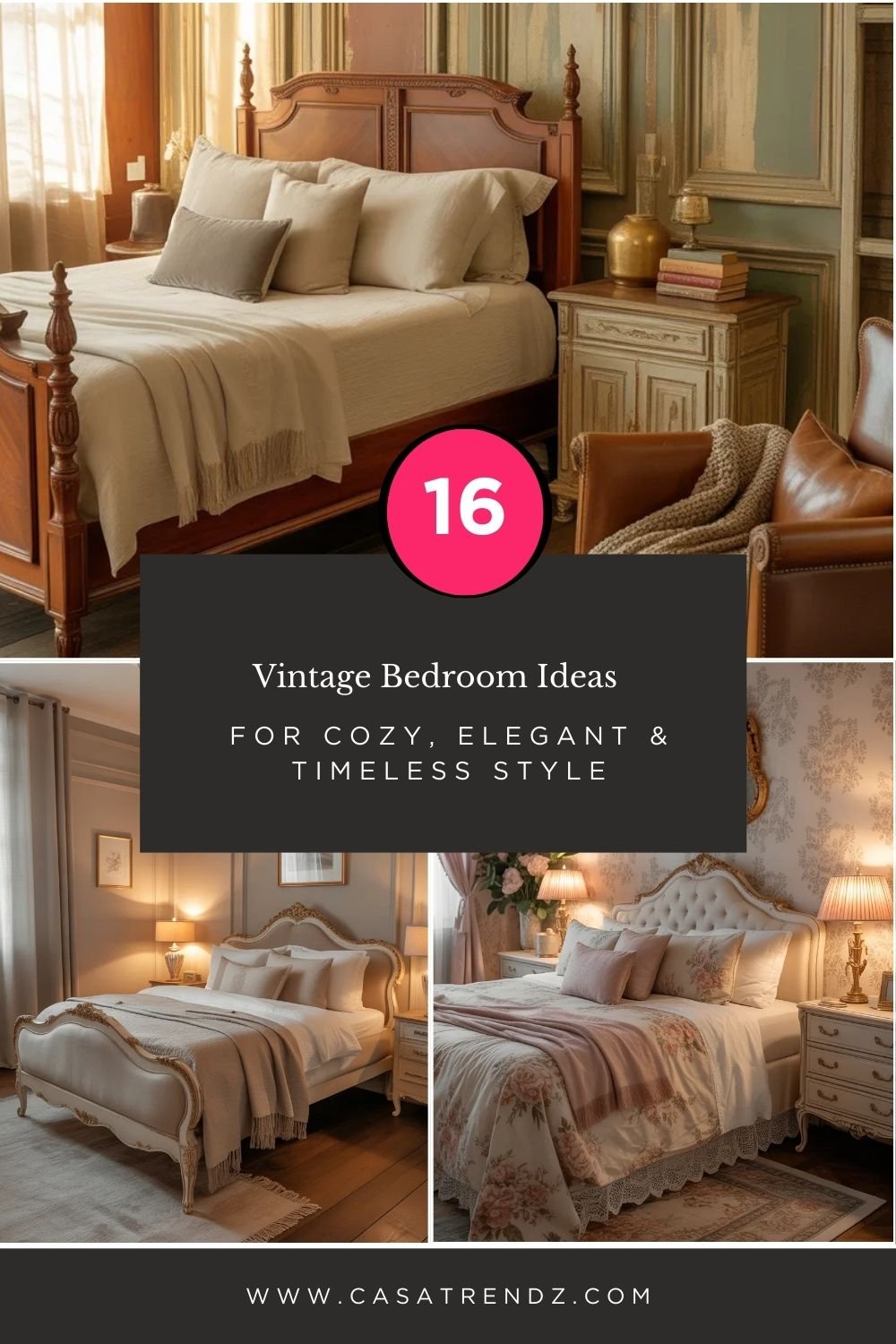
A vintage bedroom is not about copying one decade or filling a room with old things. It is about warmth, craftsmanship, and layers that feel collected over time. The best vintage bedrooms mix antique furniture with soft textiles, gentle color, and personal objects, so the room feels calm, romantic, and lived in rather than staged.
What makes vintage style work is balance. An ornate bed frame needs simple bedding. A bold floral wallpaper needs quiet furniture beside it. A room full of heavy antiques needs light, air, and a few modern comforts to stay livable. Get that balance right and the room never feels dated, because good craftsmanship and soft color do not go out of style.
In this guide, you will find 16 vintage bedroom ideas with practical detail you can actually use, from bed frame styles and paint shades to rug sizes, lighting temperatures, and styling steps. Whether you are starting from scratch or adding vintage touches to a room you already love, pick one or two ideas to start with and build from there.
1. Antique Bed Frames as the Timeless Focal Point
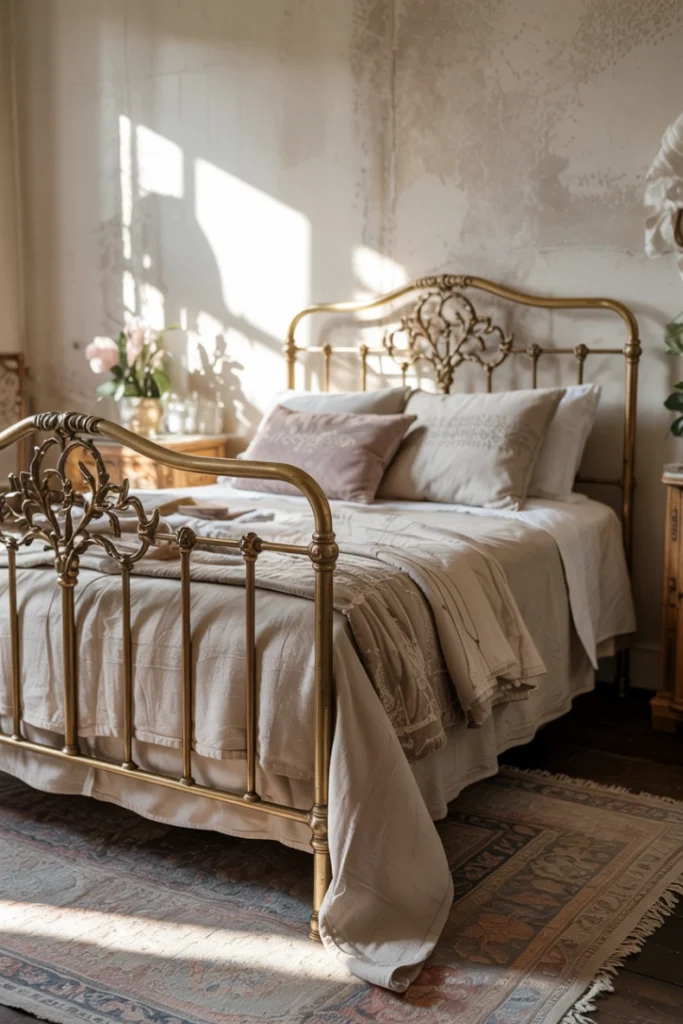
An antique bed frame sets the tone for the whole room before anything else is added. Ornate iron frames with curved scrollwork, carved wooden headboards with turned posts, and classic four-poster beds all bring craftsmanship and history that new furniture rarely matches. The bed is the largest piece in the room, so choosing a frame with real character gives the space an instant anchor.
Start by measuring your room before you buy. A queen frame needs at least 10 by 12 feet of floor space to leave room for nightstands and walking space, while a king needs 12 by 12 feet or more. Check the frame carefully in person: wiggle the joints, look for cracked slats, and make sure the side rails sit level. Iron frames should be free of deep rust, and wooden frames should have solid joints rather than wobbly repairs. Estate sales, flea markets, and local antique shops are the best sources, and many sellers will negotiate, especially if you are buying more than one piece.
Keep the bedding light so the frame stays the star. White or cream linen sheets, a simple cotton duvet, and one or two textured pillows are enough. A heavy patterned comforter will fight with an ornate headboard, while plain bedding lets the carving and metalwork show. If the frame is tall, hang a small piece of art or a mirror above it rather than leaving the wall bare, but keep the space above the headboard simple so the frame keeps its presence.
2. Soft Neutral Color Palettes for Timeless Appeal
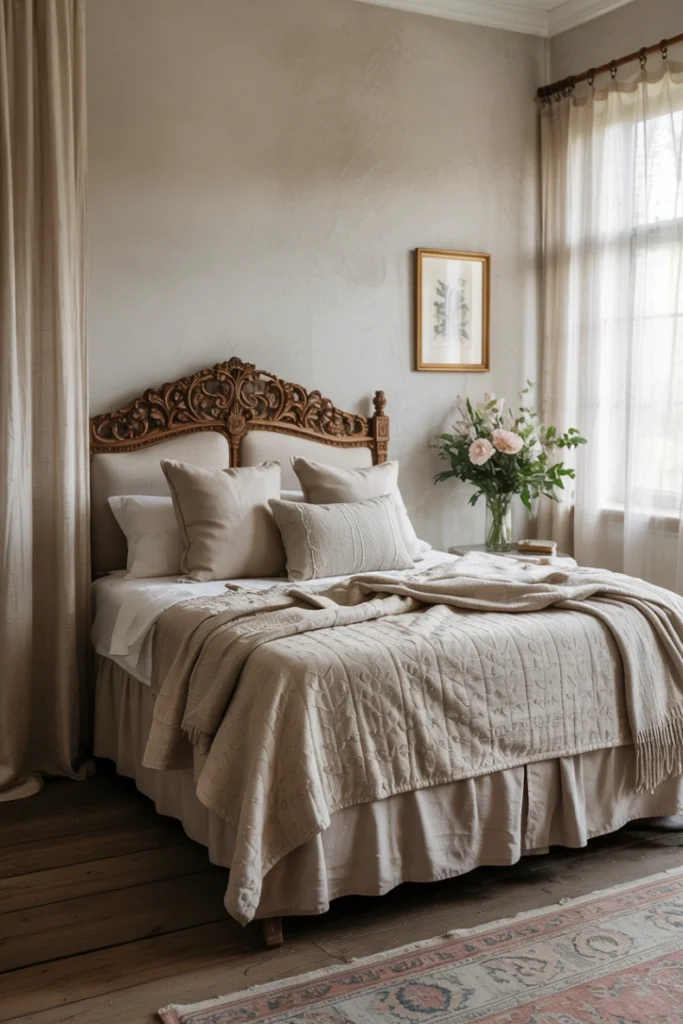
Neutral colors are the quiet base that lets vintage furniture and decor shine. Cream, ivory, warm taupe, and soft gray create a calm backdrop that reflects light and makes a bedroom feel warm and restful. These shades also forgive a mix of wood tones and metals, which is exactly what a collected vintage room needs.
Use the 60-30-10 rule to keep the palette from feeling flat. About 60 percent of the room, usually the walls and the largest furniture, stays in your lightest neutral. Around 30 percent, such as bedding, curtains, and the rug, carries a mid tone like warm taupe or dusty sage. The last 10 percent is your accent, maybe a soft rose, a muted gold, or a dusty blue, repeated in pillows, art, and small decor. Paint large test swatches, at least 12 by 12 inches, and check them in morning and evening light, because neutrals shift a lot through the day. Warm whites such as Benjamin Moore White Dove or Sherwin-Williams Alabaster suit most vintage rooms better than cool, stark whites.
If you want more guidance on choosing and combining shades, these bedroom color schemes show how to pair neutrals with soft accent colors for a calm, finished look. Layering similar hues in different textures, linen, velvet, wood, and wool, adds depth without adding visual noise, so the room feels rich rather than plain.
3. Floral Patterns for Romantic Character
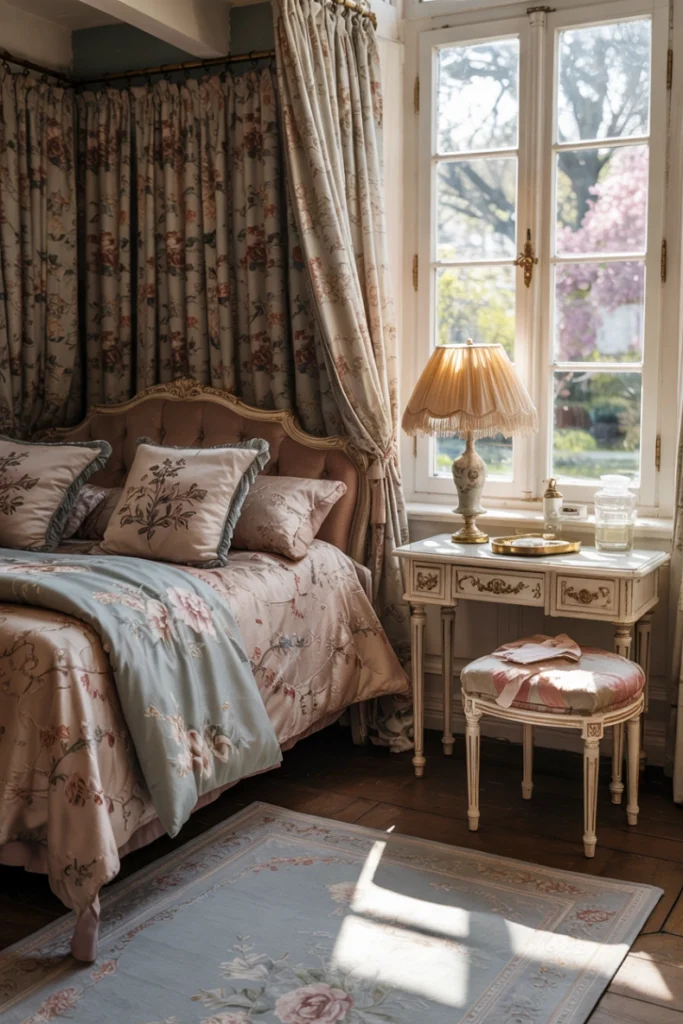
Floral patterns are the signature of vintage bedroom design. A small rose print on bedding, a faded floral wallpaper, or a floral upholstered chair adds softness and romance that plain surfaces cannot. The key is choosing a print that feels aged rather than bright and new: muted tones, slightly faded colors, and a classic motif like roses, peonies, or trailing vines.
Use florals in one or two places and balance them with solid colors everywhere else. A floral duvet cover pairs well with solid linen pillow shams and a plain throw. Floral wallpaper on one accent wall works with solid painted walls on the other three. If you love a bold floral, keep the pattern scale small in a small room, because oversized blooms can overwhelm a tight space, and save large scale prints for a large wall or a spacious bedroom. Mixing two florals works only when they share a color and one print is clearly larger than the other.
Floral bedding is also an easy way to test the look before committing to wallpaper. Try a floral quilt or a set of floral pillowcases for a season and see how the pattern feels at different times of day. For more ways to use soft, romantic patterns in a bedroom, these romantic bedroom ideas show how florals, candles, and layered lighting work together to create a warm, inviting mood.
4. Layered Textiles for Cozy Comfort
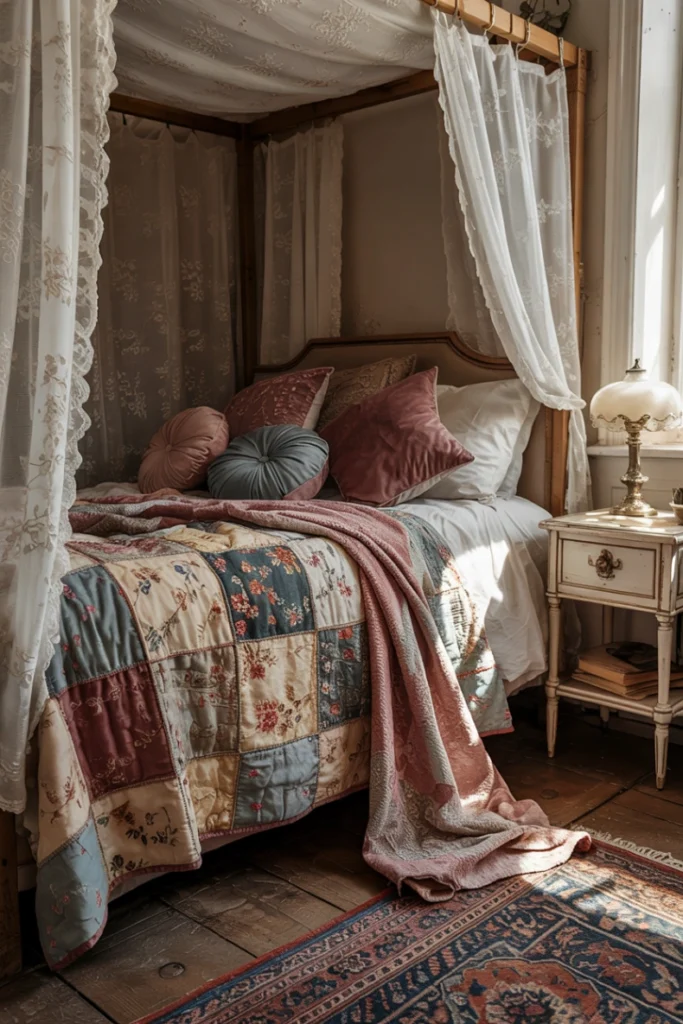
Layered textiles are what make a vintage bedroom feel cozy instead of just decorated. A quilt folded at the foot of the bed, a lace throw draped over a chair, embroidered pillow shams, and a soft blanket within reach all signal comfort. The layers also add the texture that flat, modern rooms often lack.
Build the bed in layers from the bottom up: a fitted sheet, a flat sheet, a lightweight quilt or coverlet, then a folded throw across the lower third of the bed. Add two sleeping pillows, two standard shams, and one or two smaller accent pillows, and stop there, because more pillows start to look cluttered and make the bed a chore to make each morning. Mix textures rather than matching sets: cotton percale sheets, a linen duvet, a wool throw, and a velvet accent pillow give the bed depth that a single matching set cannot.
Carry the layering beyond the bed. A small rug beside the bed, a throw over the reading chair, and linen curtains all repeat the softness around the room. Stick to one color family for the textiles, such as warm creams and dusty rose, or cool ivory and soft sage, so the layers feel collected rather than random. If you like warm, grounded palettes, these earth tone bedroom ideas show how to layer browns, terracotta, and cream for a calm, natural vintage feel.
5. Vintage Wooden Furniture with Natural Patina
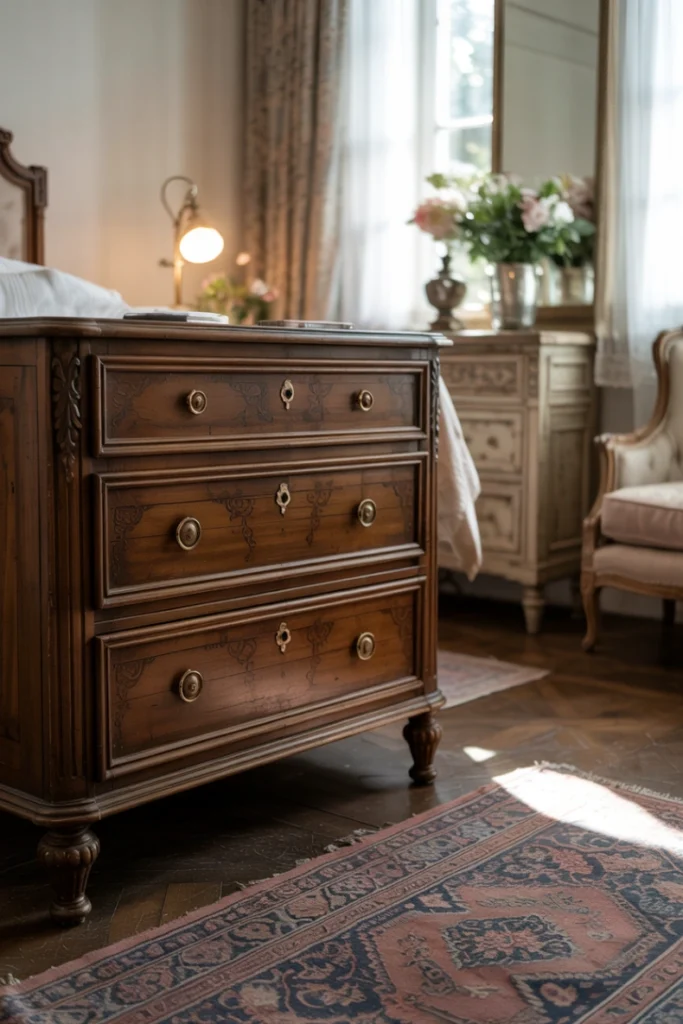
Vintage wooden furniture brings warmth and authenticity that new pieces struggle to copy. A dresser with a worn edge, a wardrobe with visible grain, or a pair of nightstands with aged brass pulls all tell a story through their imperfections. The patina, the soft sheen that builds up over decades of use, is the whole point, so resist the urge to sand it away or paint over it.
When you shop for vintage wood furniture, open every drawer and door. Drawers should slide smoothly, and dovetail joints are a good sign of quality construction. Check the back and underside for woodworm holes or water damage, and smell the inside of drawers, because a musty smell is hard to remove. A light cleaning with a damp cloth followed by a coat of clear furniture wax is usually all the care an old piece needs. Avoid heavy polyurethane, which seals the wood and hides the grain, and never use silicone spray, which builds up a sticky film over time.
Keep wood tones in the same family for a calm room. A warm walnut dresser, a honey oak nightstand, and a cherry wardrobe can live together if they share a warm undertone, but a cool gray wash next to a deep mahogany will clash. If one piece is much darker than the rest, balance it with a lighter piece on the opposite side of the room. For more ideas on arranging dressers, nightstands, and wardrobes into a layout that actually works, these bedroom design ideas cover furniture placement, spacing, and storage for bedrooms of every size.
6. Elegant Vintage Lighting for Soft Ambiance
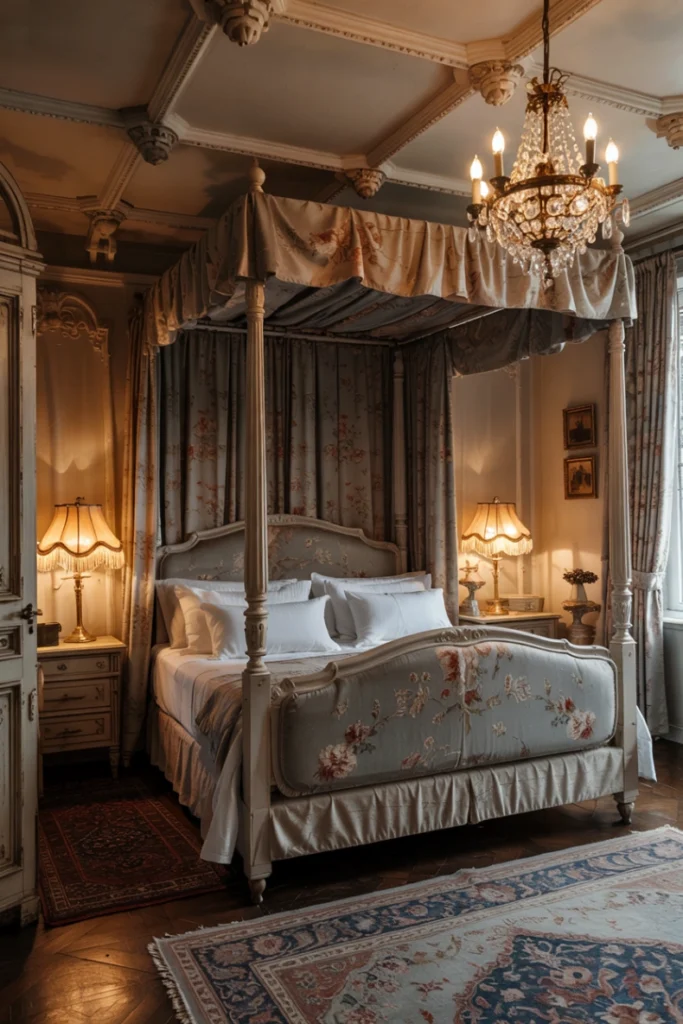
Lighting decides whether a vintage bedroom feels romantic or gloomy. The goal is soft, layered light from several sources rather than one bright ceiling fixture. A small chandelier or a pendant with a fabric shade, a pair of table lamps on the nightstands, and a wall sconce near a reading chair give you options for every time of day.
Choose warm bulbs, around 2700K, for every fixture in the room, because cool white light makes antique wood and fabric look harsh. Put the main ceiling light on a dimmer so you can lower it in the evening, and keep the brightest light near a mirror or dressing area where you actually need it. Fabric shades soften the glow further, while a crystal or glass chandelier adds sparkle without adding brightness. If you buy a vintage lamp, have an electrician check the wiring before you use it, since old cords and sockets are a common fire risk.
Place lamps at the right height: the bottom of a table lamp shade should sit roughly at shoulder height when you are sitting in bed, so the light falls on a book rather than in your eyes. Sconces work best about 60 inches from the floor, flanking a bed or a mirror. With three light sources at different heights, the room glows evenly and no corner stays dark.
7. Ornate Mirrors to Enhance Light and Space
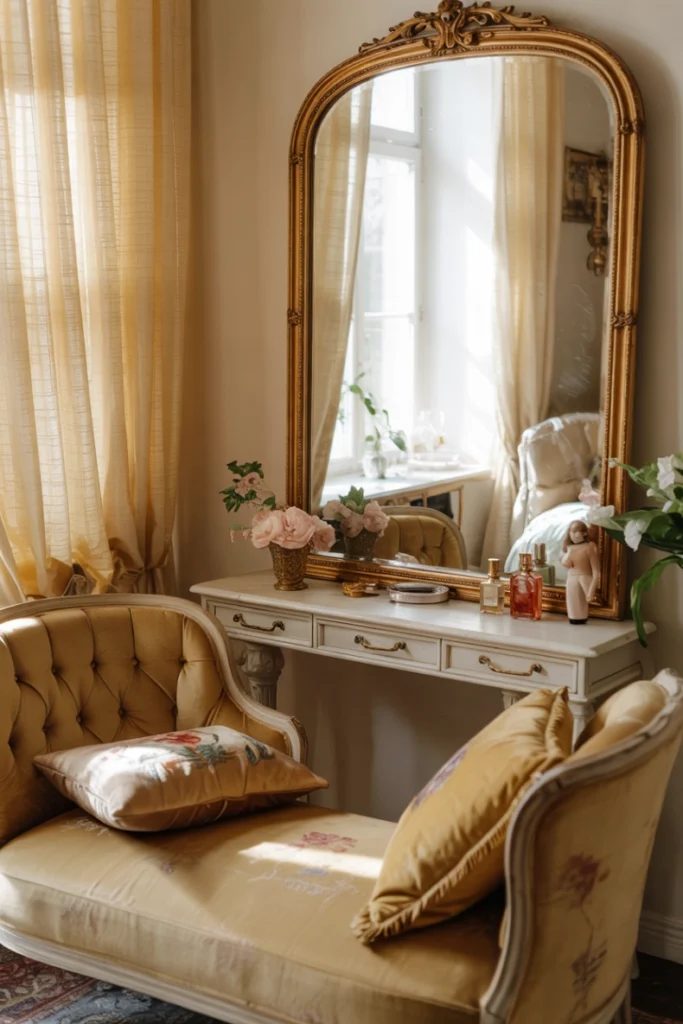
An ornate mirror does two jobs at once in a vintage bedroom: it reflects light into dark corners and it acts as a piece of art. Gilded frames with carved detail, arched mirrors with a soft aged finish, or a simple oval mirror in a carved wood frame all add elegance while making the room feel larger.
Size matters more than style. A mirror above a dresser should be about two thirds the width of the dresser, never wider than the furniture below it. A full length mirror leaning against a wall needs a sturdy base and a wall anchor at the top, because old mirrors are heavy and a fall can damage both the mirror and the floor. Hang mirrors where they reflect something pleasant, a window, a lamp, or a piece of art, rather than a blank wall or a cluttered corner.
Care for old mirrors gently. Clean the glass with a soft cloth and a little vinegar water, and never spray cleaner directly onto the glass, because liquid can seep behind the frame and damage the silvering. A few dark spots on an antique mirror are part of its charm, so leave them alone instead of trying to polish them away. If the frame is gilded, dust it with a soft brush rather than a wet cloth.
8. Vintage Wallpaper for Statement Walls
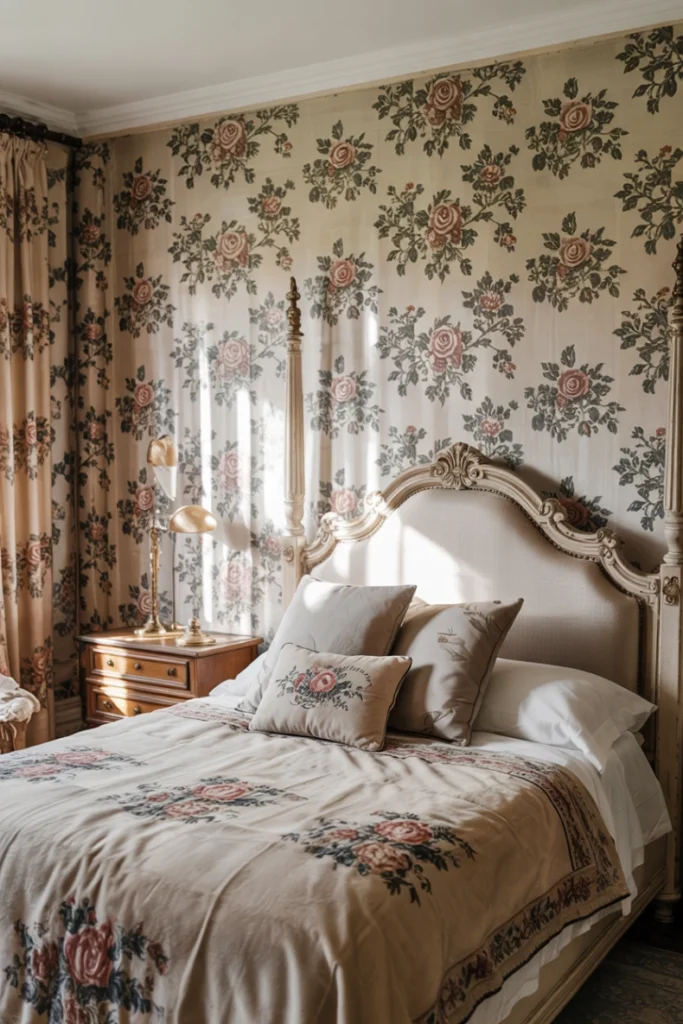
Vintage wallpaper turns one wall into the feature of the room. Damask, toile, faded florals, and subtle stripes all carry the pattern and history that define vintage style. A single accent wall behind the bed gives the room character without making it feel busy or closed in.
Measure before you order. For a wall behind a queen bed, you will usually need two to three rolls of standard wallpaper, depending on the pattern repeat, so buy one extra roll from the same batch to cover mistakes and future repairs. Peel and stick wallpaper is the safest choice if you rent or want to test the look, while traditional paste wallpaper lasts longer and suits a room you plan to keep for years. Hang the first strip perfectly level, because every strip after it follows the first one, and match the pattern at eye level where the seams are most visible.
Keep the other walls plain and in a color pulled from the wallpaper, such as the background cream or the softest tone in the print. That echo ties the room together. If full wallpaper feels like too much, try a framed panel of wallpaper above the dresser or inside a picture frame molding on the wall, which gives you the pattern with far less cost and commitment.
9. Brass and Gold Accents for Old-World Elegance
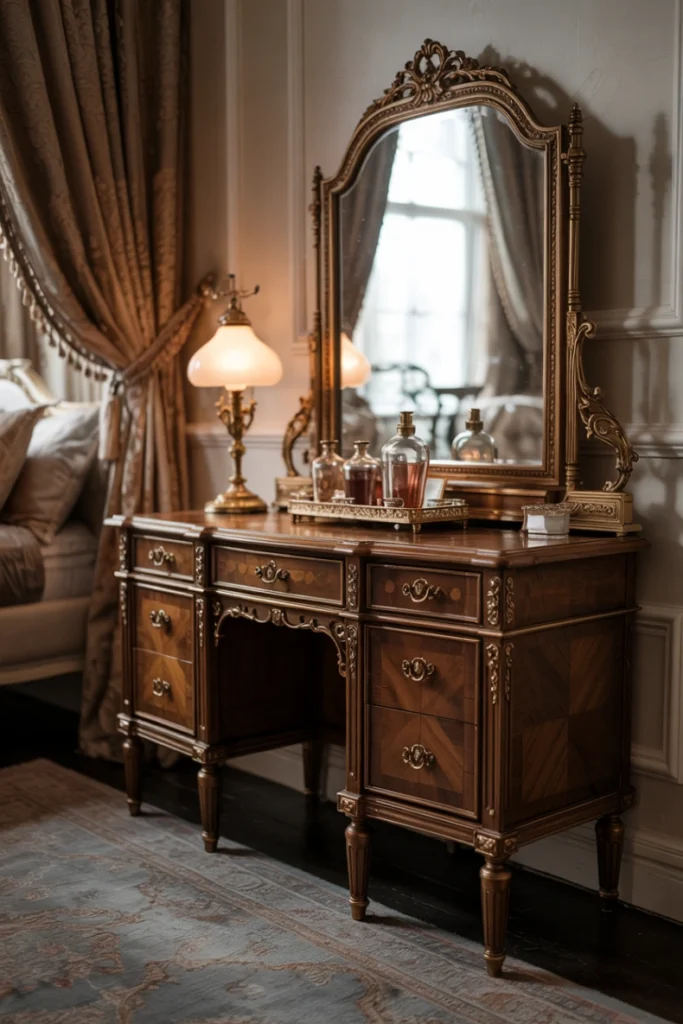
Brass and gold accents add warmth and a quiet sense of luxury to a vintage bedroom. Picture frames, lamp bases, drawer pulls, mirror frames, and candle holders in warm metal finishes catch the light and add richness without overpowering the soft colors around them.
Unlacquered brass is the most authentic choice, because it develops a soft patina over time instead of staying shiny. If you prefer a cleaner look, polished brass or a soft antique gold finish works too, but avoid bright, mirror-like gold, which reads as modern rather than vintage. Keep all the metals in the room in the same family: brass and gold together are fine, but adding chrome or nickel pulls the eye in a different direction. Three to five brass pieces spread around the room are enough, and repeating the same finish on the lamp, the mirror, and the drawer pulls makes the metal feel intentional.
Clean brass with a soft cloth and a little warm soapy water, and dry it right away. Avoid harsh metal polishes on antique pieces, because they can strip the aged finish that gives the piece its value. For drawer pulls and knobs, swap them one at a time and keep the original screws, since old hardware often uses a thread size that modern screws do not match.
10. Lace and Embroidery for Delicate Detail
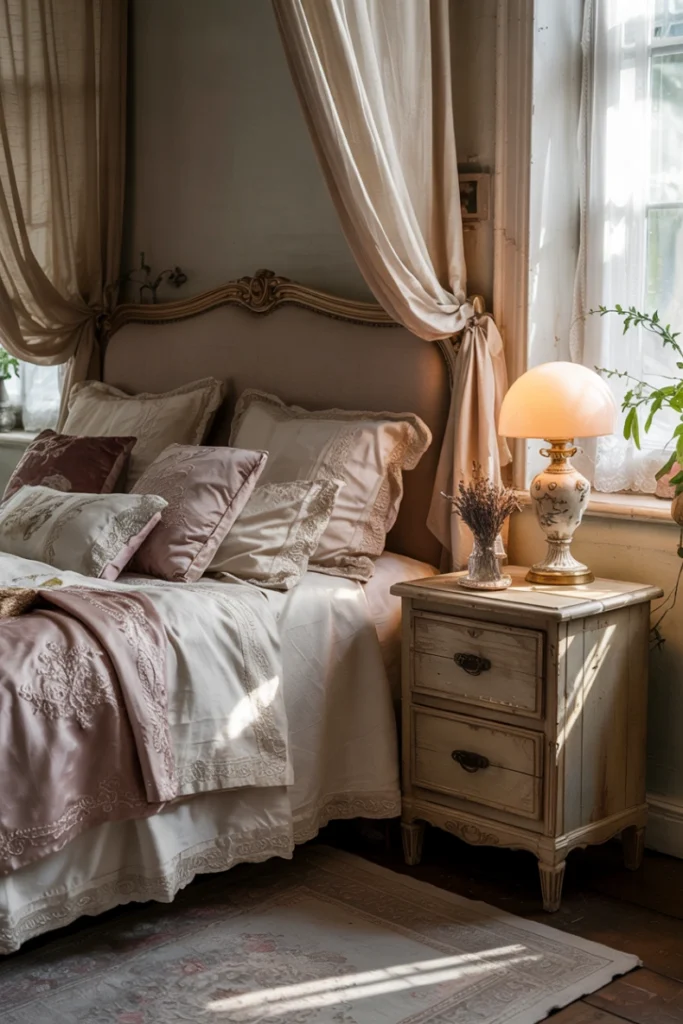
Lace and embroidered textiles add softness and intricate detail to vintage bedrooms. Curtains, pillowcases, or bed skirts with delicate stitching enhance romantic charm and craftsmanship.
Use lace and embroidery sparingly so they stay special. One lace element per area is enough: lace curtains at the window, embroidered shams on the bed, and a small crocheted doily on the dresser, but not all three on the same piece of furniture. White and cream lace work in almost any vintage room, while a soft blue or rose embroidery thread can echo your accent color. Look for real vintage linens at estate sales and antique shops, and check them for stains and thin spots before you buy, holding the fabric up to the light to see weak areas.
Wash old linens gently by hand in cool water with a mild detergent, and dry them flat in the shade, because a hot dryer and direct sun both weaken old fibers. Iron embroidered pieces face down on a thick towel so the stitching keeps its shape. If a piece is too fragile to use, frame it and hang it as art, which preserves it and still lets you enjoy it every day.
11. Vintage Rugs for Texture and Warmth
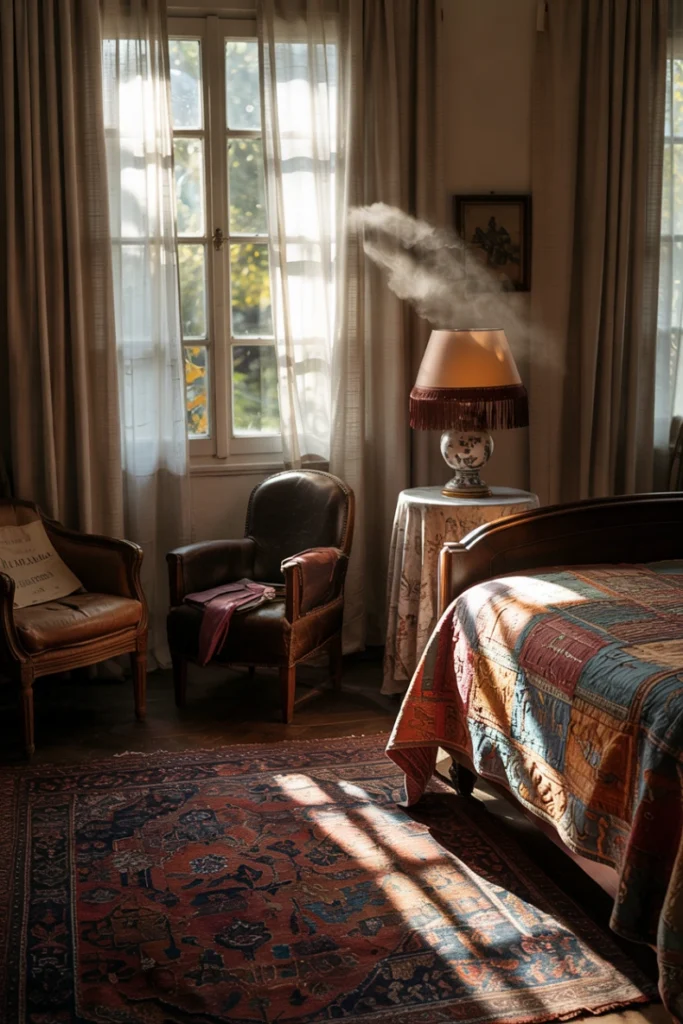
A vintage rug grounds the bedroom and adds color, pattern, and warmth underfoot. Persian rugs, distressed wool rugs, and faded kilim designs all bring a collected, timeless look that suits antique furniture. The rug is also the piece that ties the bed, the nightstands, and the dresser into one arrangement.
Size the rug to the bed. For a queen bed, an 8 by 10 foot rug placed with the top edge under the front third of the bed leaves about 18 inches of rug showing on each side, which is enough to step onto in the morning. For a king bed, go up to 9 by 12 feet. Place the rug so it extends at least 24 inches beyond the foot of the bed, and add a felt rug pad underneath, which stops slipping, protects the floor, and adds softness. In a small room, a 3 by 5 foot rug on each side of the bed works as a simpler alternative.
Choose a rug with muted, faded colors rather than a bright new print, and check the pile height, because a thick rug can catch on a door that swings over it. Vacuum a wool rug on a low setting without a beater bar, and rotate it every six months so it wears evenly. If the rug is a real antique, have it professionally cleaned once a year instead of steam cleaning it at home.
12. Distressed Finishes for Authentic Style
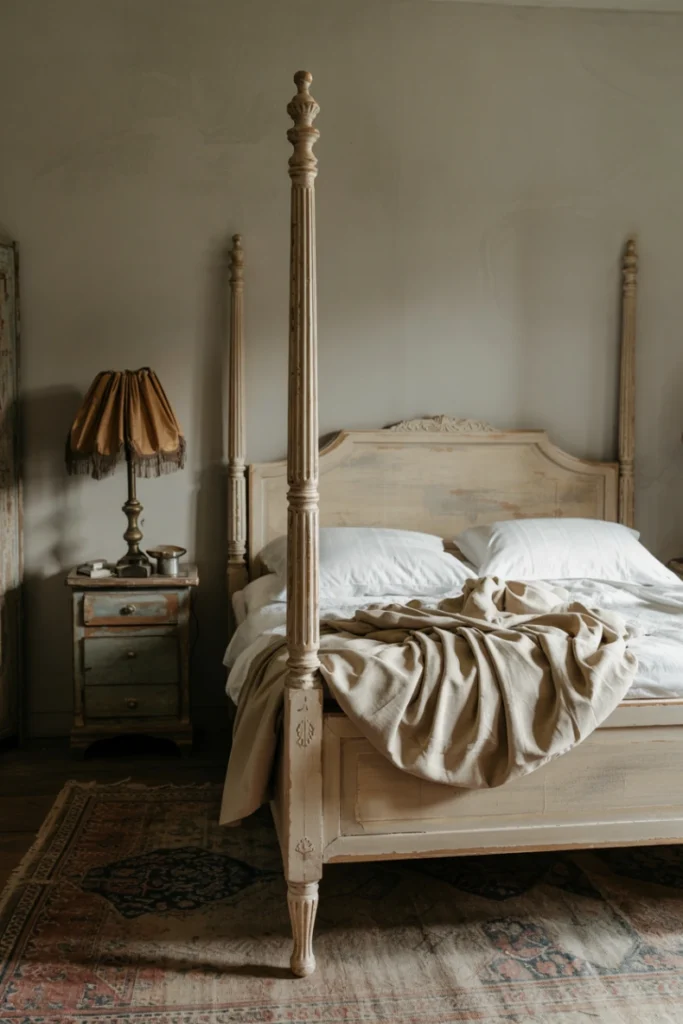
Distressed finishes give furniture and walls a sense of age and history without looking damaged. A dresser with softly worn edges, a nightstand with a lightly chipped painted finish, or a mirror frame with a rubbed gold edge all add charm and depth. The trick is making the wear look natural, because random heavy distressing looks fake.
To distress a painted piece yourself, start with chalk paint in a soft vintage shade such as cream, sage, or dusty blue. Apply two thin coats, let the paint dry fully, then sand the edges and corners lightly with 220 grit sandpaper, focusing on the spots that would wear naturally from use: drawer edges, corners, and around handles. Wipe away the dust and seal the piece with clear furniture wax, buffing it to a soft sheen. Practice on a small, hidden area first, and stop early, because you can always remove more paint, but you cannot put it back.
Balance distressed pieces with refined textiles. A weathered dresser looks intentional next to crisp linen bedding and a smooth velvet pillow, while a room full of distressed furniture on every surface starts to feel messy. One or two distressed pieces per room is the right amount, and the rest of the furniture should stay smooth and calm.
13. Classic Artwork and Frames for Timeless Decor
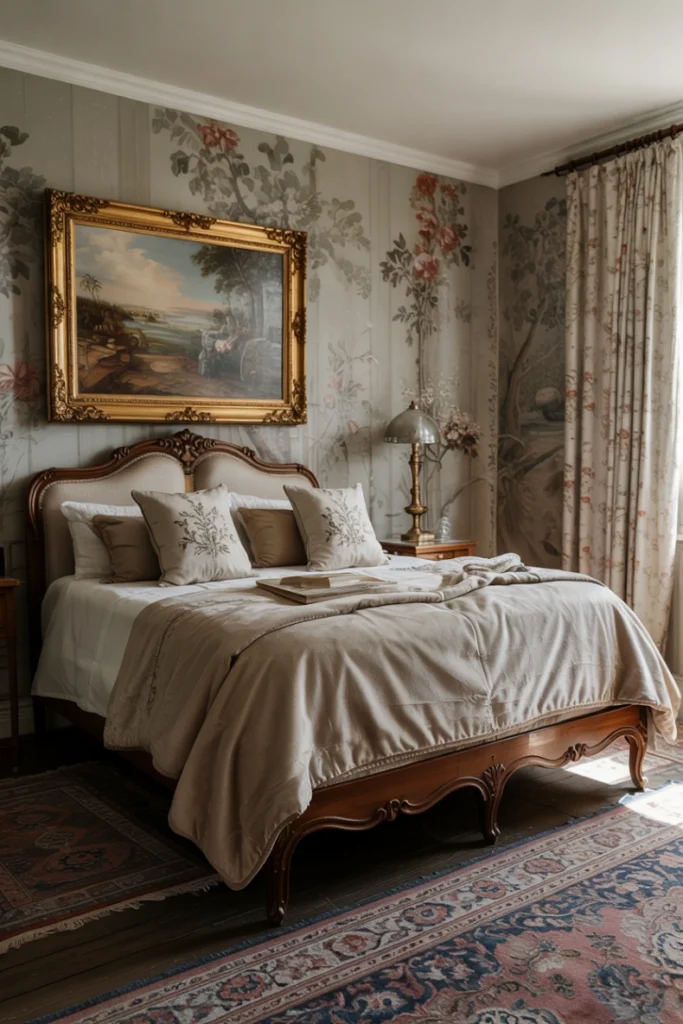
Classic artwork gives a vintage bedroom its storytelling quality. Oil portraits, landscape paintings, botanical prints, and old maps framed in traditional wood or gilded frames add sophistication and personality. Art also fills the wall space above a dresser or beside the bed, where bare walls make a room feel unfinished.
Hang art at eye level, with the center of the piece about 57 inches from the floor, which is the standard gallery height. Above a dresser, leave 6 to 8 inches between the top of the furniture and the bottom of the frame. For a gallery wall, keep 2 to 3 inches between frames and lay the arrangement on the floor first to check the balance before you hammer any nails. Mix sizes but keep one frame style dominant, for example mostly dark wood with one gold frame as an accent, so the wall feels collected rather than random.
You do not need expensive originals. Good quality prints of classic paintings, vintage botanical illustrations, and old maps are widely available and look convincing in a traditional frame with a wide mat. A mat of 2 to 3 inches around the print gives it a gallery feel and protects the paper from touching the glass. Choose subjects that mean something to you, such as a landscape from a place you love, because personal art is what makes a room feel like yours.
14. Soft Curtains for Gentle Light Control
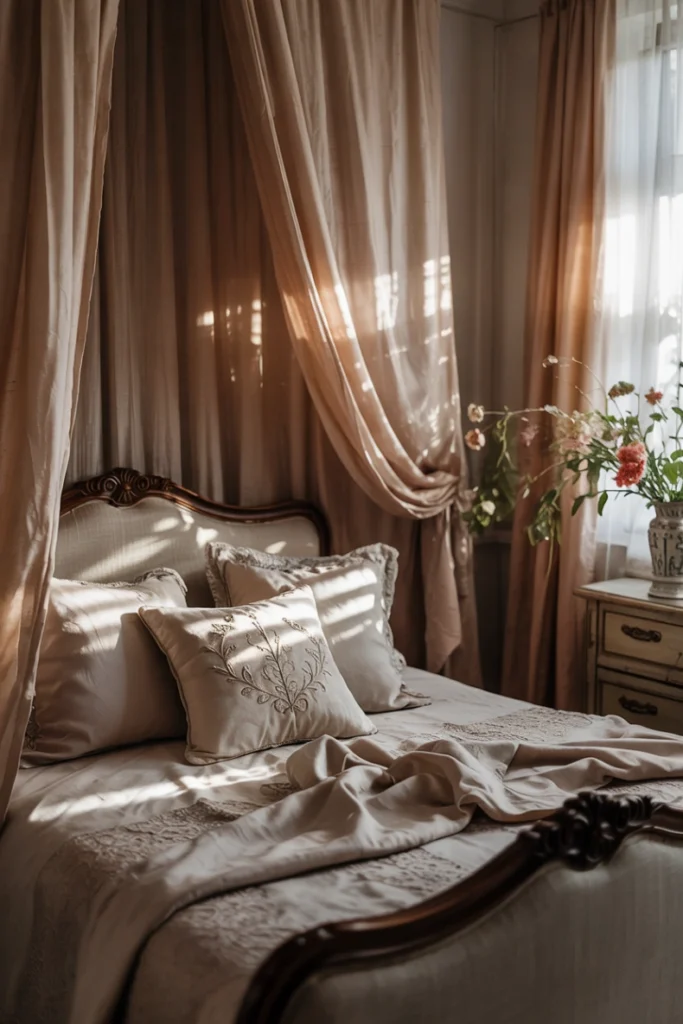
Curtains control the light and finish the windows in a vintage bedroom. Lightweight linen, cotton voile, and soft muslin let sunlight filter in gently while keeping the room private. A pleated or tied-back curtain adds elegance, and the fabric softens the hard lines of the window frame.
Hang the curtain rod 4 to 6 inches above the window frame and 4 to 6 inches wider than the frame on each side, so the curtains clear the glass when open and make the window look larger. For length, let the fabric just kiss the floor, ending about half an inch above it, which looks neat and avoids dust collecting on the hem. A slight puddle of 2 to 3 inches on the floor suits a formal vintage room, but it needs regular cleaning and is not practical with pets. Choose a rod in the same finish as your other metals, such as brass, to keep the room consistent.
Layer a sheer panel with a heavier curtain for the best of both worlds: the sheer gives privacy during the day, and the heavier curtain blocks light and adds insulation at night. Tiebacks in a simple fabric loop or a brass hook hold the curtains open during the day and add a finished detail. Wash linen curtains on a gentle cycle and hang them while slightly damp so they dry with soft, natural folds.
15. Collected Decor for a Lived-In Look
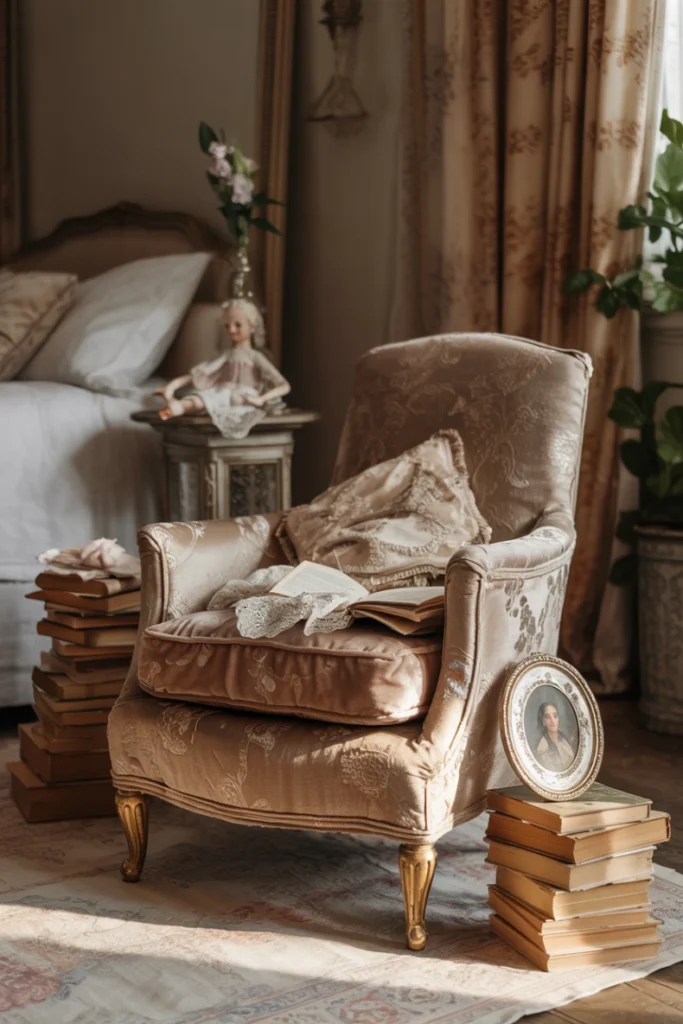
A vintage bedroom feels most authentic when the decor looks collected over years rather than bought in one trip. Old books, family heirlooms, ceramic vases, a brass clock, and a few personal objects on the dresser and nightstands add warmth and individuality that a matching set never can.
Style surfaces in small groups of three or five, mixing heights and materials. A stack of two old books with a small vase on top, a candle beside a framed photo, or a clock next to a small plant all read as a thoughtful arrangement. Leave empty space around each group, because a surface covered edge to edge looks cluttered rather than collected. Rotate your objects every few months, swapping in a different vase or a new book, so the room stays fresh without buying anything new.
Avoid matching sets of decor, which are the fastest way to make a vintage room feel like a store display. One unique vase is better than a set of three identical ones. If an object has a story, let it show: a grandmother’s teacup, a travel souvenir, or a flea market find all add character that no new purchase can copy. The goal is a room that looks like someone lives in it and loves it.
16. Blending Vintage Style with Modern Comfort
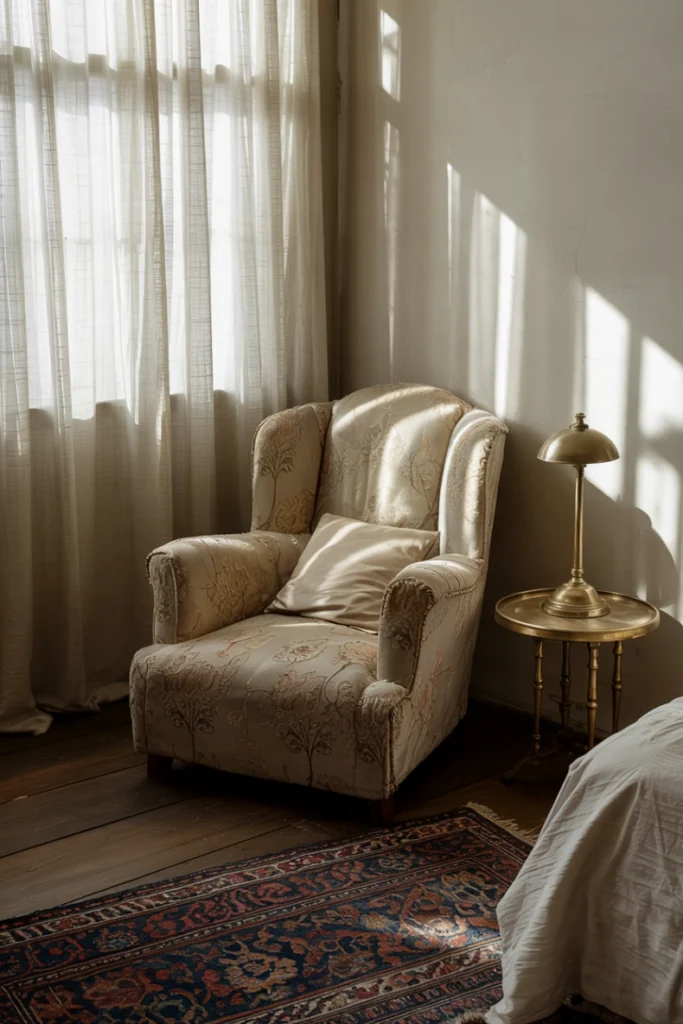
A vintage bedroom should look old and feel new. Pairing antique furniture with a supportive mattress, blackout curtain lining, and modern lighting controls keeps the room comfortable and practical for everyday life. The vintage pieces provide the character, and the modern pieces provide the comfort.
Start with the mattress, because no amount of style makes up for poor sleep. A good quality mattress on a solid platform or a traditional box spring works inside an antique frame, and a mattress topper can soften an old frame that sits too firm. Add modern touches where they hide: a smart dimmer behind a vintage switch plate, a phone charger tucked inside a nightstand drawer, and blackout lining sewn behind linen curtains. Keep the visible technology minimal, with cords hidden behind furniture and a single small lamp for reading.
Storage is the other modern need. An antique wardrobe looks beautiful but rarely holds as much as a modern closet, so add discreet storage such as under-bed boxes, a storage bench at the foot of the bed, or baskets inside the wardrobe. When the room works well for sleeping, dressing, and relaxing, the vintage style becomes a pleasure rather than a compromise.
Conclusion
A vintage bedroom is built slowly, one thoughtful choice at a time. Start with the bed frame, choose a soft neutral palette, then add layers of textiles, pattern, and collected decor until the room feels warm and personal. Keep the balance between old and new, and let each piece earn its place by being beautiful, useful, or meaningful.
Pick one idea from this guide and try it this weekend, whether that is swapping in warm bulbs, hanging a mirror, or layering a quilt at the foot of the bed. Small changes add up quickly, and before long you will have a bedroom that feels cozy, elegant, and timeless, a room that welcomes you at the end of every day.
Frequently Asked Questions
What colors work best in a vintage bedroom?
Soft neutrals work best: cream, ivory, warm taupe, soft gray, and dusty sage. These shades let antique furniture and warm metals stand out, and they make the room feel calm and restful. Add one muted accent color, such as dusty rose or soft blue, in pillows and art for warmth without noise.
How can I make a vintage bedroom look elegant instead of old fashioned?
Balance is the key. Pair one ornate piece, like a carved bed frame, with simple bedding and plain walls. Keep the color palette soft, use good lighting, and leave some empty space on every surface. A few modern comforts, such as a good mattress and dimmer switches, also keep the room feeling fresh rather than stuck in the past.
Where can I find affordable antique bedroom furniture?
Estate sales, flea markets, local antique shops, and online marketplaces are the best sources. Check joints, drawers, and the back of each piece before you buy, and do not be afraid to negotiate, especially when buying more than one item. A light cleaning and a coat of furniture wax is often all an old piece needs.
Can I mix vintage and modern furniture in the same bedroom?
Yes, and it usually looks better than a room full of antiques alone. A modern platform bed with vintage nightstands, or an antique dresser beside a simple modern lamp, keeps the room livable. Keep the wood tones and metal finishes in the same family so the mix feels intentional rather than accidental.
How do I keep a vintage bedroom from feeling cluttered?
Limit each surface to one small group of three to five objects and leave empty space around it. Store extra items out of sight in under-bed boxes or inside a wardrobe, and rotate decor every few months instead of adding more. If a piece does not earn its place by being beautiful or useful, move it to another room.
More Ideas You Will Love
 16 Basement Remodel Ideas for Every Style & Budget
 13 4th of July Accent Wall Ideas for Bedroom & Living Room Spaces
 22 Small Apartment Design Ideas for 2026 – Modern Interiors & Smart Solutions
 14 Neutral Farmhouse Bedroom Color Trends
 20 Aesthetic DIY Christmas Bedroom Light Ideas for 2025
 12 Cozy Bedroom Ideas for Women – Soft, Stylish & Soothing