
16 Plank Floor Ideas from Rustic Charm to Modern Luxury

Flooring sets the foundation for the entire look and feel of a home, and few choices shape a room as much as plank flooring. Whether it is solid oak, engineered wood, or luxury vinyl, plank floors bring a sense of warmth, structure, and timeless style that works in almost any interior. The long lines of the planks guide the eye across a room, making spaces feel larger, calmer, and more connected.
What makes plank flooring so popular is its range. A wide rustic plank can turn a farmhouse living room into a cozy retreat, while a sleek matte plank in a pale tone can make a modern apartment feel bright and open. You can choose the wood species, the width, the finish, and the layout pattern, and each choice changes the character of the room. That flexibility is why plank floors suit everything from busy family kitchens to quiet bedrooms.
Before you choose, it helps to know how each style behaves in real life. Some planks hide scratches better, some need more upkeep, and some handle moisture far better than others. The following 16 plank floor ideas walk through the most loved looks, with practical detail on materials, plank sizes, colors, installation, and everyday care, so you can pick a floor that looks beautiful on day one and still looks good years later. For the rest of the room, these living room ideas show how to style furniture and color around your new floor.
1. Rustic Wide-Plank Wood Flooring
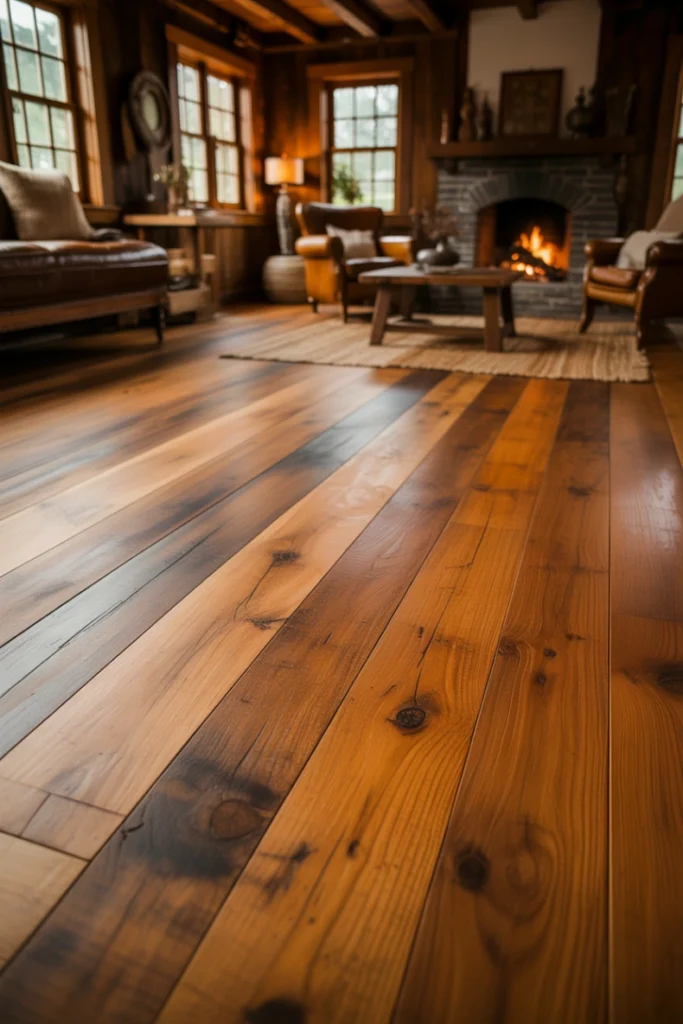
Rustic wide-plank flooring is all about celebrating the natural character of wood. Planks in this style are usually 7 to 12 inches wide, cut from oak, pine, or hickory, and they proudly show knots, grain variation, and small imperfections. A hand-scraped or wire-brushed surface adds texture you can feel underfoot, and an oil or matte finish keeps the look soft and natural rather than shiny. This is the floor that makes a farmhouse, cabin, or cottage feel warm and lived in from the moment you walk in.
To style it well, keep the rest of the room simple so the floor can be the star. Neutral walls in warm white or soft greige, linen upholstery, and simple wooden furniture let the grain take center stage. Wide planks also make a room feel more grounded, because fewer seams mean the eye reads one continuous surface. In open plan spaces, run the planks in the same direction through the living and dining areas to create a smooth, unbroken flow.
Practically, rustic wide planks are forgiving. The natural variation in color and texture hides dust, pet hair, and small scratches far better than a uniform dark floor. Choose a site finished floor if you want the toughest surface, or prefinished planks with an aluminum oxide coating for a hard wearing factory finish. Sweep weekly with a soft broom, mop with a barely damp microfiber mop, and place felt pads under heavy furniture to protect the finish.
2. Light Oak Plank Flooring for Airy Spaces
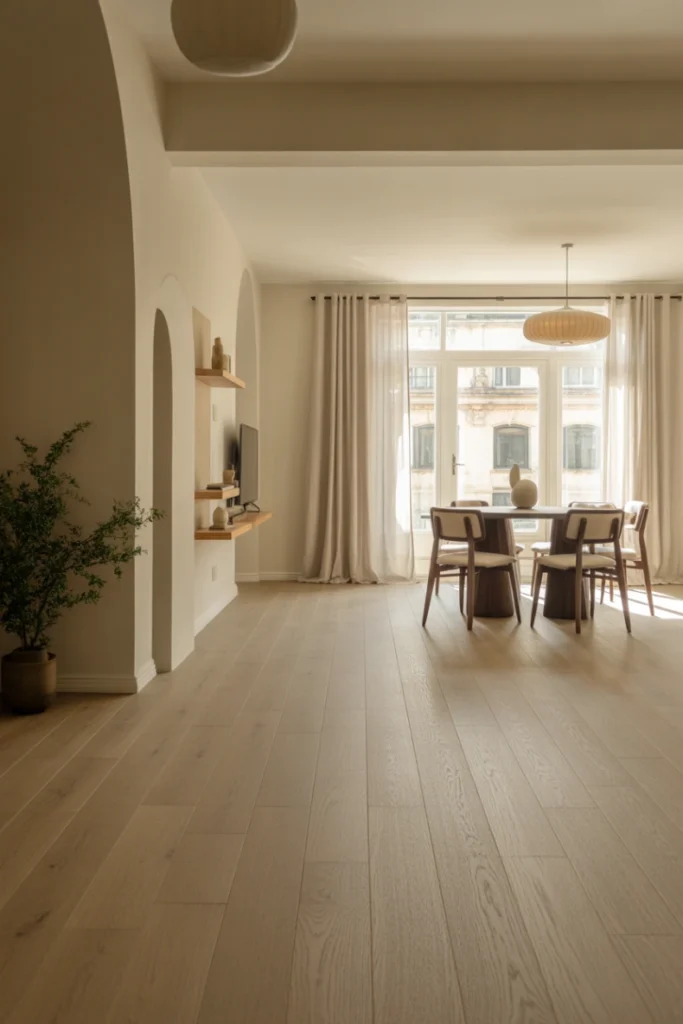
Light oak plank flooring is the go to choice when you want a room to feel bright, open, and calm. White oak planks in pale honey, natural, or lightly bleached tones reflect daylight beautifully, which makes even a small apartment feel larger. Planks around 5 to 7 inches wide strike a nice balance, wide enough to look modern but narrow enough to keep the pattern lively. A matte lacquer or hardwax oil finish protects the wood while keeping that soft, natural glow.
This style pairs effortlessly with Scandinavian, coastal, and contemporary interiors. Try it with white walls, light gray or sage soft furnishings, and pale wood furniture for a clean, layered look. In kitchens it works beautifully too, especially beside white or pale wood cabinets, as these wood kitchen design ideas show. Light oak also flatters both warm and cool palettes, so you can change your decor over the years without the floor clashing.
One practical tip is to order samples and view them in your own light before committing, because pale oak can look pink, yellow, or gray depending on the finish and your room’s light. Acclimate the planks in the room for at least 48 to 72 hours before installation so they adjust to your home’s humidity. For cleaning, a quick daily sweep and a weekly damp mop are enough, and a rug by the front door will catch grit that could scratch the surface.
3. Dark Wood Plank Flooring for Dramatic Contrast
Dark wood plank flooring brings instant drama and sophistication to a room. Rich tones like espresso, walnut, and mahogany create a deep, polished base that makes light walls, white trim, and pale furniture stand out. Planks 4 to 6 inches wide in a dark stain suit formal living rooms and elegant dining spaces, where the contrast gives the room a tailored, high end feel. A satin finish adds a soft sheen without the high maintenance of full gloss.
Balance is the key to making dark floors work. Pair them with plenty of natural light, light colored rugs, and pale upholstery so the room does not feel heavy. White or cream walls, brass or matte black accents, and a large mirror can keep the space feeling bright. In a dining room, a light oak or white table on a dark floor creates a striking focal point that guests always notice.
Dark floors do show dust, crumbs, and pet hair more readily than mid tone floors, so plan on sweeping every couple of days if you have pets or children. The upside is that dark stain hides many stains and small marks. Use a vacuum with a hard floor setting rather than a beater bar, and wipe spills quickly to protect the finish. With regular care, a dark wood floor keeps its rich, dramatic look for decades.
4. Whitewashed Plank Flooring for Coastal Style
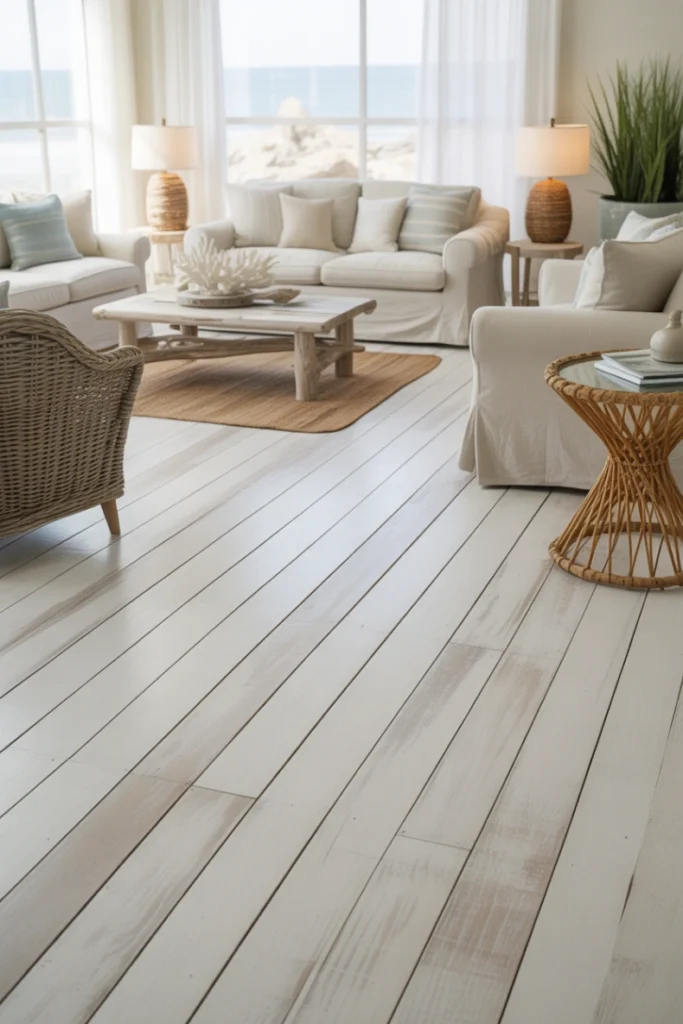
Whitewashed plank flooring gives wood a soft, sun bleached look that feels relaxed and coastal. The technique uses a thinned white stain or wash over pine, oak, or ash, which lightens the wood while letting the grain show through. The result is a breezy, casual floor that suits beach houses, coastal cottages, and any home that wants a light, airy mood. Planks 5 to 8 inches wide show off the washed grain best.
Style whitewashed floors with natural textures like jute rugs, linen curtains, rattan baskets, and pale blue or seafoam accents. The floor acts as a soft neutral base, so you can layer in color through cushions and art without anything clashing. It also works well in bedrooms, where the pale tone makes the room feel calm and restful first thing in the morning.
A practical advantage of whitewash is that it disguises minor wear. Small scuffs and fading blend into the light, varied surface instead of standing out. Choose a factory applied whitewash with a durable top coat for the most even color, and avoid DIY whitewashing a whole floor unless you test the mix on spare planks first. Clean with a pH neutral wood floor cleaner and avoid soaking the boards with water.
5. Reclaimed Wood Plank Flooring
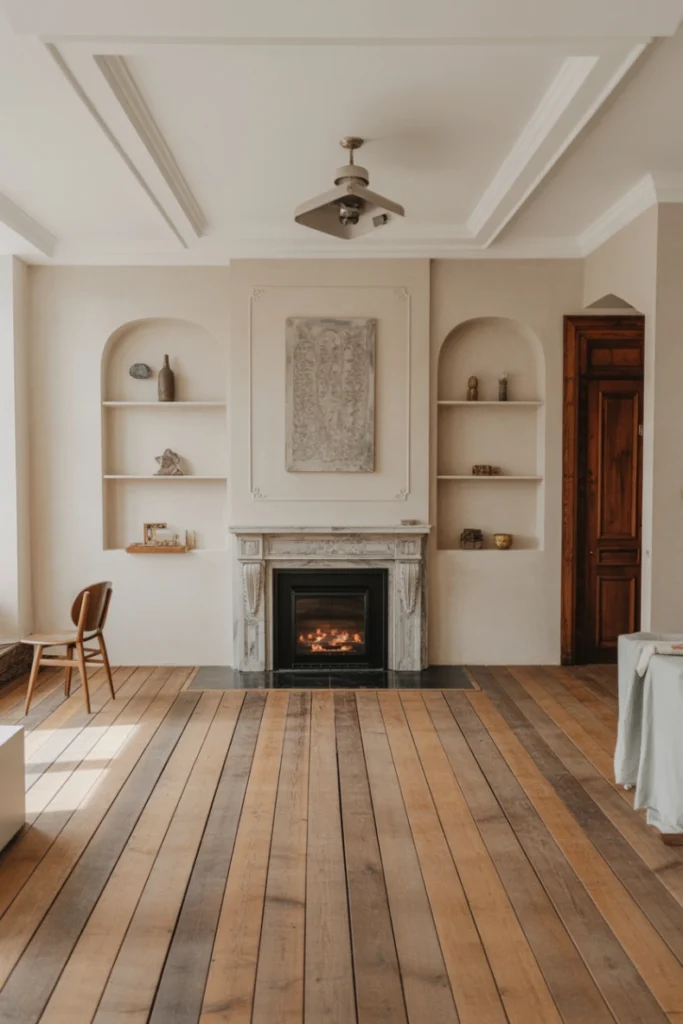
Reclaimed wood plank flooring carries a story no new floor can match. These planks are salvaged from old barns, factories, and warehouses, so each board shows nail holes, saw marks, and a patina built up over decades. Most reclaimed planks are 6 to 10 inches wide and come in oak, pine, chestnut, or mixed hardwoods. No two floors ever look alike, which is exactly the point.
Reclaimed wood suits rustic, industrial, and eclectic interiors, and it makes a wonderful feature floor in a living room or entryway. Pair it with simple modern furniture so the floor provides the character while the rest of the room stays clean and calm. A clear matte seal lets the aged color show through, while a light oil finish deepens the tones. Because the wood is already old and stable, it is often very durable once it is properly milled and sealed.
Before buying, ask the supplier where the wood came from and whether it has been kiln dried and checked for metal. Kiln drying kills insects and stabilizes moisture, which prevents warping after installation. Reclaimed floors usually cost more than new wood, often 8 to 15 dollars per square foot for materials alone, but the character is unmatched. Seal the floor well, especially in kitchens, and refinish with oil every few years to keep it protected.
6. Chevron Plank Flooring for Visual Interest
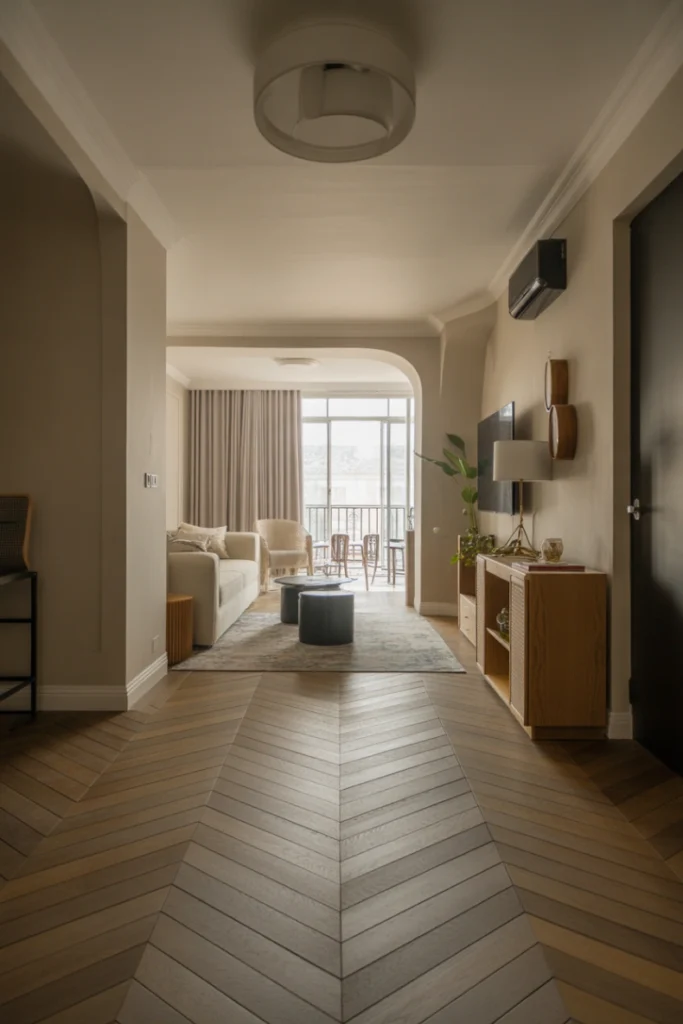
Chevron plank flooring turns a simple wood floor into a design feature. Each plank is cut at a 45 degree angle so the boards meet in a clean, continuous V shape that runs down the room. The pattern adds movement and elegance without relying on bold color, which is why it suits both classic and contemporary homes. Planks are typically 3 to 5 inches wide and 18 to 24 inches long, creating a refined zigzag that draws the eye along the length of the room.
Chevron works best in rooms where the floor can be seen, so keep rugs small or choose a low pile rug that lets the pattern show at the edges. In a hallway or entryway, the V shape guides visitors forward and makes the space feel longer. In a living room, run the points of the chevron toward the main window or fireplace to create a natural focal point. Pale oak or walnut both look beautiful in this pattern, and a matte finish keeps the look sophisticated.
Installation takes more skill and material than straight planks, so expect to pay 30 to 50 percent more for labor and to order 10 to 15 percent extra material for cuts. Hire an installer with chevron experience, and check that the subfloor is flat to within 3/16 inch over 10 feet, because any unevenness shows in a patterned floor. The result is worth the effort, a floor that looks custom and expensive from every angle.
7. Herringbone Plank Flooring for Timeless Elegance
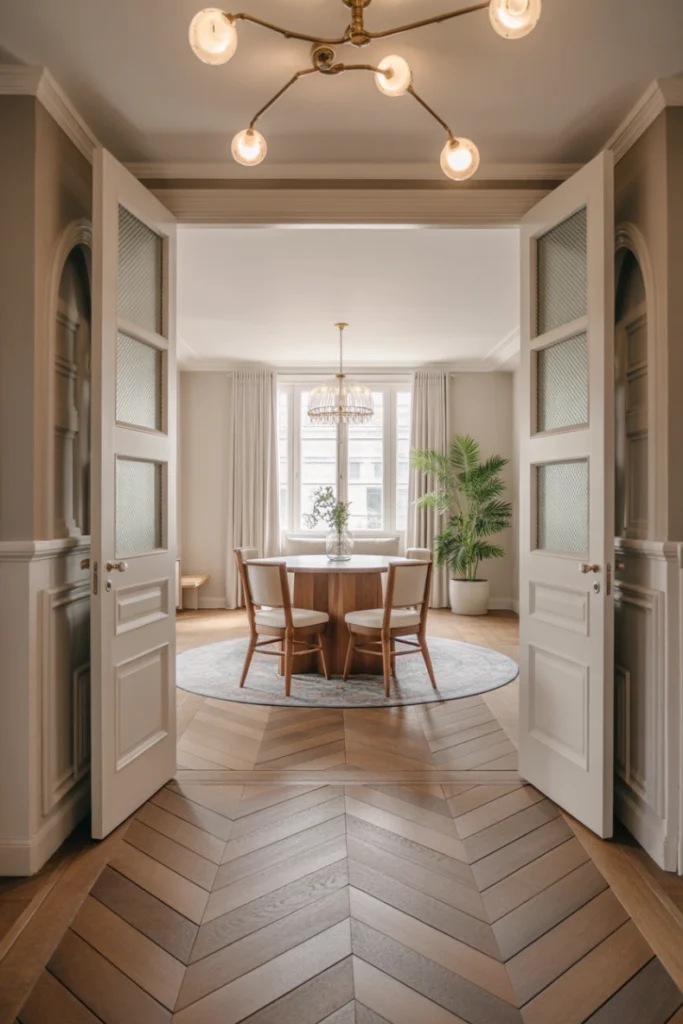
Herringbone plank flooring is one of the oldest and most loved patterns in interior design, rooted in traditional European homes and still popular in modern interiors. Rectangular planks, usually 3 inches wide by 12 to 18 inches long, are laid at right angles to form a repeating zigzag. The pattern adds texture and rhythm to a floor without overwhelming the room, and it looks just as good in pale oak as in deep walnut.
Herringbone shines in entryways, living rooms, and dining areas, where the pattern can be appreciated from above. It also makes small rooms feel larger, because the zigzag breaks up the floor into a lively, woven surface. Pair it with neutral finishes and streamlined furniture so the pattern stays the star. A border of straight planks around the edge of the room gives the layout a finished, tailored frame.
Like chevron, herringbone needs an experienced installer and extra material, usually 10 to 15 percent overage for cuts. It works well with both solid and engineered wood, and engineered herringbone is a smart choice over underfloor heating because it moves less with temperature changes. Vacuum the joints occasionally, since dust can settle where the planks meet at angles.
8. Wide Plank Flooring for Modern Luxury
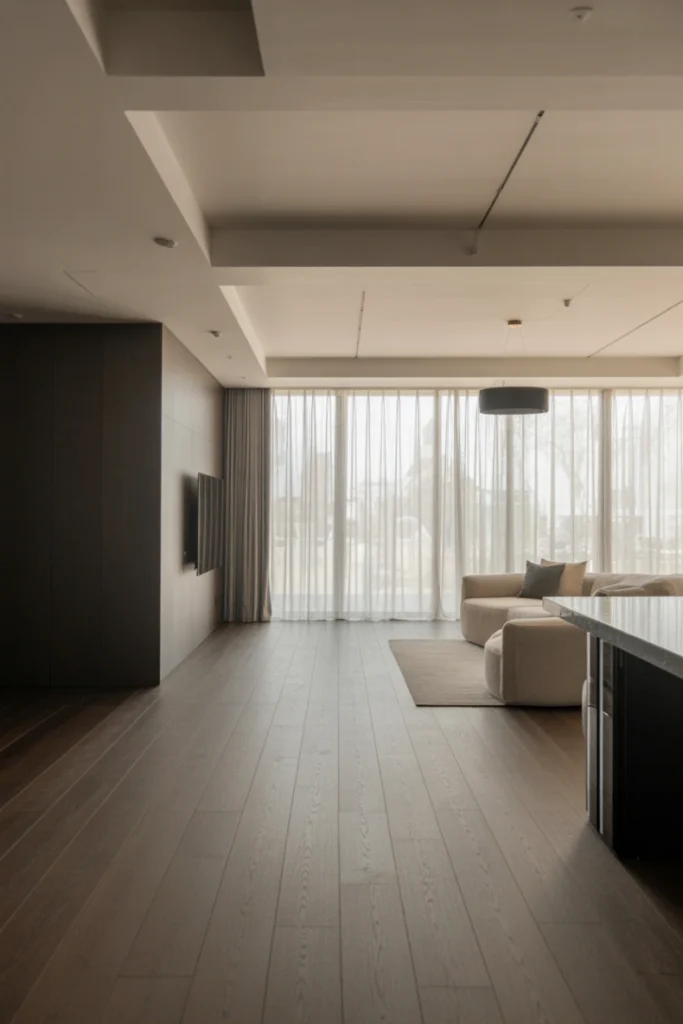
Wide plank flooring is the hallmark of modern luxury. Planks 8 to 12 inches wide, sometimes wider, minimize the number of seams across the floor, which creates a seamless, expansive surface that shows off the wood grain in long, uninterrupted runs. The look feels calm and premium, and it suits open plan homes where the floor flows from the kitchen through the living room without a break.
In modern homes, wide planks pair beautifully with minimalist decor, large windows, and simple furniture. A pale wide plank makes a loft feel airy, while a dark wide plank in walnut gives a formal living room a rich, grounded feel. Because the planks are wide, the wood species matters even more, so choose a species with grain you love, like white oak for a clean look or hickory for bold variation.
Wide planks need a stable environment. Solid wide planks can cup or gap if humidity swings, so engineered wide planks are often the safer choice, especially in homes with underfloor heating or in humid climates. Keep indoor humidity between 35 and 55 percent, leave a 3/8 inch expansion gap around the perimeter, and use a humidifier in dry winters. With those precautions, a wide plank floor stays flat and beautiful for decades.
9. Matte Finish Plank Flooring
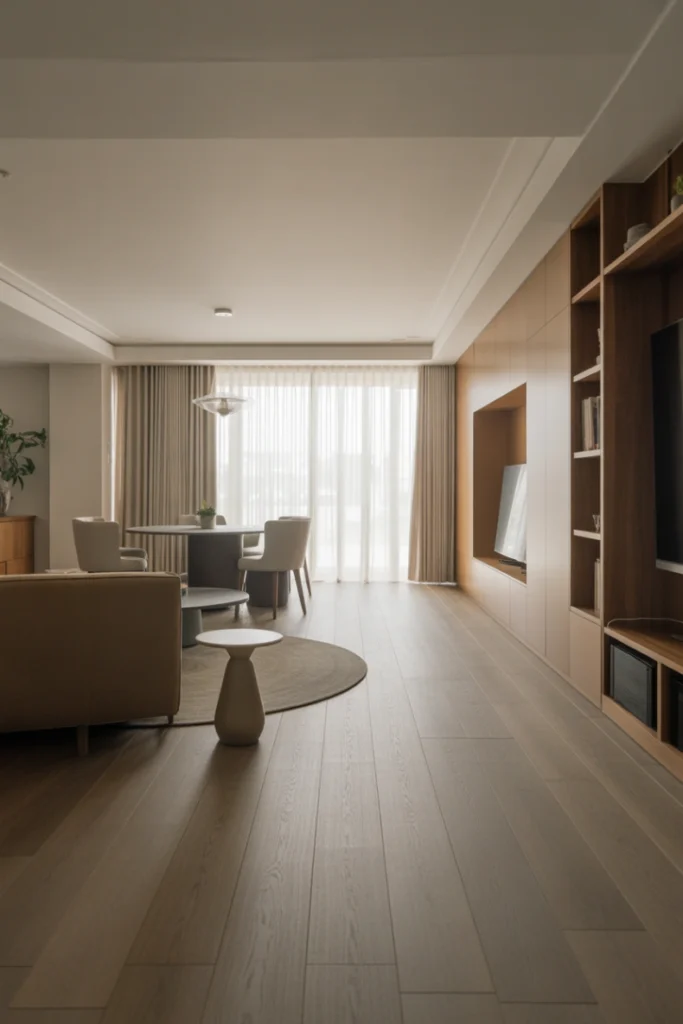
Matte finish plank flooring puts texture first and shine last. A low sheen finish, usually around 10 to 15 percent gloss, lets the natural grain and color of the wood show without glare or reflections. The result feels modern, understated, and organic, which is why matte floors are a favorite in contemporary and industrial style homes. They work in every wood tone, from pale ash to dark walnut.
The practical benefits are real. Matte floors hide scratches, dust, and footprints far better than glossy floors, so they are a smart pick for busy households, homes with pets, and high traffic hallways. A matte aluminum oxide finish is very hard wearing, while a hardwax oil matte finish can be spot repaired easily if a small area gets damaged. Pair matte planks with natural materials like wool, linen, and stone for a calm, layered interior.
Cleaning is simple. Sweep or vacuum with a hard floor head, then damp mop with a wood safe cleaner. Avoid polish or wax products marketed as shine restorers, because they can leave a film on a matte surface. If the floor starts to look dull after years of use, a professional screen and recoat with a matte finish will refresh it without a full sanding.
10. High-Gloss Plank Flooring for Modern Appeal
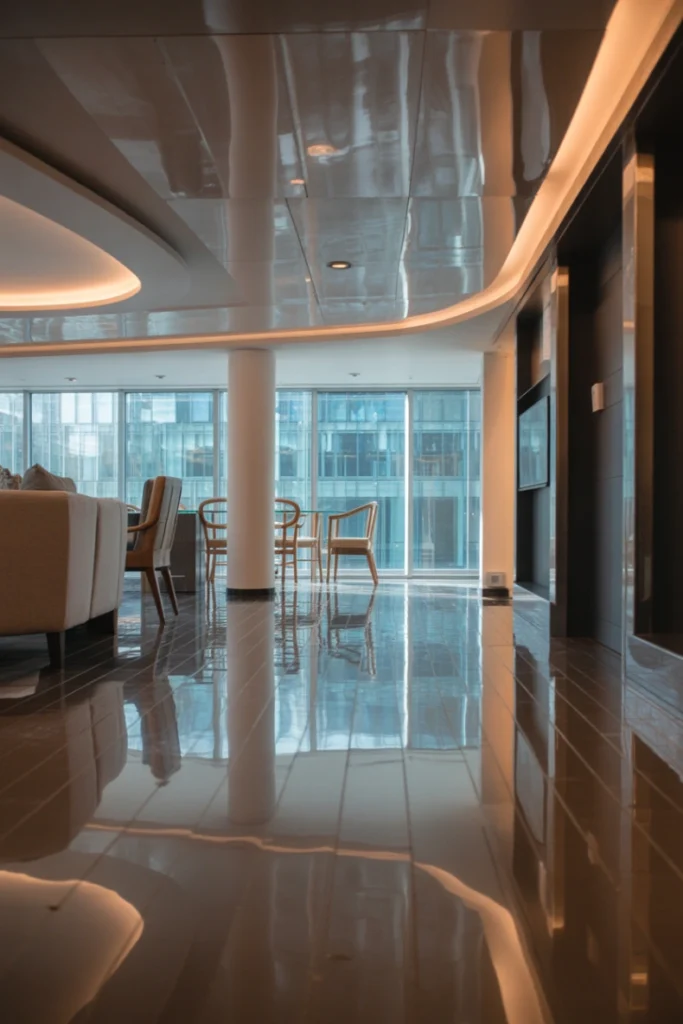
High-gloss plank flooring creates a sleek, polished surface that reflects light and adds drama to modern spaces. The mirror like finish makes rooms feel brighter and more open, and it pairs beautifully with bold architecture, glass, chrome, and minimalist furniture. Dark woods like ebony stained oak look especially striking in gloss, while pale gloss planks can make a small room feel larger and more glamorous.
Use high gloss where the floor is a deliberate statement, such as a formal living room, a dining room, or a modern entryway. Keep the decor simple and uncluttered so the reflective floor can shine, and choose rugs with a low pile and a non slip pad if you want to soften the look in seating areas. Good lighting matters too, because the gloss picks up both natural light and lamp light, doubling the brightness in the room.
The trade off is maintenance. Gloss shows footprints, dust, and fine scratches more than any other finish, so it needs regular sweeping and a weekly damp mop with a gloss safe cleaner. Wear soft soled slippers indoors, put felt pads on every chair leg, and keep a doormat at each entrance. With that routine, a high gloss floor keeps its showroom shine, but it is best avoided in homes with large dogs or very young children.
11. Gray Plank Flooring for Versatile Design
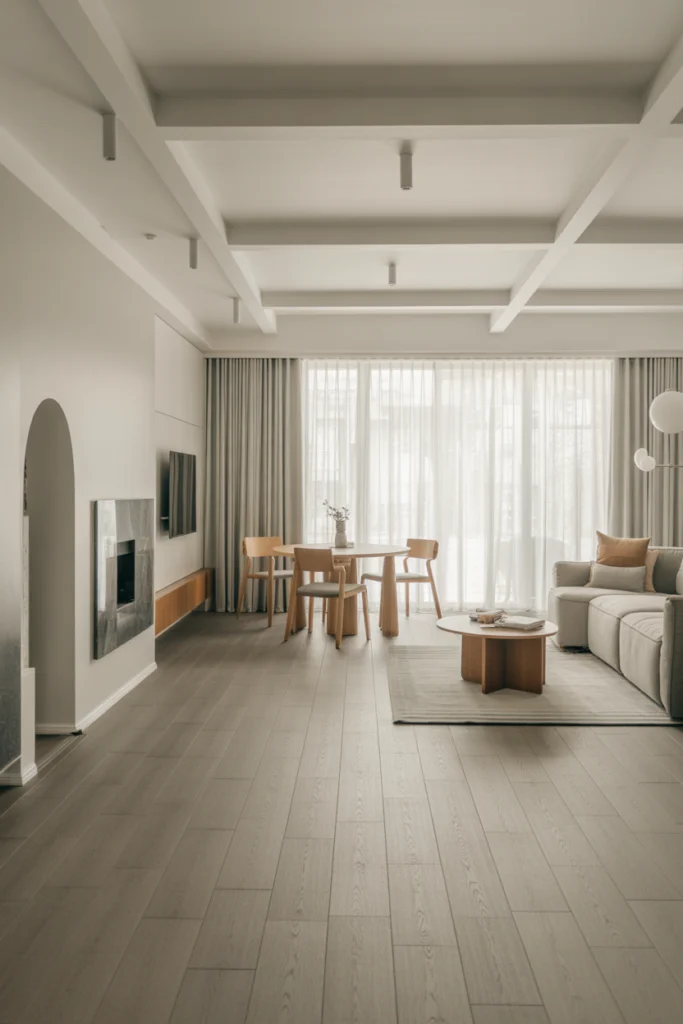
Gray plank flooring offers a modern neutral that works with almost any color scheme. A gray wash stain over oak or ash softens the wood grain into cool, calm tones that range from pale silver to deep charcoal. The color sits happily beside both warm and cool palettes, so you can pair it with warm wood furniture one year and cool blue textiles the next without the floor clashing. For more gray floor inspiration, see these gray floor ideas for rooms of every style.
Gray planks suit industrial, modern, and transitional interiors, and they are especially good in rooms with concrete, metal, or stone elements. In a living room, try gray planks with a white sofa, black accents, and a touch of greenery for a fresh, balanced look. In a bedroom, a pale gray floor with soft white bedding creates a calm, restful mood. Darker charcoal planks add drama in the same way dark wood does, but with a cooler, more contemporary edge.
Functionally, gray is forgiving. It hides dust and minor marks better than very dark or very pale floors, which makes it practical for everyday living. When choosing a gray, view large samples in your room at different times of day, because gray can shift warm or cool depending on the light. A matte or satin finish keeps the color looking natural rather than flat.
12. Natural Finish Plank Flooring
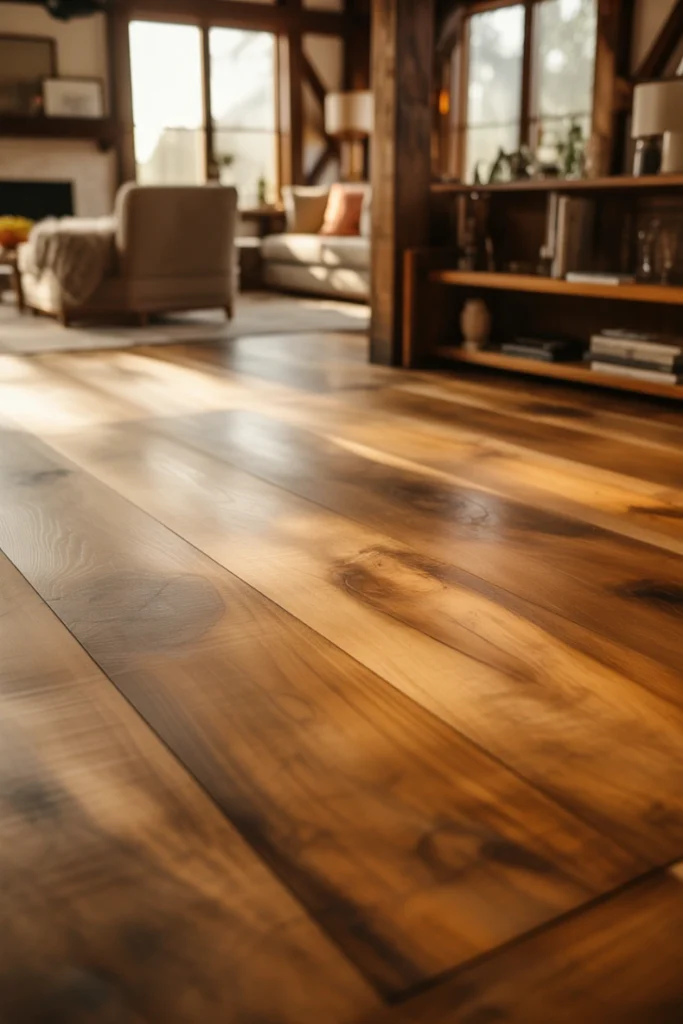
Natural finish plank flooring celebrates wood exactly as it grows. Instead of a stain, the planks get a clear oil or clear lacquer that protects the surface while letting the true color and grain show. The result is warm, organic, and timeless, with honey tones in oak, reddish warmth in cherry, and golden tones in hickory. No two boards look identical, which gives the floor a lively, authentic feel.
This finish adapts to almost any interior style, from rustic cottages to modern apartments. It grounds a room without dominating it, so you can change wall colors and furniture over the years and the floor will still fit. Pair natural finish planks with cream walls and timber furniture for a classic look, or with black metal and white walls for a modern contrast. It also works well alongside other natural materials like stone counters and wool rugs.
Because there is no stain to hide behind, wood quality matters. Choose a grade with the grain character you like, and check that the clear coat is a durable hardwax oil or aluminum oxide finish. Oiled natural floors need re-oiling every one to two years in high traffic areas, which is a simple weekend job with a cloth and a bottle of maintenance oil. Lacquered floors need less routine care but are harder to spot repair.
13. Engineered Wood Plank Flooring
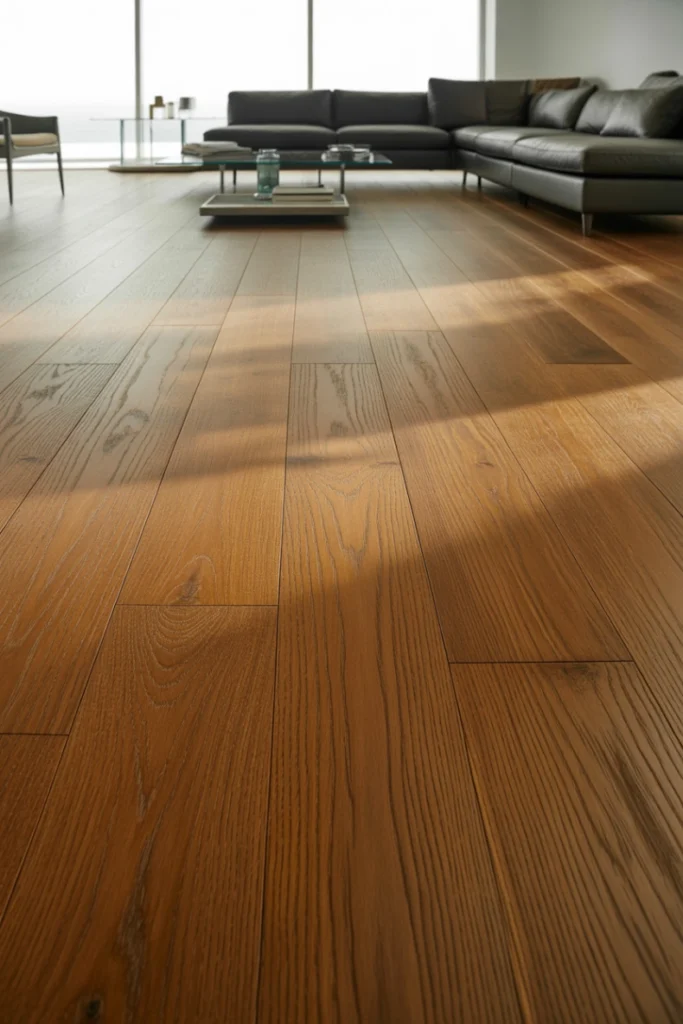
Engineered wood plank flooring gives you the look of real wood with extra stability. Each plank has a real wood veneer, usually 2 to 6 millimeters thick, bonded over a plywood or high density fiberboard core. That layered construction resists the expansion and contraction that can trouble solid wood, so engineered planks handle fluctuating humidity, basements, and rooms with underfloor heating far better than solid boards.
Installation is more flexible too. Many engineered planks use a click lock system that floats over an underlay, which makes installation faster and cleaner than nailing solid boards. You can install them over concrete slabs, which opens up basements and ground floor rooms that solid wood cannot handle. Visually, a thick veneer looks identical to solid wood, and it can be sanded and refinished once or twice over its life if the veneer is thick enough.
When shopping, check the veneer thickness and the core quality, since both decide how long the floor lasts. A 4 to 6 millimeter veneer on a plywood core is the premium choice. Acclimate the boxes for 48 hours, use the underlay the manufacturer recommends, and leave the correct expansion gap. With good care, an engineered wood floor lasts 20 to 30 years and can be refinished to look new again.
14. Luxury Vinyl Plank Flooring
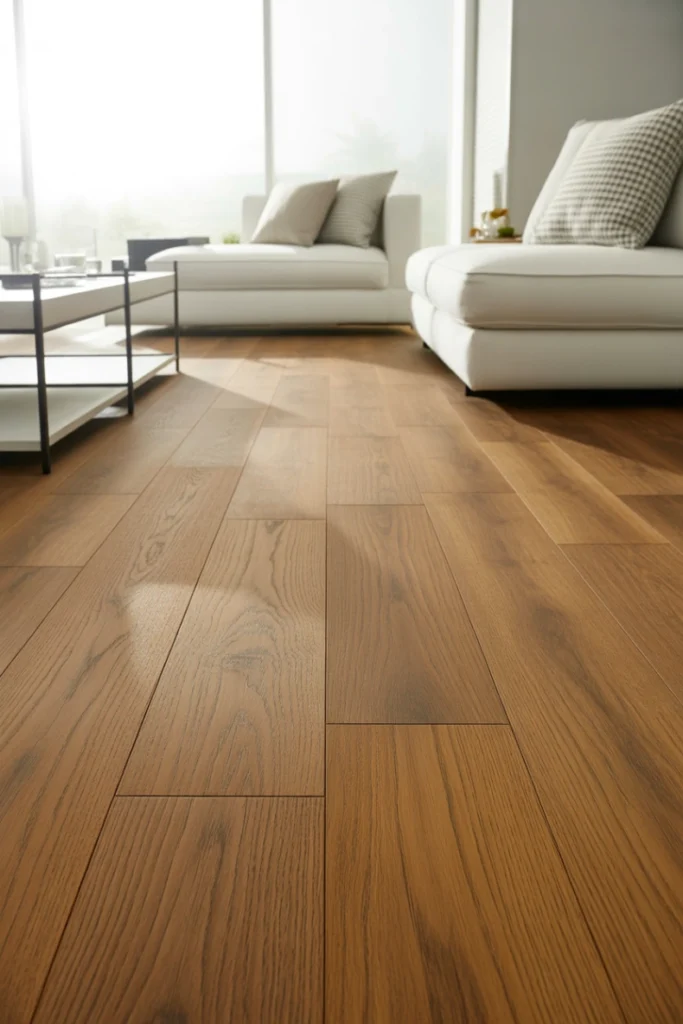
Luxury vinyl plank flooring, often called LVP, looks like wood but behaves like a waterproof workhorse. Modern designs print high resolution wood grain onto a rigid SPC or WPC core, and the best products are hard to tell from real wood at a glance. Planks usually come 6 to 9 inches wide and 48 inches long, with a wear layer of 12 to 20 mils that resists scratches, dents, and stains.
The big advantage is water resistance. LVP is the plank floor you can put in kitchens, bathrooms, laundry rooms, and basements without worrying about spills or splashes. It is also comfortable underfoot, quieter than tile, and easy to clean with a damp mop. Families with children and pets love it because it handles muddy paws, dropped toys, and spilled drinks without damage. Installation is usually a simple click lock floating floor, and many confident DIYers install a room in a weekend.
Costs are reasonable too, typically 2 to 5 dollars per square foot for materials, plus installation if you hire a professional. When choosing, look for a wear layer of at least 20 mils for busy homes, check that the product is rated for your room, and buy from a brand with a solid residential warranty. Avoid the cheapest thin products, since they can telegraph bumps in the subfloor. A flat, clean subfloor and a good underlay make all the difference to the final result.
15. Mixed-Width Plank Flooring
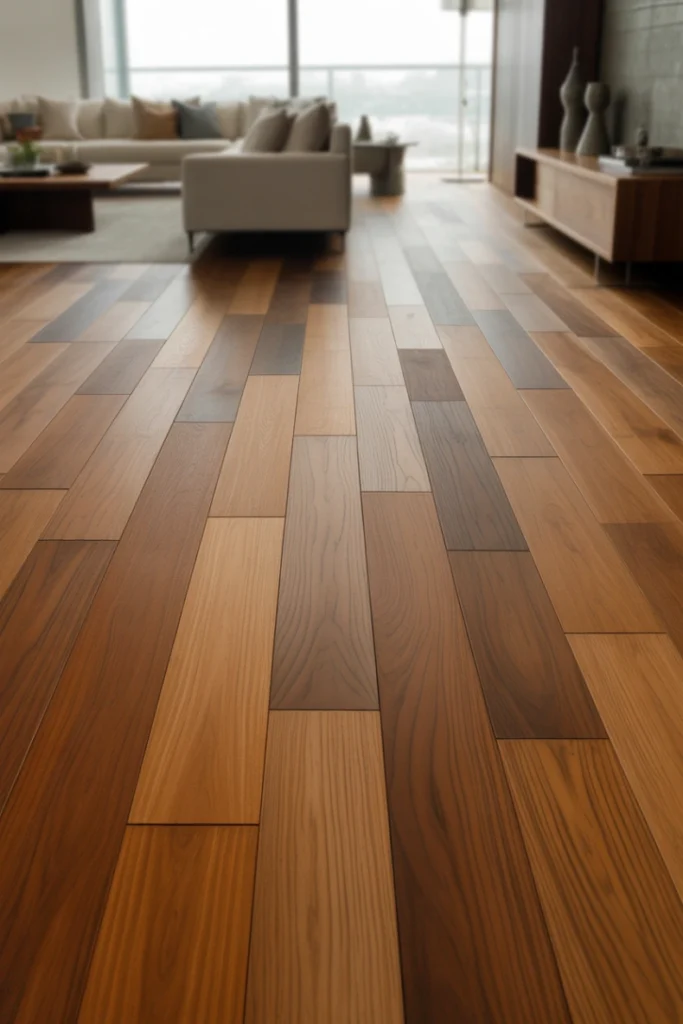
Mixed-width plank flooring uses boards of different widths, usually a blend of 3, 5, and 7 inch planks, laid in a random pattern. The variation creates a custom, layered look that feels both historic and modern. It echoes the floors of old farmhouses, where builders used whatever widths they had, but it also suits contemporary homes that want a floor with personality rather than a uniform surface.
The random pattern adds subtle movement across the room, which makes the floor more interesting without overwhelming the decor. It works in rustic, transitional, and modern interiors alike. Try a mix of pale oak widths in a Scandinavian living room, or a mix of walnut widths in a formal dining room. The key is to keep the wood species and finish consistent across all widths, so the variation feels intentional rather than accidental.
Installation needs a thoughtful installer who will lay out the widths in a balanced random pattern, avoiding clusters of narrow or wide boards in one spot. Ask to see the layout before the installer starts gluing or nailing. Mixed-width floors are usually sold as a set with a fixed ratio of widths, so order 10 percent extra to cover cuts and to give the installer enough choice. The result is a floor that looks hand crafted and one of a kind.
16. Diagonal Plank Flooring for Unique Style
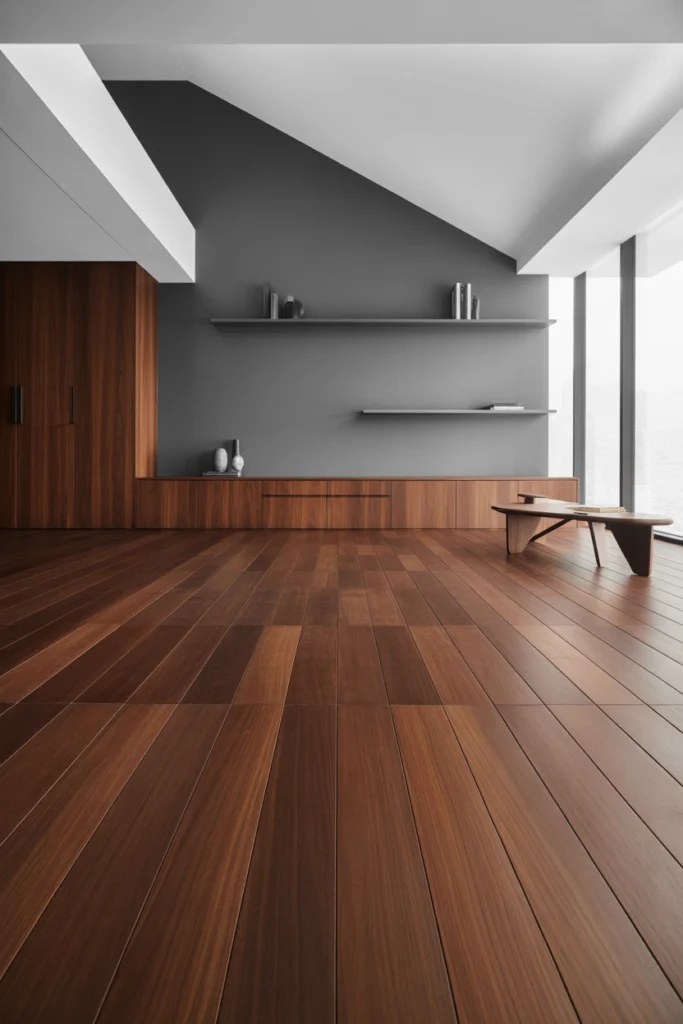
Diagonal plank flooring lays the boards at a 45 degree angle to the walls instead of parallel to them. The angled lines create visual movement, make rooms feel larger, and turn an ordinary floor into a talking point. It is especially effective in small or awkwardly shaped rooms, where the diagonal lines stretch the eye across the space and make the proportions feel more generous.
This layout suits modern and transitional interiors, and it pairs well with simple finishes so the angle itself is the feature. A pale oak diagonal floor with white walls and minimal furniture feels fresh and spacious, while a medium walnut diagonal floor adds warmth to a dining room. In an open plan space, run the diagonal in one consistent direction through the whole area for a unified look.
Plan on ordering 10 to 15 percent extra material, because diagonal cuts create more waste than straight runs. Installation takes longer, so labor costs run higher, and the installer should snap chalk lines to keep the angle true across the whole room. Start the layout from the center of the room or from the main focal point, like a fireplace, so the pattern looks balanced from the most viewed angle. Done well, a diagonal floor feels both creative and considered.
Conclusion
Plank flooring offers a remarkable range of choices, from rustic wide planks and reclaimed barn wood to sleek matte finishes and waterproof luxury vinyl. The right floor does more than look good, it changes how a room feels, how easy it is to live in, and how well it holds its value over time. Think about your lifestyle first, then match the material, width, finish, and pattern to the way you actually use each room.
Before you order, take home large samples and live with them for a few days. Check them in morning light and evening light, next to your furniture, and under the rugs you plan to use. Measure carefully, order 10 percent extra for cuts, and hire an installer with experience in your chosen pattern if you pick chevron, herringbone, or diagonal. With the right choice and a little care, your plank floor will be a beautiful foundation for your home for decades to come. If you are weighing a different hard surface, these concrete floor ideas offer a modern alternative worth comparing.
Frequently Asked Questions
What is the most durable plank flooring for a busy family home?
Luxury vinyl plank and engineered wood are the toughest choices for busy homes. Luxury vinyl plank is waterproof, scratch resistant, and easy to clean, which makes it ideal for kitchens, entryways, and homes with pets. Engineered wood with a thick veneer and an aluminum oxide finish is the best real wood option, since it resists humidity changes and can be refinished. For solid wood, choose a hard species like hickory or white oak with a matte finish, which hides scratches better than gloss.
Are wide plank floors a good choice for small rooms?
Yes, wide planks can make a small room feel larger, because fewer seams create a calmer, more continuous surface. Planks 7 to 9 inches wide in a pale tone work best in small spaces, since light colors reflect more daylight. Run the planks along the longest wall to stretch the room visually, and keep rugs light and low pile so the floor stays visible. In very humid or dry climates, choose engineered wide planks, which stay flatter than solid wide boards.
Can plank flooring go in kitchens and bathrooms?
It depends on the material. Luxury vinyl plank is the safest choice for kitchens and bathrooms because it is fully waterproof. Engineered wood can work in kitchens if spills are wiped up quickly and the floor is well sealed, but it is not recommended for full bathrooms or wet rooms. Solid hardwood should stay out of bathrooms entirely. For any plank floor near water, use a waterproof underlay, seal the edges, and keep a mat by the sink and shower.
How much does plank flooring cost per square foot?
Costs vary by material. Luxury vinyl plank usually runs 2 to 5 dollars per square foot for materials, engineered wood 4 to 10 dollars, and solid hardwood 5 to 12 dollars, with reclaimed wood often 8 to 15 dollars. Professional installation adds roughly 3 to 8 dollars per square foot, and patterned layouts like chevron or herringbone cost more. Always add 10 percent extra material for cuts, and 15 percent for diagonal or patterned installs.
How do I keep plank floors looking new?
Sweep or vacuum with a hard floor setting several times a week to remove grit, which is the main cause of scratches. Damp mop with a pH neutral wood floor cleaner, never soak the boards, and wipe spills right away. Place doormats at every entrance, felt pads under furniture legs, and rugs in high traffic areas. Keep indoor humidity between 35 and 55 percent, and recoat or re-oil the finish when it starts to look worn, usually every three to five years in busy rooms.
More Ideas You Will Love
 14 Ways to Prepare Your Home Exterior for Severe Summer Weather
 20 Dorm Room Decor Ideas – Create Your Ideal College Space in Style
 12 Fall Garden Decor Ideas for a Beautiful Front Porch
 15 Window Trim Ideas: Beautiful Accents to Elevate Your Home
 14 Air Quality Improvement Tips for a Healthier Summer Home
 12 Common Summer Gardening Mistakes (And How to Avoid Them!)