
15 Window Trim Ideas: Beautiful Accents to Elevate Your Home

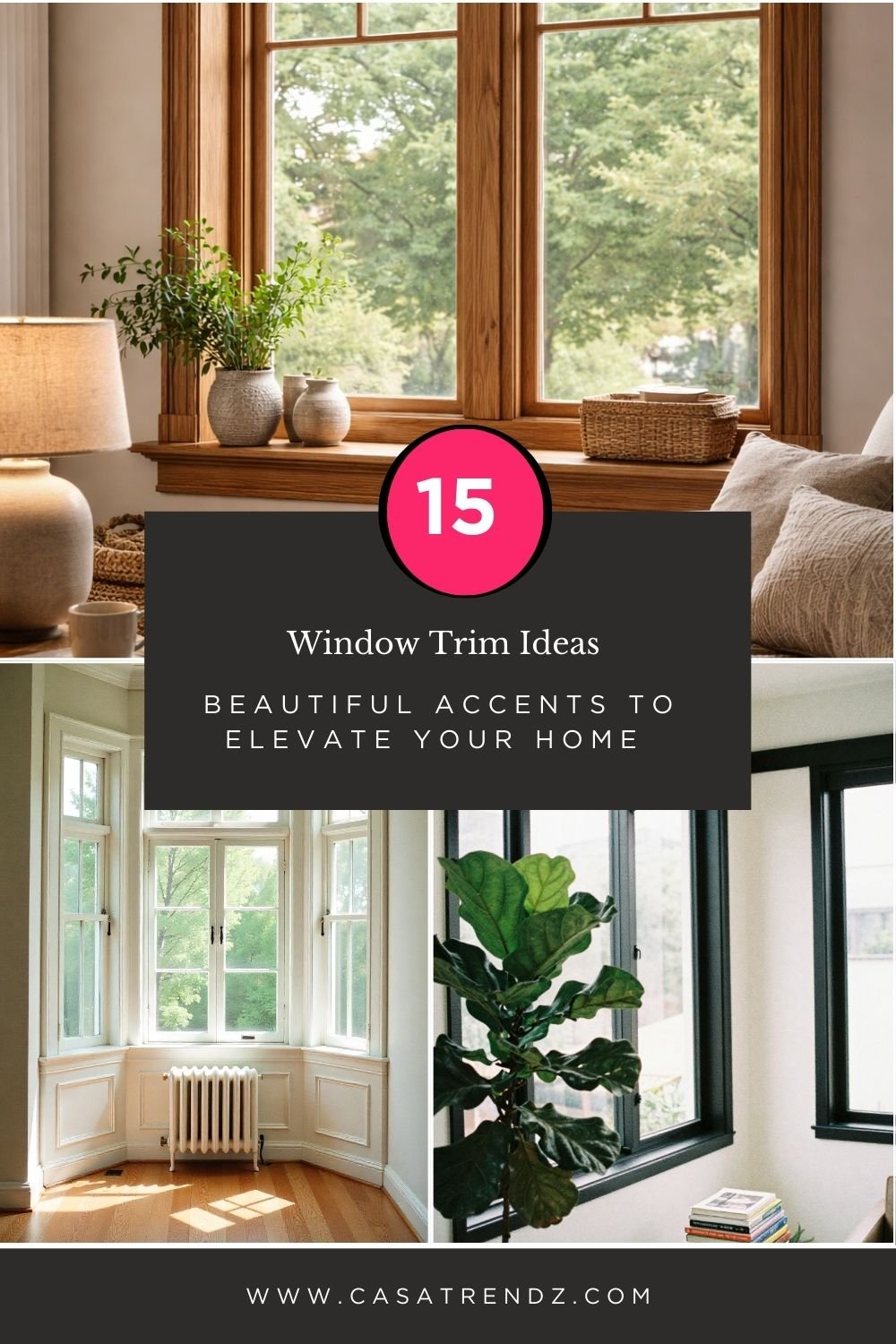
Window trim is one of those details that quietly sets the tone for an entire room. It frames the view, finishes the edge where wall meets glass, and adds a layer of craftsmanship that flat drywall alone can never offer. The right trim can make a standard window feel custom, a small room feel brighter, and a plain exterior feel finished, all without moving a single wall.
In this guide you will find 15 window trim ideas that cover every style and budget, from classic white trim that works almost anywhere to bold black frames, warm natural wood, and custom trim with built-in lighting. Each idea includes the materials, measurements, and practical tips that matter most, so you can choose with confidence and talk to your carpenter or painter with a clear plan in hand.
Before you choose, measure every window the same way, note the style of your home, and decide whether you want the trim to blend in or stand out. Trim that matches your doors and baseboards feels calm and cohesive, while trim in a contrasting color or a wider profile turns the window into a feature. Keep that decision in mind as you read, and the ideas below will fall into place.
1. Classic White Window Trim
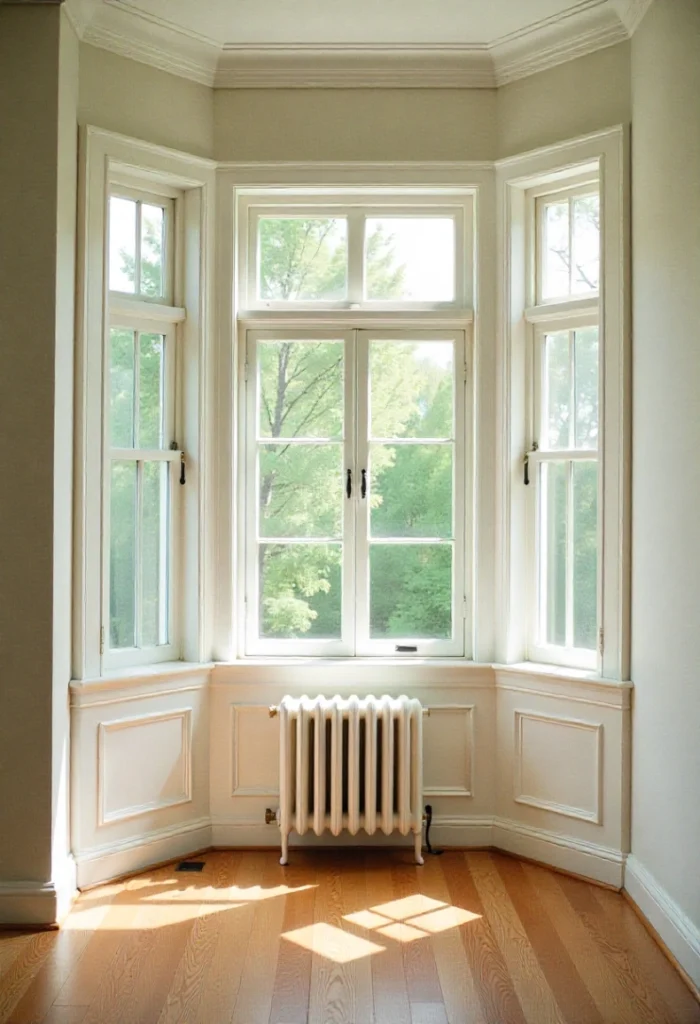
Classic white window trim remains the most versatile choice a homeowner can make. It suits nearly every architectural style, from a traditional colonial to a modern farmhouse, and it creates a crisp border that draws the eye toward natural light. White trim pairs beautifully with neutral wall colors, wood floors, and tile, and it keeps the room feeling clean and uncluttered even when the rest of the decor is bold.
For a standard window, use flat stock boards 3.5 inches wide on the sides and top, with a slightly wider 4.5 inch header if you want a more finished look. Choose a semi-gloss or satin paint in a warm white such as Benjamin Moore White Dove or Sherwin-Williams Alabaster, and paint the trim before installation when possible so the edges stay sharp. White trim is also easy to maintain: a quick wipe with a damp cloth removes dust, and a fresh coat every few years keeps it looking new. If you want one trim that will never date your home, this is it.
2. Bold Black Window Trim
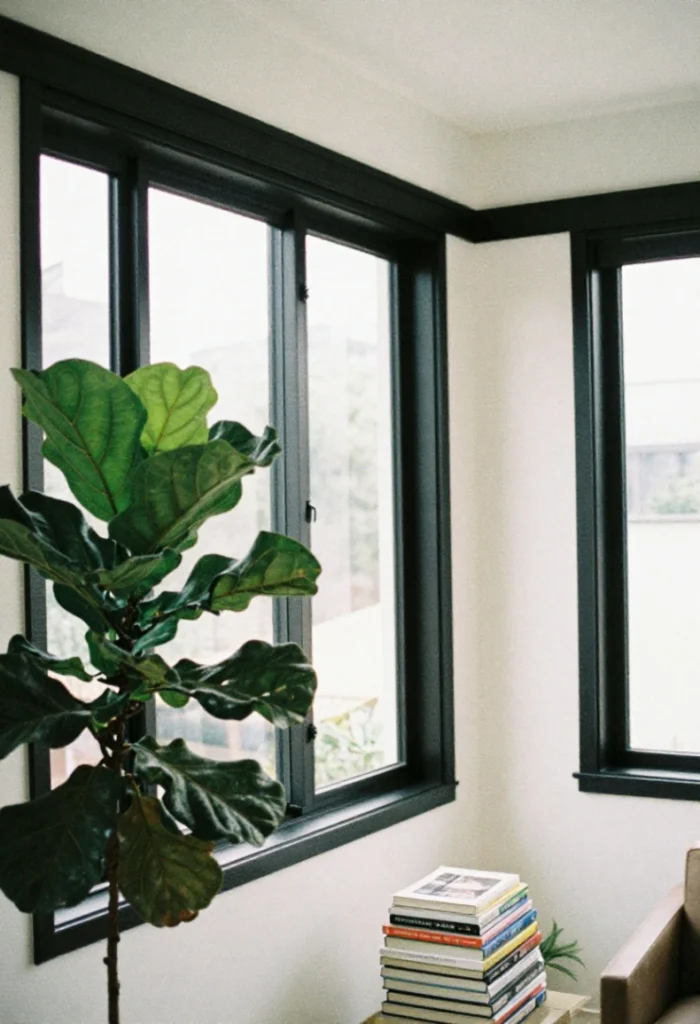
Bold black window trim adds instant drama and contrast, turning an ordinary window into a graphic focal point. This look is especially popular in modern, industrial, and contemporary homes, where the dark frame creates a strong visual boundary and pulls the eye outward toward the view. Black trim works best against white or light-colored walls, where the contrast is clean and deliberate rather than heavy.
Use a matte or satin black paint on smooth, paint-grade wood or MDF, and keep the profile simple, usually 3 to 4 inches wide, so the color does the talking instead of ornate molding. Pair black trim with black window hardware, matte black light fixtures, or dark metal accents to make the choice feel intentional throughout the room. One caution: black shows dust and fingerprints more readily than white, so plan on a quick wipe-down every couple of weeks, especially in kitchens and kids rooms. Done well, black trim makes even builder-grade windows look architectural and custom.
3. Natural Wood Window Trim
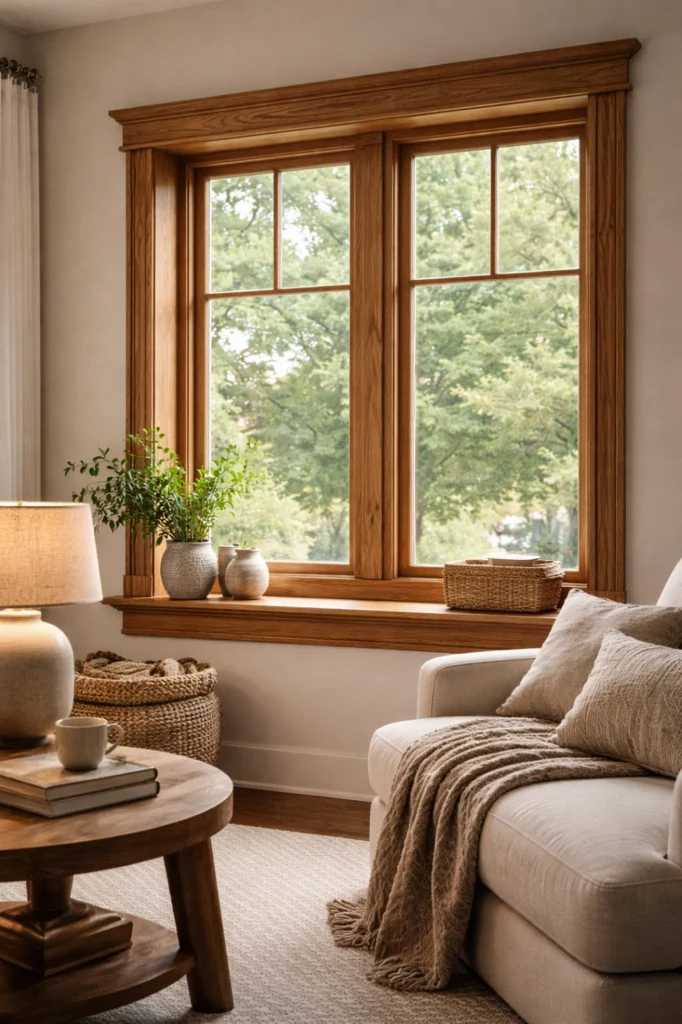
Natural wood window trim brings warmth and organic character into any room, and it is one of the best ways to connect an interior to the outdoors. Wood highlights craftsmanship, complements stone, brick, and hardwood floors, and softens rooms that might otherwise feel cold or stark. The species you choose changes the mood completely: pale oak feels light and Scandinavian, warm pine feels relaxed and cottage-like, and rich walnut feels formal and refined.
Choose clear, knot-free boards for a clean modern look, or embrace knots and grain for a rustic feel. Seal the wood with two coats of clear polyurethane in a satin finish, or stain it with a penetrating oil stain and top it with a protective clear coat. Keep the profile simple, 3.5 to 5 inches wide, and match the wood tone to your floors or furniture rather than to the wall color. Over time, sealed wood develops a gentle patina that only improves with age, which is part of its charm. If your home already has wood beams, wood floors, or wood furniture, natural wood trim ties the whole room together.
4. Wide Craftsman-Style Trim
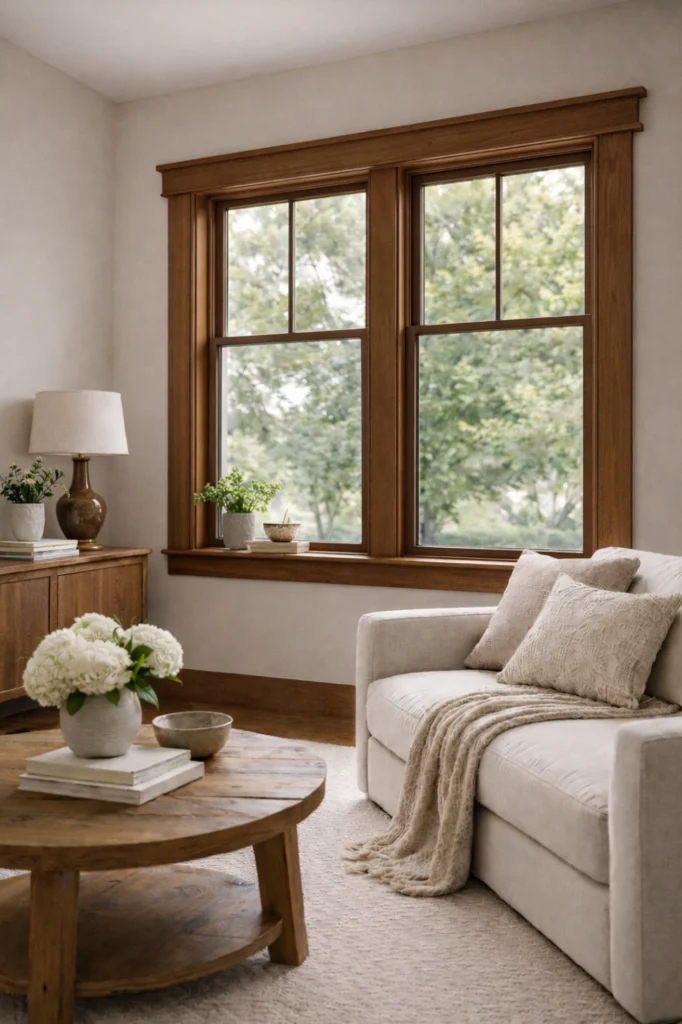
Wide Craftsman-style trim is a defining feature of Arts and Crafts architecture, and it gives windows a substantial, built-in appearance that feels honest and well made. This style uses thick, flat boards with clean square edges, typically 4.5 to 5.5 inches wide on the sides, with a wider header board and a small cap or crown detail on top. The result is a window that looks framed on purpose, with clear structure and symmetry.
Craftsman trim works particularly well in traditional, transitional, and bungalow-style homes, and it pairs beautifully with neutral wall colors, built-in shelving, and handcrafted details. Use paint-grade poplar or MDF for a painted finish, or clear pine and oak if you plan to stain. Keep the corners simple with butt joints rather than mitered corners, which is the authentic Craftsman approach and also the easiest to install well. If you want trim with presence but without ornament, wide Craftsman boards are one of the most satisfying choices you can make.
5. Minimalist Flush Window Trim
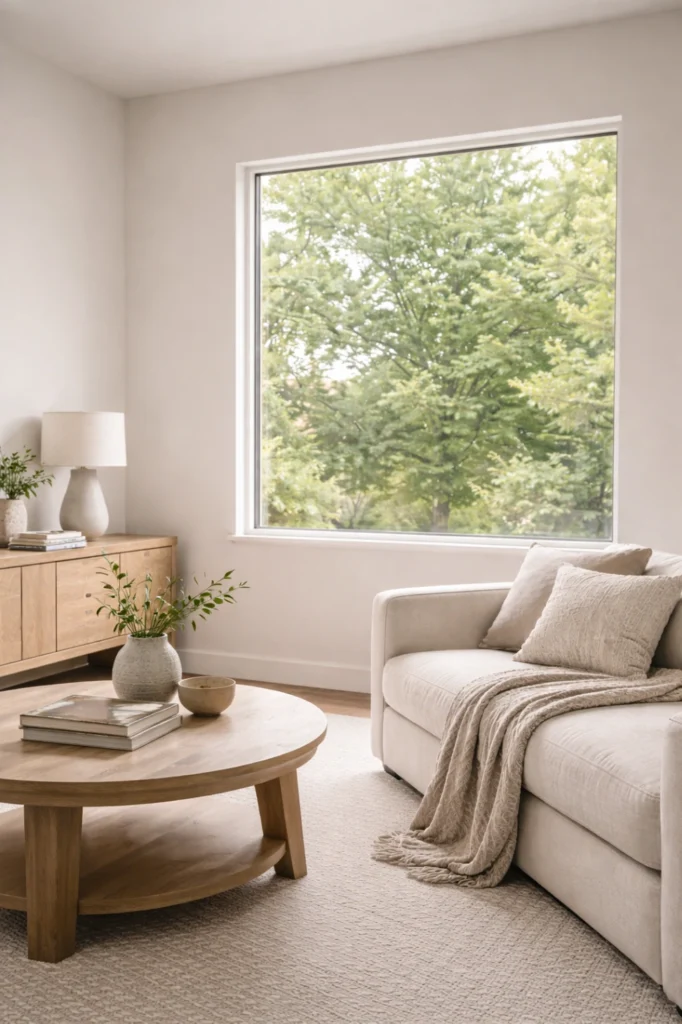
Flush window trim is one of the most modern window trim ideas available, and it suits minimalist and contemporary homes perfectly. Instead of projecting outward from the wall, the trim sits level with the surrounding surface, creating a seamless edge that almost disappears. The window itself becomes the focal point, framed by nothing more than a clean, precise line.
This look depends on careful installation, so it is best done during a remodel or new build when the drywall can be finished right up to the window frame. Ask your contractor for a plaster or drywall return, or use a slim aluminum shadow gap profile about half an inch wide for a crisp reveal. Paint the reveal the same color as the wall so the transition feels invisible, and keep window treatments simple, such as a recessed roller blind, so nothing competes with the clean lines. Flush trim is subtle by design, and that restraint is exactly what makes it feel so refined.
6. Decorative Crown Molding Around Windows
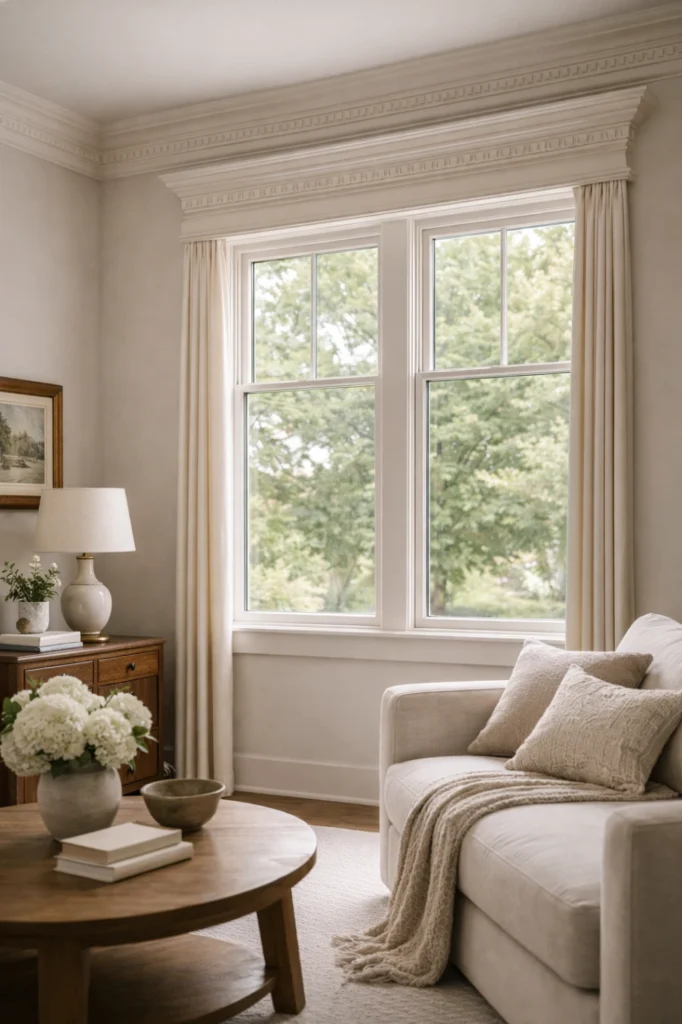
Decorative crown molding used as window trim adds elegance and a sense of occasion to a room. A crown profile across the top of the window draws the eye upward, makes ceilings feel taller, and turns the window into a statement feature rather than a plain opening. This style is most at home in traditional or formal interiors, where architectural detail is part of the room’s character, and it works beautifully in living rooms, dining areas, and master bedrooms with layered wall decor.
Choose a crown profile 3 to 5 inches tall for standard 8 foot ceilings, and scale up to 5 or 6 inches if your ceilings are 9 feet or higher. Install the crown over a flat header board so the molding has a solid base, and paint it the same color as the rest of the trim for a unified look. For the sides, use simple flat casing so the crown stays the star. Crown molding around windows pairs well with detailed ceilings, classic furniture, and soft drapery hung high and wide. It is a more ornate choice, but in the right room it feels luxurious rather than fussy.
7. Painted Trim in Soft Neutral Colors
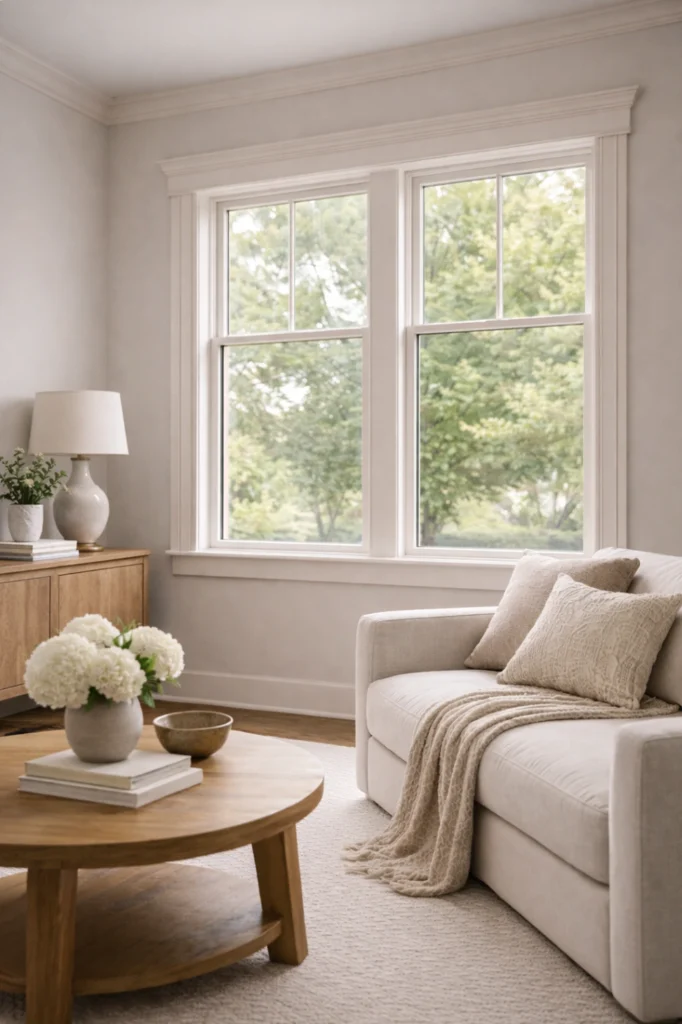
Soft neutral window trim colors offer a gentle alternative to stark white. Shades like warm greige, pale beige, light gray, and soft taupe add warmth while staying versatile, and they work especially well in transitional spaces where balance matters more than contrast. Neutral trim blends with wall colors instead of fighting them, so the room feels cohesive and calm.
Pick a trim color one or two shades lighter or darker than the wall color to create definition without a hard edge. For example, pair a greige trim with warm white walls, or a soft stone gray trim with pale blue-gray walls. Use a satin or semi-gloss finish so the trim stays easy to clean, and test a large swatch next to the window first, because neutrals shift noticeably between morning and evening light. Soft neutral trim suits almost every interior style, from modern to farmhouse, and it is an excellent choice if you like to change wall colors or textiles often, since it adapts to almost any palette.
8. Farmhouse-Style Window Trim
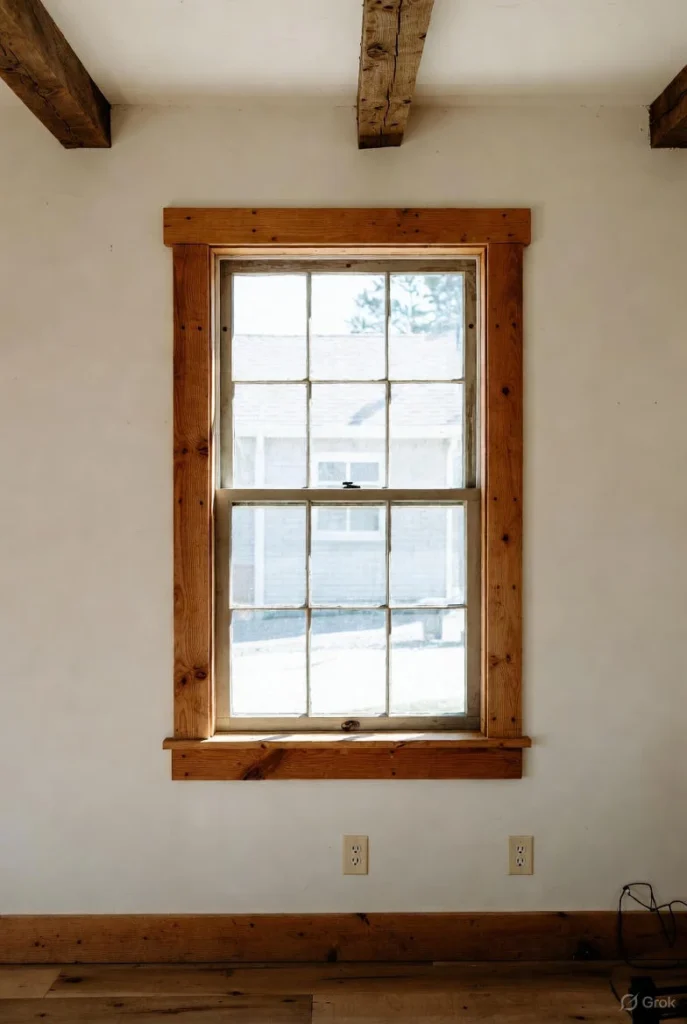
Farmhouse window trim is simple, charming, and full of character. It usually features clean flat boards, a slight overhang at the top, and a handcrafted feel that suits country homes, modern farmhouses, and rustic interiors. The style is deliberately uncomplicated: wide side casing, a thicker header board, and a small shelf-like cap that casts a soft shadow. That simplicity is what makes it so adaptable.
Use 4 to 5 inch wide boards in painted white or soft cream, and add a 1 inch thick sill with a gentle rounded edge. Farmhouse trim pairs beautifully with shiplap walls, vintage furniture, linen curtains, and natural textures like jute and rattan. It also works outdoors: the same clean-board look frames a farmhouse front porch beautifully in every season. Keep the profile consistent across every window in the room so the look feels intentional, and let the trim stay simple while your textiles and accessories add the personality.
9. Dark-Stained Wood Window Trim
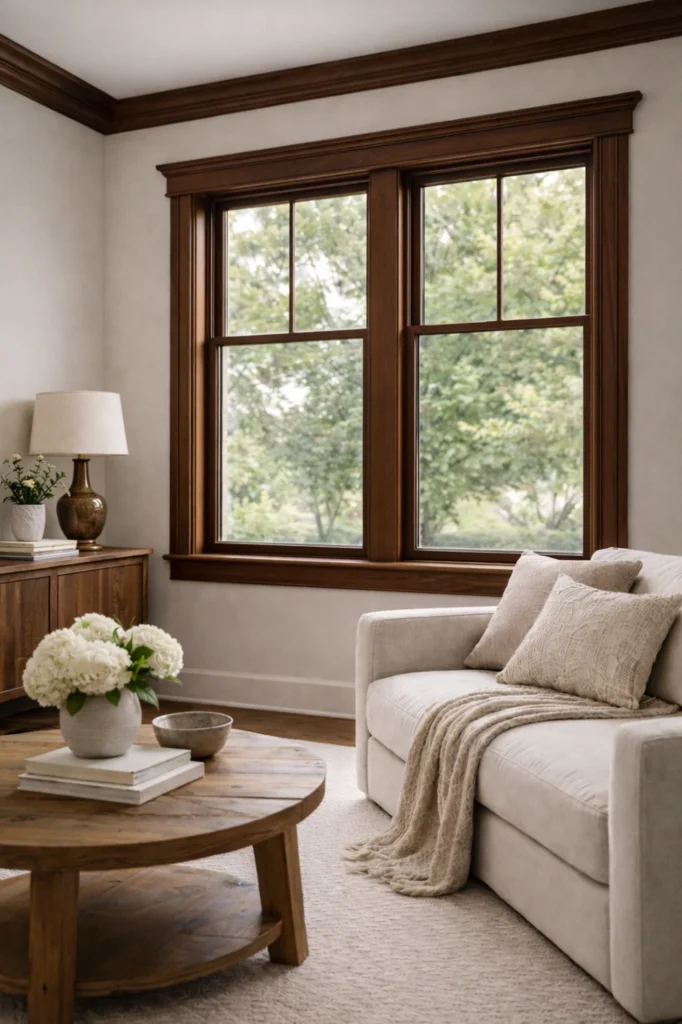
Dark-stained wood window trim creates a rich, dramatic look that feels both formal and timeless. Deep tones like espresso, dark walnut, and ebony add contrast against light walls, highlight the craftsmanship of the trim itself, and bring a sense of luxury to traditional or formal spaces. This style works especially well in libraries, dining rooms, and living rooms where the architecture deserves attention.
Start with a hardwood like oak, walnut, or mahogany, and apply the stain in thin coats, testing on a scrap piece first until the depth is right. Seal with two coats of satin polyurethane to protect the finish and give it a soft glow. Dark trim looks best when the rest of the room has balance: light walls, natural light, and a few warm wood accents elsewhere, such as a wood floor or a wood side table. Avoid pairing dark trim with very dark walls, which can make the room feel closed in. Used with restraint, dark-stained wood trim adds sophistication that painted trim simply cannot match.
10. Window Trim with Built-In Sills
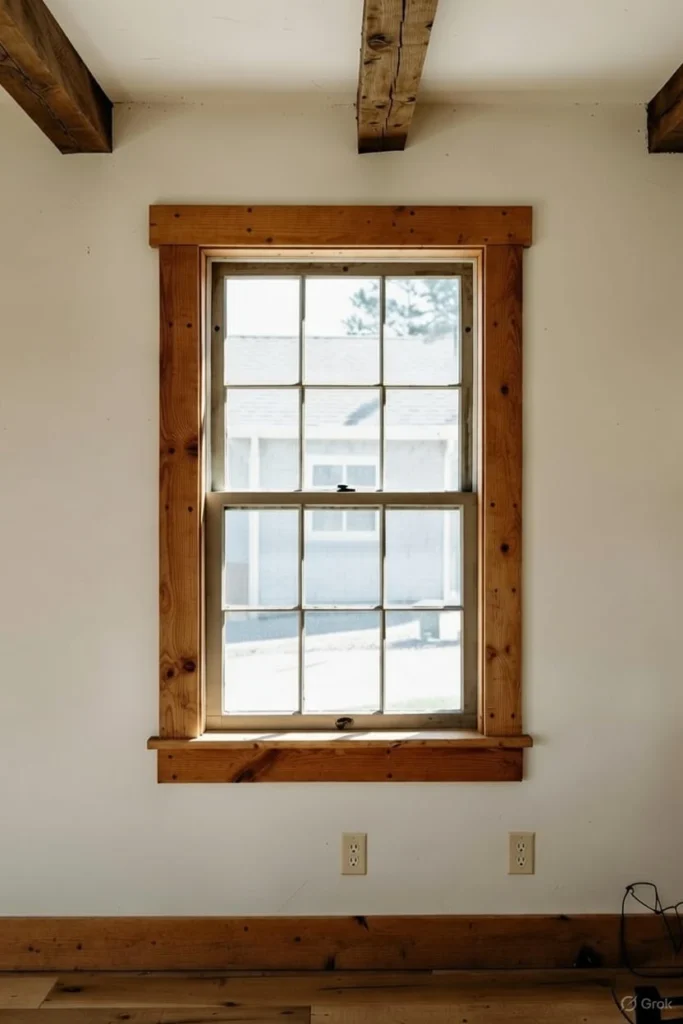
Adding extended or built-in window sills is one of the most practical window trim ideas, because it turns the window into usable space. A deep sill, usually 6 to 10 inches deep, can hold plants, books, candles, or a cushion, and in a wide window it can even become a small reading seat. Built-in sills add depth and character while making the window more useful every single day.
Build the sill from a solid piece of wood, stone, or quartz so it can support weight without flexing, and extend it 1 to 2 inches past the trim on each side for a finished look. In kitchens, a deep sill beside the sink is perfect for herbs and dish soap, and it pairs nicely with a fresh kitchen color scheme. In bedrooms and reading nooks, add a 3 inch thick cushion in a washable fabric and a couple of throw pillows to create an inviting perch. Seal the sill well against moisture, especially in kitchens and bathrooms, and choose a finish that matches or complements the rest of the trim.
11. Layered Trim Profiles
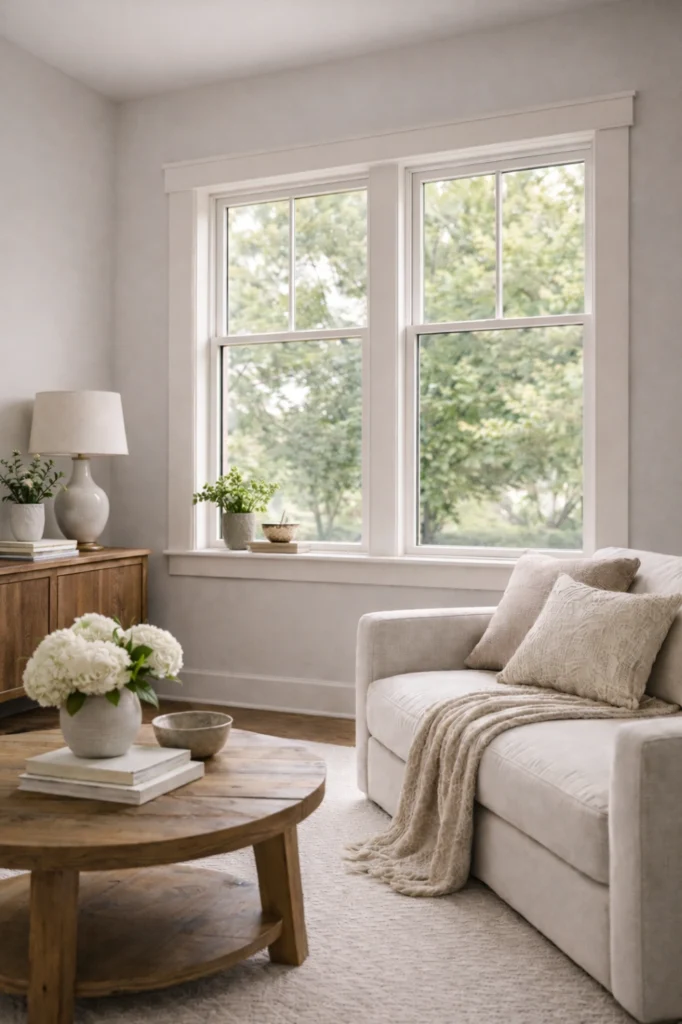
Layered window trim uses two or three trim pieces stacked together to create depth and dimension without becoming overly ornate. A typical combination is a flat back band against the wall, a shaped casing in the middle, and a thin bead or stop detail closest to the glass. The layers catch light and shadow differently, so the window feels custom-built and visually dynamic from every angle.
This approach works best in traditional and transitional homes, and it suits both large and small windows, since the layering can be scaled up or down. Keep the total width between 4.5 and 6 inches, and paint all layers the same color so the profile reads as one intentional design rather than a collection of parts. Layered trim pairs well with classic color palettes, paneled walls, and traditional furniture. It costs a little more in materials and labor than a single flat board, but the result looks like it belongs in a much more expensive home.
12. Modern Metal Window Trim
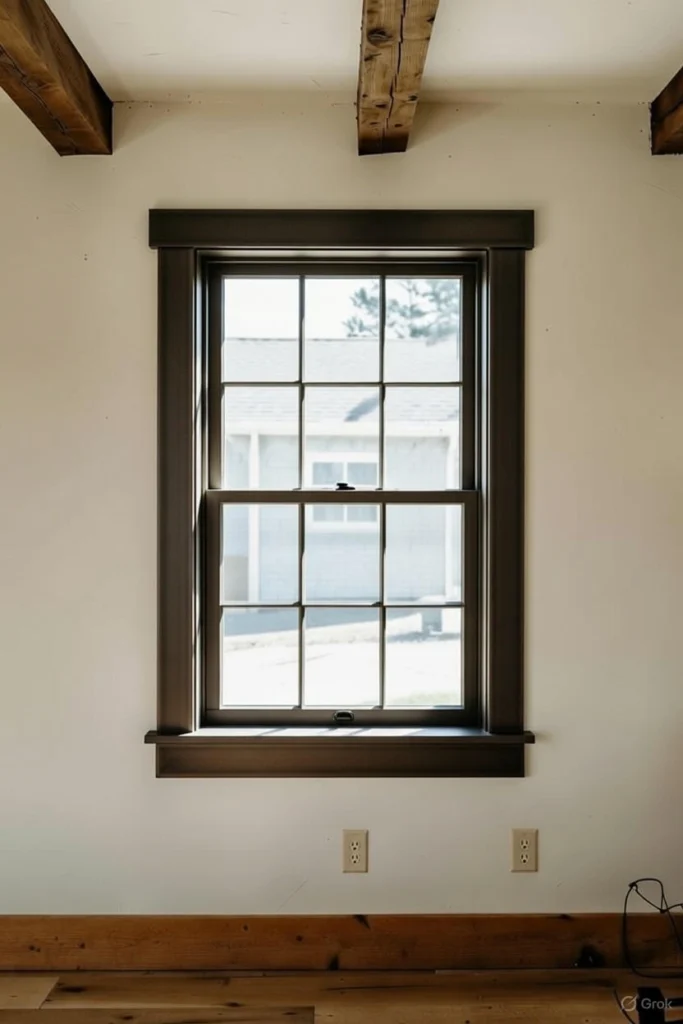
Metal window trim offers a sleek, contemporary alternative to wood, and it is increasingly popular in industrial and ultra-modern homes. Materials like brushed aluminum, blackened steel, and brass create clean edges, sharp lines, and a refined appearance that wood cannot quite replicate. Metal trim is especially effective on large windows and glass walls, where its slim profile keeps the focus on the view.
Choose aluminum for a lightweight, rust-proof option that can be powder-coated in almost any color, or steel for a heavier, more architectural feel. Keep the profile slim, usually 1 to 2 inches wide, and match the metal finish to other details in the room, such as faucet finishes, door handles, or light fixtures. Metal trim is durable and low maintenance: it will not warp, crack, or need repainting, and a quick wipe keeps it looking new. Pair it with concrete, glass, and minimalist furniture for a bold modern look that stands out without shouting.
13. Arched Window Trim Designs
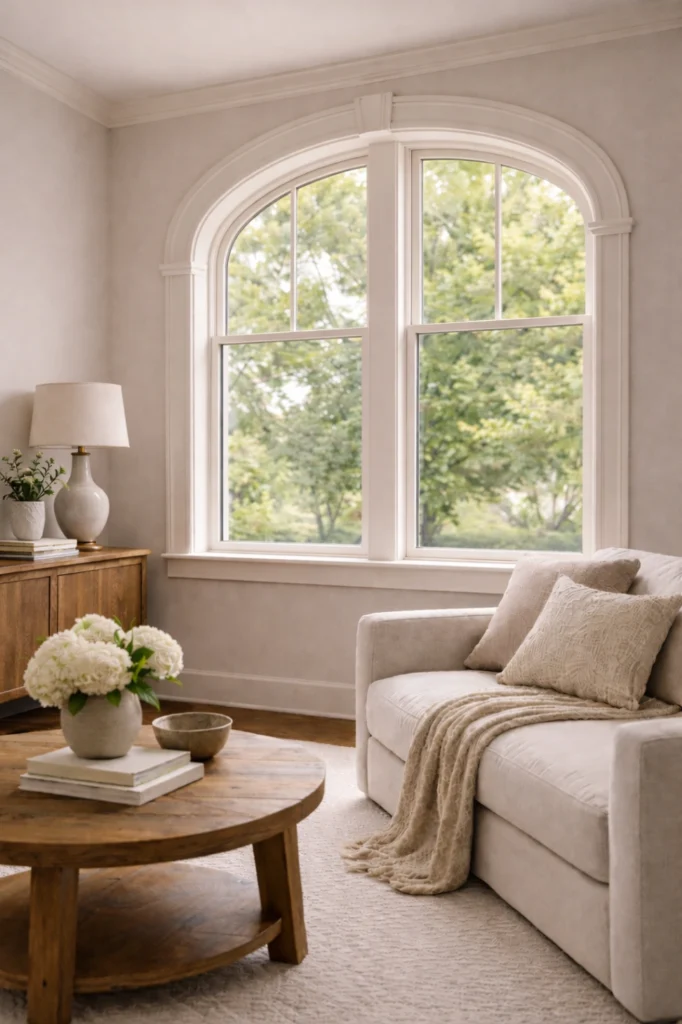
Arched window trim highlights architectural curves and adds a sense of grace that straight lines cannot match. The curved profile emphasizes the shape of the window, softens a room, and creates a feeling of grandeur that suits Mediterranean, traditional, and historic homes. Arched trim works especially well in entryways and living areas, where it draws attention to craftsmanship and turns the window into a true focal point.
Because the curve is the feature, keep the trim profile simple and consistent, usually a smooth casing 3.5 to 4.5 inches wide that follows the arch exactly. Flexible trim products or steam-bent wood are the usual solutions for the curved section, so this is a job best left to an experienced carpenter. Paint the trim to match the rest of the windows in the room, and keep window treatments light, such as sheer curtains or a simple rod mounted above the arch, so the curve stays visible. Arched trim costs more than standard casing, but in a home with arched architecture it is the detail that makes everything else feel intentional.
14. Exterior Window Trim Accents
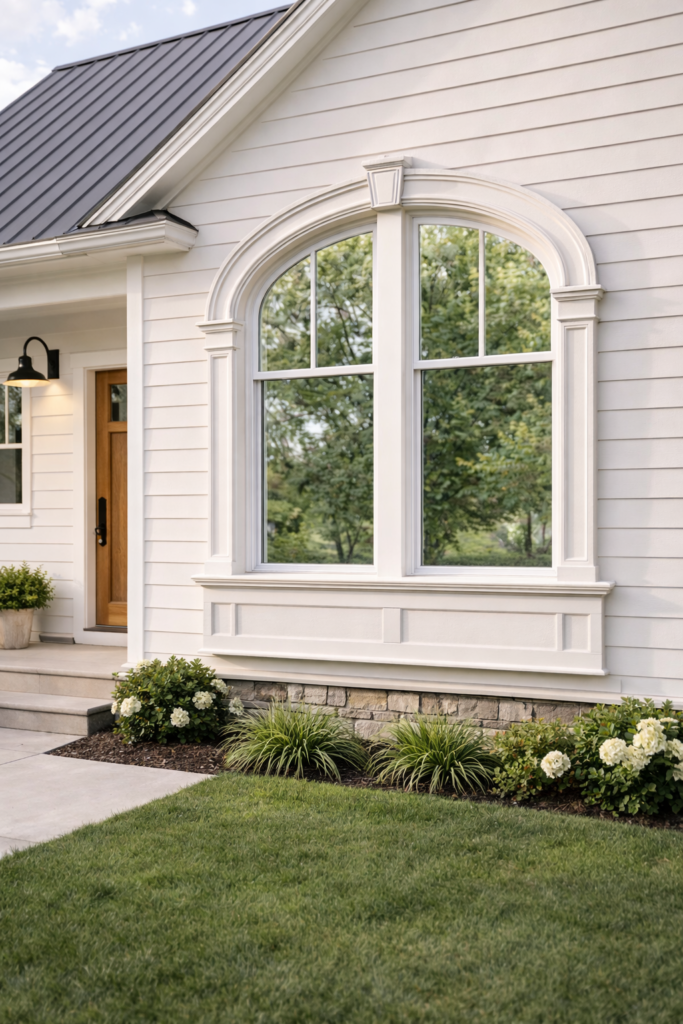
Exterior window trim is just as important as interior trim, because it defines the face your home shows to the street. Well-designed exterior trim frames each window, complements the siding, and adds depth and character to the facade. It is one of the fastest ways to improve curb appeal, and it protects window edges from weather at the same time. A home with crisp, well-proportioned exterior trim simply looks cared for.
Use weather-resistant materials such as fiber cement, PVC trim boards, or primed cedar, and paint with a high-quality exterior paint in a satin or semi-gloss finish. Match the trim width to the scale of the house: 4 inch boards suit most homes, while larger two-story facades can carry 5 to 6 inch boards with a decorative header. Coordinate the trim color with your exterior wall design and siding so the whole facade reads as one composition, and add shutters or window boxes only if they fit the style of the home. Exterior trim can be bold or subtle, but it should always be consistent across the whole house.
15. Custom Trim with Integrated Lighting
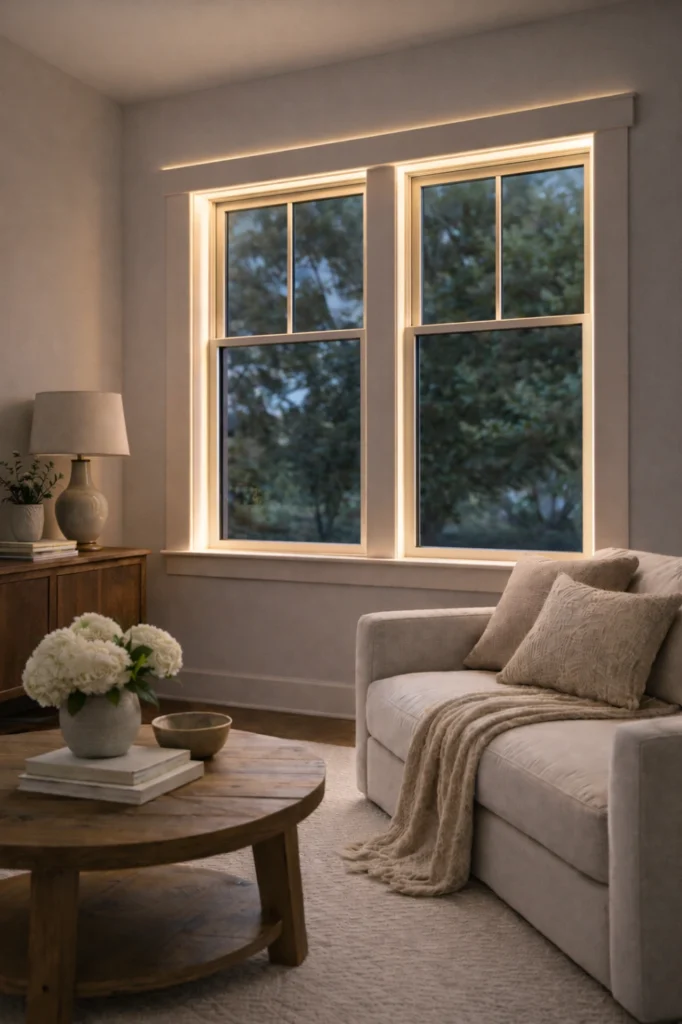
Custom window trim with integrated lighting is a modern and innovative idea that adds ambiance long after the sun goes down. A slim LED strip hidden behind the trim or set into a small channel washes the wall with soft light, highlights the architectural detail, and turns the window into a glowing feature in the evening. It works beautifully in contemporary homes and luxury interiors, where lighting is treated as part of the design rather than an afterthought.
Use warm white LED strips, around 2700K to 3000K, for a cozy glow, and connect them to a dimmer so you can adjust the mood. Hide the strip in a recessed channel behind the header board or along the side casing, and run the low-voltage wiring through the wall during a remodel so nothing shows. Keep the trim profile clean and simple so the light, not the molding, is the star. Integrated lighting is ideal for living rooms, bedrooms, and dining areas, and it adds a unique high-end touch that guests notice immediately.
Conclusion
Choosing the right window trim can dramatically transform your home’s appearance and atmosphere. These 15 window trim ideas offer inspiration for every style, from classic white and warm natural wood to bold black frames, layered profiles, and custom trim with integrated lighting. Whether you want subtle elegance or a bold architectural statement, the right trim enhances both form and function.
Start with your home’s style and your budget, then pick one idea and try it on a single room before committing to the whole house. Measure carefully, choose materials that suit your climate and your lifestyle, and do not be afraid to mix a simple profile with a confident color. By selecting materials, colors, and profiles with care, you can elevate your space without major renovations and create a home that feels polished, intentional, and beautifully designed.
Frequently Asked Questions
What is the standard width for window trim?
For most homes, side casing 3.5 to 4.5 inches wide looks balanced, with a header board slightly wider at 4.5 to 5.5 inches. Smaller rooms and modern interiors suit the narrower end of that range, while larger rooms, tall ceilings, and traditional homes can carry wider boards. Always keep the width consistent across every window in the same room.
Should window trim match the baseboards and doors?
In most cases, yes. Matching your window trim to your baseboards and door casing creates a calm, cohesive look and makes the whole room feel professionally finished. The exception is when you deliberately want the windows to stand out, such as with bold black trim or dark-stained wood, in which case the contrast itself is the design choice.
What is the best material for window trim?
Paint-grade poplar or MDF is the most affordable and easiest option for painted trim, while clear pine, oak, and walnut are best when you want to show off the wood grain. For exteriors, use fiber cement, PVC trim boards, or primed cedar, which resist moisture and weather far better than interior-grade materials.
Can I install window trim myself, or should I hire a carpenter?
A confident DIYer can install simple flat casing with a miter saw, a nail gun, and wood filler, especially on square windows. Hire a carpenter for arched windows, layered profiles, flush drywall returns, or any window that is out of square, since those jobs need precise measuring and cutting to look right.
How do I keep white window trim looking clean?
Use a semi-gloss or satin paint, which resists dirt and wipes clean easily. Dust the trim weekly with a dry cloth or a duster, and wipe it with a damp cloth and mild soap every month or so. Touch up chips promptly with a small brush, and plan on a fresh coat of paint every three to five years in busy areas like kitchens and hallways.
More Ideas You Will Love
 20 Creative Christmas Wall Light Ideas to Brighten Your Holiday Decor
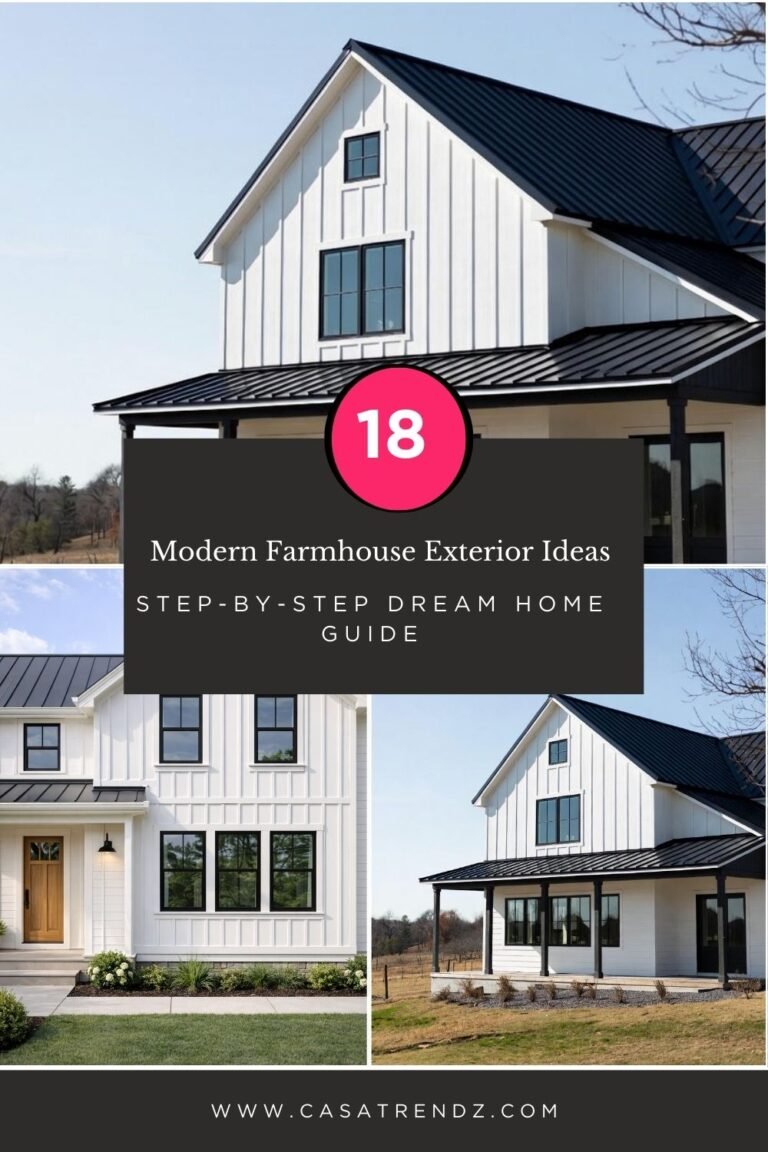 18 Modern Farmhouse Exterior Ideas: Step-by-Step Dream Home Guide
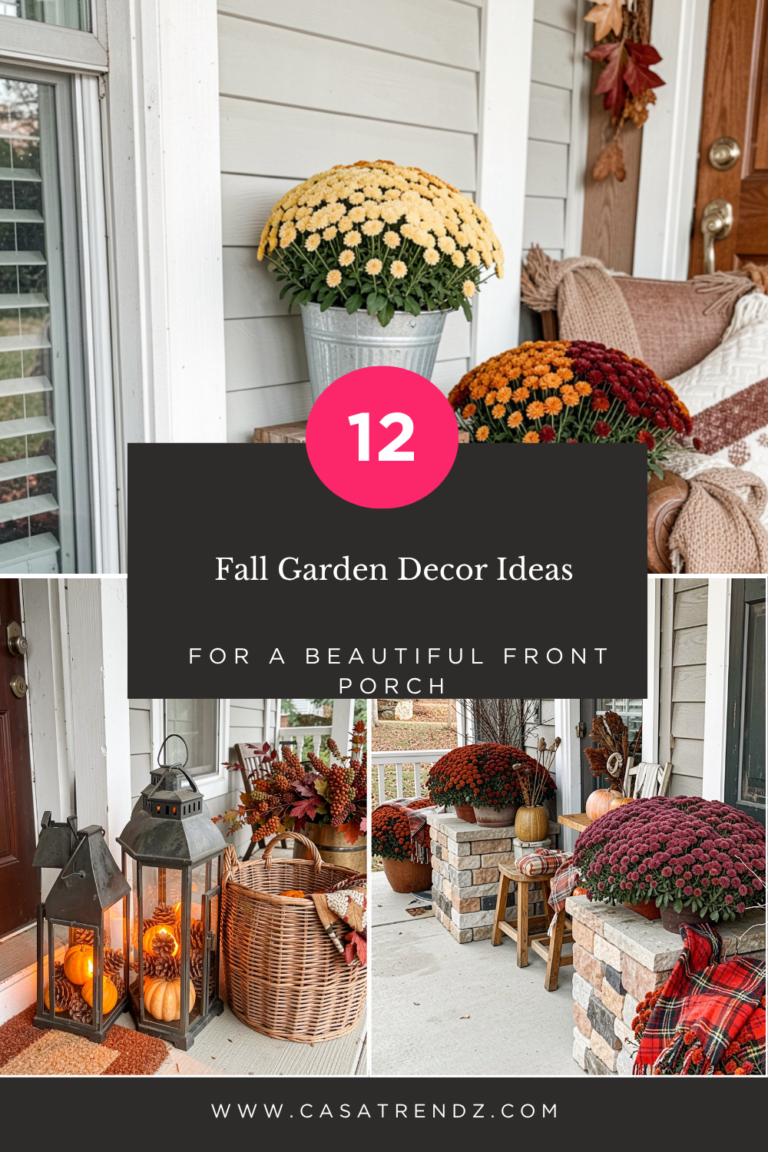 12 Fall Garden Decor Ideas for a Beautiful Front Porch
 14 DIY 4th of July Table Decorations for a Rustic Celebration
 14 Patriotic Home Decor Ideas You Can DIY This Independence Day
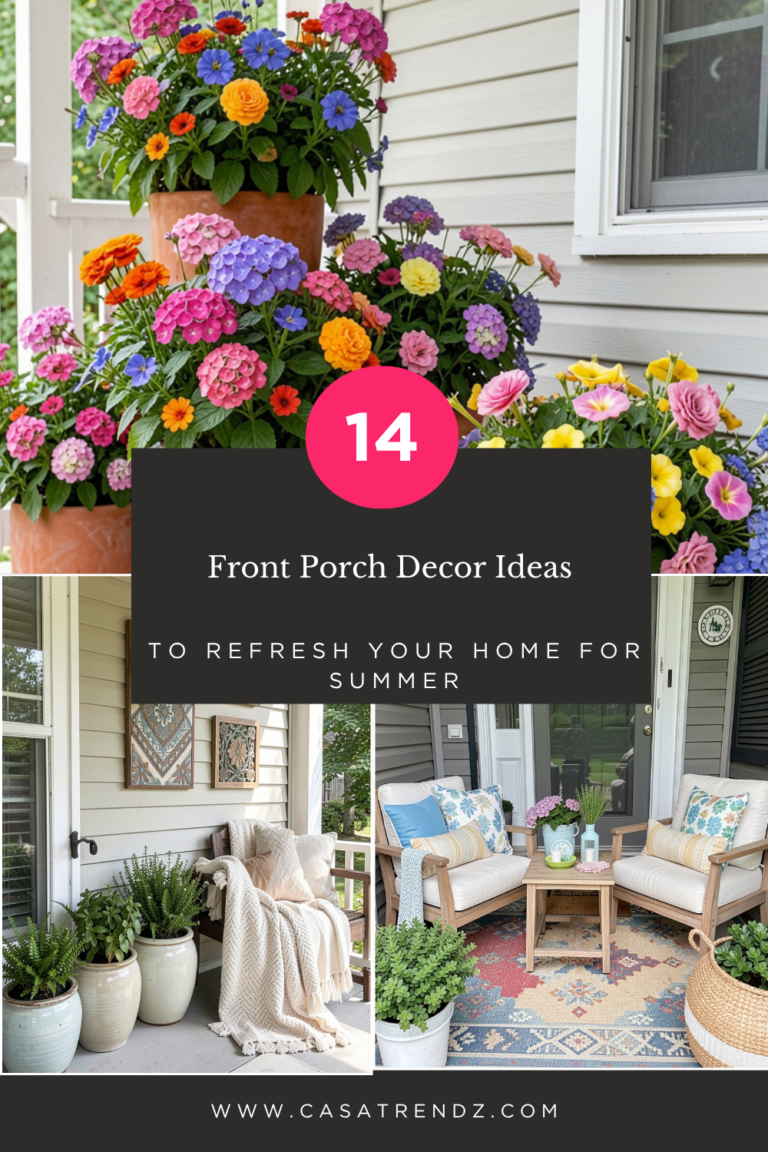 14 Front Porch Decor Ideas to Refresh Your Home for Summer