
17 Pantry Shelving Ideas for Smart and Chic Storage Solutions

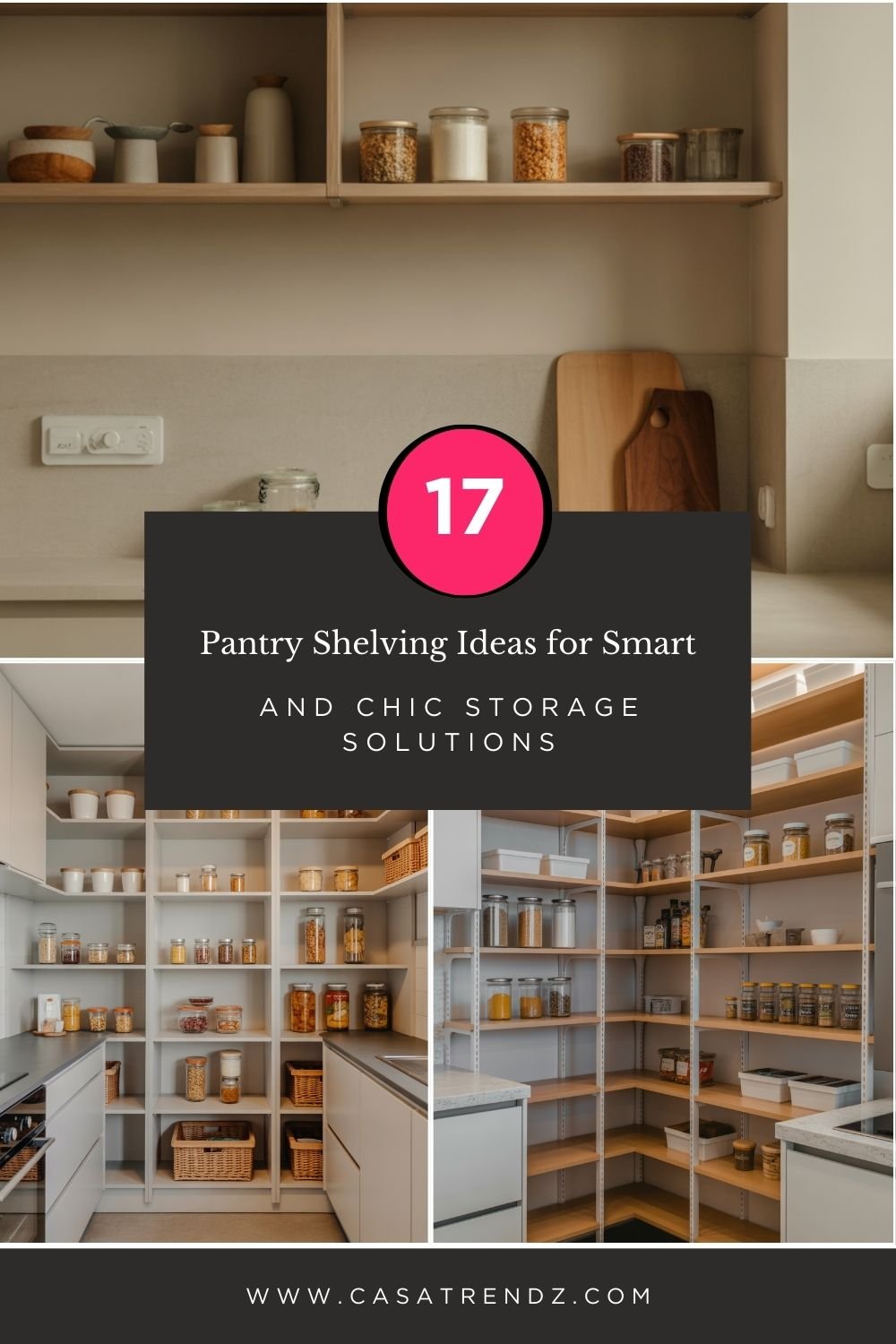
A well-organized pantry can completely change how your kitchen works. Whether you are working with a walk-in pantry, a compact cabinet, or a converted closet, the right shelving design helps you store more, find things faster, and keep the whole space looking calm instead of chaotic. Good shelving is not just about adding boards to a wall. It is about matching shelf depth, spacing, and materials to the way you actually cook, shop, and store food.
These pantry shelving ideas cover every kind of kitchen, from tiny apartment pantries to generous walk-ins. You will find adjustable systems that grow with your family, pull-out shelves that end the lost-item problem for good, and built-in designs that look like they were part of the kitchen from day one. Each idea includes practical details on materials, measurements, and installation, so you can pick the option that fits your space and your budget.
Before you buy a single shelf, take ten minutes to measure your pantry and sort what you store. Group everyday items, bulk buys, baking supplies, and small appliances separately, and note the tallest item you need to fit, usually a cereal box or a large oil bottle at around 12 to 14 inches. That one measurement decides your shelf spacing, and it is the difference between a pantry that works and one that fights you every day. For a full plan on sorting and zoning, see our pantry organization ideas for a step-by-step approach that pairs well with any shelving style below.
1. Adjustable Open Shelving for Flexible Storage
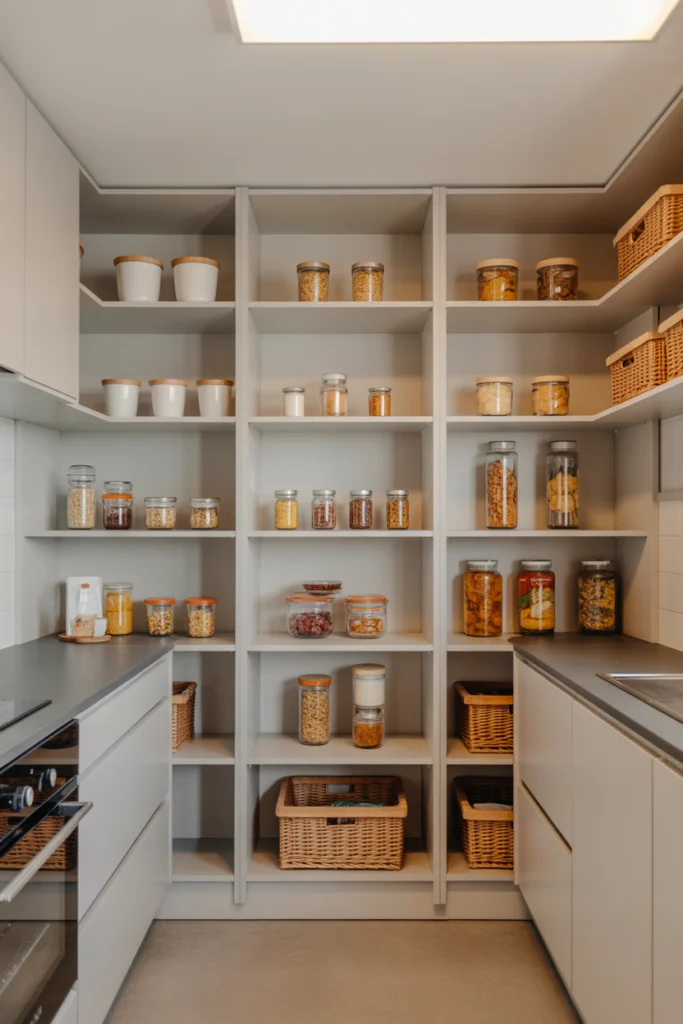
Adjustable open shelving is the most versatile option in this list because it adapts as your storage needs change. The system is simple: vertical tracks or shelf pins hold brackets at different heights, so you can move a shelf up or down in seconds without tools. That flexibility matters when your household changes, since tall cereal boxes, bulk packs, and small appliances all need different clearances at different times of year.
For a standard pantry, plan on shelves 12 to 16 inches deep and 24 to 36 inches wide, with vertical spacing of 12 to 15 inches between shelves for everyday items and one taller gap of 18 to 20 inches for large containers. Solid wood, plywood with edge banding, and melamine are the most popular materials. Wood looks warm and holds heavy loads well, while melamine wipes clean easily and costs less. If you want the shelves to carry canned goods, choose 3/4 inch thick boards and keep spans under 36 inches so they do not sag over time.
Style the shelves with matching containers and labels so the open design looks intentional rather than cluttered. Keep everyday items at eye level, heavy items low, and rarely used items up high. A small step stool stored inside the pantry makes the top shelf genuinely useful instead of a dead zone. Because everything is visible, open shelving also cuts food waste, since you can see at a glance what you already own before you shop.
2. Floor-to-Ceiling Pantry Shelving for Maximum Capacity
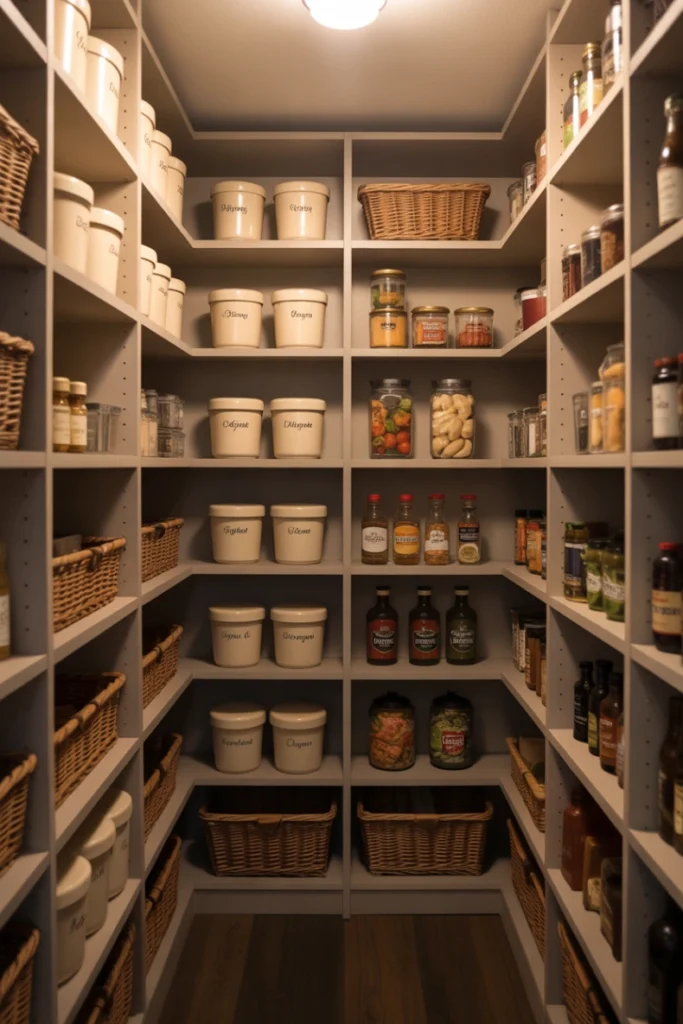
Floor-to-ceiling shelving turns wasted vertical space into useful storage, which is exactly what small kitchens need most. By running shelves from the floor to the ceiling, you gain room for everyday essentials at waist and eye level plus bulk items, seasonal supplies, and rarely used appliances up top. The result is a pantry that holds far more without taking a single extra inch of floor space.
Start by measuring your ceiling height, which is usually 96 inches in most homes, and plan shelf spacing from the bottom up. Keep the first shelf 6 inches off the floor for easy cleaning, leave 15 inches between the lower shelves for cans and jars, and reserve the top two shelves for items you reach for once a month or less. In a walk-in pantry, a depth of 16 inches works well for the main shelves, while 12 inch shelves suit narrow walls and keep items from getting lost at the back. Our walk-in pantry design ideas show how to lay out these tall runs so the pantry still feels open instead of crowded.
Uniform containers make tall shelving look calm and intentional. Use clear bins for snacks, labeled canisters for dry goods, and one consistent color for baskets so the eye reads the wall as a single organized unit. Add a slim step stool or a small rolling library ladder if your ceiling is high, and install LED strip lights under each shelf so the upper rows stay visible. Paint the shelves the same color as the walls for a built-in look, or choose a warm wood tone to add contrast and character.
3. Pull-Out Pantry Shelves for Easy Access
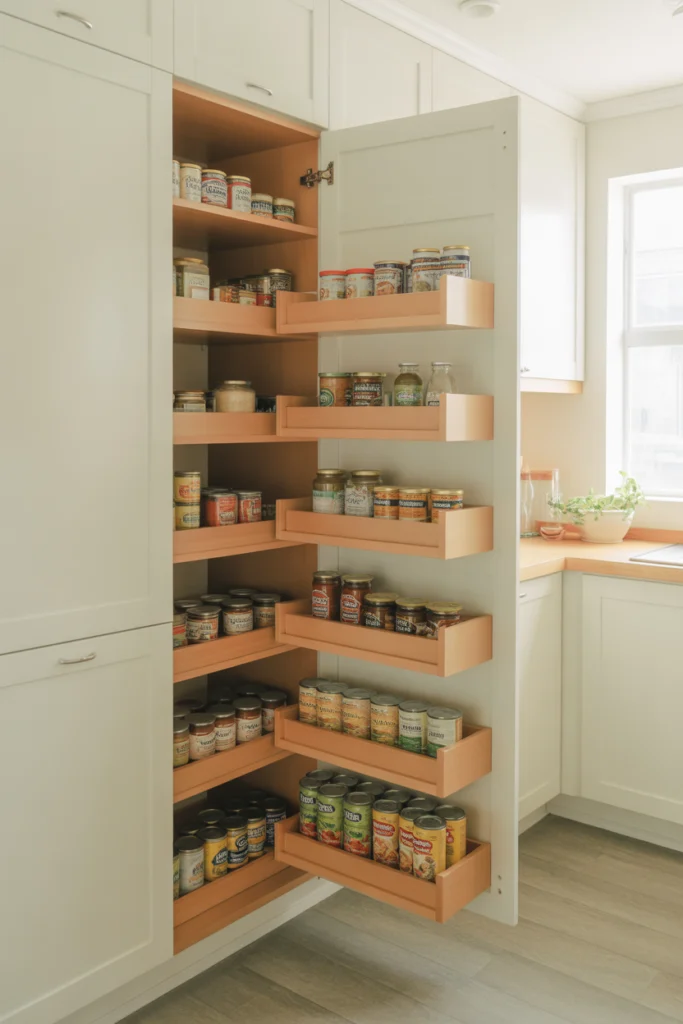
Pull-out shelves solve the most common pantry frustration: items that disappear into the dark back of a deep cabinet. Mounted on full-extension drawer slides, each shelf glides all the way out so you can see and reach everything without bending, stretching, or moving three jars to find one. They are especially useful in deep pantries, lower cabinets, and narrow pull-out towers where fixed shelves waste half the space.
Most pull-out shelves are 20 to 24 inches deep and sized to fit your cabinet opening minus about an inch on each side for the slides. Choose full-extension, soft-close slides rated for at least 75 pounds if you plan to store canned goods or small appliances, and look for shelves with a raised lip of 2 to 3 inches around the edge so jars cannot slide off. Solid wood and heavy-duty melamine both work well, and a wipe-clean surface makes spills easy to handle. You can buy ready-made pull-out kits for standard cabinet widths or have a carpenter build custom units for an odd-sized pantry.
Organize each pull-out by category so one glide gives you everything for a single task. Dedicate one shelf to breakfast items, one to baking supplies, and one to canned goods and sauces. Label the front edge of each shelf so the system stays obvious for everyone in the household. If your budget is tight, start with just the two lowest shelves, since those are the ones where items get lost most often, and add more later.
4. Floating Shelves for a Minimalist Pantry Look
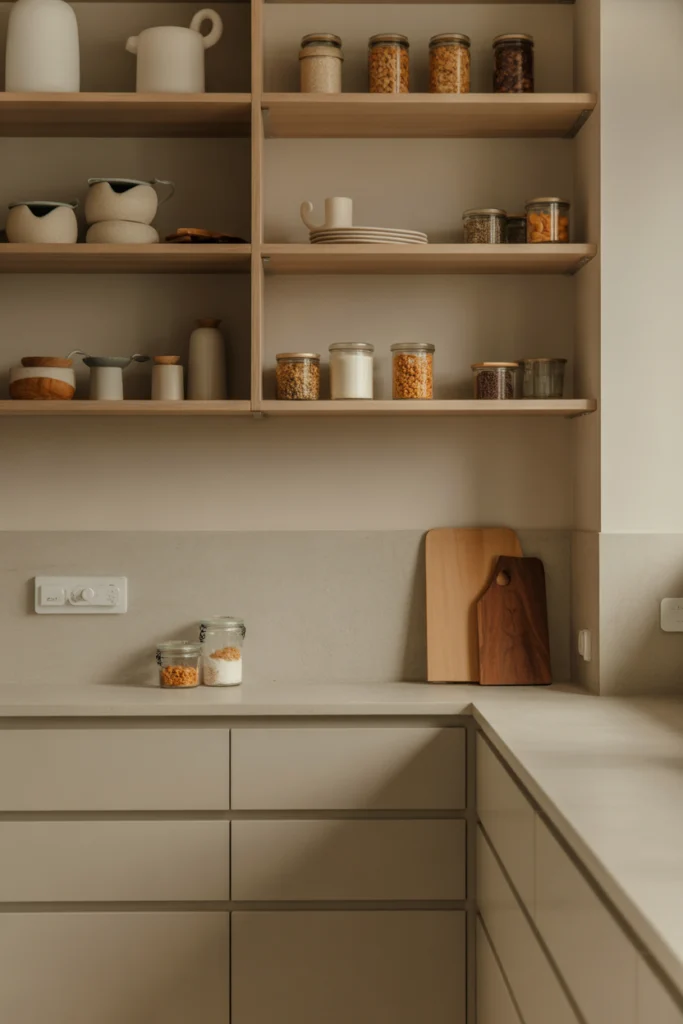
Floating shelves attach directly to the wall with hidden brackets, so there are no visible supports to interrupt the clean lines. That invisible hardware gives a pantry a light, modern feel and makes even a small space look larger, because the eye travels across an unbroken wall instead of stopping at brackets and uprights. They work best in pantries where you want the storage itself to look like part of the decor.
Because floating shelves rely on hidden rods or brackets set into wall studs, installation matters more here than with any other style. Each shelf should be anchored into at least two studs, and the bracket should be rated for the load you expect, typically 25 to 50 pounds per shelf for pantry goods. Keep shelves 12 to 14 inches deep and no longer than 36 inches unless the bracket system is rated for a longer span. Solid wood in a light oak or walnut finish looks best, but painted MDF is a good budget option that matches kitchen cabinetry.
Floating shelves reward intentional styling. Limit each shelf to one row of items with a little breathing room, and use matching canisters, jars, and baskets so the display reads as a set rather than a random collection. Leave the top shelf for decorative pieces like a small plant, a framed print, or a ceramic crock, and keep everyday items on the middle shelves where they are easy to grab. Wipe the shelves weekly, since open shelves collect dust faster than closed cabinets.
5. Wire Shelving for Affordable and Breathable Storage
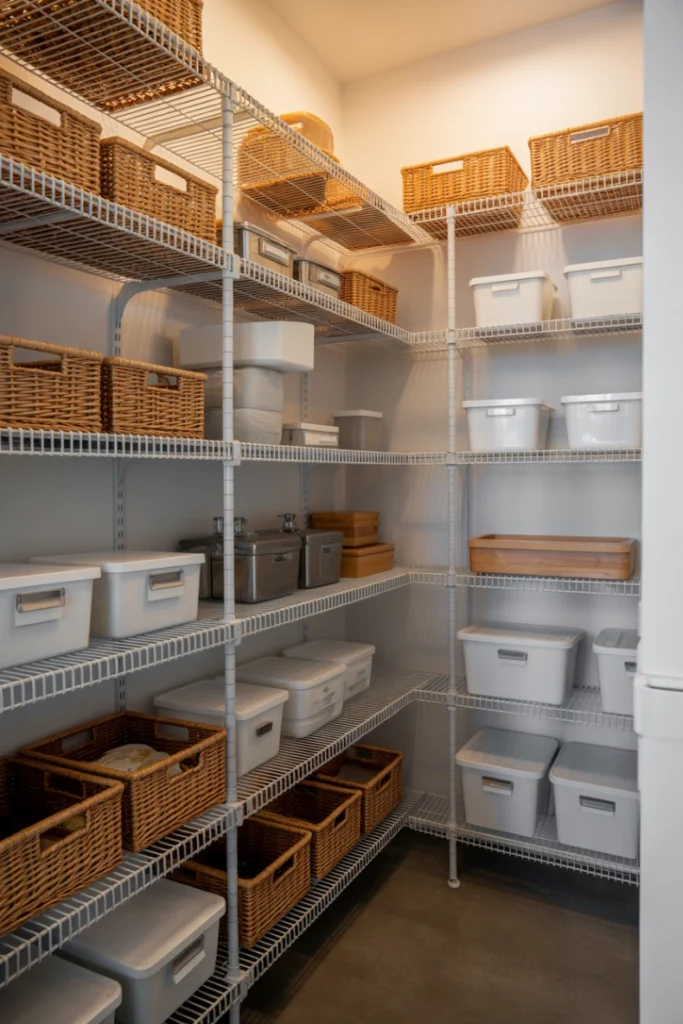
Wire shelving is the budget-friendly workhorse of pantry storage. The open grid lets air circulate around stored food, which helps keep dry goods fresh, and the shelves are light, easy to cut to size, and simple to install with basic tools. A full wire shelving system for a standard closet pantry often costs less than a single custom wood unit, which makes it a smart first step for renters and first-time homeowners.
Standard wire shelves come in 12, 16, and 20 inch depths, with 16 inches being the sweet spot for most pantries. Most systems use wall-mounted tracks with clip-on brackets, so you can reposition shelves as your needs change. Choose epoxy-coated steel in white or chrome for a clean look, and check the weight rating before loading a shelf with canned goods, since cheaper wire shelves can bow under heavy loads. Add shelf liners, which are thin plastic or vinyl mats, to stop small items from tipping through the grid and to give the shelves a smoother surface.
Wire shelving looks its best when paired with uniform baskets and bins that hide the industrial grid. Use woven or fabric baskets for a softer look, or clear bins if you want to see contents at a glance. Label everything, because the open design means every item is visible. If you want a more finished appearance, add a wood shelf cover on the top row, which doubles as a display ledge for plants or cookbooks.
6. Corner Pantry Shelving to Use Awkward Spaces
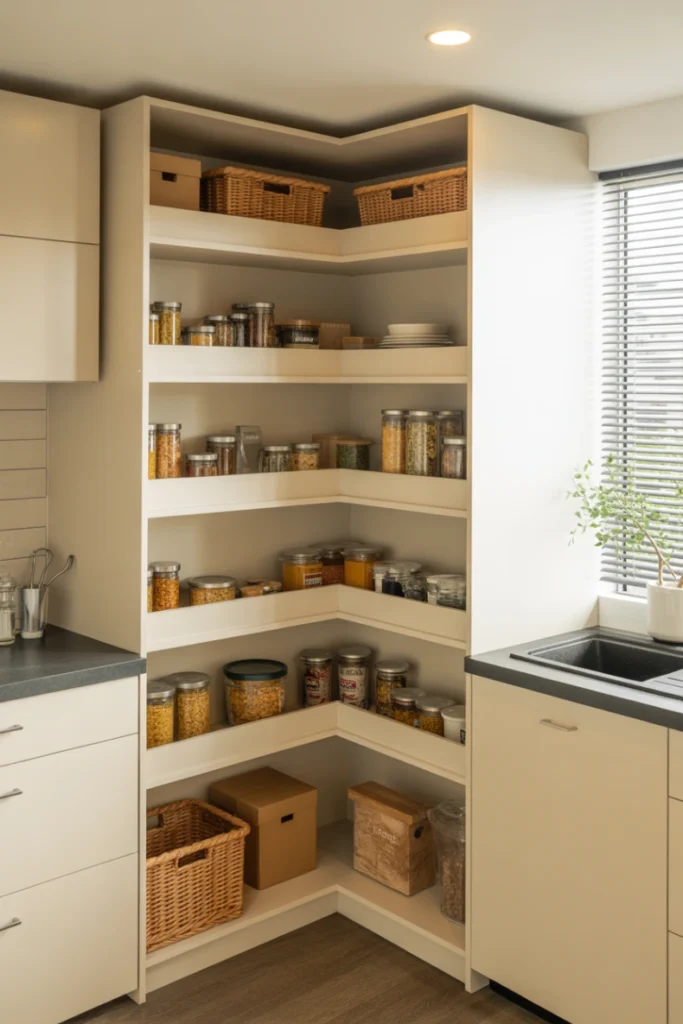
Corner space is the most wasted area in almost every pantry, because standard straight shelves leave a dead triangle where two walls meet. Corner shelving fixes that by using angled, curved, or rotating shelves that turn the awkward spot into usable storage. It is one of the highest-impact upgrades you can make in a small kitchen, since it adds capacity without changing the pantry footprint at all.
The simplest option is a set of angled shelves cut to fit the corner at 45 degrees, which works well for storing spices, oils, and small jars. For deeper corners, a lazy Susan turntable, usually 18 to 24 inches in diameter, lets you spin the contents to the front instead of reaching into the back. In a walk-in pantry, L-shaped shelves that wrap both walls make the corner a natural home for bulk items and appliances. Measure the corner carefully before ordering, since even a half-inch error can leave a gap or a shelf that will not fit.
Keep corner shelves shallow enough that items stay visible, and use small bins to group like items so nothing gets stranded at the back. Put your most-used spices and oils on the corner turntable and reserve the deepest part of the corner for backup supplies you only touch once a week. A small battery-powered LED light in the corner makes a surprising difference, since corners are usually the darkest part of a pantry.
7. Built-In Pantry Shelving for a Custom Look
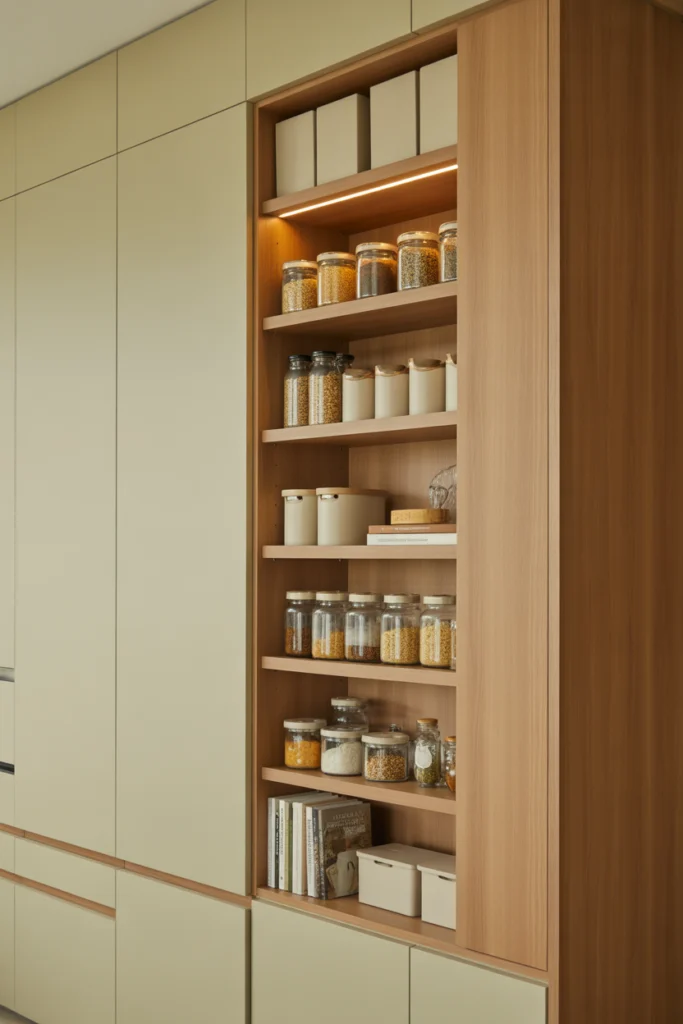
Built-in shelving is designed and fitted for your exact space, so it looks like it was part of the kitchen from the day the house was built. Instead of freestanding units that leave gaps at the walls, built-ins run wall to wall and floor to ceiling, with trim and molding that tie them into the surrounding cabinetry. The result is a polished, high-end look that also adds real value to the home.
Because built-ins are custom, start with a detailed plan. Sketch the pantry wall, mark the studs, and list what will live on each shelf before the carpenter cuts a single board. A good layout mixes open shelves for everyday items, a few drawers for small tools and liners, and one tall section for brooms, mops, or a vacuum if the pantry is large enough. Match the shelf material and paint color to your kitchen cabinets so the pantry reads as an extension of the kitchen, and ask for adjustable shelf pins even in a built-in, so the layout can change later. If you are planning a full refresh, our pantry cabinet ideas show how built-in shelving and cabinet storage can work together in one cohesive design.
Built-ins cost more than freestanding shelves, typically several hundred to a few thousand dollars depending on size and materials, but they last for decades and never need replacing. To keep the investment looking good, use matching containers throughout and leave a little empty space on each shelf rather than packing it full. A built-in pantry that is eighty percent full looks organized; one that is one hundred percent full looks crowded, no matter how good the shelves are.
8. Ladder-Style Pantry Shelving for Visual Interest
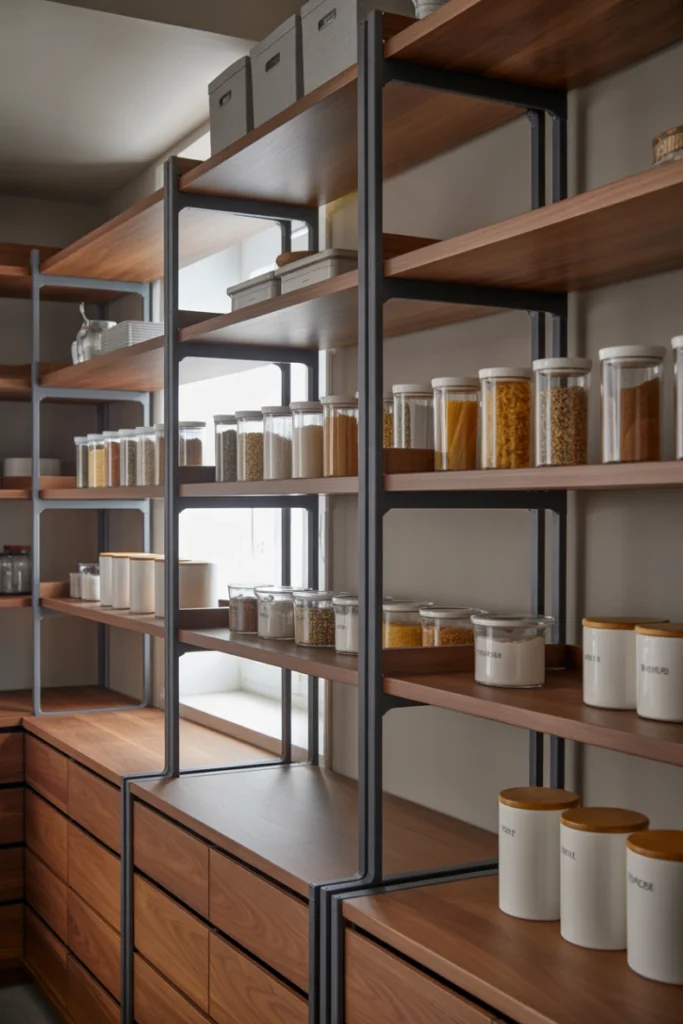
Ladder shelving leans against the wall or steps upward in tiers, which gives a pantry a relaxed, decorative feel that flat shelves cannot match. The graduated depths create a natural display, with the deepest shelf at the bottom for heavy items and progressively shallower shelves above for lighter goods. It is a good choice for open or walk-in pantries where the storage is visible from the kitchen and you want it to look good as well as work hard.
Most ladder shelves are 24 to 36 inches wide, with four or five tiers. The bottom shelf is usually 14 to 16 inches deep and each shelf above is about 2 inches shallower, which keeps the unit stable and gives every row a clear sightline. Look for a solid wood or metal frame with a weight rating that suits your needs, and anchor the top of the unit to the wall with a furniture strap, especially in homes with children or pets. Ladder shelves work best for lighter items, so keep canned goods and heavy appliances on a sturdier shelf elsewhere.
Use the tiered layout to your advantage. Place heavy baskets and bulk items on the bottom rung, everyday jars and canisters in the middle, and decorative pieces like plants, cookbooks, and ceramic bowls on the top two rungs. Because the shelves are open and visible, stick to a consistent color palette of two or three tones so the display feels curated. A ladder shelf also makes a great home for a small herb garden, since the upper rungs catch more light.
9. Glass Shelving for a Light and Airy Pantry
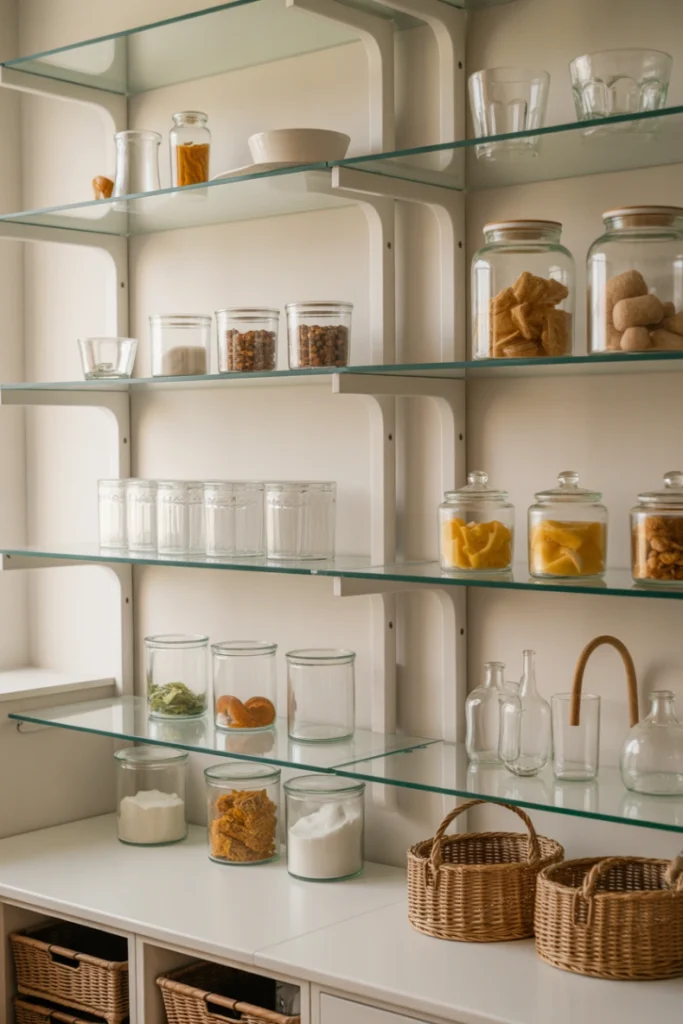
Glass shelves bring light into a pantry in a way no other material can. Because light passes through the glass, even a small pantry feels brighter and more open, and the shelves themselves seem to disappear, which puts the focus on the jars and containers you store. It is a refined, elegant choice that suits modern kitchens and pantries with good lighting.
Use tempered glass at least 3/8 inch thick for pantry shelves, since tempered glass is far stronger than standard glass and breaks into small, safer pieces if it ever fails. Keep spans under 30 inches to avoid flexing, and support each shelf with metal brackets or a channel mounted into the wall studs. Glass shelves should be 12 to 14 inches deep, which is enough for jars and canisters without encouraging you to overload them. Clean them with glass cleaner and a microfiber cloth once a week, since fingerprints and dust show more on glass than on wood.
Glass shelving looks best with uniform, attractive containers, so decant dry goods into matching glass jars with wooden or metal lids. Keep the color palette light and consistent, and avoid mixing too many different container shapes, since the transparency of the shelves makes clutter more obvious. Add LED strip lighting under each shelf to make the glass glow at night, which turns the pantry into a small design feature rather than just a storage room.
10. Deep Shelving for Bulk Storage
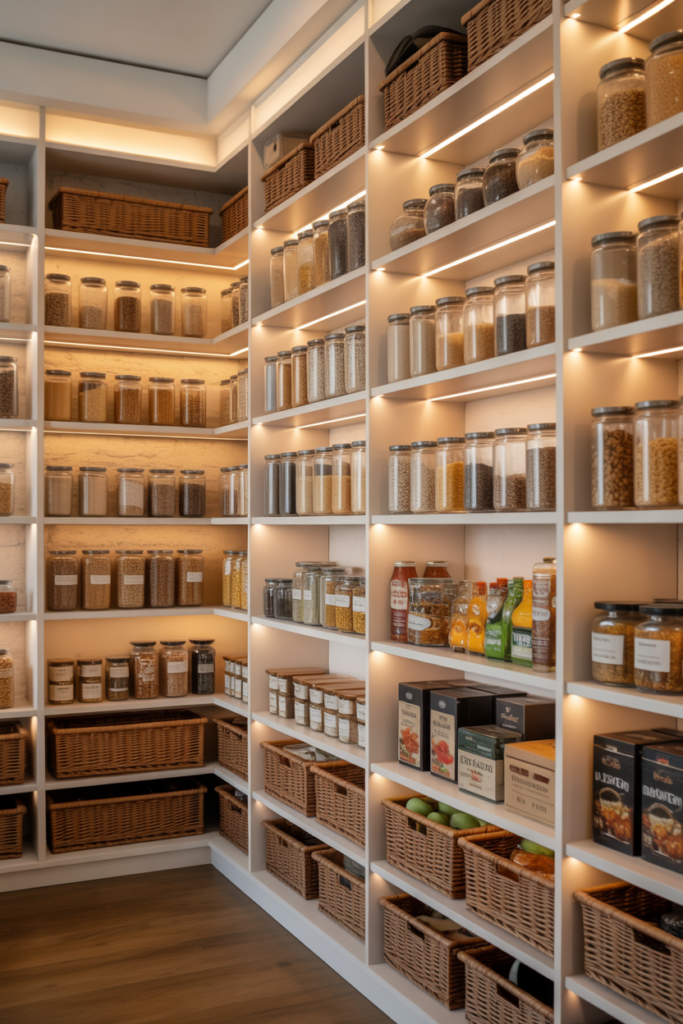
Deep shelving is built for households that buy in bulk, whether that means warehouse club runs, a large family, or a serious home cook who stocks up on staples. Shelves 18 to 24 inches deep hold large containers, bulk packs, and small appliances with room to spare, so you can store a month of supplies in a single pantry wall instead of spreading it across the kitchen.
The challenge with deep shelves is access, since items at the back are easy to forget. Solve that with bins and baskets that act like drawers: one bin for rice and pasta, one for canned goods, one for snacks, and so on. Pull the bin forward to see everything inside, then slide it back. Keep a simple inventory list on the inside of the pantry door, and note the purchase date on bulk items with a marker so you use the oldest stock first. Leave at least 18 inches of clearance in front of deep shelves so you can stand comfortably and pull bins all the way out.
Group deep shelves by how often you use what is on them. Everyday items belong on the middle shelves at eye level, bulk backups go high, and heavy appliances sit low where they are easy to lift. If your pantry is deep but narrow, consider adding one pull-out shelf in the middle of the run, which gives you the capacity of deep shelving with the access of a drawer. Paint the back wall a light color so the deep interior does not feel dark and cave-like.
11. Vertical Pantry Shelving for Narrow Spaces
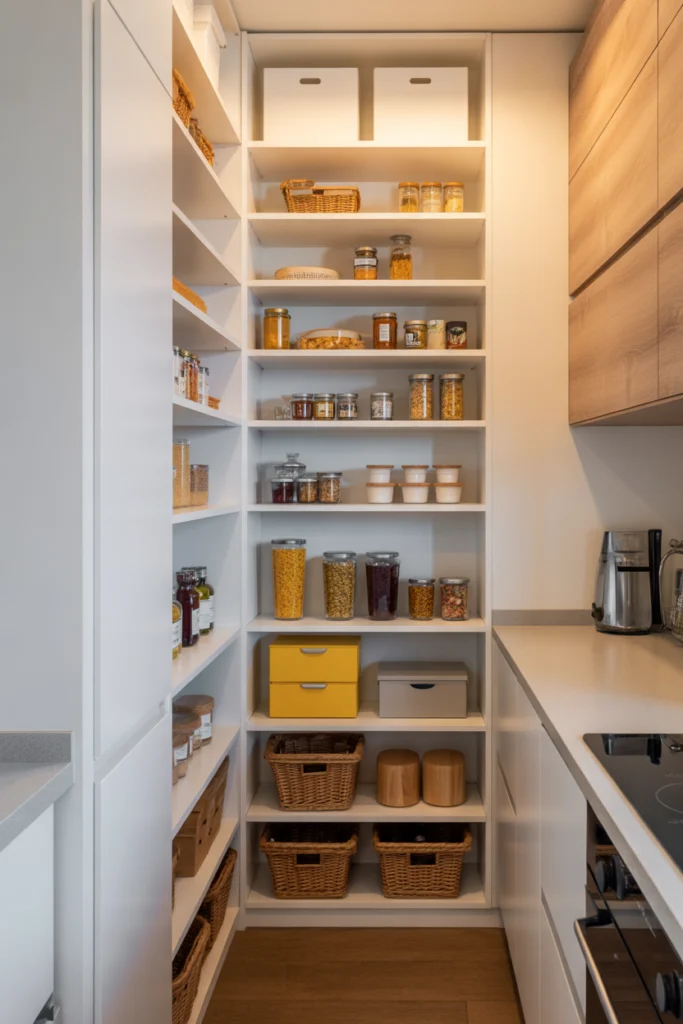
Vertical shelving focuses on height instead of width, which makes it the right answer for narrow pantries, galley kitchens, and apartment layouts where floor space is tight. By stacking storage upward in slim columns, you can fit a surprising amount into a gap as narrow as 12 inches, turning a space that looks useless into one of the most efficient spots in the kitchen.
Plan vertical shelves in columns 12 to 18 inches wide, with shelf spacing of 10 to 14 inches for most items and one taller section for bottles and boxes. A depth of 12 inches is usually enough and keeps everything within easy reach. In a very narrow pantry, a tall pull-out tower, sometimes called a pantry pull-out, is even better than fixed shelves, because the whole column slides out like a drawer and nothing gets stuck at the back. Anchor tall units securely to the wall, since a fully loaded vertical shelf is top-heavy.
Organize vertical shelves by category from top to bottom, with the items you use daily at eye level and the rest arranged by frequency. Use slim, labeled bins to keep small items from toppling, and store spices in a stepped riser so every jar is visible. Because vertical pantries are narrow, keep the color scheme light and the containers uniform, which makes the tall space feel calm instead of cramped.
12. Wooden Shelving for Warmth and Character
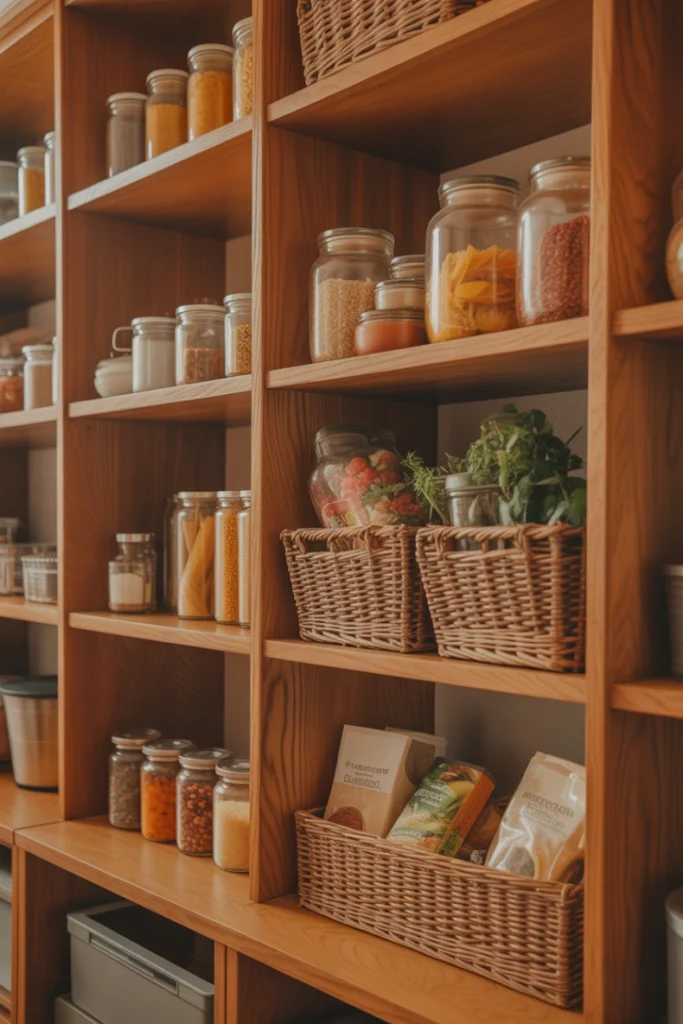
Wooden shelves add warmth and natural texture that instantly makes a pantry feel inviting. Whether you choose pale oak, rich walnut, or a painted pine, wood softens the look of a kitchen and works beautifully in both traditional and modern homes. It is also one of the most durable shelving materials available, easily supporting heavy jars, canned goods, and small appliances for years.
For pantry use, hardwoods like oak, maple, and walnut are the strongest choices, while pine and plywood are good budget options if they are sealed properly. Use boards at least 3/4 inch thick and keep spans under 36 inches to prevent sagging. Seal the wood with a food-safe finish such as mineral oil, beeswax, or a water-based polyurethane, which protects against moisture and makes the shelves easy to wipe clean. Unfinished wood absorbs spills and odors, so sealing is not optional in a pantry. To pick a finish that suits your kitchen, our kitchen color ideas can help you match warm wood tones with the right wall and cabinet colors.
Style wooden shelves with a mix of practical and decorative pieces. Woven baskets, ceramic canisters, and glass jars all look at home on wood, and a small potted herb or a framed print adds personality without taking useful space. Keep the wood tone consistent across all shelves so the pantry reads as one cohesive unit. Over time, wood develops a gentle patina that makes the pantry look better, not older, which is one of the reasons it remains the most popular shelving material.
13. Industrial-Style Pantry Shelving
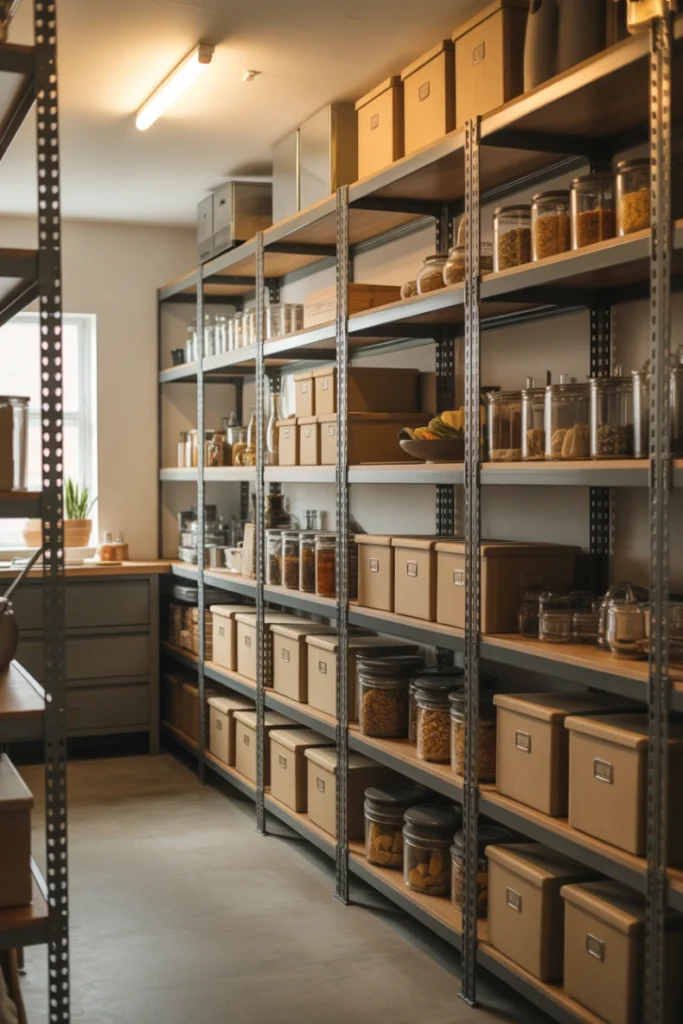
Industrial shelving pairs dark metal frames with wood or wire shelves for a bold, urban look that suits loft-style homes and modern kitchens. The exposed metal and visible hardware give the pantry a strong visual presence, while the open construction keeps the space feeling airy. It is a style that makes a statement, so it works best when the rest of the kitchen has at least a few industrial touches, like black fixtures or metal bar stools.
Most industrial units use steel tube frames with wood plank shelves, and a standard unit is 36 to 48 inches wide and 72 to 84 inches tall. Check the weight rating before you buy, since good industrial shelving should hold 100 pounds or more per shelf. Look for powder-coated frames, which resist rust and scratches, and for shelves that can be adjusted in height. If you are building the unit yourself, use black pipe fittings and reclaimed wood planks for an authentic look, and anchor the frame to the wall for stability.
Keep the styling simple so the strong frame stays the star. Use neutral containers in black, white, or natural tones, and label everything clearly, since industrial shelving is open and every item is on display. A few metal canisters and a wooden crate or two are enough decoration; adding too many accessories makes the look feel busy. Industrial shelving pairs well with Edison-style LED bulbs if your pantry has its own light fixture.
14. Modular Pantry Shelving Systems
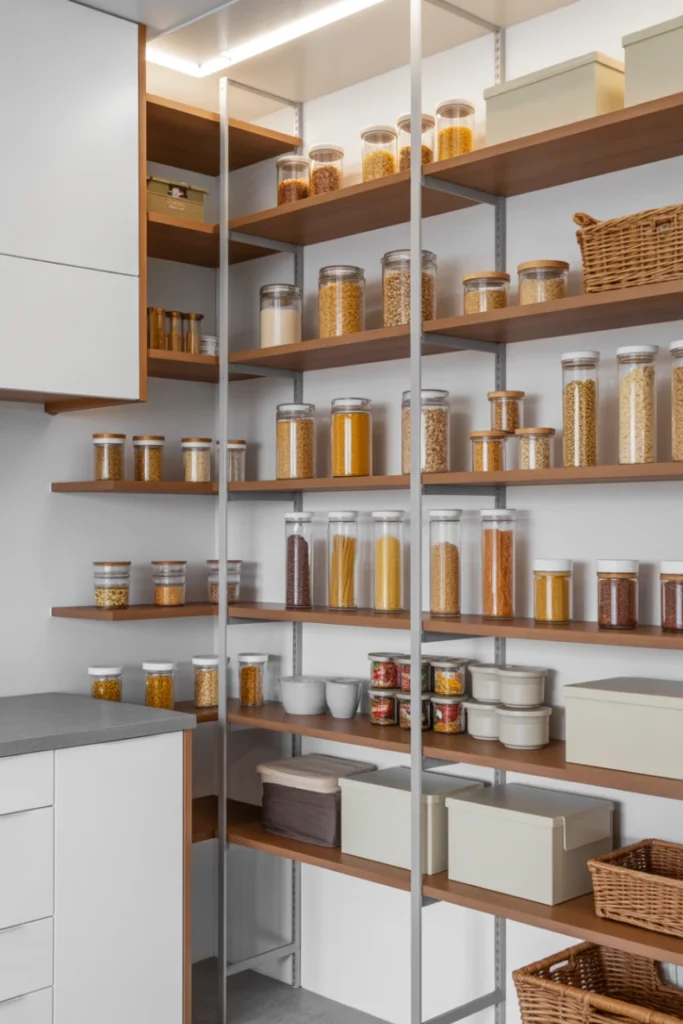
Modular shelving systems are built from interchangeable parts, so you can rearrange shelves, drawers, and bins whenever your storage needs change. Instead of a fixed layout, you start with uprights and add components as you need them: a deep shelf for bulk goods, a shallow one for spices, a basket for produce, a drawer for linens. It is the most adaptable option in this list, which makes it ideal for renters, growing families, and anyone whose pantry needs change with the seasons.
Most modular systems use vertical tracks mounted to the wall, with brackets that clip in at any height. Popular brands offer shelf depths from 12 to 20 inches and widths from 18 to 48 inches, so you can cover a whole wall or just one section. Measure your pantry and sketch the layout on paper before ordering, and buy a few extra brackets and shelf pins, since they are cheap and you will want them later. Choose a system with a weight rating of at least 50 pounds per shelf for everyday pantry goods.
The real advantage of modular shelving is that it grows with you. When a new baby arrives, add a shelf for formula and bottles. When you start baking, add a pull-out for flour and sugar. When you move, many systems can be uninstalled and reinstalled in a new home, which makes them a smart long-term investment. Keep a small box of spare parts in the pantry so adjustments take minutes instead of a shopping trip.
15. Hidden Pantry Shelving Behind Cabinet Doors
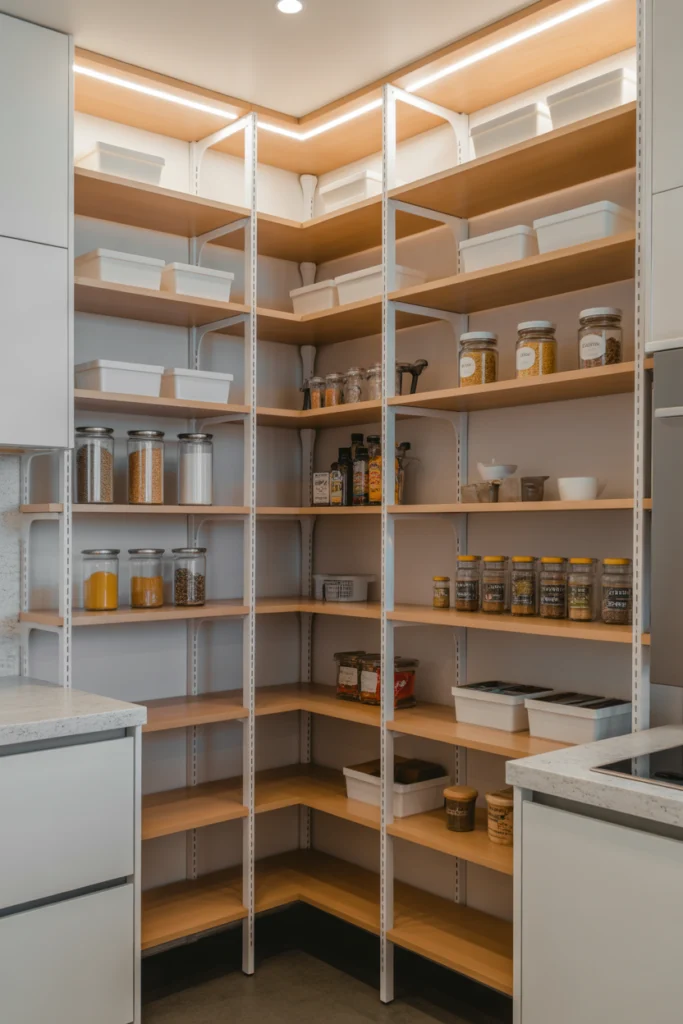
Hidden shelving keeps all of your storage behind cabinet doors, so the kitchen stays clean and minimal while the pantry inside is fully organized. From the outside, the pantry looks like a plain run of cabinets. Open the doors, and you find shelves, drawers, and pull-outs arranged exactly the way you like them. It is the best option for open-concept kitchens where visual calm matters.
Behind the doors, you can use any shelving style you like, since appearance matters less than function. Adjustable shelves, pull-outs, and deep bins all work well, and you can mix them freely because nobody sees the combination from the outside. Plan shelf spacing around what you store, with 12 to 15 inches between most shelves and a taller gap for large items. Add motion-sensor LED lights inside the cabinet so the interior lights up the moment you open the door, which makes a big difference in a deep hidden pantry. Make sure the doors open fully without hitting nearby appliances or walls, and use soft-close hinges to keep the cabinets quiet.
Because the exterior is so simple, pay attention to the details that show: matching door fronts, consistent hardware, and a clean paint finish. Inside, use labeled bins and uniform containers so the hidden space stays organized even though nobody sees it. A hidden pantry is also a good place to store items you want out of sight, like cleaning supplies and pet food, as long as you keep them on a separate shelf from food.
16. Rolling Pantry Shelving for Flexible Storage
Rolling shelves sit on casters, so you can move the whole storage unit wherever you need it. Roll it out to cook, tuck it beside the fridge when you are done, or move it to the dining room when you are setting up for guests. That flexibility makes rolling shelving perfect for small kitchens, studio apartments, and multifunctional spaces where the layout changes through the day.
Look for a rolling unit with locking casters, which keep it stable while you cook and let you move it easily when you want to. A typical unit is 24 to 36 inches wide and 60 to 72 inches tall, with three to five shelves. Choose casters rated for the total weight of the loaded unit, usually 100 pounds or more, and pick a frame in wood or metal to match your kitchen. If the unit will hold heavy items like canned goods, keep the heaviest shelf at the bottom so the unit stays stable when you move it.
Use rolling shelves for items you reach for often, like cooking oils, spices, and snacks, so they are always within arm’s reach. Keep the top shelf for decorative pieces or items you use less often, and leave a little space on each shelf so nothing slides off when the unit moves. A rolling shelf also works well as a portable bar cart, a coffee station, or a baking station, which makes it one of the most versatile pieces in this list.
17. Combination Shelving for Ultimate Organization
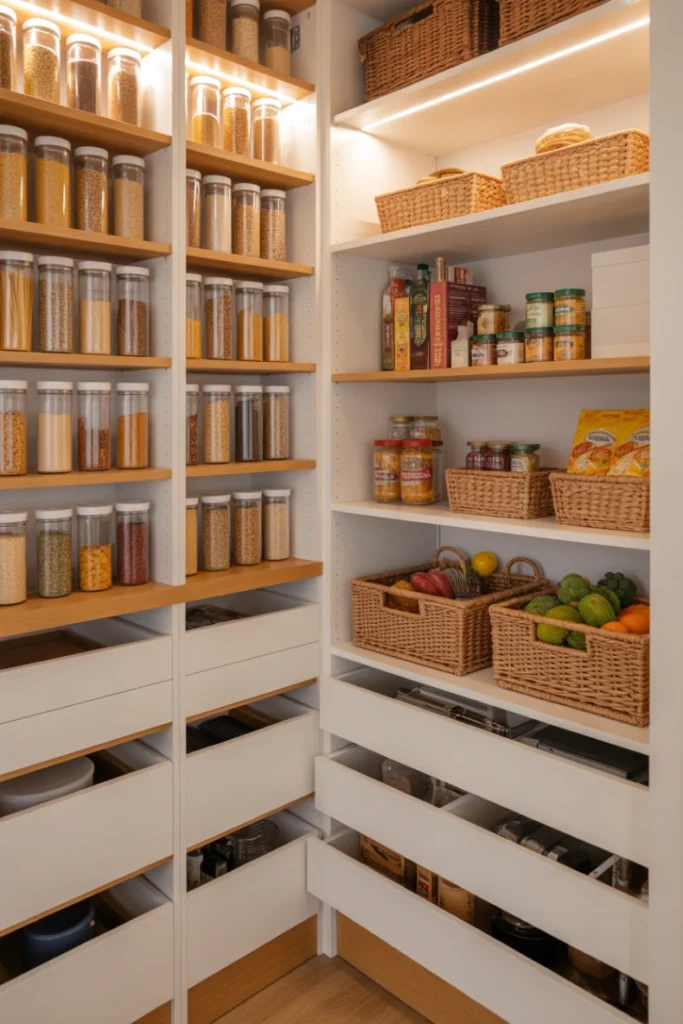
Combination shelving mixes several styles into one system, so each part of your pantry gets the storage it needs. Open shelves hold everyday items, drawers hide small tools, pull-outs make deep corners accessible, and baskets corral loose goods. Instead of forcing one style to do everything, you pick the best tool for each job, and the result is a pantry that works harder than any single-style layout.
Start by zoning your pantry: a cooking zone near the stove side with oils and spices, a baking zone with flour and sugar, a snack zone at a height children can reach, and a bulk zone up high or down low. Assign each zone the shelving style that suits it best. Pull-outs belong in the cooking zone, deep shelves in the bulk zone, and open shelves where you want things visible. Keep the materials consistent across zones, for example the same wood tone and the same basket color, so the mix still looks like one intentional design instead of a collection of random pieces.
Combination shelving is the most expensive option in this list when you buy it all at once, so build it in stages if you need to. Start with the zone that causes the most frustration, usually the deep shelves where items get lost, and add the next zone when your budget allows. The staged approach also lets you test each style before committing to it across the whole pantry, which is the smartest way to end up with a system you will actually love using every day.
Final Thoughts
Choosing the right pantry shelving can dramatically improve both the appearance and functionality of your kitchen. These pantry shelving ideas offer a range of solutions for different spaces, styles, and storage needs, from simple wire shelves that cost very little to custom built-ins that transform the whole room. The best choice is not the most expensive one or the trendiest one. It is the one that fits your space, your budget, and the way you actually live.
Start with measurements, sort what you store, and pick one idea that solves your biggest frustration first. You can always add more shelving later, and a pantry that improves a little every month will serve you far better than a perfect plan that never gets built. A well-organized pantry saves time, cuts food waste, and makes cooking feel easier every single day, which is a return worth investing in.
Frequently Asked Questions
How deep should pantry shelves be?
For most pantries, shelves 12 to 16 inches deep work best. Shallow shelves keep everything visible and easy to reach, while deeper shelves of 18 to 24 inches suit bulk storage in larger pantries. If your shelves are deeper than 16 inches, use bins or pull-outs so items at the back stay accessible.
What is the best material for pantry shelving?
Solid wood and plywood are the strongest and most attractive choices, and they hold heavy loads without sagging. Melamine is a good budget option that wipes clean easily. Wire shelving is the cheapest and offers good airflow, while tempered glass suits modern pantries where looks matter. Seal any wood with a food-safe finish to protect it from moisture and spills.
How far apart should pantry shelves be?
Leave 12 to 15 inches between most shelves, which fits cans, jars, and boxes comfortably. Keep one taller gap of 18 to 20 inches for cereal boxes, large bottles, and small appliances. Adjustable shelves make this easy, since you can change the spacing whenever your storage needs change.
How do I keep a deep pantry organized?
Use bins and baskets that work like drawers, one per category, so you can pull a whole group forward at once. Label the front of every bin, keep a simple inventory list on the pantry door, and store everyday items at eye level with bulk backups up high. A pull-out shelf in the middle of a deep run also helps a lot.
Can I add pull-out shelves to an existing pantry?
Yes, pull-out shelves can be retrofitted into most existing pantries. Ready-made kits fit standard cabinet widths, and a carpenter can build custom units for odd sizes. You will need full-extension slides rated for at least 75 pounds, and about an inch of clearance on each side for the hardware. Start with the lowest shelves, where access is hardest, and add more over time.
More Ideas You Will Love
 18 Walk-In Pantry Design & Organization Ideas Blending Functionality & Style
 20 Stunning Kitchen Color Schemes to Instantly Refresh Your Home
 15 Tiny Pantry Layout Ideas to Maximize Every Inch
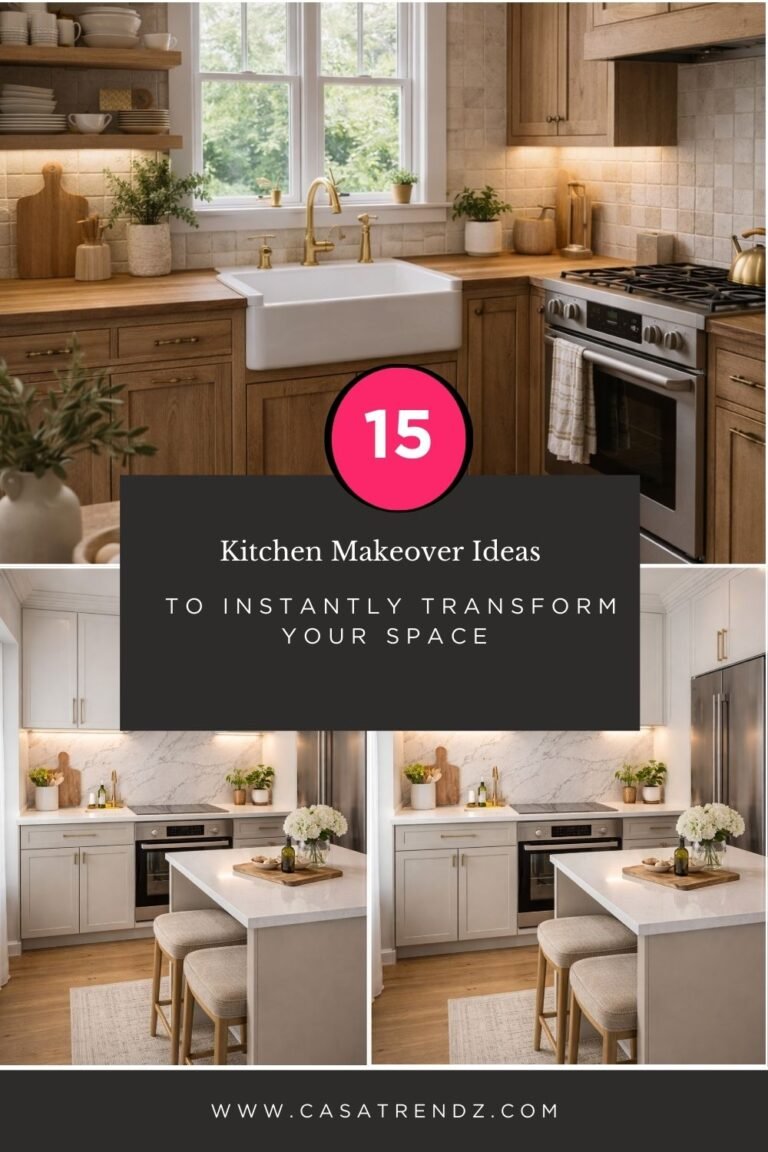 15 Kitchen Makeover Ideas to Instantly Transform Your Space
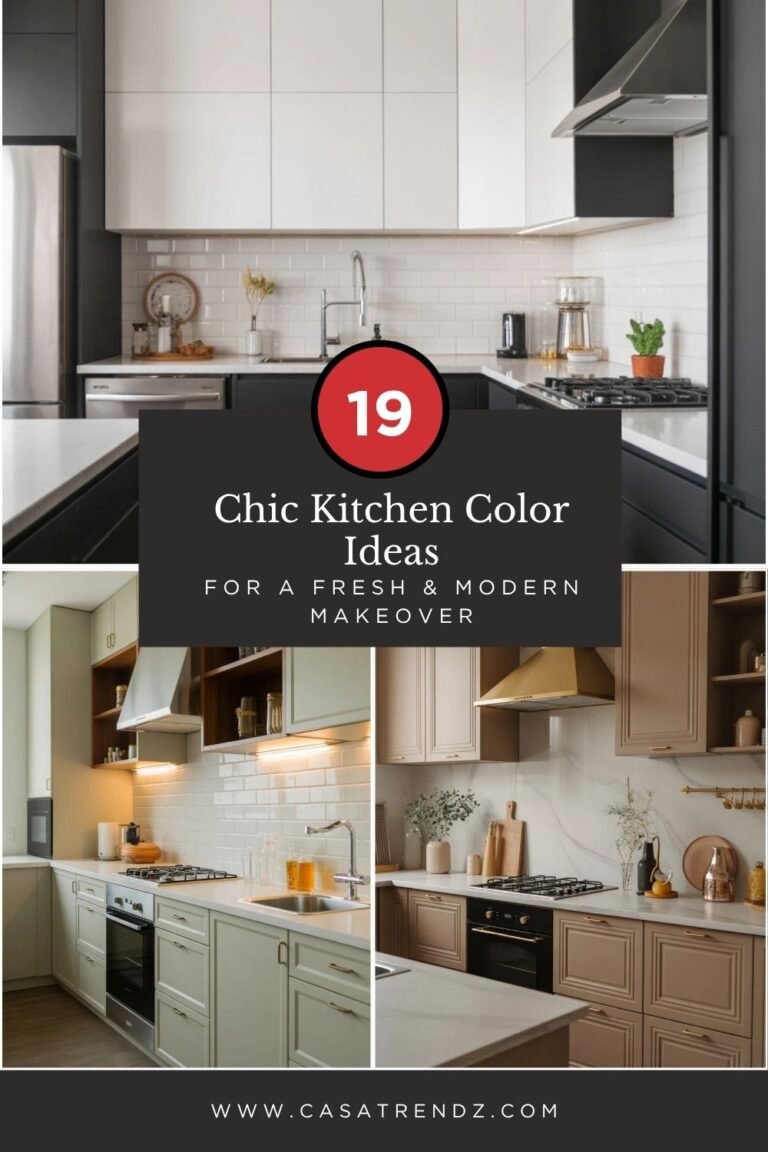 19 Chic Kitchen Color Ideas for a Fresh & Modern Makeover
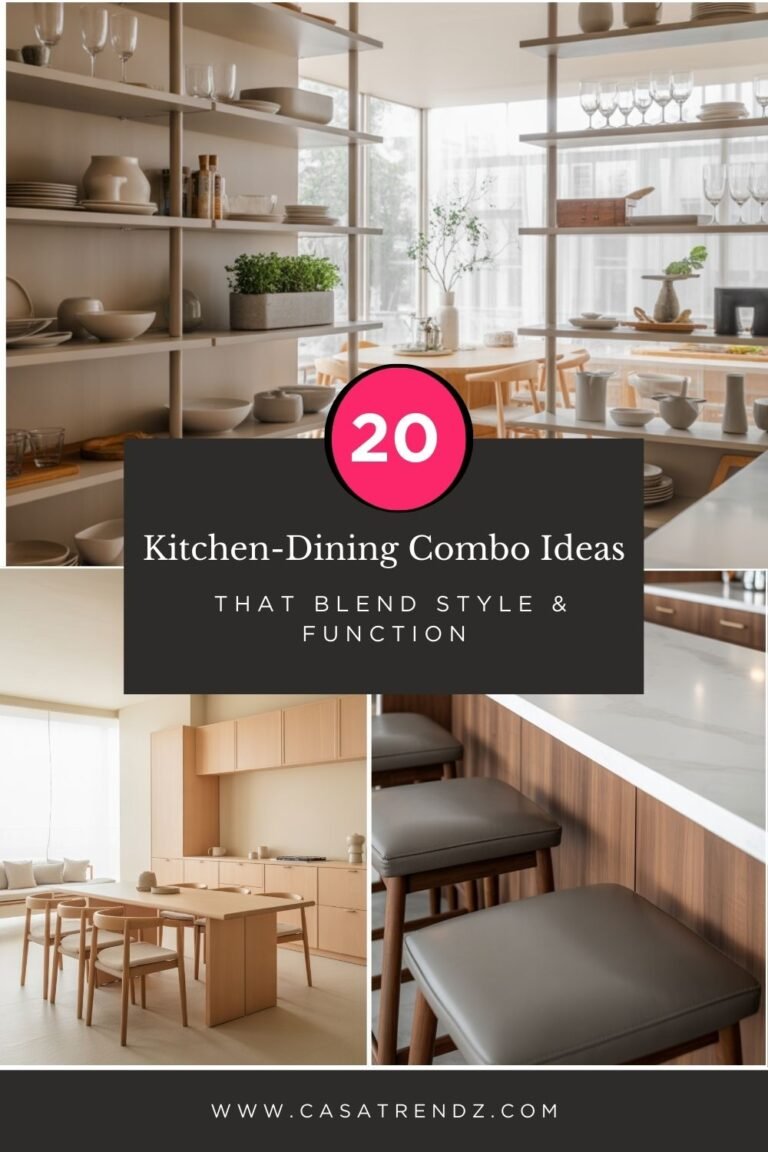 20 Kitchen-Dining Combo Ideas That Blend Style & Function