
12 Apartment Balcony Mini Garden Ideas for Urban Spaces

A small apartment balcony can still grow a real garden, even if it is only 4 feet deep and barely wide enough for two chairs. The trick is to stop thinking in terms of floor space and start thinking in layers: walls, railings, ceilings, and corners all count as growing space. With the right containers and a little planning, a concrete ledge high above a busy street can hold fresh herbs for dinner, bright flowers for color, and enough green leaves to make the whole apartment feel calmer.
Before you buy a single pot, spend a week watching your balcony. Note how many hours of direct sun it gets and at what time of day, because a south-facing balcony can bake plants by noon while a north-facing one stays in shade all day. Check the wind too, since high balconies can be surprisingly gusty, and confirm your building rules about railing planters, weight limits, and water runoff. Most balconies are rated for about 40 to 60 pounds per square foot, which is plenty for containers, but heavy ceramic pots full of wet soil add up fast, so lightweight planters are your friend.
These 12 apartment balcony mini garden ideas cover every part of the space, from the wall behind you to the railing in front of you. Each idea includes real sizes, plant choices, and practical tips you can use right away, whether you rent or own. If you want the whole balcony to feel styled, not just planted, pair these ideas with these boho small balcony decor ideas so the greenery and the decor work together. And if your balcony opens onto a yard, these small garden ideas can help the whole outdoor area feel connected.
1. Vertical Wall Planter Garden
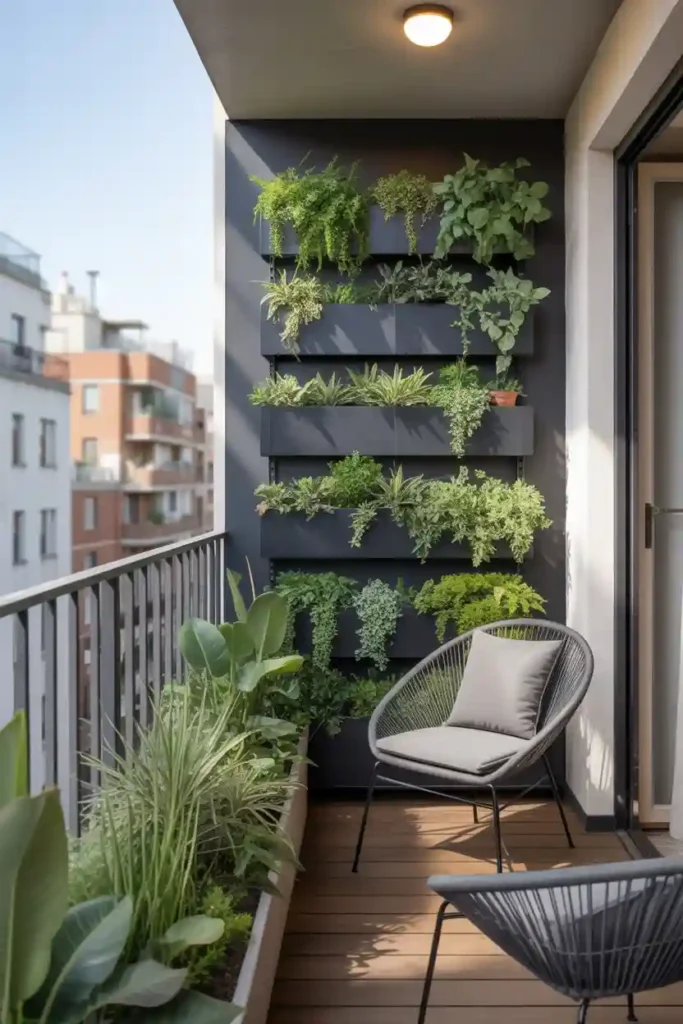
When floor space is limited, a vertical garden is the smartest way to grow more plants in the same footprint. Felt pocket planters, modular plastic panels, or a simple wooden pallet mounted on the wall can turn a blank concrete surface into a living wall. A panel about 4 feet wide and 5 feet tall can hold 12 to 20 small plants, which is far more greenery than a dozen floor pots would give you in the same space. Herbs, leafy greens, strawberries, and small flowering plants all do well in wall pockets because their roots stay shallow.
Mount the planter with masonry anchors or heavy-duty screws rated for at least 30 pounds per panel, and always use a waterproof backing sheet between the planter and the wall to stop moisture stains. Fill each pocket with a light potting mix made from equal parts compost, coco coir, and perlite, which drains well and stays light when wet. Leave 2 to 3 inches between plants so air can move around the leaves, and put trailing plants like ivy or creeping thyme in the bottom row so they spill down and soften the edge.
Water a vertical garden from the top row down, using a small watering can with a long, narrow spout so the excess feeds the plants below. Wall planters dry out faster than floor pots, so check the soil every other day in summer and add a drip tray or a strip of waterproof liner behind the bottom row to protect the wall and the balcony floor. Rotate the whole panel a quarter turn every few weeks if one side gets more sun, and trim the plants back once a month so the wall keeps its neat, intentional shape.
2. Railing Planter Boxes
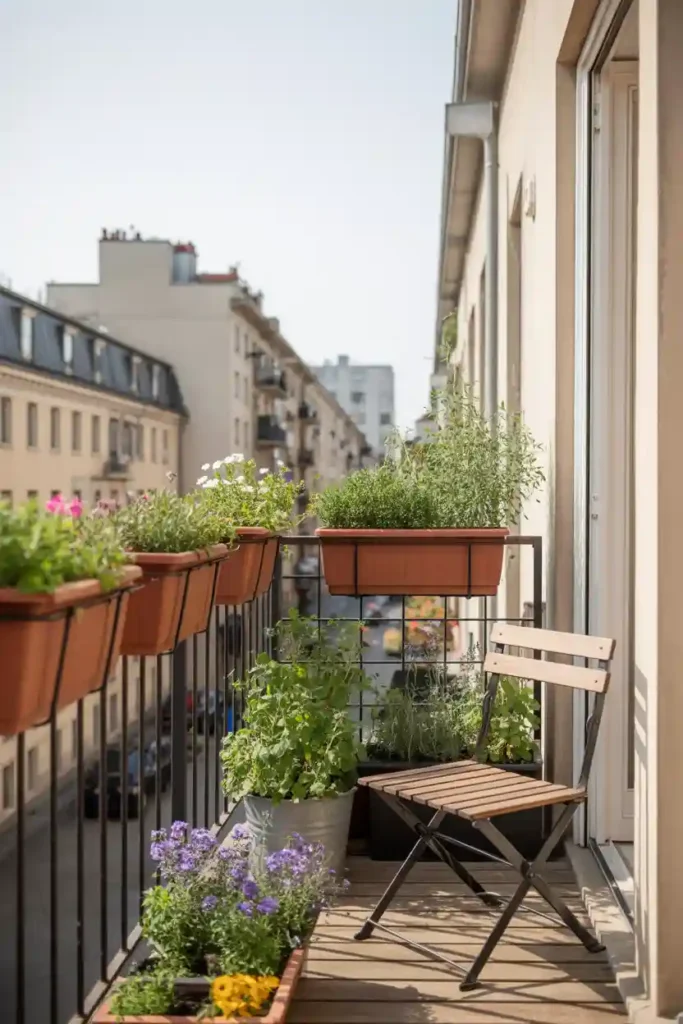
Balcony railings offer free growing space that most people never use. Hook-over railing planter boxes sit on top of the railing and hold flowers, herbs, or small vegetables without taking a single inch of floor space. Standard boxes run 24 to 36 inches long and 7 to 9 inches deep, which is enough for a row of petunias, geraniums, or cascading lobelia on the outside, and basil, mint, or parsley on the inside where you can reach them from the kitchen door. Two or three boxes along a 10-foot railing can hold more plants than a whole shelf of pots.
Choose boxes made from lightweight resin, powder-coated metal, or cedar, and check that the hooks match your railing shape, whether it is round, square, or flat. Secure each box with the built-in brackets plus a cable tie or a small bolt through the railing, because a gust of wind can lift a loose box right off the rail. Line the inside with a coco fiber liner to hold the soil in place, and make sure every box has drainage holes so rain does not drown the roots.
Plant the tallest flowers at the back of the box and trailing plants at the front so they spill over the outside of the railing and create a waterfall of color for the street below. Water railing boxes in the morning with a narrow-spout can, and slip a shallow tray under the box or a towel on the floor below until you learn how much water each box holds. In high winds, move the boxes to the floor for the night, because even a secured box can swing and spill soil onto the balcony below.
3. Tiered Plant Stand Display
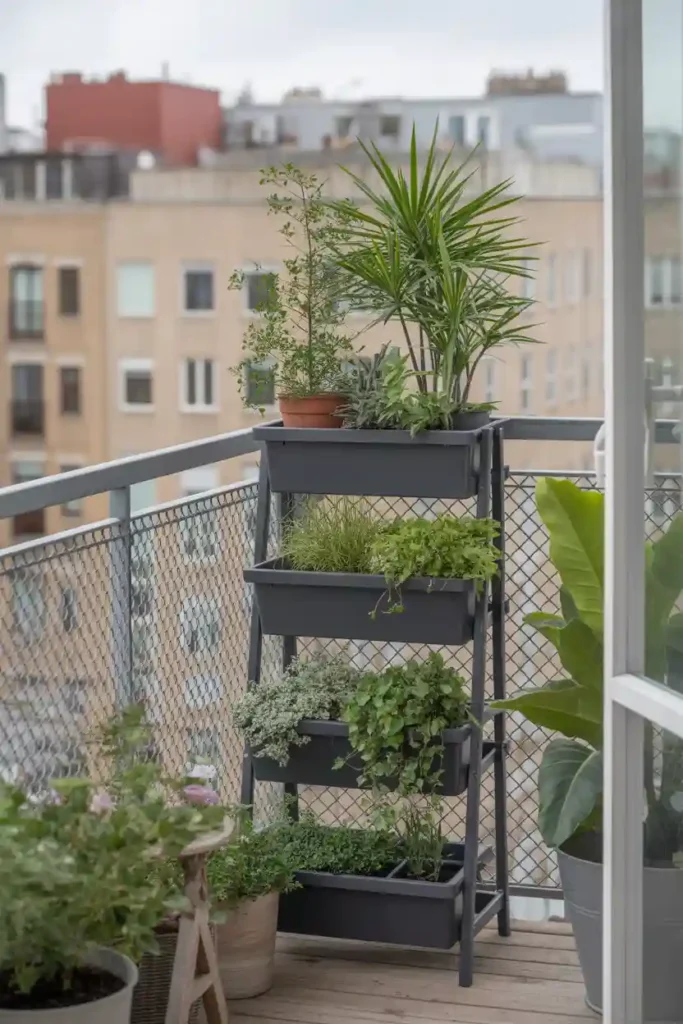
A tiered plant stand organizes a dozen pots into the footprint of one, which makes it perfect for a small balcony. Three or four tier stands, usually 24 to 36 inches wide and 30 to 48 inches tall, stack plants in a staircase shape so sunlight reaches every level. Put the largest plants on the bottom tier, medium plants in the middle, and small succulents or flowering plants on top, so no plant shades the one below it. The stepped shape also makes the display look curated and intentional instead of crowded.
Choose a stand made from powder-coated metal or sealed wood, because raw wood warps and untreated metal rusts after a few rainy weeks. If your balcony is uneven, pick a stand with adjustable feet so it sits level, and look for one with small wheels or casters if you like to move the plants to chase the sun. Keep the total weight under about 60 pounds when the pots are watered, and place the stand against the wall or the railing so it cannot tip in a strong gust.
Arrange the pots by color and leaf shape for the best effect: pair a tall snake plant with a round-leaf peperomia and a trailing pothos, and repeat one color, such as terracotta or sage green, across three or four pots to tie the display together. Rotate the stand a quarter turn every two weeks so every plant gets even light, and use matching saucers under each pot to catch water and protect the balcony floor. A tiered stand also makes seasonal swaps easy, because you can lift one pot out and drop another in without rearranging the whole garden.
4. Hanging Basket Garden
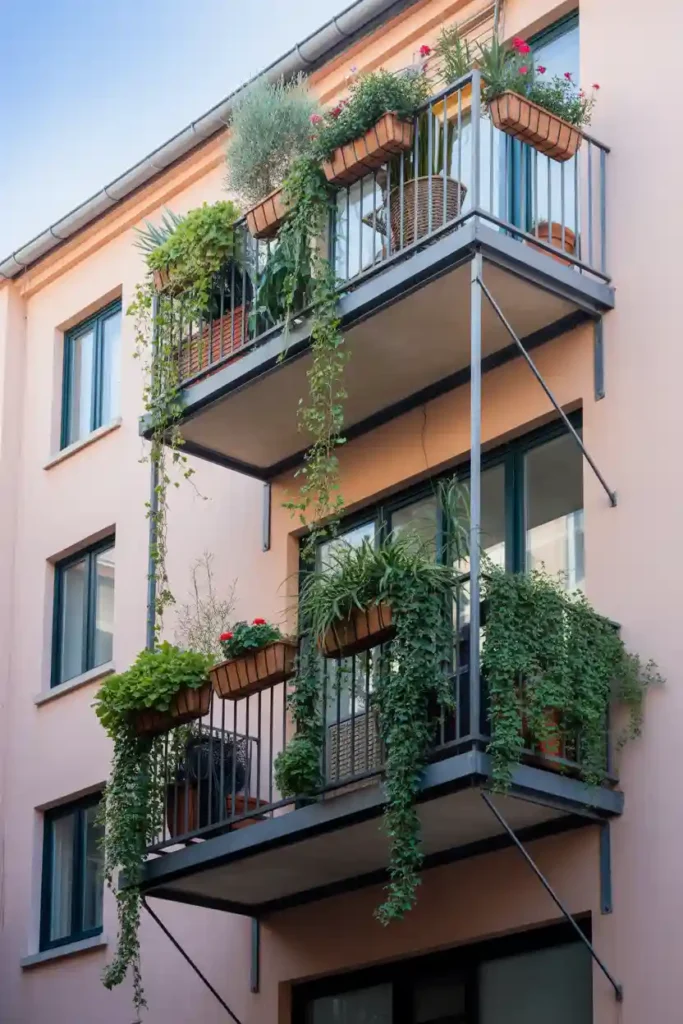
Hanging baskets use the empty air above your head, which is the most wasted space on a small balcony. Install ceiling hooks or wall brackets and suspend lightweight planters filled with trailing plants, so the greenery hangs at eye level and softens the hard lines of the railing and walls. Cascading varieties like English ivy, ferns, petunias, and string of pearls create a lush, layered effect, and three baskets hung at staggered heights look far better than three hung in a straight row.
Use ceiling hooks rated for at least 15 pounds each, screwed into a solid beam or a wall stud, never into crumbling plaster or a hollow ceiling panel. Hang the baskets on short chains or sturdy macrame hangers, and keep the longest hanger about 36 inches from hook to pot base and the shortest about 24 inches, so the plants cascade at different levels. Line each basket with coco fiber or a plastic liner with drainage holes, and choose pots no larger than 10 to 12 inches across so the weight stays manageable.
Water hanging baskets by taking them down once a week and letting them drain fully in the sink or a bucket before hanging them back, which keeps water off your rugs, cushions, and the balcony below. In summer, check the soil every two or three days, because baskets dry out faster than floor pots in the wind. If your building rules do not allow ceiling hooks, use a freestanding shepherd hook or a wall-mounted bracket instead, and keep the baskets near the wall on very windy days so they do not swing and spill.
5. Compact Herb Corner
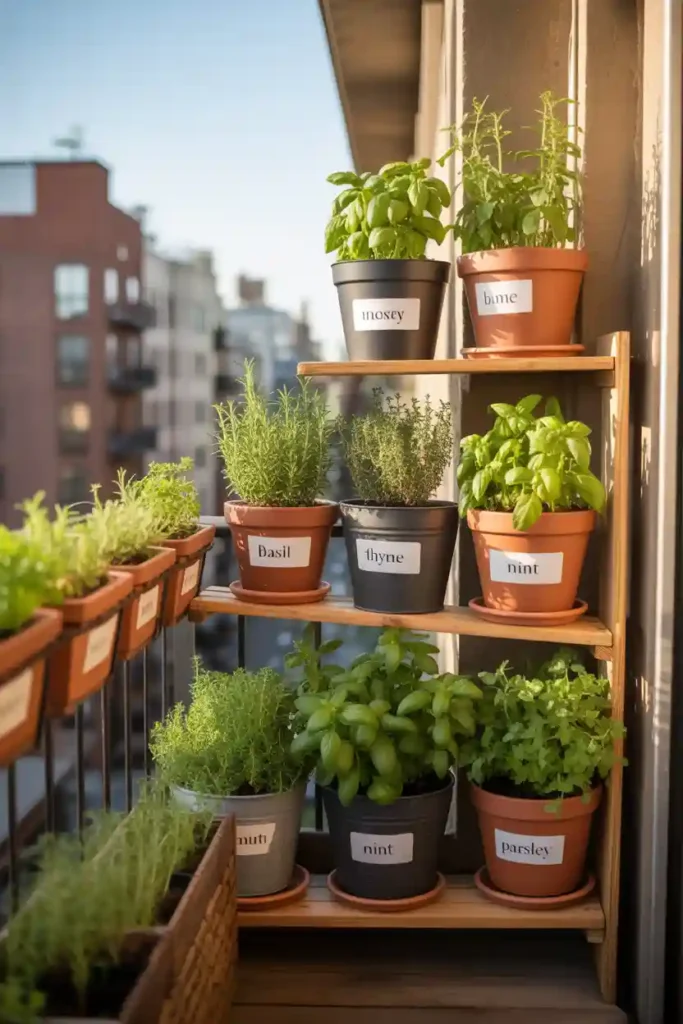
A compact herb corner turns one square foot of balcony into a working kitchen garden. Dedicate the sunniest corner to a small group of matching pots or a narrow shelf holding basil, thyme, rosemary, and cilantro, with parsley and chives as easy extras. Keeping the herbs grouped together makes watering, feeding, and harvesting faster, because you tend the whole corner in one trip instead of walking the length of the balcony. Fresh herbs also fill the balcony with scent every time you brush past them.
Give mint its own pot, because it spreads aggressively and will crowd out everything else if it shares a container. Basil and parsley can share a larger pot about 12 inches across, while rosemary and thyme prefer their own smaller pots with very well-drained soil. Most culinary herbs need at least 4 to 6 hours of direct sun a day, so place the corner where the sun lands first in the morning. Use pots 6 to 8 inches across for single herbs, and label each one with a small wooden marker so guests and family can find the mint for their tea.
Water herbs in the morning so the leaves dry before evening, which prevents mildew, and pinch the growing tips every week to keep the plants bushy instead of tall and leggy. Harvest in the morning when the oils are strongest, and never take more than a third of the plant at once. If you want the herb corner to feel styled rather than purely useful, mix the pots with a lantern and a woven tray, and keep the labels neat and matching. A small herb corner costs less than a weekly bunch of store-bought herbs, and it pays for itself by midsummer.
6. Mini Greenhouse Shelf
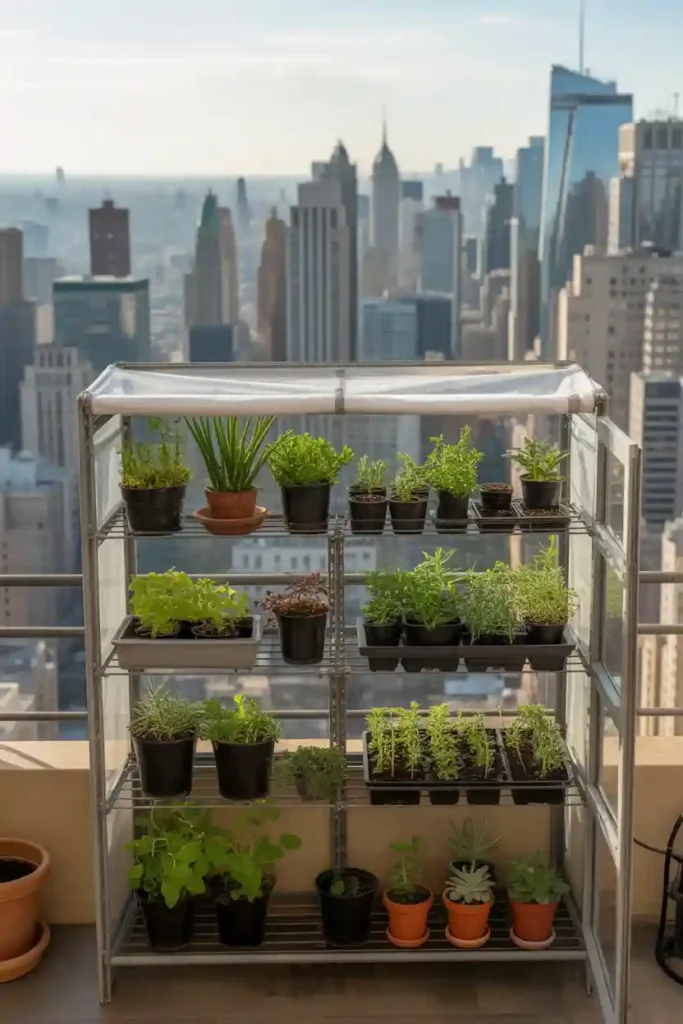
A mini greenhouse shelf lets city dwellers grow delicate plants and start seedlings months before the weather outside is ready. These narrow, covered shelving units are usually 24 to 36 inches wide and 48 to 60 inches tall, with three or four wire shelves inside a clear PVC cover. The cover traps warmth and humidity while letting sunlight through, which protects seedlings, herbs, and small vegetables from wind, sudden cold snaps, and heavy rain.
Place the shelf against the warmest wall of the balcony, and weigh it down with heavy pots on the bottom shelf or strap it to the railing so a gust cannot topple it. Start seeds in small trays on the top shelves, where the light is strongest, and move the young plants down as they grow. Open the cover for an hour or two on warm days to let fresh air in and prevent mold, and close it before evening so the trapped heat carries the plants through a cool night. A simple thermometer inside the shelf helps you learn how hot it gets by midday.
Use the greenhouse shelf to extend your growing season in both directions: start tomatoes, peppers, and basil indoors in late winter, and keep tender herbs alive weeks longer in fall. Water the plants with a small can with a narrow spout, and wipe the inside of the cover once a week so condensation does not drip onto the leaves. In high summer, roll the cover up or remove it completely, because a closed greenhouse on a sunny balcony can overheat and cook the plants inside in a single afternoon.
7. Foldable Garden Table with Pots
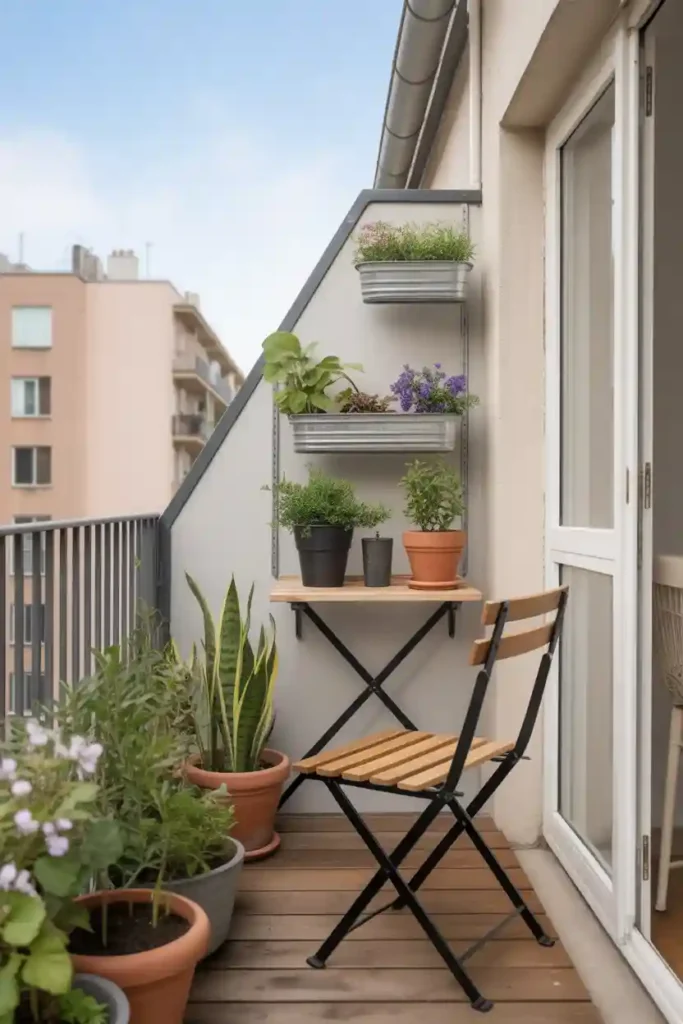
A foldable wall-mounted table gives you a planting surface when you need it and your floor back when you do not. When it is extended, the table holds a row of potted plants, seed trays, or a watering can; when it is folded down against the wall, it frees the whole balcony for chairs, a yoga mat, or a drying rack. A table about 24 inches wide and 16 to 18 inches deep fits most balconies without blocking the walkway, and it works especially well in the corner nearest the door.
Mount the table with heavy-duty folding brackets rated for at least 50 pounds, screwed into wall studs or solid masonry with the right anchors, and use a top made from sealed teak, acacia, or exterior-grade plywood. Arrange lightweight pots on top, mixing greenery with one or two flowering plants, and keep the heaviest pots near the wall where the brackets carry the most weight. A small lip or raised edge along the front stops pots from sliding off when someone bumps the table.
Use the table as your potting station on planting days: lay a tray on top to catch soil, keep your hand tools in a small basket underneath, and fold the table away when you finish so the balcony stays tidy. In the evening, the same table can hold a candle and two mugs, which makes it do double duty as a garden bench and a coffee spot. Wipe the brackets once a month and oil the hinges each spring so the table folds smoothly for years.
8. Succulent Collection Display
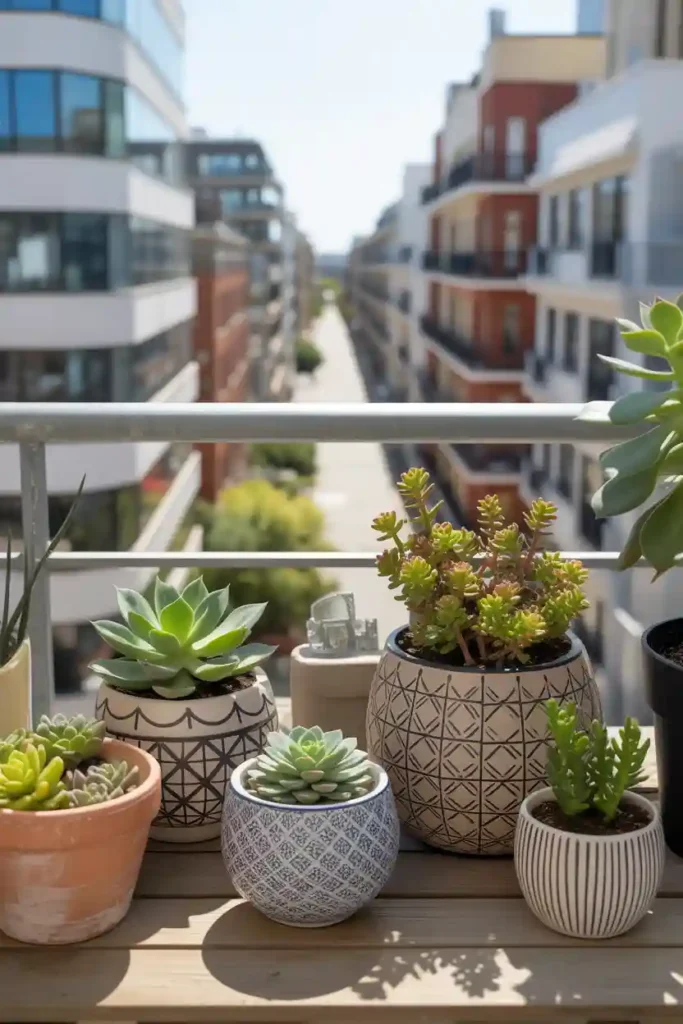
Succulents are made for small balconies because they thrive on neglect, need very little water, and stay compact for years. Arrange them in decorative pots on a shelf, a window ledge, or a tiered plant stand, mixing rosettes like echeveria, upright shapes like jade and snake plants, and trailing types like string of pearls. Their small size lets you grow a dozen different varieties without overcrowding the balcony, and the mix of shapes, textures, and colors, from dusty blue to deep green to soft pink, adds visual interest that few other plants can match.
Use a fast-draining cactus or succulent mix, or make your own from equal parts potting soil, coarse sand, and perlite, and always choose pots with drainage holes. Terracotta pots are ideal because the clay breathes and pulls extra moisture away from the roots, which is the single best defense against rot. Give the collection at least 4 hours of direct sun a day, and turn the pots a quarter turn every two weeks so the plants grow evenly instead of leaning toward the light.
Water succulents deeply but rarely, about once every two to three weeks in summer and once a month in winter, and always let the soil dry out completely between waterings. If a leaf turns soft and translucent, you are watering too much, and if the leaves wrinkle, the plant is thirsty. Pull off dead leaves from the base of each rosette once a month, because trapped leaves hold moisture and invite pests. This low-maintenance display is perfect for busy urban lifestyles and for anyone who travels often, since the plants will happily wait a week or two without attention.
9. Climbing Plant Trellis
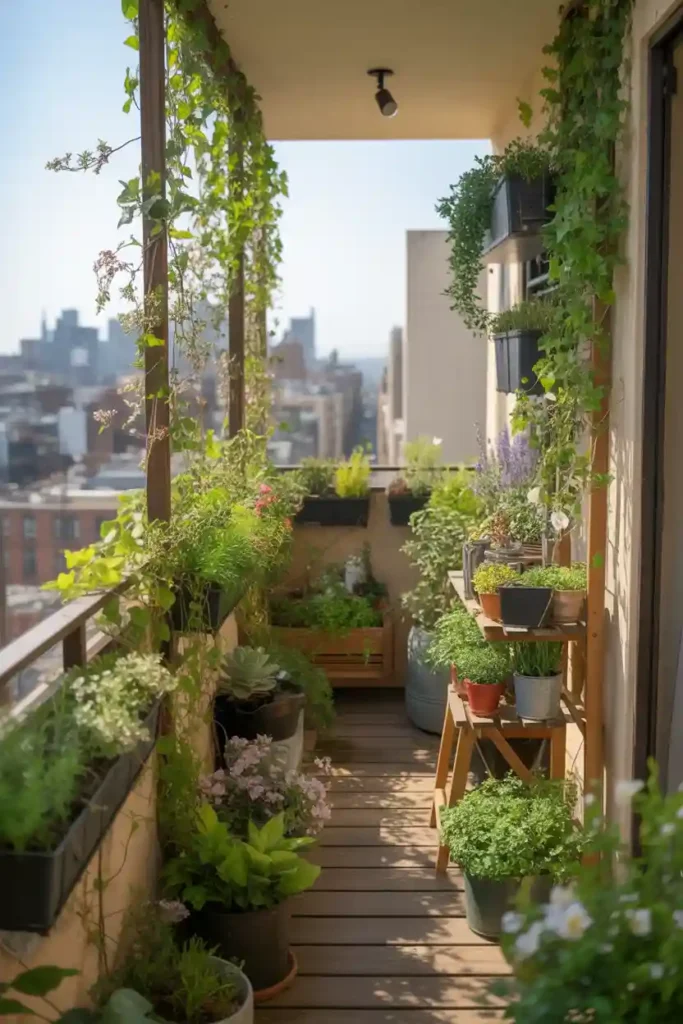
A slim trellis against a wall or railing adds height, privacy, and a lush green backdrop without using any floor space. Install a trellis about 5 to 6 feet tall and 2 to 3 feet wide, made from wood, bamboo, or powder-coated metal, and train climbing plants like jasmine, morning glory, sweet peas, or even compact beans up the frame. Over one season, the vines fill the trellis into a living screen that blocks the view from neighboring buildings while still letting air and light through.
Anchor the trellis firmly to the wall or the railing with brackets at the top and bottom, and leave a 2-inch gap between the trellis and the wall so air can circulate behind the leaves and the wall stays dry. Plant the climbers in a deep container at the base, at least 12 inches deep, filled with rich potting mix, and guide the young shoots through the lattice with soft plant ties every 6 to 8 inches as they grow. Jasmine is the best choice for scent, while morning glory grows fastest and covers a trellis in a single summer.
Prune the vines lightly every few weeks to keep them inside the frame, and cut back dead growth at the end of the season so the trellis stays neat. If your balcony is very windy, choose a trellis with a solid base or a freestanding design weighted with heavy pots, because a tall trellis acts like a sail in a strong gust. Pair the trellis with a small bench or a floor cushion below it, and the corner becomes a private green reading nook. For a fuller plan that pairs a trellis with wall planters and railing boxes, these balcony workspace ideas show how one corner can do more than one job.
10. Recycled Container Garden
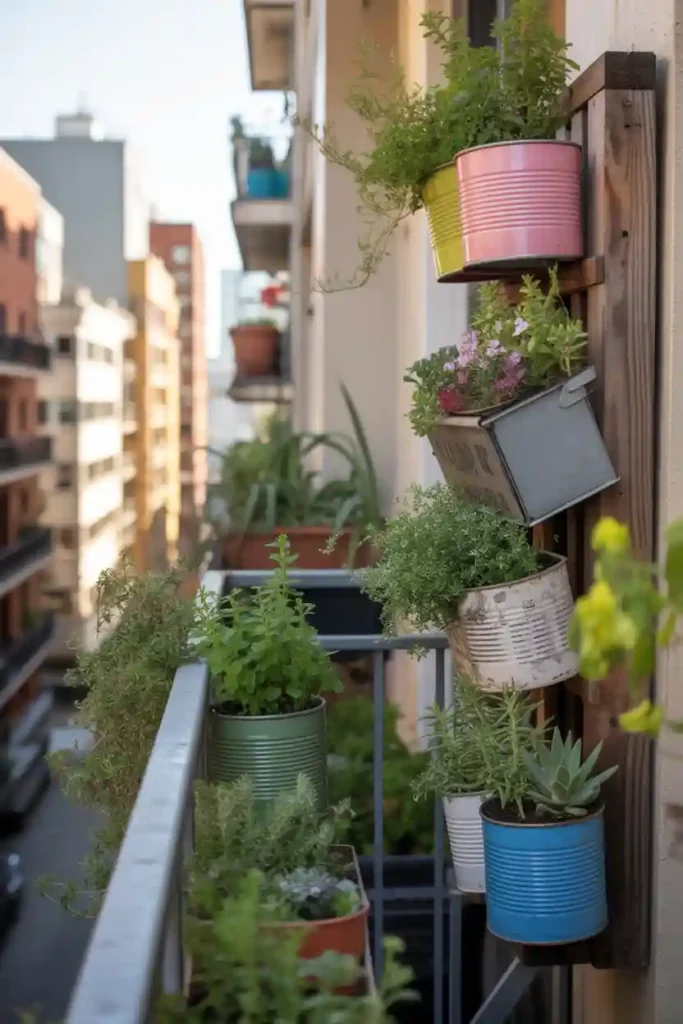
A recycled container garden proves that a beautiful balcony garden does not need expensive pots. Wooden crates, metal tins, old ceramic bowls, enamel buckets, and even sturdy woven baskets can all become planters, and the mix of shapes and materials adds personality that matching store-bought pots never achieve. An old wooden wine crate, about 12 by 18 inches, makes a perfect herb box, while a large metal tin holds a single bold plant like a small olive tree or a bushy geranium.
Drill three or four drainage holes in the bottom of every container, and line metal tins with a plastic bag with holes poked in it, so the soil does not sit against the metal and rust it. If you plan to grow anything edible, use only food-safe containers, such as untreated wood, ceramic, or stainless steel, and skip old painted tins or treated pallets that may leach chemicals into the soil. Sand wooden crates lightly with 120-grit sandpaper to remove splinters, and give them a coat of exterior sealant so they survive a rainy season.
Paint the outside of plain tins in soft colors like sage green, cream, or dusty blue to match your balcony palette, and group the containers in odd numbers, three or five together, for a relaxed, collected look. Fill the bottom of deep containers with a layer of gravel or broken pottery so the soil drains freely and the container stays lighter. A recycled container garden costs almost nothing, keeps useful things out of the landfill, and tells a story, which is exactly the kind of charm that makes a small balcony feel personal.
11. Zen-Inspired Corner Garden
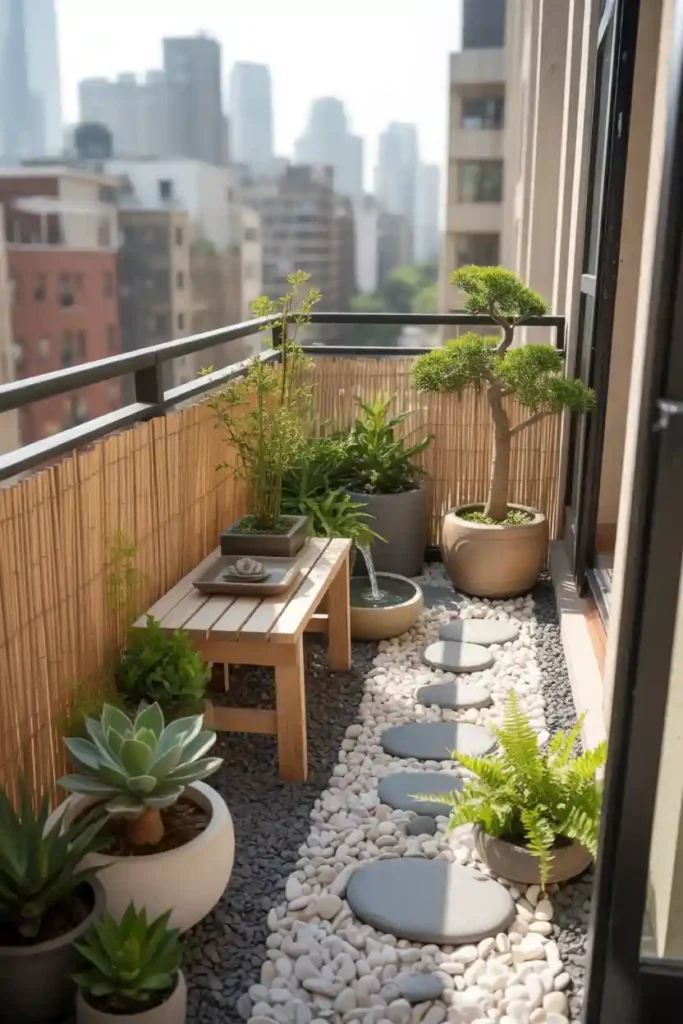
A zen-inspired corner garden turns the quietest part of your balcony into a calm retreat. Combine a low planter, smooth pebbles, a small bamboo accent, and a minimalist layout in neutral tones, and the corner becomes a place to slow down rather than another crowded shelf of pots. Choose one focal plant, such as a small bonsai, a dwarf maple in a pot, or a sculptural snake plant, and surround it with pale gravel, two or three smooth river stones, and a single bamboo screen or a small stone lantern for height.
Keep the palette restrained: warm gray pebbles, natural bamboo, matte black or stone-gray pots, and deep green foliage, with no bright colors competing for attention. Spread the pebbles about 1 inch deep over a waterproof tray so they stay in place and the balcony floor stays dry, and rake them into gentle lines once a week, which is both calming and practical, since it shows you where water pools after rain. A low wooden bench or a single floor cushion in a neutral linen cover gives you a place to sit without breaking the quiet mood.
Water a zen corner sparingly, because the plants here are chosen for their tolerance of dry conditions, and too much water ruins the clean, dry look of the gravel. Sweep the pebbles back into place after windy days, and wipe the bamboo and stone accents once a month to keep them looking fresh. If your balcony doubles as a work spot, this calm corner pairs well with these small patio outdoor kitchen ideas for the rest of the outdoor space, so the whole area feels connected without losing its quiet side.
12. Cozy Seating with Integrated Plants
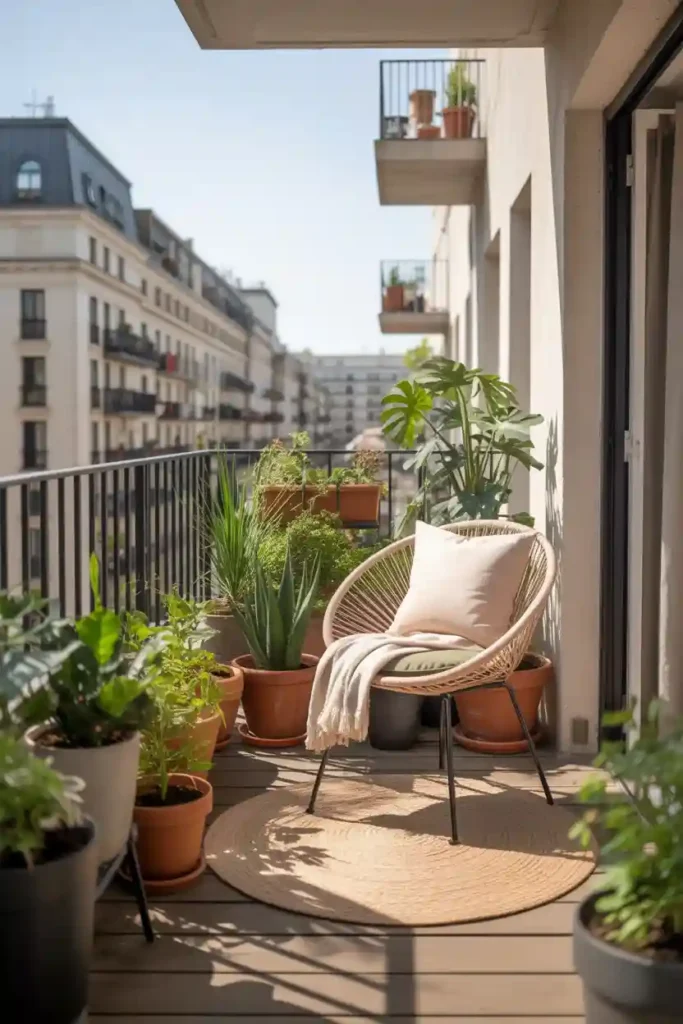
A balcony garden feels complete when you can actually sit inside it, so blend seating and greenery into one cozy nook. Place a small chair, a low bench, or a pair of floor cushions in the sunniest corner, then surround the seat with plants at three heights: tall pots on the floor behind it, medium plants on a side table, and a trailing plant hanging above it. The foliage frames the seat like a green hug, and the space feels like a garden room instead of a ledge with chairs on it.
Choose lightweight furniture you can move easily, such as a folding bistro chair, a rattan armchair, or a slim wooden bench about 36 inches long, and keep the seat cushion in an outdoor fabric that dries quickly after rain. Leave at least 18 inches of clear space in front of the seat so you can stretch your legs, and put a small side table, about 14 inches across, within arm’s reach for a mug, a book, or a pair of pruning shears. A string of warm white fairy lights above the seat turns the nook into an evening retreat without any extra furniture.
Keep the plants closest to the seat in lightweight pots you can lift with one hand, so you can move them aside when you want more room or bring them in during a storm. Mix one fragrant plant, such as lavender or jasmine, near the seat so the scent drifts over you while you sit, and keep one hardy plant, like a snake plant, in the corner that gets the least attention. This final idea ties the whole garden together, because a balcony you sit in every day is a balcony you will actually care for.
Final Words
Creating a green sanctuary in the middle of the city is completely possible with thoughtful planning and smart design. These 12 apartment balcony mini garden ideas show that even the smallest balcony can become a thriving oasis filled with life, color, and calm. By using vertical planters, railing boxes, hanging baskets, tiered stands, and a cozy seating nook, you can maximize every inch without overcrowding your outdoor area.
Start with the idea that solves your biggest problem, whether that is a vertical wall for a narrow balcony, a herb corner for the kitchen, or a trellis for privacy, and add one more idea each month. Measure before you buy, choose lightweight containers and weather-resistant materials, and check your building rules before you drill anything. Your balcony will reward you every single day, with fresh herbs for dinner, flowers at eye level, and a quiet green corner just outside your door.
Frequently Asked Questions
How much sun does a balcony garden need?
Most balcony vegetables and flowering plants need at least 6 hours of direct sun a day, while herbs need 4 to 6 hours and leafy greens can manage with 3 to 4 hours. Watch your balcony for a week before planting, and note which hours the sun actually lands on it, because a balcony that faces east gets gentle morning sun while a west-facing one gets harsh afternoon heat. If your balcony gets less than 4 hours of sun, stick to shade-tolerant plants like ferns, hostas, mint, and parsley.
Can I grow vegetables on a small apartment balcony?
Yes, compact vegetables do very well in containers. Cherry tomatoes, peppers, lettuce, spinach, radishes, and bush beans all grow in pots 10 to 12 inches deep, and a single tomato plant in a 5-gallon container can produce fruit all summer. Choose dwarf or patio varieties bred for containers, give each plant its own pot, and water daily in hot weather, because containers dry out much faster than garden beds.
How do I water balcony plants without making a mess?
Use saucers under every pot, water slowly with a narrow-spout can in the morning, and stop as soon as water appears in the saucer. For hanging baskets, take them down once a week and let them drain in the sink. Self-watering planters with a reservoir are the easiest fix for messy watering, because they hold the excess inside the pot instead of spilling it onto the balcony or the neighbors below.
What plants grow best in containers on a balcony?
Herbs like basil, mint, rosemary, and thyme are the easiest starting point, followed by succulents, geraniums, petunias, and trailing ivy. For food, try cherry tomatoes, peppers, lettuce, and strawberries in hanging baskets or wall pockets. Avoid plants that grow very large or need deep soil, such as full-size fruit trees or pumpkins, because their roots will outgrow any container that fits on a balcony.
Do I need permission from my landlord to start a balcony garden?
Often yes, so check your lease and building rules before you drill holes, hang anything from the ceiling, or attach planters to the railing. Many buildings allow freestanding pots and tiered stands without permission but require approval for wall-mounted planters, ceiling hooks, or anything that changes the outside of the building. Freestanding containers are the safest place to start, and you can add mounted features later once you have written approval.
More Ideas You Will Love
 13 Safety Guidelines for Summer Fire Pits: Cozy Nights Made Safe
 13 Natural Remedies for Summer Garden Pests (Eco-Friendly Guide)
 11 Terrace Design Ideas for Functional and Stylish Outdoor Living
 11 Summer 4th of July Pool Party Décor Ideas You’ll Love
 15 Gray Exterior House Color Combinations for Modern Homes
 17 Exterior Door Ideas: Functional & Chic Entryway Inspiration