21 Shared Kids Bedroom Ideas for Inspiring & Practical Designs
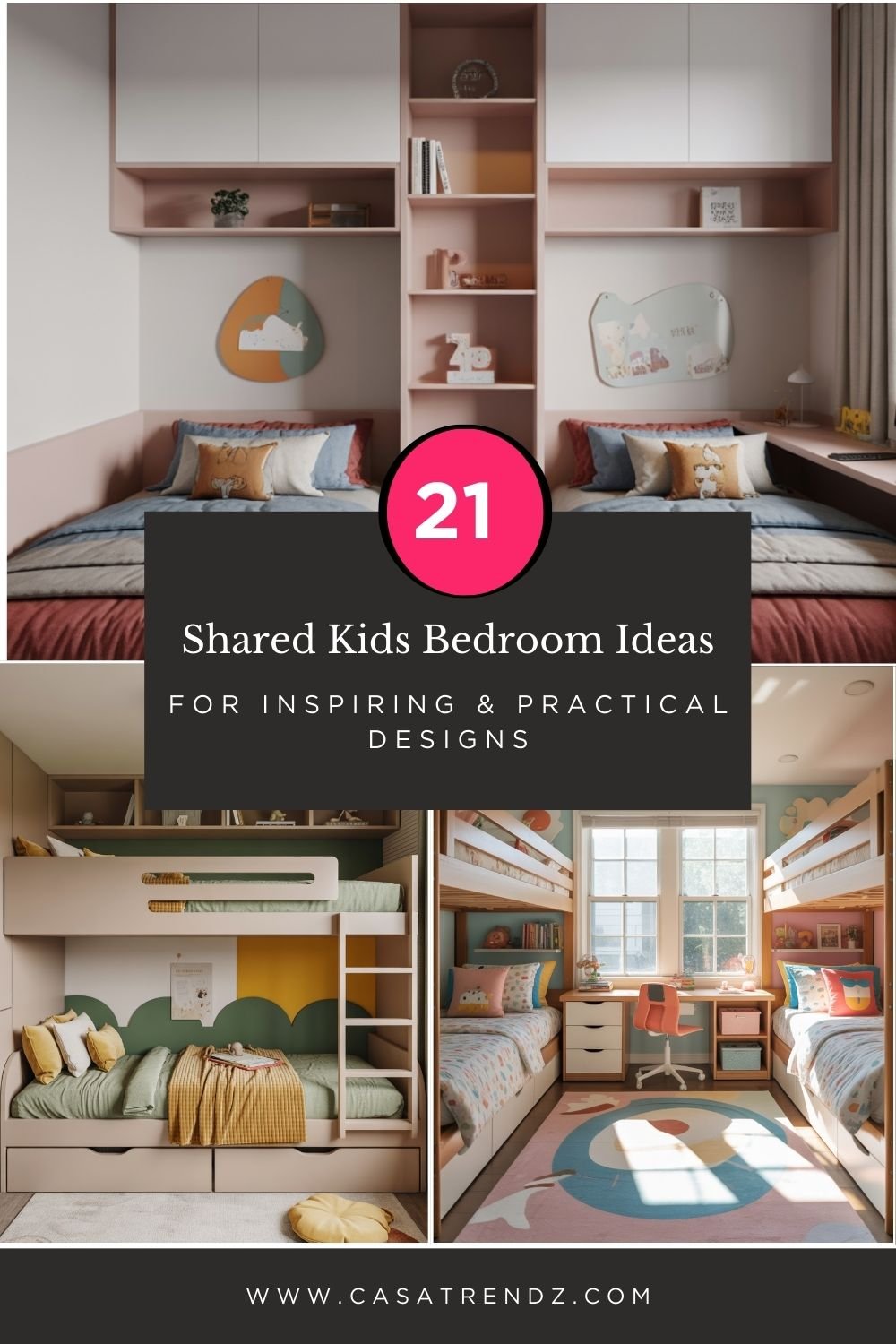
Designing a shared kids’ bedroom requires creativity, strategy, and thoughtful planning to strike a balance between function, comfort, and personal expression. Whether siblings are close in age or have different interests, the room must cater to sleep, play, study, and storage needs without feeling crowded or chaotic. Shared rooms often become cherished childhood spaces, and with the right design approach, they can encourage bonding, responsibility, and independence. The key lies in choosing layouts, furniture arrangements, and decorative elements that make the room feel spacious and harmonious while still giving each child a sense of ownership.
This article brings together 21 shared kids bedroom ideas that blend practicality with inspiration. Each idea includes two detailed paragraphs that explain its purpose and design strategies, giving you a comprehensive and easy-to-follow guide. You will also find image prompts underneath each idea to help visualize the concepts clearly. These ideas work for rooms of all sizes, whether you’re designing a compact shared bedroom or a spacious setup that accommodates sleep, play, and study zones.
1. Bunk Beds to Maximize Floor Space
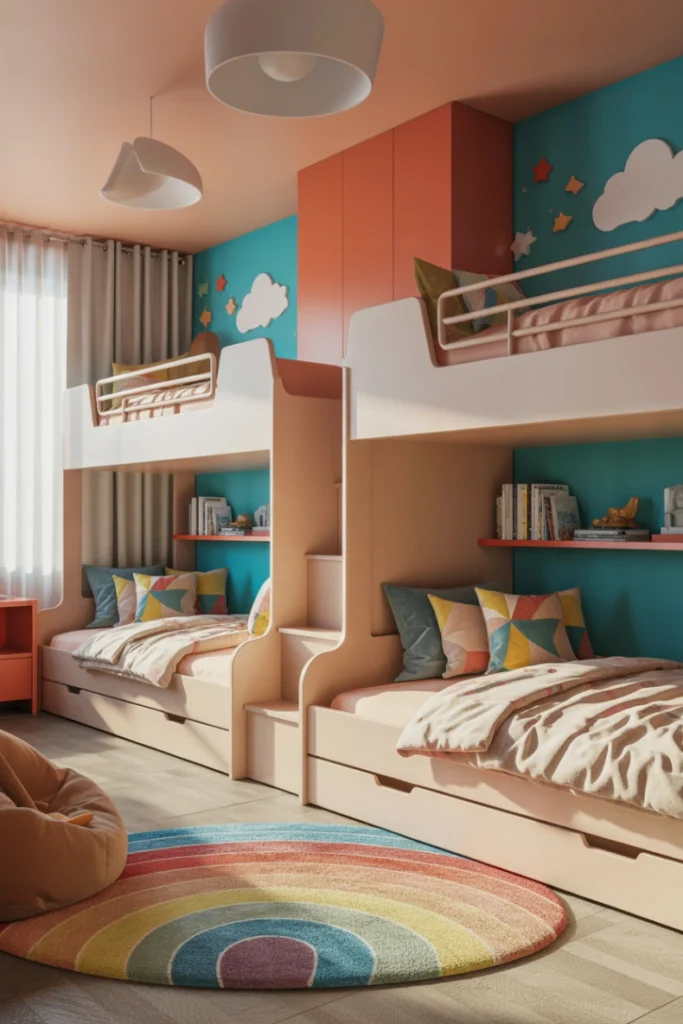
Bunk beds are one of the most efficient and popular solutions for shared kids bedrooms. By stacking sleeping areas vertically, they free up valuable floor space for play, reading nooks, or study desks. Bunk beds are especially helpful in smaller rooms where accommodating two separate beds would feel cramped or restrictive. Modern bunk beds offer built-in storage, lighting, and even small shelving, which adds functional value without increasing clutter. They also create a fun, adventurous feeling for kids, making bedtime more enjoyable.
Designing around bunk beds allows you to build the rest of the room with a sense of structure and flow. You can incorporate matching bedding, themed décor, or custom curtains to give kids their own semi-private sleeping zones. Safety is essential, so sturdy railings and stable ladder designs should be prioritized. Whether you choose traditional bunks, loft-style bunks, or customizable wooden designs, this layout creates an efficient and cheerful sleeping environment that kids love.
2. Twin Beds with Personalized Zones
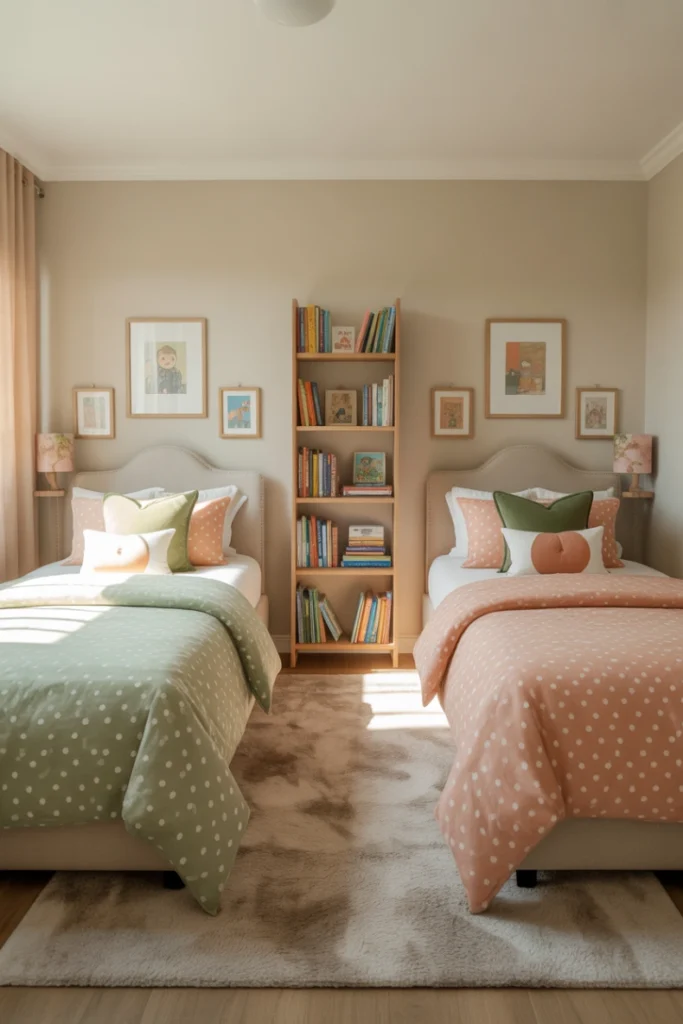
Twin beds placed side by side offer a classic shared bedroom layout that gives each child their own personal space while maintaining symmetry. This arrangement allows children to enjoy their individuality through personalized bedding, wall art, bedside tables, or themed decorations. It encourages a sense of equality and keeps the room visually balanced. With the right layout, twin beds also create a soothing, structured environment suitable for winding down at night.
Parents can include a central rug or shared nightstand to add cohesion to the room. Using color-coded accessories, monogrammed pillows, or themed wallpapers helps define each child’s zone without overwhelming the space. This setup works especially well for siblings with similar schedules and interests. It also provides the flexibility to rearrange the room in the future as the kids grow or their needs change.
3. Loft Beds with Study Space Underneath
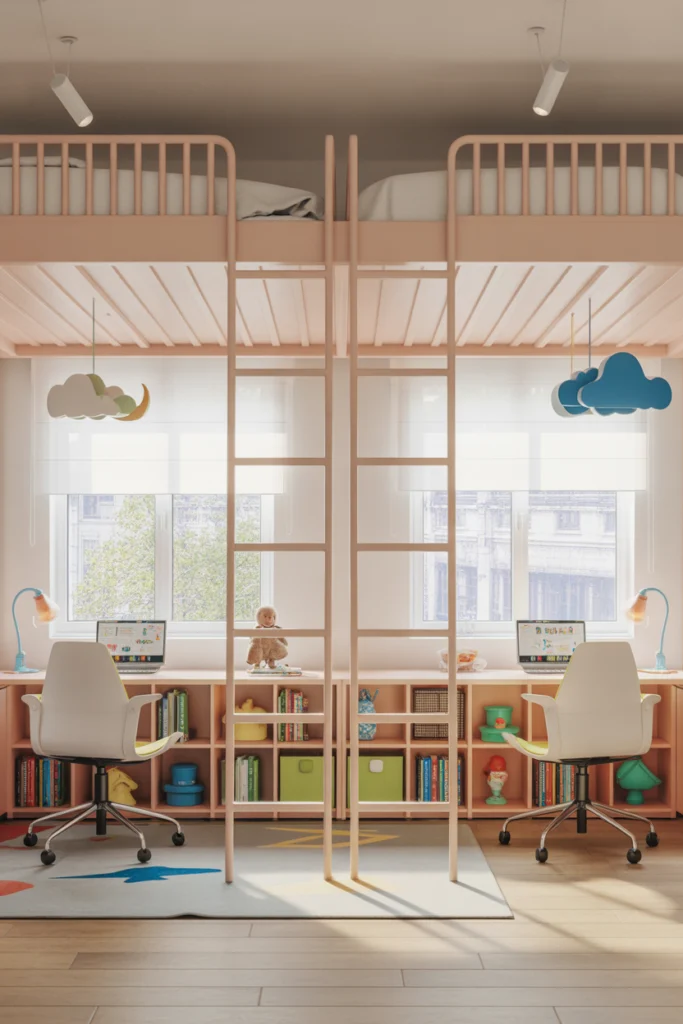
Loft beds offer a clever way to combine sleeping and study areas within the same footprint. By raising the bed, the space below becomes available for desks, bookshelves, or creative play zones. This is an excellent solution for school-aged children who need designated homework areas without sacrificing sleeping comfort. Loft beds make the room feel larger and more structured, encouraging productivity and organization.
Designing with loft beds also helps create individual zones for each child, giving them personal space despite sharing a room. You can use matching loft frames to maintain symmetry or customize each space according to their interests. With proper lighting, comfortable seating, and educational accessories, the under-bed space becomes a cozy and functional environment. This idea supports academic growth while maximizing room potential.
4. Built-In Beds for a Custom Shared Room
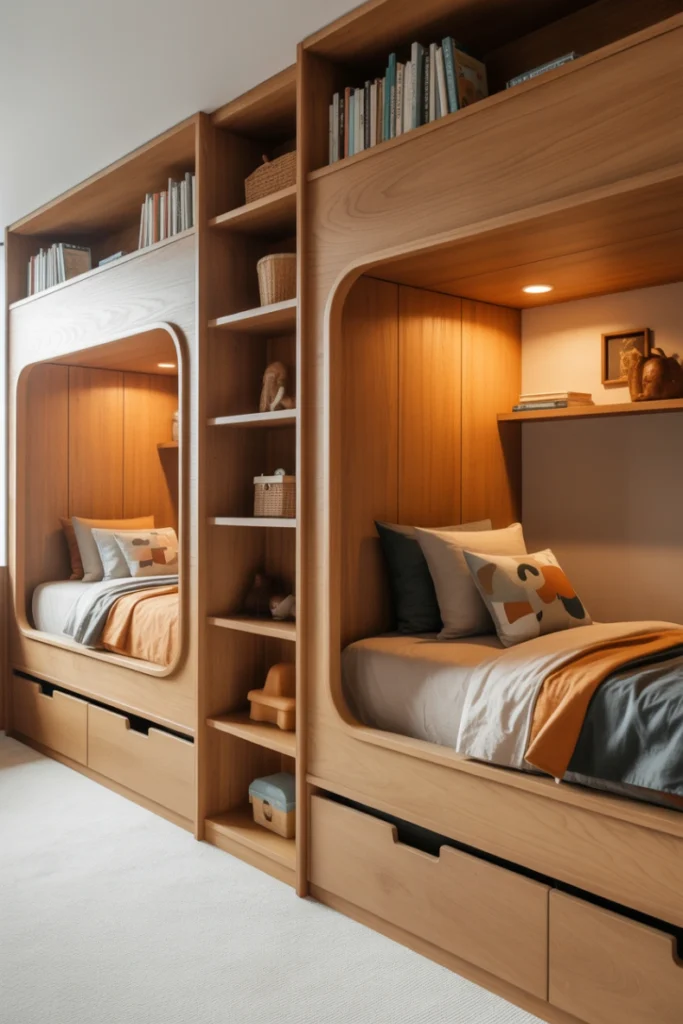
Built-in beds create a highly organized and cohesive shared bedroom by integrating sleeping areas into the room’s architecture. These beds can include shelving, drawers, or lighting fixtures embedded within the structure, making them ideal for small or narrow rooms. Built-in designs also allow you to tailor the bed sizes, widths, and heights according to the room’s dimensions and your children’s needs. The result is a clean, modern look that maximizes space efficiency.
In addition to their practical benefits, built-in beds bring a sense of luxury and intentional design. Each child can have their own enclosed sleeping nook, complete with personal décor panels or curtains for privacy. This concept reduces clutter and creates a visually appealing layout that supports rest and relaxation. Built-ins work beautifully in themed rooms or minimalist spaces with a focus on functionality.
5. Divider Walls to Create Individual Zones
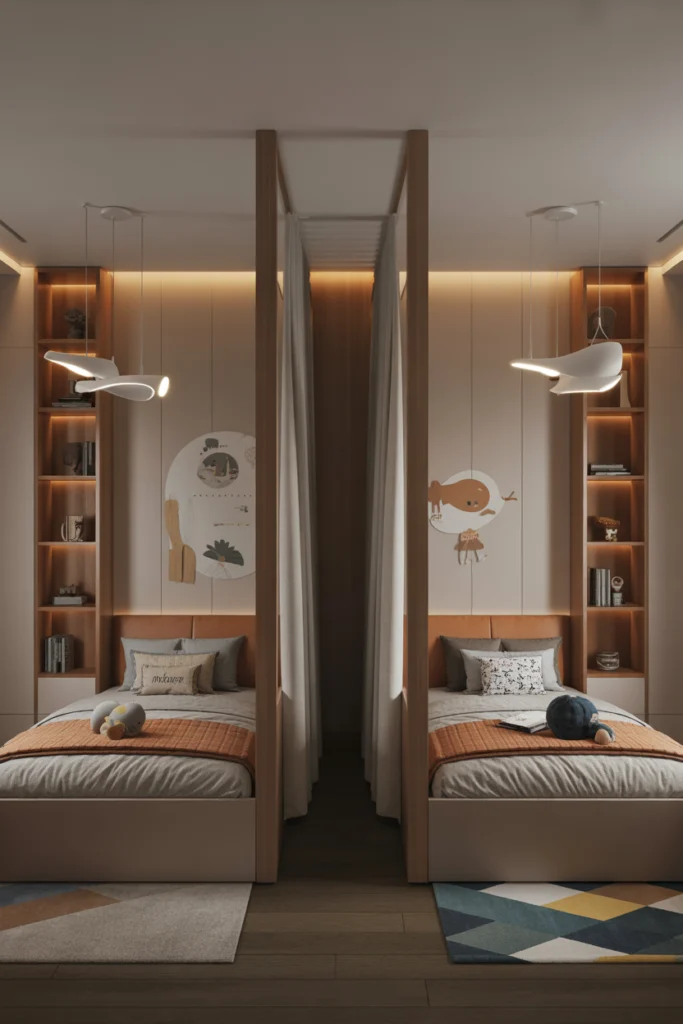
Divider walls, partial partitions, or curtains allow each child to enjoy their own defined area within a shared room. These solutions are perfect for siblings with different personalities, routines, or age gaps. Divider walls can be made from wood, frosted glass, fabric, or even bookshelves that offer dual functionality. They help reduce noise, minimize distractions, and create a sense of personal ownership.
When designing a shared bedroom with dividers, it’s essential to maintain harmony between the two sections. Using complementary colors or matching furniture helps create continuity while still allowing individuality. Divider walls also give children a sense of privacy, making the shared space feel more comfortable and organized. This idea is especially beneficial for older kids who crave personal space but must share a room.
6. Shared Bedroom with a Central Play Area
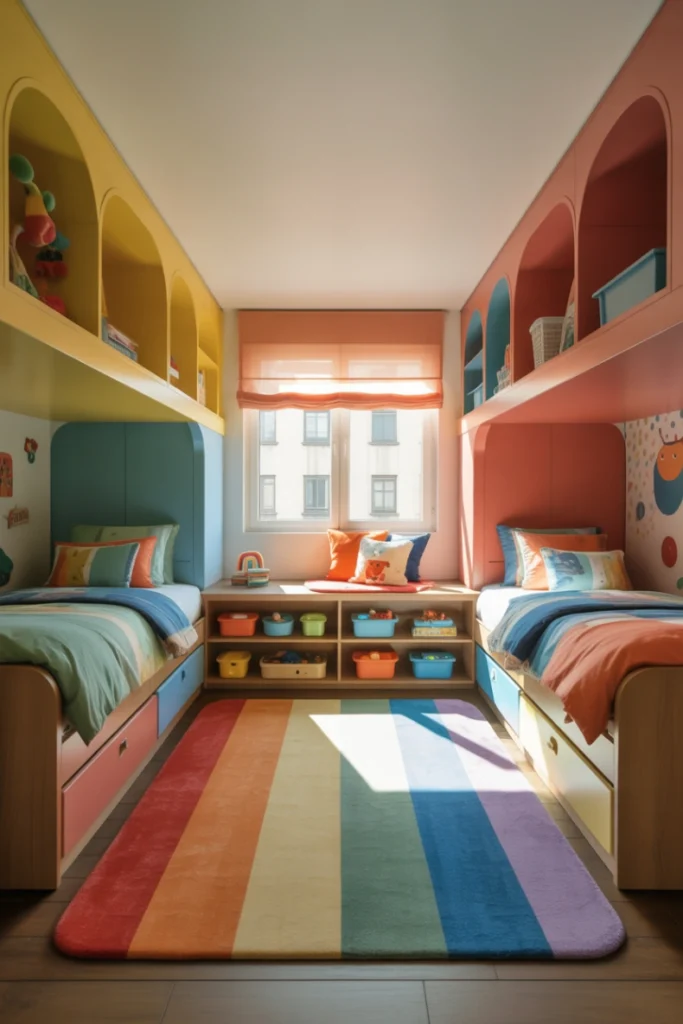
A central play area works wonderfully in shared bedrooms where space must serve multiple purposes. By placing beds against opposite walls, the middle of the room becomes a dedicated play zone. This allows kids to spread out toys, games, and creative activities without feeling cramped. The layout encourages bonding, imagination, and cooperative play.
A central play area also promotes organization. You can incorporate toy storage units, soft rugs, beanbags, or activity tables to keep everything accessible and tidy. The open space makes the room feel larger, while the defined zones help children understand where sleeping, playing, and studying happen. This type of layout is ideal for younger siblings who spend much of their time playing together.
7. Color-Coded Shared Bedroom for Easy Organization
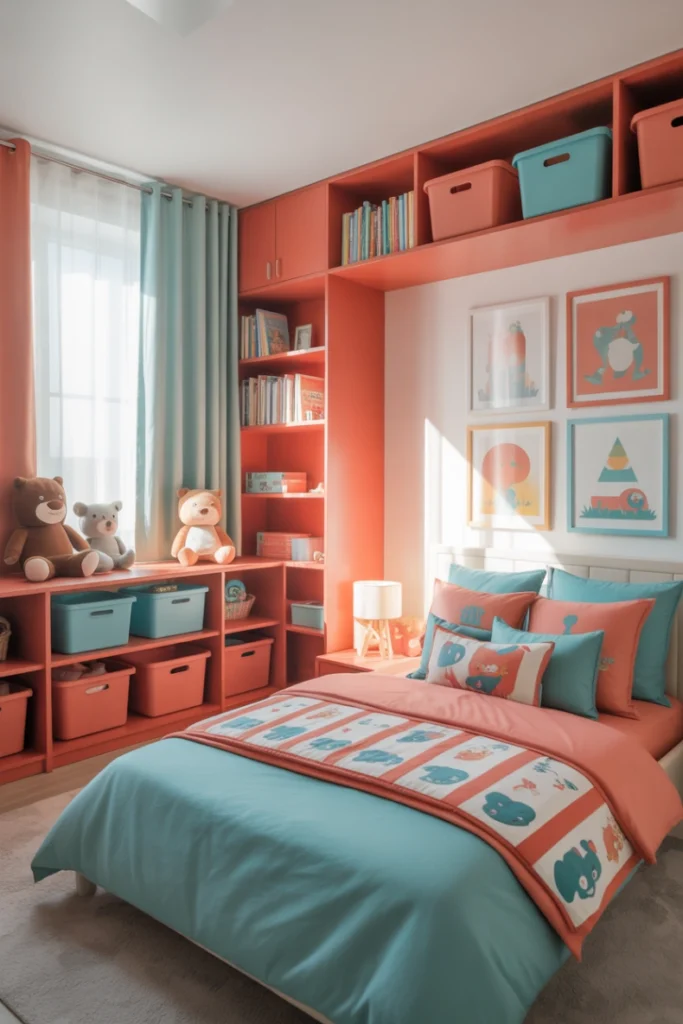
Color-coding is a simple yet effective strategy for shared kids bedrooms. Assigning each child a specific color helps keep belongings organized, minimizes confusion, and allows for personalized expression. Bedding, storage bins, desks, and wall décor can all follow the chosen color themes while still maintaining an overall cohesive look. It’s especially useful when children share similar toys, clothes, or accessories.
Designers often use color-coded accents to create harmony rather than overwhelm the room. Neutral walls combined with pops of color make the bedroom feel fresh and modern. Color-coding also supports independence by helping kids easily identify their personal items. This approach is both functional and visually appealing, making it ideal for any shared bedroom setup.
8. Shared Room with Mirrored Layout for Balance
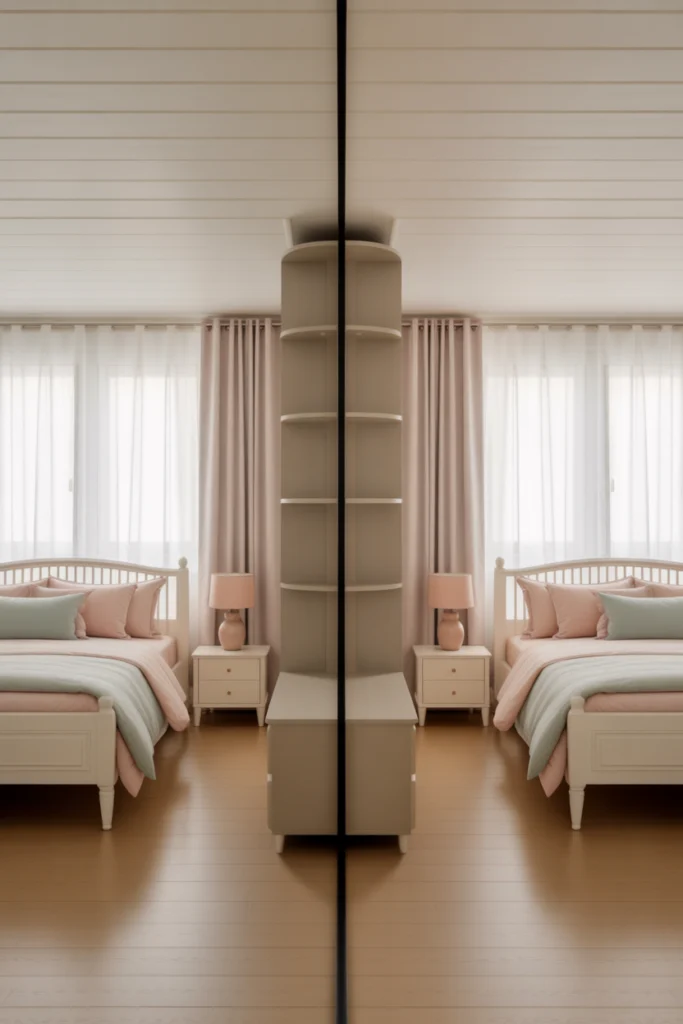
A mirrored layout creates a beautifully symmetrical shared bedroom that appeals to both aesthetics and functionality. By placing matching beds, desks, and décor elements on opposite sides, the room feels harmonious and organized. This layout gives each child equal space, preventing arguments and promoting fairness. Mirroring also enhances visual balance, making the room feel calm and welcoming.
The mirrored design is ideal for siblings close in age who appreciate similar styles. It’s easy to customize through bedding choices, wall art, or personal items without disrupting the room’s symmetry. Additional storage can be placed at the center or within each child’s personal area. This layout is timeless and works well for modern, minimalist, or classic bedroom themes.
9. Built-In Storage Solutions for Clutter-Free Living
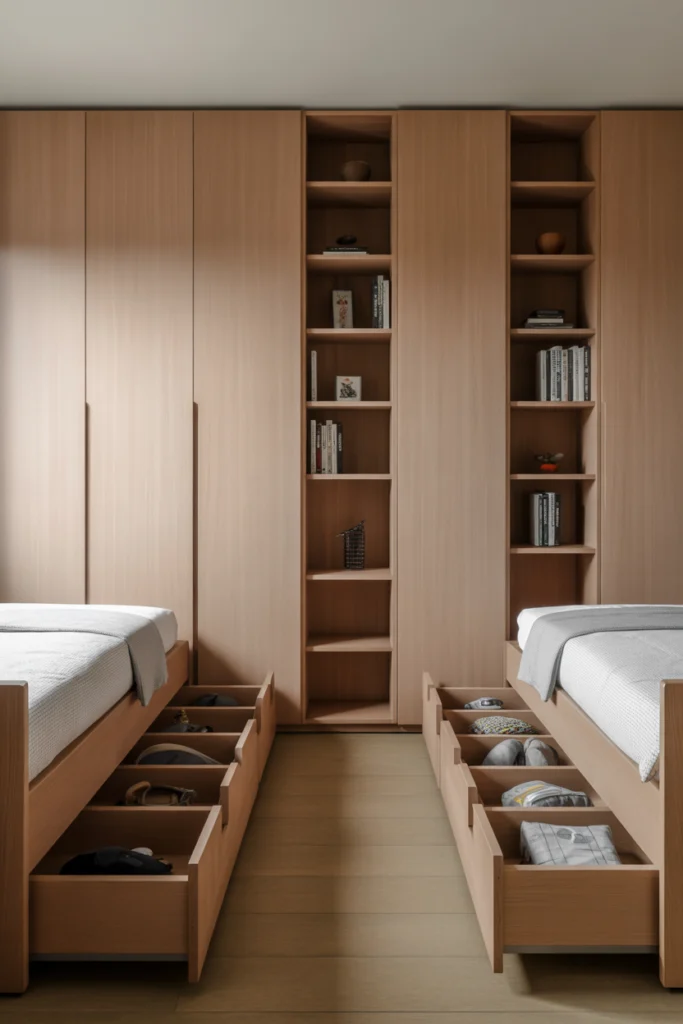
In shared bedrooms, storage plays a crucial role in maintaining cleanliness and reducing chaos. Built-in storage solutions, such as wall-to-wall cabinets, under-bed drawers, and window seat storage, maximize every available inch. These features help keep toys, clothes, books, and accessories organized and out of sight. Built-in units also help visually declutter the room, creating a calm and relaxing environment.
This idea works especially well in smaller bedrooms where floor space is limited. Integrating storage directly into the room’s structure conserves space while adding a sleek, modern look. Kids benefit from having designated spots for their belongings, promoting responsibility and independence. High-quality built-ins ensure that the room stays tidy and functional as children grow.
10. Creative Themes for Shared Kids Bedrooms
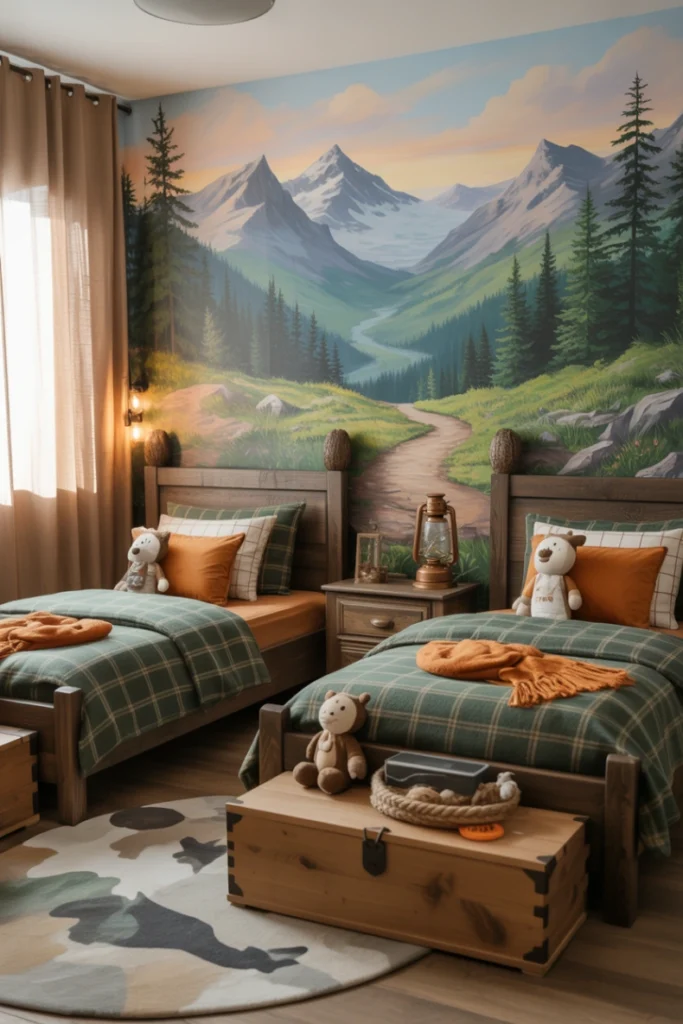
A shared room becomes more exciting and inspiring when designed around a specific theme. Whether you choose an adventure theme, galaxy design, mountain mural, jungle setting, or whimsical fairy-tale style, themes create a sense of wonder and imagination. They also help unify the room, making it feel cohesive and visually engaging. Children often enjoy connecting with a fantasy or interest that makes their room feel special.
Themed rooms offer endless opportunities for creativity. You can include themed bedding, wall art, rugs, lighting fixtures, and custom-built décor elements. When done thoughtfully, the theme remains appealing as the children grow, especially if you choose adaptable colors and designs. This approach makes shared bedrooms feel magical and memorable.
11. Shared Bedroom with Dual Desks for Study Time
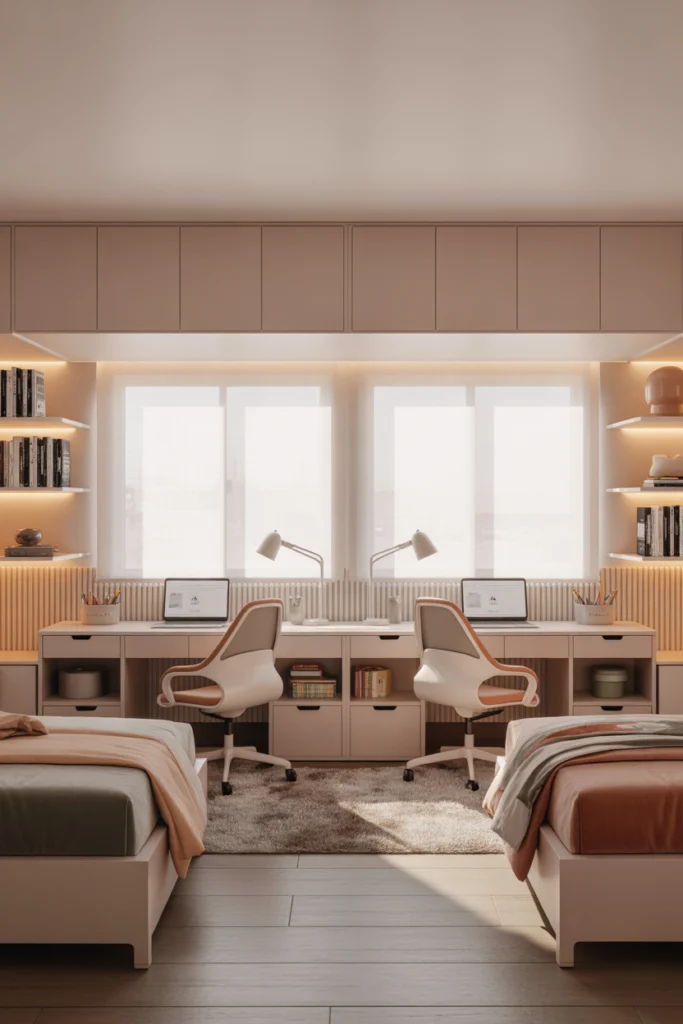
Dual desks make a shared bedroom more functional, especially for school-aged children who need separate study areas. Placing two desks in parallel or side by side prevents distractions and encourages structured routines. This setup helps children stay focused on homework while still enjoying the comfort of their shared room. Desks can include storage drawers, pinboards, lamps, and shelving to enhance organization.
Creating personal study zones allows each child to decorate their workspace according to their preferences. Whether with motivational quotes, photos, or fun stationery, these touches foster a sense of ownership. A well-designed study area also helps maintain boundaries between leisure and academic activities. This approach contributes to productivity and supports long-term academic habits.
12. Corner Beds to Maximize Wall Space
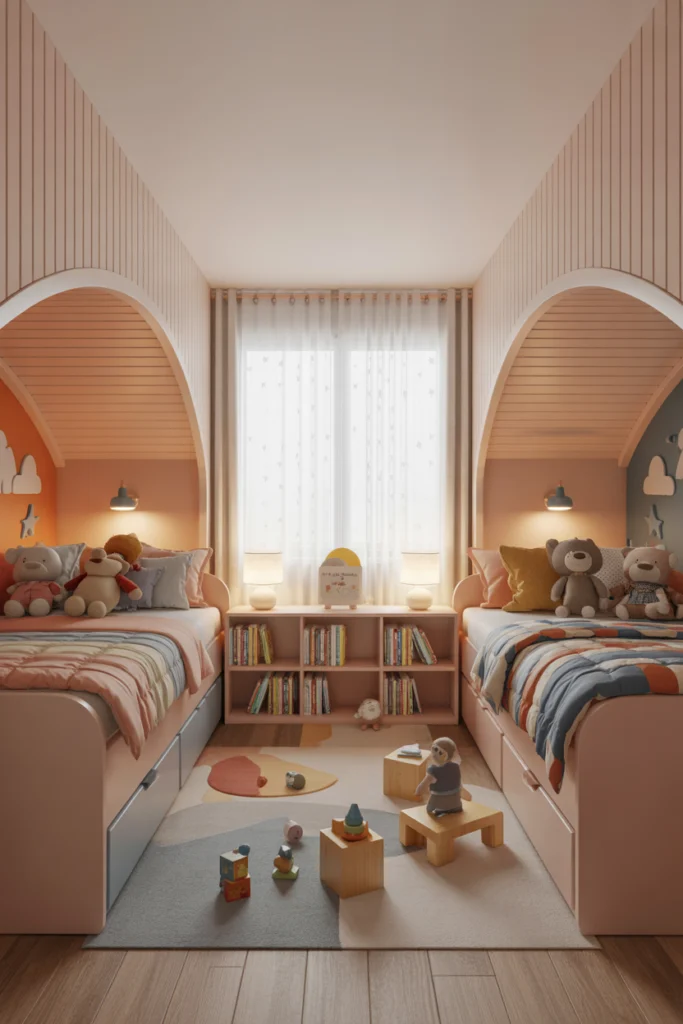
Corner beds make excellent use of unused wall space, freeing up the room’s center for movement or play. This arrangement is especially effective in smaller square rooms where traditional setups feel restrictive. By pushing beds into opposite corners, you create an open and comfortable layout that supports both shared and independent activities. Corner beds also reduce noise and nighttime disruptions between siblings.
Designing with corner beds offers many opportunities for creativity. You can include corner shelves, soft wall panels, reading lights, and decorative elements that personalize each sleeping zone. This layout allows for a friendly, relaxed environment where siblings still share the room while maintaining a sense of distance and privacy. It’s a clever solution for kids with varying sleep schedules.
13. Shared Bedroom with Reading Nook
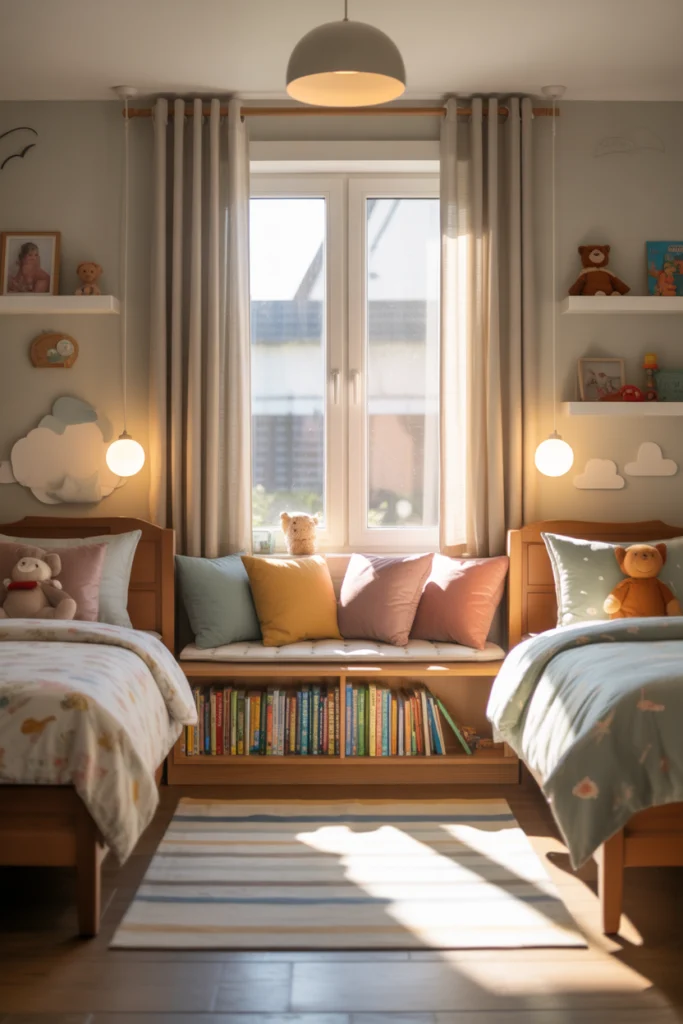
A reading nook adds comfort, serenity, and educational value to a shared kids bedroom. This cozy corner can feature soft cushions, beanbags, built-in benches, or floating shelves filled with books. It becomes a special place where siblings can read, relax, or spend quiet time together. Reading nooks help children develop healthy reading habits and offer a peaceful escape from active play.
The nook can be designed with warm lighting, canopies, or themed décor to make it visually appealing. It can also serve as a bonding space where siblings enjoy bedtime stories together. Incorporating storage baskets and shelves keeps the area tidy and accessible. A reading nook adds depth to the room, creating a well-rounded environment for learning and relaxation.
14. Using Vertical Space for Shared Room Organization
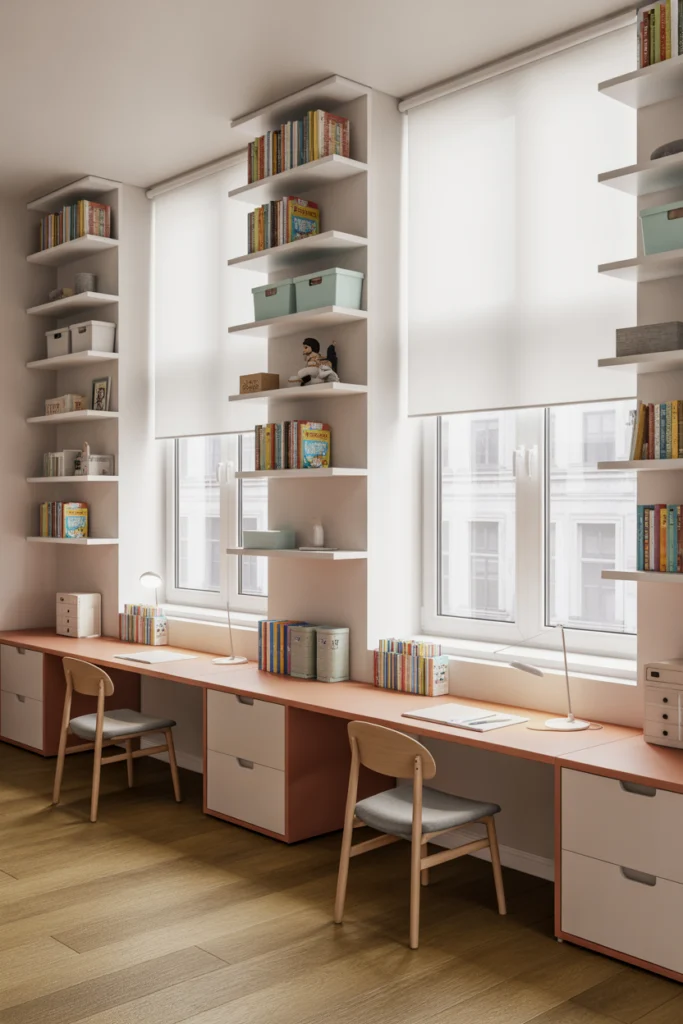
Vertical space is often underutilized in shared kids bedrooms, yet it offers tremendous potential for organization. Installing tall bookshelves, wall-mounted storage, floating desks, or hanging décor creates more room on the floor. Vertical solutions keep the room visually open while offering ample storage for toys, clothes, and school items. This approach maximizes small spaces and keeps clutter at bay.
Using vertical space also allows children to enjoy their belongings more easily. Items can be organized by height, frequency of use, or ownership. Additionally, incorporating vertical design elements like murals, gallery walls, or climbing ladders adds personality and charm. This idea makes shared rooms feel spacious, tidy, and thoughtfully designed.
15. Shared Bedroom with Flexible Furniture
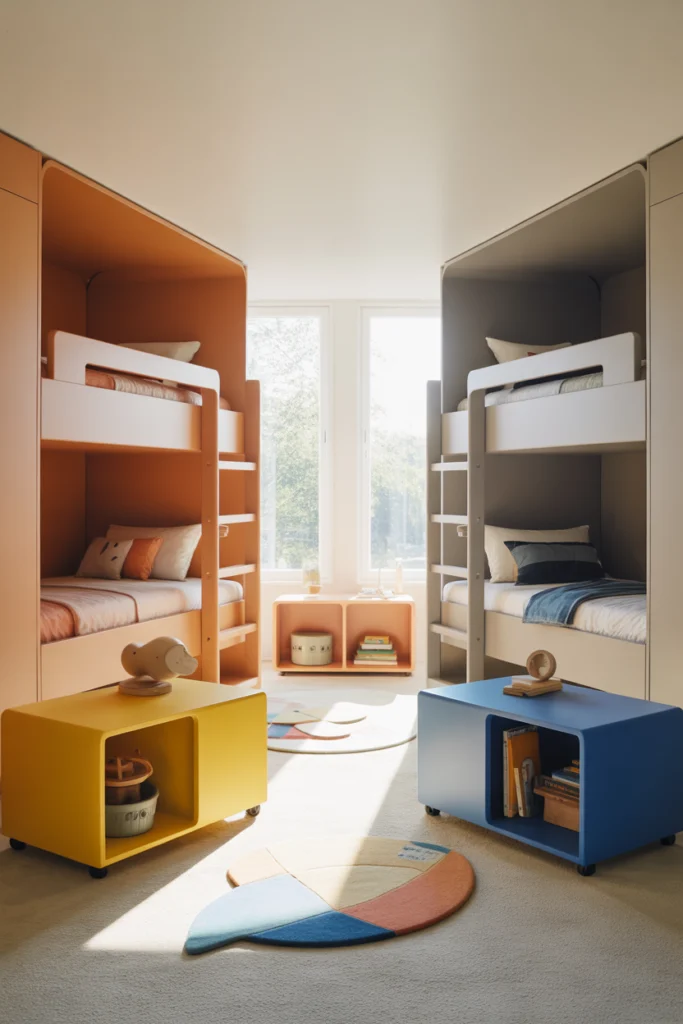
Flexible furniture makes shared bedrooms highly adaptable as children grow and their needs change. This includes modular beds, foldable desks, rolling storage carts, or adjustable shelving systems. Flexible pieces allow you to rearrange the room frequently without major renovations. It’s a practical approach for families with evolving schedules, hobbies, or growing siblings.
Furniture that moves or adjusts offers a sense of freedom to create different room setups. Kids can reconfigure their play areas, study zones, or sleeping arrangements easily. Flexible furniture also supports creative thinking and problem-solving. This adaptable design approach ensures the room remains functional and enjoyable year after year.
16. Shared Bedroom with Canopy Beds for Privacy
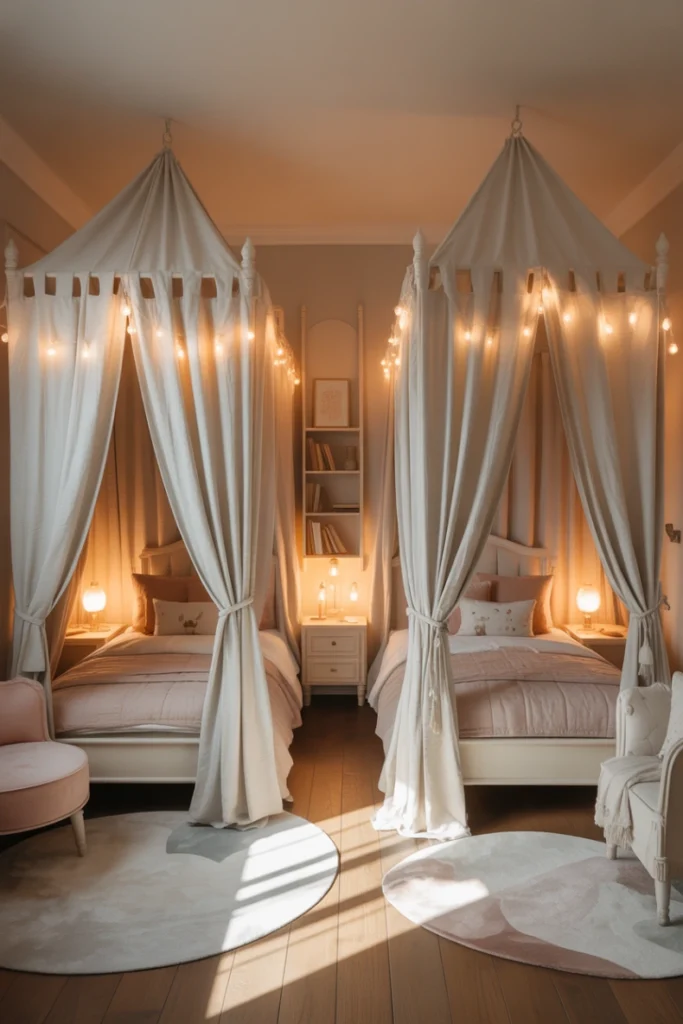
Canopy beds add elegance, romance, and privacy to a shared bedroom. The flowing curtains or panels create enclosed spaces that feel cozy and personal. This is especially helpful when siblings need alone time or a sense of individuality despite sharing a room. Canopy beds also provide opportunities for decorative expression through colors, patterns, and fabrics.
In addition to their aesthetic value, canopy beds help reduce light and noise, creating a more peaceful sleeping environment. Each child can customize their canopy with fairy lights, themed fabrics, or decorative accessories. This design creates a warm and inviting shared bedroom that feels both luxurious and comforting.
17. Space-Saving Foldable Furniture for Small Rooms
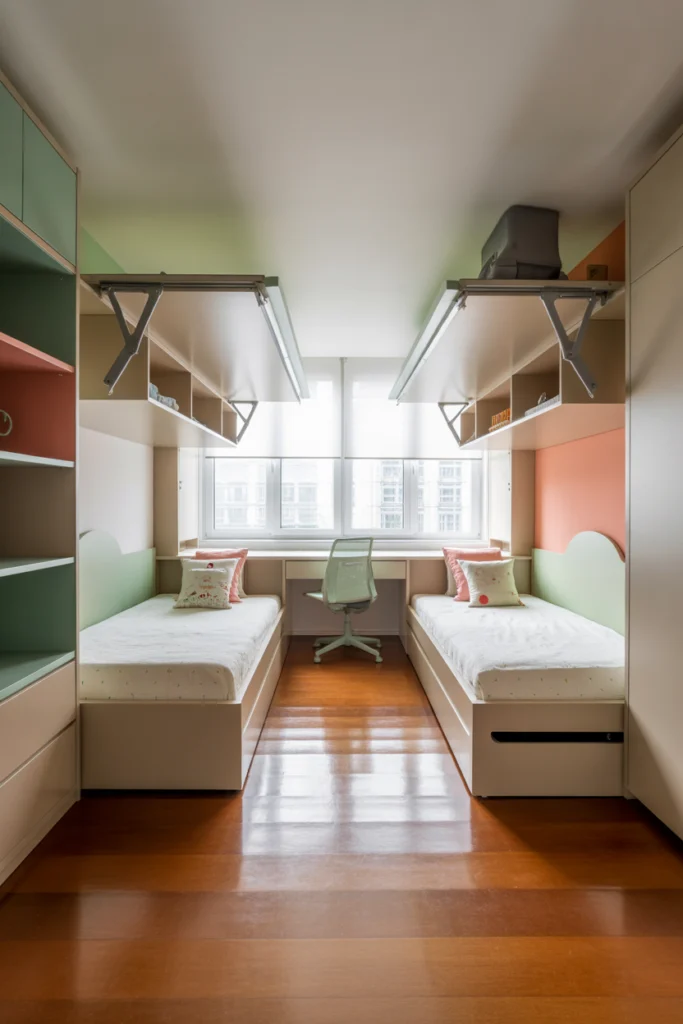
Foldable furniture is ideal for shared bedrooms with limited space. Items like foldable desks, collapsible chairs, and pull-out storage allow children to use the room’s space more efficiently. When not in use, these pieces can be tucked away, freeing up the area for play or movement. Foldable furniture keeps the room organized and versatile.
This type of furniture also encourages children to maintain a clean environment, as items must be stored after use. It promotes responsibility while keeping the room visually appealing. Foldable solutions come in a variety of styles, making it easy to match them with your bedroom theme. This idea is perfect for optimizing functionality in compact shared spaces.
18. Shared Bedroom with Triple Bunk Beds
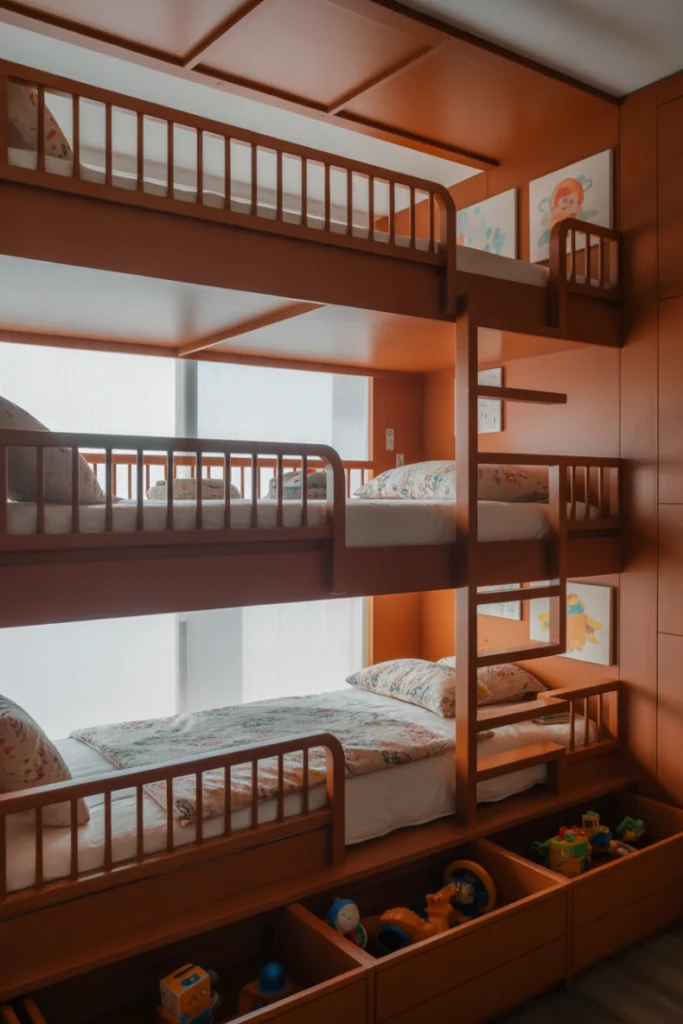
For families with three children sharing a room, triple bunk beds provide a safe and structured sleeping solution. These vertical designs maximize space and create a clean, organized layout that accommodates everyone comfortably. Triple bunks can be designed in stacked form or L-shaped depending on the room’s size and layout. They transform limited rooms into efficient and stylish sleeping quarters.
Parents can customize triple bunks with built-in ladders, safety rails, and storage drawers. Each child can personalize their sleeping nook with lights, shelves, or themed bedding. Triple bunks are visually impressive and create an adventurous atmosphere that children enjoy. They’re perfect for maximizing space without compromising style or comfort.
19. Shared Bedroom with Smart Lighting Zones
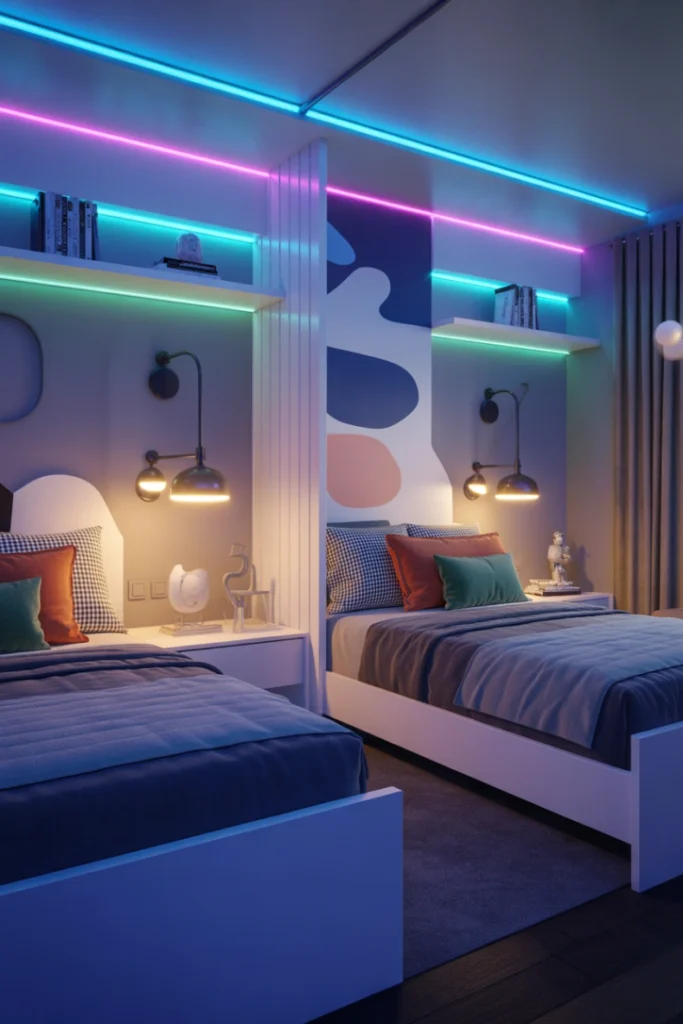
Smart lighting enhances functionality and ambiance in shared kids bedrooms. By dividing the room into lighting zones, each child has control over their own space. Bedside lamps, reading lights, pendant lights, and decorative LEDs can all contribute to a well-lit and personalized environment. Smart systems allow dimming, color changes, and scheduling for optimal comfort.
Lighting zones help distinguish between study, sleep, and play areas. Soft, warm lighting near the beds creates a calming bedtime environment, while brighter lights at the desk support productivity. Smart lighting fosters independence and allows kids to adapt their environment according to their needs. This idea adds modern convenience while enhancing the room’s overall design.
20. Shared Bedroom with Under-Bed Storage Solutions
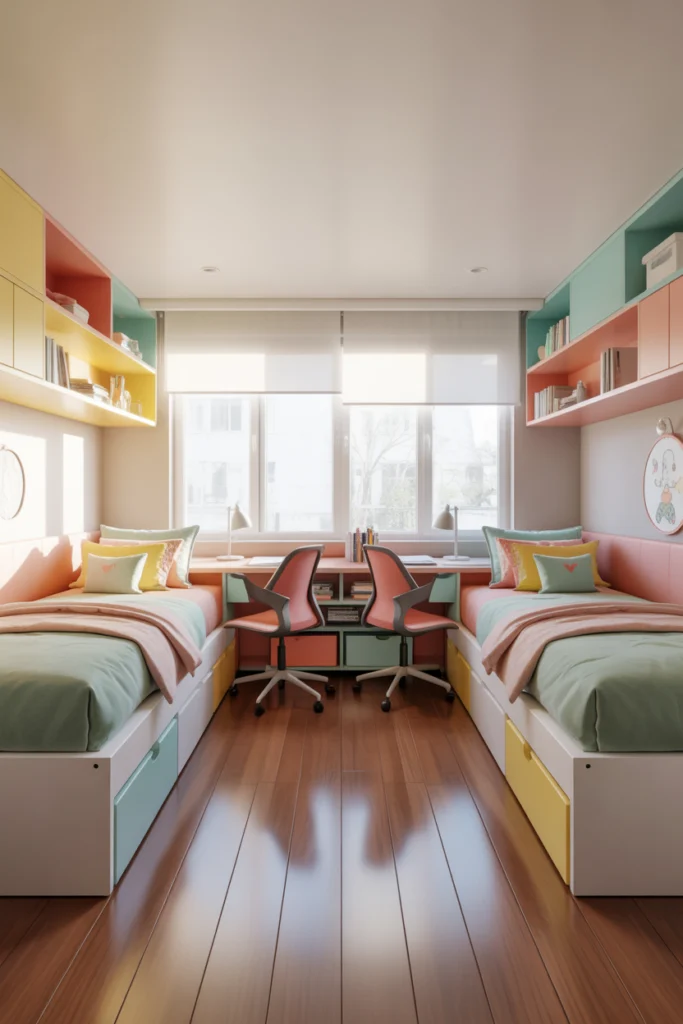
Under-bed storage is one of the most efficient ways to keep a shared bedroom tidy. Drawers, rolling bins, or built-in compartments allow children to store clothing, books, toys, or bedding without cluttering the room. This method maximizes floor space and keeps frequently used items easily accessible.
In shared rooms, under-bed storage provides each child with their designated space. Using labels or color-coded bins helps children stay organized and responsible. Under-bed storage keeps the room visually clean and supports smooth daily routines. It’s a practical addition that makes the shared space more functional and enjoyable.
21. Shared Bedroom with Growth-Ready Design
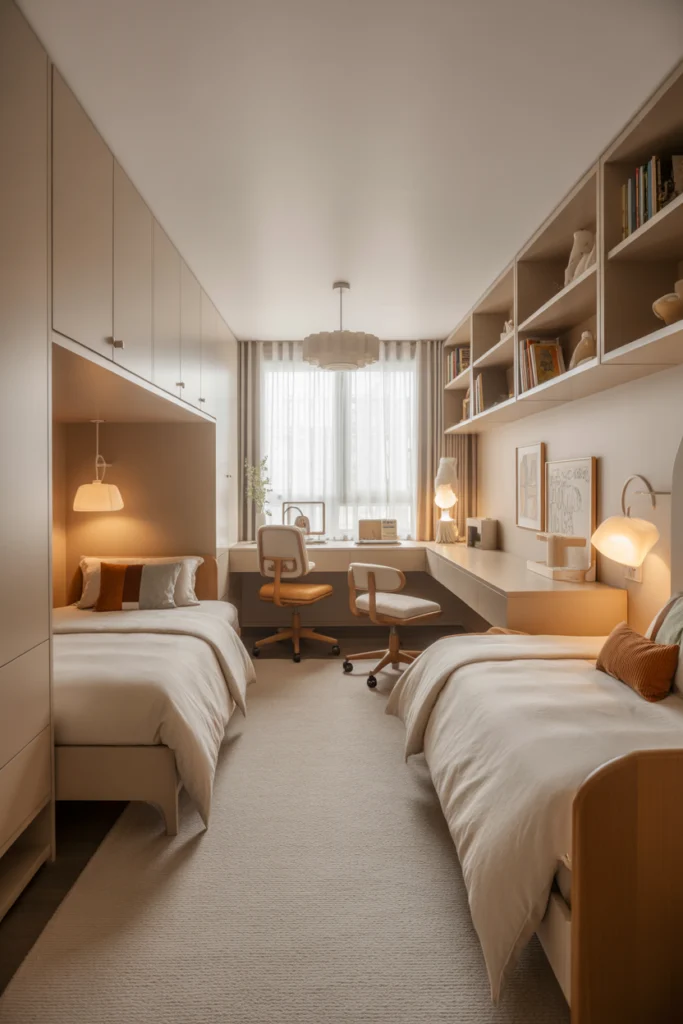
A growth-ready design ensures that the shared bedroom remains functional as children get older. This approach focuses on choosing timeless furniture, neutral color palettes, and adaptable layouts. Beds, desks, and storage systems should be sturdy and sized appropriately for long-term use. Growth-ready designs emphasize practicality without sacrificing style.
As children grow, their interests and needs change. A flexible, future-proof layout allows you to update décor, bedding, or accessories easily without renovating the entire room. This idea is ideal for families seeking long-lasting solutions that evolve with their children. Growth-ready rooms offer comfort, continuity, and timeless appeal.
Conclusion
Shared kids bedrooms can be both practical and inspiring with the right design approach. From bunk beds and color-coded zones to study areas and smart storage solutions, each idea in this guide offers a thoughtful way to maximize space while respecting individuality. A shared bedroom can become a place of creativity, bonding, growth, and comfort when designed with intention. Whether your goal is organization, playfulness, privacy, or long-term functionality, these 21 shared kids bedroom ideas provide creative and effective solutions for designing spaces that children will love for years.