
15 Basement Bedroom Ideas: Cozy, Functional Styles for Homes


A basement bedroom is one of the smartest ways to add a real bedroom to your home without building an extension. That quiet lower level can become a private master suite, a comfortable guest room, a teen retreat, or a cozy spare room that finally gets used every week. The challenge is real, though. Basements sit below ground, so they tend to feel dark, cool, and a little closed in. With the right plan, those same traits become strengths: the room stays cool in summer, stays quiet, and feels wonderfully private once the lighting, color, and layout are right.
These 15 basement bedroom ideas cover every style and budget, from bright neutral rooms and rustic retreats to industrial lofts and luxury master suites. Each idea includes practical details on paint colors, furniture sizes, lighting layers, materials that handle moisture, and small touches that make the room feel finished rather than improvised. If you are planning a bigger lower level project, start with our 16 basement remodel ideas for every style and budget to map out the whole space before you focus on the bedroom itself.
Before you buy anything, check the basics. Test for moisture by taping a 2 by 2 foot square of clear plastic sheeting to the wall and the floor for 48 hours. If condensation or dark patches appear underneath, fix drainage, gutters, and wall sealing first. Measure your finished ceiling height too. Most building codes need at least 7 feet for a legal bedroom, and an egress window is required for safety in most areas. Once the room is dry, bright enough, and up to code, every idea below becomes much easier to pull off, and the room will feel like a bedroom, not a basement.
1. Light & Bright Neutral Basement Bedroom
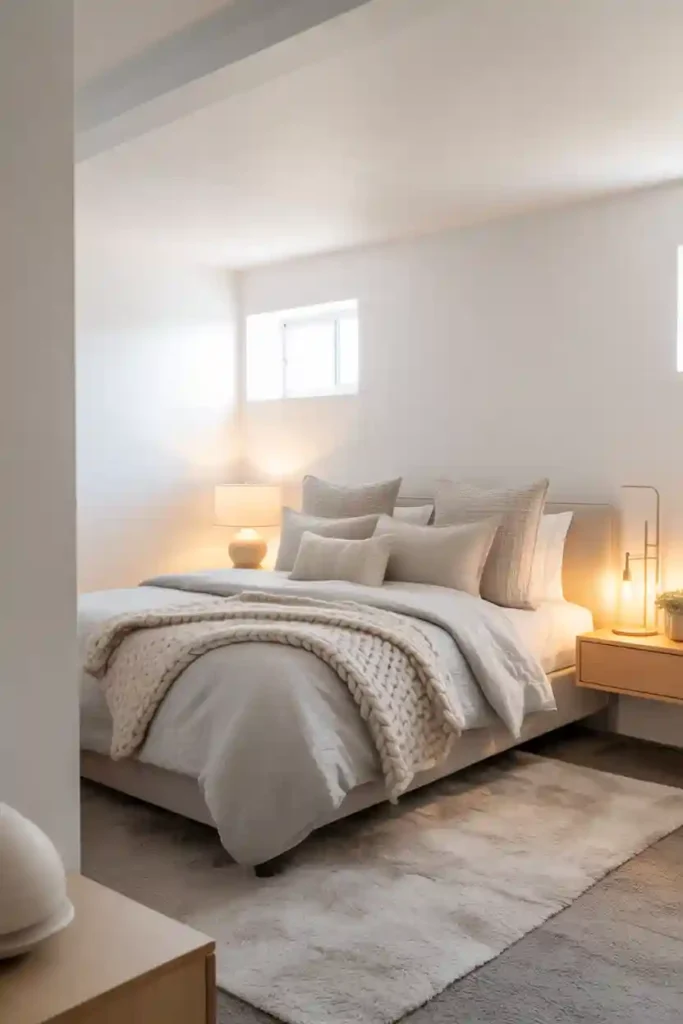
The fastest way to make a basement bedroom feel inviting is to commit to a light, neutral palette. Paint the walls a warm white such as Benjamin Moore White Dove or Sherwin Williams Alabaster, and keep the ceiling a flat bright white so it reads as high as possible. Add a pale greige or soft cream on one wall if the room feels flat. Light wood furniture in white oak or pale ash keeps the look airy, and a large mirror, at least 30 by 40 inches, hung opposite the main light source bounces light across the room and makes it feel wider.
Lighting does the heavy lifting here. Combine recessed ceiling lights on a dimmer, two bedside lamps with warm 2700K bulbs, and one wall sconce near the door so no corner stays dark. Layer the bed with white or cream linen bedding, a textured throw in a soft oatmeal tone, and a low pile rug in a pale pattern, at least 8 by 10 feet under a queen bed, to warm up a cold floor. Keep decor simple and cohesive: one piece of art above the bed, matching nightstands, and no more than three accent colors. The result is a calm, spacious retreat that feels like a bright upstairs bedroom.
2. Cozy Rustic Basement Retreat
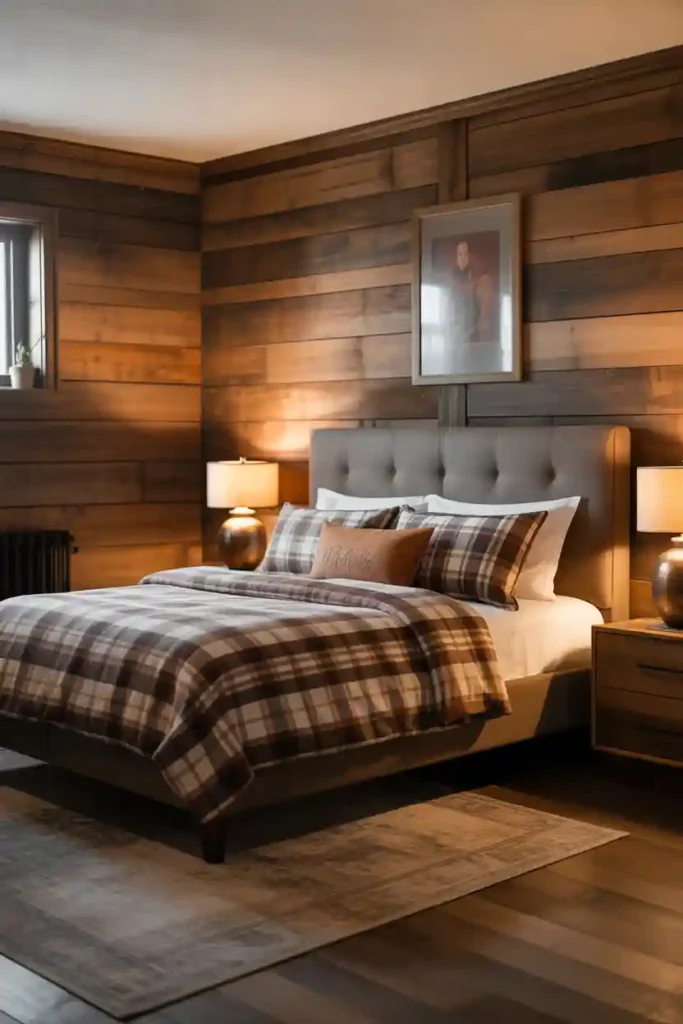
A rustic style suits a basement better than almost any other look, because the room already feels sheltered and cabin like. Add texture with a wood paneled accent wall behind the bed, using reclaimed barn wood or budget friendly peel and stick planks, or leave a ceiling beam exposed and stain it a warm walnut. Paint the other walls a soft warm cream so the wood does not darken the room too much. Earthy tones complete the palette: warm browns, deep forest green on a throw or cushion, and muted neutrals on the bedding.
Layer thick, touchable textiles to make the bed the star. Start with a chunky knit throw across the foot, add two plaid wool cushions, and finish with a faux fur throw for cold nights. Warm lighting matters more than bright lighting here, so choose table lamps with fabric shades and a pendant light with a warm amber bulb over a reading chair. A faux electric fireplace, which costs far less than a real one and needs no venting, adds a glow and a focal point. A solid wood headboard, or a simple live edge slab, ties the whole room together and turns the basement into a snug retreat made for slow mornings and restful nights.
3. Modern Minimalist Basement Bedroom
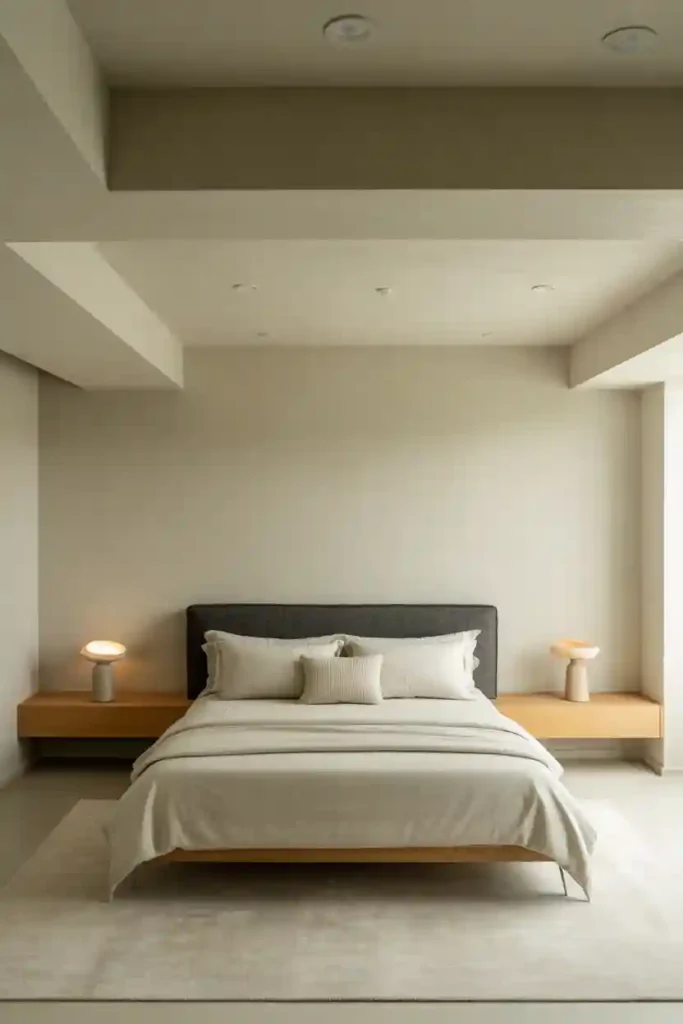
Minimalism works beautifully below ground because it removes visual clutter and lets the room breathe. Choose a restrained palette of white, charcoal, and one warm accent such as camel or soft taupe. Keep furniture low and streamlined: a platform bed with a simple upholstered headboard, one floating nightstand, and a slim dresser. Leave at least 24 inches of clear walking space on each side of the bed so the room never feels cramped, and hide everyday items in concealed storage, such as drawers under the bed or a wardrobe with flat, handleless doors.
Recessed lights on a dimmer keep the ceiling clean, while one sculptural floor lamp adds warmth in a corner. Choose one large piece of art instead of many small ones, and keep surfaces nearly bare: a book, a small vase, and a clock are enough. Soft textiles stop the room from feeling cold, so add a wool throw and a simple cotton duvet in a light tone. The payoff is a peaceful, contemporary retreat that feels sophisticated, uncluttered, and surprisingly spacious for a basement room.
4. Basement Guest Bedroom Suite
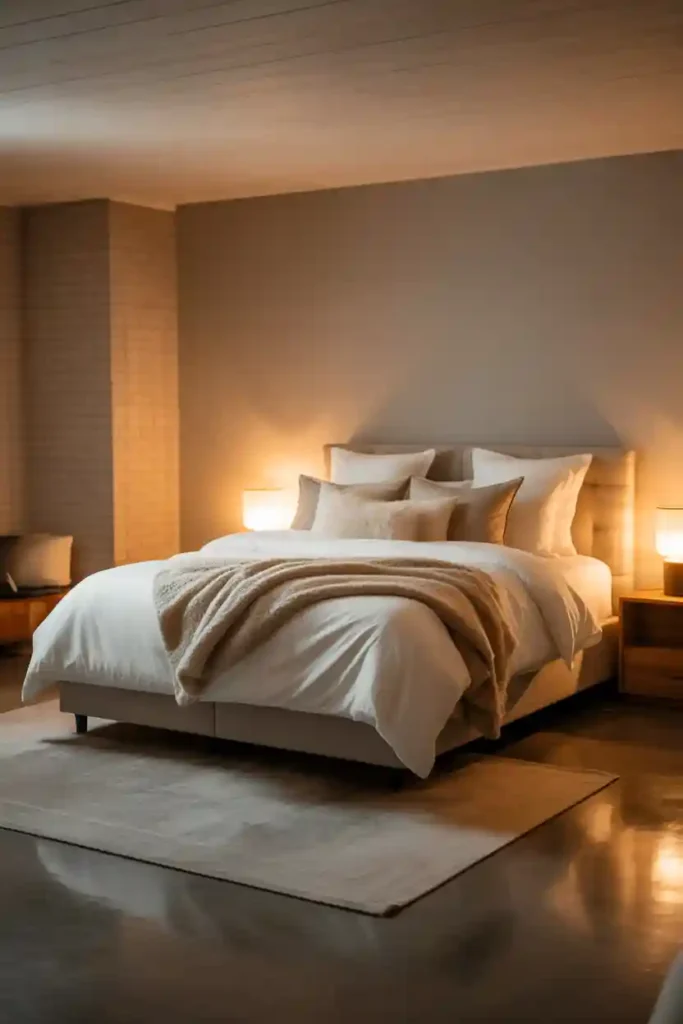
A guest suite should feel like a small hotel room, not a spare room with a spare bed. Start with a good quality mattress, queen size if the room allows, and layer it with crisp white sheets, a medium weight duvet, and two pillows per sleeper, one firm and one soft. Add a bedside table on each side with a lamp, a phone charger, and a small carafe of water. A luggage bench or a simple bench at the foot of the bed gives guests somewhere to put a suitcase instead of the floor, and a small armchair in a corner creates a spot to read or get dressed in comfort.
Soft neutral tones keep the room calming for any guest: warm white walls, beige bedding, and one muted accent color on cushions or art. Add thoughtful touches that cost almost nothing, such as a spare blanket folded at the foot of the bed, a few books, and a small plant that tolerates low light, like a snake plant. If a bathroom is nearby, leave fresh towels and a spare key to it in the room. With these details in place, your basement becomes the room guests ask to sleep in, not the room they tolerate.
5. Small Basement Bedroom Design

A small basement bedroom needs smart furniture, not more furniture. Choose a platform bed with built in storage drawers underneath, which can hold a full season of clothes and free up an entire dresser. Swap bulky nightstands for wall mounted shelves, about 12 inches deep, fixed 24 inches above the mattress, so the floor stays clear. Mount the television on the wall instead of using a stand, and pick a wardrobe with sliding doors so it never swings into the walking space. Keep at least 30 inches of clearance in front of the wardrobe doors.
Light colors and mirrors do the visual work. Paint the walls a pale warm white, use light bedding, and hang one large mirror to double the sense of space. Vertical storage is your friend: tall narrow shelves, hooks behind the door, and a shelf above the door frame for books. Keep decor minimal and purposeful, with one color repeated in the rug, cushions, and art so the room reads as one calm whole. For more compact room layouts, our small bedroom ideas show how to fit real storage into tight footprints. Done well, even a compact basement bedroom feels stylish, organized, and cozy rather than cramped.
6. Industrial-Style Basement Bedroom

Industrial style is a natural fit for a basement because the room already has the raw materials: concrete, brick, ductwork, and steel. Instead of hiding them, make them the design. Leave a brick wall exposed or use thin brick veneer on the wall behind the bed. Keep the ceiling open and paint exposed ducts matte black or charcoal so they read as intentional. Choose a metal bed frame in blackened steel, pair it with a concrete look nightstand, and add open metal shelving with wood boards for books and decor.
Balance the hard surfaces with softness, or the room will feel cold. Layer a thick cotton duvet, a wool throw, and linen cushions in warm gray and rust tones. Warm Edison bulb pendants or a black metal pendant light over each nightstand add glow and contrast against the gray palette. Keep the color scheme tight: charcoal, warm gray, matte black, and one warm accent such as cognac leather or rust. The result is a bold, modern bedroom that turns the basement’s structure into its best feature instead of something to cover up.
7. Teen Basement Bedroom Setup
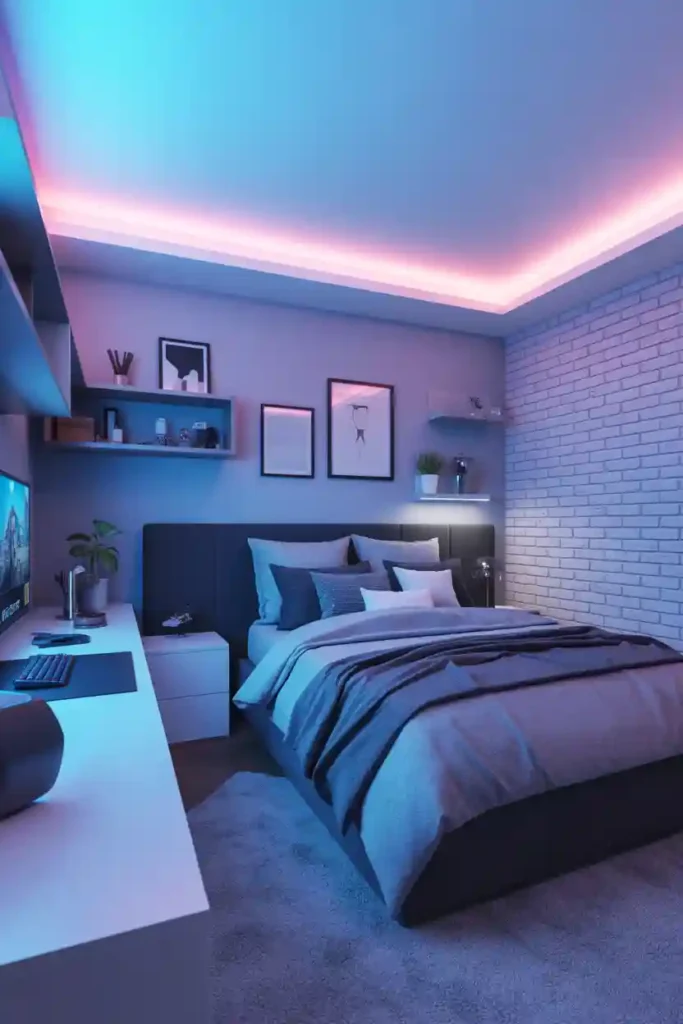
A basement bedroom gives a teen real privacy, and the design should feel like theirs. Start by dividing the room into three clear zones: a sleep zone with the bed and nightstand, a study zone with a desk at least 42 inches wide and a comfortable chair, and a lounge zone with a bean bag or small armchair. Let your teen pick the accent color, whether it is a calming dusty blue, a trendy sage green, or a bold accent wall in their favorite shade. Keep the main walls neutral so the room can grow with them and repainting one wall is cheap later.
Storage keeps the room livable. Use under bed drawers for clothes, wall shelves for books and collectibles, and a modular cube unit that can be rearranged as needs change. LED strip lights along a shelf or behind the headboard add a fun, modern glow and cost very little to run. If the room sits under a living area, add a thick rug and a fabric wall panel or two to soften sound and improve privacy. The end result is a functional sanctuary where a teen can sleep, study, and hang out with friends while still feeling part of the home.
8. Basement Bedroom with Accent Wall
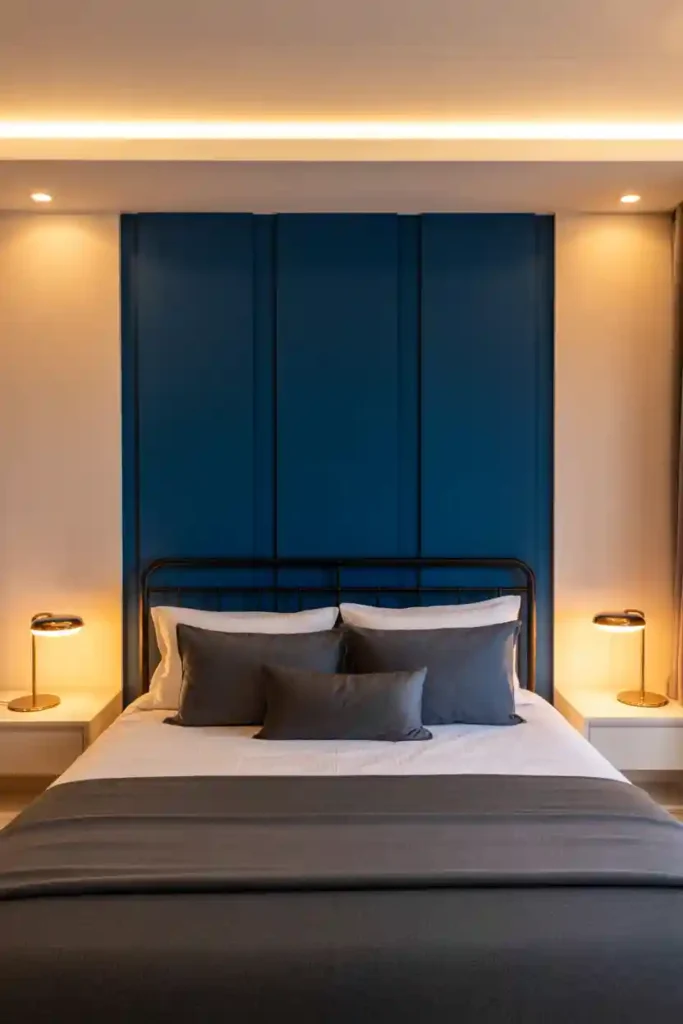
An accent wall is the highest impact, lowest cost upgrade for a basement bedroom, and it takes a single weekend. Pick the wall behind the bed and cover it with bold paint, textured wallpaper, vertical shiplap, or wood slats spaced about half an inch apart for a modern slatted look. Deep colors work well here because the wall is contained: try a rich navy, a moody forest green, or a warm terracotta. Keep the other three walls a soft neutral so the room stays bright and the accent wall reads as a deliberate feature, not a dark cave.
Repeat the accent color in small doses so the room feels cohesive. Pick up the wall color in two cushion covers, a throw at the foot of the bed, and one piece of art. Add layered lighting to make the feature shine: a pair of wall sconces flanking the bed, or a picture light above the headboard, draws the eye to the wall and keeps the room feeling bright after dark. For help choosing the right shade, see our bedroom color schemes for palettes that work in low light rooms. This one change turns a plain basement bedroom into a space that looks designed, not improvised.
9. Scandinavian-Inspired Basement Bedroom
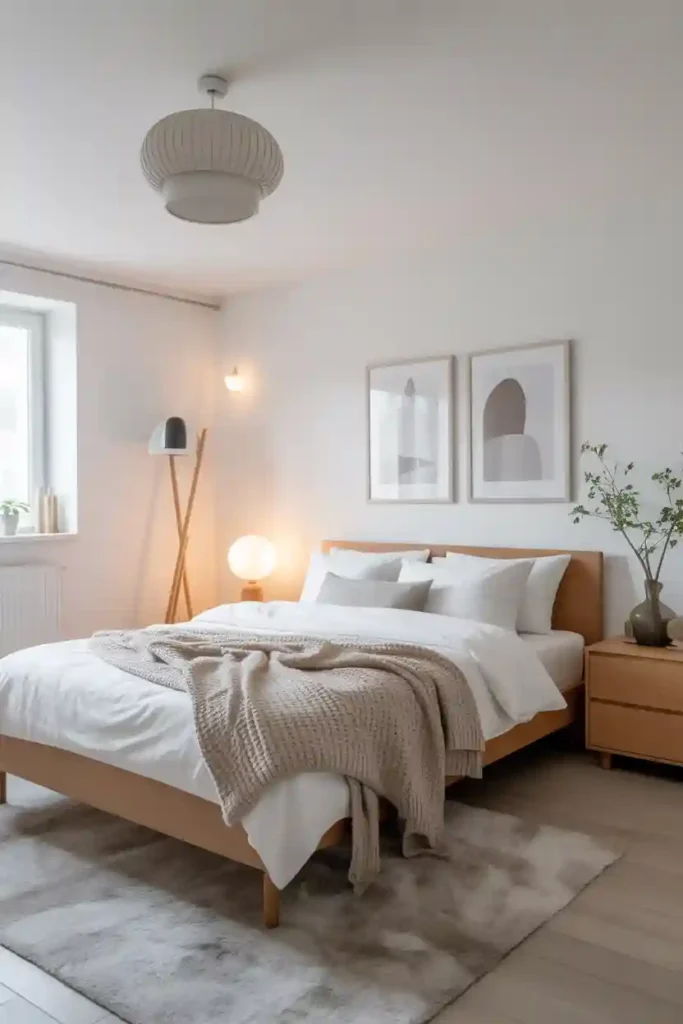
Scandinavian design is built for rooms with little natural light, which makes it ideal for a basement bedroom. Paint the walls a soft white or pale warm beige, choose light wood furniture in birch or white oak, and keep every surface simple and functional. A low platform bed, a slim bench at the foot, and one small nightstand are all the furniture the room needs. Leave the floor partly bare: a light wood look floor with a single soft wool rug, about 5 by 7 feet beside the bed, feels clean and warm underfoot.
Warmth comes from textiles, not clutter. Layer a chunky knit throw, a linen duvet in white or pale gray, and one or two cushions in muted sage or dusty blue. Add soft lighting with a paper lantern pendant or a simple ceramic bedside lamp, and keep the bulbs warm at 2700K. One low light plant, such as a pothos on a shelf or a snake plant in a corner, brings life into the room without needing a sunny window. The result is a calm, airy bedroom that feels bright and welcoming despite sitting below ground.
10. Basement Bedroom with Built-In Storage

Built in storage is the best investment in a basement bedroom because it uses awkward space that freestanding furniture wastes. Fit custom cabinetry into the wall beside the bed, build drawers into the space under a window, or use the area beneath the stairs as a wardrobe with sliding doors. Wall niches, about 12 inches deep, work well for books and display items and cost far less than full cabinets. Choose doors and drawer fronts in the same color as the walls, with simple recessed pulls, so the storage reads as part of the room rather than a bulky add on.
Mix closed and open storage on purpose. Closed cabinets hide clothes, bedding, and clutter, while two or three open shelves hold books, a plant, and one or two decorative pieces. Light finishes such as white, pale oak, or light gray keep the room feeling open, and a mirror on one cabinet door reflects light into the room. Add a small bench with a lift up lid at the foot of the bed for extra blankets and out of season clothes. With everything in its place, the bedroom stays organized and calm, and every inch of the basement earns its keep.
11. Luxury Basement Master Suite
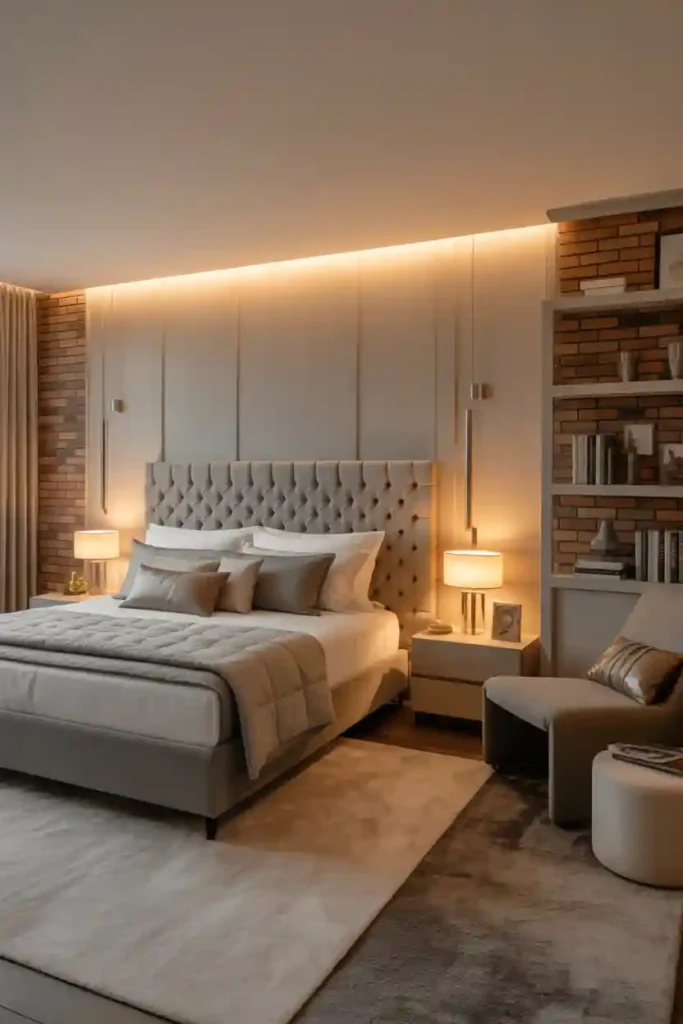
A basement can hold a true master suite, and the privacy of the lower level is actually a luxury in itself. Start with a king size bed, an upholstered headboard at least 54 inches tall, and hotel quality bedding: high thread count cotton sheets, a down or down alternative duvet, and four pillows, two for sleeping and two for reading. Add a sitting area with two armchairs and a small side table near the far wall, and hang a statement chandelier or a large pendant light as the room’s centerpiece. Rich but balanced tones work best: soft taupe walls, charcoal bedding accents, or a muted navy feature wall.
Layer the lighting in three levels: recessed ceiling lights on a dimmer for general light, bedside lamps for reading, and a low glow from the chandelier or a pair of sconces for evenings. Plush rugs, at least 9 by 12 feet under a king bed, and full length curtains in a heavy linen, even over a small window, add softness and make the room feel finished. Keep the palette to three colors and repeat them in the rug, cushions, and art. The finished suite feels private, elegant, and intentionally designed, and it is often the quietest room in the house.
12. Boho Chic Basement Bedroom
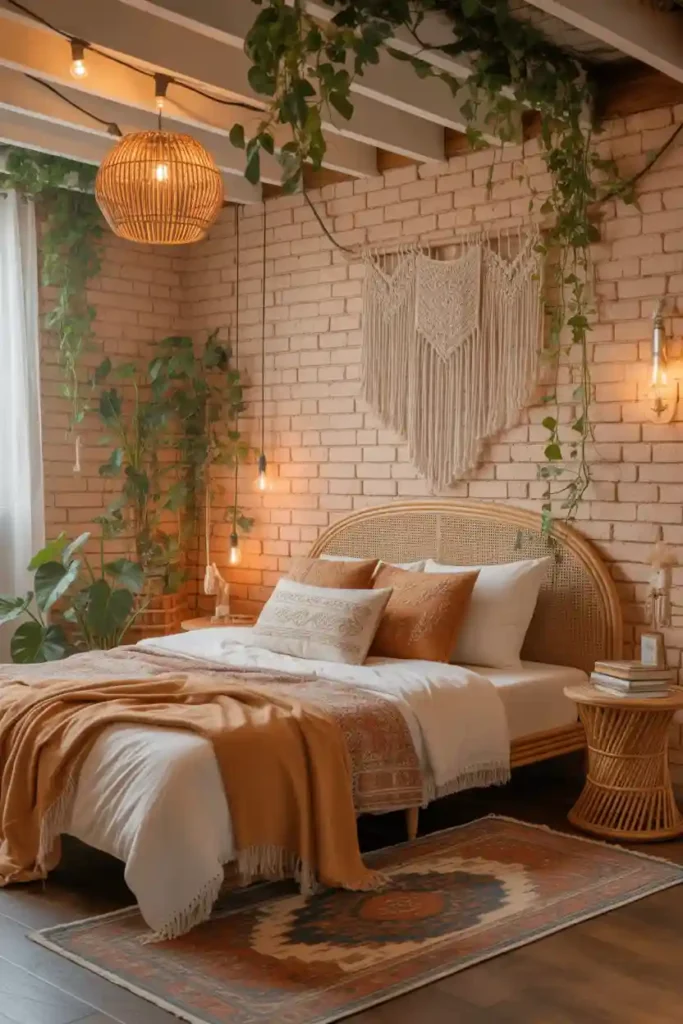
Boho style brings warmth and personality to a basement bedroom through layered texture and earthy color. Start with a low wooden or rattan bed frame, then layer a woven jute rug under the bed, a macrame wall hanging above the headboard, and a rattan chair in the corner. Mix patterns with care: pair a patterned throw with solid colored cushions, or a patterned cushion with a plain duvet, so the room feels collected rather than chaotic. Keep the palette grounded in terracotta, cream, warm sand, and muted sage green, and let one pattern, such as a tribal print, repeat in two places only.
Plants are the finishing touch, and many thrive in low light. Hang two pothos planters from the ceiling near the bed, or place a snake plant and a ZZ plant on the floor in woven baskets. Soft ambient lighting completes the mood: string lights along a shelf, a rattan pendant lamp, or a salt lamp on the nightstand all give a warm glow. Add a small stack of books, a woven tray on the bed, and a floor cushion for reading. The result is a creative, relaxed retreat that feels personal, warm, and full of character.
13. Basement Bedroom with Reading Nook
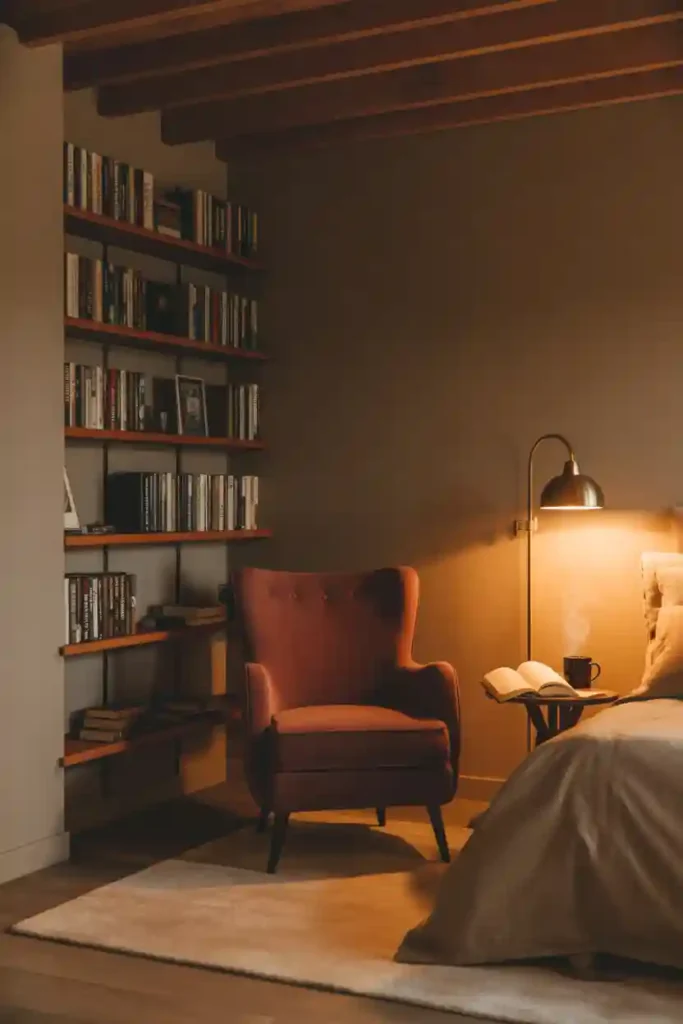
A reading nook turns a spare corner of a basement bedroom into the room’s favorite spot. Choose the brightest corner, ideally near the window or under a recessed light, and place a comfortable armchair with a seat at least 24 inches wide. Add a small side table, about 16 inches across, for a book and a cup of tea, and fix a wall mounted reading light or a slim floor lamp behind the chair so the light falls over your shoulder. A soft rug, about 4 by 6 feet, and a throw blanket make the nook feel separate from the rest of the room.
Install two or three wall mounted shelves above the chair for books and a small plant, and keep a woven basket beside the chair for magazines and current reads. Choose a chair in a washable fabric if the nook will get daily use, and add a cushion in a color that matches the bedding so the nook feels part of the bedroom. With good light and a comfortable seat, the nook becomes a second use for the room: a quiet place to read, unwind, or take a phone call, and it makes the whole bedroom feel larger and more thoughtful.
14. Budget-Friendly Basement Bedroom Makeover
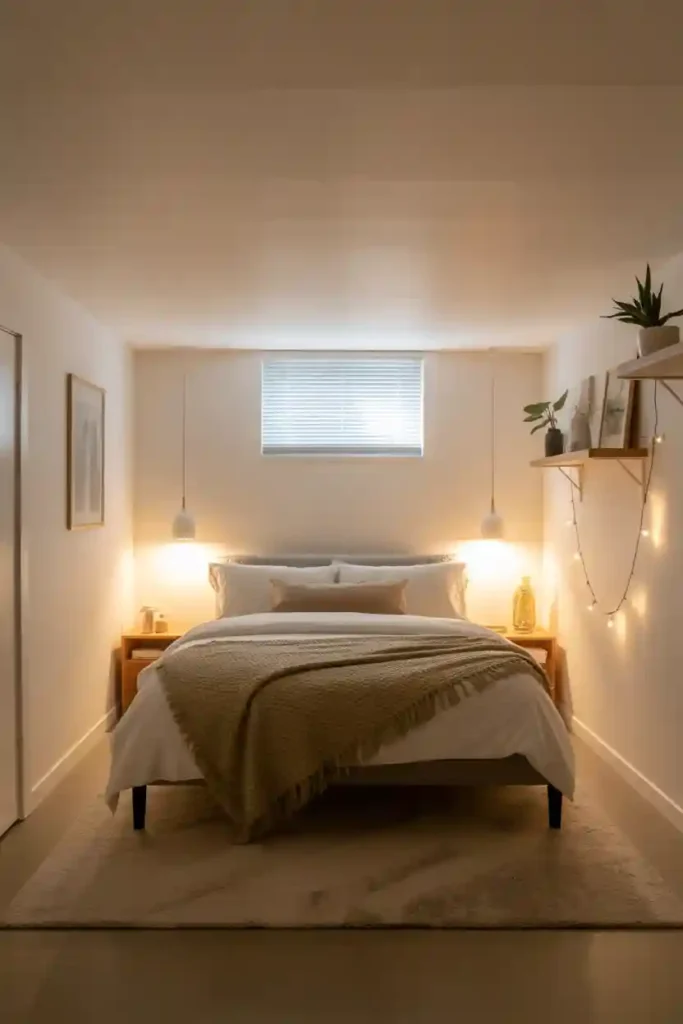
You can transform a basement bedroom for a few hundred dollars if you spend on the changes that show. Start with paint: a gallon of light warm white covers about 350 square feet and instantly brightens the room. Swap old light fixtures for simple modern ones, and change the bulbs to warm 2700K LEDs. Replace tired bedding with a fresh duvet set and two new cushion covers in a single accent color. Add a budget rug, at least 5 by 7 feet, to cover a cold floor, and hang one large piece of affordable art or a framed print above the bed.
Rearranging the furniture costs nothing and often helps the most. Move the bed to the longest wall, leave clear paths on both sides, and pull the dresser out of the darkest corner. Choose moisture resistant flooring for the long term: luxury vinyl plank looks like wood, handles dampness, and installs as a weekend DIY project. Finish with simple curtains, a thrifted nightstand painted to match, and a plant that tolerates low light. These small, budget conscious updates make a dramatic difference, and the room will look and feel like a proper bedroom rather than a storage space with a bed in it.
15. Basement Bedroom with Ensuite Bathroom

An ensuite bathroom turns a basement bedroom into a self contained suite, ideal for guests, a rental, or a private master bedroom. Keep the color scheme and finishes consistent between the two spaces so the transition feels seamless: use the same wall color, the same floor material, and matching hardware in brushed nickel or matte black. Choose moisture resistant materials throughout, such as porcelain tile on the bathroom floor, a mold resistant paint in the bedroom, and a proper exhaust fan rated for the bathroom size, vented outside, not into the ceiling cavity.
Plan the layout so the bathroom door sits near the bed but not in direct view of it, using a pocket door to save swing space if the room is tight. Add a walk in shower with a frameless glass panel to keep the bathroom feeling open, and use the same soft lighting, warm 2700K bulbs, in both rooms. For bathroom specific styling, our basement bathroom ideas cover layouts, fixtures, and finishes that handle below ground conditions. The ensuite adds daily convenience, privacy, and real value to the home, and it is the upgrade that makes a basement bedroom feel truly complete.
Final Words
These 15 basement bedroom ideas prove that a lower level space can be just as warm, stylish, and inviting as any upstairs bedroom. The secret is never one big purchase. It is the combination of light paint, layered lighting, moisture safe materials, and storage that fits the room. Start by fixing dampness and checking your ceiling height and egress window, then pick the style that matches how the room will actually be used: a calm neutral for a master suite, a bold accent wall for a guest room, or built in storage for a small teen room. Do one idea well, live with it for a week, and add the next layer. Your basement bedroom will quickly become the quietest, coziest room in the house.
Frequently Asked Questions
Can a basement bedroom be comfortable without windows?
Yes, if you layer the lighting and keep the palette light. Use recessed ceiling lights on a dimmer, bedside lamps, and a wall sconce so no corner stays dark, and paint the walls warm white to reflect what light there is. A large mirror helps too. That said, most building codes require an egress window in a legal bedroom for safety, so check your local rules before you finish the room.
How do I keep a basement bedroom dry and mold free?
Fix water before you decorate. Check gutters, grading, and foundation cracks, seal the walls, and test with the plastic sheet method described above. Use mold resistant drywall and paint, choose flooring that handles moisture such as luxury vinyl plank or tile, and run a dehumidifier set to about 45 percent humidity. Good ventilation, including an exhaust fan if there is an ensuite, keeps the air fresh.
What is the best paint color for a basement bedroom?
Warm whites and pale neutrals work best because they reflect light and make the room feel larger. Try Benjamin Moore White Dove, Sherwin Williams Alabaster, or a soft greige. Avoid cool grays with blue undertones, which can make a basement feel cold. If you want color, put it on one accent wall in a deep navy, forest green, or terracotta, and keep the other walls light.
How much does it cost to turn a basement into a bedroom?
A simple cosmetic makeover with paint, lighting, and new bedding can cost a few hundred dollars. A basic finished bedroom with drywall, flooring, lighting, and an egress window typically runs from a few thousand dollars upward, depending on your area and whether you hire help. An ensuite bathroom adds the most cost, so budget for plumbing and ventilation as well as fixtures.
What kind of bed works best in a low ceiling basement?
A low profile platform bed is the best choice, since it keeps the mattress close to the floor and leaves more headroom. Avoid tall headboards and four poster frames in rooms under 8 feet. Choose a headboard under 48 inches tall, keep the ceiling light flush mounted, and use low nightstands so the room feels open rather than crowded.
More Ideas You Will Love
 15 Classy Bedroom Ideas to Elevate Your Space with Simplicity
 19 Nightstand Ideas 2026: Stylish Bedside Tables for Every Bedroom
 13 4th of July Accent Wall Ideas for Bedroom & Living Room Spaces
 14 Boy Nursery Ideas with Inspiring Themes and Layout Tips
 21 Bedroom Furniture Ideas – Fresh Ways to Elevate Your Space
 20 Men’s Bedroom Ideas That Are Modern, Masculine & Stylish