
19 Gray Kitchen Ideas That Are Both Stylish & Functional

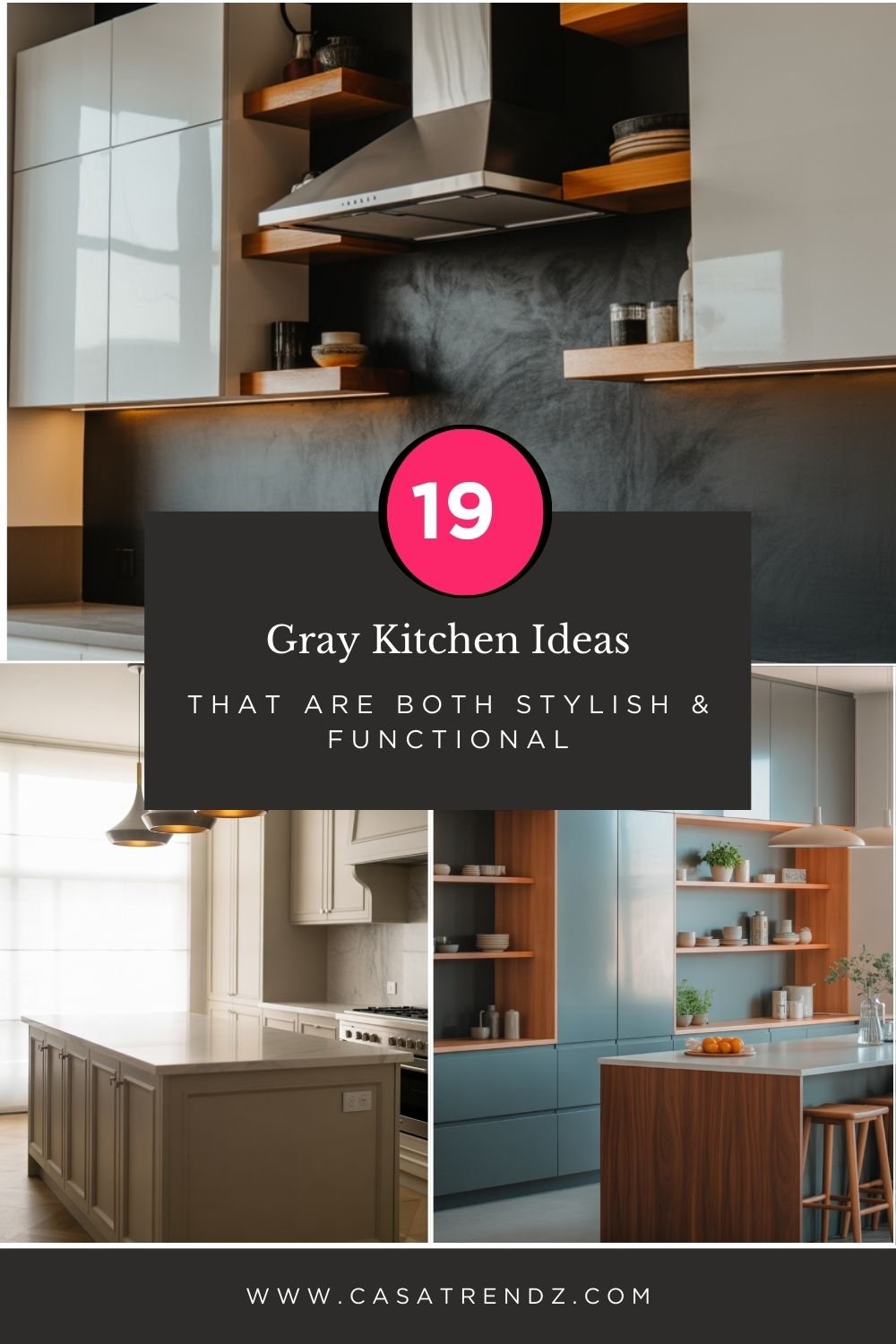
Gray is the hardest working neutral in kitchen design. It can feel cool and crisp in a small apartment, warm and grounded in a farmhouse home, and quietly luxurious in an open plan space. The secret is not choosing one gray and repeating it everywhere. It is choosing the right gray for each surface, balancing light and dark tones, and adding texture so the room feels layered rather than flat.
In this guide, you will find 19 gray kitchen ideas that cover cabinets, countertops, backsplashes, flooring, islands, lighting, and hardware. Each idea includes practical detail you can actually use: paint tone families to ask for, materials that hold up to daily cooking, measurements that keep walkways comfortable, and simple styling moves that stop gray from feeling cold. Whether you are repainting cabinets, planning a full remodel, or just updating a backsplash, start with the idea that solves your biggest problem first, then build the rest of the palette around it.
Before you buy paint, think about how you use the kitchen. A family kitchen needs wipe clean surfaces, forgiving colors near the stove, and storage that hides clutter. A kitchen used mainly for entertaining can handle darker tones, open shelving, and statement hardware. A rental or budget update should focus on high impact, low cost changes: cabinet paint, hardware, backsplash, and lighting, rather than moving walls or plumbing. Keep that use in mind as you read, and pick ideas that fit your daily routine, not just a photo.
If you are still deciding on an overall color direction, it helps to compare gray with other palettes first. These kitchen color ideas show how gray sits alongside white, green, blue, and warm wood tones, so you can see which combination fits your light and your furniture before you commit to paint.
1. Classic Light Gray Cabinets
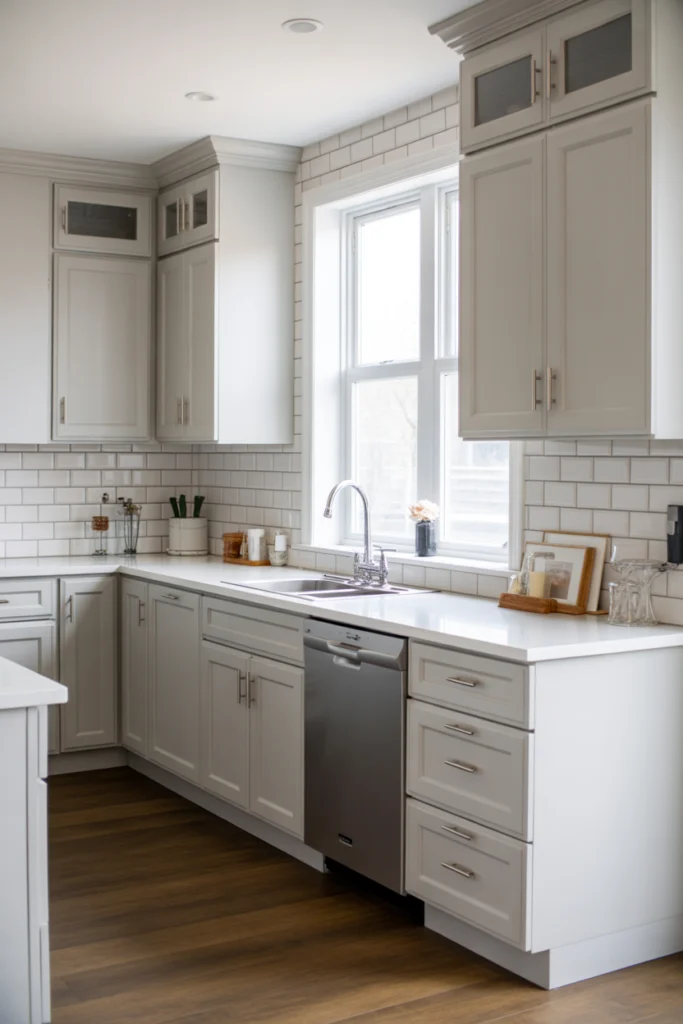
Light gray cabinets are the safest starting point for a gray kitchen, and they stay popular because they work in almost any home. Choose a light gray with a warm or cool undertone to match your fixed elements. A warm light gray, close to greige, suits cream countertops and oak floors. A cool light gray suits white quartz, stainless steel, and blue toned tile. Always test a large swatch on a cabinet door in both daylight and evening light before you order, because gray shifts dramatically with lighting.
For door style, shaker fronts give a classic, transitional look, while flat slab fronts feel more modern. Pair light gray cabinets with brushed nickel hardware for a soft finish, matte black pulls for contrast, or brushed brass for warmth. Keep countertops light to medium in tone, such as white quartz with light veining or pale marble look porcelain, so the room stays bright. If your kitchen is small, run the light gray on both upper and lower cabinets and keep the backsplash simple. In a larger kitchen, you can ground the space with a darker island while keeping the perimeter cabinets light.
Practical tip: light gray shows fewer fingerprints than white, but it still shows grease splashes near the stove. Choose a durable satin or semi gloss cabinet paint that wipes clean, and add a full height backsplash behind the range so splashes land on tile, not paint.
2. Charcoal Gray Accent Wall
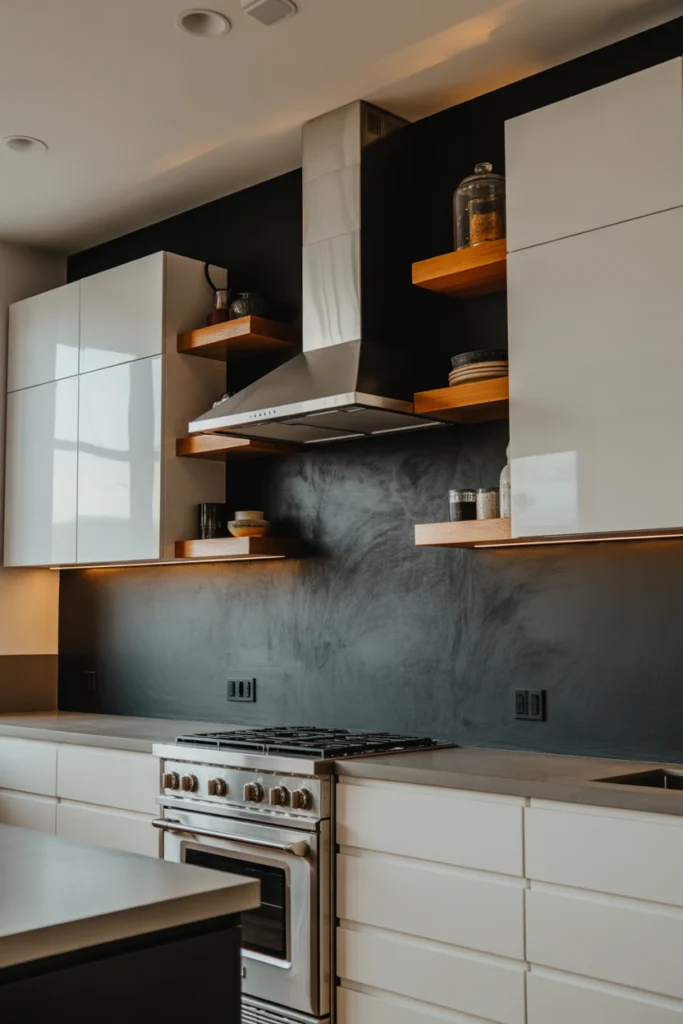
A charcoal accent wall adds instant depth, but it needs light to work. Use it on one wall only, ideally the wall behind open shelving, a breakfast nook, or a range, and keep the other walls light. Charcoal paint with a matte or eggshell finish looks softer than a high gloss finish, which can feel harsh in a kitchen. If your kitchen gets little natural light, balance the dark wall with under cabinet lighting, a light backsplash, and reflective surfaces such as glass, polished chrome, or a light countertop.
Charcoal pairs beautifully with white upper cabinets, pale wood shelves, and black fixtures. To make the wall feel intentional rather than heavy, hang one or two pieces of art, add a wooden shelf with plants or ceramics, or run a picture ledge along it. Keep the floor medium to light in tone so the room does not feel boxed in. A good rule is to let the charcoal wall be the darkest element in the room, with cabinets and counters at least two shades lighter.
3. Two-Tone Gray and White Kitchen
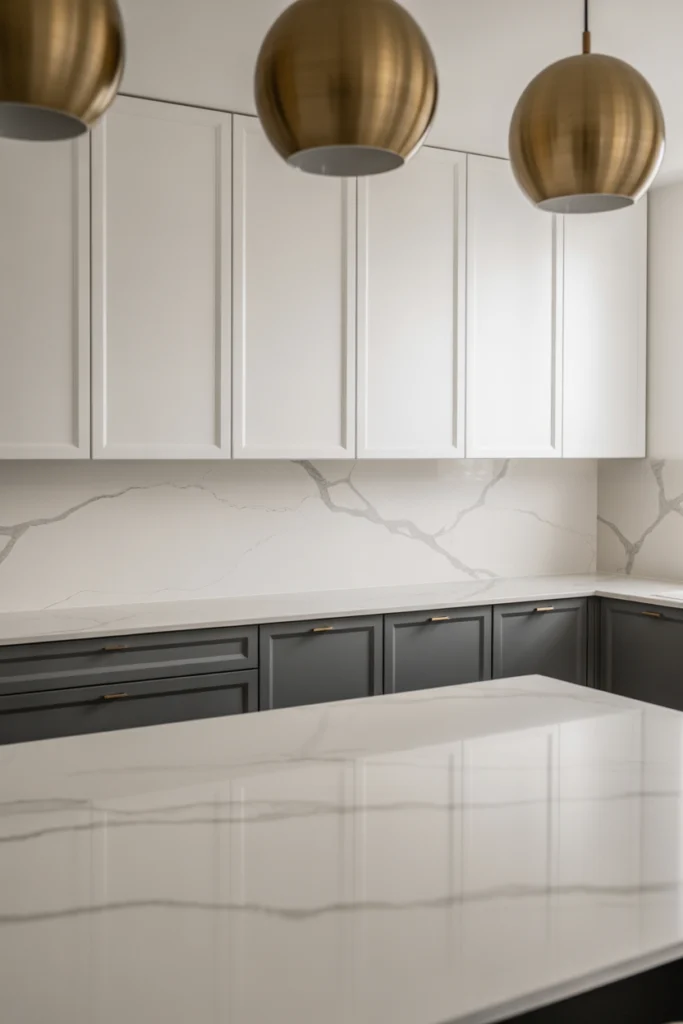
Two tone kitchens work because they create a clear visual structure. The classic formula is white or very light gray on the upper cabinets and a mid to dark gray on the lower cabinets. This keeps the eye level area bright while grounding the room below. In a narrow galley kitchen, this split also makes the room feel taller, because the lighter uppers seem to recede.
Try these combinations: soft white uppers with medium gray lowers and a white quartz countertop; pale gray uppers with charcoal lowers and a light wood floor; or white uppers with greige lowers for a warmer feel. Keep hardware consistent across both cabinet colors so the look stays unified. Choose one metal, such as matte black or brushed brass, and use it for pulls, faucet, and lighting. For the backsplash, pick a tile that contains both tones, such as a white subway tile with gray grout, so the two cabinet colors feel connected rather than split.
4. Gray Subway Tile Backsplash
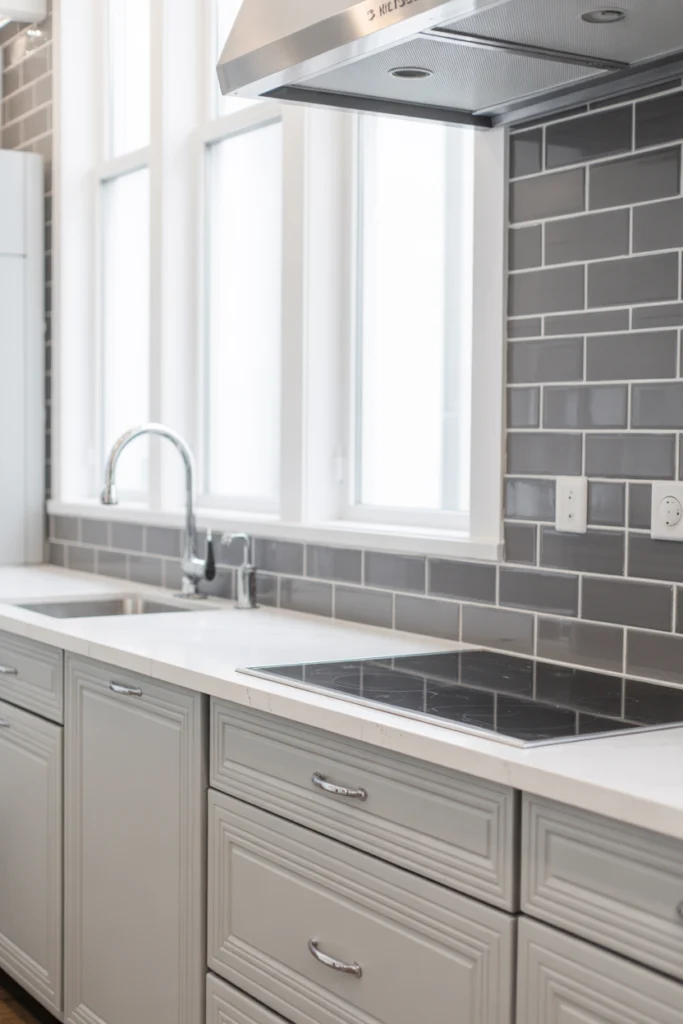
Gray subway tile is a simple upgrade that changes the whole kitchen. Standard subway tiles measure 3 by 6 inches, but larger 4 by 8 inch tiles feel more modern and show fewer grout lines. Glossy gray tiles reflect light and suit small or dark kitchens. Matte gray tiles feel calmer and more contemporary, and they hide water spots better near the sink.
For layout, a classic running bond pattern feels timeless, a stacked vertical pattern feels modern, and a herringbone pattern adds a designer touch but costs more in labor and tile waste, so order 15 percent extra for herringbone. Grout color matters: white grout makes each tile stand out, medium gray grout gives a seamless look, and dark gray grout adds graphic contrast. Seal the grout in cooking zones, and wipe the backsplash weekly so steam and oil do not dull the finish. Pair a gray subway backsplash with light cabinets and a medium gray countertop for a balanced, layered result.
5. Greige Cabinets for Warm Minimalism
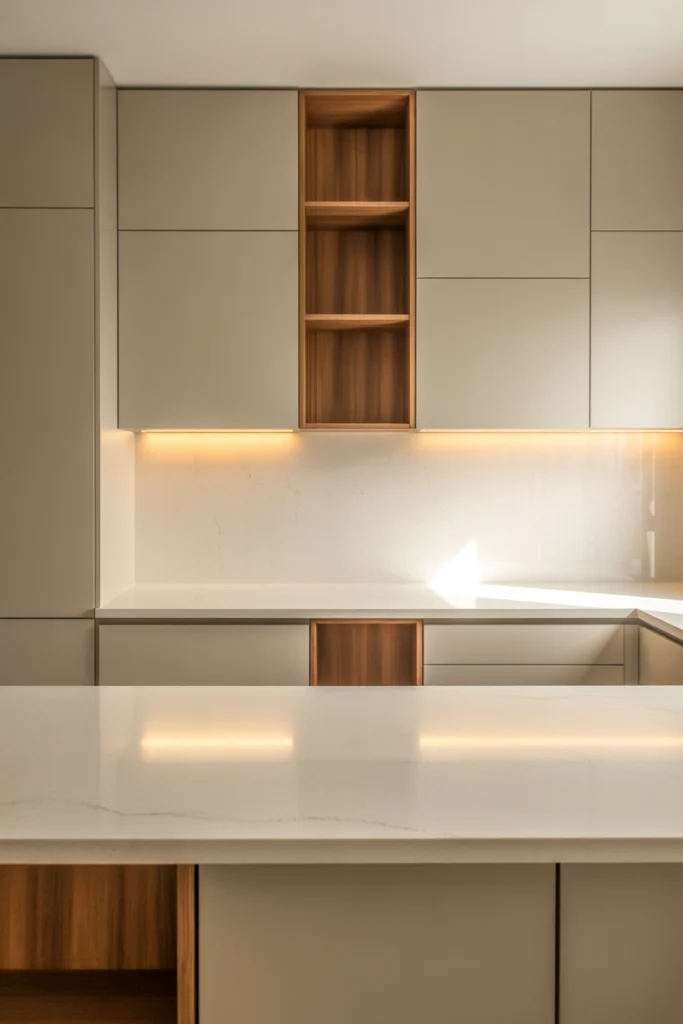
Greige, a blend of gray and beige, is the answer if pure gray feels too cold for your home. It brings warmth without turning yellow, and it works with both cool and warm accents. Greige cabinets suit oak floors, cream stone, walnut islands, and matte black or gold hardware. They also photograph well, because they do not cast a blue or purple tint in artificial light the way some cool grays can.
To style greige, keep the palette warm and quiet: warm white walls, a cream or warm gray backsplash, wood open shelves, and soft lighting at 2700 to 3000 Kelvin. Avoid pairing greige with stark blue white countertops, which can make it look muddy. Instead, choose quartz or marble with warm veining. If you love minimalism but want a kitchen that feels inviting on winter evenings, greige is one of the best cabinet colors you can choose.
6. Concrete-Inspired Gray Countertops
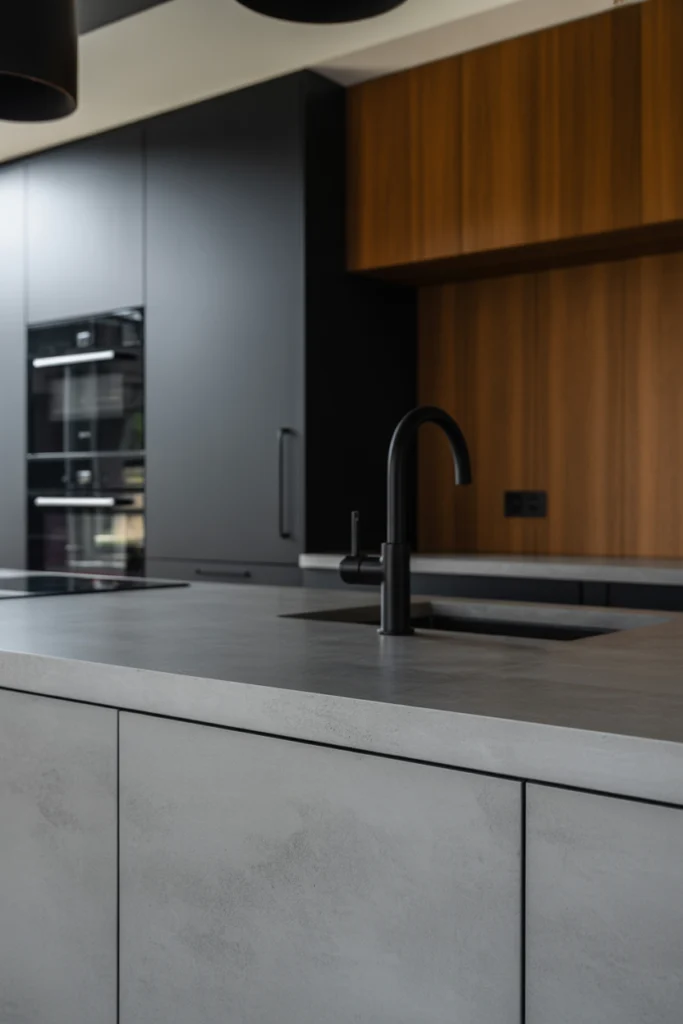
Concrete inspired countertops give an industrial, modern feel without the upkeep of real poured concrete. Most homeowners choose quartz or porcelain that mimics concrete, because these materials resist stains, heat, and scratches better and need no sealing. Look for a soft, mottled gray with subtle variation rather than a flat, uniform gray, so the surface looks natural and hides crumbs.
Pair concrete look counters with flat front gray cabinets, black or stainless fixtures, and a simple backsplash in a matching gray. Add warmth with a wood island top, wooden bar stools, or open wood shelving, otherwise the room can feel cold. Keep the edge profile simple: a straight eased edge suits modern kitchens, while a slightly thicker mitered edge gives a more substantial, high end look. For daily care, wipe with a damp cloth and mild soap, avoid cutting directly on the surface, and use trivets for very hot pans even on quartz.
7. Dark Gray Lower Cabinets for Contrast
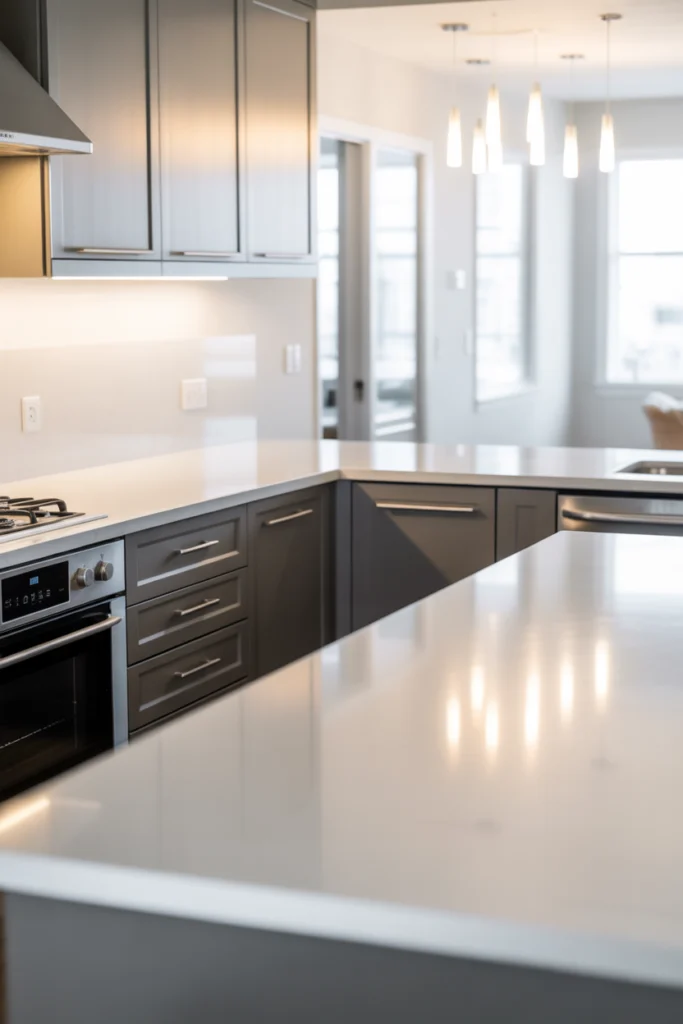
Dark gray lower cabinets are a practical way to add drama without darkening the whole room. Because the lower cabinets sit below eye level, they anchor the kitchen while white or light gray uppers keep it bright. Dark gray also hides scuffs from shoes, pets, and vacuum cleaners better than white, which makes it a smart choice for busy family kitchens.
Balance dark lowers with a light countertop, a light backsplash, and good task lighting under the upper cabinets. Warm wood floors or a butcher block island top will soften the contrast. Keep the wall color light, and avoid dark lowers with dark counters and dark floors all together, because that combination can make even a large kitchen feel heavy. For hardware, brushed brass warms dark gray, matte black keeps it sleek, and polished nickel adds a classic touch. This idea works especially well in transitional and farmhouse kitchens, where the contrast feels intentional and timeless.
8. Gray Kitchen with Wooden Accents
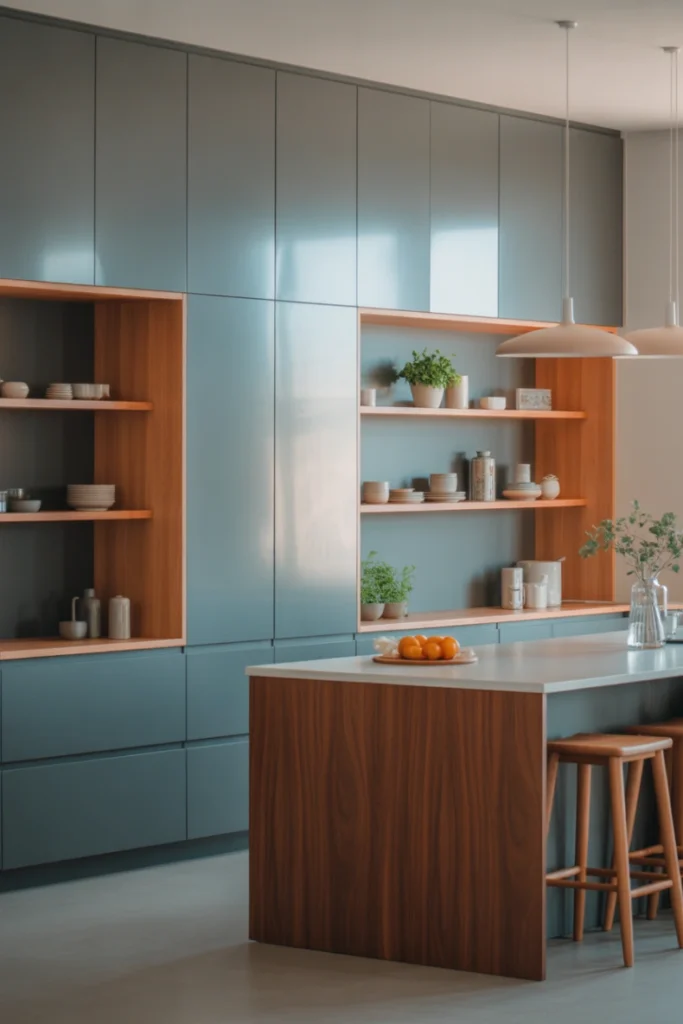
Gray and wood are a natural pair: gray cools the room, wood warms it. Use wood in one or two places so it stands out, not everywhere. Good choices include a butcher block island top, open oak shelves, walnut bar stools, a wood range hood cover, or a wood paneled island front. Oak gives a light, Scandinavian feel, walnut gives a rich, modern feel, and reclaimed wood gives a rustic, farmhouse feel.
Keep the wood tone consistent. If your floor is warm oak, choose oak shelves in a similar tone rather than mixing in dark walnut and pale maple. Pair gray cabinets with wood accents and a neutral backsplash, and add plants or woven baskets for texture. This combination suits almost any style, from Scandinavian to rustic to transitional, because wood stops gray from feeling sterile. For care, oil a butcher block top monthly in a working kitchen, and wipe wood shelves with a dry cloth so steam does not dull the finish.
If you want a deeper, moodier version of this pairing, look at these dark kitchen ideas for how dark cabinets, wood, and lighting work together without making the room feel closed in.
9. Matte Gray Finishes for a Sleek Look
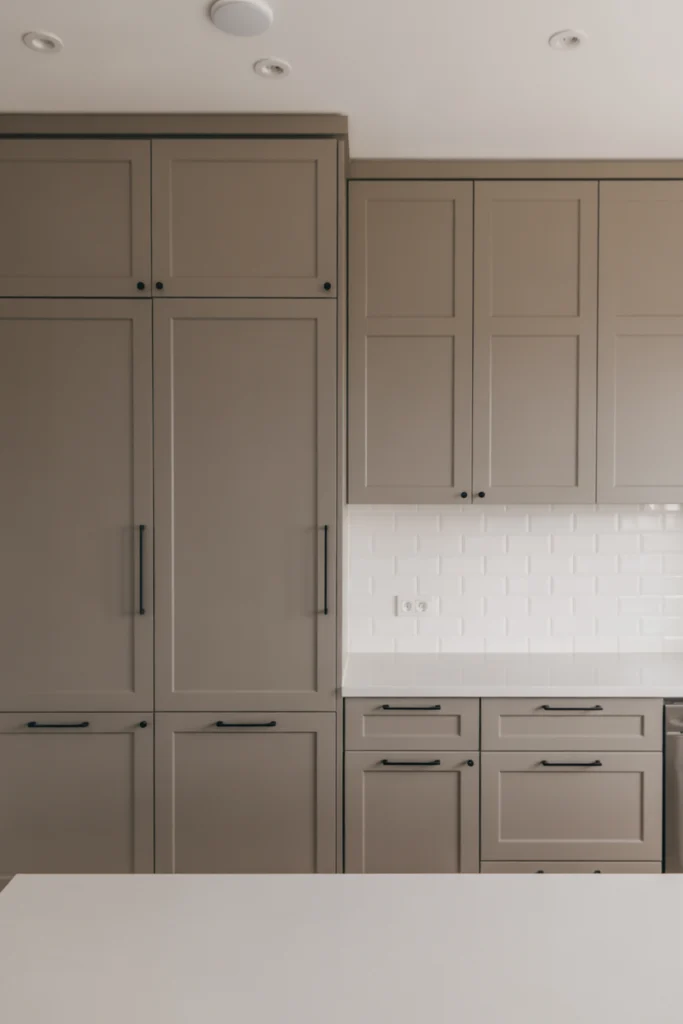
Matte gray cabinets and surfaces feel soft, modern, and expensive, because they absorb light instead of reflecting it. The trade off is that matte finishes show oil marks more easily than gloss, so choose a high quality matte laminate or painted finish that is easy to wipe, and keep a microfiber cloth handy near the cooking zone. Matte works best on flat or shaker fronts, where the clean lines suit the quiet finish.
To stop a matte kitchen from feeling flat, mix textures: pair matte cabinets with a stone countertop, a glass or glossy tile backsplash, and metal hardware. Matte black hardware blends in for a seamless look, while brushed brass or chrome adds a point of contrast. Add under cabinet lighting and pendant lights over the island, because matte surfaces need good lighting to show their depth. Matte gray is ideal for contemporary and minimalist kitchens where you want a calm, uncluttered backdrop.
10. Gray Marble Backsplash
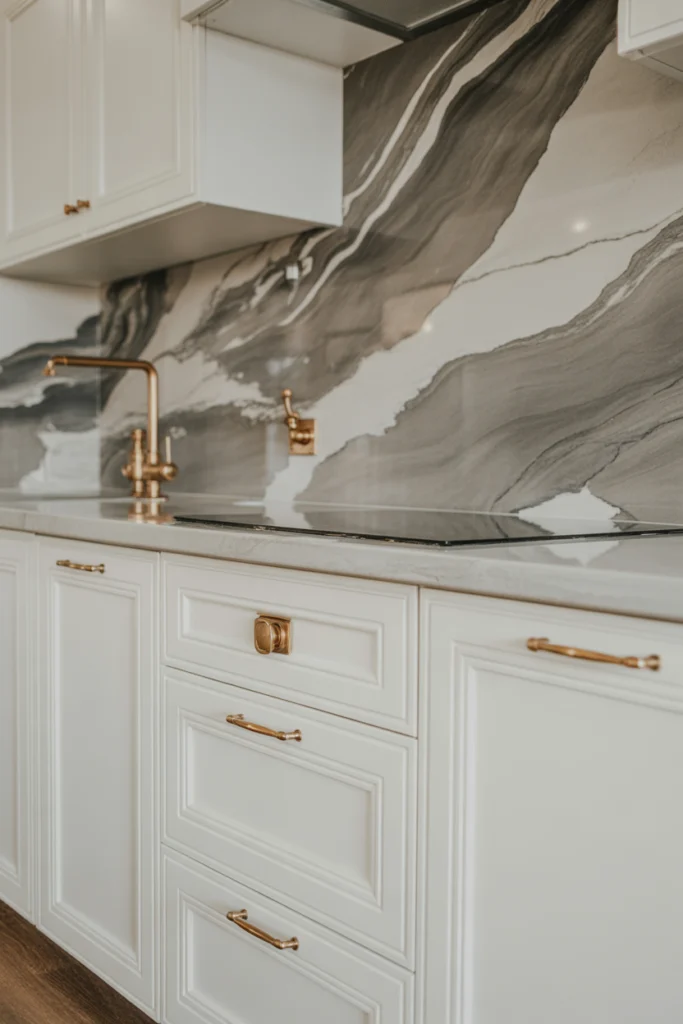
A gray marble backsplash, or a marble look porcelain slab, adds movement that plain tile cannot match. Real marble has soft gray veining on a white or light gray base, and each slab is unique. Porcelain that mimics marble gives a similar look with far less maintenance, no sealing, and better stain resistance, which makes it a smart choice behind a range or sink.
For installation, a full height slab backsplash from countertop to upper cabinets looks luxurious and has no grout lines to clean. If a slab is outside budget, use large format marble look tiles in a 12 by 24 inch size with matching grout for a near seamless effect. Pair gray marble with white, light gray, or charcoal cabinets, and brass or chrome fixtures. Keep the countertop simple if the backsplash is busy, so the two surfaces do not compete. Seal real marble yearly, wipe acidic spills quickly, and avoid abrasive cleaners.
11. Gray Open Shelving
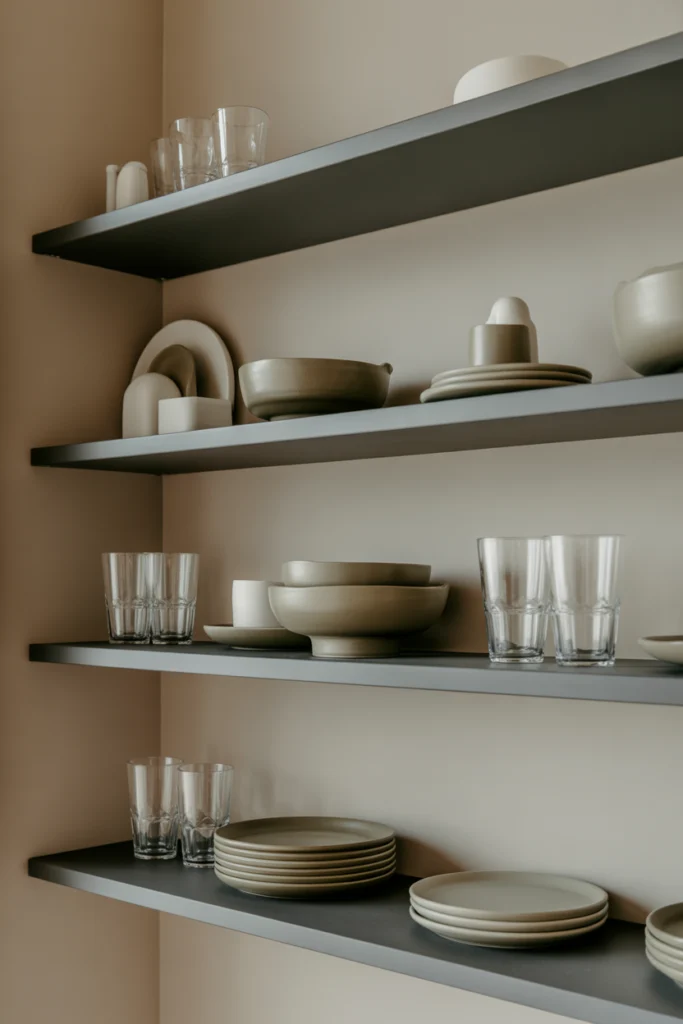
Gray open shelving replaces some upper cabinets with display space, which makes a kitchen feel larger and more personal. Paint the shelves the same gray as your cabinets for a built in look, or choose a slightly darker gray so they stand out against a light wall. Install shelves 18 to 20 inches above the countertop, with 12 to 15 inches between shelves, so everyday plates and glasses are easy to reach without crowding the space.
Style shelves with a mix of useful and decorative items: everyday white dishes, a few cookbooks, glass jars, a small plant, and one or two ceramic pieces. Leave breathing room between groups, and avoid filling every inch, because crowded shelves look cluttered fast. Open shelving suits smaller kitchens and rental friendly updates, but it does collect dust and grease near the stove, so keep shelves away from the range if possible, or plan a quick weekly wipe. Use sturdy brackets rated for the shelf load, and anchor into studs, because dishes are heavier than decor.
12. Gray Kitchen Island for a Focal Point
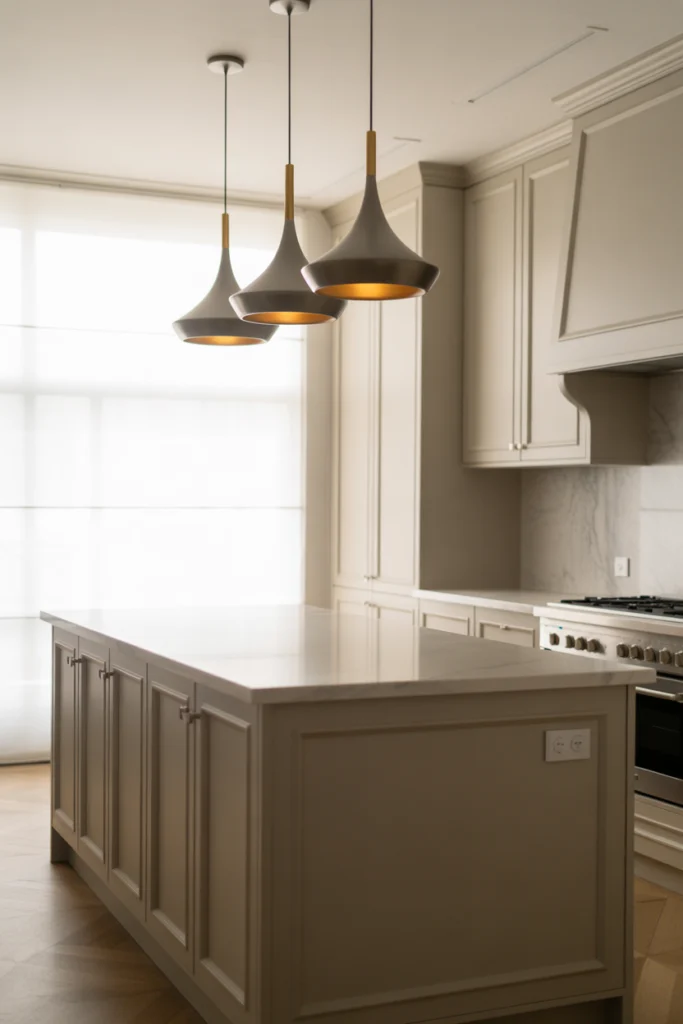
If repainting every cabinet feels like too much, start with the island. A gray island adds contrast to white, wood, or dark perimeter cabinets, and it becomes the natural gathering point of the room. Choose a gray two shades darker than the perimeter cabinets for a subtle contrast, or go charcoal for a bold statement. Add paneling, beadboard, or simple trim to the island sides so it looks like furniture, not just another cabinet run.
For size, leave at least 36 inches of walkway around the island, and 42 to 48 inches if two people cook together or if the island faces a range or dishwasher. A standard island height is 36 inches for prep, with a raised bar section at 42 inches if you want a separate seating ledge. Add seating with 24 inches of width per stool and 12 to 15 inches of knee space under the overhang. A gray island pairs well with a light quartz top, pendant lights in black or brass, and bar stools in wood or woven material for warmth.
13. Sleek Gray Glass Cabinets
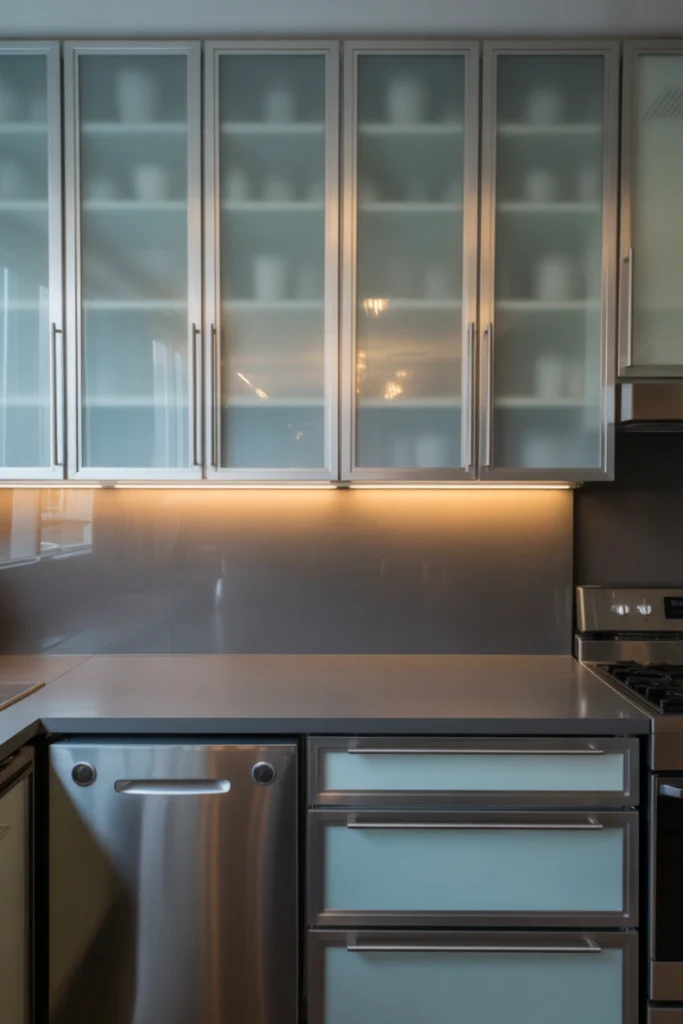
Gray glass cabinets, with frosted, tinted, or reeded glass fronts, break up solid cabinet runs and add a light, airy layer to the kitchen. Frosted glass hides contents while still letting light through, which suits small kitchens. Clear tinted glass shows beautiful dishes but needs tidy shelves, so use it on one or two upper cabinets rather than the whole kitchen.
Frame the glass in the same gray as your other cabinets so the look stays cohesive, and add interior lighting to make the cabinets glow in the evening. Keep the items inside simple: matching white dishes, clear glasses, and a few bowls, grouped by color. Avoid mixing many patterns behind glass, because the eye reads it as clutter. Gray glass cabinets work best on uppers, paired with solid lowers, and they suit contemporary, transitional, and modern kitchens that need a softer, more open feel.
14. Gray Tile Flooring
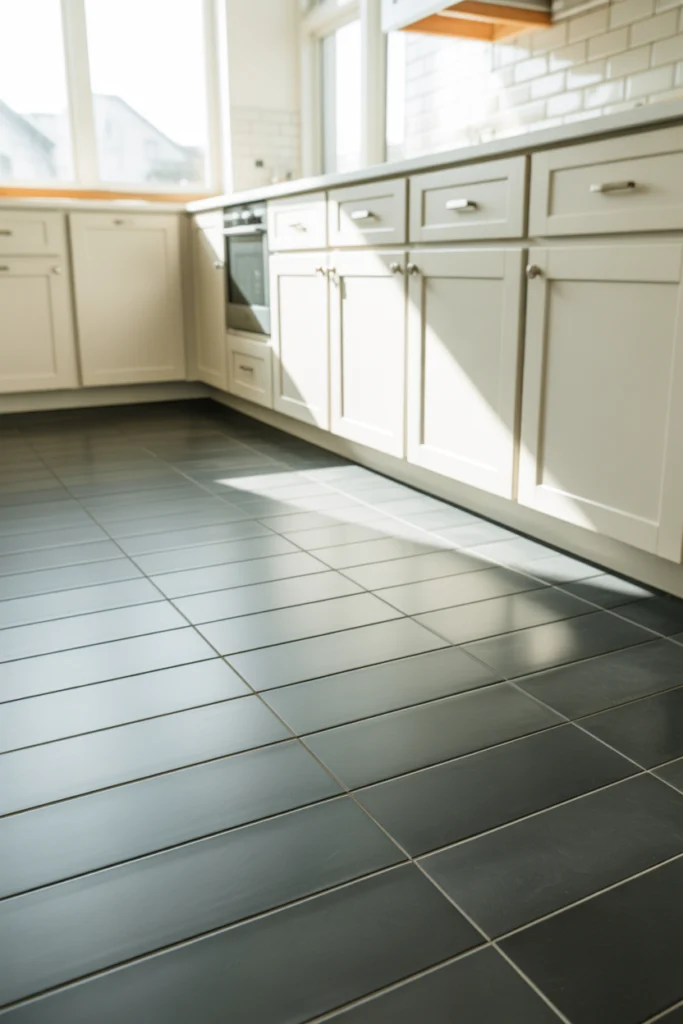
Gray tile flooring is one of the most practical choices for a kitchen, because porcelain and ceramic tiles resist spills, stains, and heavy traffic. Large format tiles, 24 by 24 inches or 12 by 24 inches, make a small kitchen look bigger by reducing grout lines. Wood look porcelain in gray tones gives the warmth of wood with the durability of tile, while stone look tiles give a more natural, textured feel.
Choose light gray tiles to brighten a dark kitchen, and medium to dark gray tiles to ground a bright, white kitchen. Use a grout color close to the tile color for a seamless look, and seal grout in high traffic paths. For safety, pick a tile with a matte or textured finish and a good slip rating for wet areas, especially near the sink and dishwasher. Pair gray floors with cabinets in a contrasting tone, light cabinets with dark floors or dark cabinets with light floors, so the room has clear layers rather than one flat gray wash.
15. Gray Kitchen with Black Fixtures
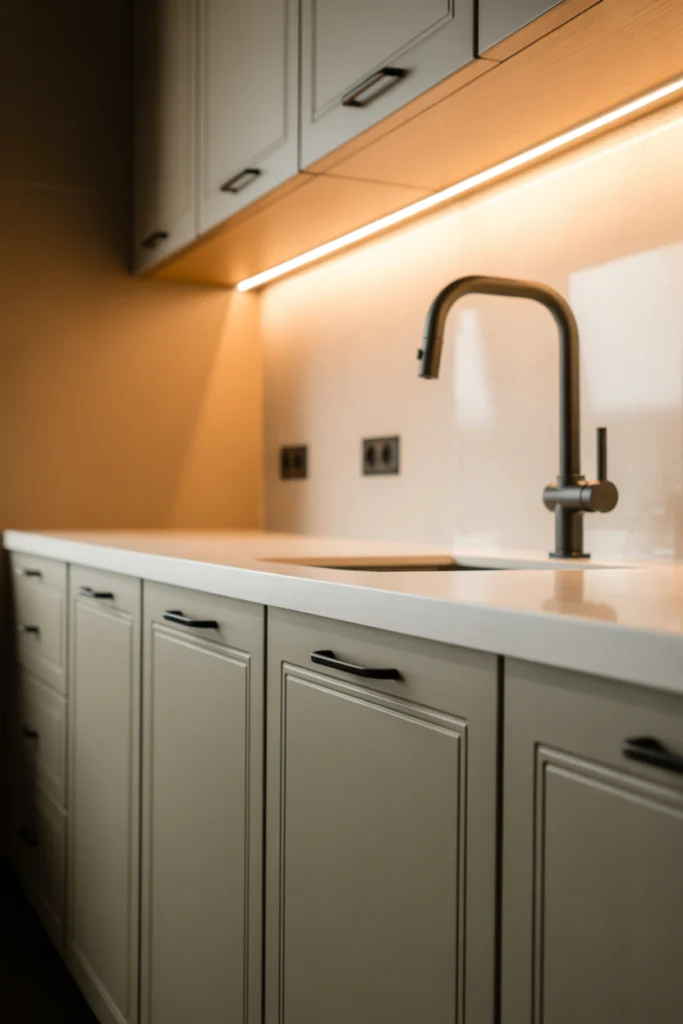
Black fixtures are the finishing touch that makes a gray kitchen feel modern and intentional. Matte black faucets, cabinet pulls, pendant lights, and appliance handles add strong contrast against both light and dark gray. Unlike chrome, matte black does not show water spots as quickly, but it can show soap residue, so wipe fixtures with a soft cloth after cleaning.
Use black consistently: faucet, hardware, lighting, and at least one other element, such as bar stool frames or a black range hood, so the black feels planned. Then warm the room with wood, plants, or soft textiles, such as linen towels and a woven runner, so the gray and black combination does not feel cold. This pairing suits minimal, industrial, and modern kitchens, and it works with almost any gray, from pale silver to deep charcoal.
16. Gray Shiplap Walls
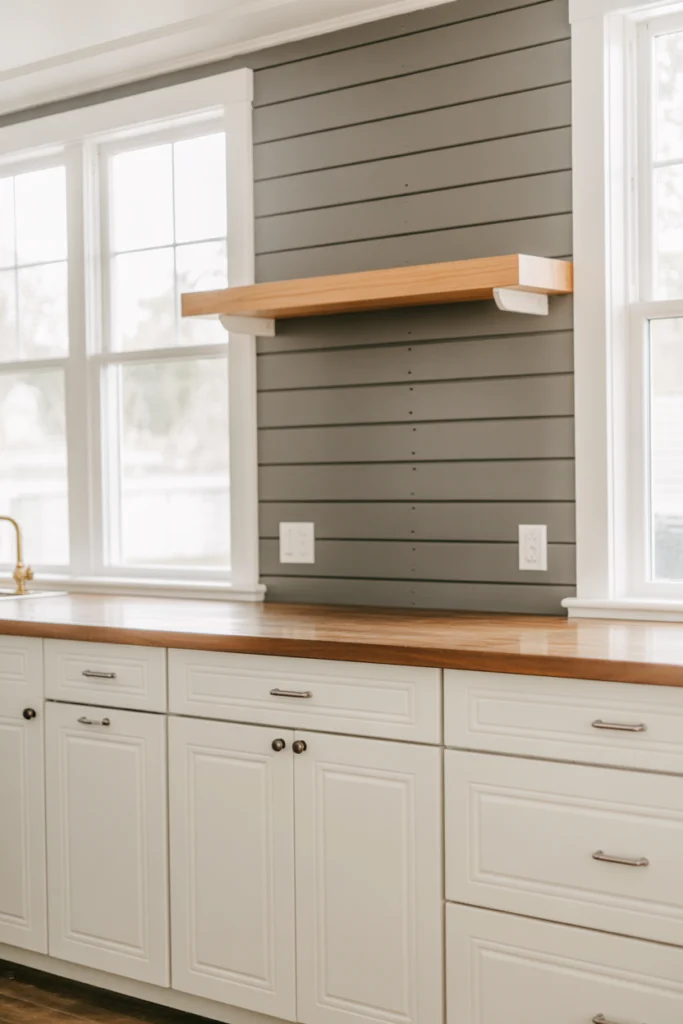
Gray shiplap adds texture and farmhouse charm without the visual weight of dark paneling. Use it on one accent wall, around an island, or as a backsplash alternative in a breakfast nook. Paint shiplap in a soft to medium gray, and keep the boards horizontal for a classic farmhouse look or vertical to make a wall feel taller. Standard shiplap boards are 6 inches wide with a small gap between boards, which creates the shadow line that gives shiplap its character.
Pair gray shiplap with white cabinets, natural wood, and stainless steel for a clean, coastal farmhouse feel. In a modern kitchen, pair it with flat front gray cabinets and black fixtures for a softer take on contemporary style. Seal shiplap near the sink and stove, or keep it away from direct splash zones, because painted wood needs protection from constant moisture. If you want a low maintenance alternative, use primed MDF shiplap panels in dry areas and reserve real wood for feature walls.
17. Modern Gray Stainless Steel Appliances
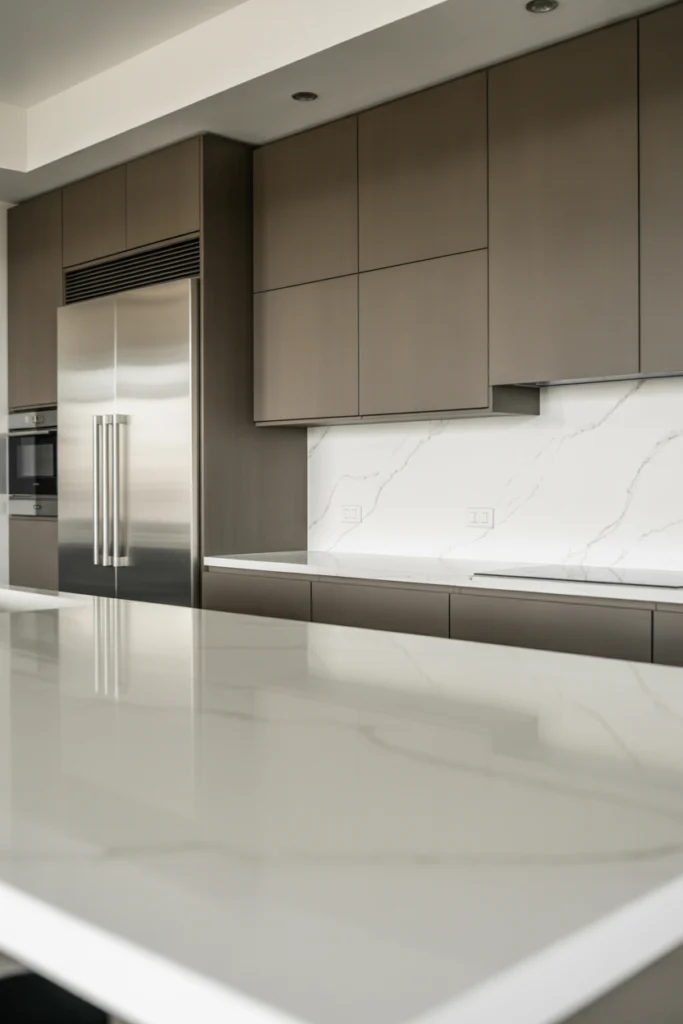
Stainless steel appliances in gray, graphite, or slate finishes blend into a gray kitchen far better than bright silver. These darker finishes hide fingerprints, match gray cabinets, and give a seamless, built in look. When shopping, compare finishes in person, because graphite, slate, and black stainless vary by brand and can clash if mixed across brands.
For a cohesive result, buy all major appliances from the same finish family, or panel the dishwasher and refrigerator with cabinet fronts so only the range and oven show metal. Pair gray stainless appliances with matte gray or charcoal cabinets, a light countertop, and simple hardware so the metal becomes an accent, not a competing color. Clean with a soft cloth and a cleaner made for your specific finish, and avoid abrasive pads, which can dull the coating over time.
18. Gray Kitchen with Gold Accents
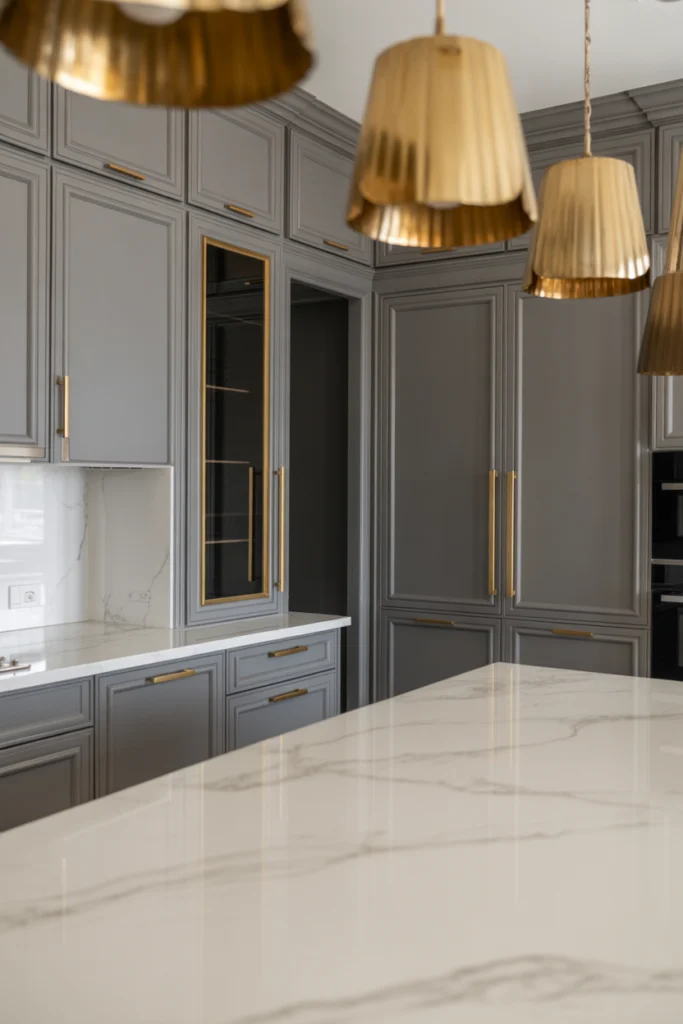
Gold accents warm up cool gray in a way few other metals can. Brushed brass or soft gold hardware, faucets, pendant lights, and cabinet pulls add a touch of luxury without feeling formal. Use gold sparingly: hardware and lighting are enough in most kitchens. If you add a gold faucet, match it to gold hardware so the metals read as one intentional choice.
Polished gold makes a bolder statement and suits glamorous or transitional kitchens, while brushed brass feels softer and suits farmhouse and classic kitchens. Pair gold with light gray or charcoal cabinets, white or marble look counters, and warm lighting. Avoid mixing gold with chrome or nickel in the same sightline, because mixed metals can look accidental unless done very deliberately. A small gold tray, a brass fruit bowl, or gold rimmed open shelf decor can tie the look together without a full hardware change.
For a broader look at how gray works with other color schemes, these kitchen color schemes show complete palettes, including warm, cool, and two tone options you can adapt to your own kitchen.
19. All-Gray Monochrome Kitchen
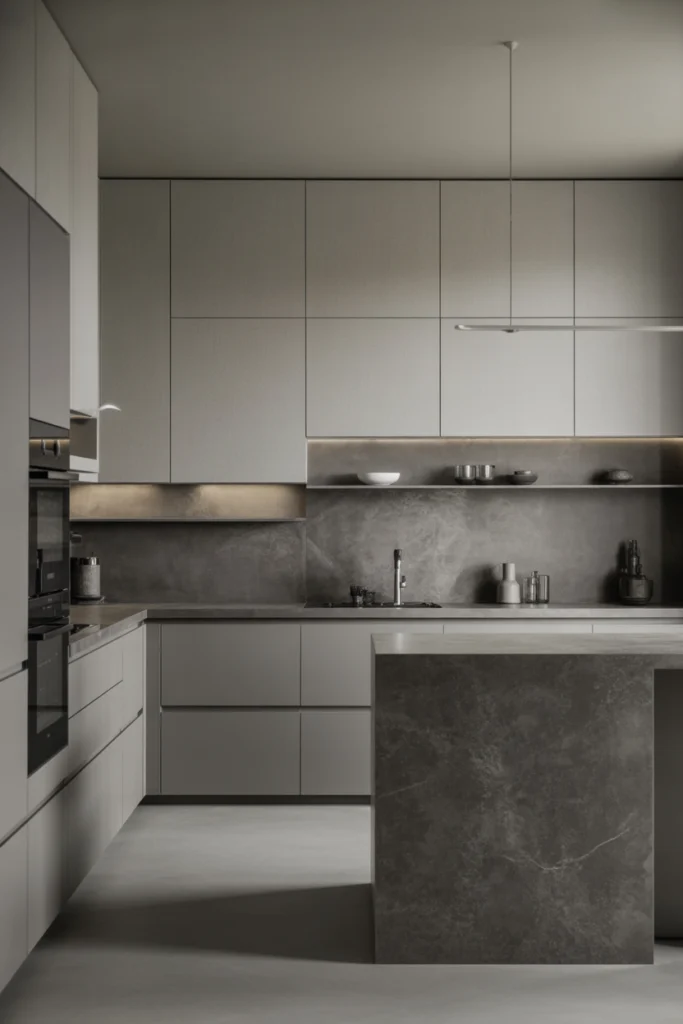
An all gray monochrome kitchen can be striking, but it only works if you layer tones and textures. Use at least three grays: a light gray for walls or uppers, a medium gray for lowers or the island, and a dark gray or charcoal for an accent, such as the range wall or island base. Then vary the finishes: matte cabinets, a glossy backsplash, a honed stone countertop, and a textured floor, so the room feels rich rather than flat.
Lighting is essential in a monochrome kitchen. Combine recessed ceiling lights, under cabinet task lighting, and pendant lights over the island, all at a warm to neutral temperature, so the grays do not turn blue or dull. Add texture with wood stools, woven baskets, linen towels, and a plant or two, because natural texture stops monochrome from feeling sterile. Keep one warm metal, such as brass or wood, in the room as a counterpoint. When done well, a monochrome gray kitchen feels calm, luxurious, and timeless, and it gives you a flexible base that works with any seasonal decor.
If you love light, bright kitchens but still want gray as your anchor, these white kitchen ideas show how to keep the room airy while using gray on the island, floor, or backsplash for depth.
One last monochrome tip: photograph the room at different times of day before you finalize paint. Gray that looks perfect at noon can look blue under evening LED lights or dull on a cloudy morning. A quick phone photo test, with all lights on and off, will show whether your lightest and darkest grays still read as distinct tones, or whether they collapse into one flat color.
Conclusion
Gray works in kitchens because it is flexible, forgiving, and easy to live with. Light gray brightens small spaces, greige adds warmth, charcoal adds drama, and layered monochrome grays create a calm, high end feel. The best gray kitchen is not the one with the trendiest paint color. It is the one where the cabinet tone, countertop, backsplash, floor, and hardware were chosen together, tested in your light, and balanced with texture and warmth.
Start with one idea from this list that solves your main problem, whether that is brightness, contrast, storage, or warmth. Test paint swatches at home, choose durable materials for cooking zones, and leave comfortable walkways around islands and appliances. With thoughtful choices and a mix of tones and textures, your gray kitchen will feel stylish, practical, and welcoming for years to come.
Frequently Asked Questions
What is the best gray paint color for kitchen cabinets?
There is no single best gray, because the right tone depends on your light and fixed elements. In north facing or low light kitchens, choose a warm light gray or greige so the room does not feel cold. In bright, south facing kitchens, a cool light gray works well with white quartz and stainless steel. Always test a large swatch on a door in daylight and evening light, and check it against your countertop and floor before you commit.
Does a gray kitchen make a small kitchen look smaller?
Not if you choose the right tones. Light gray cabinets, a light backsplash, and good lighting make a small kitchen feel open. Use dark gray only as an accent, such as on an island or lower cabinets, and keep uppers, walls, and counters light. Large format floor tiles, glass upper cabinets, and open shelving also help a small gray kitchen feel larger.
What countertop goes best with gray cabinets?
White quartz with light veining is the most versatile choice, because it brightens gray cabinets and suits almost any style. Marble look porcelain gives a similar effect with less maintenance. For a warmer kitchen, choose butcher block or a warm toned stone. For a modern industrial look, choose a concrete look quartz in a soft mottled gray.
Should kitchen hardware be black, brass, or nickel with gray cabinets?
All three work, and the choice sets the mood. Matte black gives a modern, bold contrast. Brushed brass adds warmth and a touch of luxury. Brushed nickel gives a soft, classic finish that blends in quietly. Pick one metal for hardware, faucet, and lighting so the room feels intentional, and repeat it in at least two places.
How do I stop a gray kitchen from feeling cold?
Add warmth through wood, texture, and lighting. Use a wood island top or open shelves, woven bar stools, linen towels, and plants. Choose lighting at 2700 to 3000 Kelvin for a warm glow, and add a warm metal such as brass or a warm wood floor. Even one or two warm elements are enough to balance cool gray and make the kitchen feel inviting.
More Ideas You Will Love
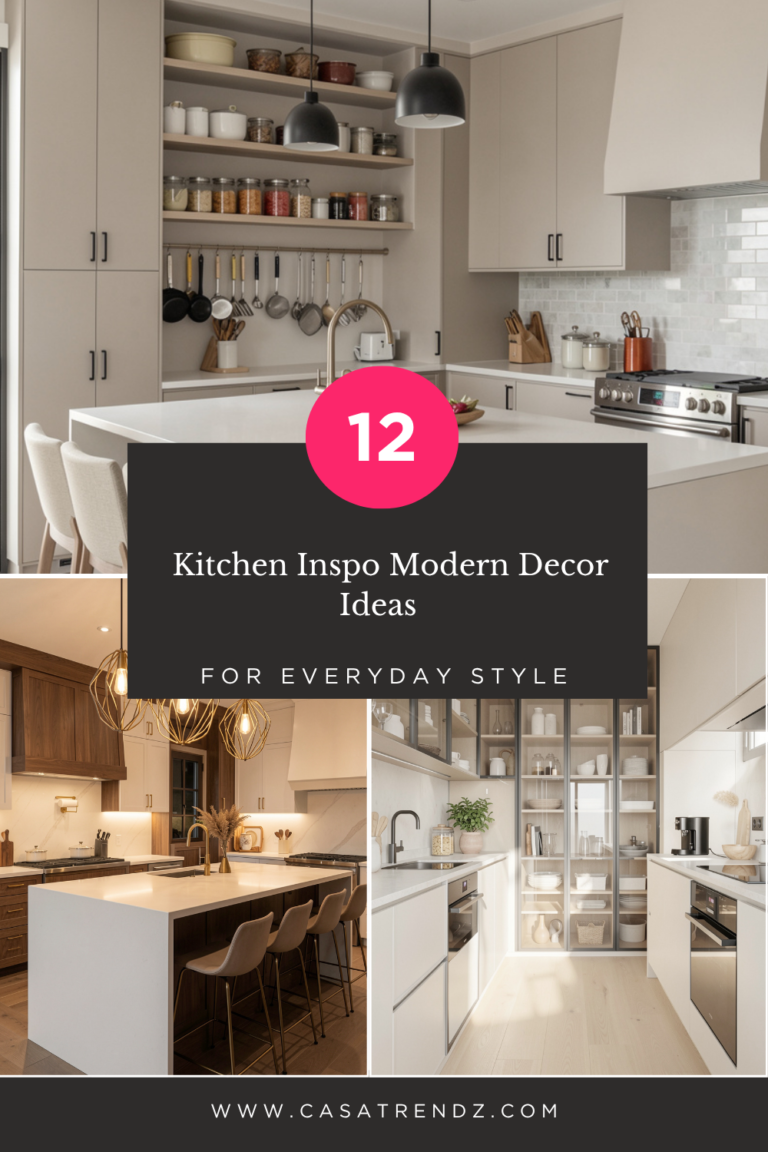 12 Kitchen Inspo Modern Decor Ideas for Everyday Style
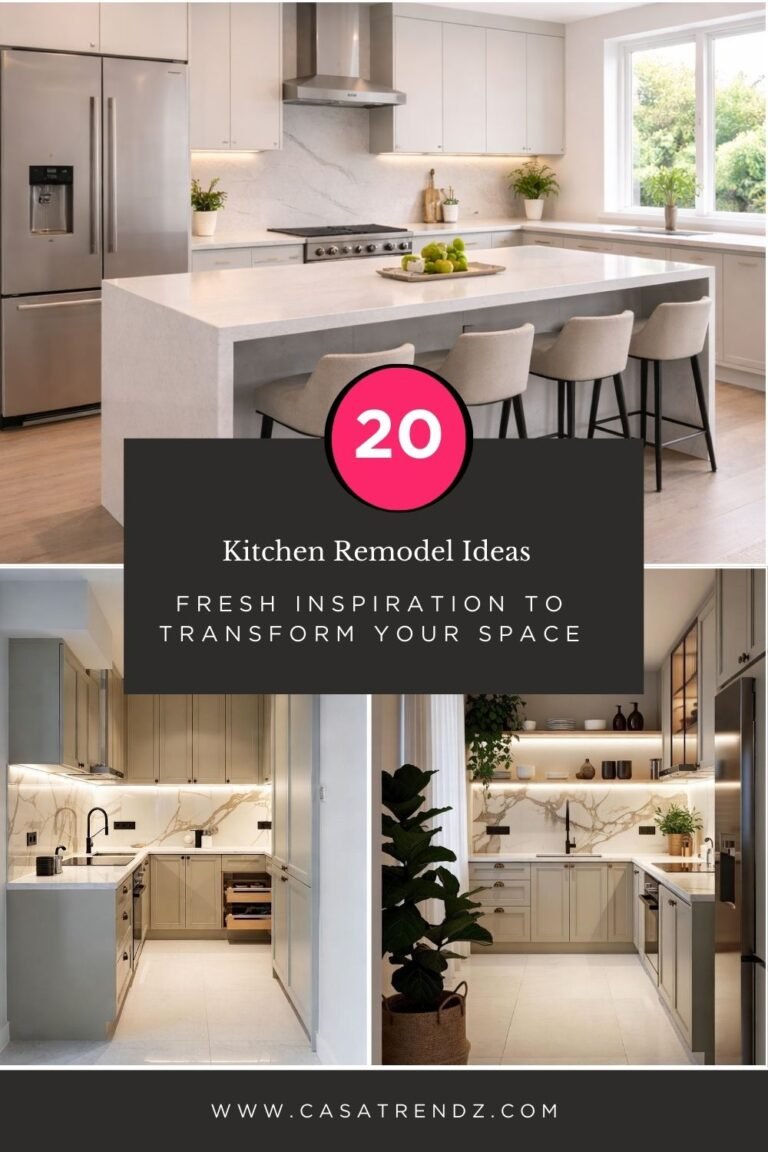 20 Kitchen Remodel Ideas – Fresh Inspiration to Transform Your Space
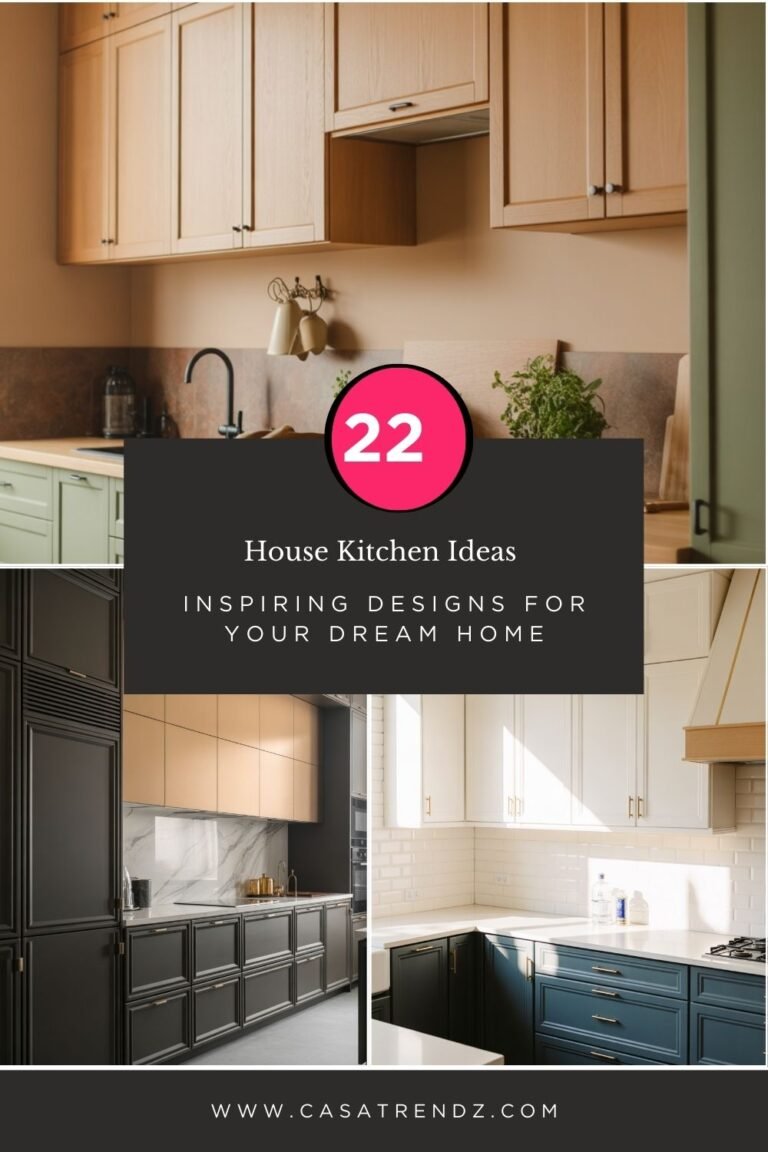 22 House Kitchen Ideas – Inspiring Designs for Your Dream Home
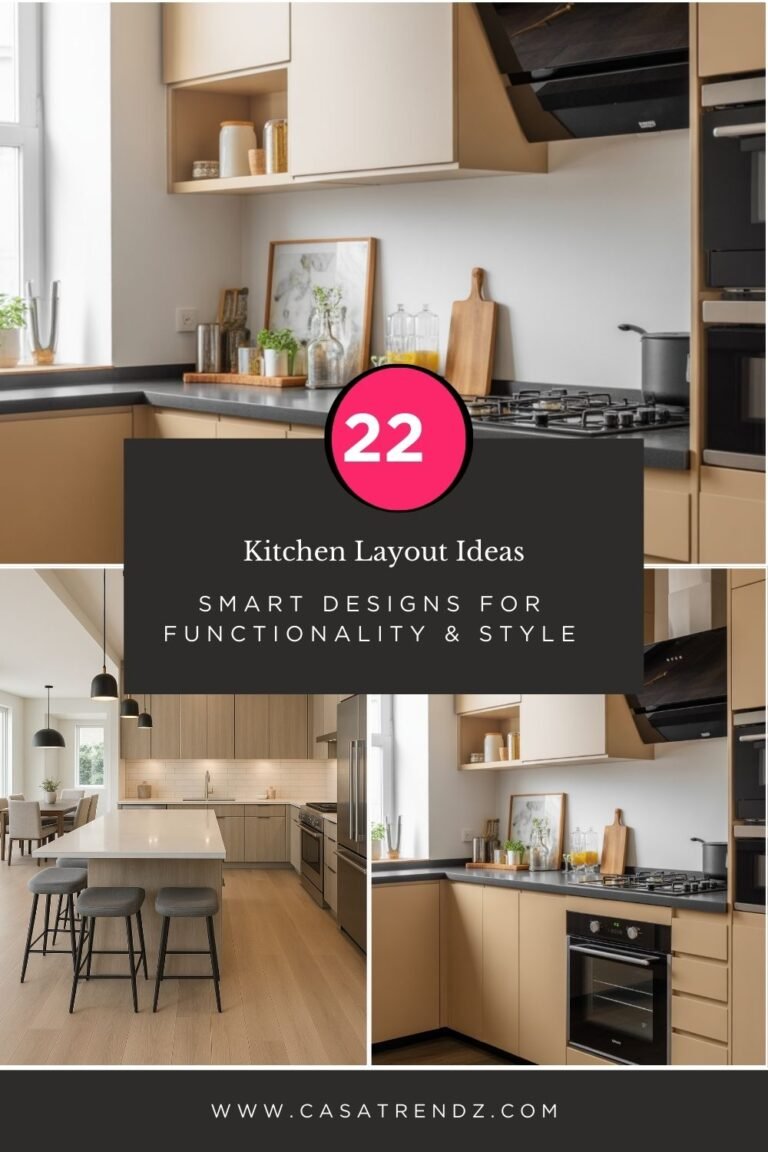 22 Kitchen Layout Ideas – Smart Designs for Functionality & Style
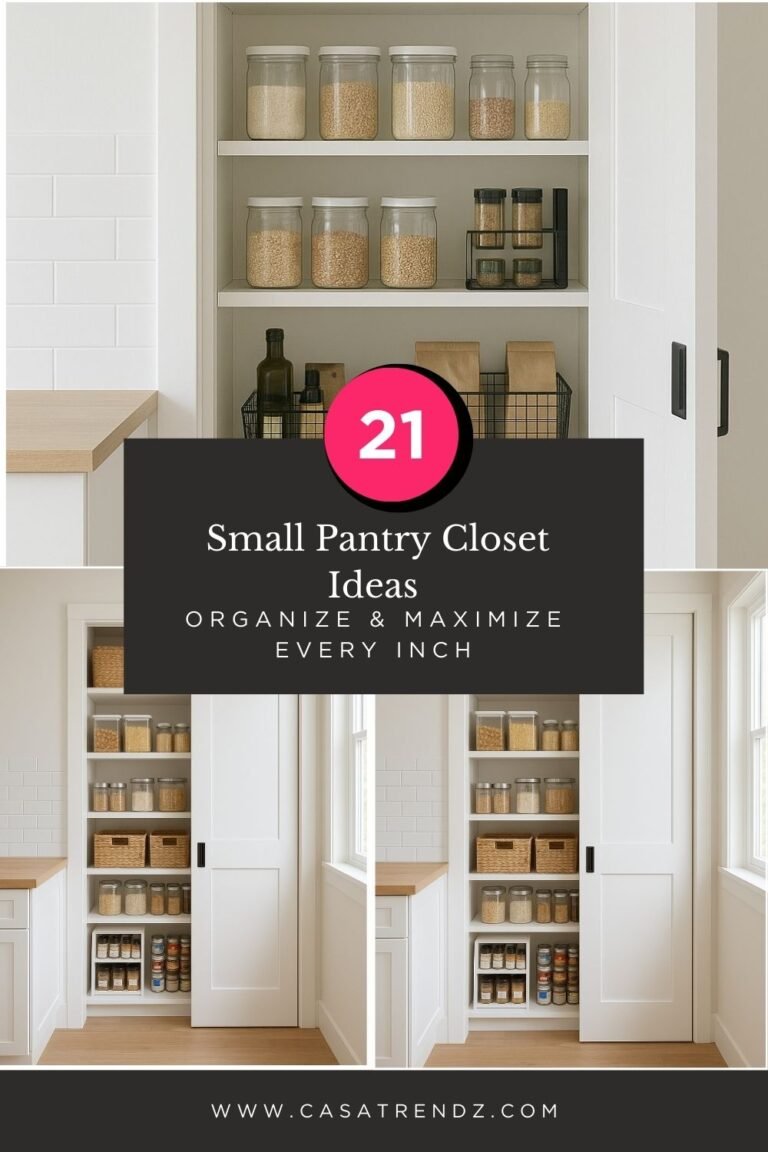 21 Small Pantry Closet Ideas to Organize & Maximize Every Inch
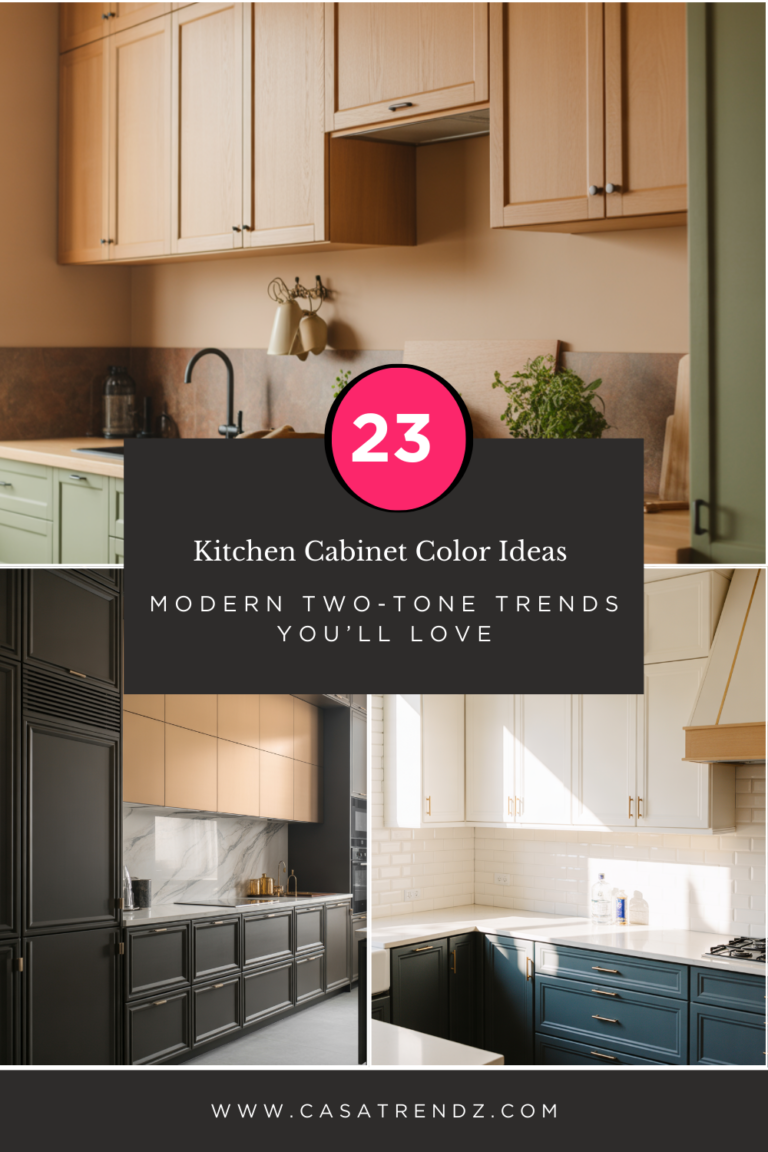 23 Kitchen Cabinet Color Ideas – Modern Two-Tone Trends You’ll Love