
18 Foyer Design Ideas for a Welcoming & Stylish Entrance

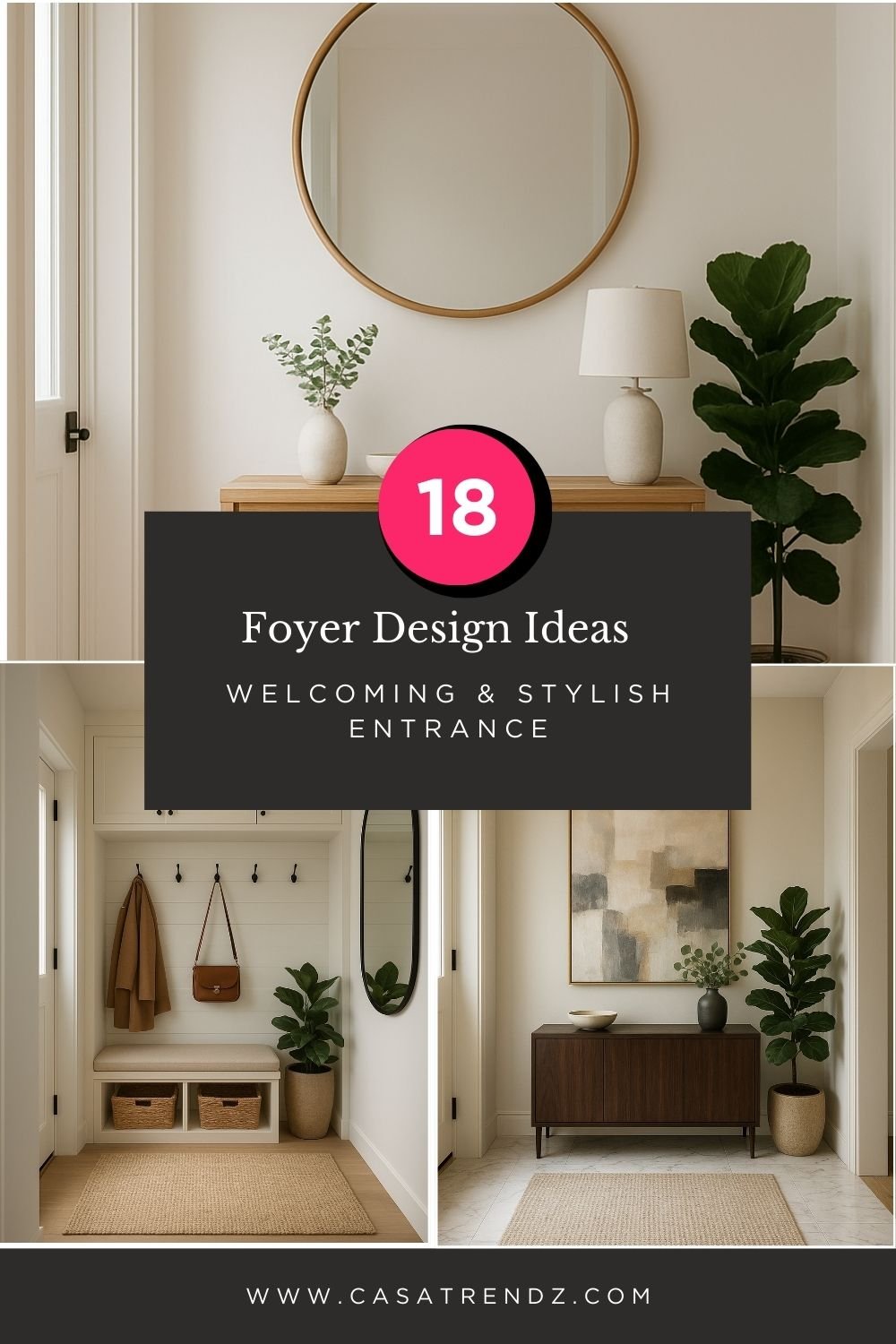
A foyer is the first room your guests see and the last space you pass through every day, so it has to work hard in a small footprint. It needs a place for keys, shoes, and coats, enough light to feel welcoming after dark, and a look that sets the tone for the rest of your home. The good news is that you do not need a grand entry hall or a big budget to get there. A clear layout, one strong focal point, and storage that fits how your household actually lives will transform even a narrow hallway entrance.
This guide walks through 18 foyer design ideas in practical detail. For each idea you will find the colors and materials that work best, realistic sizes for furniture and rugs, how to arrange the pieces, and the small mistakes that make an entry feel cramped or cluttered. Start with the two or three ideas that fix your biggest frustration, whether that is shoes piling up by the door, a dark corner, or a blank wall that feels unfinished, and build from there. If your entry is especially tight, pair these ideas with these small entryway decor ideas for more space saving layouts.
One rule runs through all 18 ideas: give everything a home before you decorate. Add a hook for every coat that comes in daily, a bowl or tray for keys, and a basket or bench for shoes, and only then add art, mirrors, and plants. A foyer that is easy to keep tidy will look stylish every day, not just on the day you style it. Measure your space first, note where the door swings, and leave a clear walkway of at least 36 inches so the entrance never feels blocked.
1. Modern Minimalist Foyer with Clean Lines
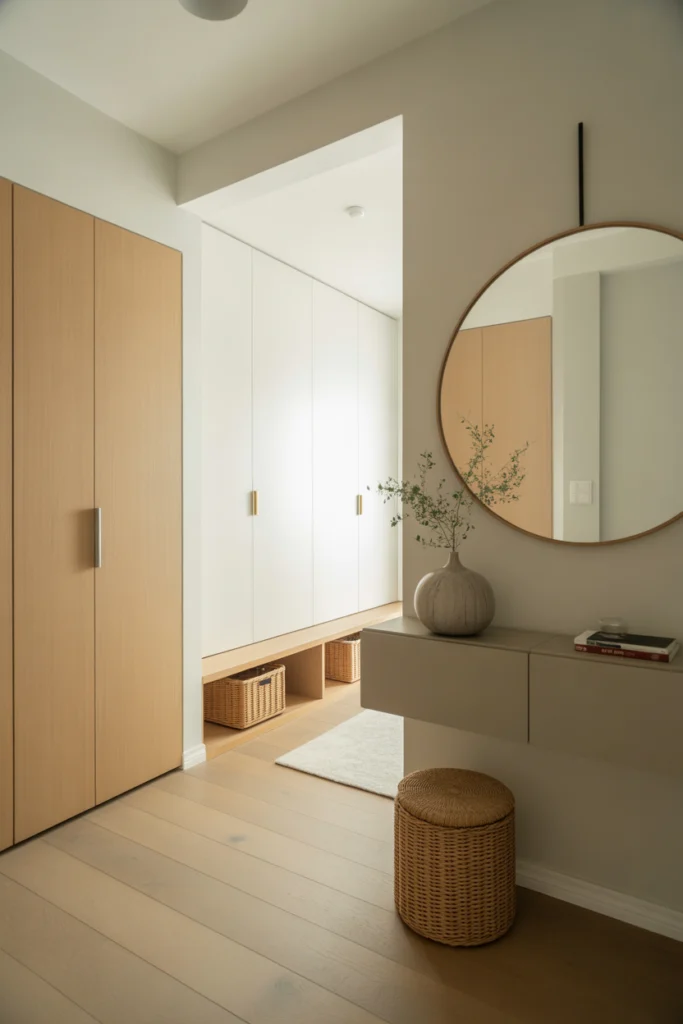
A modern minimalist foyer works because every piece earns its place. Start with a calm base: warm white or soft greige walls, light oak or pale matte tile flooring, and one console no deeper than 12 to 14 inches so it never crowds the walkway. A floating shelf at about 60 inches high, a slim bench with hidden storage, or a wall mounted rail for keys keeps daily essentials close without adding visual noise. Choose furniture with straight legs and flat fronts, and limit the palette to three neutrals, for example warm white walls, a light wood bench, and black metal accents.
To keep the look from feeling cold, add one warm texture and one living element. A single vase with eucalyptus or pampas stems, a handwoven runner in natural jute, or a small oak tray on the console adds warmth without clutter. Hang one piece of art, sized about two thirds the width of the console, with its center at eye level, around 57 to 60 inches from the floor. Avoid lining the console with small objects. One tray, one vase, and one stack of two books is plenty.
The mistake to avoid is buying storage that looks minimal but holds nothing. Before you choose a bench or console, count what must live in the foyer: shoes per person, coats, bags, keys, and mail. If the bench holds only two pairs of shoes and your household has four people, you will still have a pile by the door. Measure first, then pick a bench with a divided interior or add a lidded basket beside it for overflow, so the clean look survives real life.
2. Bold Statement Wall Foyer
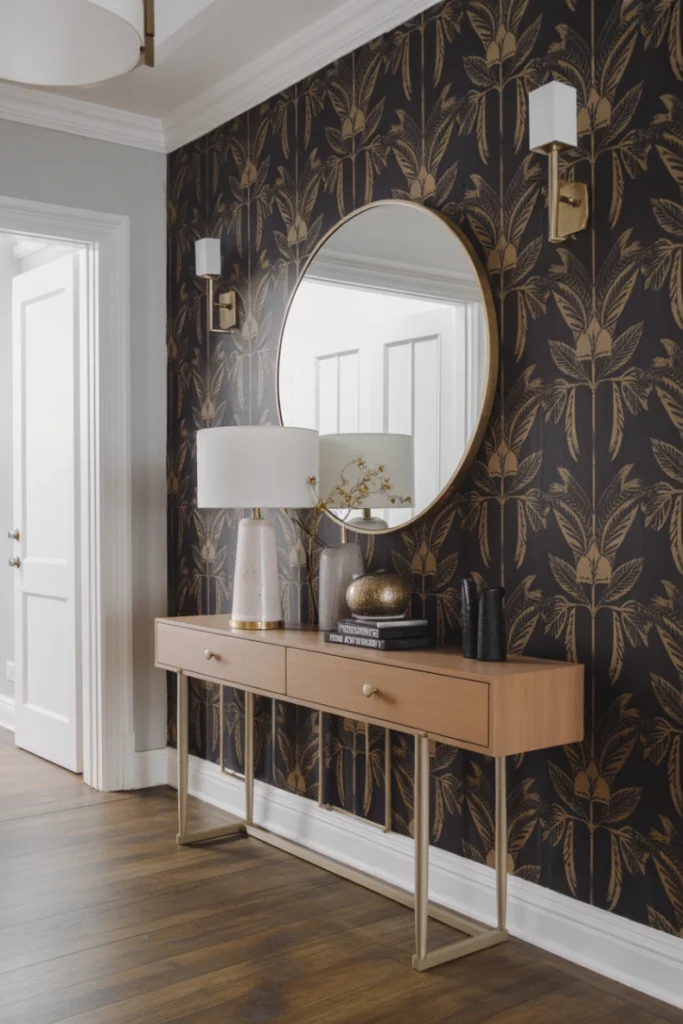
A statement wall gives a small foyer instant personality without a full renovation. Pick the wall guests face when they walk in, usually the wall opposite the door or the longest uninterrupted wall, and treat just that one surface. Bold options include a deep green or navy paint, a geometric wallpaper, vertical wood slats, or a large scale botanical print. In a narrow foyer, vertical stripes or vertical slats help the space feel taller, while a large pattern works better on a wider wall where you can step back and see it.
Balance the bold wall so the foyer still feels welcoming. Pair it with a simple console in light wood or matte black, a large mirror that reflects light back into the room, and one or two brass sconces to warm the color. Keep the remaining walls a soft white or pale neutral so the accent wall stays the star. If you use wallpaper, order a sample first and check it in morning and evening light, because a print that looks rich in the store can turn much darker in a hallway with no window.
For a renter friendly version, use peel and stick wallpaper or removable wood look panels, and hang art with adhesive strips rated for the frame weight. Paint is the cheapest route: one gallon usually covers a foyer accent wall with two coats, and a satin or eggshell finish wipes clean near the door. Finish the look with a runner that picks up one color from the wall, and keep the floor clear so the bold wall, not clutter, is what guests notice first.
3. Cozy Farmhouse Foyer with Rustic Charm
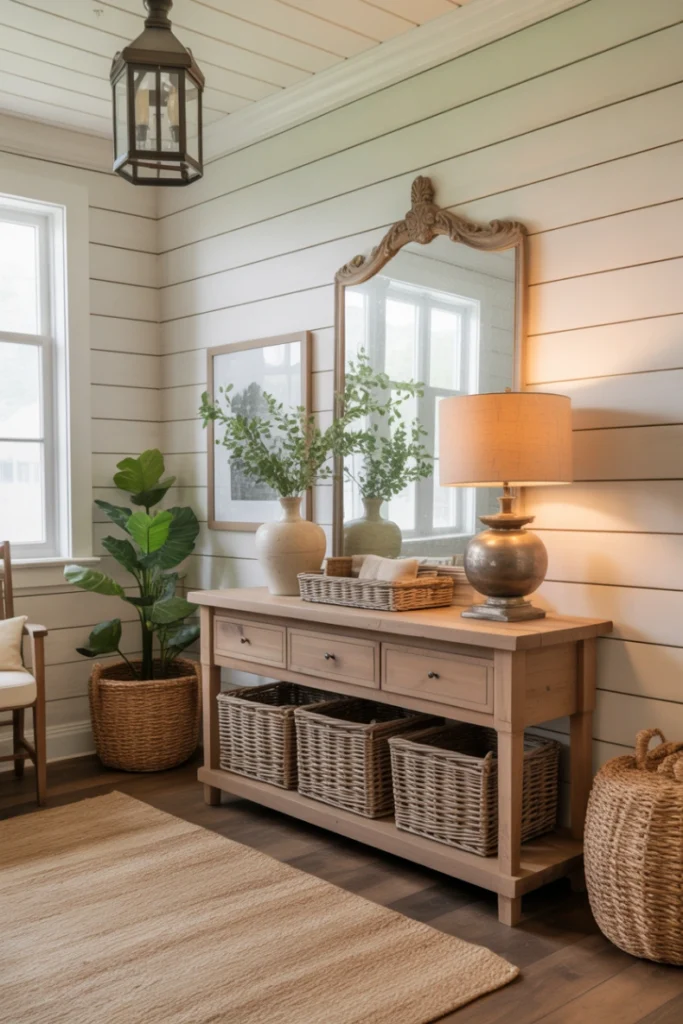
A farmhouse foyer is built on warm, natural materials and a lived in feel. Think shiplap or beadboard on one wall, a weathered wood console or bench, woven baskets, and a palette of cream, beige, soft sage, and muted gray. A jute or cotton runner about 24 to 30 inches wide warms a wood or tile floor and catches dirt from shoes. Add a lantern style pendant or wall sconce with warm bulbs around 2700K so the light feels soft in the evening.
Make it functional with a storage bench that has two or three baskets underneath, one per person or one for shoes and one for hats and gloves, plus four to six wall hooks at two heights: about 66 inches for adults and 48 inches for children. Label baskets if you share the entry with kids, and keep a small tray on the console for keys and sunglasses. Framed typography, a round wood mirror, or a small vase of dried stems adds charm without filling every surface.
The farmhouse look fails when it turns into too many small decorations. Choose three larger pieces rather than ten tiny ones: a bench, a mirror or art piece, and a basket. Keep the console top to a tray, a candle or lantern, and one plant or vase. Swap the runner seasonally if you like, but keep the base pieces the same, so the foyer feels collected and calm rather than like a shop display.
4. Luxury Marble Entryway
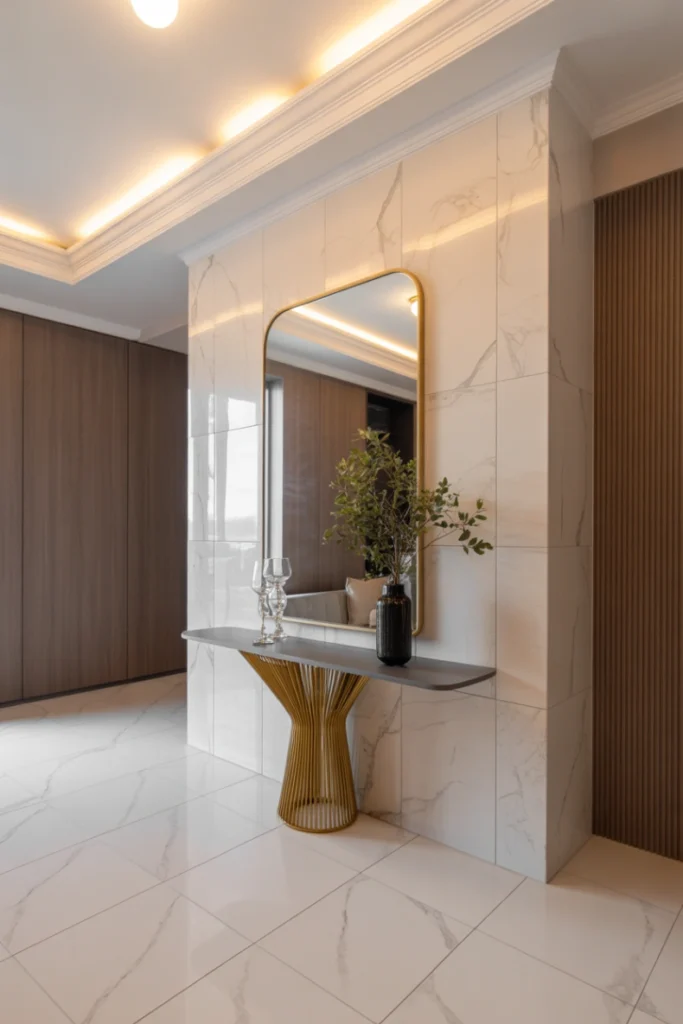
Marble makes a foyer feel grand because the stone itself is the decoration. Real marble tiles or slabs work beautifully, but high quality porcelain tiles that mimic Calacatta or Carrara marble give the same look at a lower cost and with far less maintenance. For floors, choose large format tiles, 24 by 24 inches or larger, with minimal grout lines, in white, cream, or soft gray with subtle veining. A marble topped console or a marble threshold strip can carry the look into a smaller foyer without redoing the whole floor.
Keep everything else quiet so the stone stands out. Pair marble with a gold framed mirror, brass or chrome lighting, and a console with slim metal legs. Use a rug only if you need warmth: a low pile wool rug in ivory or pale gray, about 2 by 3 feet at the door or a runner that stops short of the console legs, protects the floor without hiding it. Avoid busy patterns next to veined marble, because two strong patterns compete and the space feels restless.
Marble needs a little care near a door. Seal natural marble once a year, wipe spills quickly, and place a sturdy outdoor mat outside and a washable indoor mat inside to catch grit that can scratch the surface. If you love the look but worry about upkeep, porcelain marble look tile is the practical choice for a busy family entry: it resists stains, needs no sealing, and still reads as luxury when paired with brass accents and soft, layered lighting.
5. Scandinavian-Inspired Bright Foyer
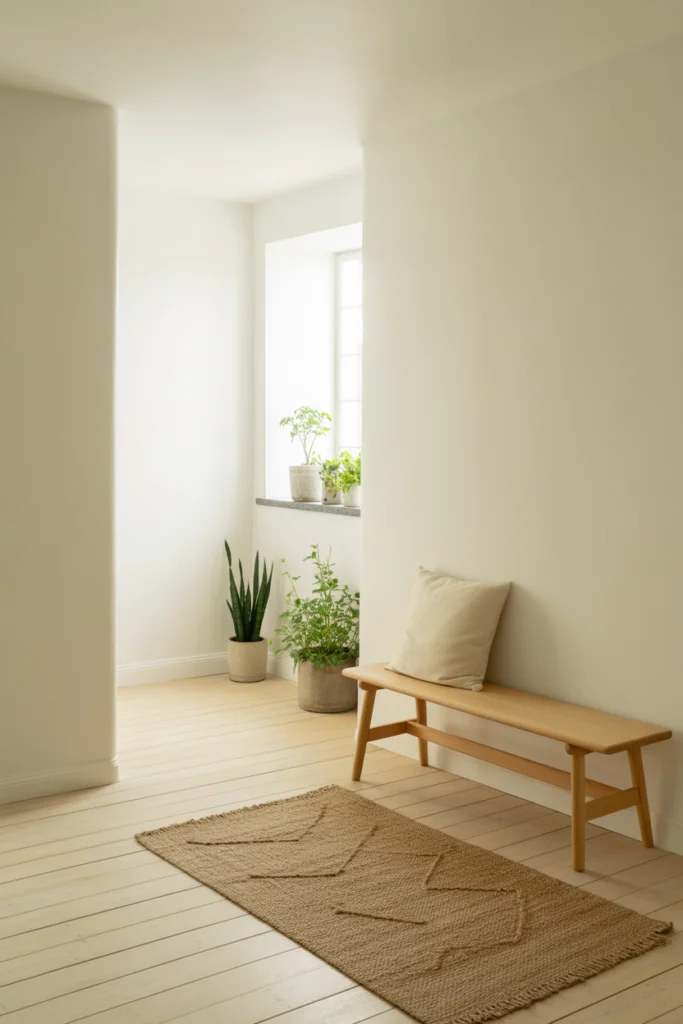
Scandinavian design suits foyers because it makes small spaces feel larger and calmer. Start with white or very pale warm gray walls, light wood floors or a pale wood look tile, and furniture in natural oak, birch, or whitewashed pine. A narrow bench about 36 to 48 inches wide, a floating shelf, or a slim shoe cabinet in white keeps the footprint light. Leave wall space empty around the furniture so the eye rests and the room feels open.
Warmth comes from texture, not color. Add a woven wool or cotton runner, a rattan basket for shoes, matte black hooks for coats and bags, and one or two plants such as a pothos on a high shelf or a small olive tree in a terracotta pot by the door. Use sheer curtains if the foyer has a window or sidelight, and choose bulbs around 3000K so the space feels bright but not clinical. A round mirror above the console bounces light and doubles the sense of space.
To keep the look working, follow a one in, one out rule for the entry: when a new coat, bag, or pair of shoes arrives, an old one leaves the foyer. Store out of season items in a closet or bedroom, and keep only current season coats and daily shoes by the door. That single habit protects the airy, uncluttered feeling that makes Scandinavian foyers so appealing, even in a household with children.
6. Monochrome Black and White Foyer
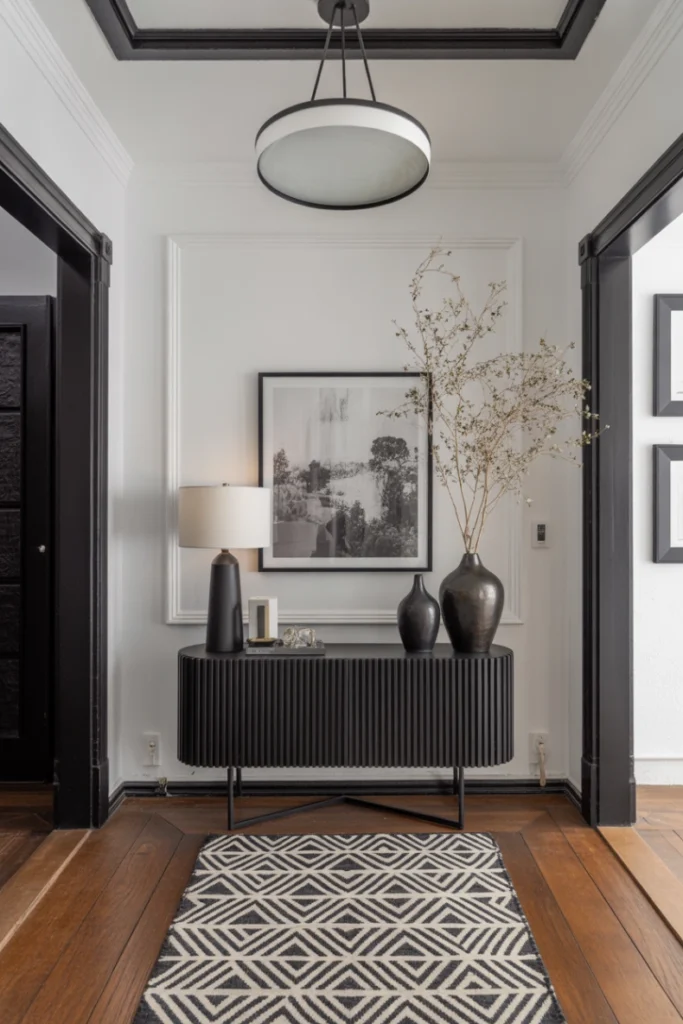
A black and white foyer is timeless because the contrast does the styling for you. The safest balance is about 70 percent white and 30 percent black: white walls, a white or light console, and black accents through the mirror frame, console legs, door hardware, or a geometric rug. In a small foyer, keep black to the lower half of the room or to slim furniture, and let white dominate above eye level so the space still feels open.
Add pattern carefully to keep the look from feeling flat. A black and white striped runner, a chevron tile at the threshold, or a geometric rug about 24 inches wide by 36 inches long anchors the entry without overwhelming it. A black metal framed mirror, a matte black pendant, and a white ceramic vase or two give the palette depth through shape and finish. If the foyer feels stark, add one warm element, such as a light wood tray or a green plant, to soften the contrast.
Maintenance matters in a high contrast room because scuffs and dust show more easily on black. Choose a matte or satin black finish that hides fingerprints better than high gloss, and wipe console tops and mirror frames once a week. For floors, a black and white checkerboard tile in a small foyer looks classic, but keep the tiles large, at least 12 by 12 inches, so the pattern does not feel busy in a tight space.
7. Warm Transitional Foyer with Wood Accents
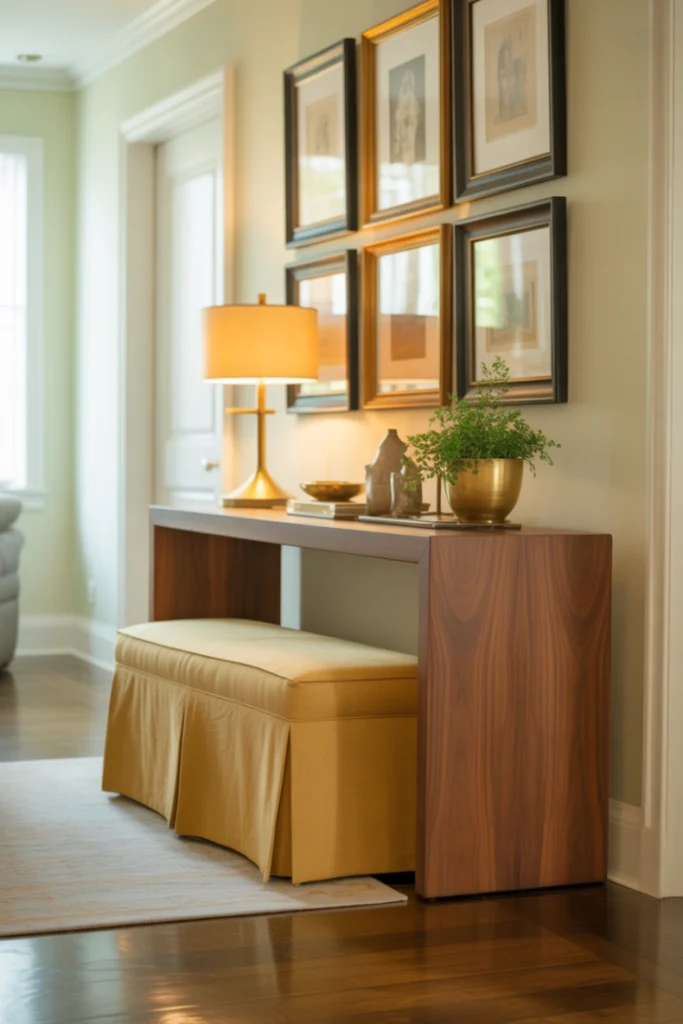
Transitional design sits between classic and modern, which makes it one of the easiest foyer styles to live with long term. Start with neutral walls in warm white, greige, or soft taupe, light to medium wood flooring, and furniture with clean lines but warm finishes: a wood console with tapered legs, an upholstered bench in a performance fabric, and framed art in a simple wood frame. The mix of wood, metal, and fabric keeps the room layered without feeling formal.
Build the look in layers. First, the wood: a console, a bench, or a framed mirror in walnut or white oak. Second, a soft layer: an upholstered bench cushion, a wool runner, or linen curtains on a sidelight. Third, a metal accent: brushed brass sconces, a black iron pendant, or nickel hooks. Keep the palette to warm neutrals with one accent color, such as sage green, navy, or terracotta, repeated in the art and the runner. That repetition is what makes the room feel designed rather than assembled.
Transitional foyers age well because they avoid extreme trends, so invest in the pieces you touch daily: a sturdy console, a bench that fits your shoe storage, and good lighting. A dimmer on the foyer light is a small upgrade with a big effect, letting you keep the entry bright when guests arrive and soft in the evening. If you are updating an older entry, repainting the walls warm white and swapping heavy, dark furniture for a lighter wood console often changes the whole feel without a renovation.
8. Narrow Hallway Entryway with Space-Saving Solutions
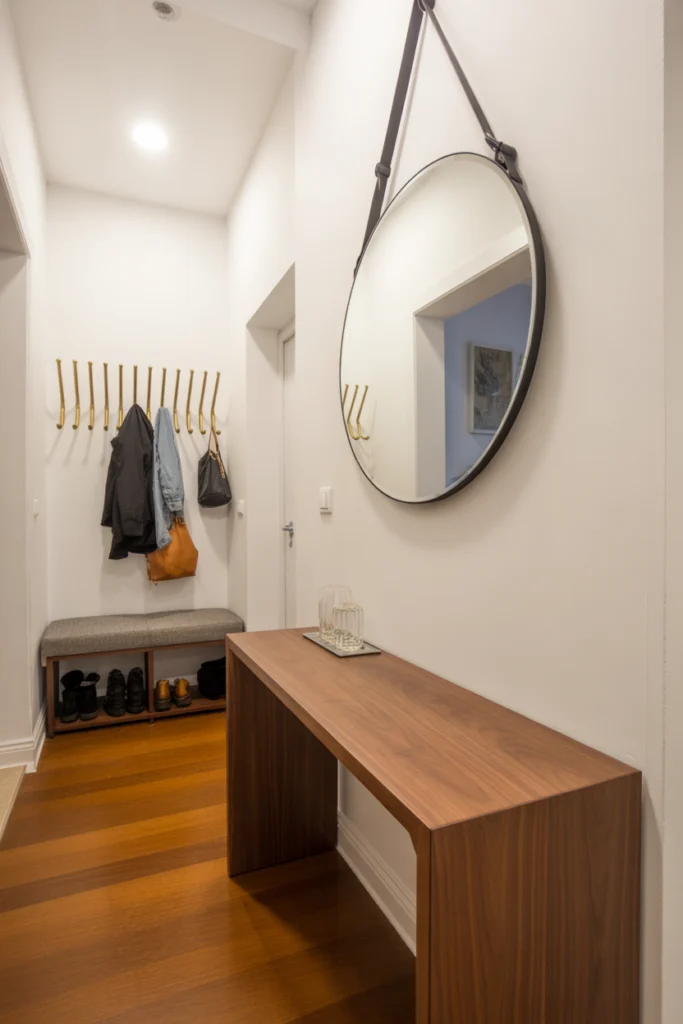
A narrow foyer needs furniture that hugs the wall. Look for a console or shelf no deeper than 10 to 12 inches, wall mounted hooks instead of a coat stand, and a tall, slim cabinet rather than a wide dresser. Mount a mirror on the wall opposite a light source or at the end of the hallway to stretch the space visually, and paint the walls a light color with a satin finish that reflects a little light. Keep the walkway clear at 36 inches minimum, and measure the door swing before you place anything beside it.
Use vertical storage to make up for the missing floor space. A rail with five or six hooks at 66 inches high holds coats and bags, a floating shelf above it holds keys and sunglasses, and a bench with a divided base or a row of baskets underneath handles shoes. For more ideas that fit tight entries, see these modern entryway ideas and borrow the slim console and mirror combinations that work in narrow halls. A runner about 22 to 26 inches wide draws the eye forward and protects the floor without narrowing the path.
The most common mistake in a narrow entry is adding a rug that is too wide or a bench that blocks the door. Test the layout with painter’s tape on the floor before you buy: mark the console depth, the bench footprint, and the walkway, then walk through with a bag and a coat on. If you have to turn sideways, the furniture is too deep. Wall mounted pieces that leave the floor visible will always make a narrow foyer feel wider than floor standing furniture of the same size.
9. Bohemian Foyer with Natural Vibes
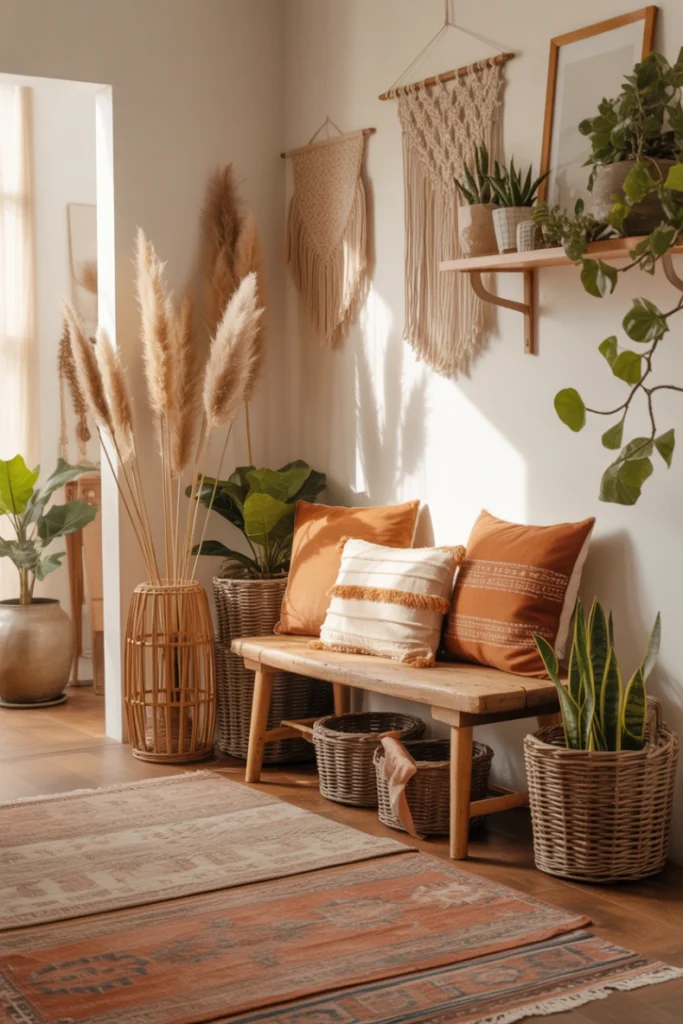
A bohemian foyer feels collected rather than matched, which makes it forgiving for renters and vintage lovers. Layer a flatweave rug over a jute rug, add rattan baskets, a macrame wall hanging or woven tapestry, and plants at different heights: a tall plant in a floor basket, a trailing pothos on a shelf, and a small succulent on the console. Earthy tones like terracotta, ochre, olive, and warm brown tie the mix together, even when the pieces come from different places.
Keep the room from tipping into clutter by repeating one or two materials, such as rattan and wood, and one color family throughout. A vintage wood console or bench anchors the space, while baskets in the same natural tone hold shoes and scarves. Hang art in a loose gallery of three to five pieces with a common thread, for example all landscapes or all black and white prints, and leave breathing space between frames so the wall reads as curated, not crowded.
Boho foyers need a hidden tidy system, because the style already has a lot of texture. Use lidded baskets for the messiest items, such as dog leads, hats, and chargers, and keep open baskets only for shoes and throws. Wipe rattan with a dry cloth and keep it out of direct rain splash by the door, since natural fibers stain and warp when wet. A washable indoor mat just inside the door protects the layered rugs and keeps the relaxed look easy to maintain.
10. Classic Traditional Foyer with Timeless Details
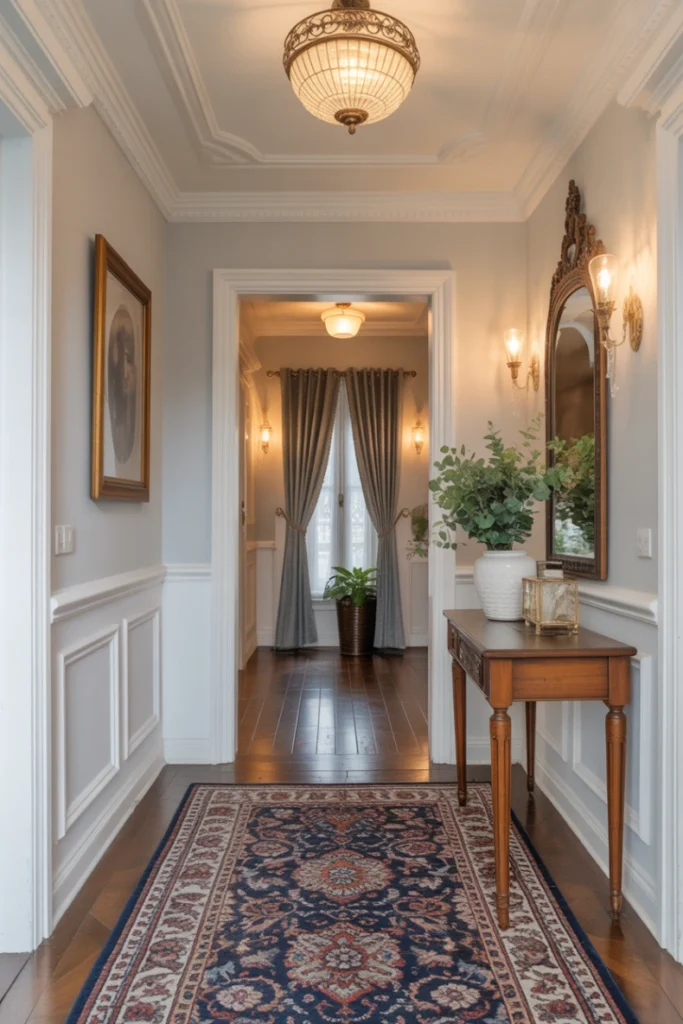
A traditional foyer relies on symmetry, rich materials, and details that do not date quickly. Center a console table with turned legs on the main wall, hang a mirror or framed art directly above it, and flank the arrangement with matching sconces or lamps. Deep neutrals like beige, cream, and soft taupe on the walls, plus a patterned wool rug in muted red, navy, or green, give the room a formal but welcoming feel. Decorative molding, wainscoting, or a chair rail adds architecture even in a newer home.
Choose furniture with weight and finish: a dark wood console, a brass or crystal lamp, ceramic vases, and framed oil style prints or family photos in matching frames. A hall tree or a built in coat rack near the door keeps coats organized without breaking the formal look, and a traditional rug about 3 by 5 feet in front of the console protects the floor and defines the entry zone. Keep the console styling simple and symmetrical: a lamp or vase on each side and a small tray in the center.
Traditional does not have to mean stiff. Soften the formality with a cushioned bench for putting on shoes, a basket for daily bags tucked beside the console, and warm bulbs around 2700K. If your home is traditional in the living room but the foyer is small, borrow just the key elements, a wood console, a framed mirror, and a patterned rug, and skip the extra accessories. For hallway styling that pairs well with this look, these hallway decor ideas show how to carry the same palette down the hall.
11. Industrial Foyer with Raw Materials
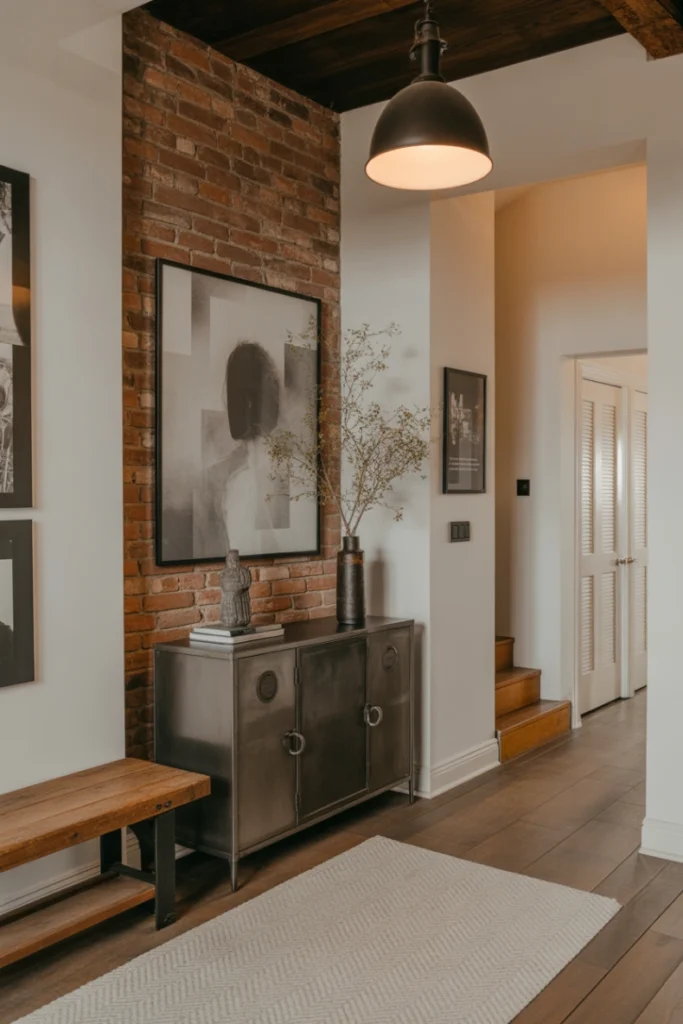
Industrial style brings an urban edge to a foyer through raw materials: exposed brick, black steel, reclaimed wood, and concrete. If you do not have a brick wall, a brick veneer panel on one wall or a concrete look tile at the threshold gives the same effect. Pair it with a black metal console with a reclaimed wood top, wire baskets, and vintage style Edison bulb lighting in a metal cage or dome pendant. Keep the palette to charcoal, black, warm wood, and one metal finish so the rough textures stay cohesive.
Balance the hard materials with one soft layer so the entry still feels welcoming. A low pile rug in charcoal or rust, a leather bench cushion, or a canvas storage bin softens the metal and brick without losing the industrial character. Use open hooks in matte black iron for coats, and a wall mounted metal shelf for keys and mail. A large, simple clock or a metal framed mirror adds function and keeps the wall from feeling bare.
Industrial foyers can feel cold if every surface is hard and dark, so add warm light and a plant. A trailing plant in a metal planter or a snake plant in a concrete pot brings life to the corner, and warm bulbs around 2700K make brick and wood glow in the evening. Seal reclaimed wood tops so keys and bags do not snag, and wipe metal frames regularly near the door, where dust and moisture collect fastest.
12. Small Foyer with Built-In Storage Wall
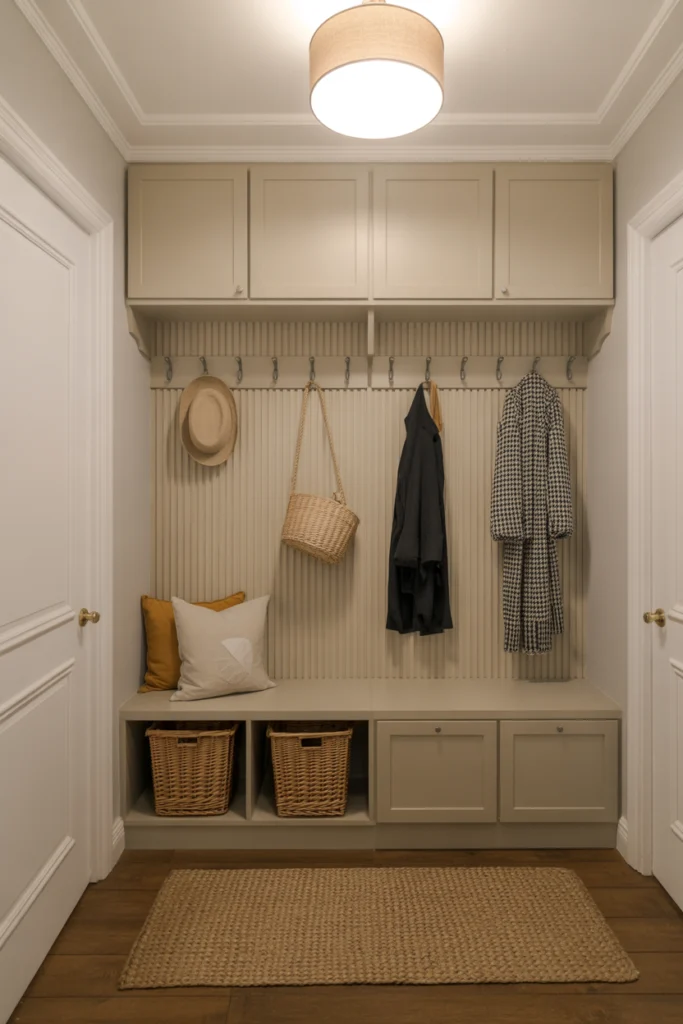
A built in storage wall is the most practical solution for a small foyer because it uses vertical space and hides clutter behind closed doors. A typical unit combines open hooks at 66 inches, cubbies or drawers for shoes at the bottom, a bench seat at about 18 inches high, and closed cabinets above for out of season items. In a foyer about 48 to 60 inches wide, a unit 16 to 18 inches deep leaves a comfortable walkway while holding a surprising amount.
If a full built in is out of budget, build the same system from stock pieces: a tall bookcase or wardrobe on each side, a bench between them, and a shelf across the top to tie them together. Paint the whole unit the wall color so it reads as architecture rather than furniture, and add simple knobs in brushed brass or matte black. Use baskets inside open cubbies to hide gloves, hats, and pet supplies, and keep one cubby per person so shoes do not migrate across the whole wall.
Plan the interior before you build. Count shoes, coats, bags, and sports gear that must live in the foyer, then assign each item a cubby, hook, or drawer. Leave one empty cubby for guests, and add a small charging spot inside a cabinet for phones and keys if your household drops electronics at the door. A built in that fits your real inventory will stay tidy, while one sized by guesswork will overflow within a month. Pair it with a slim mirror on the opposite wall to keep the small space feeling open.
13. Elegant Foyer with a Grand Chandelier
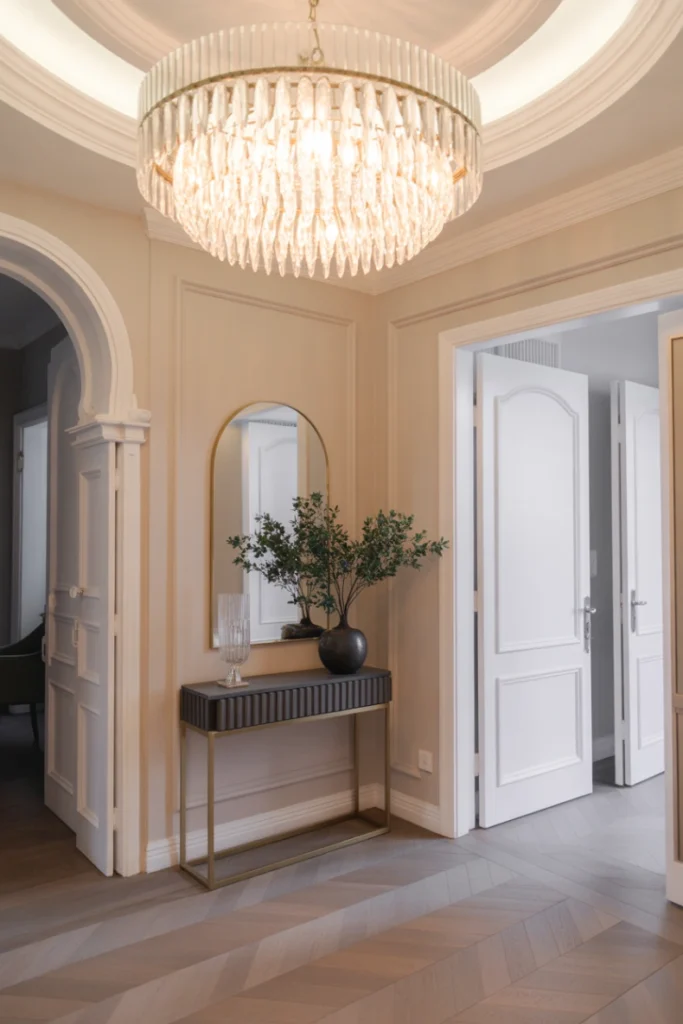
A chandelier turns a foyer into a moment, because it draws the eye up and makes even a modest entry feel taller and more special. Size matters: for a foyer up to 10 by 12 feet, a chandelier about 20 to 24 inches wide works well, while a larger two story entry can take 30 inches or more. Hang it so the bottom sits at least 7 feet above the floor in a single story foyer, or centered in the stairwell void in a two story entry, and put it on a dimmer so you can control the drama.
Choose the style to match the house: crystal or glass drops for a classic home, a brass ring or globe fixture for a modern home, or a beaded or rattan chandelier for a relaxed, coastal feel. Keep the furniture below simple, a narrow console, a round rug, and a large mirror, so the chandelier stays the centerpiece. Add wall sconces at about 66 inches high if the foyer is long, because a single overhead light can leave the corners dark and the entry feeling uneven.
Before you buy, check the ceiling height, the electrical box rating, and the cleaning access. A chandelier over a staircase needs a lift or a winch system for bulb changes, and crystal drops need a gentle wipe every few months to keep their sparkle. Use LED bulbs in a warm 2700K to 3000K range, and keep spare bulbs in the foyer closet, so a burnt out bulb never leaves your grand entrance dim when guests arrive.
14. Coastal-Style Foyer with Breezy Aesthetics
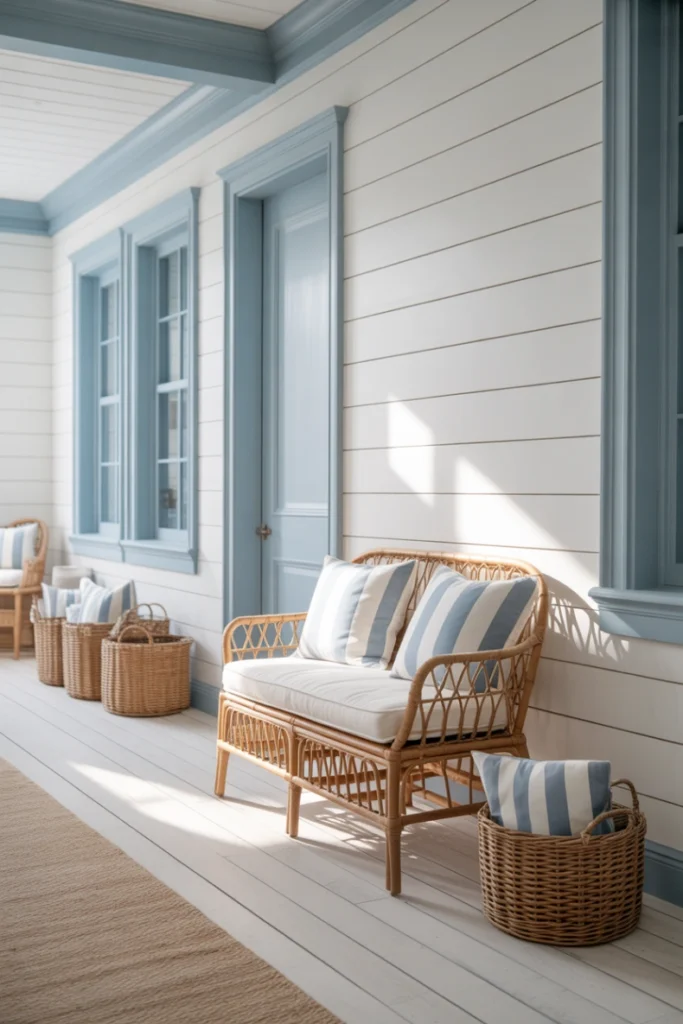
A coastal foyer feels fresh because it borrows light colors and natural textures from the shore. Paint walls crisp white or pale blue gray, use sandy beige and soft blue accents, and choose furniture in rattan, driftwood, light oak, or whitewashed wood. A woven rope mirror, a striped runner in blue and white, and a basket for beach bags or umbrellas set the tone without needing seashells on every surface.
Keep the space simple and uncluttered to protect the airy feeling. A light wood console, a linen bench cushion, and one piece of ocean inspired art, such as a coastal landscape or a botanical print, is enough. Add texture through a seagrass basket, a cotton throw over the bench, and a ceramic vase with grasses or eucalyptus. If your foyer has no window, a large mirror opposite the door and bright, daylight style bulbs around 4000K in the daytime will mimic natural light.
Coastal materials need protection near a door, where wet shoes and sand arrive daily. Choose a washable runner, a sturdy outdoor mat, and a basket with a removable liner for wet items. Rattan and seagrass should stay dry, so keep them a step inside the door rather than right at the threshold. With those small guards in place, a coastal foyer stays breezy and easy to clean, even in a beach town or a rainy climate.
15. Artistic Gallery-Style Foyer
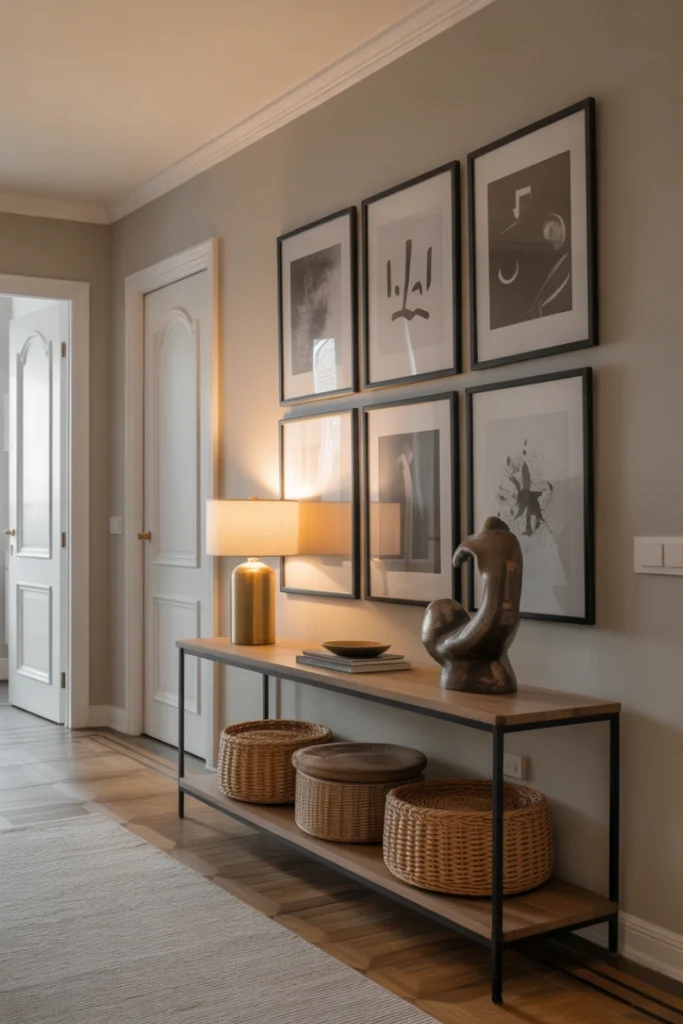
A gallery foyer turns the entry wall into a personal exhibition. Start with a neutral wall in warm white or pale gray so the art stands out, then plan the layout on the floor before you hang anything. A salon style grid works well in a wide foyer, while a single horizontal row at eye level suits a narrow hall. Keep frames consistent in one finish, such as all black, all natural wood, or all white, and leave 2 to 3 inches between frames so the grouping reads as one composition.
Mix art types for interest: a large landscape or abstract print as the anchor, two or three smaller photos or prints, and one textural piece such as a woven hanging or a small sculptural frame. Hang the center of the grouping at 57 to 60 inches from the floor, and use picture lights or adjustable track lighting to highlight the work without glare. A slim console or bench below the gallery gives you a place for keys and a vase, but keep it lower than the art so it does not compete.
Rotate the art seasonally to keep the foyer feeling fresh: swap two or three prints for seasonal photography or children’s art, and store the rest flat in a portfolio. Use proper hanging hardware rated for each frame weight, especially for large pieces near a door that vibrates when it closes. A gallery foyer works best when the art means something to your household, so choose pieces you love over pieces that simply match the sofa.
16. Grand Foyer with a Curved Staircase
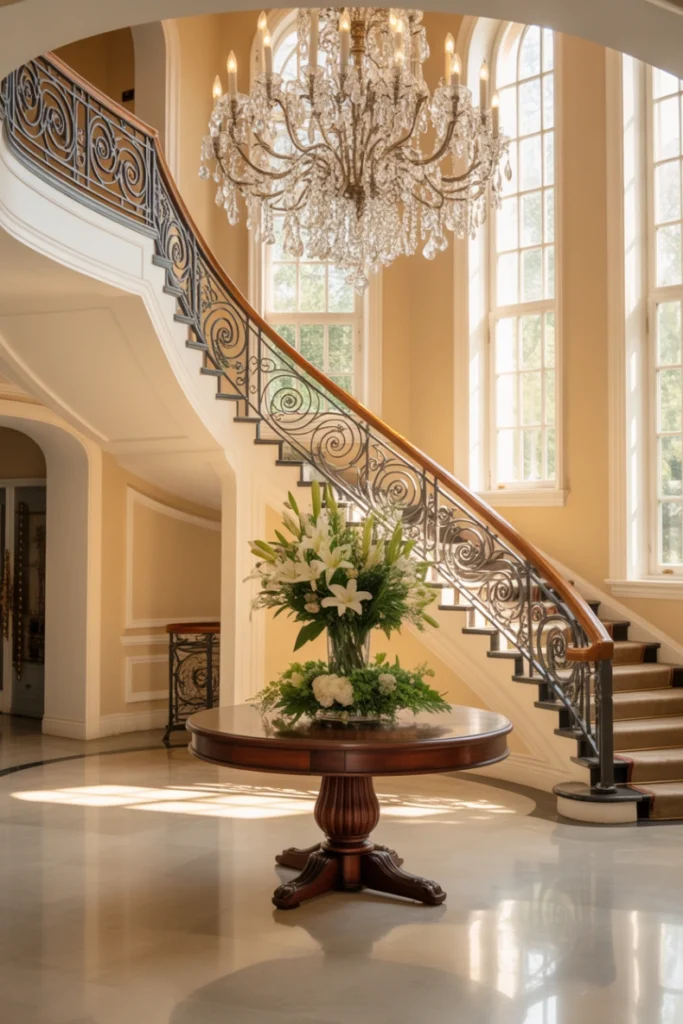
A curved staircase is already a showpiece, so the foyer design should frame it rather than fight it. Keep the area under and beside the curve open, place a round console or a round rug in the center of the curve to echo its shape, and choose a statement chandelier that hangs in the stairwell void. Elegant railings in wrought iron or wood with decorative balusters, plus hardwood steps in a warm tone, carry the grandeur without extra decoration.
Scale the furniture to the space: a round table about 36 to 42 inches wide, a large rug at least 8 feet in diameter if the foyer allows, and one tall plant or sculpture in the curve of the stairs. Keep wall color soft and neutral so the staircase shape stays visible, and use sconces along the stair wall for safe, even lighting at night. Avoid tall bookcases or heavy furniture against the curved wall, because they hide the architecture you want to show off.
If your foyer is grand but the staircase is straight, you can still borrow the idea: a round rug, a round table, and a chandelier create a focal point that feels intentional. For a curved staircase, budget for professional cleaning of the chandelier and railings, and choose a rug with a non slip pad, since the center of a grand foyer gets the most foot traffic in the house. The result should feel spacious and calm, with the staircase as the clear star.
17. Mid-Century Modern Foyer
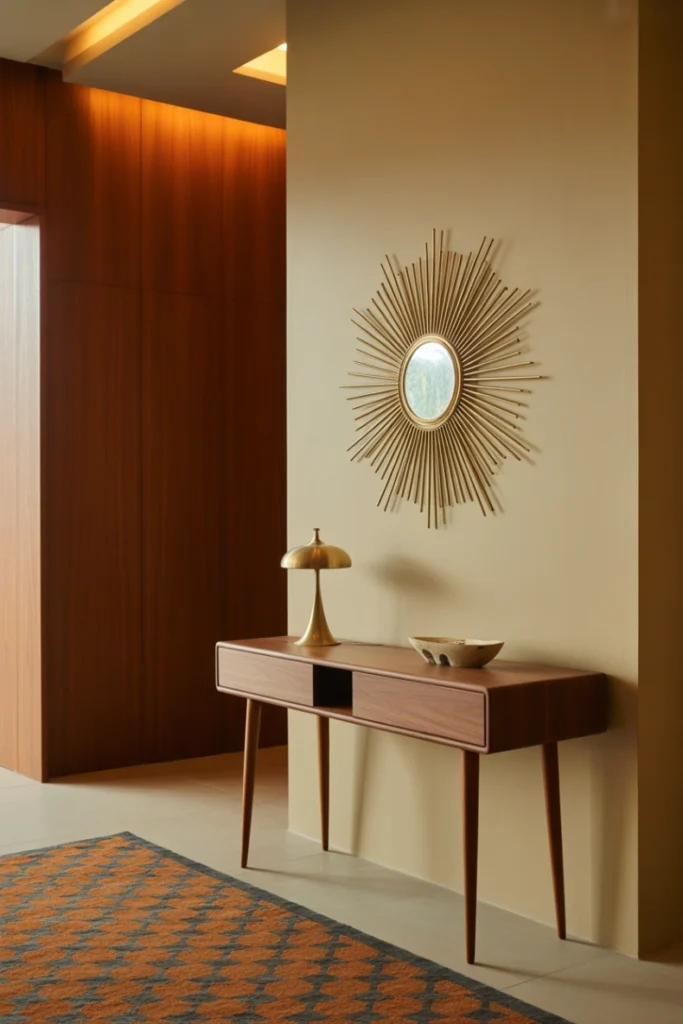
Mid-century modern foyers mix clean lines with warm, retro character. Look for a teak or walnut console with tapered legs, a sunburst or round mirror, and a sculptural pendant in brass or opal glass. Warm wood tones, mustard, burnt orange, olive, or teal accents, and geometric patterns give the space its personality. A low pile rug with a bold geometric print, about 2 by 3 feet or a runner for a longer hall, grounds the entry without hiding the floor.
Style the console with restraint: a ceramic vase, a small stack of design books, and one sculptural object, such as a brass bowl or a wooden figure. Add a bench or a pair of stools with tapered legs for putting on shoes, and hang abstract art in a simple wood frame above the console. Keep the walls warm white or pale greige so the wood tones and accent colors stand out, and use warm bulbs around 2700K to make the wood glow.
Authentic vintage pieces can be beautiful, but check their condition before placing them by a busy door. Refinish scratched veneer, tighten loose legs, and add felt pads to protect the floor. If you love the look but need durability, well made reproductions in walnut veneer offer the same silhouette at a lower cost and with a finish that resists daily wear. Either way, keep the foyer to a few strong pieces, because mid-century style depends on space around each object.
18. Soft Neutral Foyer with Calm Tones
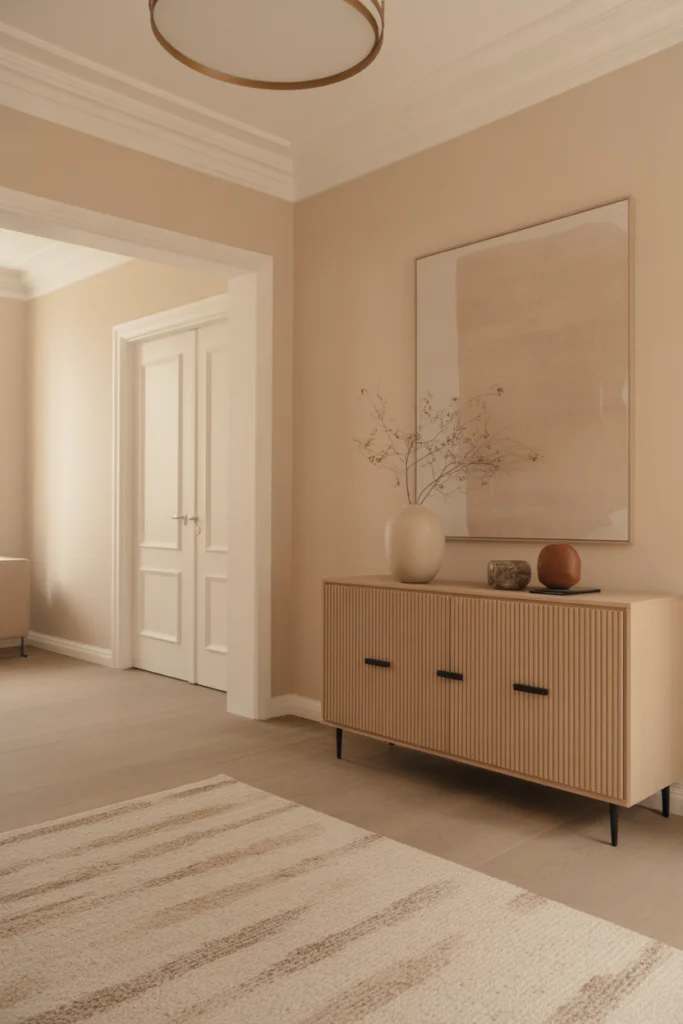
A soft neutral foyer is the most versatile choice, because beige, white, taupe, and warm gray suit almost any home style and never feel dated. Layer the neutrals instead of using one flat color: warm white walls, a beige linen bench cushion, a taupe wool runner, and a stone or light wood console. Texture does the work here, through a knitted throw, a natural fiber rug, a ceramic vase, or subtle wall paneling that adds shadow and depth.
Keep the palette warm if your foyer gets little natural light, and cooler if it faces south and gets strong sun. A streamlined console, a round or arched mirror, and one or two ceramic vases in slightly different heights make a complete arrangement. Add warm lighting on a dimmer, around 2700K to 3000K, so the entry feels cozy in the evening. A single green plant, such as a pothos or a fiddle leaf fig in a neutral pot, adds life without breaking the calm palette.
The risk with neutrals is a room that feels bland, so add contrast through tone, not color. Pair a light rug with a darker wood console, a white wall with a black framed mirror, or a smooth ceramic vase with a rough woven basket. Those small contrasts keep the eye moving and the foyer feeling designed. If you later want a seasonal change, swap only the throw, the runner, or the vase stems, and the calm neutral base will carry the new look without a repaint.
Conclusion
Your foyer is the first impression of your home, and these 18 design ideas show how to make it both welcoming and stylish. From statement lighting and accent walls to functional storage and elegant decor, a thoughtfully designed foyer sets the tone for the rest of your space. By blending beauty with practicality, you can create an entrance that feels inviting, organized, and uniquely yours, whether your style is modern, traditional, or eclectic.
Start small and practical: measure the space, decide what must be stored by the door, and choose one focal point, such as a mirror, a chandelier, or an accent wall. Add lighting on a dimmer, a rug that fits the walkway, and storage that matches your household, and your foyer will stay beautiful long after the first styling day. For more entry inspiration, browse these living room ideas to see how your foyer palette can flow into the rooms beyond it.
Frequently Asked Questions
How much space do I need for a functional foyer?
A foyer works well with a clear walkway of at least 36 inches and a console or bench no deeper than 12 to 14 inches. Even a hallway 42 inches wide can function with wall mounted hooks, a slim shelf, and a narrow runner, as long as the door swing stays clear and shoes have a basket or cubby rather than piling on the floor.
What is the best flooring for a foyer?
Tile, luxury vinyl, sealed wood, and natural stone all work well, because they resist dirt and moisture from shoes. Choose a finish that is easy to clean and not too slippery when wet, add a sturdy outdoor mat and a washable indoor mat, and use a rug pad under any runner so it stays in place on hard floors.
How do I make a small foyer look bigger?
Use light wall colors, a large mirror, slim wall mounted furniture, and vertical storage to keep the floor visible. Keep the palette to three colors or fewer, leave some wall space empty, and use one runner that draws the eye forward instead of several small rugs that chop up the floor.
What lighting works best in a foyer?
Layer three types of light: an overhead pendant or chandelier for general light, sconces or a table lamp for warmth, and a dimmer so you can adjust the mood. Warm bulbs around 2700K to 3000K suit most foyers, while a brighter daylight bulb helps a windowless entry feel less dark during the day.
How can I keep my foyer organized every day?
Give every daily item a fixed home: a hook per coat, a cubby or basket per person for shoes, and a tray for keys and mail. Store out of season items elsewhere, do a one minute reset when you come home, and follow a one in, one out rule so new coats and shoes do not slowly take over the entry.
More Ideas You Will Love
 21 Mudroom Design Ideas to Maximize Every Entryway
 19 Festive Christmas Entryway Decor Ideas for 2025 Front Porches
 13 Double Door Ideas to Upgrade Your Entryway or Patio
 12 Luxurious Modern Exterior House Design Ideas
 14 Small Entryway Renovation Ideas for Your Inspiration
 12 Stylish Exterior Door Design Ideas for a Stunning Entryway