
12 Fall Garden Decor Ideas for a Beautiful Front Porch


When the first cool morning arrives and the light turns golden, your front porch becomes the best place to celebrate fall. It is the first thing guests see and the last thing you pass on your way inside, so it deserves more than a single pumpkin by the door. A garden style porch works so well in autumn because it mixes living plants with rustic textures: mums and ornamental kale, warm wood, woven baskets, stone, and soft lantern light.
The secret to a porch that looks styled rather than cluttered is layering. Start with a clear color palette of deep orange, burgundy, cream, and sage green, then build from large to small: tall planters and a ladder or bench at the back, medium pots and pumpkins in the middle, and small lanterns, baskets, and herbs at the front. Keep one material repeating, such as weathered wood or galvanized metal, so all twelve ideas below feel like one design. Most of these projects take under an hour, cost very little if you reuse summer containers, and last from early September right through Thanksgiving if you water wisely and protect plants from the first hard frost.
Before you start, measure your porch. Note the width of the steps, the height of the railing, and how much sun each corner gets in the afternoon. Mums need at least four to six hours of sun to keep blooming, while ivy and ferns are happier in shade. Work with what you have, buy only the plants that fit your light, and leave a clear walking path at least 36 inches wide so the porch stays safe and welcoming.
1. Layered Pumpkin and Planter Display
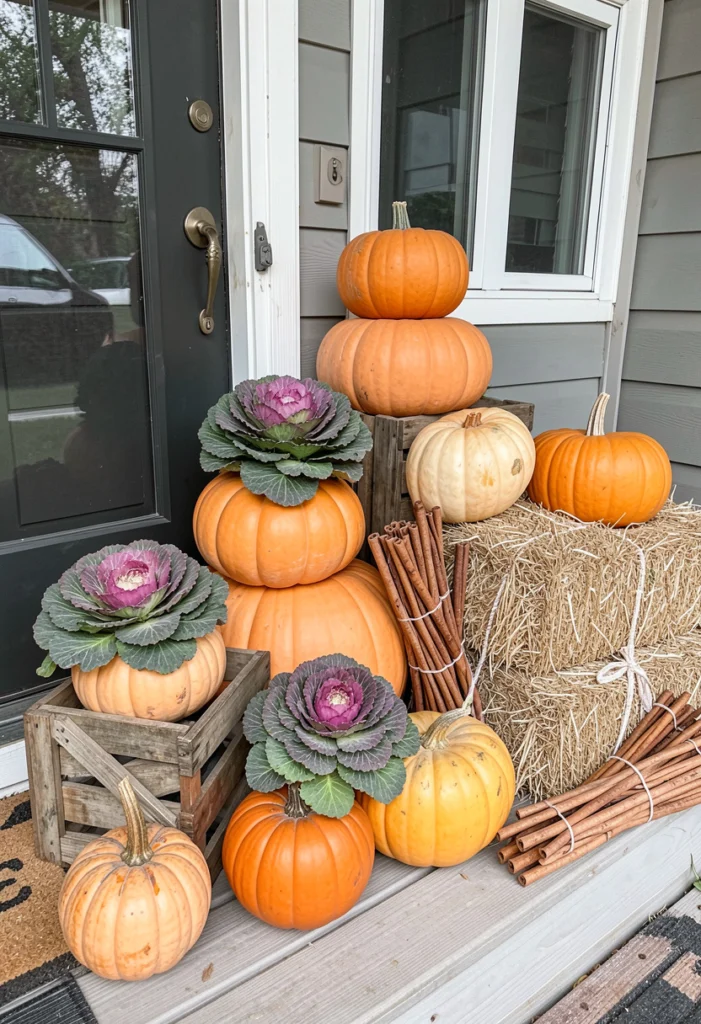
A layered pumpkin and planter display is the fastest way to make a porch feel abundant. The trick is mixing sizes, heights, and textures instead of lining up identical pumpkins in a row. Choose three pumpkin sizes: one large carving pumpkin or a Cinderella pumpkin about 12 to 14 inches wide, two medium pumpkins around 8 to 10 inches, and three to five mini pumpkins or gourds. Pair them with two or three planters filled with fall plants such as mums, ornamental cabbage, kale, or a small evergreen shrub that will carry you into winter.
Build the display in steps. First, set the tallest planter at the back, close to the wall or door frame. Next, place a wooden crate or an upside down sturdy pot, about 10 to 12 inches high, beside it and set a medium pumpkin on top. Then arrange the remaining pumpkins on the ground in front, turning each one so its best side faces the street. Tuck a small potted plant between two pumpkins to break up the orange and add green. Water the planters, not the pumpkins, and set pumpkins on a small saucer or piece of slate so they do not sit in puddles after rain.
For color, try a classic mix of orange pumpkins with cream and sage green heirloom varieties, or go softer with all white and pale green pumpkins plus burgundy mums. If you use real pumpkins, check them weekly and replace any that soften. Faux pumpkins are a good choice for a covered porch where you want the same look next year. Either way, keep the display to one side of the door if your porch is narrow, or mirror it on both sides if you have room, so the entry still feels balanced.
2. Fall Flower Pots with Rustic Containers

Swapping summer flowers for fall blooms instantly changes the mood of a porch. Chrysanthemums are the star of fall pots because they bloom in orange, burgundy, yellow, and cream, and a single 10 inch pot can look full for four to six weeks with regular watering. Pansies and violas add a softer touch and tolerate light frost, while marigolds bring a bright gold that pairs beautifully with pumpkins. For foliage, add ornamental kale, dusty miller, or trailing ivy to soften the edges of the pot.
Rustic containers make the flowers look intentional. Wooden boxes, galvanized metal buckets, terracotta pots, and old watering cans all work, provided they have drainage holes. If a container has no holes, drill three or four quarter inch holes in the bottom or use it as a cachepot with a plastic nursery pot inside. Fill containers with fresh potting mix, not old garden soil, and plant mums so the top of the root ball sits about one inch below the rim. Water until it runs from the bottom, then water again whenever the top inch of soil feels dry.
Group pots in odd numbers, three or five together, with heights varying by 6 to 12 inches. Place the tallest group near the door or railing where it gets the most sun, and use a plant stand or an overturned crate to lift a shorter pot. A simple rule that works every time is thriller, filler, and spiller: one upright plant in the center, mounding mums around it, and one trailing plant at the edge. For more porch flower ideas that pair with these pots, see these fall porch decor ideas and match your pot colors to your door wreath for a pulled together look.
3. Wooden Ladder Plant Stand
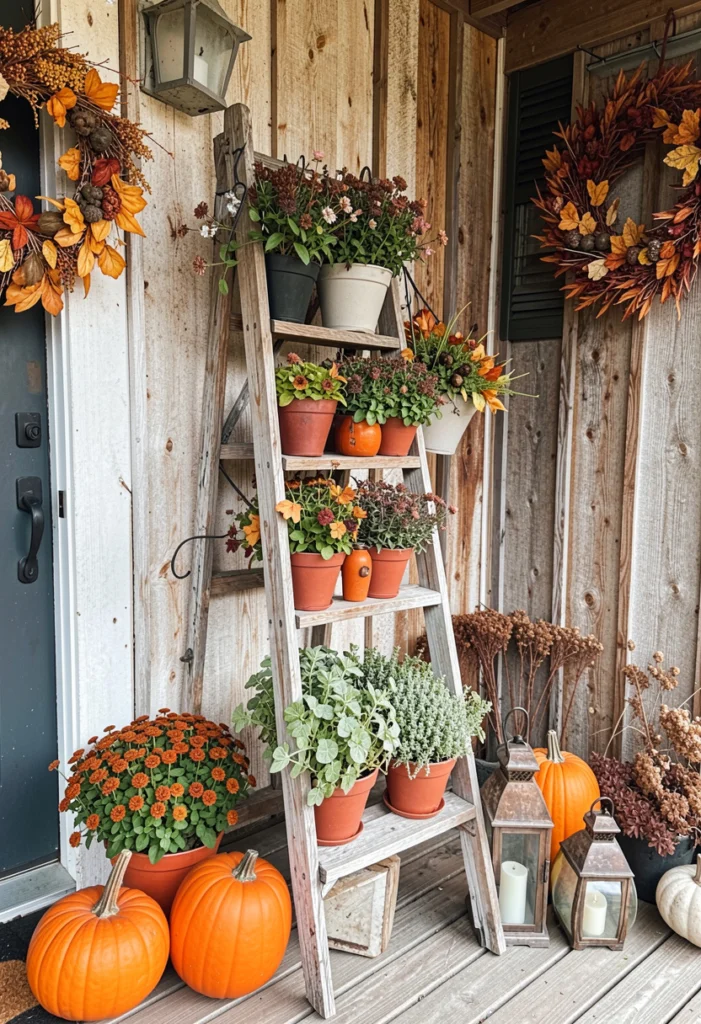
An old wooden ladder is one of the most charming vertical displays for a small porch because it adds height without taking up floor space. Lean a 4 to 5 foot ladder against a wall at a safe angle, with the feet about 12 to 15 inches out from the wall, and make sure it cannot slide on a smooth floor by adding rubber feet or setting it on a rug. A distressed or reclaimed wood ladder suits a farmhouse porch best, but a clean painted ladder in cream or sage green works for a more polished home.
Use each rung as a shelf. Set small 6 inch pots of mums, kale, or trailing ivy on the lower rungs, a medium pumpkin or a lantern on a middle rung, and a tiny potted herb on the top rung where it will catch the light. Keep heavier pots low so the ladder stays stable, and never overload a rung with more than about 10 pounds. If your ladder rungs are narrow, rest a small wooden board across two rungs to create a flat shelf about 10 inches deep. Secure the ladder to the wall with a small hook or strap if children or strong wind are a concern.
Soften the structure by letting one trailing plant, such as ivy or creeping Jenny, spill down from a top pot, and add a battery candle in a small lantern on one rung for evening glow. Change one or two items each month: mums in September, mini pumpkins in October, and a small evergreen sprig in November. When the season ends, the ladder folds flat for storage, which makes it one of the most practical porch pieces you can own.
4. Garden-Inspired Wreath
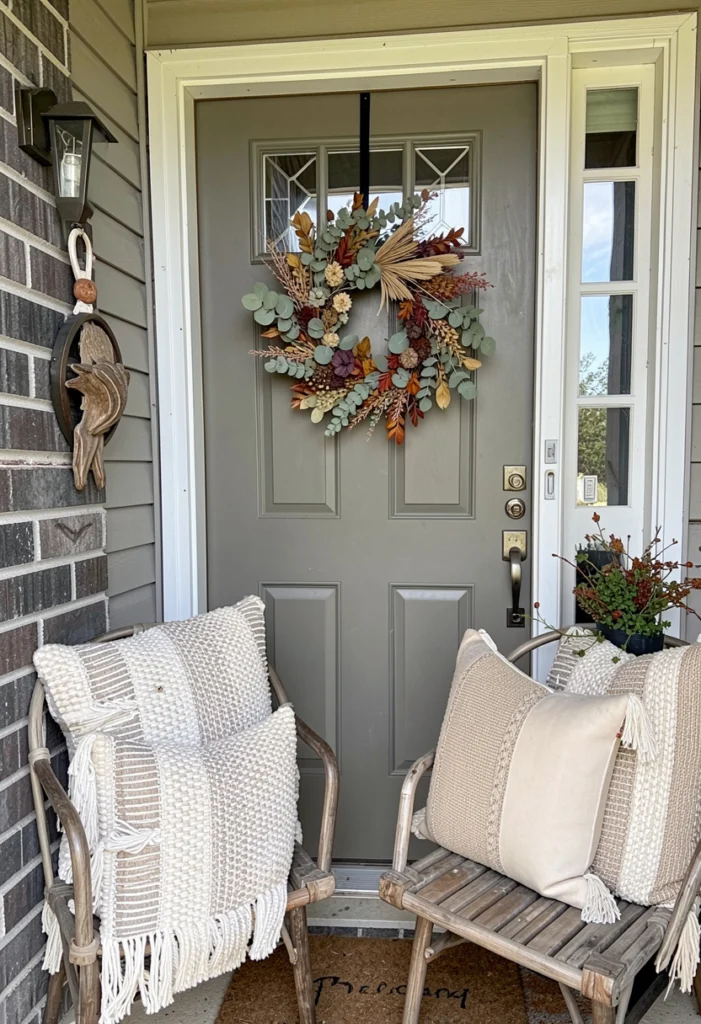
A garden wreath made from natural materials sets the tone for the whole porch before anyone reaches the door. Start with a grapevine wreath base, 20 to 24 inches across for a standard door, and build on it with dried flowers, eucalyptus, wheat stems, small pinecones, and a few faux or dried leaves in muted orange and deep red. The goal is a soft, organic look, not a stiff circle of identical flowers, so let some stems extend slightly beyond the base.
Attach materials with floral wire or a hot glue gun, working in small clusters rather than one stem at a time. Place three clusters around the wreath, roughly at the 10 o’clock, 2 o’clock, and 6 o’clock positions, then fill the gaps with smaller sprigs of eucalyptus and wheat. Keep the bottom of the wreath a little fuller so it reads well from the street, and step back every few minutes to check the balance. If you hang the wreath on a glass storm door, use a wreath hanger that clears the glass and a suction hook rated for the weight.
Pair the wreath with matching planters by repeating one element from it, such as eucalyptus in a pot or wheat stems in a tall vase by the door. On a covered porch, a natural wreath can last all season, but on an exposed porch, bring it inside during heavy rain to protect dried flowers. Store it in a wreath box or a large bag at the end of the season so you can refresh it next fall with a few new stems instead of starting over.
5. Cozy Garden Seating Corner
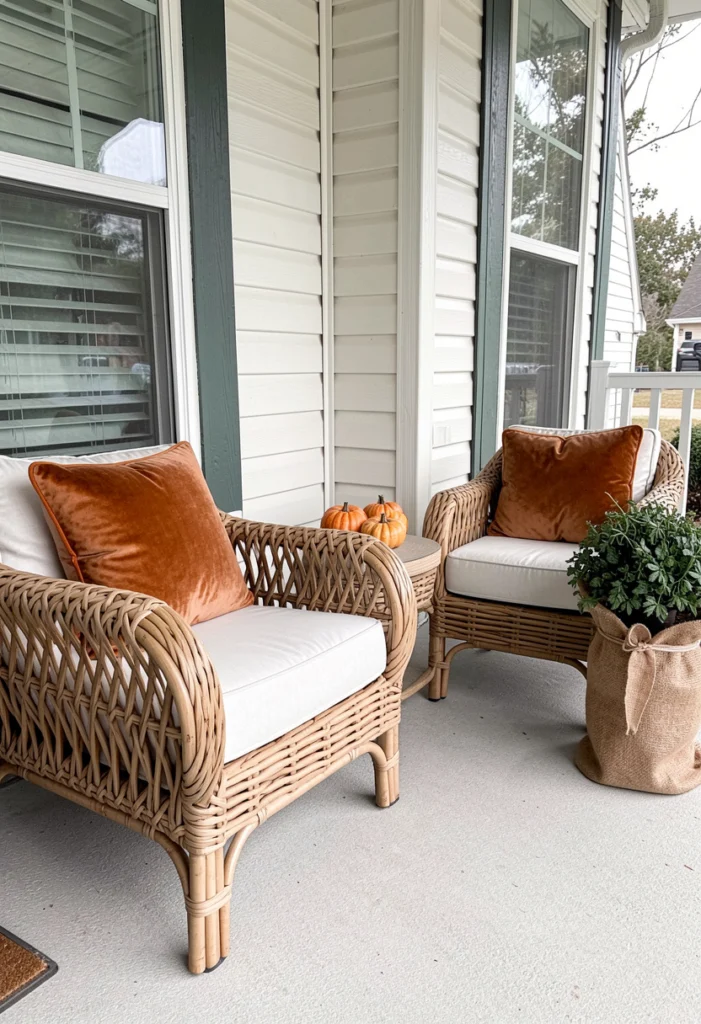
A small seating corner turns a porch from a passageway into a place you actually use on crisp fall mornings. You do not need a large porch: a single wooden bench, a bistro chair, or a small rocking chair fits in a corner about 4 by 4 feet. Place the seat where it catches morning sun if you like coffee outside, or in a sheltered corner if your porch gets wind. Add a small side table, about 16 to 18 inches across, for a mug, a candle, and a book.
Layer the seat with weather friendly cushions and throws in warm tones such as rust, mustard, and chocolate brown. Choose outdoor fabric that resists rain, and bring throws inside at night if they are not outdoor rated. A 18 inch square cushion on the seat and a smaller lumbar cushion against the back make a bench feel finished without crowding it. Surround the seat with two or three potted plants at different heights: a tall planter behind the chair, a medium pot beside it, and a small herb pot on the table.
Finish the corner with soft light, a battery lantern on the table or a string of warm white lights along the railing, so the space feels inviting after sunset. Keep the walking path clear and leave at least 24 inches in front of the chair so you can sit and stand comfortably. This corner also makes the rest of your garden styling feel intentional, because plants, pumpkins, and lanterns now have a human scale to relate to, not just a doorway.
6. Hanging Baskets with Fall Greens
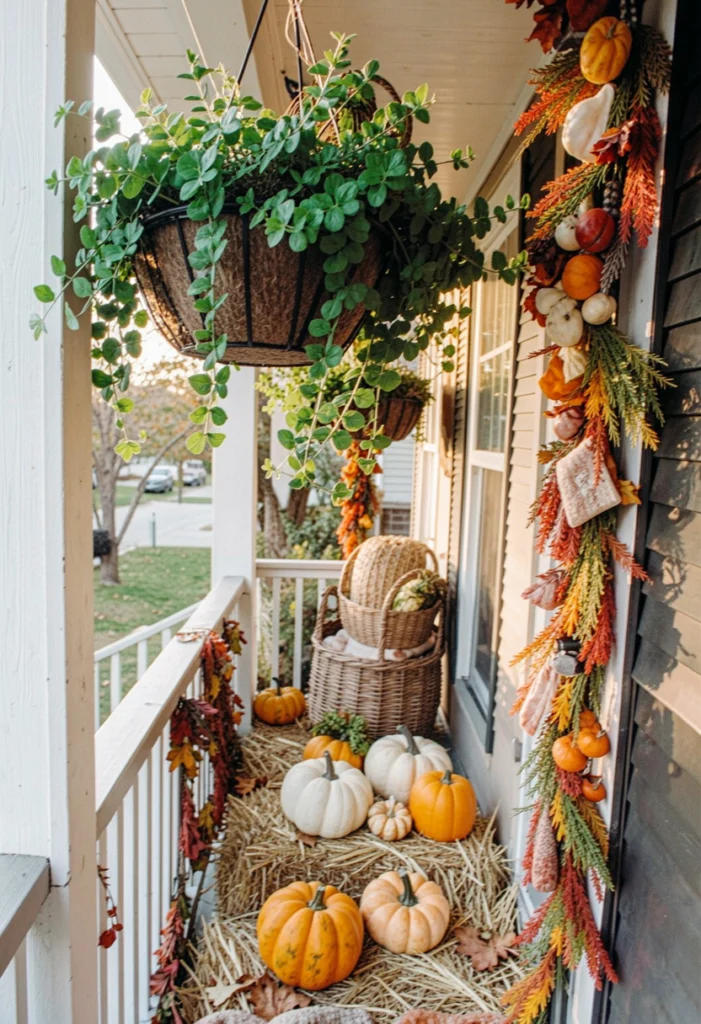
Hanging baskets add greenery at eye level without using any floor space, which makes them perfect for narrow porches and small entries. Choose baskets 12 to 14 inches across made from wicker, coco fiber, or metal, and hang them from sturdy hooks screwed into a beam or rafter, not just into fascia board. Each planted basket can weigh 10 to 15 pounds when watered, so use hooks rated for at least 20 pounds and check them at the start of the season.
Fill baskets with fall friendly plants that tolerate cooler nights: ivy, ferns, trailing vinca, ornamental kale, and small pansies. Plant one upright plant in the center, two or three mounding plants around it, and two trailing plants at the edges so the basket looks full from below as well as from the side. Line a wire basket with coco fiber or moss, fill it with moist potting mix, and water slowly until water drips from the bottom. Hanging baskets dry out faster than ground pots, so check them every day in warm weather and every two days when it cools.
Hang baskets in pairs flanking the door, at a height where the bottom of the basket sits about 6 feet 6 inches above the porch floor, so tall guests do not bump their heads. If your porch is in full sun, choose tougher trailers such as ivy and vinca over ferns, which prefer shade. In late fall, swap tired pansies for small evergreen sprigs and pinecones to carry the baskets into winter without replanting the whole basket.
7. Stone and Wood Garden Accents
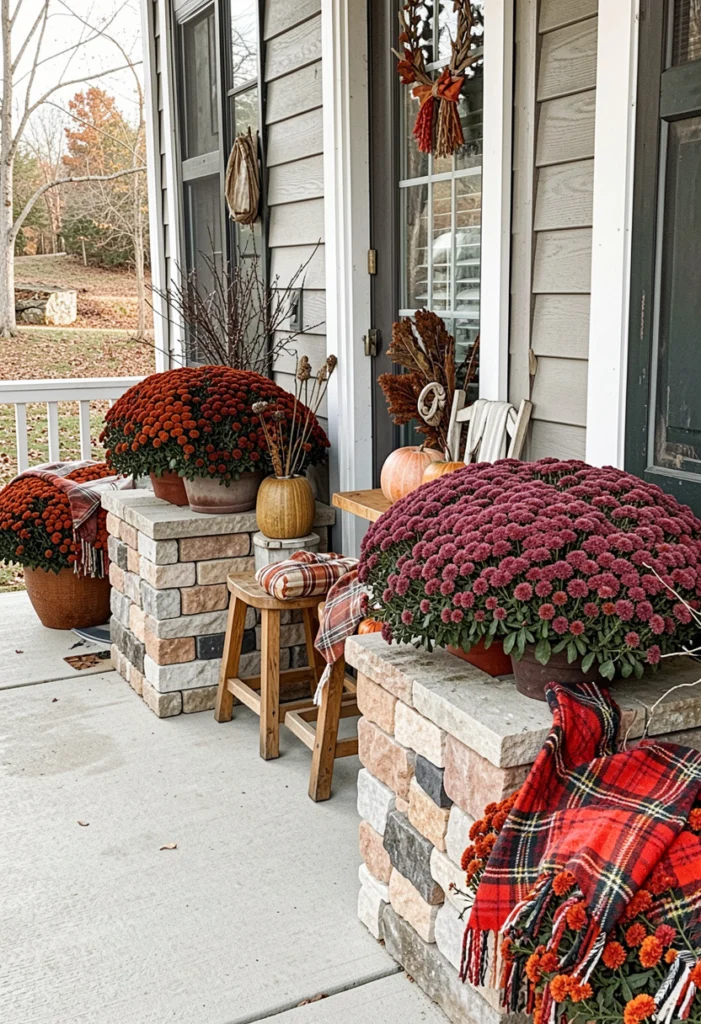
Stone and wood accents give a fall porch a grounded, garden grown feeling that flowers alone cannot provide. A stone planter, a wooden stool, a slice of log used as a plant stand, or a few decorative logs stacked beside the door all add texture and weight. The contrast matters: rough gray stone next to warm honey colored wood, smooth river stones in a shallow bowl next to a bark covered planter. These materials also anchor lighter items such as baskets and fabric so the porch does not look like it will blow away.
Place stone and wood pieces where they do real work. Use a wooden stool, about 18 inches high, as a plant stand for a prized mum. Set a stone planter at the base of the steps to mark the entry. Lay a log slice, 12 to 14 inches across, under a lantern so the lantern reads as a deliberate display rather than a stray object. Keep the total number of hard accents small, three to five pieces on a standard porch, and repeat one stone tone or one wood tone so the pieces relate to each other.
Care is simple: brush stone clean with a stiff brush, wipe wood with a damp cloth, and bring untreated wood inside during long wet spells to prevent rot. If you live where frost comes early, do not leave stone pots full of wet soil outside all winter, since freezing water can crack them. Pair these accents with the living plants in your other displays, and they will make the whole porch feel like an extension of the garden rather than a decorated doorway.
8. Seasonal Herb Planters
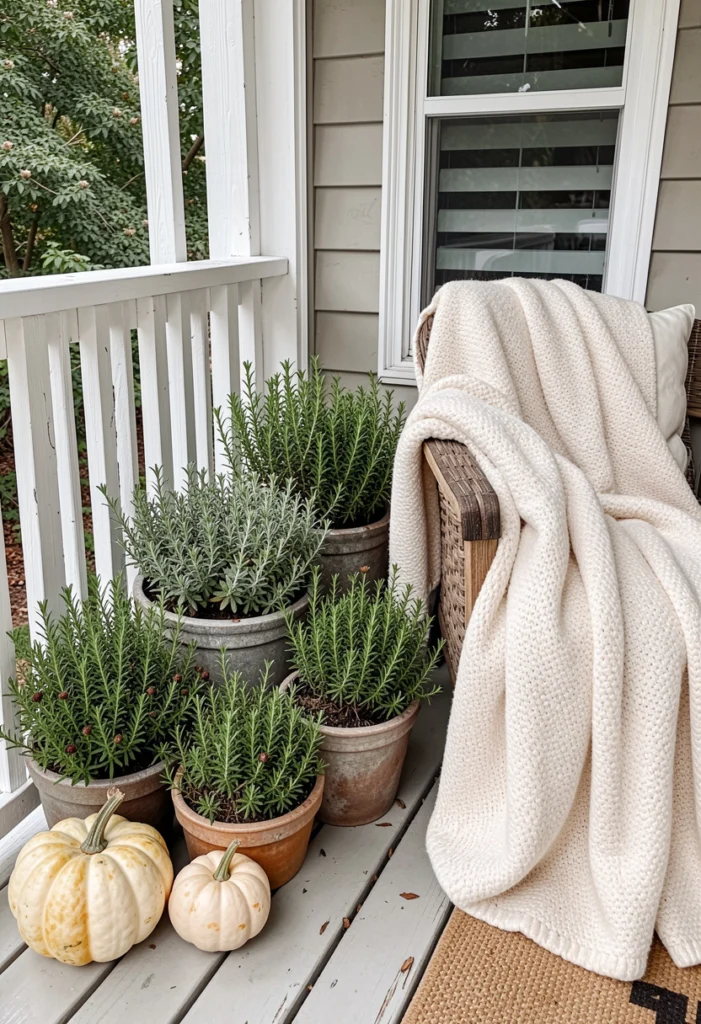
Herb planters are the hardest working display on a fall porch because they look beautiful and you can cook with them. Rosemary, thyme, sage, and parsley all tolerate cool fall weather, and rosemary in particular can survive light frost and keep its shape all winter in a sheltered spot. Plant each herb in its own 6 to 8 inch pot so you can move tender ones inside on frost nights, or group three herbs in a long wooden box about 24 inches long for a kitchen garden look.
Use well draining potting mix and containers with drainage holes, since herbs hate wet feet. Place herb pots where they get at least four hours of sun, ideally near the kitchen door for easy snipping. Water when the top inch of soil is dry, and snip from the top regularly to keep plants bushy. Label each pot with a small wooden marker or a painted stone, especially if you grow similar looking herbs such as thyme and oregano, so guests and family can find the right one.
Style herb planters by mixing them with seasonal touches: a mini pumpkin beside a rosemary pot, a small candle behind a sage plant, or a trailing thyme spilling over the edge of a wooden box. For more ideas on carrying garden color indoors through the season, these autumn home decor ideas show how the same warm palette works inside. Bring tender herbs indoors before the first hard frost, which is usually when night temperatures fall below 28 degrees Fahrenheit, and keep them on a sunny windowsill.
9. Rustic Garden Signage

A rustic garden sign adds personality in seconds and ties a whole porch theme together. Look for wooden signs with simple phrases such as Harvest Garden, Welcome Fall, Gather Here, or Happy Harvest, in a distressed finish that matches your other wood tones. A sign about 12 by 24 inches works well leaning against a wall beside planters, while a smaller 8 by 12 inch sign suits a tabletop or a shelf. Hand painted signs look more authentic than glossy printed ones, and a sign with a little wear will suit a farmhouse porch better than a perfect new one.
Place signs where they are easy to read from the walkway but not blocking the door. Lean a large sign against the wall at a slight angle, with a planter in front of one corner to anchor it, or hang a smaller sign on the wall at eye level, about 60 inches from the porch floor. Avoid crowding: one or two signs are enough. If you already have a wreath with a message, choose a plain garden sign so the porch does not repeat the same words twice.
Protect wooden signs from rain by placing them under cover or sealing them with a clear outdoor sealer at the start of the season. At the end of fall, wipe the sign clean, store it flat, and swap it for a winter sign without changing anything else. That easy swap is why signs are one of the best low effort ways to refresh a porch: the plants, pots, and lanterns stay, and one new sign changes the whole message.
10. Lanterns with Natural Fillers
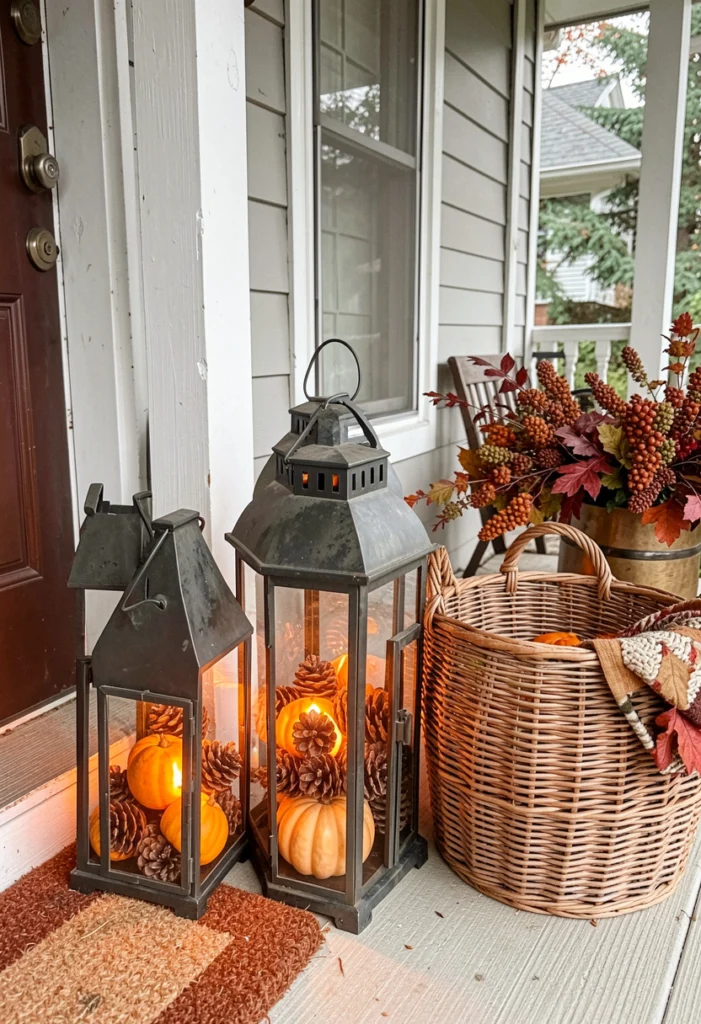
Lanterns are the evening stars of a fall porch, and filling them with natural materials makes them interesting even in daylight. Instead of a plain candle, fill a lantern with pinecones, acorns, dried leaves, mini pumpkins, or a bed of moss topped with a battery candle. Choose lanterns with metal or wooden frames, 10 to 14 inches tall for the porch floor and 6 to 8 inches for a tabletop, so they read as a group rather than a single stray light.
Build the filler in layers: a base of moss or dried leaves, three to five pinecones or mini pumpkins, and a battery operated pillar candle in the center. Battery candles are safer than real flames on a porch with dry leaves, fabric, and plants, and a timer candle that turns on at dusk will light the porch every evening without you thinking about it. If you do use a real candle, never leave it burning unattended and keep it away from trailing plants and throws.
Place lanterns in groups of two or three at different heights: one on the floor by the door, one on a step, and one on a stool or table. Vary the fillers slightly between lanterns, pinecones in one, acorns in another, so the group feels collected rather than matched. For evening styling that carries this warm light into the rest of the house, see these fall living room decoration ideas and repeat one lantern filler, such as pinecones, in an indoor bowl for continuity.
11. Woven Baskets with Plants
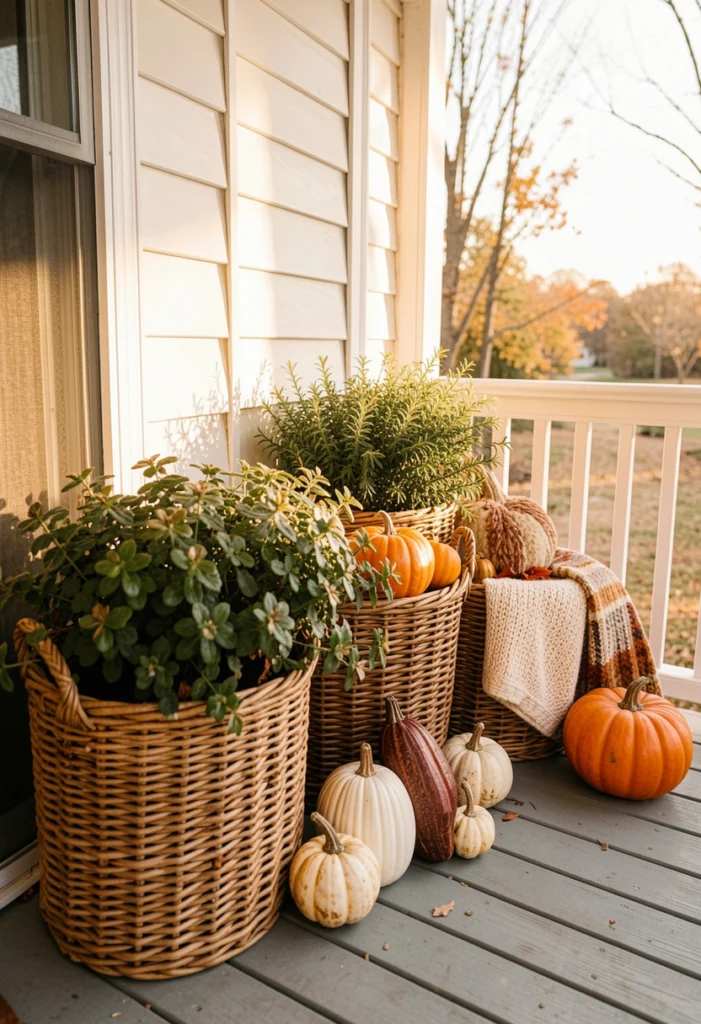
Woven baskets bring a soft, natural texture that balances harder materials such as stone and metal. Use baskets as planters by setting a nursery pot inside, or as decorative holders for potted flowers, greenery, and even rolled throws. Choose baskets in natural tones, warm tan, honey, or gray washed seagrass, that match your fall palette, and look for sturdy handles if you plan to move them. A large basket about 14 to 16 inches across holds a full mum, while smaller 8 to 10 inch baskets suit herbs and mini pumpkins.
Protect baskets from constant moisture by keeping the nursery pot inside and emptying any saucer after watering, since a wet basket can mildew and weaken. Line the basket with a plastic bag with a few drainage slits if you plant directly into it, but the pot inside method is easier and lets you swap plants without disturbing the basket. Arrange baskets in clusters of two or three at different heights, with a taller basket at the back and smaller ones in front, near seating or beside the door where their texture is most visible.
Baskets also add function: a large basket by a bench can hold extra throws for chilly evenings, and a small basket near the door can hold gardening gloves or dog treats for guests. At the end of the season, brush baskets clean, let them dry fully, and store them indoors so they last for years. Because they are light and easy to move, baskets are ideal for renters and for anyone who likes to rearrange a porch until it feels just right.
12. Layered Entryway Garden Styling

Layered entryway styling pulls all the ideas above into one finished look. Think of the porch in three layers: the back layer of tall items such as a ladder, a bench, or tall planters; the middle layer of medium pots, pumpkins, and baskets; and the front layer of small lanterns, herbs, and a doormat. Start with the largest pieces, step back to the walkway to check the shape, then add smaller accents until the porch feels full but not crowded. Leave the center of the doorway clear so the door itself remains the focal point.
Stick to one color palette across all layers. If your palette is orange, burgundy, cream, and sage, repeat each color at least twice: burgundy mums in two pots, cream pumpkins on both sides of the door, sage eucalyptus in the wreath and in a planter. Repeat one material too, such as weathered wood in the ladder, the sign, and a crate, so the eye reads the porch as one design. A doormat in a natural coir with a simple pattern grounds the whole arrangement and gives guests a place to wipe their feet.
Finish by checking the porch at three times of day: in bright morning light, in late afternoon shade, and after dark with lanterns lit. Move anything that looks lost in shade or too bright in sun, and remove one item if the porch feels busy. A good final test is the photo test: take a photo from the street and see if your eye goes to the door first, then to the plants and pumpkins. If it does, the layering works. For a kitchen side entry that needs the same treatment on a smaller scale, these fall kitchen decoration ideas show how warm fall color and natural textures work in tighter spaces too.
Final Words
Decorating your front porch with fall garden elements is a beautiful way to blend nature with seasonal charm. By combining vibrant plants, rustic textures, and cozy accents, you can create a space that feels both welcoming and thoughtfully designed. The key is to layer natural elements like flowers, greenery, wood, and pumpkins in a way that feels balanced and effortless.
Start with just one or two ideas from this list if you are short on time, perhaps a layered pumpkin display and a wreath, then add a seating corner or lanterns when you have a free afternoon. Keep your palette tight, water your plants on a regular schedule, and bring tender herbs and baskets inside before hard frost. With those simple habits, your porch will stay beautiful from the first cool day of September through Thanksgiving, and it will welcome every guest with the warmth of the season.
Frequently Asked Questions
How long do fall porch plants last?
With regular watering and at least four hours of sun, mums usually bloom for four to six weeks, pansies can last into light frost, and ornamental kale often looks good until a hard freeze. Water when the top inch of soil feels dry, remove spent blooms, and move tender pots under cover on frost nights to extend their life by several weeks.
What pumpkins last longest on a porch?
Thick skinned varieties such as heirloom Cinderella pumpkins and small decorative gourds tend to last longer than thin skinned carving pumpkins. Keep pumpkins out of standing water, set them on slate or a saucer, and check them weekly. On a covered porch, real pumpkins often last three to four weeks, while faux pumpkins last for years.
How do I keep my fall porch from looking cluttered?
Stick to one color palette, repeat one material such as weathered wood, and build in three layers from tall at the back to small at the front. Leave a clear walking path at least 36 inches wide, limit hard accents to three to five pieces, and remove one item if a photo from the street looks busy.
Can I leave baskets and wooden signs outside all fall?
Yes, if they are under cover and kept dry. Empty saucers after watering so baskets do not stay wet, seal wooden signs with a clear outdoor sealer, and bring both inside during long rainy spells. Stored dry at the end of the season, baskets and signs will last for many falls.
What should I do with my porch plants before the first frost?
Bring tender herbs such as basil indoors, move mums and kale under cover on frost nights, and empty stone pots that could crack if water freezes inside them. Hardy evergreens, rosemary in a sheltered spot, and pinecone lantern fillers can stay out and carry your porch into winter.
More Ideas You Will Love
 13 Halloween Fireplace Mantle Decor Ideas
 12 Dressing Table Decor Ideas to Instantly Elevate Your Vanity
 14 Air Quality Improvement Tips for a Healthier Summer Home
 17 Vintage DIY Christmas Decor Ideas for 2025 Nostalgia
 15 Easy Maintenance Tips for Backyard Pools: Cleaning & Care Guide
 12 Easy DIY Halloween Porch Decor Ideas You Can Make Today