
14 Fall Kitchen Decoration Ideas with Warm, Cozy Touches

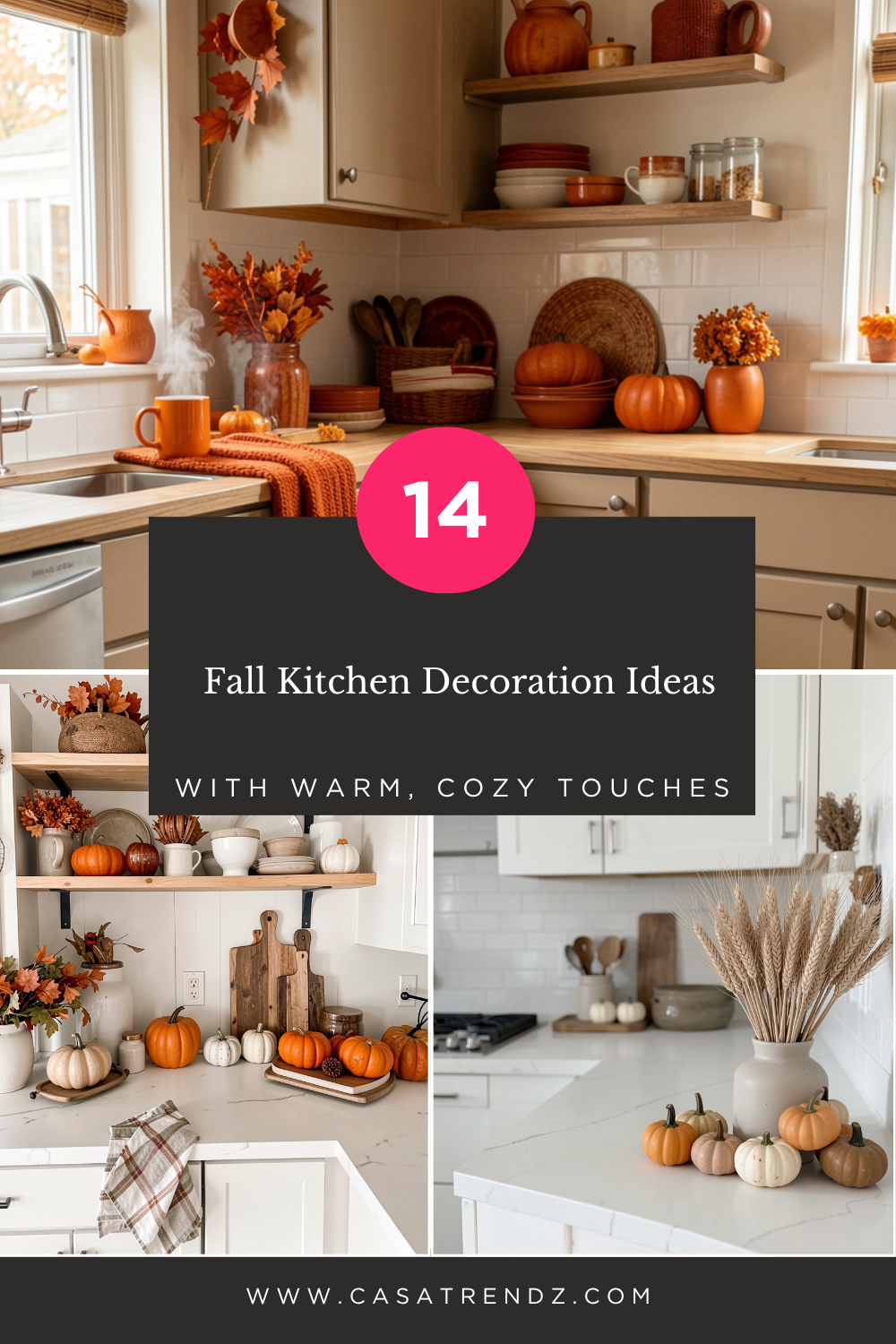
As the crisp air of fall settles in, it is the perfect time to bring warmth and coziness into the heart of your home: the kitchen. Fall kitchen decoration is all about creating an inviting atmosphere using rich colors, natural textures, and comforting details that reflect the season. Think warm tones like burnt orange, deep brown, mustard yellow, and soft cream paired with rustic materials such as wood, linen, and ceramic.
The kitchen is where everyone gathers when the weather turns. Morning coffee feels better next to a flickering candle, weeknight dinners feel cozier under warm light, and even quick breakfasts taste like the season when there is a small pumpkin on the counter. The good news is that you do not need a renovation or a big budget to get there. Simple, swap-ready touches like seasonal centerpieces, cozy textiles, and warm accents can completely change how your kitchen feels, and you can set most of them up in a single afternoon.
Start with a clean slate: clear your counters, wipe down surfaces, and pull out anything summer-only so your fall pieces have room to breathe. Pick one dominant fall color family (oranges and rusts, or ambers and golds) and let everything else support it. That single decision keeps the whole kitchen looking intentional instead of cluttered. In this guide, you will discover 14 fall kitchen decoration ideas with warm, cozy touches that balance seasonal charm with everyday function.
1. Warm-Toned Color Accents for Seasonal Charm
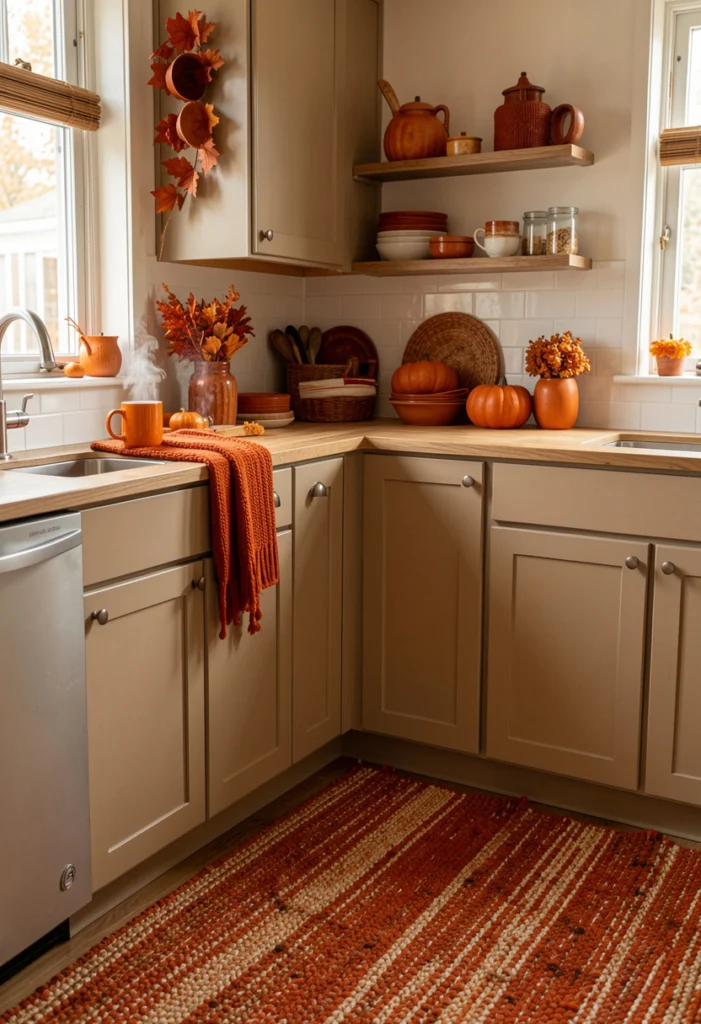
One of the easiest ways to bring fall into your kitchen is by incorporating warm-toned accents. Shades like burnt orange, rust, mustard, and deep red instantly evoke the feeling of autumn without overwhelming the space. You do not need to repaint your kitchen. Simply introduce these tones through small, high-impact accessories that you can swap out when the season changes.
The smartest approach is to keep your kitchen’s base neutral and let the accents do the talking. White, cream, gray, or natural wood cabinets act as a calm backdrop, which makes warm accessories look deliberate instead of busy. Add color through dish towels, a small appliance in a warm finish, decorative bowls, a utensil holder, or even a set of fall-colored napkins at your breakfast bar. If you want more commitment, a single painted accent wall in terracotta or warm clay can ground the whole room, but test a large swatch first because fall tones shift dramatically between daylight and evening light.
Layer two or three warm tones rather than one flat color for depth. Try burnt orange with a touch of deep red and a golden mustard accent, for example. Keep the same ratio everywhere: one dominant tone, one secondary, one tiny accent. This prevents the kitchen from feeling random. A quick trick is the “rule of five”: aim for about five small warm accents per kitchen zone (counter, table, sink, window, door) so the color story reads evenly from every angle. If you love exploring seasonal palettes, our fall home aesthetic ideas show how the same warm color logic carries through the rest of the house.
2. Rustic Wooden Elements for Natural Warmth
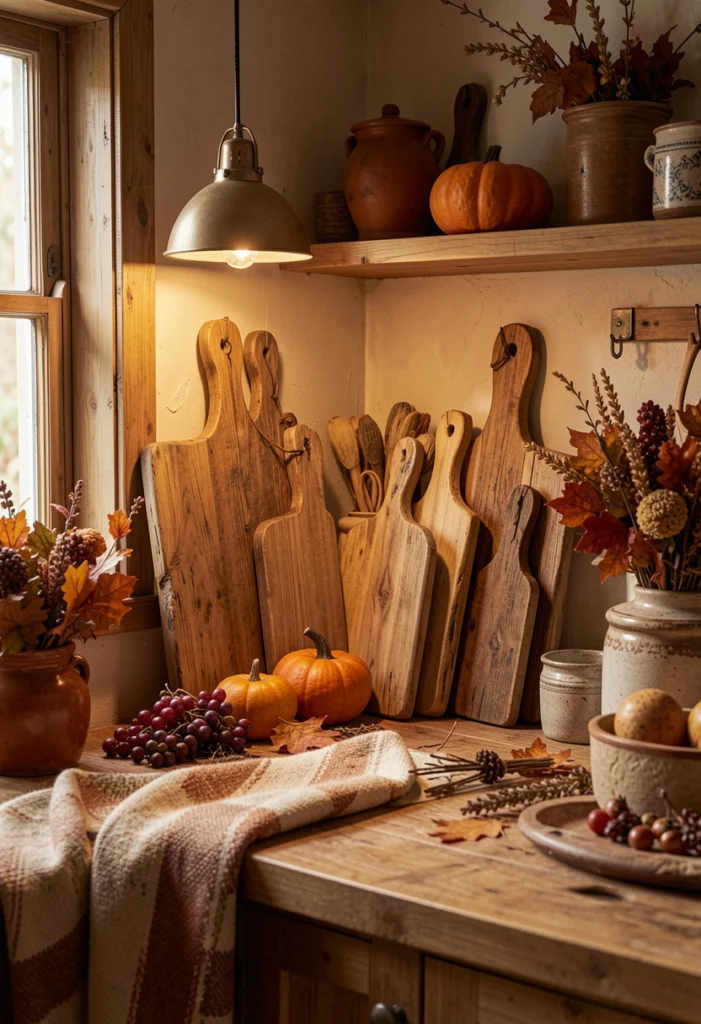
Wooden elements are essential for creating a cozy fall kitchen. Natural wood brings warmth, texture, and a sense of authenticity to the space, and it pairs beautifully with every fall color. Cutting boards, wooden trays, dough bowls, and open shelving all contribute to this rustic charm while staying completely functional.
Choose wood with visible grain to emphasize its natural beauty. Oak, acacia, and walnut all work well, and mixing two wood tones adds depth without clutter as long as you keep one tone dominant. The practical styling method is the “three-layer tray”: place a round wooden tray about 14 to 18 inches across on your counter or island, then layer three items of different heights on it (a small pumpkin, a candle in a jar, and a stack of two wooden coasters, for instance). This single move makes a counter look styled instead of busy. If your kitchen leans modern, pair the wood with clean lines and matte finishes so it reads as warm minimalism rather than cabin rustic.
Keep wood pieces away from direct stove heat and standing water so they last for years. A light coat of food-safe mineral oil on cutting boards once a season keeps them looking rich instead of dry and pale. One common mistake is overdoing it: if you have wood floors, wood cabinets, and a wood table, limit additional wooden decor to two or three pieces so the room stays balanced. Pair them with linen, ceramic, or glass for contrast.
3. Seasonal Centerpieces with Pumpkins and Foliage
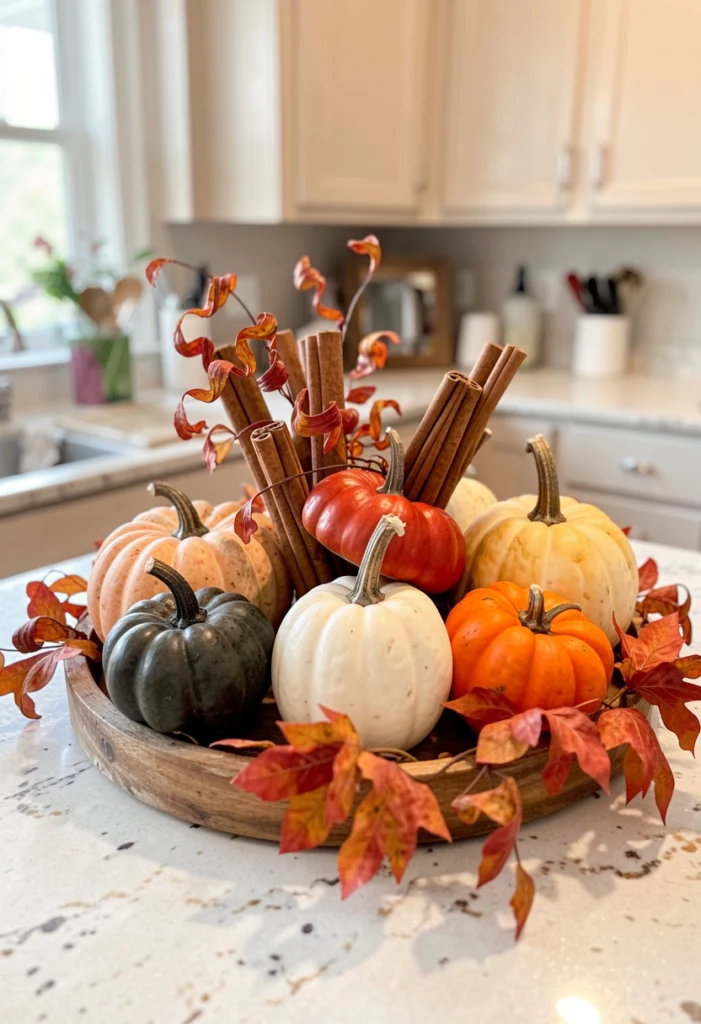
A seasonal centerpiece is the fastest way to make your kitchen read “fall” the moment someone walks in. Pumpkins, gourds, and autumn foliage create a natural, festive display that instantly transforms a bare island or dining table into the seasonal heart of the room.
Build your centerpiece on a low tray, roughly 16 to 24 inches long, so the whole arrangement stays movable for cooking days. Start with a runner or tray base, add a cluster of three to five pumpkins in varied sizes (real ones last two to three weeks indoors away from heat; faux ones last all season), tuck in sprigs of faux or preserved eucalyptus, maple leaves, or wheat stems, and finish with a small candle or two for height. Odd numbers almost always look better than even ones. Keep the total height under 12 inches if the centerpiece sits where people eat across from each other, so conversation still flows easily.
Mix real and faux items for the best of both worlds: real mini pumpkins for authentic color and a faux leaf garland for fill that never wilts. Neutral-colored pumpkins in cream, sage, or dusty orange keep things modern, while classic bright orange reads traditional. Refresh real pumpkins at the first soft spot so the display never looks tired. On a dining table inside the kitchen, centerpieces like these tie the cooking and eating zones together and make everyday meals feel like small occasions.
4. Cozy Textiles for a Soft Touch
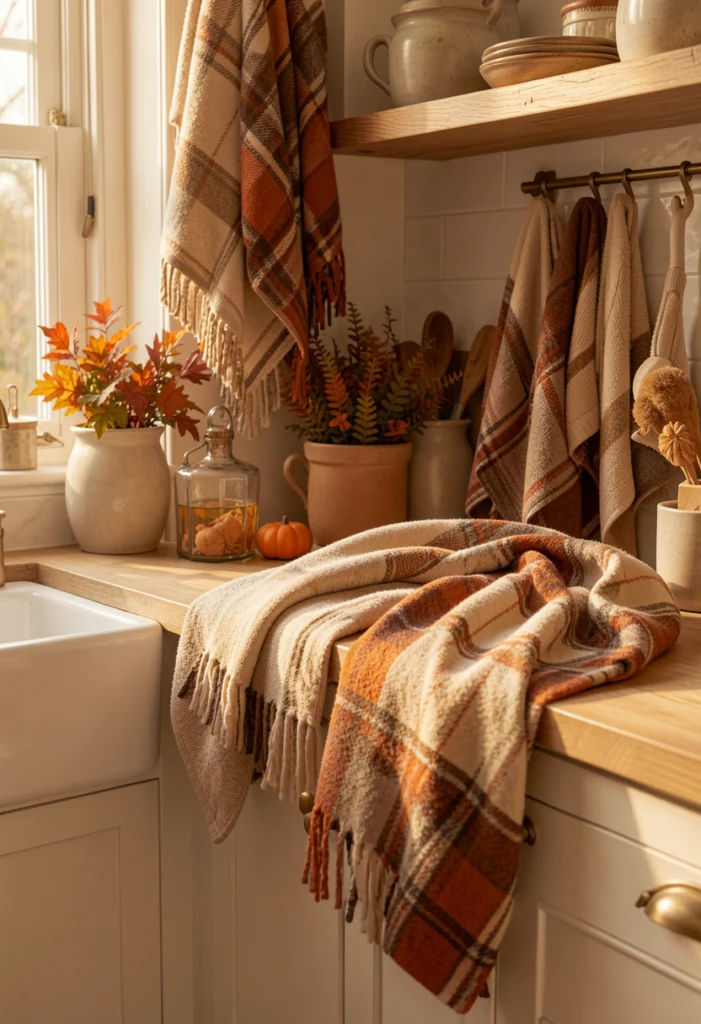
Textiles play a big role in making your kitchen feel cozy during fall because kitchens are full of hard surfaces that can feel cold and echoey. Swap out lightweight summer fabrics for heavier materials like cotton, linen, or a soft cotton-linen blend in warm, earthy tones. The change is subtle in a photo but dramatic in real life: the room feels softer, quieter, and warmer the moment you step in.
Start with the three textiles you touch most: dish towels, a table runner, and seat cushions. Dish towels are the easiest seasonal swap in the kitchen; keep a stack of two or three in fall patterns like plaid, small checks, or subtle stripes near the sink and stove. A table runner in rust, caramel, or mustard on the kitchen table instantly shifts the whole dining corner into autumn. If you have bar stools or a bench, add cushions in a warm solid or harvest pattern for comfort and color. Standard kitchen runner sizes are 2 by 4 feet for galley walkways; make sure any floor textile has a non-slip backing or a separate rug pad.
Layer thoughtfully rather than piling on. One patterned piece plus two solids in matching tones keeps things cohesive. Wash new textiles before the season starts so colors settle and fabrics soften, and keep a spare set so you can rotate while one set is in the wash. For pet owners or heavy cooks, choose machine-washable, darker fabrics that hide stains. If you are also restyling the adjoining living areas for the season, our autumn home decor ideas include textile pairings that keep the whole open plan feeling connected.
5. Warm Lighting for an Inviting Glow

Lighting is the single most powerful tool for creating a cozy fall kitchen, and it is also one of the cheapest to change. Warm, soft lighting transforms hard white task light into the golden glow we associate with autumn evenings, making the kitchen feel intimate and welcoming even on a Tuesday night.
The key number is color temperature. Replace cool daylight bulbs (5000K) with warm bulbs in the 2700K to 3000K range throughout the kitchen, including pendants, under-cabinet strips, and the ceiling fixture. The difference is immediate and costs almost nothing. Then layer the light: keep bright under-cabinet task lighting for actual cooking, but add a dimmer warm pendant over the island or a couple of flameless candles on the counter for ambiance. A small plug-in lamp with a linen shade on a dark countertop corner creates a beautiful pocket of warmth that overhead lights can never give you.
Candles deserve special mention in fall kitchens. A cluster of unscented pillar candles in amber, cream, and rust on a tray near the window looks stunning and smells neutral, which matters in a cooking space. If you have kids or pets, flameless LED candles with a flicker mode give the same glow with zero risk; modern ones are convincingly realistic from a few feet away. Put evening lights on a simple timer so the kitchen greets you with warmth when you walk in after dark. Whatever you choose, keep one zone bright enough for safe cooking: ambiance is wonderful, but knife work needs real light.
6. Open Shelving with Autumn Decor
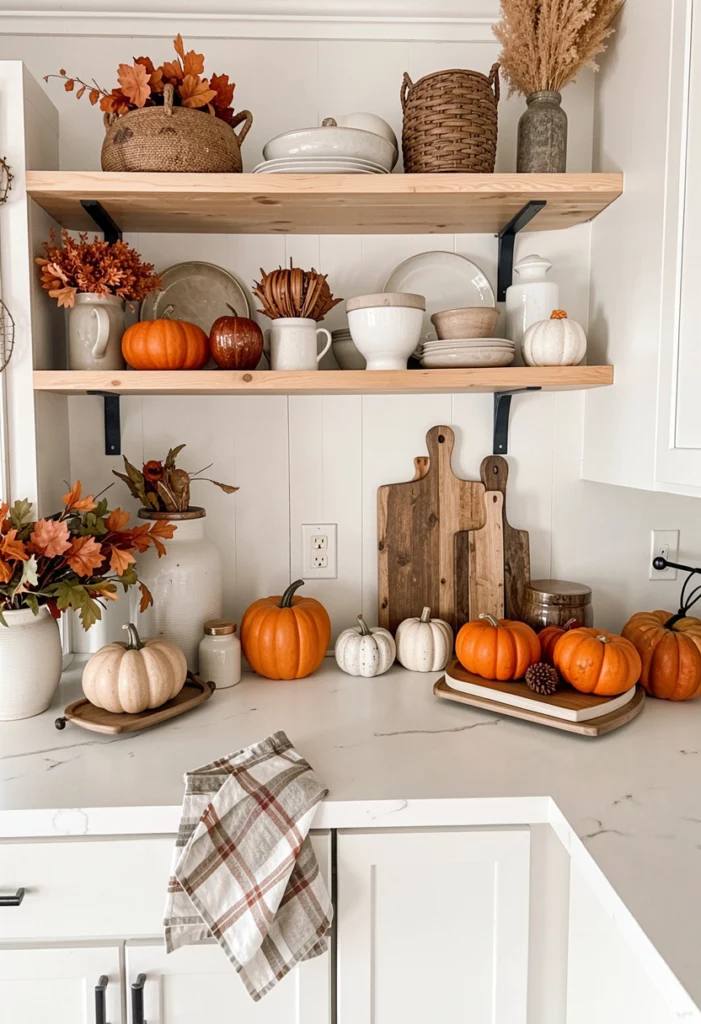
Open shelving gives you a display surface that is already in your kitchen, which makes it one of the easiest fall decorating opportunities. A few seasonal items styled between your everyday dishes create a curated look that changes with the season without any extra furniture.
Style each shelf using a simple formula: functional items on the bottom, decorative accents in the middle, and breathing room on top. On a typical 24 to 36 inch shelf, try a stack of everyday bowls in a warm glaze, two ceramic mugs in rust or mustard, one small pumpkin or gourd, and a tiny sprig of dried wheat tucked into a glass. Leave about 20 percent of the shelf empty so it reads as styled, not stuffed. Stick to one cohesive palette, usually two warm tones plus your base cabinet color, so the shelf looks polished from across the room.
Keep daily-use items at hand height and pure decoration up high where dusting is easy and nothing gets knocked over during cooking. Because shelves are visible all day, less is genuinely more: remove one item from every shelf you styled and you will almost always like the result better. Wipe shelves before restyling so the ceramics and glass catch the light properly. If you are working around limited storage too, small kitchen layouts can still pull this off beautifully; our small kitchen decor ideas show how to keep compact shelving both pretty and practical.
7. Earthy Ceramics and Pottery

Ceramics and pottery in earthy tones are perfect for fall kitchen decor because they add warmth and texture while remaining completely useful. Bowls, vases, pitchers, and mugs in shades of brown, beige, terracotta, and warm gray bring the season onto your counters in a way that never looks like decoration for decoration’s sake.
Choose handmade or textured pieces for the most authentic feel: a speckled stoneware bowl, a terracotta pitcher, or a set of matte mugs in graduated autumn tones. The tactile quality of raw or semi-matte glaze is what makes ceramics read as fall rather than summer; glossy bright colors tend to feel seasonal for spring instead. Group pieces in clusters of three at different heights on the counter, for example a tall pitcher, a medium bowl of apples, and a small ramekin stack, which creates a natural little vignette. Leave the everyday dishes in the cabinet and let the prettiest ceramics do the seasonal talking.
Thrift stores and craft fairs are the best sources for characterful ceramics at low cost, and small imperfections are a feature, not a flaw, in autumn styling. If you buy handmade pieces, check whether they are food-safe before using them for serving; many decorative vases are not. Hand-wash textured pieces with a soft sponge so the glaze stays matte and beautiful for years. Two or three well-chosen ceramics beat a dozen mismatched ones every time, so edit ruthlessly and donate what does not fit your palette.
8. Fall-Inspired Wall Art and Prints
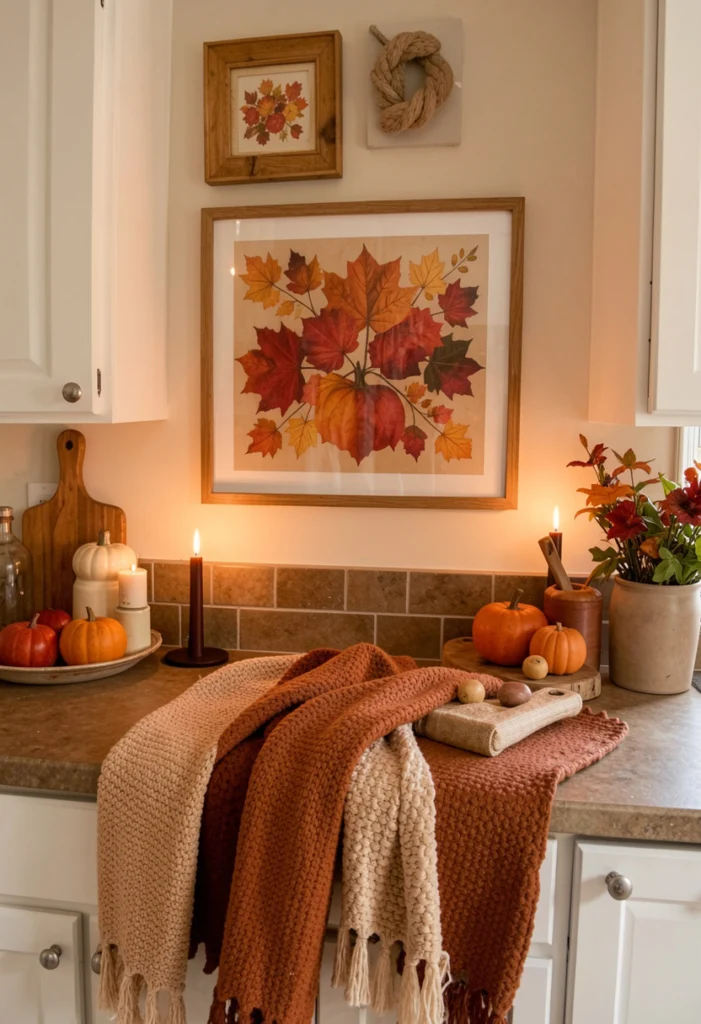
Adding seasonal wall art is one of the easiest fall updates because it uses space your decor currently ignores: the walls. Prints featuring autumn themes like leaves, harvest scenes, cozy coffee quotes, or warm abstract landscapes add personality and seasonal color without taking up a single inch of counter space.
Keep frames simple and modern so the art reads as seasonal, not holiday store. Thin black, natural wood, or slim gold frames work with almost every kitchen style and let you reuse the same frames year after year by swapping the prints. An 8 by 10 inch print suits a narrow wall or the space beside a window; go 11 by 14 or 16 by 20 for an empty wall above a sideboard or coffee station. Hang art at eye level, with the center roughly 57 to 60 inches from the floor, the same standard galleries use. A pair of matching prints hung 2 to 3 inches apart creates a clean diptych that fills wider walls better than one small frame alone.
Printable art is the budget-friendly secret here: you can download autumn designs, print them at a local print shop for a few dollars, and have brand-new seasonal art for less than the cost of a candle. Choose matte prints to avoid glare from kitchen lighting. If your kitchen walls are already busy with shelves or cabinets, a single leaning print on a countertop or open shelf gives you the seasonal hit without drilling a single hole. Avoid steam-heavy spots right above the stove, where moisture can warp paper over time.
9. Natural Elements like Dried Flowers
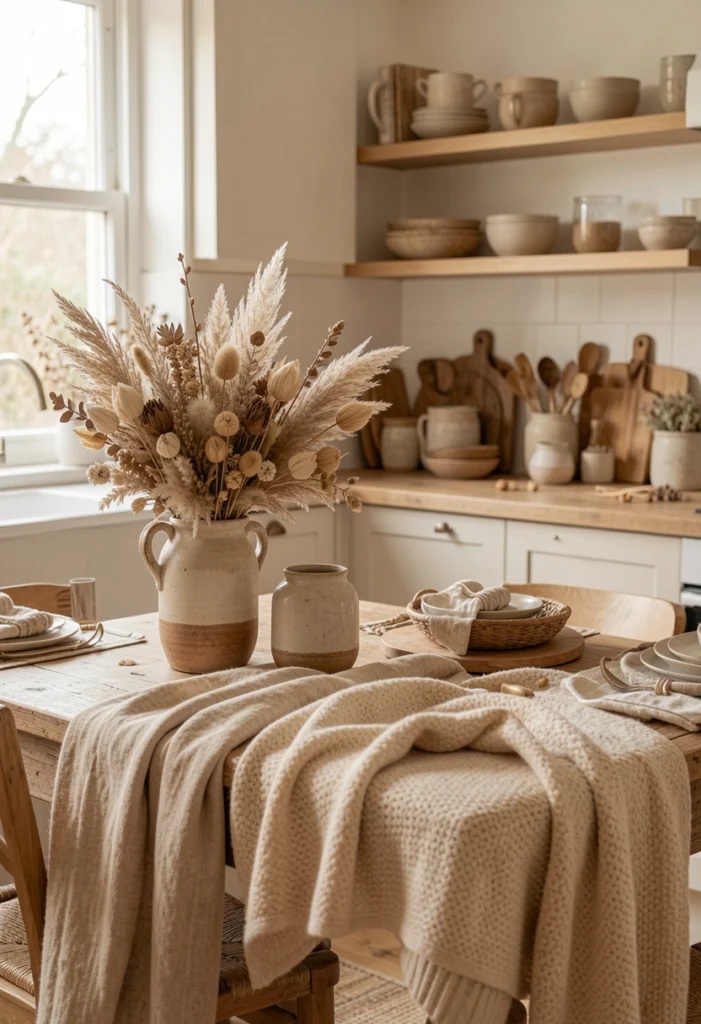
Dried flowers and grasses are a beautiful way to bring nature into your kitchen during fall. They add texture, height, and a soft organic feel that complements autumn decor perfectly, and unlike fresh flowers they never droop by the weekend.
Start with one statement arrangement and one or two small accents. A tall vase of dried pampas grass, wheat stems, or bunny tails, about 24 to 30 inches tall overall, makes a gorgeous focal point on an island end or a side counter. Smaller sprigs in bud vases or mason jars work on windowsills and open shelves. Stick to neutral, warm tones: cream, wheat, rust, and dusty brown look intentional and modern, while overly bright dried flowers can look dated. Cut stems to size with sharp scissors and mist them lightly with hairspray to reduce shedding.
Dried arrangements are nearly maintenance-free, which is exactly what a busy kitchen needs. Keep them away from the stove and sink where steam and grease will coat them, and give them a gentle shake or a blast of cool air from a hair dryer every few weeks to keep dust off. One safety note: dried botanicals are flammable, so never place them near open flames, candles, or gas burners. With basic care, a good dried arrangement lasts the entire season and well into winter, making it one of the best value-for-money fall decorations you can buy.
10. Copper and Metallic Accents
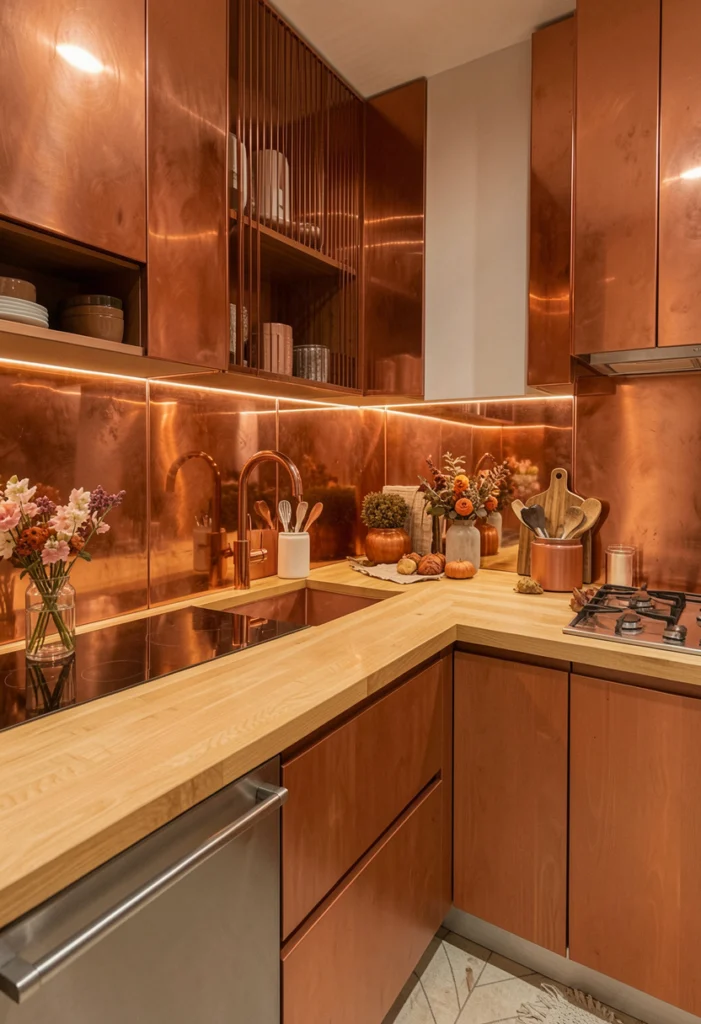
Copper and warm metallic accents add a touch of elegance to fall kitchen decor that no other material quite matches. The rosy glow of copper catches autumn light beautifully, and these finishes add warmth while reflecting light around the room, making the whole kitchen feel more inviting.
You probably already own the best copper pieces: cookware. Hang a few copper pots or a copper kettle on a rail or pot rack where they can shine, or display them on an open shelf against a neutral wall. Beyond cookware, look for copper utensil holders, small planters, measuring cup sets, or candle holders. The rule for metallics is restraint: pick one metallic family (copper is the fall favorite, but brass and warm bronze work too) and limit it to three to five pieces per kitchen. Mixed metals scattered everywhere read as clutter, not elegance.
Copper tarnishes with handling and kitchen moisture, so decide whether you want a shiny or aged look. For shine, polish with a paste of lemon juice and baking soda a few times a season; for a lived-in patina, just let it age naturally and dust it. Lacquered copper stays shiny with zero effort if you prefer that finish. Never put decorative copper in the dishwasher unless the maker says it is safe. If you are planning a bigger kitchen refresh, warm metals pair beautifully with rich cabinet colors; our kitchen color ideas show palettes where copper hardware and accents truly shine.
11. Layered Rugs for Comfort

Adding a rug to your kitchen makes it feel warmer and more comfortable the moment you step onto it, especially on cool fall mornings when bare tile feels icy. Rugs also soften the hard acoustics of a kitchen and define zones in open-plan spaces, visually separating the cooking area from the eating area.
Choose flat-weave or low-pile rugs in earthy tones or subtle patterns; they are far easier to clean than shaggy or high-pile options. Cotton, jute, and indoor-outdoor rugs are the most practical kitchen choices because they handle spills and can be shaken out or hosed down. Standard kitchen runner sizes are 2 by 4 feet for walkways and 2.5 by 8 feet for longer galley runs, while a 3 by 5 foot rug anchors a breakfast nook nicely. Layering a smaller patterned rug over a larger natural jute base adds depth and is a favorite trick in larger kitchens, just make sure the combined height stays under half an inch so doors still clear it.
Safety and cleaning matter more in kitchens than anywhere else. Always use a non-slip rug pad or choose a rug with a rubberized backing, especially on tile or hardwood. Keep rugs at least a few feet from the stove and avoid placing them where hot oil might splash. Wash or shake out kitchen rugs every two to three weeks in fall, when cooking ramps up. For a cohesive look, pull one color from your rug and repeat it in a dish towel or small decor piece nearby so the textile story feels connected.
12. Seasonal Fruit Displays
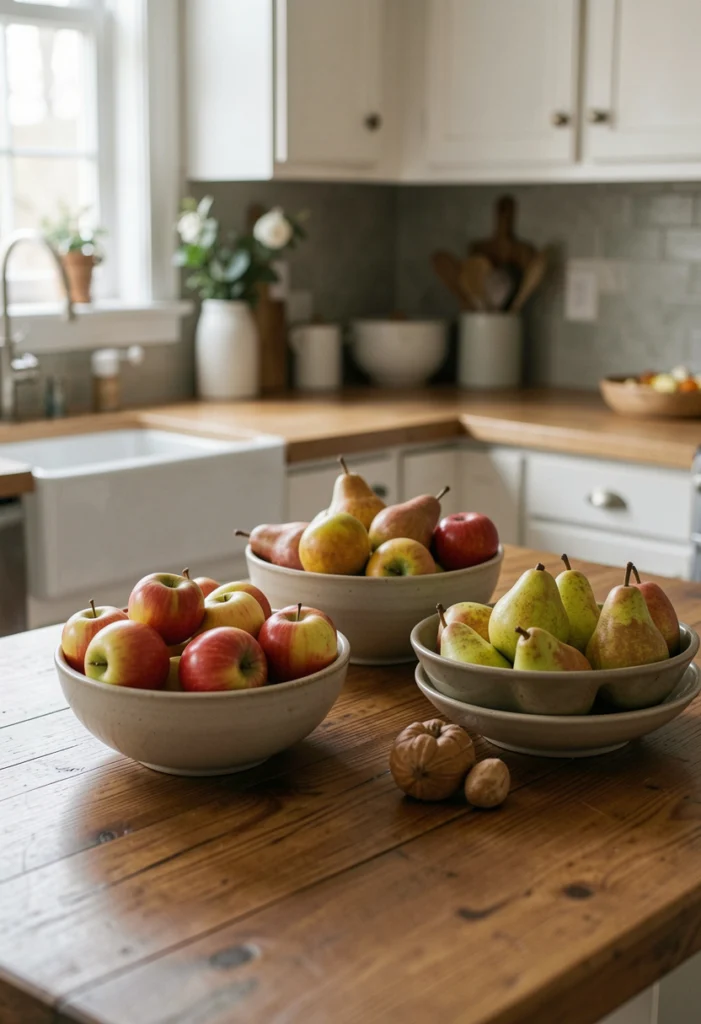
Displaying seasonal fruit like apples, pears, pomegranates, and even small pumpkins adds a natural, colorful touch to your kitchen that is both decorative and functional. A bowl of glossy red apples on the counter is fall decor that you can literally eat, which makes it one of the most practical decorating ideas on this list.
The container matters as much as the fruit. A wide, shallow wooden bowl, a woven basket, or a simple ceramic dish keeps the look modern and cohesive, while bright plastic containers clash with autumn styling. Fill it generously but not piled to the ceiling: a single layer plus a few on top looks abundant without risking a topple. Mix varieties for visual interest, like deep red apples with golden pears and one or two dark plums, and add a sprig of eucalyptus or a small pinecone for a finished look. Place the display where it catches natural light, near a window or on the island, so the colors glow.
Rotate the bottom fruit to the top every few days so nothing bruises and softens unseen underneath. Keep the display away from direct stove heat, which ripens fruit too fast, and wash fruit right before eating rather than before displaying so it lasts longer. This idea works especially well in entry-adjacent kitchens where guests see the display first; it signals warmth and abundance before anyone sits down. Replace tired fruit promptly because one soft apple can make the whole bowl look neglected.
13. Minimalist Fall Decor Approach

If you prefer a clean, calm kitchen, a minimalist approach to fall decor works beautifully. Instead of decorating every surface, you choose a few key pieces that carry the whole season: a small pumpkin, a candle, one simple centerpiece. Minimalism lets each piece stand out, and the result is a kitchen that feels cozy without ever feeling cluttered.
The minimalist formula is simple: pick three spots maximum (usually the island, the windowsill, and one shelf or corner) and place exactly one fall item at each. A single white pumpkin on the island, one amber candle on the windowsill, and a small bud vase of dried wheat on a shelf is a complete fall kitchen for a minimalist. Keep the color palette neutral with subtle warm accents: creams, soft browns, and one whisper of orange is plenty. Every item should earn its place, so if something does not make you smile when you walk in, it does not belong.
This approach is ideal for small kitchens, busy cooks, and anyone who finds heavy decor stressful. With fewer items, cleaning is faster, counters stay usable, and the seasonal pieces you do have look intentional and striking. Store the few fall pieces you own in one labeled bin so setup and takedown each take minutes. Minimalist fall decor also photographs beautifully if you ever list your home or share it online, because the eye rests on one lovely thing instead of hunting through clutter.
14. Farmhouse-Inspired Fall Kitchen Style

Farmhouse style is a natural fit for fall decor because it is built from the same ingredients: rustic wood, natural textures, vintage-inspired pieces, and warm, honest materials. If your kitchen already leans farmhouse, fall decorating becomes less about adding new things and more about highlighting what you have with seasonal touches.
Layer the farmhouse basics with fall accents in a deliberate order. Start with your existing wood and metal pieces: open shelving, a farmhouse sink, metal bar stools, or a rustic table. Add warmth with textiles like a plaid runner, grain-sack style towels, or buffalo check placemats in fall colors. Then bring in nature: small pumpkins on the shelves, a wreath on an interior door or window, dried corn husks tied with twine, and a basket of apples on the table. Vintage-inspired pieces like an old scale, enamel pitchers, or mason jars full of cinnamon sticks add character that new decor cannot imitate.
The biggest farmhouse decorating mistake is tipping into clutter, so keep the balance rule in mind: for every decorative item on a counter, there should be clear workspace around it. Group small items on trays so they read as one intentional display instead of scattered objects. Mix old and new thoughtfully; a single vintage find among clean modern pieces looks collected and personal, while a counter full of reproductions can look like a store display. Farmhouse fall kitchens should feel like someone actually cooks and gathers there, because that is the whole point of the style.
Final Words
Fall kitchen decor is all about creating a warm, inviting space that feels both comfortable and stylish for everyday living. By incorporating cozy textiles, natural materials, rich seasonal tones, and warm light, you can transform your kitchen into a welcoming hub that reflects the beauty of autumn without a renovation or a big budget.
The key is balance: add just enough seasonal charm to feel the season, but keep every surface functional for real cooking and gathering. Start with the ideas that cost nothing, like swapping textiles you already own or restyling a shelf, then add a few special pieces each year. Before long you will have a fall kitchen collection that makes the whole season feel like home.
Frequently Asked Questions
When should I start decorating my kitchen for fall?
Most people start fall kitchen decorating in early to mid-September, once the weather begins to cool and the back-to-school rush settles. There is no strict rule, though. If you love the season, decorating in late August is perfectly fine, and many people refresh their fall decor again around early October with richer tones as the season deepens. A good rhythm is to put out the lighter early-fall pieces first (neutral pumpkins, wheat, soft textiles) and add deeper colors and candles later in the season.
How can I decorate my kitchen for fall on a small budget?
Focus on high-impact swaps that cost little or nothing. Change out dish towels and a table runner for fall colors, restyle open shelves with items you already own, and add a bowl of seasonal fruit from the grocery store. Nature is free: gather pinecones, colorful leaves, or branches on a walk and arrange them in jars. Printable wall art costs only a few dollars to print. Many of the most beautiful fall kitchens use under twenty dollars of new items because the warmth comes from color, light, and texture rather than expensive decor.
What are the best fall colors for a kitchen?
The classic fall kitchen palette includes burnt orange, rust, mustard yellow, deep brown, terracotta, and warm cream. These colors work with almost any cabinet color, from white to gray to natural wood. For a modern look, lean toward muted, dusty versions of these tones rather than bright saturated ones. If your kitchen is small or dark, favor lighter fall tones like cream, soft amber, and warm beige so the space stays bright while still feeling seasonal.
How do I keep fall kitchen decor from looking cluttered?
Follow three rules: limit decor to a few zones instead of every surface, group small items together on trays so they read as one display, and leave breathing room around each arrangement. The “remove one item” trick works well: style a shelf or counter, then take one thing away. Also keep seasonal decor off your primary prep zones so cooking stays comfortable. A kitchen that still functions beautifully always looks better than one buried under decorations.
Can I mix fall decor with my existing kitchen style?
Absolutely. Fall decor adapts to every kitchen style. In modern kitchens, use neutral pumpkins, simple ceramics, and clean-lined textiles for a warm minimalist look. In farmhouse kitchens, lean into rustic wood, plaid, and vintage pieces. In traditional kitchens, richer colors and classic arrangements fit right in. The secret is matching the fall accents to your existing finishes: choose decor in tones that complement your cabinets and hardware rather than fighting them, and the season will feel like a natural extension of your home.
More Ideas You Will Love
 13 Luxury Pantry Renovation Ideas You’ll Love
 15 Tiny Pantry Layout Ideas to Maximize Every Inch
 22 Kitchen Layout Ideas – Smart Designs for Functionality & Style
 20 Kitchen Remodel Ideas – Fresh Inspiration to Transform Your Space
 12 Hidden Walk-In Pantry Ideas for a Sleek Modern Kitchen Layout
 21 Dark Kitchen Ideas for a Modern & Elegant Look