
18 Red Bedroom Ideas That Are Bold, Beautiful, and Inspiring


Red is a color that commands attention, emotion, and confidence. In bedroom design, it can feel dramatic, romantic, cozy, or modern depending on how you use it. Many homeowners shy away from red because they worry it will feel too loud or too heavy for a room meant for rest. That worry is understandable, but it is also unnecessary. With the right shade, the right placement, and the right supporting colors, red becomes one of the most powerful design tools you can use, and it can turn an ordinary bedroom into a space that feels expressive, stylish, and completely intentional.
In this guide, we share 18 red bedroom ideas that prove red can be both bold and beautifully balanced. You will find deep burgundy walls, crisp red and white pairings, velvet furniture, layered textiles, and even red ceilings, each with the materials, colors, and practical steps you need to get the look right. Whether you want one small red accent or a full dramatic transformation, these ideas will help you design a bedroom that feels warm, confident, and uniquely yours. If you are still deciding on your overall palette, our bedroom color schemes guide will help you compare red with other calming and statement colors before you commit.
Before you start, keep one simple rule in mind. Red should usually cover about 10 to 30 percent of the room, with neutrals doing the rest of the work. That ratio keeps the color bold without letting it take over. Test every paint shade on the wall and look at it in morning light, afternoon light, and lamplight before you paint the full wall, because red shifts more than most colors as the light changes. With that rule in place, you are ready to explore the ideas below.
1. Deep Red Accent Wall for Dramatic Impact
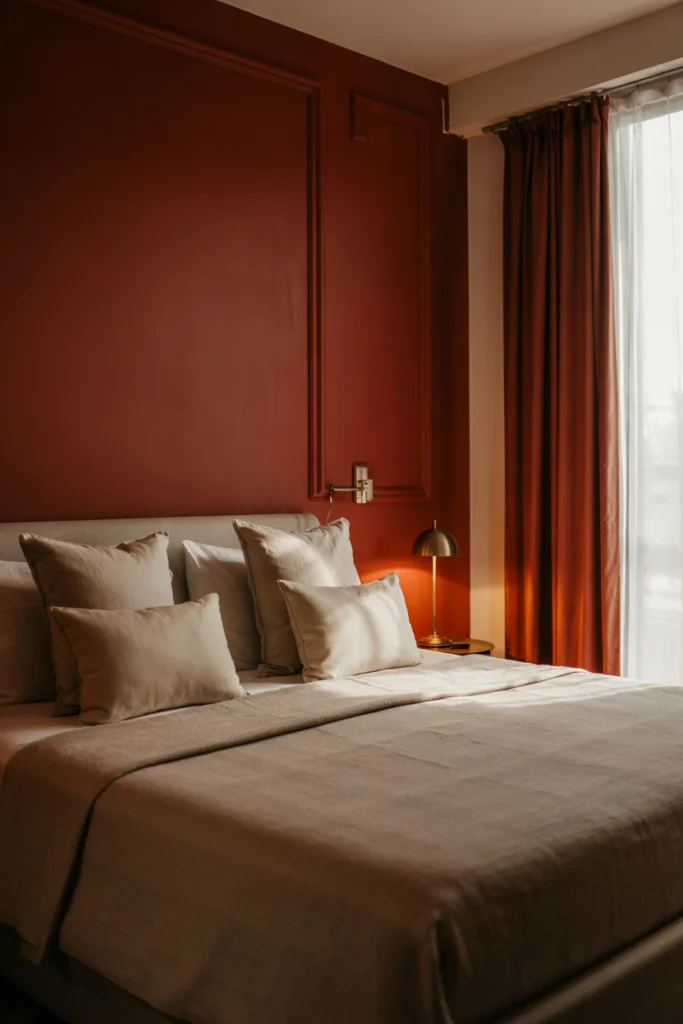
A deep red accent wall instantly transforms a bedroom into a bold and sophisticated retreat. Rich shades like burgundy, wine, or oxblood add depth and drama without overwhelming the entire space. By limiting red to a single wall, you create a strong focal point while the rest of the room stays calm and balanced. The wall behind the bed is the natural choice, because it frames the headboard and draws the eye the moment you walk in.
Choose a paint with a matte or eggshell finish for the accent wall, since flat finishes make deep reds look richer and hide small wall imperfections better than glossy paint. Shades such as burgundy, merlot, and oxblood work best in bedrooms, because they read as warm and luxurious rather than bright and loud. Paint a large test swatch, at least 2 feet square, and live with it for two days before committing. If your room gets little natural light, pick a red with warm undertones so the wall feels cozy instead of dark.
Pair the accent wall with soft bedding in cream, warm white, or light gray, and add warm lighting through bedside lamps with fabric shades. Natural textures such as a woven throw, a wood nightstand, or a jute rug keep the room from feeling too intense. Hang one piece of art with a thin black or brass frame on the red wall, and keep the other three walls a warm neutral so the accent wall stays the star of the room.
2. Red and White Bedroom for Timeless Contrast

A red and white color scheme offers a clean, timeless look that feels both bold and fresh. Crisp white walls and bedding help soften the intensity of red accents, creating visual balance and brightness. This combination works well in both modern and traditional bedrooms, and it is one of the easiest red palettes to live with long term because white keeps the room feeling light and open.
Start with white as the base. Paint the walls a warm white rather than a stark blue white, because warm white flatters red and keeps the room from feeling cold. Use white for the bedding, the ceiling, and the larger furniture pieces, then bring red in through pillows, a throw blanket, an upholstered bench at the foot of the bed, or a single red armchair. A good ratio is about 70 percent white to 30 percent red, which keeps the contrast striking without tipping into visual noise.
Add texture so the white does not feel flat. A white linen duvet, a chunky knit throw in red, and a red patterned cushion in a different fabric give the room depth. A black or dark wood accent, such as a picture frame or a lamp base, adds definition between the red and white. If the room feels too bright, swap one white element for a soft gray, such as gray curtains or a gray rug, to ground the palette.
3. Burgundy Bedroom for Luxurious Warmth

Burgundy is a deeper, more muted shade of red that brings luxury and warmth to bedroom interiors. This color works especially well in larger bedrooms where darker tones can feel cozy rather than heavy. Burgundy walls or bedding add richness and elegance, and the color has a natural depth that makes a room feel like a boutique hotel suite.
You can use burgundy in several ways. For a full commitment, paint all four walls in a deep burgundy with a matte finish and pair them with cream bedding and brass lighting. For a softer version, keep the walls neutral and bring burgundy in through the bedding, velvet curtains, and an upholstered headboard. Burgundy pairs beautifully with metallic accents, especially brass and gold, and with dark wood furniture in walnut or mahogany. A burgundy velvet curtain hung from ceiling to floor, with the rod mounted 4 to 6 inches above the window frame, makes the room feel taller and more finished.
Lighting matters more with burgundy than with lighter colors. Use warm white bulbs around 2700K in bedside lamps and add a dimmer switch so you can soften the light in the evening. A large mirror opposite the window bounces daylight around the room and keeps the deep color from feeling closed in. Finish with cream or blush bedding, a dark wood nightstand, and one metallic accent such as a brass tray or a gold framed mirror.
4. Red Bedding as a Bold Focal Point
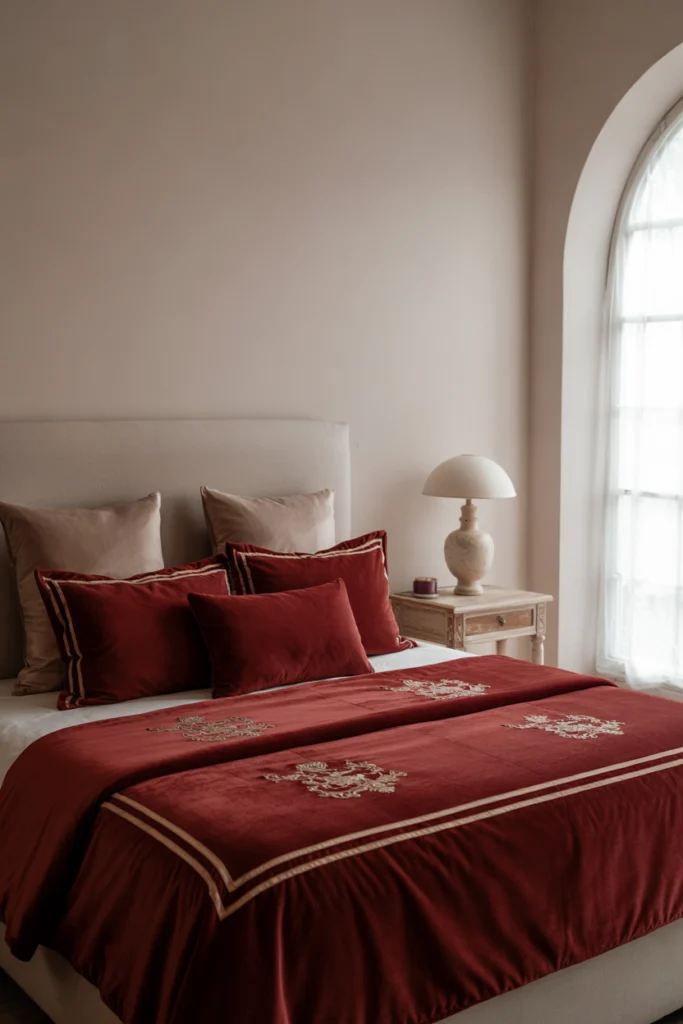
Red bedding offers an easy way to introduce bold color without committing to painted walls. A red duvet, comforter, or layered bedding instantly draws the eye and creates a vibrant focal point in the bedroom. This is the best starting point if you love red but are not ready for paint, because bedding can be changed seasonally or whenever your taste evolves.
Choose your red carefully. A deep crimson or wine red looks rich and sophisticated, while a bright cherry red feels energetic and modern. Layer the bedding to keep it from looking flat: start with white or cream sheets, add a red duvet cover, then fold a contrasting throw in gray, cream, or a patterned fabric across the foot of the bed. Add two sleeping pillows in white, two euro pillows in red, and one small lumbar pillow in a pattern that mixes red with a neutral.
Keep the rest of the room calm so the bedding can lead. Neutral walls in warm white, light gray, or greige work best, and a simple wood or upholstered headboard in a neutral fabric lets the red bedding stand out. If you want more red, add a matching red cushion to a reading chair or a small red rug beside the bed, but stop at two or three red accents beyond the bedding so the room stays balanced. Wash red bedding separately in cold water for the first few washes to protect the color.
5. Dark Red and Black Bedroom for Modern Drama
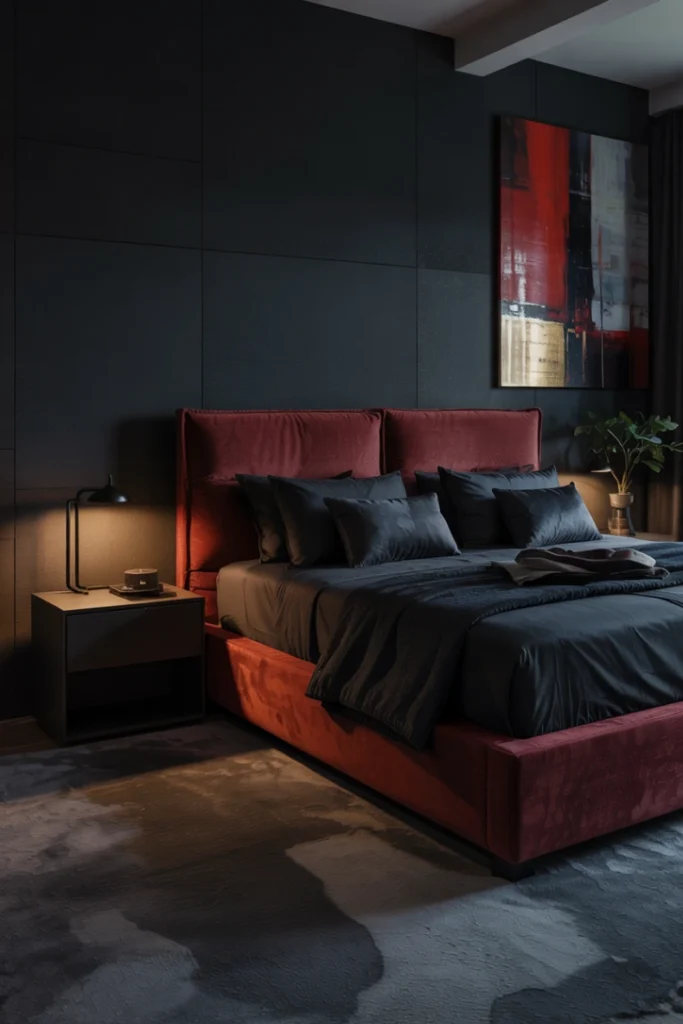
Combining dark red with black creates a dramatic, modern bedroom aesthetic. This pairing works well in contemporary spaces where strong contrast and clean lines are emphasized. Deep red tones soften black elements, preventing the space from feeling too stark, while black gives red a sharp, graphic edge that feels deliberate rather than accidental.
Start with the proportions. Use black for the furniture and the smaller details, such as a black bed frame, black nightstands, or black picture frames, and use dark red for the softer elements, such as the bedding, curtains, or a single accent wall. A black upholstered headboard against a deep red wall is a classic version of this look. Keep the ceiling and at least one wall white or very light gray, because a fully dark room can feel smaller and heavier than you expect.
Balanced lighting is essential here. Add a warm bedside lamp on each side of the bed, use a ceiling light with a dimmer, and consider LED strip lighting behind the headboard for a soft glow that separates the black furniture from the red wall. Lighter accent pieces, such as a cream throw, a light wood tray, or a pale rug, keep the room comfortable. Add one metallic touch, such as matte black hardware with brass pulls, to keep the palette from feeling flat.
6. Red Wallpaper for Artistic Expression

Red wallpaper introduces pattern, texture, and personality into bedroom design. Floral, geometric, or textured red wallpaper can serve as a statement feature without covering every wall. It is one of the most creative ways to use red, because the pattern does part of the design work for you and adds visual interest that paint alone cannot match.
Apply wallpaper to one feature wall, usually the wall behind the bed, and keep the other walls painted in a solid color pulled from the wallpaper, such as cream, soft gray, or warm white. For a traditional look, choose a red damask or floral pattern with a cream background. For a modern look, choose a bold geometric print or a subtle textured red grasscloth. Peel and stick wallpaper is a good option if you rent or want to test the look, while traditional pasted wallpaper lasts longer and suits a permanent design.
Measure the wall carefully before ordering, and buy one extra roll beyond your calculation to cover pattern matching and mistakes. If your room is small, choose a pattern with a smaller repeat so it does not overwhelm the space. Keep the bedding simple and solid colored, because patterned wallpaper plus patterned bedding quickly becomes busy. A plain linen duvet in cream or light gray lets the wallpaper lead, and a simple wood or fabric headboard frames it nicely.
7. Red Velvet Furniture for Elegant Texture
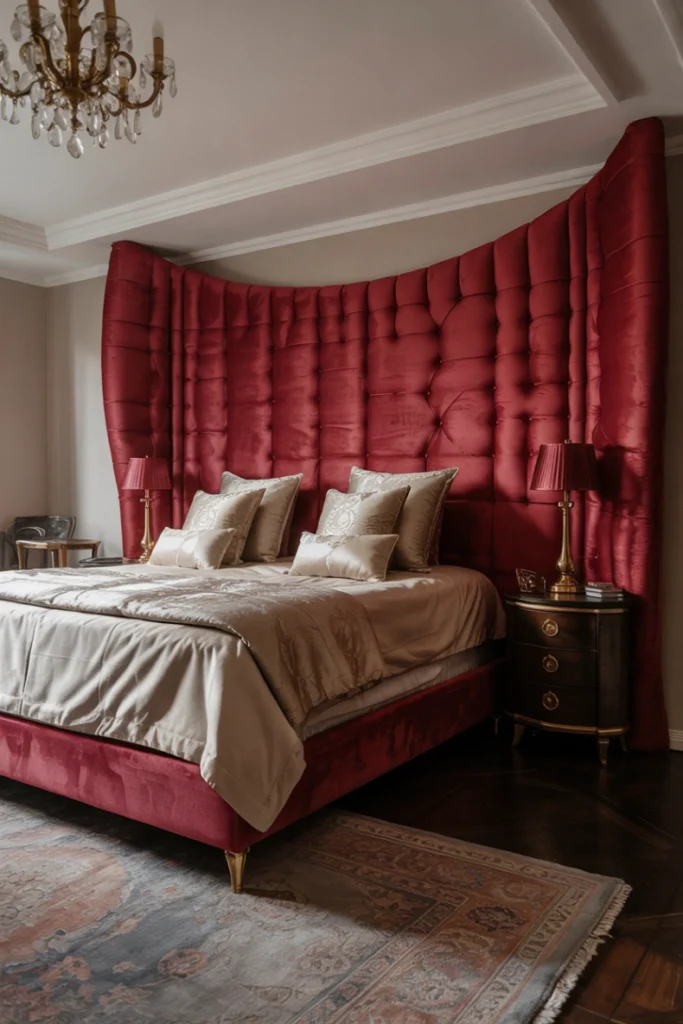
Red velvet furniture adds richness and tactile luxury to bedrooms. Upholstered headboards, benches, or accent chairs in red velvet introduce depth and softness while enhancing visual appeal. Velvet has a natural sheen that catches light, so red velvet feels warm and glowing rather than harsh, and it instantly makes a bedroom feel more expensive.
Start with one velvet piece, such as a tufted red velvet headboard or a red velvet accent chair in the corner. A headboard in deep red velvet, about 48 to 60 inches tall for a queen bed, creates a strong focal point without any paint. Pair it with neutral bedding in cream or light gray so the velvet color stays the hero. If you choose a velvet bench at the foot of the bed, keep it 2 to 4 inches narrower than the bed on each side so the proportions look right.
Velvet needs a little care. Vacuum it weekly with an upholstery attachment, brush it gently in one direction to keep the pile even, and blot spills immediately with a clean dry cloth instead of rubbing. Keep velvet furniture out of direct sunlight, because strong sun fades red faster than most colors. Pair red velvet with brass, dark wood, and soft neutral walls, and add a small velvet cushion in the same shade to tie the piece into the rest of the room.
8. Red and Gold Bedroom for Regal Style
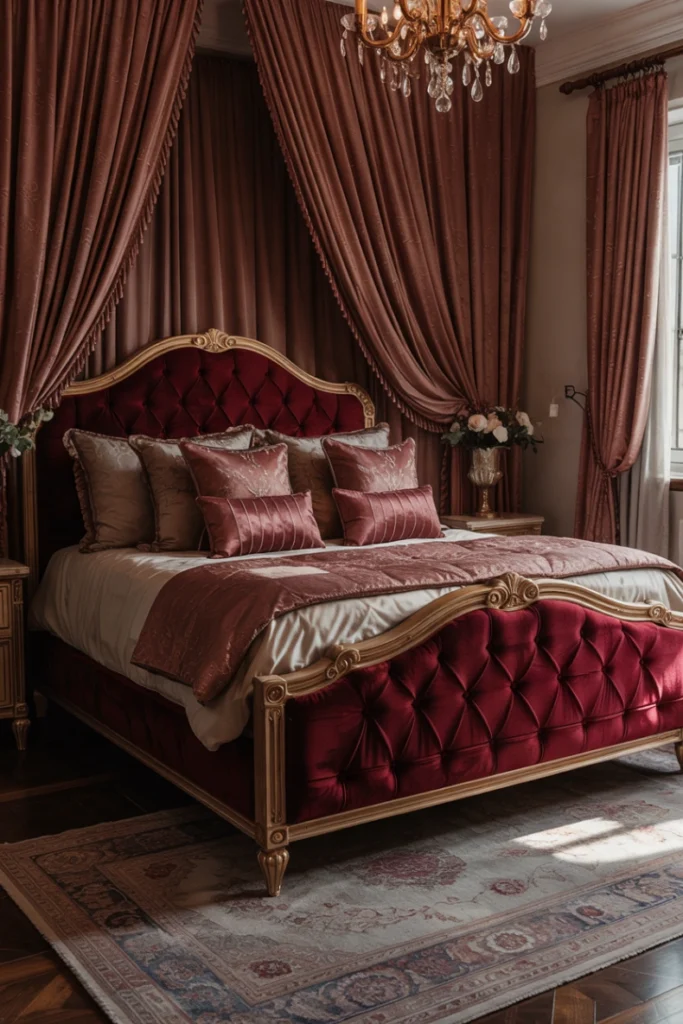
Red paired with gold creates a regal, opulent bedroom design. Gold accents enhance the warmth of red and add a touch of glamour. This combination works beautifully in traditional or luxury inspired interiors, and it is a natural fit for a master bedroom where you want the room to feel special every day. For more ideas on creating a refined master suite, see our master bedroom ideas for layouts and finishing touches that pair well with a rich red and gold palette.
Use gold as the accent, not the main color. A good balance is roughly 70 percent red and neutrals to 30 percent gold at most, and often much less gold is better. Bring gold in through lighting fixtures, picture frames, mirror frames, drawer pulls, curtain rods, and lamp bases. A brass bedside lamp, a gold framed mirror above the dresser, and gold curtain hardware are enough to create the regal effect without making the room feel like a palace set.
Choose warm gold tones such as brass or antique gold rather than bright yellow gold, because warm metals blend with red instead of competing with it. Pair red and gold with cream or ivory walls, dark wood furniture, and plush textiles such as a velvet throw or a silk cushion. Keep patterns classic, such as damask or a subtle stripe, and avoid mixing too many gold finishes. One consistent finish across the room looks far more expensive than three different golds.
9. Rustic Red Bedroom with Earthy Tones

Red can feel grounded and cozy when paired with rustic materials. Brick red, clay, or muted red shades complement wood, stone, and natural textiles beautifully. This approach works well in farmhouse or cabin style bedrooms, where the goal is warmth and authenticity rather than polish, and it proves that red does not have to be glamorous to be beautiful.
Choose muted reds with brown or orange undertones, such as brick red, terracotta red, or clay, instead of bright cherry red. Use them on a shiplap accent wall, in a woven wool throw, or in plaid bedding. Pair the red with reclaimed wood furniture, a stone or brick feature, and natural fabrics such as linen, cotton, and wool. A wood beam ceiling or a barn wood headboard adds instant rustic character.
Add texture in layers. A chunky knit throw, a braided rug, and linen curtains soften the hard surfaces and keep the room feeling lived in. Keep the lighting warm, with Edison style bulbs or lantern style fixtures, and add greenery such as a potted eucalyptus plant or a small vase of dried wheat on the nightstand. Avoid glossy finishes here. Matte paint, raw wood, and woven textures are what make rustic red feel authentic.
10. Red Accent Furniture for Subtle Impact
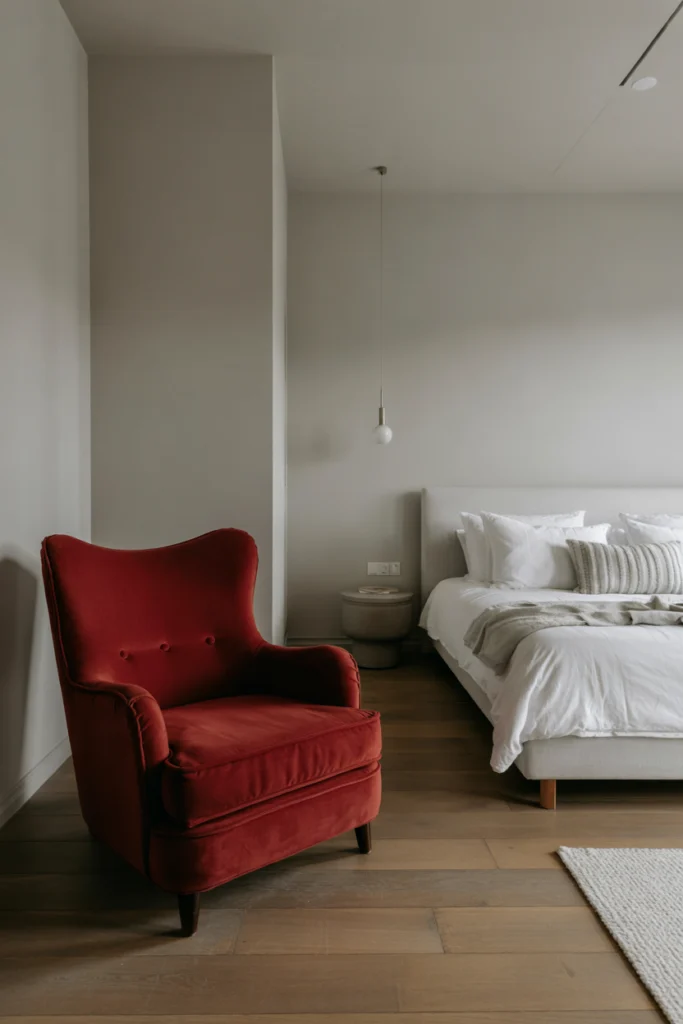
Red accent furniture introduces color without dominating the room. Nightstands, benches, or chairs in red provide visual interest while keeping walls neutral. This is the most flexible way to use red, because a single painted piece can be moved, repainted, or swapped out whenever you want a change, and it works in almost any bedroom style.
Pick one piece and let it be the only strong red in the room. A red painted nightstand, a red upholstered bench, or a red lacquered dresser all work well. If you are painting furniture yourself, sand it lightly, apply a primer, then use two coats of furniture paint in a satin finish for durability. Deep reds such as oxblood or burgundy look more expensive on furniture than bright reds, and they pair well with both light and dark walls.
Balance the piece with the rest of the room. If the nightstand is red, keep the bedding neutral and add one small red echo, such as a red cushion or a red book on the nightstand, so the color feels intentional rather than random. Place the red piece where it gets noticed, such as beside the bed or at the foot of the bed, and keep the surrounding furniture in wood, white, or black so the red has room to breathe.
11. Red and Gray Bedroom for Contemporary Balance
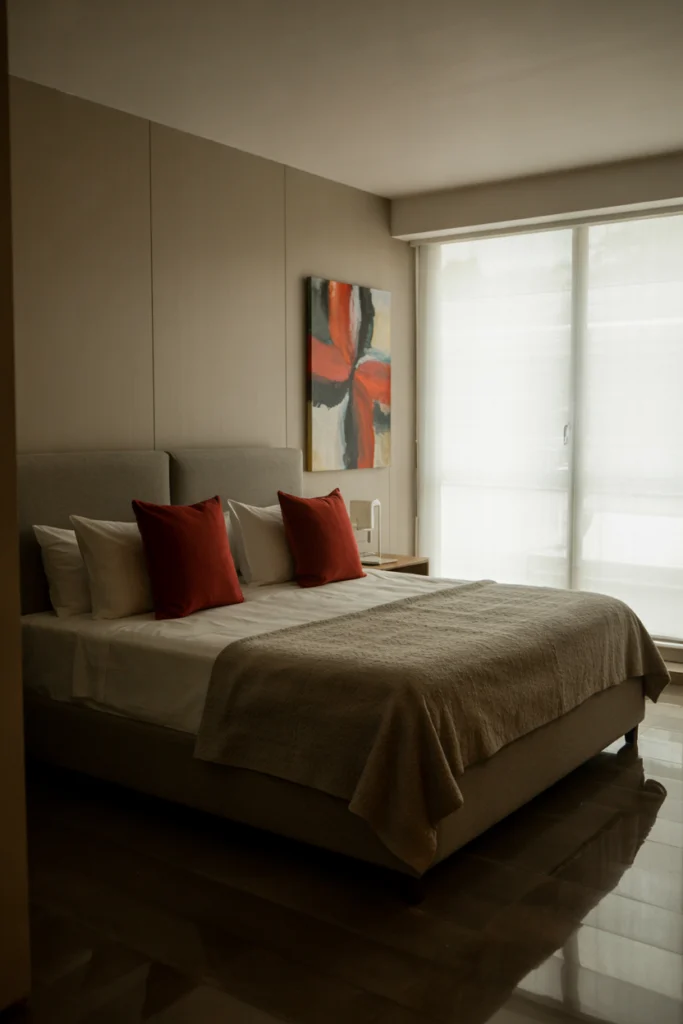
Gray tones help soften the intensity of red, creating a contemporary and calming bedroom environment. Light gray walls paired with red accents strike a perfect balance between warmth and neutrality. This is one of the most reliable red combinations for modern and minimalist bedrooms, because gray cools red down and gives the eye a place to rest.
Paint the walls a light warm gray rather than a cold blue gray, because warm gray flatters red and keeps the room feeling inviting. Use medium gray for larger soft furnishings such as curtains or an upholstered headboard, and bring red in through the bedding, cushions, artwork, or a single accent chair. A red throw across a gray bed, red cushions on a gray chair, and one red framed print above the dresser are enough to create the look.
Add a third element to keep the palette from feeling flat. White bedding, a light wood nightstand, or a silver metallic accent adds brightness and contrast. Keep the pattern simple, with solid colors and one subtle geometric pattern at most. If the room feels too cool, swap a gray element for a warm cream, such as a cream throw or cream curtains, to bring the warmth back.
12. Red Ceiling for Unexpected Drama
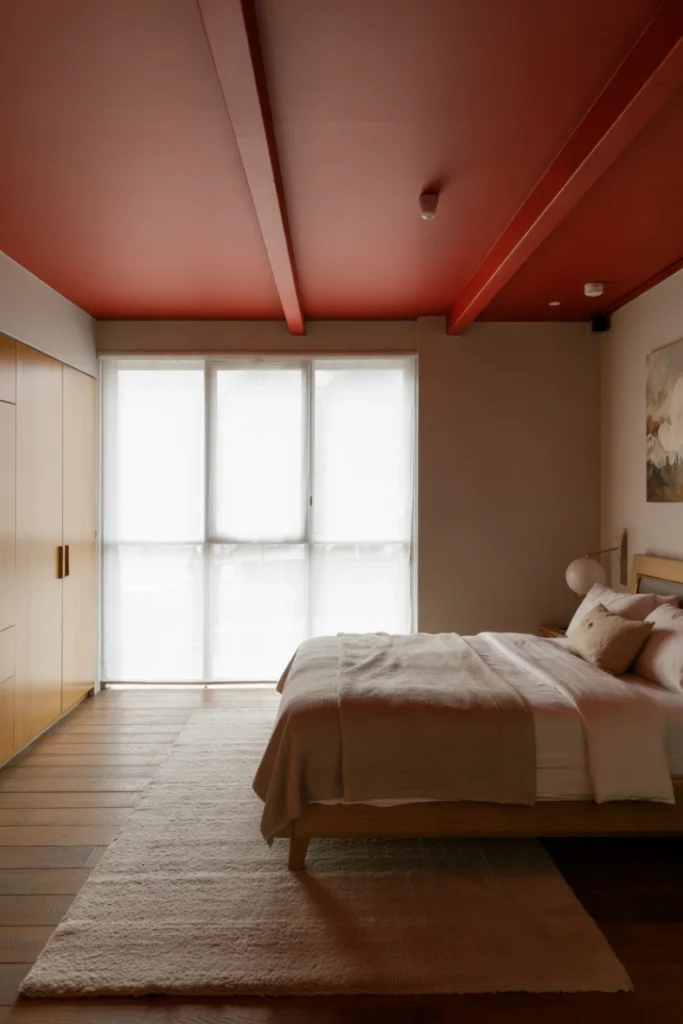
A red ceiling adds unexpected drama and personality to a bedroom. This design choice draws the eye upward and adds depth without overwhelming wall space. It is a bold move, but it works surprisingly well because the ceiling is a surface most people leave white, so a red ceiling feels creative and intentional rather than heavy.
Choose a deep muted red such as burgundy, wine, or brick red for the ceiling, and keep the walls neutral in warm white, light gray, or soft beige. A matte finish is essential on a ceiling, because gloss highlights every imperfection. Paint the ceiling first, then the walls, and use painter’s tape along the top edge of the walls for a clean line. In a standard 8 foot ceiling room, a deep red ceiling can make the room feel cozier, which suits a bedroom well.
Balance the ceiling with warm lighting. A ceiling light with a dimmer, warm bedside lamps, and light colored bedding keep the room from feeling dark. Add a simple light fixture in black or brass, and keep the furniture light or medium toned so the room stays grounded. If a full red ceiling feels too bold, try painting only a tray ceiling inset or a ceiling medallion area in red, which gives you the drama in a smaller dose.
13. Minimalist Red Bedroom Accents
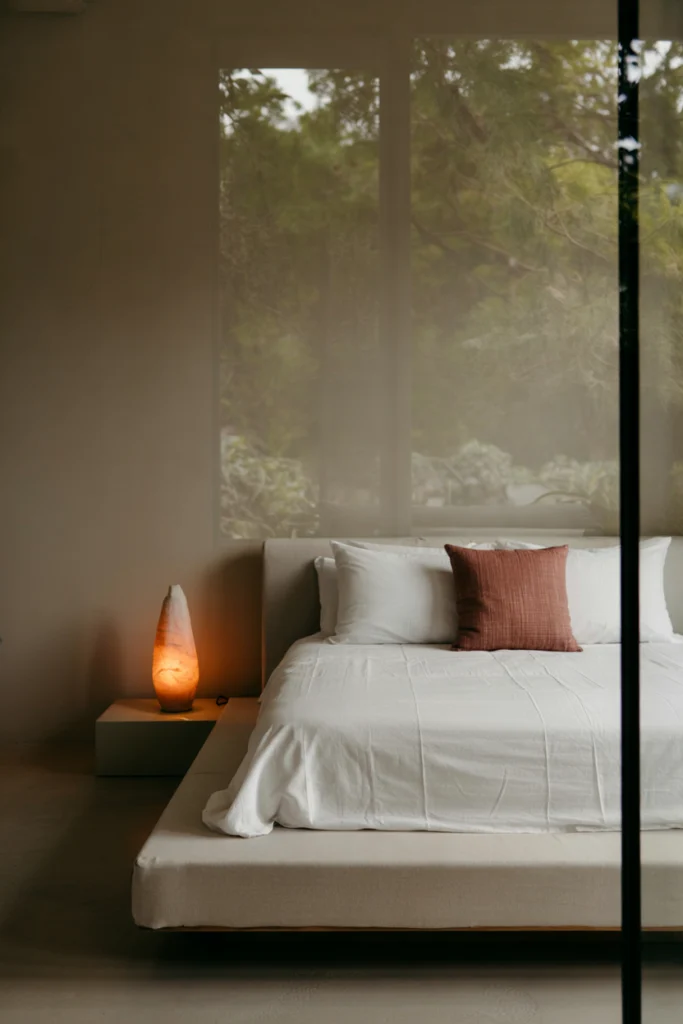
Minimalist bedrooms benefit from carefully placed red accents. A single piece of red artwork, pillow, or lamp can energize a neutral space without clutter. This restrained approach keeps the room calm and intentional, and it proves that minimalism and bold color can coexist beautifully when the red is used with discipline.
Follow the one accent rule. Choose one red item as the focus, such as a single red cushion on a white bed, one red ceramic lamp on the nightstand, or one red framed print above the bed. Keep everything else neutral: white or light gray walls, simple wood furniture, plain bedding, and no extra decoration. The red item should be the only color in the room besides neutrals, which is what makes it feel so striking.
Scale matters in a minimalist room. The red accent should be large enough to notice but small enough to feel deliberate. A cushion that is 18 to 20 inches square, a lamp about 14 to 18 inches tall, or a framed print about 24 by 36 inches all work well. Keep surfaces clear, store clutter out of sight, and let the single red accent do the talking. If you want a second touch of red, make it tiny, such as a red book spine or a small red vase, and place it near the main accent so the two feel connected.
14. Red Floral Bedroom for Romantic Charm

Red floral patterns introduce romance and softness into bedroom design. Floral bedding, wallpaper, or curtains add movement and elegance, and red flowers feel classic rather than trendy. This look suits romantic, vintage, and shabby chic bedrooms, and it works especially well when the florals are balanced with plain neutrals. For more romantic styling ideas, our romantic bedroom ideas show how soft lighting, layered textures, and gentle color pairings can complete the mood.
Use florals in one place only. Choose red floral bedding, or red floral curtains, or a red floral wallpaper on one wall, but never all three at once. The scale of the pattern matters: large scale florals feel bold and modern, while small scale florals feel delicate and traditional. Pair the floral piece with solid colored bedding or curtains in cream, blush, or soft gray so the pattern has space to breathe.
Balance florals with neutral elements to prevent visual overload. A plain cream duvet with red floral cushions, or red floral curtains with plain white bedding, both work well. Add a solid colored throw in a tone pulled from the floral pattern, such as deep green leaves or soft pink petals, to tie the room together. Keep the furniture simple and light, and add one fresh element such as a small vase of red roses on the nightstand to echo the pattern naturally.
15. Red and Beige Bedroom for Soft Warmth

Beige tones help soften red’s boldness, creating a warm and inviting bedroom. This pairing feels natural and calming, ideal for relaxing spaces, and it is one of the easiest red combinations to live with because beige is warm, forgiving, and endlessly versatile. The result is a bedroom that feels cozy without feeling dark.
Use beige as the dominant color. Paint the walls a warm beige, choose beige or oatmeal bedding, and add a beige rug under the bed. Then bring red in sparingly, through a red throw, red cushions, a red lampshade, or red artwork. Because beige is so soft, even a small amount of red stands out, so you need less red here than in a white or gray room. Two or three red accents are usually enough.
Layer warm textures to make the palette feel rich. A beige linen duvet, a wool throw in deep red, a woven jute rug, and a wood nightstand in a medium tone all add warmth without adding color. Choose reds with warm undertones, such as brick red or terracotta, because they blend with beige far better than cool cherry reds. Add warm lighting with fabric lamp shades, and finish with a small plant or a woven basket for a natural touch.
16. Industrial Red Bedroom Design
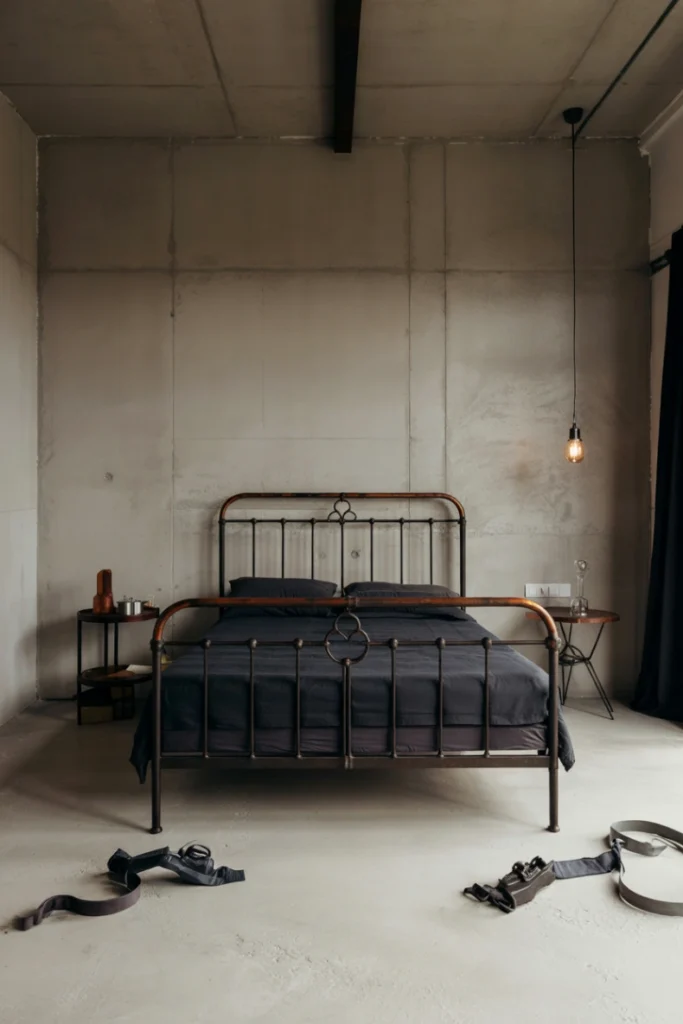
Industrial bedrooms benefit from deep red tones paired with metal and concrete elements. Red adds warmth to otherwise cool industrial materials, and the combination feels edgy, modern, and honest. Exposed brick, black metal, and raw concrete can feel cold on their own, but a deep red accent makes the whole room feel lived in.
Start with the industrial base: a black metal bed frame, exposed brick or a concrete look accent wall, and simple Edison bulb lighting. Then add deep red in the soft furnishings, such as a red leather cushion, a deep red wool throw, or red bedding in a dark wine shade. A red metal locker or a red painted steel cabinet can also work as a storage piece that doubles as a color accent.
Keep the decor minimal and functional. Exposed textures and minimal decor enhance authenticity, so avoid fussy patterns and ornate furniture. Use matte finishes on the metal, keep the wood raw or lightly sealed, and let the materials show their character. A large black and white photograph in a simple black frame adds personality without competing with the red, and a concrete or dark wood floor grounds the whole look.
17. Red Art as the Centerpiece
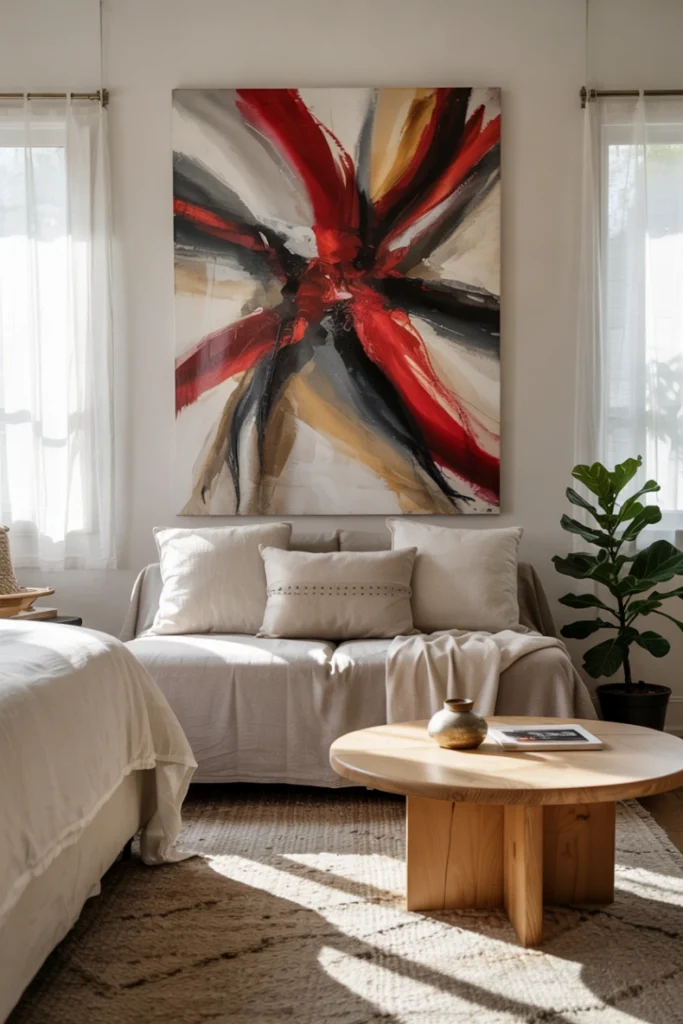
Red artwork can serve as the main design statement in a bedroom. Large scale paintings or prints add energy and focus, and art is the most flexible way to use red because you can move it, swap it, or replace it without touching the walls or the furniture. A single strong piece of red art can carry the entire color scheme of a room.
Choose one large piece and hang it where it gets noticed, usually above the bed or above the dresser. For a queen bed, the art should be about two thirds the width of the bed, roughly 40 to 48 inches wide, and hung so its center sits at eye level, about 57 to 60 inches from the floor. An abstract painting with red as the dominant color works well in modern rooms, while a red floral or landscape print suits traditional rooms.
Keep the surroundings neutral so the artwork can shine. Plain walls in warm white or light gray, simple bedding in a solid color, and minimal decor around the art let it be the focus. Pick up one color from the artwork in a small accessory, such as a cushion or a throw in the same red, so the room feels connected. If the art is very bold, keep the frame simple in black, white, or natural wood so the frame does not compete with the painting.
18. Layered Red Textiles for Cozy Comfort
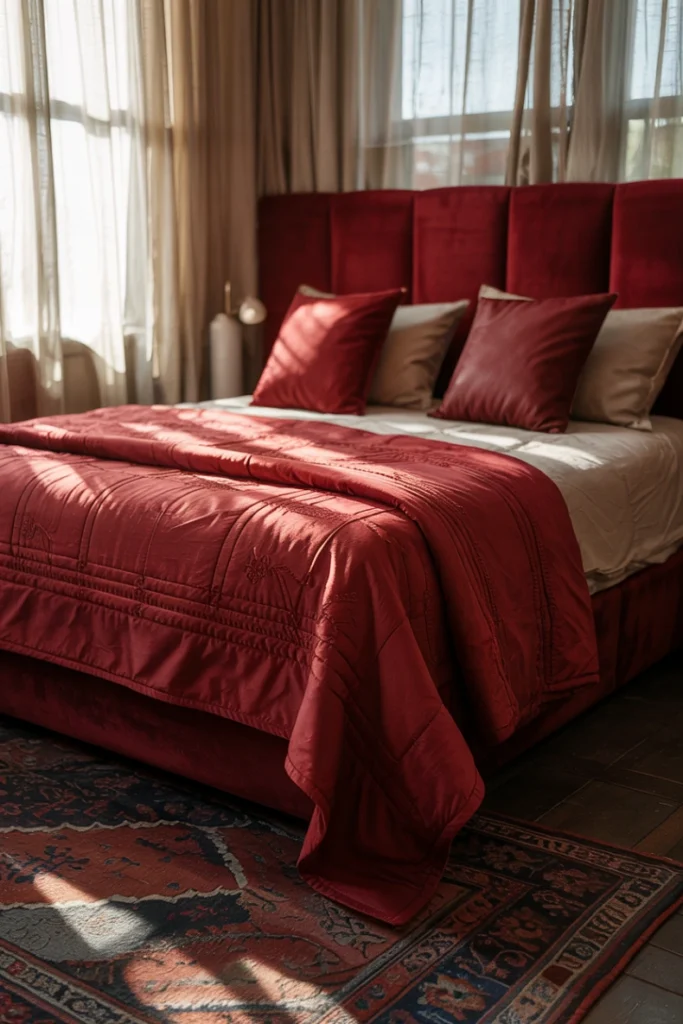
Layering red textiles creates a cozy and inviting bedroom atmosphere. Rugs, throws, cushions, and curtains in varying red shades add depth and warmth, and the mix of textures makes the room feel soft and lived in. This is the most comfortable way to use red, because textiles are easy to change and they soften every hard surface in the room.
Layer at least three textile types. Start with the bed: a red duvet or coverlet, then a folded throw in a deeper red at the foot, then two or three cushions in different red tones and textures, such as velvet, linen, and knit. Add a rug beside the bed in a muted red pattern, and finish with curtains in a soft red or a red lined neutral fabric. The key is varying the shades: use a deep burgundy, a mid-tone crimson, and a soft dusty red together, so the layers feel rich rather than flat.
Keep the walls and furniture neutral so the textiles can lead. Warm white walls, a wood bed frame, and a simple nightstand give the red layers a calm background. Mix textures deliberately: pair smooth velvet with nubby wool, and pair a flat weave rug with a chunky knit throw. In winter, add a heavier layer such as a faux fur throw in cream to break up the red. In summer, swap the heavy layers for lighter cotton and linen in the same red tones. For more ways to use textiles and color on your walls, see our bedroom wall decor ideas for frames, shelves, and art arrangements that complement a layered look.
Conclusion
Red is a powerful color that, when used thoughtfully, can transform bedrooms into inspiring and expressive spaces. These red bedroom ideas demonstrate how different shades, textures, and design strategies allow red to feel bold yet balanced. From dramatic accent walls to subtle accessories, red offers endless design potential, and there is a version of this look for every style, from minimalist to rustic to regal.
Start small if you are unsure. Try red bedding, a single red cushion, or one piece of red art, and live with it for a few weeks before you commit to paint or wallpaper. When you are ready for more, remember the simple rules: keep red to about 10 to 30 percent of the room, test paint shades in different lights, and pair red with neutrals that let it shine. By pairing red with complementary colors, materials, and lighting, you can create a bedroom that feels confident, warm, and uniquely personal, a room you will love waking up in every day.
Frequently Asked Questions
Is red a good color for a bedroom?
Yes, red can be a great bedroom color when it is used in the right amount and shade. Deep muted reds such as burgundy, wine, and brick red feel warm and cozy, while bright reds work best as small accents. Keep red to about 10 to 30 percent of the room and pair it with neutrals such as white, gray, or beige so the room stays restful.
What colors go best with red in a bedroom?
White, cream, light gray, and beige are the safest partners for red, because they soften its intensity and keep the room feeling balanced. Black adds modern drama, gold adds warmth and luxury, and warm wood tones ground the palette. Avoid pairing bright red with other strong colors such as bright orange or purple, which can make the room feel chaotic.
How can I add red to my bedroom without painting the walls?
Red bedding is the easiest option, followed by cushions, throws, curtains, artwork, and a single piece of red furniture such as a nightstand or an accent chair. These options add bold color without any permanent commitment, and you can change them seasonally. Start with one or two red items and add more only if the room still feels like it needs color.
Does a red bedroom affect sleep?
Red is a stimulating color, so a room that is mostly bright red can make it harder to wind down. The solution is to use deep muted reds rather than bright reds, keep red to a modest share of the room, and balance it with calm neutrals and warm dimmable lighting. With those choices, a red bedroom can feel cozy and relaxing rather than energizing.
What shade of red is best for a small bedroom?
In a small bedroom, use red as an accent rather than a wall color. A red cushion, a red throw, red artwork, or red bedding adds warmth without shrinking the room. If you do want a red wall, choose one wall only, pick a deep muted shade such as burgundy, and keep the other walls light so the room still feels open.
More Ideas You Will Love
 22 Coastal Bedroom Ideas for a Beach-Inspired, Breezy Look
 15 Classy Bedroom Ideas to Elevate Your Space with Simplicity
 13 Girls Nursery Ideas for Sweet, Stylish & Playful Spaces
 12 Cozy Bedroom Ideas for Women – Soft, Stylish & Soothing
 23 Dreamy Bedroom Style Ideas You’ll Fall in Love With
 22 Relaxing Bedroom Color Schemes for a Stylish Sleep Sanctuary