
15 Exterior Shutter Ideas: Enhance Curb Appeal with Style

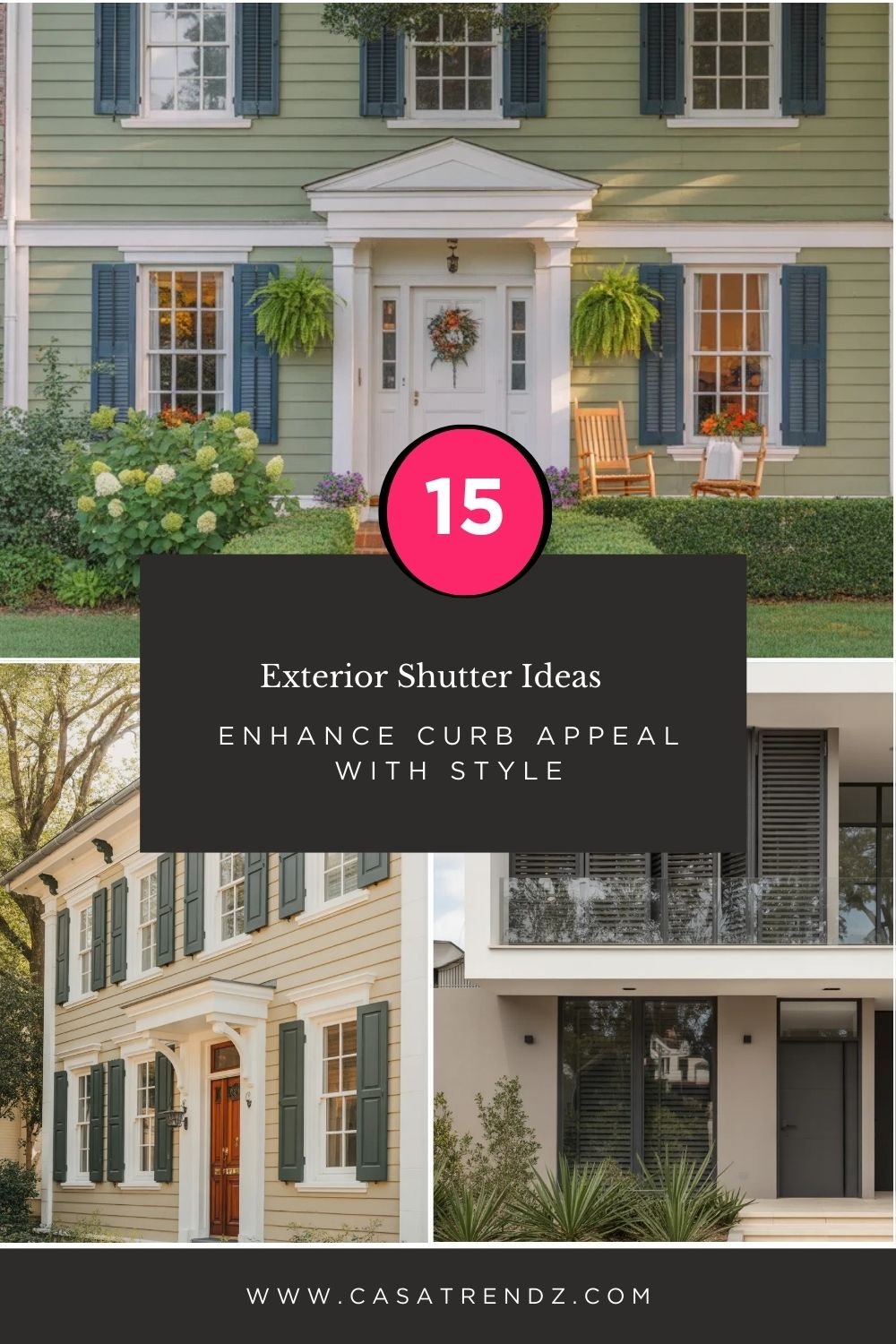
Exterior shutters are one of the most impactful architectural details a home can have. They frame windows, add contrast, and give a facade a finished, intentional look. A plain front elevation can feel flat and forgettable, but the right shutters add depth, rhythm, and personality in a single weekend project. They also signal architectural style at a glance, whether your home leans traditional, modern, rustic, or coastal, and they help the whole exterior feel balanced and complete.
In this guide, we share 15 exterior shutter ideas to enhance curb appeal with style, from classic raised panels and louvered designs to bold colors, natural wood, and custom sizing. Each idea includes the materials, measurements, colors, and practical tips you need to choose well and install with confidence. If you are planning a full exterior refresh, our exterior house color ideas will help you pick a siding and trim palette that makes your shutters stand out for the right reasons.
1. Raised Panel Shutters for Classic Architectural Elegance
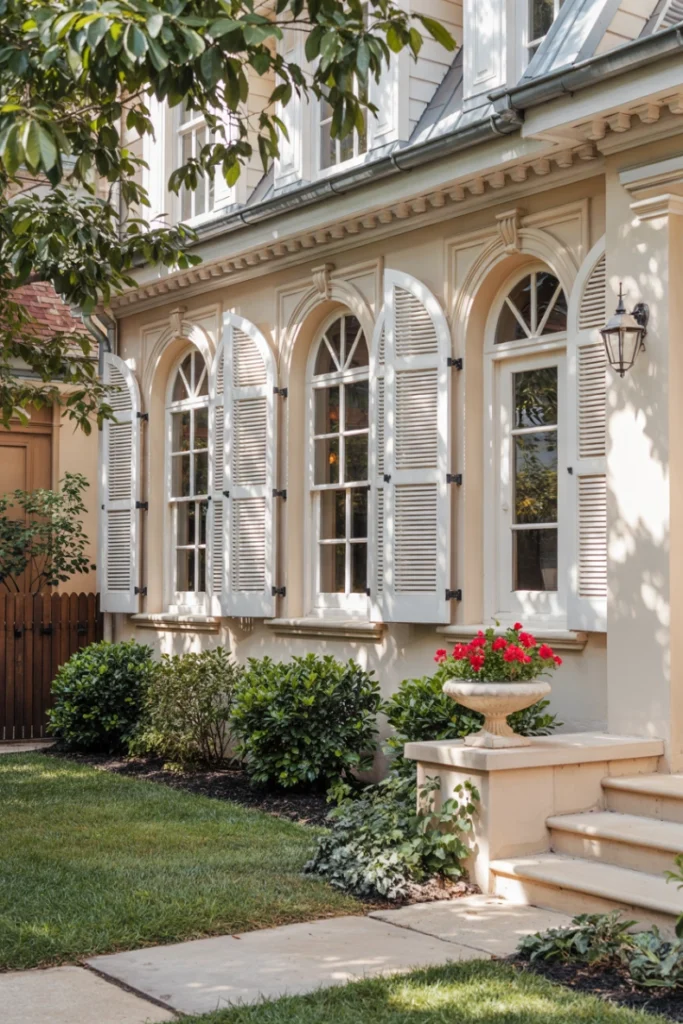
Raised panel shutters are a timeless choice for Colonial, Georgian, and Federal style homes. Their solid construction and sculpted panels catch light and create shadow, which gives windows real depth and dimension. The symmetrical, formal look suits homes that emphasize balance, so they work best when every window on the front elevation gets the same treatment and the panels align neatly with the window trim.
Measure before you order, because proportion is everything with this style. Each shutter should be about half the width of the window opening, and the height should match the window casing from top to bottom, so a closed pair would cover the glass exactly. Cedar and high-density composite are the most popular materials, since both hold crisp panel details and resist warping. Paint them in soft white, warm greige, or deep navy for a classic finish, and use exterior acrylic paint with a satin sheen so the panels wipe clean. Check the finish once a year and touch up any chips before moisture gets in.
2. Louvered Shutters for Texture and Traditional Charm

Louvered shutters bring rhythm and texture to a facade through their angled slats. They were originally built for ventilation and light control, and even today their layered design adds visual interest without overwhelming the front of the house. The slats create fine lines of shadow that change through the day, which makes a flat wall feel richer and more detailed.
These shutters suit southern, coastal, and traditional homes especially well. Paint them in crisp white, pale sage, or soft gray blue to keep the look bright and balanced, and pair them with matching window trim ideas so the whole window reads as one designed unit. Choose fixed louvers for a purely decorative role, or operable louvers if you want real airflow control on a porch or sunroom window. Leave a half inch gap between the shutter edge and the trim so the slats never bind, and seal the end grain of wood louvers before painting to prevent swelling in humid weather.
3. Board and Batten Shutters for Rustic Character
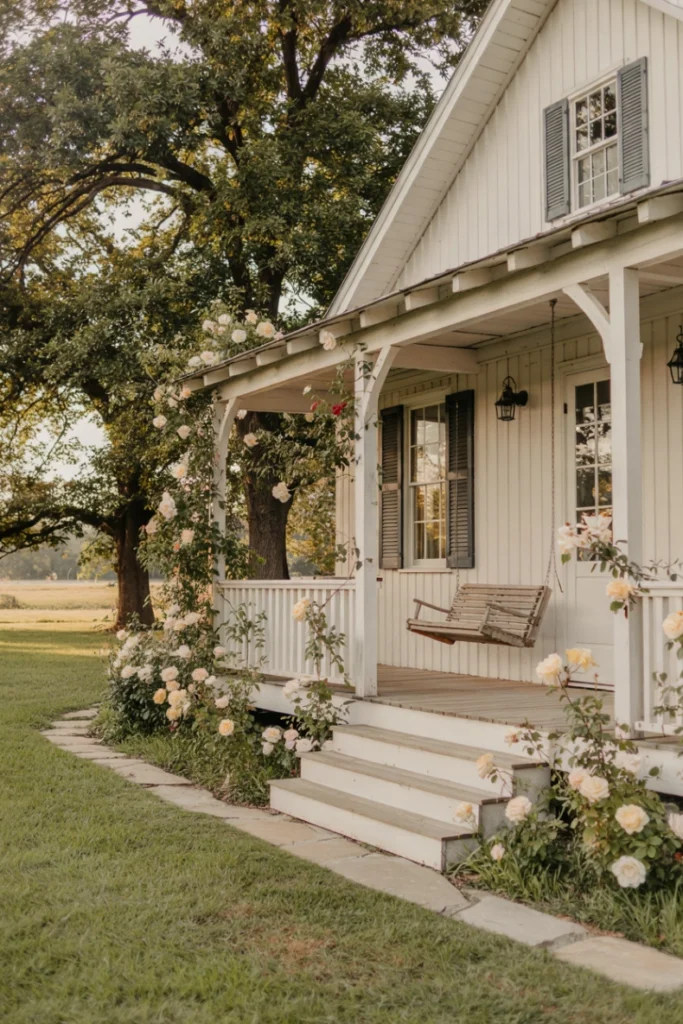
Board and batten shutters bring a handcrafted, rustic quality that suits farmhouse, cottage, and country style homes. They are built from vertical boards held together by horizontal or diagonal battens, and that simple construction reads as honest and sturdy. The wide boards add bold texture, so they look best on homes with natural materials like stone, wood siding, or brick.
For an authentic finish, choose rough-sawn cedar or pine and stain it in a warm honey, weathered gray, or soft whitewash. If you prefer paint, a muted sage or dusty blue keeps the rustic feel without looking new and glossy. Our modern farmhouse exterior ideas show how board and batten shutters pair with metal roofing and black window frames for a current farmhouse look. Build or buy them with a diagonal brace on wider panels to stop sagging, and use black wrought iron hinges and holdbacks to complete the handcrafted character.
4. Flat Panel Shutters for Modern Simplicity
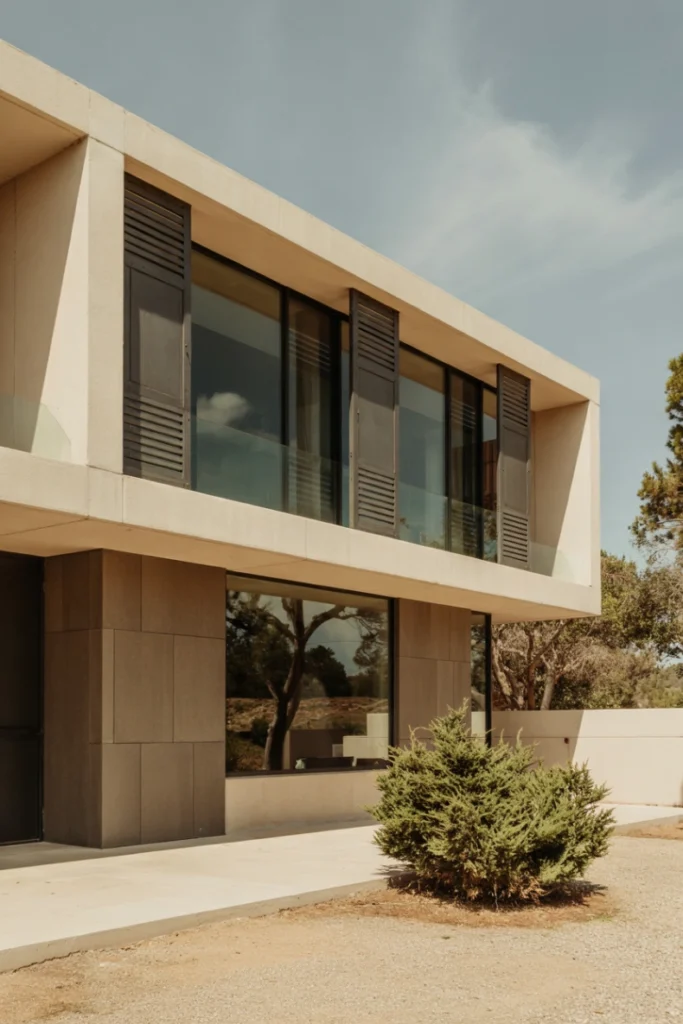
Flat panel shutters are the minimalist answer to traditional styles. Their smooth surfaces and clean edges suit contemporary and modern homes where geometry and restraint matter more than ornament. They add structure to a window without visual noise, which is exactly what a modern facade needs.
Keep the color palette quiet: matte black, charcoal, warm white, or a tone matched to the window frames. The key detail is a precise fit, so measure the window opening to within an eighth of an inch and order panels that sit flush with the casing. Fiberglass and aluminum work well here because they stay perfectly flat and never warp, and both take a smooth factory finish. Mount them with hidden fasteners or slim standoffs so no screws interrupt the clean surface, and wipe them down twice a year to keep dust from dulling the finish.
5. Bahama Shutters for Coastal and Tropical Homes
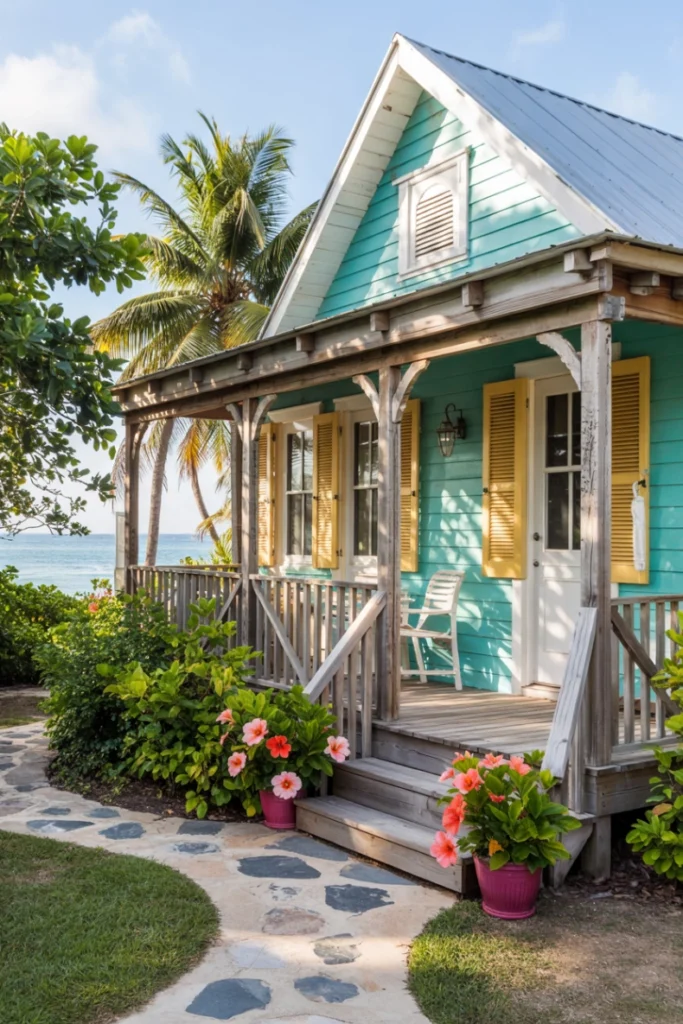
Bahama shutters, also called Bermuda shutters, are hinged at the top and propped open at an angle, which gives a home a relaxed, vacation feel while providing real shade and storm protection. They are a natural fit for coastal, tropical, and Florida style homes, and they look right at home on pastel siding, stucco, and homes near the water.
The angled position blocks direct sun while still letting breezes pass through, which can keep a sunny room noticeably cooler in summer. Choose marine-grade aluminum or fiberglass for the best storm resistance, and paint them in light aqua, coral, or crisp white for a bright coastal statement. Install them with sturdy top hinges and adjustable support arms so you can lower them flat against the window before a storm. Check the hinges and arms each spring, and rinse salt spray off the surface regularly if you live near the coast.
6. Colonial Shutters for Balanced Symmetry
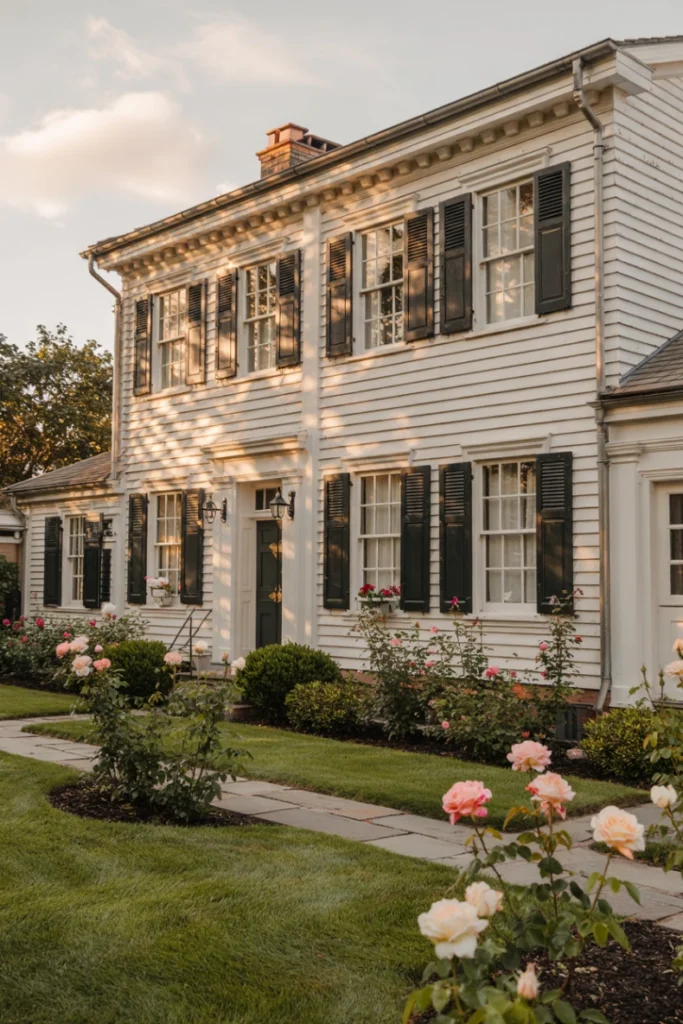
Colonial shutters are hinged on the sides of the window and sized to close fully over the glass, which gives them strong historical roots and a formal, symmetrical look. Even when they are fixed in place today, their shape and hardware tell the story of a working shutter, and that authenticity is what makes them so appealing on traditional homes.
Place them in matching pairs on every front window and keep the spacing even, since symmetry is the whole point of this style. Paint them in classic colors like black, deep green, or navy, and add simple strap hinges and a small holdback to make them look fully functional. For a convincing result, the shutter width should equal half the window width, and the panels should line up with the window sash lines. If your windows are very wide, consider a bi-fold design so each leaf stays in proportion.
7. Natural Wood Shutters for Organic Warmth

Natural wood shutters add warmth and texture that no synthetic material quite matches. Cedar, redwood, and cypress are the best choices because they resist rot and insects naturally, and their grain becomes more beautiful as it ages. A clear seal or light stain lets the wood speak for itself, while a solid stain adds color without hiding the grain.
Wood shutters pair beautifully with stone, brick, and neutral siding, softening hard materials and warming up a plain facade. Seal all six sides of each shutter before installation, including the back and edges, since moisture enters through unsealed end grain first. Reapply a penetrating oil or exterior sealer every two to three years, and expect a rich silver gray patina if you leave cedar unfinished, which suits rustic and coastal homes very well. Keep sprinklers from hitting the shutters directly to prevent uneven weathering.
8. Composite Shutters for Low-Maintenance Living
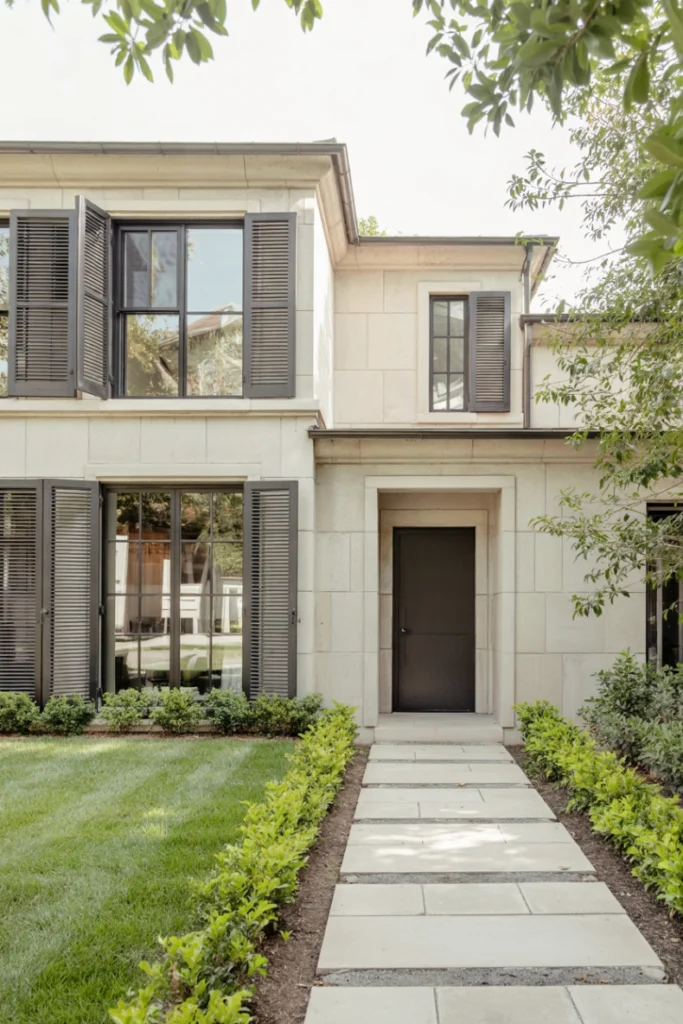
Composite shutters give you the look of wood with far less upkeep. They are made from engineered materials such as fiberglass, PVC, or wood composite, and they resist moisture, insects, fading, and warping in almost any climate. That makes them a smart choice for humid regions, harsh sun, and homes where repainting every few years is not realistic.
Composite shutters come in raised panel, louvered, and board and batten profiles, so you do not have to sacrifice style for durability. Many brands offer a 20 year or lifetime warranty against rot and cracking, which is worth comparing when you shop. Choose a color that is molded through the material rather than painted on the surface if you can, since it hides scratches better. Installation is the same as wood, but use stainless steel screws, because standard screws can react with composite and leave stains over time.
9. Bold Colored Shutters for Visual Impact

A bold shutter color is the fastest way to give a home personality. Deep teal, forest green, brick red, mustard yellow, or charcoal can turn a neutral facade into something memorable, and the change costs little more than a gallon of paint and a weekend of work. Color works best when it contrasts with the siding, so a light gray house can carry almost any strong shade.
Before you commit, test a sample on one shutter and look at it in morning and afternoon light, since exterior colors shift dramatically through the day. Keep the rest of the palette calm so the shutters stay the star, and repeat the color once more on the front door or a planter for a coordinated look. If you need help choosing the base palette, our exterior house color ideas cover siding and trim combinations that pair well with bold accents. Use a high quality exterior paint with UV protection, and plan on a fresh coat every five to seven years to keep the color rich.
10. Black Shutters for Timeless Sophistication
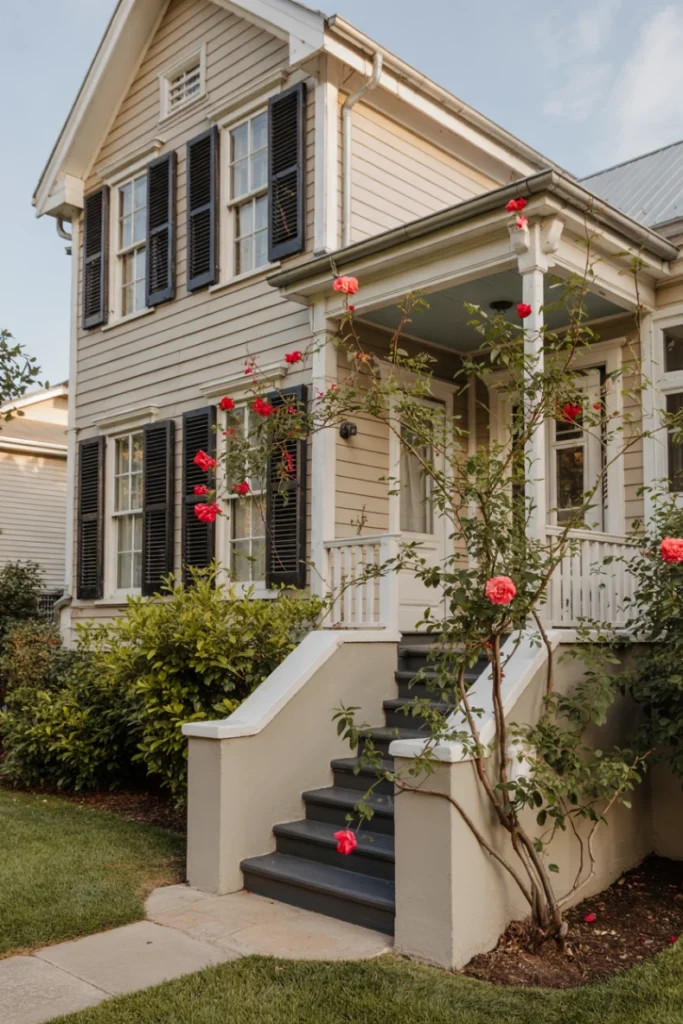
Black shutters are a classic that works on almost any home, from a white colonial to a gray modern farmhouse. They create crisp, clean contrast on light siding, frame windows with authority, and make the whole facade feel more deliberate. Unlike trendy colors, black never dates, which is why it remains one of the most popular shutter colors year after year.
Choose a soft black rather than a harsh pure black, such as a shade with a hint of charcoal or navy, so it feels rich instead of flat. A satin or semi-gloss finish reflects just enough light to show off the panel details, and it is easier to wipe clean than a flat finish. Black shows dust and pollen more than lighter colors, so rinse the shutters a few times a year in dusty areas. Pair them with black window frames, a black front door, or black lanterns to tie the whole exterior together.
11. Shutters with Decorative Hardware Details

Decorative hardware is the small detail that makes shutters look real instead of stuck on. Strap hinges, S-shaped holdbacks, shutter dogs, and pintles add authenticity, especially on fixed shutters that never move. The hardware tells the eye that these shutters could close, and that suggestion makes the whole window feel more convincing.
Match the hardware finish to your other exterior metals, such as matte black, aged bronze, or oil rubbed bronze, so the facade feels coordinated. Mount strap hinges on the face of the shutter, not just at the edges, and position holdbacks near the bottom so the shutter appears held open at a natural angle. Use screws long enough to bite into solid framing, not just siding, so the hardware stays tight through wind and seasonal movement. For more window detailing inspiration, see our window trim ideas for casing and sill styles that complement shutter hardware.
12. Custom-Sized Shutters for Large Windows
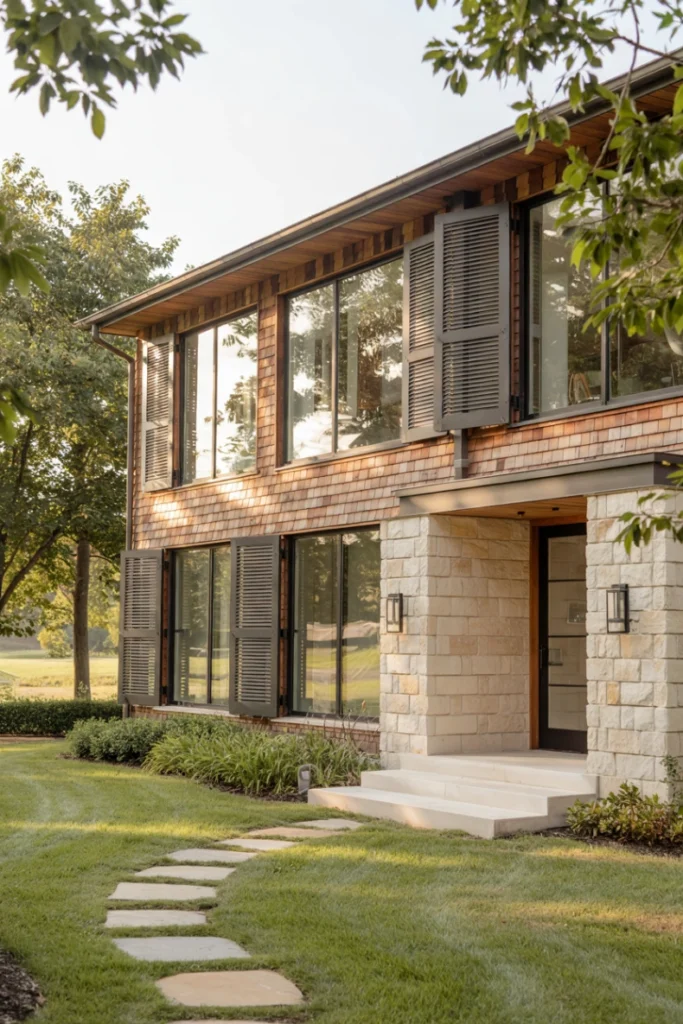
Large and picture windows need shutters sized to match, or the whole facade looks off. A small shutter next to a wide window reads as an afterthought, while a properly scaled pair makes the window feel intentional and finished. Custom sizing is the answer when standard sizes leave an awkward gap or overlap.
Follow the same rule as always: each shutter should measure half the window width, and the height should match the window opening exactly. For windows wider than 48 inches, consider a bi-fold shutter with two leaves per side, which keeps each leaf narrow enough to look right and light enough to handle. Order custom shutters from a millwork shop or a manufacturer that builds to your measurements, and confirm the lead time, since custom orders often take three to six weeks. Dry fit each shutter with a helper before drilling, and check the reveal on all four sides so the pair looks perfectly even.
13. Shutters with Mixed Exterior Materials
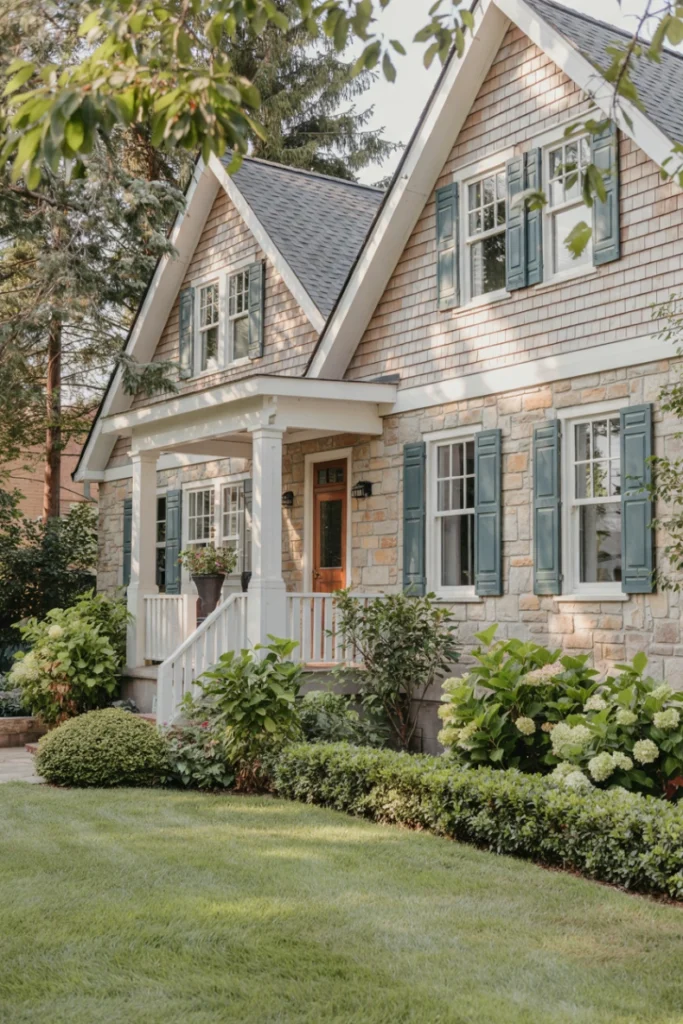
Homes built with stone, brick, and siding together can look busy, and shutters are one of the best tools for pulling the mix together. A consistent shutter style and color across the whole facade acts as a visual thread, tying different materials into one cohesive design instead of a patchwork.
Pick a shutter color that appears somewhere in the stone or brick, such as a warm gray pulled from the mortar or a deep brown from the brick itself, so the shutters feel connected to the house rather than added on. Keep the shutter style the same on every elevation, even where the siding changes, and let the front entry set the tone for the rest. If you are also styling the entry, our front porch decor ideas show how shutters, lighting, and planters can work together. Avoid introducing a second shutter style on the same facade, since that breaks the unity you are trying to create.
14. Operable Shutters for Authentic Functionality
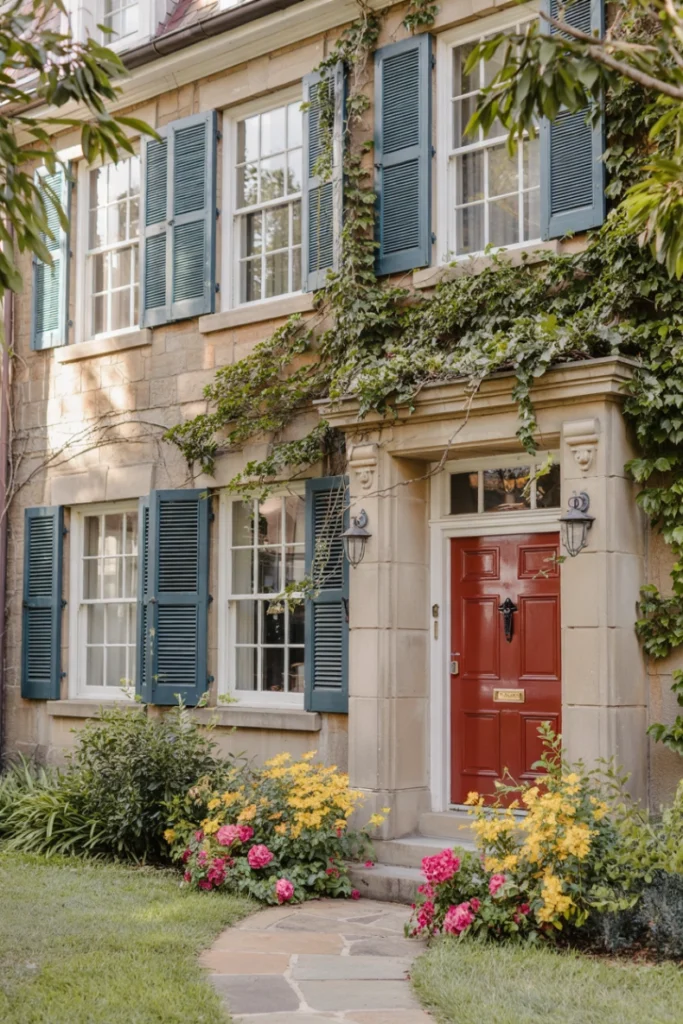
Operable shutters are the real thing: hinged, working panels that close over the window for storm protection, privacy, and light control. They are less common today than fixed decorative shutters, but they add a level of authenticity and craftsmanship that fixed panels cannot match, and they are genuinely useful in storm prone regions.
Building them well takes more care than hanging decorative panels. Use exterior rated hinges rated for the shutter weight, add a bolt or latch that holds the pair closed, and install holdbacks to keep them open in normal weather. The shutter frame must be square and the hinges must be set into solid framing, or the panels will sag over time. Louvered operable shutters give the best airflow, while solid panel versions give the best storm protection and privacy. Inspect the hinges and latches every year, and oil the moving parts so they swing smoothly when you need them.
15. Custom Shutter Designs for Unique Homes

Custom shutter designs are for homes that do not fit a standard catalog: arched windows, round windows, angled gables, or unusual proportions. A custom design lets you match the exact shape, size, material, and style of your home, so the shutters look like they were always part of the architecture instead of an add on.
Work with a millwork shop or a shutter specialist who can build arched tops, sunburst patterns, or cutouts that echo details elsewhere on the house, such as a gable vent or a front door design. Bring photos of your home and the window measurements to the first consultation, and ask for a drawing or a sample panel before the full order is built. Expect a higher price than stock shutters, usually 30 to 50 percent more, and a lead time of four to eight weeks. The result is worth it, since a well designed custom shutter can become the defining feature of a unique facade.
Conclusion
Exterior shutters are powerful design elements that shape curb appeal more than almost any other single feature. These 15 exterior shutter ideas show how thoughtful choices of style, material, color, and size can elevate a home from plain to polished. From timeless raised panels and rustic board and batten to bold colors, natural wood, and custom designs, there is a shutter style for every home and every budget.
Start by measuring your windows and noting your home’s architectural style, then choose a material that fits your climate and a color that complements your siding. Install them with care, keep the proportions right, and maintain the finish, and your shutters will reward you with lasting curb appeal for years to come.
Frequently Asked Questions
What size should exterior shutters be?
Each shutter should be about half the width of the window opening, and the height should match the window casing from top to bottom. A closed pair should cover the glass exactly, with no gap and no overlap. For windows wider than 48 inches, use bi-fold shutters with two leaves per side so each leaf stays in proportion.
Are exterior shutters still in style?
Yes, exterior shutters are still in style, and they remain one of the most popular ways to add curb appeal. The key is choosing a style that matches your home’s architecture and sizing the shutters correctly. Shutters that are too small or the wrong style look dated, while well proportioned shutters in a fitting style look timeless.
What is the best material for exterior shutters?
Cedar is the best natural choice for its beauty and rot resistance, while composite and fiberglass are the best low maintenance options because they resist moisture, insects, and fading. Vinyl is the most budget friendly option and works well in mild climates. Choose based on your climate, your budget, and how much maintenance you are willing to do.
Should exterior shutters be functional or decorative?
Most modern shutters are decorative, and that is fine as long as they are sized and mounted to look functional. Functional operable shutters are worth the extra cost if you want real storm protection, privacy, or light control. Either way, add hinges and holdbacks so the shutters look like they could close.
What color should I paint my exterior shutters?
Choose a color that contrasts with your siding and complements your roof and front door. Black, deep green, and navy are safe timeless choices, while bold colors like teal or brick red add personality. Test a sample in morning and afternoon light before painting the full set, and repeat the color on the front door or planters for a coordinated look.
More Ideas You Will Love
 14 Modern Farmhouse Exterior Design Ideas You’ll Fall in Love With
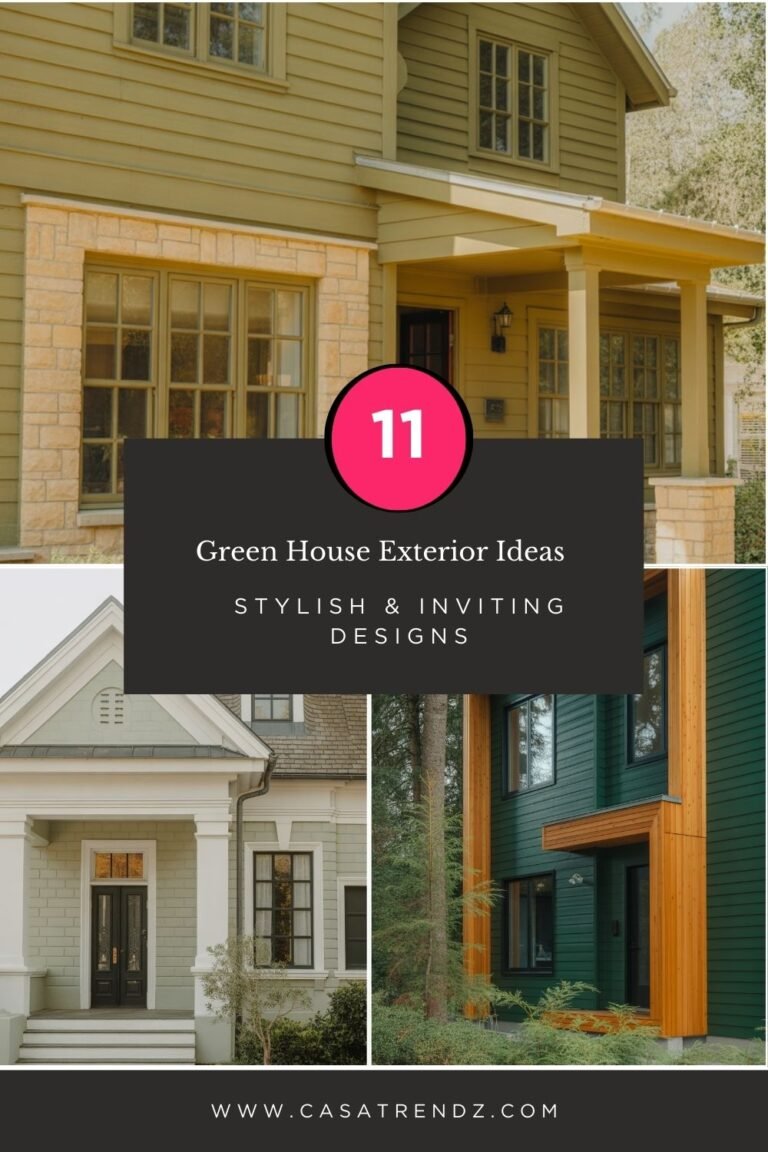 11 Green House Exterior Ideas: Stylish & Inviting Designs
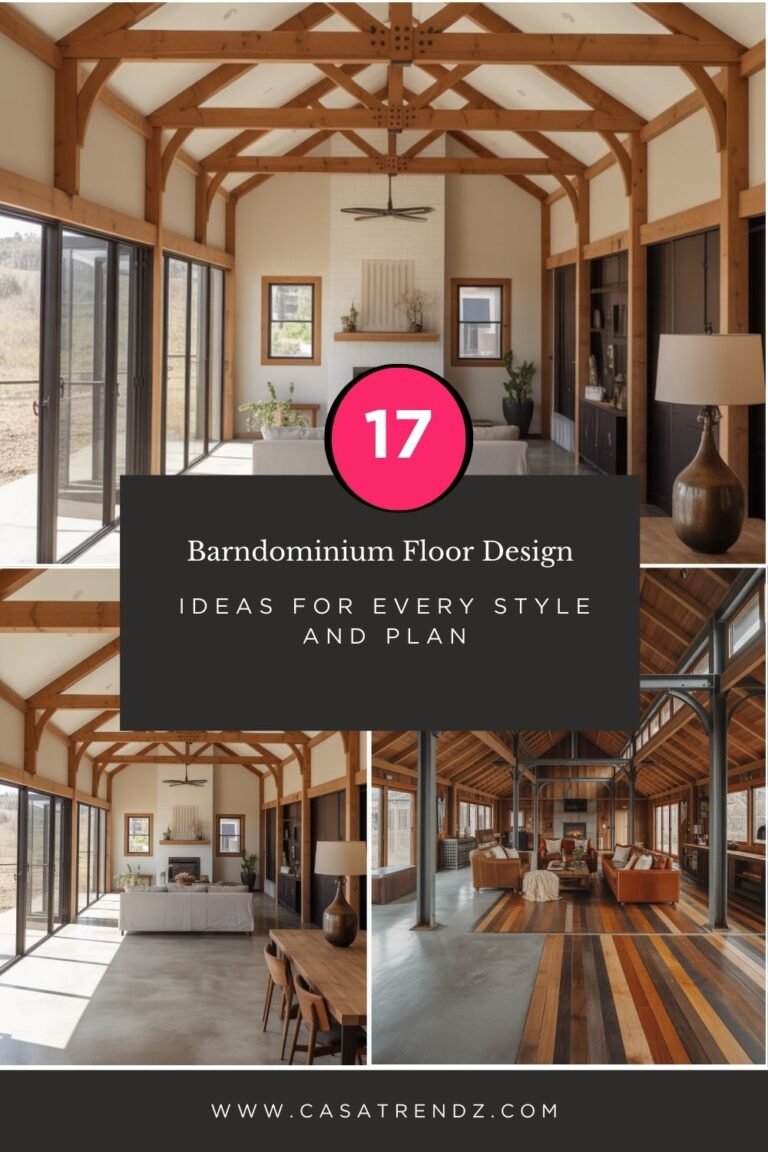 17 Barndominium Floor Design Ideas for Every Style and Plan
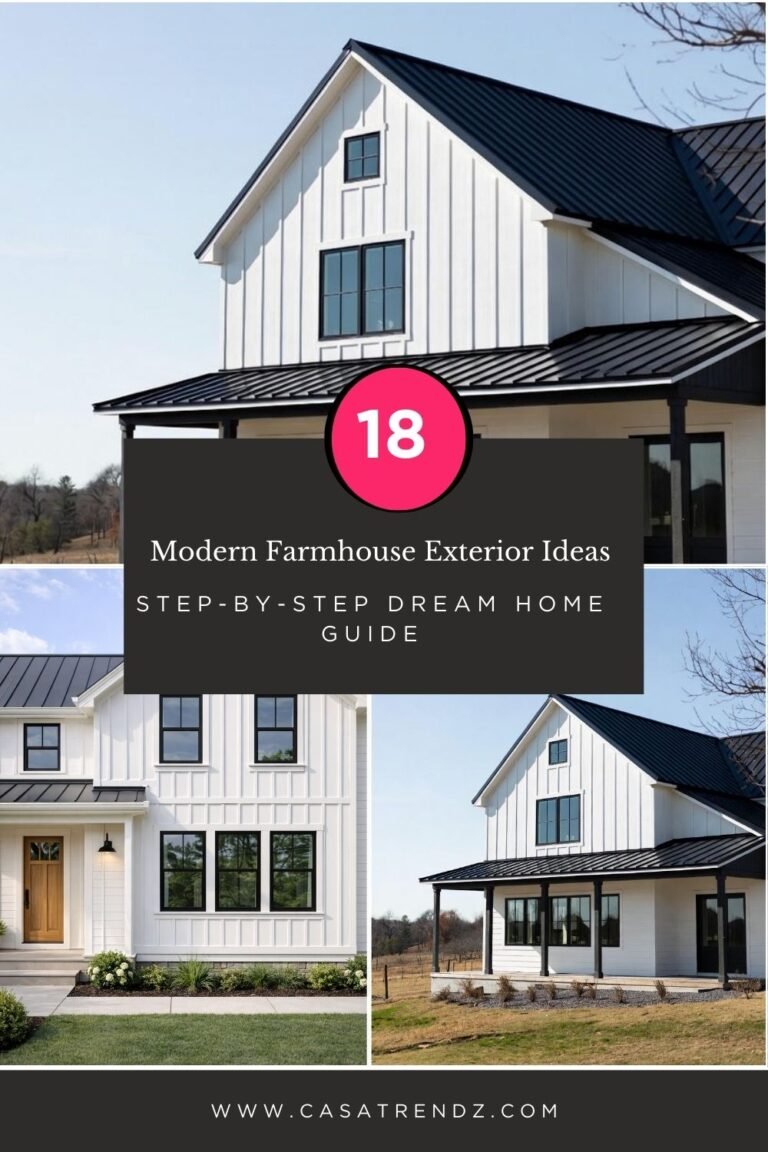 18 Modern Farmhouse Exterior Ideas: Step-by-Step Dream Home Guide
 11 Butterfly-Friendly Garden Ideas: A Complete How-To Guide
 18 Clever Pantry Organization Ideas You’ll Wish You Tried Sooner