
11 Green House Exterior Ideas: Stylish & Inviting Designs

Green is one of the most versatile and timeless colors in exterior home design. It blends naturally with surrounding landscapes, evokes calm and balance, and works across a wide range of architectural styles. From soft sage tones to deep forest hues, green exteriors can appear modern, classic, rustic, or bold depending on how they are styled and paired with complementary materials.
Part of green’s appeal is that it sits in the middle of the color spectrum, so it feels restful to the eye and rarely looks dated. A green house recedes gently into trees and lawns instead of competing with them, which is why it photographs so well and holds up season after season. At the same time, the right shade can make architectural details stand out, from a crisp white gable to a natural wood front door.
In this guide, we explore 11 green house exterior ideas that show how different shades of green can be used to create stylish, inviting, and visually striking homes. Each idea covers color application, material combinations, architectural harmony, and curb appeal, along with practical tips on paint finishes, trim pairings, and testing samples before you commit. Whether you are repainting a cottage or planning a full exterior update, you will find a green that fits your home and your neighborhood.
1. Sage Green Exterior with White Trim
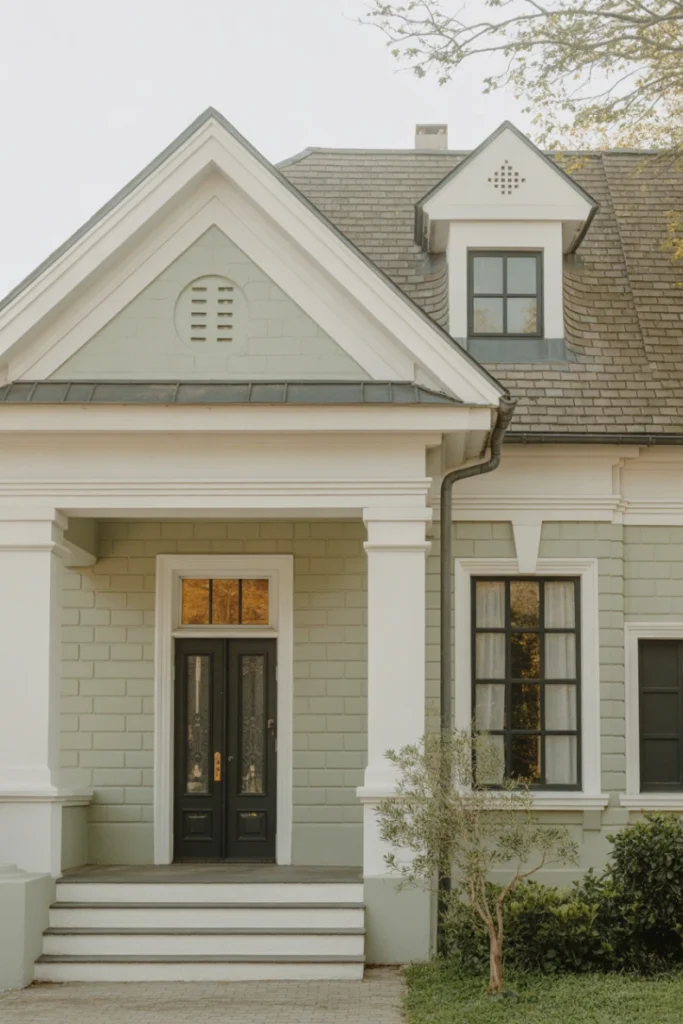
A sage green house exterior creates a calm, elegant appearance that feels both fresh and timeless. This soft, muted green tone works beautifully in residential settings, offering a subtle color that blends seamlessly with natural surroundings. When paired with crisp white trim, sage green exteriors achieve a balanced contrast that highlights architectural details without overpowering the design. If you are comparing shades, browsing a few exterior house color ideas side by side can help you see how sage sits next to bolder greens before you buy paint.
White window frames, door casings, and fascia boards bring clarity and brightness to the overall look, making the home feel open and welcoming. For the best result, choose a warm white rather than a stark bright white, because a warm white keeps sage from looking cold or gray on cloudy days. A satin or low-luster finish on the siding resists dirt and is easy to wash, while a semi-gloss finish on the trim makes edges look sharp and clean. Keep the trim consistent across every window and door so the contrast reads as intentional rather than patchy.
This green house exterior idea is particularly well suited for cottages, suburban homes, and transitional architectural styles. Paint a large test swatch, at least 2 feet by 2 feet, on the sunniest and shadiest sides of the house and watch it for two or three days, because sage can shift from soft gray-green in the morning to a warmer olive tone in late afternoon light. Pair it with a charcoal or warm gray roof, brushed nickel or matte black hardware, and a natural wood or deep navy front door for a finished look that feels sophisticated while remaining approachable.
2. Dark Green Exterior with Natural Wood Accents
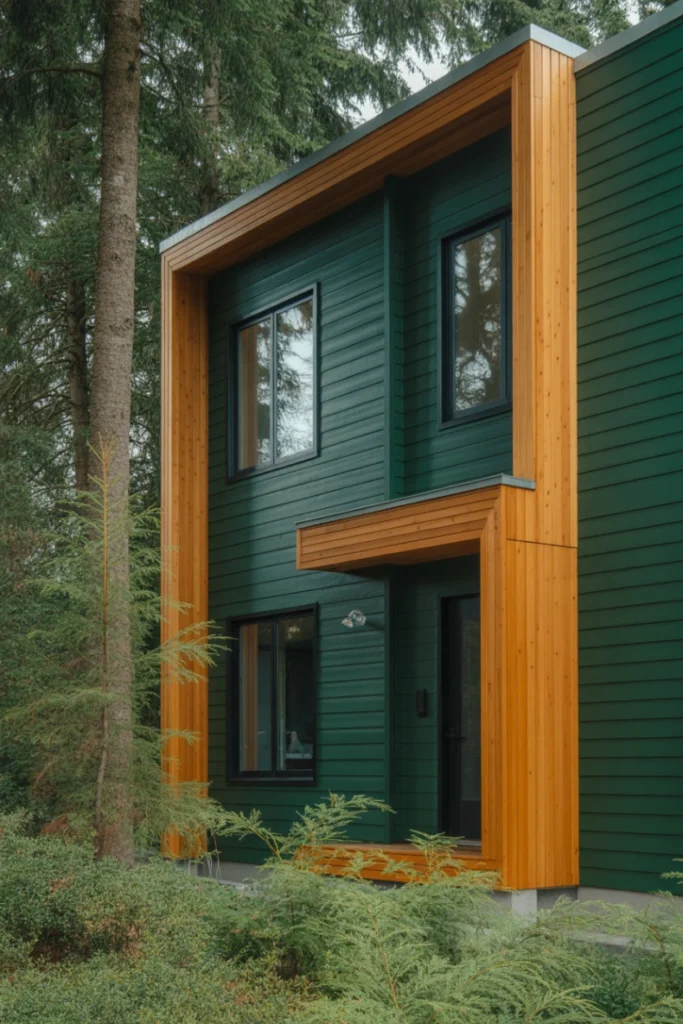
Dark green exteriors convey richness, depth, and confidence. Shades such as forest green or hunter green give homes a grounded, luxurious presence that feels deeply connected to nature. When combined with natural wood accents, the result is a warm and visually layered exterior that balances bold color with organic texture. For more inspiration on deep, dramatic palettes, take a look at these dark exterior house ideas that show how dark colors behave on different home styles.
Wooden doors, beams, shutters, or pergolas soften the intensity of dark green while adding character and warmth. Cedar and redwood are the most popular choices because their warm reddish tones contrast beautifully with cool green, and both woods weather gracefully when sealed. A solid wood front door in a honey or walnut stain becomes the natural focal point of a dark green facade, especially when it is framed by black or oil-rubbed bronze hardware and a simple brass house number.
This green house exterior idea works exceptionally well for modern cabins, contemporary homes, and properties surrounded by trees or landscaped gardens. Before committing, test the color on a full wall section, since dark paint absorbs heat and can look almost black in shade and richly green in direct sun. Use a high-quality 100 percent acrylic exterior paint in a satin finish, and expect two full coats over a tinted primer for even coverage. Keep the roof and gutters in a dark charcoal or black so the palette stays unified, and add warm landscape lighting along the walkway to keep the entry inviting after dark.
3. Olive Green Exterior for a Warm, Earthy Look
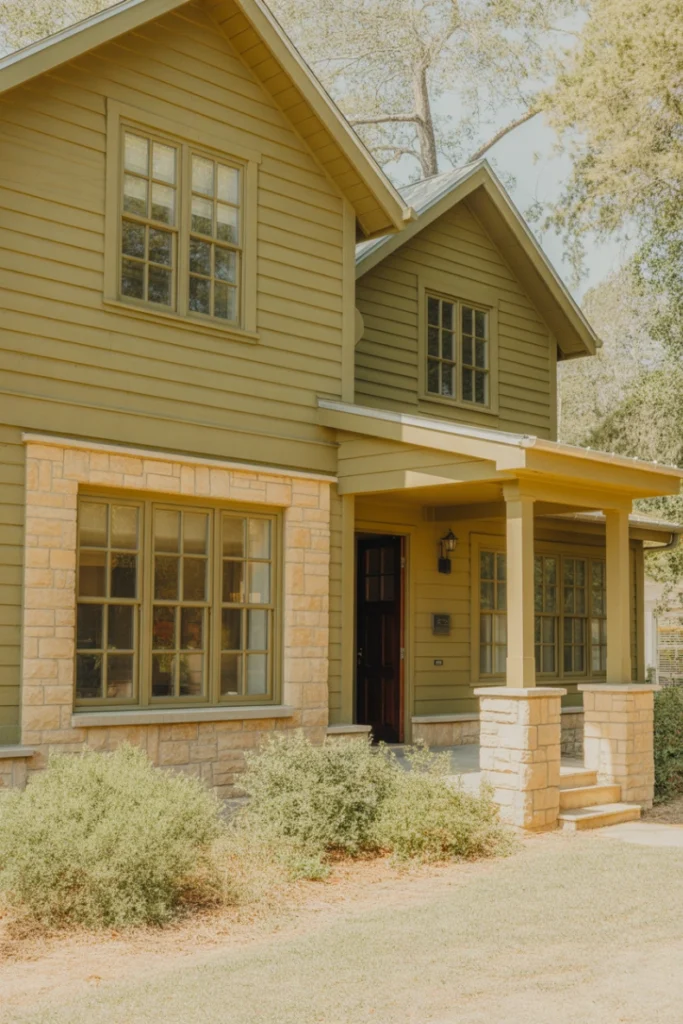
Olive green is a versatile shade that brings warmth and subtle sophistication to a home’s exterior. Its earthy undertones make it ideal for blending with stone, brick, or stucco finishes. Olive green feels less stark than darker greens while offering more depth than lighter shades, making it a balanced choice for a wide range of architectural styles.
This green house exterior idea pairs beautifully with bronze, black, or oil-rubbed hardware and neutral trim colors. Cream or warm beige trim softens olive without washing it out, while a terracotta or clay-colored front door adds a Mediterranean warmth that suits the shade perfectly. For the roof, warm brown or weathered gray shingles work better than cool black, because they echo the yellow-brown undertone already present in olive paint.
Olive green exteriors are particularly well suited for Mediterranean, ranch-style, and contemporary homes. The color creates a welcoming presence that feels grounded, natural, and effortlessly stylish. When you sample it, place the swatch next to your existing stone or brick, since olive can pull noticeably yellow against cool gray stone and noticeably gray against red brick. Choose a flat or matte finish for stucco to hide surface texture, and a satin finish for smooth siding so the color stays rich without glare. Finish the look with drought-tolerant landscaping, ornamental grasses, and a gravel or stone pathway in warm tones.
4. Mint Green Exterior with Coastal Inspiration
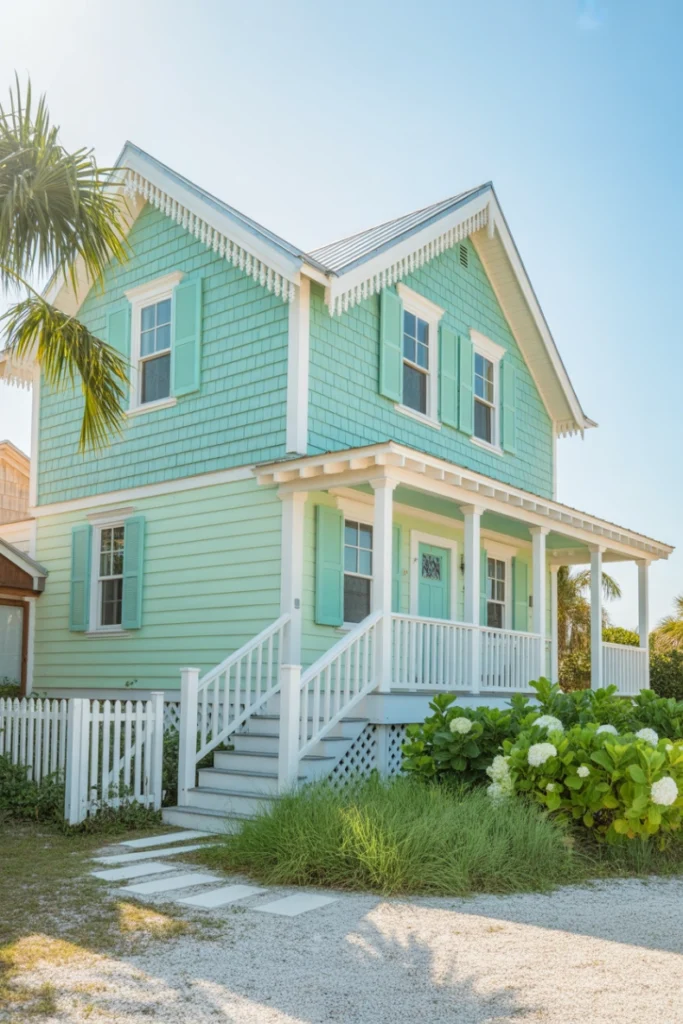
Mint green exteriors offer a fresh, breezy aesthetic inspired by coastal living. This light, cheerful shade reflects sunlight beautifully and creates an airy, relaxed atmosphere. Mint green is especially effective in warm climates where lighter colors help homes feel cooler and more open, and its high light reflectance can even keep sun-facing walls a few degrees cooler than darker paint.
Paired with white railings, light wood details, and simple landscaping, mint green exteriors evoke a seaside charm without feeling overly themed. A white picket fence, a light oak or bleached cedar front door, and white shutters keep the palette crisp, while navy or deep teal accents on the door or house numbers add just enough contrast to anchor the lightness. Avoid heavy dark trim here, because it can make mint look washed out by comparison; instead, let the white trim do the defining work.
This green house exterior idea works well for beach houses, cottages, and modern coastal homes. The result is a stylish yet inviting design that feels bright, uplifting, and timeless. Because mint is a light color, surface preparation matters: wash the siding, sand any peeling spots, and prime bare wood so the color goes on evenly and stays true. A satin finish is the safest choice, since flat paint shows scuffs on light colors and gloss can look harsh in bright sun. Complete the coastal feel with pale gravel beds, white flowering plants, and a simple rope or lantern style porch light.
5. Forest Green Exterior with Stone Elements
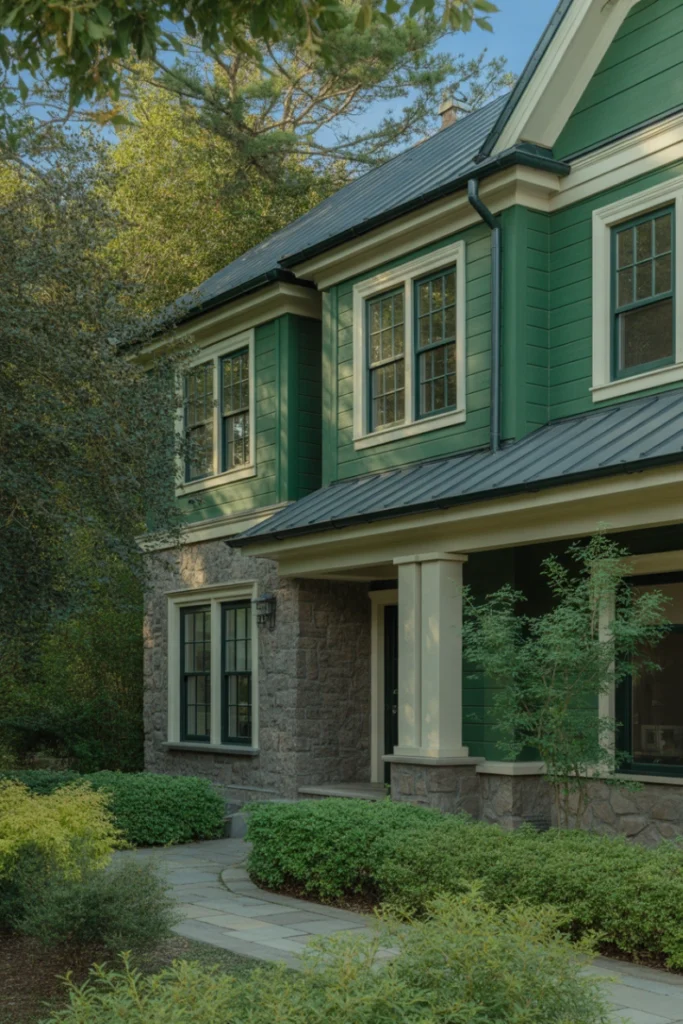
Forest green exteriors offer a bold, elegant appearance that feels deeply connected to the natural environment. This rich shade creates a dramatic backdrop that enhances architectural features and landscaping alike. When paired with stone elements, forest green homes gain texture, contrast, and a sense of permanence that flat paint alone cannot achieve. If you are planning the masonry side of the project, these exterior wall design ideas show how stone, brick, and siding can be combined on a single facade.
Stone foundations, columns, or accent walls complement the depth of forest green while grounding the structure visually. Light-colored limestone or whitewashed stone creates the strongest contrast, while warm gray fieldstone gives a quieter, more rustic result. The key is proportion: cover no more than 25 to 30 percent of the front facade with stone, usually at the base, around the entry, or on a chimney, so the green siding remains the dominant color and the stone reads as an accent rather than a competing material.
This green house exterior idea is ideal for mountain homes, craftsman-style houses, and luxury residences. The combination of stone and green delivers a refined exterior that feels both strong and welcoming. Use a deep forest green with a satin finish on fiber cement or wood siding, and choose mortar in a light warm gray so the stonework stays visible from the street. Add copper or black lantern fixtures beside the door, a dark bronze mailbox, and evergreen shrubs in varied heights so the landscaping echoes the depth of the paint color through every season.
6. Pastel Green Exterior for a Soft, Charming Look
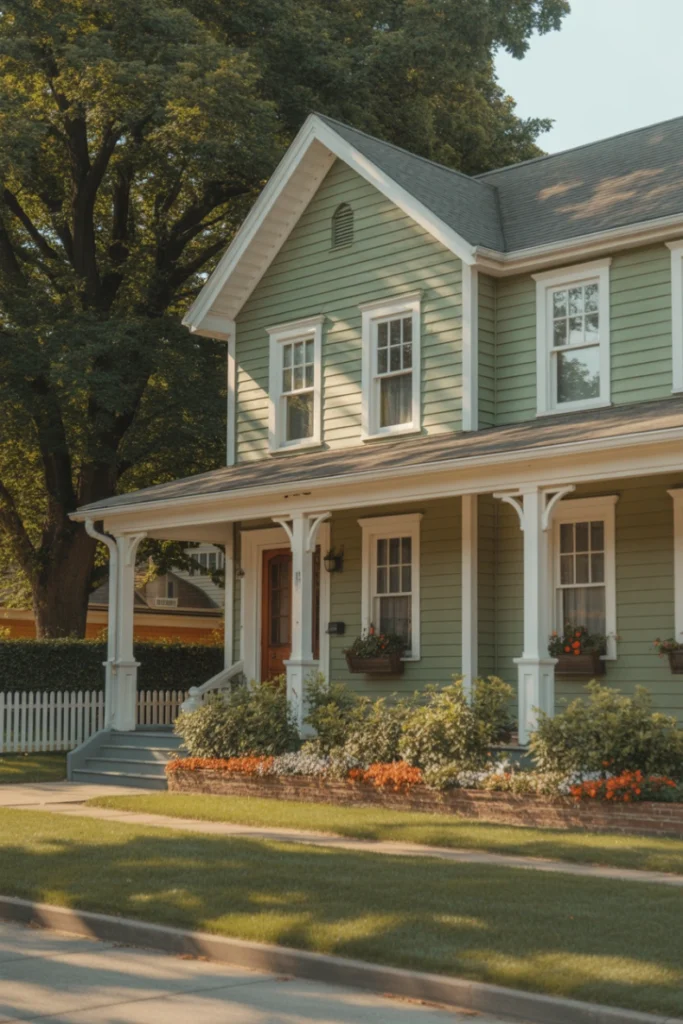
Pastel green exteriors bring a gentle, charming quality to residential design. This soft shade is ideal for homeowners who want a touch of color without overwhelming the exterior. Pastel green reflects light well and creates a warm, approachable appearance that feels friendly and inviting, especially on smaller homes where a stronger color might feel heavy.
This green house exterior idea pairs beautifully with cream, beige, or soft gray trim. A cream front door with simple paneling keeps the look sweet and classic, while a soft coral or pale yellow door adds a cheerful pop for homeowners who like a bit of personality. For the roof, a light gray or warm brown shingle keeps the palette soft, and white gutters blend quietly into the trim instead of drawing the eye.
Pastel green works especially well for vintage homes, cottages, and suburban neighborhoods where subtle individuality is desired. Pastel green exteriors create a sense of comfort and nostalgia while remaining fresh and visually appealing. Because pastel shades can look almost white in strong sunlight, always test a swatch at midday as well as in the morning and evening, and pick a shade one step deeper than your first instinct if the sample disappears against the siding in bright light. A satin finish holds up best on pastel colors, and a quick yearly wash keeps the light color looking clean. Finish with a small flower bed of white and pink blooms by the entry for a gentle, storybook touch.
7. Modern Green Exterior with Black Accents
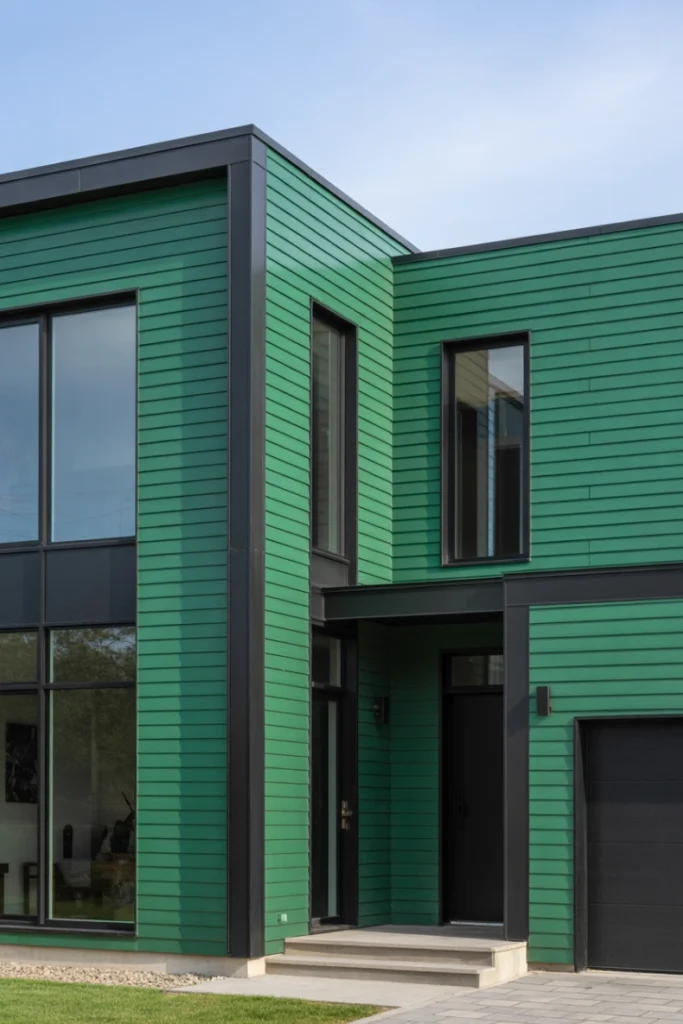
A modern green exterior combined with black accents creates a bold and contemporary aesthetic. Deep green shades paired with black window frames, doors, and metal details result in a striking contrast that emphasizes clean lines and modern architecture. The combination feels intentional and architectural rather than decorative, which is exactly why it suits flat roofs, large glass panels, and simple geometric forms.
This green house exterior idea is ideal for minimalist homes, modern builds, and urban residences. Black accents add definition and sophistication, while green introduces warmth and balance. Together, they create a sleek, confident exterior that feels current and intentional without appearing cold or sterile. Keep the black elements consistent: match the window frames, front door, gutters, and light fixtures in the same matte black finish so the accents read as one deliberate system instead of a collection of unrelated dark pieces.
To get the look right, choose a green with a slightly cool or neutral undertone, such as a deep eucalyptus or dark juniper, and pair it with smooth fiber cement panels, stucco, or vertical wood siding rather than traditional lap siding. Use a matte or low-sheen finish on the green to keep the surface looking flat and modern, and reserve semi-gloss black for the door and trim so those details catch the light. Add a concrete or dark stone walkway, a single sculptural tree, and a row of ornamental grasses for landscaping that matches the architecture. Warm 2700K LED wall lights beside the door soften the contrast after dark and keep the entry welcoming.
8. Light Green Exterior with Brick Details
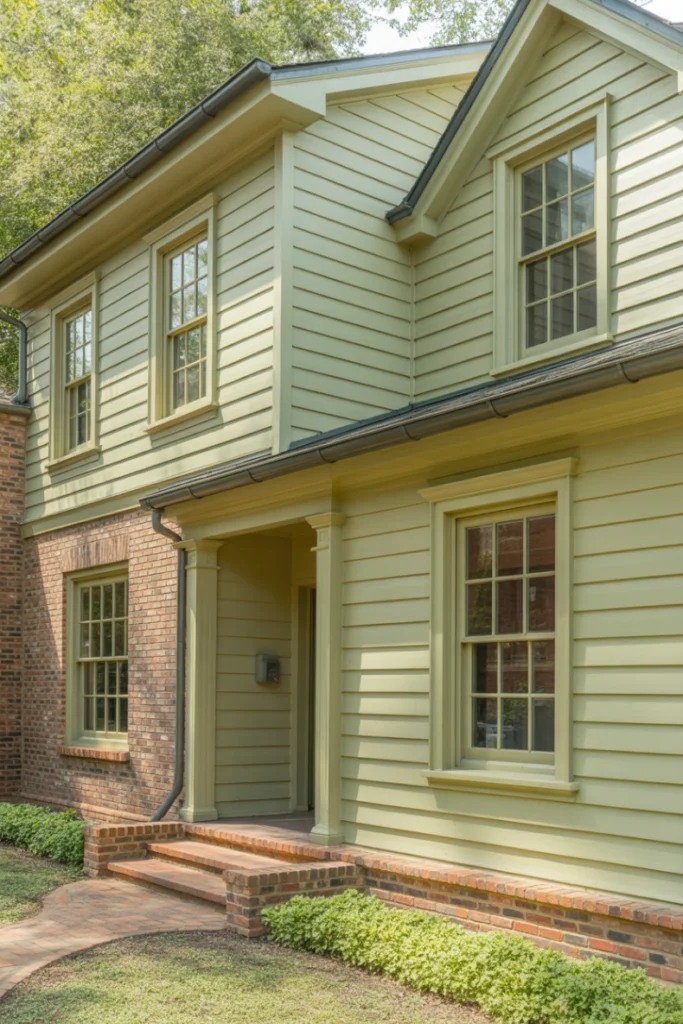
Light green exteriors paired with brick details offer a perfect balance between freshness and tradition. The soft green color brightens the home, while brick elements add texture and classic appeal. This combination works well across a variety of architectural styles, from traditional to transitional designs, because brick grounds the lightness of the paint and the green keeps the brick from feeling heavy or dated.
Brick pathways, chimneys, or accent walls complement light green siding beautifully. A red or warm brown brick chimney becomes a natural focal point against pale green, while a light brick walkway in tan or sand tones ties the entry together without competing for attention. If your brick is already painted, a soft white wash lets its texture show through while keeping the palette calm. This green house exterior idea creates visual interest without overwhelming the structure, and the result is a timeless, inviting home exterior that feels both familiar and updated.
For the best result, pick a light green with a warm undertone when your brick leans red, and a cooler light green when your brick leans gray or tan. Paint the trim in a warm white and the front door in a classic navy, deep red, or black for a traditional finish. A satin finish on the siding makes the light color easy to clean, which matters because light colors show dust and pollen more readily than dark ones. Plan on washing the siding once or twice a year, and plant low boxwood hedges or lavender along the foundation to echo the green without adding visual clutter.
9. Green Exterior with White Stone and Neutral Accents
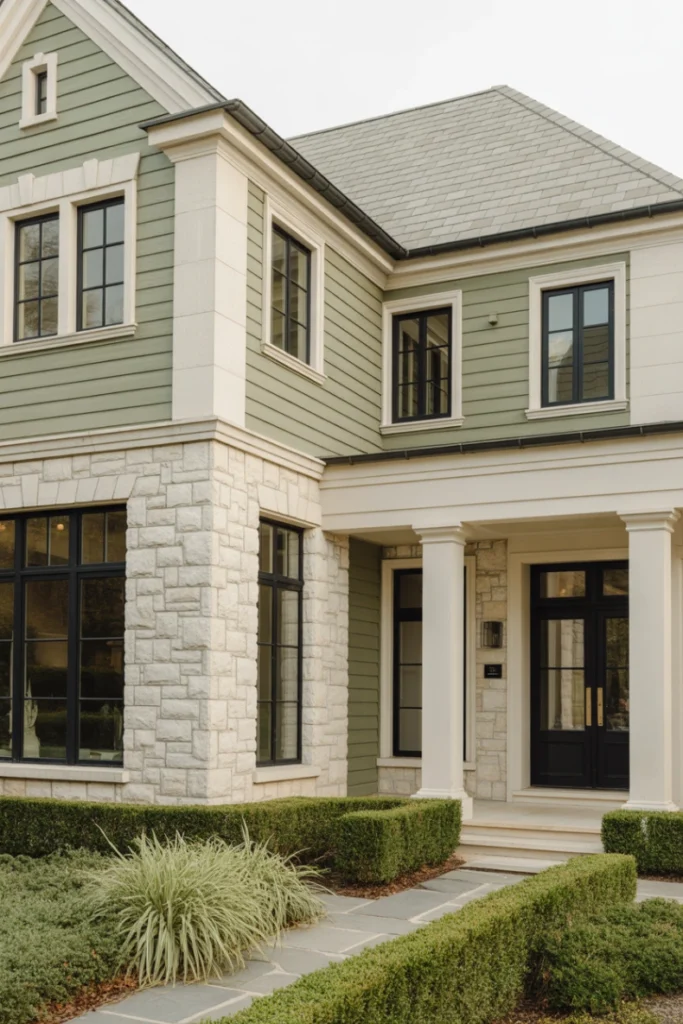
Green exteriors paired with white stone and neutral accents create a refined and upscale appearance. The contrast between green siding and white stone details highlights architectural features while maintaining a cohesive color palette. White limestone, whitewashed brick, or pale quartz stone all work well, because their brightness makes the green look richer by comparison without introducing a third strong color.
Neutral accents such as beige trim, gray roofing, or natural wood elements enhance the overall harmony. A light gray roof keeps the palette cool and elegant, while beige trim softens the transition between the green siding and the white stone. A natural wood front door in a medium stain adds warmth and gives the eye a place to land, and it pairs naturally with the stone entry. For a truly polished result, consider a double door entry in wood or dark green with glass panels, which suits the scale of a stone-accented facade.
This green house exterior idea is ideal for luxury homes and modern estates seeking elegance without excessive ornamentation. The design feels balanced, sophisticated, and visually enduring. Keep the stonework to one or two defined areas, such as the entry surround and a chimney or lower wall, and use a light warm-gray mortar so the individual stones stay visible. Use brushed brass or matte black for the door hardware and light fixtures, and keep the landscaping structured with clipped hedges, a clean lawn edge, and a few white flowering shrubs that repeat the stone color in the garden.
10. Two-Tone Green Exterior Design
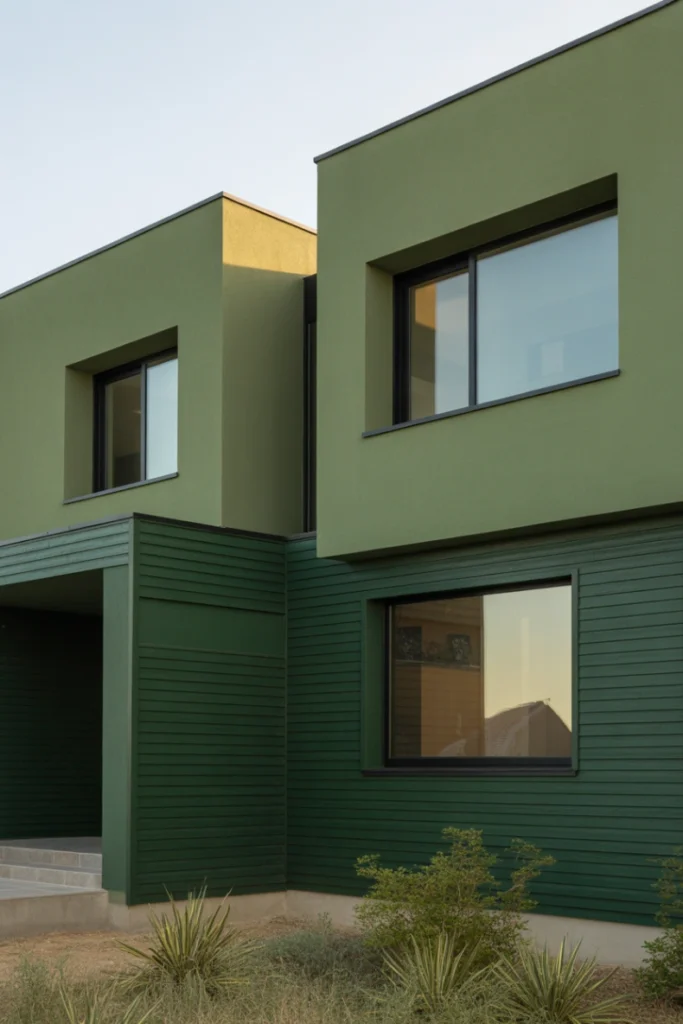
A two-tone green exterior introduces depth and visual interest by combining different shades of green on a single home. Darker greens can be used on the lower portion of the structure, while lighter shades highlight upper levels or architectural features. The contrast between the two tones adds dimension to a flat facade and makes a large house feel more proportionate and thoughtfully designed.
This green house exterior idea allows for creative expression while maintaining a cohesive look. It works well for larger homes or complex facades where variation enhances the design. The layered color approach creates a dynamic yet harmonious exterior that feels thoughtfully designed. The safest way to pair two greens is to choose shades from the same color family, one roughly two to three steps darker than the other on the same paint strip, so the tones relate instead of clashing. Use the darker shade on the ground floor, garage, or lower story, and the lighter shade on the upper story, gables, or dormers, which visually lightens the top of the house.
To make the two tones look deliberate, separate them with a clean horizontal line: a trim board, a band of stone, or a change in siding direction such as horizontal laps below and vertical boards above. Keep the trim color the same on both sections, usually a warm white or soft cream, so the whole house stays unified. Paint the front door in the darker green or in a contrasting black to anchor the entry. Before painting, test both shades side by side on the same wall at the same time of day, because two greens that look related on a small swatch can drift apart in full sunlight.
11. Green Exterior with Lush Landscaping Integration
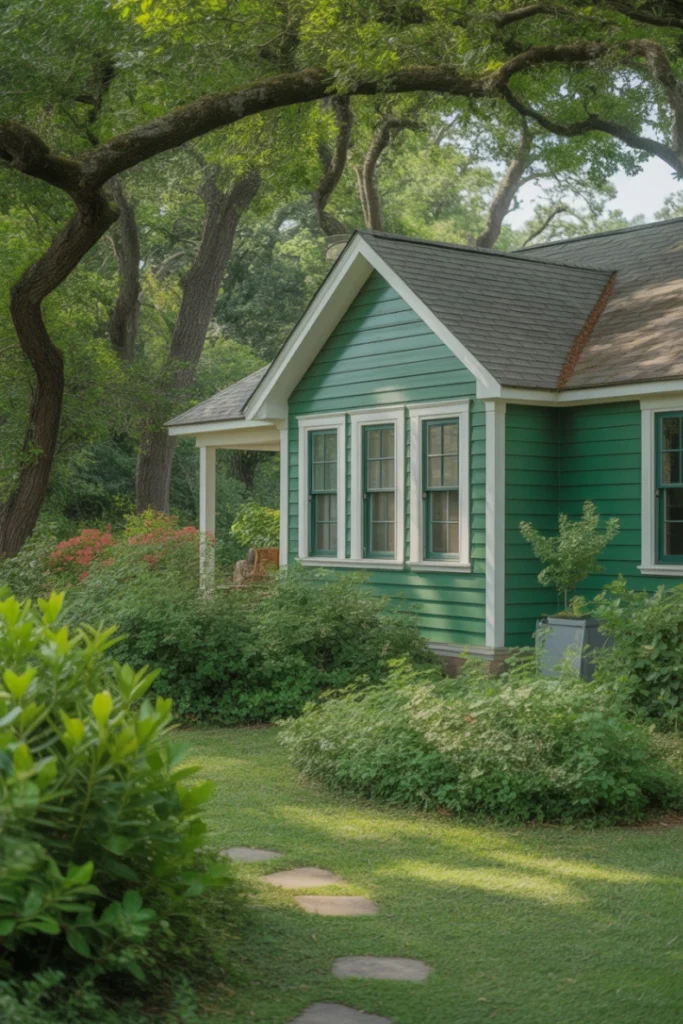
A green house exterior paired with lush landscaping creates a seamless connection between architecture and nature. The exterior color blends effortlessly with surrounding greenery, making the home feel like an extension of its environment. This is the easiest green exterior to live with, because the house and the garden share the same color story and the boundary between them softens.
This green house exterior idea is especially effective for homes with gardens, trees, or natural surroundings. Strategic landscaping enhances the color’s impact while adding depth and texture. The result is a peaceful, inviting exterior that feels organic, balanced, and visually harmonious. Plant in layers for the best effect: tall evergreens or small ornamental trees at the corners of the house, medium shrubs such as hydrangeas or boxwood along the foundation, and low ground cover or flowering perennials at the front edge of the beds. Vary the greens in the planting so the house color stands out rather than disappearing into a single flat green mass.
Choose a mid-tone green for the house, such as sage or a soft forest green, because very light greens can wash out against bright foliage and very dark greens can make the house look hidden behind the planting. Keep a clear 12 to 18 inch gap between shrubs and the siding so air can circulate and the paint stays dry, and use dark mulch or river stone in the beds to create contrast at ground level. Add a stone or brick pathway, a simple bench near the entry, and warm landscape lighting aimed up into the trees so the house looks just as inviting at dusk as it does at midday.
Final Thoughts
Green exteriors offer unmatched versatility, elegance, and timeless appeal. Whether you prefer soft pastel tones or deep, dramatic shades, these Green House Exterior Ideas demonstrate how thoughtful color selection and material pairing can transform a home’s curb appeal. By choosing the right shade and accents, homeowners can create an exterior that feels welcoming, stylish, and deeply connected to its surroundings.
Before you buy paint, test at least two shades on the actual wall, check them in morning and afternoon light, and look at them next to your roof, brick, or stone so the undertones agree. A green exterior is a long-term choice, and a weekend of sampling is the cheapest insurance against a color you will regret. Start with the idea that matches your home’s style, keep the trim and hardware consistent, and let the landscaping finish the story.
Frequently Asked Questions
What is the best green color for a house exterior?
There is no single best green, because the right shade depends on your home’s style, roof color, and surroundings. Sage green is the safest all-rounder for cottages and suburban homes, dark forest green suits cabins and craftsman houses, and olive green works well on Mediterranean and ranch-style homes. Always test two or three shades on your actual siding before deciding, since green shifts noticeably with sunlight and neighboring colors.
Does a green house exterior lower resale value?
A well-chosen green exterior does not hurt resale value, and it can help a home stand out in a neighborhood of beige and gray houses. The key is to pick a classic, muted shade rather than a bright or neon green, and to pair it with neutral trim and a complementary roof color. If you plan to sell soon, sage, olive, and soft forest greens are the safest choices because buyers read them as timeless rather than trendy.
What trim color goes best with a green house?
Warm white or cream trim is the most reliable pairing for almost every green exterior, because it brightens the color without competing with it. Beige and soft gray trim also work well, especially on olive and pastel greens. For a modern look, matte black trim pairs beautifully with deep greens, but keep it consistent across all windows and doors so the contrast looks intentional.
Should I paint the whole house green or use green as an accent?
Both approaches work, and the right choice depends on your home’s size and style. Painting the whole house green creates a confident, cohesive look that suits cottages, cabins, and craftsman homes. Using green as an accent, on the front door, shutters, or a single gable, is a lower-risk way to try the color on a traditional home or in a neighborhood with strict color guidelines. If you are unsure, start with the front door and shutters, live with the color for a season, and then decide about the full exterior.
How do I test a green exterior paint color before committing?
Buy sample quarts of your top two or three shades and paint test patches at least 2 feet by 2 feet on both a sunny wall and a shaded wall. Look at the patches in the morning, at midday, and in the evening for two or three days, and check them next to your roof, brick, or stone. Peel-and-stick paint samples are a useful second option, but a painted patch on the real siding is the most accurate test because it shows the true texture and sheen.
More Ideas You Will Love
 11 Butterfly-Friendly Garden Ideas: A Complete How-To Guide
 15 Reasons Why Your Garden Needs Mulching This Summer
 20 Dorm Room Decor Ideas – Create Your Ideal College Space in Style
 15 Scary Halloween Porch Decorations You Can DIY
 12 Easy DIY Halloween Porch Decor Ideas You Can Make Today
 18 DIY Outdoor Christmas Decoration Ideas for 2025 Homes