
11 Outdoor Light Fixture Ideas: Stylish & Functional Illumination

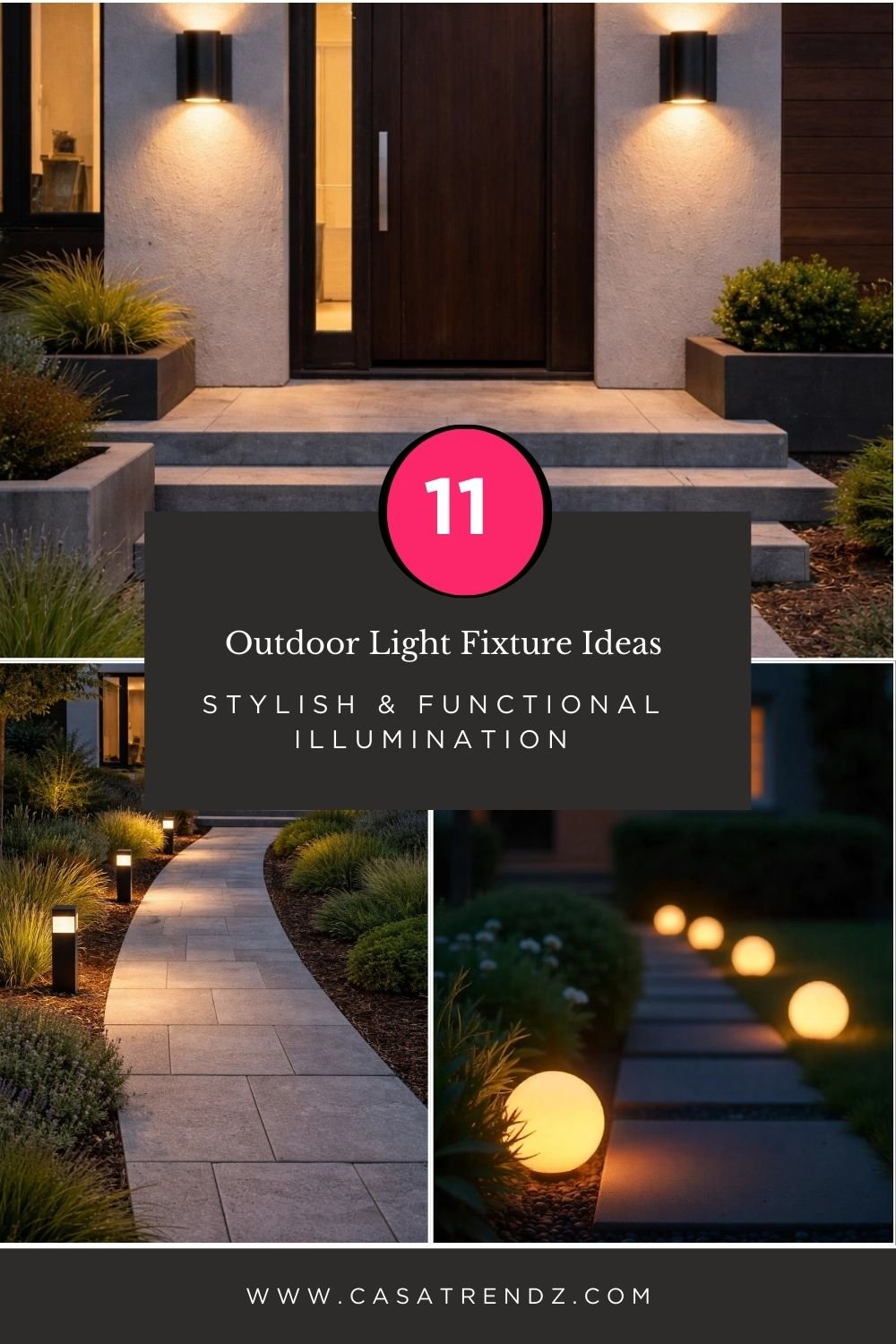
Outdoor lighting does far more than help you find the front door after dark. The right fixtures shape how your home looks from the street, how safe it feels to walk around at night, and how much you actually enjoy your patio, porch, or garden once the sun goes down. A well lit exterior can make a modest house look polished and welcoming, while a dark or poorly lit one can feel cold and uninviting, no matter how beautiful it is in daylight.
The good news is that you do not need a big budget or a professional designer to get it right. Most outdoor lighting projects are simple weekend jobs, and a thoughtful mix of just two or three fixture types is often enough to transform a whole yard. The key is layering: a bright fixture where you need to see clearly, a soft glow where you want atmosphere, and a few accent lights to show off the features you love most about your home.
In this guide, we share 11 outdoor light fixture ideas that balance style and function. Each one includes practical details on placement, sizing, materials, and color temperature, so you can choose with confidence whether your home is modern, rustic, farmhouse, or classic. Pick the ideas that fit your space, and your evenings outdoors will feel completely different.
1. Wall-Mounted Outdoor Sconces
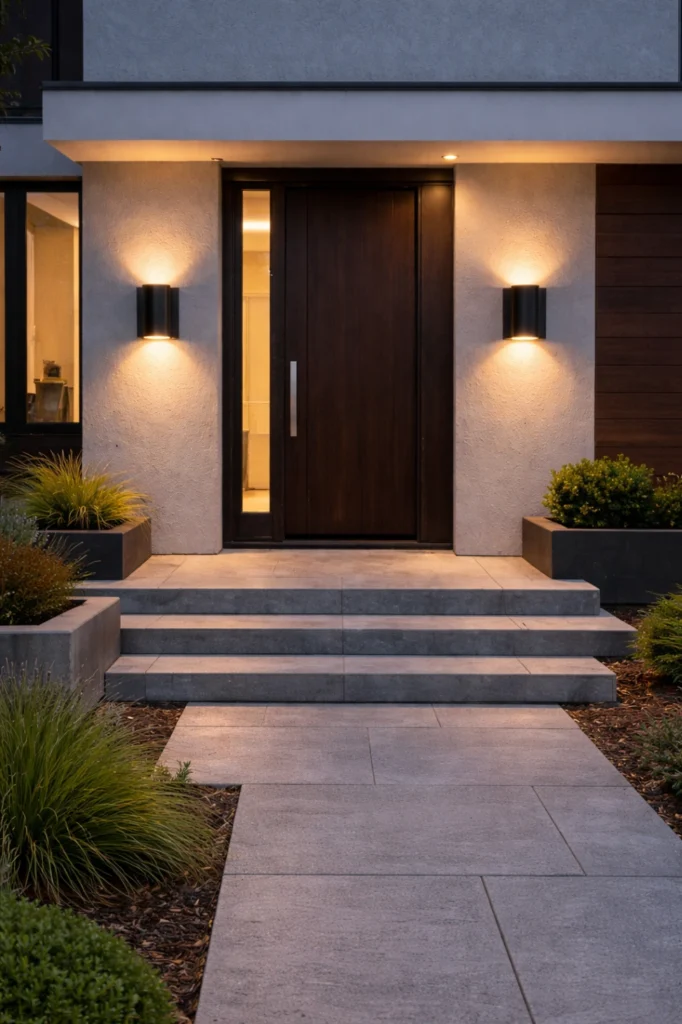
Wall-mounted sconces are the workhorses of outdoor lighting, and they belong on almost every home. Mounted beside the front door, garage, or patio entrance, they provide focused light exactly where you need it while adding real architectural interest to a plain wall. Modern sconces often feature clean lines, matte black or brushed nickel finishes, and integrated LED panels, while traditional styles use lantern shapes, seeded glass, and decorative metalwork that suit classic and farmhouse exteriors.
For the best result, mount sconces at eye level, about 66 to 72 inches from the ground to the center of the fixture, and place one on each side of the front door for a balanced, symmetrical look. On a wide garage wall, space a pair of sconces 8 to 10 feet apart. Choose fixtures rated for wet locations, and look for powder-coated aluminum, stainless steel, or solid brass, which resist rust far better than painted steel in rain and humidity.
Warm white bulbs in the 2700K to 3000K range flatter skin tones and make entrances feel inviting, while cooler temperatures can look harsh and clinical outdoors. If your sconces take standard bulbs, a dimmable 800 lumen LED is a good starting point for a front door, and you can always go brighter for a large porch. Pair your sconces with a dusk to dawn sensor or a smart timer so they switch on automatically and you never come home to a dark entryway.
2. Pathway and Walkway Lighting
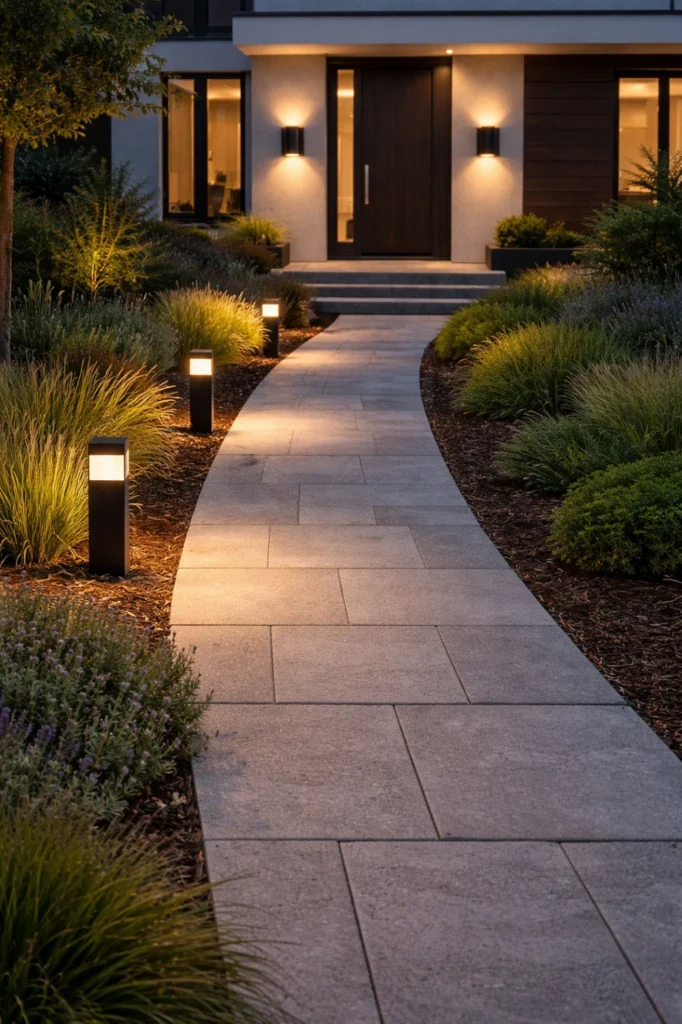
Pathway lights guide guests safely to your door while quietly shaping the whole look of your landscape at night. Low-profile fixtures set along walkways, garden beds, and driveway edges cast a soft downward glow that defines the route without glare. They come in finishes like matte black steel, brushed bronze, and natural stone, so they blend into planting rather than competing with it.
Spacing matters more than brightness here. Place fixtures 6 to 8 feet apart along a straight path and stagger them slightly from side to side on a curved walkway, which looks more natural than a rigid straight line. Keep the light low, about 12 to 18 inches tall for standard path lights, and aim the beam down at the ground so the glow pools on the paving instead of shining into people’s eyes.
Solar path lights are the easiest option because there is no wiring to bury, but they need at least six hours of direct sun to shine brightly all evening, so avoid shady spots. For consistent brightness in any weather, a low-voltage wired system on a 12 volt transformer is the better investment, and it lets you add more fixtures later. Warm 2700K bulbs keep the mood cozy, and a simple photocell timer handles switching them on at dusk. If you are also refreshing the front of your home, pair new path lights with a few front porch decor ideas so the entrance and the walkway feel like one finished design.
3. Outdoor Pendant Lights for Covered Areas
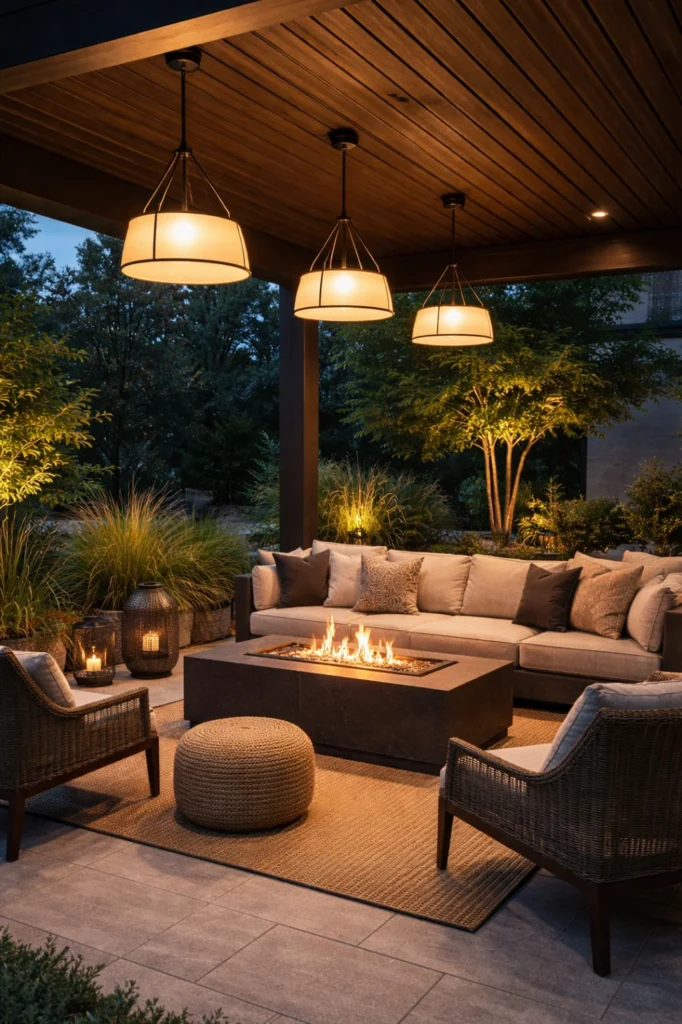
Outdoor pendant lights bring the polish of interior lighting to porches, pergolas, and covered patios. Hung from the ceiling, they act as a focal point that draws the eye upward and defines a seating or dining zone below. Styles range from industrial metal cages and seeded glass lanterns to sleek minimalist cylinders and woven rattan shades, so there is a pendant for nearly every architectural style.
Height is the detail most people get wrong. Hang pendants 30 to 36 inches above a dining table, or at least 7 feet above the floor over a walkway so tall guests never bump their heads. Over a long table, use two or three smaller pendants spaced 24 to 30 inches apart instead of one oversized fixture. Always choose a fixture rated for damp or wet locations, depending on how exposed the ceiling is, and look for sealed sockets and gaskets that keep out rain and insects.
Dimmable warm white bulbs make pendants far more flexible: bright for dinner, low and golden for a late evening drink. A single 60 watt equivalent LED per pendant is usually enough for a small porch, while larger patios need two fixtures or a higher lumen output. If your covered patio doubles as an entertaining space, combine pendants with softer accent lighting to create layers, and browse our outdoor entertaining area ideas for furniture and layout inspiration that pairs well with pendant lighting.
4. Recessed Outdoor Ceiling Lights
Recessed ceiling lights are the quiet achievers of outdoor lighting. Installed flush into porch ceilings, soffits, and covered balconies, they deliver even, shadow-free illumination without any visible fixture to distract from the architecture. That makes them ideal for minimalist and modern homes, and for any covered space where a hanging fixture would feel intrusive or eat into headroom.
Plan the layout before you cut any holes. Space recessed lights 4 to 6 feet apart in a grid or a straight line along the ceiling, and keep them about 2 feet from the wall so the beam washes down the wall evenly instead of creating hot spots. Choose 4 inch or 6 inch housings rated for damp locations, and pick LED trims in a finish that matches the ceiling, white for painted ceilings or black for dark stained wood.
Warm white 2700K to 3000K LEDs look best outdoors, and a dimmer switch is worth every penny because full brightness is rarely needed on a porch. Sealed, IC-rated LED recessed lights use very little energy, often 10 to 15 watts each, and last for years without a bulb change. For a cohesive look, match the trim color and color temperature of your recessed lights with the sconces and pendants elsewhere on the house, so the whole exterior reads as one intentional design.
5. Bollard Lights for Landscape Definition
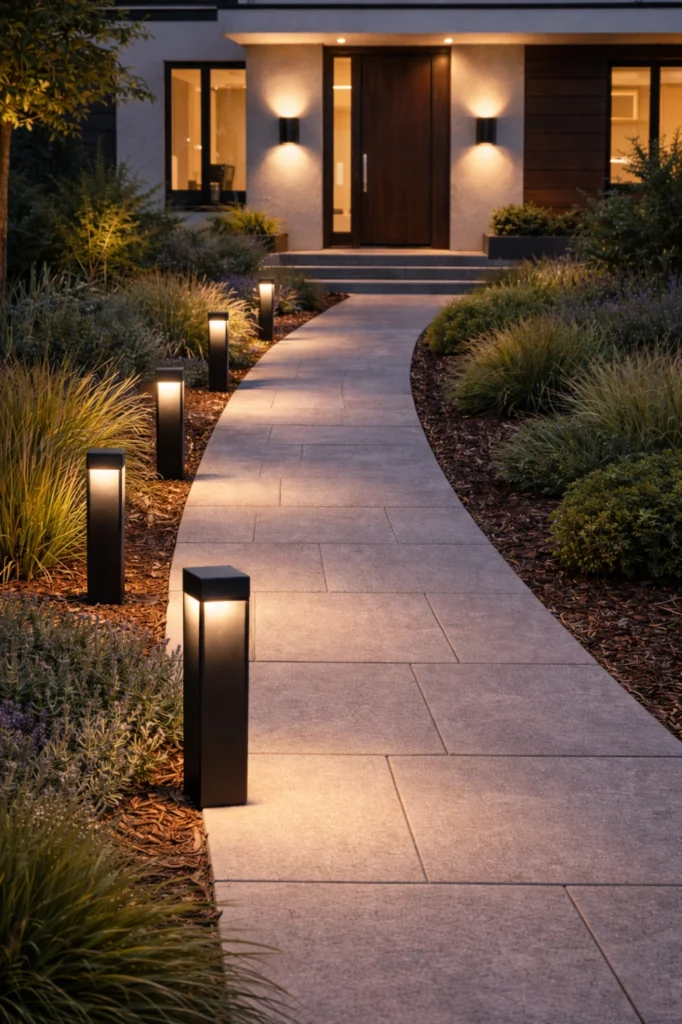
Bollard lights are short, sturdy posts, usually 24 to 36 inches tall, that outline driveways, garden beds, and long walkways. Because they stand taller than path lights, they spread light more evenly and double as a sculptural element in the landscape. Contemporary bollards come in slim matte black or stainless steel cylinders, while traditional versions use fluted posts with lantern-style heads that suit classic gardens.
Use bollards where you want to define a boundary or guide movement over a longer distance, such as along a driveway or the edge of a lawn. Space them 8 to 12 feet apart, and keep them just outside the edge of the path so they never become a tripping hazard. Many modern bollards use directional LED heads that aim light downward and outward, which reduces light pollution and keeps the glow on the ground where it belongs.
For durability, choose powder-coated aluminum or marine-grade stainless steel, especially in coastal or snowy climates where salt and moisture attack cheaper metals. Low-voltage bollards wired to a transformer give the most reliable brightness, while solar bollards work well in sunny, open spots with no shade. A row of evenly spaced bollards leading to the front door creates a sense of arrival that flat path lights alone cannot match.
6. String Lights for Ambient Atmosphere

Few fixtures change the mood of an outdoor space as quickly as string lights. Draped across a patio, pergola, fence, or balcony, their warm glow instantly makes a space feel festive, relaxed, and lived in. They are the easiest way to add atmosphere for summer dinners, weekend gatherings, or quiet evenings with a book, and they suit both casual backyards and refined terraces.
For a permanent installation, use commercial-grade string lights with shatterproof LED bulbs and heavy-duty outdoor cable, and support the span with a steel guide wire so the strand does not sag over time. Hang them 8 to 10 feet above the ground, and keep spans under 30 feet between support points. Warm white 2200K to 2700K bulbs give the classic cafe glow, while larger globe bulbs spread light more evenly than tiny fairy bulbs.
String lights work best as a layer, not as the only light source. Pair them with a brighter fixture near the grill or dining table so you can actually see what you are doing, and let the strings provide the ambiance. Plug them into an outdoor-rated smart plug or timer so they switch on at dusk without a second thought. If you are planning a full patio refresh, our outdoor patio design ideas show how string lights fit into complete patio layouts, from small balconies to large backyard entertaining zones.
7. Up-Lighting for Architectural Features
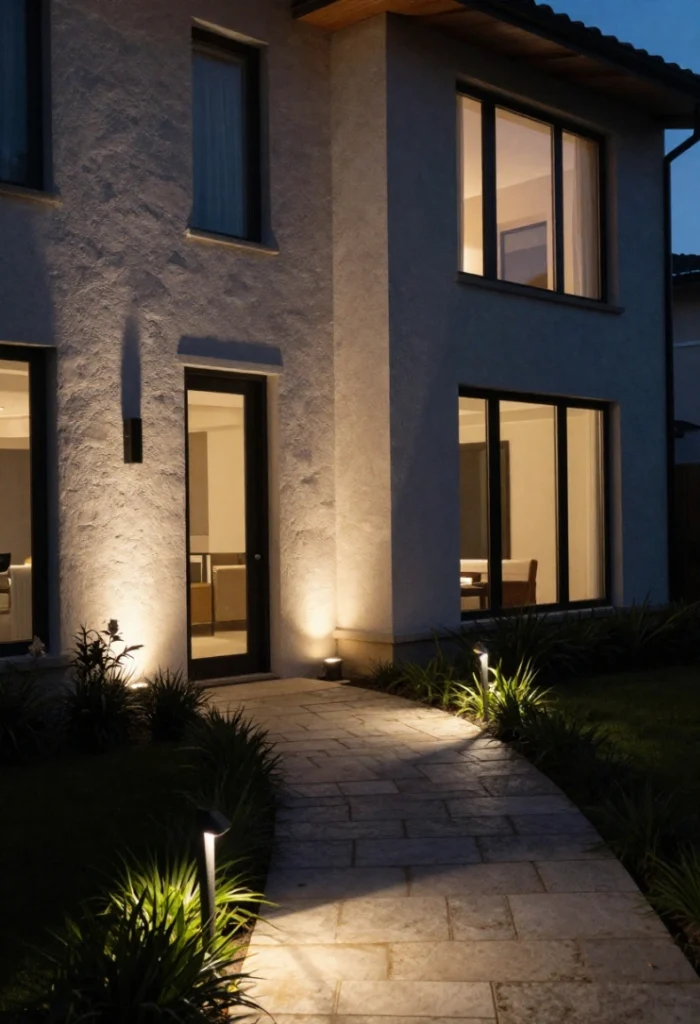
Up-lighting, also called accent or spot lighting, is the technique designers use to make a house look dramatic after dark. Small ground-level fixtures aim a beam upward to highlight a stone facade, a tall tree, a column, or a textured wall. Used sparingly, it adds depth and sophistication that flat overhead lighting never achieves, and it makes your home stand out from every other house on the street.
Placement is everything. Set the fixture 12 to 18 inches away from the base of the feature, and angle the beam so it grazes the surface rather than blasting straight up into the sky. Adjustable heads let you fine-tune the angle until the texture or shape reads clearly. For trees, place two fixtures on opposite sides of the trunk to light the canopy evenly, and for a tall facade, use a narrow 15 to 25 degree beam so the light stays focused instead of spilling everywhere.
Warm 2700K light flatters brick, stone, and wood, while cooler tones can make those materials look washed out. Choose low-voltage LED well lights or in-ground fixtures with a sturdy, weatherproof housing, and bury the cable just below the surface for a clean look. Less is more with up-lighting: highlight one or two features per elevation, and leave the rest in shadow so the lit elements really stand out.
8. Lantern-Style Outdoor Lights
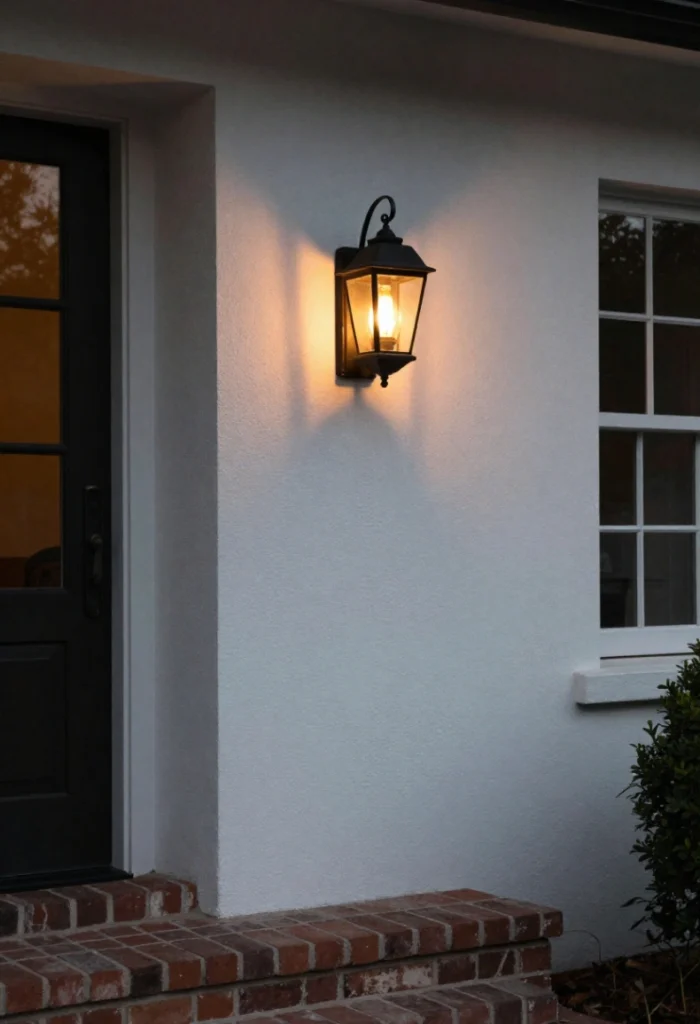
Lantern-style fixtures bring timeless charm to any exterior. Inspired by traditional street lanterns, they work beautifully beside front doors, along garden paths, and on porch posts. Their enclosed glass panels protect the bulb from wind and rain while diffusing the light into a soft, even glow that feels warm and welcoming from the street.
Classic lanterns use black wrought iron, aged bronze, or copper frames with clear or seeded glass, and they pair naturally with colonial, craftsman, and farmhouse homes. Modern versions keep the lantern silhouette but simplify it with clean lines, matte finishes, and integrated LEDs, so the style also works on transitional and contemporary exteriors. For a cohesive look, match the lantern finish to your door hardware, house numbers, and mailbox.
Mount wall lanterns symmetrically on either side of the front door at about 66 inches to the center, and choose a fixture sized to your door: roughly one quarter to one third of the door height looks balanced, so an 80 inch door pairs well with a 20 to 24 inch lantern. Post-mounted lanterns on pillars or fence posts mark entrances and driveway gates beautifully. If you love the farmhouse look, lantern lighting pairs naturally with the rustic textures in our modern farmhouse exterior ideas, from board and batten siding to wood front doors.
9. Step and Stair Lighting
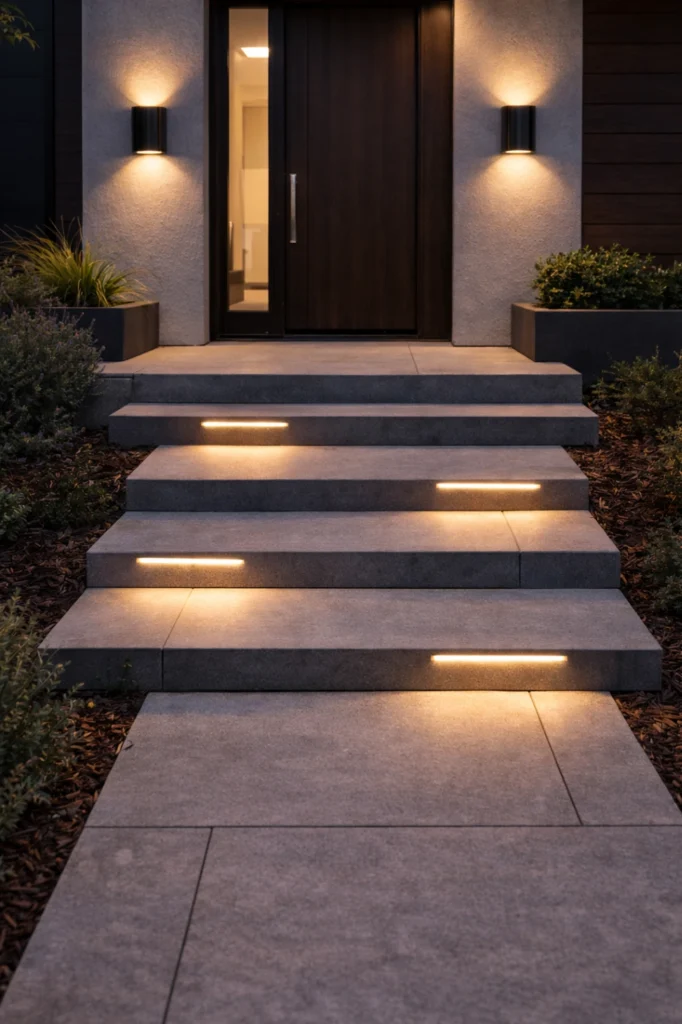
Step and stair lights are small, low-profile fixtures built into stair risers, side walls, or deck edges, and they are one of the most important safety upgrades you can make outdoors. A single missed step in the dark can cause a serious fall, so lighting each tread clearly is worth far more than its modest cost. The best step lights are subtle during the day and almost invisible, then glow softly at night exactly where your feet land.
Install one fixture per step, centered on the riser about 6 to 8 inches above the tread, or mount small louvered lights in the side wall every two to three steps on a wide staircase. Recessed LED step lights use only 2 to 3 watts each, so a whole staircase costs pennies a night to run. Choose a warm 2700K color temperature and a louvered or shielded design that directs light downward, so the glow lands on the tread instead of shining into the eyes of someone climbing the stairs.
Low-voltage wired step lights are the most reliable option, and they connect easily to the same transformer as your path lights. If your steps are stone or concrete with no easy wiring route, look for surface-mounted LED strips or solar step lights that stick on with adhesive or screws. Pair step lights with pathway lighting at the top and bottom of the stairs so the whole route reads as one continuous, safe path from the driveway to the door.
10. Motion-Sensor Outdoor Lights
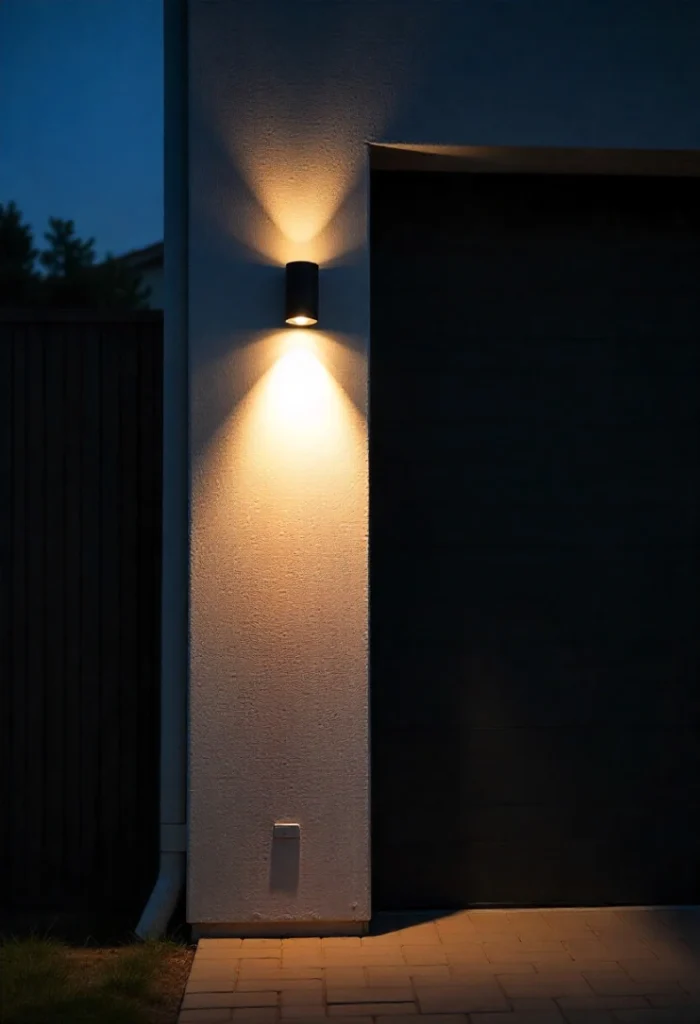
Motion-sensor lights only switch on when they detect movement, which makes them one of the most practical and energy-efficient outdoor fixtures you can buy. They are ideal for garages, side yards, back doors, and driveways, where you need bright light for a moment but not all night. The sudden illumination also deters intruders, so they double as a simple security upgrade without the cost of a full camera system.
Mount motion-sensor fixtures 8 to 10 feet high for the best detection range, and angle the sensor head downward at about 45 degrees so it covers the approach area rather than the street. Most quality fixtures let you adjust three settings: sensitivity, so a passing cat does not trigger it; duration, usually 1 to 10 minutes; and the ambient light level at which it activates. Set the range to cover your driveway or walkway, and keep it narrow enough that it does not fire every time a car passes on the road.
Modern motion-sensor fixtures have moved far beyond the bulky white boxes of the past. Slim LED floodlights in matte black or bronze blend into most exteriors, and many now include dusk to dawn modes that keep a low glow all night and jump to full brightness when motion is detected. For a neat installation, choose a fixture with the sensor built in rather than a separate add-on, and wire it to a standard switch indoors so you can override it manually whenever you need the light on for longer.
11. Solar-Powered Outdoor Light Fixtures
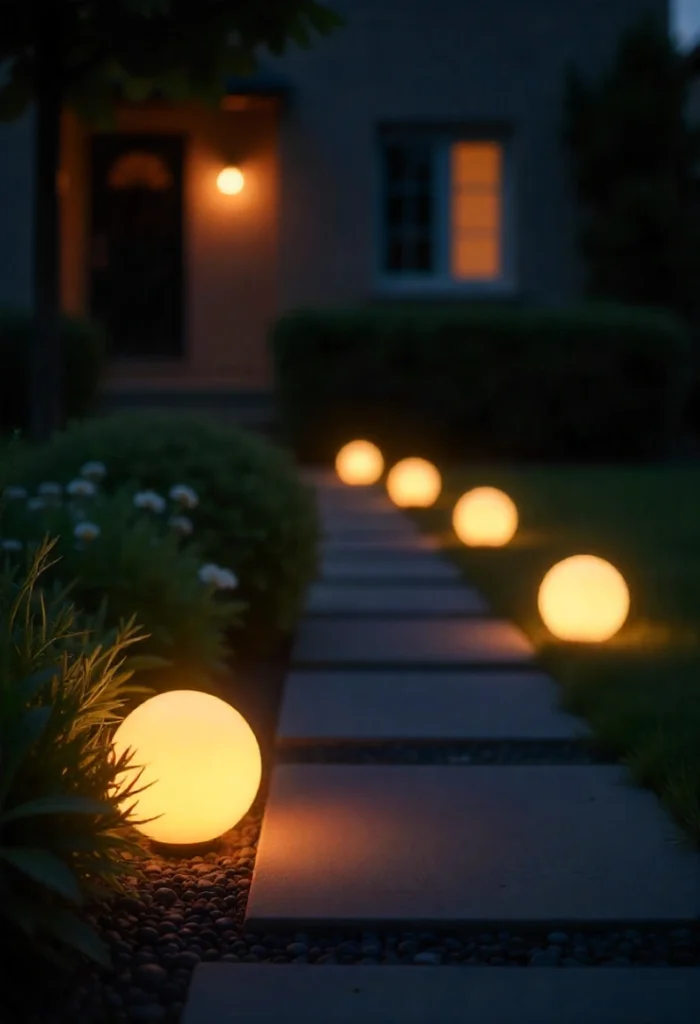
Solar-powered fixtures have improved dramatically in recent years, and they are now a genuinely good option rather than a compromise. A small panel charges a built-in battery during the day, and the light switches on automatically at dusk. There is no wiring, no transformer, and no electrician needed, which makes solar the fastest and cheapest way to add light to a garden, fence line, or path.
Solar works best where the panel gets six to eight hours of direct sun, so place fixtures in open, south-facing spots and keep panels clean of leaves and dirt. Modern solar lights use efficient LED bulbs and larger lithium batteries, and many now shine at 100 to 300 lumens, which is bright enough for paths and accent lighting. Look for models with a separate panel on a short cable if the light itself sits in shade, and choose fixtures with an IP65 or higher waterproof rating so rain and sprinklers do not shorten their life.
Use solar lights for accent and pathway lighting, garden borders, and decorative spots where running a cable would be difficult or expensive. For task lighting near a door or grill, a wired fixture is still the better choice because it delivers consistent brightness in any weather. A smart mix works best: solar where it is sunny and simple, wired where you need guaranteed light every night. That combination keeps installation easy and your energy bill low at the same time.
Final Thoughts
Choosing the right outdoor lighting is about more than visibility. It is about creating an exterior that feels intentional, welcoming, and secure, and that you actually want to spend time in after dark. The eleven ideas in this guide work best in combination, so start with the fixtures that solve a real problem, like a dark entryway or an unsafe step, then add one or two layers of ambiance, like string lights or up-lighting, to give the space personality.
Before you buy anything, walk your property at night and note the dark spots, the features worth highlighting, and the routes you actually use. Measure the spaces, choose a consistent warm color temperature across all fixtures, and favor weatherproof materials that will last for years. With a little planning and the right fixtures, your outdoor spaces can feel just as comfortable and beautiful at night as they do during the day.
Frequently Asked Questions
What is the best color temperature for outdoor lights?
Warm white light between 2700K and 3000K is the best choice for most residential outdoor lighting. It flatters wood, stone, and brick, makes skin tones look natural, and creates a cozy, inviting atmosphere. Cooler temperatures above 4000K can look harsh and clinical, so save those for security floodlights where maximum visibility matters more than mood.
How many lumens do I need for outdoor lighting?
It depends on the job. Path and step lights need only 50 to 150 lumens each, wall sconces and pendants work well at 400 to 800 lumens, and security floodlights usually need 1000 to 2000 lumens. Brighter is not always better outdoors, so choose the lowest brightness that does the job comfortably and avoid glare.
Are solar outdoor lights bright enough?
Yes, for accent and pathway lighting, modern solar fixtures now produce 100 to 300 lumens, which is plenty for paths, garden beds, and decorative spots. They need six to eight hours of direct sunlight to perform well, though, so they are less reliable in shady yards or during long cloudy spells. For entrances, steps, and task areas, wired fixtures still give more consistent brightness.
Do outdoor light fixtures need to be waterproof?
Yes, always choose fixtures rated for outdoor use. Look for a damp location rating for covered porches and a wet location rating for fully exposed spots. A waterproof rating of IP44 or higher handles rain, while IP65 or higher is better for ground-level fixtures that face sprinklers and standing water.
How far apart should pathway lights be spaced?
Space pathway lights 6 to 8 feet apart, and stagger them slightly from side to side on curved paths for a natural look. Bollard lights, which are taller and spread light further, can sit 8 to 12 feet apart. The goal is overlapping pools of light with no dark gaps, not a runway of bright spots.
More Ideas You Will Love
 22 Laundry Room Ideas for Small Spaces – Stylish & Functional Makeovers
 19 Blue Exterior House Ideas: Stunning & Timeless Home Designs
 16 Rainwater Harvesting Ideas for Summer Gardens
 12 Tropical Home Garden Ideas for a Relaxing Aesthetic
 12 Smart Home Exterior Lighting Ideas for Summer Security & Style
 13 Outdoor Furniture Ideas for a Weatherproof Patio