
18 Ottoman Ideas: Functional & Stylish Designs for Every Space

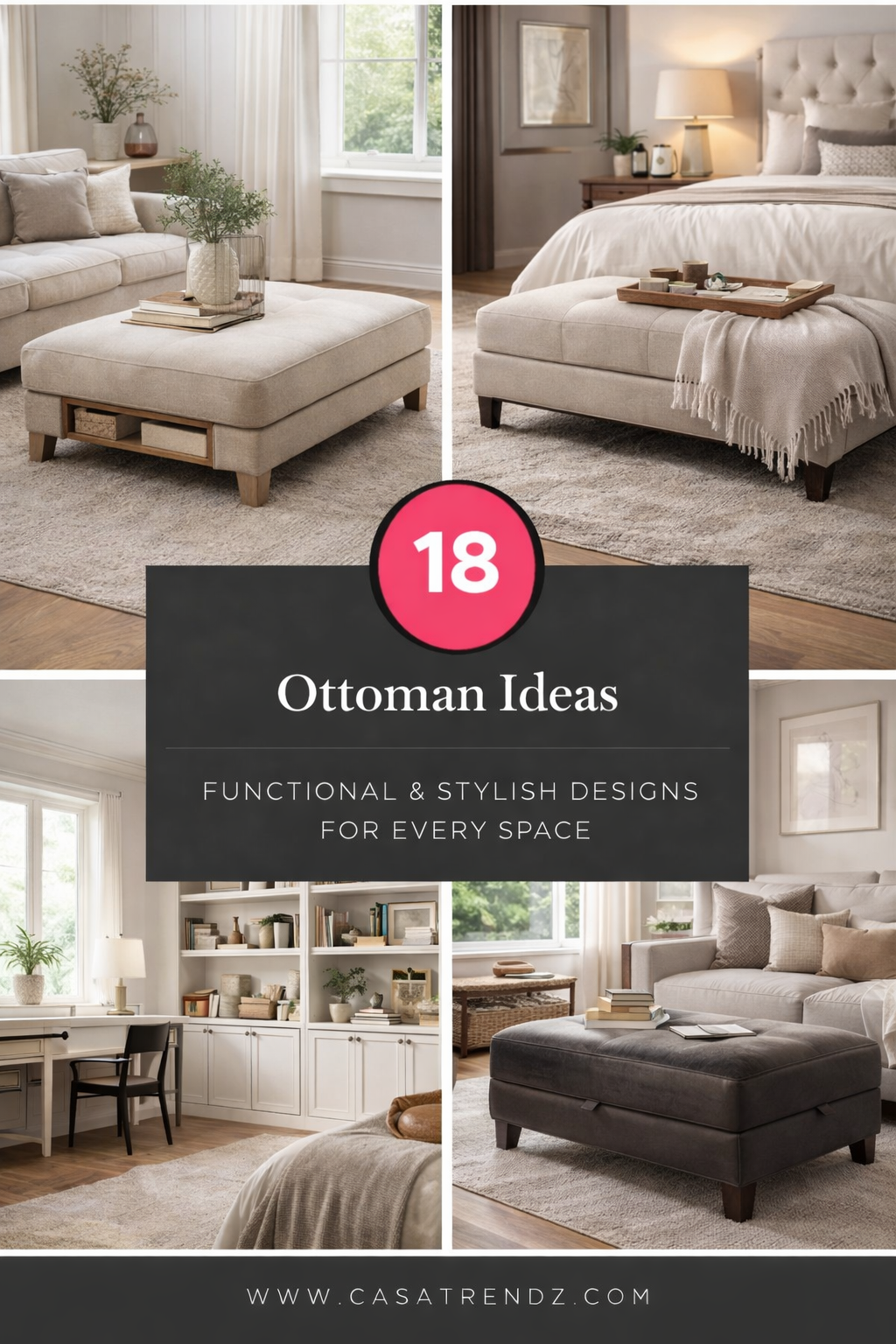
An ottoman might be the hardest working piece of furniture you own, or at least it should be. In one compact footprint it can store blankets, seat an extra guest, hold a coffee tray, rest tired feet, and pull a whole room together. The trick is choosing the right shape, size, and material for the job you actually need it to do, and then placing it where it earns its keep every day.
This guide walks through 18 ottoman ideas for living rooms, bedrooms, entryways, and patios. For each one you will find practical sizing guidance, material notes, and styling tips you can use right away, whether you are furnishing a first apartment or refreshing a room you have lived in for years. Measure your space first, note how the ottoman will be used most often, and let that decide the design.
1. Storage Ottomans for Clutter-Free Living
Storage ottomans hide a hinged or lift-off top over a roomy compartment, which makes them one of the most practical choices for busy households. A standard rectangular storage ottoman, roughly 30 to 40 inches wide, holds two folded throws, a few magazines, board games, or the remote controls that always seem to wander off. In a living room it sits neatly in front of the sofa, and in a bedroom it can hold off-season clothes or extra pillows without adding another bulky cabinet to the room.
When you shop, lift the lid and check the hinges. Soft-close hinges keep fingers safe and stop the lid from slamming, while a lid that stays open at 90 degrees makes it easy to load and unload with both hands. Look for a sturdy base and a weight rating of at least 250 pounds if you plan to sit on it. Faux leather wipes clean in seconds, while a washable fabric cover is the friendlier pick for homes with kids or pets. Inside, add a small fabric bin or two so little items do not slide around and get lost at the bottom.
Tip: Keep one storage ottoman per high-traffic room and assign it a single job, such as blanket storage in the living room and shoe care supplies in the entryway. One clear purpose keeps it tidy instead of turning it into a junk box.
2. Ottoman Coffee Table Alternatives
A large, firm ottoman can stand in for a traditional coffee table and instantly make a seating area feel softer and more relaxed. Choose one that is about two-thirds the length of your sofa and roughly the same height as the seat cushions, usually 17 to 19 inches, so it feels natural to reach across. A flat, tightly upholstered top works best, since a soft, domed top will not hold a tray steady. Pair it with a wood or metal tray to create a stable surface for mugs, books, and a small vase.
This swap is especially smart for family homes. With no sharp corners, a fabric or leather ottoman is kinder to toddlers learning to walk and to shins in the dark, and it doubles as extra seating when friends drop by. If you love the look of your living room ideas but want a cozier feel, try replacing the table for a week before committing. Slip a washable slipcover over the ottoman if you worry about spills, and keep a second tray nearby so drinks always have a landing spot.
Tip: Pick a tray that covers about half the ottoman top. The other half stays free as a footrest, so the piece keeps doing two jobs at once.
3. Tufted Ottomans for Timeless Elegance
Button tufting gives an ottoman instant character. The small, evenly spaced buttons pull the upholstery into soft dimples that catch light and shadow, adding texture even in a single solid color. A tufted ottoman works beautifully in traditional rooms, where it echoes classic Chesterfield sofas and wing chairs, but it also softens very modern spaces that might otherwise feel flat and hard-edged.
Velvet is the classic choice for a tufted ottoman, and it photographs beautifully, but it shows every crumb and needs regular brushing to keep the pile even. Linen and performance fabrics are easier to live with and still show the tufting clearly. For the shape, a round tufted ottoman suits a square seating arrangement, while a rectangular one anchors a long sofa. Check that the buttons are secured through the padding rather than glued on, since glued buttons pop off with regular use. A tufted ottoman in a deep jewel tone, such as emerald or navy, can carry a whole neutral room.
Tip: Vacuum a tufted ottoman with the upholstery attachment once a week, pressing gently into the dimples where dust collects, to keep the tufting crisp.
4. Ottoman Benches for Entryways
An ottoman bench, usually 36 to 48 inches long and 16 to 18 inches deep, turns a bare entryway into a place that actually works. It gives everyone a seat for pulling on shoes, a landing spot for bags, and a visual anchor that makes the entry feel finished rather than like a hallway you pass through. Many designs add a shelf or hidden compartment underneath for shoes, umbrellas, or pet leashes.
Place the bench against the longest free wall, leaving at least 30 inches of clear walkway in front of it so the door can swing freely. A bench with short legs is easier to clean under, while a skirted base hides shoe clutter. Pair it with wall hooks above and a small rug underneath to define the zone. If your entry is narrow, look for a slim bench no deeper than 14 inches. For more inspiration on first impressions, browse these modern entryway ideas and match the bench finish to your console or mirror frame so the space reads as one planned design.
Tip: Add a boot tray beside the bench in wet months. It catches drips, protects floors, and keeps the bench itself looking neat.
5. Round Ottomans for Soft Visual Flow
Round ottomans soften rooms that are full of straight lines, such as boxy sectionals, rectangular rugs, and square coffee tables. Without corners, they let the eye travel smoothly around the room, which makes small spaces feel less crowded and large rooms feel more inviting. A round ottoman of 24 to 30 inches in diameter fits neatly beside an armchair, while a larger 36 inch version can anchor the center of a seating group.
Because they have no front or back, round ottomans are easy to move and turn, so they work well as flexible extra seats during gatherings. They also suit reading nooks, where a small round ottoman tucked under a side table can be pulled out for feet and pushed away when not needed. Choose a firm, flat top if you plan to set a tray on it, and a soft, plush top if comfort comes first. A round ottoman in a textured fabric, such as bouclé or woven wool, adds warmth without adding visual weight.
Tip: In a square room, echo the round shape once more, perhaps with a round mirror or round side table, so the ottoman feels intentional rather than random.
6. Square Ottomans for Structured Layouts
Square ottomans suit rooms where order and symmetry matter. Their straight edges line up neatly with sectionals, modular sofas, and rectangular rugs, which gives the layout a calm, organized feel. A square ottoman of about 30 by 30 inches works well as a coffee table alternative, while a smaller 18 inch cube can serve as a footrest or a pull-up seat wherever it is needed.
The flat top and generous surface area make square ottomans natural tray holders, and two matching square ottomans pushed together can form a long bench for parties. Look for firm, high-density foam inside, because a sagging top defeats the purpose of using it as a table. Leather and faux leather are smart picks for square ottomans used daily, since spills wipe off and the structured shape holds its lines. In contemporary interiors, match the ottoman color to a cushion or throw so it ties the seating group together without shouting for attention.
Tip: If you buy two square ottomans, choose a pair that can nest or stack. They store in half the space and give you flexible seating on demand.
7. Leather Ottomans for a Luxe Look
Leather brings a sense of luxury that few materials match, and it only gets better with age as it develops a soft sheen. A leather ottoman stands up to daily use in high-traffic rooms, resists most spills, and wipes clean with a damp cloth. Rich cognac and dark brown leather warm up rustic and traditional rooms, while black or charcoal leather sharpens a modern space and pairs beautifully with chrome or matte black metal legs.
Real top-grain leather lasts longest, but good bonded or faux leather is a fair budget choice if you keep it out of direct sun, which can dry and crack it. Condition real leather every six to twelve months to keep it supple, and blot spills immediately instead of rubbing them. A leather ottoman with nailhead trim adds a tailored, furniture-store finish, while a smooth, unadorned one reads more minimal. Whatever style you choose, test the seat height against your sofa so your knees sit at a comfortable right angle when your feet rest on top.
Tip: Keep leather ottomans at least a foot away from radiators and sunny windows. Heat and UV light are the two fastest ways to age leather before its time.
8. Ottoman Footrests for Everyday Comfort
The classic footrest ottoman does one job brilliantly: it lets you put your feet up. A footrest that matches your armchair in height, usually 15 to 17 inches, supports your legs without forcing your knees upward, which helps circulation and eases tired feet after a long day. Smaller than a coffee table ottoman, a footrest of about 20 by 16 inches is easy to slide aside when you want floor space back.
Matching the footrest fabric to your chair creates a polished, set-piece look, while a contrasting color or texture turns it into a small accent of its own. A firm foam core is better than a soft, sink-in fill for a footrest, since your heels need support rather than a hammock. If you read or watch TV in the same chair every evening, a footrest is one of the cheapest comfort upgrades you can buy. Look for one with a non-slip base or short legs so it stays put on smooth floors instead of drifting across the room.
Tip: Try the footrest with your usual chair before buying, or measure carefully. A footrest that is more than two inches taller or shorter than the seat will feel wrong within minutes.
9. Bedroom Ottomans at the Foot of the Bed
An ottoman at the foot of the bed adds both polish and purpose to a bedroom. It gives you a place to sit while putting on shoes, a spot to lay out tomorrow’s outfit, and a visual anchor that makes the bed feel complete. For a queen bed, an ottoman about 48 inches wide works well, while a king bed suits a 60 inch bench. Keep the height a few inches lower than the top of the mattress so it reads as a companion piece rather than a barrier.
Storage versions are the smartest pick here, since they swallow extra pillows, throws, and off-season bedding that would otherwise pile up on a chair. A long, low bench in a soft neutral fabric suits calm, restful bedrooms, while a tufted or velvet ottoman adds a touch of hotel luxury. If your bedroom is small, choose a slim bench no deeper than 16 inches so it does not crowd the walkway. Pair the ottoman fabric with your headboard or bedding for a coordinated look, and explore matching bedroom design ideas to tie the whole room together.
Tip: Leave at least 24 inches between the ottoman and the wall or dresser so you can walk around the bed comfortably, even with the ottoman in place.
10. Ottoman Poufs for Casual Spaces
Poufs are the most relaxed members of the ottoman family. Lightweight, unframed, and usually filled with foam beads, shredded foam, or cotton, they can be picked up with one hand and moved wherever they are needed. That makes them perfect for casual living rooms, kids’ rooms, dorms, and play areas where seating needs change by the hour. A pouf of about 18 to 22 inches across is big enough to sit on or rest feet on, yet small enough to tuck beside a sofa when not in use.
Poufs shine in bohemian, eclectic, and modern interiors, where their soft shape and texture add personality. Knitted cotton poufs feel cozy and handmade, leather poufs look polished and wipe clean, and woven jute poufs bring a natural, earthy note. Because most poufs have no rigid frame, check the fill: a pouf that is too soft will flatten under weight, while one with a firm inner core keeps its shape. Choose a removable, washable cover if the pouf will live in a kids’ room or near food and drinks.
Tip: Buy poufs in pairs. Two matching poufs flanking a coffee table look deliberate, and they give guests somewhere to sit without dragging in a dining chair.
11. Multi-Functional Ottomans with Trays
An ottoman plus a tray is a two-in-one solution that adapts to the moment. With the tray on top, the ottoman becomes a stable table for coffee, books, or a laptop. Lift the tray away and it turns back into a footrest or an extra seat in seconds. The trick is choosing a tray that fits well: it should cover most of the top without overhanging the edges, and it should have raised sides or handles so items do not slide off.
Wood trays add warmth and suit farmhouse or traditional rooms, metal trays bring a modern edge, and mirrored trays reflect light in small spaces. A tray with handles is easy to carry to the kitchen, and a tray with compartments keeps remotes and coasters organized. For a firm ottoman, a flat tray sits steady, while a soft-topped ottoman needs a tray with a flat, rigid base. Keep the tray styling simple, with one small plant or candle and a book or two, so the surface never feels cluttered. When the tray comes off, the ottoman is ready for feet again, which is the whole point of this flexible pairing.
Tip: Keep a felt or cork pad under the tray. It stops the tray from scratching leather or snagging fabric, and it keeps the tray from sliding.
12. Small Ottomans for Compact Spaces
In apartments and small rooms, a small ottoman earns its place by doing several jobs without eating up floor space. A cube of 16 to 18 inches on each side tucks under a console table, slides beside a sofa, or hides in a closet when guests leave. It can serve as a footrest, a side table with a tray, a plant stand, or a seat for one, all in a footprint smaller than a dining chair.
For compact rooms, choose a lightweight ottoman you can move with one hand, and favor storage versions that hide clutter out of sight. A round or square shape is easier to place than a long bench, and a color close to your wall or sofa color helps the piece blend in rather than chop up the room visually. If you are furnishing a studio or a small living room, start with one small ottoman and add a second only if you find yourself moving it between rooms every day. These small living room ideas show how compact pieces can make a tight layout feel generous instead of cramped.
Tip: Measure the gap where the ottoman will live, including the space needed to pull it out and use it. A cube that fits its parking spot but not its working spot will only get in the way.
13. Colorful Ottomans as Accent Pieces
A colorful ottoman is the easiest way to add personality to a neutral room without repainting a wall or replacing a sofa. Mustard yellow warms a gray room, teal cools a beige one, and a rich coral or emerald makes a white room feel alive. Because an ottoman is relatively small, a bold color feels playful rather than overwhelming, and it is easy to swap out later when your taste changes.
Use the 60-30-10 rule as a guide: about 60 percent of the room in a dominant neutral, 30 percent in a secondary color, and 10 percent in an accent. A colorful ottoman is a perfect 10 percent piece. Pick up its color once more in a cushion, a throw, or a piece of art so it feels connected to the room rather than dropped in by accident. Patterned ottomans, such as stripes, florals, or geometric prints, work the same way, but keep the pattern scale in proportion to the piece. A large print on a small ottoman can look busy, while a small print reads as texture from across the room.
Tip: If you are nervous about a bold color, start with a removable slipcover in the shade you love. You can test it for a month and change it cheaply if it does not work.
14. Ottoman Sets for Flexible Seating
Ottoman sets give you a small team of seats that can be arranged and rearranged as needed. A typical set includes two to four matching pieces, often in graduated sizes, that can sit together as one long bench, split into individual seats, or nest inside each other for storage. This flexibility makes sets ideal for entertaining, family movie nights, and homes where the living room doubles as a playroom or workspace.
When shopping for a set, check that the pieces are stable on their own, since a wobbly ottoman is useless as a seat. Nesting sets save the most space, while sets on casters are easiest to move. Matching upholstery keeps the group looking tidy, but a set in two coordinating colors can define zones in an open-plan room, for example one color near the sofa and another near the reading chair. Sets also make great gifts for new homeowners, since they solve the extra seating problem in one purchase. Store the pieces you are not using under a console or against a wall so they stay handy without cluttering the room.
Tip: Count your usual guests before choosing a set size. Four small ottomans seat four people, while two large ones seat two, so match the set to your real entertaining habits.
15. Ottoman Storage Cubes
Storage cubes are the compact, boxy cousins of the storage ottoman, and they are brilliant organizers. A cube of about 15 to 17 inches on each side fits neatly into cube shelving units, under desks, or at the end of a hallway, and the lift-off or hinged lid reveals enough space for toys, craft supplies, shoes, or pet gear. Their straight sides mean they pack tightly together with no wasted gaps.
Storage cubes work hardest in playrooms and family rooms, where they can be assigned by person or by toy type, so cleanup becomes a game kids can actually win. Label the front of each cube with a small tag or a chalk label so everyone knows what goes where. Faux leather cubes wipe clean after art projects, while fabric cubes in a fun color make storage look like decor. Choose cubes with a firm lid if you want to use them as seats, and check the weight limit before letting adults sit on them. A row of matching cubes under a window seat or along a wall turns a messy corner into a tidy, intentional display.
Tip: Rotate the contents seasonally. Store summer toys in winter and winter gear in summer, so the cubes never overflow and the room stays calm.
16. Fabric Ottomans for Soft Texture
Fabric ottomans bring warmth and softness that hard surfaces cannot match. Linen feels light and airy in summer rooms, velvet adds depth and drama, bouclé brings a cozy, cloud-like texture, and woven cotton offers a casual, everyday feel. With so many textures and patterns available, a fabric ottoman can be matched to almost any decor style, from coastal to contemporary.
Durability matters as much as looks. Check the rub count on the fabric label if you can; a higher count means the fabric resists wear longer. Performance fabrics, which resist stains and fading, are worth the extra cost for ottomans that get daily use, especially in homes with kids or pets. A removable, washable cover is the most practical feature of all, since it turns a spill from a crisis into a laundry cycle. Rotate the ottoman occasionally so sunlight and wear fall evenly, and vacuum it weekly with an upholstery attachment to keep dust from settling into the weave.
Tip: Order a fabric swatch before buying. Colors look different under your own lighting than they do online, and a swatch lets you test the texture against your sofa fabric.
17. Outdoor Ottomans for Patio Comfort
Outdoor ottomans extend the comfort of your living room onto the patio, balcony, or deck. Made from weather-resistant materials such as powder-coated aluminum frames, resin wicker, and solution-dyed acrylic fabric, they handle sun, rain, and humidity without fading or rotting. Use one as a footrest beside a lounge chair, as extra seating for guests, or as a side table with a tray on top.
Before buying, check that the fabric is rated for outdoor use and that the cushion covers are removable and washable. Quick-dry foam is worth seeking out, since it stops the ottoman from staying soggy after a storm. A woven resin wicker ottoman suits traditional patios, while a sleek metal frame with a pale cushion fits modern outdoor spaces. In small balconies, a single compact ottoman can serve as both footrest and seat, and it can be tucked under a chair when not in use. Store cushions indoors during heavy winter weather to extend their life, even if the frame is rated to stay outside.
Tip: Hose down the frame and brush the fabric once a month during the outdoor season. A quick clean stops pollen and mildew from building up and keeps colors bright.
18. Statement Ottomans as Design Features
A statement ottoman is furniture as art. It might have an unusual shape, such as a sculptural curve or an oversized round form, a striking material like marble, brass, or hand-carved wood, or a bold pattern that stops the eye. Placed in the center of a room, it becomes the focal point that everything else is arranged around, which makes it perfect for homeowners who want their furniture to say something.
The key to living with a statement piece is letting it breathe. Keep the surrounding furniture simple and neutral so the ottoman stays the star, and resist the urge to cover it with trays and clutter. A statement ottoman still needs to work, so check that it is stable, comfortable to sit on, and the right height for the sofa it serves. In a minimalist room, one dramatic ottoman can carry the whole design, while in a layered, collected room it needs to share the spotlight with other pieces. Choose something you will still love in five years, not just this season, since a true statement piece is an investment.
Tip: Photograph the room before the ottoman arrives and compare after it is placed. If the room feels balanced in the photo, the scale and color are right.
Final Thoughts
These 18 ottoman ideas show how one versatile piece can solve storage problems, add seating, soften a room, and express your style all at once. The best ottoman for your home is the one that fits your space, matches how you actually live, and feels good every time you use it. Measure first, choose a material that suits your household, and pick a shape that works with your existing furniture rather than against it.
Start with the job that matters most, whether that is hiding clutter, replacing a coffee table, or adding a seat for guests, and let that need guide your choice. A well-chosen ottoman does not just fill a gap in the room. It becomes the piece you reach for every day, and the one your guests ask about first.
Frequently Asked Questions
What size ottoman should I choose for my sofa?
As a general rule, choose an ottoman that is about two-thirds the length of your sofa and roughly the same height as the seat cushions, usually 17 to 19 inches. This keeps the proportions balanced and makes it comfortable to rest your feet or set down a tray. For a single armchair, a footrest of about 20 by 16 inches is usually enough.
Can an ottoman replace a coffee table?
Yes, if you choose a firm, flat-topped ottoman and add a tray. The tray creates a stable surface for drinks, books, and decor, while the ottoman underneath stays soft and safe, with no sharp corners. A tray that covers about half the top leaves the other half free as a footrest, so you get both functions at once.
What is the best ottoman material for homes with kids or pets?
Performance fabric and leather are the most forgiving choices. Performance fabrics resist stains and can often be cleaned with soap and water, while leather wipes clean and stands up to claws better than most woven fabrics. Avoid delicate velvet and light linen in high-traffic spots, and choose a removable, washable cover whenever possible.
How do I keep a storage ottoman organized?
Give the ottoman one clear job, such as blanket storage or toy storage, and add small bins or fabric organizers inside so items stay grouped. Rotate the contents seasonally and empty the ottoman completely once every few months to remove anything that has crept in without a purpose. If it starts overflowing, that is a sign to declutter rather than buy a bigger ottoman.
Are ottomans comfortable as extra seating?
Yes, provided the ottoman is firm and stable. Look for high-density foam, a sturdy frame, and a weight rating of at least 250 pounds. Soft, overstuffed poufs are better as footrests than as seats, since they can feel unstable. A square or rectangular ottoman with a flat top makes the most reliable extra seat.
More Ideas You Will Love
 18 Indoor Christmas Light Ideas for 2025 Inspiration
 14 Neutral Farmhouse Bedroom Color Trends
 22 Coastal Bedroom Ideas for a Beach-Inspired, Breezy Look
 24 Bedroom Makeover Ideas – Stylish Inspiration for Every Space
 21 Small Bedroom Ideas for Couples – Cozy, Functional & Romantic Designs
 22 Boy Bedroom Ideas That Are Creative, Fun & Functional