
21 Apartment Inspiration Ideas – Step-by-Step Design Transformations

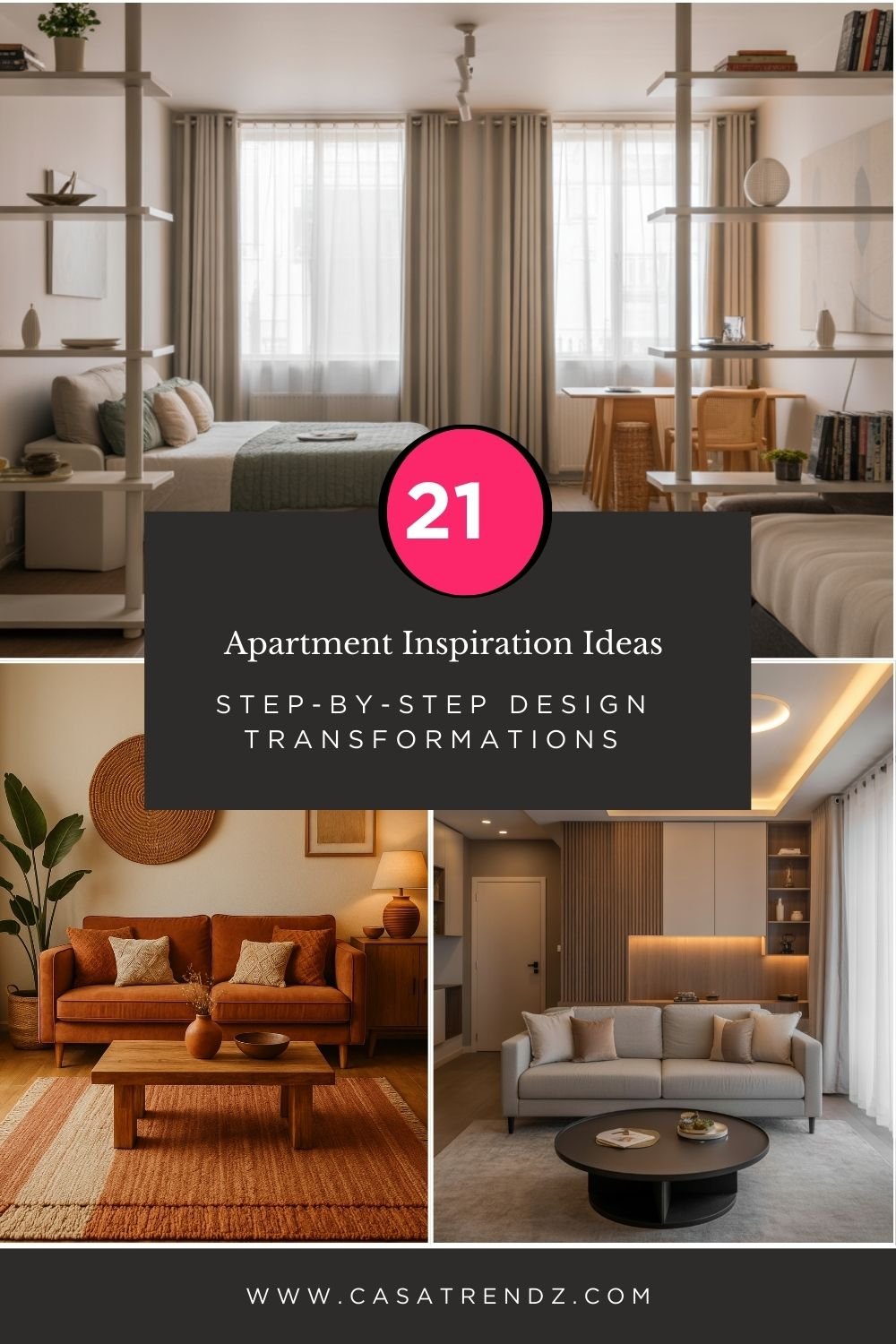
Apartment living comes with a familiar set of challenges: limited square footage, fixed layouts, rental restrictions, and rooms that have to do double duty. The good news is that none of these problems require a renovation. With the right approach, a few smart swaps and a clear plan, an ordinary apartment can become a stylish, functional, and deeply personal home.
Small changes add up fast. Moving a sofa six inches off the wall, swapping harsh overhead lighting for warm layered lamps, or painting one accent wall can change how a whole room feels. The key is to work step by step, one zone at a time, instead of trying to redo everything at once. That way every change stays affordable, and you can see what works before spending more.
In this guide, you will discover 21 apartment inspiration ideas built around step-by-step design transformations. Each idea breaks down exactly what to change, which materials and measurements to use, and how to get the result without major construction. Whether you live in a studio, a one-bedroom, or a larger apartment, these ideas will help you create a space that reflects your lifestyle while making the most of every square foot.
1. Small Living Room Layout Transformation
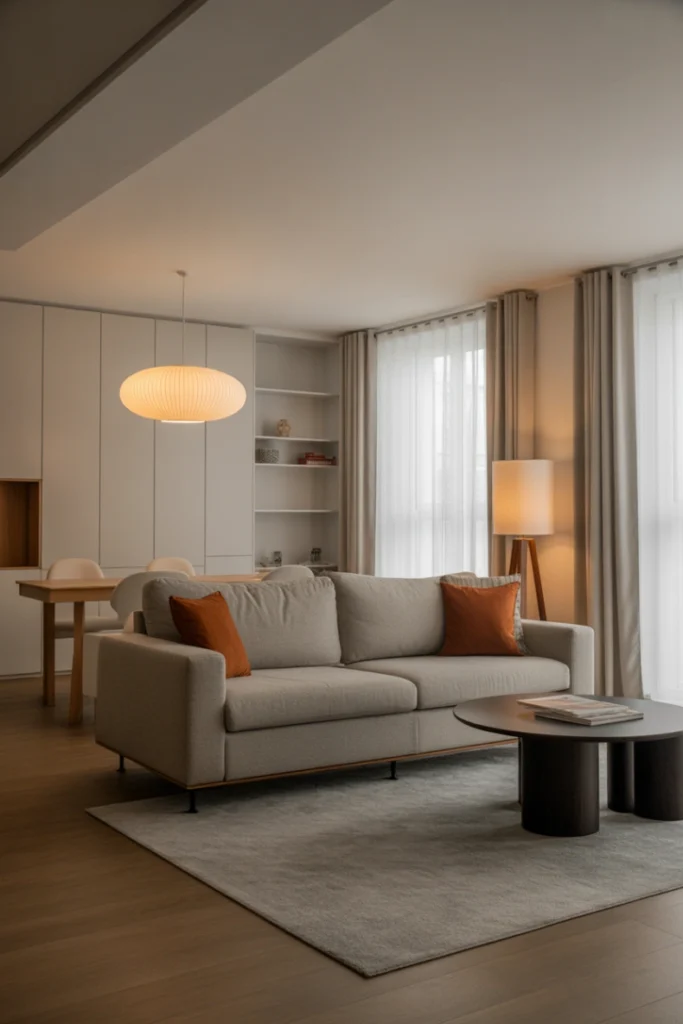
Start by measuring the room and sketching the layout on paper before moving a single piece of furniture. Leave 30 to 36 inches of clear walkway space around the main seating area so the room never feels cramped. Instead of pushing every piece against the wall, float the sofa 6 to 12 inches out from the wall and angle a chair toward it. This creates a defined conversation zone and makes the room feel larger, not smaller.
Choose furniture scaled to the room: a 72 to 84 inch sofa suits most apartment living rooms, while a loveseat or apartment-size sofa works better in tight spaces. Anchor the seating with a rug that is at least 5 by 7 feet, large enough for the front legs of the sofa and chairs to sit on it. Add a slim console table behind the sofa for lamps and books, and finish with a floor lamp in one corner to soften the edges. For more layout ideas, explore these small living room ideas that show how compact spaces can still feel open and welcoming.
2. Studio Apartment Zoning Design

Studio apartments work best when each activity has its own clearly defined zone, even without walls. Use a large rug to mark the living area, place a bookshelf or open shelving unit perpendicular to the wall to separate the sleeping area, and set up a small dining table near the kitchen counter. Keep the bed in the quietest corner, ideally away from the front door, so the sleeping zone feels private.
Stick to a light, neutral base palette of white, warm gray, or soft beige, then add color through bedding, cushions, and art. Lightweight furniture on slim legs keeps sightlines open, and a curtain on a ceiling track can close off the bed at night without blocking light during the day. Add one tall plant near the window to soften the divide between zones and bring life into the space.
3. Open-Concept Apartment Refresh
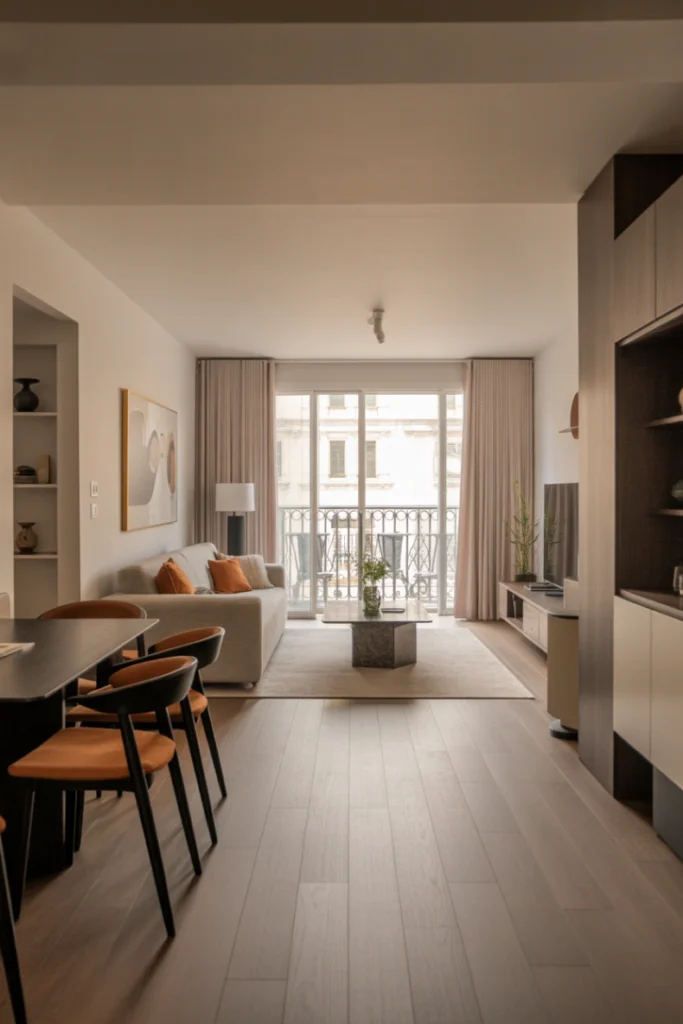
Open-concept apartments can feel overwhelming when the living, dining, and kitchen areas blur into one big empty space. Start by choosing one unifying element, such as the same wood tone or a repeated accent color, and carry it through all three zones. Use a large area rug under the sofa and a different, smaller rug under the dining table to signal where each zone begins and ends.
Hang a pendant light over the dining table and place a floor lamp beside the sofa to create separate pools of light. Keep furniture low and open-backed so sightlines stay clear across the room. A long, low console or a row of plants along the back of the sofa acts as a gentle divider without closing the space off. The result is an open plan that still feels organized and intentional.
4. Minimalist Apartment Transformation
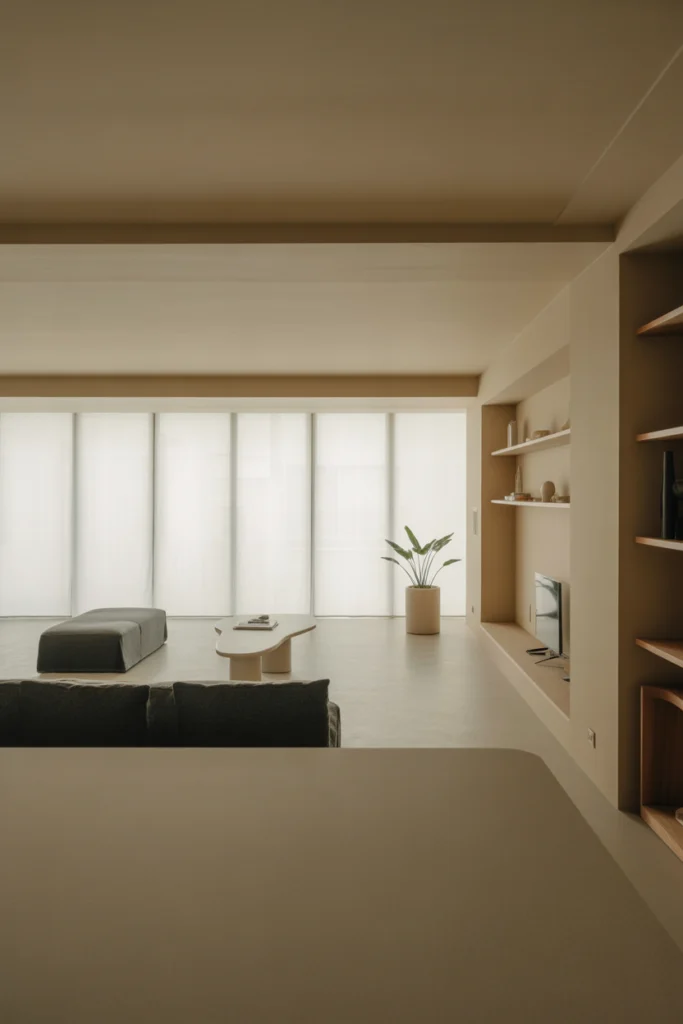
Minimalist design starts with editing, not buying. Remove one item from every surface, then remove one piece of furniture you do not use weekly. What remains should earn its place by being useful, beautiful, or both. Keep the color palette tight: two neutrals plus one accent color, repeated in small doses through cushions, art, and throws.
Choose furniture with clean lines and hidden storage, such as an ottoman that opens, a bed with drawers underneath, or a coffee table with a lower shelf. Store everyday clutter in matching baskets or closed cabinets so surfaces stay clear. The payoff is a calmer apartment that feels larger, is easier to clean, and lets the few pieces you love stand out.
5. Cozy Apartment Makeover
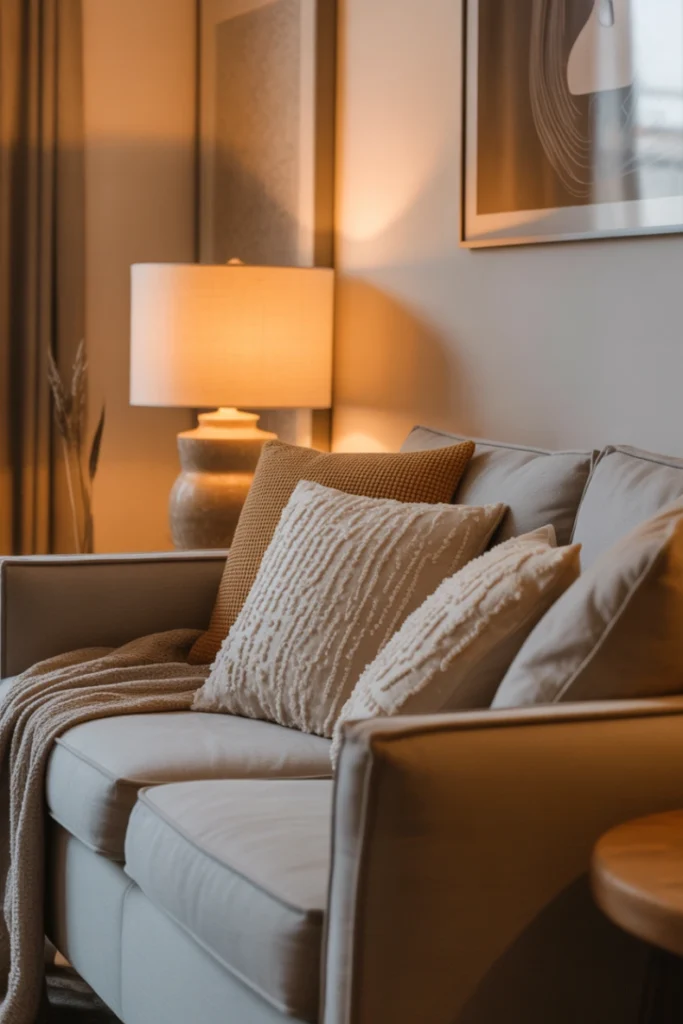
Cozy is a feeling you build in layers. Start with the floor: a plush rug in the living room and a soft runner in the hallway instantly warm up hard floors. Add texture on top of texture, such as a chunky knit throw over the sofa arm, linen curtains, velvet cushions, and a woven basket for blankets. Warm lighting does the rest, so swap cool white bulbs for warm white bulbs rated around 2700K.
Choose a warm base palette of cream, camel, terracotta, or soft sage, and bring in natural materials like light wood, rattan, and cotton. A scented candle or a small diffuser adds the final sensory layer. Keep the arrangement loose and lived in rather than perfect, because a cozy apartment should invite you to sit down, not just look good in photos.
6. Modern Apartment Design Upgrade
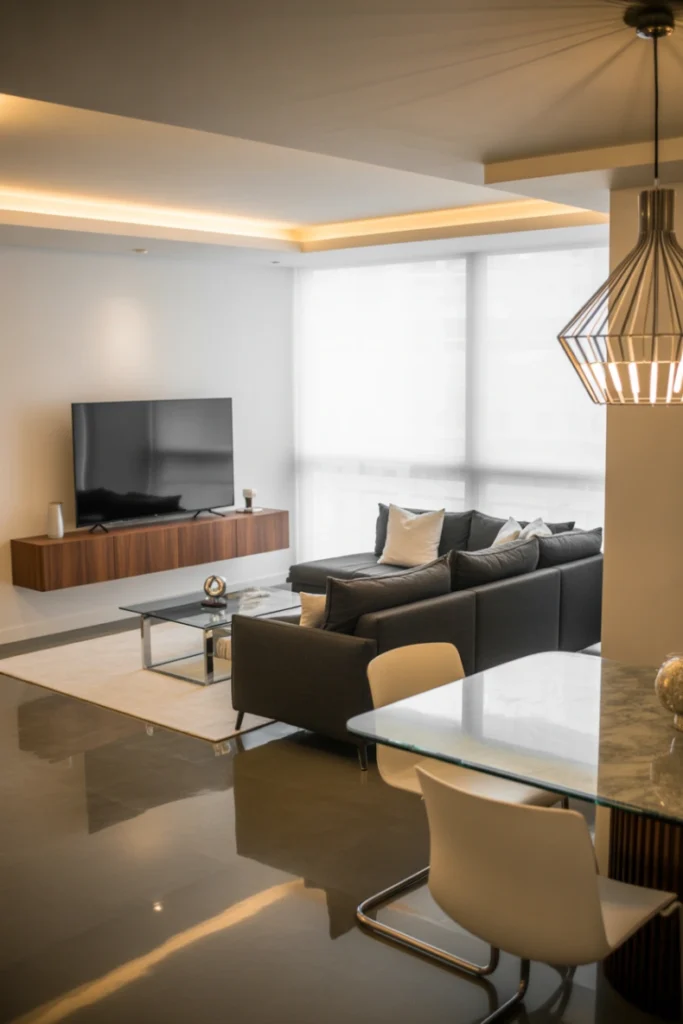
A modern upgrade is mostly about editing finishes. Replace dated cabinet handles with matte black or brushed brass pulls, swap an old ceiling light for a simple drum pendant or a slim track light, and trade heavy curtains for linen panels hung from the ceiling to the floor. These three changes alone can make a room look ten years newer.
Keep the palette neutral, warm white walls, gray or beige upholstery, black metal accents, then add one bold element such as a sculptural chair, a large abstract print, or a deep green accent wall. Choose furniture with slim profiles and visible legs so the floor stays visible and the room feels airy. For a polished, current look, browse these modern living room ideas for furniture and finish combinations that work in real apartments.
7. Apartment Color Palette Transformation
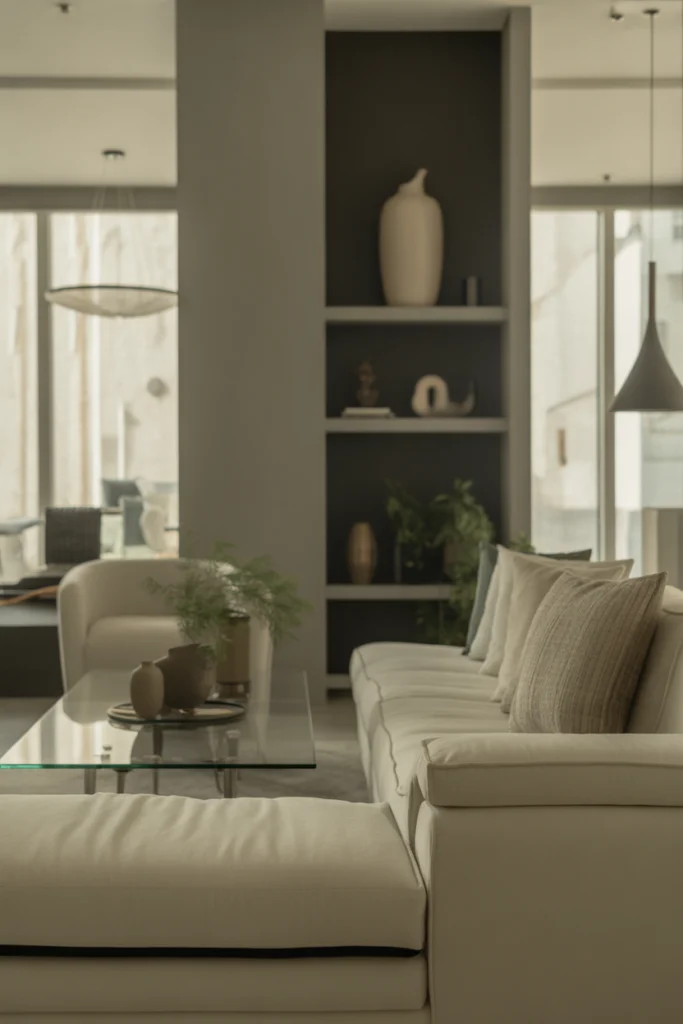
Color is the cheapest way to transform an apartment, and you do not need to paint every wall. Pick one main neutral, one secondary color, and one accent, then repeat them in every room so the apartment feels connected. Soft neutrals like warm white, greige, and pale gray make small rooms feel bigger, while a bold accent wall in navy, forest green, or terracotta adds personality without overwhelming the space.
Test paint with large swatches taped to the wall and look at them in morning and evening light before committing. If painting is not allowed, get the same effect with removable wallpaper on one wall, colored bedding, or a large piece of art. Repeat the accent color at least three times in a room, for example in cushions, a throw, and a vase, so the palette feels deliberate rather than random.
8. Functional Apartment Storage Solutions
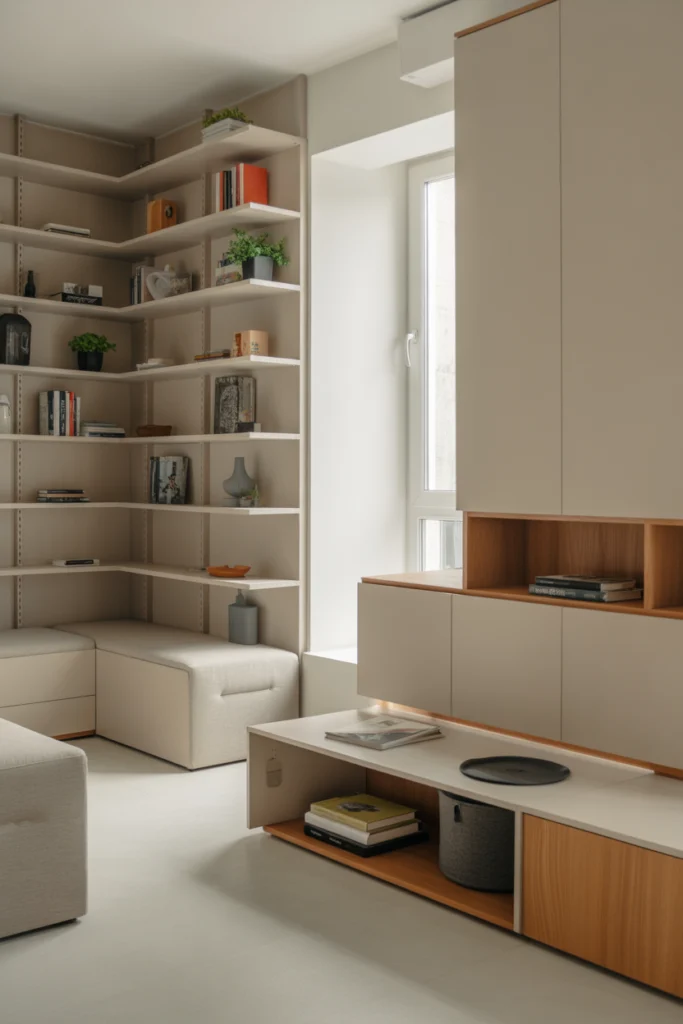
Good storage is invisible storage. Start by using vertical space: tall, narrow bookshelves, wall-mounted cabinets above the desk, and hooks on the backs of doors. Choose multi-functional furniture such as a storage ottoman, a bed frame with drawers, or a dining bench that opens. In the kitchen, add shelf risers inside cabinets, a magnetic strip for knives, and hooks under shelves for mugs.
Sort everything into three groups: daily use, weekly use, and rarely used. Daily items stay at arm level, weekly items go on higher shelves, and rarely used items move to the top of closets or under the bed in labeled boxes. Matching baskets and boxes keep open shelves looking tidy. When every item has a home, the apartment stays organized with far less effort.
9. Entryway Apartment Makeover
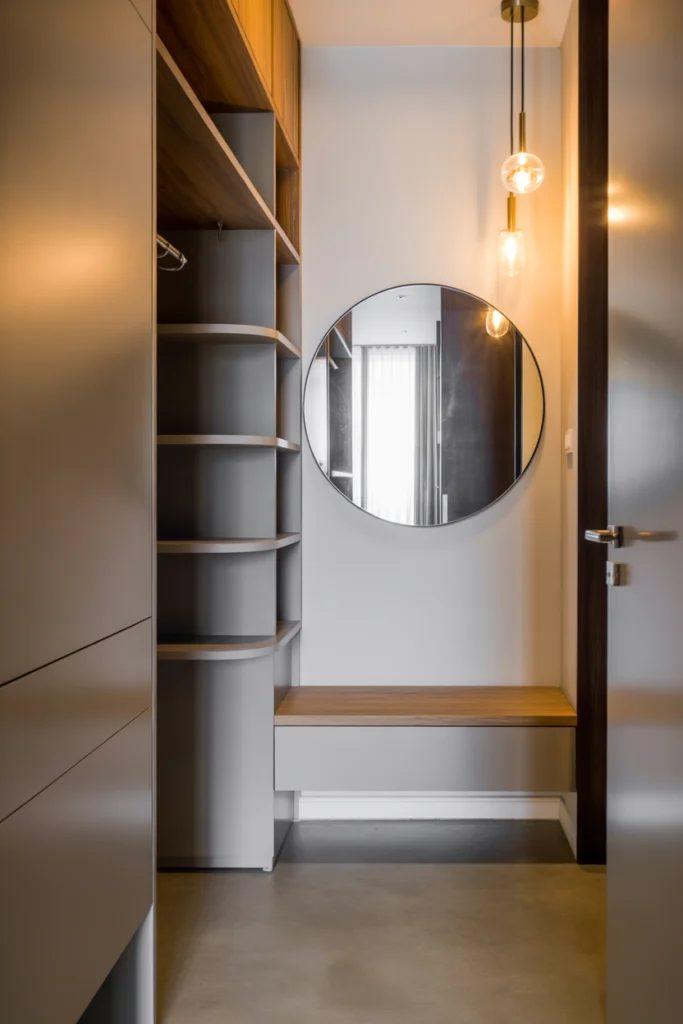
Most apartment entryways are small, dark, and overlooked, yet they set the tone for the whole home. Start with a slim console table or a wall-mounted shelf no deeper than 10 to 12 inches so it never blocks the walkway. Hang a round or rectangular mirror above it to bounce light and make the space feel twice as wide. Add a small tray for keys, a hook rail for coats and bags, and a shoe tray or low bench underneath.
Layer in light if the entryway has none: a battery-operated wall sconce or a small table lamp works without wiring. A washable runner in a pattern that hides dirt finishes the zone and protects the floor. Keep it to five elements or fewer so the entry stays functional. For more entry ideas, see these modern entryway ideas that balance style with everyday storage.
10. Apartment Kitchen Refresh
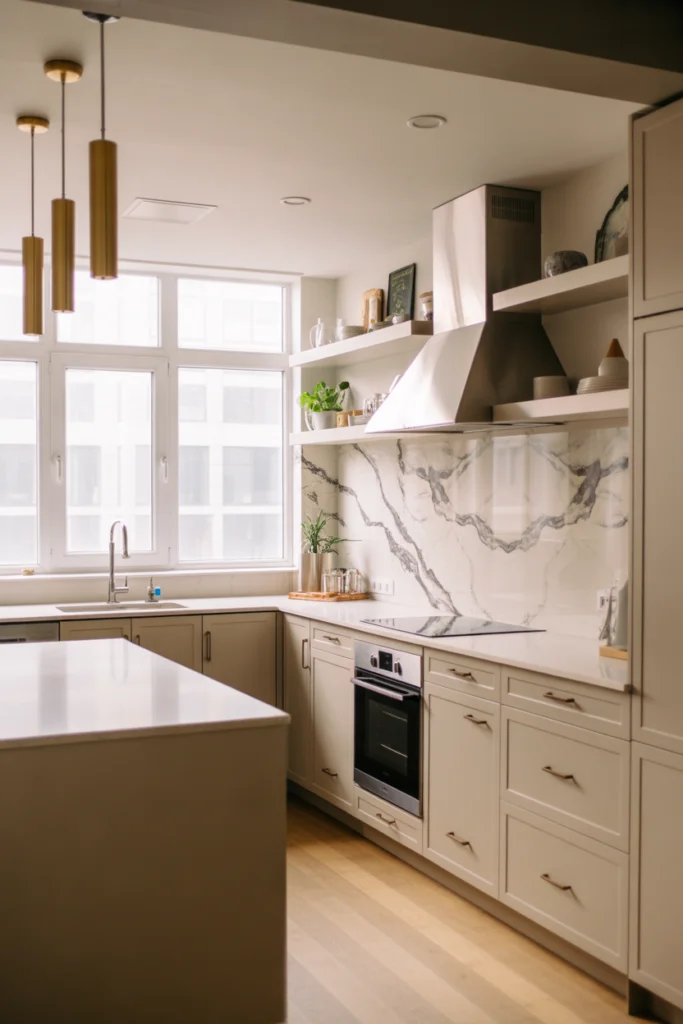
A kitchen refresh works best when you change the details people touch and see every day. Replace cabinet knobs and pulls with a consistent finish, add peel-and-stick backsplash tiles in a simple subway or hexagon pattern, and swap the faucet if your landlord allows it. Under-cabinet LED strip lights, which stick on with adhesive and cost very little, make the counters brighter and the kitchen feel larger.
Clear the counters down to three or four daily essentials, such as a kettle, a cutting board, and a fruit bowl, and store the rest. Use matching jars for pantry staples and a rail with hooks for utensils to free up drawer space. A small rug runner in front of the sink adds comfort and color. These small upgrades deliver most of the impact of a renovation at a fraction of the cost and effort.
11. Dining Nook Transformation
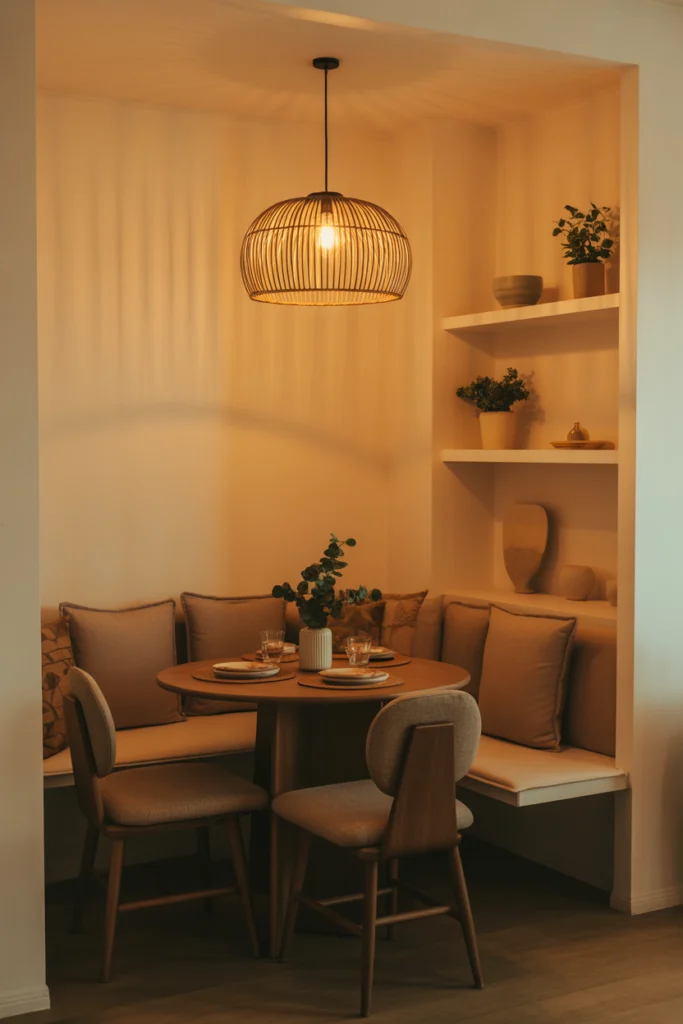
A dining nook turns an unused corner into a real place to eat, work, and gather. A round table 30 to 36 inches wide seats two to four people without sharp corners eating into walkway space. Pair it with a built-in style bench along the wall, which saves about 18 inches compared with chairs, and add two chairs on the open side. A banquette with storage underneath doubles as a place for table linens and board games.
Hang a pendant light 30 to 34 inches above the tabletop to define the zone, and add a small piece of art or a mirror on the wall behind the bench. A washable tablecloth or placemats in a pattern you love make the nook feel finished. Even a tiny nook feels like a proper dining room when the lighting, seating, and table are sized to fit together.
12. Bedroom Comfort Upgrade
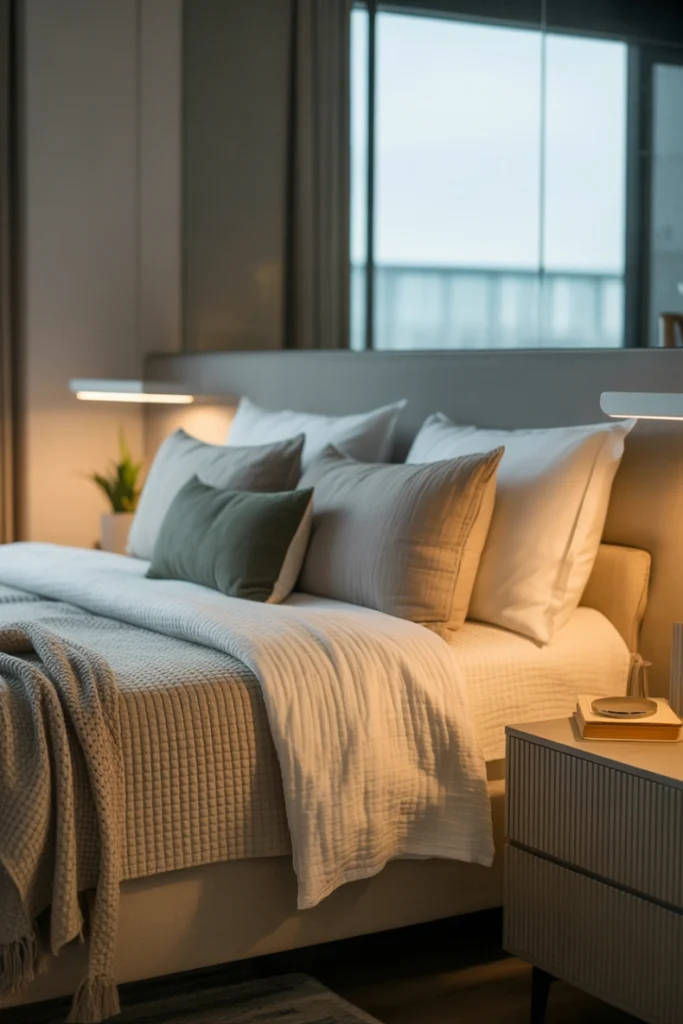
Bedroom comfort starts with the bed itself. Invest in the best mattress you can afford, add a mattress topper if the current one is too firm, and choose breathable cotton or linen bedding in a calming color. Layer the bed properly: fitted sheet, flat sheet or duvet, a light throw folded at the foot, and two sleeping pillows plus one decorative cushion. This layered look feels luxurious and makes the bed inviting.
Add bedside lighting on both sides if space allows, even small clip-on or wall-mounted lamps, so each person can read without disturbing the other. Blackout curtains or a lined curtain panel improve sleep, while a small rug beside the bed softens the first step of the morning. Keep nightstands clear except for a lamp, a book, and a glass of water. For more bedroom styling, explore these small bedroom ideas that make compact bedrooms feel restful and complete.
13. Rental-Friendly Design Changes
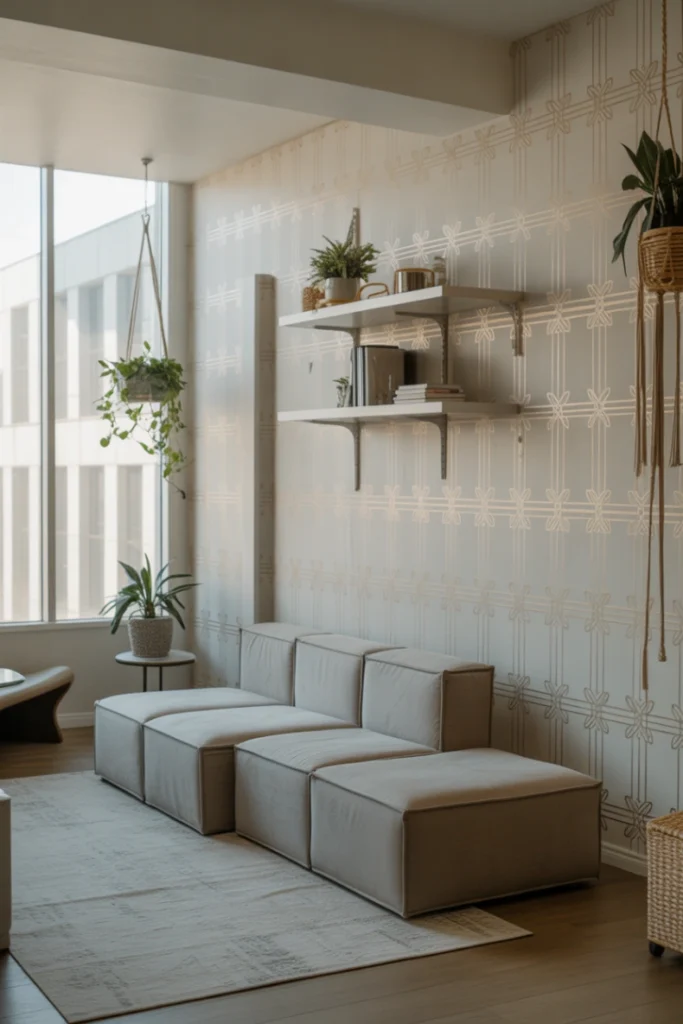
Renters can personalize an apartment without risking the deposit. Removable wallpaper transforms one accent wall and peels off cleanly when you move. Peel-and-stick floor tiles refresh a dated bathroom or kitchen floor, and temporary window film adds privacy while letting light through. Swap out light fixtures and cabinet hardware, and simply store the originals in a labeled box to reinstall before moving out.
Use Command strips and picture ledges instead of nails for art, and lean large frames against the wall for a relaxed gallery look. Furniture, rugs, lighting, and textiles do most of the decorating work and travel with you to the next home. Before starting any project, read your lease and check with your landlord, because written permission protects you and often allows more than you expect.
14. Apartment Lighting Transformation
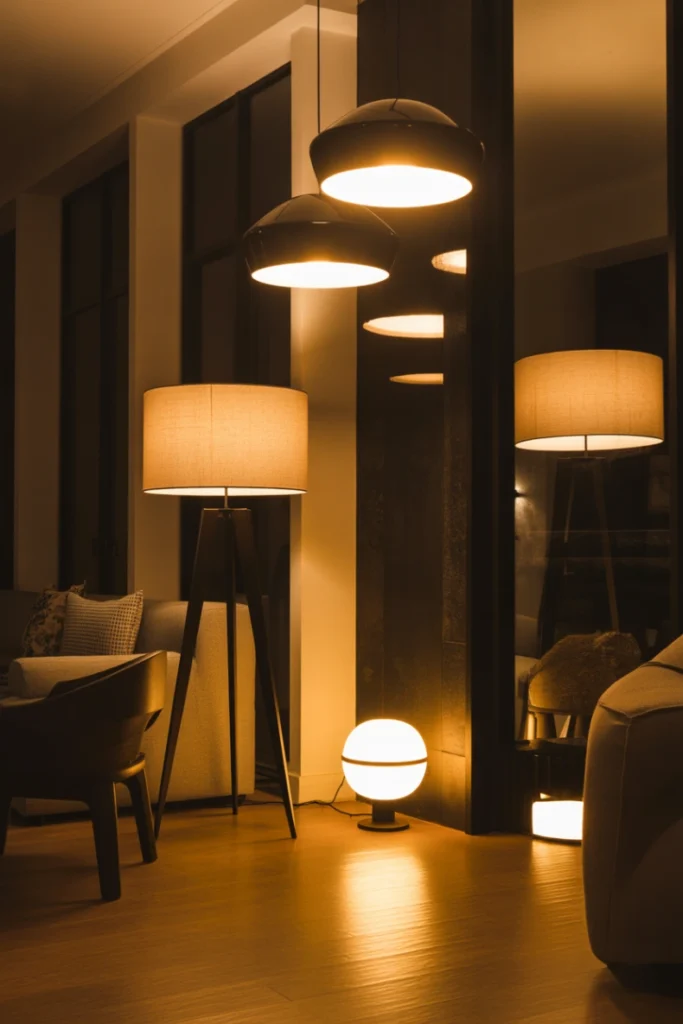
Lighting changes the mood of an apartment more than almost anything else. Build three layers: ambient light from ceiling fixtures, task light from desk and reading lamps, and accent light from candles, string lights, or a small picture light. Replace cool white bulbs with warm white bulbs around 2700K in living and bedroom spaces, and keep brighter daylight bulbs only in the kitchen and bathroom where you need to see clearly.
Add a dimmer switch or a smart bulb where possible so one fixture can shift from bright daytime light to soft evening glow. Place a floor lamp in a dark corner and a table lamp on a console to eliminate harsh shadows. A mirror opposite a window doubles the daylight in a room. When lighting is layered and warm, even a small apartment feels comfortable at every hour.
15. Balcony or Patio Apartment Upgrade
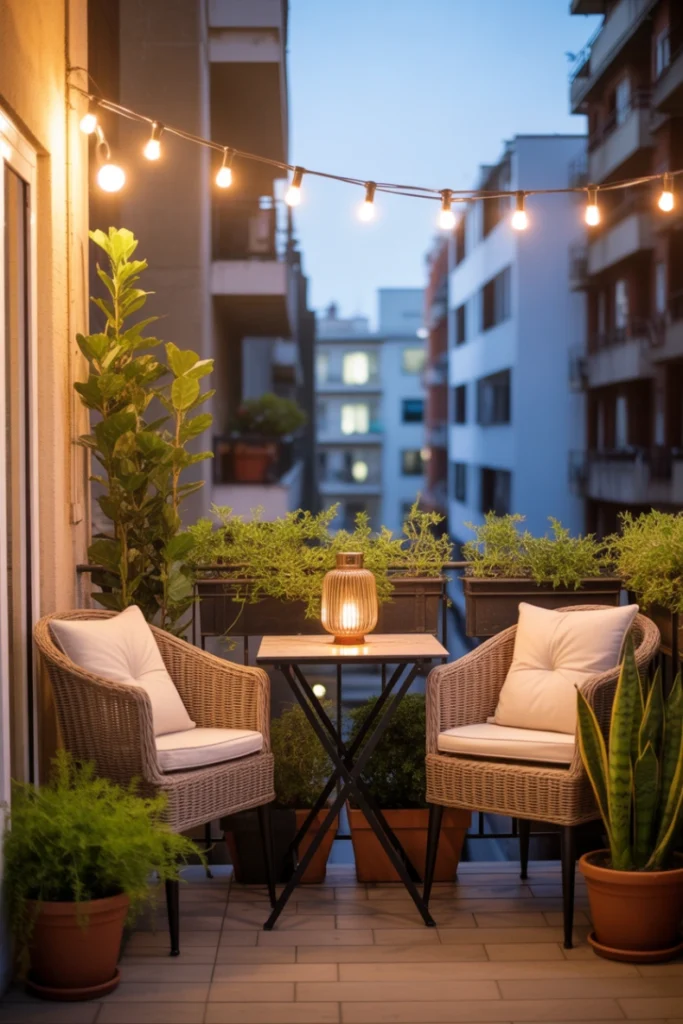
A small balcony becomes a real outdoor room with three elements: seating, greenery, and light. Choose compact furniture such as two folding chairs and a small side table, or a narrow bench with storage underneath. An outdoor rug rated for weather defines the floor area and feels soft underfoot. Add plants in railing planters and a tall narrow planter in the corner so floor space stays free.
String lights or solar lanterns make the balcony usable after dark without wiring. A weatherproof cushion in a bright color and a small outdoor throw make the seating inviting. Check your building rules first, since some balconies restrict hanging items or open flames. With a weekend of work and a modest budget, an unused balcony turns into a morning coffee spot or an evening retreat.
16. Scandinavian Apartment Style
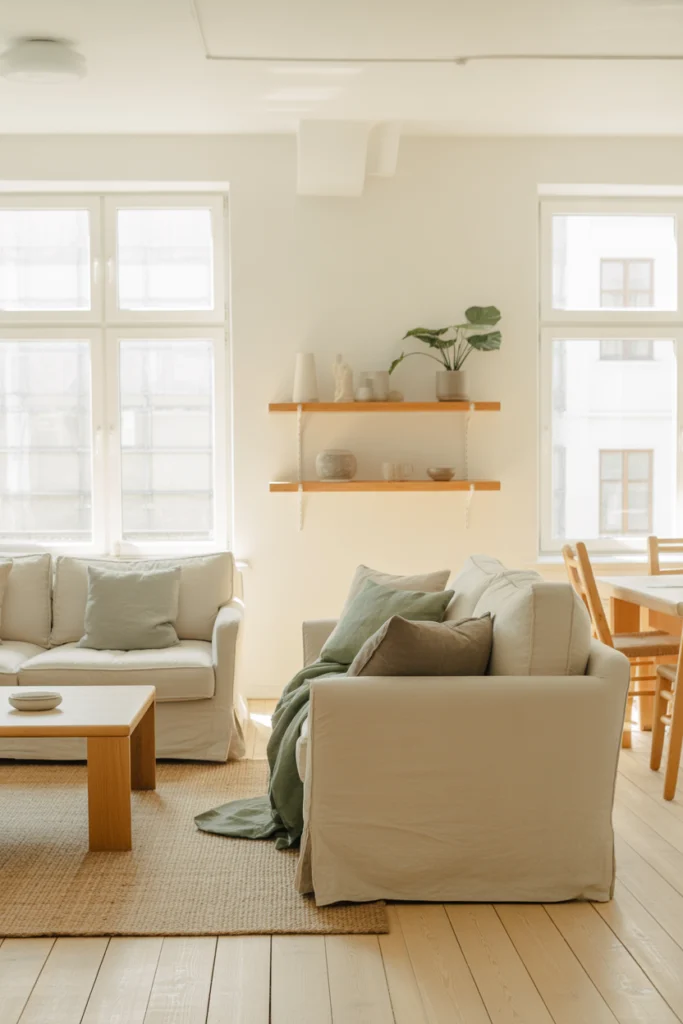
Scandinavian style suits apartments because it is bright, simple, and functional. Start with white or very pale gray walls, light wood floors or light-toned rugs, and furniture in pale oak, birch, or white. Keep silhouettes simple and add texture through wool throws, linen cushions, and a sheepskin draped over a chair. Black accents in frames, lamp bases, and hardware add definition without heaviness.
Let in as much natural light as possible with sheer curtains or no curtains at all on windows that face away from neighbors. Add one plant per room and keep surfaces mostly clear so the space breathes. The style works best when you own fewer, better pieces, so edit ruthlessly and let each item earn its place. The result is an apartment that feels calm, bright, and easy to live in.
17. Luxury Apartment Styling
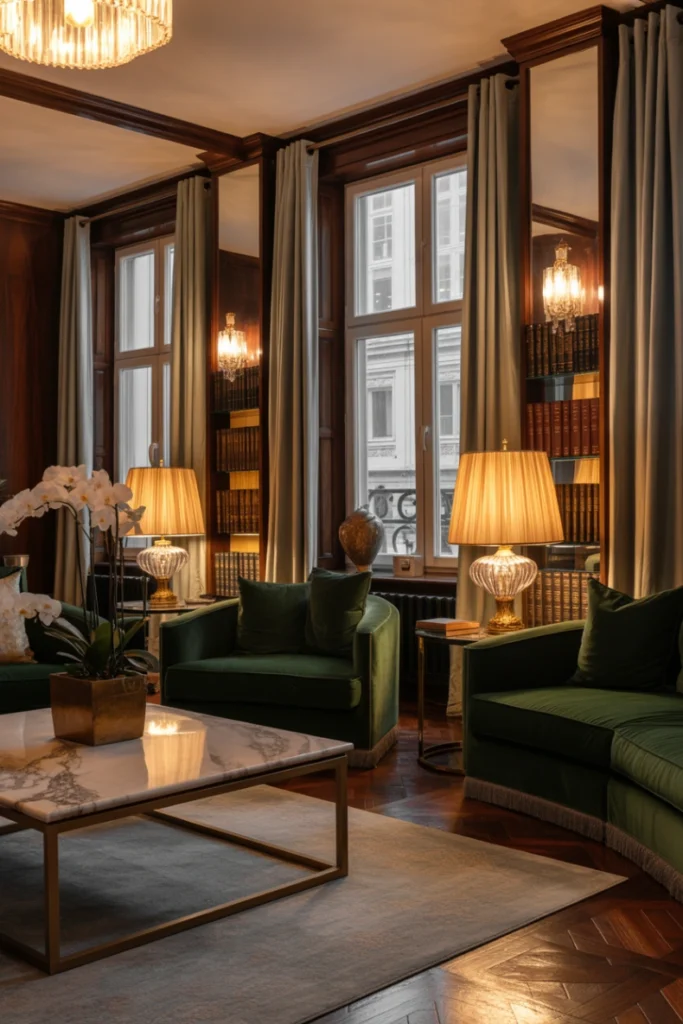
Luxury in a small apartment comes from finish and restraint, not from size or spending. Choose a refined palette such as warm white, charcoal, brass, and cream, and repeat it through the whole apartment. Layer textures that look expensive: velvet cushions, a marble tray, linen curtains, and a wool rug. One statement piece per room is enough, such as a sculptural floor lamp, a large framed print, or a brass mirror.
Pay attention to details people touch: solid-feeling handles, heavy curtains that pool slightly on the floor, and real plants in ceramic pots rather than plastic. Keep clutter out of sight so the quality pieces can be seen. A small apartment styled this way feels like a boutique hotel, elegant and calm, without needing a large budget or a large floor plan.
18. Work-From-Home Apartment Setup
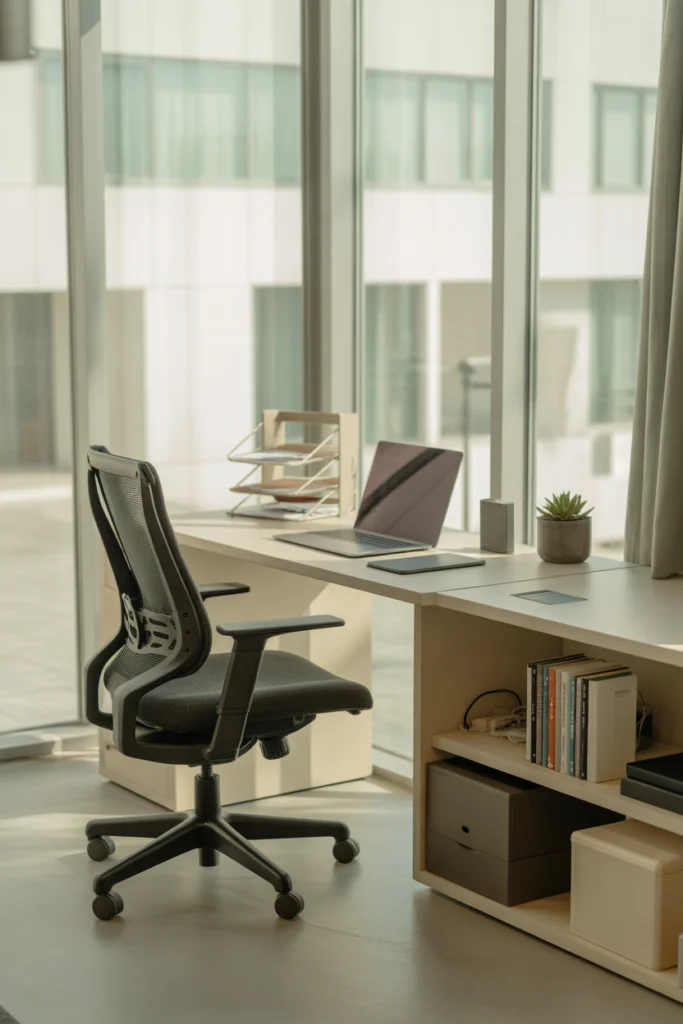
A work-from-home setup needs a real boundary between work and rest, even in a studio. Choose a desk 42 to 48 inches wide, small enough to fit a corner but large enough for a laptop, a notebook, and a lamp. Position it near a window for natural light, facing into the room rather than a wall if possible. An ergonomic chair with lumbar support matters more than a stylish one, because you will sit in it for hours.
Use a room divider, a bookshelf, or a tall plant to separate the work zone from the living area. Add task lighting, a cable tray under the desk, and a small shelf for supplies so the desk stays clear. At the end of the day, close the laptop and cover the desk with a cloth or fold it away if it is a wall-mounted model, so work visually ends and home begins again.
19. Eclectic Apartment Design
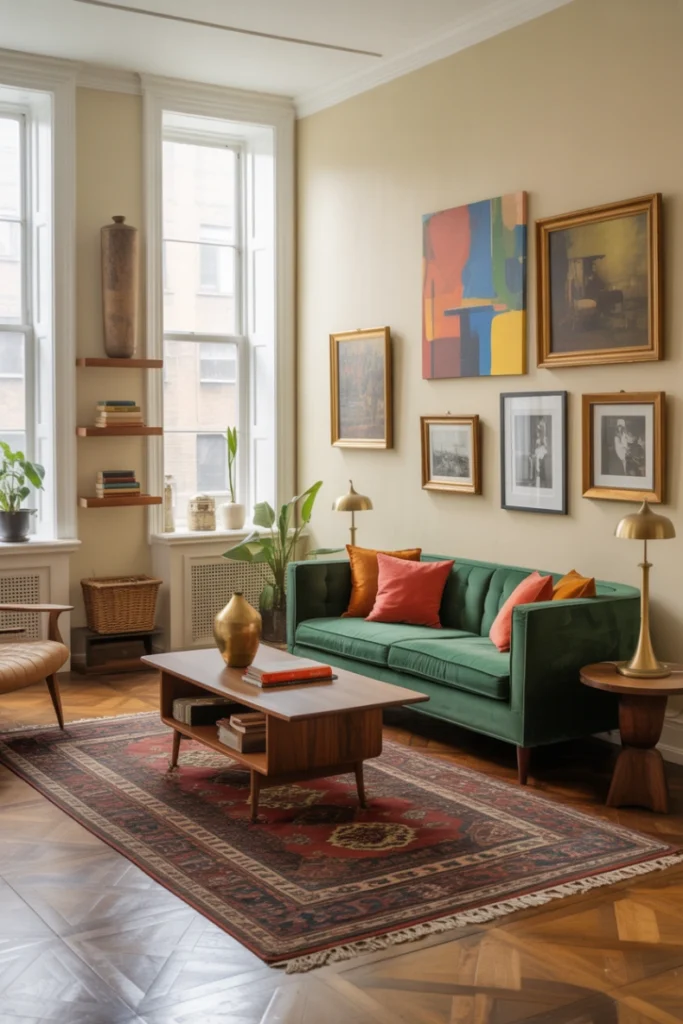
Eclectic design mixes styles on purpose, but it only works when the mix is intentional. Choose one unifying thread, such as a consistent color palette or a repeated material like warm wood or black metal, and let everything else vary. Pair a vintage wooden sideboard with a modern sofa, mix patterns in the same color family, and combine art from different eras in matching frames so the collection feels curated rather than random.
Limit the mix to two or three styles so the room stays coherent. Give each bold piece breathing room, and balance a busy pattern with solid colors nearby. Travel souvenirs, handmade items, and thrifted finds add the personality that makes eclectic spaces feel like home. Edit often, because eclectic rooms tip into clutter faster than any other style, and removing one item usually improves the whole room.
20. Family-Friendly Apartment Layout

Family apartments need durability first and style second, but the two can work together. Choose washable, stain-resistant fabrics such as performance linen or microfiber for sofas and chairs, and pick a dining table with a wipeable surface. Round tables and soft-edged furniture reduce bumps for small children. Store toys in low, labeled baskets children can reach, and keep one open shelf at their height for books they choose themselves.
Create zones that serve everyone: a homework corner with a small desk near the kitchen, a reading nook with floor cushions, and a play area defined by a washable rug. Use wall-mounted storage to keep floors clear for play. Choose furniture that can grow with the family, such as an extendable dining table or a sofa bed for guests. A family apartment works when it is safe, easy to clean, and still feels like a home adults enjoy.
21. Complete Apartment Before-and-After Transformation
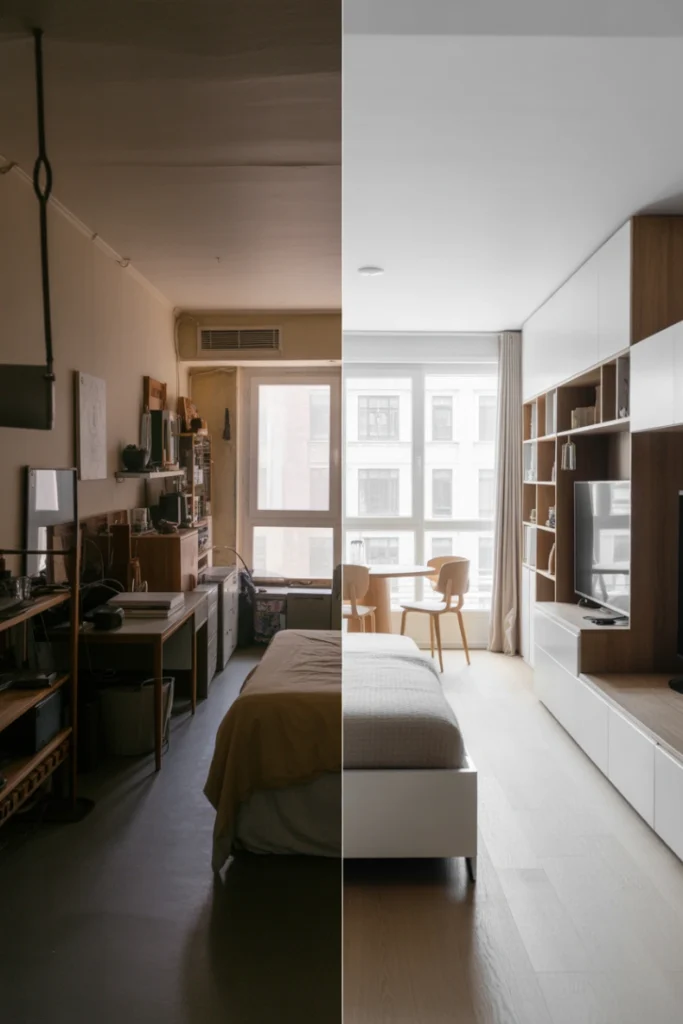
A full apartment transformation ties every idea in this guide into one plan. Start with a written plan and a simple budget split across four phases: layout, color, lighting, and furniture. Phase one moves furniture and defines zones. Phase two paints or adds removable wallpaper to one or two walls. Phase three layers lighting, and phase four swaps in the final furniture and decor pieces. Working in phases keeps the project affordable and lets you live in the apartment between steps.
Photograph each room before you begin, from the same angle and in daylight, so you can compare the result honestly. Tackle one room at a time, starting with the room you use most, usually the living room. When the phases are complete, the apartment should feel connected from room to room, with the same palette, the same wood tones, and the same lighting temperature throughout. That consistency is what makes a before-and-after transformation look professional rather than piecemeal.
Conclusion
These 21 apartment inspiration ideas show that intentional design choices can transform any apartment into a functional, stylish home. Layout, storage, lighting, color, and personalization work together, and even the smallest apartment can feel spacious and inviting when each change has a purpose. Step-by-step transformations let homeowners and renters improve their space gradually, without renovation stress or a large budget.
Start with the idea that solves your biggest daily frustration, whether that is a dark corner, a cluttered entryway, or a living room that never feels right. Finish that one change, live with it for a week, then move to the next. Small, steady improvements add up to a home that truly fits your life.
Frequently Asked Questions
How can I make a small apartment look bigger without renovating?
Use light wall colors, large mirrors, and furniture with visible legs so more floor stays in view. Float furniture slightly away from walls, keep window treatments light and hung high, and choose one large rug instead of several small ones. Decluttering alone often makes a room feel noticeably larger.
What is the best color palette for a small apartment?
A base of warm white or light greige with one secondary color and one accent works best. Light neutrals reflect daylight and make rooms feel open, while a single accent color repeated in cushions, art, and throws adds personality without visual clutter.
How do I decorate a rental apartment without losing my deposit?
Stick to removable solutions such as peel-and-stick wallpaper, removable hooks, and freestanding furniture. Store original fixtures and hardware in a labeled box so you can reinstall them before moving out, and get written permission from your landlord for anything semi-permanent.
How much should I budget for an apartment makeover?
A single room refresh can cost as little as 150 to 400 dollars using paint, lighting, and textiles. A full apartment transformation done in phases usually runs 1,000 to 3,000 dollars, depending on furniture. Start with the cheapest high-impact changes, such as paint and lighting, before buying furniture.
Where should I start when transforming my apartment?
Start with the room you use most, usually the living room, and fix the biggest frustration first. Measure the space, set a small budget, and complete one change at a time. Living with each improvement for a week helps you decide what to do next instead of overspending on the wrong pieces.
More Ideas You Will Love
 14 Girly Apartment Ideas That Are Chic, Cozy & Totally You
 13 Front Yard 4th of July DIY Decor Ideas for Fences & Pathways
 12 Inspiring Workshop Design Ideas for Every Space
 17 Easy Summer Coffee Table Styling Ideas for a Fresh Look
 20 Creative Christmas Wall Light Ideas to Brighten Your Holiday Decor
 14 DIY 4th of July Table Decorations for a Rustic Celebration