
22 Boy Bedroom Ideas That Are Creative, Fun & Functional

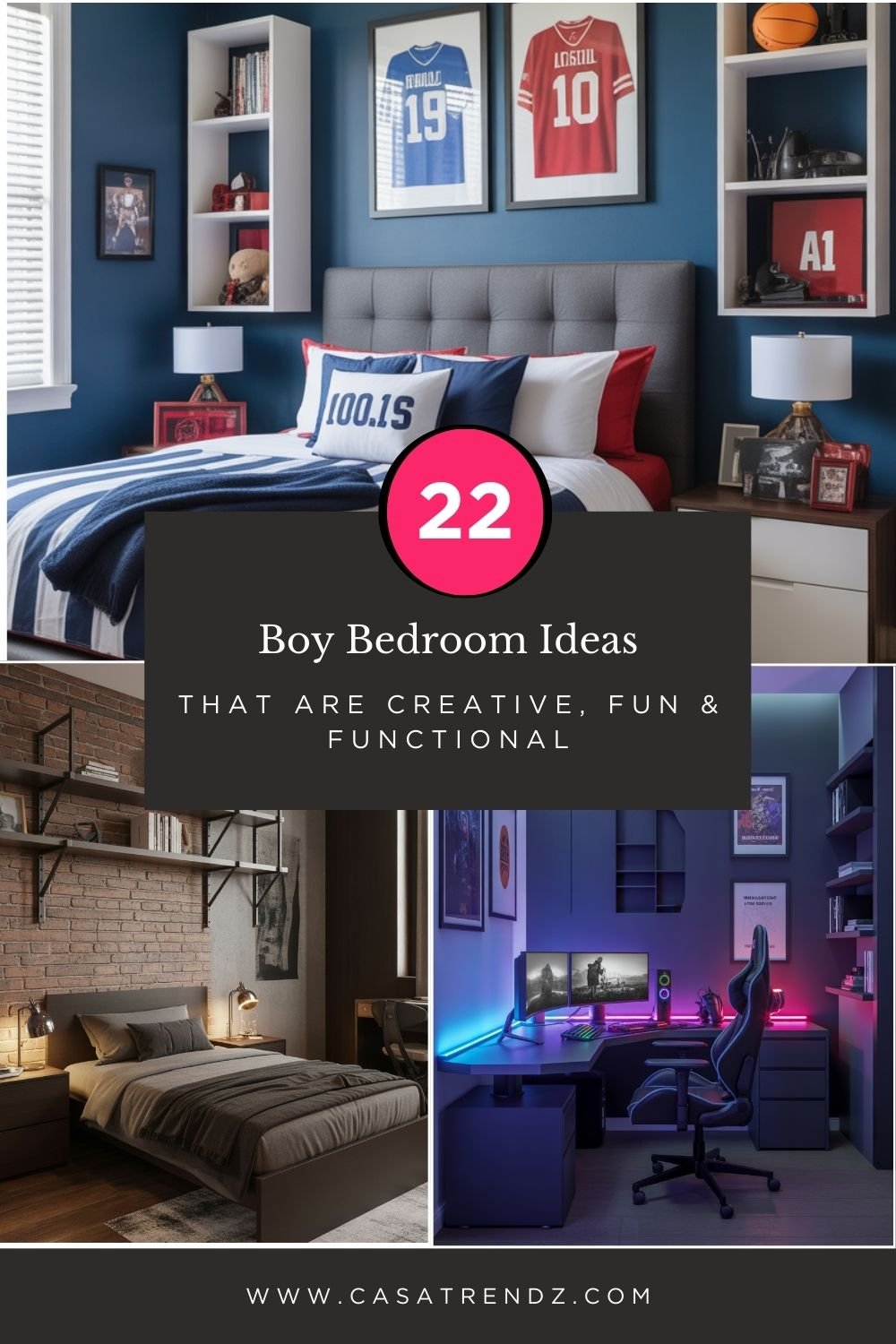
Designing a boy’s bedroom is one of the most rewarding rooms to plan in a home, because it has to do so many jobs at once. It is a place to sleep, to study, to play, to store a growing collection of books, toys, sports gear, and gadgets, and to show off a personality that changes fast as he grows. The best rooms get that balance right: they feel fun and personal on day one, but they are built on furniture, colors, and storage that still make sense two or three years later. That is why it pays to plan the layout before you buy anything, and to spend money first on the pieces that are hardest to change, such as the bed, the desk, and the storage.
Below you will find 22 boy bedroom ideas, each explained with the practical detail that makes a design actually work in a real room: paint colors and finishes, furniture sizes, storage ideas, lighting, and small step-by-step tips you can follow on a weekend. Start by measuring the room and noting the door swing, window positions, and any built-in closets, then pick one main theme and one calm base color so the room does not feel busy. If you are decorating for a younger child, choose themed bedding and wall decals for the fun, and keep the big furniture neutral, so the theme can be swapped later without repainting the whole room. For more general inspiration, these creative kids bedroom ideas pair well with the themes below.
Before you start, set a simple rule for the room: everything needs a home. A bed with drawers, a bookshelf with labeled bins, a hook rail by the door, and one laundry basket will do more for a tidy room than any decorating trick. Keep daily items between waist and eye level, put heavy items low down, and leave at least 24 inches of clear walking space around the bed. Now, here are the ideas, from calm modern rooms to bold themed spaces, so you can find the one that fits your son’s age, interests, and room size.
1. Modern Minimalist Bedroom for Boys
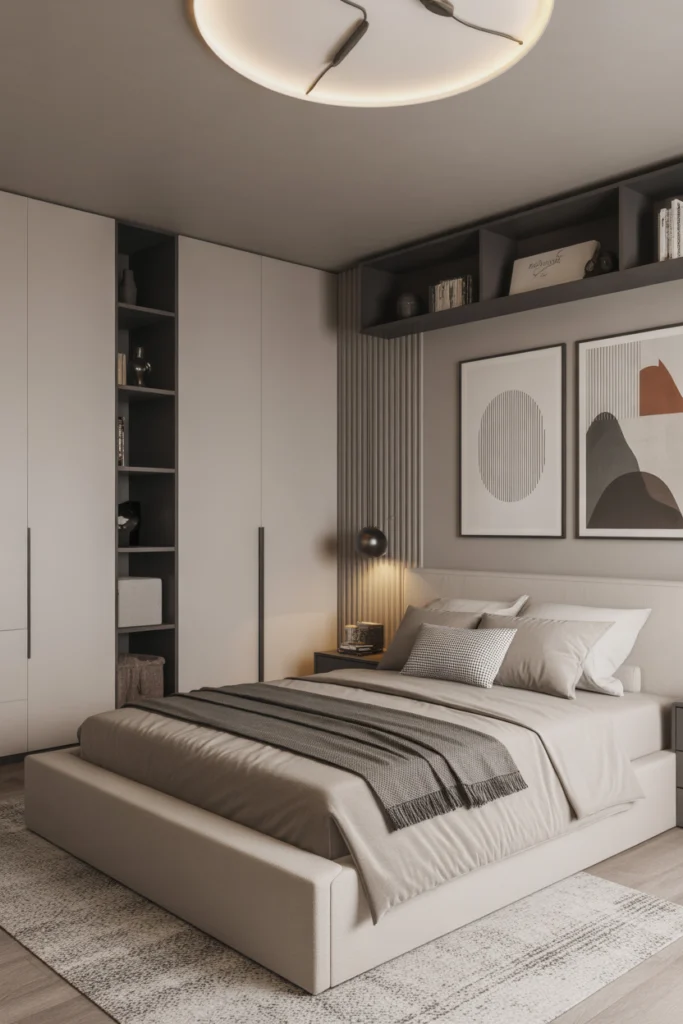
A modern minimalist bedroom works best when you keep the palette calm and the furniture low and simple. Start with walls in soft white, warm light gray, or pale beige, and add one darker accent, such as a charcoal feature wall behind the bed or black picture frames, to give the room shape. A low platform bed, about 10 to 12 inches high, keeps the room feeling open, and a twin bed (38 by 75 inches) or a full bed (54 by 75 inches) both work well depending on room size. Pair it with a built-in wardrobe or a simple two-door closet system, plus two or three floating shelves for books and a few favorite objects, and the room will stay tidy without looking bare.
To keep a minimalist room cozy rather than cold, add texture instead of clutter: a woven cotton rug, a waffle-weave throw, linen-look curtains, and bedding in one solid color with a contrasting pillow or two. Use one piece of larger art above the bed rather than many small frames, and keep toys in closed bins so surfaces stay clear. This style is also the easiest to update as he grows, because a new duvet cover, a new poster, or a different rug can change the whole feel in an afternoon, without repainting or replacing furniture.
2. Adventure-Themed Bedroom
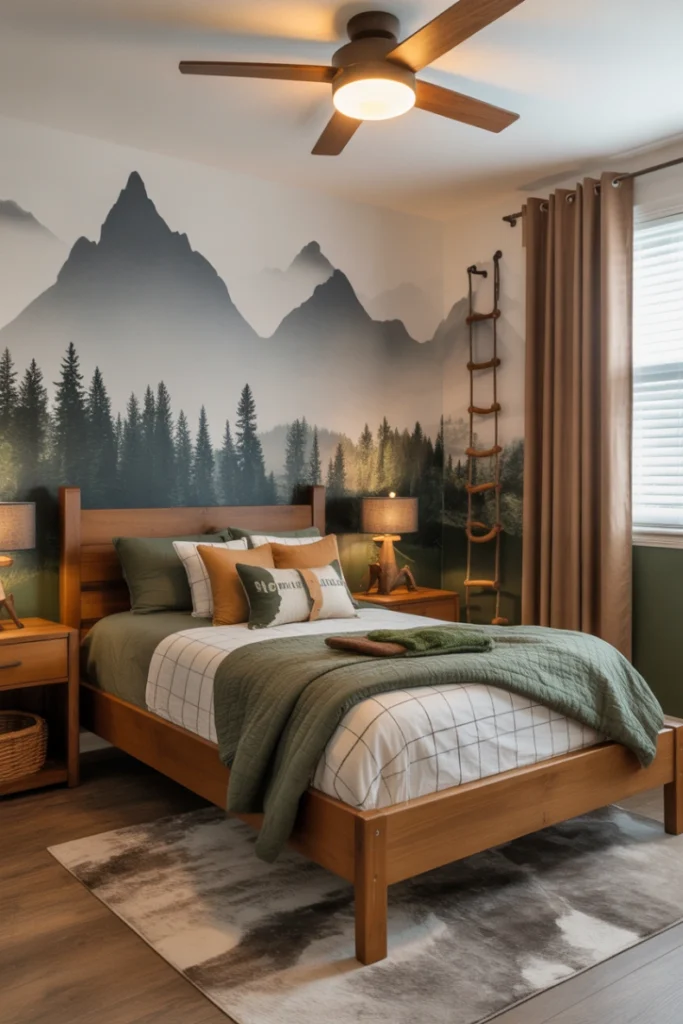
An adventure theme turns a bedroom into a base camp, and it starts with the walls. A mountain mural, a large peel-and-stick map, or a forest-green accent wall sets the scene at once, and earthy colors such as olive green, warm brown, and navy blue keep it grounded. Add natural materials: a light wood bed frame, a rope detail on a shelf, a canvas storage bin, and a lantern-style lamp. If the room is big enough, a cabin-style bed or a simple reading tent in one corner gives younger boys a hideaway for imaginative play, while older boys may prefer a map pin board where they can mark places they have visited or want to visit.
Keep the theme from taking over by limiting the busiest patterns to bedding and one or two accessories, and keeping the rest of the furniture plain wood or neutral. A compass-pattern rug, a small wooden crate for books, and framed nature prints are enough to carry the idea. Practical tip: use removable wall decals for mountains and trees rather than a painted mural if you rent or expect the theme to change, and choose washable bedding, because outdoor-themed rooms tend to collect real outdoor dirt too.
3. Space and Galaxy Bedroom
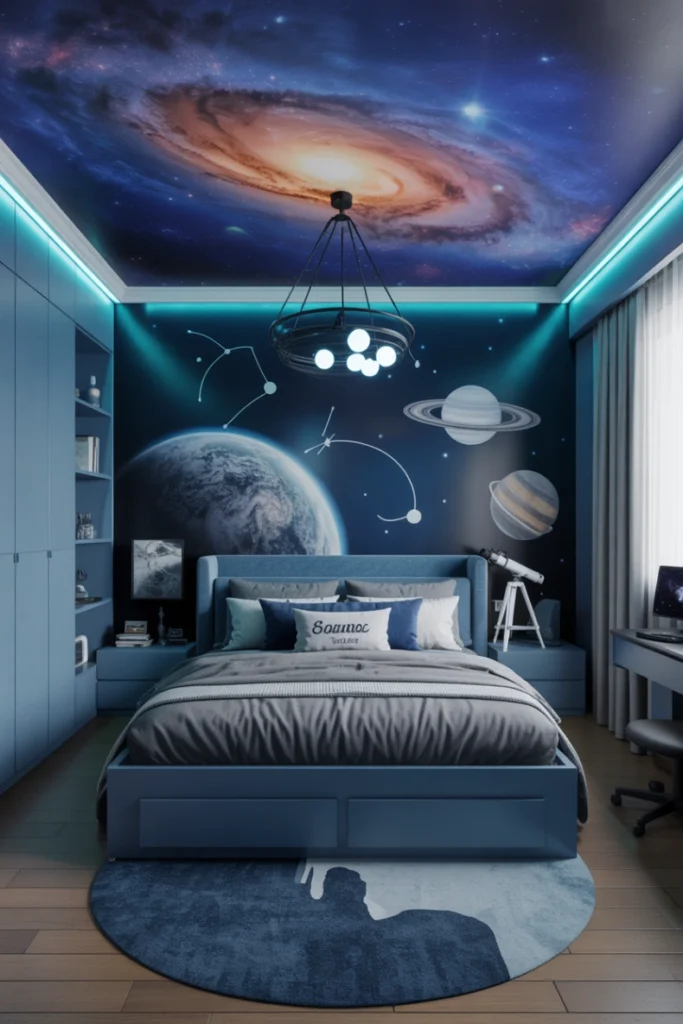
A space bedroom is all about the night sky, so start with deep color: navy blue or charcoal walls, ideally just one or two walls if the room is small, so it feels dramatic rather than dark. Glow-in-the-dark star stickers on the ceiling are a cheap, high-impact first step, and a galaxy mural or planet decals above the bed add depth. Bedding with stars, planets, or rockets ties the bed into the theme, and a moon lamp on the nightstand doubles as a soft night light. For older boys, a small telescope by the window and a shelf of space books make the room feel like a real interest, not just a decoration.
Lighting makes or breaks this theme. Add an LED strip behind the headboard or under a shelf, set to blue or purple, and keep the main ceiling light on a dimmer so the room can shift from homework mode to stargazing mode. Keep furniture simple and dark, such as a black or gray desk and a metal bookshelf, so the glowing details stand out. Avoid covering every wall in decals; leave one plain wall for posters or art that can change as his interests grow, and the room will stay fun well past the first year.
4. Sports Lover’s Bedroom
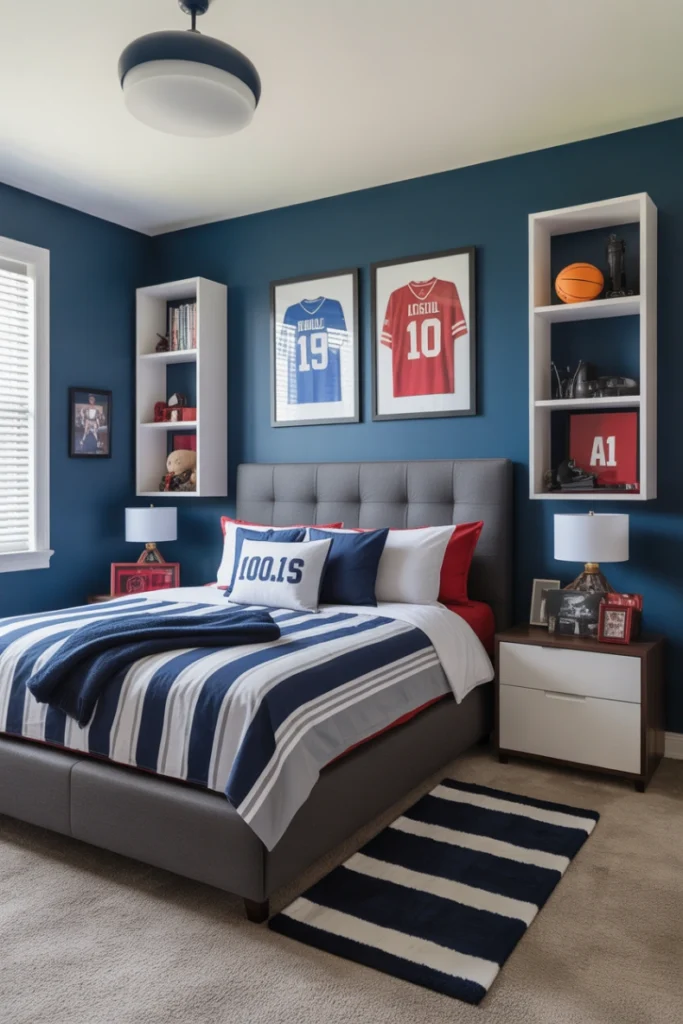
A sports bedroom should feel energetic without turning into a storage room for equipment, so pick one sport or one team palette and build around it. Paint one accent wall in the team color, or use wide painted stripes, about 6 to 8 inches each, behind the bed for a bold, sporty look. Framed jerseys, a signed ball in a display case, and wall decals of a favorite sport add personality, while a simple shelf keeps medals and trophies visible but contained. If he plays several sports, use a general athletic look, such as a scoreboard-style clock, a locker-style cabinet, and bedding in two strong colors, rather than mixing four team logos at once.
Make the room work for the gear too. A tall basket or a wall-mounted ball rack keeps balls off the floor, hooks by the door hold bags and caps, and a small bench by the closet gives him a place to lace up shoes. A mini basketball hoop over a laundry basket is a fun touch for younger boys, but mount it at a height he can actually reach and use a soft foam ball indoors. Keep the floor clear for play, and choose a washable rug in a dark color, because sports rooms see heavy foot traffic. For help choosing the overall layout first, see these bedroom design ideas and adapt the layout to the sport he loves most.
5. Blue Modern Boy’s Bedroom
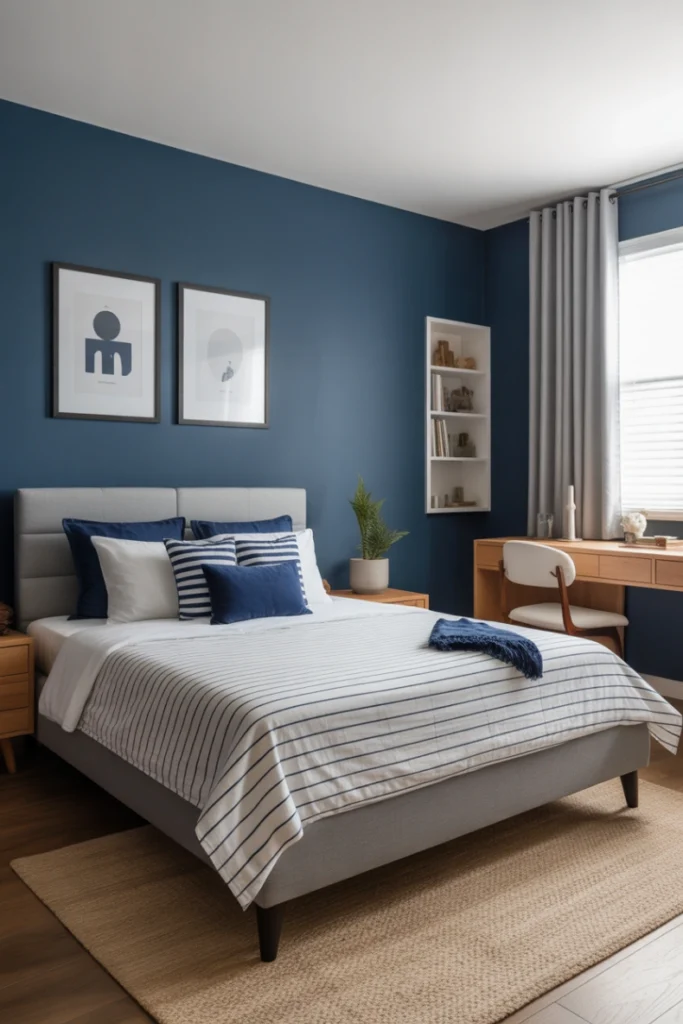
Blue is the safest strong color for a boy’s room because it comes in so many useful shades, from soft sky blue for a calm younger child’s room to deep navy for a teen’s room. A simple formula works well: one blue feature wall, white or light gray on the other walls, and bedding that mixes blue with white stripes or a solid navy duvet. Add black or brushed nickel hardware, a light wood nightstand, and one piece of blue art, and the room looks finished without much effort. Blue also pairs easily with other themes, so this room can later become nautical, sporty, or modern just by changing the bedding and accessories.
When choosing the shade, test it on the wall first: paint a 2-foot square and look at it in daylight and at night, because blues can shift gray or purple under warm bulbs. In a small room, use the darker blue only behind the bed and keep the other walls pale to avoid closing the space in. For a teen, navy walls with white trim, a gray bedspread, and a black desk look grown-up and last for years. For a younger boy, sky blue walls, white furniture, and a striped rug feel fresh and cheerful, and both versions stay easy to clean and repaint.
6. Car and Racing Theme Bedroom
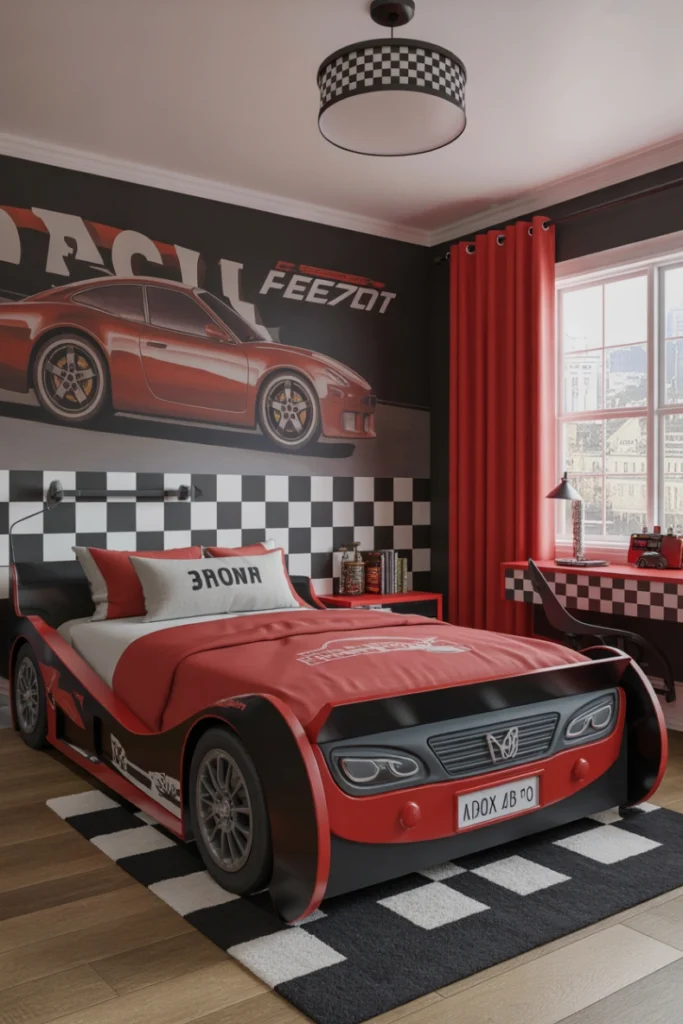
A racing room starts with speed and color: red, black, and white are the classic combination, and a checkered flag border, a race track wall decal, or a road rug instantly sets the scene. The centerpiece for younger boys is often a car-shaped bed, which usually fits a standard twin mattress, so check the overall length, often 80 inches or more, before you buy, and leave room to walk around it. For older boys who have outgrown a novelty bed, a regular bed with racing bedding, a checkered throw, and framed car posters gives the same feel in a more grown-up way.
Storage can join the theme too: tire-shaped bins, a tool-style chest for toys, and a small shelf for model cars keep the room fun and tidy. Keep the boldest colors on bedding, a rug, and one wall, and use black or gray furniture so the room does not feel loud at bedtime. A simple step-by-step plan works well: first paint or decal the feature wall, then place the bed, then add the rug and bedding, and finally add posters and models one at a time, stopping before the walls feel crowded. That order keeps the theme strong without overwhelming the room.
7. Nautical Coastal Bedroom
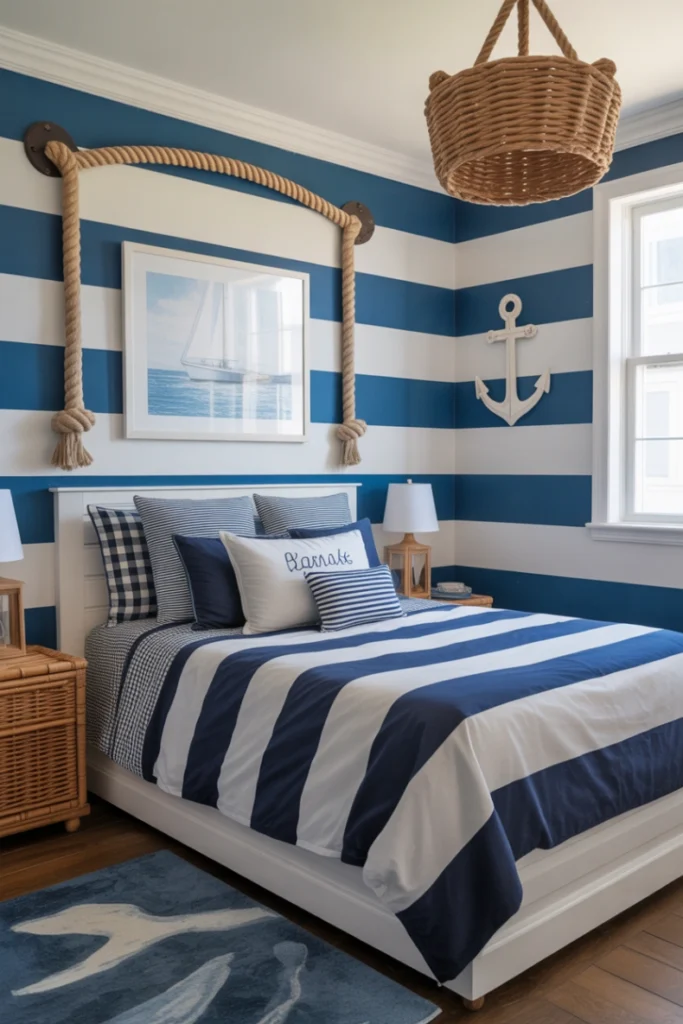
A nautical room should feel breezy and calm, so start with light colors: white walls, a navy and white striped duvet, and sandy beige or light wood accents. Rope details, anchor motifs, and a simple boat print or a framed map carry the theme without needing a full mural. A striped rug, white or light wood furniture, and a wicker basket for toys or laundry complete the coastal feel. This theme suits both younger boys who love the beach and teens who want a clean, relaxed room, because the palette is classic and never looks childish.
To keep it from feeling like a costume, limit the obvious sea symbols to three or four items, such as the bedding, one wall print, and a rope-wrapped lamp, and let the rest of the room be plain coastal: pale blue curtains, a light wood desk, and open shelving. Natural light helps a lot here, so use sheer white curtains rather than heavy drapes, and keep windows clear. If the room is small, a navy accent wall behind the bed adds depth without darkening the whole space, and white bedding keeps it bright.
8. Superhero Bedroom
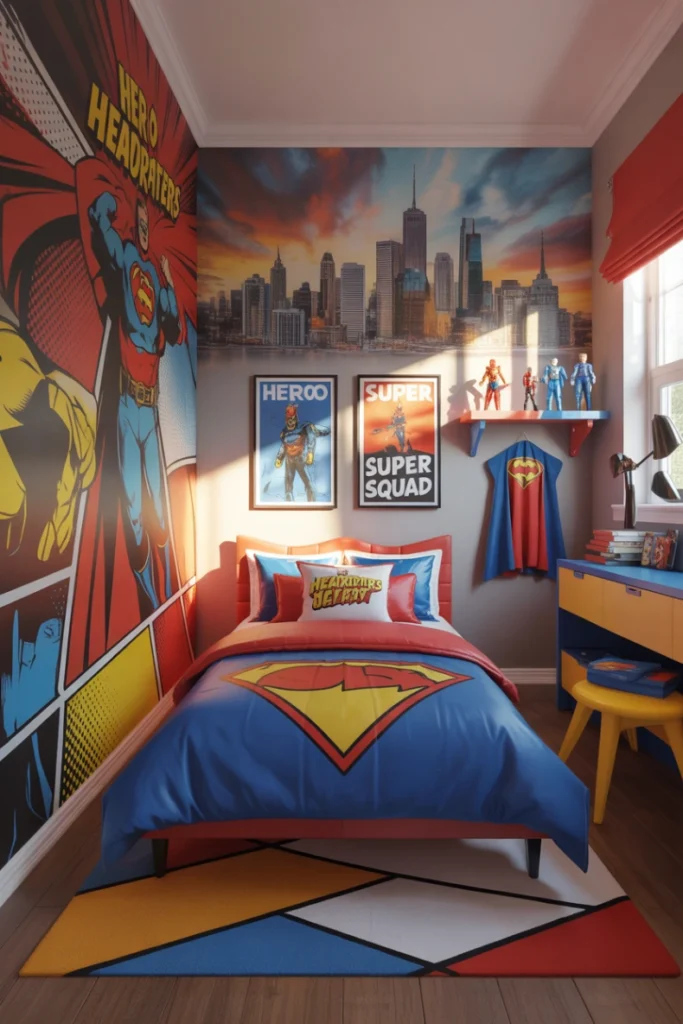
Superhero rooms work best when you choose one hero, or one comic-book color palette, rather than mixing every character at once. Red, blue, and yellow with black accents capture the comic-book energy, and a city skyline mural or framed comic art above the bed makes a strong focal point. Bedding with a hero logo, a cape hook on the wall for dress-up play, and a bookshelf for comics and action figures give younger boys plenty to enjoy. For teens, framed comic covers in matching black frames look more like a collection and less like a kids room, and they are easy to rearrange.
Balance is the key practical rule here. Keep large furniture neutral, such as a gray or white bed frame and a plain desk, so the themed pieces can be swapped as interests change. Use removable decals for logos and skylines, and keep one wall relatively plain for a desk or reading area. A small display shelf with a lip edge, about 3 to 4 inches deep, holds figures safely without taking floor space, and clear bins under the bed keep costumes and extra bedding out of sight but easy to reach.
9. Industrial Urban Bedroom
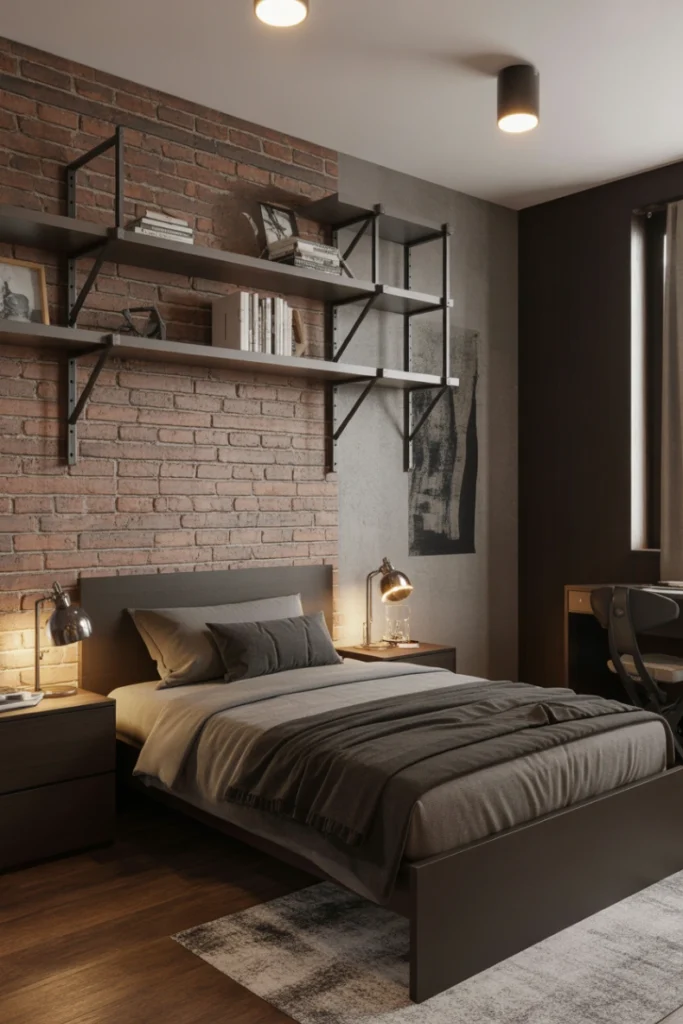
Industrial style suits older boys and teens who want a grown-up room, and it is built on texture: exposed brick wallpaper, concrete-look paint, dark wood, and black metal. Start with gray walls or one brick accent wall, then add a metal-frame bed, open metal shelving, and a dark wood desk. Wire baskets, a metal locker-style cabinet, and an Edison-style bulb lamp add the urban edge. Keep the color palette tight, grays, blacks, browns, and one warm accent such as tan leather or warm wood, so the mix of hard materials still feels warm.
Because industrial materials can feel cold, add warmth with lighting and textiles: warm white bulbs (2700K to 3000K), a thick rug, a canvas or leather desk chair pad, and bedding in charcoal or olive with a textured throw. This style is also very durable, which is a real advantage for a teen’s room, because metal and dark wood hide scuffs better than white painted furniture. Choose a sturdy desk at least 42 inches wide for a laptop and books, and wall-mounted shelves rather than a bulky bookcase, so the room keeps its open, loft-like feel.
10. Bunk Bed Bedroom for Shared Spaces
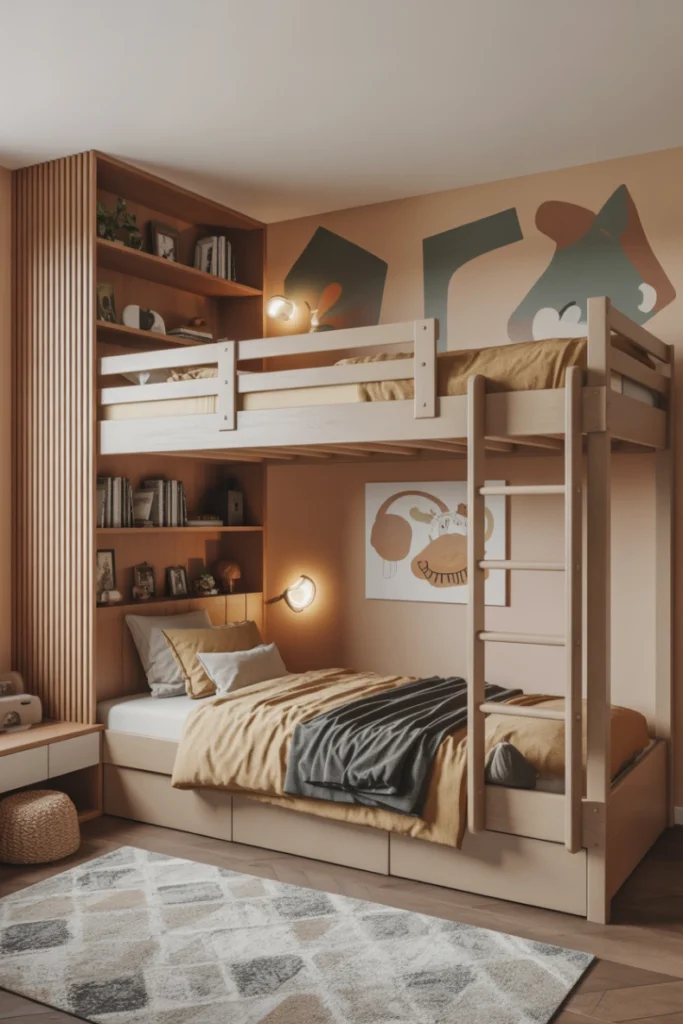
Bunk beds solve the hardest shared-room problem, which is giving two boys personal space in one room. Before you buy, measure the ceiling: you need at least 30 inches between the top mattress and the ceiling for safe sitting, which usually means a ceiling of 8 feet or higher for a standard bunk. Choose a solid wood or heavy steel frame rated for the weight of the older child, and make sure the ladder is fixed firmly and the guardrail runs the full length of the top bunk. Twin over twin is the most common size, while twin over full gives an older boy more sleeping room below.
Personal space comes from small details: a clip-on reading light and a small shelf for each bunk, a privacy curtain on the lower bunk, and separate bedding colors so each child can tell his side at a glance. Storage has to be shared and clear: under-bed drawers, one labeled bin per child, and wall hooks at each child’s height. A simple color-zone idea works well, such as one boy’s bins and bedding in navy and the other’s in green, with shared furniture in white or wood to tie the room together. Keep a clear path to the ladder at all times, and never block it with bins or toys.
11. Study-Friendly Bedroom for School-Age Boys
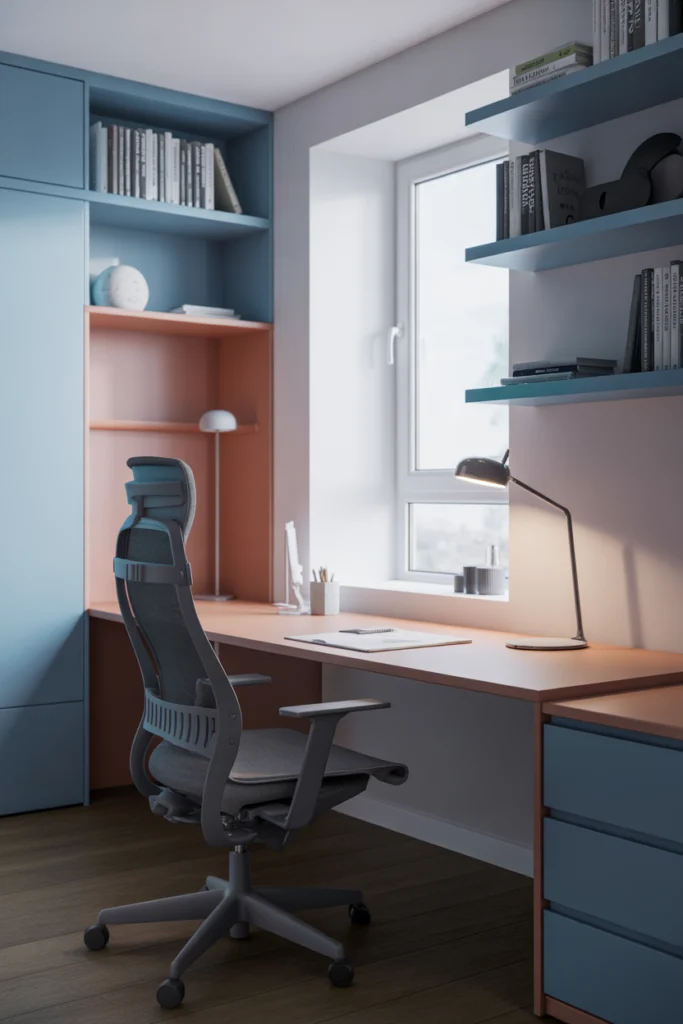
A study-friendly room starts with the desk, not the decor. Place the desk near a window for daylight if possible, but not facing a busy play area, and choose a desk at least 42 inches wide and 24 inches deep, with a chair that lets his feet rest flat on the floor and his elbows sit at desk height. Add a task lamp with adjustable brightness, a small shelf or pegboard above the desk for supplies, and a corkboard or whiteboard for reminders and timetables. Calm wall colors, such as soft blue, pale gray, or warm beige, help concentration, and a clutter-free desk surface makes homework feel less overwhelming.
Storage keeps the study zone working: a drawer unit or rolling cart for notebooks, a pencil cup, a charging station with a cable tray, and a bookshelf within arm’s reach. Keep toys and games in a different zone of the room, even if it is just the other side of the bed, so the desk area reads as work space. A simple routine helps too: clear the desk at the end of homework, put books back on the shelf, and plug devices in at the charging station. As he grows, you can swap the chair and raise the desk or add a monitor stand, without changing the whole room.
12. Jungle and Animal Theme Bedroom
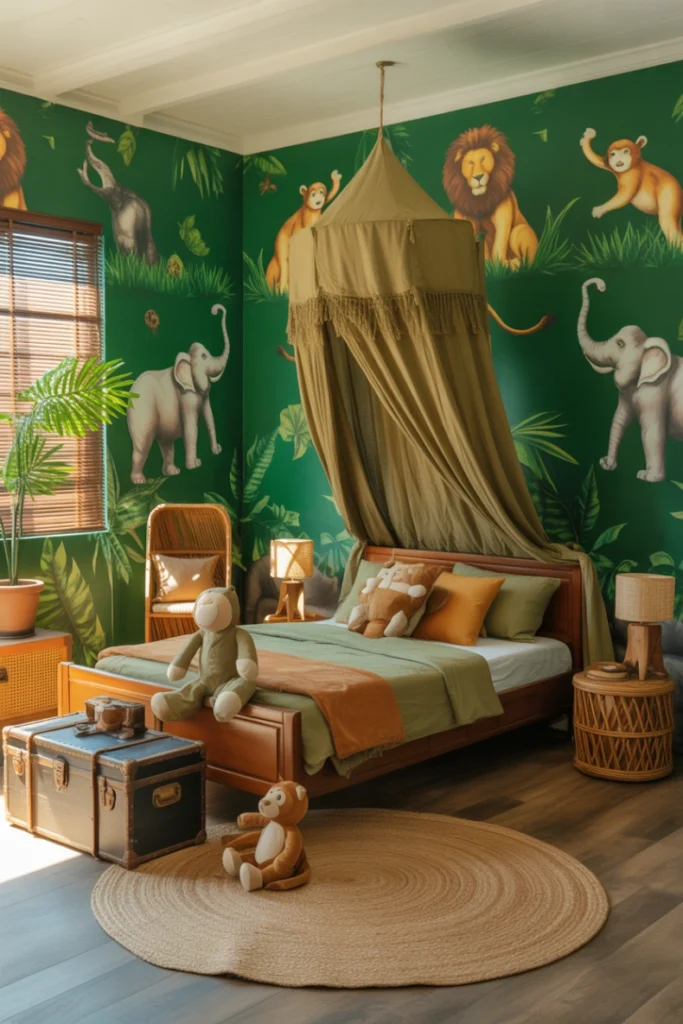
A jungle room is a great fit for younger boys who love animals and nature, and it works with greens, browns, and warm beige tones. Leaf-pattern bedding, a canopy or a simple fabric drape over the bed, and wall decals of animals, trees, or leaves create the jungle at once, without painting the whole room green. Add woven baskets, a safari-style storage trunk, and a few plush animals on a shelf, and keep the furniture in natural wood so the room feels like a forest clearing rather than a toy shop. A green accent wall behind the bed, in a muted sage or olive rather than a bright lime, keeps the room calm at bedtime.
Keep the theme grounded with real nature touches: a small potted plant on the windowsill (choose a hardy, non-toxic plant and keep it out of reach for very young children), nature books on a low shelf, and a rug in a natural jute or cotton weave. Removable decals are the smart choice here, because animal interests change fast, and a plain green wall with new bedding can become a completely different room later. Washable bedding and a wipe-clean rug are worth choosing, since jungle rooms tend to attract a lot of floor play.
13. Lego-Inspired Bedroom
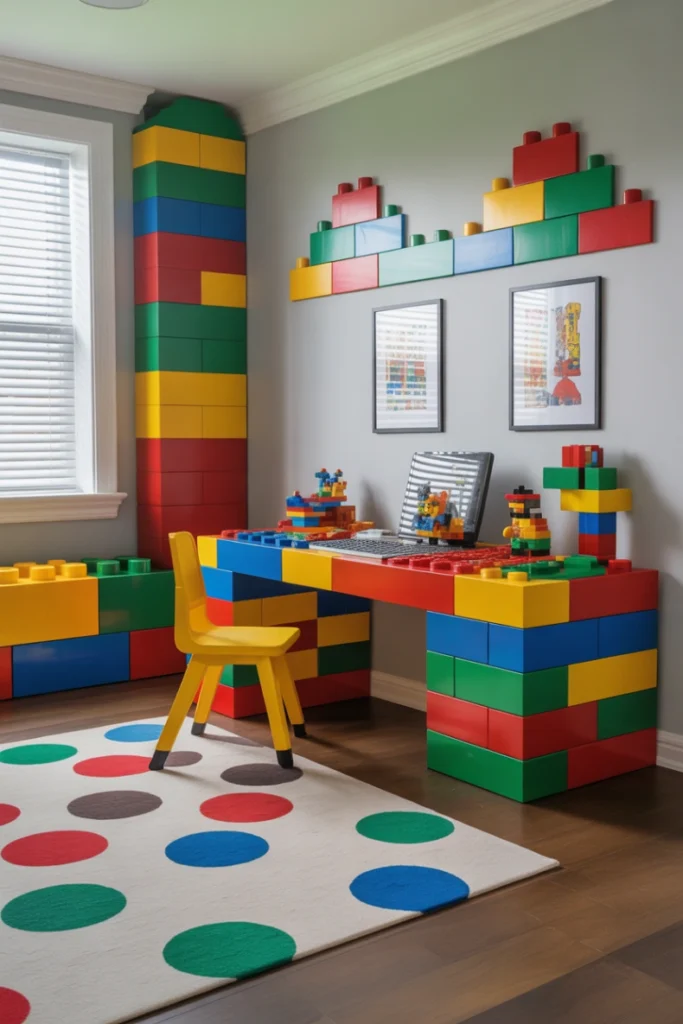
A building-brick theme is colorful, creative, and easy to build in stages, which makes it a favorite for younger boys. Use bright primary colors, red, blue, yellow, and green, on bedding, wall art, and storage bins shaped like large bricks, and keep large furniture neutral, such as white or light wood, so the bright colors do not overwhelm the room. A brick-pattern wallpaper on one wall, or a simple shelf displaying finished builds, gives the theme at once. A small building table, about 30 by 20 inches, with a low chair and a bin for loose bricks, turns the theme into real play space rather than just decoration.
The practical side matters here, because loose bricks end up everywhere. Use a large bin with a lid for the main collection, a smaller tray for the current build, and a rug with a low pile so bricks are easy to find and vacuum around. A display shelf with a front lip keeps finished models safe from younger siblings, and a simple rule, builds stay on the shelf, loose bricks stay in the bin, keeps the floor clear. As he grows, the bright bins can be swapped for plain ones, and the room shifts from a themed kids room to a normal bedroom with a display shelf.
14. Rustic Cabin-Style Bedroom
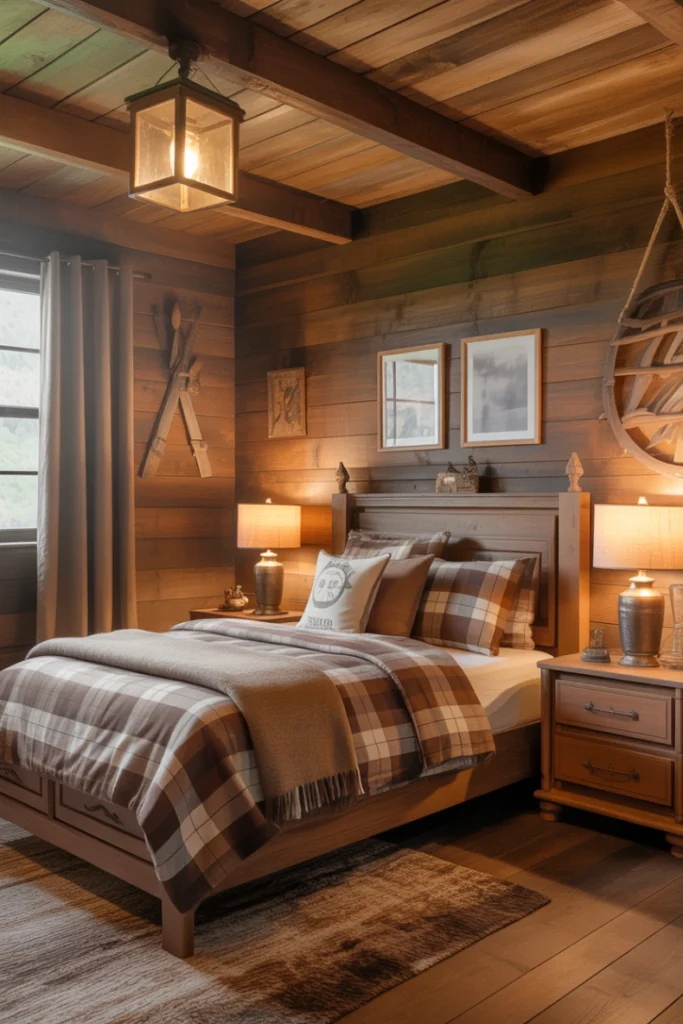
A rustic cabin room brings warmth and calm, and it suits boys of all ages because it is not tied to one age or one character. Start with wood: a solid pine or reclaimed-look bed frame, a wooden nightstand, and a simple wooden sign or nature print on the wall. Plaid bedding in red and navy, or forest green and cream, gives the cabin feel at once, and earthy wall colors, such as warm beige, soft brown, or muted green, keep the room grounded. Lantern-style lamps, woven baskets, and a thick wool or cotton rug add texture without clutter.
Keep the cabin look from feeling dark by balancing the wood with light bedding and good lighting: a warm ceiling light, a bedside lamp, and sheer curtains that let daylight in. A reading chair in one corner, with a small side table and a floor lamp, turns the room into a retreat for older boys too. This style also ages well, because a teen can keep the wood furniture and swap plaid bedding for a solid color, and the room still looks intentional and stylish.
15. Music-Inspired Bedroom
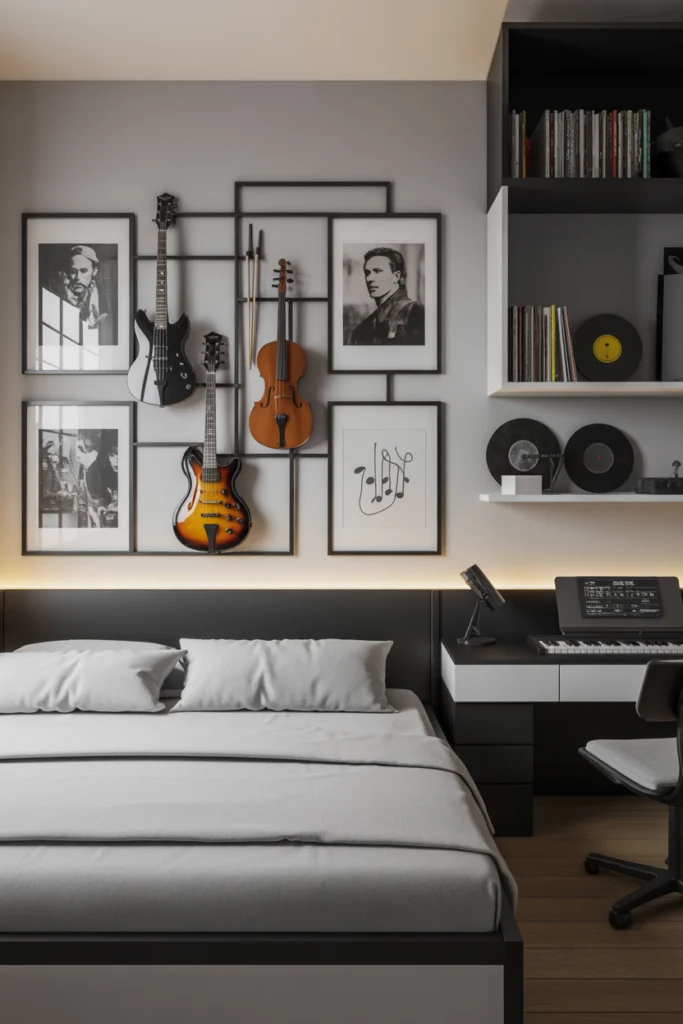
A music room should support the hobby, not just picture it, so start with how he actually plays. A small practice corner needs a stable stand or hook for a guitar, a keyboard stand with a bench, or a desk space for composing, plus a nearby shelf for sheet music and headphones. Wall decor can be simple and strong: framed posters of favorite musicians, a wall decal of music notes, or instruments hung on padded wall hooks. A black-and-white palette, with one accent color from a favorite album cover, keeps the room modern and avoids clashing with colorful instrument cases and posters.
Sound matters in a music room, both for practice and for the rest of the house. A thick rug, curtains, and a bookshelf full of books all soften sound naturally, and a simple rule about practice times keeps peace with siblings. Keep cables tidy with a small cable box or clips along the desk edge, and store smaller instruments in cases on a shelf rather than on the floor. A desk or table for writing music, even a small 36-inch desk, gives him a place to work on songs away from the bed, which helps focus.
16. Reading Nook Bedroom
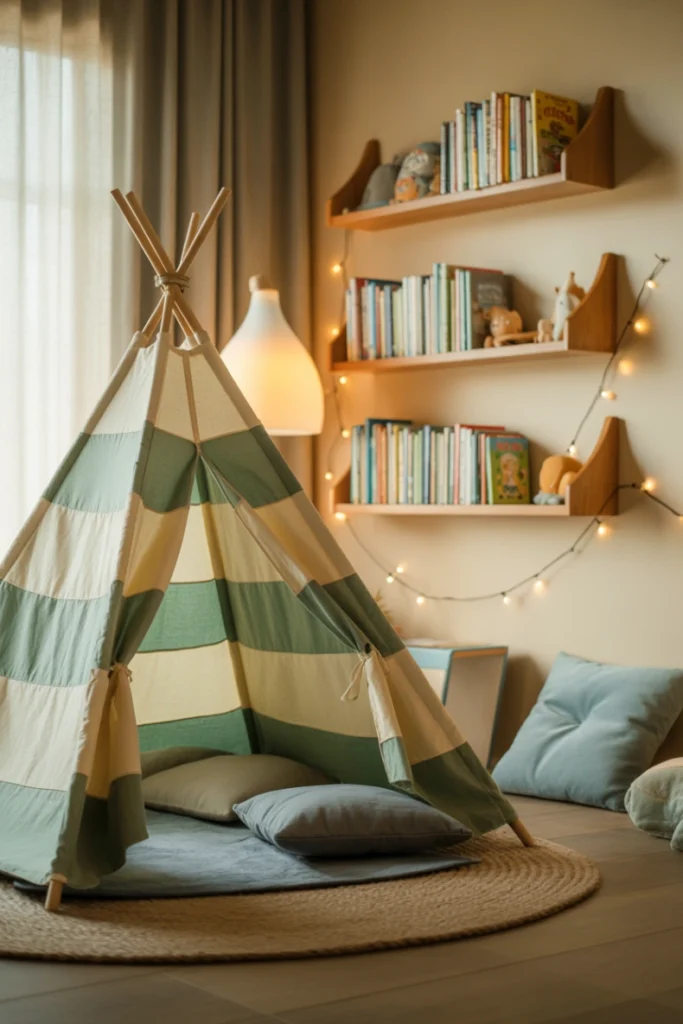
A reading nook gives a boy a place that belongs to books, and it does not need much space. A corner chair, a floor cushion, or a small teepee tent, plus a basket for books and a soft throw, is enough to start. Wall-mounted shelves at his height, about 48 to 54 inches for a younger child, keep favorite books within reach and visible, which encourages picking one up. Soft lighting is essential: a floor lamp with a warm bulb, or a string of fairy lights along the shelf, makes the nook inviting in the evening without needing a bright ceiling light.
Choose calm colors for the nook area, such as soft green, pale blue, or warm cream, so it feels separate from the busier play areas of the room. A small side table for a drink and a bookmark, and a rule that finished books go back on the shelf, keep the nook tidy. For older boys, the same corner can grow into a study chair with a reading lamp and a small bookshelf, so the habit of a quiet reading spot stays even as the tent and cushions are outgrown. Keep the book collection rotating: a few new books on the shelf each month do more than a shelf full of books he has already finished.
17. Teen Boy Modern Bedroom
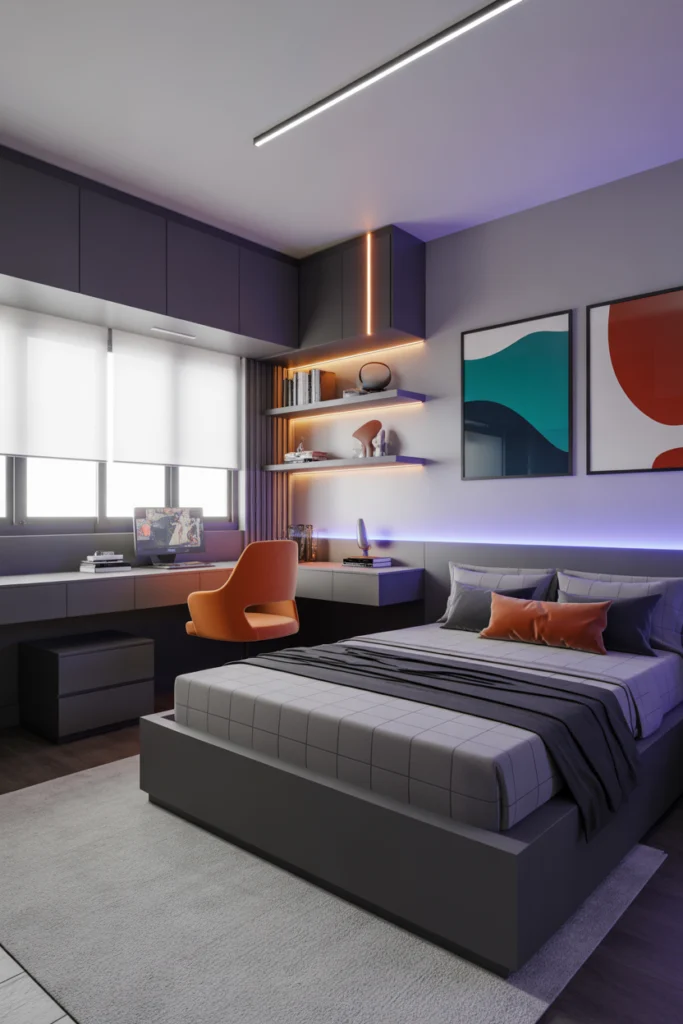
Teen rooms need to feel grown-up, and that usually means simpler furniture, a calmer palette, and better storage. Start with neutral walls, gray, charcoal, or navy, and add one bold accent, such as a framed art print, a patterned rug, or an LED strip behind the bed. Modern furniture with clean lines, a low bed frame, a simple desk, and open shelving, keeps the room looking sleek, and a full or queen bed is worth considering if the room allows it, because teens grow fast and a larger bed lasts through high school. Leave wall space for posters and art he chooses himself, because a teen room should reflect his taste, not just a parent’s plan.
Practicality matters as much as style for a teen. Add a study corner with a proper chair, a charging station, and a drawer for school supplies, plus a comfortable seat, such as a bean bag or an accent chair, for friends. Keep cables managed with a tray under the desk, and use closed storage, such as a wardrobe and under-bed drawers, for clothes, so the room can go from messy to tidy quickly. A dimmer on the main light and a good desk lamp cover both relaxing and studying, and that flexibility is what makes a teen room actually work day to day.
18. Scandinavian Bedroom for Boys
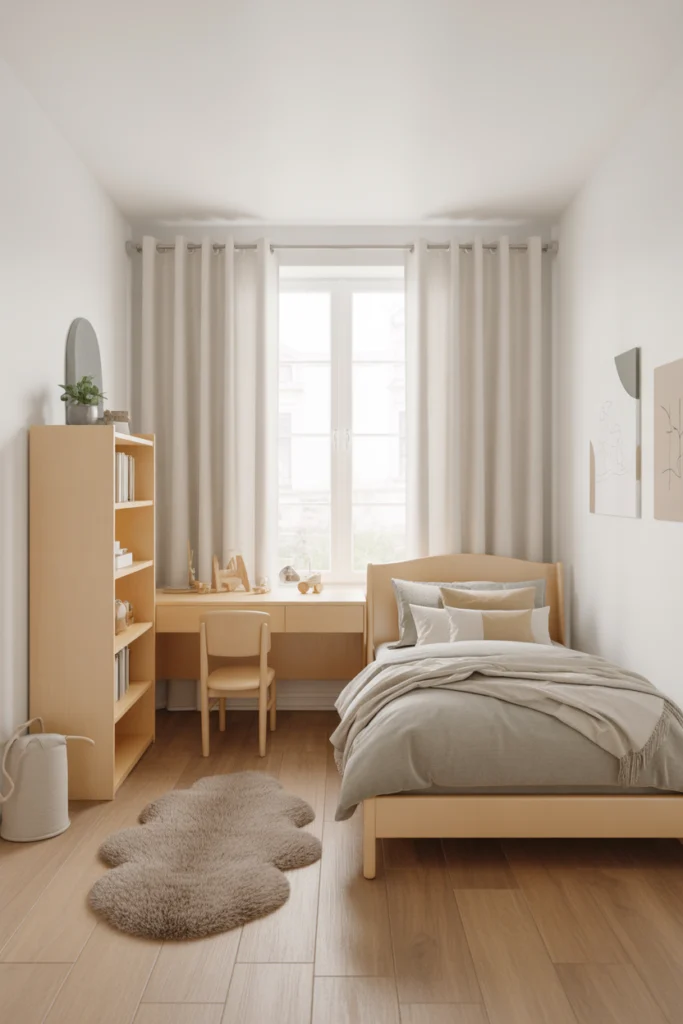
Scandinavian design is ideal for small rooms, because it uses light colors and natural materials to make a space feel bigger and calmer. White walls, light wood furniture, and soft gray, beige, or pale blue bedding are the base, and cozy textures, knitted throws, fluffy rugs, and cotton curtains, add warmth without clutter. Keep furniture low and simple: a light wood bed, a small nightstand, and a simple wardrobe or open rail for clothes. One or two pieces of simple art, in light wood frames, are enough decoration, and the room will feel bright and airy.
The key to this style is storage that hides clutter: closed bins on shelves, a wardrobe with doors, and under-bed drawers keep toys and clothes out of sight, so the light palette stays calm. Natural light is part of the design, so use white or pale curtains and keep windows unblocked. This style grows beautifully with a child, because the same light wood furniture and neutral base can suit a toddler’s room, a school-age boy’s room, and a teen’s room, just by changing the bedding and art. If you need help picking the palette, these bedroom color schemes show how light neutrals pair with one stronger accent color.
19. Gamer Bedroom
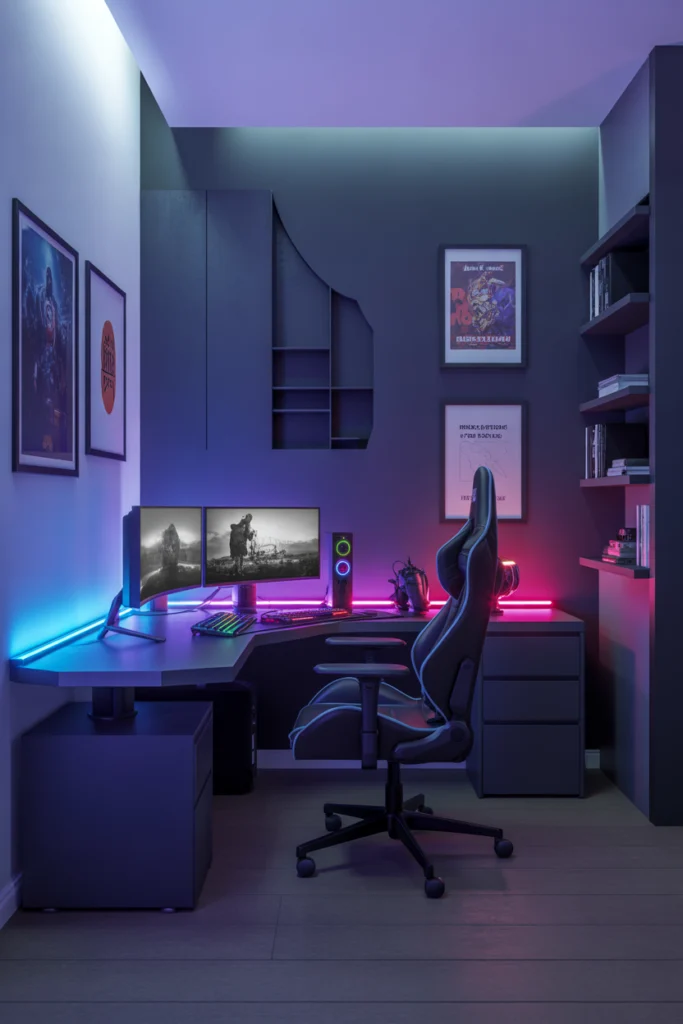
A gamer bedroom needs a proper setup zone, not just posters, so plan the desk first. A desk at least 48 inches wide gives room for a monitor, a keyboard, and a console or laptop, and a sturdy ergonomic chair with adjustable height protects posture during longer sessions. Cable management is essential: a cable tray under the desk, clips along the back edge, and a power strip mounted to the desk leg keep cables off the floor and out of sight. Dark wall colors, such as charcoal, navy, or black on one accent wall, with LED strip lighting in blue, purple, or red behind the desk or bed, create the gaming atmosphere, while the other walls stay lighter so the room does not feel like a cave.
Storage keeps a gamer room usable: floating shelves for collectibles and headsets, a small drawer unit for controllers and games, and a bin for cables and spare parts. Keep the gaming zone separate from the sleep zone if possible, even by just placing the desk on the opposite wall from the bed, so bedtime feels different from playtime. A good rule for parents and teens to agree on is simple: devices charge at the desk, not on the bed, and the desk is cleared at the end of the day. That habit, plus a comfortable chair and good lighting, makes the room work for both gaming and homework.
20. Travel-Themed Bedroom
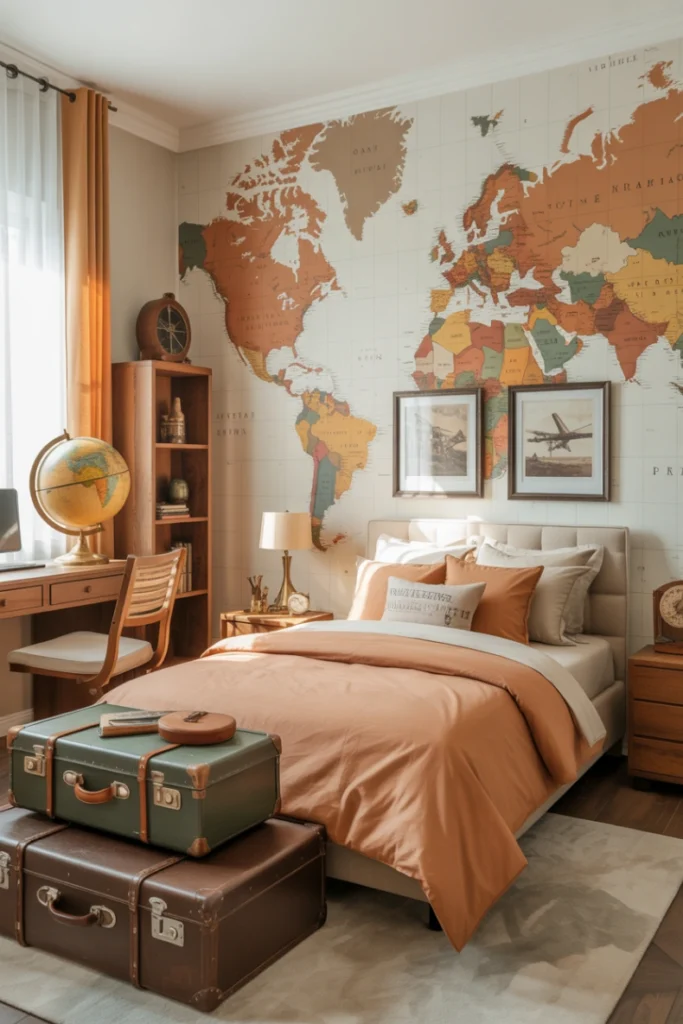
A travel room sparks curiosity and learning, and it starts with maps. A large vintage-style map mural, a world map poster with pins, or a framed collection of postcards above the desk all give the room a story. Soft earth tones, warm beige, muted green, and blue accents, keep the room calm, and globes, model airplanes, or a small suitcase used as storage add charm without clutter. A pin board or a string of photos from family trips makes the room personal, and a shelf of travel books or atlases gives younger boys something real to explore.
Keep the travel theme from feeling like a classroom by limiting maps to one main wall and using plain bedding in a warm neutral, with one travel-pattern pillow or throw. Storage baskets in natural materials suit the theme and hold toys, books, or sports gear. A simple weekend project works well here: first hang the map, then add the bed and bedding, then place the globe and books, and finally add photos one at a time. That order keeps the room feeling like a real bedroom with a travel spirit, rather than a map shop, and it leaves room for new pins and photos as he travels more.
21. Science and Discovery Bedroom
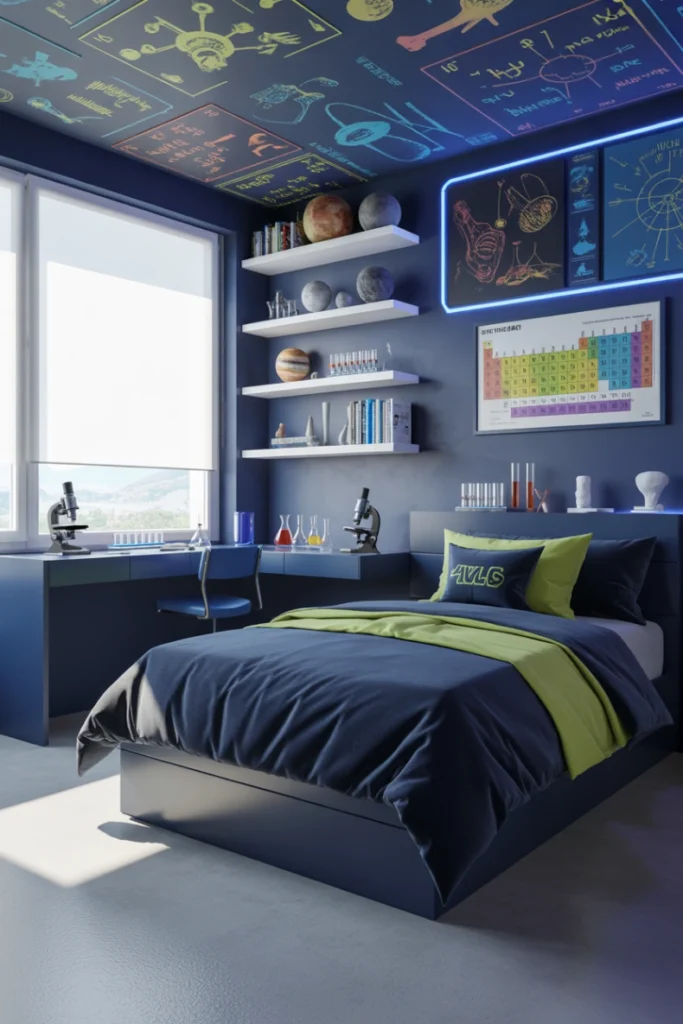
A science room should invite questions and experiments, so give him a place to actually try things. A small experiment desk, about 36 to 42 inches wide, with a wipe-clean surface, a shelf for science kits, and a jar or tray for specimens, turns interest into activity. Wall art with planets, molecules, or simple scientific diagrams, plus themed bedding in navy, white, and a bright neon accent, ties the room together. A bookshelf for science books, a magnifying glass and a simple microscope if he is old enough to use one safely, and a display shelf for rocks, models, or finished projects make the room feel like a young scientist’s lab.
Safety and tidiness matter in a science room. Keep experiment supplies in labeled, lidded bins, store any chemicals or kits with small parts out of reach of younger siblings, and use a washable mat under the experiment desk. A whiteboard or chalkboard wall section, even a small 24 by 36 inch board, gives him a place to write ideas, draw diagrams, and plan the next project. As his interests change, the same desk and shelves can shift from chemistry kits to robotics or astronomy, so the room grows with his curiosity rather than locking him into one topic.
22. Classic Timeless Boy’s Bedroom
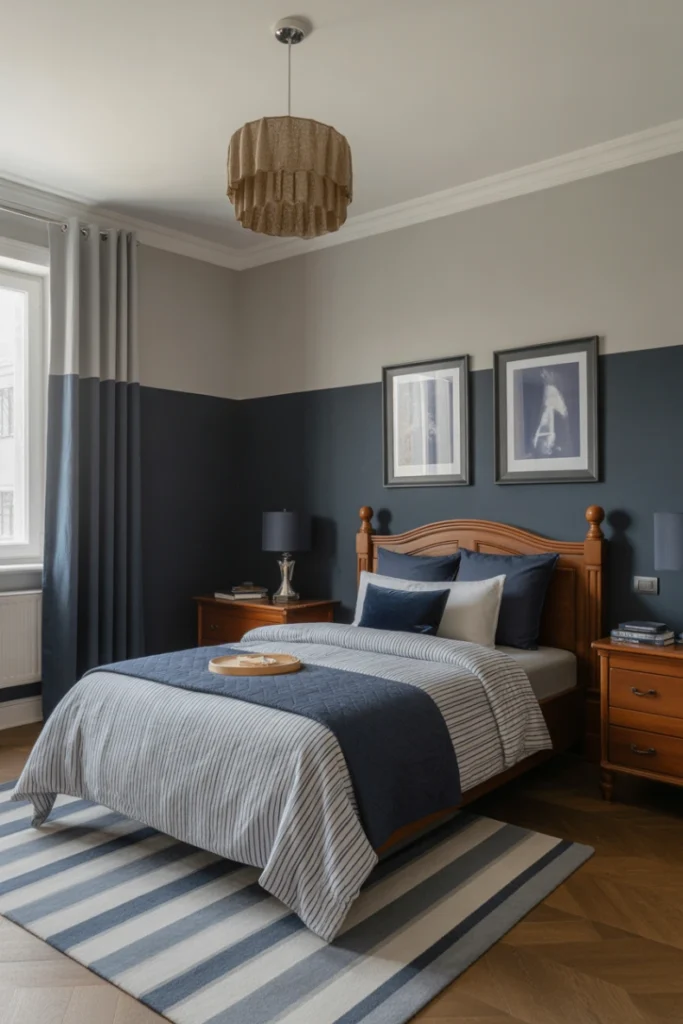
A classic bedroom is the long-term choice, because it avoids trends and relies on good furniture and a simple palette. Navy, gray, or forest green walls, or one darker accent wall with the rest in warm white, plus solid wood furniture, striped bedding, and framed art, create a room that looks right for a young boy and still looks right for a teen. Choose furniture with simple shapes and real wood, a sturdy bed, a dresser with drawers that glide smoothly, and a nightstand with a drawer, because these pieces will be used daily for years and are worth buying once and buying well.
Personal touches keep a classic room from feeling plain: one favorite poster in a proper frame, a shelf for books and a few collected objects, a rug in a classic pattern such as stripes or a simple geometric print, and bedding that can be refreshed with a new throw or pillow. This style also makes transitions easy: when interests change, only the art and bedding need to change, not the furniture or wall color. For a smaller room, the same classic approach still works, and these small bedroom ideas show how to fit a timeless look into a tighter space without losing storage.
Conclusion
Designing a boy’s bedroom is all about finding the right balance between creativity, comfort, and practicality, and the best room is the one that fits the boy who actually lives in it. Start with the layout and the big furniture, choose one theme and one calm base color, and give everything a home with simple, reachable storage. Whether you choose a bold theme, a minimalist layout, or a classic room that will last for years, the goal is the same: a space where he can sleep well, study without distraction, play freely, and feel proud of his own room.
From imaginative themed rooms to smart storage and flexible furniture, these boy bedroom ideas offer a starting point, not a finished rulebook. Pick the idea that matches his age and interests, adapt the colors and sizes to your room, and change the bedding and accessories as he grows. With thoughtful planning and a few purposeful choices, you can build a room that supports his daily routine, sparks his imagination, and still feels right years from now.
Frequently Asked Questions
What is the best color for a boy’s bedroom?
There is no single best color, because it depends on his age and the room’s light. Blue is the most versatile choice, from soft sky blue for younger boys to navy for teens, and it pairs with white, gray, and wood tones. For a calm room, use the stronger color on one feature wall only and keep the other walls pale, so the room feels balanced rather than dark.
How do I make a small boy’s bedroom feel bigger?
Use light wall colors, a low bed frame, and furniture with legs that show floor underneath, which makes the room feel more open. Add a bed with drawers, wall shelves instead of a bulky bookcase, and a mirror opposite a window to bounce light around. Keep at least 24 inches of clear walking space around the bed, and store toys in closed bins so surfaces stay clear.
At what age should a themed bedroom be updated?
Most themed rooms need a refresh every 3 to 4 years, as interests change from cartoons and toys to sports, music, or gaming. The easiest way to handle this is to keep big furniture neutral and put the theme in bedding, wall decals, and accessories, which can be swapped in a weekend without repainting. A room built this way can move from a younger theme to a teen style with only a new duvet set, new art, and a desk upgrade.
How much storage does a boy’s bedroom need?
Plan for at least three types of storage: clothes storage (a wardrobe or dresser plus a laundry basket), book and toy storage (a shelf with labeled bins), and a small drawer or bin for school supplies and small items. Under-bed drawers are especially useful in small rooms, and a hook rail by the door for bags and jackets keeps the floor clear. If everything has a labeled home, tidying takes minutes instead of becoming a weekend project.
What size bed is best for a boy’s bedroom?
A twin bed (38 by 75 inches) suits most younger and school-age boys and leaves the most floor space for play and a desk. A full bed (54 by 75 inches) is a better long-term choice for a teen, if the room is at least 10 by 10 feet, because it gives more sleeping room and lasts through high school. Measure the room first, leave 24 inches of walking space on at least one side of the bed, and check that the door and closet doors can still open fully.
More Ideas You Will Love
 15 Smart Small Bedroom Layout Ideas for Every Space & Style
 12 Summer-Friendly Fabric Ideas to Refresh Your Home
 23 Bedroom Remodel Ideas for 2026 That Transform Your Space with Modern Design
 13 Magical Nursery Themes: Boys, Girls & Gender-Neutral Designs
 21 Tiny Bedroom Ideas: Smart Design Tricks for Small Spaces
 15 Basement Bedroom Ideas: Cozy, Functional Styles for Homes