
22 Coastal Bedroom Ideas for a Beach-Inspired, Breezy Look


A coastal bedroom should feel like a deep breath at the shore: bright, calm, and easy to live in. It is not about filling a room with shells and anchors. It is about light, air, natural texture, and a palette borrowed from sand, sea, and sky. Done well, the look works in a small apartment bedroom just as well as in a large beach house, because the principles stay the same: keep the base light, layer in texture, and let a few ocean inspired details do the talking.
The 22 ideas below cover every part of the room, from wall color and bedding to storage, lighting, and finishing touches. Each one includes practical detail you can actually use, such as paint tones that work together, standard sizes to shop for, and simple styling rules that keep the room relaxed rather than themed. Pick three or four ideas to start with, repeat the same two or three colors throughout the room, and add texture before you add more decor. That restraint is what makes a coastal bedroom feel like a retreat instead of a display.
Before you shop, measure your room and note where the natural light falls. Coastal style depends on brightness, so keep heavy furniture away from windows, choose light window treatments, and leave breathing space around the bed. A room that feels open will read as coastal even with modest decor, while a crowded room will feel busy no matter how many beach details you add.
1. Soft Ocean-Blue Walls
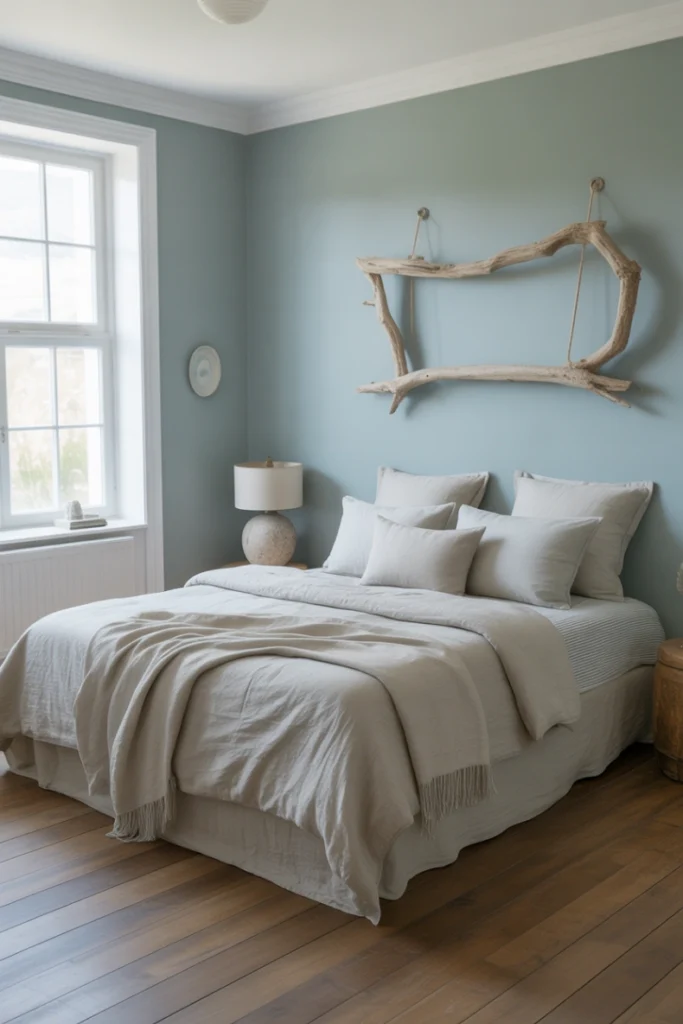
Soft ocean blue is the easiest coastal foundation because it instantly calms a room without making it feel cold. Look for muted, gray leaning blues such as powder blue, dusty aqua, or pale slate blue, and test them on a large board in daylight before you commit. A blue with too much saturation can feel loud in a small room, while a blue with a touch of gray stays restful from morning to evening.
Paint all four walls for a full retreat effect, or paint the bed wall only and keep the other walls warm white if you want a lighter touch. Pair the blue with crisp white trim, white ceilings, and light wood or white furniture so the contrast stays clean. For bedding, start with white or cream, then add one blue accent, such as a throw or two pillow shams, rather than matching every item to the wall.
Practical tip: use an eggshell or matte finish on walls to hide small imperfections and keep the light soft. If your room gets little daylight, choose the lightest blue on your shortlist and add a mirror opposite the window to bounce light around. Finish with one natural texture, like a woven basket or a linen throw, so the blue feels warm and lived in rather than flat.
2. Natural Rattan Furniture
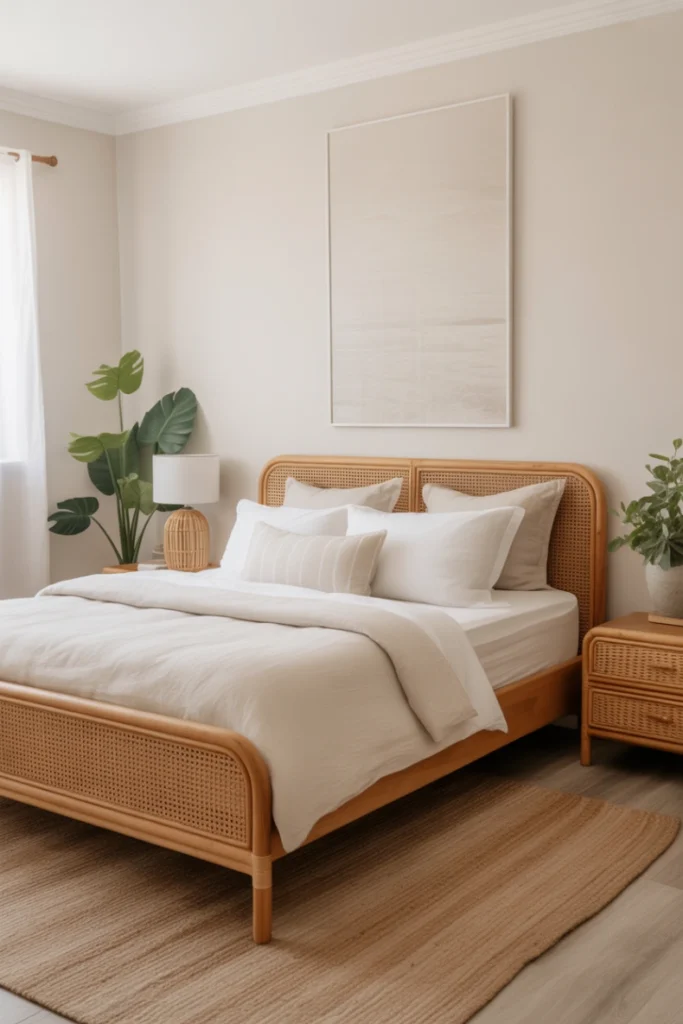
Rattan brings warmth and a breezy, handcrafted feel that painted furniture cannot match. A rattan headboard is the most impactful single piece, followed by rattan bedside tables, a lounge chair, or a storage bench at the foot of the bed. Its open weave keeps the room feeling light, which matters in smaller bedrooms where solid wood can look heavy.
Shop for pieces with a tight, even weave and a natural or light honey finish, and check that joints feel solid rather than wobbly. A queen headboard is typically 60 inches wide, so measure your bed frame and leave at least 24 inches of walking space on each side if you add matching bedside tables. Keep the rest of the furniture simple so the rattan texture stays the star.
Style rattan with white or cream bedding, pale blue or sage accents, and one or two plants. Avoid pairing it with too many other strong textures at once. If you already have a jute rug and linen curtains, let those be the supporting textures and keep throws and pillows in solid or lightly striped fabrics. That balance keeps the room relaxed and timeless.
3. Whitewashed Wood Accents
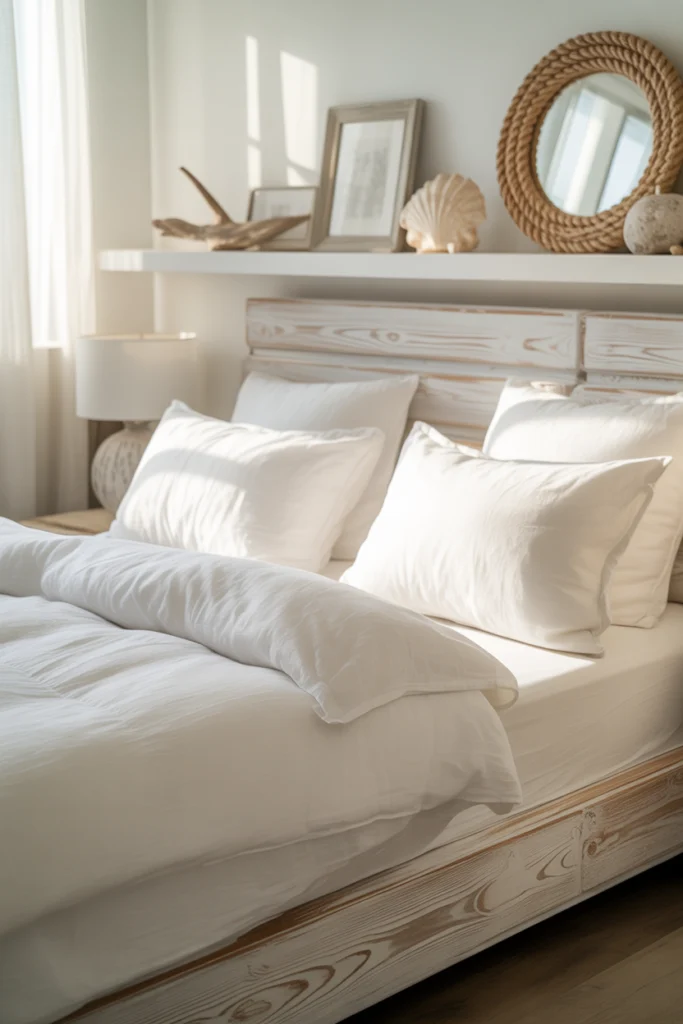
Whitewashed wood mimics weathered driftwood and adds coastal character without darkening a room. A whitewashed dresser, headboard, nightstand, or ceiling beam gives the eye texture to rest on, while the pale finish keeps the room bright. It works best with whites, sandy beiges, soft blues, and light natural woods.
You can buy whitewashed pieces ready made, or whitewash a plain pine piece yourself with watered down white paint brushed on and wiped back so the grain shows through. Sand lightly first, apply one thin coat, wipe with a cloth, and seal with clear matte wax or polyurethane. Test on the back of the piece first so you can adjust how much grain you want visible.
Balance whitewashed wood with airy linens, light curtains, and one darker accent, such as a woven basket or a driftwood toned frame, so the room does not wash out completely. A small rope detail, a ceramic vase, or a coastal print in soft blue will reinforce the theme without turning the room into a theme park. Keep the palette to three main colors for the calmest result.
4. Coastal Striped Bedding
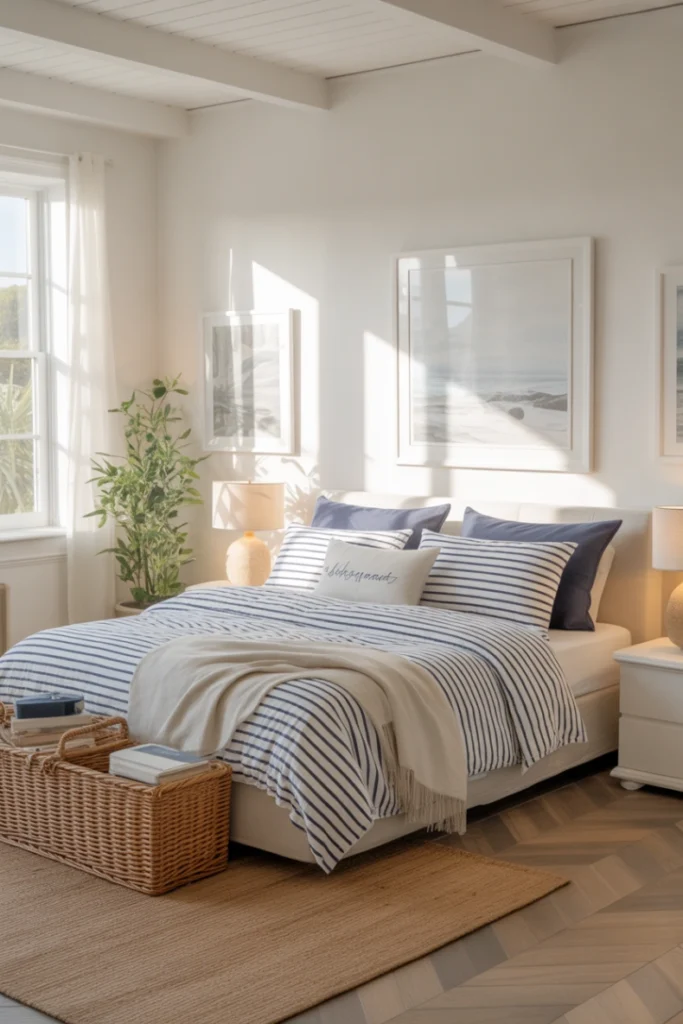
Stripes are the classic coastal pattern because they add structure without noise. Navy and white feels crisp and nautical, sky blue and white feels softer, and sand and white feels the most relaxed. Choose one stripe scale and repeat it sparingly: a striped duvet cover with solid pillowcases, or solid bedding with striped accent pillows.
For a queen bed, a standard duvet cover is about 90 by 90 inches, and for a king it is about 104 by 90 inches. Layer the striped piece with a textured throw in white or cream, folded across the lower third of the bed, and add two solid Euro pillows behind your sleeping pillows for height. That layering keeps the bed looking finished without looking fussy.
Avoid mixing stripes with bold florals or busy geometrics in the same bed. If you love pattern, keep the second pattern small and in the same color family, such as a tiny dot or a subtle ticking stripe. Add a framed nautical print or a woven basket nearby, and the room will feel fresh, tidy, and unmistakably coastal.
5. Woven Jute Rugs
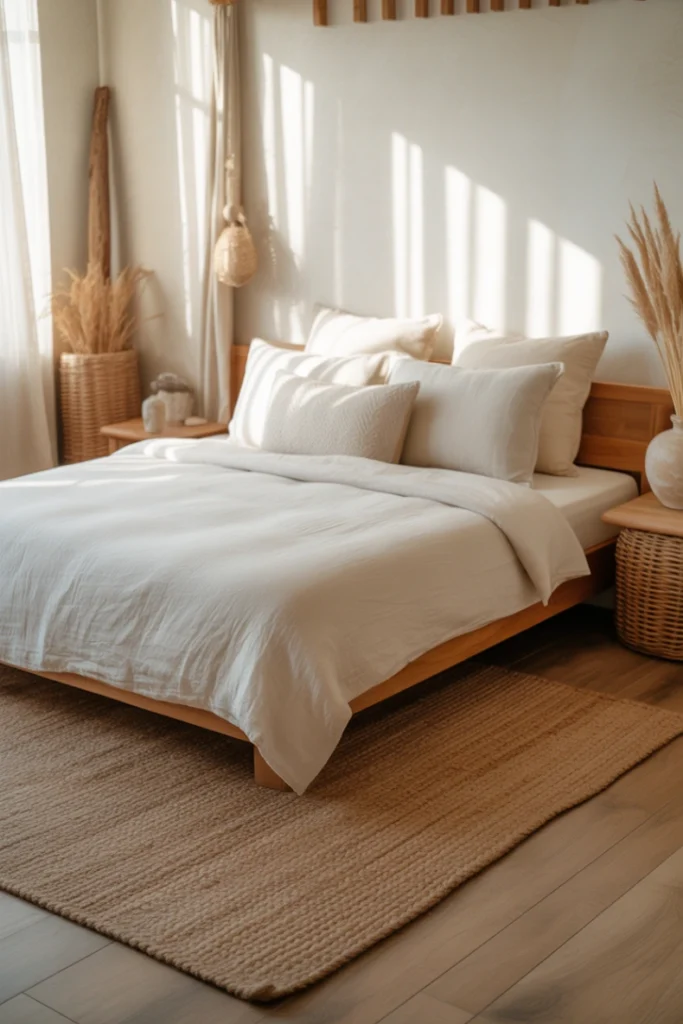
A jute rug grounds a coastal bedroom with earthy texture and a warm neutral base. Its natural tan tone works with whites, creams, blues, and soft greens, and its slightly rough texture contrasts beautifully with soft bedding and smooth wood. Jute also wears well in bedrooms, where foot traffic is lighter than in hallways or living rooms.
Size matters more than pattern here. For a queen bed, an 8 by 10 foot rug placed under the lower two thirds of the bed leaves a generous border on each side. For a king, go to 9 by 12 feet if the room allows. The rug should extend at least 18 to 24 inches beyond each side of the bed so your feet land on texture, not cold floor, when you get up.
Layer a smaller patterned rug on top only if the jute is plain and the pattern is quiet, such as a soft blue border. Otherwise, let the jute stand alone and add texture elsewhere with linen curtains or a woven pendant light. Shake jute rugs outside regularly and blot spills quickly, since natural fiber absorbs moisture, and use a rug pad to keep it flat and safe on hard floors.
6. Driftwood-Inspired Headboard
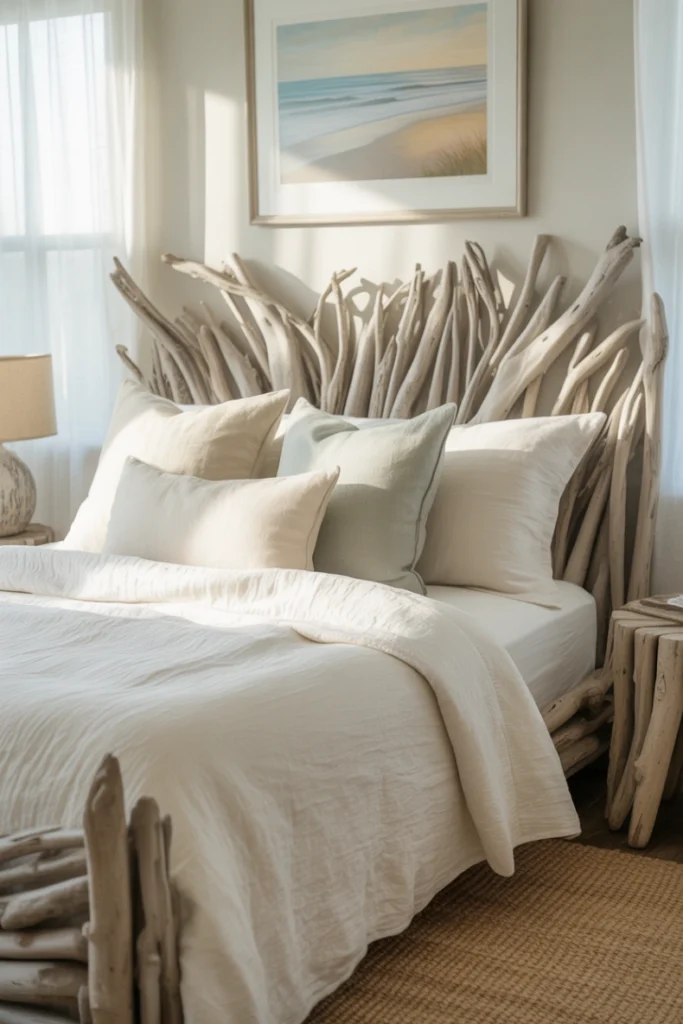
A driftwood style headboard is a natural focal point because its weathered gray and beige tones feel collected rather than manufactured. You can find versions made from reclaimed wood, or crafted pieces with a driftwood finish that give the same look at a lower cost and with a more even surface. Either way, the headboard should sit centered on the bed wall with art or lighting balanced on each side.
Measure before you buy: a queen headboard is usually 60 to 62 inches wide and 48 to 58 inches tall, while a king is 76 to 78 inches wide. Leave a few inches above the pillows so the headboard reads as a backdrop rather than a wall panel. If your ceiling is low, choose a headboard under 54 inches tall to keep the room feeling open.
Pair driftwood tones with crisp white bedding and soft blue or sage pillows, then soften the rugged texture with smooth lighting, such as glass lamps, and one piece of ocean art. A small seashell bowl or a marine print on a nightstand ties the look together. Keep the rest of the wall simple so the headboard keeps its impact.
7. Soft Linen Curtains
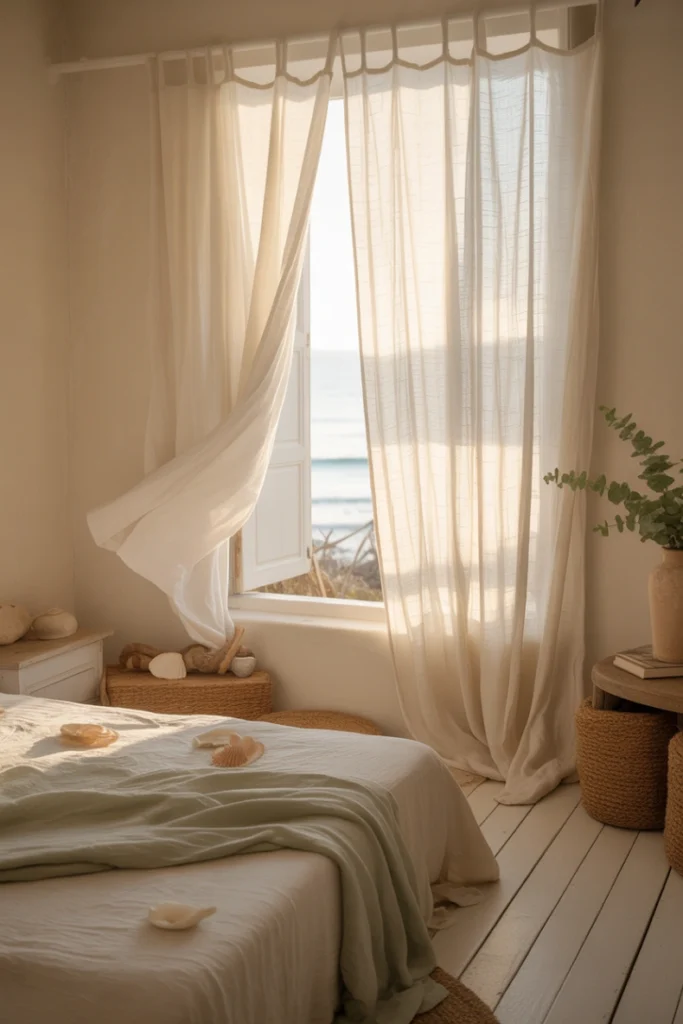
Linen curtains are the coastal window treatment because they filter light gently and move softly in a breeze. White, sand, and light gray linen all work, and a slightly sheer weave gives the best glow in the morning while still providing privacy during the day. Avoid heavy blackout curtains as the main layer, since they block the airy feeling coastal rooms depend on.
Hang the rod 4 to 6 inches above the window frame and 6 to 10 inches wider than the frame on each side, so the curtains stack off the glass and make the window look larger. For a standard 8 foot ceiling, 96 inch panels usually puddle slightly or just kiss the floor, which looks relaxed and intentional. Use a simple wooden or matte black rod rather than an ornate finial.
If you need darkness for sleep, add a separate roller blind or lined panel behind the linen, and open the linen during the day. Pair linen curtains with woven blinds, rattan pieces, or soft blue bedding, and add texture through throws and baskets rather than more fabric pattern. The gentle movement of linen alone adds much of the tranquil, ocean inspired mood.
8. Seashell and Coral Decor
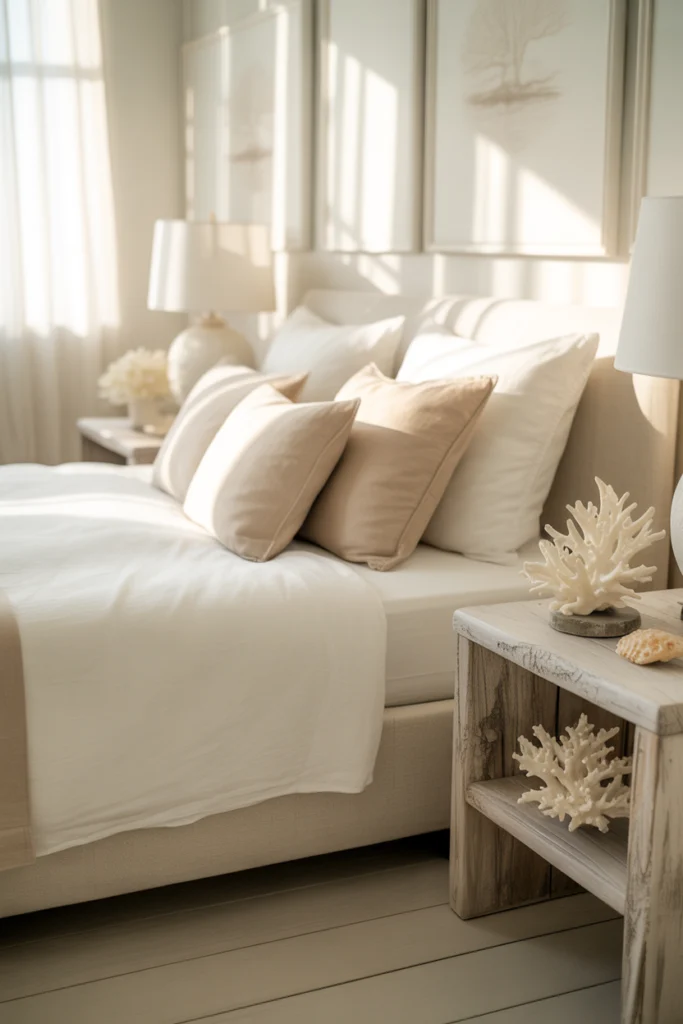
Seashell and coral accents bring the shore indoors in small, elegant doses. A bowl of shells on a dresser, a framed shell print, a coral sculpture on a shelf, or a shell edged mirror all work, but the key is restraint. One or two shell groupings per room feel collected and sophisticated, while shells on every surface quickly feel cluttered.
Group shells by color and size rather than scattering them. A shallow white bowl with five to seven shells in cream, blush, and pale gray looks intentional, and a single larger coral piece on a stack of books makes a quiet focal point. Choose real or high quality resin pieces with natural coloring, and avoid brightly dyed shells that clash with a soft coastal palette.
Place shell decor where it pairs with another natural material, such as driftwood, woven baskets, or glass vases, so it feels part of the room rather than an afterthought. Shell art works especially well above nightstands or a dresser, where it can be enjoyed up close. Keep the palette pale and the groupings small, and the room will feel serene rather than souvenir like.
9. Navy and White Nautical Theme
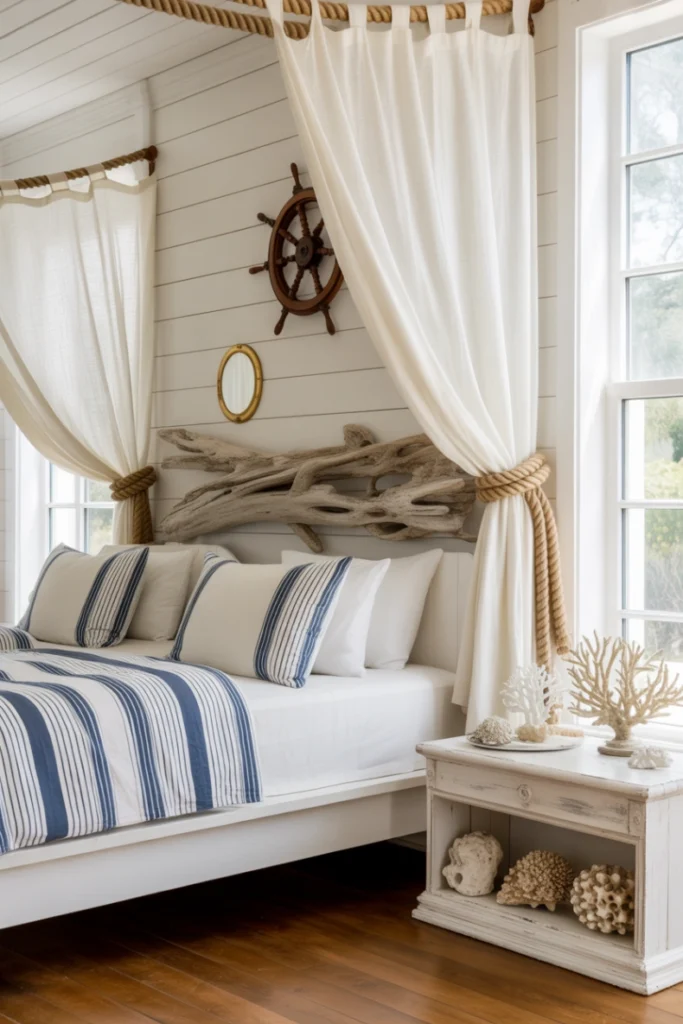
Navy and white is the most iconic coastal pairing, crisp, timeless, and easy to build. Start with white walls and bedding, then add navy in measured doses: a navy throw, navy pillow shams, a navy striped duvet, or a navy accent chair. Because navy is strong, it works best as about 20 to 30 percent of the room, not half.
Soften navy with wicker furniture, linen textiles, light wood, and soft gray accents so the room does not feel formal or heavy. Brushed nickel or brass hardware adds a polished finish, and rope details or marine artwork reinforce the nautical theme without needing a literal anchor on every pillow. A navy and white room also photographs beautifully, which helps if you like to refresh the look seasonally.
Practical rule: if you use navy bedding, keep the rug and curtains light. If you use a navy accent wall, keep the bedding white and add navy only in pillows and art. That one strong navy element per zone keeps the contrast clean and the room feeling like a classic coastal retreat rather than a sailor costume.
10. Ocean-Inspired Wall Art
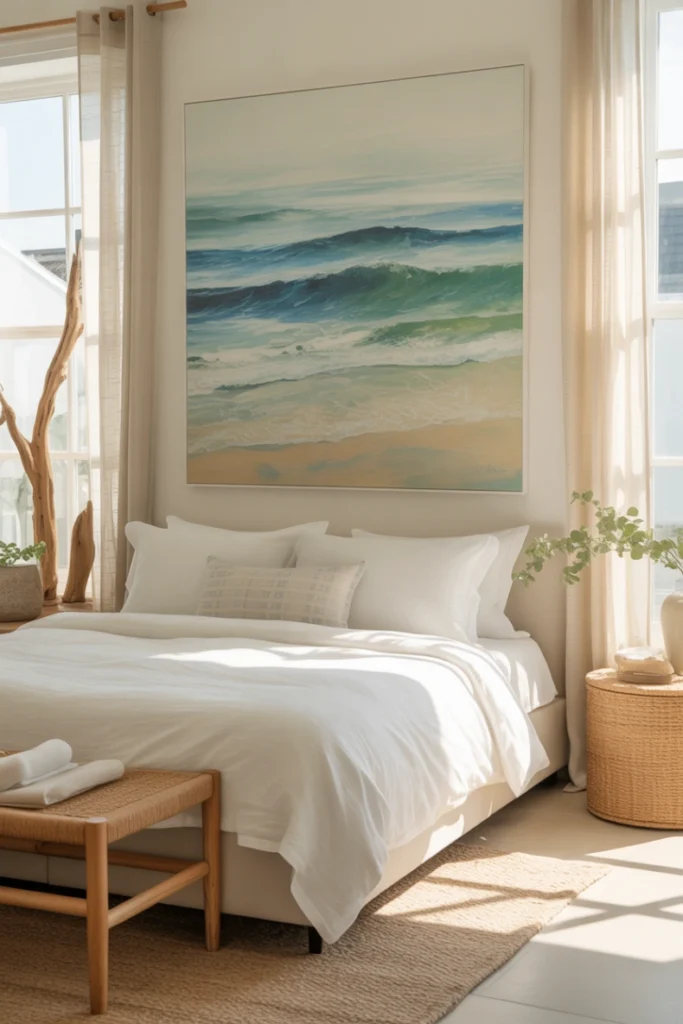
Ocean art sets the mood of a coastal bedroom faster than almost any other single item. A large framed photograph of waves, an abstract painting in blues and sand tones, or a set of smaller coastal prints can anchor a wall and pull the whole color scheme together. Choose art that echoes the exact blues and neutrals already in your bedding and rug.
Scale is the most common mistake. Above a queen bed, aim for art or a gallery grouping about two thirds the width of the bed, roughly 40 to 48 inches wide, hung so its center sits about 57 to 60 inches from the floor. A single oversized piece makes a stronger statement than many tiny prints scattered around the room, though a tight grid of three matching prints also works well.
Frame ocean art in natural wood, bamboo, white, or light oak to keep the coastal feel, and avoid heavy gilt frames that fight the relaxed palette. Pair the art with linen bedding, a jute rug, or rattan furniture, and leave breathing space around it. When the art, bedding, and rug share the same two or three colors, the room feels cohesive without trying hard.
11. Breezy White Bedding
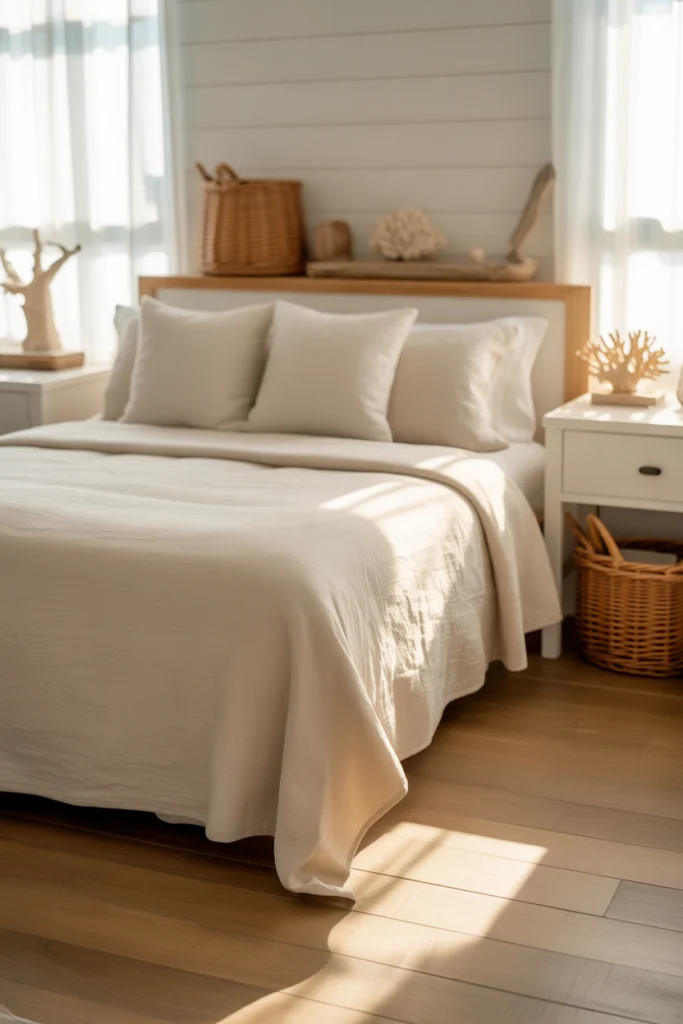
White bedding is the coastal staple because it looks clean, feels resort like, and lets every other color in the room shine. The trick is layering different white textures so the bed does not look flat: a cotton percale duvet, a linen or waffle knit throw, and a mix of smooth and textured pillowcases. White on white works when the textures differ.
Build the bed in layers. Start with white sheets, add a lightweight white duvet or coverlet, fold a textured throw across the foot, and finish with two sleeping pillows, two Euro pillows, and one or two accent pillows in a soft coastal color. That structure looks inviting and hotel like, and it is easy to remake each morning in under two minutes.
White bedding pairs with any coastal palette, from soft pastels to deep navy, so it is the safest base if you like to change accent colors seasonally. Keep whites in the same temperature family, either all bright white or all warm cream, to avoid a mismatched look. Wash white bedding with a gentle cycle and skip fabric softener on linen, which keeps its natural texture and breathability.
12. Soft Sand-Colored Palette
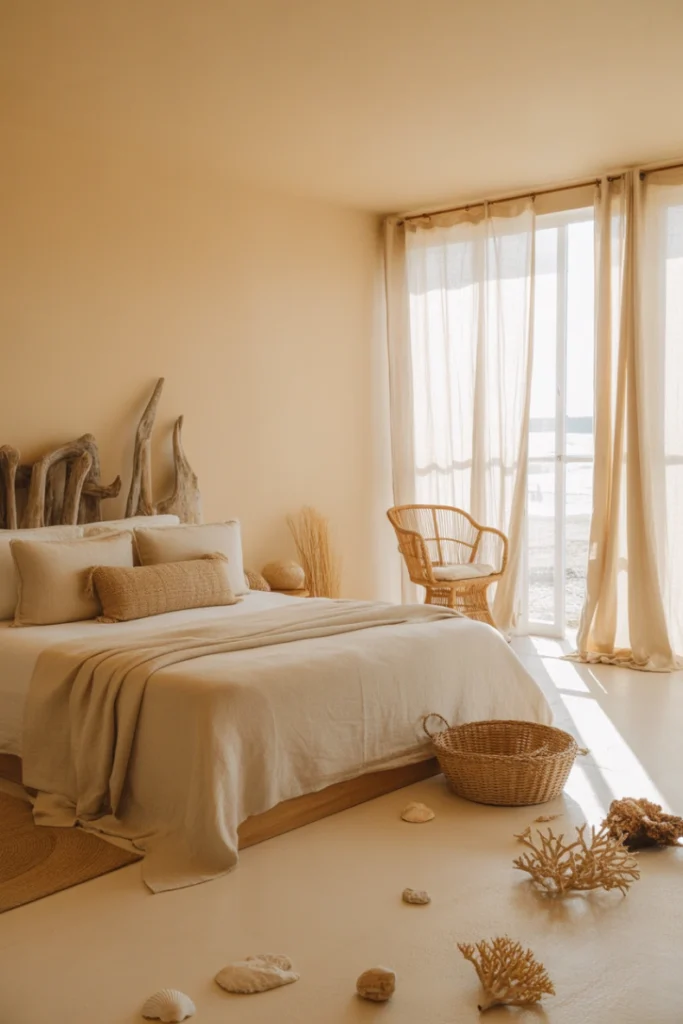
A sand palette, soft beige, taupe, cream, and warm stone, gives a bedroom understated coastal warmth without relying on blue at all. It mimics beach landscapes and works beautifully in rooms with warm light or wood floors, where a cool blue might feel chilly. Sand tones suit walls, bedding, rugs, and upholstered furniture equally well.
Use sand as the base and add contrast carefully. Paint walls a warm cream or pale taupe, choose bedding in cream and beige, and add one cooler accent, such as pale blue pillows or sage green art, so the room does not turn muddy. Natural wood furniture in light oak or whitewash keeps the palette bright, while darker wood should be used sparingly.
Layer textiles to keep sand from feeling flat: a linen duvet, a knit throw, a woven rug, and a velvet or boucle accent pillow in a slightly deeper tone. Subtle patterns, such as a fine stripe or an organic leaf print, add interest without breaking the calm. Sand also makes a perfect backdrop for seashell decor, rattan pieces, and coastal wall art, all of which stand out gently against it.
13. Light, Airy Canopy Bed

A canopy bed with sheer white drapes brings a romantic, cabana like feeling to a coastal bedroom. The flowing fabric softens the frame, adds vertical interest, and makes even a simple bed feel like a retreat. This idea works best in rooms with at least 8 foot ceilings, so the drapes have room to hang without crowding the space.
Choose a simple wood or rattan frame and lightweight sheer panels, not heavy curtains. Hang the panels so they fall just to the floor or puddle by an inch or two, and keep them pulled to the posts during the day so the bed stays open and airy. For a small room, use sheers on the head end only, which gives the canopy feeling without closing the bed in.
Pair the canopy with linen bedding, a woven rug, and subtle blue or sand accents, and keep the rest of the room minimal. Too many patterns or heavy furniture will fight the lightness of the drapes. If you like a similar effect on a budget, try a ceiling mounted curtain track behind the headboard with two sheer panels, which gives the same soft frame for much less cost and effort. For more small space inspiration, see these small bedroom ideas that show how to keep a canopy look light in a compact room.
14. Seagrass or Wicker Storage Baskets

Seagrass and wicker baskets are the coastal storage solution because they hide clutter while adding texture. Use large baskets for extra blankets, medium baskets for pillows or laundry, and small baskets on shelves for chargers, books, and personal items. Their earthy tones balance airy palettes and keep the room feeling warm and organized.
Place baskets where they are actually useful: a large basket beside the bed for throws, a pair under a bench at the foot of the bed, or a lidded basket in an open closet. Vary the sizes slightly for visual interest, but keep the material consistent, all seagrass or all wicker, so the grouping looks intentional. Add fabric liners to baskets used for laundry or delicate items.
Baskets pair naturally with linen fabrics, white furniture, and rattan pieces, and they make tidying fast, which matters in a room meant to feel restful. Choose baskets with sturdy handles and a tight weave, and dust them with a dry cloth or a soft brush. Avoid overfilling them, since a basket that bulges looks messy rather than charming, and leave one basket partly empty for everyday use.
15. Coastal Floral Prints
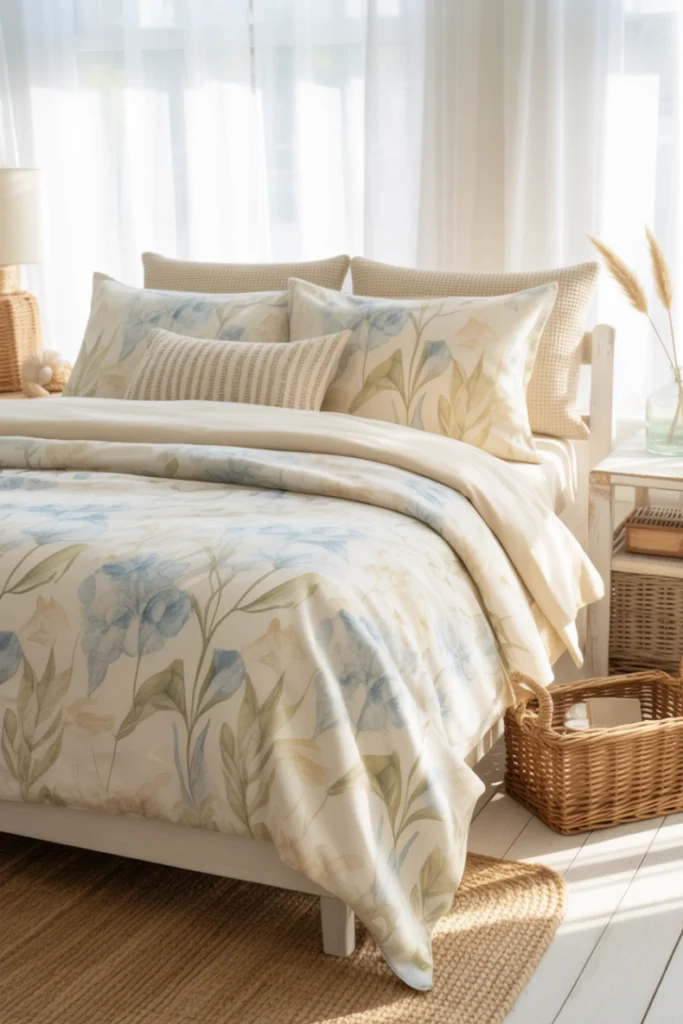
Coastal florals are softer than tropical prints: think dune grass, palm leaves, sea lavender, and wild coastal flowers in blues, pale greens, and sandy neutrals. Used lightly, they add freshness and a gentle organic feel without making the room busy. The key is scale and restraint, one floral element per zone, not florals on the bedding, curtains, and art all at once.
Start with throw pillows or a single piece of wall art in a coastal floral, paired with solid bedding and neutral curtains. If you prefer floral bedding, keep the pillows solid and the rug plain. Choose prints where the background is white, cream, or pale blue, so the pattern reads as light and airy rather than dense.
Balance florals with solid neutrals and natural textures, such as linen, rattan, and jute, which keep the pattern from feeling sweet or dated. This idea suits anyone who likes a softer coastal look, especially in a guest bedroom or a bedroom with limited natural light, where a touch of botanical color adds life without darkening the room.
16. Beach-Inspired Nightstands
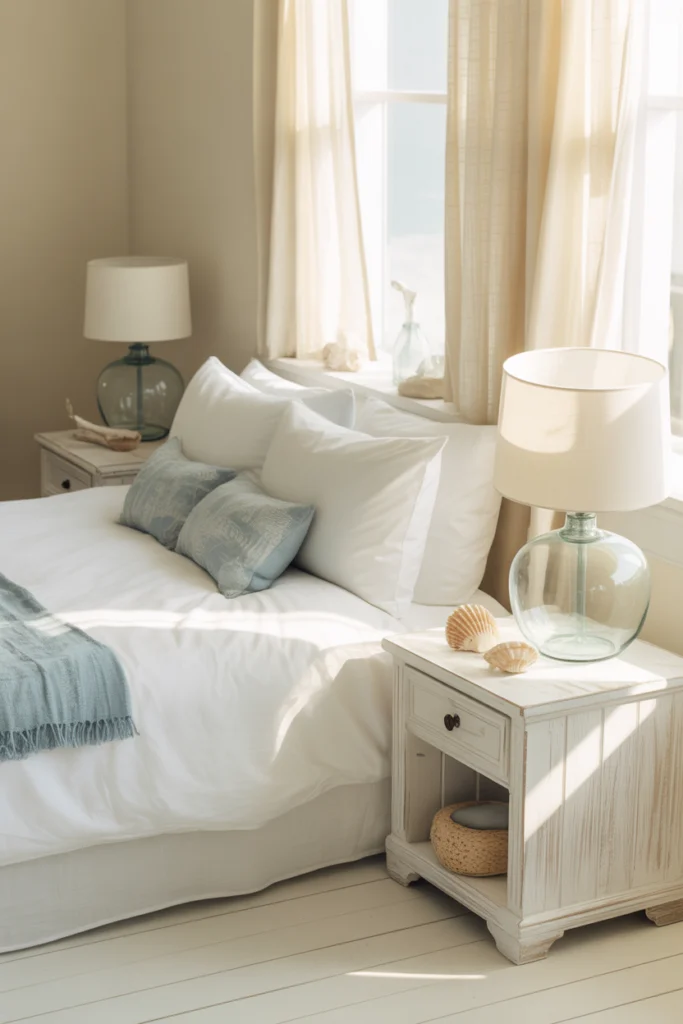
Nightstands in driftwood tones, whitewashed finishes, or natural rattan add personality in a small footprint. Because they sit right beside the bed, they are seen up close every day, so their finish and styling matter more than their size. Choose nightstands about 24 to 28 inches tall, close to the height of your mattress top, so lamps and books sit at a comfortable reach.
Look for a mix of open and closed storage: a drawer hides chargers and clutter, while an open shelf displays a book or a small plant. If your bedroom is small, a single drawer nightstand or a wall mounted shelf keeps the floor feeling open. Match the two nightstands for a calm, symmetrical look, or use the same finish in different shapes for a collected feel.
Style each nightstand with no more than three items: a lamp, one small decor piece, and one useful item such as a book or a carafe. A glass lamp, a seashell bowl, a small plant, or a nautical book all suit the theme, and soft warm lighting completes the coastal mood. Leave the surface mostly clear, since a crowded nightstand makes the whole room feel busy.
17. Glass Decor and Lamps
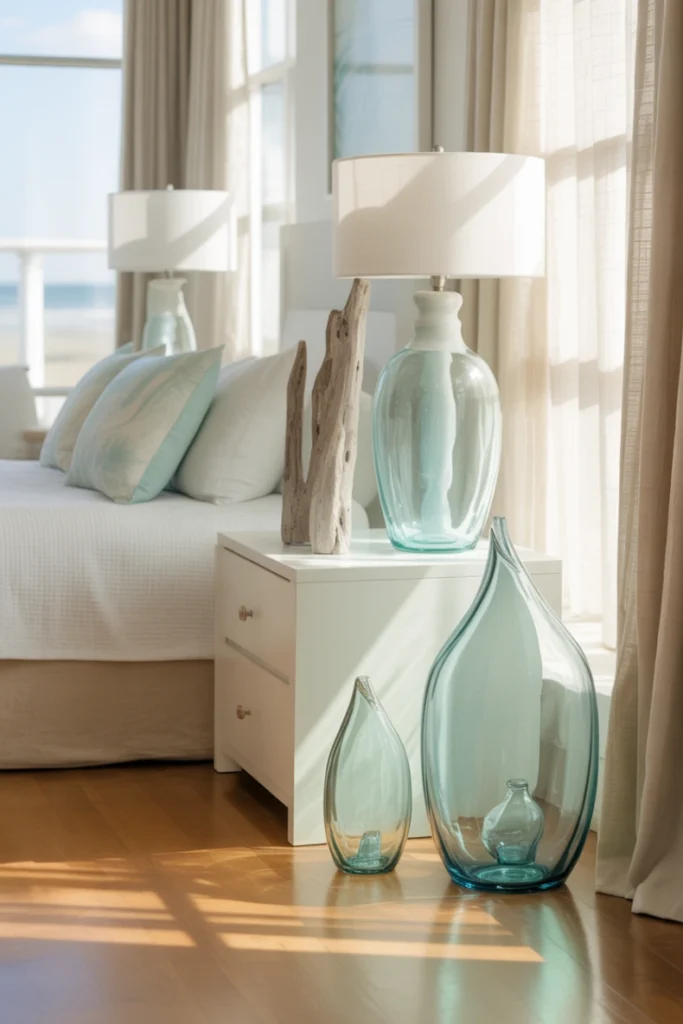
Glass lamps and decor bring a light, reflective quality that mimics sea glass and keeps a coastal bedroom feeling open. Clear glass, soft blue glass, and frosted glass all work, and a glass lamp base lets the eye travel through the piece rather than stopping at a solid block. That transparency is especially helpful on nightstands and dressers in smaller rooms.
Choose lamp bases 12 to 18 inches tall for nightstands, with a simple linen or cotton shade in white or cream, and use warm white bulbs around 2700K for a soft evening glow. A pair of matching glass lamps flanking the bed gives symmetry, while a single larger glass lamp on a dresser can anchor that wall. Add small glass bowls or vases filled with shells or sand for a quiet echo of the same material.
Pair glass with textured linens, rattan furniture, or a jute rug for contrast, since glass alone can feel cold. In daylight, glass catches sunlight and adds sparkle, and at night it glows softly with the lamp on. Keep glass pieces dust free and uncluttered, and avoid colored glass in strong tones that clash with your soft coastal palette.
18. Pale Gray Coastal Neutrals
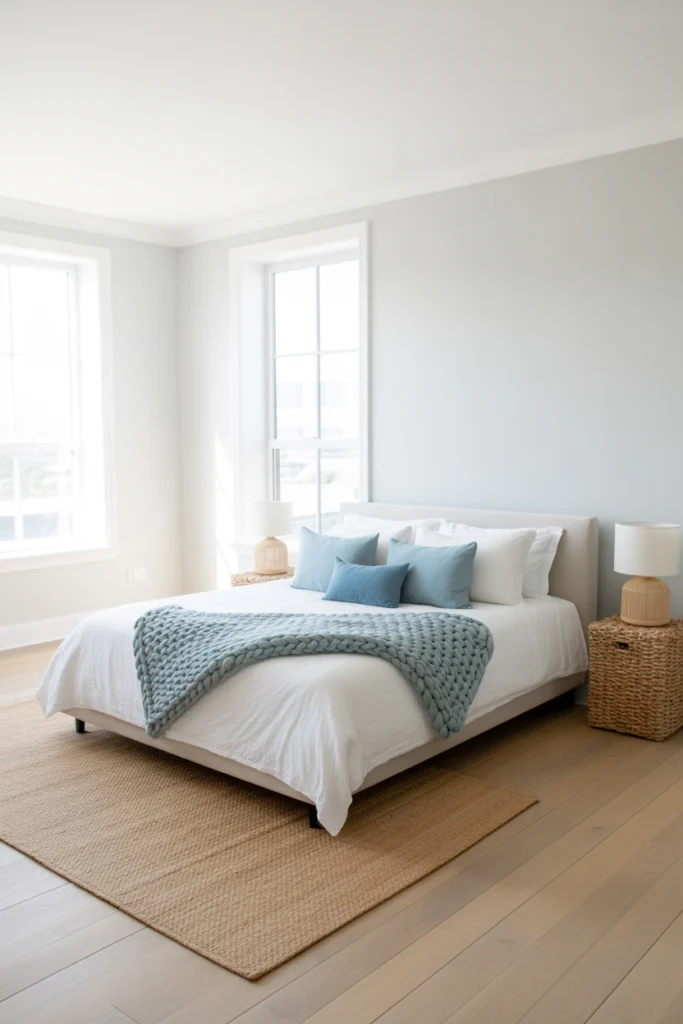
Pale gray gives coastal style a modern, sophisticated twist. It pairs beautifully with whites, ocean blues, and natural textures, and it works as a wall color, a furniture finish, or a bedding tone. Gray is more forgiving than pure white in a busy household, and it makes blue and sand accents look intentionally chosen rather than accidental.
Choose a warm gray with a hint of beige or blue, rather than a cold steel gray, so the room stays inviting. Paint walls pale gray, then add warmth with beige pillows, woven rugs, wooden frames, and soft blue art. If gray walls feel too cool, use gray only on bedding and furniture and keep the walls warm white. For a deeper look at how gray can transform a bedroom, see these gray bedroom ideas for palettes and pairings that stay warm.
To keep gray from feeling flat, layer at least three textures: smooth painted wood, woven fiber, and soft linen or knit. A gray upholstered headboard, a jute rug, and linen curtains together feel rich without needing bold color. Add one natural element, such as driftwood or seagrass, and the gray coastal look stays calm, contemporary, and timeless.
19. Blue and White Ceramic Accents
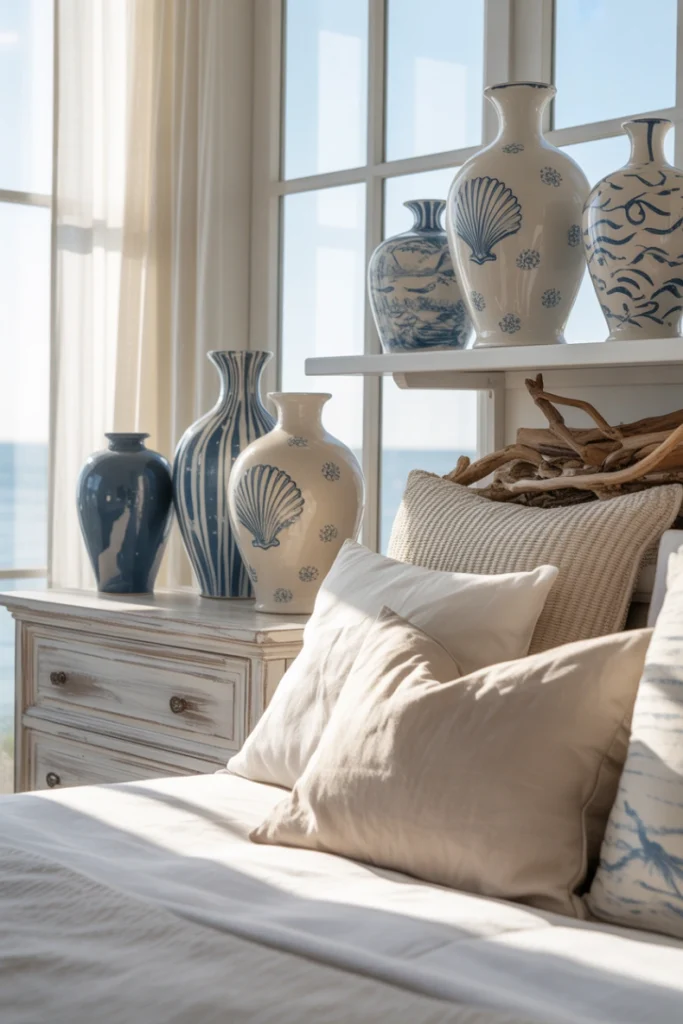
Blue and white ceramics are the classic coastal accent, timeless, crisp, and easy to place. Vases, lamps, bowls, and ginger jars in blue and white patterns add color in small doses without committing the whole room to blue. Their glossy finish also contrasts nicely with matte linen, rough jute, and weathered wood.
Place ceramics where they can be seen but not knocked over: a pair of vases on a dresser, a single lamp on a nightstand, or a bowl on a shelf. Group odd numbers, one or three pieces, rather than lining up many small items, and vary the heights so the grouping feels natural. Keep the patterns in the same blue family as your bedding or art for cohesion.
Pair ceramics with white linens, woven baskets, and ocean art, and let them be the main pattern in the room if your bedding is solid. If your bedding is already striped or floral, use plain blue or plain white ceramics instead, so the room does not compete with itself. A few well chosen ceramic pieces make a bedroom feel polished, fresh, and effortlessly coastal.
20. Breezy Beach-Style Ceiling Fan
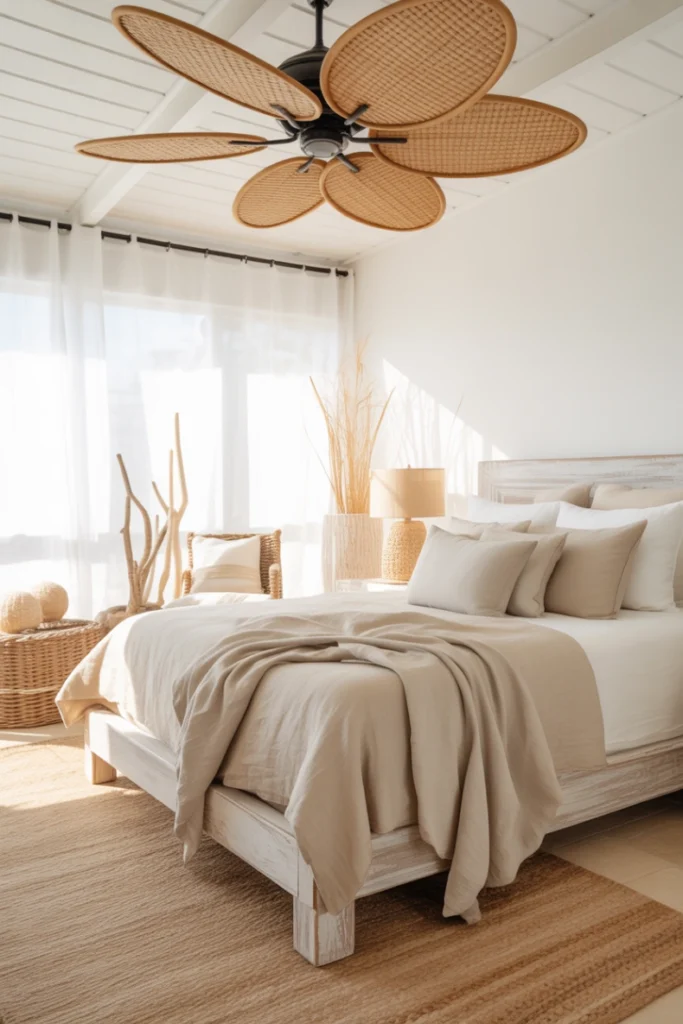
A ceiling fan with woven, palm style, or light wood blades adds both comfort and coastal character. It keeps air moving on warm nights, which suits the breezy coastal feeling, and its natural blades become a design feature rather than an afterthought. Choose white, brushed nickel, or light wood finishes that blend with a pale ceiling.
Size the fan to the room: a 44 inch fan suits rooms up to about 150 square feet, a 52 inch fan suits rooms up to about 300 square feet, and larger rooms need a 56 inch fan or two smaller fans. Hang the fan so the blades sit 7 to 9 feet above the floor and at least 18 inches from the walls, using a downrod if your ceiling is high. A fan with a light kit in warm white adds useful evening light.
Pair the fan with light colored ceilings and natural materials, and keep the blades clean so the woven texture stays visible. A fan alone will not cool a room like air conditioning, but its gentle movement adds to the calming, beach house atmosphere and helps linen curtains move softly. Choose a quiet motor and a simple remote so the fan is used daily, not just admired.
21. Soft Coastal Pastels
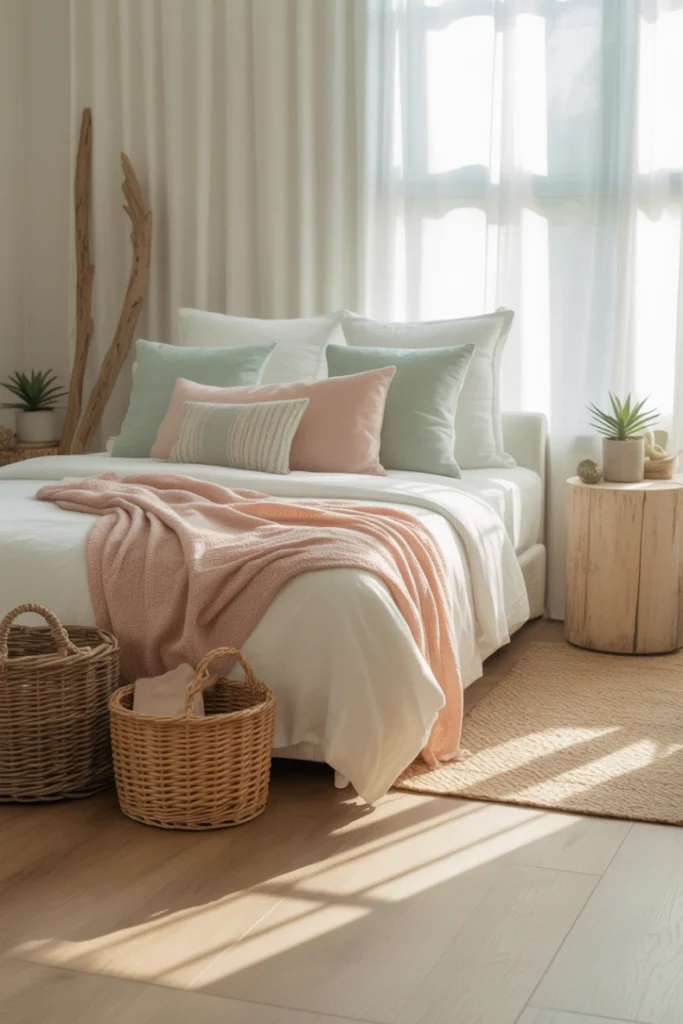
Soft pastels, seafoam green, powder blue, blush sand, and pale lilac gray, create a tranquil coastal atmosphere with a gentler touch than strong navy or bright white. They evoke ocean breezes, beachside flowers, and warm sunsets, and they work beautifully on bedding, pillows, wall art, and accent furniture. Pastels are especially kind in small bedrooms, where bright colors can feel too strong.
Use pastels as accents, not as the whole room. Start with a white or cream base, then add two pastel tones, such as seafoam and powder blue, in pillows, throws, and art. Keep the third color neutral, like sand or pale gray, so the palette stays calm. A pastel accent chair or a pastel painted nightstand can be a lovely focal point if the rest of the room stays quiet.
Combine pastels with natural woods, woven textures, and white linens for a light, harmonious environment. Avoid pairing more than three pastels at once, and avoid neon or saturated versions, which break the soft coastal mood. When pastels are kept muted and repeated in small doses, the room feels calm, fresh, and easy to live in year round.
22. Minimal Modern Coastal Style
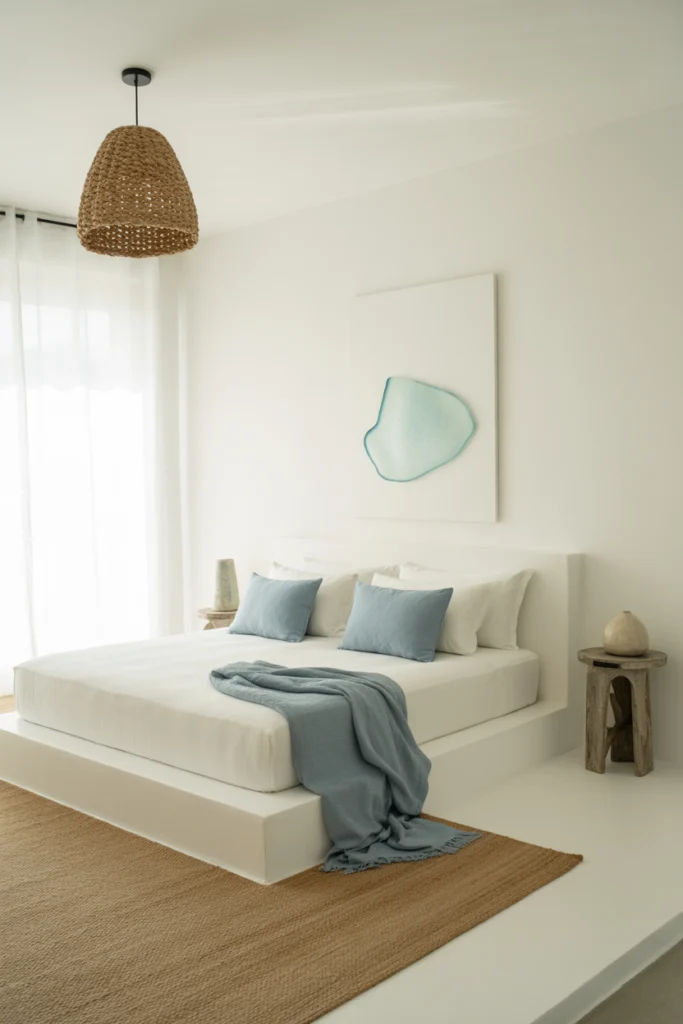
Minimal modern coastal style strips the beach look back to its essentials: clean lines, a simple palette, and natural materials. White walls, sleek low furniture, soft blue accents, and one or two organic textures create a space that feels uncluttered yet warm. This is the coastal look for people who dislike decor clutter and prefer a calm, gallery like room.
Start by removing anything that does not serve a purpose or bring real pleasure, then rebuild with intention. Choose a low platform bed, a simple nightstand, and one statement piece, such as a large ocean print or a rattan chair. Keep surfaces mostly clear, use hidden storage for everyday items, and let texture, linen bedding, a woven rug, a driftwood accessory, provide the visual interest that pattern used to provide. For a broader take on this clean, contemporary direction, see these modern bedroom ideas and adapt the pieces that fit your room size and light.
To keep minimal coastal from feeling stark, add warmth in small ways: a soft throw, a wooden tray, a ceramic vase, or a single plant. Subtle ocean artwork or blue and white ceramics introduce coastal charm without disrupting the simplicity. The result is a modern sanctuary that feels coastal through light, material, and color, not through decoration, and it is easy to maintain because every item has a place.
Conclusion
These 22 coastal bedroom ideas show that a beach inspired bedroom is built from light, texture, and restraint more than from themed decor. Whether you love soft pastels, modern neutrals, natural rattan, or classic navy and white, the best approach is the same: pick a light base, repeat two or three colors, layer natural textures, and leave room to breathe. Start with wall color or bedding, add one natural texture, and finish with a few carefully chosen details.
Your bedroom should feel like a retreat you return to gladly, not a room you have to maintain. Choose ideas that fit your light, your budget, and your daily habits, and let the room evolve slowly as you find pieces you truly like. With the right mix of color, texture, and coastal detail, your bedroom can become the serene, breezy retreat you have been imagining, a calm place to rest, recharge, and wake up feeling refreshed. If you are planning a full bedroom refresh, these bedroom design ideas can help you tie wall color, furniture, and layout together before you start shopping.
Frequently Asked Questions
What colors work best in a coastal bedroom?
Start with white or warm cream as the base, add one soft blue such as powder blue or dusty aqua, and finish with a natural tone such as sand, beige, or pale gray. Navy works as an accent, not as the main color, and natural wood tones add warmth. Keeping the palette to three main colors plus white gives the calmest, most cohesive result.
How do I make a small bedroom feel coastal without clutter?
Keep the base light, use mirrors to bounce daylight, and choose texture over decor. White or pale blue walls, linen curtains, one woven rug, and white bedding make a small room feel larger, while a single piece of ocean art and a basket for storage add coastal character without filling surfaces. Avoid themed decor on every shelf, and leave open space around the bed.
What is the best bedding for a coastal bedroom?
White cotton or linen bedding is the most versatile base, layered with a textured throw and two or three accent pillows in a coastal color. Striped bedding in navy, sky blue, or sand also works well, paired with solid pillows. Choose breathable natural fibers, wash whites separately, and keep accent colors consistent with the rest of the room.
Can I create a coastal bedroom on a budget?
Yes. Start with paint, which is the lowest cost transformation, then add linen look curtains, a jute style rug, and white bedding. Thrifted baskets, a whitewashed frame, or a single coastal print can complete the look for little cost. Focus on light, texture, and a consistent palette, which matter more than expensive furniture.
How do I keep a coastal bedroom from looking like a beach theme park?
Use restraint: choose two or three coastal elements, such as rattan, linen, and one ocean print, and keep everything else simple and modern. Avoid literal anchors, starfish, and shells on every surface, and prefer natural materials and soft colors over novelty decor. When each piece could also belong in a calm, modern bedroom, the coastal feeling stays elegant.
More Ideas You Will Love
 13 Small Bedroom Inspirations: Smart, Cozy & Stylish Ideas
 14 Boy Nursery Ideas with Inspiring Themes and Layout Tips
 22 Romantic Bedroom Ideas – Stylish Inspiration for Couples & Cozy Nights
 24 Wardrobe & Armoire Ideas: Smart Storage for Every Room
 15 Country Bedroom Ideas for Cozy Farmhouse Charm
 24 Nursery Remodel Ideas – Transform Your Baby Room with Style & Function