
17 White and Red Christmas Light Ideas to Transform Your Outdoor Decor

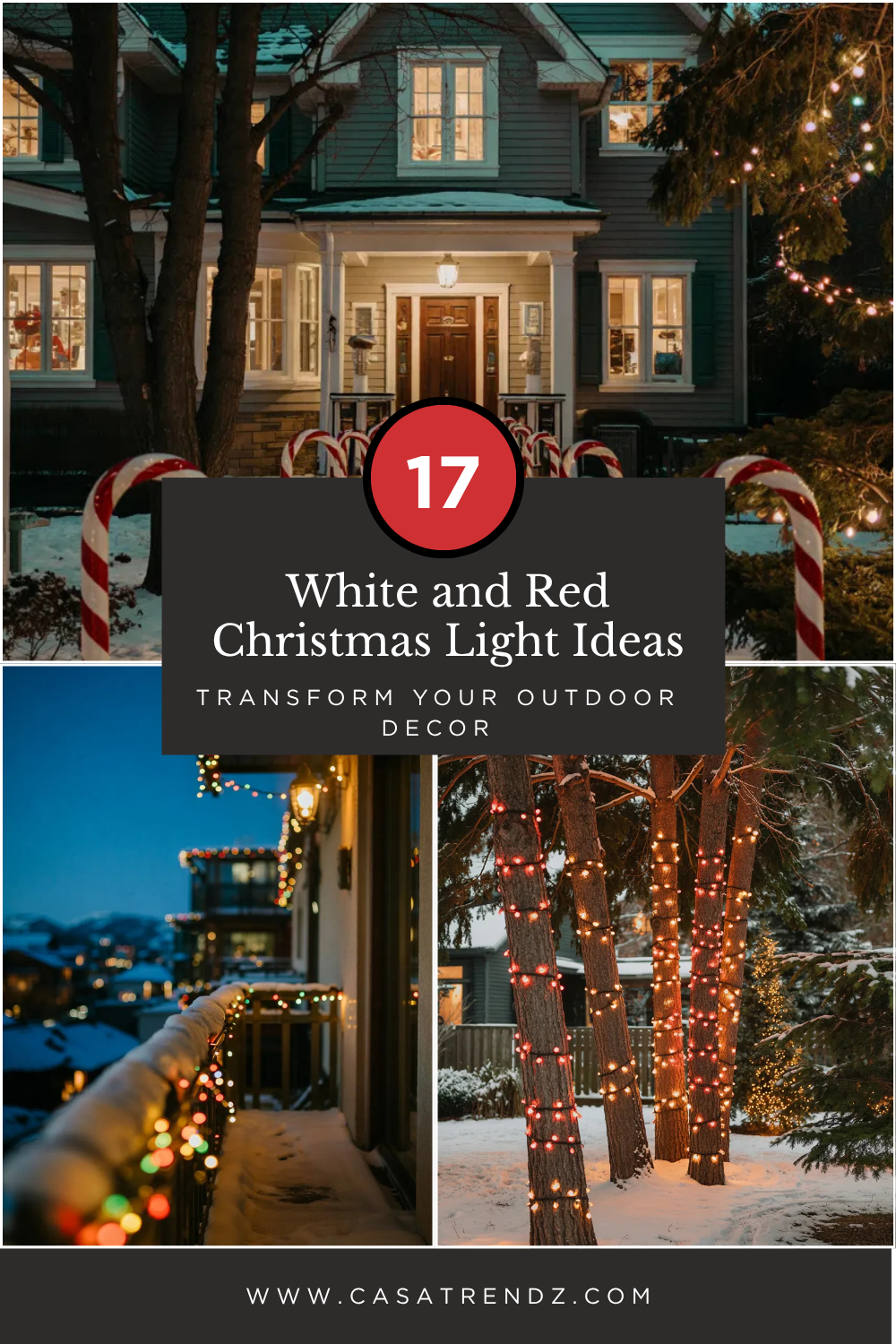
There is a reason red and white Christmas lights never go out of style. Red brings the energy and cheer of the season, while white keeps the whole display calm, bright, and elegant. Used together, they suit almost any home, from a small brick ranch to a large two story house with a wide front yard. The trick is not buying more lights. It is placing them with a clear plan, so every part of the yard feels connected instead of random.
Before you hang a single strand, decide on your white. Warm white, around 2700K, looks soft and golden next to red and suits traditional and farmhouse homes. Cool white looks crisp and icy and works well with a modern look, but it can make red look harsh if the two are mixed too closely. Pick one white and use it everywhere, so the display reads as one design. Then measure the spots you plan to light, count your strands, and check that every outlet you plan to use is outdoor rated and protected by a ground fault circuit interrupter. A little planning now saves a lot of untangling later.
Work from the top of the house down, and from the street view inward. Start with the roofline, then move to windows, columns, trees, and finally the path and garden details. Put the whole display on one or two timers set to come on at dusk and off around 11 pm, so the look stays consistent every night. The 17 ideas below follow that order, and each one can stand alone or combine with the others for a full yard display.
1. Classic Roofline Elegance
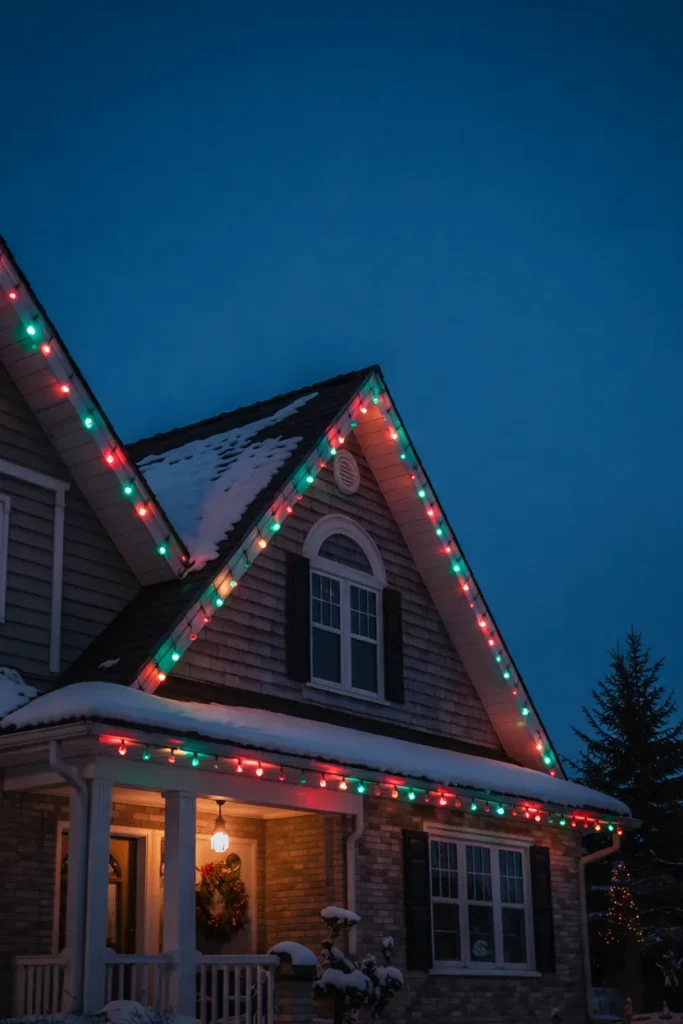
Outlining the roof is the single most effective step in this list, because it defines the shape of your house from the street. Use C9 LED bulbs for a bold, classic look, spacing them about 12 inches apart along the eaves. A standard 25 bulb C9 strand covers roughly 25 feet, so measure your roofline first and round up by one strand for corners and peaks. Alternate red and white in blocks of 10 to 15 bulbs rather than one by one, which looks calmer and more expensive from a distance.
Attach the lights with plastic gutter or shingle clips, one clip every 12 to 18 inches, and never staple or nail through the wire itself. Keep the red bulbs a warm, deep red rather than a bright pinkish red, and pair them with warm white for a soft glow. Add a short run of white icicle lights under one gable or above the porch for depth, but keep it to one accent area so the roofline stays clean. If you want more inspiration for color pairings, see these green and red Christmas light ideas for a festive home exterior, which show how a second color changes the whole mood of a roofline.
For safety, plug roofline lights into an outdoor rated extension cord and keep all connections off the ground and out of puddles, using a covered connection box if rain is expected. Test the full run on the ground before you climb the ladder, and work with a partner who can steady the ladder and hand up strands. A timer takes care of the rest, switching the display on at dusk without you having to think about it each evening.
2. Red and White Wrapped Columns

Porch columns wrapped in a red and white spiral read instantly as candy canes, and they greet guests before they even reach the door. For a standard 6 foot column, plan on one 50 light mini strand in red and one in white, or a single 100 light strand if you prefer a tighter wrap. Start at the bottom and wind upward with about 4 to 6 inches between each pass, keeping the spiral even by marking the spacing with small pieces of painter tape as you go.
Hide the plug end at the base behind a planter or a wrapped garland swag, and secure the top of the wrap with a small zip tie tucked behind the column where it cannot be seen. A red bow or a short length of pine garland at the base finishes the look and hides any loose wire. This setup looks best when both columns match exactly, so wrap the second column to mirror the first, same spacing, same starting point, same bow.
If your columns are square rather than round, wrap them the same way but pull the strand snug at each corner so it does not sag between faces. White lanterns on the porch steps or a red wreath on the door will echo the column colors and pull the whole entry together without adding more lights.
3. Candy Cane Pathway Lights
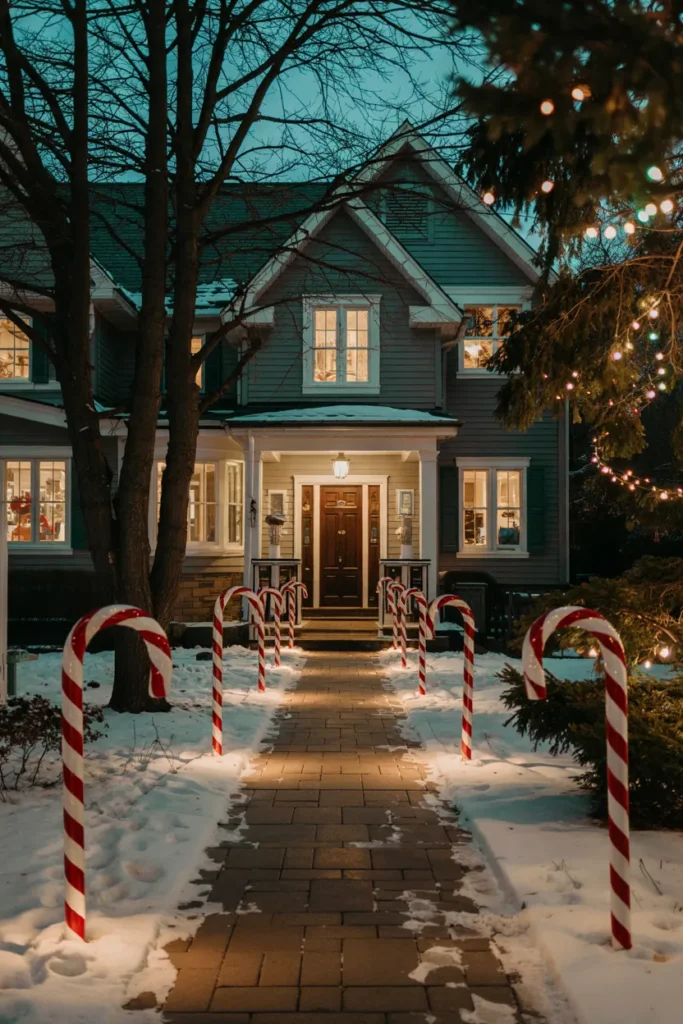
A lighted path does two jobs at once: it looks festive and it keeps guests safe after dark. Place candy cane stake lights 24 to 36 inches apart along the edge of the walkway, alternating red and white or using ready made red and white striped canes. Keep them on the same side of the path for a clean line, or mirror them on both sides if the walkway is wider than 4 feet.
Solar powered path lights work well here because they need no cords across the lawn, but they need at least 6 hours of direct daylight to glow strongly all evening. If your path is shaded, use plug in low voltage stakes instead and run the cord along the garden bed, not across the walking surface. Add a thin line of faux snow, white gravel, or a low garland between stakes to connect the look and stop each light from floating alone in the dark.
Check the path at night from the street, not just from the porch. Stakes that look even in daylight can look crooked in the dark, and one leaning cane stands out more than you would expect. Straighten any tilted stakes and replace any dim bulbs before the first big holiday gathering.
4. Red and White Tree Trunk Wraps
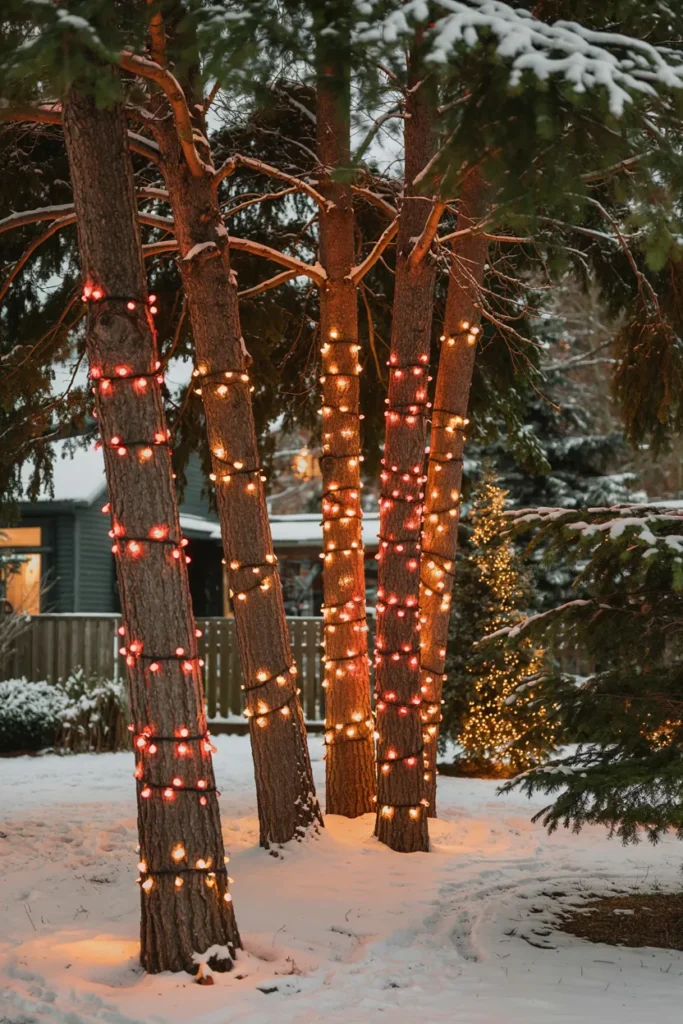
Bare winter trees are perfect for trunk wraps, because the glowing spiral shows clearly against the sky. As a rule of thumb, allow about 100 mini lights for every 12 inches of trunk diameter on a 6 to 8 foot wrap height. A slim young tree may need only one 100 light strand, while a mature tree with a 24 inch trunk will need three or four strands to look full rather than sparse.
Start at the base and spiral upward with 4 to 6 inches between passes, alternating one red strand and one white strand so the colors twist together. Tuck the connection points behind the trunk on the side facing away from the street. If wrapping feels fiddly, a trunk wrap net in red or white gives a similar effect in minutes, though a hand wrapped spiral looks more polished up close.
Stop the wrap at the first major branch split rather than forcing lights into the canopy, which keeps the design clean and makes takedown much easier in January. Pair wrapped trunks with unlit shrubs nearby and the lit trees will stand out as the stars of the yard instead of competing with everything else.
5. Window Frame Glow
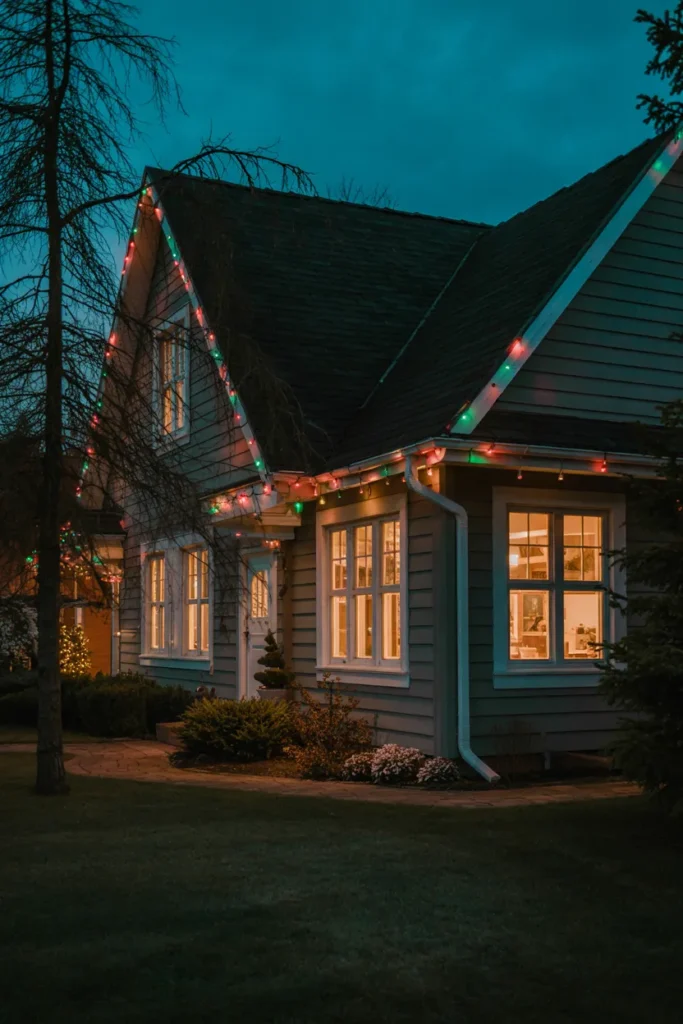
Framing each front window with lights makes the whole house look finished, even if you do nothing else. Measure the perimeter of each window and buy strands to match, using one continuous run per window where possible so there is no dark gap at a corner. Alternate red and white in sections, or frame the two front windows in white and the door in red, to create a rhythm across the front of the house.
Use outdoor rated clips made for window trim rather than tape, which fails in cold and wet weather and leaves residue behind. For a polished look, keep the same style of bulb on every window, all mini lights or all C7 bulbs, rather than mixing sizes. Inside, match the curtain color to the scheme if you can: warm white curtains glow beautifully behind white window lights, while deep red drapes echo the red strands outside.
Step back to the street and check that every window reads at the same brightness. A window with a half dead strand drags the whole front down, so swap in a spare strand now rather than living with a dim frame all season. Battery operated window lights are a fallback for windows far from an outlet, but plug in strands give a steadier, brighter glow all night.
6. Red and White Garden Shrubs
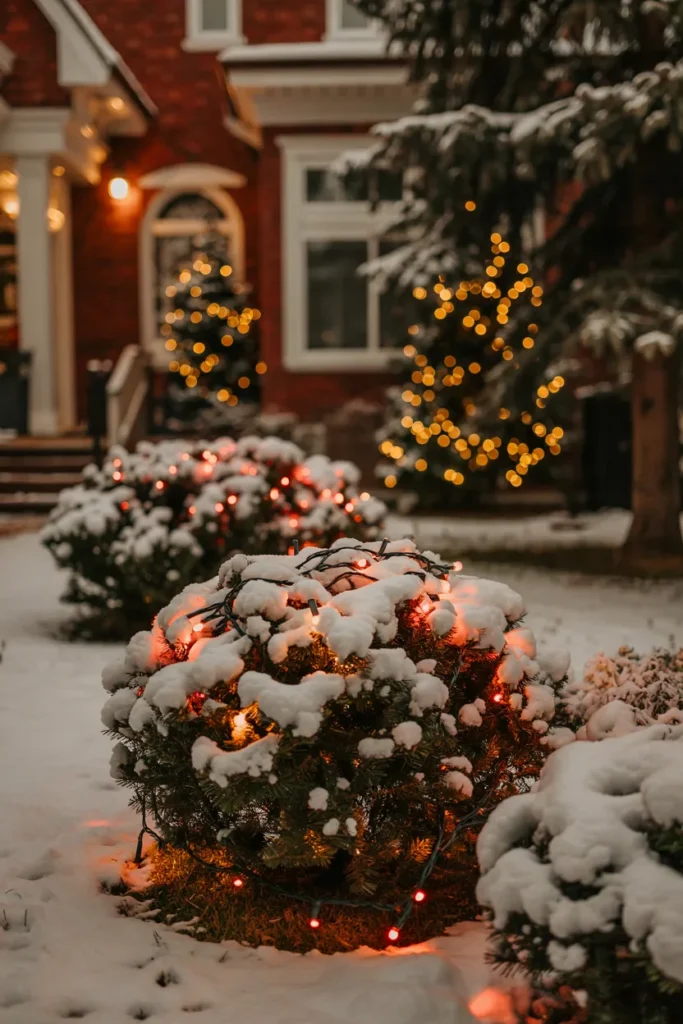
Shrubs are the easiest way to add volume to a display, because a single net light can cover a whole bush in minutes. A 4 by 6 foot net fits a medium shrub, while a large rounded bush may need two nets layered slightly offset. For a hand wrapped look, wind a 100 light strand around the shrub in loose horizontal loops, starting at the bottom and working up, and push the lights slightly into the foliage so they glow from within rather than sitting on the surface.
Mix steady burning lights with a few twinkle strands for movement, but keep the ratio low, about one twinkle strand for every three steady ones, so the garden sparkles without looking frantic. Try red lights deeper inside the shrub and white lights on the outer layer: the white outlines the shape while the red glows through, giving real depth. This layering looks especially good under a light dusting of snow, which reflects the white and softens the red.
Do not wrap shrubs so tightly that branches bend or snap in a freeze, and leave a small gap at the base for air and for the plant itself. After the holidays, remove nets promptly rather than leaving them through spring growth, which tangles new shoots and damages the shrub.
7. White Wreath with Red Accents
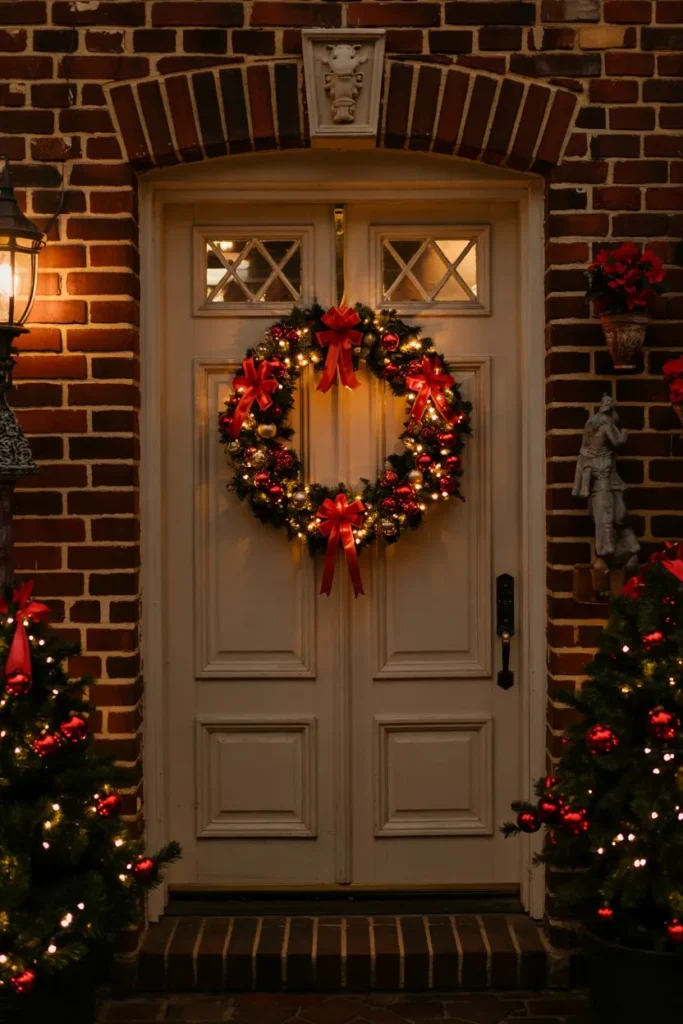
Sometimes one perfect piece beats a yard full of lights, and a white light wreath is that piece. Choose a 36 inch wreath for a standard front door, or 48 inches for a double door, and look for a pre lit version with 100 warm white mini lights already woven in. The white glow gives the wreath a soft halo effect at night, while red accents do the color work during the day.
Add a 2.5 inch wide wired red ribbon bow at the top or bottom of the wreath, plus a few clusters of red berries and two or three small red ornaments tucked into the greenery. Wired ribbon holds its shape in wind far better than plain ribbon, so loop it into generous 6 inch loops and secure each loop with floral wire. Hang the wreath so its center sits about 60 inches from the porch floor, roughly eye level for most guests, using an over the door hook or a nail rated for at least 10 pounds.
If your door is red, the wreath will pop beautifully against it. If your door is a neutral color, add matching red bows along the porch railing to repeat the accent and tie the entry together. A battery pack hidden behind the wreath works for doors far from an outlet, but check the batteries weekly, since cold weather shortens their life.
8. Fence Line Illumination
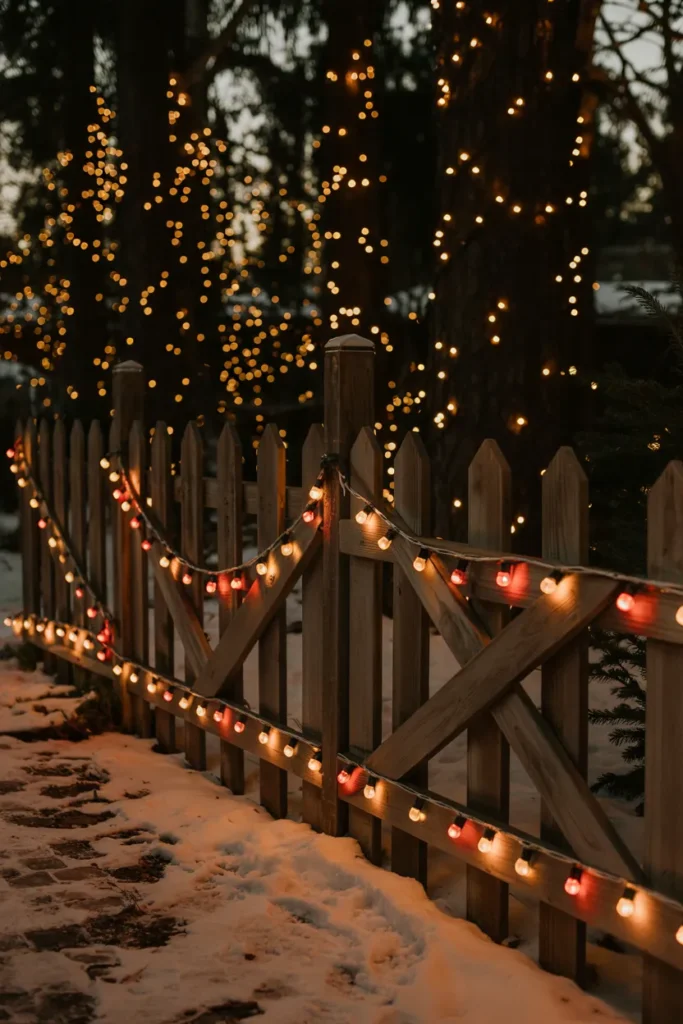
A lit fence frames the whole property and connects the front yard to the house, so the display reads as one landscape instead of separate decorations. Run a single color along the top rail, or alternate red and white in 25 bulb sections for a gentle rhythm. Attach the strand with clips every 18 inches along the top rail, keeping the wire taut enough that it does not sag between posts but loose enough that wind does not snap it.
For a wooden fence, tuck garland or a few snowflake ornaments between posts to break up long straight runs. For a metal fence, use magnetic clips or zip ties and keep the lights on the street facing side so they are fully visible. Leave a clean gap at the gate so it opens freely, and light the gate posts themselves with a short wrap so the entrance still reads clearly at night.
Long fence runs are a good place for solar strands, since running extension cords the length of a property gets messy fast. Place the solar panel facing south and clear of shade, and test the run for two nights before relying on it for a party. If any section glows dimmer than the rest, swap that strand first, since one weak section is more noticeable on a long straight line than anywhere else.
9. Red and White Outdoor Tree Canopy
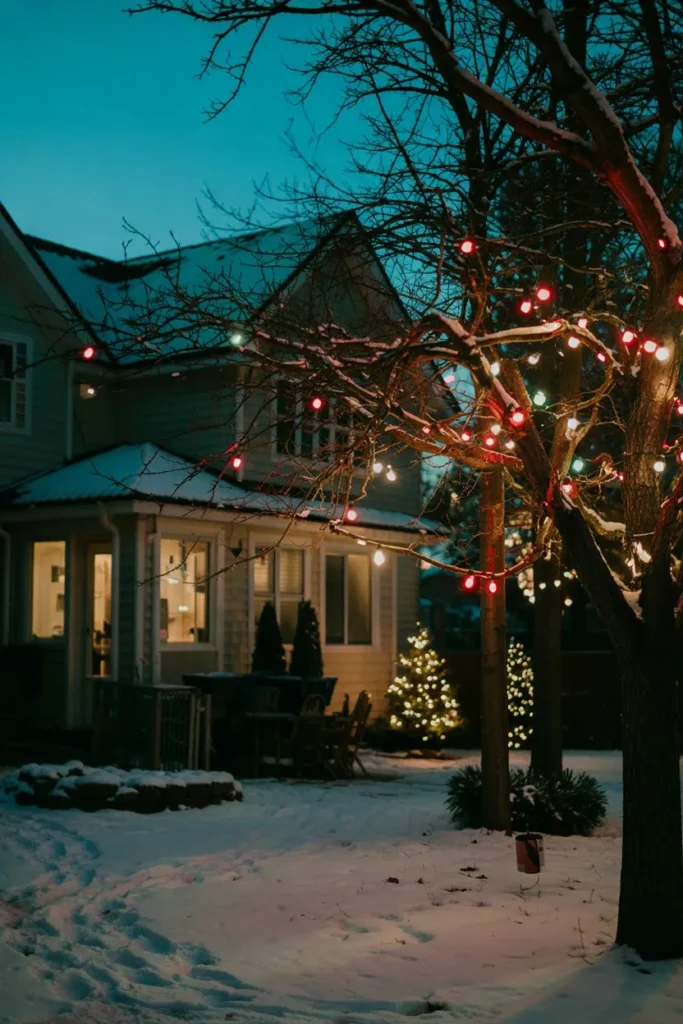
If you have a large tree over a patio or seating area, hanging lights through the branches turns it into a glowing ceiling for evening gatherings. Drape strands from the trunk outward along major branches, letting them hang in gentle swags 12 to 18 inches deep, rather than pulling them tight. Mix small white twinkle lights with larger C7 red bulbs: the small lights give sparkle, the larger red bulbs give color and shape, and the contrast keeps the canopy from looking flat.
Use a light hanging pole to place strands without climbing into the tree, and never hang lights from dead or weak branches. Connect no more than three strands end to end unless the manufacturer rates them for more, and plug the run into a ground fault protected outlet. For more tree lighting inspiration, these creative Christmas tree light ideas cover the same layering tricks indoors and out, including how to balance color so one shade never overwhelms the other.
Under the canopy, add a few lanterns or a fire pit at a safe distance from the lights and any low branches, and the space becomes a natural gathering spot. Keep all light strands at least 3 feet from any open flame or heater, and check the canopy after storms, since wind can tangle draped strands and pull them down onto seating below.
10. Driveway Arches of Light
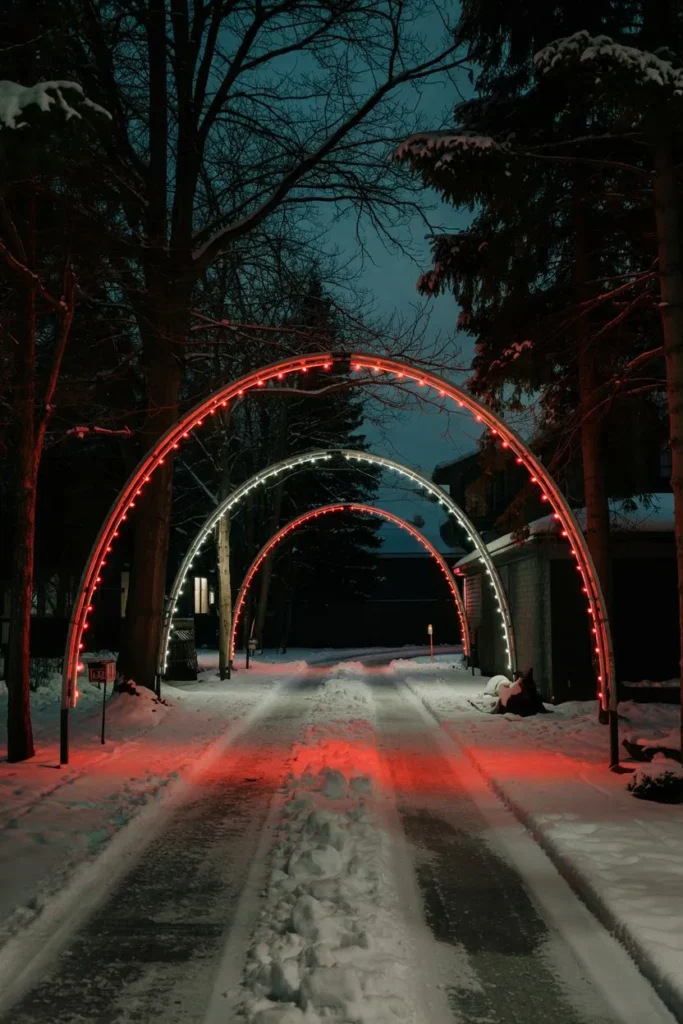
Arches over the driveway create a tunnel of light that guests drive through, which feels magical and photographs beautifully. Build each arch from 1 inch PVC pipe bent over two rebar stakes driven 18 inches into the ground, spacing arches 8 to 10 feet apart along the driveway. Keep the finished arch at least 9 feet high and 10 feet wide so cars, including taller SUVs, pass through comfortably.
Wrap each arch with one red and one white strand, spiraling from one base to the other, and secure the strands with zip ties every 12 inches so they do not slide down the curve. For a fuller look, wrap a second pair of strands in the opposite direction to create a crisscross pattern. Add small white snowflake lights between arches if you want extra sparkle, but keep the arch structure itself clearly red and white so the tunnel reads cleanly.
Anchor the stakes firmly and check them after the first heavy wind, since a loose arch leaning over a driveway is a hazard, not a decoration. If your driveway is narrow, use a single arch at the entrance rather than a full tunnel, which gives the same wow moment without crowding the drive. Synchronizing the arches to music is a fun upgrade, but keep the volume low in the evening out of respect for neighbors.
11. Red and White Balcony Railings
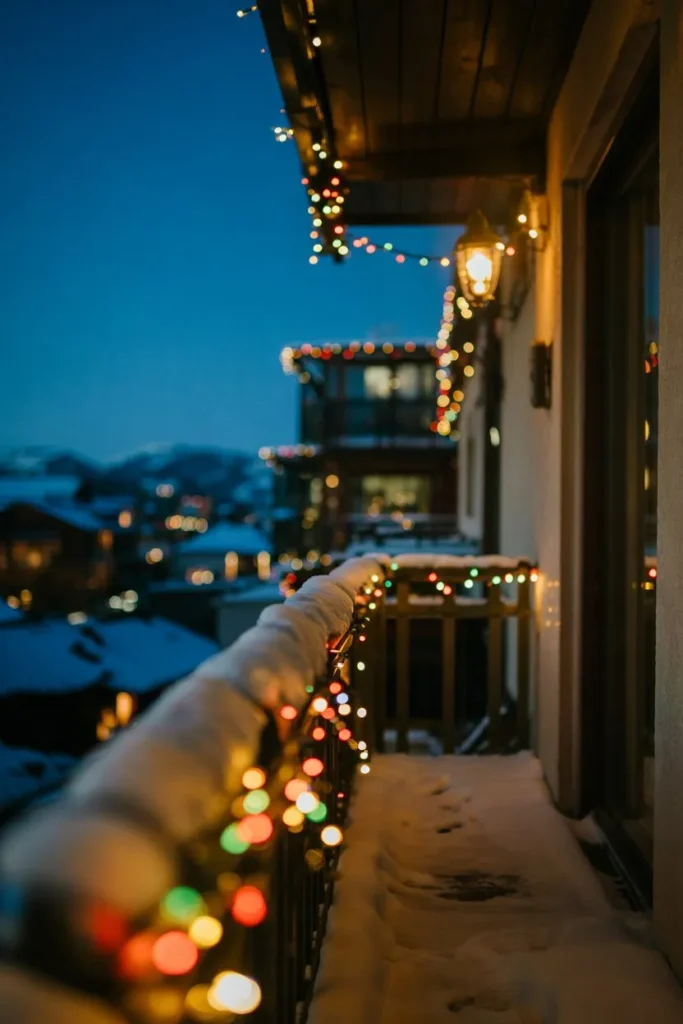
Upper level railings are easy to forget, but lighting them adds vertical balance that makes the whole house look taller and more finished. Wrap the top rail with alternating red and white strands, using one 50 light strand for every 8 to 10 feet of railing, and secure the wire underneath the rail with small clips so the top surface stays smooth to the touch.
Coordinate the balcony with the roofline: if the roofline is red and white in blocks, repeat the same block pattern on the railing so the two levels echo each other. A lit tree visible through a nearby window, or a wreath on the balcony door, ties the upper level to the rooms inside and stops the balcony from looking like an afterthought. The gentle glow also reflects nicely off snow on the railing and on the deck below.
Check the weight and the outlet load before you start. Most railings handle light strands easily, but do not hang heavy garlands plus lights from a railing that is already loose, and do not run balcony lights from an indoor outlet through a window gap, which lets in cold air and pinches the cord. Use a proper outdoor outlet and an outdoor rated cord instead.
12. Lighted Red and White Wreath Trio
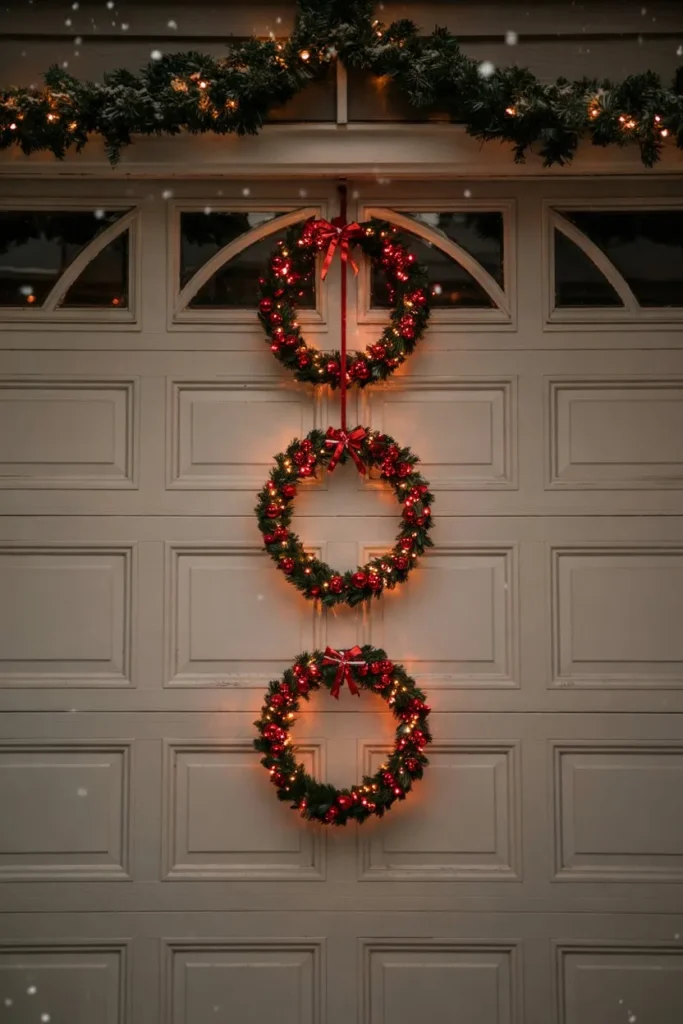
Three wreaths hung in a vertical row on a garage door or a wide exterior wall make a bold, modern statement with very little effort. Use three 24 inch wreaths, pre lit or wrapped by hand with 50 lights each, and alternate the colors: white, red, white, or red, white, red, depending on your siding. Space them about 6 inches apart so each wreath reads separately while the group still feels like one arrangement.
This look works best on neutral siding, white, gray, or beige, where both red and white stand out clearly. On a red brick wall, lean toward white wreaths with red bows, so the wreaths do not blend into the brick. Hang each wreath from its own hook rated for the weight, rather than stringing all three from one point, which sags and swings in wind.
For the garage door version, check that the door still opens and closes freely with the wreaths in place, and use hooks that attach to the door panels without drilling into moving parts. A trio on the garage pairs well with a simple roofline and a lighted path, giving the front of the house three clear layers without any clutter.
13. Red and White Icicle Lights
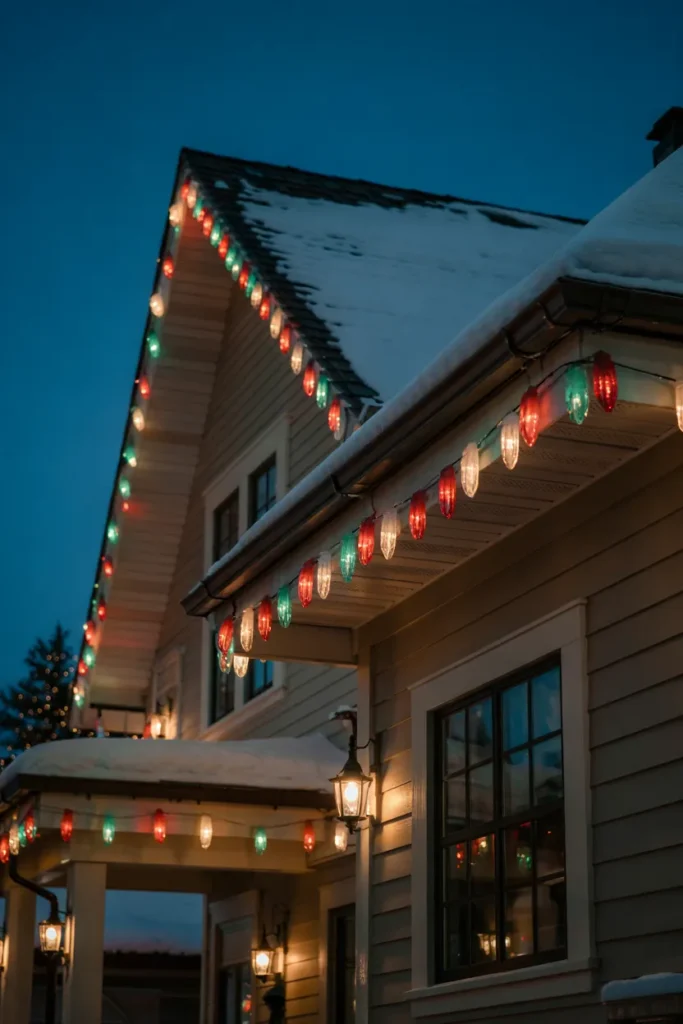
Icicle lights are a classic for a reason: the uneven drops look like real ice and add movement to an otherwise straight eave line. Alternate full strands of red and white along the eaves, rather than mixing colors within one strand, so each section reads clearly. Look for strands with drop lengths varying from 6 to 18 inches, which look far more natural than uniform drops.
Hang icicles with eave clips, one clip per drop section, and keep the top wire level so the drops hang straight. On a farmhouse style home, pair red icicles over the porch with white icicles along the main roof for a two tone effect. On a modern home, keep to a single color per roof plane for a sharper, more minimal look. Either way, avoid doubling icicle strands on top of a C9 roofline in the same spot, which looks crowded and tangles badly at takedown.
Store icicle strands coiled around a piece of cardboard or a spool, never stuffed loose in a box, so next year they unroll without a knot in every drop. Check each strand before hanging and replace any section with cracked insulation, since damaged icicle wire along a wet eave is a risk not worth taking.
14. Lit Garden Archway
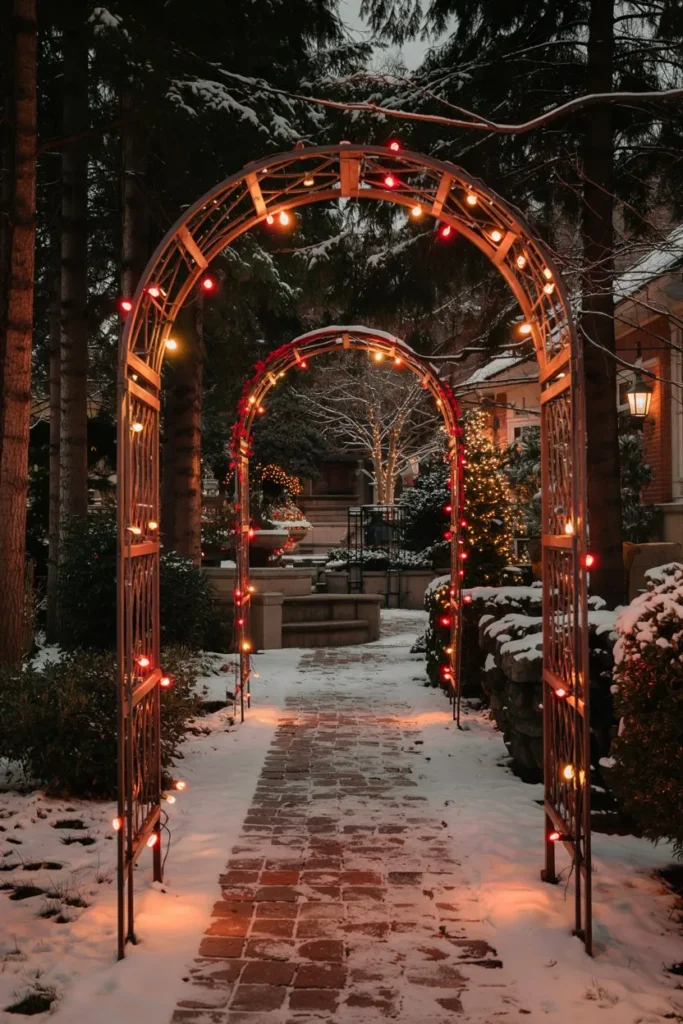
A garden arch wrapped in lights turns an ordinary path into an entrance to a winter wonderland. Choose an arch at least 7 feet high and 4 feet wide so guests walk through comfortably, and wrap it with one red and one white strand intertwined from one base, over the top, and down the other side. Add a 9 foot pine garland woven through the same path for daytime greenery, so the arch looks good even when the lights are off.
Drape a few extra strands across the top so they hang in soft swags, and add snow dusted garland or a couple of red bows at the corners for color in daylight. Place path lights on both sides of the arch approach so guests see it coming and the arch does not appear suddenly out of the dark. A timer on the arch, set with the rest of the display, keeps it glowing on the same schedule as the house.
If your arch is metal, use zip ties rather than wire twists, which scratch the finish and rust over winter. If it is wood, use small outdoor clips and check for loose joints before adding the weight of garland and lights. A sturdy arch matters here, because guests will brush against it as they pass through.
15. Mailbox Makeover

The mailbox is the first decoration most visitors see, so a small touch here pays off far beyond its size. Wrap the mailbox post with a single 50 light strand, alternating red and white if you use two shorter strands, and finish with a small bow or a short garland topper at the top of the post. Keep the wrap below the mailbox box itself so the door opens freely and the flag moves up and down without catching on wire.
A solar strand with a small panel on top of the post works well for mailboxes far from the house, and a built in timer means it lights itself every evening. Keep house numbers visible and reflective, since a mailbox wrapped so thickly that the numbers disappear frustrates delivery drivers and guests alike. A clean wrap, a bow, and clear numbers is the whole formula, and it takes under 20 minutes.
Check the mailbox after the first snow or ice storm, since a heavy, wet wrap can sag and pull the post out of plumb. A quick straighten and a fresh zip tie keeps this small detail looking sharp all season, and it ties the street view neatly to the larger display behind it.
16. Red and White Gazebo Glow
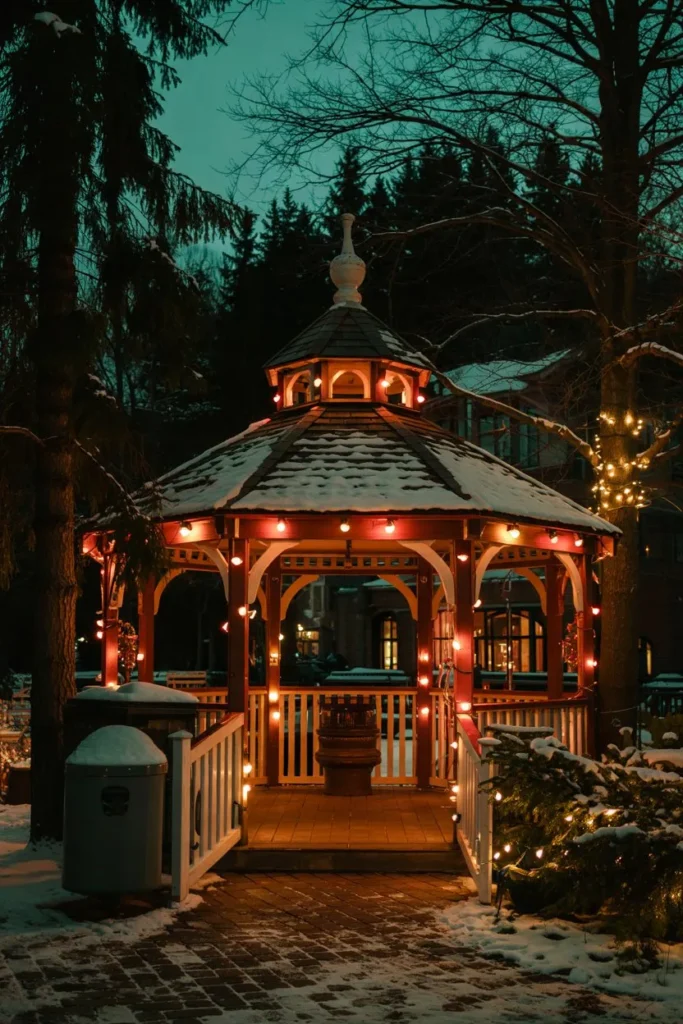
A gazebo or pergola draped in red and white lights becomes a cozy outdoor room, even in December. Drape strands across the roof beams in swags 12 to 18 inches deep, alternating red and white from beam to beam, and let a few strands hang a little lower at the corners for a curtain effect. Add white lanterns on a table inside and red cushions or throws on the seating to carry the colors from the lights into the furniture.
Keep the look balanced: if the roof is heavily lit, keep the posts to a simple single wrap each, and vice versa. Snow dusted garland along the top beam and a few red ornaments hung from the center point finish the scene without adding more strands. For ideas on carrying that warm, layered feeling indoors, see these cozy Christmas living room ideas, which use the same mix of soft light, warm textiles, and red accents to make a room feel inviting.
Safety matters more in a gazebo than anywhere else, because people gather under the lights. Keep all strands at least 3 feet from heaters, candles, and fire pits, use only outdoor rated lights and cords, and plug the run into a ground fault protected outlet. Check the drapes after wind or snow, since a sagging strand over a seating area is both ugly and a snag hazard.
17. Front Yard Tree and Shrub Harmony

The best displays do not come from one big idea, but from several ideas layered at different heights. Combine wrapped tree trunks at eye level and above, lit shrubs at ground level, and a few hanging ornaments or pathway lights to fill the middle. Aim for a color ratio of roughly 60 percent white to 40 percent red across the whole yard, which keeps the display bright and festive without letting red dominate.
Plan the yard in zones: the trees get the tall vertical light, the shrubs get the low glow, the path gets the guiding line, and the house gets the frame. Put every zone on the same timer so the whole yard switches on together, which looks far more intentional than zones flickering on at different times. For the entry zone itself, these Christmas entryway decor ideas show how to carry the same red and white scheme from the yard right up to the front door.
Once everything is up, walk the yard at night from the street, from the driveway, and from the porch, and note any dark gaps or any spot that glows twice as bright as its neighbors. Move one strand, add one net, or dim one zone with a lower wattage strand, and the whole display will settle into balance. That final night walk is the difference between a yard full of lights and a yard that actually looks designed.
Conclusion
With these 17 white and red Christmas light ideas, your home can shine with festive charm all season long. Start with the big wins, the roofline and the path, then add one or two statement pieces like a lighted arch, a gazebo glow, or a driveway tunnel. Keep one white throughout, hold the red to about 40 percent of the display, and put everything on a timer so the look stays consistent every night.
Choose the ideas that fit your home and your yard, mix styles creatively, and do not feel you must use all 17 at once. A few well placed, well balanced displays always beat a yard crowded with every idea on the list. Check your cords, keep connections dry, and enjoy a classic red and white Christmas that looks just as good from the street as it does from your own porch.
Frequently Asked Questions
How many white and red lights do I need for a typical front yard?
For a small front yard with a roofline, two porch columns, and a short path, plan on 8 to 12 strands of 50 to 100 lights, roughly 800 to 1,200 lights in total. A larger yard with trees, shrubs, and a fence can need 2,000 lights or more. Measure each area first, then buy one spare strand, since running short halfway through a roofline is the most common frustration.
Should I use warm white or cool white with red lights?
Warm white, around 2700K, is the safer choice with red, because it softens the red and suits traditional, farmhouse, and rustic homes. Cool white looks crisp and modern, but it can make red look harsh, especially on white siding. Whichever you choose, use the same white everywhere so the display reads as one design instead of a mix of leftovers.
Are LED Christmas lights safe to leave on overnight outdoors?
LED lights run cool and use far less power than old incandescent bulbs, so they are much safer for extended use, but it is still best to put them on a timer that switches them off late at night, around 11 pm. Always use outdoor rated lights and cords, plug into a ground fault protected outlet, and keep connections dry and off the ground.
How do I keep red and white lights looking balanced instead of messy?
Hold to a ratio of about 60 percent white to 40 percent red, use one style of white everywhere, and alternate colors in blocks rather than bulb by bulb. Step back to the street at night to check the balance, since a display that looks even up close can look patchy from a distance. One final night walk usually reveals exactly which strand needs moving.
Can I mix solar and plug in lights in one display?
Yes, and it often makes sense: use solar lights for distant spots like fences and mailboxes, and plug in lights for the roofline, windows, and trees where brightness matters most. Just keep the two on compatible schedules, either matching timers or solar lights with dusk sensors, so the whole yard lights up together rather than in stages.
More Ideas You Will Love
 12 Garage and Shed Makeover Tips to Refresh Your Exterior
 16 Best Outdoor Furniture Materials for Hot Weather
 23 Colorful Christmas Tree Light Ideas for a Magical Holiday Look
 16 Exterior Siding Ideas: Modern, Farmhouse & Classic Styles
 12 Easy Composting Tips to Supercharge Your Summer Garden
 12 Apartment Balcony Mini Garden Ideas for Urban Spaces