
15 Modern Front of House Landscape Ideas for Stunning Curb Appeal

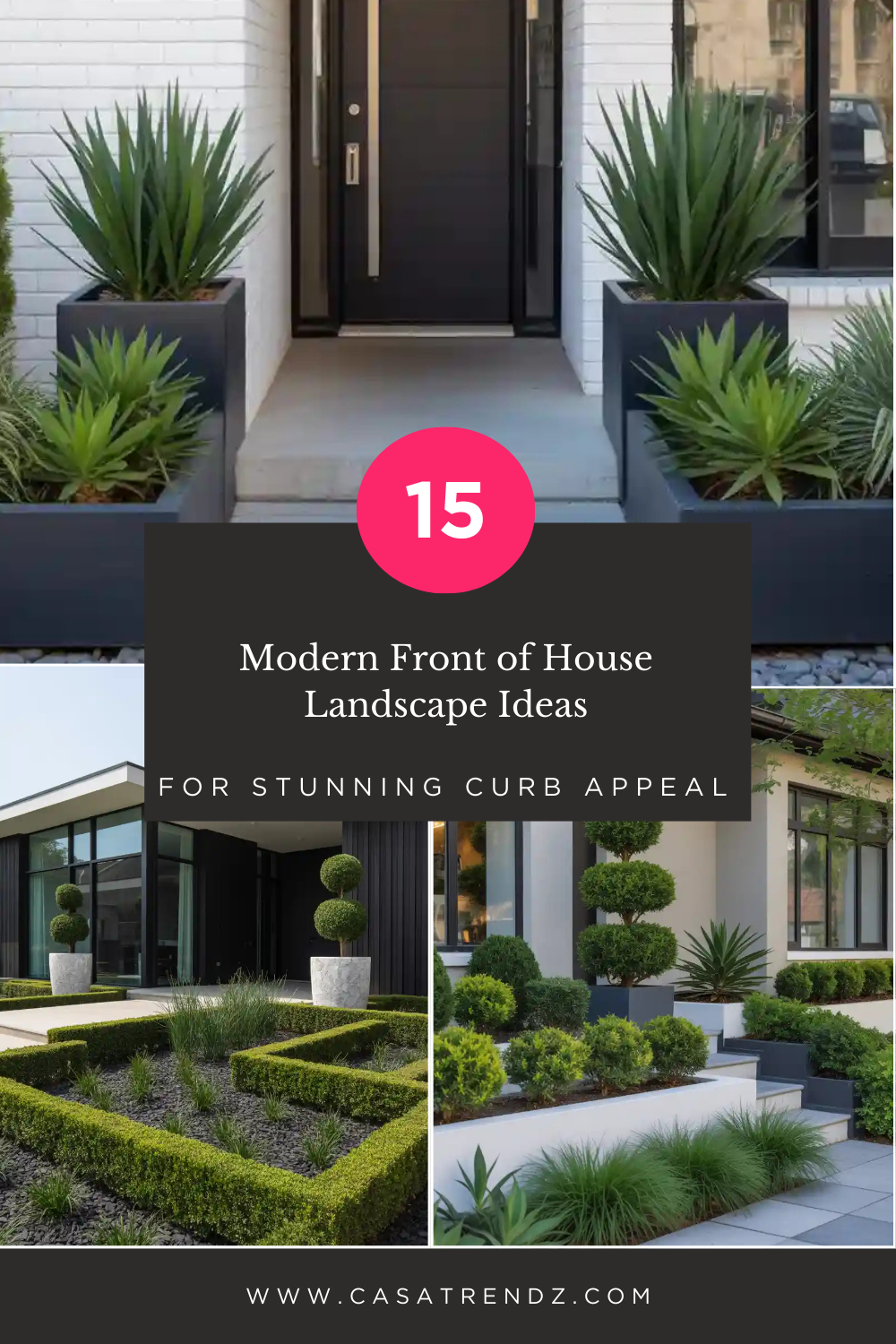
Your front yard is the first thing anyone sees when they arrive at your home, and it sets the tone for everything inside. A well-designed modern landscape does more than look good. It makes your home feel welcoming, adds real value to the property, and turns an ordinary facade into a place you are proud to come home to. These 15 modern front of house landscape ideas focus on clean lines, structured plantings, layered lighting, and balanced hardscaping, so you can create a polished entrance that still feels warm and lived in.
Modern landscaping is all about simplicity with intention. Instead of filling every inch with plants and decor, you choose fewer elements and give each one a clear job. Geometric pathways guide the eye to the door, sculpted shrubs add structure, contrasting materials create depth, and thoughtful lighting highlights the architecture after dark. Whether you have a compact front yard or a wide lawn, these ideas will help you maximize visual impact while keeping maintenance low.
Before you start, take ten minutes to study your space. Note where the sun falls in the morning and the afternoon, where rainwater collects, and how wide your walkway really is. Those three facts decide which plants will thrive and which materials will last. Work through the ideas below and pick the three or four that fit your home best. You do not need all fifteen to transform your curb appeal, but together they show you exactly what a modern front yard can be.
1. Minimalist Concrete Pathway with Clean Lines
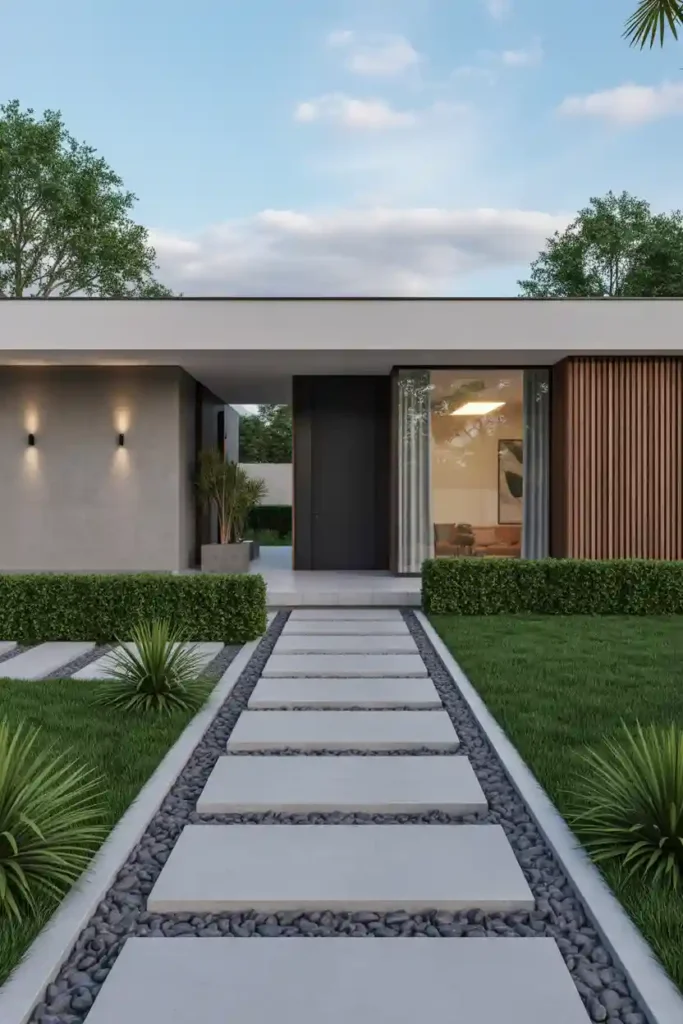
A sleek concrete pathway instantly gives your home a modern, architectural look. Instead of a traditional curved walkway, use straight lines or large rectangular stepping slabs placed symmetrically across gravel or grass. Standard concrete pavers 24 by 24 inches work well for a clean grid, while poured concrete slabs 36 to 48 inches wide create a bold, seamless path from the street to the door. The sharp geometry creates a crisp and contemporary feel that complements modern homes beautifully.
Pair the pathway with low ornamental grasses or neatly trimmed hedges along the edges to soften the structure while keeping the look clean. Neutral tones like gray, charcoal, or light beige keep the design cohesive and let the greenery stand out. Leave a 2 to 3 inch gap between slabs and fill it with fine gravel or low ground cover such as creeping thyme, which adds texture without hiding the lines. Adding subtle ground lighting along the walkway enhances safety at night and adds dramatic evening appeal.
- Slab size: 24 by 24 inch pavers for a grid, or 36 to 48 inch wide poured slabs for a bold look.
- Gap filler: fine gravel or creeping thyme in 2 to 3 inch joints for texture and drainage.
- Edging plants: low ornamental grasses or boxwood kept under 18 inches tall.
- Finishing touch: low-voltage ground lights spaced 3 to 4 feet apart along the path.
2. Layered Greenery with Structured Shrubs
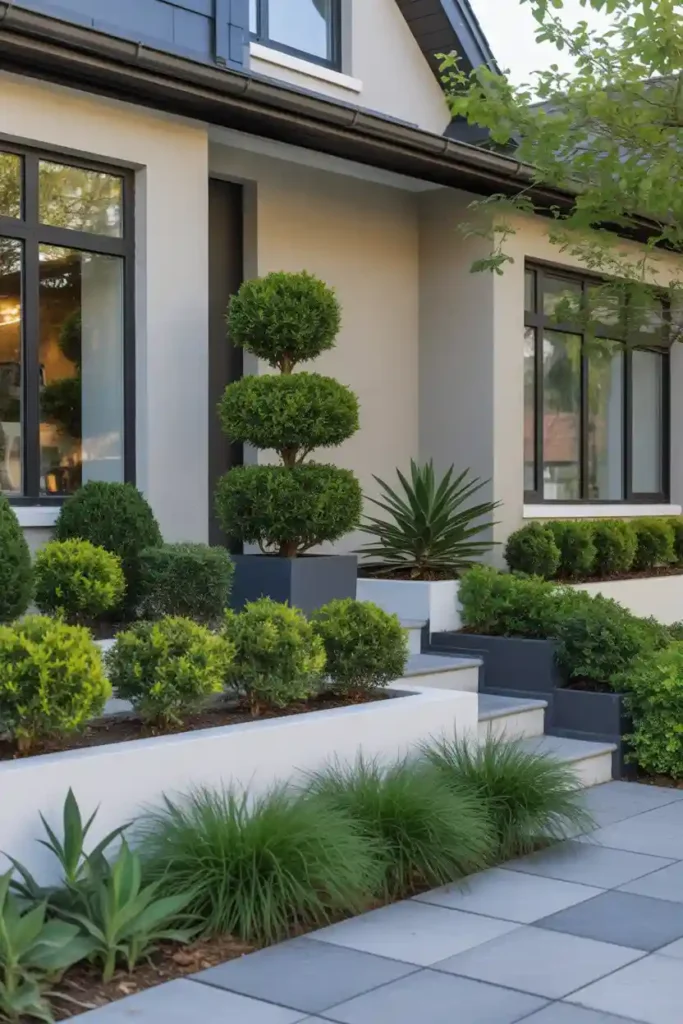
Layering plants at different heights creates depth and dimension in a front yard. Start with tall ornamental trees or upright shrubs near the house, then add medium-sized bushes, and finish with low ground cover plants along the front edge. A good rule is three layers: tall plants 6 to 10 feet high at the back, medium shrubs 3 to 5 feet tall in the middle, and ground cover under 18 inches at the front. This staircase of green makes even a small yard feel deep and full.
Choose plants with defined shapes, such as boxwoods or sculpted hedges, to maintain a structured look. Mixing textures like smooth leaves with feathery grasses adds visual interest without overwhelming the space. Plant in odd-numbered groups of three or five, and leave 18 to 24 inches between large shrubs so they have room to grow without crowding. Water new plantings deeply twice a week for the first month, then settle into a regular schedule based on your climate. For more ways to shape a compact space with layers, see these small garden ideas that use the same depth tricks in small yards.
- Back layer: upright shrubs or small ornamental trees, 6 to 10 feet tall.
- Middle layer: boxwood, hydrangea, or sculpted hedges, 3 to 5 feet tall.
- Front layer: ground cover or low grasses under 18 inches tall.
- Spacing: 18 to 24 inches between large shrubs for healthy growth.
3. Statement Planters by the Entryway
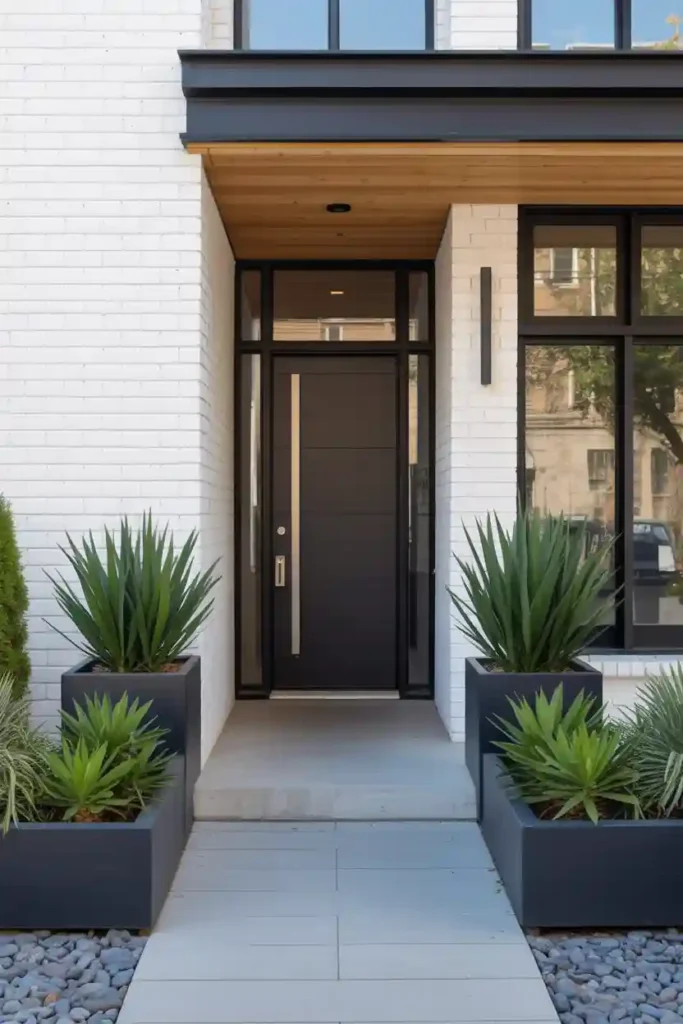
Large, symmetrical planters on either side of your front door create an inviting and upscale entrance. Choose sleek materials like matte black, concrete, or brushed metal for a modern feel. Planters 18 to 24 inches wide and 24 to 30 inches tall give enough presence to frame a standard door without blocking the walkway. Place them 12 to 18 inches from the door frame so the entrance still feels open and easy to use.
Fill the planters with tall plants such as snake plants, small palms, or sculptural evergreens. For seasonal variety, add subtle flowers that complement your home exterior color palette, like white petunias against a dark facade or soft lavender near gray stone. This simple addition adds height and sophistication without requiring a full landscape redesign. It draws attention to the entryway and frames the door beautifully, instantly boosting curb appeal. If you want more entry inspiration, browse these front porch decor ideas for planters, seating, and seasonal styling that pairs well with a modern entry.
- Planter size: 18 to 24 inches wide and 24 to 30 inches tall for a standard door.
- Best materials: matte black fiberglass, cast concrete, or brushed metal.
- Plant picks: snake plants, small palms, or sculptural evergreens for year-round structure.
- Placement: 12 to 18 inches from the door frame, mirrored on both sides.
4. Gravel and Stone Accent Beds
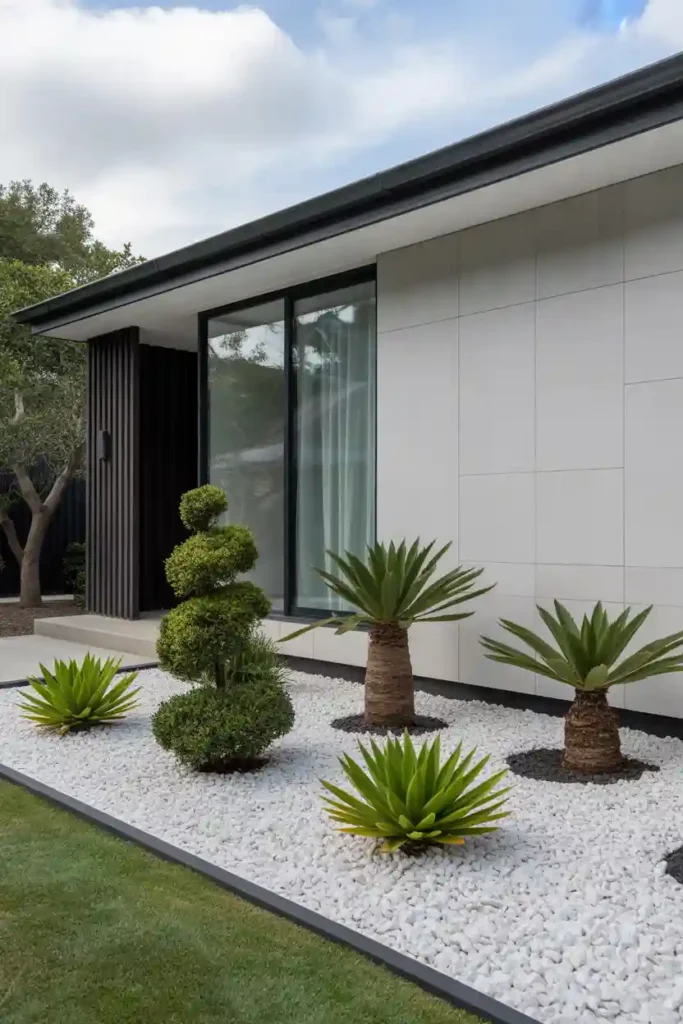
Replacing traditional mulch with decorative gravel or stone instantly modernizes your landscape. Light gray, white, or charcoal stones create contrast against greenery and require minimal maintenance. A 2 to 3 inch layer of pea gravel or river rock over landscape fabric keeps weeds down and improves drainage, and it never needs to be replaced the way bark mulch does each year. For a clean modern look, choose one stone color for the whole bed rather than mixing several.
Use stones to define planting areas or create a dry riverbed feature for visual interest. A dry riverbed 18 to 24 inches wide, lined with smooth river stones in two sizes, can guide the eye across the yard and solve a soggy low spot at the same time. Pair the beds with sculptural plants like agave or ornamental grasses for a striking effect. Gravel beds reduce weeds, improve drainage, and give your front yard a clean, contemporary finish that feels intentional and sophisticated.
- Depth: 2 to 3 inches of stone over landscape fabric to block weeds.
- Best colors: light gray, white, or charcoal for strong contrast with green plants.
- Dry riverbed: 18 to 24 inches wide, with smooth stones in two sizes.
- Plant partners: agave, ornamental grasses, and sculptural succulents.
5. Linear Driveway Design
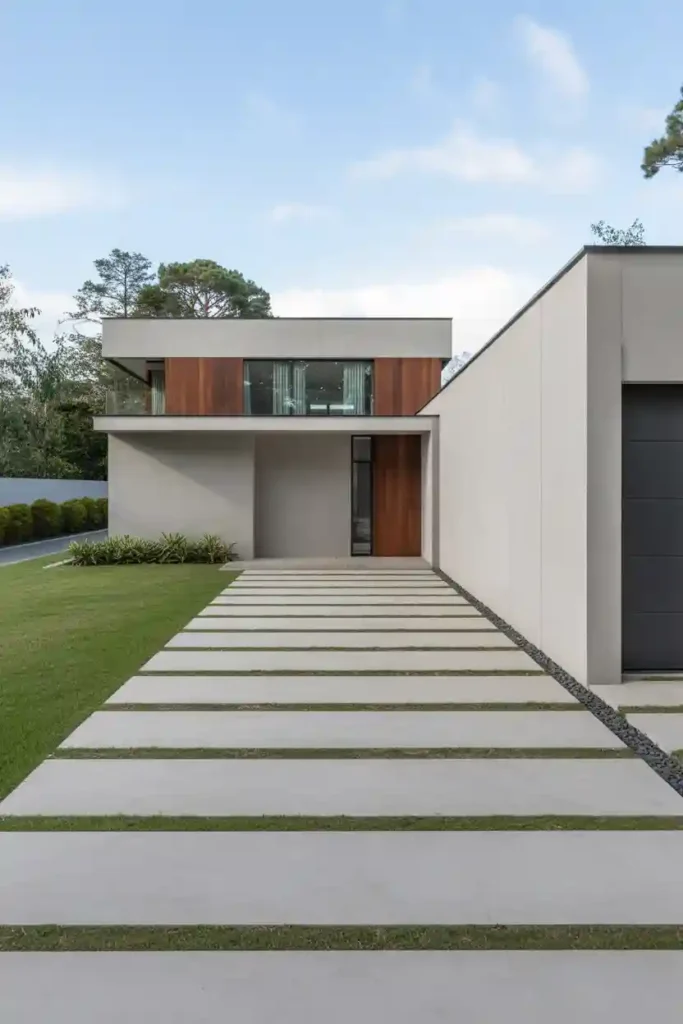
A modern driveway design can significantly elevate curb appeal. Opt for wide concrete slabs separated by grass strips or gravel lines for a geometric appearance. A standard layout uses concrete bands 24 to 30 inches wide with 4 to 6 inch grass or gravel joints between them. The repeating rhythm of solid and open strips turns a plain driveway into an architectural feature that matches a modern home.
This linear pattern adds architectural structure and visual rhythm to your home exterior. Neutral tones keep the look clean and cohesive, so choose light gray concrete with pale gravel or dark charcoal slabs with green grass strips. A well-designed driveway not only enhances style but also complements other landscape elements like pathways and garden beds, creating a unified modern aesthetic. Seal the concrete once a year to protect it from stains and keep the color even, and edge the grass strips monthly so the lines stay sharp.
- Concrete bands: 24 to 30 inches wide for a strong geometric rhythm.
- Joints: 4 to 6 inch grass or gravel strips between slabs.
- Color palette: light gray or charcoal concrete with pale gravel or green grass.
- Upkeep: seal concrete yearly and edge grass strips monthly.
6. Outdoor Lighting for Architectural Emphasis
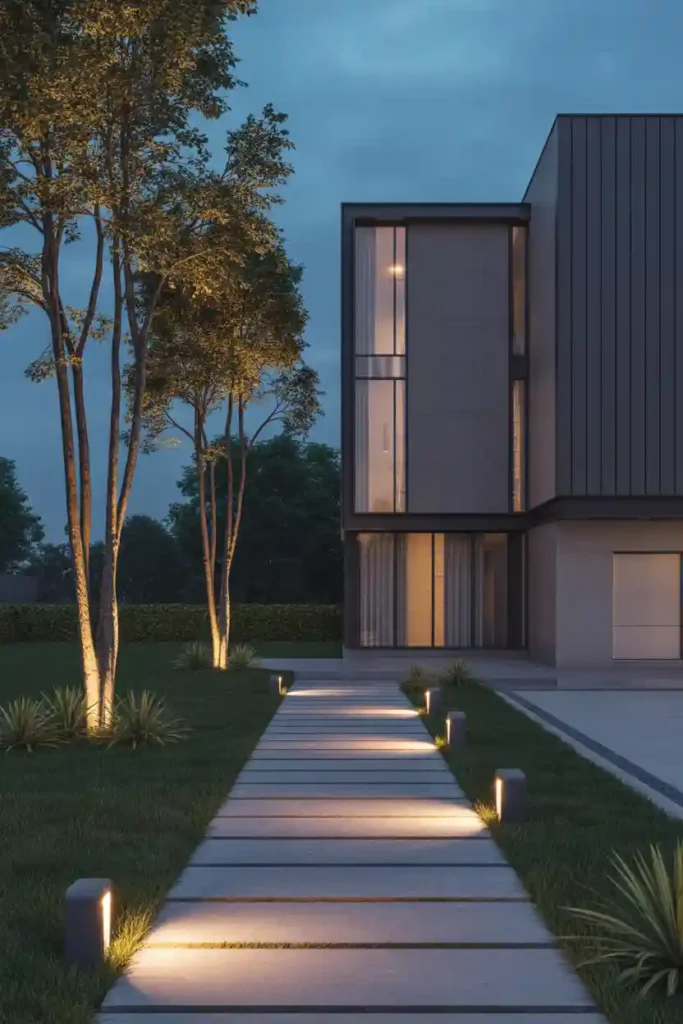
Strategic lighting enhances your landscape after sunset. Install ground lights along pathways, uplights near trees, and wall-mounted fixtures to highlight architectural details. A simple setup uses three types of light: path lights 18 to 24 inches tall spaced 6 to 8 feet apart, uplights aimed at trees or the facade from 12 to 18 inches away, and one or two wall sconces flanking the front door. Together they create depth instead of a single flat wash of light.
Warm LED lighting in the 2700 to 3000 Kelvin range creates a welcoming ambiance while emphasizing texture and structure. Solar options provide energy-efficient solutions for budget-friendly upgrades, though wired low-voltage systems give steadier brightness on cloudy days. Well-placed lighting adds safety, drama, and elegance, making your home stand out beautifully at night. Put the lights on a timer or a dusk-to-dawn sensor so they switch on automatically and you never have to think about them.
- Path lights: 18 to 24 inches tall, spaced 6 to 8 feet apart.
- Uplights: placed 12 to 18 inches from trees or walls, aimed upward.
- Color temperature: warm white LEDs at 2700 to 3000 Kelvin.
- Control: a timer or dusk-to-dawn sensor for automatic evening lighting.
7. Symmetrical Garden Layout
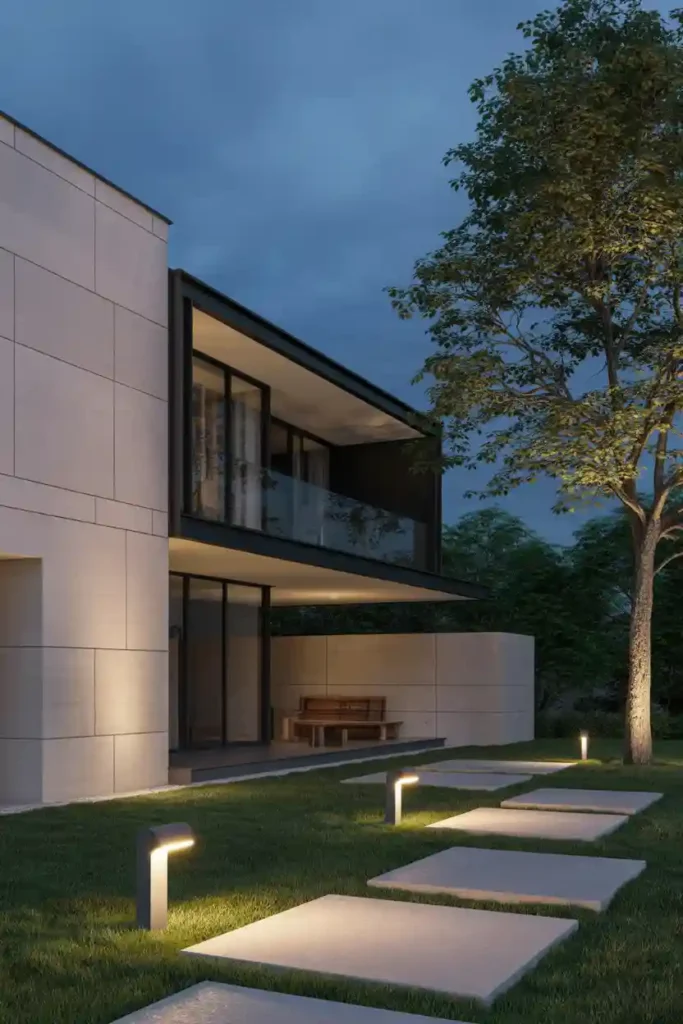
Symmetry is a key feature of modern design. Mirror plant arrangements and hardscape elements on both sides of the entrance for a balanced look. Start by drawing an imaginary center line from the front door to the street, then place matching shrubs, identical flower beds, or paired trees on each side. Even a simple pair of matching trees 8 to 10 feet apart, one on each side of the walkway, creates an instant sense of order.
Matching shrubs, identical flower beds, or paired trees create harmony and order. This design approach feels polished and intentional. Symmetry simplifies decision-making while maximizing visual impact, making even small front yards appear grand and thoughtfully designed. The trick is to keep the two sides truly equal: same plant species, same pot size, same spacing. If one side gets more sun, choose plants that tolerate both conditions so the pair grows evenly over time.
- Center line: draw it from the door to the street and mirror everything across it.
- Paired trees: matching trees 8 to 10 feet apart, one on each side of the walkway.
- Matching beds: identical shrubs and flower beds on both sides of the entrance.
- Plant choice: species that tolerate sun and shade equally so both sides grow alike.
8. Raised Concrete Planter Beds
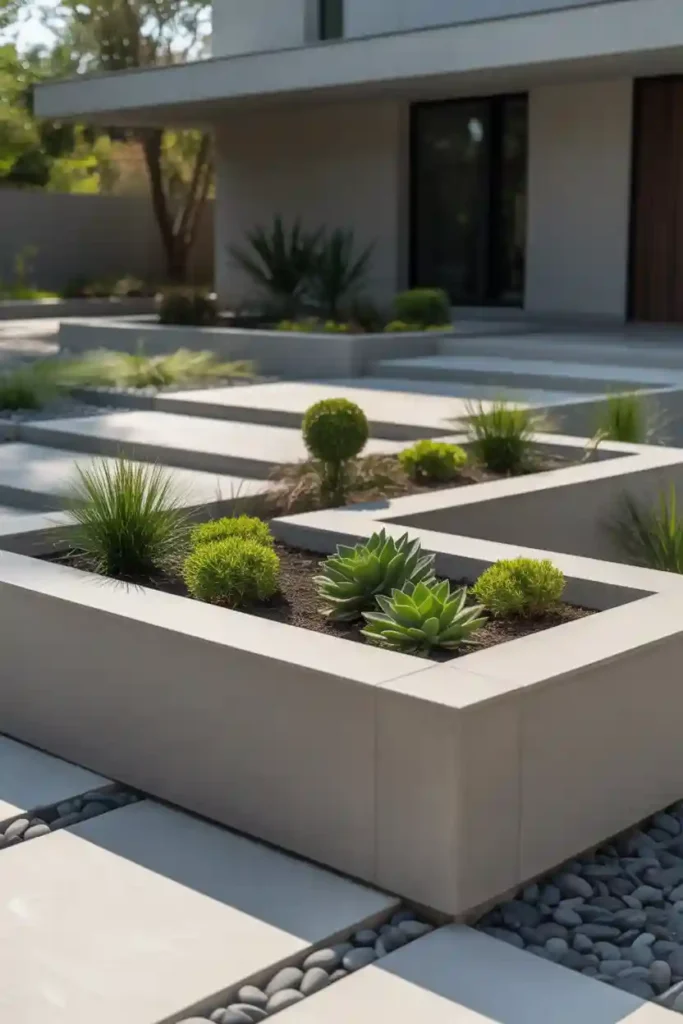
Raised concrete planter beds add structure and dimension to a flat front yard. They create defined planting zones while enhancing modern aesthetics. A bed 18 to 24 inches tall and 24 to 36 inches deep is high enough to read as architecture but low enough to sit on. Build them from poured concrete or precast blocks in a light gray tone, and line the inside with landscape fabric and a 2 inch gravel layer at the bottom for drainage.
Concrete neutral tone pairs beautifully with lush greenery. Add built-in seating for functionality and style by topping one edge with a smooth wood cap 8 to 10 inches wide. This design offers both practicality and contemporary appeal, perfect for homeowners seeking a structured yet natural look. Fill the beds with a mix of ornamental grasses, compact shrubs, and trailing ground cover so the planting spills slightly over the edge and softens the hard concrete line.
- Bed size: 18 to 24 inches tall and 24 to 36 inches deep.
- Drainage: landscape fabric lining plus a 2 inch gravel layer at the bottom.
- Seating: a wood cap 8 to 10 inches wide on one edge doubles as a bench.
- Planting: grasses, compact shrubs, and trailing ground cover that spills over the edge.
9. Mixed Textures for Depth
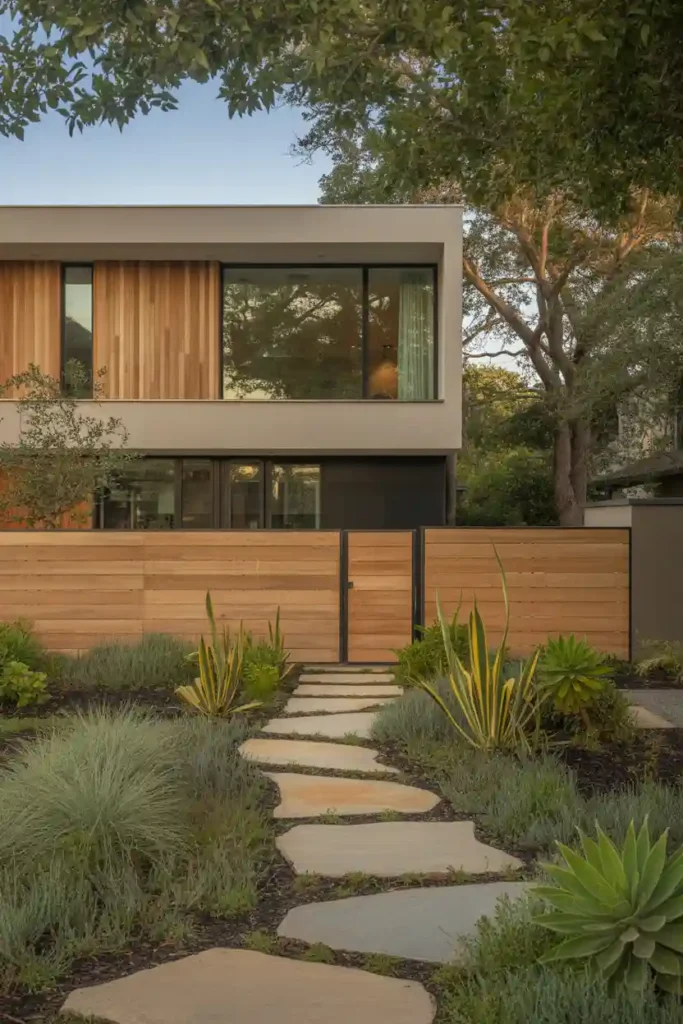
Combining materials such as wood, stone, metal, and greenery creates visual richness. Use wooden fencing alongside stone pathways and metal accents for contrast. For example, pair a warm cedar fence with cool gray pavers and matte black steel edging, then soften the mix with feathery ornamental grasses. Each material brings a different texture, and together they stop the yard from feeling flat or one-note.
The interplay of textures prevents the design from feeling flat. Keep colors neutral to maintain cohesion, with one warm wood tone, one cool stone tone, and one dark metal accent as the limit. This layered approach enhances curb appeal while maintaining a modern, refined style. Repeat each material at least twice in the yard, a wood fence and a wood bench, for instance, so the mix looks deliberate rather than random. For more ideas on blending outdoor materials, see these outdoor living room ideas that show how wood, stone, and metal work together in real spaces.
- Material mix: warm wood, cool stone, dark metal, and soft greenery.
- Color rule: neutral palette with one warm tone, one cool tone, and one dark accent.
- Repetition: use each material at least twice so the mix looks deliberate.
- Softener: ornamental grasses or ground cover to balance hard surfaces.
10. Low-Maintenance Native Plants
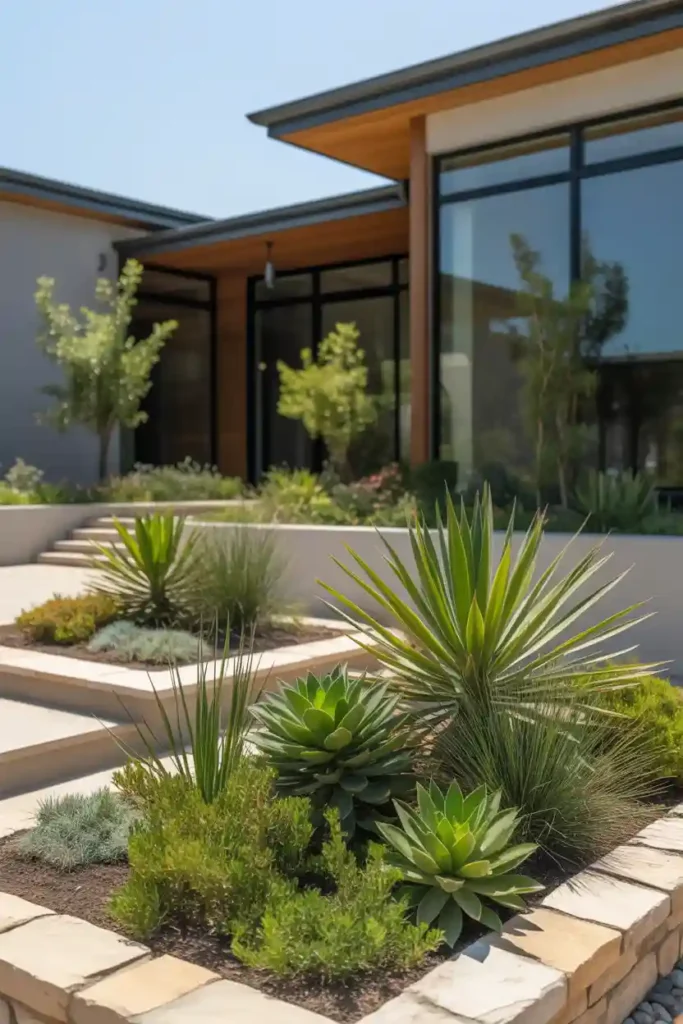
Choosing native plants ensures easier maintenance and sustainability. These plants thrive in local conditions, requiring less water and upkeep. Native grasses, shrubs, and perennials are already adapted to your soil and rainfall, so they need far less watering, fertilizer, and pest control than exotic species. Ask your local nursery for the five or six native plants that perform best in your area, and build your front yard around them.
Select species with clean shapes and controlled growth patterns to maintain a modern aesthetic. Group them in clusters of three or five for visual impact, and leave 12 to 18 inches between plants so each one has room to fill out. This eco-friendly approach enhances curb appeal while reducing long-term maintenance costs. A native front yard can cut watering by half compared with a traditional lawn and flower bed, and it supports local birds and pollinators at the same time.
- Start local: ask a nearby nursery for the five or six best native plants for your area.
- Grouping: plant in clusters of three or five for strong visual impact.
- Spacing: 12 to 18 inches apart so plants fill out without crowding.
- Savings: native plantings can cut watering roughly in half versus a traditional lawn.
11. Modern Water Feature Accent
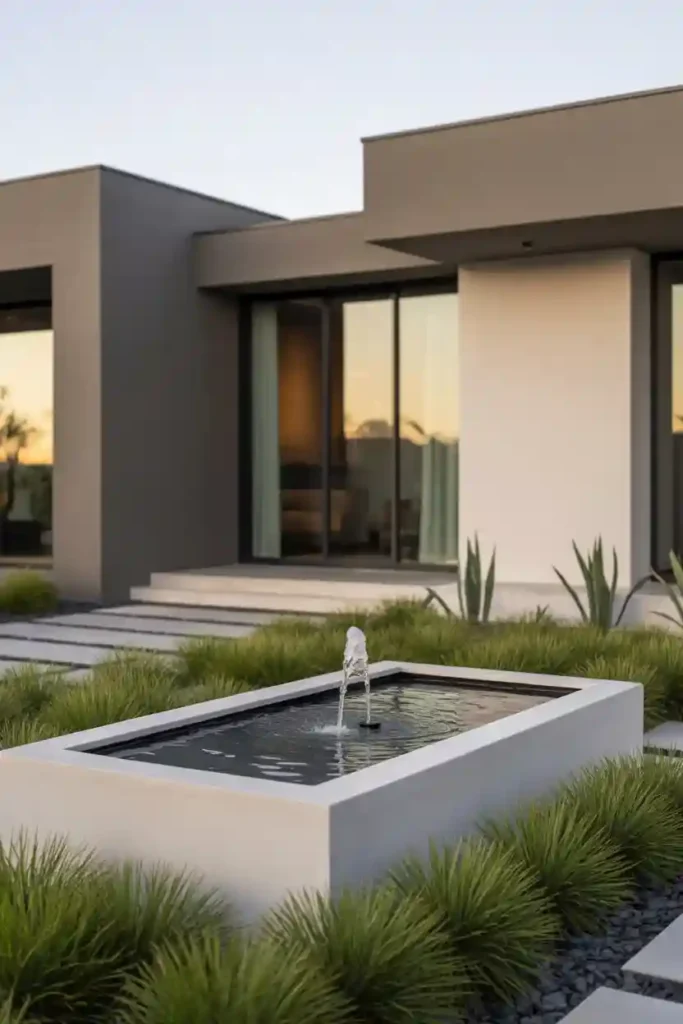
A sleek water feature adds tranquility and sophistication. Choose minimalist fountains or rectangular reflecting pools for a contemporary feel. A simple wall fountain 36 to 48 inches wide, mounted on the facade near the entrance, gives you the sound and movement of water without taking up floor space. Freestanding options like a slim basalt column fountain 24 to 36 inches tall work well in a corner bed or beside the walkway.
Position the feature near the entryway or central focal point so it is the first thing guests notice. The sound of water enhances relaxation and ambiance, and it masks street noise at the same time. This elegant addition elevates your front yard, creating a luxurious first impression. Keep the basin shallow, 6 to 8 inches deep, and add a small recirculating pump so the water stays moving and clear. Clean the pump filter monthly and top up the water weekly in hot weather.
- Wall fountain: 36 to 48 inches wide, mounted near the entrance for maximum impact.
- Column fountain: a slim basalt column 24 to 36 inches tall for a corner bed.
- Basin depth: 6 to 8 inches, with a small recirculating pump.
- Upkeep: clean the pump filter monthly and top up water weekly in summer.
12. Black and White Contrast Landscaping
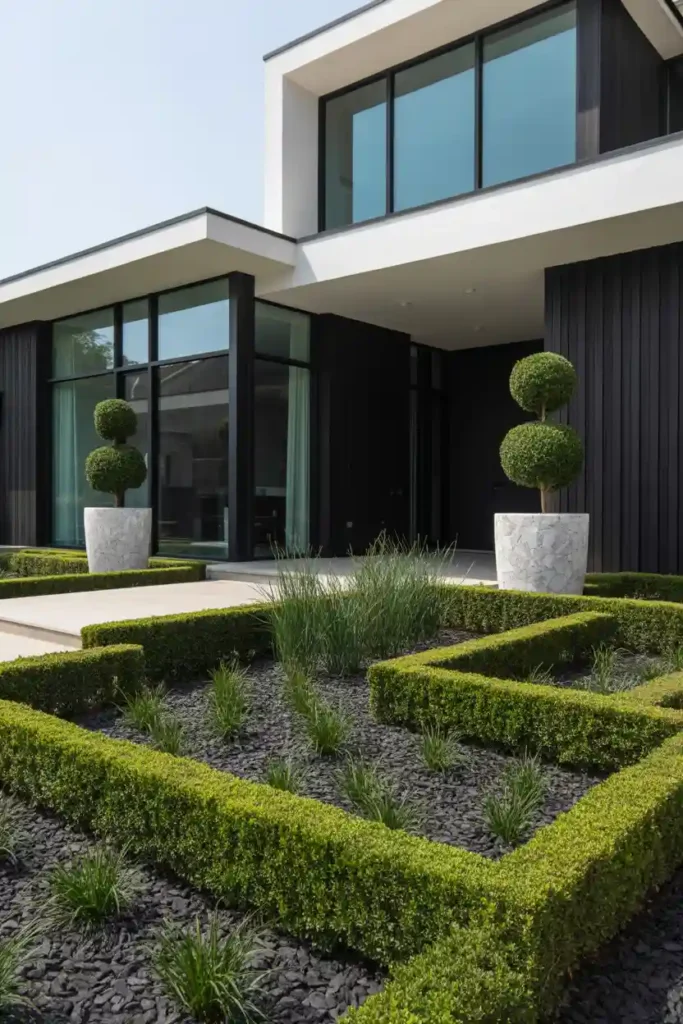
Create bold contrast using dark mulch or black planters against white stones or light walls. This dramatic color pairing enhances modern architecture. Lay black lava rock or dark bark mulch in beds along a white or pale gray facade, then set white pebble paths or light concrete pavers beside them. The contrast makes both colors look stronger, and the clean split between dark and light reads as modern even from the street.
Keep plant choices simple and structured to avoid visual clutter. Choose two or three species with strong shapes, such as black mondo grass, white-flowering gardenias, or silver dusty miller, and repeat them in groups. High-contrast designs make your home stand out while maintaining sleek sophistication. The key is restraint: let the black and white do the talking, and use green only as an accent rather than a third dominant color.
- Dark side: black lava rock or dark bark mulch in beds along the facade.
- Light side: white pebbles or pale concrete pavers for paths and borders.
- Plant palette: two or three strong shapes, like black mondo grass or white gardenias.
- Rule: green as an accent only, so black and white stay dominant.
13. Vertical Garden Accent Wall
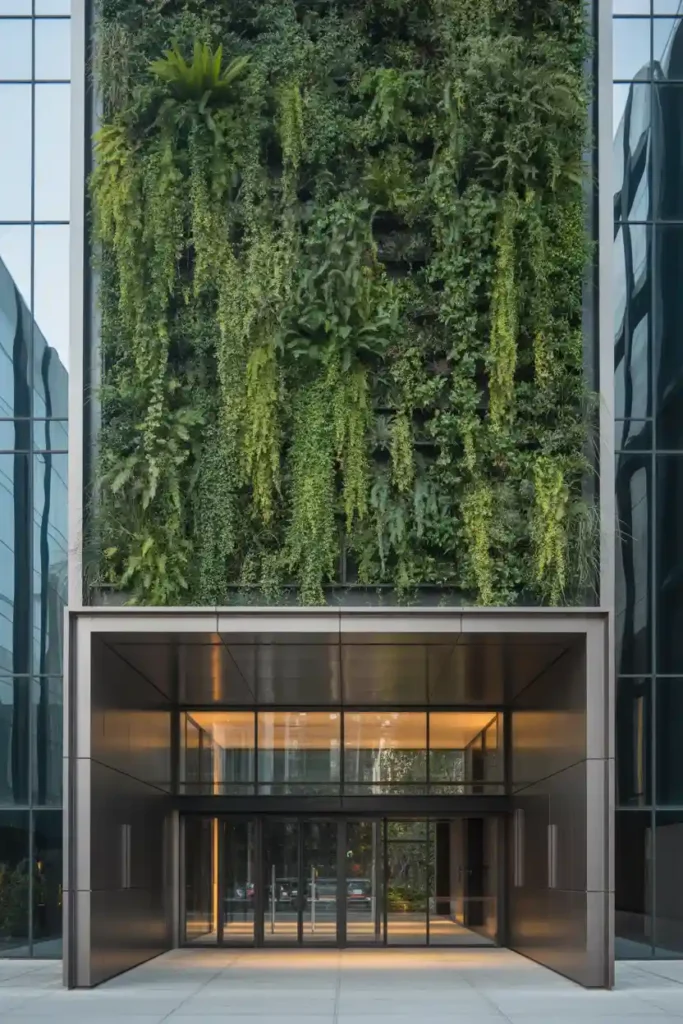
Install a vertical garden panel near the entrance to add greenery without taking up ground space. A panel 4 feet wide by 6 feet tall fits neatly beside most front doors and holds 20 to 30 small plants in pockets or modular trays. Mount it on a wall that gets morning sun and afternoon shade, and choose low-maintenance plants like ferns, pothos, and trailing succulents that tolerate vertical growing.
This feature softens modern architecture while adding texture and color. Choose low-maintenance plants arranged in geometric patterns, such as alternating rows of dark green ferns and pale succulents, for a clean modern look. Vertical gardens create a striking focal point that boosts curb appeal instantly. Add a simple drip irrigation line at the top of the panel so water trickles down evenly, and check the pockets weekly in hot weather since vertical plantings dry out faster than beds.
- Panel size: 4 feet wide by 6 feet tall, holding 20 to 30 small plants.
- Best plants: ferns, pothos, and trailing succulents for low maintenance.
- Pattern: alternating rows of dark green and pale plants for a geometric look.
- Watering: a drip line at the top, checked weekly in hot weather.
14. Defined Lawn Borders
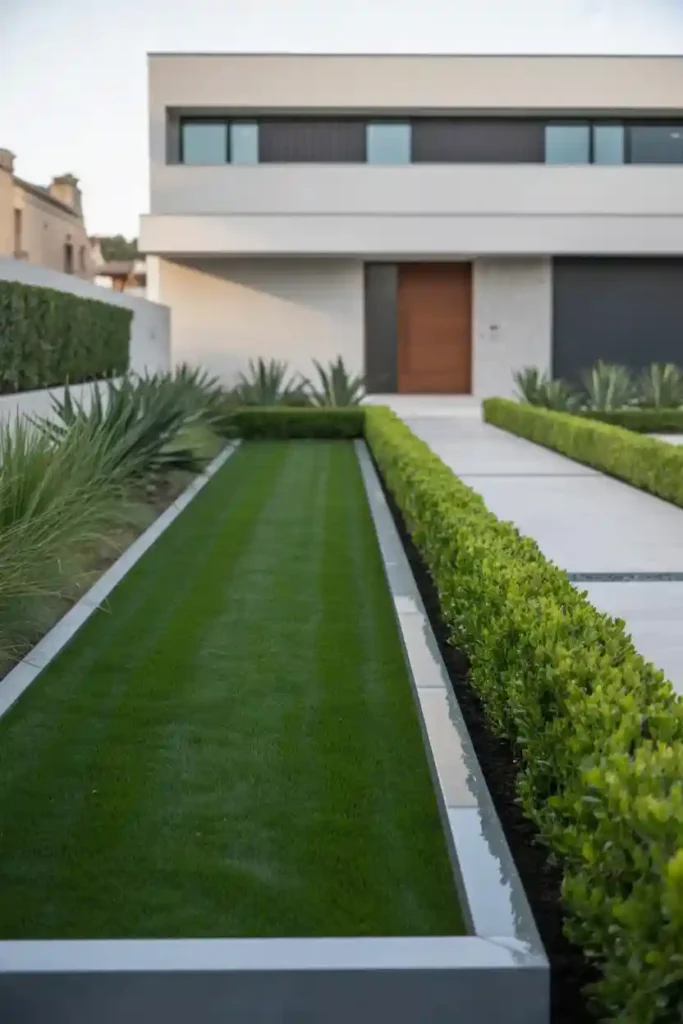
Sharp lawn edging creates a clean and polished appearance. Use metal, stone, or concrete borders to clearly separate grass from planting beds. Steel edging 4 inches tall, set 2 inches above the soil, gives the crispest line and lasts for years without shifting. Stone or concrete curbing 4 to 6 inches wide works just as well and adds a heavier, more permanent feel. Either option stops grass from creeping into beds and mulch from spilling onto the lawn.
Defined lines emphasize structure and reduce maintenance spread. Crisp edges instantly elevate even simple landscaping designs, enhancing overall curb appeal. Re-cut the edge with a half-moon edger every four to six weeks during the growing season to keep the line sharp, and brush the border clean after mowing so no clippings blur the edge. This small habit takes ten minutes and makes the whole yard look professionally maintained. For more ways to sharpen up the front of your home, see these small front porch ideas that pair tidy edging with compact entry styling.
- Steel edging: 4 inches tall, set 2 inches above the soil for the crispest line.
- Stone curbing: 4 to 6 inches wide for a heavier, permanent border.
- Maintenance: re-cut the edge every four to six weeks in the growing season.
- Finishing step: brush borders clean after mowing so the line stays sharp.
15. Statement Front Door Landscaping
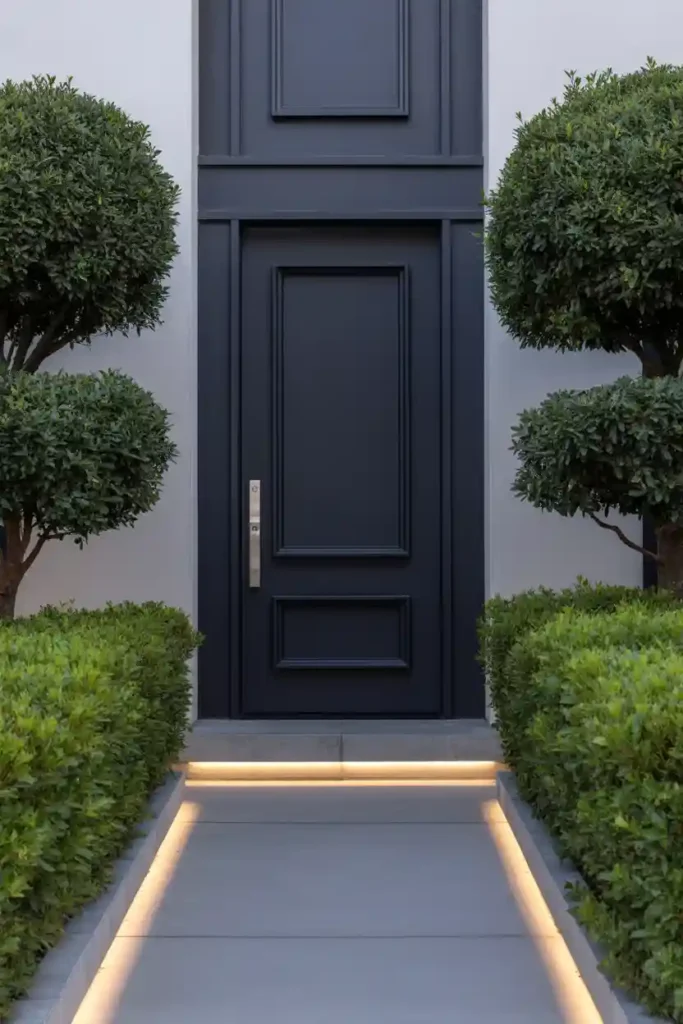
Frame your front door with intentional landscaping elements like pathway lighting, symmetrical shrubs, and bold planters. The door is the focal point of the whole facade, so treat it like one. Flank it with two matching shrubs or topiary trees 4 to 6 feet tall, add a pair of planters at the base of the steps, and run low path lights from the walkway to the threshold. Each layer points the eye toward the door.
Use contrasting colors and textures to highlight the entrance. A dark door against a light wall, bright planters beside muted stone, or a bold wreath on a plain door all create contrast that draws the eye. This focal-point approach draws attention to the most important part of your home exterior, creating a welcoming and unforgettable first impression. Finish with a clean doormat sized to the door width and a wall-mounted light above or beside the door so the entrance looks cared for day and night.
- Flanking plants: matching shrubs or topiary trees 4 to 6 feet tall on both sides.
- Base layer: a pair of bold planters at the foot of the steps.
- Guiding light: low path lights from the walkway to the threshold.
- Finishing touches: a doormat sized to the door width and a wall light above it.
Final Words
Creating beautiful curb appeal does not require a complete exterior overhaul, just thoughtful planning and intentional design. These 15 modern front of house landscape ideas show how clean lines, layered greenery, balanced symmetry, and strategic lighting can completely transform your home first impression. Whether you choose minimalist pathways, bold statement planters, or low-maintenance native plants, each idea focuses on blending functionality with modern elegance.
Start with the three ideas that fit your home and budget best. A defined pathway, two statement planters, and a row of path lights can change the whole look of a front yard in a single weekend. Then add one idea each season, a vertical garden in spring, fresh gravel beds in summer, new lighting in fall, and your curb appeal will keep improving year after year without a big renovation.
Frequently Asked Questions
What is the cheapest way to improve front of house curb appeal?
Sharp lawn edging, a clean pathway, and two matching planters by the door give the biggest improvement for the least money. A bag of gravel, a steel edging strip, and two planters usually cost under 150 dollars total, and you can finish the work in one weekend. Fresh mulch or stone in the beds and a new doormat add polish for very little extra cost.
Which plants are best for a modern front yard?
Boxwood, ornamental grasses, agave, and sculptural evergreens suit modern front yards best because they hold clean shapes with little pruning. Native plants are a smart choice too, since they need less water and care once established. Avoid plants that grow wild or need constant trimming, because they break the structured look that makes a modern landscape work.
How much does modern front yard landscaping cost?
A small DIY refresh with planters, gravel beds, edging, and lighting usually costs 300 to 800 dollars. A full professional redesign with a new concrete pathway, raised beds, and a water feature can cost 5,000 to 15,000 dollars depending on the yard size and materials. Start with the low-cost ideas first and add bigger projects one at a time.
How do I make a small front yard look modern?
Use symmetry, one strong focal point, and a limited palette of two or three materials. A straight pathway, a pair of matching planters, and a vertical garden panel add structure without taking up ground space. Keep plants compact and avoid clutter, because in a small yard every element shows and a few well-chosen pieces look far more modern than many small ones.
What outdoor lighting works best for a modern front yard?
Warm white LED lights at 2700 to 3000 Kelvin work best, with path lights along the walkway, uplights on trees or the facade, and wall sconces by the door. Low-voltage wired systems give the steadiest light, while solar lights are a good budget option. Put everything on a timer or dusk-to-dawn sensor so the yard lights up automatically every evening.
More Ideas You Will Love
 15 Best Vegetables to Grow in Your Summer Garden
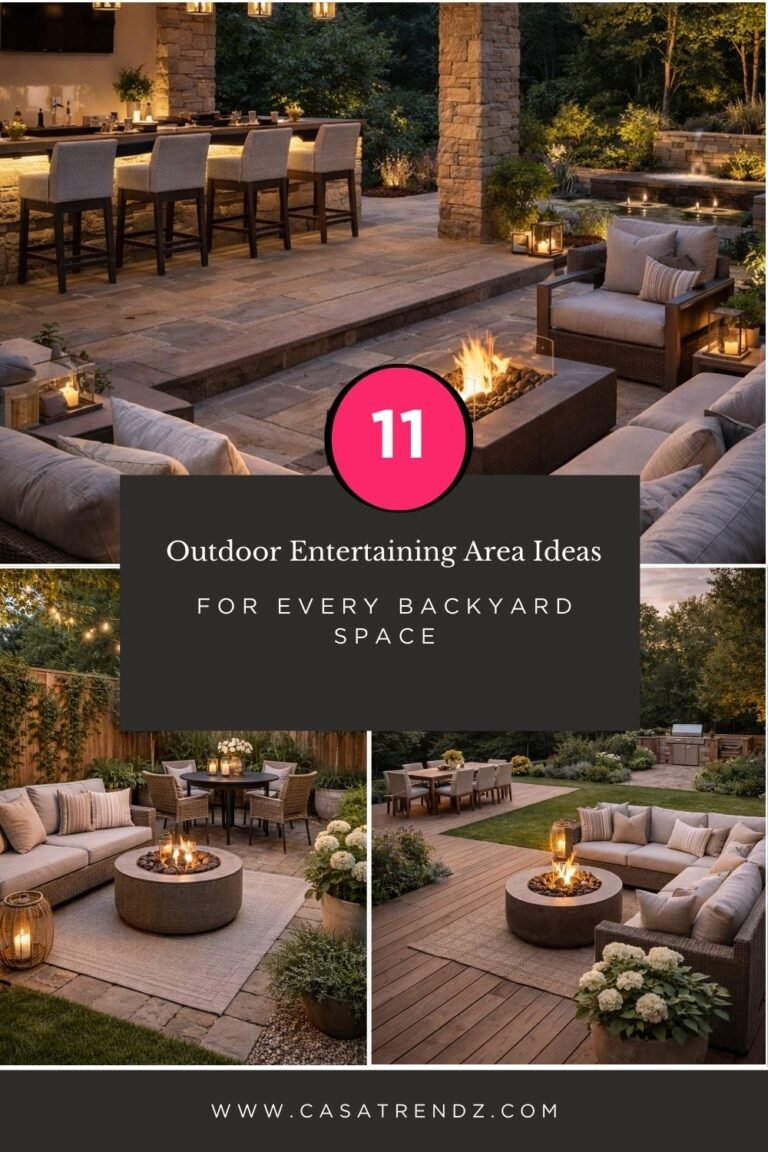 11 Outdoor Entertaining Area Ideas for Every Backyard Space
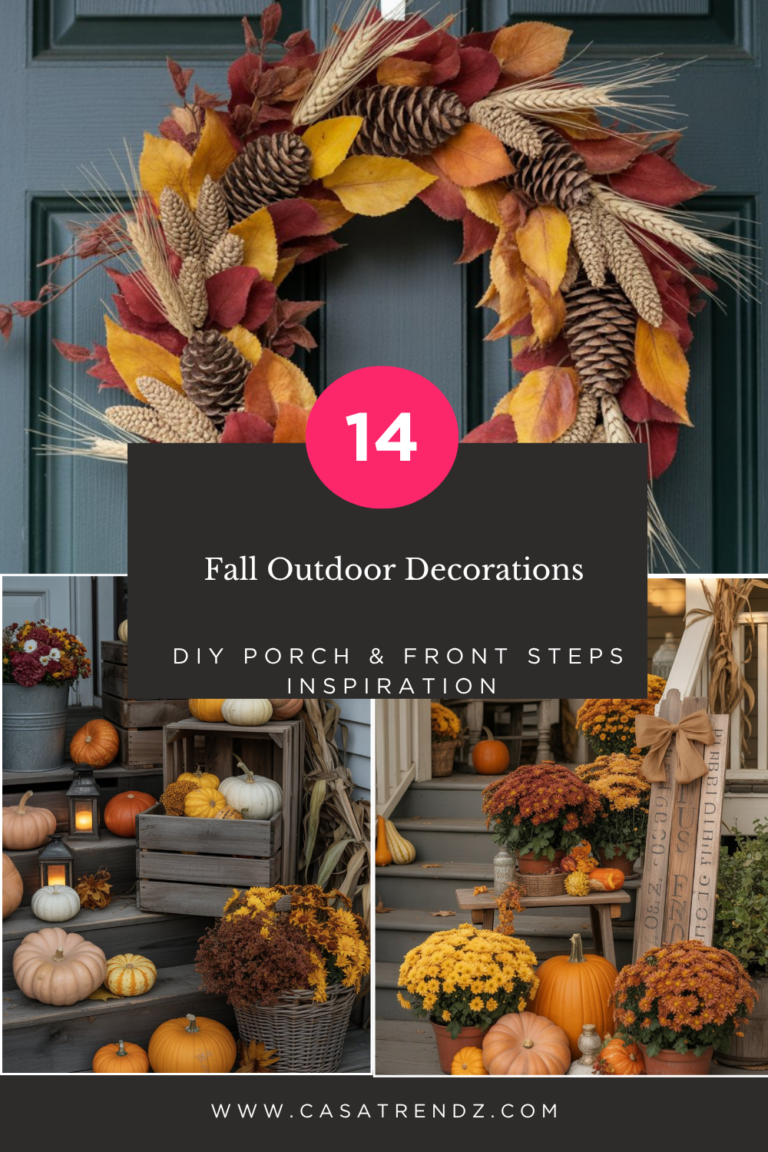 14 Fall Outdoor Decorations: DIY Porch & Front Steps Inspiration
 20 DIY Christmas Pathway Light Ideas for 2025 Magic Nights
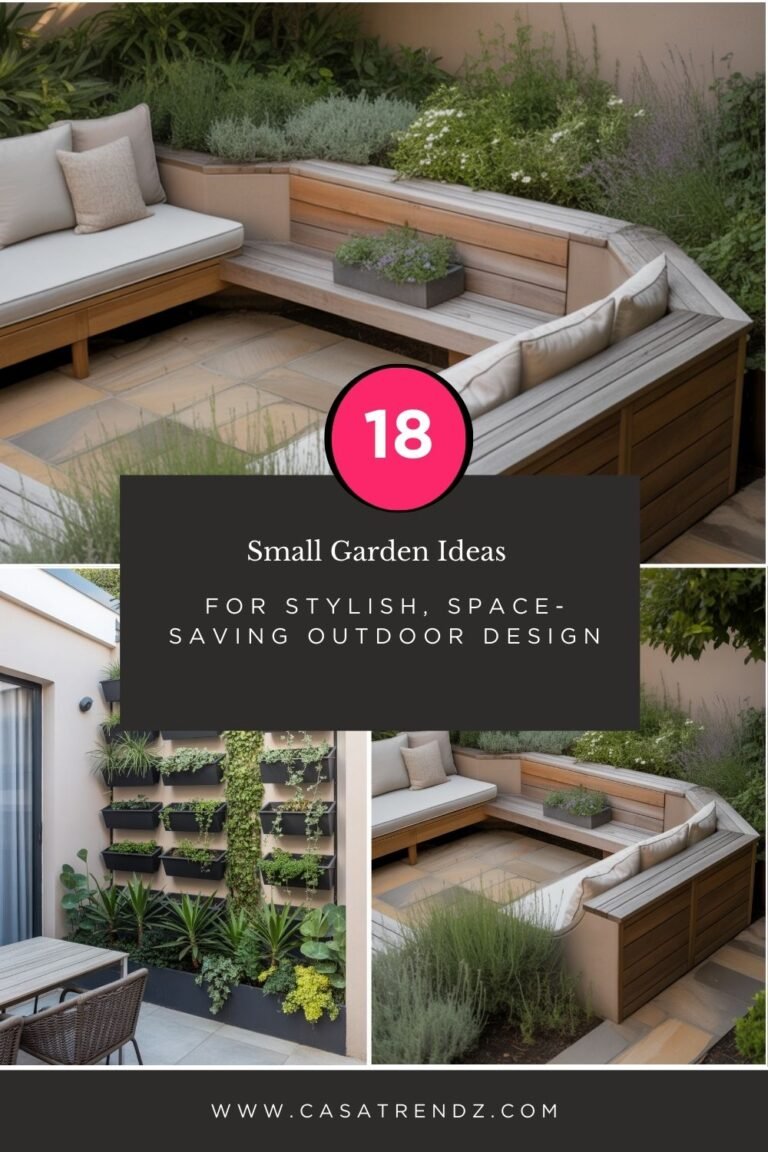 18 Small Garden Ideas for Stylish, Space-Saving Outdoor Design
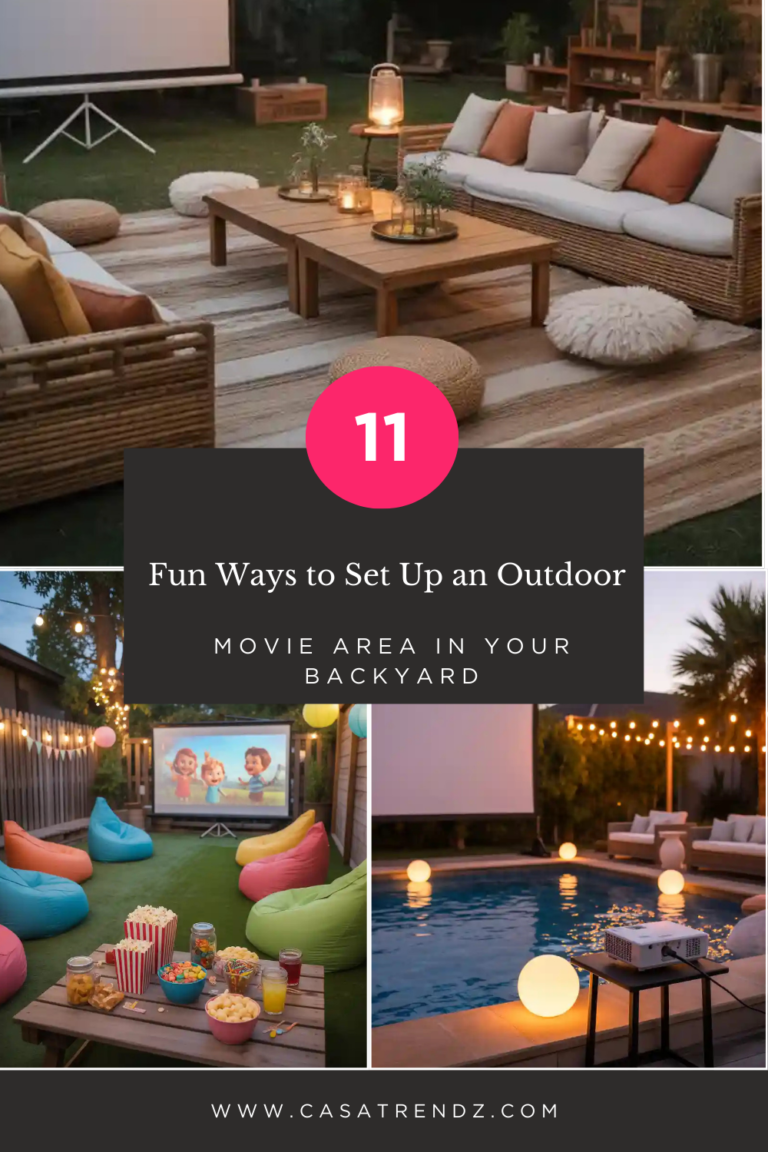 11 Fun Ways to Set Up an Outdoor Movie Area in Your Backyard