
13 Kid-Friendly Backyard Design Ideas for a Fun Summer

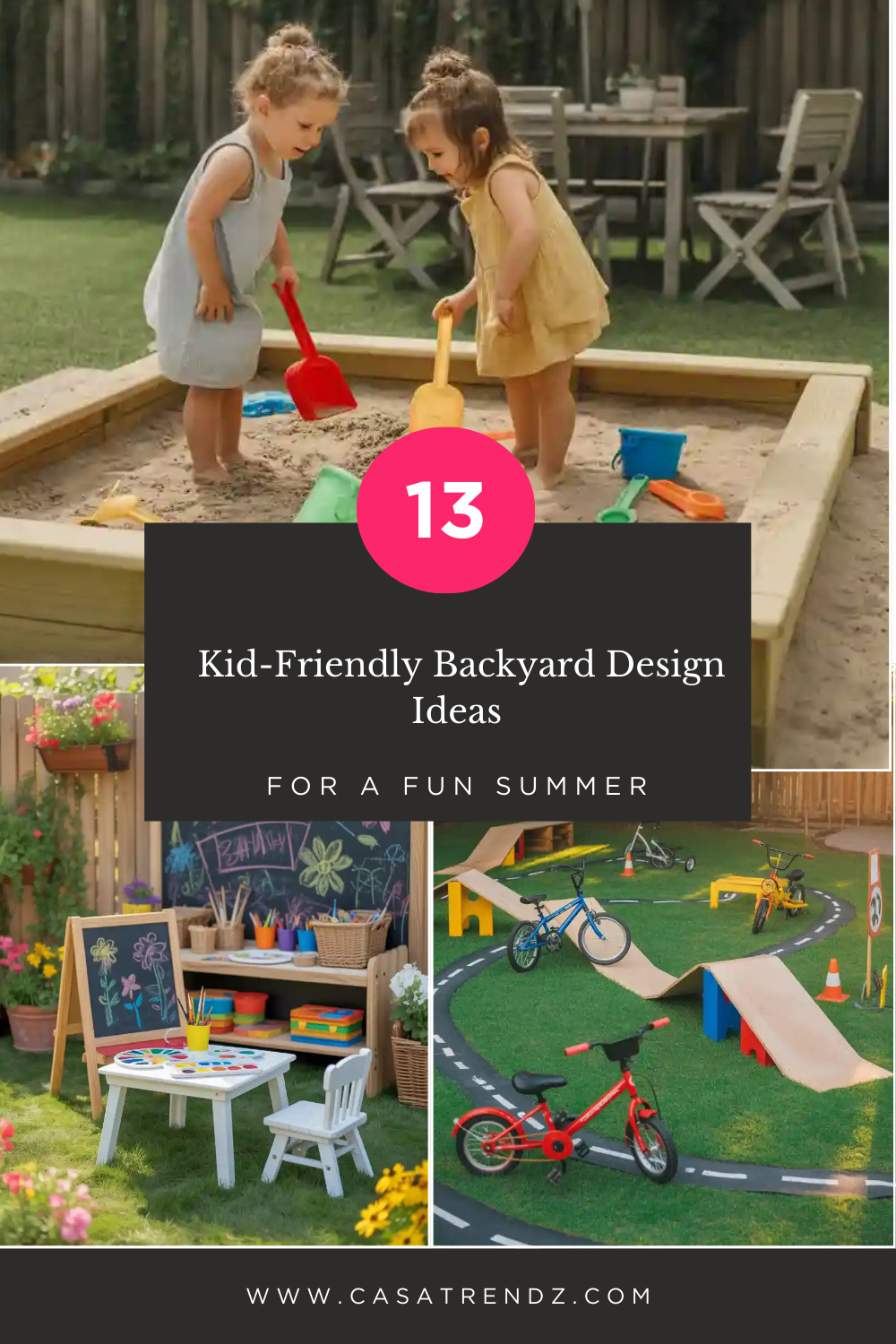
A kid-friendly backyard is one of the best gifts you can give your children during the summer months. Instead of long afternoons in front of a screen, they get fresh air, sunshine, and a space built for running, building, imagining, and exploring. A well-planned backyard becomes the place where your kids burn off energy, learn new skills, and make memories with siblings and friends, all within sight of the back door.
The secret to a great kid-friendly backyard is balance. You want plenty of fun, but you also need safety, shade, and a layout that still works for the adults in the family. That means soft landing surfaces under climbing equipment, clear sight lines from the patio, and zones that suit different ages, so a toddler and a ten-year-old can both play happily in the same yard without getting in each other’s way.
In this guide, you will find 13 kid-friendly backyard design ideas for a fun summer, from playground zones and sand play areas to water stations, treehouses, and relaxing picnic corners. Each idea includes practical details on materials, sizes, safety, and upkeep, so you can pick the ones that fit your space, your budget, and your kids’ ages, and build a backyard your family will use all summer long.
1. Backyard Playground Zone
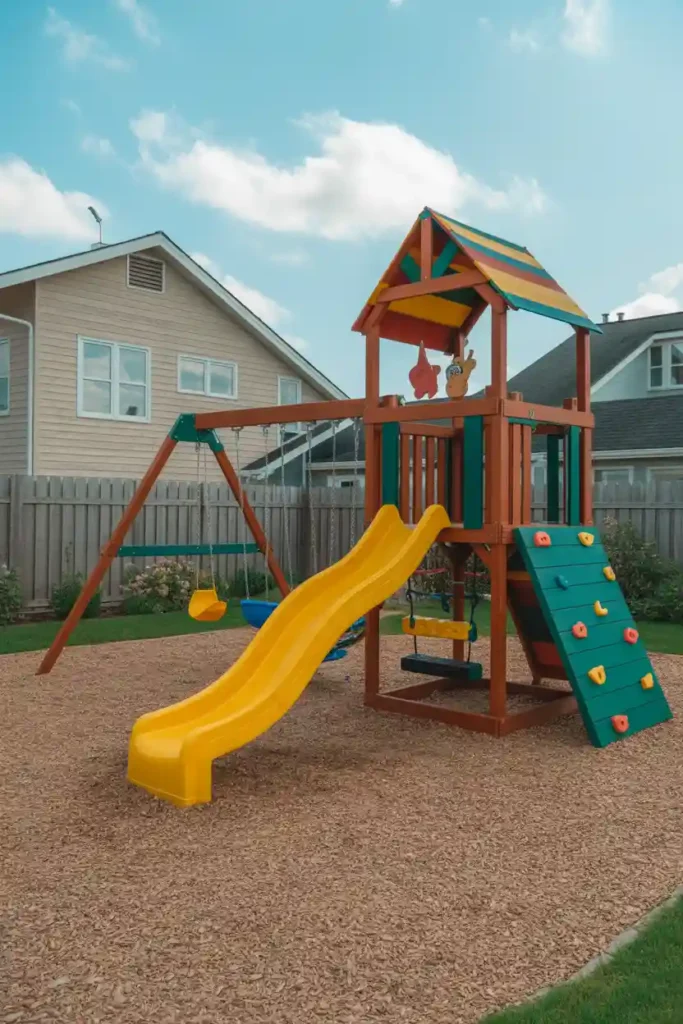
A dedicated playground zone instantly turns an ordinary backyard into a place kids want to spend time. A compact playset with swings, a slide, and climbing bars gives children a reason to head outside every day, and it keeps their active play in one defined area instead of spread across the whole lawn. Choose a spot you can see clearly from the kitchen window or patio, so supervision stays easy while they play.
Look for a playset made from pressure-treated wood, powder-coated metal, or heavy-duty plastic, and check that it is rated for your children’s ages and weights. A standard backyard playset is usually 8 to 12 feet long and 6 to 8 feet wide, so measure your space before you buy. Leave at least 6 feet of clear space around the structure on all sides, and never place it near fences, trees, or concrete edges where a fall could cause injury.
The ground underneath matters just as much as the playset itself. Spread 6 to 9 inches of rubber mulch, engineered wood fiber, or soft grass over the fall zone, and add foam playground mats under swings and at the bottom of slides for extra cushioning. Inspect bolts and chains once a month during summer, tighten anything loose, and sand down any splinters on wooden parts. A well-maintained playground zone can last for years and grow with your kids as you add a climbing wall, a rope ladder, or a monkey bar attachment.
2. DIY Sand Play Area
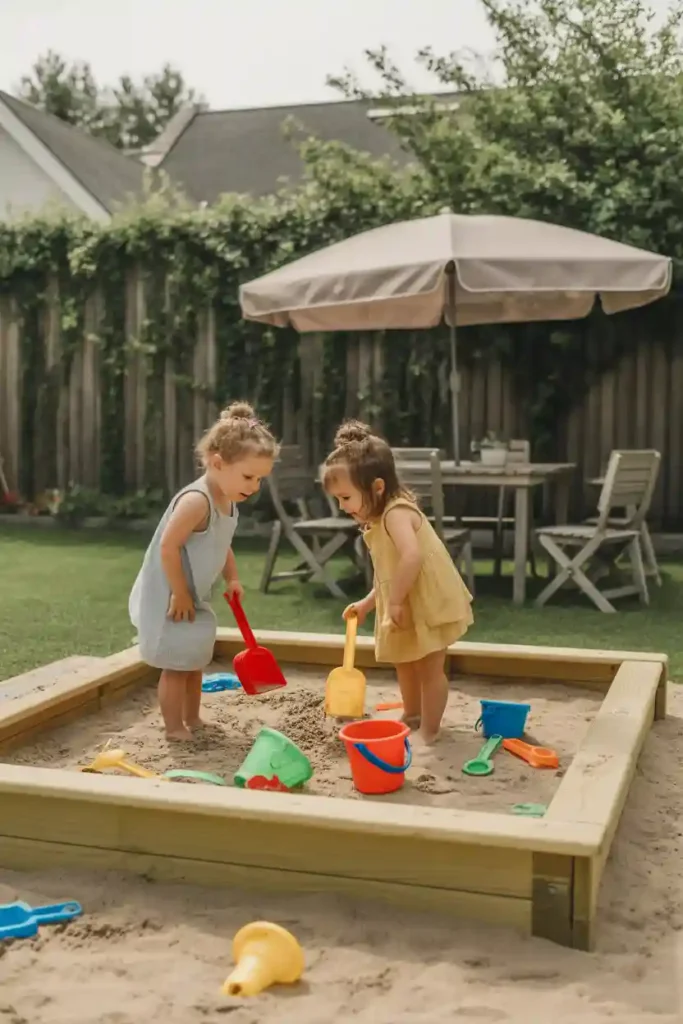
A backyard sand play area brings the joy of the beach right to your home, and it costs far less than most play equipment. Kids naturally love digging, pouring, and building castles, and sand play quietly builds fine motor skills, patience, and imagination. A sandbox also works for a wide age range, from toddlers with a bucket and shovel to older kids building elaborate sand cities.
Build a simple wooden sandbox about 4 feet square and 10 to 12 inches deep, using smooth, sanded cedar or pressure-treated boards with no exposed screws on the inside edges. Line the bottom with landscape fabric so weeds stay out while water drains through, then fill it with 6 to 8 inches of clean, washed play sand, which you can buy in 50-pound bags at most home improvement stores. A fitted wooden lid or a heavy vinyl cover is essential, since it keeps out rain, leaves, and neighborhood animals when the sandbox is not in use.
Place the sandbox where it gets morning sun and afternoon shade, and add a small canopy or a patio umbrella so kids can play comfortably even on hot days. Stock it with buckets, shovels, toy trucks, funnels, and sand molds, and add low wooden benches or a flat log around the edge so kids have a place to sit while they build. Rake the sand smooth after play, replace the top layer once or twice a season, and the sand area will stay clean, soft, and inviting all summer.
3. Backyard Water Play Station
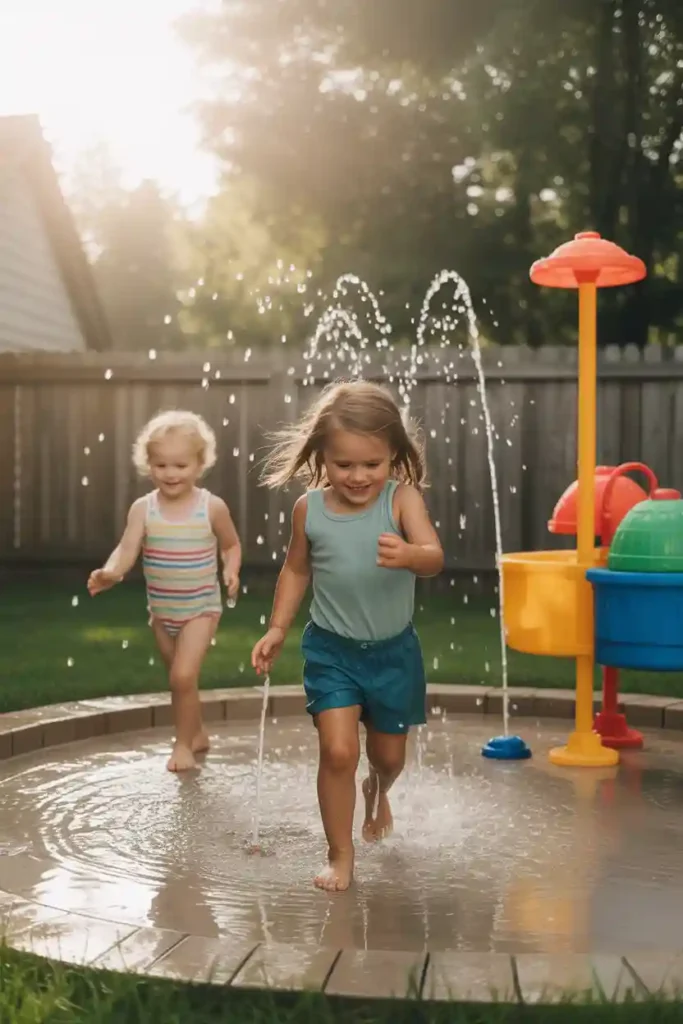
A backyard water play station is the easiest way to keep kids cool on hot summer days without the cost and upkeep of a full swimming pool. A splash pad, a small sprinkler, or a water table gives children all the fun of water play with far less maintenance, and it takes up only a small corner of the yard. Younger kids especially love pouring, splashing, and experimenting with water, and a dedicated station keeps the mess contained in one spot.
Start with a simple setup: a molded plastic water table for toddlers, a pop-up splash pad that connects to a garden hose, or a gentle rotating sprinkler for older kids. Place the station on a non-slip surface such as artificial grass, rubber tiles, or textured patio pavers, and make sure the area slopes slightly away from the house so water drains instead of pooling. Keep the water shallow, no more than a few inches in a table or basin, and always supervise children around water, even in small amounts.
Add cups, funnels, watering cans, and floating toys so kids can experiment and invent their own games. A small storage bench nearby keeps everything tidy, and a towel hook on the fence means wet kids do not track water through the house. If you want a bigger project, a simple backyard oasis with a splash pad and shade sail can turn the water corner into the coolest spot in the yard. Empty and dry the water table after each use to keep it clean and mosquito free.
4. Outdoor Kids Art Station
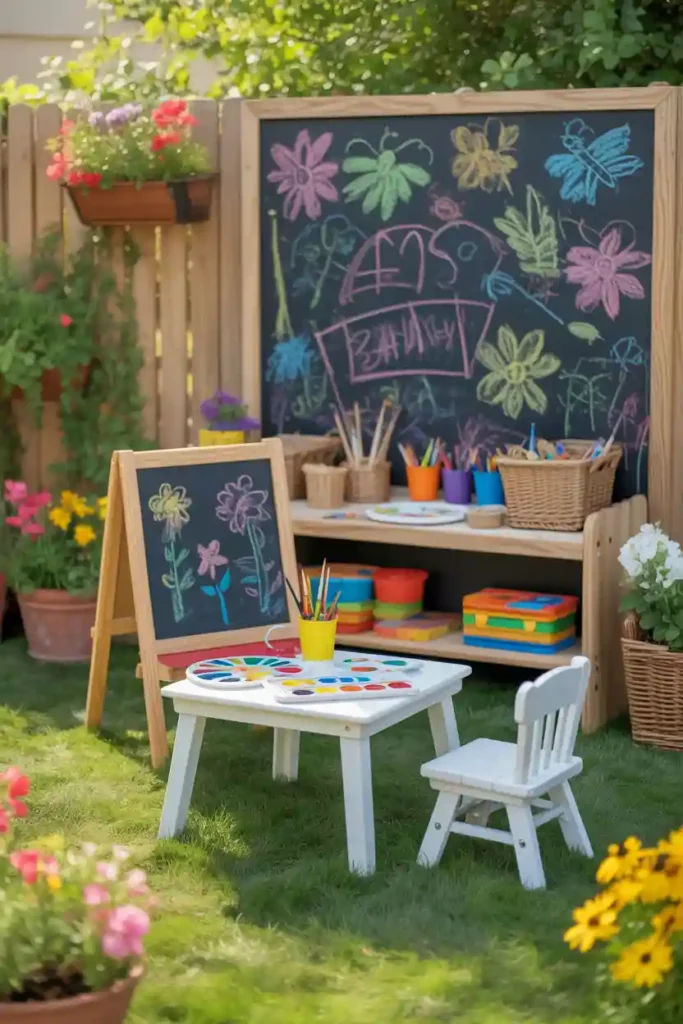
An outdoor art station lets kids get as messy as they like without anyone worrying about the living room carpet. Painting, drawing, and crafting outside encourages creativity, and the fresh air and natural light make it a calmer, happier activity than the same project indoors. A simple setup is all you need, and kids will return to it again and again on quiet afternoons.
Set up a weather-resistant table, about 4 feet long, with washable plastic chairs sized for children. Stock it with washable paints, chunky crayons, colored chalk, paper, and a few basic craft supplies in a waterproof storage box. A small easel or a chalkboard mounted on the fence works beautifully outdoors, and a chalk wall painted on a garden fence gives kids a big canvas they can wipe clean and start over as often as they like.
Place the art station on a patio or deck where spills wash off easily, and add a garden hose nearby for quick cleanup. An umbrella or a small shade sail protects both the kids and their artwork from strong sun. Keep a few aprons or old t-shirts hanging on a hook so clothes stay safe, and display finished pieces on a simple clothesline strung between two posts. It turns the corner into a little outdoor gallery your kids will be proud of.
5. Backyard Mini Obstacle Course
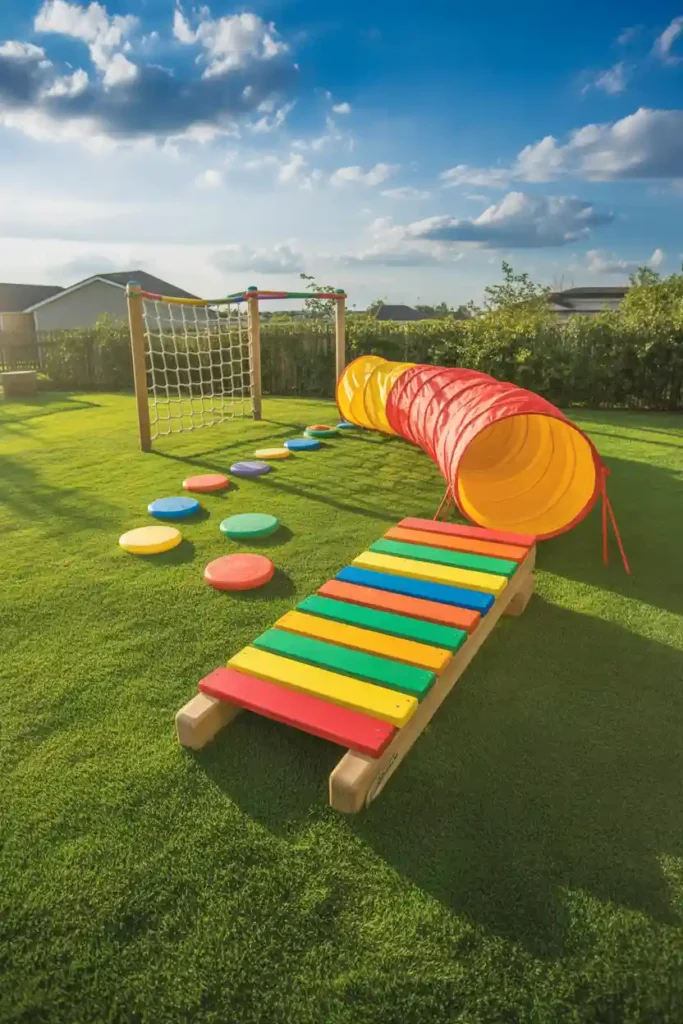
A mini obstacle course turns your backyard into an adventure zone where kids can climb, jump, crawl, and race. Unlike a fixed playset, an obstacle course can be rearranged whenever the challenge gets too easy, so it stays exciting all summer. It also builds balance, coordination, strength, and confidence, all while kids think they are just having fun.
Build the course from simple elements: flat stepping stones, a low balance beam made from a 4 by 4 timber beam set on short supports, a rope swing, a crawl tunnel, and a climbing net strung between two sturdy posts. You can make many obstacles yourself from wooden planks, old tires, and garden logs, which keeps the cost low. If you are looking for more cheap backyard ideas, a DIY obstacle course is one of the best value projects you can build, since most of it comes from scrap wood and secondhand materials.
Lay the course out in a loop so kids can time themselves and try to beat their own record. Keep each obstacle low, no higher than 2 to 3 feet for younger kids, and put soft grass, rubber mulch, or foam mats under anything they climb on. Change the order of the stations every week or two to keep the challenge fresh, and add a simple finish line flag or a stopwatch so kids can race each other. It is a great activity for birthday parties too, since the whole group can run the course together.
6. Treehouse Adventure Spot
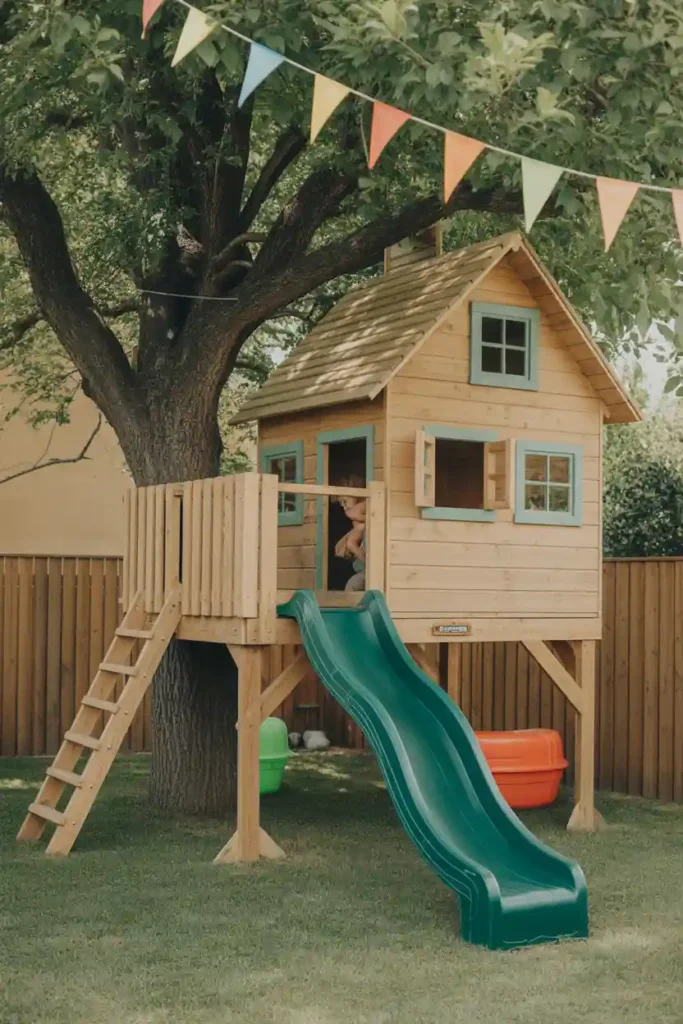
A treehouse creates a magical place where kids can play, imagine, and hide away from the grown-up world. Even a simple elevated wooden platform with sturdy railings becomes a pirate ship, a secret clubhouse, or a jungle lookout in a child’s imagination. It is the kind of backyard feature kids remember for years, and it gives older children a space that feels like their own.
If you have a strong, healthy tree with a trunk at least 12 inches wide, you can build a platform 6 to 8 feet off the ground, about 6 by 6 feet, with a railing at least 36 inches high and gaps no wider than 4 inches. Use galvanized bolts and brackets made for treehouses, which let the tree keep growing without damage, and never nail directly through the trunk in a way that girdles it. If there is no suitable tree, a freestanding playhouse on short stilts gives the same elevated feeling and is often simpler and safer to build.
Reach the platform with a sturdy ladder, a rope ladder, or a small staircase with a handrail, and add a slide on one side for a fun way down. Decorate with colorful bunting flags, solar string lights, outdoor cushions, and a small storage box for toys and books. Inspect the structure every spring, check bolts and boards, and re-stain the wood to protect it from weather. With regular care, a treehouse can be the centerpiece of your backyard for a decade or more.
7. Backyard Camping Corner
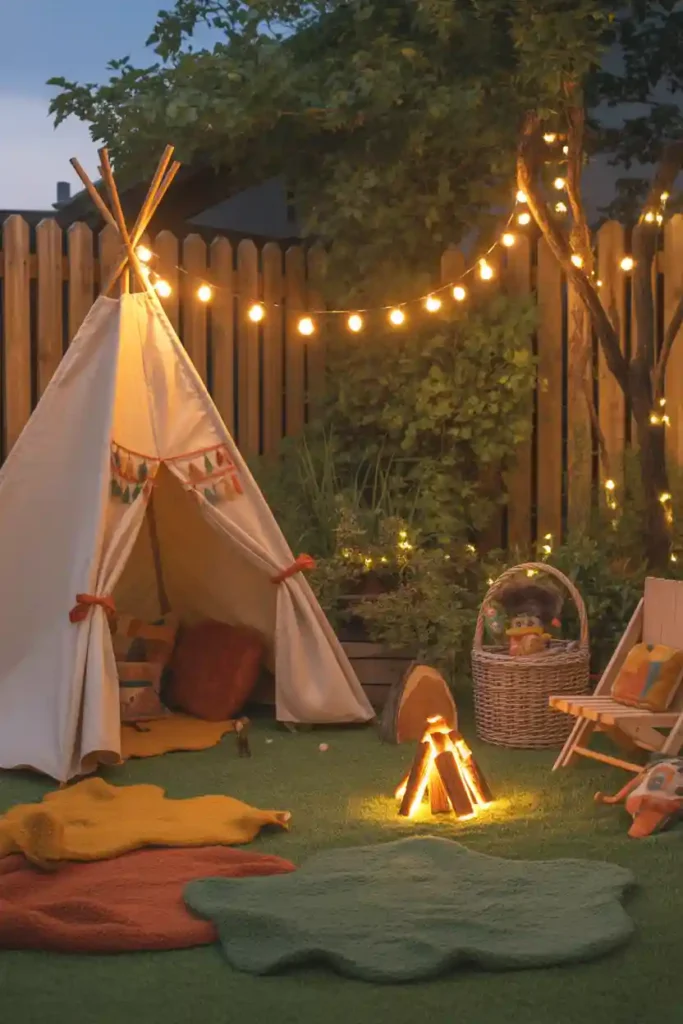
A backyard camping corner lets kids enjoy the thrill of camping without ever leaving home. A small tent or teepee, a few blankets, and some string lights are enough to create a cozy hideaway for storytelling, reading, and stargazing. It is perfect for summer evenings, sleepover-style backyard campouts, and quiet afternoons when kids want a little den of their own.
Set up a play tent or a canvas teepee, about 4 to 5 feet wide, on a soft patch of grass or on an outdoor rug. Fill it with floor cushions, sleeping bags, and a couple of favorite books, then string warm white fairy lights around the entrance and along the fence to create a magical glow after sunset. A pretend campfire made from LED candles and a ring of decorative logs adds atmosphere with zero risk, and it gives kids a focal point for songs and stories.
Keep a small basket of supplies nearby with a flashlight, a magnifying glass, and a simple star chart so kids can explore the night sky. On warm evenings, the whole family can gather for snacks, marshmallow roasting over a real backyard fire pit nearby, and a round of stories before bedtime. Pack the tent away during heavy rain, or choose a waterproof model and a raised groundsheet, so the camping corner is ready to use again the next dry evening.
8. Kid-Friendly Garden Patch
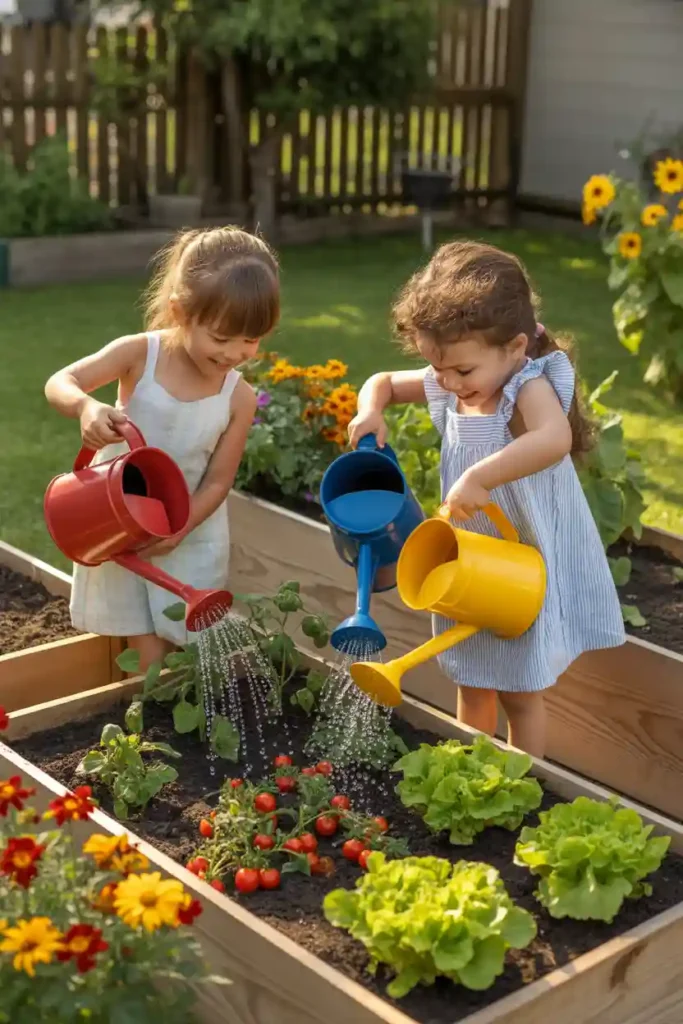
A kid-friendly garden patch teaches children where food comes from and gives them a real sense of responsibility. When kids plant a seed, water it, and watch it grow into a tomato or a sunflower, they learn patience and pride in a way no screen can teach. A small garden of their own also makes them far more willing to taste the vegetables they grew themselves.
Build one or two raised beds, about 4 feet long, 2 feet wide, and 12 inches deep, in the sunniest part of the yard. Fill them with a mix of good garden soil and compost, and let each child choose what to plant. Cherry tomatoes, strawberries, snap peas, carrots, and sunflowers are all easy for beginners and give quick, visible results. Marigolds and nasturtiums add color and help keep pests away naturally.
Give kids their own child-sized tools, a small watering can, and colorful plant markers they can decorate themselves. Put the beds where you can see them from the house, and make watering part of the daily routine, even five minutes after dinner is enough. Label each plant with the child’s name so ownership is clear, and celebrate the first harvest with a simple meal made from what they grew. It is a small project that builds healthy habits and happy memories at the same time.
9. Outdoor Movie Night Setup
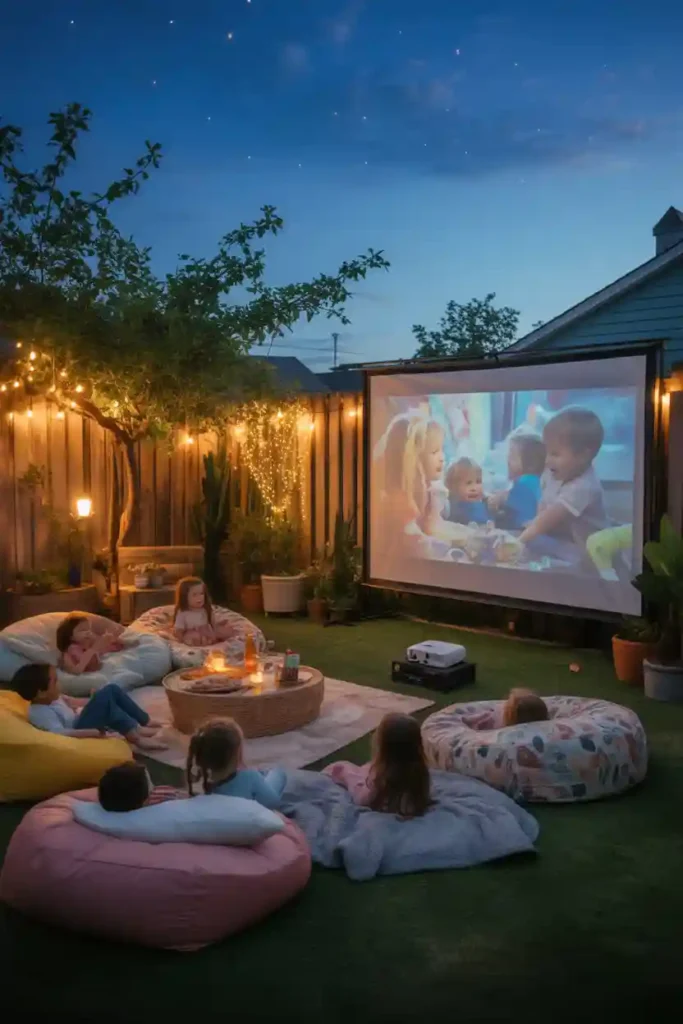
An outdoor movie night turns an ordinary summer evening into an event the whole family looks forward to. Kids love watching their favorite films under the stars, and the setup is simpler than most people expect. A projector, a blank wall or a portable screen, and some comfortable seating are all you really need.
Choose a flat spot in the yard that faces a plain wall, a fence, or a portable 100-inch projector screen, and place the projector about 10 to 12 feet back for a good picture size. A basic home projector with at least 2,000 lumens works well once the sun has set, and a small Bluetooth speaker gives much better sound than the projector alone. Lay out bean bags, floor cushions, and blankets on an outdoor rug, and hang string lights or lanterns around the edges for a cozy glow.
Set up a simple snack station on a side table with popcorn, juice boxes, and a few treats, so nobody has to run inside during the film. If you are planning the space as part of a larger outdoor living room, add weatherproof seating and a low storage bench for the projector and cables. Start the movie just after sunset, keep a few light blankets handy for when the air cools, and the backyard quickly becomes the family’s favorite cinema.
10. Backyard Bike Track
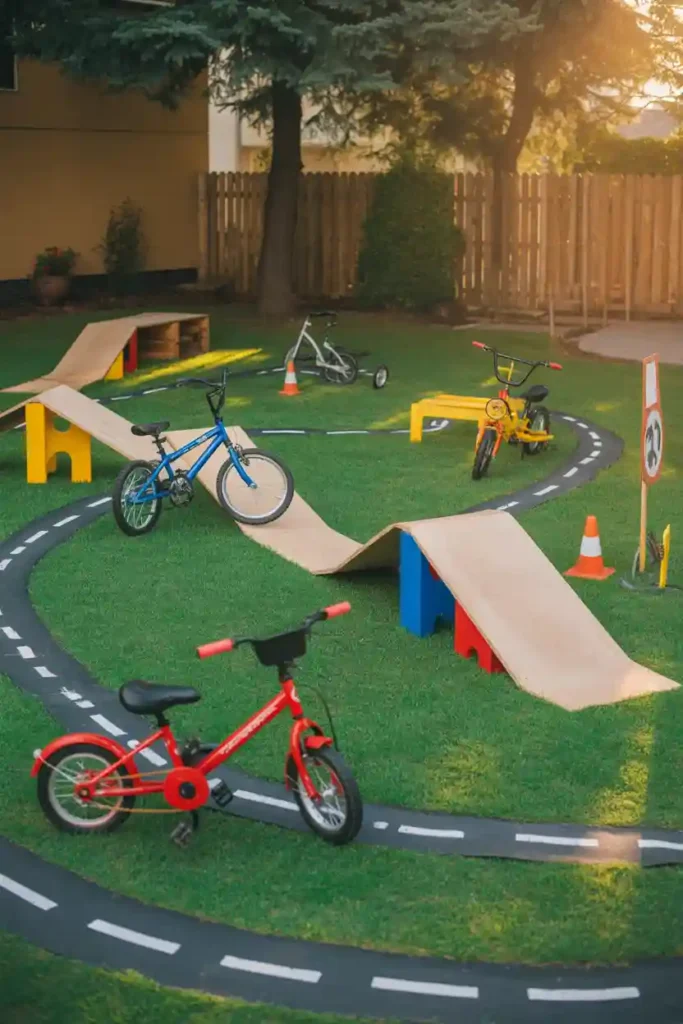
A mini bike track gives kids who love scooters, balance bikes, and bicycles a place to ride safely without wandering into the street or across the flower beds. A marked route with curves, gentle slopes, and fun road signs makes riding feel like a real adventure, and it helps younger children build balance and coordination in a controlled space.
Map out a loop around the yard using painted lines on a patio, flat paving stones, or a compacted gravel path about 3 feet wide. Add a few gentle curves and a small ramp no more than 6 inches high, then place toy traffic signs, cones, and a pretend parking area along the route so kids can play at being on a real road. Keep the surface smooth and free of loose stones, and make sure the track stays clear of the playset, the garden beds, and any hard edges.
Add a rest zone with a small bench and a water bottle station so kids can take a break between laps. For younger riders, keep the track flat and simple, and for older kids, add a slalom section with cones or a timing challenge with a stopwatch. Helmets are a must on every ride, so hang a few on hooks by the back door where kids can grab them on the way out. A bike track is one of the easiest ways to get kids moving every single day.
11. Backyard Trampoline Zone
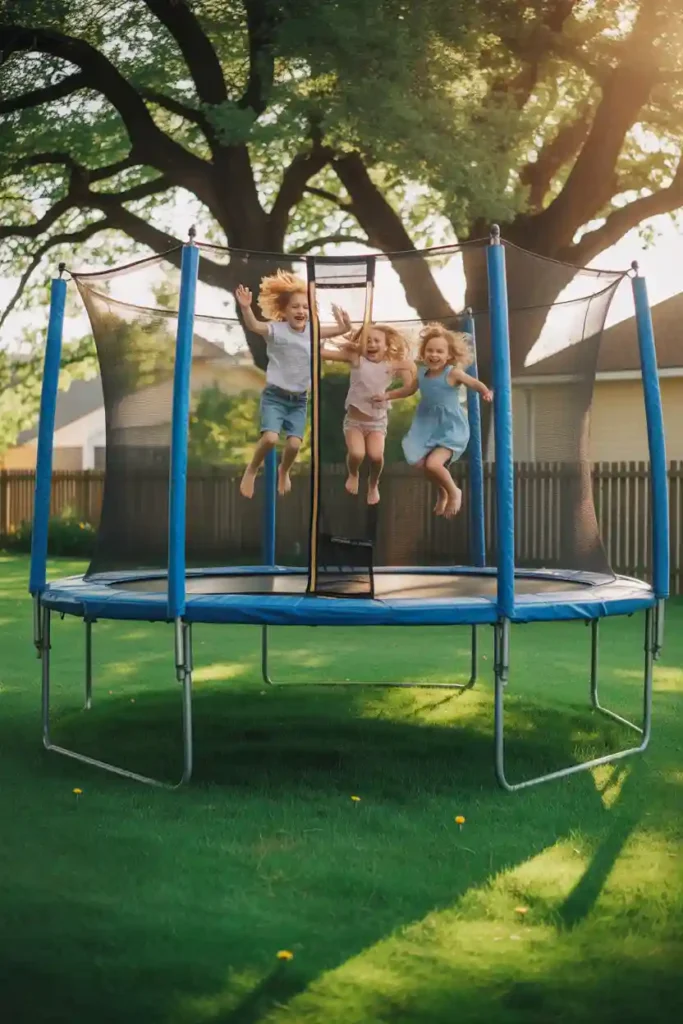
A trampoline is one of the most popular backyard features for kids, and for good reason. Jumping improves coordination, balance, and fitness, and it burns off energy faster than almost any other garden activity. A well-placed trampoline with proper safety gear can give your family hours of active fun every week of the summer.
Choose a round trampoline between 12 and 15 feet wide for most families, and place it on flat, level ground at least 6 feet from fences, trees, and walls. A full safety enclosure net is essential, and it should be attached securely with no gaps at the entrance. Check the weight limit and the spring cover before you buy, and look for a model with thick padding over the springs and frame so little fingers and toes stay protected.
Surround the trampoline with soft ground cover such as grass or rubber mats, and add a shaded seating area nearby so parents can supervise comfortably. Set clear rules from the start: one jumper at a time, no flips without training, and no jumping in wet or windy weather. Inspect the mat, springs, and net every month for wear, and replace any torn padding right away. With sensible rules and regular checks, the trampoline zone stays safe and fun all season.
12. Creative Chalk Drawing Path
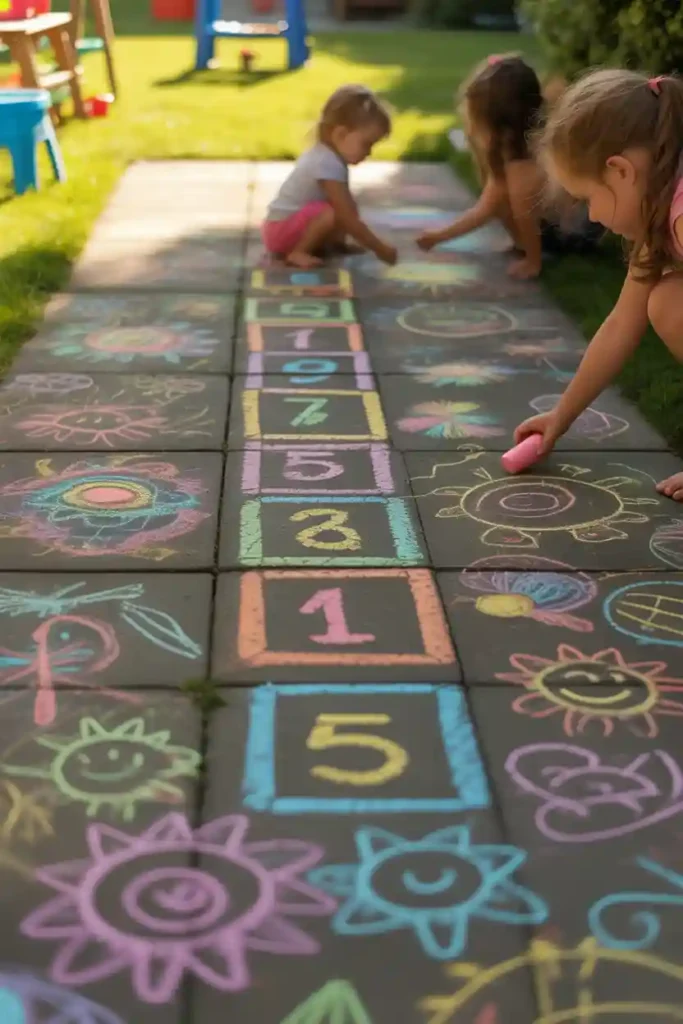
A chalk drawing path turns a plain walkway into a colorful art space that changes every day. Kids love drawing on pavement, and chalk gives them a fresh canvas each morning with no mess to clean up indoors. It is the simplest idea on this list, yet it keeps children busy for hours, especially on warm afternoons when they want a quieter activity.
Design a winding path through the backyard using concrete pavers, flat stones, or a smooth section of patio about 3 feet wide. The path itself becomes the canvas, and kids can fill it with hopscotch grids, doodles, mazes, and colorful patterns. Add playful details like painted circles, zigzag lines, and arrows that guide them along the route, and leave a few blank stones so they always have space for a new idea.
Keep a bucket of thick sidewalk chalk in bright colors by the back door, along with a few chalk holders that are easier for small hands to grip. A garden hose washes the whole path clean in minutes, so kids can start fresh the next day. For a fun twist, draw a simple map or a treasure hunt trail along the path, and hide small toys or treats at the end. It is a low-cost activity that encourages creativity, and it works just as well for a rainy-day backup as it does on a sunny afternoon.
13. Relaxing Family Picnic Area
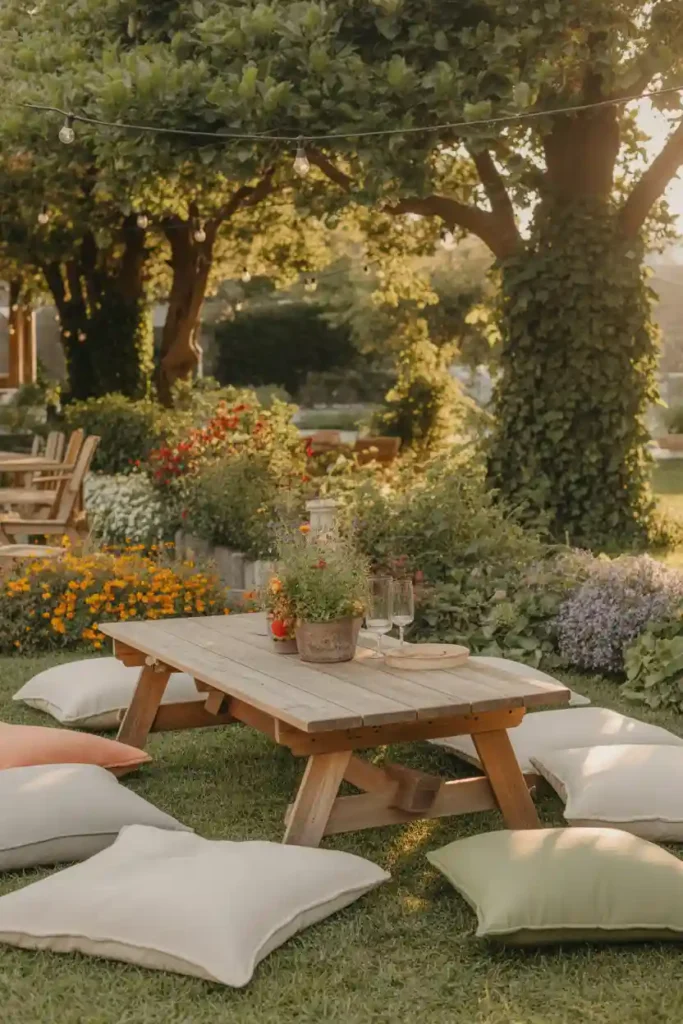
A family picnic area is the calm heart of a kid-friendly backyard. After all the running, climbing, and splashing, everyone needs a shady place to sit down, eat together, and relax. A simple picnic setup turns everyday meals into small outdoor events, and it gives parents a comfortable base while kids play nearby.
Set up a wooden picnic table, about 6 feet long, under a pergola, a large umbrella, or a leafy tree for shade. Choose a table with attached benches so little ones can climb on easily, and sand the edges smooth to avoid splinters. Surround the area with low plants or flower beds to make it feel welcoming, and lay an outdoor rug underneath to define the space and keep dust down on dry days.
Add a few outdoor cushions, a lantern or two, and a small side table for drinks and sunscreen so everything is within reach. Keep a storage box nearby with paper plates, cups, and a few board games for lazy afternoons. The picnic area works for breakfast on a cool morning, a barbecue lunch, or a simple evening snack, and it is the spot where the whole family naturally gathers at the end of a busy day of play.
Final Words
Designing a kid-friendly backyard is all about creating a space where children can play freely, explore their imagination, and enjoy the outdoors safely. These 13 kid-friendly backyard design ideas show how a mix of active zones, creative corners, and relaxing family spots can turn an ordinary yard into a vibrant summer playground. The best backyards balance excitement with comfort, giving kids plenty of things to do while still offering calm places for the whole family to rest.
Start with two or three ideas that fit your space and your children’s ages, then add more over time as they grow. Measure carefully, choose safe materials, and keep the layout open enough that you can always see your kids at play. With a little planning and a weekend or two of work, your backyard can become the place your children ask to go every single day of summer.
Frequently Asked Questions
How do I make my backyard safe for kids?
Start with soft landing surfaces under swings, slides, and climbing equipment, such as rubber mulch, foam mats, or thick grass. Keep play areas at least 6 feet from fences, trees, and hard surfaces, fence off any water features, and check equipment monthly for loose bolts, splinters, and worn parts. Clear sight lines from the house and a shaded seating spot for supervision complete a safe setup.
What is the best surface under a kids playset?
Rubber mulch and engineered wood fiber are the best choices, spread 6 to 9 inches deep over the fall zone. They cushion falls far better than bare grass or concrete, drain well after rain, and last for several seasons. Foam playground mats are a good option under swings and slide exits, and they are easy to move or replace when needed.
How much does a kid-friendly backyard cost?
It depends on how much you build. A sandbox, chalk path, and garden patch can cost less than a hundred dollars in materials, while a quality playset runs from a few hundred to a few thousand dollars. A treehouse or a full water play setup sits at the higher end. Start with one or two low-cost projects and add bigger features over time to spread the budget across seasons.
What age is a backyard trampoline safe for?
Most safety experts recommend trampolines for children aged 6 and older, with a safety enclosure net always in place. Younger children should use smaller indoor or toddler trampolines with handlebars instead. No matter the age, allow only one jumper at a time, ban flips without proper training, and always supervise while kids are bouncing.
How can I keep kids entertained in a small backyard?
Choose compact, multi-use features such as a small sand table, a chalk drawing path, a garden patch, and a folding art station, which all fit in tight spaces. Rotate toys and activities weekly so the yard feels new, and use vertical space with a wall-mounted chalkboard or a hanging planter the kids can tend. Even a small yard can stay fun all summer with the right mix of active and creative zones.
More Ideas You Will Love
 13 Modern Farmhouse Exterior Light Fixture Ideas That Shine
 20 Modern Entryway Ideas for a Welcoming & Stylish First Impression
 12 Common Summer Gardening Mistakes (And How to Avoid Them!)
 14 Simple Ways to Transition Your Decor from Spring to Summer
 12 Easy Native Plants for Summer Gardening in the USA
 13 Trending Exterior House Color Ideas You’ll Love