
13 Bathroom Shower Ideas for a Modern, Functional Spa-Like Feel

The shower has quietly become the most important spot in the modern bathroom. It is where the day starts and where it winds down, so it deserves more thought than a basic enclosure and a standard shower head. A well planned shower can make even a modest bathroom feel like a spa, with better light, smarter storage, and materials that are easy to keep clean.
Modern shower design is less about chasing trends and more about getting the basics right: good water flow, a layout that fits the way you move, surfaces that resist moisture, and details that make daily use easier. From frameless glass and rainfall heads to steam systems and smart controls, the ideas below cover the full range, from simple weekend upgrades to full remodels.
In this guide, we share 13 bathroom shower ideas that bring a modern, functional, and spa-like feel to any bathroom. Each idea includes practical details on materials, sizes, and installation so you can plan with confidence, whether you are updating one feature or rebuilding the whole shower. You will also find tips on pairing finishes and keeping everything looking new for years.
1. Walk-In Shower with Frameless Glass

A walk-in shower with frameless glass is one of the most popular bathroom shower ideas for modern interiors, and it is easy to see why. Without a frame or a bulky door, the glass all but disappears, so the bathroom feels larger and the tilework becomes the star. Panels are usually made from 3/8 inch or 1/2 inch tempered glass, which is strong, safe, and easy to wipe down. A single fixed panel works well in showers at least 60 inches long, while a fixed panel plus a narrow return panel suits wider layouts. If you want more inspiration for open layouts, browse these walk-in shower ideas to see how different panel arrangements fit different bathroom sizes.
For the best result, plan the shower head placement before the glass goes in. The head should sit on the wall opposite the opening so water stays inside, and a slight floor slope toward the drain keeps water from escaping. Clear glass shows off stone or patterned tile beautifully, while low-iron glass removes the faint green tint that standard glass can add. A squeegee after each shower takes ten seconds and keeps the panels spot free, and a good glass sealant applied once a year prevents hard water marks from building up.
2. Rainfall Shower Head Experience

A rainfall shower head turns an ordinary shower into a slow, calming soak. Mounted directly overhead, usually from the ceiling or a long horizontal arm, it spreads water in a wide, even pattern that feels like standing under warm rain. Most rainfall heads measure 8 to 12 inches across, and larger 16 inch models work best in showers at least 48 inches wide so the spray stays inside the enclosure. Ceiling mounting places the head about 7 to 8 feet above the floor, which gives the water room to spread before it reaches you.
Water pressure matters more than head size. Rainfall heads work best at 40 to 60 psi, and homes with low pressure should look for a model with air injection or a high flow design. Pair the head with a thermostatic valve so the temperature stays steady even when someone runs a tap elsewhere in the house. Finish the look with a simple stone or large format tile wall and warm lighting around 2700K, and the whole shower starts to feel like a private spa. Add a handheld shower on a slide bar beside it for rinsing, cleaning the shower, and washing hair without standing directly under the rain.
3. Large Format Tile Shower Walls
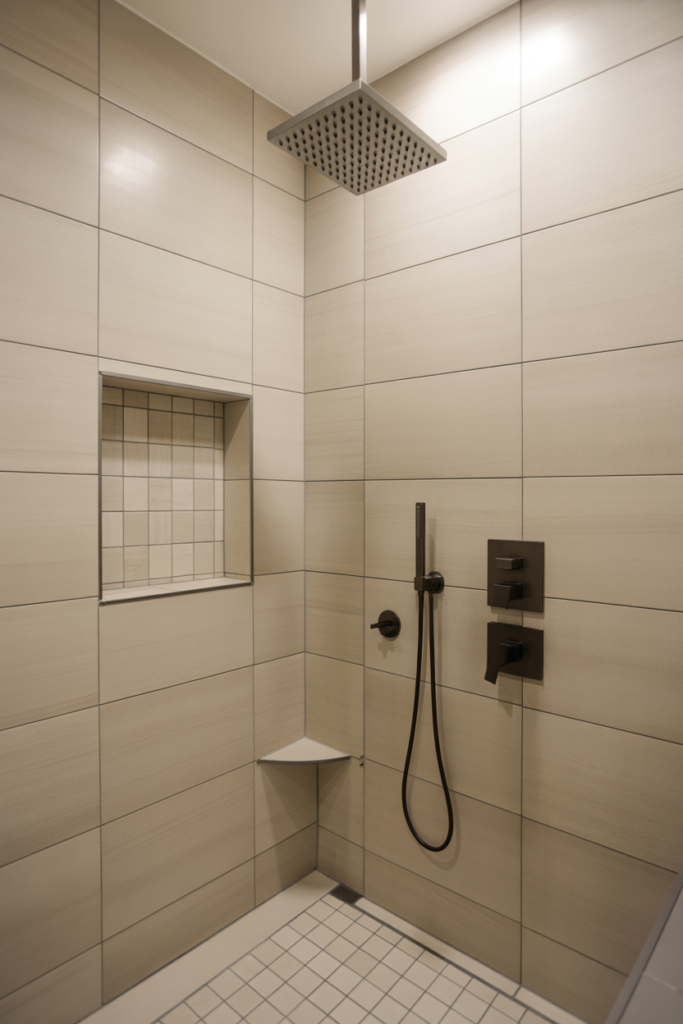
Large format tiles are a defining feature of modern bathroom shower ideas because they do so much with so little. Tiles in sizes like 12 by 24 inches or 24 by 48 inches cover a wall with far fewer grout lines, which means a cleaner look, less scrubbing, and fewer places for moisture to collect. A single large tile can run from the shower floor to the ceiling with only one or two horizontal joints, and the result feels calm, seamless, and expensive.
Installation needs a flat, properly prepared wall, since large tiles show every bump underneath. Your installer should use a leveling clip system to keep the surface even and a large notch trowel so the thinset bonds fully. Porcelain is the safest choice for shower walls because it absorbs almost no water, and it now comes in convincing marble, concrete, and stone looks. Keep the palette simple: one large format tile on the main walls, a smaller mosaic on the shower floor for grip, and a single accent tile inside the niche. That restraint is what makes the shower feel spa-like instead of busy.
4. Built-In Shower Niches
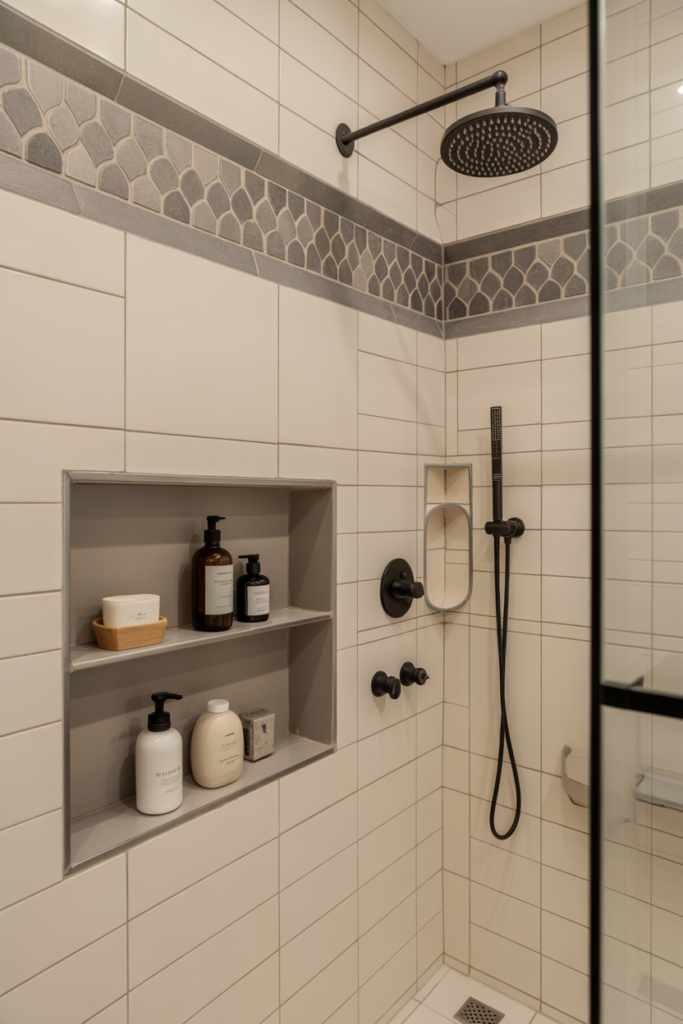
A built-in shower niche is the simplest way to keep bottles, soap, and shampoo off the shower floor without adding a single shelf. Recessed into the wall between the studs, a niche keeps the shower profile clean while putting everything within easy reach. A standard single niche measures about 12 inches wide by 24 inches tall, which holds two rows of bottles comfortably, and placing it 48 to 60 inches above the floor puts it at a natural reach height for most adults. In a shared shower, two niches, one on each wall, prevent the morning bottle shuffle.
The details make the difference. Slope the bottom shelf slightly toward the shower so water drains instead of pooling, and waterproof the niche with the same membrane used on the rest of the shower, with all corners sealed. Finish the back of the niche in a contrasting tile, such as a small mosaic or a bold patterned tile, to turn storage into a design feature. Keep the shelf depth around 3 to 4 inches so bottles sit securely without sticking out. If your wall framing will not allow a recessed niche, a surface mounted shelf in matching tile or a slim teak ledge gives you the same function with a smaller remodel.
5. Curbless Shower Design

A curbless shower removes the step between the bathroom floor and the shower, so one continuous floor runs from the vanity straight into the shower. The effect is a bathroom that looks bigger, feels calmer, and is far easier to enter, which is a real advantage for kids, older family members, and anyone with limited mobility. The same continuous floor also makes cleaning faster, since there is no curb to scrub around and no corner for grime to collect. For small bathrooms, the open sightline is especially powerful, and these small bathroom design ideas show how an open shower layout can make a tight space feel much roomier.
A curbless shower only works with careful drainage. The floor must slope about 1/4 inch per foot toward the drain, and a linear drain along one wall makes that slope simple and reliable. The whole wet area needs full waterproofing, and the bathroom floor outside the shower should use the same tile so the transition stays invisible. A fixed glass panel or a partial wall keeps most of the spray contained while preserving the open feel. Done right, a curbless shower is one of the most practical upgrades in this list, because it improves safety, cleaning, and looks all at once.
6. Natural Stone Shower Design

Natural stone brings a warmth and texture into the shower that no manufactured tile can fully copy. Marble, slate, travertine, and limestone each have their own character: marble adds soft veining and a classic luxury feel, slate brings a dark, earthy texture, and travertine offers warm tones with a gently pitted surface that feels natural underfoot. Because every slab is unique, a stone shower never looks like a copy of another bathroom, and that individuality is a big part of its spa appeal.
Stone does ask for a little more care than porcelain. It is porous, so it must be sealed before use and resealed every 6 to 12 months depending on the stone and how often the shower runs. Choose a honed or matte finish rather than polished for the floor, since polished stone gets slippery when wet. Keep the stone palette to one or two varieties and let simple fixtures do the rest, because the stone itself is the decoration. Pair it with warm wood accents, like a teak bench or a wood look vanity, and soft lighting, and the shower becomes the calmest room in the house.
7. Matte Black Shower Fixtures
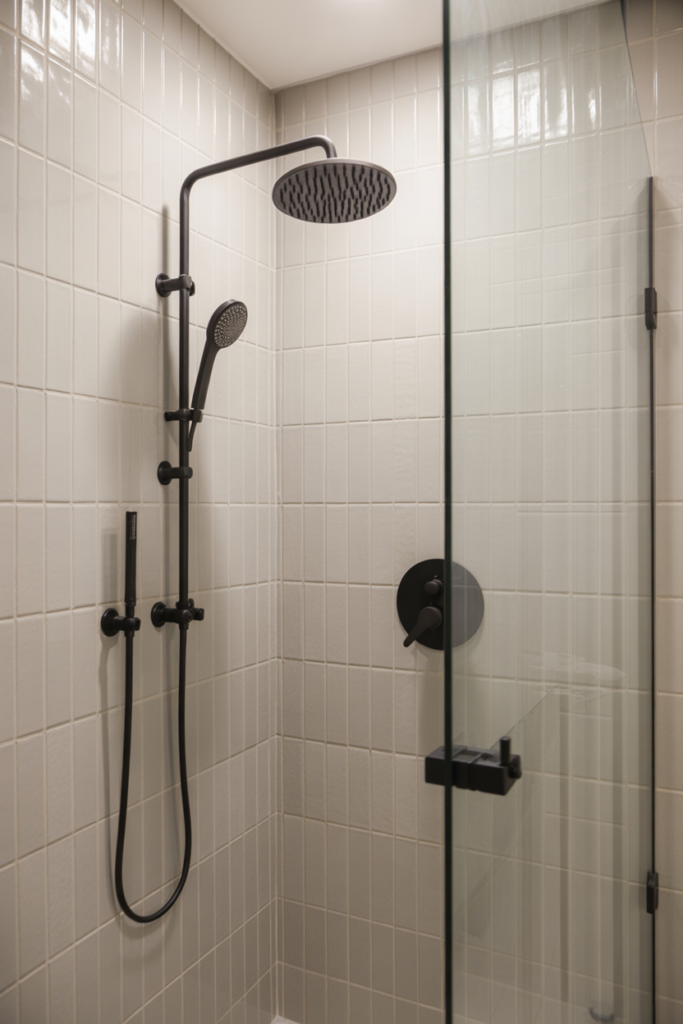
Matte black fixtures have become a defining trend in modern bathroom shower ideas because they add contrast without adding clutter. Against white, light gray, or soft beige tile, a matte black shower head, valve, and hand shower create a clear focal point that feels bold yet understated. The finish works with almost any style, from industrial to Scandinavian, and it pairs beautifully with wood, concrete, and stone. For a full room view of how dark finishes play across a bathroom, these modern bathroom ideas show matte black used alongside other current finishes.
Matte black is also practical. The finish hides fingerprints and water spots far better than polished chrome, so the fixtures look clean between wipe downs. Choose a solid brass core with a quality powder coat finish rather than a thin painted coating, and match the black with one other metal at most, such as brushed nickel on the mirror or lighting, to keep the room balanced. Clean matte black with a soft cloth and mild soap only, since harsh cleaners and abrasive pads can dull the finish. Used with restraint, one set of matte black fixtures can carry the whole design of a shower.
8. Steam Shower Experience

A steam shower turns a regular shower into a home wellness room. A steam generator heats water into vapor, filling a sealed enclosure with warm, humid air that relaxes muscles, opens airways, and makes the shower feel like a visit to a spa. Sessions usually run 15 to 20 minutes, and many people use them as a wind down ritual in the evening. Built-in seating, soft lighting, and a few drops of eucalyptus oil in an aromatherapy reservoir make the experience feel complete.
Planning a steam shower takes more care than a standard shower. The enclosure must be fully sealed, with a ceiling that slopes slightly so condensation runs to the wall instead of dripping, and the walls and ceiling need a vapor barrier behind the tile. Generator size is based on the volume of the shower in cubic feet, so measure carefully and size up slightly if the shower has stone walls or a large glass area, both of which lose heat faster. A thermostatic steam control lets you set the temperature and time, and a transom or small vent helps the room dry out afterward. If a full steam system is more than you need, a rain head plus a bench still gives you much of the same relaxed feeling at a lower cost.
9. Linear Drain Shower Systems
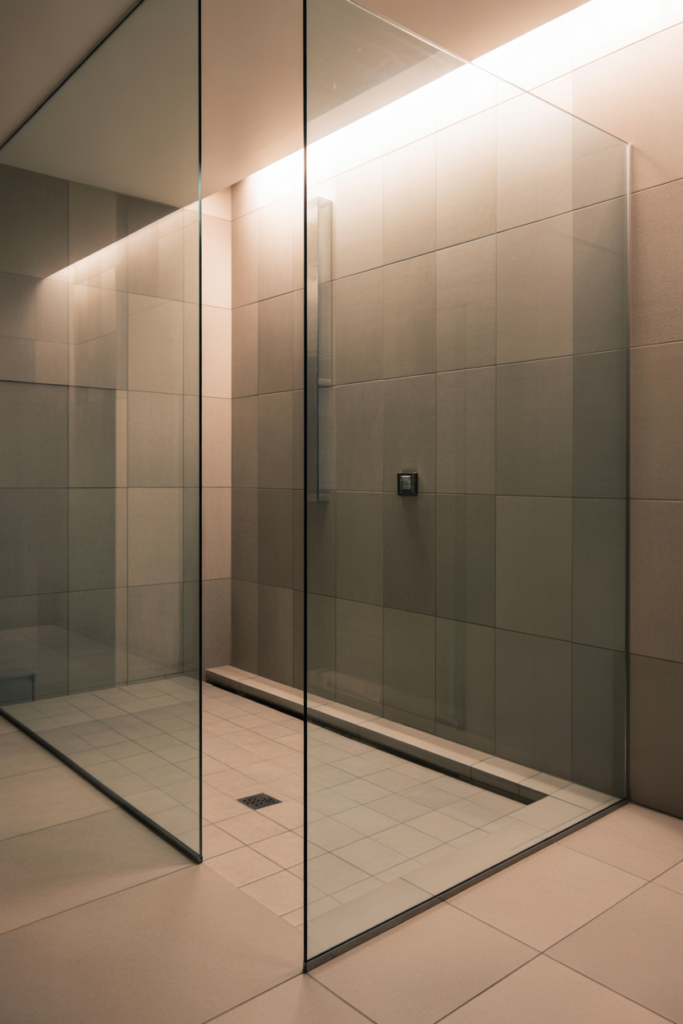
A linear drain is a long, narrow channel set into the shower floor, usually along one wall or at the entrance, and it is one of the quiet details that makes a modern shower work so well. Because water only needs to slope in one direction toward the drain, the floor can be finished in large tiles instead of small mosaics, which keeps the look clean and reduces grout. Linear drains also move water away faster than a center drain, so pooling is rare even in a big walk-in shower.
Choose a drain length that suits the shower: a 24 inch drain fits a standard 36 inch wide shower, while 36 to 48 inch drains suit wider walk-ins. Tile-in drain covers let the drain disappear into the floor, while a brushed stainless or matte black grate can match the fixtures and become a subtle design line. Cleaning is simple, since most linear drains have a removable basket that catches hair before it reaches the pipe. Pair a linear drain with a curbless entry and large format tiles, and you get a shower floor that is safer to walk on, easier to clean, and visually calm.
10. Textured Tile Accent Walls
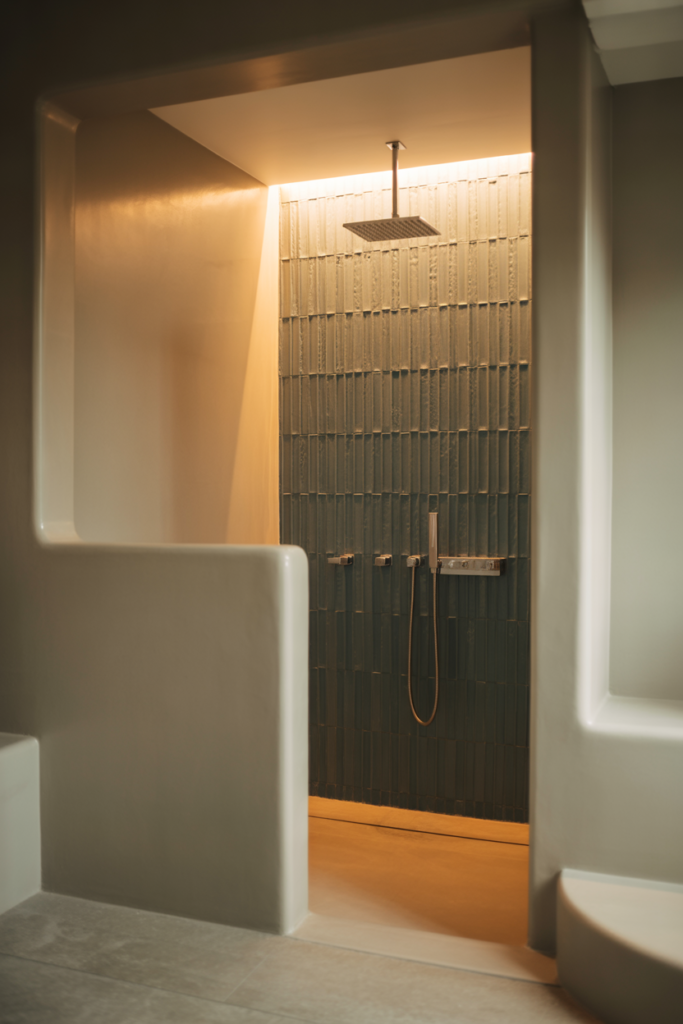
A textured tile accent wall adds depth to a shower without adding color or clutter. Fluted tiles, 3D geometric patterns, handmade zellige, and split face stone all catch light differently across the day, so the wall changes character from morning to evening. The usual placement is the wall behind the shower head, where it becomes a natural focal point, but a single vertical strip of textured tile can work just as well in a narrow shower. Keep the texture on one wall only and leave the other walls smooth, so the accent reads as intentional rather than overwhelming.
Texture also has a practical side. A slightly rough surface gives hands and feet a bit more grip, which is welcome on a shower wall. Choose a grout color close to the tile color so the pattern stays subtle, and seal textured tiles well, since their ridges and grooves can trap soap residue. Handmade-look tiles like zellige vary from piece to piece, so order 10 percent extra and mix tiles from several boxes before installing to spread the variation evenly. With the right lighting, a single textured wall can do more for a shower than a whole shelf of accessories.
11. Integrated Shower Seating

Integrated shower seating makes a shower more comfortable in ways you notice every day. A built-in bench gives you a place to sit and relax under the steam, a stable spot to shave legs, and a shelf for a towel or a book. It also makes the shower safer and more accessible for children, older adults, and anyone recovering from an injury. A bench 15 to 17 inches high and 12 to 15 inches deep fits most adults comfortably, and a corner seat or a floating teak bench works well in showers too small for a full bench.
Build the bench with a slight slope toward the drain so water never pools on top, and tile it to match the shower walls for a seamless look, or use teak for warmth and natural water resistance. Place the bench on the wall opposite the shower head so you can sit without water hitting you directly, and keep a handheld shower within reach so the seat doubles as a comfortable washing spot. In a steam shower, the bench becomes essential, since sitting low in the steam is where the heat feels best. A well placed seat turns a shower from a quick wash into a place you actually want to linger.
12. Smart Digital Shower Controls
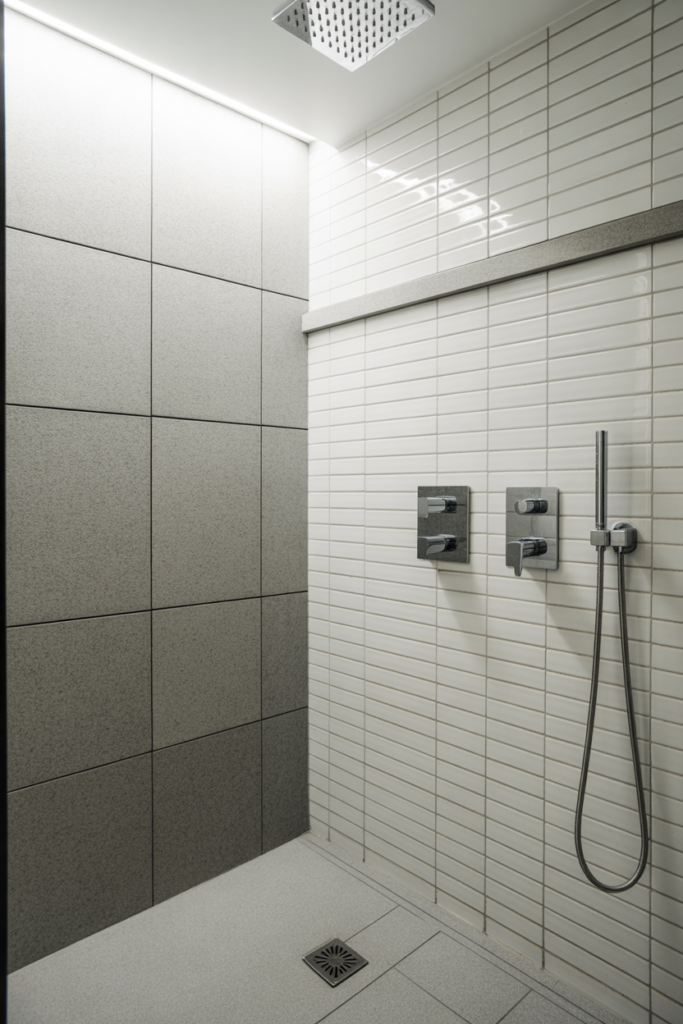
Smart digital shower controls bring precision to the daily shower. Instead of turning a handle and waiting, you tap a preset and the system delivers your exact temperature, flow, and spray pattern every time. Most systems let each family member save a profile, so one tap gives one person a hot, high pressure rinse while another gets a gentle warm rain. A digital display shows the water temperature before you step in, and a pause button lets you stop the flow while you lather without losing your settings.
Behind the panel, a thermostatic mixing valve keeps the temperature steady and prevents sudden hot or cold spikes, which is a real safety benefit for kids and older adults. Some systems connect to a phone app, so you can start the shower from the bedroom, set a water usage limit, or get a reminder when the shower has run for ten minutes. Installation needs a power supply near the valve and a wall that can hold the control panel at a comfortable height, usually around 48 inches. Pair smart controls with a rain head and a handheld shower, and the shower becomes both the most luxurious and the most water efficient fixture in the bathroom.
13. Neutral Spa-Inspired Color Palette
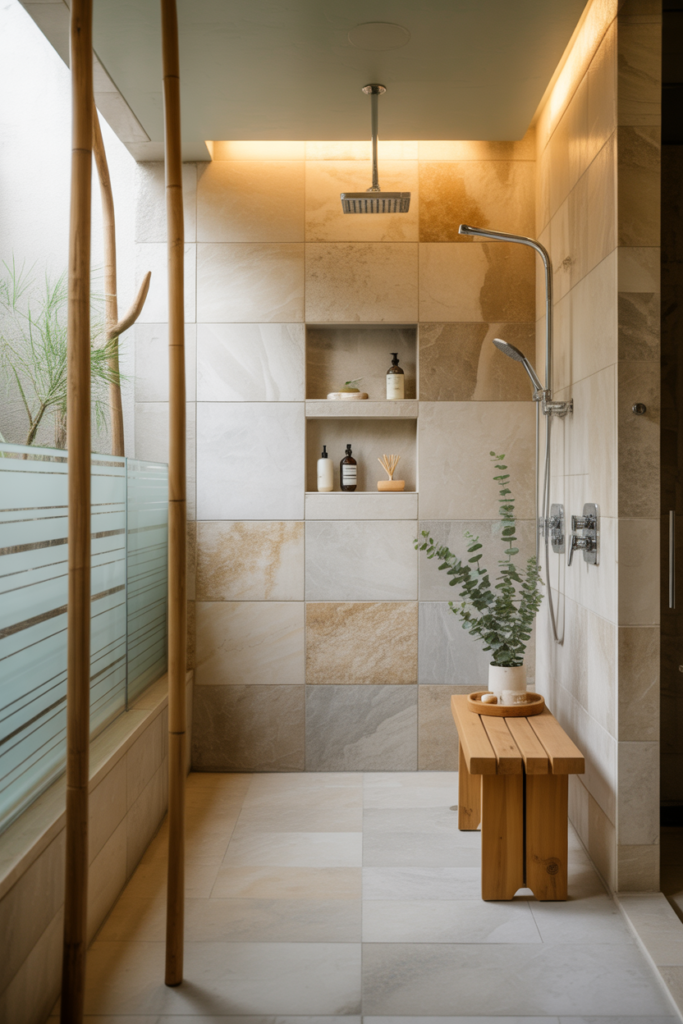
A neutral color palette is the foundation of every spa-like shower, because it calms the eye and lets light do the work. Soft whites, warm grays, greige, and pale earth tones make the shower feel open and clean, and they flatter every skin tone in the mirror. Keep the palette to three tones at most: a light main tile, a slightly deeper tone for the floor or accent wall, and a warm wood or stone note for the bench or niche. That simple structure is what makes boutique hotel bathrooms feel so restful, and it works just as well at home.
Neutrals also give you long term flexibility. When the palette is quiet, you can change towels, plants, or accessories with the seasons without repainting or retiling, and the shower will still look current in ten years. Warm up the neutrals with lighting around 2700K to 3000K, which flatters tile and stone far better than cool white light, and add one living plant that likes humidity, such as a pothos or a fern, just outside the shower glass. The result is a shower that feels peaceful on a busy morning and genuinely restorative at the end of the day.
Final Thoughts
The best bathroom shower ideas are the ones that fit the way you actually live. A walk-in shower with frameless glass suits a family that wants light and easy cleaning, a steam shower suits someone who wants a daily wind down ritual, and a curbless design with a bench suits a home that needs to stay comfortable for every age. Start with the layout and the drainage, choose one or two features that matter most to you, and let the materials and finishes support those choices rather than compete with them.
If you are planning a full remodel, sketch the shower on paper first, mark the drain, the head, the niche, and the seat, and check the measurements against the sizes in this guide before you order anything. Small decisions, like a niche at the right height or a bench that slopes to the drain, are what separate a shower that looks good in photos from one that feels good every single day. If you are still planning the wider project, these bathroom remodel ideas can help you sequence the work and set a realistic budget. A modern, spa-like shower is not just a design upgrade, it is an investment in everyday comfort that pays you back every morning.
Frequently Asked Questions
How much does a walk-in shower cost?
A basic walk-in shower with a fixed glass panel and standard tile usually costs between $3,000 and $6,000, while a larger walk-in with frameless glass, a linear drain, and premium tile can run $8,000 to $15,000 or more. The biggest cost drivers are the glass, the tile, and any plumbing moves. Keeping the drain and shower head in their existing positions is the easiest way to control the budget.
Do rainfall shower heads work with low water pressure?
Rainfall heads need steady pressure, ideally 40 to 60 psi, to spread water evenly. If your home has low pressure, choose a rainfall head designed for low flow, or add a pressure boosting pump. A smaller head, around 8 inches, also performs better than a very wide head when pressure is limited.
Can I add a curbless shower to a small bathroom?
Yes, a curbless shower often works best in a small bathroom because removing the curb opens the sightline and makes the room feel larger. The key is a properly sloped floor and a linear drain, plus full waterproofing across the wet area. In a very small bathroom, a fixed glass panel or a partial wall keeps water contained without closing off the space.
What is the best tile for a shower floor?
Small porcelain mosaic tiles are the safest choice for a shower floor because their many grout lines add grip, and they conform easily to the slope toward the drain. For shower walls, large format porcelain tiles give the cleanest look with the least maintenance. Avoid polished stone on the floor, since it becomes slippery when wet, and always seal natural stone before use.
How do I keep matte black shower fixtures looking new?
Clean matte black fixtures with a soft cloth, warm water, and a drop of mild dish soap, then dry them after use to prevent water spots. Avoid abrasive pads, bleach, and harsh chemical cleaners, which can dull or damage the finish. A quick wipe after each shower takes seconds and keeps the matte surface looking new for years.
More Ideas You Will Love
 12 Tiny Bathroom Ideas with Smart Bathtub Layouts
 11 Bathroom Remodel Trends You’ll Want to Copy
 21 Half Wall Shower Ideas – Elegant, Functional Designs for Every Home
 21 Bathroom Remodel Ideas for 2026 – Modern Farmhouse & Budget-Friendly Looks
 14 Bathroom Floor Ideas: Chic, Durable Styles for Any Budget
 20 Modern Bathroom Ideas – Elegant & Functional Designs for Every Home