
15 Fall Living Room Decoration Ideas: Rustic Farmhouse Vibes


Fall is the season when the living room earns its keep. It is where you curl up with a book on a chilly evening, where friends gather for soup and board games, and where the whole family lands after a long day. A few thoughtful changes in texture, color, and light can turn an ordinary sofa-and-TV setup into a warm farmhouse retreat that feels made for the season.
The secret to rustic farmhouse fall decorating is layering, not buying everything new. Start with a calm neutral base, add warm autumn color in throws and pillows, bring in natural wood and woven texture, and finish with soft, low lighting. Every idea below works on its own, so you can do one this weekend or work through the whole list before the first frost. Each one includes real measurements, materials, and steps so you can copy it exactly instead of guessing.
If you love this cozy seasonal look, you will also enjoy these fall bedroom decoration ideas for carrying the same warm palette into the rest of the house.
1. Layered Cozy Textiles

Textiles do more heavy lifting than any other fall decorating move, because they change how a room feels the moment you sit down. The farmhouse formula is three layers: a base throw, a patterned accent, and a soft texture at floor level. Start with a chunky knit or waffle weave throw in cream or oatmeal, draped over one sofa arm with about 18 inches hanging down the front. Add a second throw in a fall print, such as rust buffalo check or mustard plaid, folded into a neat rectangle across the opposite arm or the back corner of the sofa.
For pillows, use five on a standard three seat sofa: two solid 20 inch squares in linen or cotton canvas, two patterned 18 inch squares in plaid or a subtle leaf print, and one lumbar pillow about 14 by 24 inches in a textured fabric like corduroy or faux fur. Stick to a palette of burnt orange, deep red, mustard yellow, and warm brown against your neutral sofa, and repeat each color at least twice so the mix looks planned rather than random. Underfoot, a jute or wool rug in a natural tone anchors the seating area; leave 8 to 12 inches of rug extending beyond each side of the sofa so the arrangement feels grounded.
Practical tip: keep one washable throw in the mix if you have kids or pets. A cotton waffle throw washes well and still looks farmhouse, while a delicate faux fur throw can stay on the chair nobody uses every day. Swap pillow covers rather than whole pillows each season, and store the off season covers in a labeled basket so next fall takes ten minutes, not a shopping trip.
2. Rustic Wooden Accents

Wood is what makes farmhouse style feel warm instead of just decorated. Reclaimed or distressed wood brings grain, knots, and a slightly weathered finish that new furniture cannot fake. If a full wooden coffee table is not in the budget, start small: a 16 by 24 inch distressed wood tray on the coffee table, a set of wooden candle holders in mixed heights of 6, 8, and 10 inches, or a leaning blanket ladder about 5 feet tall and 18 inches wide tucked beside the sofa.
Look for finishes described as weathered oak, barn wood, or driftwood gray rather than glossy or orange toned stains, which fight the soft fall palette. A wooden dough bowl, about 18 to 24 inches long, filled with mini pumpkins or pinecones makes an instant centerpiece, and a pair of wooden framed prints in a warm walnut tone ties wall art to the rest of the room. If you already own dark wood furniture, lighten the look around it with cream textiles and a lighter rug instead of replacing pieces that still work.
Practical tip: check thrift stores and flea markets first for wooden crates, old window frames, and cutting boards. A quick sanding and a coat of clear matte wax can turn a five dollar crate into a side table riser or a remote holder. Keep wooden accents away from direct fireplace heat and wipe them with a dry cloth, since damp dusting can raise the grain on unfinished wood.
3. Warm Neutral Color Palette

A warm neutral palette is the quiet background that lets fall color shine without turning the room into a costume. Paint or existing wall color should sit in the beige, cream, taupe, or soft greige family, and large furniture should stay in a similar range: a natural linen sofa, a light oak or cream media console, and a jute rug. Against that calm base, even small autumn accents read clearly.
Build the palette in a simple ratio: about 60 percent neutrals, 30 percent mid tones such as camel, olive, or warm brown, and 10 percent true fall accent color such as rust, burgundy, or mustard. That 10 percent is your pillows, one throw, the candles, and a few pumpkins, not the sofa or the curtains. If your walls are already cool white or gray, warm the room with camel and caramel tones in textiles and wood rather than repainting; a warm throw and a wooden tray can shift a whole corner.
Practical tip: test paint or fabric swatches in evening light, not just daylight. A beige that looks perfect at noon can turn pink or gray under warm lamps. Hold the swatch next to your sofa and rug together before committing, and photograph the combination on your phone, since a photo often reveals a clash your eye misses in person. For more seasonal color ideas, these autumn home decor ideas show the same warm palette used across different rooms.
4. Fall-Themed Centerpieces

A good fall centerpiece follows one rule: one base, three heights, and a mix of textures. Start with a base that fits your table, such as a rectangular wooden tray about 20 inches long for a coffee table or a round woven charger about 15 inches wide for a side table. On it, place a tall element like a 12 inch candlestick or a bundle of dried stems in a small vase, a medium element like a cluster of three mini pumpkins, and a low element like a scatter of pinecones or acorns.
For a coffee table arrangement that still leaves room for mugs and books, keep the total footprint under one third of the table surface and keep the tallest piece below eye level when you are seated, about 14 inches high at most. Use real mini pumpkins in cream, orange, and sage green for color, and mix them with faux ones only if the real ones will sit near a heat vent. Add a battery operated pillar candle, about 3 inches wide and 6 inches tall, for a safe glow you can leave on during a dinner party.
Practical tip: build the centerpiece on a tray so you can lift the whole arrangement off the table in one move when you need the space. Refresh it weekly by swapping a few stems or turning the pumpkins, and replace real pumpkins at the first soft spot so one bad pumpkin does not stain the tray. A small square of felt under the tray protects a wood table from scratches.
5. Cozy Fireplace Styling

The fireplace mantel is the natural focal point of a fall living room, and the classic farmhouse mantel uses symmetry with a little asymmetry for life. Start with one large anchor in the center, such as a framed print, a round mirror about 24 inches wide, or a wooden sign about 30 inches wide. Then build outward in layers: a garland of dried leaves or eucalyptus draped along the mantel edge, two candle holders of different heights on one side, and a small stack of books or a mini pumpkin cluster on the other.
On the hearth, place a pair of lanterns in different sizes, for example one 12 inch and one 8 inch tall, on one side, and a basket of firewood or a bundle of birch logs on the other. If your fireplace is not used for real fires, fill the firebox with a cluster of pillar candles in glass hurricanes for a glow without smoke. Keep all candles and dried garlands at least 12 inches from any open flame, and never hang fabric garlands over a working firebox opening.
Practical tip: change only the mantel accessories for fall and leave your large art or mirror in place all year. That way the seasonal switch takes twenty minutes: garland on, candles out, pumpkins on the hearth, done. Store the fall mantel pieces together in one labeled bin so next October you are not hunting through three boxes.
6. Farmhouse Lantern Lighting

Lanterns are the farmhouse answer to harsh overhead lights. A metal lantern with a distressed black or galvanized finish, or a wooden lantern with glass panels, throws a warm pool of light that instantly makes a room feel like evening, even at 4 pm. Use real candles only where you can watch them, and battery operated pillar candles with a timer everywhere else; a timer set for 6 pm to 10 pm means the room lights itself every night.
Place lanterns in a triangle around the room for balanced light: one on the mantel or a console, one on a side table or the floor beside an armchair, and one on the coffee table or a hearth. Sizes matter: a floor lantern should be 14 to 18 inches tall, a table lantern 8 to 12 inches, and a mantel lantern 10 to 14 inches. Pair a lantern with a small stack of books or a mini pumpkin so it reads as decor, not as a stray candle holder.
Practical tip: choose warm white LED candles, rated around 2200K to 2700K, rather than bright white ones, which look cold and modern against wood and wool. Keep a spare set of batteries in the lantern basket, and dust the glass panels monthly, since dusty glass dims the glow more than a low battery does.
7. Seasonal Throw Pillows

Throw pillows are the fastest seasonal swap in the whole house, because covers take up almost no storage space and change the room in minutes. For fall, choose covers in fabrics with visible texture: linen, cotton canvas, corduroy, velvet, or a chunky knit. Prints that work year after year are buffalo check, gingham, simple plaid, and small leaf or pumpkin motifs in muted rather than neon colors.
The easy formula for a sofa is the same as for textiles overall: two solids, two patterns, one texture. For a loveseat, use three pillows: one solid 20 inch, one patterned 18 inch, and one lumbar. Insert size matters more than cover size, so buy inserts 2 inches larger than the cover, for example a 22 inch insert in a 20 inch cover, for a full, plump look instead of a flat one. Wash covers before storing them, and store them flat in a zip bag with a dryer sheet so they smell fresh next fall.
Practical tip: if your sofa cushions are already patterned, go solid for the fall pillows and let texture do the work. Velvet in rust or olive against a patterned sofa looks intentional, while another pattern on top of a pattern usually looks busy. One seasonal pillow on each armchair is enough; the chairs do not need the full sofa treatment.
8. Natural Elements Décor

Natural elements are what keep farmhouse fall decor from looking like a store display. Dried branches, eucalyptus stems, wheat bundles, pampas grass, and pinecones bring real texture and a faint outdoor scent that faux pieces cannot copy. A bundle of 5 to 7 dried stems in a ceramic vase about 10 inches tall works on a console, while a taller floor vase, 20 to 24 inches, with branches cut to about 36 inches total height suits an empty corner.
Mix one type of stem per vase rather than stuffing five kinds together, and let the vase do part of the work: a cream ceramic vase for a soft look, a clear glass cylinder for a modern farmhouse feel, or a galvanized metal pitcher for a rustic touch. Pinecones work best in groups of three or five in a shallow bowl, and wheat stems look best tied with a simple twine bow rather than a shiny ribbon. If allergies are a concern, choose dried eucalyptus and pinecones, which shed far less than fresh cut branches.
Practical tip: gather branches after they have fully dried, and shake them outdoors before bringing them in. A light spray of clear matte sealant on dried stems reduces shedding on your furniture. Replace stems once a year, since dried material fades and becomes brittle, and keep them away from open flames and heat vents.
9. Vintage Farmhouse Finds

Vintage pieces give a farmhouse living room its story. A single old item, such as a weathered wooden crate, a distressed picture frame, an antique clock, or an enamel pitcher, adds character that a whole set of new decor cannot. The trick is one or two vintage stars per room, not a flea market on every surface. Choose pieces with honest wear: chipped paint on a crate, a slightly cloudy mirror, or a clock that still ticks but shows its age.
Good places to use vintage finds are the spots new decor looks too perfect: an old crate turned on its side as a side table beside an armchair, a vintage window frame hung as wall art above a console, or an antique scale or milk can in a corner by the fireplace. Pair vintage wood with clean modern textiles so the room reads as collected over time, not staged as a period set. If a piece is damaged, use it for display only, and keep fragile antiques out of high traffic paths where they can be knocked over.
Practical tip: set a price limit before you go thrifting, such as 20 dollars per piece, and only buy items you already have a spot for. Measure your spot before you shop: a crate that is 2 inches too wide for the space beside your chair will sit in the garage all season. Clean vintage wood with a dry cloth first, and use a gentle wood soap only if it is genuinely grimy.
10. Plaid Patterns Everywhere

Plaid is the pattern most people picture when they think of fall, and farmhouse style uses it generously but carefully. The classic combinations are red and black buffalo check, navy and cream plaid, and neutral tan and cream windowpane. Use plaid in two or three places in the room, not ten: a throw on the sofa, two pillow covers, and maybe a table runner or a curtain panel, so the pattern feels repeated on purpose rather than scattered.
Scale matters. Large buffalo check, with squares about 2 to 3 inches, reads bold and works best on a throw or a large pillow. Smaller gingham or windowpane, with squares under 1 inch, works better on a table runner or a lumbar pillow where a big check would look loud. Keep the rest of the room solid when plaid is present, and match the plaid colors to your accent palette, such as pulling the rust from a red plaid into a solid rust pillow elsewhere in the room.
Practical tip: if you love plaid but worry it will look too cabin themed, choose a neutral plaid in cream, tan, and soft gray for the big pieces and save the red buffalo check for one throw. That single red accent gives the fall feeling without turning the room into a lodge. Wash plaid throws separately the first time, since red dyes can bleed.
11. Warm Ambient Lighting

Warm ambient lighting is the difference between a room that looks fall decorated and a room that feels fall cozy. The goal is three layers of light at different heights, all in a warm color temperature of 2200K to 2700K, and none of them the overhead ceiling light. Start with table lamps on side tables at about sofa arm height, add floor level light from lanterns or a lit fireplace, and finish with a low glow from string lights or candles on a shelf or mantel.
Put lamps on dimmers or use smart bulbs set to 40 to 60 percent brightness in the evening, so the room glows rather than glares. A string of 50 warm white fairy lights along a mantel, a bookshelf, or inside a glass cloche adds sparkle without effort, and a pair of battery operated candles on a timer keeps the glow going even when you forget. Avoid cool white bulbs entirely in fall; even one cool bulb in a table lamp can make the whole room feel clinical against warm wood and wool.
Practical tip: walk through the room at night with only the fall lighting on and look for dark corners and glare spots. Move one lamp or lantern to any dark corner, and shade any bare bulb with a linen or burlap shade to soften it. Linen shades in natural tones diffuse light beautifully and fit the farmhouse look far better than glossy or metal shades.
12. Autumn Wall Art

Wall art is the easiest way to make the whole room read as fall without changing furniture. Swap the prints inside your existing frames rather than buying new frames: a set of three botanical leaf prints, a landscape with autumn trees, or a simple typographic print with a fall phrase in a farmhouse font. Keep the frame style consistent, such as all distressed wood or all black metal, so the gallery looks curated even when the prints change.
For a gallery wall above a sofa, hang the center of the arrangement at eye level, about 57 inches from the floor to the center of the group, and keep 2 to 3 inches between frames. A single large piece above a console should be about two thirds the width of the furniture below it, so a 36 inch wide print suits a 54 inch console. If you prefer a lighter touch, lean one large framed print on the mantel or a console instead of hanging it, and layer a smaller print in front of it.
Practical tip: print seasonal art at home on matte paper or order prints in standard sizes such as 8 by 10 or 11 by 14 inches, so they fit the frames you already own. Store the off season prints flat in a large envelope between sheets of tissue paper, and label the envelope by season so the swap takes five minutes. For porch inspiration to match your indoor look, see these fall porch decor ideas.
13. Woven Baskets Storage

Woven baskets solve the biggest fall decorating problem: where do all the throws, magazines, and firewood actually go? A large seagrass basket about 18 inches wide and 14 inches tall beside the sofa holds two folded throws and a couple of magazines. A smaller basket, about 12 inches wide, on a side table corrals remote controls and coasters. A tall, sturdy basket near the fireplace holds rolled firewood or kindling and looks intentional rather than messy.
Choose natural materials that match the farmhouse palette: seagrass, rattan, wicker, or cotton rope in natural, cream, or light brown tones. Avoid shiny or brightly dyed baskets, which clash with the muted fall look. Line a basket with a cloth liner if it will hold firewood, to catch bark and dust, and keep basket handles intact so you can carry the whole basket to the laundry room or the porch when you need to tidy quickly.
Practical tip: give every basket one job and label it in your head: throws basket, firewood basket, magazines basket. A basket with no job becomes a junk basket within a week. Once a month, empty each basket, shake it out outdoors, and put back only what belongs there. That five minute reset keeps the cozy look from sliding into clutter.
14. Pumpkin Accents

Pumpkins are the signature fall accent, and the farmhouse way to use them is muted and grouped, not scattered one by one around the room. Choose pumpkins in cream, white, sage green, pale orange, and soft gray rather than only bright orange, and mix real and faux so the display lasts all season. Group pumpkins in odd numbers, three or five, in different sizes: one large pumpkin about 10 to 12 inches wide, one medium at 7 to 8 inches, and one mini at 3 to 4 inches.
Place groups where they anchor a surface: a trio on the coffee table tray, a pair flanking a mantel, one large pumpkin on a stack of books on a side table, and a small cluster on a windowsill. Heirloom varieties such as white Lumina, green Jarrahdale, and pale Cinderella pumpkins look more farmhouse than standard carving pumpkins, and their muted colors sit well against cream and wood. Keep real pumpkins off damp surfaces and away from heat vents, and check them weekly for soft spots.
Practical tip: buy faux pumpkins in the same muted colors as your real ones, so you can swap a real pumpkin out when it softens without the display looking different. A light coat of matte clear sealant on a real pumpkin can add a week or two of life. After the season, compost real pumpkins and store faux ones in a labeled bin with tissue paper between them to prevent paint transfer.
15. Cozy Reading Nook

A reading nook turns an unused corner into the most loved seat in the house. All you need is a comfortable chair, good light, a small surface, and a place for books. Choose an armchair with a seat height of about 17 to 19 inches and a seat depth of 20 to 22 inches, so you can sit with your feet up or flat on the floor. Add a small side table about 20 inches high and 16 inches wide, close enough to reach a mug without standing up.
Layer the nook like the rest of the room: a soft throw in cream or rust over the chair arm, a lumbar pillow for lower back support, and a basket beside the chair holding three or four books and a magazine. Light is the make or break detail, so place a floor lamp or a table lamp with a warm bulb just behind and to one side of the chair, about 40 inches from the floor to the bulb, so light falls over your shoulder onto the page without glare. A small rug, about 3 by 5 feet, under the chair and table defines the nook as its own little room.
Practical tip: put the nook near a window if you can, for daytime reading light, but keep the chair at least 12 inches from the glass so cold drafts do not undo the coziness. If space is tight, a nook can be just one end of the sofa with a floor lamp and a basket, no extra chair required. The point is a dedicated spot that invites you to sit down, not a perfect magazine corner. For a matching kitchen refresh, these fall kitchen decoration ideas use the same warm, cozy touches.
Final Words
Creating a cozy fall living room is really about small, thoughtful layers rather than one big makeover. Start with the pieces you already own, add warm textiles and wood, bring in a few natural elements and muted pumpkins, and finish with soft lighting that makes the whole room glow. Each idea in this list works on its own, so pick the two or three that suit your space and budget, live with them for a week, and add more only if the room still feels like it needs something.
The beauty of farmhouse fall decor is that it never has to be perfect. A slightly wrinkled throw, a basket that is not perfectly arranged, and a pumpkin that leans a little to one side all add to the lived in charm. Keep the palette warm, the textures soft, and the light low, and your living room will be the place everyone gathers all season long.
Frequently Asked Questions
How can I decorate my living room for fall without spending a lot?
Start with what you already own. Swap pillow covers instead of buying new pillows, drape a throw you already have over the sofa arm, gather pinecones and branches from your yard for free natural decor, and move a lamp from another room to create warm layered light. A set of pillow covers, a few mini pumpkins, and a bundle of dried stems can transform a room for under 30 dollars.
What colors work best for a farmhouse fall living room?
Build on a neutral base of cream, beige, taupe, and soft brown, then add fall accents in rust, burnt orange, mustard, olive green, and burgundy. Use the 60-30-10 rule: 60 percent neutrals, 30 percent mid tones like camel and warm brown, and 10 percent true fall color in pillows, throws, and small accents. Muted pumpkins in cream, sage, and pale orange fit this palette better than bright orange alone.
How do I keep fall decor from looking cluttered?
Give every decorative group a base, such as a tray or a basket, and limit each surface to one group. Keep centerpieces below seated eye level and under one third of the table surface, use odd numbered groupings of three or five, and give every basket one job. Once a month, empty baskets and trays, remove anything that migrated there, and put back only what belongs.
Are real or faux pumpkins better for indoor fall decor?
Both work, and mixing them is often best. Real pumpkins look and feel authentic but last three to six weeks indoors and need weekly checks for soft spots. Faux pumpkins in muted colors last for years and are ideal near heat vents or in homes with curious pets. Buy faux pumpkins in the same muted tones as your real ones so you can swap one out without the display looking different.
How can I make my living room feel cozy if I do not have a fireplace?
Recreate the fireplace glow with layered warm light: table lamps with warm bulbs, lanterns with battery candles on timers, and a string of warm fairy lights on a shelf or mantel. A basket of birch logs beside a console, a chunky knit throw on the sofa, and a lit candle cluster on the coffee table give the same sense of warmth and gathering, no chimney required.
More Ideas You Will Love
 22 Blue Living Room Ideas – Trendy & Inspiring Decor for Every Home
 14 Rectangle Living Room Layout Ideas for a Stylish Makeover
 21 Minimalist Living Room Ideas for a Modern & Serene Look
 15 Earthy Living Room Ideas for a Cozy, Nature-Loved Home Now
 12 Modern Living Room Interior Design Ideas for a Fresh Home Look
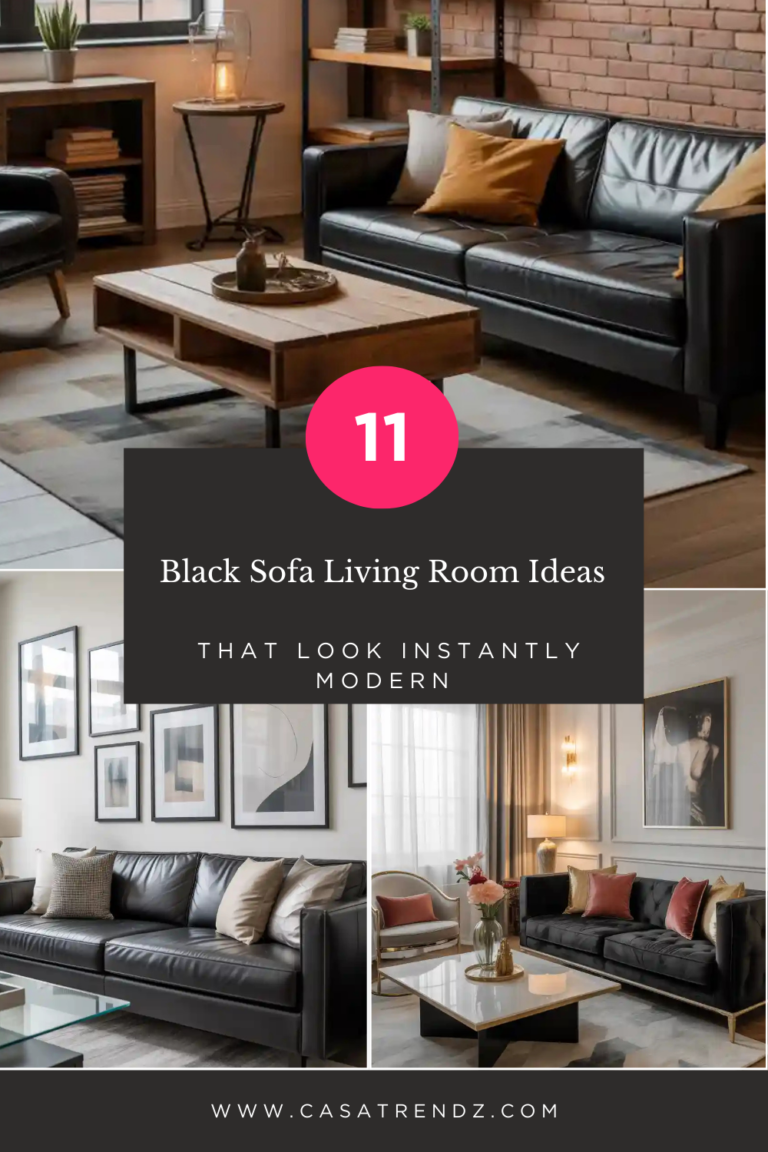 11 Black Sofa Living Room Ideas That Look Instantly Modern