
12 Tropical Home Garden Ideas for a Relaxing Aesthetic

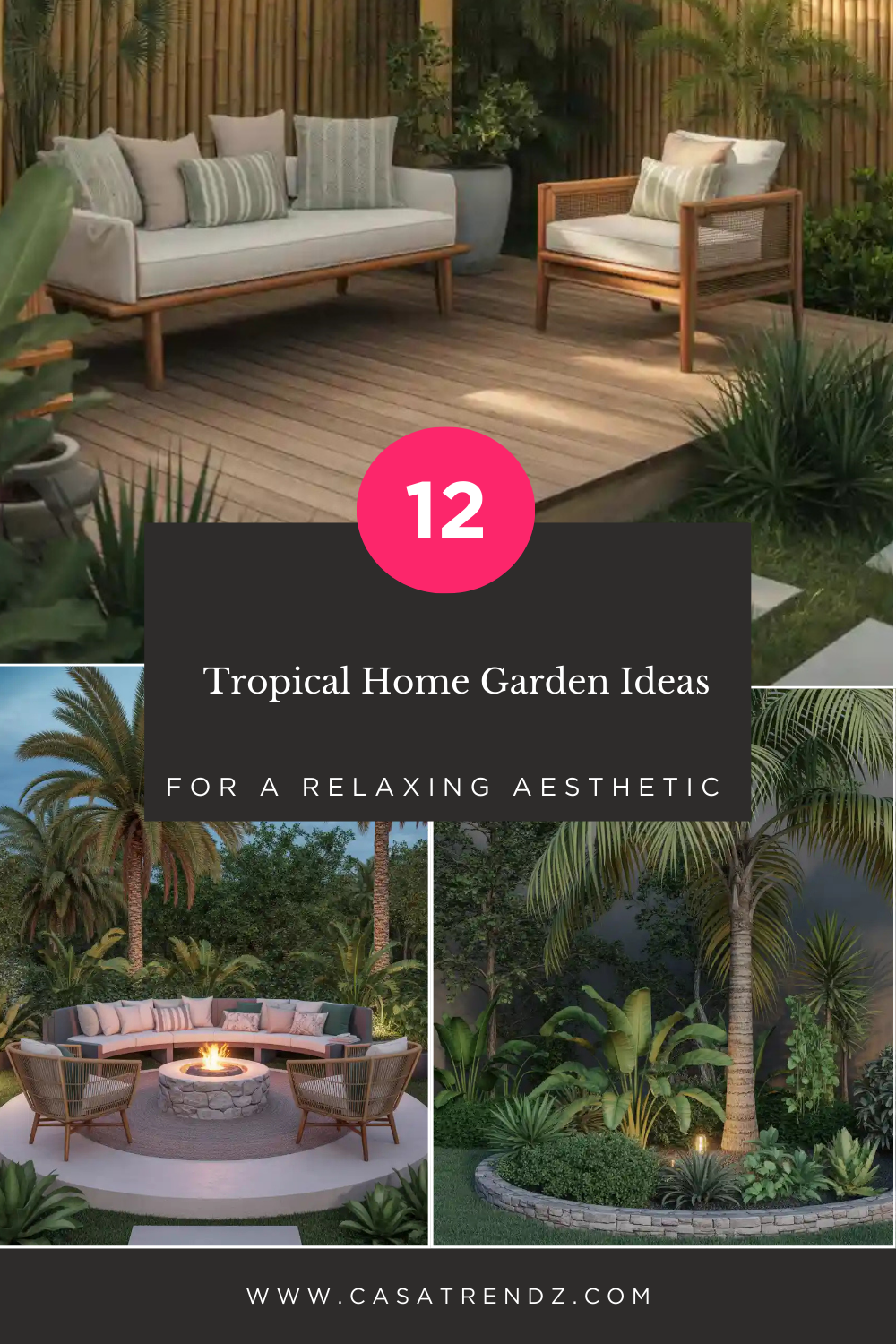
A tropical garden turns an ordinary backyard into a place that feels like a holiday every single day. You do not need a large yard or a big budget to get there. The look comes from layering lush plants, adding natural materials like bamboo and wood, and finishing with small comforts such as soft lighting and a cozy seat. These 12 tropical home garden ideas show you how to build that relaxing aesthetic step by step, whether you have a wide lawn or a small patio.
The secret is balance. Tropical gardens look wild, but the best ones are planned. Tall palms give height, mid-sized shrubs fill the middle, and low ground cover softens the edges. Then a few focal points, a water feature, a hammock, a fire pit, give your eyes somewhere to rest. Keep the palette mostly green, add one or two flower colors, and let texture do the talking.
Before you plant anything, spend ten minutes watching your space. Note where the sun falls in the morning and the afternoon, where water collects after rain, and which corner feels most private. Those three facts decide which plants will thrive and where your seating should go. Work through the ideas below in order, and you can build your tropical retreat over a few weekends without hiring anyone.
1. Layered Lush Greenery for Depth
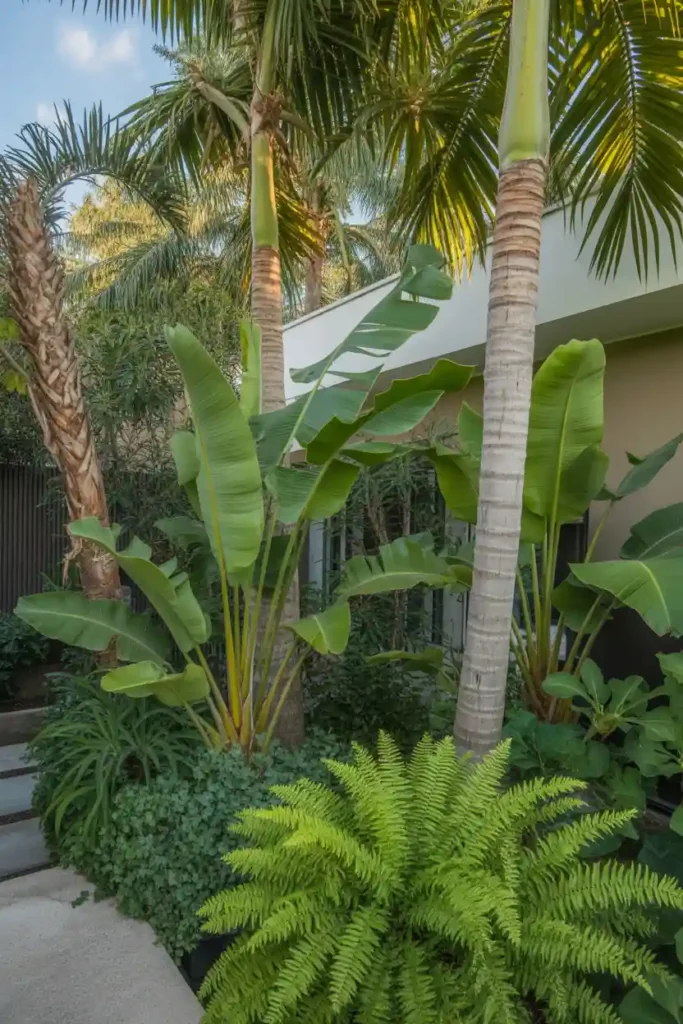
Layering is the single most important technique in a tropical garden. Instead of planting everything at the same height, build three levels: tall plants at the back, medium shrubs in the middle, and low ground cover at the front. Start with palms or banana plants 8 to 12 feet tall along the fence or wall. In front of them, place medium plants 3 to 5 feet tall such as elephant ears, philodendrons, or bird of paradise. Finish the front edge with ferns, hostas, or ornamental grasses under 2 feet tall. This staircase of green mimics a rainforest edge and makes even a small yard feel deep and full.
Mix leaf shapes on purpose. Pair wide glossy leaves, like monstera and elephant ear, with feathery fronds from ferns and palms. The contrast keeps the planting from looking like one solid green wall. Plant in odd-numbered groups of three or five, and leave 18 to 24 inches between large plants so they have room to grow without crowding. Water new plantings deeply twice a week for the first month, then settle into a regular schedule based on your climate. For more ways to shape a small space with layers, see these small garden ideas that use the same depth tricks in compact yards.
- Back row: palms, banana plants, or bamboo, 8 to 12 feet tall for height and privacy.
- Middle row: elephant ears, philodendrons, and bird of paradise, 3 to 5 feet tall for fullness.
- Front row: ferns, hostas, and ornamental grasses under 2 feet tall to soften edges.
2. Bamboo Accents and Natural Fencing
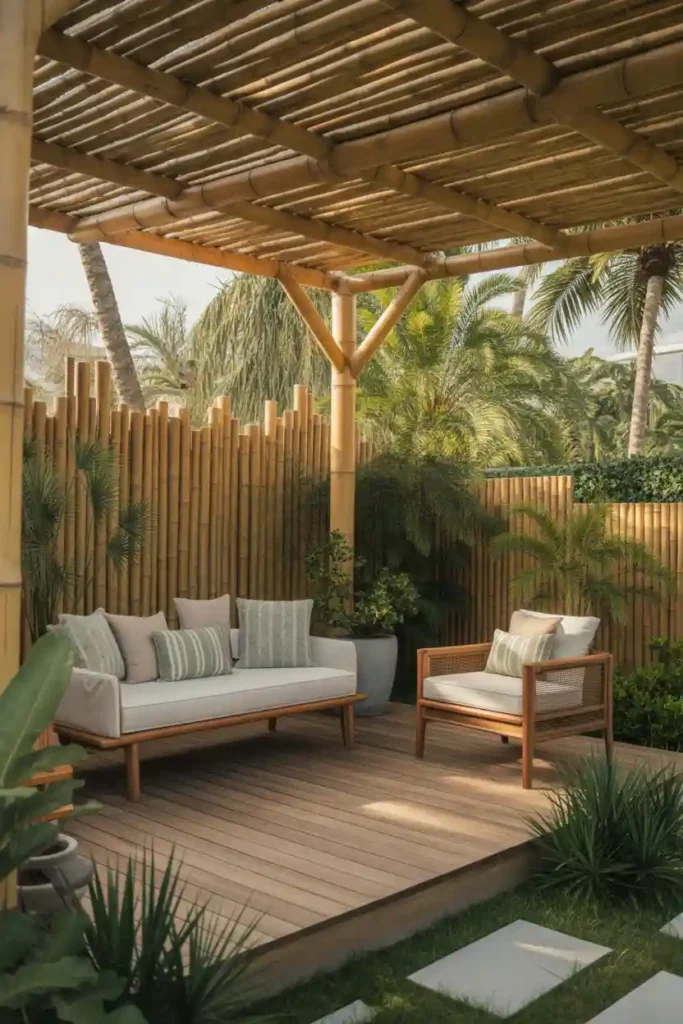
Bamboo is the fastest way to give a garden a tropical character. A bamboo screen fence 6 feet tall creates privacy without the heavy look of a solid wall, and it lets light and breeze pass through. You can buy ready-made bamboo fence panels 6 feet wide for about 40 to 70 dollars each, or roll fencing that you attach to existing posts with zip ties or wire. Soak bamboo poles in water for a day before cutting so they split less, and seal cut ends with clear outdoor varnish to stop moisture from getting in.
Use bamboo in more than one place so it feels intentional. Add a bamboo trellis 5 to 6 feet tall for climbing plants like jasmine or passionflower, lay bamboo edging along a path, or hang a bamboo wind chime near your seating area. The warm golden tone of bamboo looks best against deep green foliage and pale stone. Pair it with a wooden deck or natural stone pavers, and keep metal and plastic accents to a minimum so the natural materials carry the look.
- Fencing: 6 foot bamboo panels for privacy that still lets in light and air.
- Trellis: a 5 to 6 foot bamboo frame gives climbing plants a place to grow.
- Small touches: bamboo lantern holders, wind chimes, or path edging tie the theme together.
3. Statement Palm Tree Corner
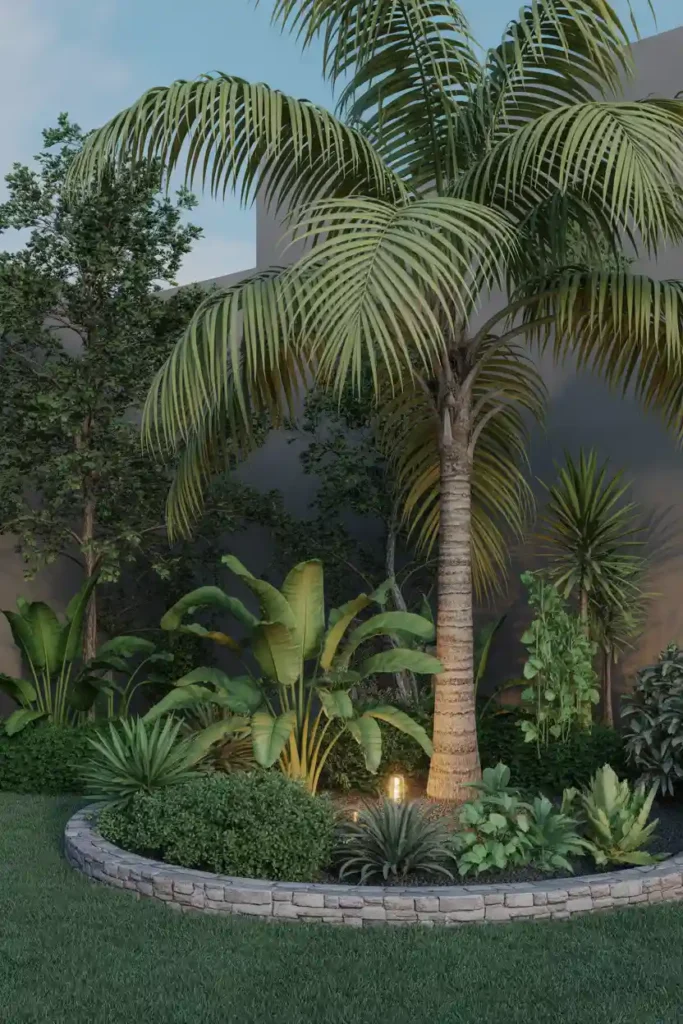
One dramatic palm can anchor a whole tropical garden. Choose a corner that gets at least 6 hours of sun and plant a palm that suits your climate: a windmill palm or a pygmy date palm for cooler areas, a royal palm or a coconut palm where winters stay warm. Dig a hole twice as wide as the root ball but no deeper, set the palm so the top of the root ball sits level with the soil, and water it deeply right after planting. A young palm 4 to 6 feet tall costs 50 to 120 dollars and grows noticeably in its first two seasons.
Design the space around the palm instead of treating it as an afterthought. Ring the base with a circle of river stones 3 to 4 feet across, then tuck low leafy plants like ferns or caladiums inside the ring. Add a low-voltage uplight at the base, aimed up the trunk, so the fronds glow after dark. Keep the ground under the palm clear of lawn grass, which competes for water, and mulch with 2 to 3 inches of bark to hold moisture.
- Pick the right palm: match the species to your winter temperatures so it survives year after year.
- Give it a stage: a stone ring 3 to 4 feet wide and low plants at the base make it look deliberate.
- Light it from below: one small uplight turns the palm into a nighttime focal point.
4. Tropical Water Feature Retreat
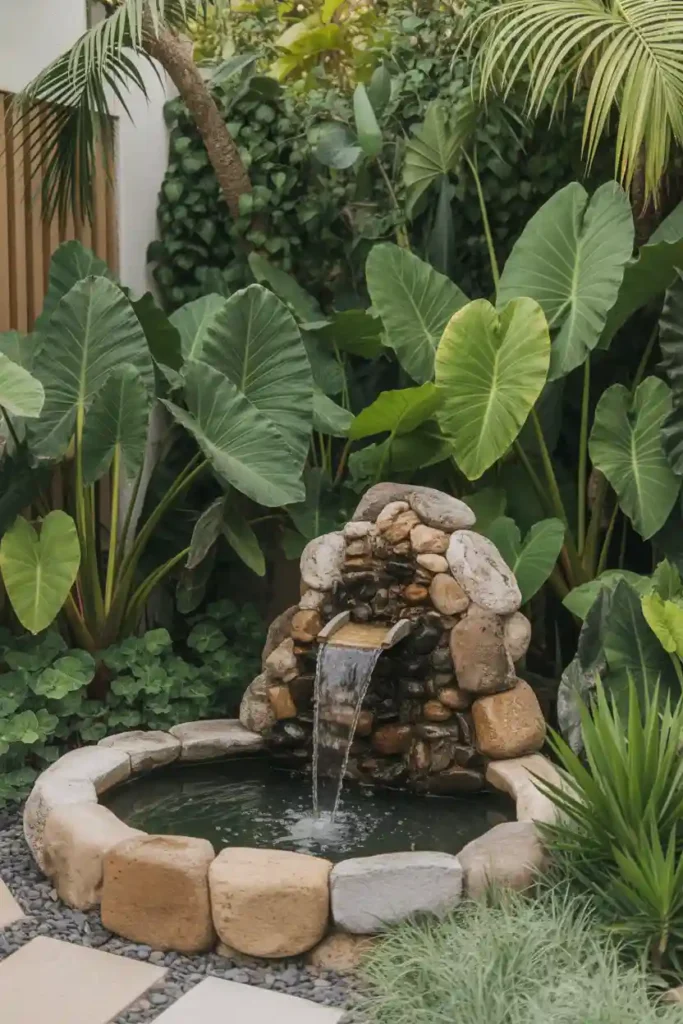
The sound of moving water is what turns a garden into a retreat. A small cascading fountain 2 to 3 feet tall is enough for most yards, and a self-contained model costs 80 to 200 dollars, needs no plumbing, and runs on a standard outdoor outlet. Set it in a corner where you can hear it from your seating area, level the base with a few inches of sand or pavers, and fill it with clean water. Surround it with elephant ears, ferns, and mossy stones so it looks like it grew there naturally.
If you have more room, a small pond 4 by 6 feet and 18 inches deep adds real drama. Line it with a flexible pond liner, add a small pump to keep the water moving, and edge it with flat stones. A pump that moves 200 to 400 gallons per hour suits a pond this size and keeps mosquitoes away, since they only breed in still water. Add two or three water lilies for shade on the surface, and clean the pump filter once a month so the flow stays strong.
- Start small: a self-contained fountain is the easiest water feature and needs no digging.
- Keep water moving: a small pump stops mosquitoes and keeps the water clear.
- Plant around it: elephant ears and ferns hide the edges and blend the feature into the garden.
5. Hammock Lounge Paradise
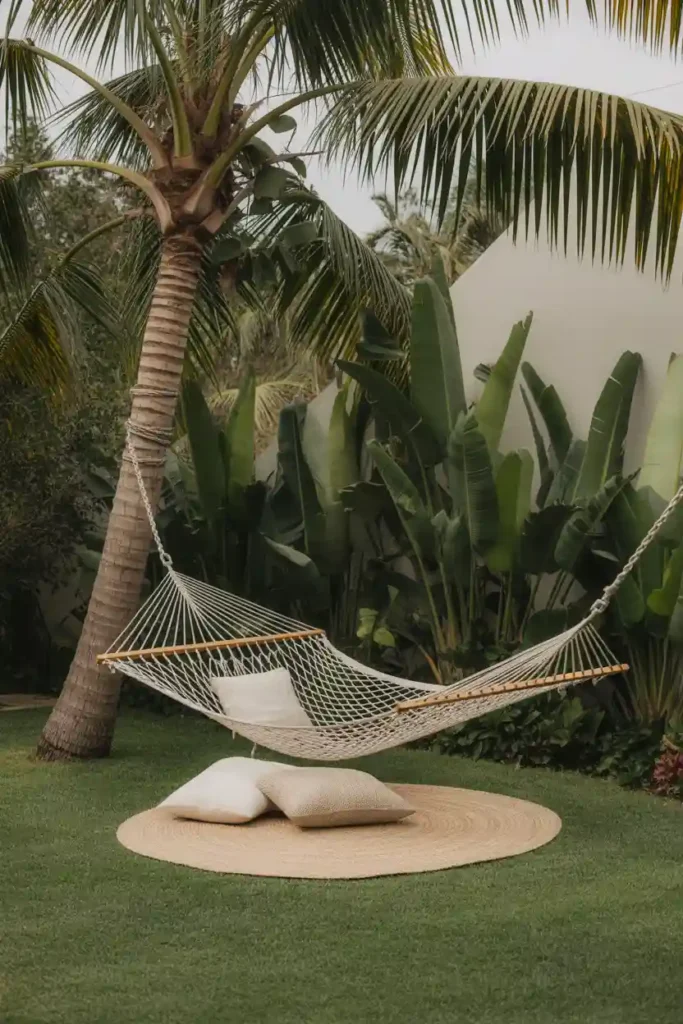
A hammock is the cheapest shortcut to vacation vibes. Hang one between two sturdy trees at least 12 feet apart, or use a freestanding hammock stand if your trees are too young or too far apart. Hang the straps 4 to 5 feet off the ground so the hammock sags to about 18 inches above the ground when you sit in it, which is the comfortable height for getting in and out. Choose a double hammock 5 to 6 feet wide in a neutral or earthy tone so it blends with the greenery instead of competing with it.
Build a small lounge zone around the hammock. Lay an outdoor rug 5 by 7 feet underneath, add two weatherproof cushions and a light throw, and set a small side table or a tree stump nearby for a book and a drink. Position the hammock where it gets dappled shade in the afternoon, under palm fronds or a pergola, so it stays cool. Wooden posts, lantern lighting, and a few potted plants finish the corner. For a full backyard escape built around a relaxing seat, explore these backyard oasis ideas that pair hammocks with shade and water features.
- Hang it right: straps 4 to 5 feet high, with the hammock sagging to about 18 inches off the ground.
- Shade matters: dappled afternoon shade keeps the spot cool and usable all day.
- Add comfort: an outdoor rug, cushions, and a small side table turn a hammock into a lounge.
6. Tropical Flower Pops of Color
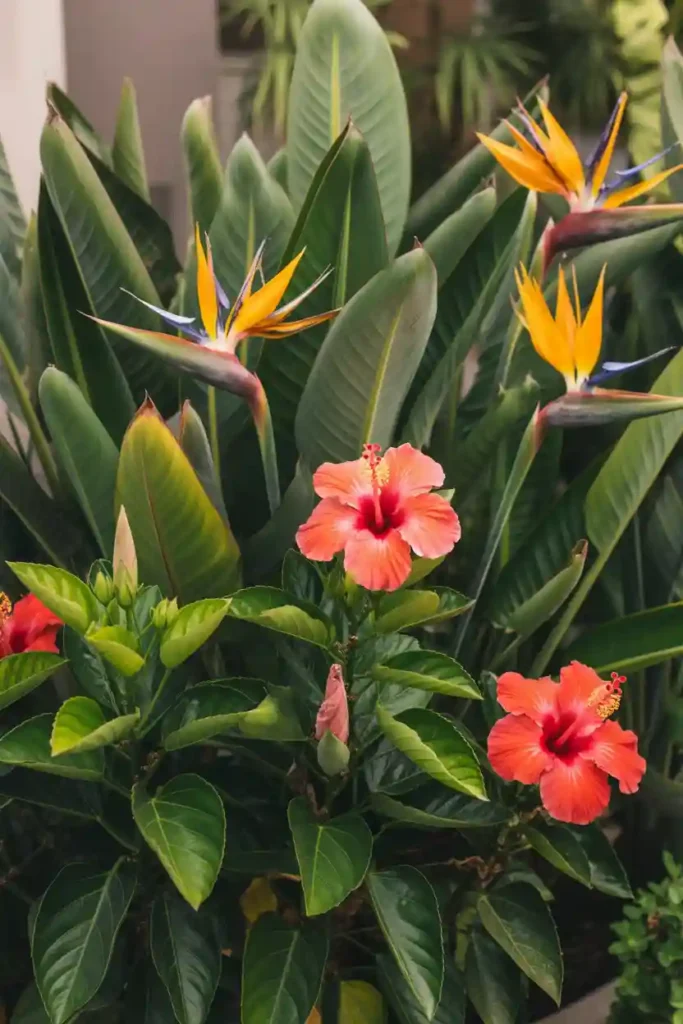
Green is the base of a tropical garden, but bold flowers are what make it feel alive. Hibiscus, bird of paradise, orchids, and plumeria give you strong color with very little work. Plant hibiscus in full sun where it can reach 4 to 6 feet tall, and expect large blooms from late spring through fall. Orchids do best in pots under partial shade, where you can control their water. Bird of paradise needs a sunny spot with room to spread 3 to 4 feet wide.
Repeat, do not scatter. Pick one or two flower varieties and repeat them in three or four spots around the garden instead of planting a dozen different kinds. Repetition is what makes a garden look designed rather than random. Keep reds, oranges, and pinks together for a warm tropical feel, and let dark green leaves frame each bloom so the colors stand out. Deadhead spent hibiscus flowers weekly and feed flowering plants with a balanced fertilizer once a month during the growing season.
- Hibiscus: big red, pink, or orange blooms, 4 to 6 feet tall, loves full sun.
- Orchids: best in pots under partial shade, with bark mix instead of soil.
- Bird of paradise: bold orange and blue flowers, needs sun and 3 to 4 feet of space.
7. Stone Pathways Through Greenery
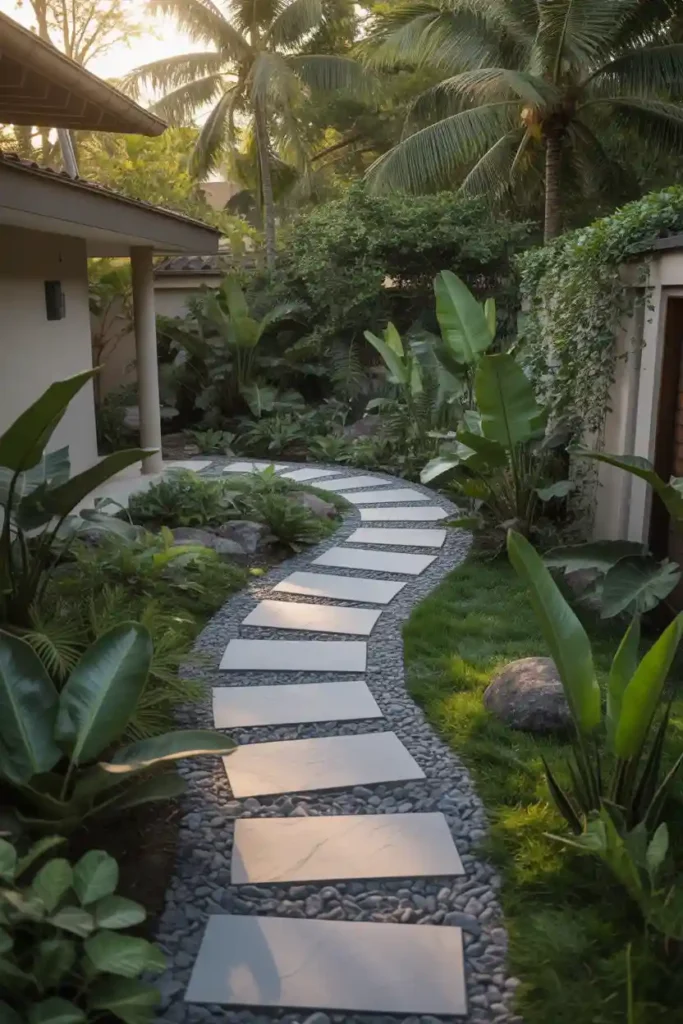
A winding stone path does two jobs at once: it guides you through the garden and makes the space feel larger. Use natural stone slabs 18 to 24 inches wide, set 2 to 3 inches apart, or lay a pebble path 3 feet wide over landscape fabric. Curve the path gently instead of running it straight, since a curve hides the end and makes the garden feel deeper. Dig out 3 to 4 inches of soil, add a layer of crushed gravel, then set the stones and fill the gaps with sand or small pebbles.
Let plants soften the edges. Tuck low ground cover like creeping thyme, mondo grass, or small ferns along the sides so the greenery overlaps the stones slightly, the way a jungle trail looks. Choose neutral-toned stone, sandstone, slate, or river rock, so the path blends with the planting instead of shouting for attention. Add low solar lights every 4 to 6 feet along the path for evening walks. For more path and layout inspiration, browse these garden design ideas that show how curves and planting work together.
- Width: 2 to 3 feet is comfortable for one person, 4 feet lets two people walk side by side.
- Curve it: a gentle bend hides the end of the path and makes the garden feel bigger.
- Light it: solar path lights every 4 to 6 feet keep the walk safe and pretty at night.
8. Wooden Deck Tropical Patio
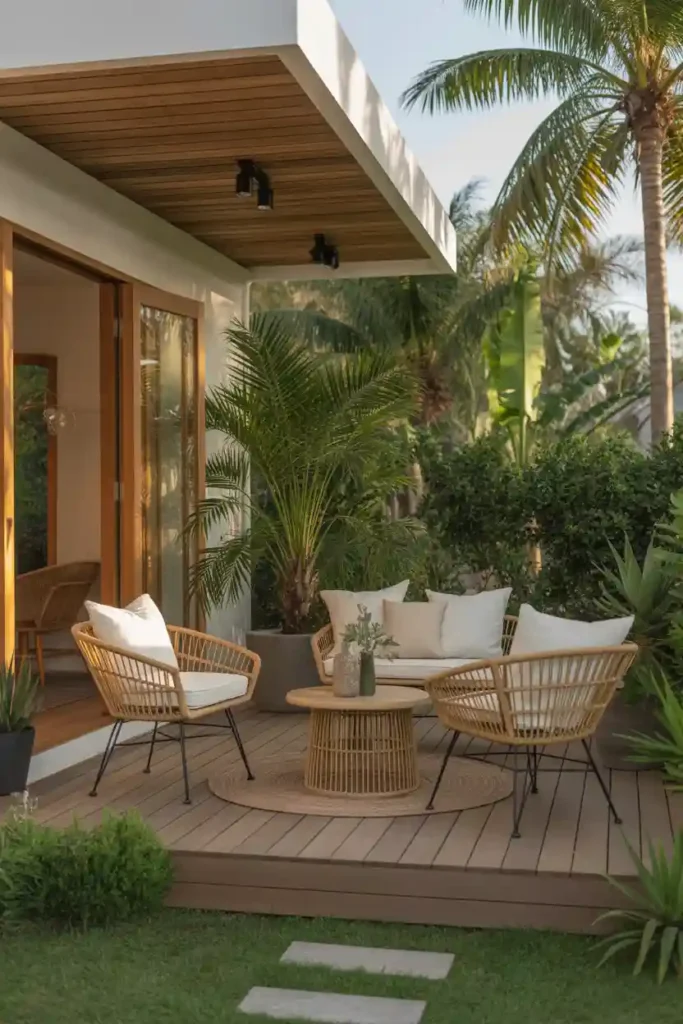
A wooden deck warms up a tropical garden and gives you a flat, dry place to sit. A small deck 10 by 12 feet is enough for a table, four chairs, and a few pots, and pressure-treated pine or cedar costs far less than composite boards. Build the deck 6 to 12 inches above the ground with a slight slope away from the house so rain runs off, and leave a quarter-inch gap between boards for drainage and airflow. Seal the wood once a year to protect it from sun and rain.
Furnish it simply and let the plants do the decorating. Rattan or teak chairs with neutral cushions in white, beige, or soft sage suit the tropical look and dry quickly after rain. Place large potted palms in the corners to soften the hard edges of the deck, and add a low outdoor rug to define the seating area. Keep decor minimal: one lantern, one tray, and a small potted orchid are enough. For more patio layouts that mix wood, rattan, and greenery, see these outdoor patio design ideas.
- Size: a 10 by 12 foot deck fits a dining set and still leaves room to walk.
- Wood choice: cedar resists rot naturally, while pressure-treated pine is the budget option.
- Keep it simple: rattan furniture, neutral cushions, and potted palms are all the decor you need.
9. Outdoor Daybed Sanctuary
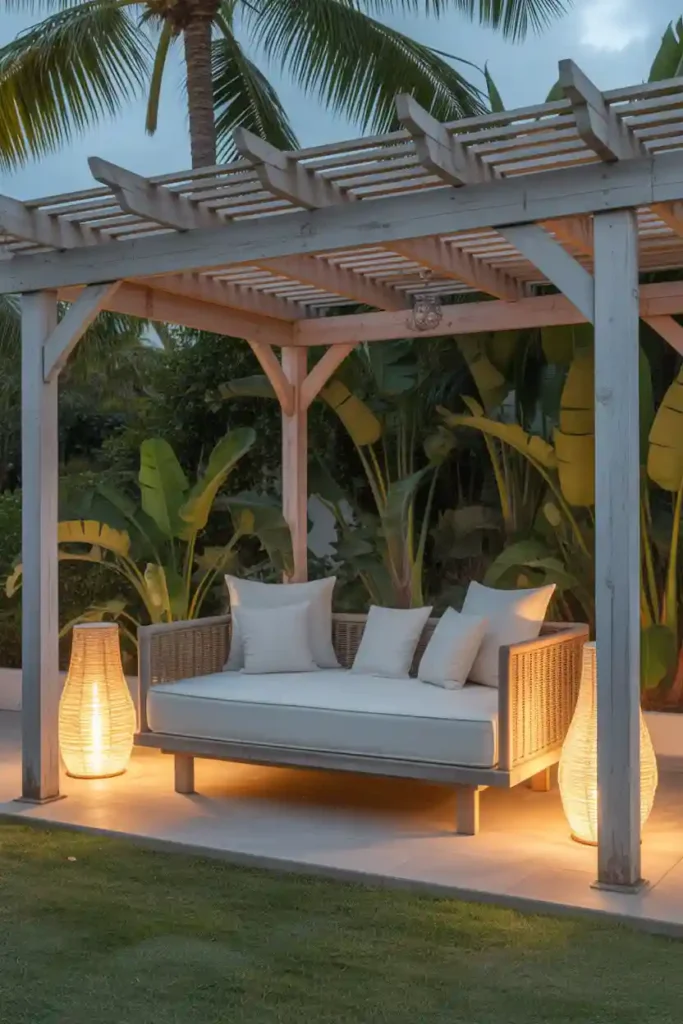
An outdoor daybed is the most luxurious seat in a tropical garden, and it is simpler than it looks. Place a daybed frame 6 feet long and 3 feet wide under a pergola or a large tree, where it gets shade for most of the day. Choose a weatherproof frame in teak, rattan, or powder-coated metal, and top it with a 4-inch outdoor mattress covered in a washable, fade-resistant fabric. White or beige covers look crisp against green plants and stay cooler in the sun than dark colors.
Layer the comfort. Add two large back cushions, one bolster pillow, and a light textured throw. Hang a sheer outdoor curtain on one side of the pergola for privacy and to soften the breeze, and string a few warm fairy lights above the daybed for evening use. Keep a small basket nearby for books and sunscreen so everything you need is within reach. The goal is a spot where you can read, nap, or just listen to the garden for an hour without getting up.
- Shade first: a pergola or a big tree keeps the daybed cool through the afternoon.
- Light fabrics: white or beige covers contrast with green plants and stay cool in the sun.
- Evening charm: fairy lights or a lantern make the daybed inviting after sunset.
10. Vertical Tropical Wall Garden
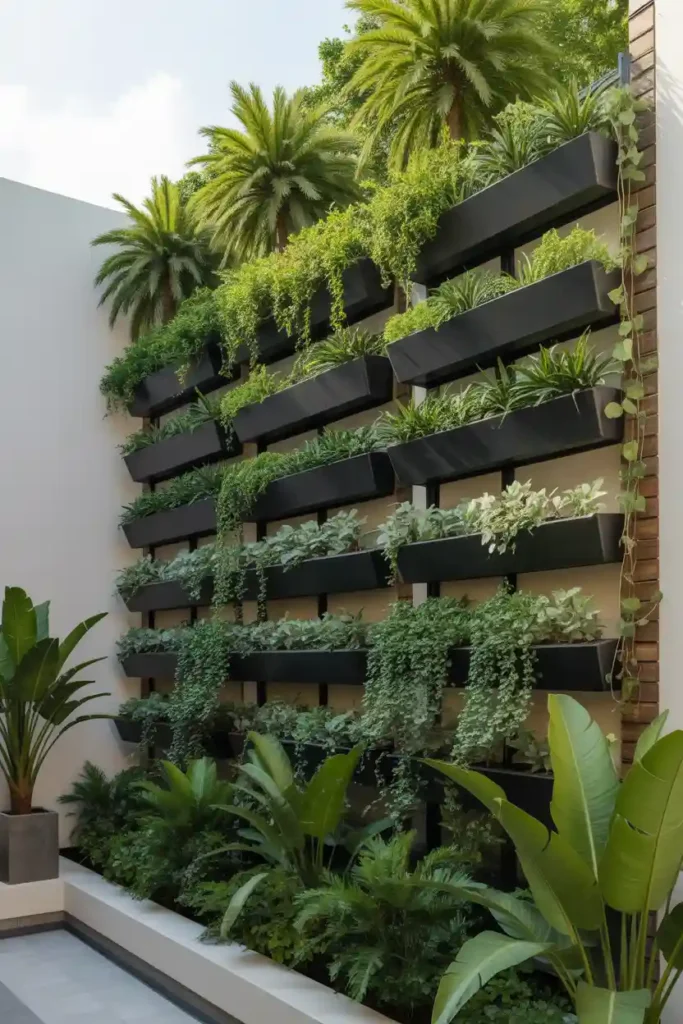
A vertical garden packs a tropical look into almost no floor space, which makes it perfect for patios, courtyards, and small balconies. Mount a wall planter system, a wooden pallet, or a set of hanging pots on a fence or a bare wall, and fill it with a mix of trailing and leafy plants. Pothos, philodendron, and string of pearls trail downward, while ferns, bromeliads, and caladiums fill the middle. A wall 6 feet wide and 5 feet tall holds 20 to 30 plants and turns a blank wall into a living feature.
Plan for water before you plant. Line the back of the planter with waterproof material, add a drip tray at the bottom, and water from the top so moisture reaches every row. Plants at the top dry out fastest, so check them twice a week in hot weather. Feed with a half-strength liquid fertilizer once a month, and rotate pots every few weeks so every plant gets its share of light. Keep the arrangement structured, with taller plants at the top and trailers at the bottom, so it looks abundant but not messy.
- Structure: a wall planter, pallet, or hanging pots on a fence or bare wall.
- Plant mix: trailers at the bottom, leafy fillers in the middle, upright plants at the top.
- Watering: water from the top, check the top row twice a week, and use a drip tray below.
11. Tropical Fire Pit Gathering Spot
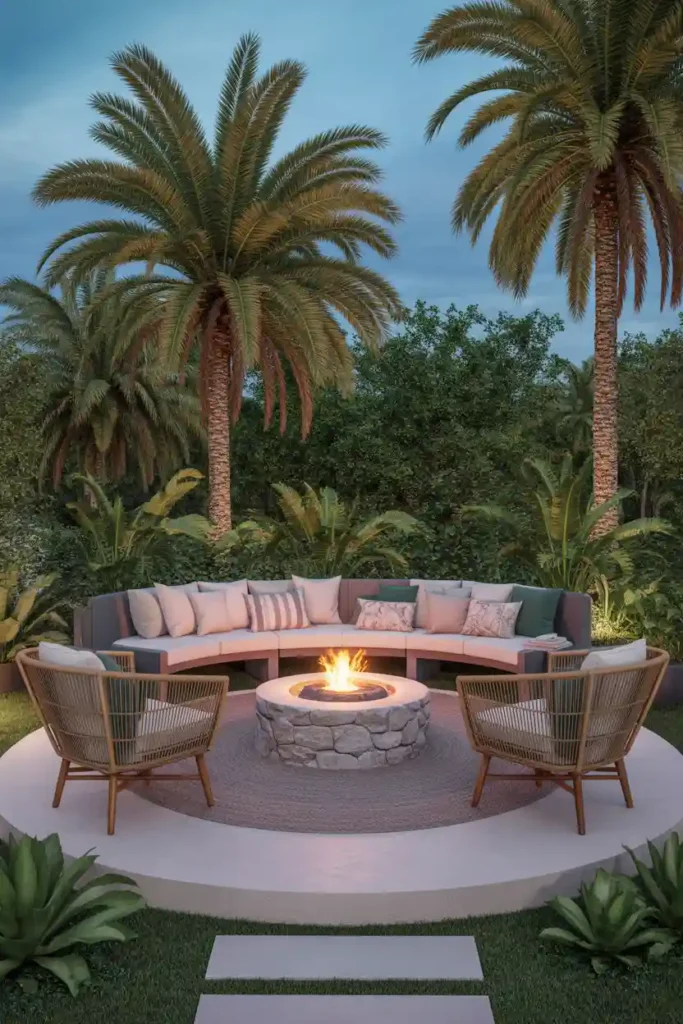
A fire pit lets you enjoy your tropical garden long after the sun goes down. Build or buy a round pit 30 to 36 inches across, set it on a base of pavers or gravel at least 10 feet from the house, trees, and fences, and ring it with natural stone or concrete blocks. Surround the seating area with palms and dense shrubs to create a secluded feel, and leave a clear 3-foot walkway around the pit so people can move safely. A smokeless fire pit design, with double walls that reburn the smoke, keeps the air pleasant and your clothes smelling fresh.
Choose seating that suits the heat. Wooden benches or rattan chairs with neutral, heat-resistant cushions work well, and a few outdoor throw pillows add comfort without clutter. Keep a metal screen over the fire when it is burning, and store a small basket of firewood under a cover nearby so it stays dry. In cooler months, the warmth of the fire against the lush green backdrop is what makes this corner special: fire and foliage together create a contrast you cannot get from either one alone.
- Safe placement: at least 10 feet from the house, trees, and fences, on pavers or gravel.
- Size: a 30 to 36 inch pit seats four to six people comfortably around it.
- Seating: wooden or rattan chairs with neutral cushions, plus a fire screen for safety.
12. Soft Ambient Garden Lighting
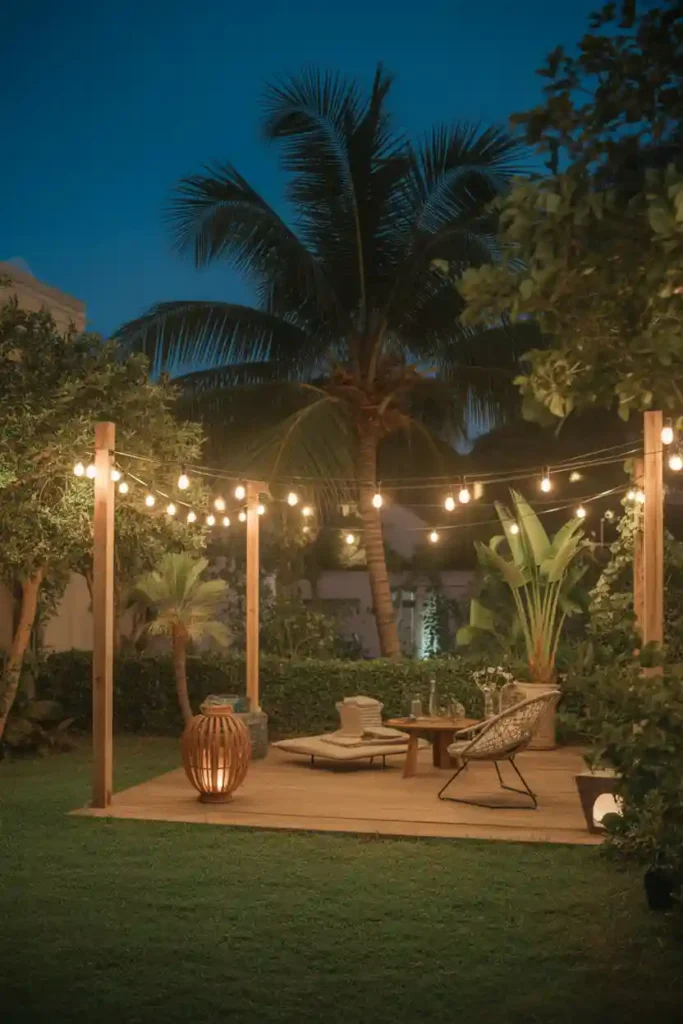
Lighting is the final layer that makes a tropical garden magical after dark. Use warm white lights at 2200 to 2700 Kelvin, which flatter green foliage and feel cozy, and avoid cool white or blue-toned bulbs that make plants look harsh. String lights along a pergola or between two trees, hang lanterns from branches, and place low ground lights to uplight palms and large shrubs. A set of 25-foot string lights costs 25 to 40 dollars and covers most patios.
Think in three layers: light the paths so people can walk safely, light the plants so the garden has shape at night, and light the seating area so it feels welcoming. Solar lights work well for paths and do not need wiring, while low-voltage wired lights are brighter and more reliable for uplighting trees. Put the lights on a timer or a dusk-to-dawn sensor so they switch on by themselves every evening. Keep the total light soft and low: a tropical garden at night should glow, not glare.
- Warm tones: 2200 to 2700 Kelvin bulbs make foliage look lush and inviting.
- Three layers: path lights, uplights on plants, and soft light over seating.
- Automate it: a timer or dusk-to-dawn sensor means the garden lights itself every night.
Final Words
A tropical garden is not about buying the most plants or the biggest fountain. It is about layering greenery, adding a few natural materials, and creating one or two spots where you genuinely want to sit. These 12 tropical home garden ideas work together: the layers give depth, the bamboo and wood add warmth, the water and fire features add sensory pleasure, and the lighting ties it all together after dark.
Start with the idea that fits your space and your budget today. A single palm in a corner, a bamboo screen, or a hammock under a tree can change how your garden feels in one weekend. Add one idea at a time, let the plants settle in, and enjoy the garden as it grows. Before long, your backyard will feel less like a yard and more like the relaxing tropical escape you pictured.
Frequently Asked Questions
What plants grow best in a tropical home garden?
Palms, banana plants, elephant ears, hibiscus, bird of paradise, ferns, and orchids are the classic choices. They all love warmth, humidity, and rich soil. If your winters get cold, grow the tender plants in pots so you can move them indoors when temperatures drop below 40 degrees Fahrenheit.
How much does it cost to create a tropical garden?
A small tropical corner with a few plants, a bamboo screen, and string lights can cost 200 to 400 dollars. A full backyard transformation with a deck, a water feature, and a fire pit usually runs 2,000 to 5,000 dollars, but you can spread the work over several seasons and start with the cheapest ideas first.
Can I make a tropical garden in a small yard or on a patio?
Yes. Use a vertical wall garden, large potted palms, and a compact water feature instead of in-ground planting. A single statement palm in a pot, a bamboo trellis, and a few hanging planters can give a small patio a full tropical feel without taking up floor space.
How do I keep a tropical garden looking lush without constant work?
Choose plants suited to your climate, mulch beds with 2 to 3 inches of bark to hold moisture, and water deeply but less often so roots grow strong. Group plants with similar water needs together, and spend ten minutes a week deadheading flowers and trimming damaged leaves.
What lighting works best in a tropical garden at night?
Warm white lights at 2200 to 2700 Kelvin look best on green foliage. Combine string lights over seating, low uplights on palms and large shrubs, and solar path lights along walkways. A timer or dusk-to-dawn sensor keeps the garden glowing every evening without any effort.
More Ideas You Will Love
 11 Best Indoor Plants for Hot Weather: Heat-Tolerant Favorites
 13 Outdoor Patio Design Ideas to Elevate Your Backyard Style
 12 Tips to Create an Inviting Summer BBQ Area
 16 Outdoor Loveseat Ideas: Comfortable & Chic Seating Solutions
 19 DIY Christmas Yard Decoration Ideas for 2025
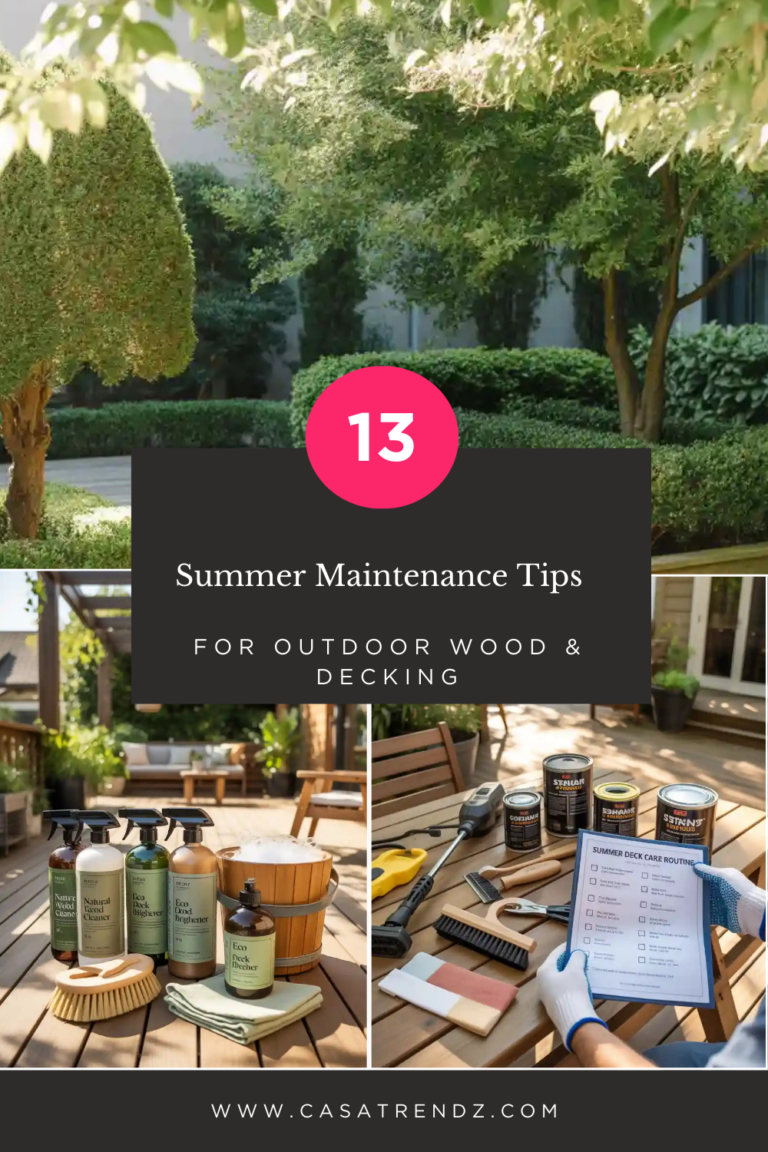 13 Summer Maintenance Tips for Outdoor Wood & Decking Introduction