
23 Oak Kitchen Design Ideas for Modern Cabinets & Timeless Decor

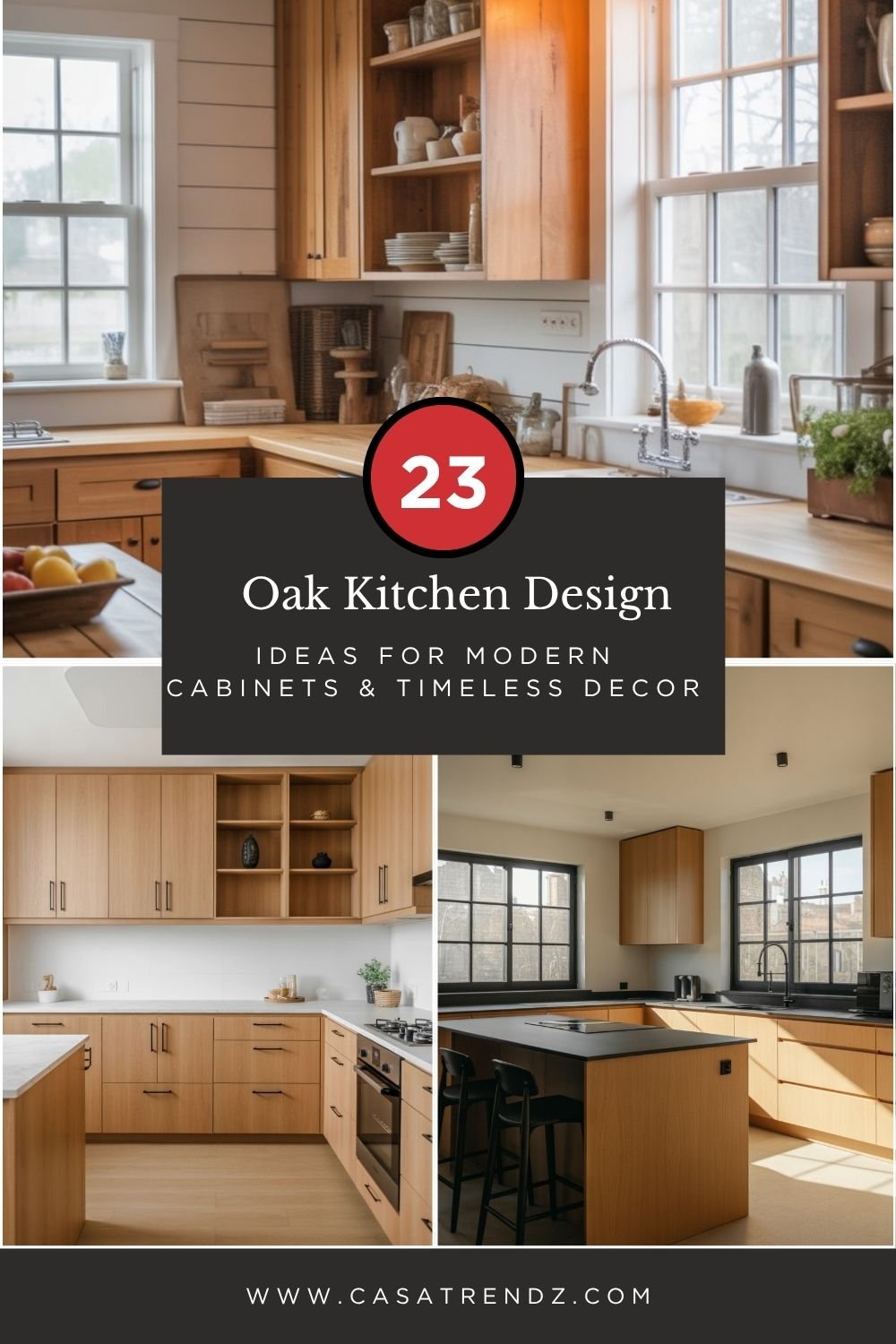
Oak kitchens are back in a big way, and this time they look nothing like the honey-toned cabinets of the 1990s. Designers are leaning into oak’s natural warmth and strong grain, pairing it with white stone, deep navy, brushed brass, and black steel to build kitchens that feel both current and timeless. Oak is one of the few materials that can carry a minimalist Scandi kitchen, a rustic farmhouse, and a high-end marble showpiece with equal confidence.
In this guide you will find 23 oak kitchen design ideas, each one with practical details on materials, colors, finishes, and installation tips. Whether you are planning a full remodel, refacing old cabinets, or just looking for one change that makes the whole room feel warmer, you will find an option here that fits your home and your budget.
The oak kitchen starter kit: white oak or red oak cabinetry (flat-panel for modern looks, Shaker for classic ones), quartz or marble countertops in white or cream, hardware in matte black or brushed brass, a simple subway or handmade-tile backsplash, under-cabinet LED lighting in warm white (2700K to 3000K), and one contrasting material such as navy paint, black granite, or concrete to keep the wood from feeling one-note. With these elements, you can build nearly every look on this list.
1. Natural Oak Cabinets with White Countertops
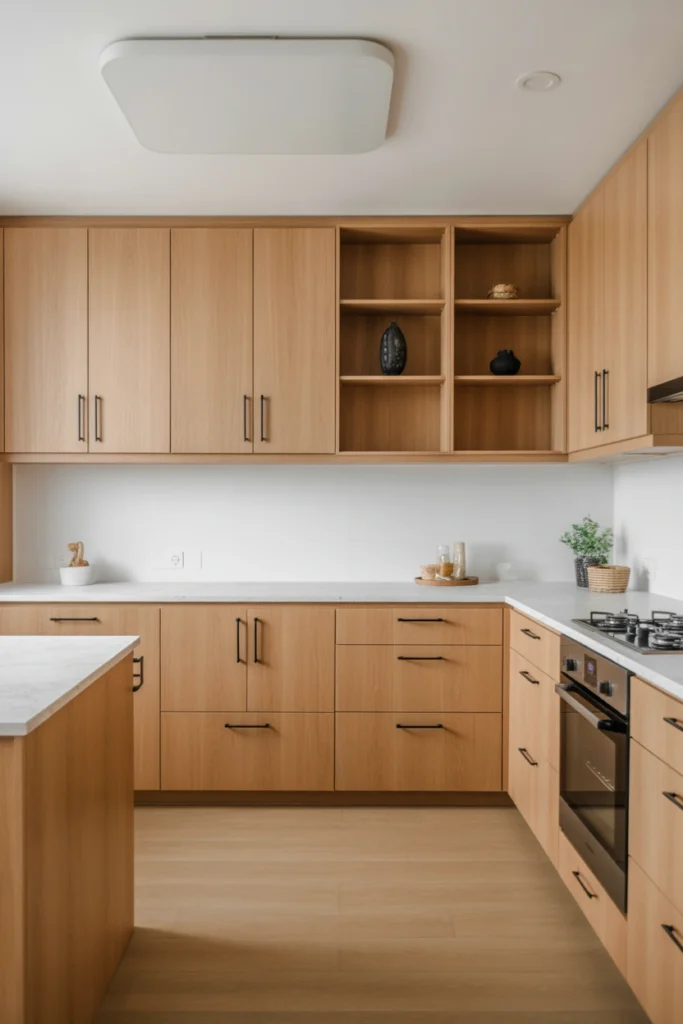
Natural oak paired with white countertops is the foundation of the modern oak kitchen, and it works because the warm wood keeps the white from feeling cold while the white keeps the wood from feeling heavy. The contrast is bright but not stark, which makes this combination ideal for kitchens that need more light. Choose a white quartz with soft gray veining or a honed Carrara marble, and keep the backsplash simple so the oak grain stays the star.
How to do it: Use natural (unstained) white oak or lightly sealed red oak for the cabinet boxes, and pick a matte or satin finish that shows the grain instead of hiding it. Pair with matte black bar pulls for definition or brushed brass for warmth; both look sharp against natural oak. Keep wall color warm white or a pale greige, and add under-cabinet lighting so the grain glows in the evening. If your kitchen faces north and gets cool light, this pairing is the fastest way to make it feel sunny and welcoming.
Pro tip: Ask your cabinetmaker for a “clear matte” finish rather than a satin polyurethane. Clear matte seals the wood without the plastic-looking sheen that makes oak read as dated.
2. Two-Tone Oak and Navy Cabinets
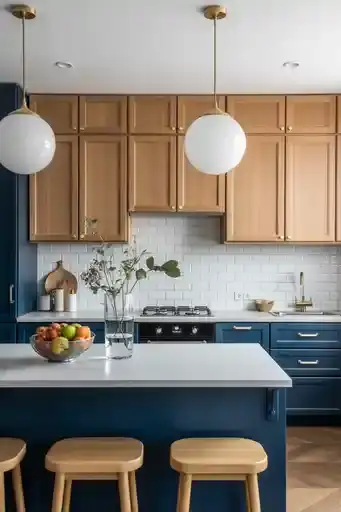
Two-tone kitchens keep oak feeling current, and navy is the pairing that photographs best and lives best. Deep blue lowers sit beautifully under natural oak uppers: the navy grounds the room and hides everyday wear near the floor, while the oak keeps the upper half light and open. The combination reads as both luxurious and approachable, like a tailored suit with a great watch.
How to do it: Paint lower cabinets in a deep navy such as Hale Navy or a rich midnight blue with a satin sheen, and use natural oak for uppers and any open shelving. Tie the two tones together with unlacquered brass or polished gold fixtures, which pull warmth from the oak and cool contrast from the navy. Add a white or pale gray stone countertop to bridge the colors, and keep the backsplash quiet: a simple handmade white tile or a full-height stone slab works best.
Pro tip: Sample the navy in your actual kitchen before committing. Deep blues shift dramatically between morning and evening light, and a shade that looks perfect at noon can read almost black after dark.
3. Scandinavian Minimalist Oak Kitchen
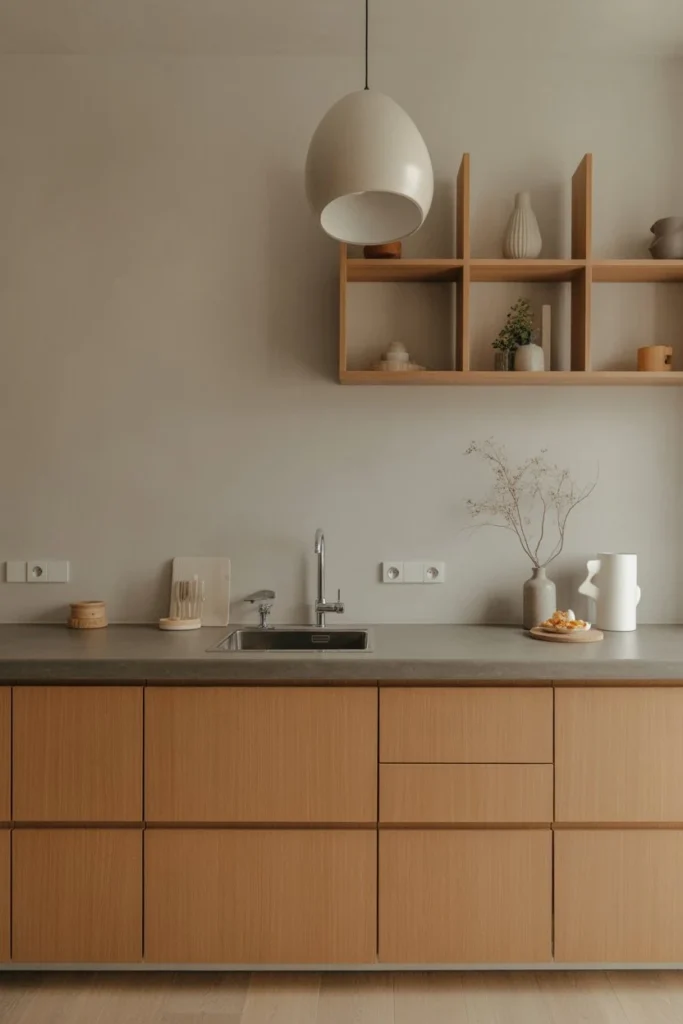
Scandinavian design and oak are a natural match: both prize simplicity, function, and honest materials. This look strips the kitchen back to flat-panel oak fronts, pale countertops, and neutral tones, then lets texture do the talking. The result is a calm, uncluttered space that feels warm despite its minimalism, which is exactly why oak beats white laminate here.
How to do it: Choose flat-panel or slab oak cabinet doors in a light natural finish, with handleless fronts or slim recessed pulls to keep lines clean. Pair with light concrete or pale quartz countertops and a warm white plaster-look backsplash. Keep the palette to three neutrals at most: oak, white, and one soft gray or beige. Style with restraint, a couple of ceramic vases, a woven basket, and under-cabinet lighting set to warm white. Clutter is the enemy of this look, so plan for a full-height pantry cabinet to swallow small appliances.
Pro tip: Integrated appliances are what make Scandi kitchens look truly seamless. Panel-ready refrigerators and dishwashers cost more upfront but erase the visual breaks that cheapen a minimalist design.
4. Rustic Farmhouse Oak Kitchen
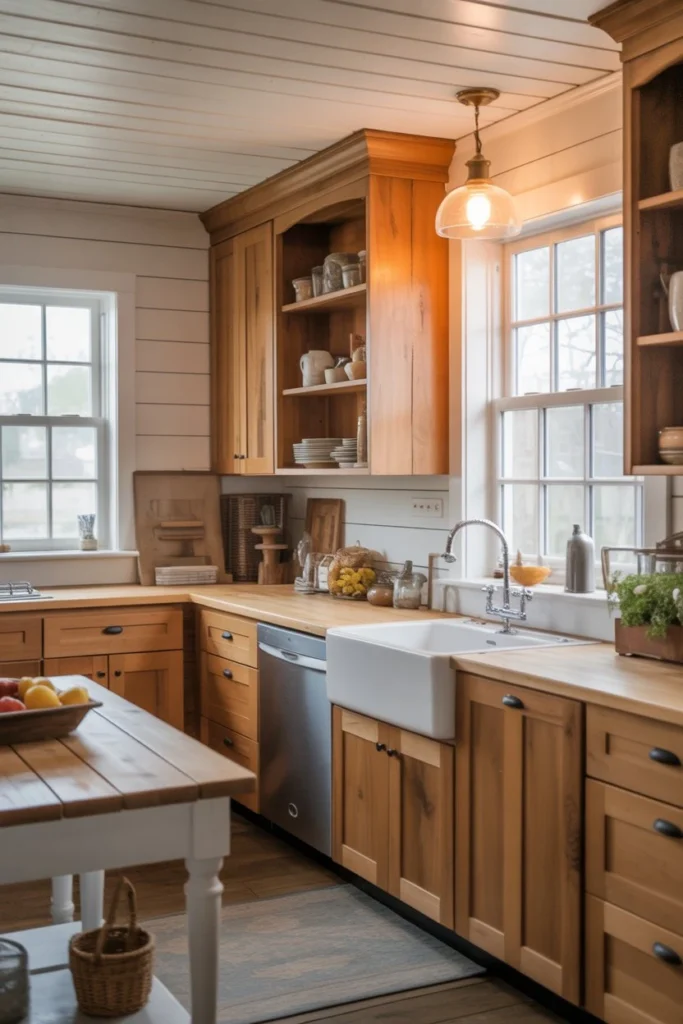
The farmhouse oak kitchen trades sleek for soul: reclaimed or distressed oak, apron-front sinks, vintage-style faucets, and shiplap walls that feel collected rather than decorated. This is the most forgiving oak style, because the worn finishes actually improve with daily use. Scratches and patina become part of the story instead of defects to fix.
How to do it: Source reclaimed oak or have new oak wire-brushed and lightly distressed for an aged look. Pair with a fireclay apron-front sink, a bridge or gooseneck faucet in aged brass or oil-rubbed bronze, and cream or soft white shiplap on the walls. Add open shelves with stoneware, glass jars, and ironstone for display, and finish with antique-style pendant lights with seeded glass shades. If you love this look broadly, our rustic kitchen ideas cover even more ways to layer reclaimed wood, vintage hardware, and cozy farmhouse textures.
Pro tip: Keep the ceiling bright. Dark beams plus dark floors plus rustic cabinets can cave a room in; a white or cream ceiling bounces light back down and keeps the farmhouse feel airy.
5. Oak Cabinets with Black Accents

Oak and black is the high-contrast pairing that makes both materials look better. The black sharpens oak’s grain and gives the kitchen a tailored edge, while the oak keeps the black from feeling cold or flat. This is the look for open-plan homes where the kitchen needs to hold its own against a dark-accented living room.
How to do it: Use natural or white oak cabinetry with matte black hardware, black pendant lights, and a black range hood or black window frames to repeat the accent at least three times. Balance with white countertops and a pale backsplash so the room does not go moody, and warm the whole scheme with brass or wood stools at the island. Matte black shows fingerprints, so choose powder-coated hardware with a fine texture rather than a glossy finish.
Pro tip: Repeat black in at least three places (hardware, lighting, faucet or window frames). One lone black element looks like an accident; three make it look intentional.
6. Light Oak Cabinets for Small Kitchens
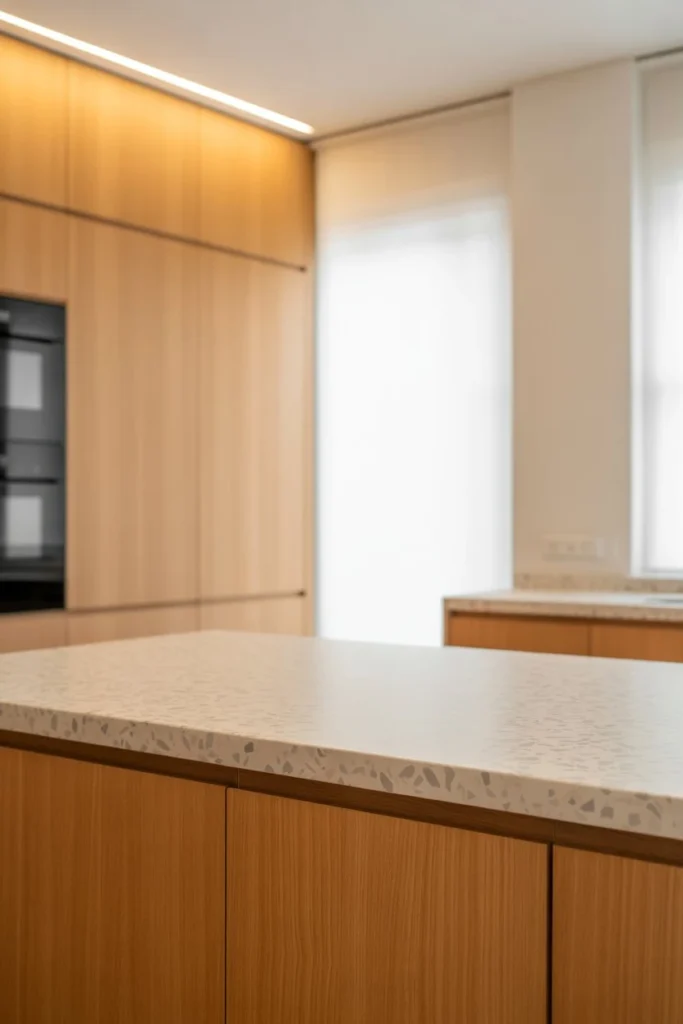
Light oak is one of the smartest choices for a small kitchen because it reflects light instead of absorbing it. Pale wood visually expands the walls, and paired with handleless fronts and integrated appliances, it creates the seamless flow that makes a compact kitchen feel twice its size. This is the look that keeps a galley or studio kitchen feeling bright and breathable.
How to do it: Specify a light natural oak, ideally white oak with a clear matte finish, on flat-panel doors with no visible hardware. Integrate the fridge, dishwasher, and even the range hood behind matching panels so the eye travels uninterrupted. Choose pale stone or terrazzo countertops for texture without weight, and run the backsplash in the same material as the counter for a monolithic, space-stretching effect. For more ways to make every square foot count, see our small kitchen ideas, which pair perfectly with this light oak approach.
Pro tip: In a small kitchen, lighting placement matters more than the cabinets. Put the brightest task lighting over the prep zone and sink, and keep ambient light warm and dim; the contrast makes the room feel deeper.
7. Oak Kitchen Island as a Focal Point
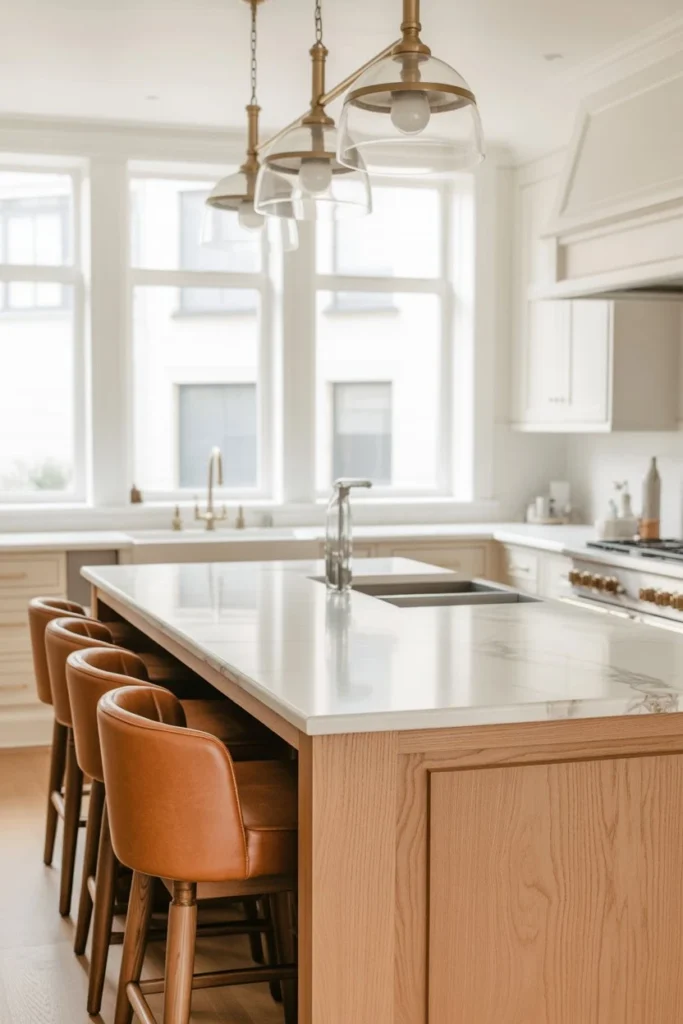
A freestanding oak island does two jobs at once: it anchors the room visually and adds the prep space and seating every kitchen needs. The contrast between an oak island base and a different cabinet color around it creates a furniture look, like a beautiful table that happens to live in your kitchen. This is the single most impactful change you can make in a kitchen that already has serviceable perimeter cabinets.
How to do it: Build or buy an oak island base at least 36 inches deep with solid oak legs or a paneled base, and top it with a contrasting stone such as white marble or light quartz. Include at least 12 inches of overhang on the seating side for comfortable knees, and choose bar stools in complementary materials like rattan, woven rush, or cognac leather. Add a pair of pendants centered over the island, hung 30 to 36 inches above the countertop, to define the zone. If you are still planning the layout, our kitchen island ideas cover sizing, seating, and storage configurations in detail.
Pro tip: Wire two outlets into the island sides, one for small appliances and one for charging. An island without power is a beautiful missed opportunity.
8. White Oak Cabinets for a Soft Contemporary Look
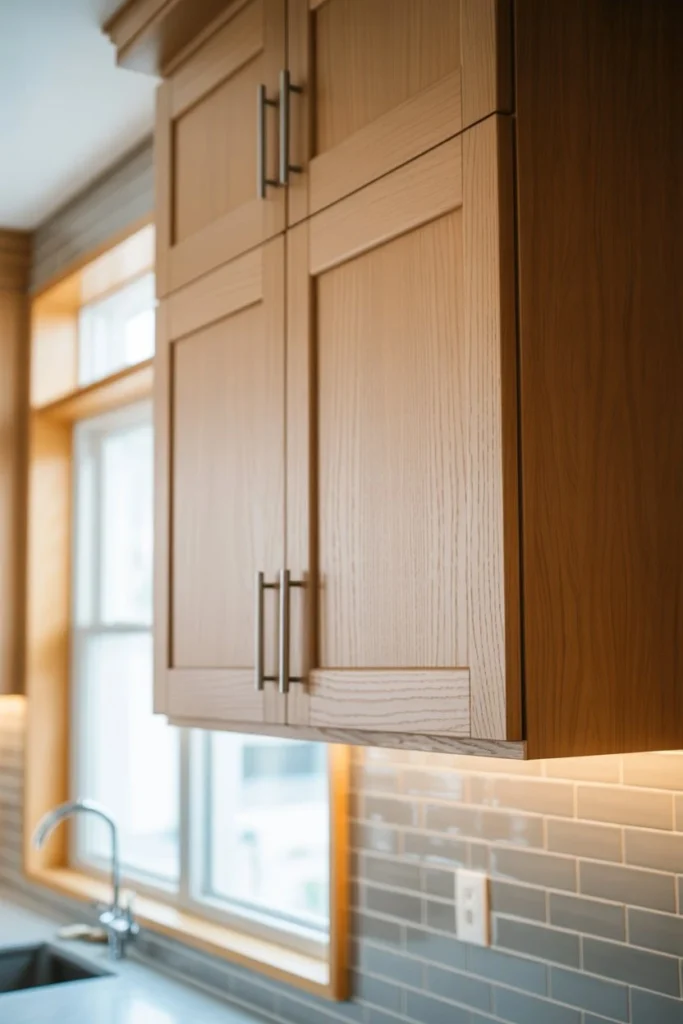
White oak is the designer favorite right now for good reason: its grain is subtler than red oak, its tone is cooler and lighter, and it pairs with grays and whites without the orange cast that dates older oak kitchens. White oak cabinetry reads as refined and quiet, which makes it perfect for contemporary homes that want warmth without rustic character.
How to do it: Specify rift-sawn white oak for the most consistent, straight grain, and finish it with a clear matte seal to keep the pale tone. Pair with light gray or white quartz counters, brushed nickel or polished chrome hardware for a cooler scheme (or brushed brass for a warmer one), and keep walls a soft warm white. Add under-cabinet LED strips at 2700K for a warm glow that brings the oak to life at night. White oak costs 10 to 20 percent more than red oak, but the calmer grain is worth it in a contemporary setting.
Pro tip: Rift-sawn white oak hides wear and fingerprints far better than plain-sawn, because the straight grain does not create busy patterns that show smudges.
9. Oak and Marble Luxury Combination
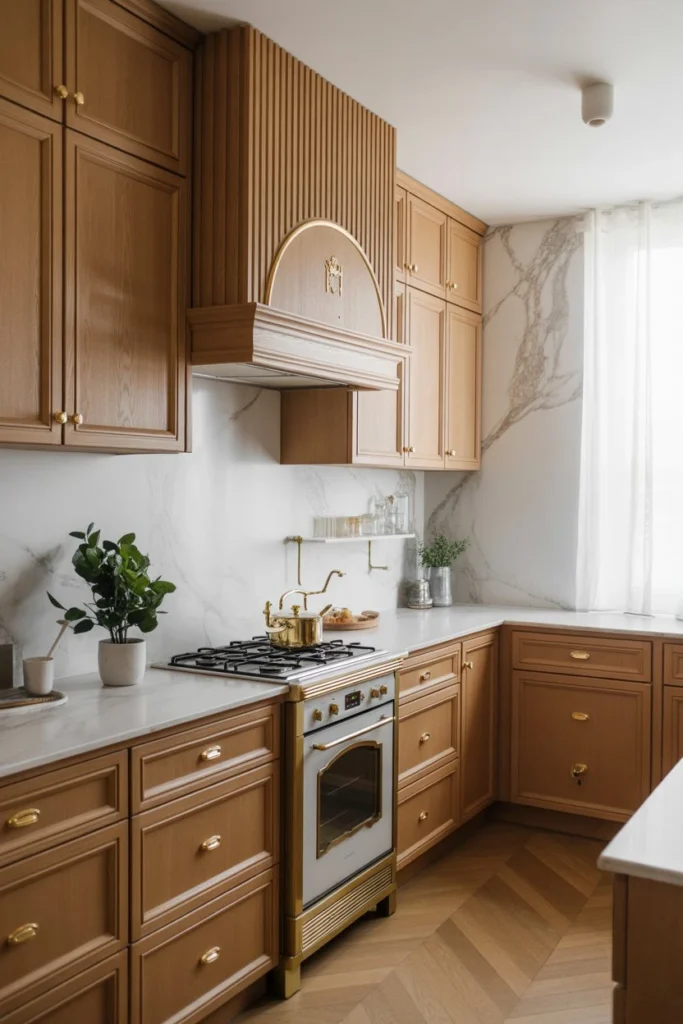
Oak plus marble is the pairing that makes a kitchen feel expensive without feeling cold. The marble brings polish and veining drama; the oak brings warmth and texture so the room reads as livable luxury rather than a showroom. This combination works best when you let each material have its moment instead of competing.
How to do it: Use natural oak cabinetry with a clear finish and top it with a marble that has soft, quiet veining, such as honed Carrara or a creamy Calacatta. Consider running the marble up the wall as a full-height backsplash for maximum impact; it eliminates grout lines and makes the stone the star. Keep hardware minimal and elegant, such as slim brass pulls, and limit the palette to oak, marble, and one metal finish. Marble etches with acids, so seal it properly and keep a trivet habit for citrus and wine. For more on choosing the right stone, browse our kitchen countertop design ideas for marble, quartz, and butcher block options.
Pro tip: Honed marble hides etching far better than polished. If you actually cook in your kitchen, honed is the practical luxury choice.
10. Open Shelving with Oak Finishes
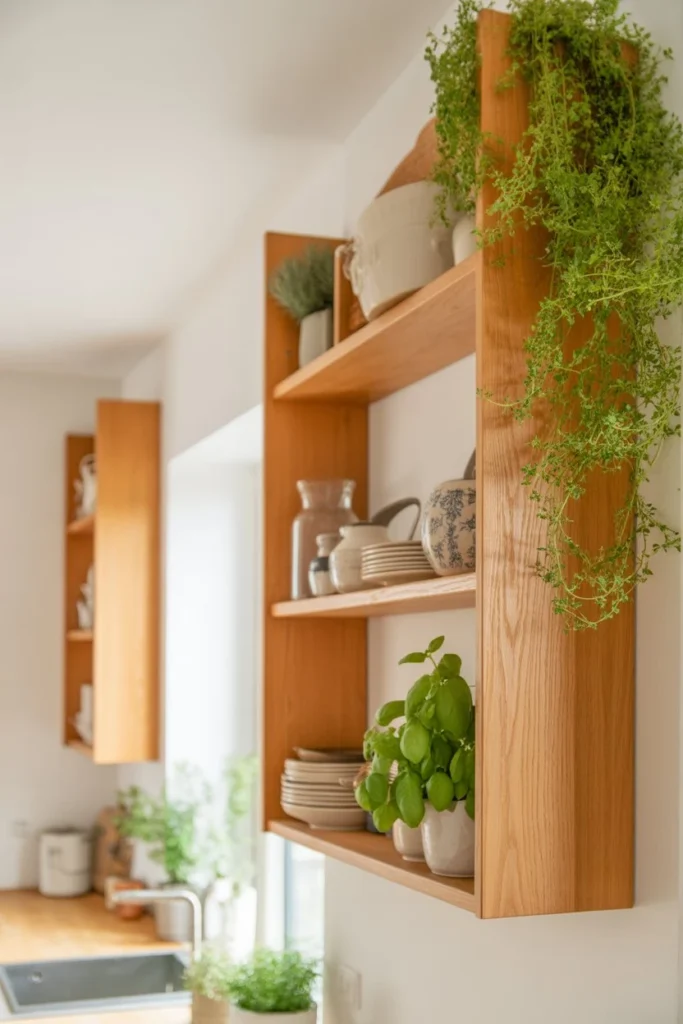
Replacing upper cabinets with oak open shelves instantly lightens a kitchen, both visually and physically. The shelves display your everyday dishes, plants, and cookbooks, turning storage into decor. This works especially well in small or galley kitchens where full uppers would crowd the room, and in farmhouse or Scandi styles where the collected look is the point.
How to do it: Mount solid oak shelves at least 1.5 inches thick, floating on concealed steel brackets rated for 50 pounds per linear foot, at 15 to 18 inches above the countertop. Style with restraint: stack white dishes, add one or two small plants, and leave breathing room between groups. Keep the most-used items at the front and decant dry goods into matching glass jars so the shelves look curated rather than chaotic. Dust and grease settle on open shelves, so wipe them down weekly and keep the prettiest pieces where they earn their keep.
Pro tip: Limit open shelving to one or two runs. A kitchen with zero closed uppers looks great on day one and exhausting by month three; keep a pantry or tall cabinet for the ugly essentials.
11. Black Granite and Oak Cabinets

Black granite on oak cabinets is the bold, high-drama pairing for homeowners who love contrast. The dark stone makes oak’s golden tones glow by comparison, and the combination feels grounded and substantial, like a kitchen that will still look right in twenty years. This pairing shines in larger kitchens where the dark countertop will not overwhelm the room.
How to do it: Choose a black granite with subtle movement, such as Black Galaxy with its copper flecks or a honed Absolute Black, and pair it with medium-tone natural oak so the contrast is rich rather than harsh. Keep everything else quiet: white or off-white walls, stainless or black appliances, and simple black fixtures. A white or cream backsplash between the oak and the granite gives the eye a rest and keeps the scheme from feeling heavy. Seal granite annually to maintain its stain resistance.
Pro tip: Honed black granite shows fewer fingerprints and water spots than polished, which matters on a dark surface where every smudge is visible.
12. Vintage Oak Cabinet Revival
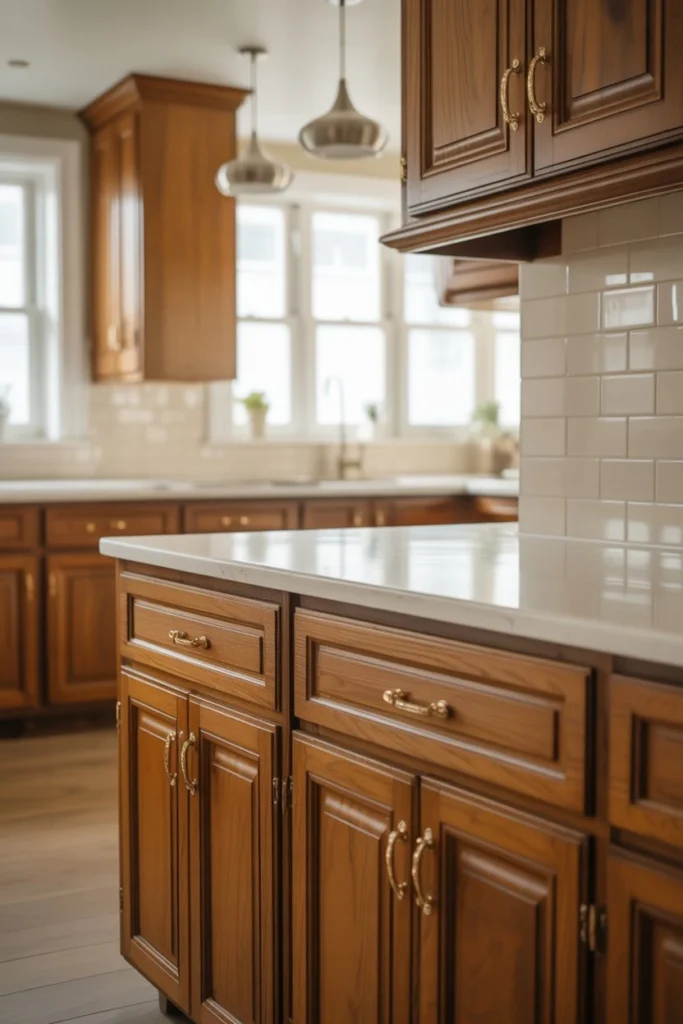
If your kitchen already has solid oak cabinets, refinishing them is the smartest money in kitchen design. Old-growth oak boxes are often better built than new stock cabinets, and a sand, stain, and hardware refresh can take them from dated to designer for a fraction of replacement cost. This is also the most sustainable option: keeping great wood out of the landfill.
How to do it: Remove doors and drawer fronts, degrease thoroughly with TSP substitute, then sand to bare wood starting with 80-grit and finishing with 150-grit. Restain in a current tone, such as a light natural, a weathered gray-brown, or a rich walnut-wash, and seal with a water-based matte polyurethane for durability without yellowing. Replace hinges and pulls with modern matte black or brushed brass hardware, update the lighting, and add a fresh backsplash. A full cabinet refinish typically costs one third to one half of replacement and takes a long weekend of work.
Pro tip: Before you start, check that the cabinet boxes are solid wood and square. Refinishing cannot fix warped boxes or failing joints; if the structure is shot, refacing or replacement is the honest answer.
13. Oak Cabinets with Green Accents
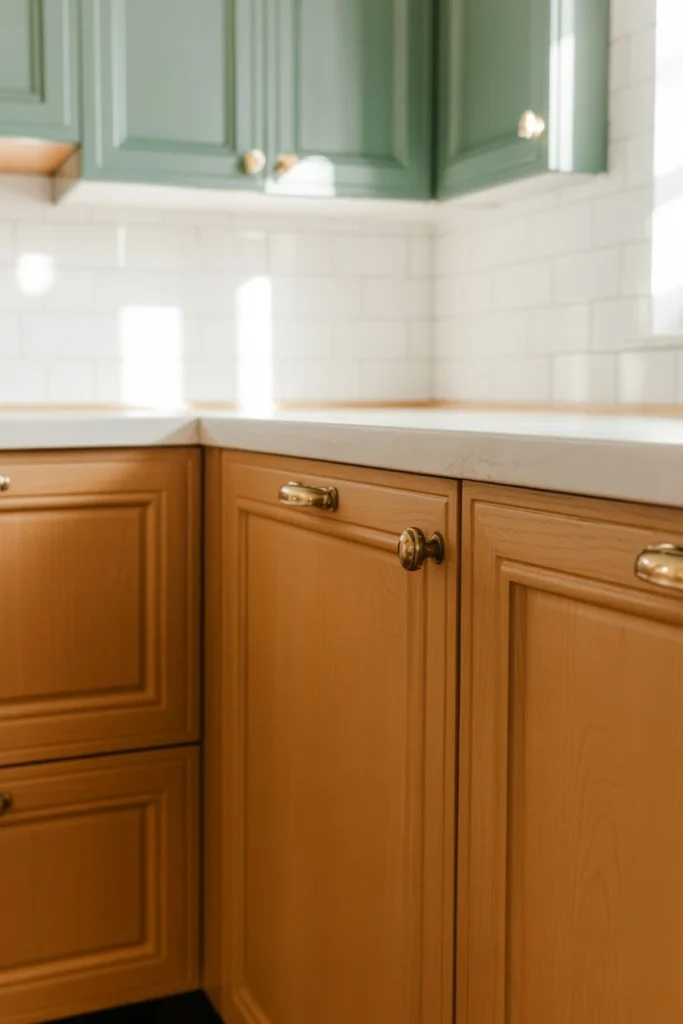
Green is the color trend that loves oak most. Sage, olive, and deep emerald all sit beautifully against wood grain because they share its natural, earthy character. The combination feels fresh and current while staying grounded, which is why green-and-oak kitchens keep appearing in design magazines year after year.
How to do it: Use oak for the main cabinetry and introduce green through painted lowers, a green tile backsplash, or a green island, so the oak remains the dominant material. Sage green with white oak and brass hardware is the softest version; deep emerald with medium oak and black fixtures is the boldest. Pair with white stone countertops to keep the scheme fresh, and repeat the green in at least one other place, such as bar stools, a runner, or plants, so it feels woven in rather than pasted on.
Pro tip: Green paint undertones matter enormously next to oak. Test samples against your actual cabinets: a green with gray undertones suits white oak, while a green with warm yellow undertones suits golden red oak.
14. Industrial Oak Kitchen Style
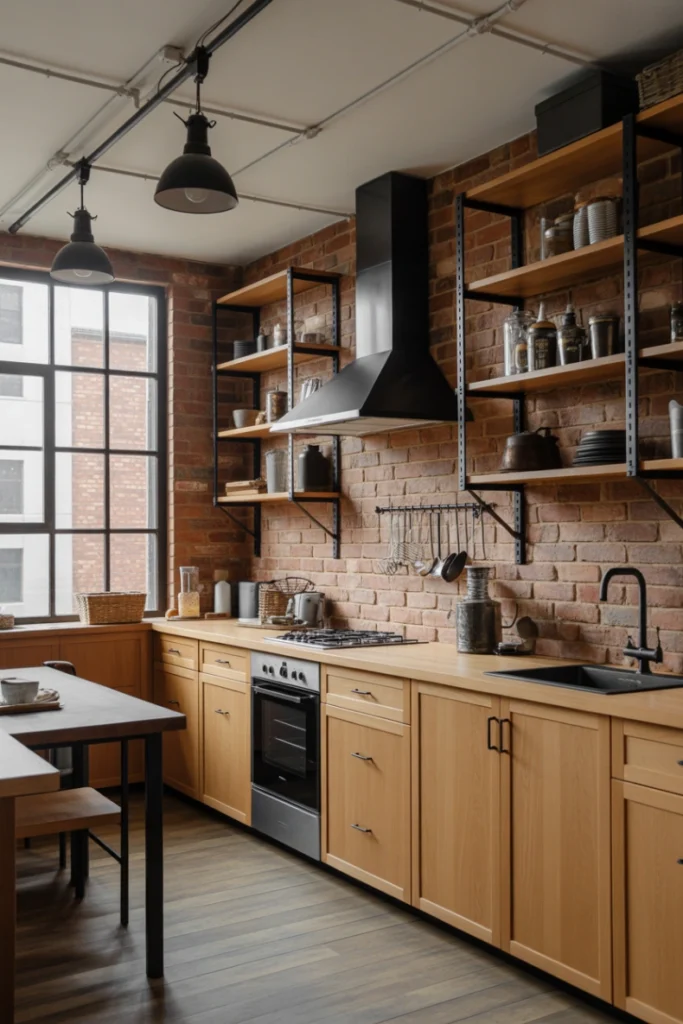
Industrial style needs oak more than it admits. Concrete floors, black steel, and exposed brick can read cold and hard on their own; oak is the warm material that makes the whole composition livable. The wood softens the metal, the metal sharpens the wood, and the result is a kitchen that feels bold but still welcoming.
How to do it: Pair oak cabinetry or an oak island with concrete countertops or floors, black steel open shelving, and exposed ductwork or beams. Choose pendant lights with black metal shades and Edison-style bulbs, and keep the oak finish natural or lightly smoked rather than rustic. Soften the hard edges with one textile, such as leather stools or a vintage runner, so the kitchen does not feel like a workshop. Concrete needs sealing against stains, so use a food-safe penetrating sealer and reapply every one to two years.
Pro tip: Warm lighting is non-negotiable in an industrial kitchen. Cool white bulbs over concrete and steel will make the room feel like a parking garage; stick to 2700K throughout.
15. Oak Cabinetry with Glass Doors
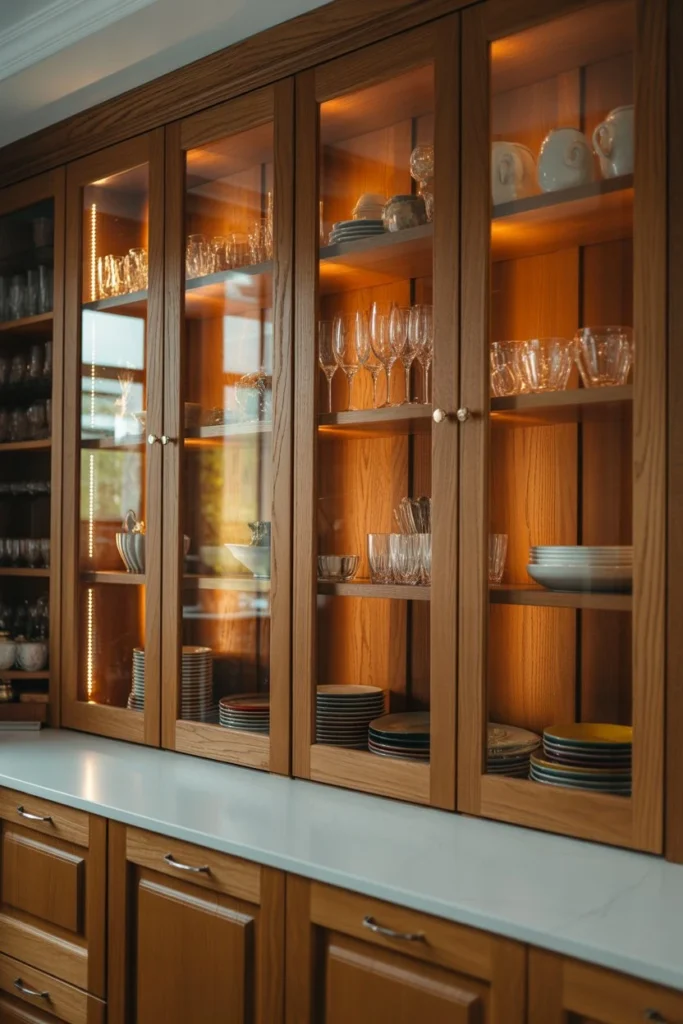
Glass-front oak cabinets add openness and a touch of tradition to a kitchen without giving up storage. They break up long runs of solid wood, let you display beautiful pieces, and catch light in a way that makes the whole room feel brighter. This is the classic choice that works in farmhouse, traditional, and transitional kitchens alike.
How to do it: Use clear glass on a few upper cabinets, ideally flanking the range or sink where they act as a focal point, and keep the rest solid for everyday clutter. Frosted or seeded glass gives a softer, more contemporary feel and hides imperfect styling. Add LED strip lighting inside the glass cabinets for a warm nighttime glow that doubles as ambient light. Style the interiors simply: matching white dishes, clear glassware, and one natural element like a small plant or wooden bowls.
Pro tip: Put glass fronts on cabinets you can keep tidy. The ones holding mismatched plastic containers and cereal boxes should stay solid, no matter how pretty the glass is.
16. Modern Oak and Concrete Mix
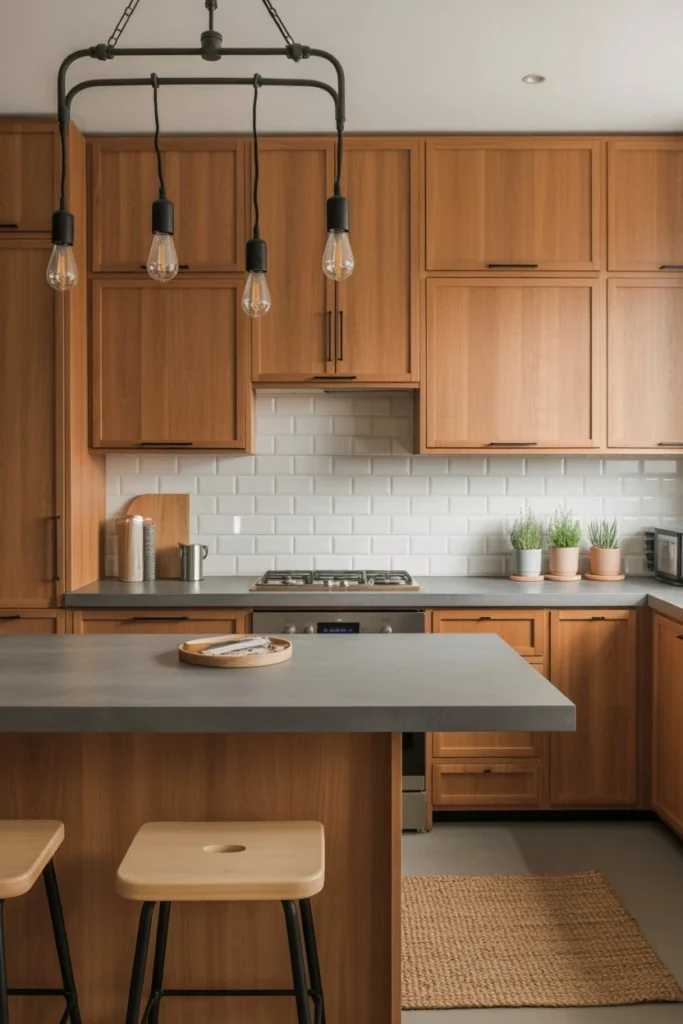
Oak and concrete is the minimalist power pairing: the wood brings warmth and grain, the concrete brings an edgy, architectural cool. Together they create a kitchen that feels designed rather than decorated, with texture doing the work that color does in busier schemes. This look suits modern and industrial homes where restraint is the aesthetic.
How to do it: Use oak for cabinetry and floating shelves, and concrete for countertops, the island waterfall edge, or the floor. Keep the oak finish light and matte so it reads as soft against the concrete’s hardness, and warm the scheme with 2700K lighting throughout to prevent a cold feel. Limit the palette strictly: oak, concrete gray, white, and one black accent. Concrete countertops are heavy and porous, so hire a fabricator experienced with food-safe sealers and plan for professional installation.
Pro tip: Concrete develops a patina of small marks over time. If that bothers you, choose a quartz that mimics concrete instead; you get the look with none of the maintenance anxiety.
17. Herringbone Oak Flooring
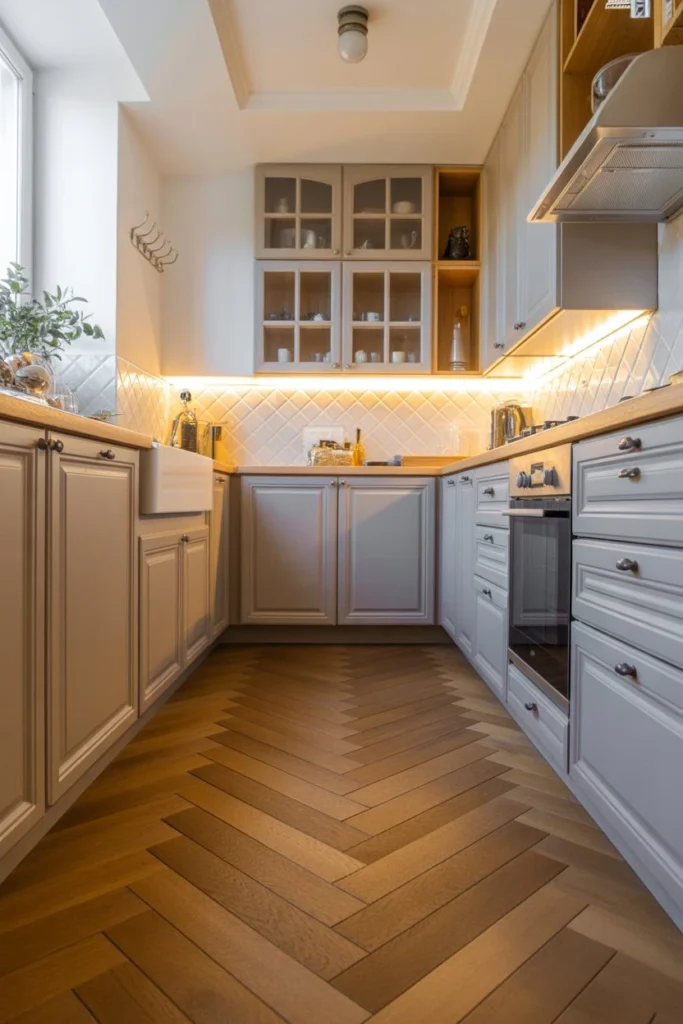
A herringbone oak floor turns the ground into the design statement. The zigzag pattern adds movement and sophistication that a straight plank floor cannot match, and it pairs with both modern slab cabinets and classic Shaker fronts. This is the upgrade that makes guests ask about your floors before they notice anything else.
How to do it: Choose engineered oak in a herringbone pattern for stability in a kitchen environment, where moisture swings can move solid wood. Keep the cabinet and counter palette quiet so the floor stays the star: simple white or light oak cabinets, minimal hardware, and neutral tones throughout. Run the pattern toward the room’s focal point, usually the range or island, for the best visual flow. Herringbone costs roughly 30 to 50 percent more than straight plank in both material and labor, because every cut is a miter, so budget accordingly.
Pro tip: Use a matte or low-sheen finish on kitchen herringbone. Glossy floors show every crumb and footprint; matte hides daily life while looking more expensive.
18. Floating Oak Shelves Over Tiled Walls
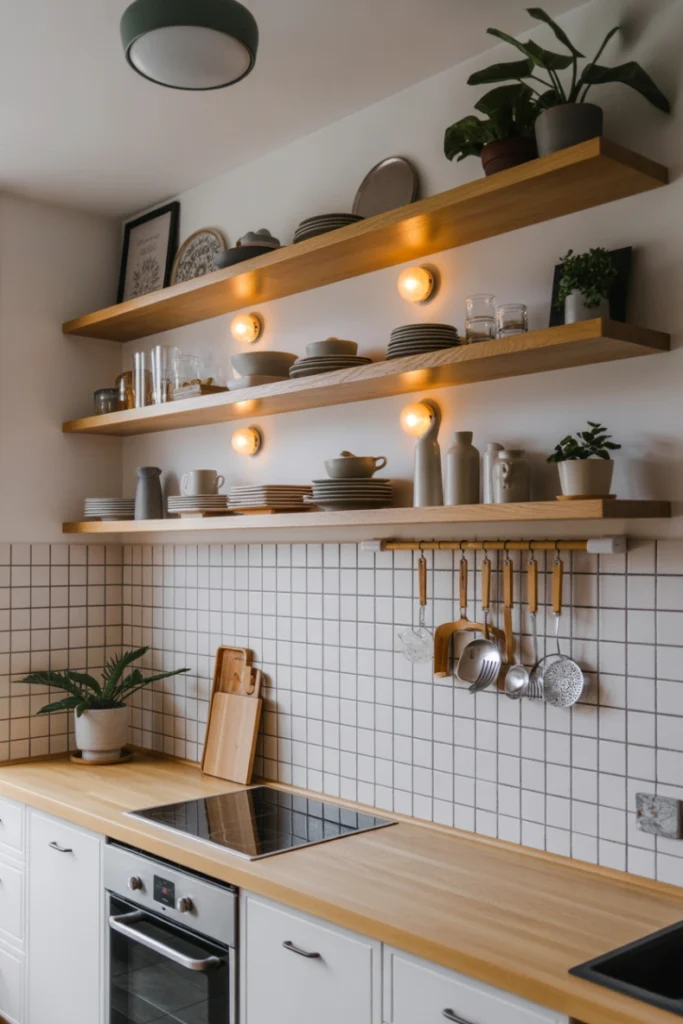
Floating oak shelves over a tiled wall combine two trends into one designer moment: the warmth of open wood shelving against the polish of a beautiful backsplash. The tile becomes the backdrop and the shelves become the styling surface, which is why this look photographs so well in handmade zellige, subway, or marble tile.
How to do it: Tile the full wall first, from counter to ceiling, in your chosen tile, then mount thick oak shelves (at least 2 inches reads as premium) on concealed brackets drilled through the tile into studs. Keep styling minimal and tonal: white ceramics, a small plant, wooden cutting boards leaned against the tile. The tile behind the shelves should be a pattern or texture worth showing off; plain drywall does not earn this treatment. Seal the oak shelves with a food-safe oil or matte polyurethane since they live in the cooking zone.
Pro tip: Plan shelf positions before the tile goes up. Moving a floating shelf after tiling means drilling new holes through finished tile, which nobody wants to pay for twice.
19. Dark Stained Oak for Dramatic Effect
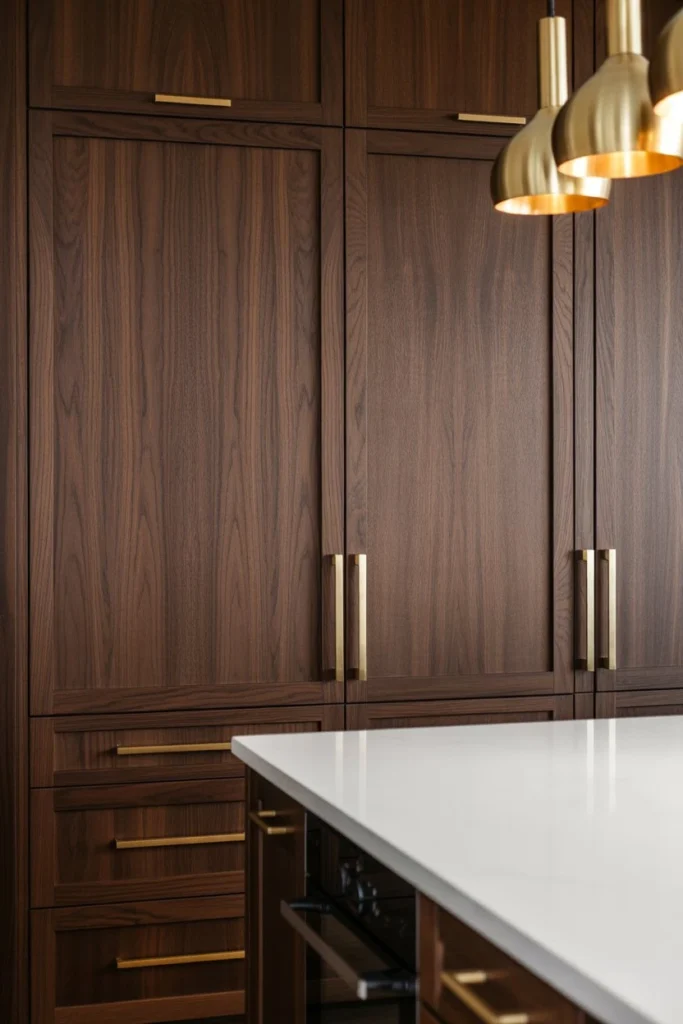
Dark-stained oak delivers the richness of walnut at a fraction of the price, with oak’s strong grain showing through for extra texture. This is the moody, luxurious option for homeowners who want drama without the flatness of painted black cabinets. The deep tones feel especially right in large kitchens and open-plan spaces with high ceilings.
How to do it: Stain oak in espresso, Jacobean, or a custom dark walnut tone, keeping the finish matte or satin so the grain stays visible. Balance the darkness aggressively: light walls, a white or cream stone countertop, and metallic accents in brass or champagne bronze to bounce light around. Add generous lighting, including under-cabinet strips and pendants, because dark cabinets absorb light and need more of it. Dark stain shows dust more than light finishes, so keep a microfiber cloth handy and choose a matte finish that forgives.
Pro tip: Test the stain on your actual oak, not on a sample board of different wood. Oak’s open grain takes dark stain unevenly in a beautiful way, but the exact depth varies by species and cut.
20. Oak Pantry with Hidden Storage
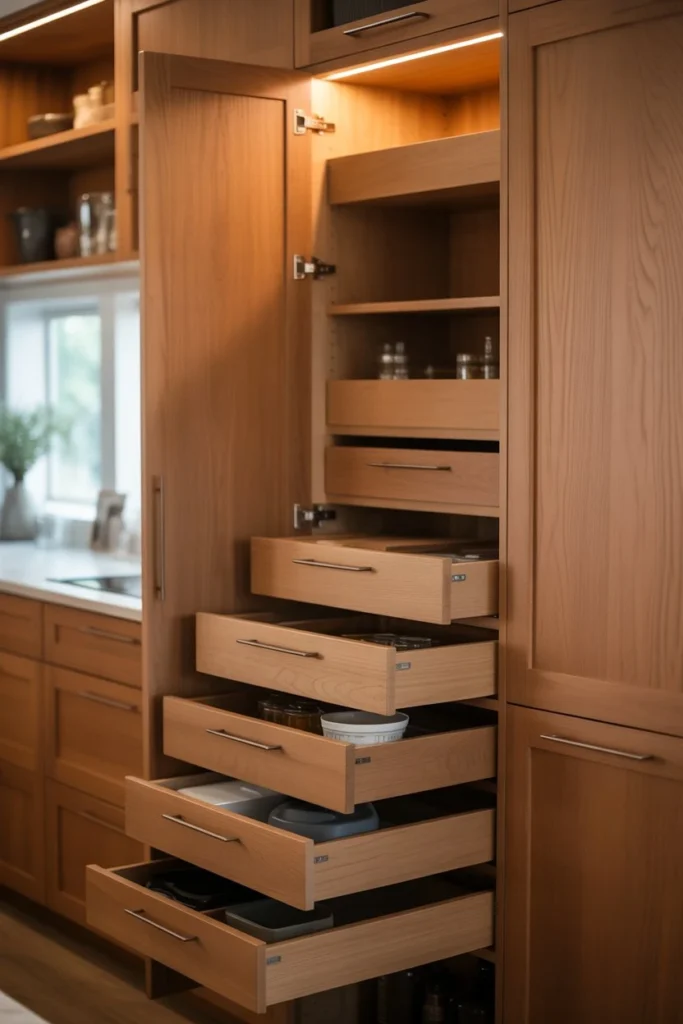
A custom oak pantry that blends into the cabinetry is the luxury nobody sees but everybody feels. When the pantry doors match the surrounding cabinets exactly, the kitchen reads as one calm, continuous wall of wood, and all the visual clutter of dry goods, small appliances, and bulk buys disappears behind it. This is organization as design.
How to do it: Build the pantry with the same oak, finish, and hardware as the rest of the kitchen so it vanishes into the run. Inside, use pull-out drawers for heavy items, adjustable shelves for tall goods, and door-mounted racks for spices and wraps. Add interior lighting on a door switch so the inside lights up when opened. Plan at least 24 inches of depth for real storage capacity. For the organization systems that make a hidden pantry actually work day to day, see our pantry organization ideas, which cover drawer layouts, labeling, and small-space pantry tricks.
Pro tip: Include one shallow “daily shelf” at eye level for coffee, tea, and breakfast items. The pantry earns its keep when the morning routine never requires digging.
21. Ceiling Beams and Oak Details
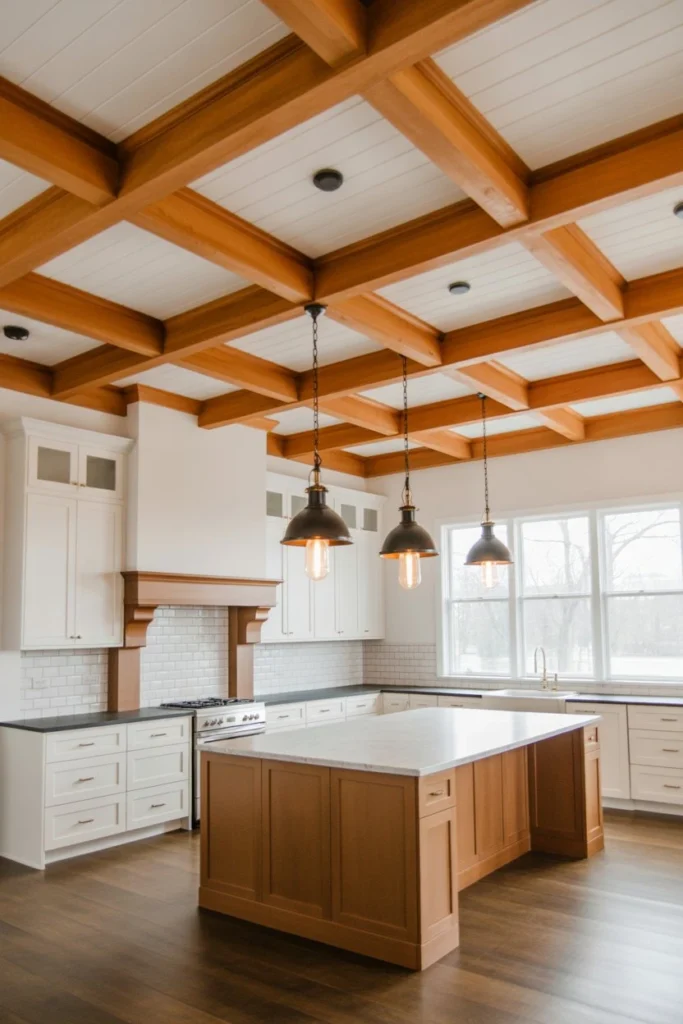
Exposed oak ceiling beams or oak trim details tie a kitchen together architecturally, pulling the wood from the cabinets up into the structure of the room. Beams add warmth overhead, define zones in an open plan, and give even a simple kitchen a sense of permanence and craft. This is the detail that makes a kitchen feel built, not installed.
How to do it: Install solid or box beams in oak stained to match or complement your cabinetry, running perpendicular to the room’s longest dimension for the strongest visual effect. Pair beams with neutral cabinets and modern lighting so the mix reads as rustic-meets-refined rather than full cabin. If real beams are not structural or practical, box beams built from oak veneer plywood give the same look at lower cost and weight. Keep the ceiling itself bright white so the beams stand out in contrast.
Pro tip: Size beams to the room: 6 to 8 inch beams suit standard 8 to 9 foot ceilings, while anything larger needs 10 foot ceilings or the beams will press the room down.
22. Oak Breakfast Nook or Seating Area
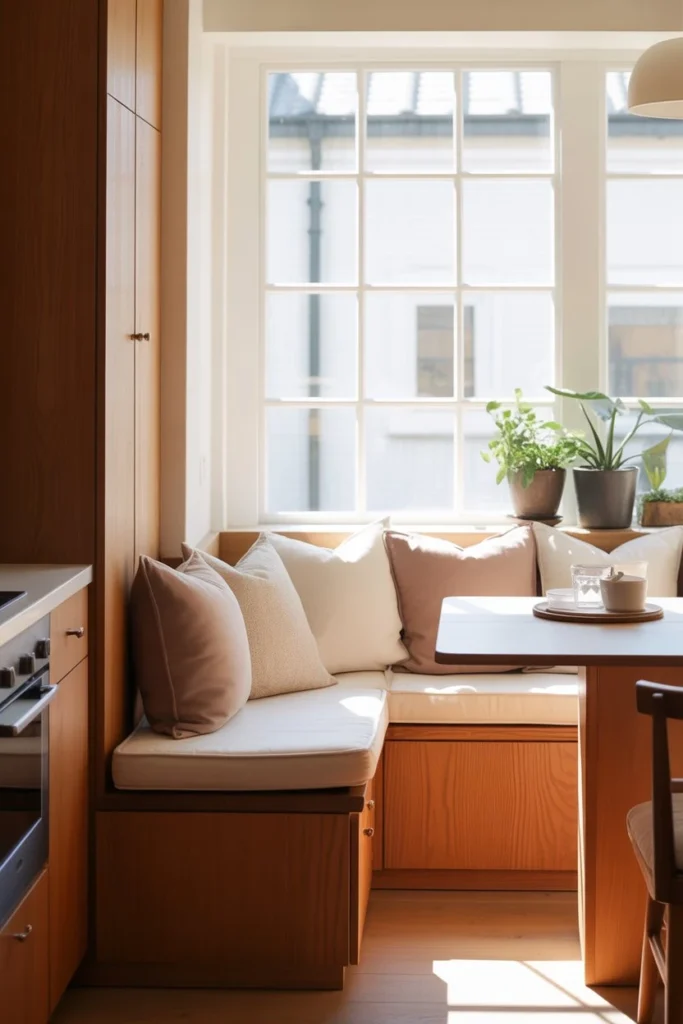
Extending the oak theme into a breakfast nook or seating area makes the kitchen feel like one cohesive, welcoming room instead of a workspace with chairs. A built-in oak bench or a solid oak table continues the material story, and the nook becomes the spot where everyone actually gathers, morning coffee, homework, and late-night conversations included.
How to do it: Build a banquette bench in oak to match your cabinetry, with a lift-up seat or drawers underneath for hidden storage, and pair it with a round or rectangular oak pedestal table that seats four comfortably. Upholster the bench cushions in a durable linen or performance fabric in a warm neutral, and add throw pillows in a pattern that picks up your kitchen’s accent color. Allow at least 18 inches of table overhang past the bench for legroom, and hang a pendant centered over the table at 30 to 36 inches above the surface.
Pro tip: A round table in a square nook wastes less space than a rectangular one and eliminates the “stuck in the corner” seat, because everyone can slide in from the open side.
23. Contemporary Oak Handleless Cabinets
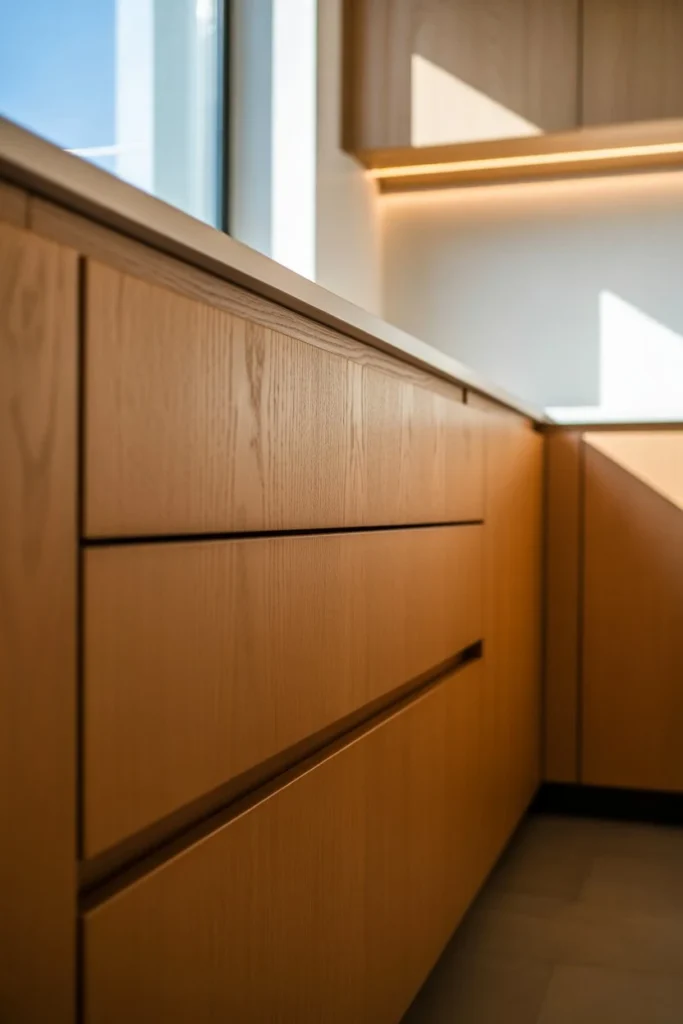
Handleless oak cabinets are the cleanest expression of the modern oak kitchen: uninterrupted wood panels with push-to-open mechanisms, no hardware breaking the lines. The grain becomes a continuous surface, almost like a wood wall, and the kitchen reads as calm, high-end, and quietly futuristic. This is the look for purists who want oak’s warmth in its most minimal form.
How to do it: Specify flat-panel oak doors with push-to-open latches or a recessed channel rail at the top of base cabinets and the bottom of uppers. Choose a consistent grain direction, usually vertical on tall panels, for a tailored look. Pair with integrated lighting, minimal decor, and a simple stone countertop so nothing competes with the wood. Push-to-open mechanisms add cost and need occasional adjustment, so have your installer show you the tension settings before they leave. If the broader palette interests you, our kitchen color scheme guide covers how to build a full room palette around wood cabinetry.
Pro tip: Handleless kitchens show fingerprints on the door edges where fingers push. A matte finish and a quick daily wipe keep them looking pristine.
Conclusion
Oak continues to be one of the most versatile materials in kitchen design. Whether you favor minimalist Scandinavian simplicity, rustic farmhouse charm, or sleek modern luxury, oak adapts effortlessly to any style. These 23 oak kitchen design ideas prove that the wood’s warmth and character never go out of fashion.
With thoughtful combinations of materials, finishes, and lighting, your oak kitchen can reflect both timeless craftsmanship and modern innovation. Start with the pairing that fits your home’s personality: the white countertop classic for brightness, the navy two-tone for contrast, or the marble combination for quiet luxury. Choose the idea that resonates most, and let the natural beauty of oak elevate your kitchen for years to come.
Frequently Asked Questions
Is oak out of style for kitchens?
No, oak is firmly back in style, but the look has changed. The orange-toned, heavily grained oak of the 1990s is gone; today’s oak kitchens use white oak or lightly finished red oak with matte seals, flat-panel doors, and modern pairings like white quartz, navy paint, and brushed brass. Designers now treat oak as a premium natural material rather than a budget default.
What countertop goes best with oak cabinets?
White quartz or marble is the safest and most popular pairing, because the light stone brightens the wood and keeps the kitchen feeling fresh. Black granite or soapstone creates dramatic contrast for a bolder look, while concrete suits modern and industrial styles. Avoid busy granites with heavy patterning, which fight oak’s strong grain instead of complementing it.
How do I update oak cabinets without replacing them?
Sand and restain them in a current tone, replace the hardware with matte black or brushed brass, add under-cabinet lighting, and update the backsplash and countertops if the budget allows. A professional-style refinish costs roughly one third to one half of full replacement and can completely change how the kitchen reads. See idea 12 above for the full refinishing process.
White oak vs red oak cabinets: which is better?
White oak is the current designer preference: it has a subtler, straighter grain and a cooler tone that takes modern finishes beautifully, and it resists moisture slightly better. Red oak is more affordable and widely available, with a warmer tone and more prominent grain. For a contemporary kitchen, choose white oak; for a warm traditional or farmhouse kitchen on a budget, red oak finished well looks fantastic.
What wall color goes with oak kitchen cabinets?
Warm whites and soft greiges are the most versatile choices, keeping the kitchen bright while letting the oak be the warmest element in the room. Sage green and soft navy work beautifully as accent walls with oak cabinetry. Avoid cool stark whites and gray-blues that clash with oak’s warmth, and test any paint against your actual cabinets in both morning and evening light before committing.
More Ideas You Will Love
 20 Kitchen Interior Ideas – Transform Your Space with Function & Style
 23 Tiny House Kitchen Ideas – Smart Space-Saving Designs You’ll Love
 19 Chic Kitchen Color Ideas for a Fresh & Modern Makeover
 22 Pantry Remodel Ideas – Organize & Style Your Kitchen Storage Beautifully
 19 Wood Kitchen Design Ideas with Stylish Looks & Practical Tips
 12 Modern Kitchen Desk Ideas to Repurpose Your Space Beautifully