
12 Outdoor Decor Protection Tips: Prevent Sun Damage Easily

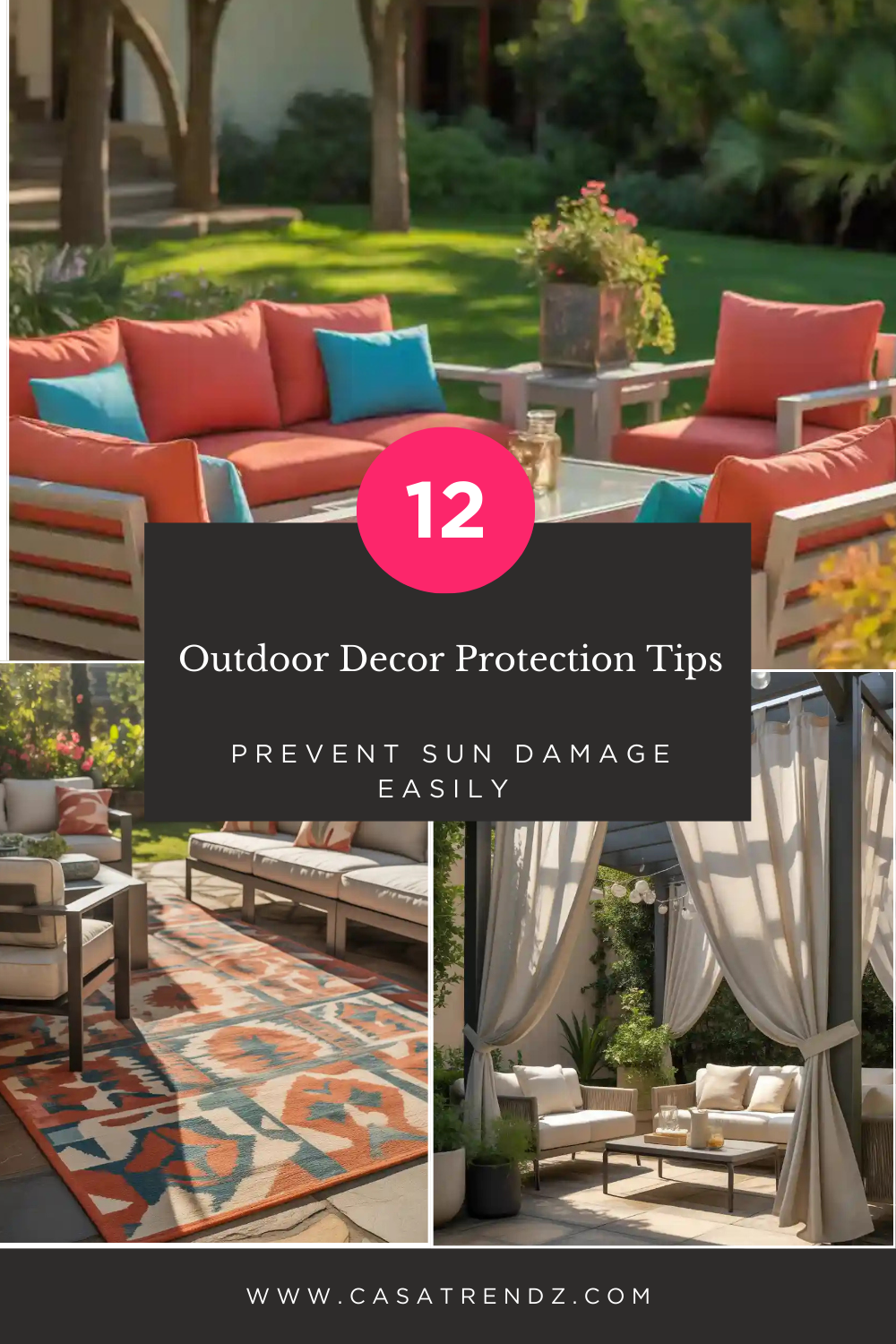
Your patio should be the place you run to on a sunny afternoon, not the place where your favorite cushions quietly fade to a washed-out version of themselves. Yet that is exactly what constant sun does to outdoor decor. UV rays break down fabric dyes, dry out wood until it cracks, bleach painted surfaces, and make plastic brittle. A cushion that looked rich terracotta in May can look dusty pink by August, and a teak bench left unsealed can turn gray and rough in a single season.
The good news is that sun damage is almost entirely preventable, and it does not take a big budget or a contractor to stop it. The twelve tips in this guide work together as a simple system: choose materials that resist UV from the start, add shade where it counts, and keep up a few small habits through the season. Each tip includes the exact products, measurements, and steps that make it work, so you can protect your furniture, rugs, cushions, and decorative pieces without guessing. Whether you have a small balcony or a full backyard, these ideas will help your outdoor space stay colorful, comfortable, and inviting for years.
Start with the tips that match your biggest problem. If your cushions fade first, begin with fabrics and storage. If your wood furniture is cracking, start with sealants. Small, consistent effort beats one expensive replacement every time.
1. Use UV-Resistant Outdoor Fabrics
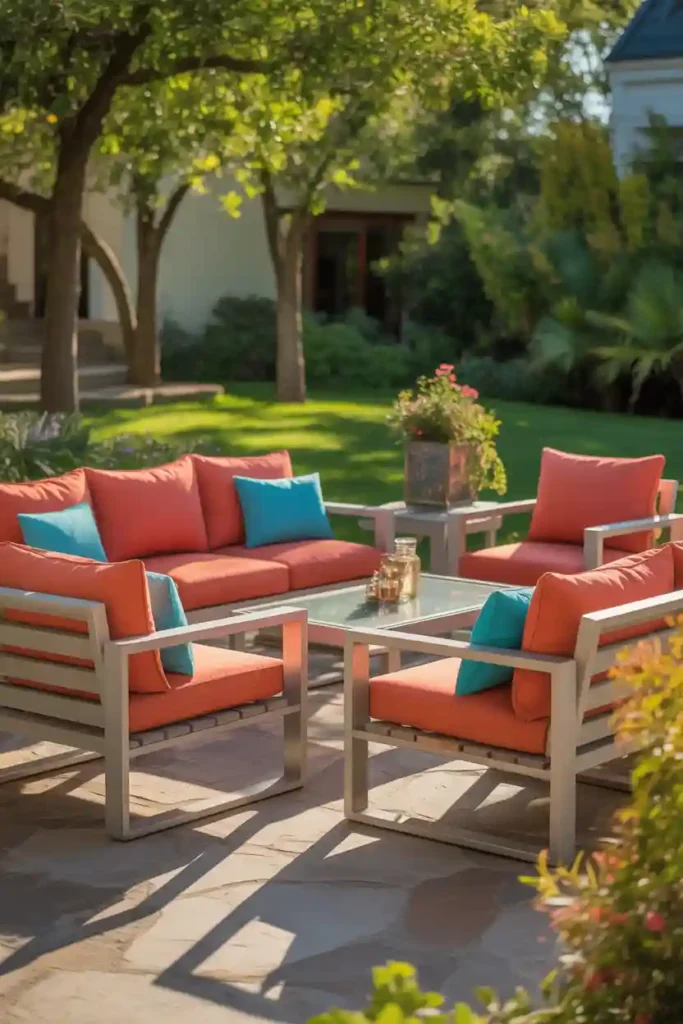
The single easiest way to prevent sun damage is to choose fabrics that were built for the outdoors. Standard indoor cotton and linen fade fast because their dyes sit on the surface of the fiber, where UV light breaks them down within weeks. Solution-dyed acrylic, the material used in brands like Sunbrella, works differently. The color is mixed into the liquid acrylic before the fiber is spun, so the pigment runs all the way through each thread. That is why solution-dyed acrylic cushions can sit in full sun for years and still hold their color, resist mildew, and shrug off rain.
When you shop, look for labels that say fade resistant, UV protected, or solution-dyed acrylic, and check the fabric weight. A good outdoor cushion fabric weighs around 8 to 9 ounces per square yard and feels dense, not papery. Olefin, also sold as polypropylene fabric, is another strong budget option. It resists fading and moisture well, though it feels a little stiffer than acrylic. Polyester outdoor fabrics are the cheapest choice and work fine in partial shade, but they fade faster in full sun, so save them for covered porches.
Color choice matters too. Deep navy, charcoal, forest green, and terracotta hide fading far better than pale pastels, which show sun bleaching quickly. If you love light colors, pick them in solution-dyed acrylic and accept that you will need to store the cushions more often. Removable covers with zippers are worth the small extra cost because you can wash them at the start and end of each season, and replace a single faded cover instead of a whole cushion. For more help picking materials that last, see our guide to the best outdoor furniture materials, which compares wood, metal, wicker, and fabric side by side.
2. Apply Protective Sealants to Wood Furniture
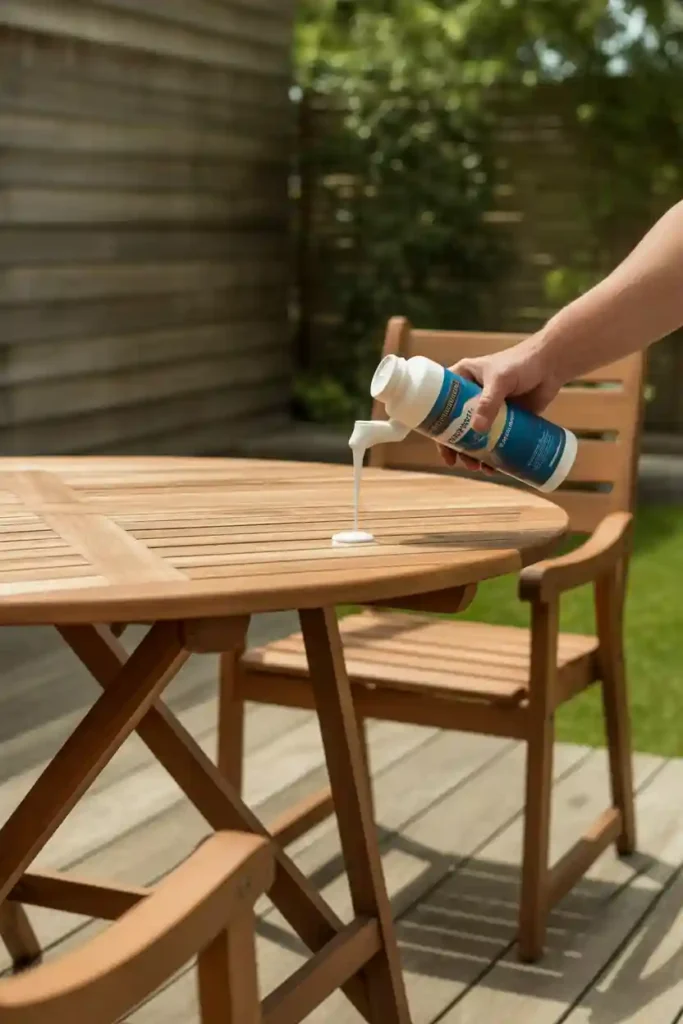
Wood is warm, beautiful, and completely defenseless against the sun unless you seal it. UV light breaks down lignin, the natural glue that holds wood fibers together, which is why unsealed teak turns silver-gray and pine garden chairs develop fine cracks along the grain. A good exterior sealant stops that process by forming a UV-blocking barrier on the surface while still letting the wood breathe.
Start by cleaning the piece with a wood cleaner or a mild mix of dish soap and water, then let it dry for at least 24 hours. Sand lightly with 120-grit sandpaper to open the grain and remove any gray, weathered layer, then wipe away the dust with a tack cloth. Apply a marine-grade spar varnish or an exterior oil with UV inhibitors using a natural-bristle brush, working in long strokes along the grain. Two thin coats beat one thick coat every time, so let the first coat dry for 4 to 6 hours, sand very lightly with 220-grit, and apply the second. For dense hardwoods like teak, a penetrating teak oil with UV protection is often better than varnish because it will not peel.
Plan on resealing once a year, ideally in spring before the strong summer sun arrives. A quick test tells you when it is time: sprinkle a few drops of water on the surface. If the water beads up, the seal is still working. If it soaks in and darkens the wood, reseal within the next few weeks. This one habit can easily double the life of a wooden table, bench, or pergola, and it costs far less than replacing the piece.
3. Invest in High-Quality Patio Covers
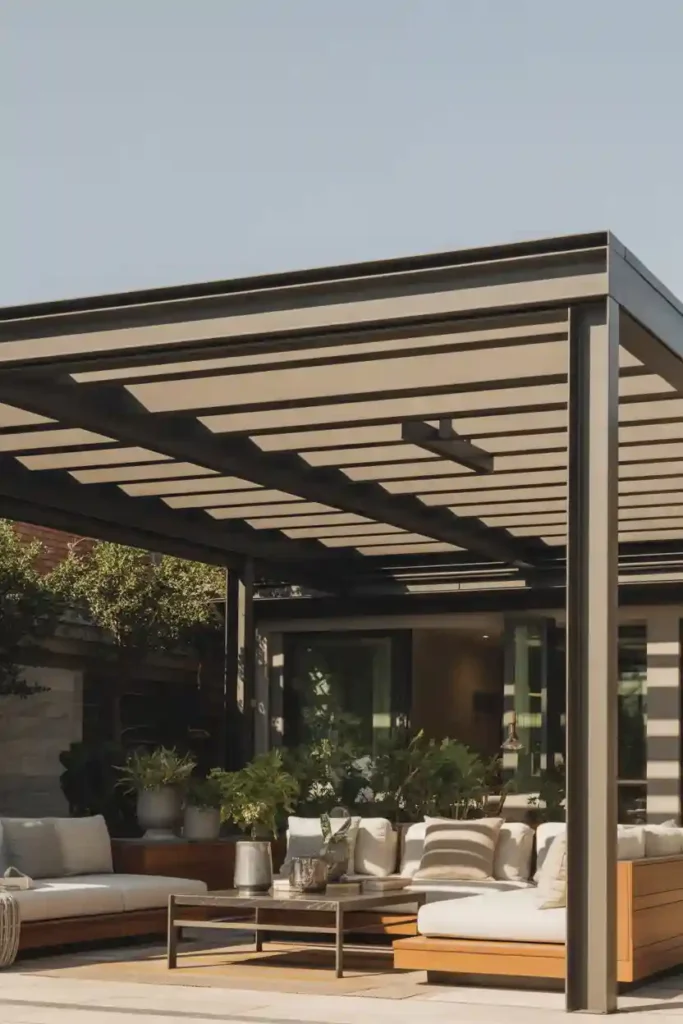
A patio cover is the most effective single investment you can make against sun damage because it removes the problem at the source. Instead of protecting each cushion, rug, and chair one by one, a cover shades everything underneath it at once. Studies from the shade industry suggest that a solid cover can cut direct UV exposure by 90 percent or more, which is the difference between cushions lasting one season and lasting five.
Fixed covers come in several materials, and each suits a different home. Aluminum covers are light, rust proof, and almost maintenance free, with prices starting around 15 to 25 dollars per square foot installed. Polycarbonate panels let soft, filtered light through while blocking UV, which keeps the patio bright without the harsh glare. Wood covers, usually cedar or redwood, look the warmest and suit traditional homes, but they need resealing every one to two years just like wood furniture. Retractable awnings are the flexible option. A good manual awning costs 500 to 1,500 dollars, while a motorized one with a wind sensor runs 2,000 to 4,000 dollars, and you can extend it only when the sun is strong.
Before you buy, measure the area you want to shade and think about the sun path. West-facing patios get the harshest afternoon sun, so a cover that extends at least 10 to 12 feet from the house wall is usually needed to keep seating in shade after 3 p.m. Check your local building rules too, since some areas require a permit for a fixed structure. Done right, a patio cover also makes the space usable on hot days, which is a benefit you will feel every single weekend. If you are planning the whole layout, our outdoor patio design ideas show how covers, furniture, and lighting work together.
4. Add Outdoor Umbrellas for Shade
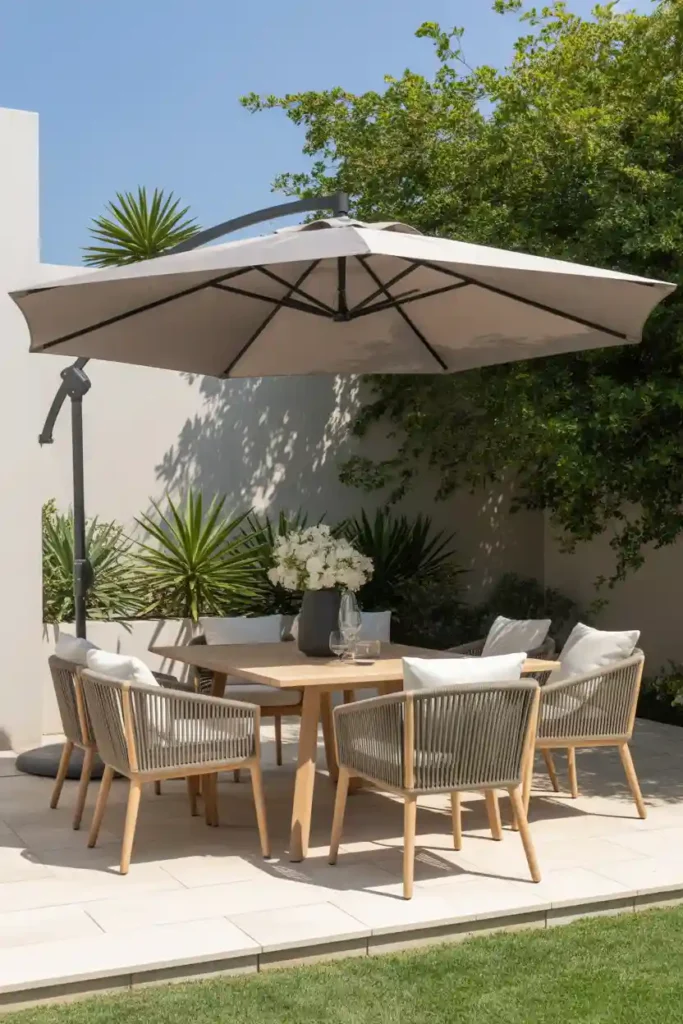
If a fixed cover is more than you want to spend right now, a good outdoor umbrella gives you most of the protection for a fraction of the price. A 9-foot market umbrella shades a 4-person dining table, while an 11-foot cantilever umbrella can cover a full lounge set and swivel to follow the sun. The key detail is the fabric. Look for a canopy rated UPF 50 or higher, which blocks at least 98 percent of UV rays, and choose solution-dyed acrylic or polyester with a UV coating rather than plain cotton canvas, which fades and rots.
Stability matters as much as shade. A 9-foot umbrella needs a base of at least 50 pounds, and a cantilever model needs 100 pounds or more, because a gust of wind can turn a light umbrella into a projectile that damages the very furniture you are trying to protect. Fillable bases that you top up with sand or water are practical because you can empty them when you move the umbrella. Tilt and crank mechanisms are worth paying for, since they let you angle the canopy toward low afternoon sun instead of leaving half the table exposed.
Place the umbrella so it shades the furniture during the hottest hours, roughly 11 a.m. to 4 p.m., and close it whenever you leave the house or a storm is coming. Even a sturdy umbrella is not built to survive high winds. With that one habit, a quality umbrella lasts 5 to 7 years, and your cushions underneath it will keep their color far longer than cushions left in open sun. For larger gatherings, pair an umbrella with a shaded seating plan from our outdoor entertaining area ideas so guests stay comfortable all afternoon.
5. Rotate and Rearrange Decor Regularly
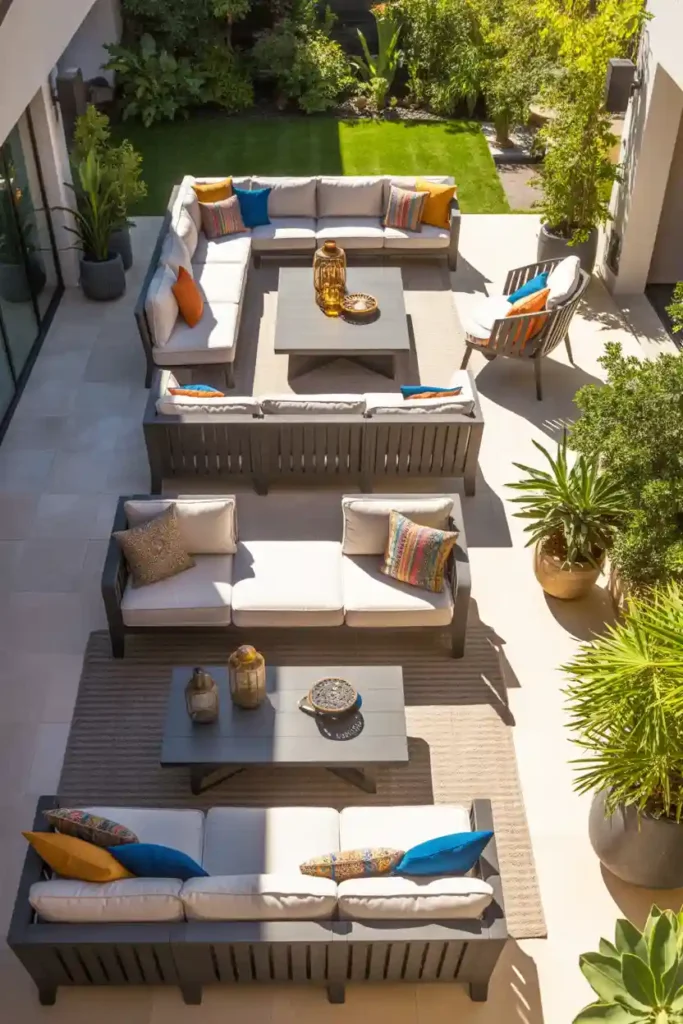
Sun damage is rarely even. The side of a cushion that faces south fades first, one arm of a chair bleaches while the other stays rich, and a rug develops a pale stripe where the sun hits it every afternoon. Rotating your decor every two to three weeks spreads that exposure evenly, so nothing reaches the point of looking worn while the rest still looks new.
Make it a simple routine. Flip every cushion and turn it end to end on the first and fifteenth of the month, so the habit sticks to dates you will remember. Move accent chairs and side tables a foot or two every few weeks, especially pieces that sit in direct afternoon sun. Rotate outdoor rugs 180 degrees once a month so the same edge is not always taking the strongest light. If you have planters, shift them a quarter turn each time you water so all sides of the plants and pots get equal sun. Even swapping which throw pillows are on display, and resting the others indoors for a week, extends their color life noticeably.
Rearranging has a second benefit that costs nothing: your patio looks fresh without buying anything new. A chair moved to the other side of the table, a lantern swapped onto a different shelf, or a rug turned around changes the whole feel of the space. Think of it as a free seasonal refresh that also happens to be one of the most effective sun-protection habits you can adopt. If you want more no-spend refresh ideas, our cheap backyard ideas are full of simple moves that cost little or nothing.
6. Choose Fade-Resistant Paint Finishes
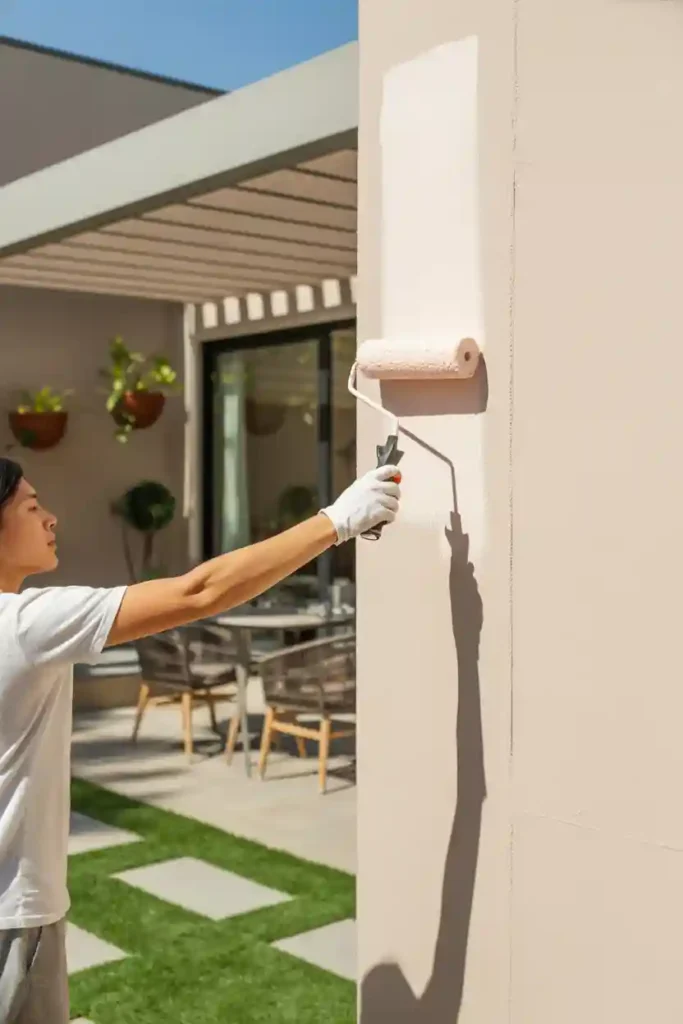
Paint is often the first thing to show sun damage on a patio. Cheap exterior paint chalks, peels, and fades within a year or two, while a quality fade-resistant paint can hold its color for five to eight years in the same sun. The difference is in the formula. Premium exterior paints use 100 percent acrylic resin and high-quality pigments, especially inorganic pigments like iron oxides, which resist UV breakdown far better than the organic pigments used in budget paints.
Finish matters as much as brand. Satin and semi-gloss finishes reflect a little light, which helps them resist UV better than flat paint, and they are easier to wipe clean when dust and pollen build up. Flat paint hides surface flaws well but chalks faster in strong sun, so save it for shaded walls. Lighter colors also fade less visibly than deep reds, blues, and blacks, which is worth remembering if your patio faces south or west. If you love a bold color, choose it in a premium line and accept that you will need a fresh coat a year sooner.
Preparation decides whether the paint lasts at all. Wash the surface with a pressure washer or a stiff brush and soapy water, let it dry fully, sand any rough or peeling spots, and apply a quality exterior primer before the topcoat. Two coats of topcoat are the standard, and the second coat should go on after the first has dried for the time printed on the can, usually 4 hours. Paint in the morning or late afternoon when the surface is cool to the touch. Painting in direct midday sun makes the paint dry too fast, which causes cracking and poor adhesion. Done properly, a good paint job protects planters, fences, railings, and metal decor for years.
7. Install Outdoor Curtains or Screens
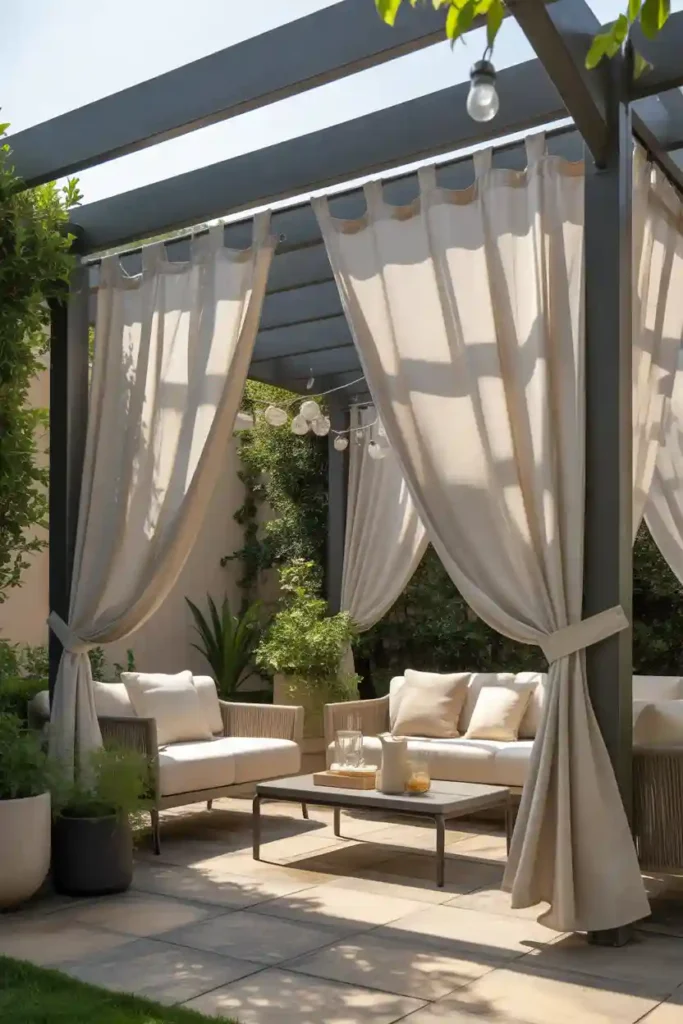
Outdoor curtains do two jobs at once: they soften a patio and make it feel like a room, and they block a surprising amount of UV. A lightweight outdoor curtain panel hung from a simple rod or cable can cut direct sun on the furniture behind it by half or more, especially during the low, harsh light of late afternoon when umbrellas and covers struggle most.
Choose fabric made for outdoor use, ideally solution-dyed acrylic or a polyester with a UV-blocking coating, and look for a label that says weather resistant and fade resistant. Sheer white or light linen-look panels reflect heat and keep the space bright, while heavier woven panels in a warm neutral give stronger shade and more privacy. For a standard 8-foot patio opening, plan on panels that are 50 to 100 inches wide each, with two panels per side, so they gather nicely instead of hanging flat. Stainless steel grommets and a rust-proof rod matter here, since ordinary hardware will stain and seize after one rainy season.
Retractable screens and roll-down shades are the more polished option for pergolas and covered porches. A manual roller shade for a 6-foot opening costs around 100 to 250 dollars, while a motorized one runs 400 to 800 dollars, and both let you drop the shade only when the sun is low. Keep curtains tied back on windy days and wash them once a month with mild soap to prevent mildew. Hung well, curtains protect delicate wicker, rattan, and fabric upholstery from the sun while making your patio feel like a resort.
8. Store Cushions When Not in Use
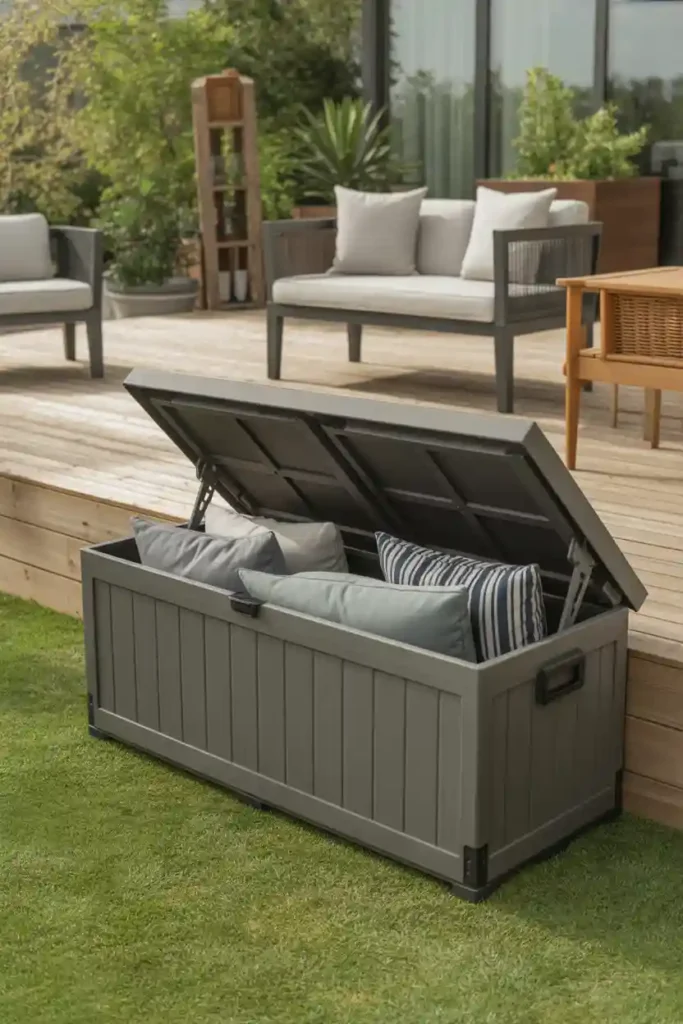
Even the best UV-resistant cushions last longer when they are not sitting in the sun all day, every day. Think of it this way: a cushion left outside 24 hours a day gets roughly 12 hours of UV exposure daily, while a cushion stored after each use might get only 3 or 4 hours. That difference adds up to years of extra color and comfort over the life of the cushion.
Make storage easy or it will not happen. A deck box or storage bench placed right next to the seating area is the best solution because it takes ten seconds to open and drop the cushions in. Look for a box with a waterproof seal, ventilation gaps to prevent mildew, and enough space for all your cushions without crushing them. A 120-gallon deck box holds cushions for a 4-seat set, while a storage bench that doubles as extra seating saves space on small patios. If indoor storage is possible, a shelf in the garage or a closet near the back door works just as well, and it protects cushions from overnight dampness too.
If you cannot store cushions indoors, use weatherproof cushion bags made from UV-blocking fabric, and always let cushions dry fully before sealing them away. Damp cushions stored in a closed bag grow mildew within days. At the end of the season, wash removable covers, let the foam inserts air dry in the shade, and store everything indoors for winter. This one habit alone can double the life of your cushions and keep them feeling soft and comfortable instead of flat and faded.
9. Use Weatherproof Outdoor Rugs
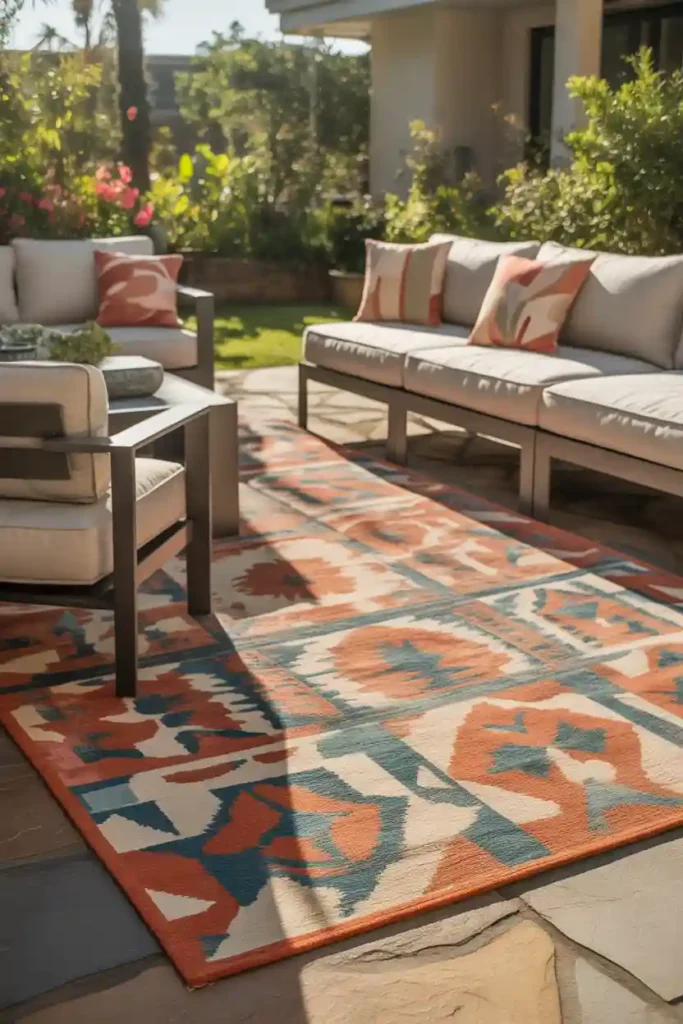
A rug ties a patio together, but a regular indoor rug left outside will fade, hold moisture, and fall apart within a single summer. Outdoor rugs made from polypropylene, also called olefin, are built for exactly this job. The fibers resist UV fading, dry quickly after rain, and do not support mold or mildew growth. PET rugs, made from recycled plastic bottles, are another good option and often feel softer underfoot than polypropylene.
When you shop, check the label for three things: UV resistant, mold resistant, and fade resistant. A flat-weave or low-pile rug works best outdoors because it dries faster and is easier to sweep clean. For sizing, follow the same rule as indoors: the front legs of your chairs and sofa should sit on the rug. An 8 by 10 foot rug suits most 4-seat patio sets, while a 5 by 7 foot rug fits a small bistro set. Leave a border of 6 to 12 inches of deck or patio showing around the edges so water can drain and the rug does not trap moisture against the surface.
Care is simple but worth doing. Shake the rug out weekly, hose it down once a month, and scrub stains with mild soap and a soft brush. Never use bleach, which breaks down the fibers and fades the color. Rotate the rug 180 degrees once a month so one end is not always in the strongest sun, and roll it up and store it during winter if your climate has a real off season. A quality outdoor rug costs 80 to 250 dollars and should last 3 to 5 years in full sun, which is far cheaper than replacing faded flooring or a sun-bleached deck.
10. Add Pergolas or Shade Structures
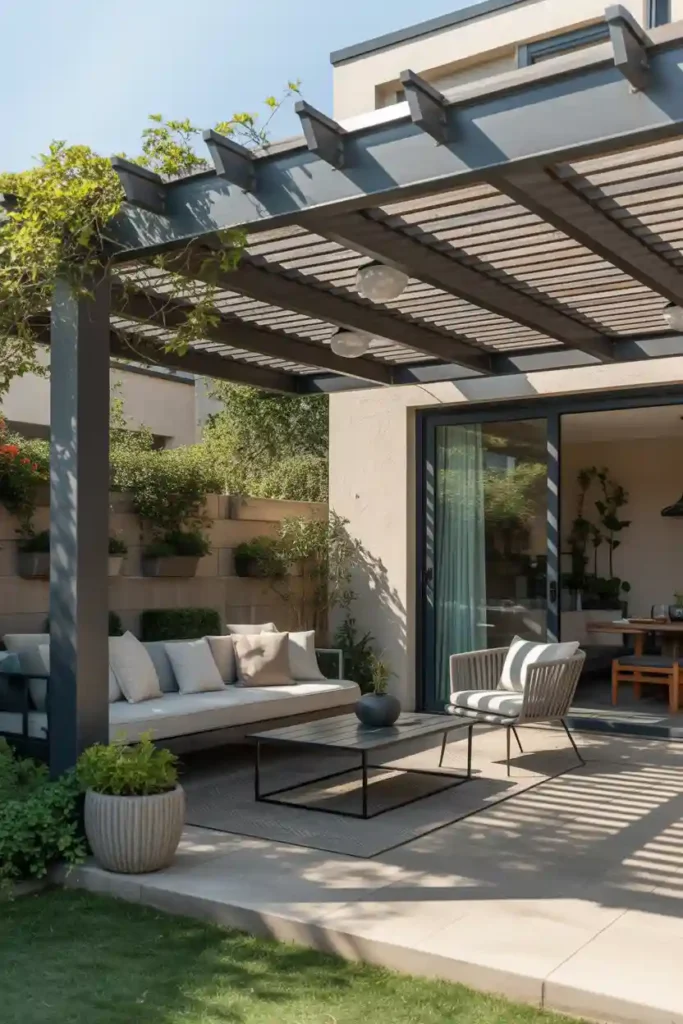
A pergola is the most stylish long-term shade solution you can add to a backyard. Unlike a solid roof, a pergola with slatted beams gives you filtered, dappled shade that keeps the space bright and airy while cutting direct UV exposure by roughly 40 to 60 percent. Add a retractable canopy, shade cloth, or climbing vines and that protection rises to 80 percent or more, while the space still feels open to the sky.
Sizing is the first decision. A 10 by 10 foot pergola covers a small dining set, while a 12 by 16 foot pergola comfortably shades a lounge set with room to walk around. Beam spacing controls how much sun gets through. Beams spaced 12 inches apart block more sun than beams spaced 24 inches apart, and a second layer of slats running crosswise, called a lattice top, adds even more shade. Cedar and redwood are the classic choices because they resist rot naturally, while aluminum pergolas are lighter, need no sealing, and suit modern homes. A DIY cedar pergola kit costs 1,500 to 3,500 dollars, while a professionally installed one runs 4,000 to 10,000 dollars depending on size and material.
Climbing plants turn a pergola into a living shade structure. Wisteria, jasmine, and grapevines grow fast and give dense summer cover, then thin out in winter when you want the sun back. A retractable fabric canopy is the flexible alternative: pull it closed on the hottest days and open it on mild evenings. Whichever route you choose, a pergola defines your outdoor living zone, protects the furniture and rugs underneath it, and adds real value to the property. It is the one tip on this list that changes how the whole backyard feels.
11. Clean and Maintain Decor Frequently
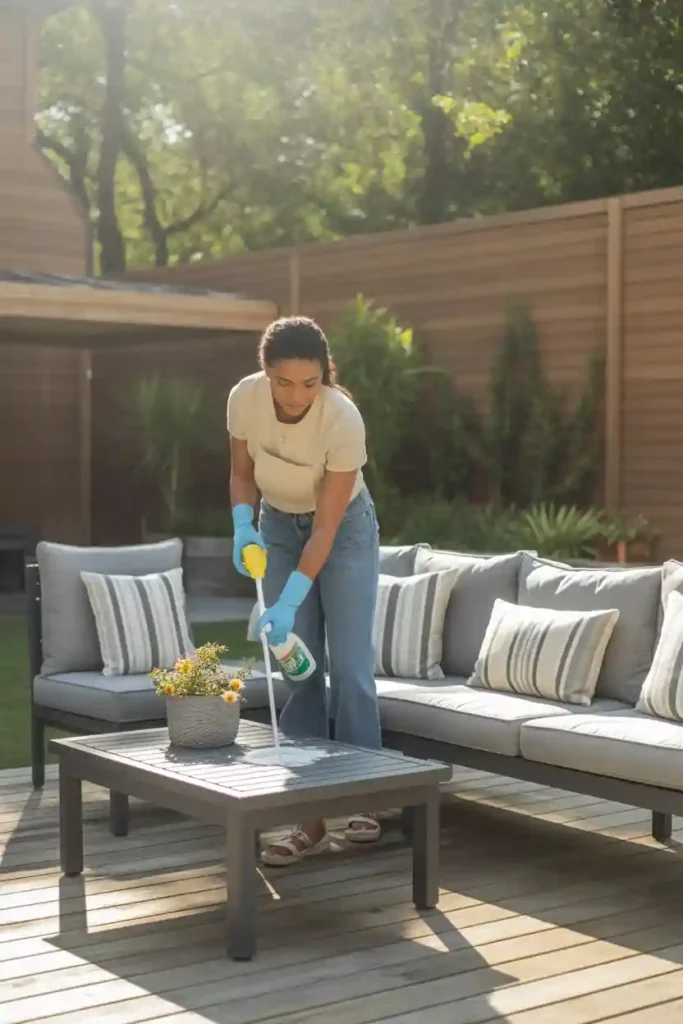
Dirt makes sun damage worse, and most people never connect the two. A layer of dust and grime on a cushion or a painted surface traps heat, holds moisture against the material, and gives UV light a rough surface to attack. A clean surface reflects more light, stays cooler, and holds its protective coatings longer. Regular cleaning is not just about looks. It is genuinely one of the most effective sun-protection habits you can build.
Set a simple schedule. Once a week, brush off cushions, shake out rugs, and wipe down tables and chairs with a damp cloth. Once a month, wash everything properly: cushions with mild soap and water, wicker with a soft brush, metal with soapy water and a rinse, and rugs with a hose and a scrub brush. Once a season, do a full inspection. Look for early fading, small cracks in wood, peeling paint, rust spots on metal frames, and fraying fabric edges. Catching these early means a ten-minute touch-up instead of a replacement: a dab of exterior paint, a light sanding and reseal on wood, or a rust converter on a metal frame.
Pay special attention after storms and during peak summer. Wind-blown grit scratches protective finishes, and summer pollen and bird droppings are mildly acidic, so they eat into sealants and paint if left for weeks. Keep a small cleaning kit by the back door: a soft brush, a bottle of mild soap, a few microfiber cloths, and a spray bottle. Five minutes of care after a weekend of use keeps your decor looking new far longer than any single product can.
12. Use Furniture Covers During Peak Sun
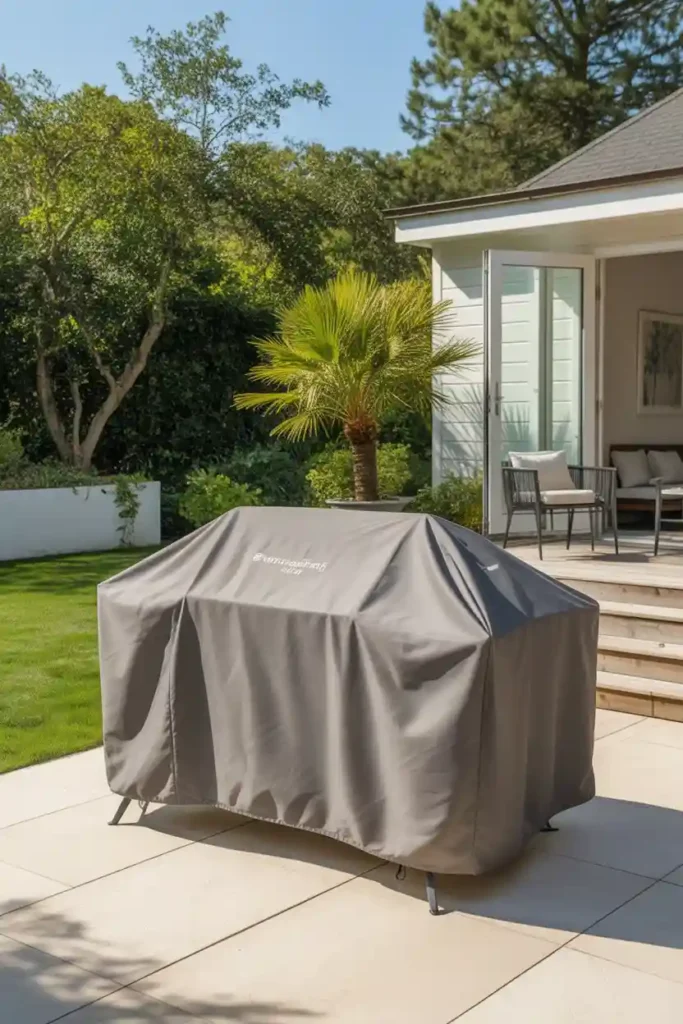
Furniture covers are the simplest and cheapest protection on this list, and they are the one most people skip. A good cover costs 30 to 80 dollars per piece, takes less than a minute to put on, and can easily double the life of a chair, sofa, or dining set by blocking UV, rain, dust, and bird droppings all at once.
Fit is everything. Measure the length, width, and height of each piece and buy a cover that matches within a couple of inches. A cover that is too loose flaps in the wind, rubs against the furniture, and lets rain blow in underneath. A cover that is too tight strains at the seams and tears within a season. Look for covers made from 600D polyester with a waterproof PVC or polyurethane coating and a UV-resistant treatment. The best covers have air vents that let moisture escape, click-close straps or drawstrings that hold them tight, and padded handles that make them easy to lift off. Avoid cheap vinyl covers, which trap heat and moisture and can stick to surfaces on hot days.
Use covers strategically rather than all the time. Put them on during vacations, off-season months, and the hottest weeks of summer when you know the furniture will sit unused for days. Take them off and let the furniture air out once a week so trapped moisture does not cause mildew. If you store the furniture itself for winter, covers add an extra layer of protection in the garage or shed. For the price of one takeout dinner, a set of covers can save you hundreds of dollars in replacements.
Final Words
Protecting your outdoor decor from the sun is not about one magic product. It is about layering a few smart choices: UV-resistant fabrics and weatherproof rugs as your base, shade from covers, umbrellas, curtains, or a pergola as your shield, and small habits like rotating, storing, cleaning, and covering as your maintenance. Each tip on its own helps a little. Together, they keep your patio looking the way it did on the day you set it up.
Start with the two or three tips that match your biggest problem and add the rest over the season. Seal the wood this weekend, order covers for the pieces you use least, and set a reminder to rotate the cushions on the first of the month. A few minutes of care now saves you the cost and hassle of replacing faded cushions, cracked wood, and bleached rugs later, and it keeps your outdoor space a place you actually want to spend time in.
Frequently Asked Questions
How do I stop my outdoor cushions from fading in the sun?
Choose cushions made from solution-dyed acrylic or olefin fabric, which hold color far longer than regular polyester or cotton. Store cushions in a deck box or indoors when you are not using them, rotate and flip them every two weeks, and keep them under a patio cover or umbrella during peak sun hours from 11 a.m. to 4 p.m. Together, these habits can keep cushions looking new for five years or more.
What is the best sealant for outdoor wood furniture?
For most outdoor wood furniture, a marine-grade spar varnish or an exterior oil with UV inhibitors works best. Spar varnish forms a hard protective film and suits chairs and tables, while penetrating teak oil is better for dense hardwoods like teak because it will not peel. Whichever you choose, sand lightly, apply two thin coats, and reseal once a year in spring.
Do outdoor furniture covers really help prevent sun damage?
Yes, covers are one of the most effective and cheapest forms of protection. A well-fitted cover made from 600D polyester with a UV-resistant coating blocks direct sunlight completely, which stops fading, cracking, and heat damage. Use them during vacations, off-season months, and the hottest weeks of summer, and air the furniture out once a week to prevent trapped moisture.
How often should I reseal outdoor wood furniture?
Reseal once a year, ideally in spring before the strong summer sun arrives. Test the current seal by sprinkling water on the surface. If the water beads up, the seal is still working. If it soaks in and darkens the wood, it is time to clean, lightly sand, and apply a fresh coat within the next few weeks.
Can a pergola really protect my patio furniture from the sun?
Yes. A pergola with slatted beams cuts direct UV exposure by about 40 to 60 percent, and adding a retractable canopy, shade cloth, or climbing vines raises that to 80 percent or more. The filtered shade keeps the space bright while protecting furniture, rugs, and cushions underneath, and a pergola also adds value and structure to your backyard.
More Ideas You Will Love
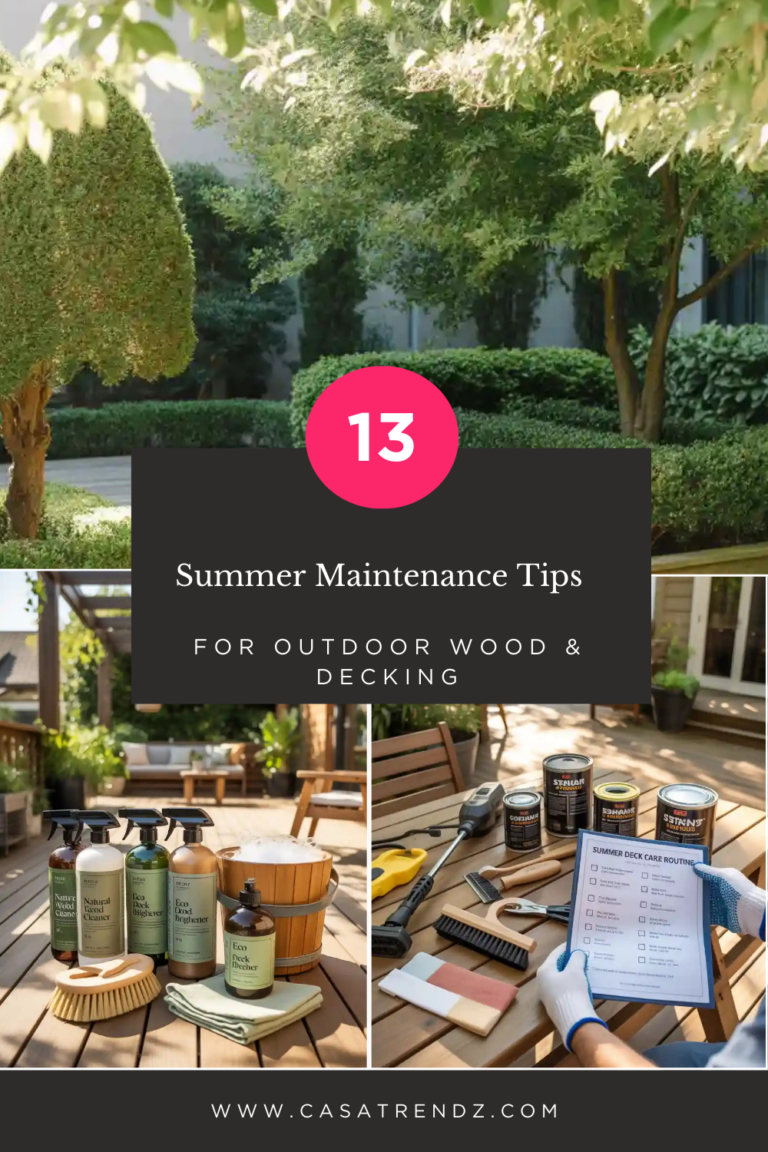 13 Summer Maintenance Tips for Outdoor Wood & Decking Introduction
 15 Inspiring Sunroom Ideas to Transform Your Space in Style
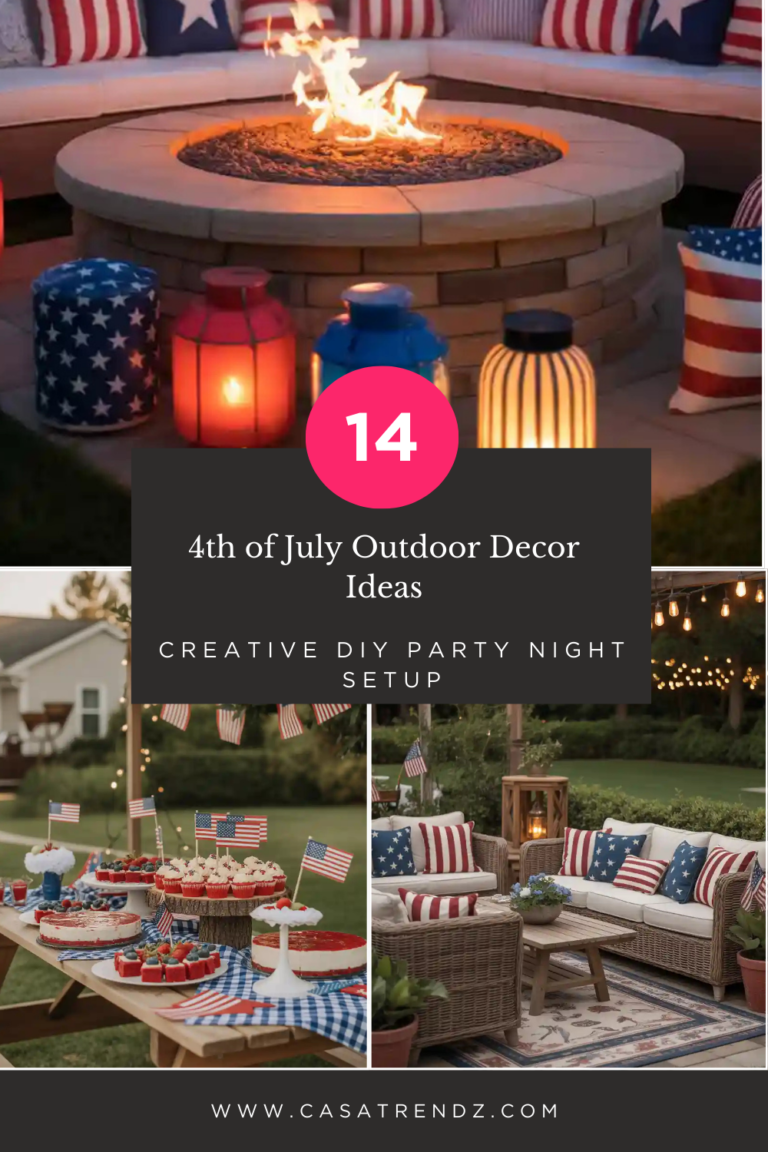 14 4th of July Outdoor Décor Ideas: Creative DIY Party Night Setup
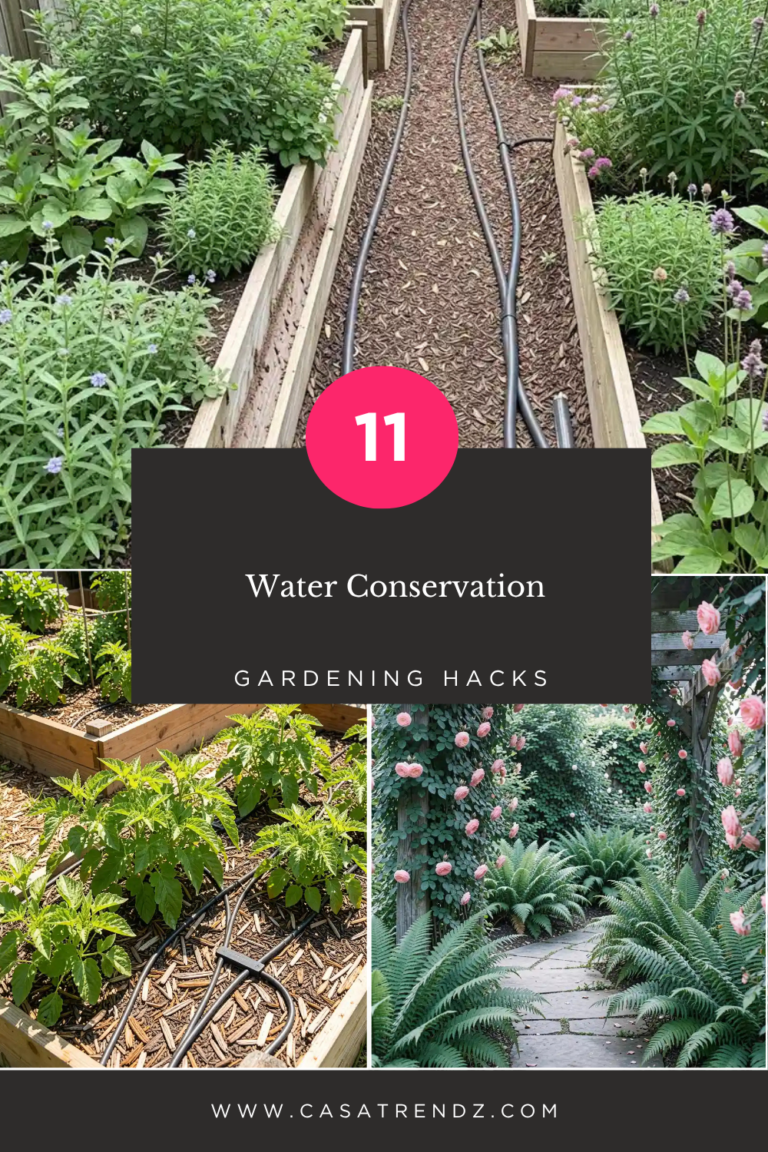 11 Water Conservation Gardening Hacks
 15 Backyard Fire Pit Ideas for Every Budget and Outdoor Style
 12 Easy Ways to Beautify Your Porch with Hanging Plants