
14 Black Exterior House Ideas for a Chic Modern Look

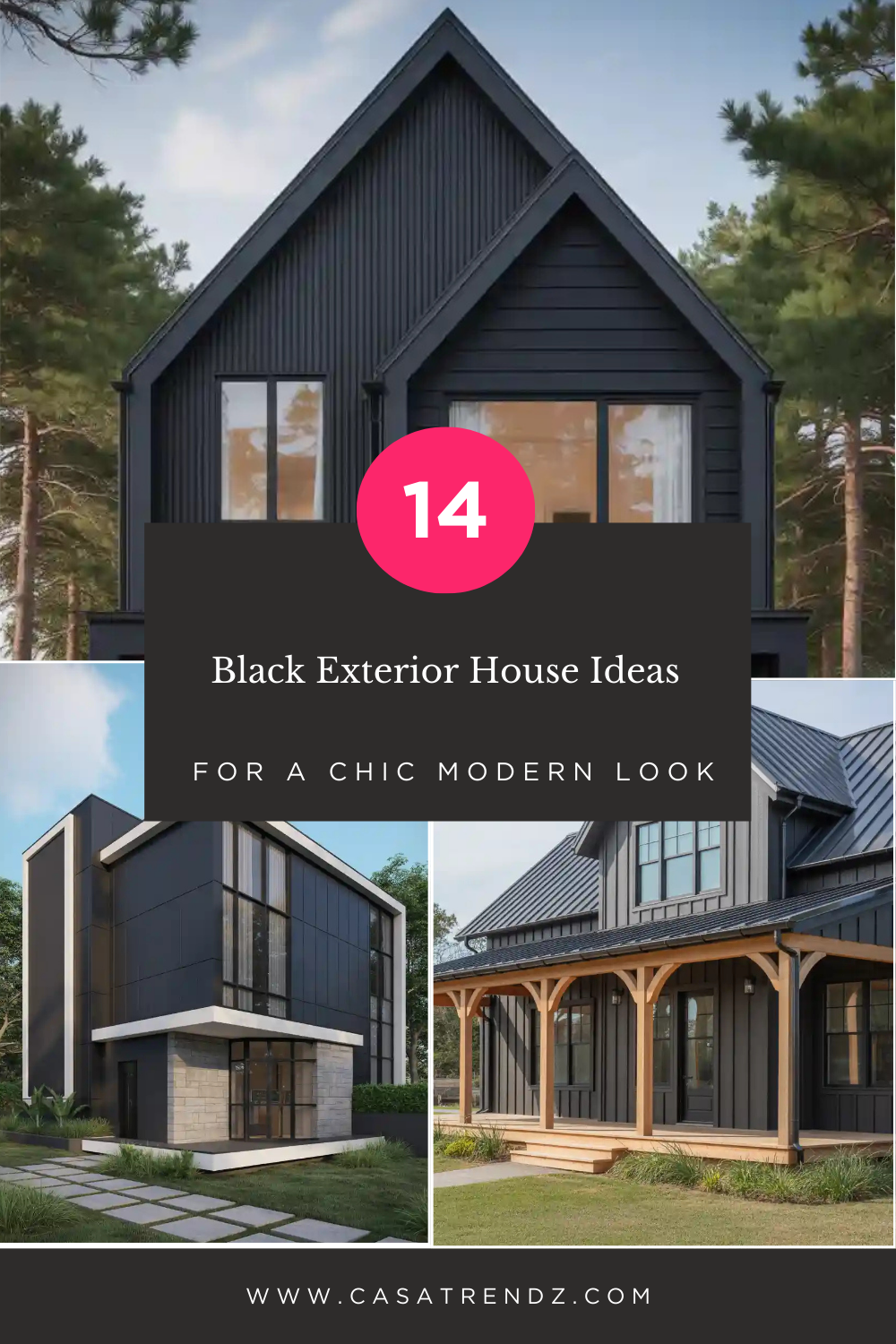
A black exterior used to be the boldest move a homeowner could make. Today it is one of the most requested looks in modern home design, and for good reason. A deep black facade sharpens every architectural line, makes windows and trim pop, and gives even a simple ranch or cottage a high-end, editorial feel. It works on modern boxes, farmhouses, coastal cottages, and Scandinavian cabins alike.
The secret to getting black right is balance. Black on its own can look flat or heavy, so the best designs pair it with texture, warm wood, pale stone, glass, and thoughtful lighting. Paint finish matters too. A matte or satin black softens glare and hides small flaws, while a glossier black turns a front door or metal panel into a mirror-like accent. In this guide you will find 14 black exterior house ideas with the exact materials, colors, and styling moves that make each one work, so you can pick the look that fits your home and your budget.
Before you commit, order large paint swatches and test them on different walls of your house. Black shifts dramatically in sun and shade, and a color that looks rich charcoal at noon can read almost navy at dusk. Live with the swatches for a few days, then choose with confidence.
1. Matte Black Modern Minimalist Facade
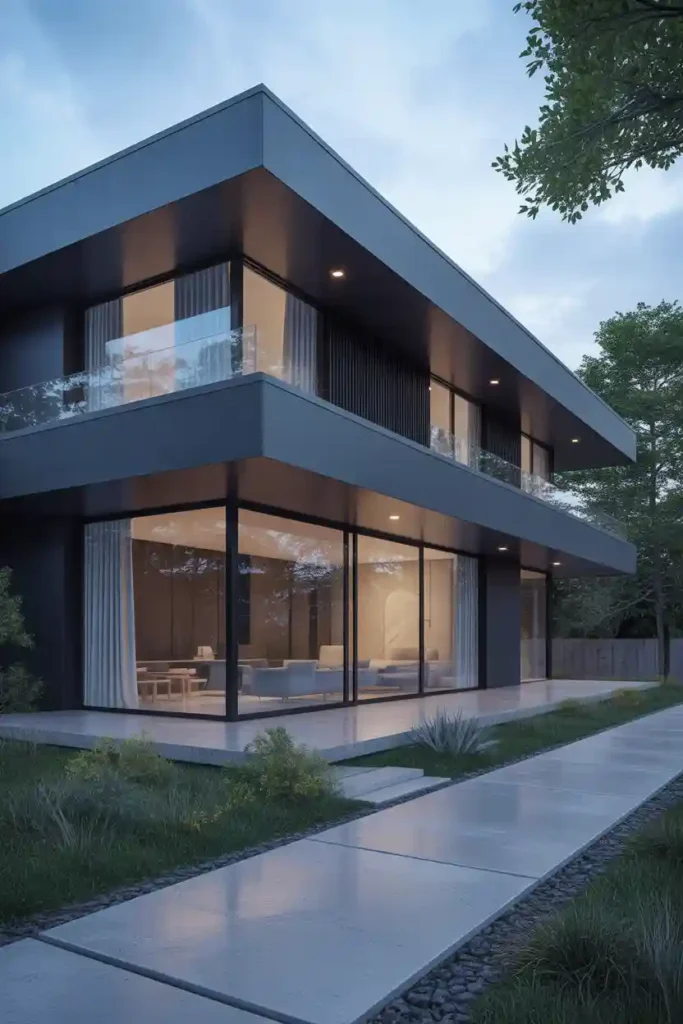
A matte black minimalist facade is the purest form of this trend. Clean lines, a flat or low-slope roof, and large geometric windows stand out dramatically against a deep black finish. The matte texture absorbs light instead of reflecting it, which prevents glare and puts all the attention on the shape of the house. Popular paint choices for this look include Tricorn Black by Sherwin-Williams and Onyx by Benjamin Moore, both true blacks with almost no blue or green undertone.
Keep the palette restrained so the architecture does the talking. Pair the black walls with black aluminum window frames, a flush front door with no visible hardware clutter, and a concrete walkway in light gray. Add ornamental grasses such as fountain grass or blue fescue in simple rectangular planters, and hide warm white LED strip lighting under eaves and along steps. At 2700K the light glows amber against the black and makes the whole facade look expensive after dark. This look works best on contemporary and urban homes, and it suits small lots because the dark color makes the house read as one sculpted object rather than a collection of parts.
One practical tip: matte paint shows dust and water spots more than satin, so choose a washable exterior acrylic and plan on a gentle rinse once or twice a year. If your home faces a dusty road, a satin finish gives you nearly the same look with easier upkeep.
2. Black Board and Batten Farmhouse Exterior
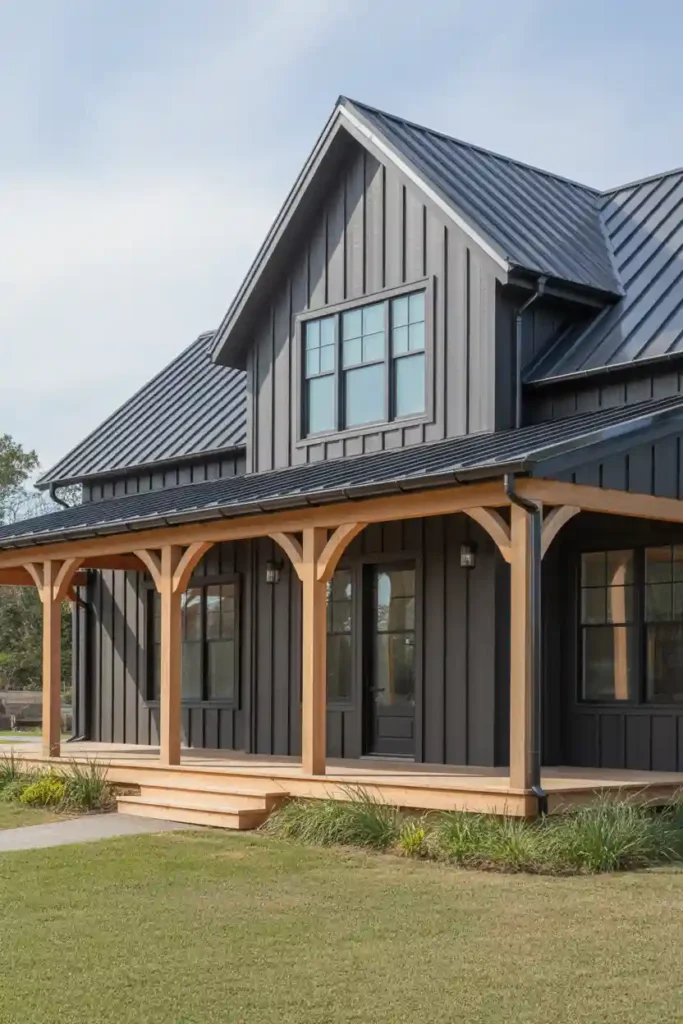
Black board and batten siding turns a classic farmhouse silhouette into a bold modern statement. The vertical battens, usually 1 by 2 inch strips spaced 12 to 16 inches apart, add height and rhythm to the walls, while the deep black tone brings contemporary sophistication. Fiber cement board and batten is the most durable choice here because it resists rot and holds paint longer than wood, though painted cedar gives a warmer, more authentic farmhouse feel.
Balance the drama with crisp white window trim, at least 3 to 4 inches wide, and natural wood beams or cedar porch columns. A standing seam metal roof in dark gray or black completes the look and lasts 40 to 70 years with almost no maintenance. Soften the front with a gravel pathway, green shrubs such as boxwood or juniper, and a wooden porch swing or rocking chairs. If you want more ideas for pairing dark siding with farmhouse details, see our modern farmhouse exterior ideas for porches, trim, and landscaping combinations that work with this exact style.
Paint the battens and the boards the same black so the shadow lines stay subtle, and use a satin finish so rain washes the siding clean. Avoid pairing black board and batten with dark window frames, since the house can lose definition. White or natural wood frames keep each window legible from the street.
3. Black Brick Contemporary Home
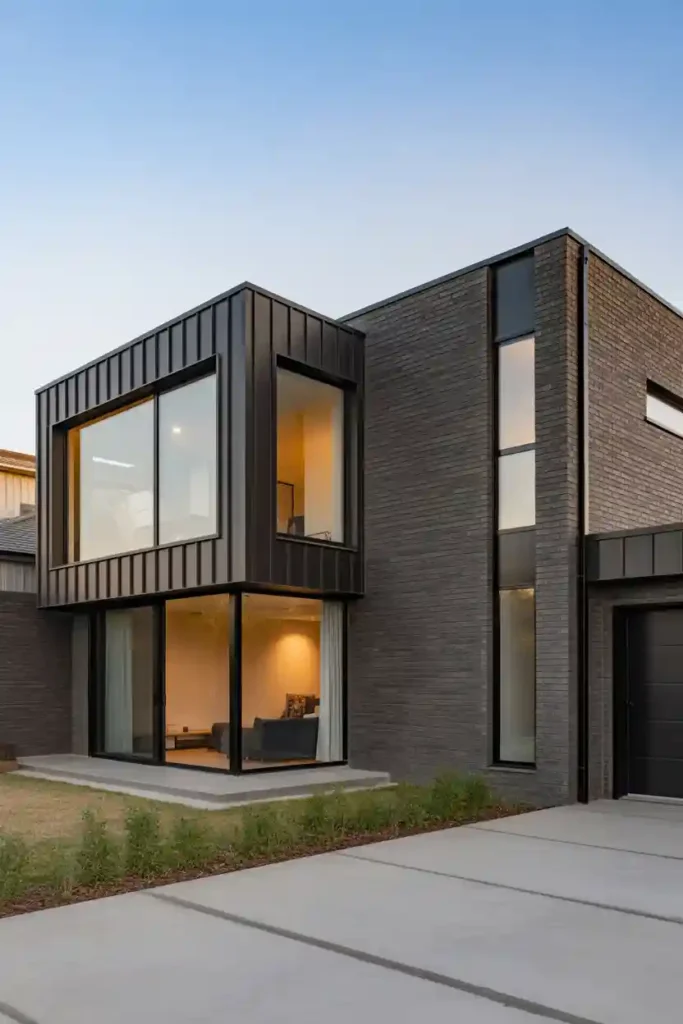
Black painted brick, or naturally dark brick, adds depth and texture that flat siding cannot match. Each brick catches light a little differently, so the facade has subtle variation in tone and shadow all day long. If you are painting existing brick, use a breathable masonry paint or mineral stain so moisture can escape from the wall. Limewash is not the right product for a true black finish, since it stays chalky and light. A high quality acrylic masonry paint in a soft black such as Iron Ore by Sherwin-Williams gives a rich, even coat that lasts 15 to 20 years.
Elevate the design with oversized windows in slim black frames, sleek glass railings on a front balcony or stair, and a light-colored concrete driveway or pale limestone walkway. The pale ground plane makes the black brick look richer by contrast. Inside, warm lighting shining through large windows softens the bold exterior at night and makes the home feel welcoming from the curb. Add a single sculptural tree, such as a Japanese maple, near the entrance for a touch of color that changes with the seasons.
Before painting brick, pressure wash the surface, repair any cracked mortar, and let the wall dry fully for at least 48 hours. Painted brick is a long-term commitment, so test a hidden patch first and look at it in morning and evening light before you approve the whole job.
4. Charcoal Stucco with Wood Accents
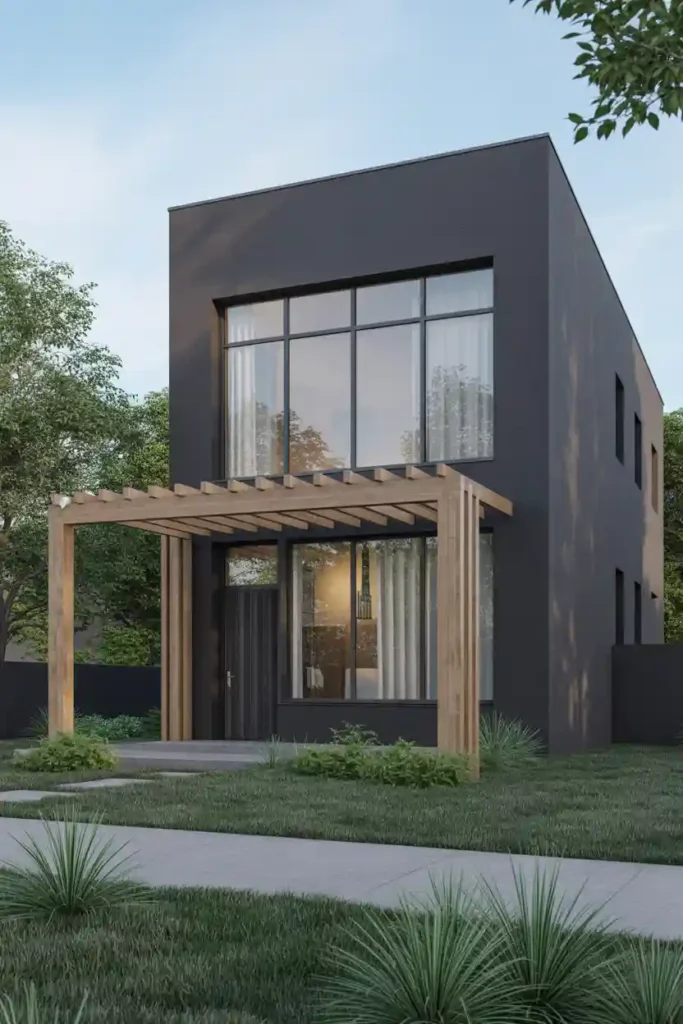
Charcoal stucco is a softer cousin of true black. It keeps the modern mood while reading a little warmer and more forgiving in bright sun. The smooth stucco surface adds a quiet texture to the facade, and when it is paired with natural wood accents such as a timber garage door, a cedar pergola, or a warm wood front entrance, the combination feels luxurious and approachable at the same time. Choose a stucco color in the charcoal family, around two shades lighter than pure black, so the walls do not look harsh against the sky.
Large windows framed in black or dark bronze aluminum bring in abundant natural light and keep the modern lines crisp. Landscaping should stay low and structured: ornamental grasses, boxwood spheres, or a row of lavender along the walkway all complement the muted charcoal without competing with it. Run low-voltage path lights along the walkway and add a warm wall sconce beside the wood front door so the timber glows at night. This style is ideal if you love the black exterior trend but want a home that feels warm rather than stark, and it works especially well in sunny climates where a true black can look too severe at midday.
Stucco needs a good sealant and a proper drainage plane behind it, so hire a contractor who specializes in stucco rather than a general painter. A well built stucco wall lasts decades, while a poorly detailed one cracks and traps moisture.
5. Black and White Contrast Exterior
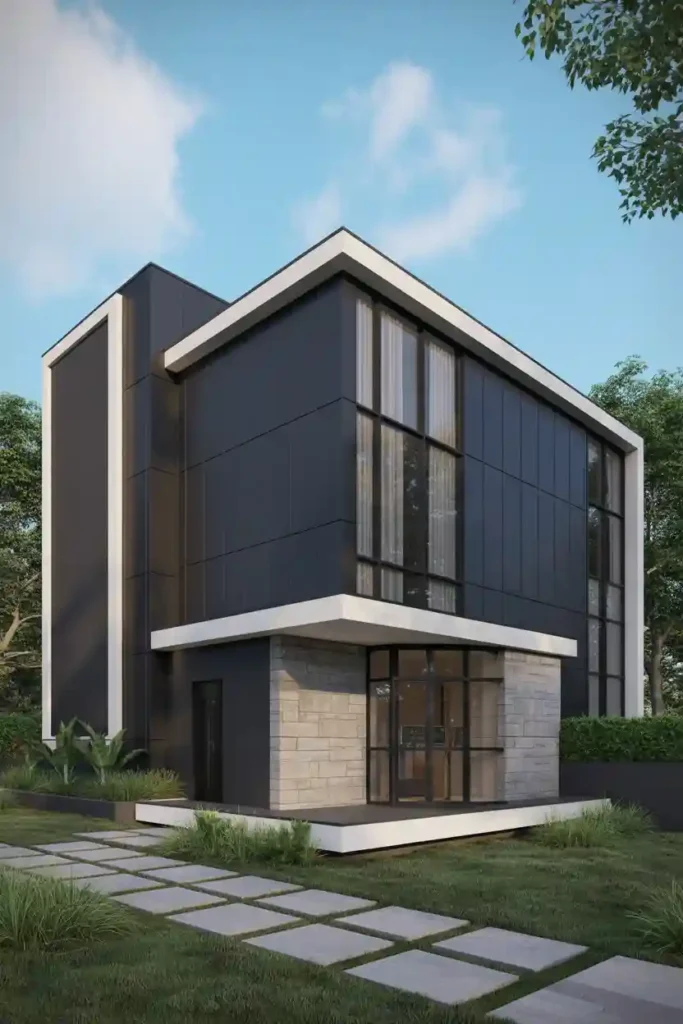
The black and white combination is the most classic way to wear this trend. A black facade paired with white trim, window frames, fascia, or gable details creates a striking contrast that highlights the symmetry and structure of the house. It works on traditional colonials, modern boxes, and everything in between, and it photographs beautifully, which is a real advantage if you ever sell. For the white, choose a warm white such as White Dove by Benjamin Moore rather than a stark blue white, so the trim looks soft against the black instead of glaring.
Add dimension by mixing textures: smooth black fiber cement panels against white painted brick or white stucco, or black horizontal siding with white stone around the entry. A black standing seam roof with white gutters and downspouts reinforces the clean contrast from above. Landscaping can stay simple with light gravel, pale stone pathways, and green shrubs. At night, a few well placed uplights on the white trim make the whole house glow. If you are still deciding how much white to use, browse our exterior house color ideas to compare black and white schemes with other two-tone combinations before you commit.
Keep the ratio simple: about 70 percent black and 30 percent white usually looks best. Too much white breaks the drama, while too little white makes the house read as one dark block. Paint the front door a third color, such as deep red or warm wood, to give the eye a place to land.
6. Black Exterior with Natural Stone Details
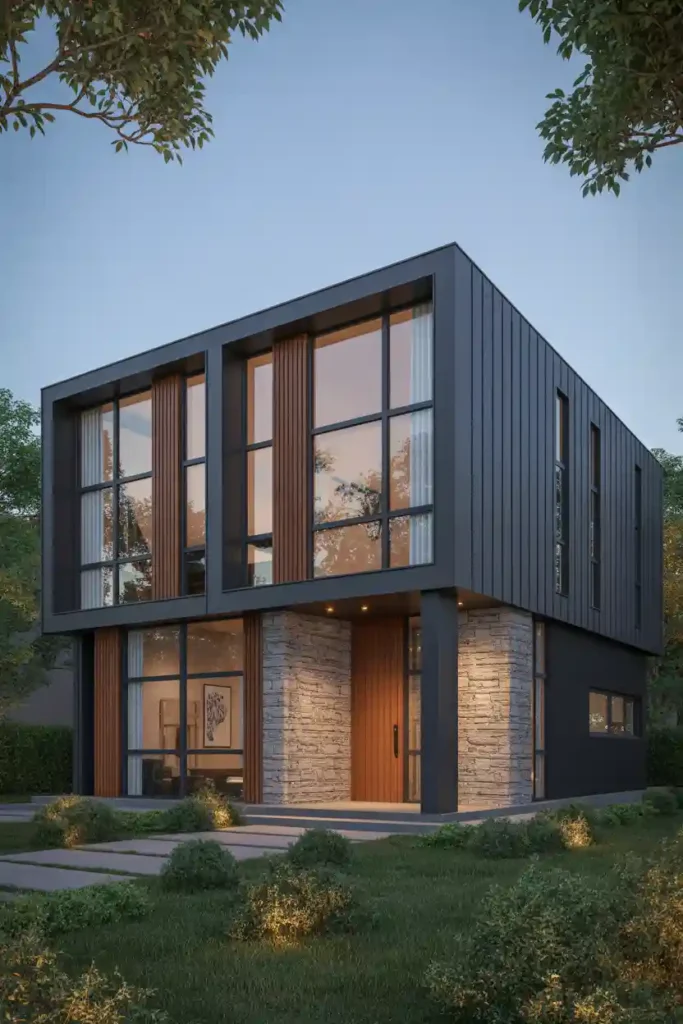
Natural stone is the perfect partner for a black exterior because it adds texture, weight, and an organic feel that softens the boldness of the dark color. Use gray or brown stone veneer around the entrance, along the chimney, or across the lower third of the front wall. A ledgestone or ashlar pattern in mixed grays looks modern, while a rough-cut fieldstone leans rustic. Real stone veneer costs more than manufactured stone, but it weathers beautifully and adds genuine resale value.
Wood or blackened steel accents complement the stone, and large windows keep the interior bright against the darker walls. Choose window frames in black so they disappear into the siding, and let the stone be the star. Soft landscape lighting aimed up at the stonework highlights the texture at night and creates a dramatic yet welcoming entrance. This style works well for suburban or rural homes that want a contemporary, upscale appearance without losing warmth or character. For a similar balance of dark walls and pale accents, our gray exterior house ideas show how mid-tone exteriors use the same stone and wood pairings.
Install stone only where it meets the ground or frames an opening, such as the entry or chimney, so it looks structural rather than decorative. A thin strip of stone floating in the middle of a wall usually looks like an afterthought. Cap the stone with a simple metal or wood ledge to keep water off the top edge.
7. Black Metal Clad Industrial Home
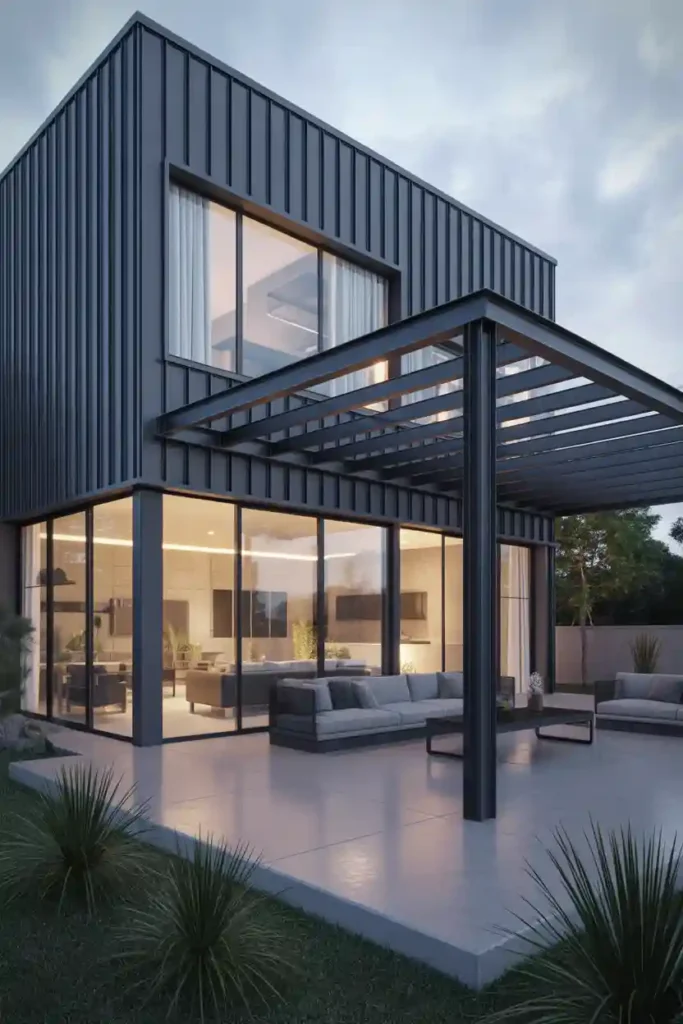
A black metal exterior is made for an industrial-inspired modern home. Corrugated or flat standing seam metal panels give the facade a sleek, contemporary edge and emphasize strong architectural lines. Standing seam panels with hidden fasteners look cleaner than exposed fastener corrugated sheets, and they last 40 years or more with almost no maintenance. This style is especially striking in urban settings, where concrete pathways and minimalist landscaping complete the modern industrial look.
Break up the metal facade with large black-framed windows and a glass entry door, which flood the interior with natural light. Warm 2700K exterior lighting softens the metallic finish at night and highlights the panel texture. Add depth with exposed steel beams, a concrete patio, or a black steel pergola over the entrance. A single warm material, such as a cedar soffit or a wood slat screen beside the front door, keeps the industrial look from feeling cold. Keep plantings architectural too: ornamental grasses, agave in warm climates, or a row of columnar trees along the side wall.
Metal cladding expands and contracts with temperature, so it must be installed with clips that allow movement. Ask your installer about the clip system and the panel warranty before you sign, and choose a matte or low-gloss finish so the panels do not glare in direct sun.
8. Soft Black Exterior with Large Glass Panels
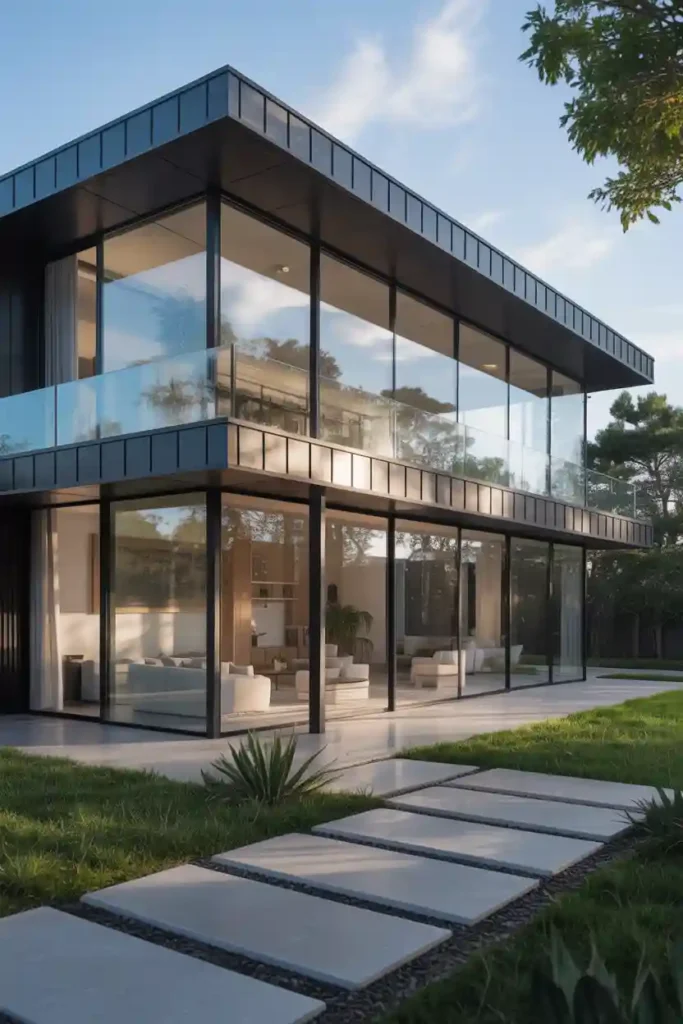
Pairing a soft black facade with expansive glass panels creates an open, airy look that keeps the modern mood without feeling heavy. The glass reflects the sky and the surrounding landscape, which softens the darkness of the black walls and makes the home feel light and inviting. Choose a soft black, one or two shades lighter than pure black, for the siding so the contrast with the glass stays gentle rather than severe.
This design shines on lots with a view, where floor-to-ceiling windows let the interior flow into the outdoors. Use low-E coated glass to control heat gain, and choose slim black frames so the glass reads as one continuous surface. Minimalist landscaping enhances the modern aesthetic: a flat lawn panel, a few sculptural shrubs, and a stone path are all you need. Add subtle lighting along paths and under eaves to accentuate the geometry after dark. If privacy is a concern, use frosted or fluted glass on street-facing windows and save the clear glass for the garden side.
Large glass panels cost more per square foot than standard windows, so prioritize them on the rooms you use most, such as the living room and primary bedroom. A single dramatic glass wall often makes a bigger impact than glass on every side, and it keeps the budget under control.
9. Black Shiplap Coastal-Inspired Home
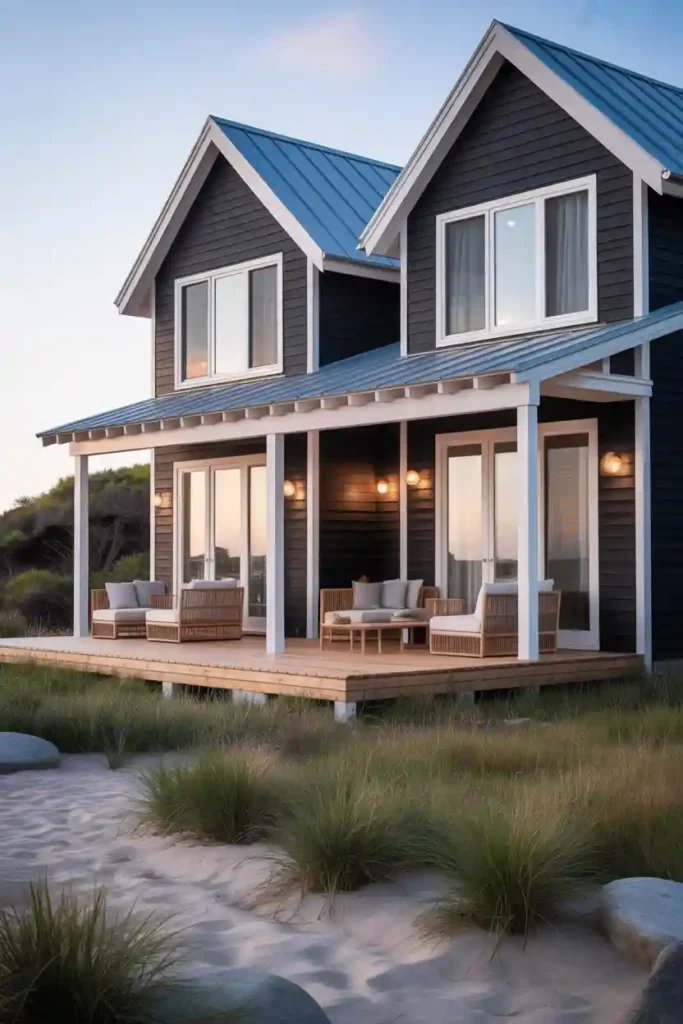
Shiplap siding painted black brings a coastal or cottage feel into the modern era. The horizontal boards, usually 6 to 8 inches wide with a small reveal between them, add texture and shadow lines that make the black feel layered rather than flat. Fiber cement shiplap is the best choice near salt air because it resists moisture and holds paint far longer than wood, though painted cedar shiplap gives a softer, more traditional cottage character.
Pair the black shiplap with natural wood decks, white trim around the windows, and a light-colored front door to balance the warmth and contrast. Large windows and sliding glass doors invite light in and connect the interior with the landscape. Coastal landscaping with dune grasses, smooth stones, and a boardwalk path enhances the relaxed yet chic aesthetic. Soft exterior lighting aimed along the shiplap highlights the board texture at night and adds depth. This approach is perfect for beachside or lakeside homes that want a modern, elevated coastal vibe without the usual whitewashed look.
In coastal areas, rinse the siding with fresh water a few times a year to remove salt buildup, and repaint every 7 to 10 years to keep the black rich. Choose a marine-grade exterior paint if your home sits within a few hundred yards of the water.
10. Black Exterior with Bold Front Door Color
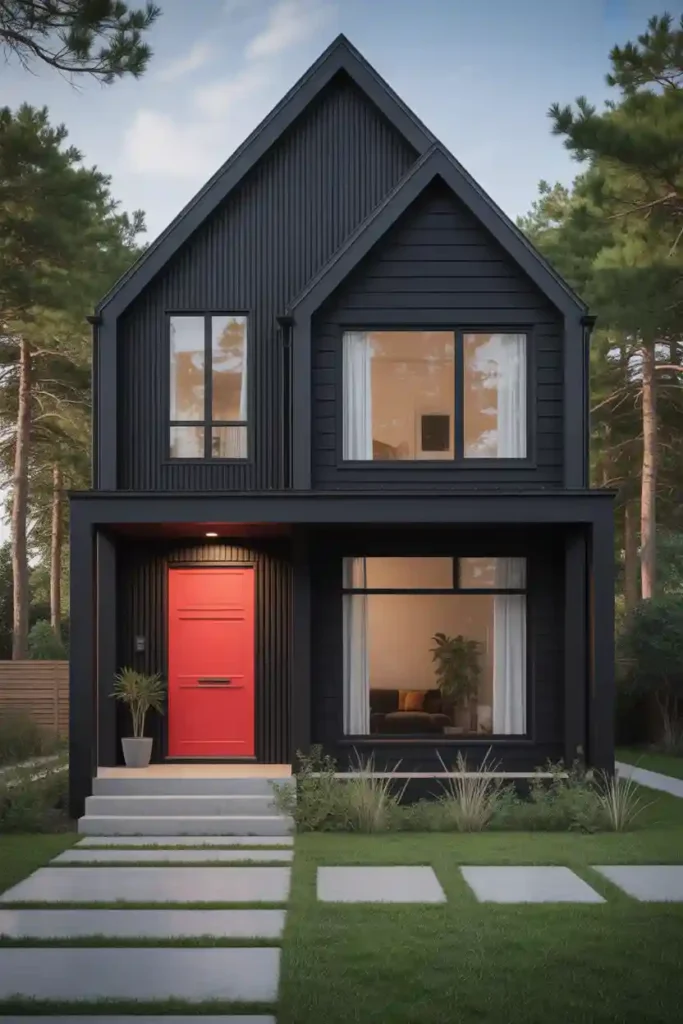
A bold front door is the easiest way to add personality to a black exterior. A bright red door reads classic and confident, mustard yellow feels cheerful and modern, and deep teal adds a sophisticated jewel tone. Because the black facade is such a quiet backdrop, almost any saturated color works, so choose the one that matches your interior or your personal style. Paint the door with a high-gloss exterior enamel so the color stays vivid and wipes clean easily.
Support the door with clean landscaping, black-framed windows, and subtle texture in the siding so the door stays the focal point. Add a matching detail nearby, such as a teal planter, a red welcome mat, or brass house numbers, to tie the color into the rest of the entry. A lantern-style sconce above or beside the door highlights the color at night and boosts curb appeal. This style lets you combine modern sophistication with playful individuality, and it is the cheapest idea on this list: a quart of good door paint and an afternoon of work can transform the whole front of the house.
Prep matters more than the paint itself. Sand the door lightly, wipe it with a degreaser, and apply a bonding primer before the color coat. Remove the hardware or mask it carefully, and paint on a dry day between 50 and 85 degrees Fahrenheit so the enamel levels smoothly.
11. Textured Black Wood Siding
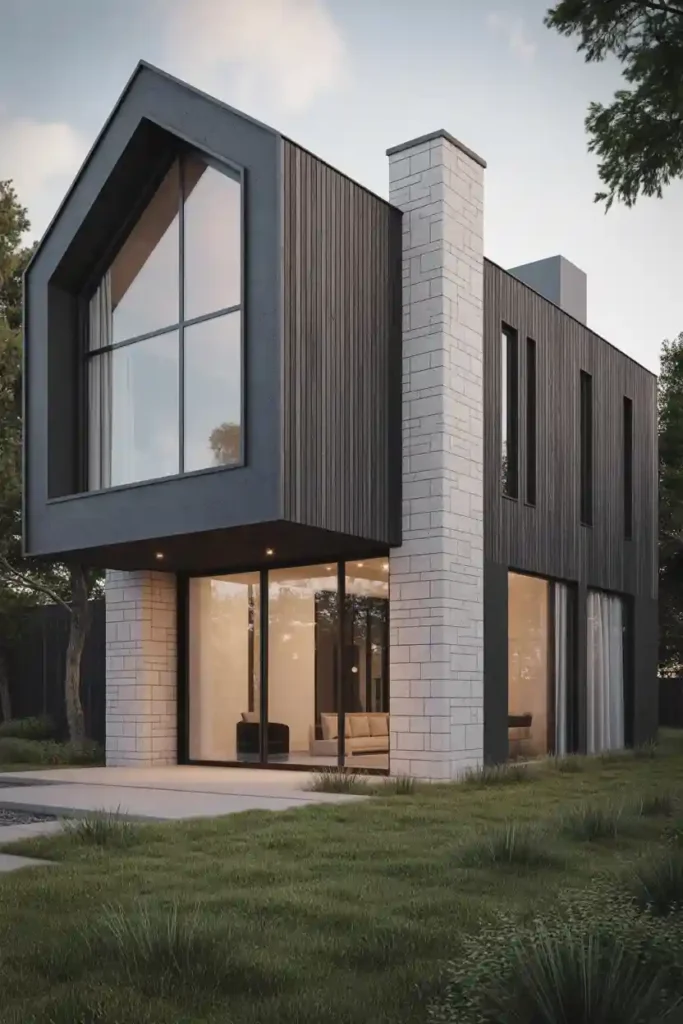
Black-painted wood siding brings natural warmth and texture that no synthetic material can fully copy. Vertical or horizontal wood panels painted black create visual interest, and the grain showing through the paint softens the bold tone while keeping the look modern. Cedar is the classic choice because it is naturally rot resistant and takes paint well, while thermally modified pine offers similar warmth with even better stability. A satin or low-luster finish lets the wood grain read through the black.
Pair the siding with natural stone accents at the base of the walls, blackened steel trim, or timber features such as a wood beam over the entry. Large windows, minimalist landscaping, and subtle uplighting highlight the texture of the siding after dark. Vertical siding makes a one-story home look taller, while horizontal siding makes a narrow home look wider, so choose the direction that flatters your proportions. This style is ideal for homeowners who want a modern yet approachable exterior that avoids stark monotony, and it ages gracefully as the wood develops a soft patina under the paint.
Wood siding needs repainting every 5 to 7 years to stay protected, so budget for maintenance before you commit. Keep sprinklers and soil at least 6 inches below the bottom board, and check the lower boards each spring for moisture damage.
12. Black Exterior with Copper Accents
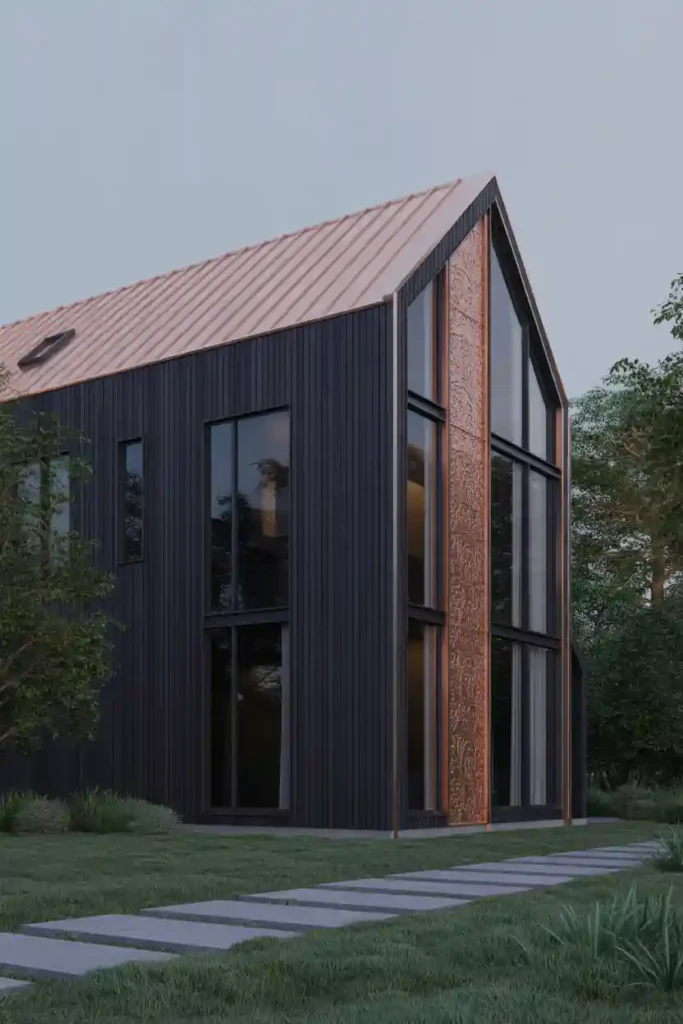
Copper accents give a black exterior a luxurious, high-end finish that no other metal can match. Think black siding paired with a copper standing seam roof section, copper gutters and downspouts, a copper awning over the door, or decorative copper panels beside the entry. Fresh copper glows warm and bright, then slowly develops a rich brown patina over 5 to 10 years, and in some climates it eventually turns a soft green. That slow change means the house keeps evolving, which is part of the charm.
Complement the copper with modern landscaping, large windows, and minimal ornamentation so the metal stays the star. Warm exterior lighting aimed at the copper highlights its reflective quality and creates an elegant, dramatic presence at night. Use copper sparingly: one or two elements are enough, and too much copper competes with the black instead of complementing it. A copper gutter with black fascia, or a copper-clad entry canopy on an otherwise black facade, is usually the sweet spot.
Copper is expensive, so get quotes for the full installed cost before you fall in love with the idea. It also stains light-colored stone and concrete below it as it weathers, so plan drip lines and keep copper away from pale walkways unless you like the aged look.
13. Scandinavian-Inspired Black Timber Home
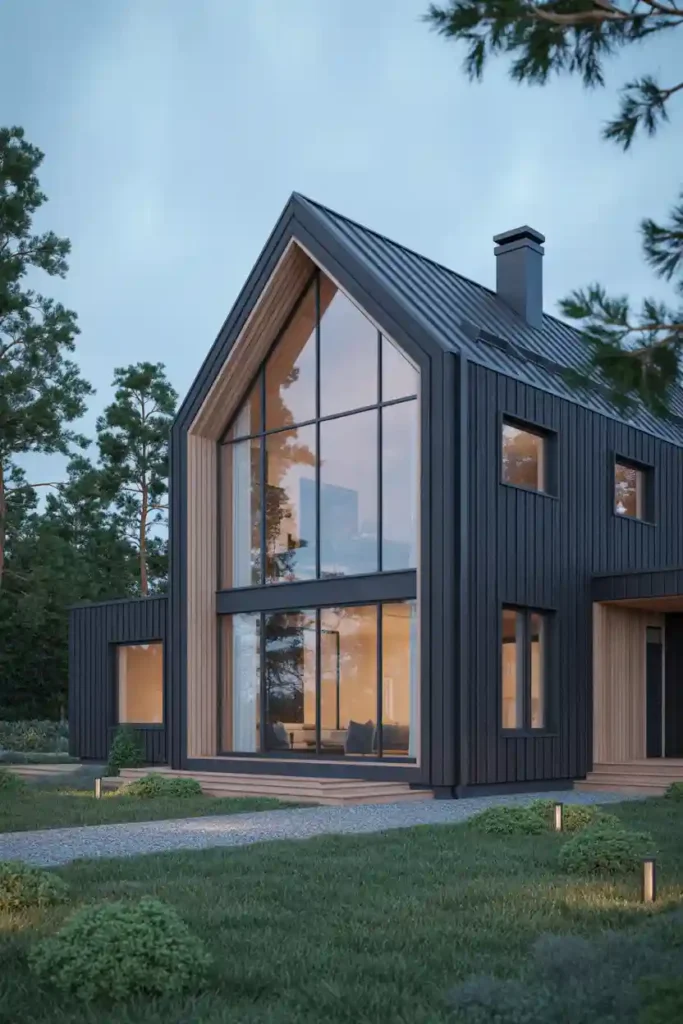
Scandinavian design paired with black timber siding creates a sleek, minimalist home that puts simplicity and function first. The dark facade contrasts beautifully with pale wood accents, simple geometric lines, and clean landscaping. Traditional Scandinavian farmhouses were often painted black with tar to protect the wood, so this look has centuries of history behind it even though it feels completely current. Use vertical timber boards with narrow gaps for the classic Nordic profile, and keep the roofline simple with a steep pitch that sheds snow and rain.
Large windows and open-plan interiors maximize natural light and soften the darkness of the exterior. A modest front porch with a timber pergola, pale wood decking, and a simple bench adds warmth and depth without clutter. Exterior lighting along walkways and under eaves highlights the architectural details at night. For more dark-toned exterior inspiration that pairs well with this style, see our dark exterior house ideas, which cover other moody palettes for modern homes.
Keep the landscaping as simple as the house: a gravel court, a few native grasses, and one sculptural tree. Scandinavian design is about editing, so resist the urge to add shutters, decorative brackets, or fussy plantings. Every element should earn its place.
14. Black Exterior with Warm Landscape Lighting
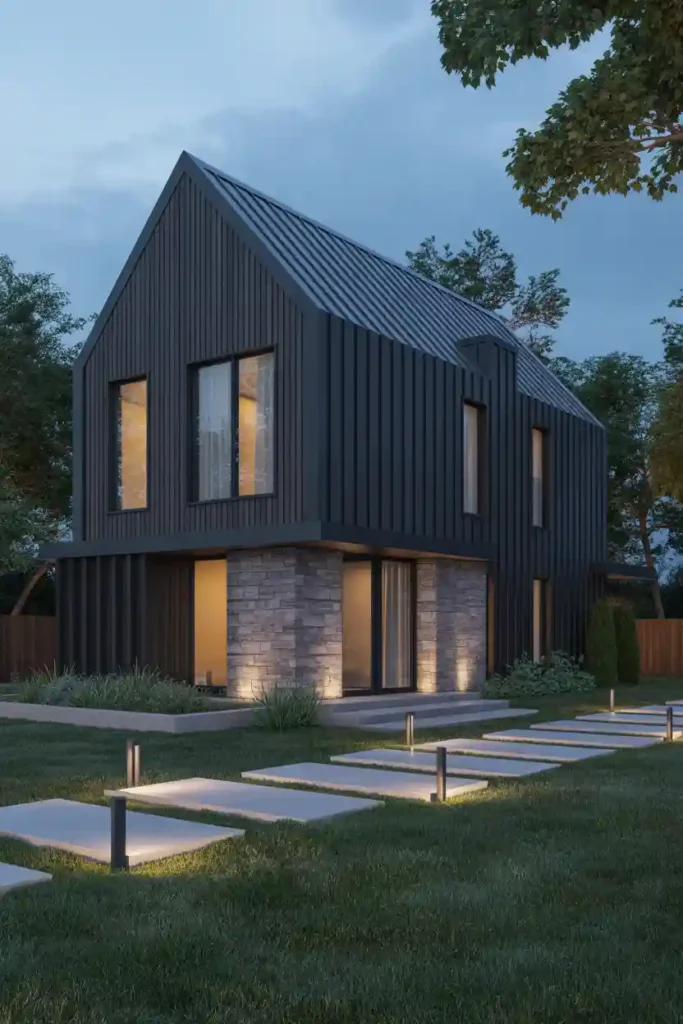
A black exterior paired with warm landscape lighting creates the most dramatic nighttime effect on this list. The darkness of the facade makes every light look brighter, so path lights, uplights, and wall washers all have more impact than they would on a white house. Use warm white bulbs at 2700K throughout, and mix three layers: path lights along walkways, uplights aimed at trees and architectural features, and small downlights under eaves or pergolas.
Incorporate natural materials such as wood decking or stone walls to soften the black, and keep the landscaping minimal so the structure and form stay visible after dark. Place lights to graze across textured walls, such as brick or shiplap, rather than pointing them straight at flat surfaces, since grazing light reveals texture while flat light washes it out. Put the whole system on a timer or a smart controller with a dusk-to-11-pm schedule so the house glows in the evening and rests overnight. Solar path lights are a cheap way to start, but low-voltage wired lights are brighter, more reliable, and worth the investment for a permanent installation.
Start with the entry path and the front door, then add one uplight per tree and one wash light per major wall. Six to ten well placed fixtures usually transform a black exterior completely, and adding more after that has diminishing returns.
Final Words
Black exterior house ideas are more than a trend. They are a statement of modern sophistication, elegance, and individuality. Whether you choose matte black siding, black brick, textured wood, or timber finishes, the key is balancing darkness with texture, natural materials, and thoughtful lighting. From minimalist urban facades to cozy coastal homes, black exteriors give you a versatile canvas that elevates your architecture and creates unmatched curb appeal.
Start small if you are unsure. Paint the front door black, add black window trim, or try a black accent wall on the porch before you commit the whole house. Live with the change for a season, watch how the color behaves in your light, and then go bigger with confidence. The best black exterior is the one that feels intentional, not accidental, and a little planning now will give you a home you love coming back to for years.
Frequently Asked Questions
Does a black exterior make a house hotter inside?
A black exterior does absorb more solar heat than a white one, but the effect on indoor temperature is small when the walls are properly insulated. Modern insulation, a ventilated rain screen behind the siding, and a reflective roof underlayment matter far more than the paint color. In hot climates, choose a light-colored roof and add shade trees on the south and west sides to offset the extra heat gain.
What is the best black paint color for a house exterior?
The most popular true blacks for exteriors are Tricorn Black by Sherwin-Williams, Onyx by Benjamin Moore, and Iron Ore by Sherwin-Williams, which is a softer black with a hint of charcoal. Always test large swatches on your own walls first, because black paint shifts with the light and can read blue, green, or purple depending on your surroundings. Look at the swatches in morning, midday, and evening light before you decide.
Does black siding fade faster than lighter colors?
Black does fade faster than white or pale colors because dark pigments absorb more UV light. The difference is manageable if you choose a high quality 100 percent acrylic exterior paint with UV resistance and a satin or low-luster finish, which holds color longer than flat paint. Expect to repaint black siding every 7 to 10 years, compared with 10 to 15 years for lighter colors.
Will a black exterior hurt my home resale value?
A well executed black exterior usually helps resale value because it reads as modern, premium, and well maintained, especially in neighborhoods with contemporary homes. The risk is a poorly done job: patchy paint, a color that clashes with the roof, or black on a traditional home where it looks out of place. If resale is a concern, keep the design clean, pair black with classic materials such as brick or wood, and make sure the roof and trim coordinate.
How do I keep a black exterior from looking too dark or flat?
Texture and contrast are the answer. Mix materials such as wood, stone, glass, and metal so the facade has depth, and add pale elements such as white trim, a light walkway, or green landscaping to break up the dark surface. Warm landscape lighting at night and a bold front door color also keep a black exterior from feeling flat or heavy.
More Ideas You Will Love
 13 Safety Guidelines for Summer Fire Pits: Cozy Nights Made Safe
 20 Exterior Wall Panel Ideas for Modern Facades
 11 Dance Floor Ideas for Weddings, Parties & Outdoor Events
 16 Outdoor Entryway Ideas to Transform Your Home’s First Impression
 12 Modern Solar Exterior Light Ideas That Elevate Your Home
 12 Modern House Exterior Ideas for Stunning Curb Appeal