
15 Backyard Fire Pit Ideas for Every Budget and Outdoor Style

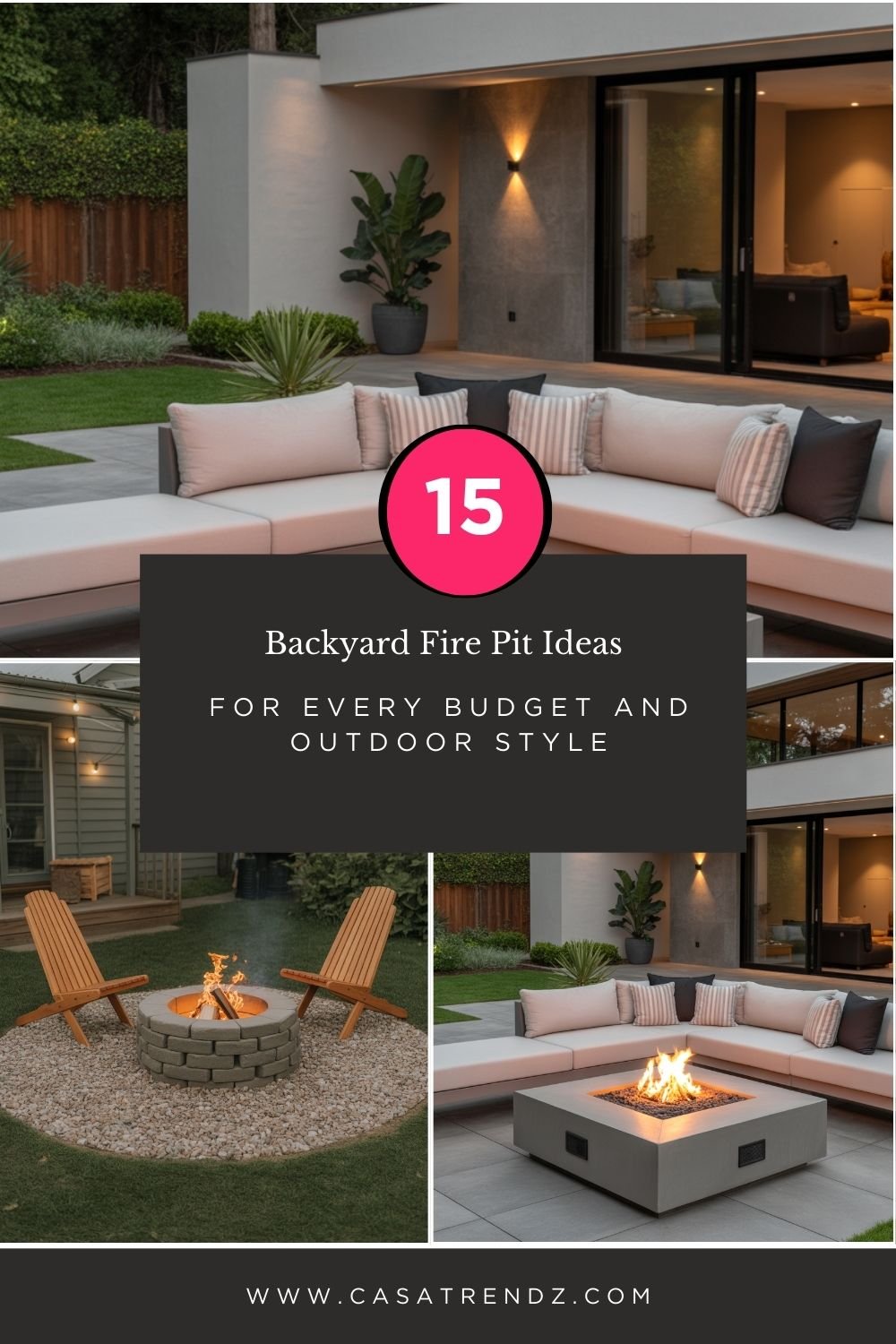
A backyard fire pit changes the way you use your outdoor space. It turns an ordinary lawn or patio into the place where everyone gathers after sunset, where conversations stretch a little longer, and where cool evenings become something to look forward to instead of a reason to head inside. A well planned fire pit area is about much more than the fire itself. It is about seating that invites people to stay, a surface that stays safe and level underfoot, lighting that flatters the space, and a layout that keeps the whole area comfortable for hours at a time.
The best backyard fire pit ideas balance beauty with practical thinking. You need enough clearance around the flames, a surface that will not scorch or shift, chairs placed at a comfortable distance from the heat, and a design that fits the way you actually live. Some homeowners want a permanent stone circle for weekend entertaining. Others need a portable fire bowl they can move with the seasons. Both can work beautifully when the details are right, and most of these projects can be finished in a single weekend with basic tools and a modest budget.
In this guide, we explore 15 backyard fire pit ideas that cover every budget and outdoor style, from simple gravel pads and concrete block builds to modern minimalist designs, built-in seating, and year-round setups. Each idea includes specific materials, measurements, colors, and step by step tips you can put to work right away. Whether you are starting from bare lawn or refreshing a patio you already love, you will find a design here that fits your space, your budget, and the way you gather outdoors.
1. Budget-Friendly Gravel Fire Pit
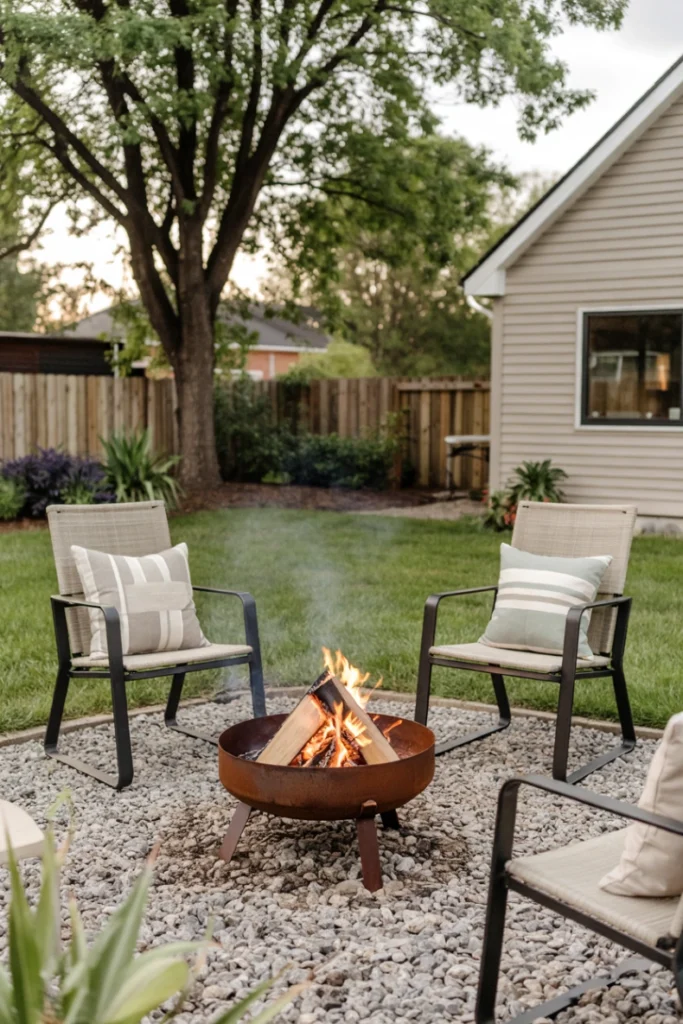
A gravel fire pit is one of the most accessible and affordable backyard fire pit ideas available, and it is also one of the fastest to build. Gravel is easy to install, requires minimal ground preparation, and offers excellent drainage, so the area stays usable after rain instead of turning muddy. A simple metal fire bowl or a low stone ring placed in the center creates a clear focal point, while the gravel surface defines the seating area without any expensive construction. For a comfortable layout, plan a gravel circle 12 to 14 feet across, which leaves room for a 36 inch fire pit and chairs set 24 to 30 inches back from the flames.
Start by marking the circle with spray paint, then remove the top 3 to 4 inches of grass and soil. Lay landscape fabric to block weeds, add a 2 inch layer of crushed stone for drainage, and finish with 2 inches of pea gravel in a warm tan or soft gray tone. Edge the circle with metal landscape edging or large flat stones so the gravel stays in place and does not scatter into the lawn. Set four to six weather resistant chairs around the ring, and add a couple of small side tables for drinks and snacks. The whole project typically costs between 150 and 400 dollars, depending on the size of the circle and the fire pit you choose.
From a functional perspective, gravel fire pits are highly adaptable. Seating can be rearranged or replaced over time, and the fire pit itself can be upgraded without disturbing the base. Maintenance is minimal: rake the gravel level once a month, top it up with a fresh bag or two each spring, and pull any weeds that push through the fabric. Choose gravel in a color that matches your house trim, such as warm buff for brick homes or cool gray for modern siding, so the area feels intentional rather than improvised. This design is ideal for homeowners who want flexibility and long term practicality on a limited budget.
2. DIY Concrete Block Fire Pit
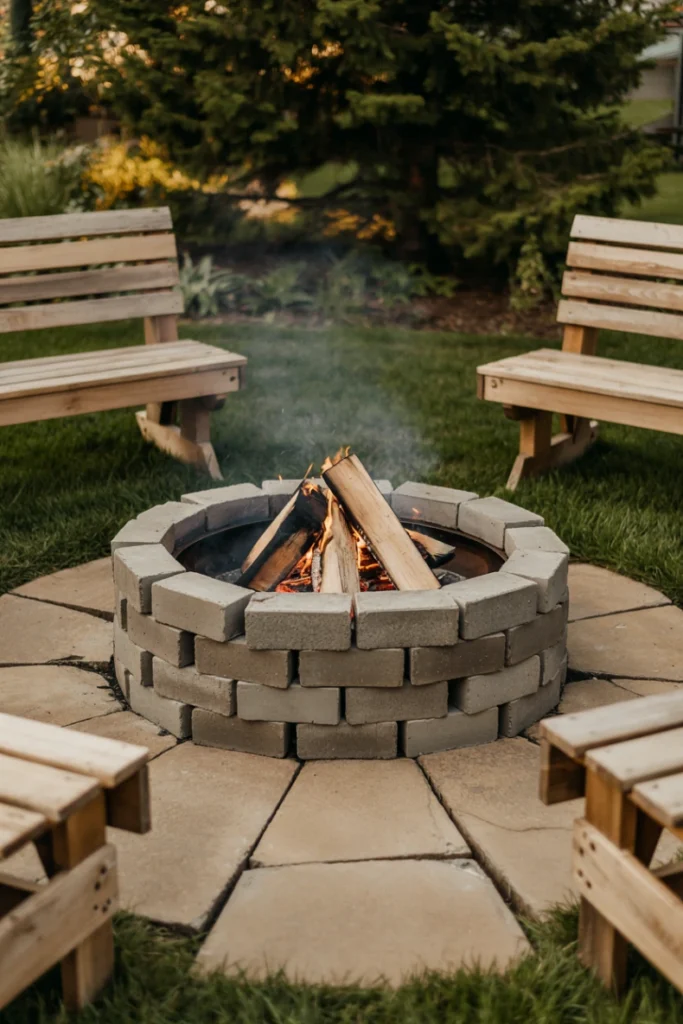
Concrete block fire pits are popular because they balance affordability with durability, and they make an ideal weekend DIY project. Standard retaining wall blocks can be stacked into a circular or square structure using basic tools, with no mortar required for a simple dry stacked version. A ring 36 to 42 inches across and 12 to 18 inches high works well for most yards, and the surrounding area can stay simple with compacted soil or gravel, keeping costs low while maintaining a clean appearance. A basic build usually costs 100 to 250 dollars in materials, plus a steel fire ring insert if you want extra protection for the blocks.
To build it, mark a circle on level ground and dig down 2 to 3 inches. Lay a base of paver sand or crushed gravel, then set the first course of blocks level, checking with a spirit level as you go. Stack two or three more courses, staggering the joints like bricks for stability. Add flat cap blocks on top for a finished edge and a handy ledge for drinks. If you want a more polished look, paint the blocks with exterior masonry paint in charcoal, warm gray, or a soft white, or face them with thin stone veneer. Always leave a gap of at least 10 feet between the fire pit and your house, fences, and overhanging trees.
This design appeals to homeowners who enjoy hands-on projects and customization. Concrete blocks can be painted, capped, or finished with stone for added character, and the shape can be adjusted to fit a corner or a narrow yard. Among backyard fire pit ideas, this option offers excellent value by combining structural stability with creative flexibility. Add a spark screen and a fitted cover to keep rain out, and the pit will last for many seasons with almost no upkeep.
3. Rustic Stone Backyard Fire Pit
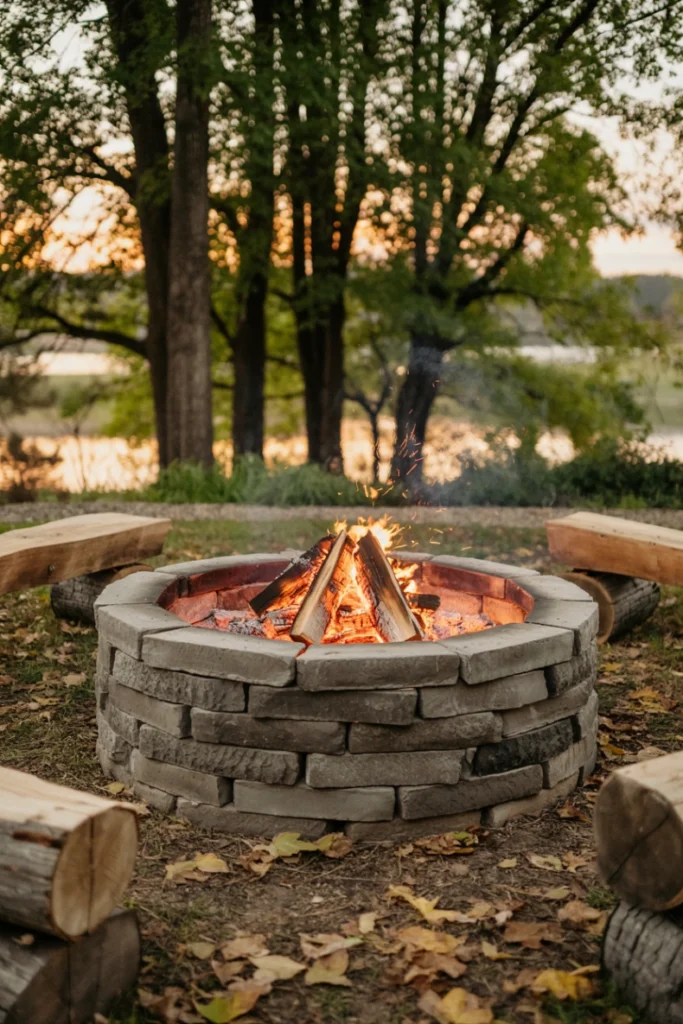
A rustic stone fire pit blends naturally into outdoor landscapes and works beautifully for traditional or countryside homes. Using natural fieldstone, river rock, or reclaimed stone creates a timeless look that feels organic and grounded, as though the fire pit has always belonged there. Wooden benches, Adirondack chairs, or classic metal outdoor chairs complement the rugged texture of the stone, and warm wood tones soften the whole scene. A stone ring 36 to 48 inches across, built 14 to 18 inches high, gives a generous fire area while keeping the flames contained and visible from every seat.
Build the ring on a level base of compacted gravel, dry stacking the stones so the wall is stable, and fill the inside bottom with a 4 inch layer of lava rock or gravel for drainage and heat protection. Choose stones with at least one flat face for the outer wall so the ring looks tidy, and save the most attractive stones for the top course. If you prefer a mortared wall, use a heat resistant refractory mortar on the inner face only, so the outer stone keeps its natural character. Surround the ring with a circle of crushed stone or flagstones 12 feet across to catch sparks and define the seating zone.
These backyard fire pit ideas emphasize warmth and authenticity. Stone fire pits age beautifully, developing character over time as the stone weathers and moss softens the edges. This design is ideal for homeowners who value natural materials and want a fire pit that feels like a permanent part of the landscape. Pair it with a few large boulders, native grasses, and a stack of firewood in a simple log holder nearby, and the whole corner of the yard will feel like a woodland retreat.
4. Small Backyard Fire Pit Design
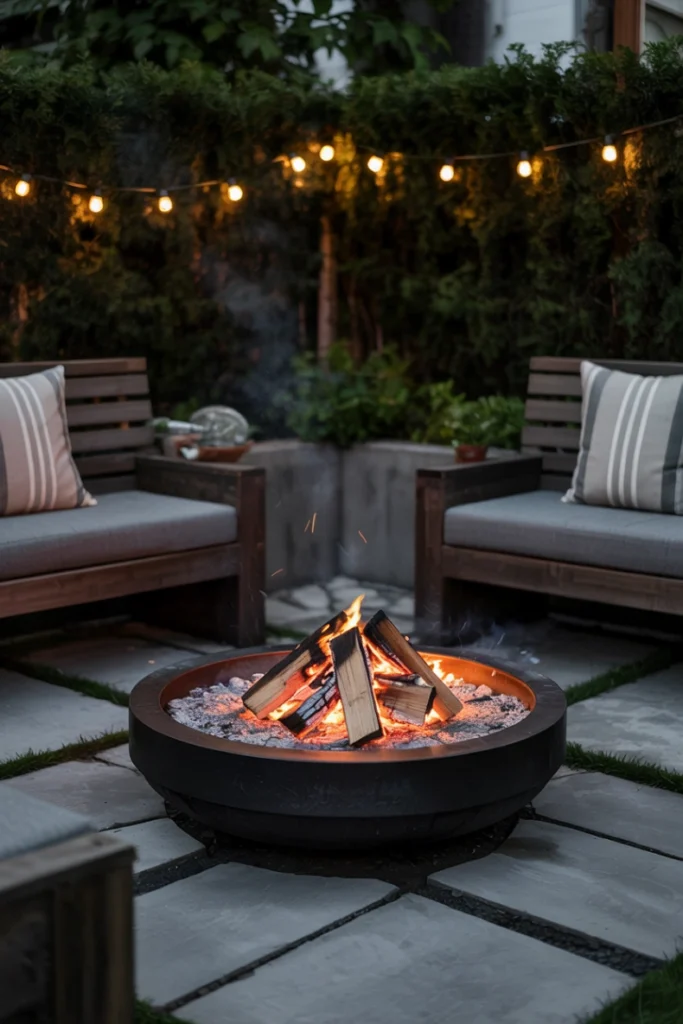
Small backyards can still benefit from a well planned fire pit area, as long as every inch is used wisely. A compact fire pit, 24 to 30 inches across, paired with minimalist seating keeps the space comfortable without overcrowding it. The key is proportion: choose a low profile fire bowl or a slim tabletop style pit, and keep the seating circle tight, about 8 to 10 feet across, so conversations stay easy and the flames stay within reach. Strategic placement matters too. Set the pit at least 10 feet from the house and fences, and at least 15 feet from overhanging branches.
Lightweight furniture and neutral colors keep a small space visually open. Folding camp chairs, a pair of compact Adirondack chairs, or a curved bench that hugs the pit all work well, and they can be stored against a wall when the yard needs to serve another purpose. A gravel or paver pad just large enough for the seating circle, about 10 feet across, defines the area without swallowing the whole yard. Add a small side table or two, and keep decorations minimal: one lantern, one plant, and a simple firewood basket are enough.
These backyard fire pit ideas focus on proportion and efficiency. With careful layout planning, even limited outdoor areas can feel welcoming and functional. A slim gas fire table is worth considering for very small yards, since it produces no smoke or embers and needs no wood storage. If you choose wood burning, a spark screen is essential in a tight space, and a fitted cover protects the pit between uses. Measure twice, keep the palette light, and let the fire itself be the main decoration.
5. Modern Minimalist Fire Pit
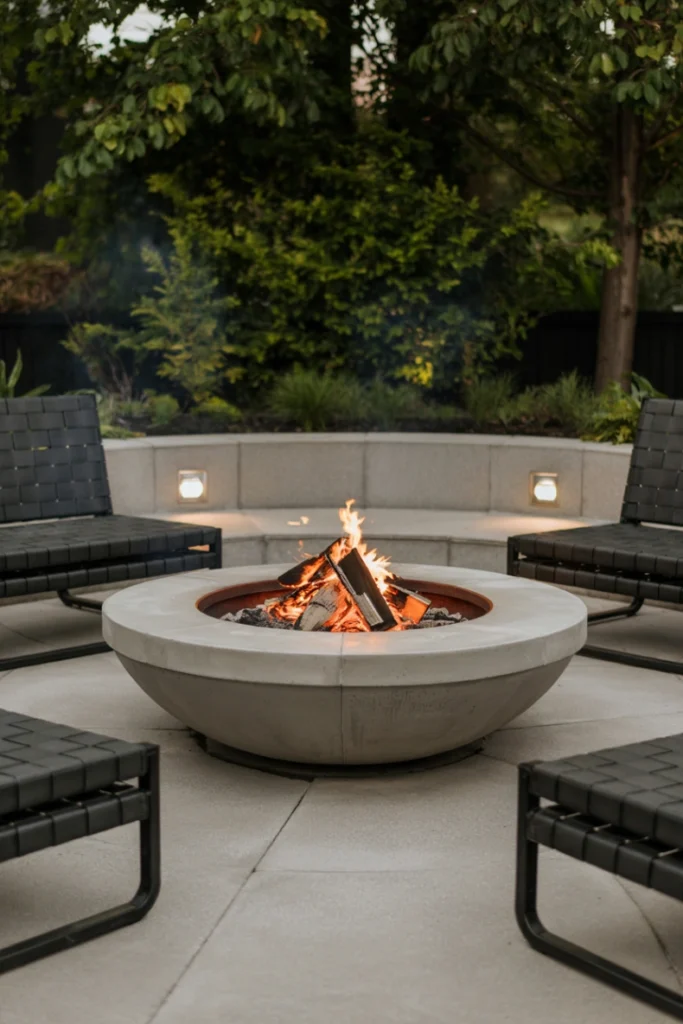
A modern minimalist fire pit emphasizes clean lines, neutral tones, and simple geometry. Materials such as smooth concrete, powder coated steel, and dark basalt create a sleek appearance that pairs well with contemporary architecture. The fire pit itself is often a low rectangular or square table, 36 to 48 inches long, with a linear burner that produces a long ribbon of flame. Surrounding furniture is understated, usually in charcoal, warm gray, or white, allowing the fire pit to serve as the visual centerpiece of the patio.
Build the look around a restrained palette of two or three colors. A concrete fire table in light gray, paired with low profile lounge chairs in charcoal fabric and a single large planter with ornamental grass, creates a calm and intentional composition. Keep the ground plane simple as well: large format pavers in a soft gray, or a smooth concrete slab, work better than busy patterns. A gas burner is the natural choice here, since it keeps the tabletop clean, lights instantly, and needs no wood pile to clutter the scene. Hide the propane tank inside the table base or run a natural gas line for a truly seamless setup.
Functionally, minimalist backyard fire pit ideas reduce clutter and maintenance. Fewer decorative elements mean easier upkeep while still delivering a refined outdoor environment. This design suits homeowners who prefer a calm, intentional aesthetic and want their patio to feel like an extension of the living room. Add one warm accent, such as a terracotta pot or a wooden tray, to keep the space from feeling cold, and use low voltage landscape lighting to make the area glow after dark.
6. Backyard Fire Pit with Built-In Seating
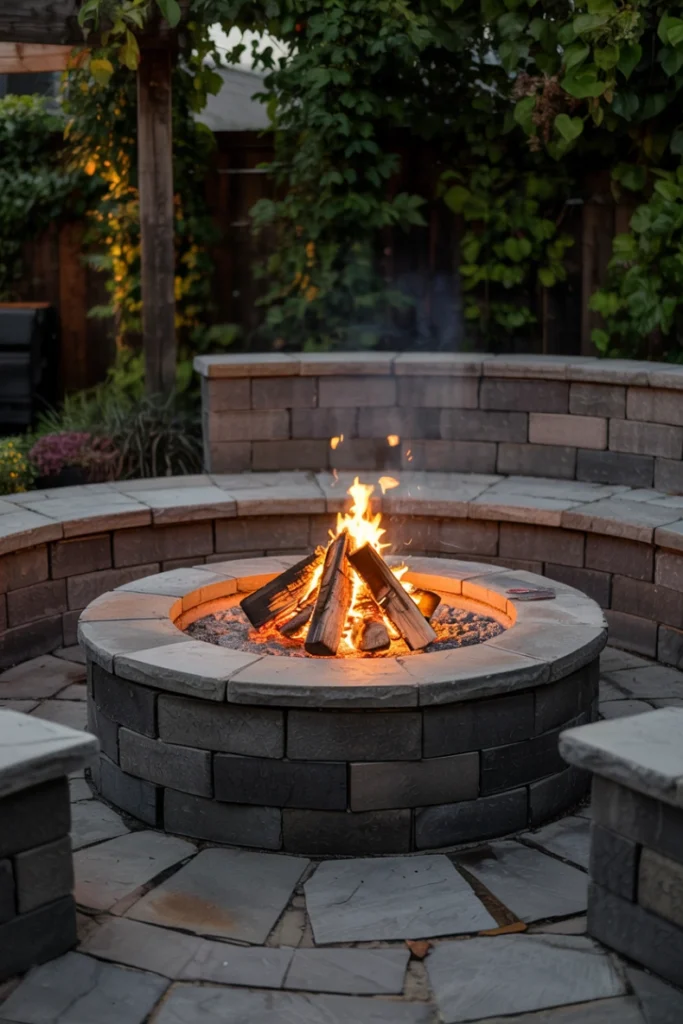
Built-in seating creates a cohesive and space efficient fire pit layout that feels like a permanent outdoor room. Low stone or concrete benches, 16 to 18 inches high and 14 to 16 inches deep, curve around the fire pit in a full or partial circle, eliminating the need for movable furniture and defining the area as a gathering space. A seating circle 12 to 14 feet across, with the fire pit at the center, comfortably fits eight to ten people. Cap the benches with smooth limestone, bluestone, or wood decking for a comfortable seat that stays cool in summer and dries quickly after rain.
Plan the build on a level paver or concrete base, and leave a gap of 24 to 30 inches between the edge of the fire pit and the front of the benches, which is the sweet spot for warmth without discomfort. Add storage inside the bench bases for cushions, firewood, or blankets, and include a couple of small gaps or steps in the circle so people can enter and leave easily. Outdoor cushions in a durable, fade resistant fabric add comfort without compromising durability, and they can be brought inside during winter. A low retaining wall behind one side of the seating doubles as a backrest and a windbreak.
Among backyard fire pit ideas, built-in seating improves safety and organization, since there are no loose chairs to trip over in the dark and no furniture to blow around in a storm. This option is ideal for homeowners who want a polished and long lasting outdoor feature. The upfront cost is higher than a portable setup, typically 1,500 to 4,000 dollars depending on materials, but the result is a finished space that adds real value to the home and needs almost no seasonal setup or storage.
7. Portable Fire Pit Setup
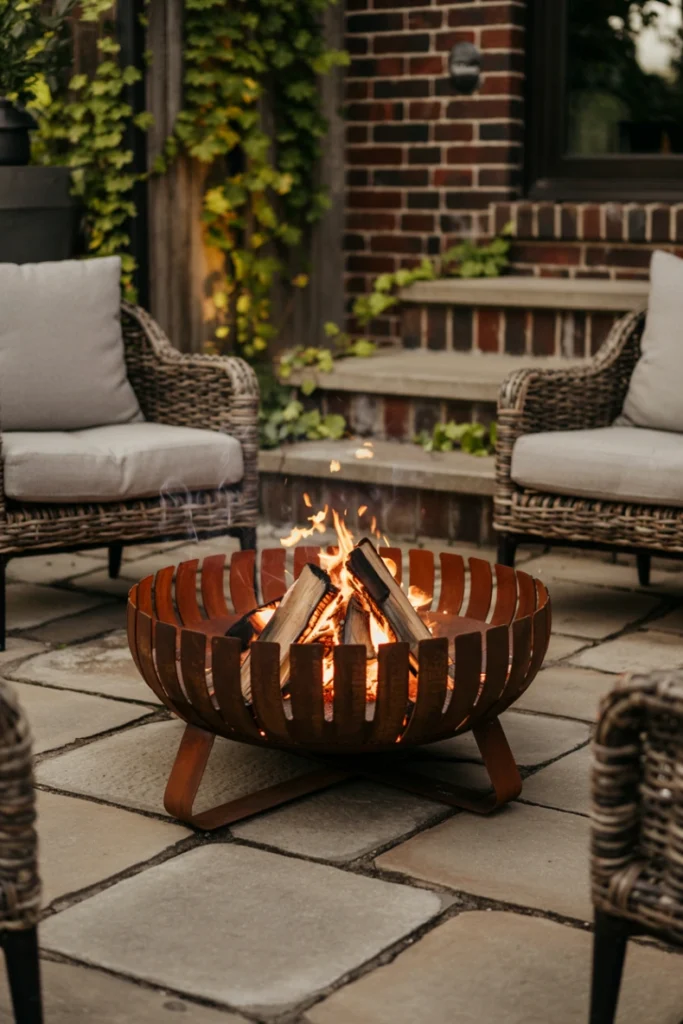
Portable fire pits offer flexibility and convenience for homeowners who prefer a non-permanent solution. A steel fire bowl, a chiminea, or a collapsible fire pit can be placed on a patio, gravel, or grass and stored away when not in use, which makes them ideal for renters, small yards, or anyone still experimenting with layouts. Most portable pits are 24 to 36 inches across, light enough for one person to move, and priced between 60 and 300 dollars, so trying a fire pit lifestyle costs very little.
Set the pit on a heat resistant surface: a square of pavers, a gravel pad, or a fire resistant mat if you must place it on a deck. Keep at least 10 feet of clearance from the house and any overhead cover, and always use a spark screen when burning wood. Store a small stack of firewood in a covered holder nearby, and keep a bucket of sand or a fire extinguisher within reach. When the evening is over, let the ashes cool completely, then empty them into a metal container with a lid before storing the pit away.
These backyard fire pit ideas prioritize adaptability. Portable setups allow the space to change with the seasons or events: pull the pit close to the house in autumn, move it to the far end of the garden for a summer party, or take it on a camping trip. For more inspiration on flexible layouts, see these fire pit garden ideas that mix portable pits with planted borders. This is a practical choice for evolving outdoor needs, and it is the easiest way to find out whether a permanent fire pit is right for your yard before committing to one.
8. Backyard Fire Pit with Paver Patio
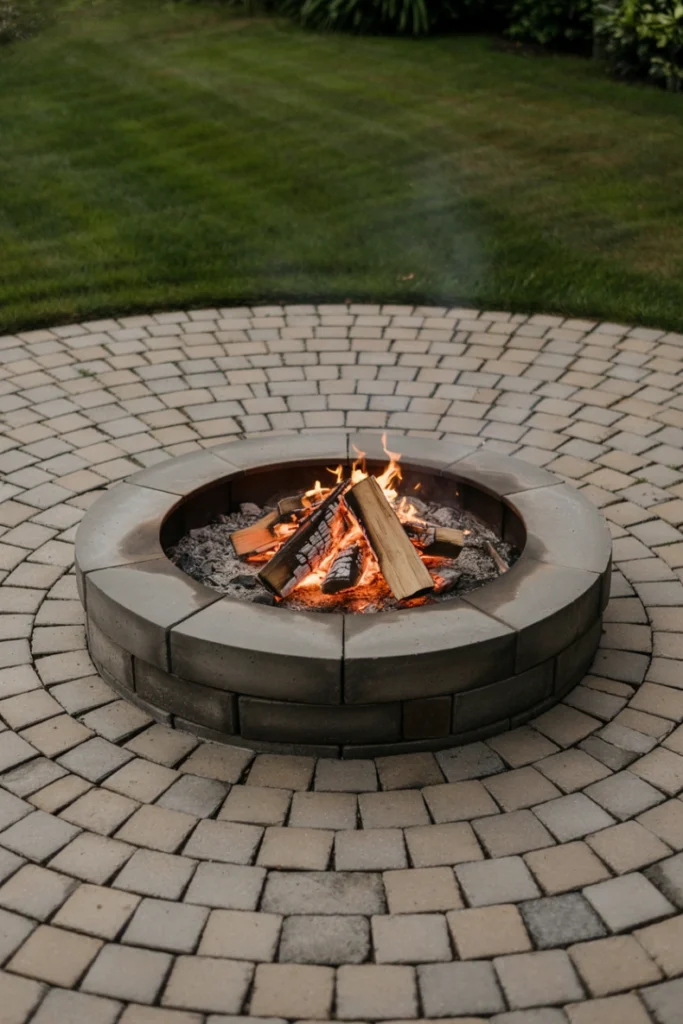
A paver patio provides a stable and visually appealing base for a fire pit area, and it is one of the most popular upgrades for homeowners who want a finished look without pouring concrete. Pavers are relatively easy to install, offer durability for frequent use, and come in colors and patterns that suit any style, from warm sandstone to cool gray slate tones. A centrally placed fire pit anchors the layout and enhances symmetry, while the patio itself defines the outdoor room. Plan a patio 14 to 16 feet across for a standard seating circle, or 12 feet across for a compact version.
Installation follows a simple sequence. Excavate 6 to 8 inches, lay landscape fabric, add 4 inches of compacted crushed stone, then 1 inch of coarse sand, and finally set the pavers tightly together with polymeric sand swept into the joints. Choose pavers rated for outdoor use and lay them in a simple running bond or herringbone pattern for strength. A circular paver kit makes it easy to build a neat round patio with a fire pit at the center. Edge restraints around the perimeter keep the pavers from shifting over time. The project usually costs 800 to 2,500 dollars in materials for a DIY build, depending on size and paver choice.
These backyard fire pit ideas combine aesthetics with safety. Level pavers reduce tripping hazards and help contain fire-safe zones, since sparks land on stone instead of dry grass. A paver patio also drains well and stays comfortable underfoot in all seasons. For a complete outdoor living setup, pair the patio with a few low planters and a path of matching pavers leading back to the house. If you are also planning the surrounding garden, these DIY-friendly fire pit area ideas show how a paver base works with gravel borders and built-in seating.
9. Fire Pit with Outdoor Dining Area
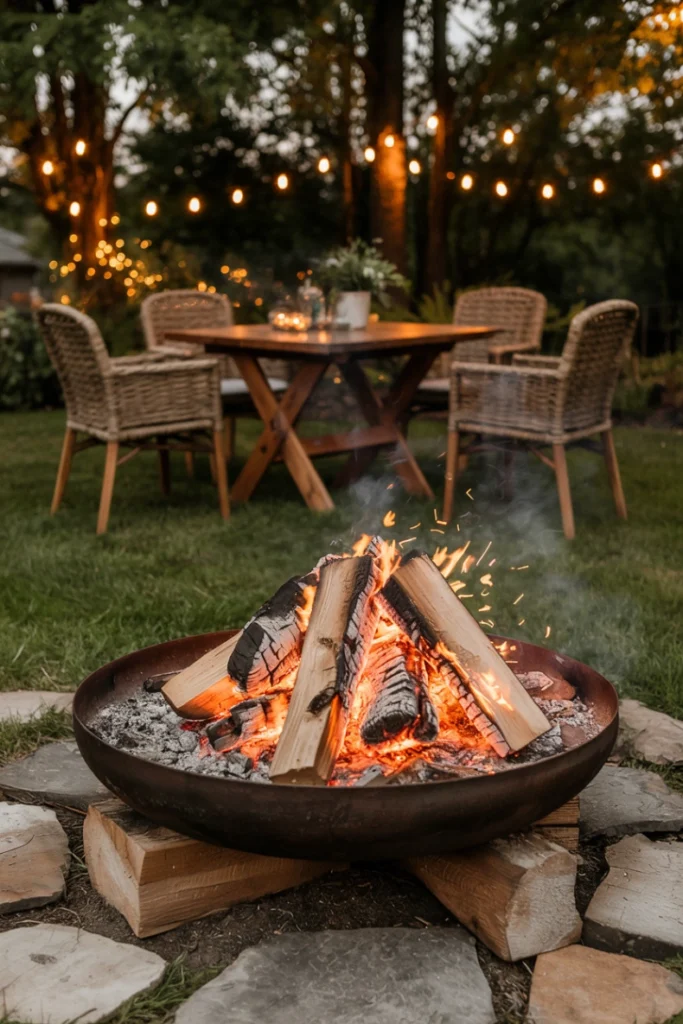
Combining a fire pit with an outdoor dining area enhances functionality and stretches the use of your patio well into the cooler months. The fire pit adds warmth and ambiance, extending dining usability into evenings that would otherwise send everyone indoors. The trick is spacing: place the fire pit 6 to 8 feet from the dining table, far enough that smoke drifts away from diners and heat stays comfortable, but close enough that the glow reaches the table. A low, wide fire table works especially well here, since it doubles as a side surface for serving dishes.
Design the layout in two connected zones. The dining zone needs a level surface, usually pavers or decking, with room for a table that seats six to eight and chairs that can be pulled out comfortably. The fire zone sits just beyond it, ringed by lounge chairs or a curved bench, so guests can drift from dinner to fireside conversation without leaving the patio. Choose a gas fire pit for this setup, since it lights instantly, produces no smoke over the food, and can be switched off when dinner ends. Add string lights overhead and a couple of lanterns on the table to tie the two zones together after dark.
These backyard fire pit ideas are perfect for entertaining. The seamless transition between dining and relaxation zones encourages longer gatherings and better use of outdoor space. Keep a serving cart or a small outdoor sideboard nearby for plates and drinks, and store cushions and throws in a weatherproof deck box so the area is always ready. If your dining area sits under a pergola, check the clearance carefully: a fire pit should never sit directly under a roof or fabric canopy, and you need at least 10 feet of open sky above the flames.
10. Bohemian Backyard Fire Pit
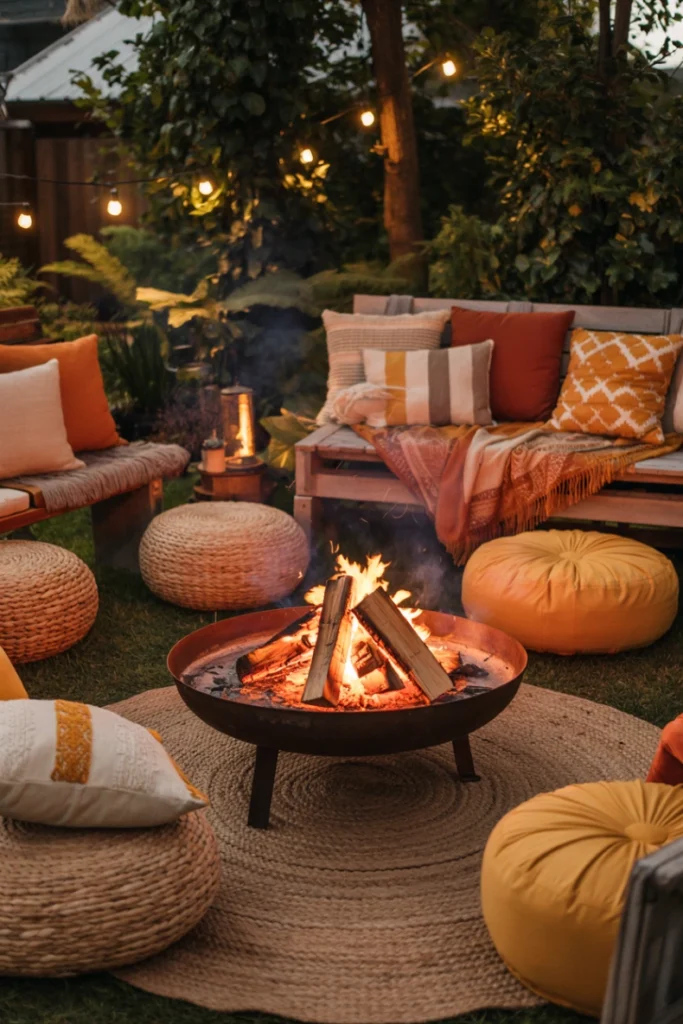
A bohemian fire pit design embraces relaxed seating, layered textiles, and natural materials, creating a space that feels collected rather than decorated. Floor cushions, low wooden benches, woven poufs, and patterned outdoor rugs create an informal and inviting atmosphere around a simple fire bowl or a low stone ring. Plants add softness and visual depth: potted grasses, trailing vines, and a few terracotta planters frame the circle without blocking the view of the flames. A palette of warm earth tones, terracotta, mustard, cream, and sage, keeps the look cohesive even when the pieces are mismatched.
Start with a low fire bowl, 30 to 36 inches across, set on a gravel or sand base so the area feels grounded and casual. Layer a large outdoor rug in a faded kilim or tribal pattern under the seating area, then add floor cushions in mixed prints and a couple of low benches draped with throws. Macrame hangings, lanterns, and string lights add glow and texture after dark. Keep the furniture low and flexible so the layout can change with the group: poufs can be pulled closer to the fire, cushions can be stacked and stored, and a small side table can hold drinks and snacks.
These backyard fire pit ideas prioritize comfort and creativity. The casual layout encourages lounging and conversation, making it ideal for homeowners who enjoy expressive outdoor spaces. Choose outdoor rated fabrics for cushions and rugs so they survive dew and light rain, and bring textiles inside during long wet spells. A boho fire pit area costs very little to assemble if you mix secondhand finds with a few new pieces, and it is easy to refresh each season by swapping a rug or a set of cushion covers.
11. Raised Backyard Fire Pit
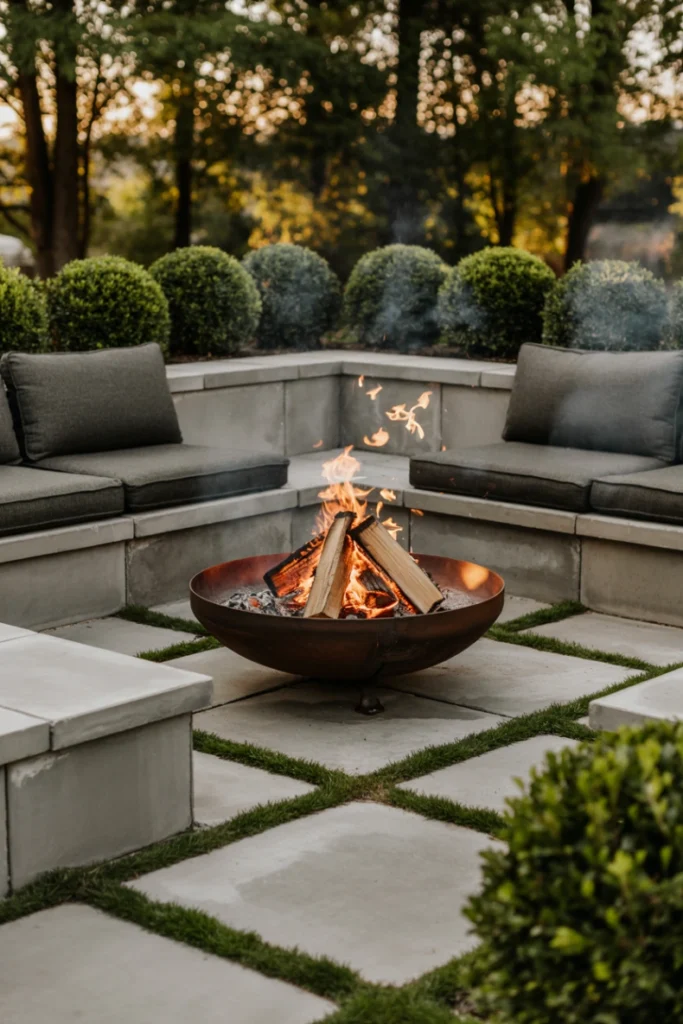
Raised fire pits elevate the flame, making it more visible from across the yard and safer in certain layouts, since the fire sits above ground level and away from dry grass and low plants. A raised pit, typically 18 to 30 inches high, built from masonry, stacked stone, or a steel bowl on a sturdy pedestal, adds height and architectural interest to the patio. This design works well in modern or formal backyards, where the fire pit doubles as a sculptural centerpiece, and it also suits yards with poor drainage, since the fire stays dry even after heavy rain.
For a masonry version, build a square or round pedestal on a concrete footing, then set a steel fire bowl or a firebrick lined basin on top. A stone or concrete cap around the rim gives guests a place to rest a drink and protects the edge from heat. For a simpler route, choose a manufactured raised fire table in powder coated steel or cast concrete, 36 to 48 inches across, with a gas burner and a glass wind guard. Leave at least 36 inches of clear space around the pit, and make sure the seating is set back far enough that the raised flames do not feel too close.
Functionally, raised backyard fire pit ideas improve airflow and reduce debris buildup, since leaves and ash fall away from the fire rather than collecting inside it. The elevated design also creates a strong focal point within the landscape, drawing the eye from the house to the far end of the garden. Add a low retaining wall or a pair of planters beside the pit to anchor it visually, and use a fitted cover to protect the burner when it is not in use. Raised pits cost more than ground level rings, usually 400 to 2,000 dollars, but the presence they bring to a patio is hard to match.
12. Backyard Fire Pit with Privacy Features
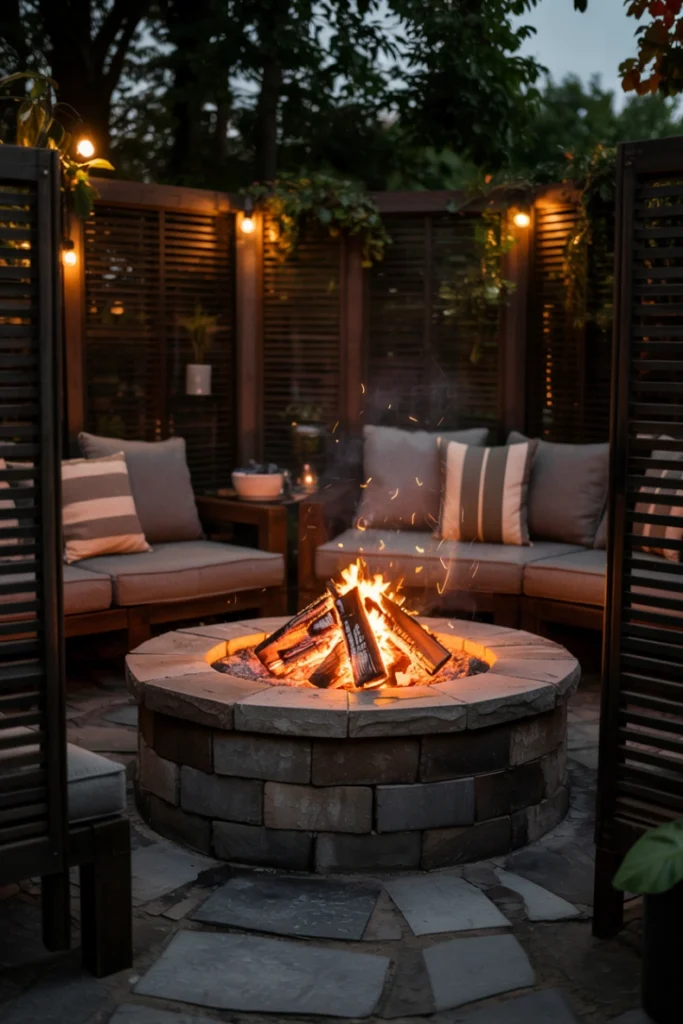
Privacy features such as screens, fences, or tall plants help create a secluded fire pit area that feels like a private retreat, even in a busy neighborhood. A simple cedar slat screen, 6 feet high, placed on the side facing the nearest neighbor, blocks unwanted views while maintaining airflow and openness above. Tall ornamental grasses, bamboo in planters, or a row of arborvitae offer a softer, living screen that moves gently in the breeze and smells wonderful in summer. Layering two or three elements, a fence panel plus a hedge plus a tall planter, creates real depth and a sense of enclosure.
Plan the privacy around the seating circle rather than the whole yard. Position screens 4 to 6 feet behind the outermost chairs, so the circle still feels open overhead and smoke can escape freely. Never enclose a fire pit on all four sides, and keep screens at least 3 feet from the flames, using fire resistant materials such as metal, stone, or treated wood. A pergola with an open top and climbing vines adds shade and privacy without trapping heat or smoke. Add a low hedge or a row of large pots at the entrance to the area, so stepping into the fire pit circle feels like arriving somewhere special.
These backyard fire pit ideas are especially valuable in urban or suburban settings, where houses sit close together and backyards are overlooked. A private fire pit area feels more personal and relaxing, encouraging frequent use and longer stays outdoors. Choose plants that suit your climate and need little care, such as ornamental grasses, boxwood, or bamboo in contained planters, and avoid resinous evergreens near the fire. A privacy screen also doubles as a windbreak, which keeps the flames steady and the seating comfortable on breezy evenings.
13. Fire Pit with Natural Landscaping
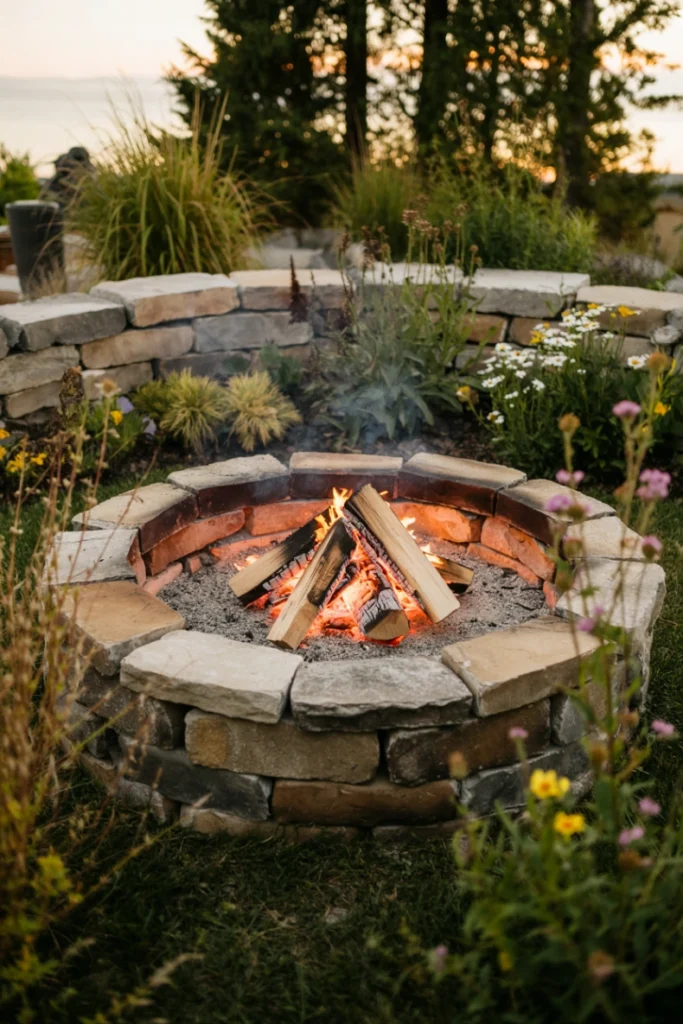
A fire pit surrounded by natural landscaping blends seamlessly into the backyard environment, as though the gathering spot grew out of the garden itself. Native plants, stone pathways, and organic layouts create a calming atmosphere that feels intentional yet relaxed. Instead of a formal patio, use a circle of crushed stone or a ring of flat flagstones, then plant native grasses, wildflowers, and low shrubs around the edge so the fire pit sits inside a living frame. A winding path of stepping stones leading from the house to the pit completes the feeling of a garden destination.
Choose plants that thrive in your region with little watering or feeding, and keep them at least 3 feet from the fire pit to protect them from heat and sparks. Ornamental grasses such as fountain grass or blue fescue add movement, while lavender, sage, and rosemary bring scent and attract pollinators. A few large boulders placed around the circle echo the stone of the fire pit and give the area structure. For the fire pit itself, a simple dry stacked stone ring or a low steel bowl suits the natural look best, and a gravel base ties the whole area together.
These backyard fire pit ideas appeal to homeowners who value sustainability and low maintenance. Natural landscaping enhances visual harmony and encourages a stronger connection to the outdoors, and it supports local wildlife as well. For more ways to weave a fire pit into a planted yard, see these outdoor pavilion ideas and garden layouts that pair shelter with greenery. Mulch the planting beds each spring, trim the grasses once a year, and the area will look better with every season as the plants fill in.
14. Multi-Level Backyard Fire Pit Area
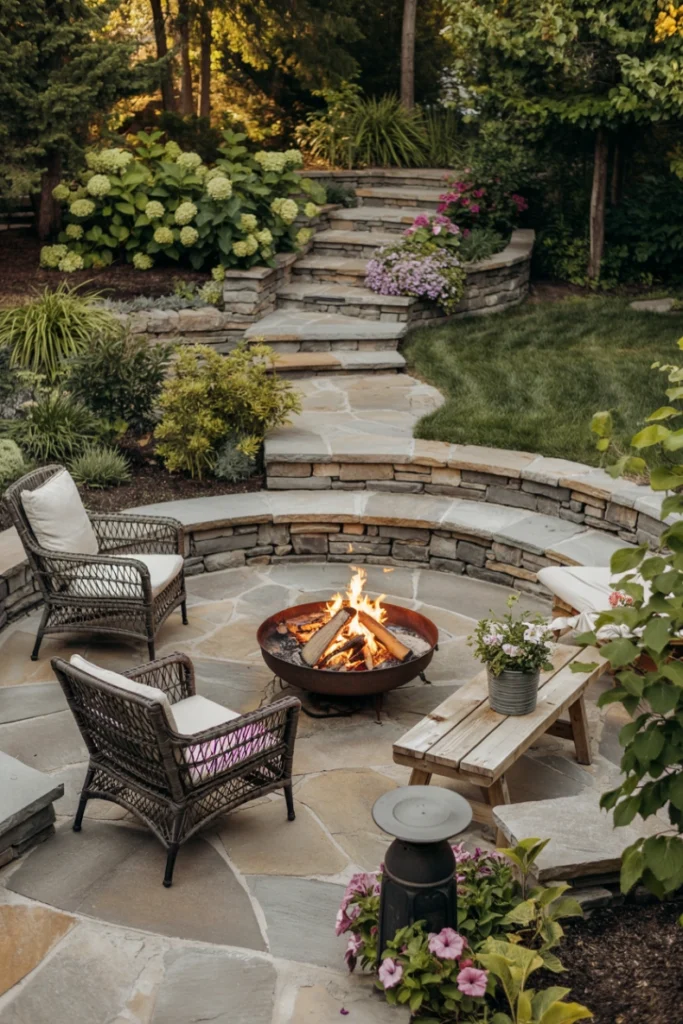
Multi-level fire pit designs use elevation changes to define zones and add visual interest to the backyard. A sunken fire pit circle, a raised patio with steps down to the fire area, or a terraced slope with the pit on the lowest level all create natural separation without walls or fences. Steps, platforms, or terraces create separation while keeping the space open and connected. A typical layout places the dining area on the upper level and the fire pit on a lower terrace 12 to 18 inches below, so the two zones feel distinct yet easy to move between.
Building on a slope is the easiest way to achieve this look. Cut a level pad into the hillside, retain the upper edge with a low stone or timber wall 18 to 24 inches high, and use the wall as extra seating. On flat ground, build a raised deck or paver platform 7 to 12 inches high for the dining zone, with two wide steps leading down to the fire pit circle. Use the same paver or stone on both levels for a unified look, and add low voltage step lights so the change in level is obvious and safe after dark. Drainage matters here: slope the lower level gently away from the seating and add a gravel drain channel behind the retaining wall.
These backyard fire pit ideas work best in sloped or spacious yards, where the change in level feels natural rather than forced. Multi-level layouts improve circulation, since guests naturally gather on one level and move to the other, and they create dynamic outdoor environments with architectural depth. The cost is higher than a single level patio, typically 2,000 to 6,000 dollars depending on the retaining work, but the result is a backyard that feels designed rather than assembled. Keep the steps wide and shallow, and always include a handrail or a low wall beside any drop of more than 18 inches.
15. Year-Round Backyard Fire Pit Design
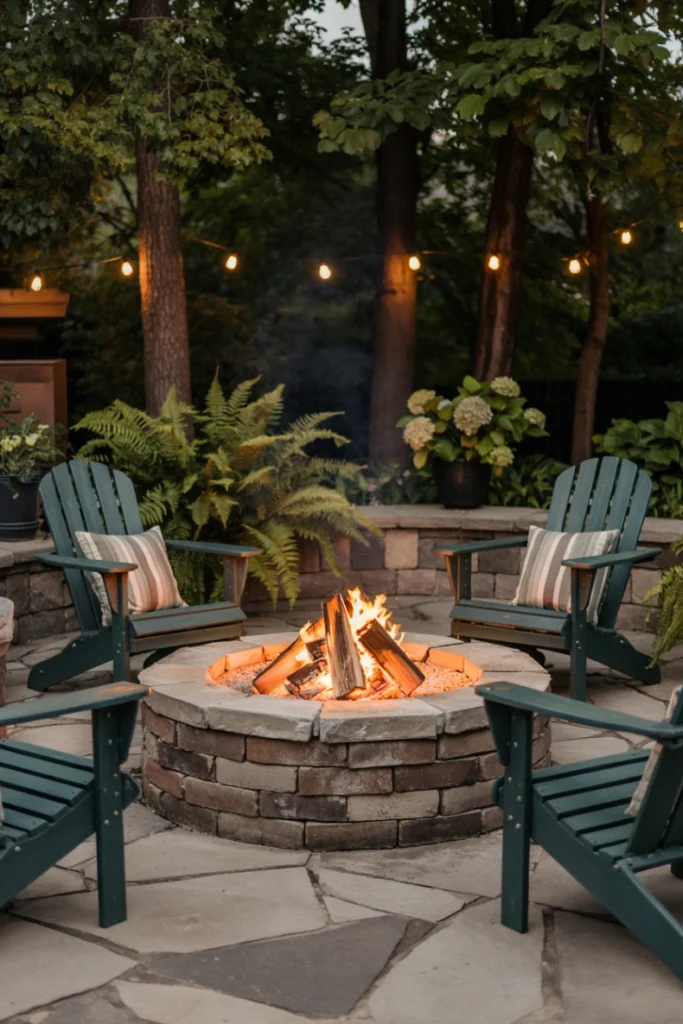
A year-round fire pit focuses on durability and comfort across all seasons, so the area gets used in January as well as July. Weather resistant materials are the foundation: stainless steel or cast iron for the pit, stone or concrete for the base, and outdoor rated fabrics for cushions. Wind protection matters too, so position the pit near a fence, a hedge, or a low wall on the side the wind usually comes from, and choose a spot that catches afternoon sun in winter. Flexible seating, such as chairs that can be pulled closer in cold weather and spread out in summer, keeps the area comfortable in every season.
Plan for the extras that make cold weather use pleasant. Store firewood under a covered rack near the pit so it stays dry, keep a stack of warm throws in a weatherproof deck box, and add a gas starter or a gas fire table if you want instant heat on a chilly evening. A fitted cover protects the pit between uses, and a spark screen keeps embers contained when autumn leaves are falling. In summer, the same area works beautifully with the fire kept low or switched off, serving as a lounge spot with lanterns and string lights. Drainage is important in every season, so build the base on gravel or pavers rather than bare soil.
These backyard fire pit ideas maximize long-term value. With proper planning, the fire pit becomes a reliable outdoor feature that supports year-round enjoyment and functionality. If you want a covered option for rainy evenings, these easy outdoor fire pit area ideas include simple sheltered layouts that keep the flames dry. Check the pit and the seating each spring, replace worn covers and cushions, and the area will stay inviting for many years.
Conclusion
Backyard fire pits offer endless opportunities to enhance outdoor living, and these 15 backyard fire pit ideas show how thoughtful design choices can accommodate different budgets, styles, and space limitations. From simple gravel setups and concrete block builds to multi-level designs and year-round layouts, each concept demonstrates how a fire pit can become the heart of the backyard. The best choice is the one that fits your yard, your budget, and the way you actually spend time outdoors.
Start with the basics: a safe distance from the house, a level fireproof surface, and seating placed at a comfortable distance from the flames. Then add the details that make the space yours, whether that is a rustic stone ring, a modern gas table, or a boho circle of cushions and lanterns. By selecting materials and layouts that align with your lifestyle, you can create a welcoming outdoor space that encourages relaxation and connection. A well-designed fire pit is not just a feature, it is an investment in comfort, functionality, and year-round outdoor enjoyment.
Frequently Asked Questions
How much does a backyard fire pit cost?
A simple DIY fire pit costs between 100 and 400 dollars, including a gravel base and a basic steel or stone ring. A paver patio with a fire pit usually runs 800 to 2,500 dollars in materials, while a professionally built stone fire pit with built-in seating can cost 2,000 to 6,000 dollars or more. Portable fire pits are the cheapest way to start, often under 150 dollars, and they let you test the layout before committing to a permanent build.
How far should a fire pit be from the house?
Keep a wood burning fire pit at least 10 feet from your house, fences, sheds, and overhanging trees, and at least 15 feet from low branches. Gas fire pits can sit a little closer, usually 6 to 10 feet from structures, but always check your local fire code and the manufacturer’s instructions, since rules vary by city and county. Never place a fire pit under a roof, pergola cover, or low tree canopy.
What is the best surface under a fire pit?
Gravel, pavers, concrete, and stone are the safest surfaces under a fire pit, because they will not catch fire and they drain well. A gravel pad 12 to 14 feet across is the simplest option, while a paver patio gives the most finished look. Never place a wood burning fire pit directly on a wooden deck or on dry grass. If you must use a deck, choose a gas fire table rated for deck use and place it on a fire resistant mat.
Wood burning or gas: which fire pit is better?
Wood burning fire pits give real crackling flames, more heat, and a classic campfire feel, but they produce smoke and ash and need firewood storage. Gas fire pits light instantly, produce no smoke or embers, and are easier to use on a weeknight, but they give less heat and need a propane tank or a gas line. Choose wood if you love the ritual of a real fire, and gas if you want convenience and a cleaner patio.
Can I leave my fire pit outside all year?
Yes, as long as the fire pit is made from weather resistant materials such as steel, stone, or concrete, and you protect it with a fitted cover when it is not in use. Empty wood burning pits of ash after each use so moisture does not collect inside, and store cushions and textiles indoors during winter. A cover and a little seasonal care will keep the pit in good shape for many years.
More Ideas You Will Love
 13 Tips to Host Outdoor Gatherings Safely in the Summer Heat
 16 Outdoor Entryway Ideas to Transform Your Home’s First Impression
 15 Summer Gardening Tips to Improve Soil Health
 21 Warm White Outdoor Christmas Light Ideas for 2025
 15 Gray Exterior House Color Combinations for Modern Homes
 22 Laundry Room Ideas for Small Spaces – Stylish & Functional Makeovers