
14 Outdoor Pavilion Ideas for a Stylish and Functional Backyard


An outdoor pavilion is one of the most impactful additions you can make to your backyard. It creates a defined structure that blends shelter, comfort, and visual appeal while extending your usable outdoor space well beyond the summer months. Whether you use it for entertaining, relaxing, or dining, a pavilion offers protection from sun and rain while keeping that open air connection to nature that makes backyard living so enjoyable.
This guide explores 14 outdoor pavilion ideas for a stylish and functional backyard, with practical detail on sizing, materials, layout, and finishing touches. Each idea focuses on thoughtful planning, durability, and visual harmony with the surrounding landscape. Whether you have a compact yard or a spacious outdoor area, these ideas will help you design a backyard retreat that feels intentional, comfortable, and timeless, and that you will actually use every week.
Before you settle on a design, measure your yard and think about how you will use the space most. A dining pavilion needs different dimensions than a lounge pavilion, and a poolside structure has different material needs than a garden retreat. Sketch the footprint on the ground with stakes and string, sit in the space at different times of day, and notice where the sun falls. A little planning now saves expensive changes later.
1. Classic Wooden Outdoor Pavilion
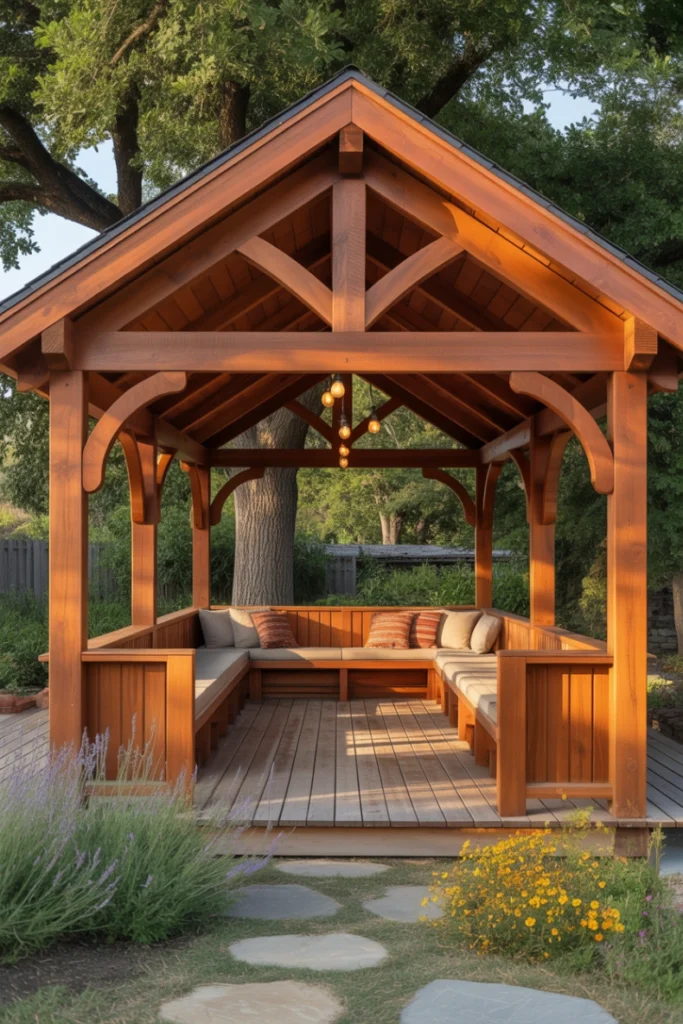
A classic wooden pavilion is one of the most timeless outdoor pavilion ideas, offering warmth, character, and natural beauty that no other material quite matches. Wood structures blend seamlessly into backyard landscapes, making them ideal for traditional, rustic, or farmhouse style homes. Cedar, redwood, and pressure treated lumber are the most popular choices because they resist rot and insects and age gracefully outdoors.
For a family sized pavilion, a 12 by 16 foot footprint works well, with 6 by 6 inch posts set at least 24 inches deep in concrete footings. Exposed beams and rafters give the structure its classic look, so choose lumber with a clean grain and minimal knots for the visible parts. A roof pitch of at least 3 in 12 helps rain run off, and a ceiling height of 8 to 9 feet keeps the space feeling open without making it hard to heat with a patio heater on cool evenings.
Finish the wood with a penetrating oil stain in a warm tone such as natural cedar, honey, or weathered gray to protect it while showing the grain. Restain every two to three years, and keep the base of the posts clear of soil and mulch so moisture does not wick upward. Pair the structure with a gravel or paver floor, a wooden dining table, and linen cushions in cream or sage for a look that feels both classic and fresh.
2. Modern Minimalist Pavilion Design
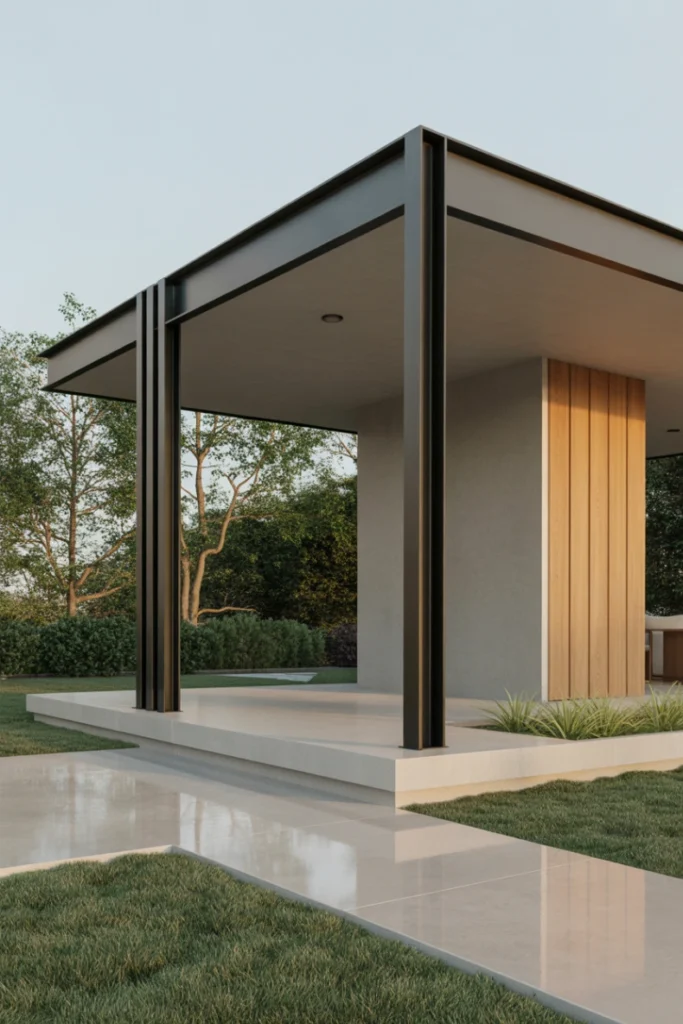
Modern minimalist pavilions focus on clean lines, simple materials, and a streamlined silhouette. These outdoor pavilion ideas emphasize functionality and architectural clarity, making them ideal for contemporary homes. Materials such as powder coated steel, aluminum, and concrete are often paired with warm wood accents so the structure feels sleek rather than cold.
A flat or low mono pitch roof is the signature of this style. Keep the roofline thin, use square posts rather than turned ones, and limit the palette to two or three colors, for example charcoal framing, white ceilings, and warm cedar slats. A 10 by 12 foot footprint suits a lounge setup, while a 12 by 20 foot version comfortably holds a dining table for eight. Polycarbonate roof panels let in soft daylight while blocking UV rays, and a metal roof with a matte finish looks sharp and lasts for decades.
Furnish minimally: a low profile sectional in a neutral outdoor fabric, a simple rectangular coffee table, and one sculptural planter. Avoid clutter, because every extra object fights the clean look. Built in LED strip lighting under the roof edge adds a soft glow at night and keeps the lines crisp. This design approach works especially well for outdoor lounges or dining areas, where simplicity enhances comfort and usability.
3. Pavilion with Outdoor Dining Area

An outdoor dining pavilion creates a dedicated space for meals, gatherings, and celebrations, and it is one of the most practical outdoor pavilion ideas for homeowners who enjoy entertaining outdoors. A pavilion provides shade and shelter, allowing the dining area to be used comfortably throughout the day, from slow weekend breakfasts to long summer dinners.
Size the space around the table. A 6 foot rectangular table seats six to eight people and needs about 36 inches of clearance on every side so chairs can pull out freely, which means a pavilion of at least 12 by 14 feet. A round 60 inch table seats six and works better in a square pavilion. Hang pendant lights 30 to 36 inches above the tabletop for focused evening light, and choose a washable outdoor rug, at least 8 by 10 feet, to anchor the zone and soften the floor underfoot.
Position the pavilion near the house or the outdoor kitchen so carrying food is easy, and leave a clear, level path between the two. Weather resistant furniture is essential: teak, aluminum, or resin wicker hold up far better than indoor pieces, and quick dry cushions mean a sudden shower does not end the evening. Add a small sideboard or rolling cart for serving dishes, and keep a storage bench nearby for table linens and citronella candles.
4. Poolside Outdoor Pavilion

A poolside pavilion adds both luxury and functionality to a backyard pool area. This structure provides shade for lounging, relaxing, or socializing between swims, and it gives the pool area a finished, resort like feel. Poolside outdoor pavilion ideas often use open sides to maintain visibility and airflow while offering relief from direct sunlight.
Place the pavilion 6 to 10 feet from the pool edge so it stays clear of splashes but close enough to feel connected. Choose materials that handle constant moisture and chlorine exposure: powder coated aluminum, vinyl wrapped posts, or naturally resistant cedar. For flooring, use slip resistant pavers, textured concrete, or outdoor deck tiles, and avoid smooth surfaces that get slick when wet.
Furnish with lounge chairs, a small side table for drinks, and a storage bench or deck box for towels and pool toys. Outdoor curtains in a light, quick dry fabric add shade and a touch of privacy, and they can be tied back on breezy days. A ceiling fan rated for damp locations keeps air moving and helps guests dry off. When designed thoughtfully, a poolside pavilion organizes the whole pool area into clear zones for swimming, lounging, and dining, and it encourages longer outdoor enjoyment.
5. Pavilion with Built-In Seating

Built in seating is a smart way to maximize space and functionality within a pavilion, and it works particularly well for smaller backyards where every square foot matters. Built in benches or sectional seating provide ample room for guests while maintaining a clean and cohesive design, because the seating becomes part of the structure itself.
Build benches along one or two sides of the pavilion in an L shape. A seat height of 18 inches and a depth of 16 to 18 inches feels comfortable for most adults, and a slight backrest angle of about 10 degrees makes long conversations easy. Use the same wood or composite as the pavilion frame so the seating looks intentional, and hinge the seat lids so the space underneath becomes hidden storage for cushions, throws, and outdoor games.
Top the benches with 3 to 4 inch thick outdoor foam cushions in a durable, fade resistant fabric such as solution dyed acrylic, and add a few throw pillows in colors pulled from the garden. A built in bench also doubles as a serving ledge during parties, so keep the top surface easy to wipe. Among outdoor pavilion ideas, built in seating offers long term practicality and a tailored look that feels intentional and refined, without the clutter of extra furniture.
6. Open-Air Pavilion for Relaxed Lounging
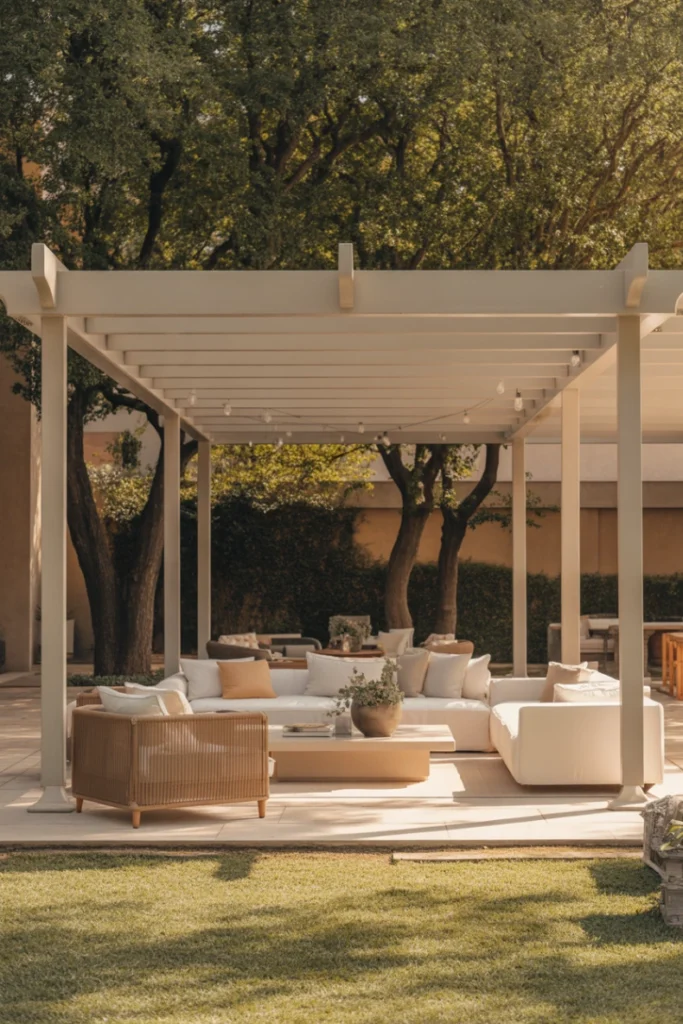
Open air pavilions are designed to maximize airflow and connection to the outdoors. These outdoor pavilion ideas feature open sides and minimal barriers, making them ideal for lounging, reading, or casual gatherings. The focus is on comfort, shade, and simplicity, with the structure framing the view rather than blocking it.
Furnish the space like an outdoor living room. A deep seated sectional or two lounge chairs, a coffee table at a comfortable 16 to 18 inch height, and a soft outdoor rug create a room that happens to be outside. Choose a rug and cushions in calm tones such as sand, sage, or soft terracotta, and layer in texture with a woven throw and a couple of ceramic planters. A ceiling fan rated for outdoor use makes warm afternoons far more pleasant.
Keep at least one side completely open to the best view in your yard, whether that is a garden bed, a tree, or a sunset. Sheer outdoor curtains on a simple track can soften the edges and block low sun without closing the space off. Open air pavilions are especially well suited for warm climates where ventilation is essential for comfort, and they make the transition between house and garden feel effortless.
7. Pavilion with Outdoor Kitchen Integration

Integrating an outdoor kitchen into a pavilion creates a highly functional entertaining space where cooking, dining, and socializing happen in one cohesive area. Outdoor pavilion ideas with kitchens often include grills, countertops, storage, and bar seating, so the cook stays part of the party instead of being stuck alone at the grill.
Plan a counter run of 8 to 10 feet along one side of the pavilion, with a 36 inch counter height for prep work and a raised bar ledge at 42 inches for seating. Allow at least 48 inches of walkway between the counter and the dining table so people can move freely. Stainless steel appliances and marine grade polymer cabinets handle weather best, and a stone or concrete countertop resists heat and stains far better than wood outdoors.
Include the essentials first: a quality grill, a small sink with running water if plumbing allows, a mini fridge, and closed storage for tools and serving pieces. Good task lighting over the prep area is non negotiable, so add under roof downlights or a pendant above the counter. For more inspiration on layouts, appliances, and finishes, see these outdoor kitchen ideas that pair beautifully with a pavilion setup. A pavilion with an outdoor kitchen transforms the backyard into a complete outdoor living destination.
8. Rustic Pavilion with Natural Materials
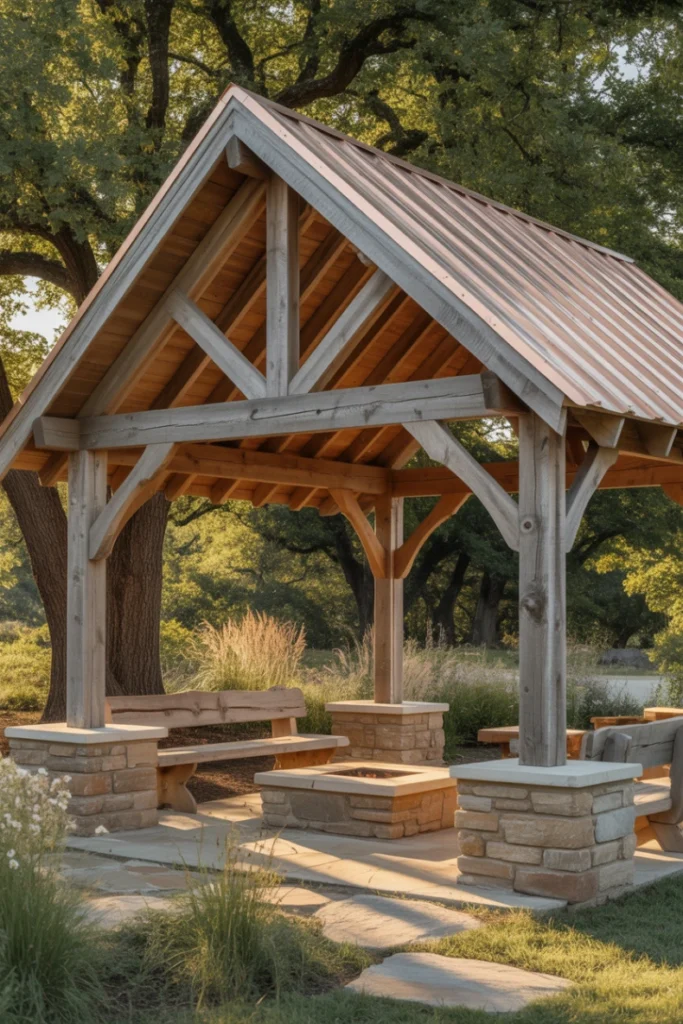
Rustic pavilions emphasize natural materials and textures, creating a cozy and inviting outdoor atmosphere. Wood, stone, and exposed beams define this style, making it one of the most charming outdoor pavilion ideas for nature inspired landscapes, wooded lots, and country gardens.
Use rough sawn timber or reclaimed wood for posts and beams, and set the posts on stone footings or short stone piers rather than burying them in concrete, which also helps them last longer. A cedar shake or standing seam metal roof in a muted tone completes the look, while a floor of flagstone, gravel, or wide plank decking keeps the feel grounded. Keep the palette earthy: warm browns, moss green, stone gray, and cream.
This design pairs well with a fire pit, wooden furniture, and simple decor such as lanterns, woven baskets, and potted herbs. Plant native shrubs and ornamental grasses around the base so the structure settles into the landscape instead of sitting on top of it. Rustic pavilions feel grounded and timeless, blending seamlessly into wooded or garden settings, and the emphasis on natural elements makes the space feel relaxed and welcoming for informal gatherings and quiet retreats.
9. Pavilion with Privacy Screens or Curtains
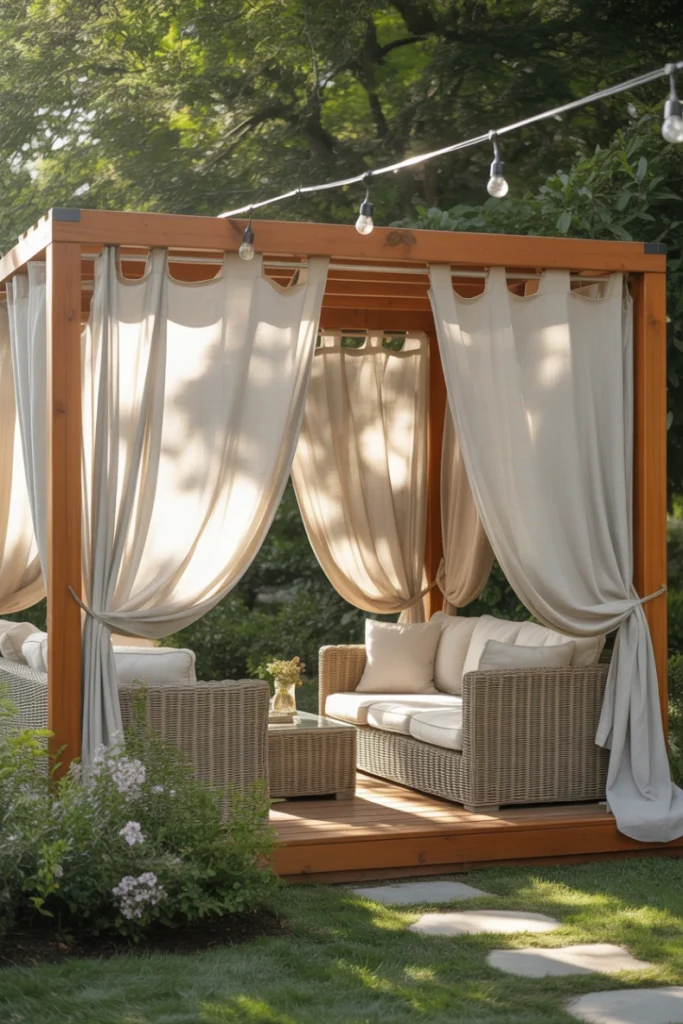
Privacy screens or curtains add versatility and comfort to outdoor pavilions, letting you control sunlight, wind, and visibility while keeping an open feel when you want it. This approach works especially well in suburban settings where neighboring houses sit close, or where a busy street runs past the yard.
Outdoor curtains are the easiest option. Mount a ceiling track or a simple wire cable around the sides you want to screen, and hang 96 inch panels in an outdoor rated fabric such as solution dyed acrylic. Choose a light color to keep the space bright, and add tiebacks so the panels can be pulled aside in seconds. For a more permanent solution, install slatted wood screens, decorative lattice panels, or a metal screen with a cutout pattern, leaving small gaps so air still moves through.
Living screens work beautifully too. Train climbing plants such as jasmine, clematis, or honeysuckle up a trellis panel on one side, or place tall planters with bamboo or ornamental grasses along the edge. Curtains made from outdoor rated fabrics or decorative screens enhance both function and aesthetics, and they can be opened or closed as needed for different occasions. Among outdoor pavilion ideas, this option offers flexibility without sacrificing style or airflow.
10. Pavilion for Small Backyards
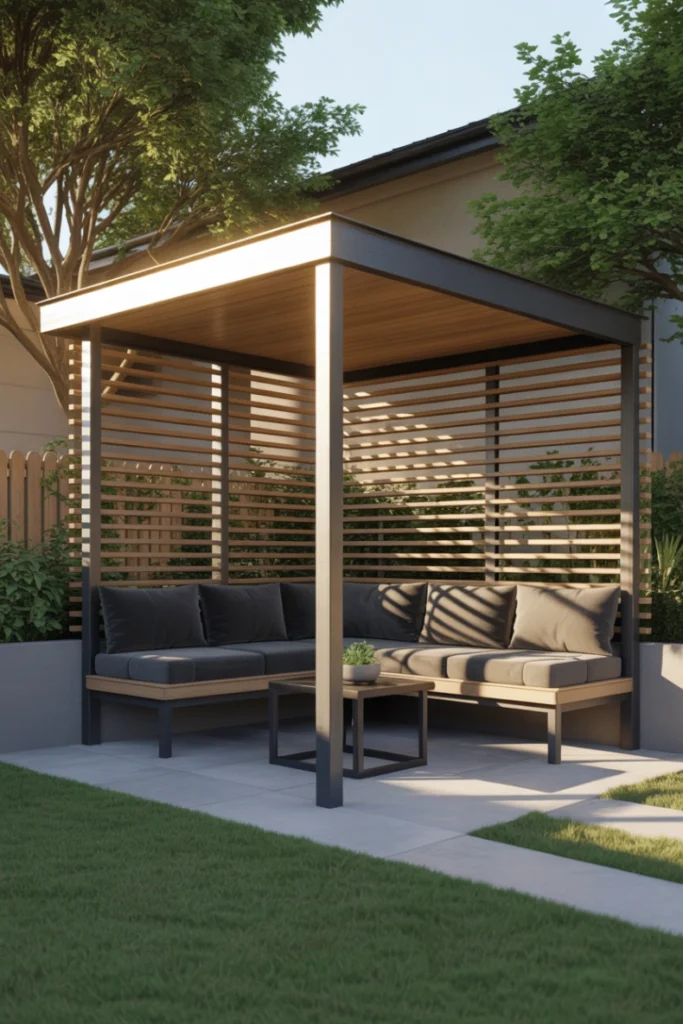
Outdoor pavilions are not limited to large spaces. Compact pavilion designs work well in small backyards when they are scaled appropriately, and this idea focuses on efficiency so the structure enhances the space rather than overwhelming it.
Choose a modest footprint of 8 by 10 feet or 10 by 10 feet, and keep the posts slim, 4 by 4 inches or slim steel, so the structure feels light. A flat or gently sloping roof keeps the profile low, and light colors for the frame and roof help the pavilion recede visually instead of dominating the yard. Avoid heavy furniture: a small bistro set or two lounge chairs and a side table are enough, and foldable or stackable pieces let you clear the space when needed.
Use the vertical space. Hang a couple of lanterns or a short string of lights, add a wall mounted planter on a post, and keep the floor clear so the eye reads the whole yard. A compact pavilion can serve as an intimate seating or dining area, providing shade without crowding the yard. These outdoor pavilion ideas prove that thoughtful design can make even limited space feel functional and stylish, and a small pavilion often gets used more than a large one because it feels cozy rather than empty.
11. Pavilion with Fire Pit Feature
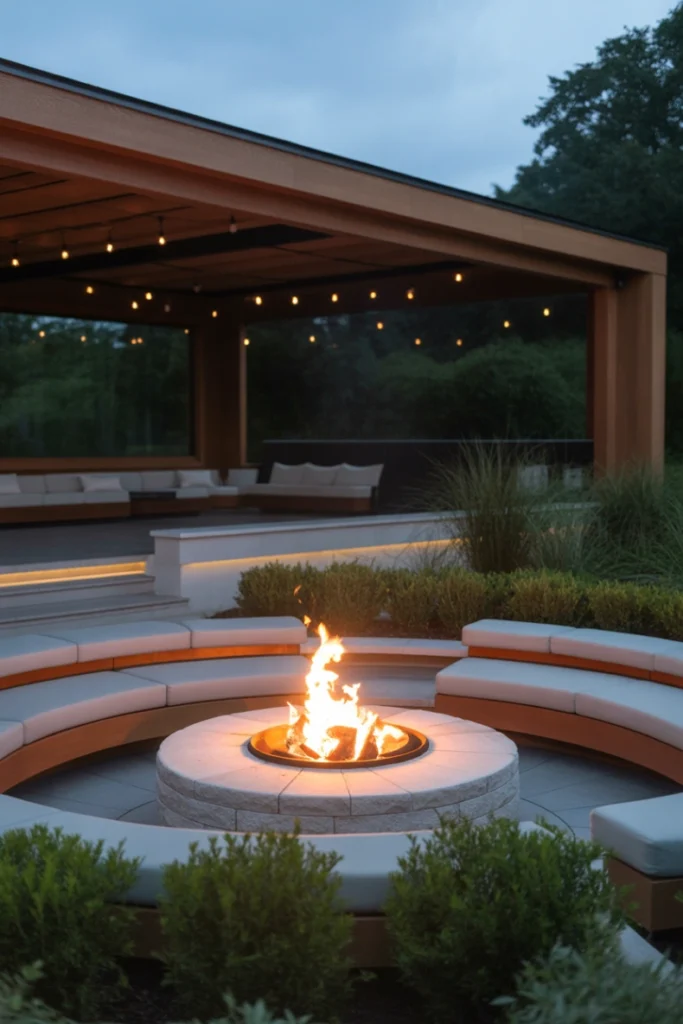
Combining a pavilion with a fire pit creates a year round outdoor living space that stays inviting long after sunset. This setup provides warmth and ambiance, making it suitable for cooler evenings and seasonal transitions, and the fire becomes a natural focal point that draws people together.
Safety comes first with this design. A wood burning fire pit should sit outside the roofline or in a pavilion with a vented cupola roof, because smoke and sparks need a clear escape path. A gas fire table is the safer choice directly under a roof, since it produces no embers and can be switched off instantly. Either way, keep a clear radius of at least 3 feet around the fire, use a non combustible base such as pavers or gravel, and never place the fire closer than 10 feet to the house or a fence.
Arrange seating in a circle around the fire with about 10 to 12 feet of diameter, using low lounge chairs or a curved built in bench so everyone can see the flames and each other. Store firewood in a covered rack nearby but not under the roof, and keep a fire extinguisher or a bucket of sand within easy reach. For more fire feature inspiration, browse these backyard fire pit ideas to find a style that fits your pavilion. Surrounding the fire pit with comfortable seating encourages conversation and relaxation, and this is one of the most inviting outdoor pavilion ideas for homeowners seeking extended outdoor use.
12. Pavilion with Integrated Lighting Design
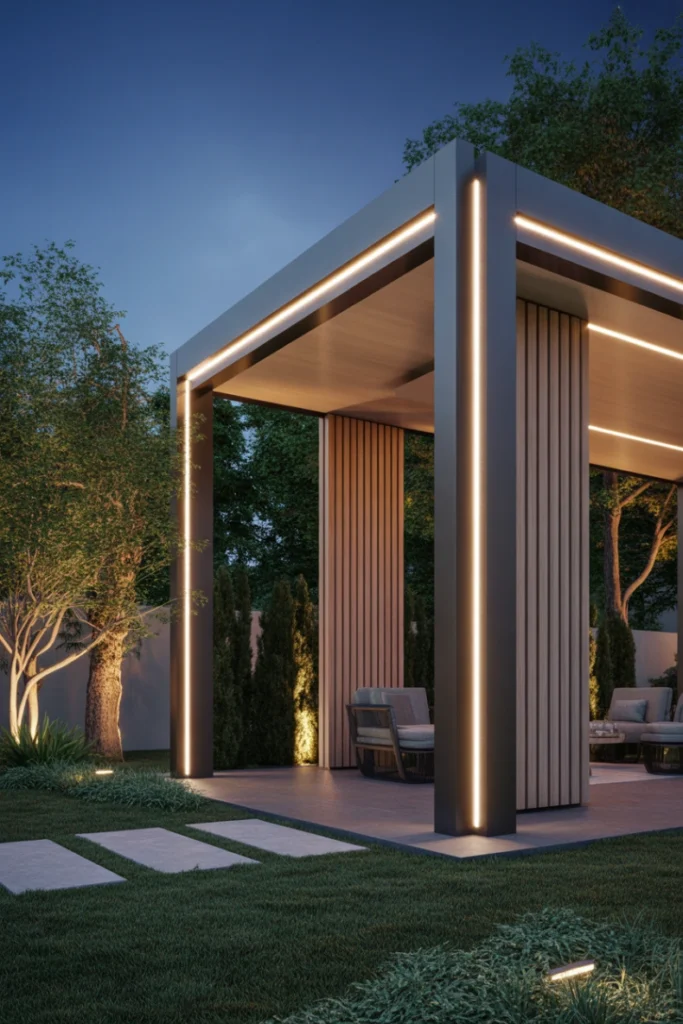
Lighting transforms an outdoor pavilion from a daytime structure into an evening retreat, and integrated lighting design is what separates a good pavilion from a great one. Integrated solutions such as recessed lights, string lights, or chandeliers enhance both functionality and atmosphere after dark.
Layer three types of light. Start with ambient light: recessed downlights in the roof or LED strips along the beams, in a warm white temperature of around 2700K, which flatters skin tones and feels cozy. Add task light over dining or kitchen areas, and finish with accent light such as lanterns on the table, uplights on nearby trees, or solar path lights along the walkway to the pavilion.
Put the lights on a dimmer or a smart switch so you can shift from bright light for cooking to a soft glow for relaxing, and set a timer so the lights come on at dusk automatically. String lights work best when they are strung in a gentle zigzag or a clean parallel run rather than draped randomly, and outdoor rated fixtures are essential in a structure that is open to rain. For budget friendly options that still look polished, explore these affordable backyard lighting ideas. Well planned lighting highlights architectural features while ensuring adequate visibility, and warm lighting tones create a welcoming ambiance without overpowering the space.
13. Pavilion Surrounded by Landscaping
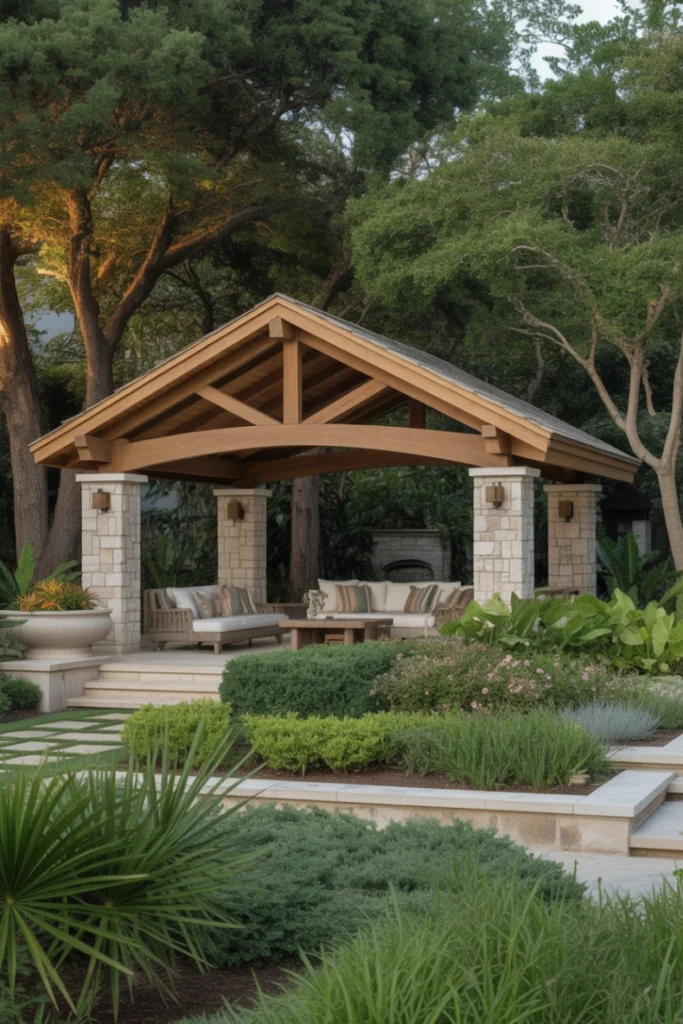
Landscaping enhances the visual impact of an outdoor pavilion by blending it into the surrounding environment. Planting trees, shrubs, or climbing vines softens the structure and creates a more immersive experience, so the pavilion feels like a destination rather than an add on.
Start with structure planting. A small ornamental tree such as a Japanese maple or crape myrtle, placed 8 to 10 feet from a corner post, gives shade and a beautiful silhouette without threatening the roof with overhanging branches. Layer in medium shrubs such as hydrangea, boxwood, or ornamental grasses around the base, and finish with low groundcover or mulch beds to keep the edges tidy. Climbing vines such as clematis, jasmine, or climbing roses trained up a post or a trellis panel soften the hard lines beautifully.
Add a path to complete the design. Stepping stones, brick pavers, or a gravel walk leading from the house to the pavilion makes the structure feel connected to the rest of the yard, and solar path lights along the way make evening walks safe. This approach adds privacy, shade, and natural beauty, and thoughtful landscaping frames the pavilion so it feels intentional. Outdoor pavilion ideas that incorporate greenery feel more cohesive and visually appealing throughout the seasons, and they also attract birds and pollinators that bring the garden to life.
14. Multi-Purpose Pavilion for Flexible Use

A multi purpose pavilion adapts to different needs, making it one of the most practical outdoor pavilion ideas. Designed with flexibility in mind, this structure can function as a lounge, a dining area, or an entertainment zone, sometimes all in the same weekend.
The secret is movable furniture and clear zones. Use lightweight lounge chairs and a folding dining table that can be rearranged in minutes, and define zones with an outdoor rug under the lounge area and a pendant light over the dining spot. A storage bench along one side holds cushions, games, and party supplies, so the space can switch from a quiet reading nook in the morning to a dinner party setup by evening. Neutral finishes such as warm gray, natural wood, and cream let you change the look with seasonal cushions and decor instead of new furniture.
Think about how the pavilion connects to the rest of the yard. Place it where it can serve the pool, the garden, and the grill area equally, and leave one side open so kids and guests flow in and out easily. For layout ideas that tie the whole backyard together, see these outdoor entertaining area ideas. Using movable furniture and neutral finishes allows easy reconfiguration, and this approach ensures the pavilion remains relevant as lifestyles and needs change. A multi purpose pavilion maximizes investment value while providing long term enjoyment and versatility.
Final Thoughts
Outdoor pavilions offer a perfect balance of style, comfort, and functionality, and these 14 outdoor pavilion ideas demonstrate how thoughtful design can transform any backyard into an inviting and versatile outdoor living space. From classic wooden structures to modern minimalist designs, pavilions enhance usability while elevating overall aesthetics, and they add real value to a home.
The best pavilion is the one that fits how you actually live. Measure your space, pick materials that suit your climate, and start with the features you will use most, whether that is a dining table, a fire pit, or a quiet lounge corner. By considering layout, materials, and purpose, you can create a pavilion that complements your lifestyle and outdoor environment. Whether your goal is entertaining, relaxing, or dining outdoors, these ideas provide inspiration for building a backyard retreat that feels intentional, stylish, and enduring.
Frequently Asked Questions
How much does it cost to build an outdoor pavilion?
A simple prefabricated pavilion kit typically costs between 2,000 and 6,000 dollars, while a custom built wooden pavilion usually runs from 6,000 to 15,000 dollars depending on size, materials, and finishes. An outdoor kitchen, lighting, and premium materials can push the total higher. Getting quotes from two or three local builders helps you compare, and a kit is a good option if you are comfortable with basic DIY assembly.
What is the best size for a backyard pavilion?
A 10 by 10 foot pavilion suits a small lounge or a bistro set, a 12 by 12 foot pavilion comfortably holds a dining table for six, and a 12 by 16 or 12 by 20 foot pavilion works best for larger gatherings or a combined lounge and dining setup. Measure your yard first, allow at least 3 feet of clear space around the structure, and mark the footprint with stakes and string before you commit.
Do I need a permit to build a pavilion?
In many areas, a permit is required for a pavilion over a certain size, often 120 to 200 square feet, or for any structure attached to the house or built on a concrete foundation. Rules vary by city and county, so check with your local building department before you start, and confirm any setback rules about how close the structure can sit to property lines.
What is the best material for an outdoor pavilion?
Cedar and redwood are the best wood choices because they resist rot and insects naturally and look beautiful with a simple stain. Pressure treated lumber is a budget friendly alternative that lasts well when sealed. For a modern look, powder coated aluminum or steel needs the least maintenance and handles harsh weather well, while vinyl wrapped posts offer a clean finish with almost no upkeep.
How do I maintain my pavilion through the year?
Clean the roof and frame twice a year, clear leaves and debris from the roofline, and reapply stain or sealant to wood every two to three years. Check bolts and footings each spring, tighten any loose hardware, and cover or store cushions during heavy rain and winter. A little regular care keeps the structure looking good and extends its life by many years.
More Ideas You Will Love
 14 Outdoor Living Room Ideas with Cozy Patios & Fireplaces
 20 DIY Christmas Pathway Light Ideas for 2025 Magic Nights
 15 Gray Exterior House Color Combinations for Modern Homes
 23 Small Laundry Room Makeover Ideas – Space-Saving & Chic Solutions
 15 Outdoor Entertainment Ideas: DIY Backyard Bar Setup
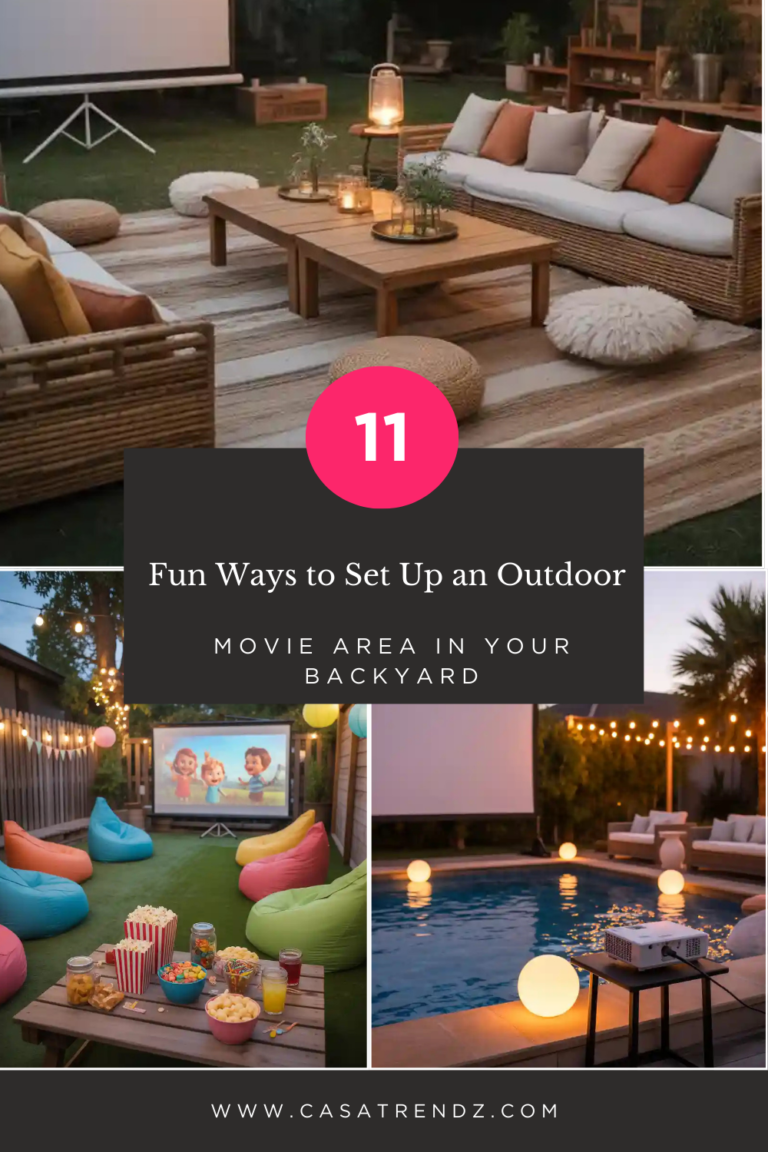 11 Fun Ways to Set Up an Outdoor Movie Area in Your Backyard