
15 Beach Cottage Exterior Ideas: Coastal Designs You’ll Love

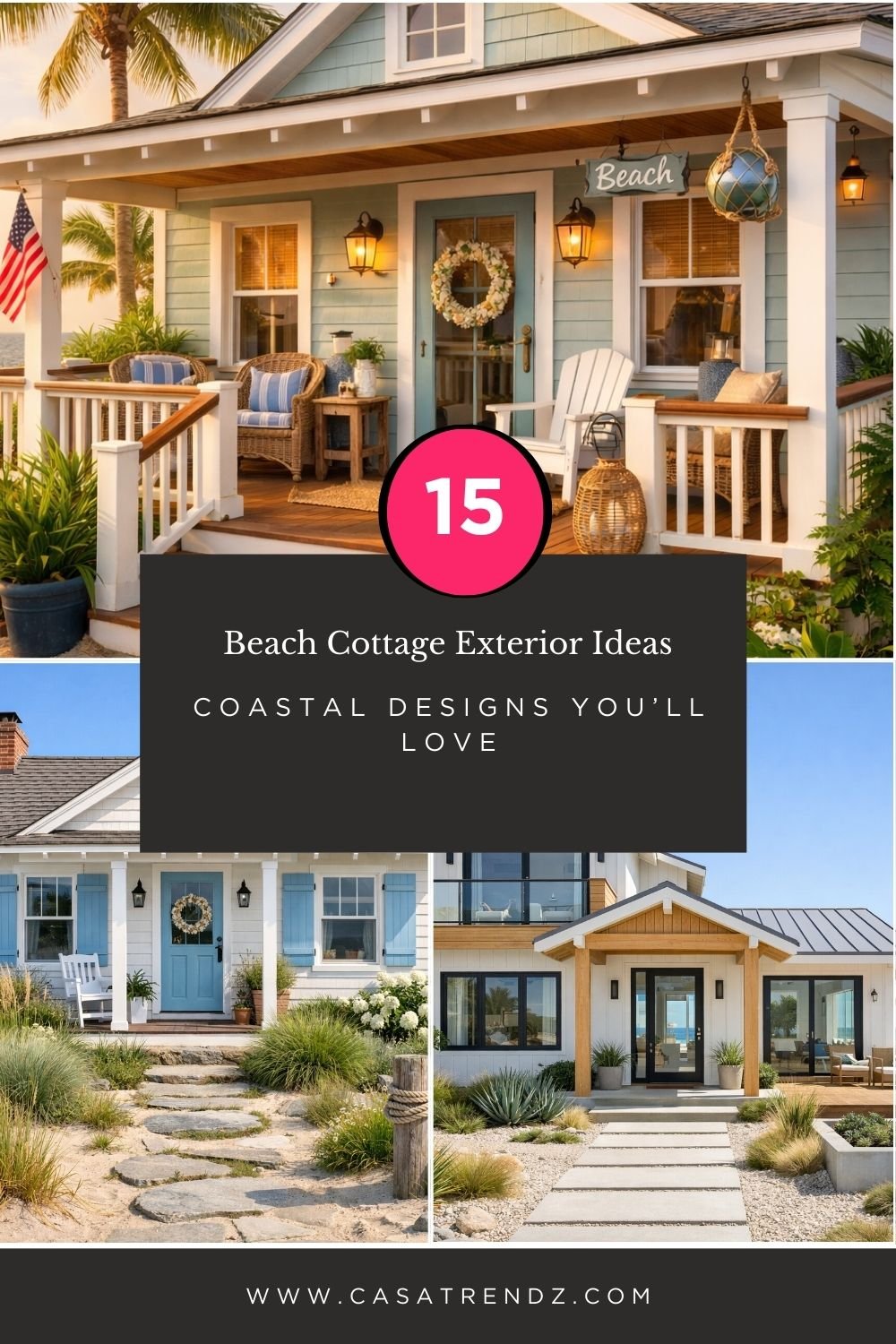
A beach cottage exterior captures the essence of relaxed coastal living. From breezy color palettes to natural materials that stand up to salt air, the right design choices turn a simple structure into a welcoming retreat. Whether your home sits directly on the ocean or simply borrows inspiration from the coast, thoughtful exterior details can create a look that feels timeless, fresh, and inviting all at once.
In this guide, we explore 15 beach cottage exterior ideas that blend charm, function, and coastal style. Each idea focuses on practical design elements that boost curb appeal while holding up in real coastal conditions, from the siding and roof to the porch, landscaping, and front door. Use one idea as a starting point, or mix several together to shape a look that fits your home, your climate, and your budget.
1. Classic White Beach Cottage Exterior
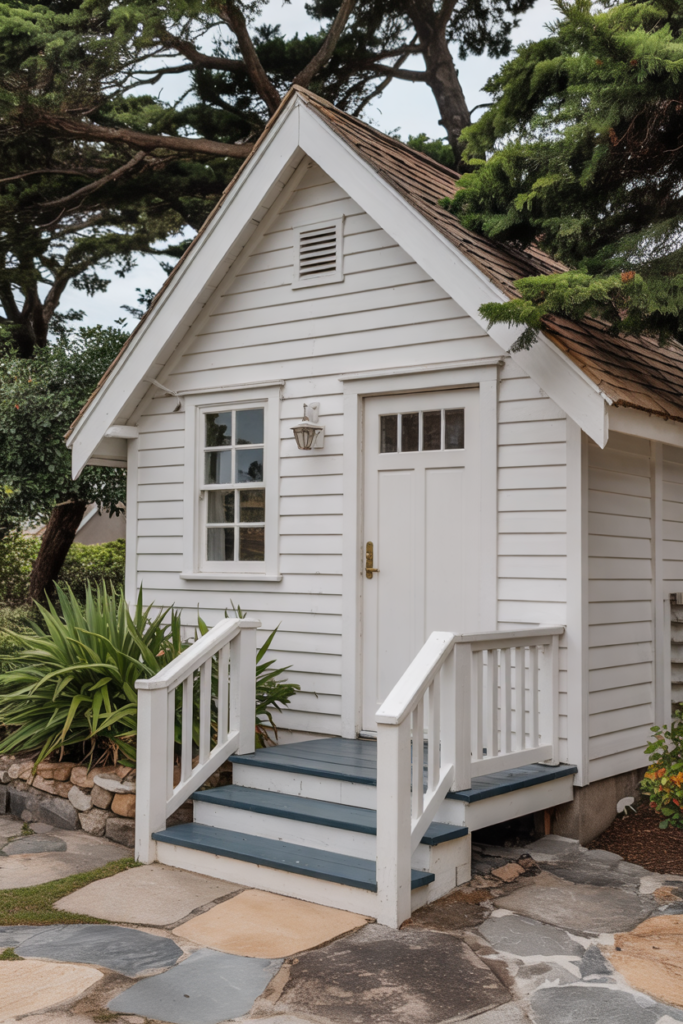
A classic white exterior is one of the most iconic beach cottage design choices, and it earns that status for good reason. White reflects sunlight, which helps keep the home cooler in warm coastal climates, and it creates a clean, airy appearance that feels right beside sand, sea, and sky. A white cottage photographs beautifully, pairs with almost any accent color, and never looks dated, which makes it a safe choice if you plan to sell the home later.
To keep white from feeling flat, lean on texture. Shiplap, clapboard, or cedar shake siding adds shadow lines that give the walls depth, while soft gray or sand colored trim can quietly define windows, corners, and gables without overpowering the simplicity. A white painted front door in a soft seafoam or navy shade adds a focal point, and black lantern style sconces bring a crisp contrast that reads classic rather than stark.
Choose an exterior paint with a satin or low luster finish and a formula rated for coastal exposure, since salt air and humidity wear down cheap paint fast. Wash the siding once a season with a garden hose and a soft brush to keep mildew from settling in, and touch up trim every couple of years. With that small amount of care, a white beach cottage exterior stays bright and welcoming for years.
2. Soft Pastel Coastal Color Scheme
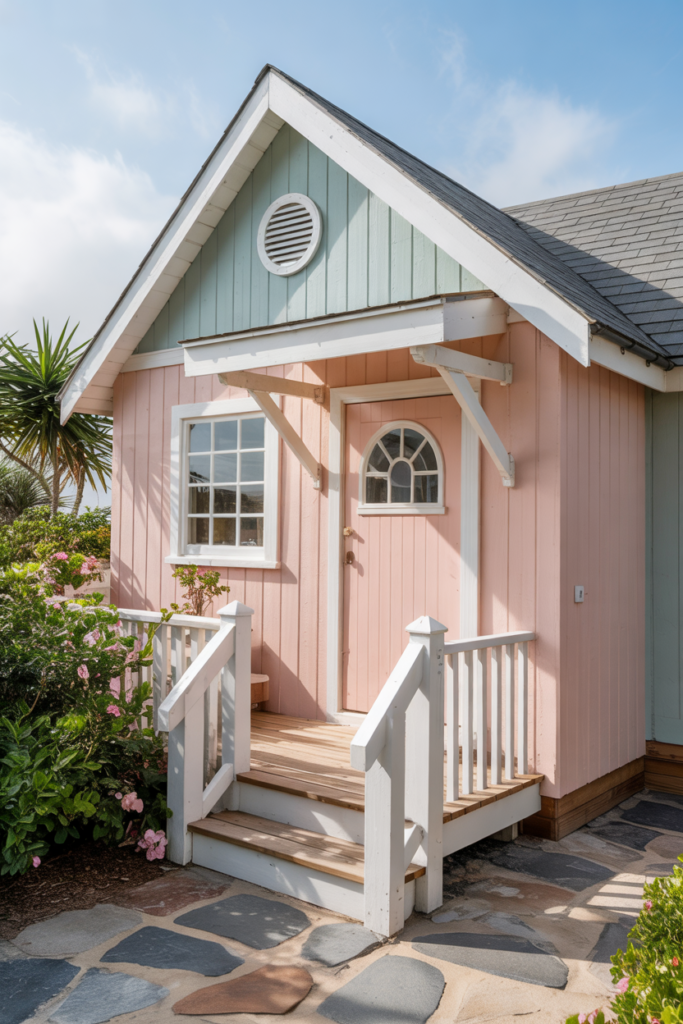
Soft pastel colors are a hallmark of beach cottage exteriors. Shades like seafoam green, pale blue, sandy beige, and blush pink echo the calming tones of the coast, and they add personality while keeping the whole house feeling relaxed and welcoming. Pastels work especially well on smaller cottages, where a deep color might feel heavy, because they let the architecture breathe.
The trick is balance. Pair a pastel body color with crisp white trim and natural wood accents, such as a cedar door, raw wood shutters, or a driftwood toned porch floor. That combination keeps the color from feeling sugary and gives the eye something warm to land on. If you are nervous about committing, test the color on a large swatch board and view it in morning and afternoon light, since coastal sun can wash out pale shades by midday.
For a cohesive look, carry one pastel through the whole exterior and repeat it in small doses, such as matching shutters, a painted bench, or flower boxes. Keep the roof and hardscaping neutral so the color stays the star. A pastel beach cottage exterior stands out gently, offering visual interest while staying harmonious with the coastal environment around it.
3. Natural Wood Accents
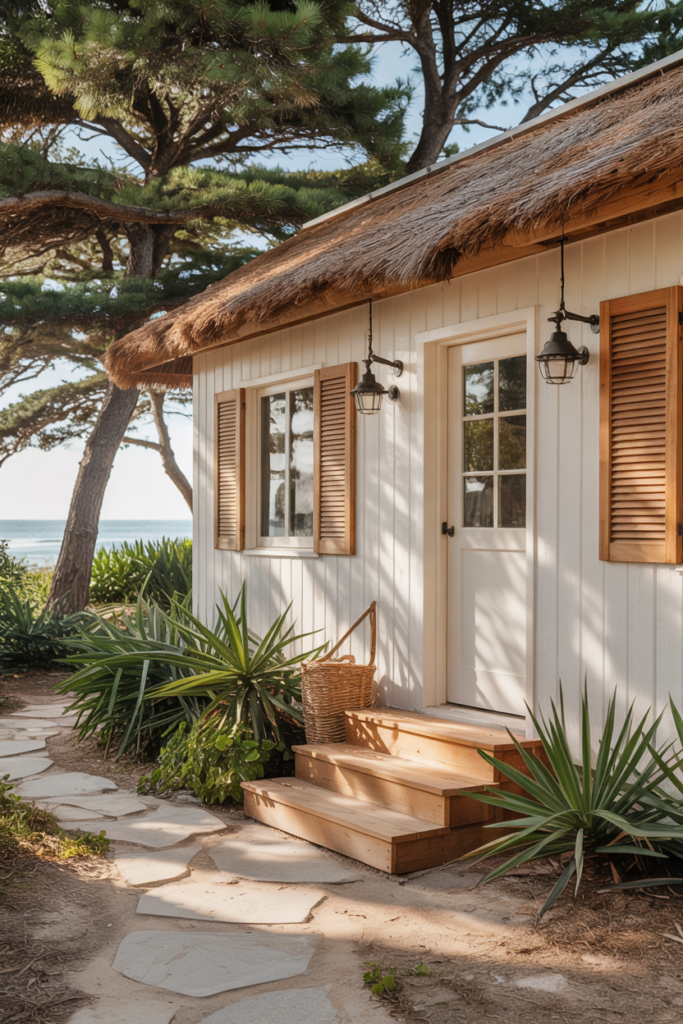
Incorporating natural wood accents into a beach cottage exterior adds warmth and texture that paint alone cannot match. Wooden shutters, exposed beams, cedar shingles, a timber porch post, or a plank front door all create a connection to nature while giving the cottage more character. Wood also complements coastal color palettes beautifully, softening white, blue, and pastel siding with an organic touch.
Durability is the main thing to plan for. In a coastal setting, choose woods that handle moisture and salt, such as cedar, redwood, or teak, and seal them with a marine grade finish or a penetrating oil. Reapply the finish every one to two years, depending on how much sun and spray the wood sees. Left untreated, wood will weather to a silvery gray, which many cottage owners actually love, but sealed wood keeps its warm tone much longer.
Use wood sparingly for the biggest impact. A cedar shake gable, wood brackets under the eaves, or a thick timber beam over the front door can transform a plain facade without a full renovation. Pair the wood with white or pastel siding and simple black hardware so the natural grain stays the focus. This design approach balances rustic charm with coastal elegance in a way that feels lived in, not decorated.
4. Wraparound Porch Design
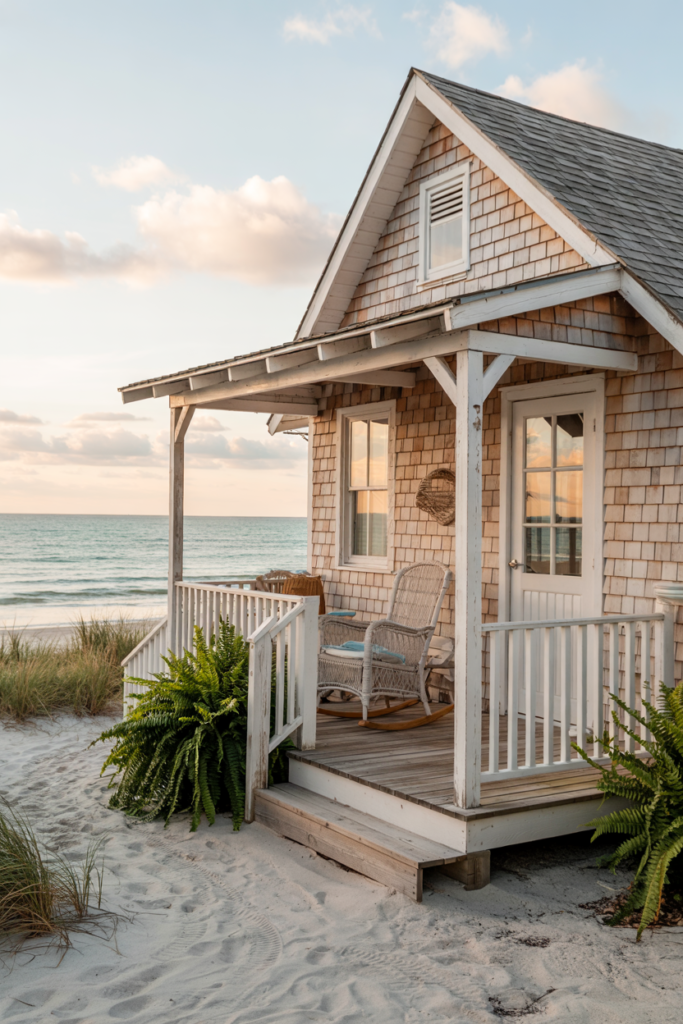
A wraparound porch is a defining feature of many classic beach cottages. It expands outdoor living space, shades the walls from harsh sun, and promotes airflow through the house, all key aspects of coastal living. Just as important, a wraparound porch gives the home a welcoming face, a place to sit with coffee in the morning and watch the light change over the water in the evening.
When planning a wraparound porch, think about how you will actually use it. A depth of at least 8 feet lets you fit rocking chairs and a small table comfortably, while 10 feet or more makes room for a porch swing or an outdoor sofa. Paint the porch ceiling a pale sky blue, a classic Southern coastal tradition that also makes the space feel taller and brighter. Choose composite decking or pressure treated wood with a good sealant, since porch floors take constant sun, rain, and sandy feet.
Style the porch to match the cottage. Slim turned columns suit a traditional cottage, while chunky square posts fit a more modern coastal look. Add a beadboard ceiling, simple railings, and a couple of weather resistant cushions in striped outdoor fabric, and the porch becomes the most used room of the house. This beach cottage exterior idea creates a welcoming facade that invites you to slow down and enjoy the coastal lifestyle.
5. Coastal Blue Exterior Shades
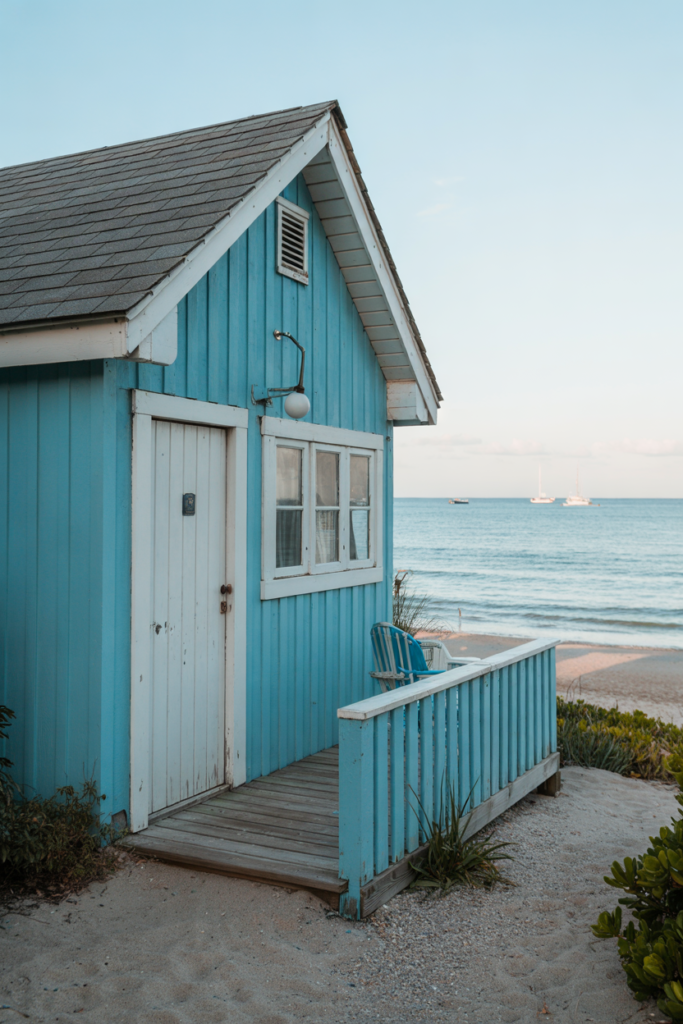
Blue is one of the most popular color choices for beach cottage exteriors, and the range is wide enough for almost any taste. Soft sky blue feels breezy and light, dusty slate blue reads calm and classic, and deeper navy adds sophistication and a strong contrast against white trim. Blue reflects the surrounding ocean and sky, which makes the house feel like a natural part of its setting rather than something placed on top of it.
Pairing blue siding with crisp white trim is the combination that never fails. White window frames, corner boards, and fascia highlight the architecture and keep darker blues from feeling heavy. For a softer look, try a pale blue body with white trim and a navy front door, which gives you depth without committing the whole house to a dark shade. If your cottage gets strong afternoon sun, a mid tone blue holds its color better than a very pale one, which can bleach out over time.
Finish the look with natural textures: a weathered wood door, rope or rattan porch accessories, and simple black or brass lanterns. For more color inspiration, see our exterior house color ideas to compare blue with other coastal palettes before you commit. This color combination remains timeless and adaptable, making it ideal for homeowners seeking a classic yet stylish coastal exterior.
6. Shingle-Style Beach Cottage Exterior
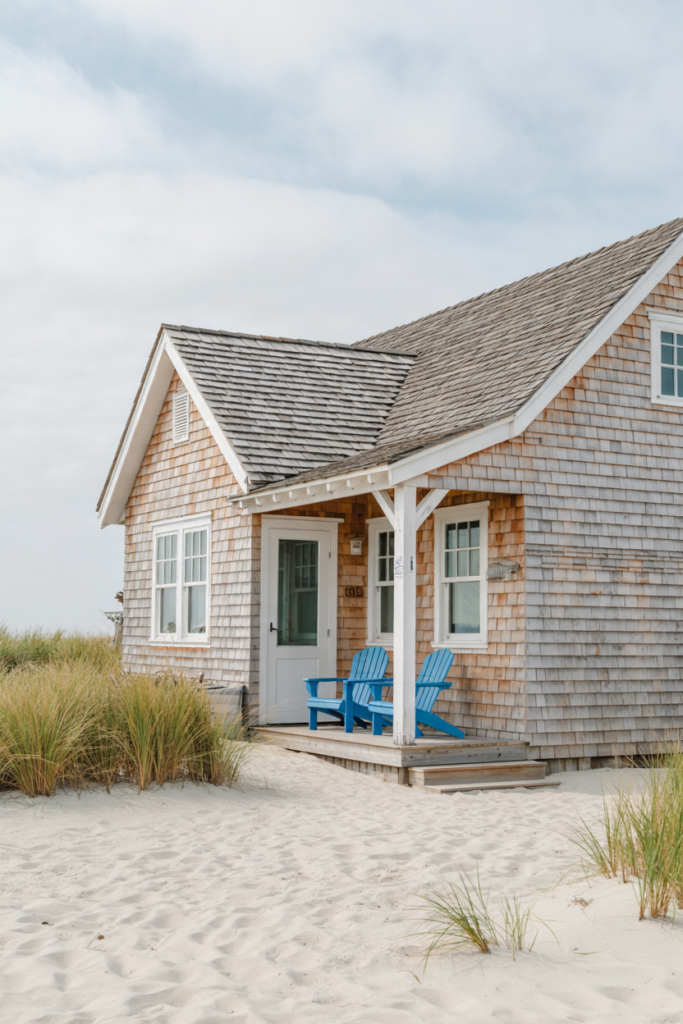
Shingle style exteriors are synonymous with traditional coastal homes. Cedar shingles provide texture and visual depth while blending naturally with beach landscapes, and over time they weather into soft gray tones that only enhance the cottage character. The look is grounded, durable, and timeless, which is why shingle style cottages have stayed popular for more than a century.
Cedar is the classic choice because it resists rot and insects better than most woods, but it still needs care in a coastal climate. Install shingles with stainless steel nails to prevent rust streaks, leave small gaps for airflow, and apply a breathable wood preservative if you want to slow the graying process. If you prefer the silvered look, simply let the shingles weather naturally and rinse them once a year to remove salt buildup.
Shingle style works best with simple architectural lines and minimal ornamentation. Let the texture do the talking, and keep the trim quiet: white or soft gray painted boards, a simple gable, and a wood or painted front door in a muted coastal color. Pair it with low, native landscaping and a stone or shell walkway, and the whole house feels like it grew out of the shoreline. This exterior style is perfect for homes exposed to coastal elements.
7. Light Gray and Neutral Tones
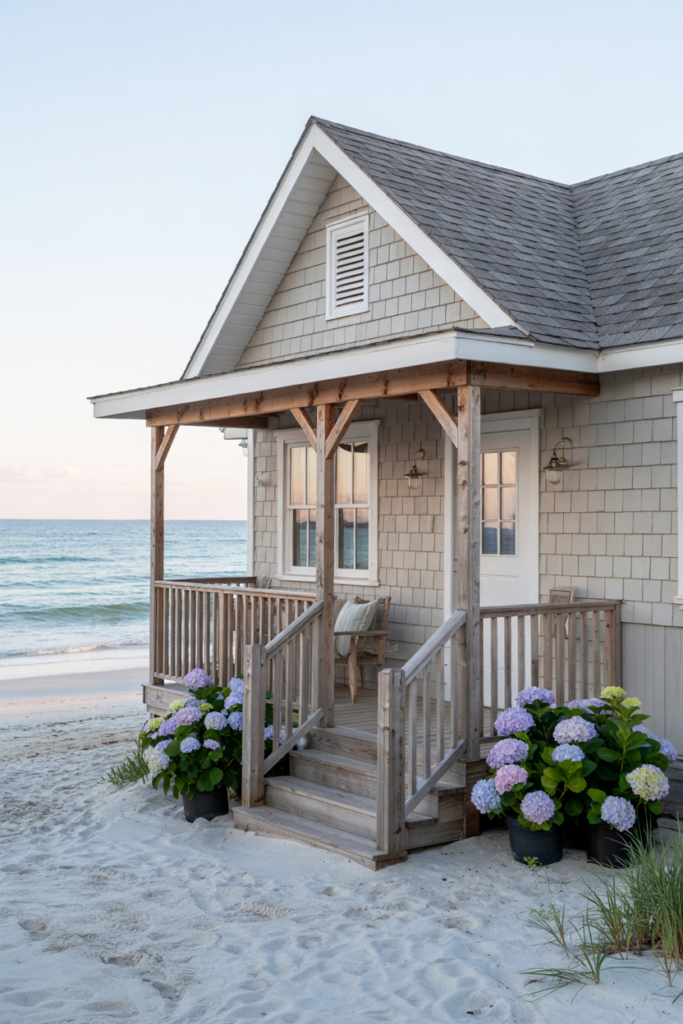
Neutral color palettes are increasingly popular for modern beach cottage exteriors. Light gray, taupe, greige, and off white tones offer a refined alternative to traditional coastal colors while maintaining a calm, seaside feel. Neutrals also photograph well, suit a wide range of buyers, and make it easy to change the look later with new shutters, a door color, or seasonal decor.
The key to a neutral exterior is layering tones rather than painting everything one flat shade. Try a light gray body with a slightly darker gray on the shutters and a bright white on the trim, or a warm greige body with natural wood accents and black hardware. These small shifts create depth and keep the facade from looking washed out in bright coastal light. Stone, wood, and metal accents all pair well with neutrals, so you have plenty of freedom with the porch, railings, and light fixtures.
Add warmth with texture and greenery: a cedar door, woven doormat, potted olive tree, or ornamental grasses beside the steps. If you like a hint of color, a soft blue or seafoam front door gives the whole exterior a focal point without breaking the calm palette. Neutral beach cottage exteriors feel understated yet elegant, making them ideal for homeowners who prefer subtle sophistication over bold color.
8. Board-and-Batten Siding
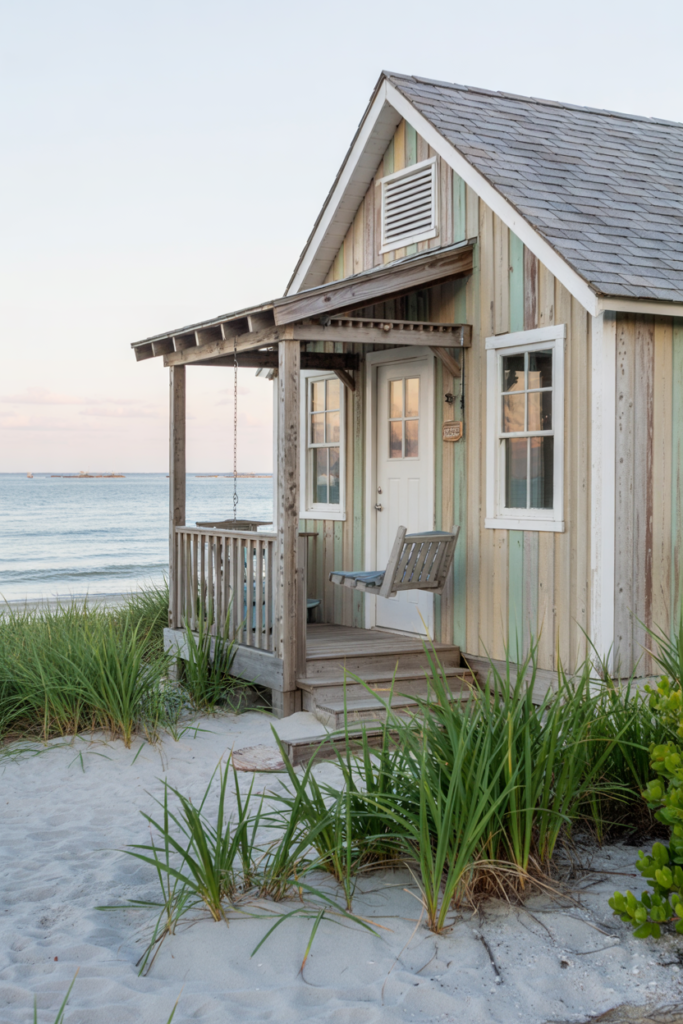
Board-and-batten siding adds vertical interest and structure to a beach cottage exterior. The style alternates wide boards with narrow battens over the seams, which creates strong vertical lines that make a cottage look taller and more architectural than horizontal siding does. It is a classic siding style that works well in coastal environments thanks to its durability and timeless appearance.
Often painted in white or soft coastal hues, board-and-batten siding enhances height and symmetry, which makes it a great choice for cottages with a simple boxy shape. The vertical lines also pair nicely with a steep gable roof and a covered entry, giving the whole facade a tidy, farmhouse coastal feel. For the best results in a seaside climate, use fiber cement or treated wood boards with a quality exterior primer and two top coats, and choose stainless or hot dipped galvanized fasteners to resist salt corrosion.
Keep the rest of the exterior simple so the siding stays the star. White trim, a wood or painted front door, and black lantern sconces are all you need. A board-and-batten cottage also looks wonderful with a small covered porch and simple landscaping, such as dune grasses or a low boxwood hedge. This exterior design choice blends traditional craftsmanship with coastal simplicity.
9. Coastal Cottage with Metal Roofing
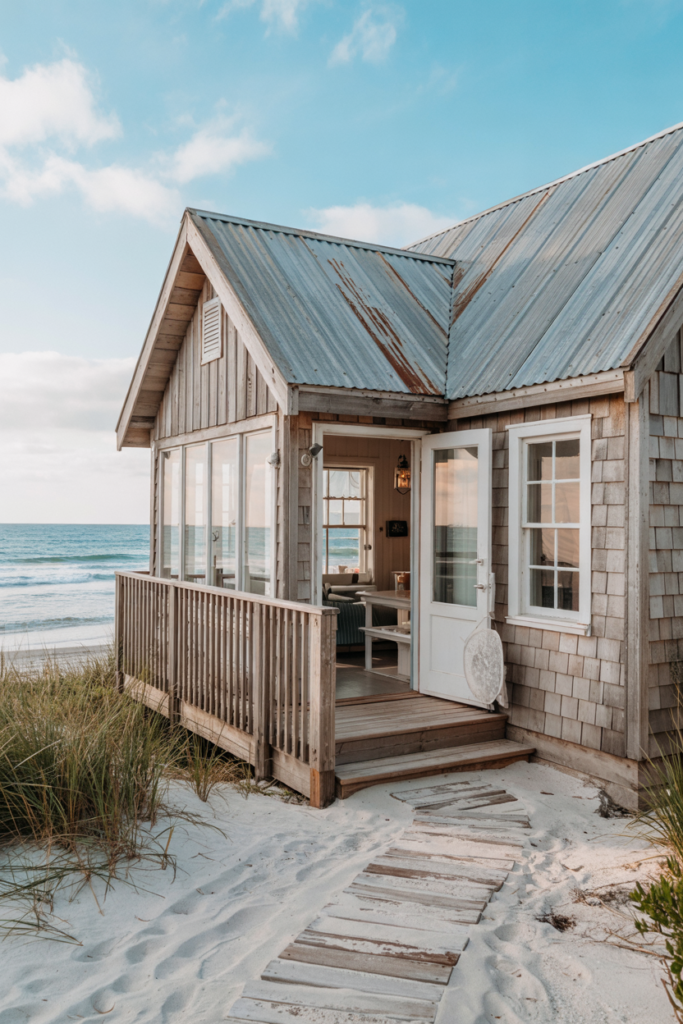
Metal roofing is both practical and stylish for beach cottage exteriors. Resistant to salt air, wind, and harsh weather, a metal roof offers durability while contributing to a clean, coastal aesthetic. Light colored metal roofs reflect sunlight, which can improve energy efficiency and keep the attic cooler in summer. A standing seam metal roof also sheds rain quickly and stands up to coastal storms far better than asphalt shingles.
Visually, metal roofing pairs beautifully with white or pastel siding. A soft white or light gray roof keeps the look crisp and traditional, while a muted charcoal or deep green roof adds a modern edge. Choose a roof with a coastal rated coating, such as a PVDF finish, and make sure all fasteners and flashing are stainless steel or aluminum so salt air does not cause rust streaks down the walls. With proper installation, a metal roof can last 40 to 70 years, which makes the higher upfront cost easier to justify.
Match the roof to the rest of the exterior for a cohesive result. White trim, simple gutters in a matching color, and a porch ceiling in pale blue all work with metal roofing. Avoid mixing too many materials on the roofline; one clean metal roof, one siding style, and one trim color are enough. This combination creates a crisp and modern coastal look that remains rooted in traditional cottage design.
10. Beach Cottage with Stone Details
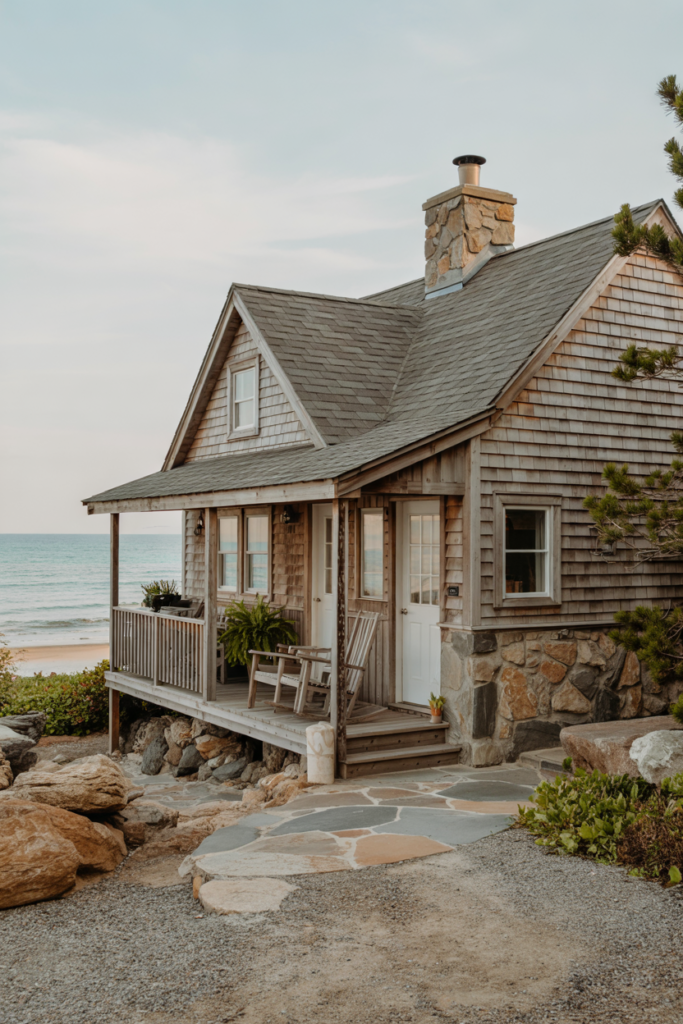
Stone accents add texture and visual contrast to beach cottage exteriors. Whether used for a foundation skirt, entryway columns, a chimney, or a low garden wall, stone introduces a natural element that grounds the design and keeps a light colored cottage from feeling too airy or fragile. Stone also weathers beautifully in coastal climates and needs almost no maintenance once it is installed.
Light colored stone works best for coastal homes, maintaining brightness while enhancing durability. Limestone, light granite, or pale fieldstone all suit the palette, while darker stone can feel heavy against white or pastel siding. Use stone in one or two places rather than everywhere: a stone foundation, a pair of stone porch columns, or a stone veneer around the front door gives you the texture without overwhelming the facade. Mortar in a sandy tone blends the stones together and keeps the look soft.
When paired with wood and neutral siding, stone details create a balanced and visually appealing exterior. A stone walkway leading to the front door, flanked by dune grasses or lavender, ties the whole composition together. Keep the stone dry stacked or lightly mortared for a relaxed cottage feel, and seal it once after installation to resist salt staining. Done well, stone gives a beach cottage a sense of permanence that paint alone cannot provide.
11. Coastal Landscaping Integration
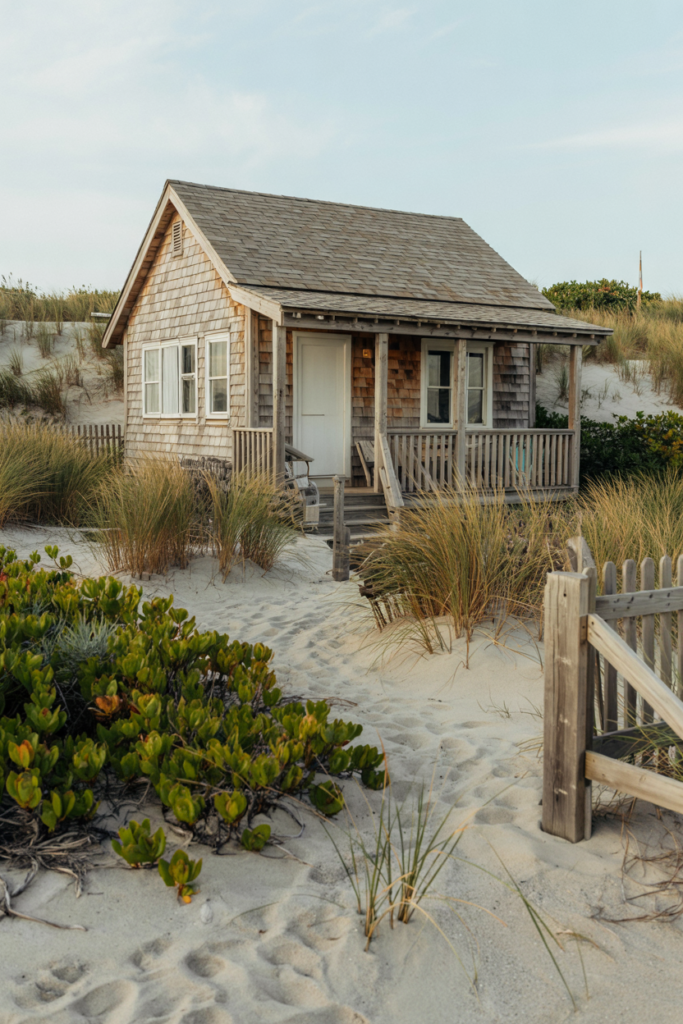
A well designed beach cottage exterior includes landscaping that complements the architecture. Native coastal plants, dune grasses, and low maintenance greenery enhance curb appeal without competing with the home design, and they handle salt, wind, and sandy soil far better than fussy garden plants. Thoughtful landscaping softens architectural lines and connects the home to its environment.
Start with the plants that thrive where you live. Sea oats, dune grass, rosemary, lavender, oleander, and agave all tolerate coastal conditions, and they need little water once established. Group plants in drifts rather than single specimens, and leave breathing room between beds and the house so air can circulate and siding can dry after rain. A crushed shell or light gravel path suits a cottage better than a heavy concrete walkway, and it drains well in storms.
Add structure with a low stone border, a wooden arbor over the gate, or a couple of large planters by the front door. For more outdoor styling ideas, see our outdoor decor ideas to plan seating, lighting, and planters that suit a coastal yard. Keep the palette simple: two or three plant types repeated along the front of the house will look more intentional than a dozen different species. This approach improves sustainability while reinforcing the coastal aesthetic.
12. Nautical-Inspired Exterior Details
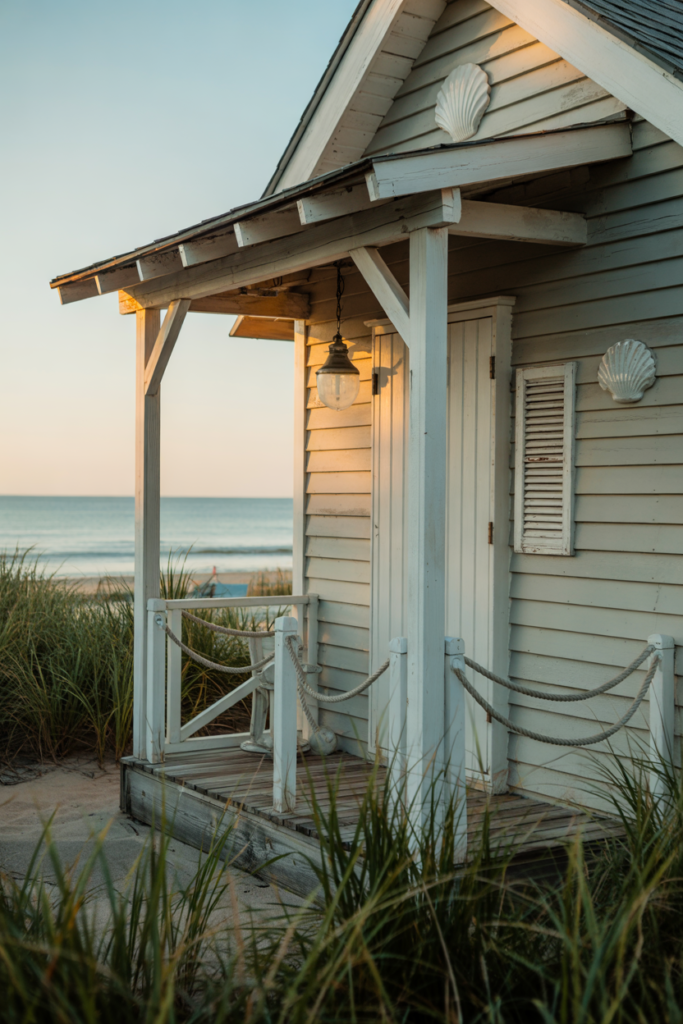
Nautical details subtly reinforce the coastal theme of a beach cottage exterior. Elements such as lantern style lighting, rope accents, a ship wheel motif, or simple navy and white color contrasts add personality without making the house feel like a theme park. The goal is a hint of the sea, not a costume, so restraint matters more than quantity.
When used sparingly, nautical touches enhance authenticity and charm. Try black or brass lantern sconces flanking the front door, a coiled rope door mat, or a striped outdoor cushion in navy and white on the porch. House numbers in a clean serif font on a white plaque, or a small brass porthole window beside the door, can add character without going overboard. Avoid anchors and rope on every surface; pick one or two details and let them stand out.
Keep the base palette calm so the nautical accents read as intentional. White or soft blue siding, natural wood, and stone all support nautical details without competing with them. This design idea works best when integrated into a cohesive overall aesthetic, where each detail feels like it belongs to the house rather than being added as an afterthought.
13. Elevated Beach Cottage Design
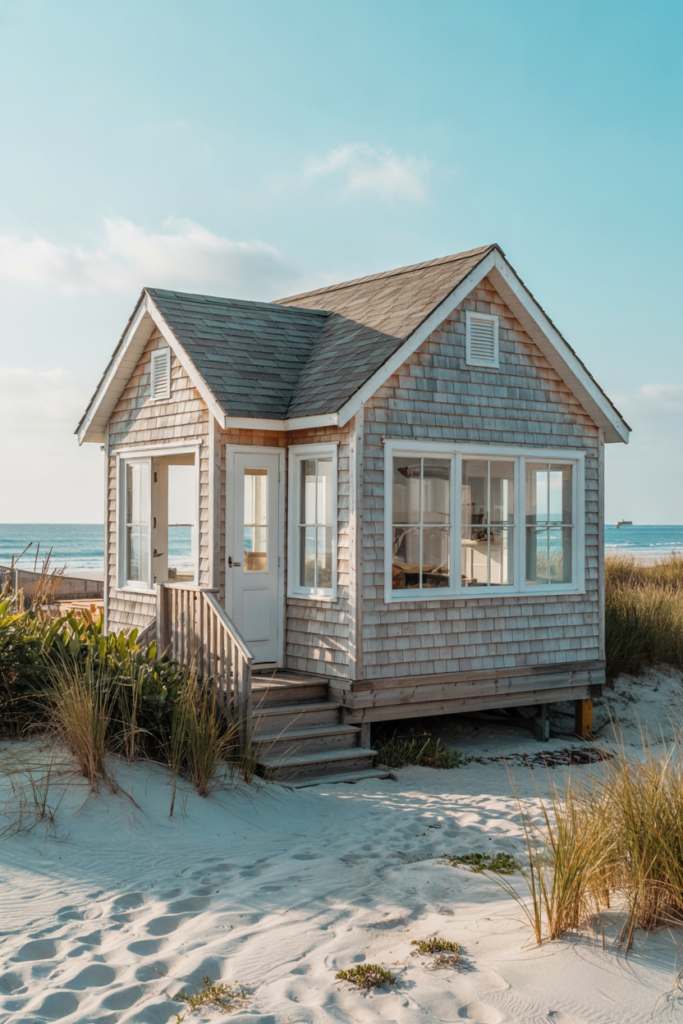
Elevated designs are common in coastal areas prone to flooding, and they bring real design benefits along with the practical ones. Raised foundations not only provide protection from storm surge and high water but also enhance the visual appeal of a beach cottage exterior by adding height, dimension, and a better view from the main living floor. A cottage on stilts or piers feels light and airy, almost as if it floats above the landscape.
Staircases, railings, and under home storage can all be styled to match the cottage design. Wide steps with a handrail in white or natural wood feel welcoming, while lattice or horizontal slat skirting hides the space beneath the house without blocking airflow. If local rules allow it, use the shaded area underneath for bike storage, outdoor showers, or a hammock, but keep it tidy and ventilated so moisture does not build up.
Balance the height with landscaping that softens the base: tall grasses, a climbing vine on a trellis, or a row of shrubs along the foundation line. Paint the piers or foundation walls to match the house so the elevation reads as part of the design rather than an afterthought. Elevated beach cottages feel light, airy, and well adapted to coastal living, and they give you a porch view that a ground level cottage simply cannot match.
14. Modern Coastal Cottage Exterior
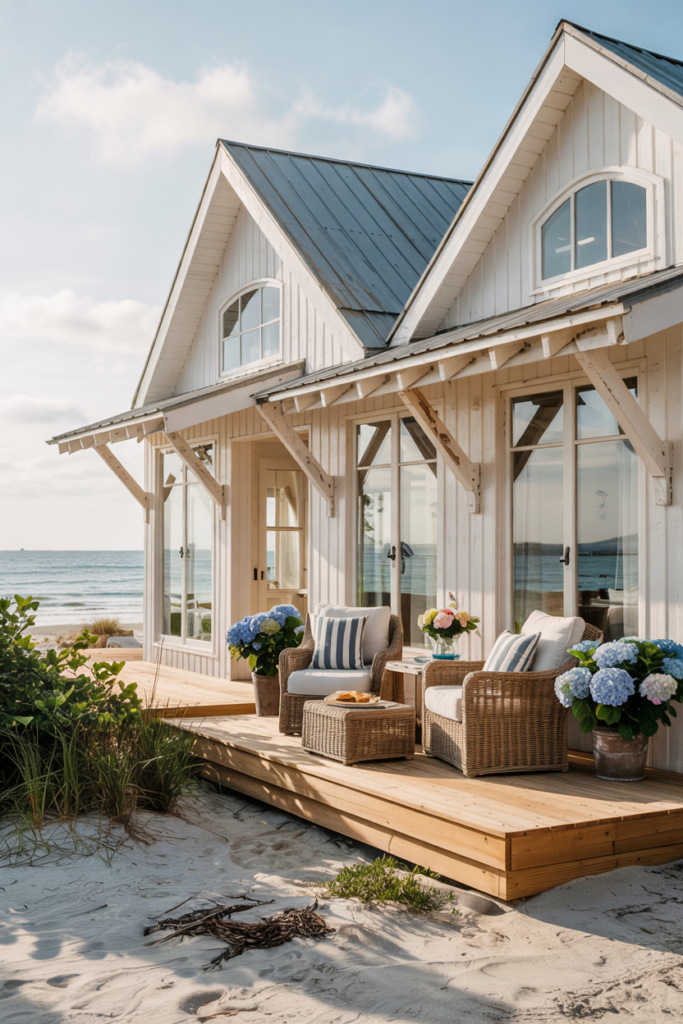
Modern coastal exteriors blend traditional beach cottage elements with contemporary design. Clean lines, large windows, and simplified detailing create a fresh take on classic coastal architecture, while the cottage scale keeps the house feeling warm and approachable rather than stark. It is a good fit if you love the beach look but prefer a quieter, more edited style.
Neutral palettes, glass features, and minimal ornamentation define this style. Try white or light gray siding with black window frames, a flat or low slope metal roof, and a single wood accent, such as a cedar entry wall or a slatted privacy screen. Large windows and sliding glass doors bring in light and views, but choose impact rated glass and sturdy frames if you live in a storm prone area. Keep the trim thin and the details few so the architecture speaks for itself.
Landscaping should stay just as simple: a few sculptural grasses, a single statement tree, and clean edged beds. Add warmth with a wood front door and a pair of modern sconces, and skip the nautical accessories, since this style works best without them. For porch and entry styling that fits this cleaner look, see our front porch decor ideas for simple, modern coastal options. Modern beach cottage exteriors appeal to homeowners seeking a refined yet relaxed coastal look.
15. Cozy Beach Cottage Entryway
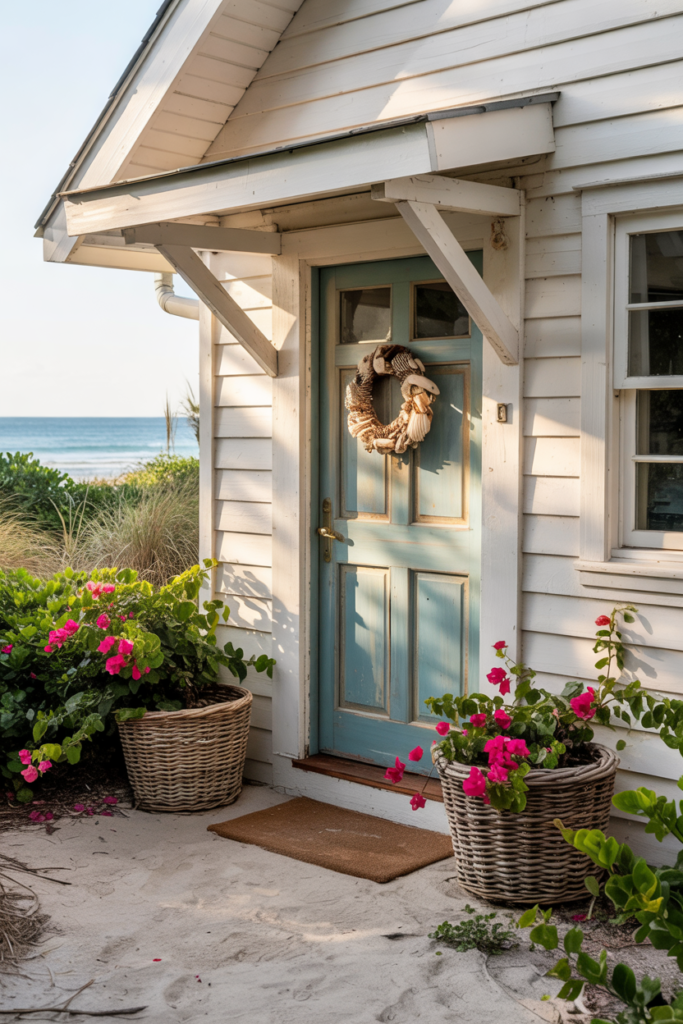
The entryway sets the tone for the entire exterior. A welcoming front door, simple porch decor, and thoughtful lighting enhance curb appeal and create a strong first impression before anyone steps inside. It is also the smallest area to upgrade, which makes it the best place to start if a full exterior renovation is not in the budget this year.
Begin with the door itself. A fresh coat of paint in navy, seafoam, coral, or classic black instantly refreshes the facade, and new hardware, such as a brass handle and a matching house number, adds a finished feel. Add a pair of lantern sconces for evening light, a woven doormat that handles sand, and a potted plant or two on either side of the steps. A small bench or a pair of chairs gives guests somewhere to wait and makes the entry feel like a real outdoor room.
Soft colors, natural materials, and understated decor maintain cohesion with the overall cottage design. Keep the entry clear of clutter, and choose pieces that can handle weather: a teak bench, a metal lantern, and outdoor rated cushions will last far longer than indoor pieces dragged outside. For more coastal styling inspiration, browse our coastal decor ideas to find colors and textures that pair with your entryway. A cozy entryway completes the beach cottage exterior with warmth and personality.
Final Thoughts
These beach cottage exterior ideas show how thoughtful design choices can transform coastal homes into inviting, stylish retreats. From classic white facades to modern coastal interpretations, each idea balances beauty, durability, and seaside charm. The best exteriors are not the most expensive ones; they are the ones where the color, materials, and details work together and suit the climate they live in.
Start with the change that makes the biggest difference for your home. For many cottages that is a fresh coat of paint in a coastal color, a new front door, or a few well chosen porch pieces. Then build from there, one season at a time, and let the house evolve into the retreat you pictured. By selecting the right materials, colors, and architectural details, you can create an exterior that feels timeless and perfectly suited to coastal living.
Frequently Asked Questions
What is the best exterior color for a beach cottage?
White is the safest and most classic choice, since it reflects heat and suits any accent color. Soft blues, seafoam green, and light gray are also excellent, especially with white trim. Choose a mid tone rather than a very pale shade if your cottage gets strong afternoon sun, since pale colors can bleach out faster in coastal light.
What siding holds up best near the ocean?
Fiber cement, cedar shingles, and vinyl siding rated for coastal use all perform well near salt water. Cedar weathers beautifully but needs periodic sealing, while fiber cement resists rot, insects, and salt with very little upkeep. Whatever you choose, use stainless steel fasteners to prevent rust streaks.
How do I protect a beach cottage exterior from salt air?
Use exterior paint and finishes rated for coastal exposure, seal wood every one to two years, and rinse siding and metal fixtures with fresh water a few times a year to remove salt buildup. Choose metal roofing, hardware, and light fixtures with corrosion resistant coatings, and keep plants and mulch from touching the siding so walls can dry after rain.
Is a metal roof a good choice for a beach cottage?
Yes, a standing seam metal roof is one of the best choices for a coastal cottage. It resists salt air, sheds rain quickly, stands up to high winds, and can last 40 to 70 years. Light colored metal also reflects sunlight and helps keep the home cooler. Make sure the coating is rated for coastal use and all flashing is stainless steel or aluminum.
How can I make a small beach cottage exterior look bigger?
Use vertical siding such as board-and-batten to add height, paint the body and trim in close tones to avoid visual breaks, and keep landscaping low and simple so the house is not hidden. A glass front door or sidelights bring in light, and a clean, uncluttered porch with slim furniture makes the entry feel larger than it is.
More Ideas You Will Love
 18 Fire Pit Garden Ideas for Stylish, Functional Outdoor Spaces
 16 Outdoor Rug Ideas That Withstand Summer Weather
 15 Outdoor Halloween Decor Ideas You Must Try
 15 Summer Gardening Tips to Improve Soil Health
 14 Balcony Workspace Ideas: Stylish Outdoor Office Inspiration
 11 Patio Chaise Lounge Ideas: Stylish & Comfortable Outdoor Seating