
19 Blue Exterior House Ideas: Stunning & Timeless Home Designs

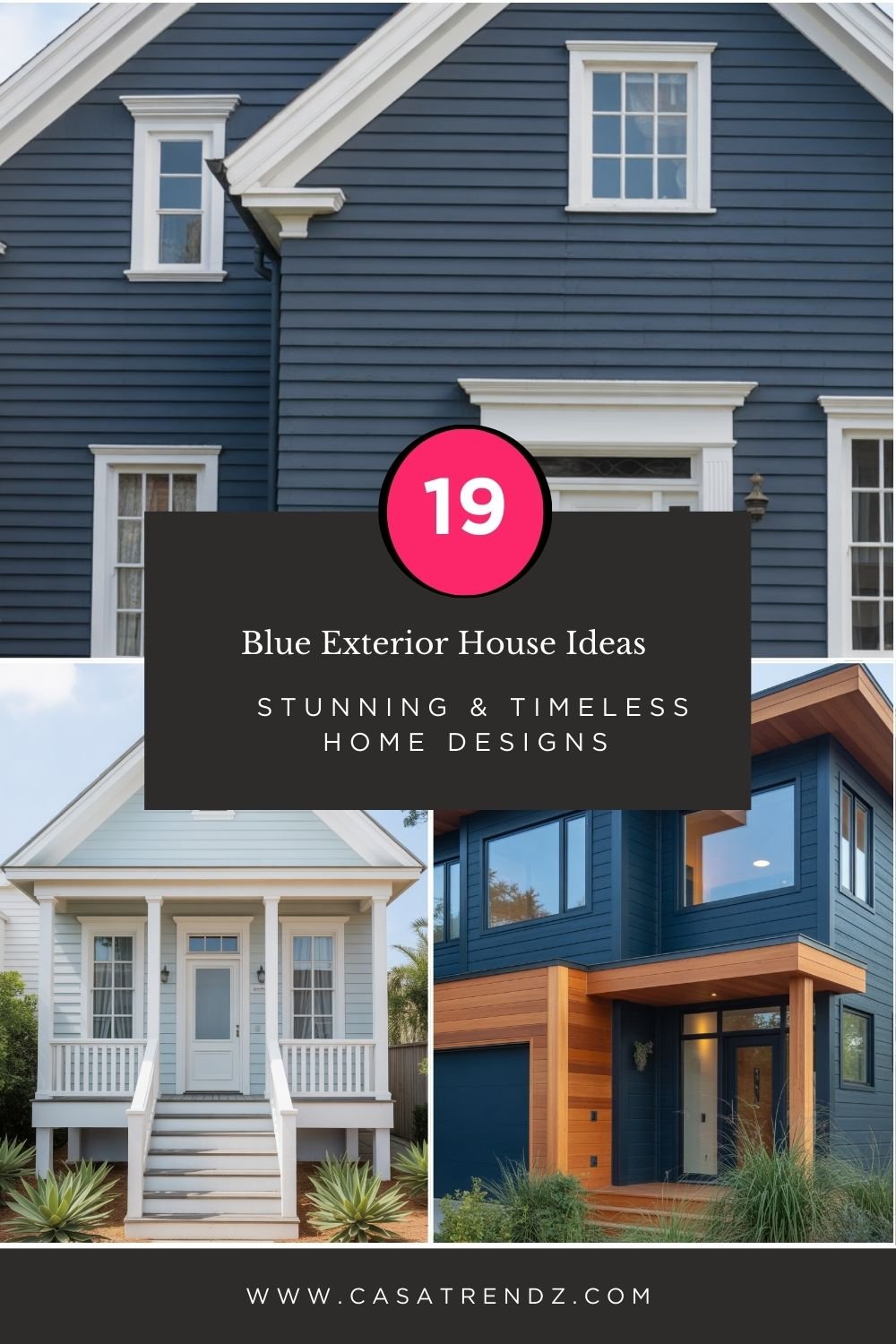
Blue is one of the most reliable colors you can choose for the outside of a home. It works on a small cottage and a large modern house alike, and it suits almost every climate, from sunny coastal streets to quiet suburban neighborhoods. A soft sky blue feels fresh and welcoming, while a deep navy adds instant elegance and makes white trim, natural wood, and black hardware stand out beautifully.
The trick is picking the right shade for your home’s style and surroundings. A pale blue can wash out in harsh sunlight, while a very dark blue can feel heavy on a small house without enough trim to break it up. In this guide, you will find 19 blue exterior house ideas with practical advice on paint shades, trim colors, materials, and small details that make each look work. Use them to find a blue that fits your home, your budget, and the feeling you want when you pull into the driveway.
1. Classic Navy Blue Exterior with White Trim

A navy blue exterior with crisp white trim is the most timeless pairing in this whole list. The deep blue gives the house weight and sophistication, while the white trim outlines every window, door, and roofline so the architecture reads clearly from the street. This contrast works on colonial, coastal, and traditional homes, and it photographs beautifully in every season.
For paint, look at shades such as Benjamin Moore Hale Navy or Sherwin-Williams Naval, both rich navies that read blue rather than black in daylight. Pair them with a bright white trim like Simply White or Extra White, and keep the trim at least 3.5 inches wide so it holds its own against the dark siding. A natural wood front door in a warm oak or walnut stain softens the formality, and black lantern-style sconces or matte black house numbers add a finished touch. If the house is small, keep the navy on the main siding only and paint the gables or porch ceiling white to stop the color from feeling heavy. This is also a smart choice if you plan to sell, because navy and white is one of the safest bold color combinations for resale.
2. Light Blue Exterior for a Fresh and Airy Look
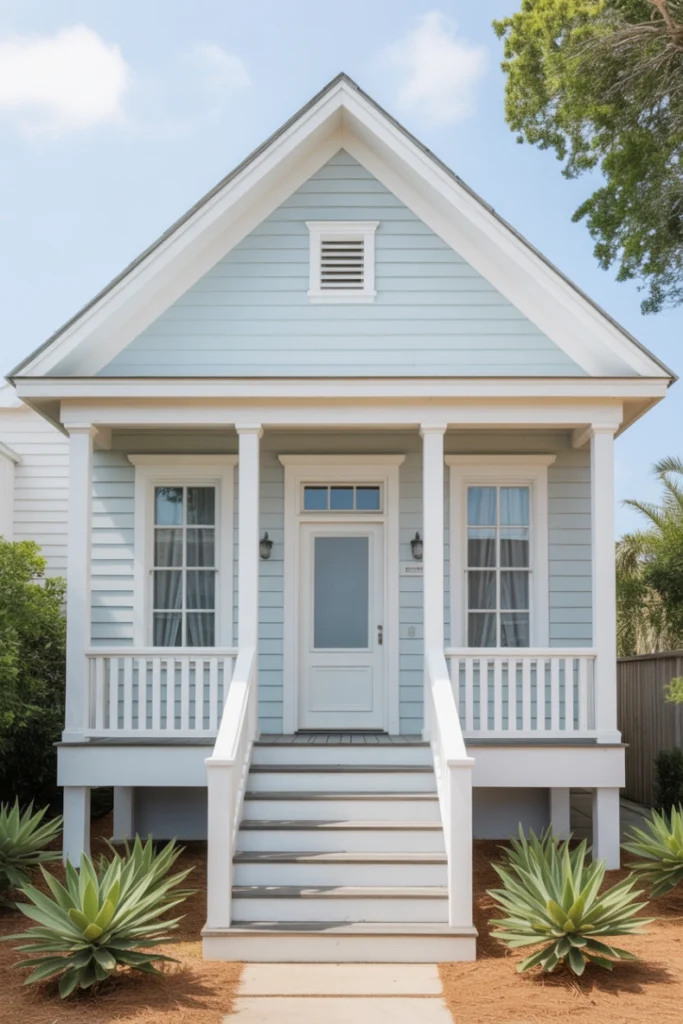
Light blue is the easiest blue to live with. It reflects sunlight, makes a house feel larger, and gives even a plain ranch or cottage a cheerful, cared-for look. In hot, sunny climates it keeps the exterior feeling cool and bright, and it pairs naturally with white, beige, and soft gray trim.
Choose a light blue with a little warmth in it, such as Sherwin-Williams Rainwashed or Benjamin Moore Beach Glass, so it does not turn icy gray on cloudy days. White trim is the classic partner, but a soft cream trim adds warmth if your roof is brown or tan. Keep the front door a contrasting color, a coral red, a deep teal, or a warm wood stain, so the entry point stands out against the pale siding. Light blue also hides dust and pollen better than white, which means less frequent washing. Add white shutters or a white picket fence and the whole house reads as friendly and inviting from the curb. If your neighborhood has an HOA, light blue is usually one of the easiest colors to get approved.
3. Dark Blue Exterior with Natural Wood Accents
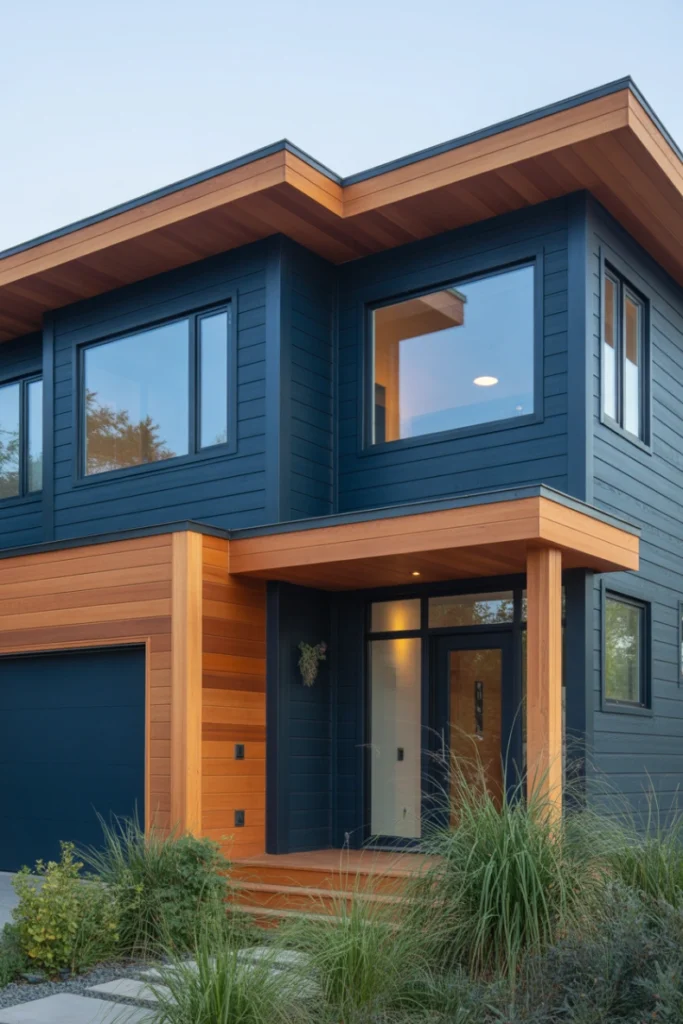
Dark blue and natural wood is a combination that feels both bold and warm. Shades like midnight blue or deep indigo give the house a strong presence, while cedar or redwood accents add texture and stop the dark color from feeling cold. This pairing suits modern, contemporary, and cabin-style homes especially well.
Use the wood where it counts most: a solid wood front door, cedar beams under the eaves, wood porch posts, or a horizontal wood slat screen beside the entry. Keep the wood sealed with a clear exterior oil or a semi-transparent stain so the grain stays visible and the color does not gray out in a year. For the blue, a deep shade such as Benjamin Moore Newburyport Blue or Sherwin-Williams Indigo Batik works well on fiber cement or wood siding. Match the wood tone to the roof: warm cedar pairs best with brown or charcoal shingles, while a cooler walnut stain suits a gray or black roof. Add warm white landscape lighting along the walkway and the wood will glow in the evening, giving the dark blue a soft, welcoming edge.
4. Coastal Blue Exterior with White Railings
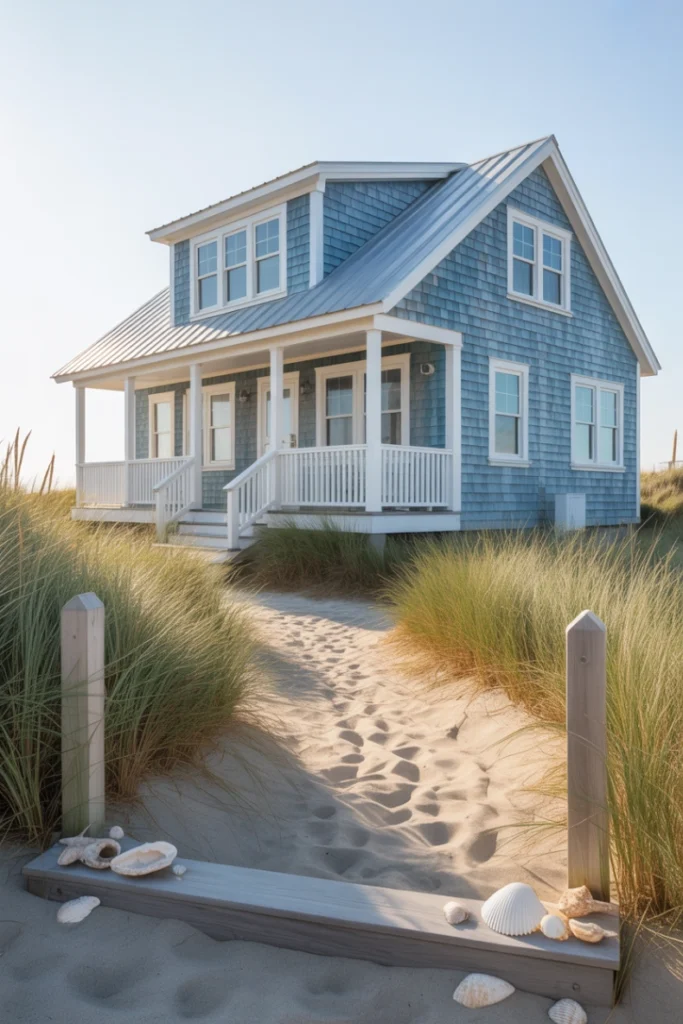
Coastal blue brings the feeling of the ocean home, even if you live miles from the beach. Inspired by sea glass and clear water, this mid-tone blue feels relaxed and breezy, and white railings, trim, and shutters complete the look. It is ideal for beach houses, cottages, and vacation homes, but it works just as well on a suburban house that wants a lighter, holiday feel.
Pick a blue with a green undertone, such as Sherwin-Williams Sea Salt or Benjamin Moore Wythe Blue, and keep the white bright and clean. White vinyl or painted wood railings on the porch, white shutters, and a white front door keep the palette crisp. For materials, fiber cement siding or vinyl holds up best near salt air, and stainless steel or powder-coated hardware resists rust. Add natural fiber touches such as a jute doormat, woven porch chairs, and potted ornamental grasses to strengthen the coastal mood without adding clutter. If you want more coastal inspiration for the entry, see these front porch decor ideas that pair well with a blue coastal exterior.
5. Slate Blue Exterior for Subtle Sophistication

Slate blue is blue with a gray filter: muted, refined, and easy to live with for years. It gives you color without shouting, which makes it a favorite for modern and transitional homes in both urban and suburban settings. It also blends beautifully with stone, metal, and light trim.
Good slate shades include Benjamin Moore Boothbay Gray and Sherwin-Williams Slate Tile, both of which read blue in daylight and gray at dusk. Pair slate blue with light gray or warm white trim, and add one natural material for contrast, such as a stacked stone veneer on the lower half of the facade or a limestone entry step. Black window frames suit slate blue very well and give the house a current, architectural feel. Keep the roof simple: charcoal gray or black shingles work best, while brown roofs can clash with the cool tone. Because slate blue is understated, you can afford one stronger accent, like a deep red or mustard front door, without the whole house feeling busy.
6. Sky Blue Exterior with Neutral Trim
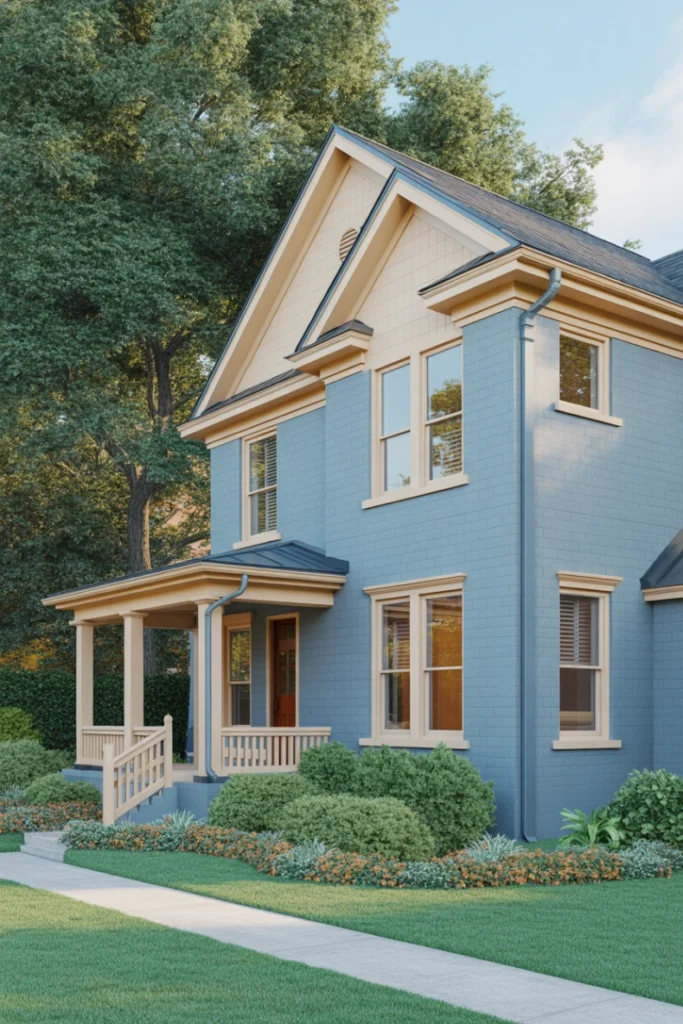
Sky blue is the friendliest blue on this list. It feels open, cheerful, and optimistic, and it makes a home stand out in a row of beige and gray houses without looking loud. Cream, beige, and soft gray trim all work with it, so you have plenty of room to match your roof and hardscaping.
Choose a sky blue with a clean, slightly warm base, such as Benjamin Moore Blue Lace or Sherwin-Williams Sky High, and test a large swatch on the sunniest wall before committing, because pale blues can look almost white in strong light. Cream trim softens the look and suits brown or tan roofs, while soft gray trim gives a cooler, more modern feel and suits gray or black roofs. A white front door keeps the palette light, while a navy door adds a focal point. Sky blue pairs nicely with simple landscaping: white flowering shrubs, green boxwood, and a light-colored walkway keep the whole front yard feeling bright. It is also a forgiving color for older homes, since it hides small siding imperfections better than a dark shade.
7. Modern Blue Exterior with Black Accents
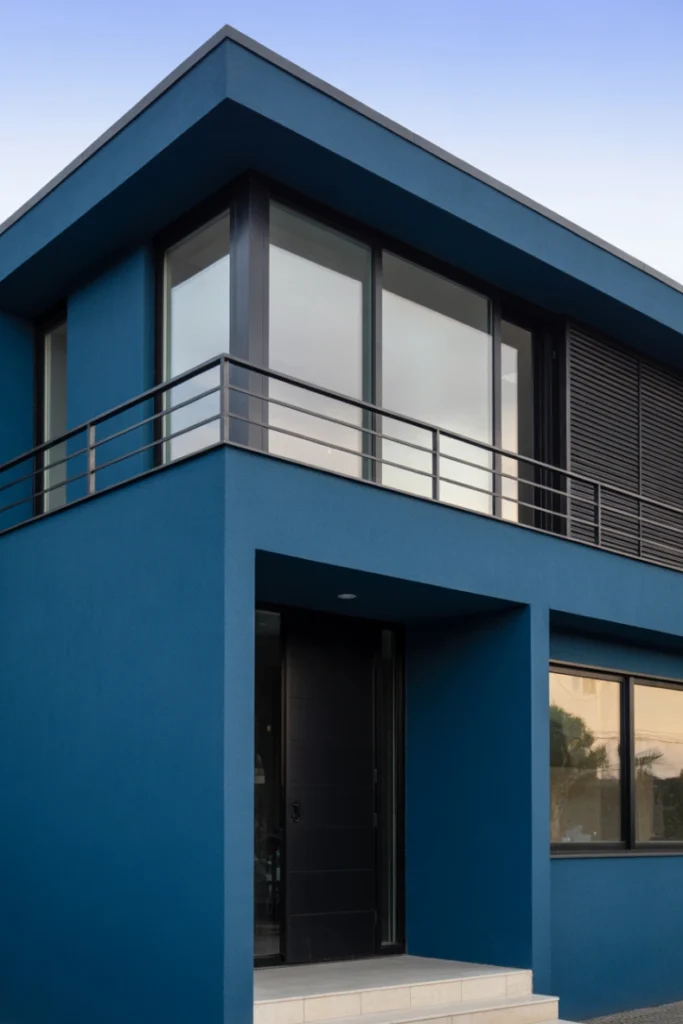
When deep blue meets matte black, the result is sharp, confident, and unmistakably modern. The blue provides warmth and depth, while black window frames, doors, and metal details add crisp definition. This look suits minimalist and modern homes with clean lines, flat or low-pitched roofs, and geometric forms.
Start with a saturated blue such as Sherwin-Williams Naval or Benjamin Moore Van Deusen Blue on smooth fiber cement panels or horizontal siding. Use matte black for the window frames, the front door, the garage door, and the house numbers, and keep the black consistent so it reads as one deliberate system. Add one warm material to stop the palette from feeling cold: a wood soffit, a cedar privacy screen, or warm LED lighting at 2700K along the entry. Keep landscaping architectural too, with ornamental grasses, a single sculptural tree, and gravel or concrete pavers instead of fussy flower beds. The key is restraint: two main colors plus one warm accent is enough, and every extra color weakens the effect.
8. Powder Blue Exterior for Vintage Charm
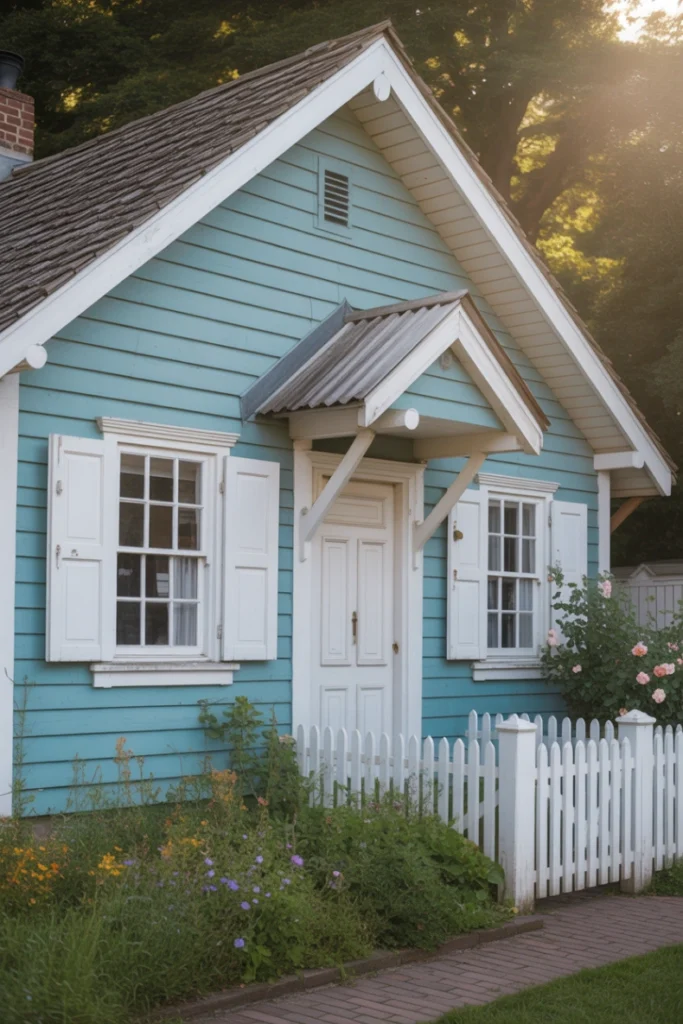
Powder blue is soft, nostalgic, and full of character. It suits vintage homes, cottages, and historic houses, and it gives a small home a gentle personality that brighter colors cannot match. Paired with white trim and classic hardware, it highlights porches, gingerbread details, and old windows instead of hiding them.
Look for pale powder shades such as Benjamin Moore Iceberg or Sherwin-Williams Powder Blue, and use a bright white trim to outline the details that make an older home special: turned porch posts, decorative brackets, and multi-pane windows. A white or pale yellow front door keeps the vintage mood, while brass or oil-rubbed bronze hardware adds authenticity. If the house has original wood siding, powder blue is forgiving of small repairs and touch-ups. Add a white picket fence or a brick walkway and window boxes with white petunias or geraniums, and the house will look like it belongs in a storybook. One caution: powder blue fades faster in strong sun, so choose a high-quality exterior paint with UV protection and plan on a refresh every 7 to 8 years.
9. Blue Gray Exterior for Contemporary Appeal

Blue gray is the neutral-lover’s blue. It reads as a soft gray from a distance and reveals its blue undertone up close, which makes it feel current without dating quickly. It is popular on contemporary and transitional homes, and it works with stone, metal, and minimalist landscaping.
Try shades such as Benjamin Moore Gray Owl with a blue lean or Sherwin-Williams Misty, and pair them with white or light gray trim. Stone veneer in cool gray tones, a standing seam metal roof in charcoal, and black or brushed nickel fixtures all sit comfortably with blue gray. Keep the front door simple: a deep navy door deepens the palette, while a warm wood door adds the one warm note the scheme needs. Because blue gray is so calm, it is an excellent choice if your street already has several colorful houses, since it will look refined rather than competitive. It also photographs well for listings, which helps if you plan to sell within a few years. If you are comparing cooler exterior palettes, these gray exterior house ideas show how gray tones pair with blue and other cool colors.
10. Royal Blue Exterior as a Bold Statement

Royal blue is for homeowners who want their house to be noticed. This rich, saturated shade draws the eye and makes architectural features stand out, and when it is balanced with neutral trim it feels luxurious rather than loud. It suits both traditional and modern designs, as long as the rest of the palette stays calm.
Use royal blue on the main body only and keep everything else quiet: white or light gray trim, a neutral roof in charcoal or black, and simple black or white hardware. A royal blue such as Benjamin Moore Royal Navy or Sherwin-Williams Dynamic Blue needs a large, well-lit facade to breathe, so it works best on two-story homes or houses with a wide front. If your house is small, use royal blue on the front door, shutters, or a single gable accent instead of the whole body. Balance the boldness with simple landscaping: green lawn, one or two structured shrubs, and a clean concrete or stone walkway. Avoid adding a second bright color anywhere, because royal blue already carries the whole look on its own.
11. Blue Exterior with Brick Accents

Blue siding and brick is a classic pairing because each material does what the other cannot: brick adds warmth, texture, and permanence, while blue adds freshness and a modern feel. Together they suit traditional, transitional, and farmhouse homes, and they age gracefully.
The easiest way to combine them is to use brick on the lower third of the facade, around the entry, or on the chimney, with blue siding above. Choose a brick with warm red or brown tones if your blue is deep navy, or a lighter tan brick if your blue is pale or coastal. Keep the mortar a soft off-white rather than bright white so the brick does not compete with the trim. For the blue, mid-tone shades such as Benjamin Moore Van Courtland Blue or Sherwin-Williams Distance work well against brick. Add a wood or black front door, black lantern sconces, and a stone or concrete step to tie the materials together. Brick needs almost no maintenance, so this combination is a smart long-term choice if you want beauty without constant upkeep.
12. Muted Blue Exterior with Stone Details

Muted blue with stone is a quiet luxury combination. The soft blue keeps the house feeling calm and approachable, while natural stone adds texture, weight, and a sense of permanence. It is ideal for craftsman, luxury, and countryside homes where the landscape matters as much as the house.
Use stone on the foundation, the entry surround, or a full chimney breast, and keep the blue in a soft, dusty range such as Benjamin Moore Smoke or Sherwin-Williams Rain. Choose a stone with gray, beige, and blue-gray tones so it echoes the siding instead of fighting it. Wood trim in a warm stain or painted cream works better than bright white here, because it softens the transition between the blue and the stone. Add copper or bronze light fixtures beside the door for a warm metallic accent that ages beautifully. Keep the landscaping natural: ornamental grasses, native shrubs, and a stone walkway that matches the veneer. The result is a home that looks settled into its site, as if it has always belonged there.
13. Two-Tone Blue Exterior Design
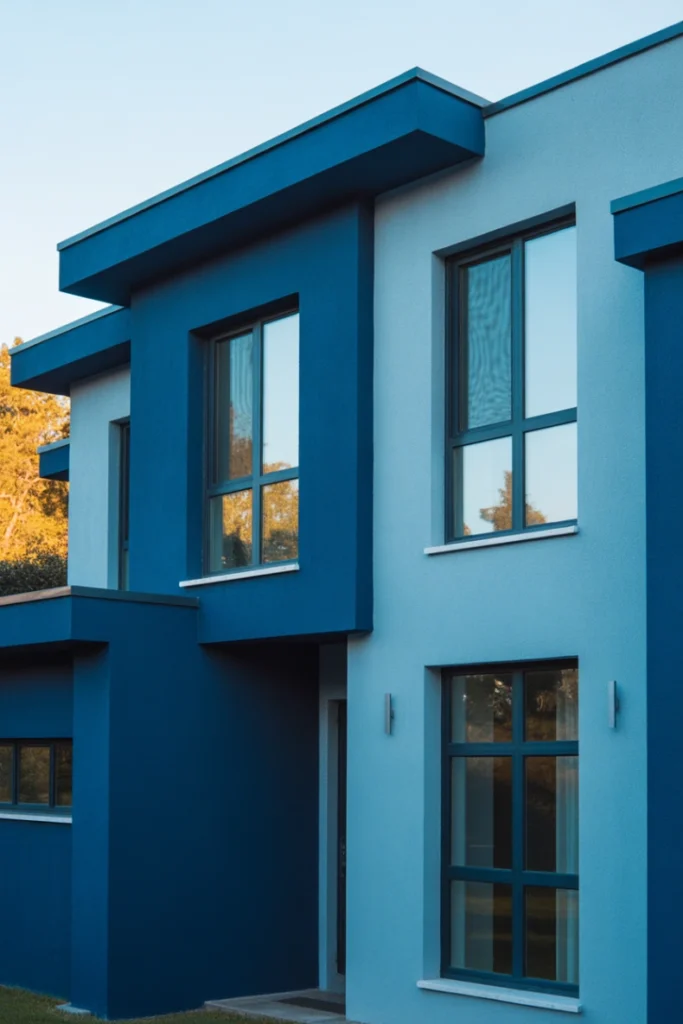
A two-tone blue exterior uses two shades of the same color to add depth and visual interest without introducing a second color. Darker blue anchors the lower level, while a lighter blue lifts the upper level, which makes tall or wide homes feel balanced instead of blocky.
The rule is simple: pick two blues from the same color family, two to three steps apart on a paint fan deck. For example, pair Benjamin Moore Hale Navy on the ground floor with Benjamin Moore Blue Note or a lighter slate blue above. Separate the two tones with a clean horizontal trim board, a stone or brick water table, or a change in siding direction, such as horizontal siding below and vertical board and batten above. Keep the trim one consistent white across both tones so the house reads as one design. Two-tone works best on larger homes, split-levels, and houses with a clear horizontal break, like a porch roof line or a change in floor level. On a small single-story home it can feel fussy, so in that case use the second blue only on the front door, shutters, or gable accent.
14. Blue Exterior with White Stone Accents
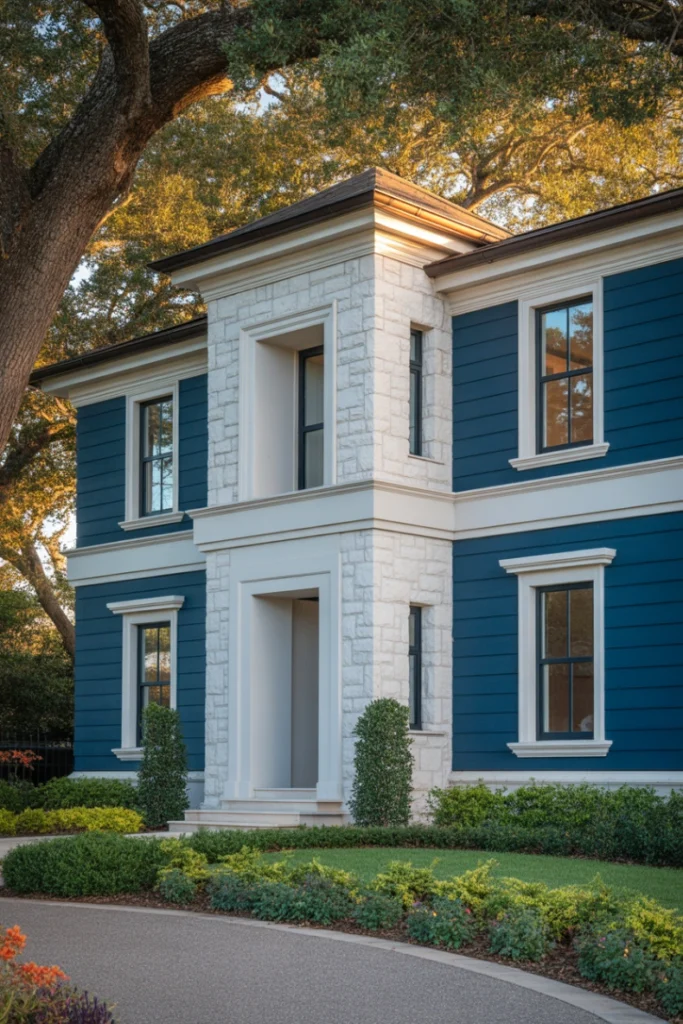
White stone against blue siding is one of the crispest combinations you can build. The stone reads as bright and luxurious, the blue reads as calm and confident, and together they give a home a polished, upscale feel. This pairing suits modern estates, upscale suburban homes, and new builds that want a strong first impression.
Use white limestone or light quartzite veneer on the entry wall, the garage surround, or the lower facade, and pair it with a mid to deep blue such as Sherwin-Williams Naval or Benjamin Moore Newburyport Blue. Keep the trim bright white and the roof charcoal or black so nothing competes with the stone. A glass or black-framed front door suits this look, and brushed nickel or matte black hardware both work. Because white stone shows dirt, choose a sealed veneer and plan to rinse it once a year. Add low white flowering shrubs and a light gray paver walkway, and the whole front will feel clean, bright, and expensive without needing a large budget for the stone itself, since a little white stone goes a long way when it is placed where the eye lands first.
15. Pastel Blue Exterior for Soft Elegance

Pastel blue is gentle, calming, and quietly elegant. It suits family homes and traditional neighborhoods, and it feels welcoming in every season. Unlike stronger blues, it never overwhelms the street, which makes it a safe choice for a first exterior color change.
Choose a pastel with a touch of warmth, such as Benjamin Moore Pale Smoke or Sherwin-Williams Hinting Blue, so it does not turn gray on overcast days. Pair it with white or cream trim, a white front door, and classic black or bronze hardware. Pastel blue works especially well with light-colored roofing, pale brick, and white fencing, and it looks lovely with simple cottage-style landscaping: lavender, white daisies, and clipped boxwood. If you want a little more definition, paint the shutters one shade deeper than the siding, or add a navy front door as a single focal point. Pastel blue is also a good choice for a home you plan to rent out, because it appeals to a wide range of tastes and photographs as bright and clean in listings.
16. Blue Exterior with Metal Roofing
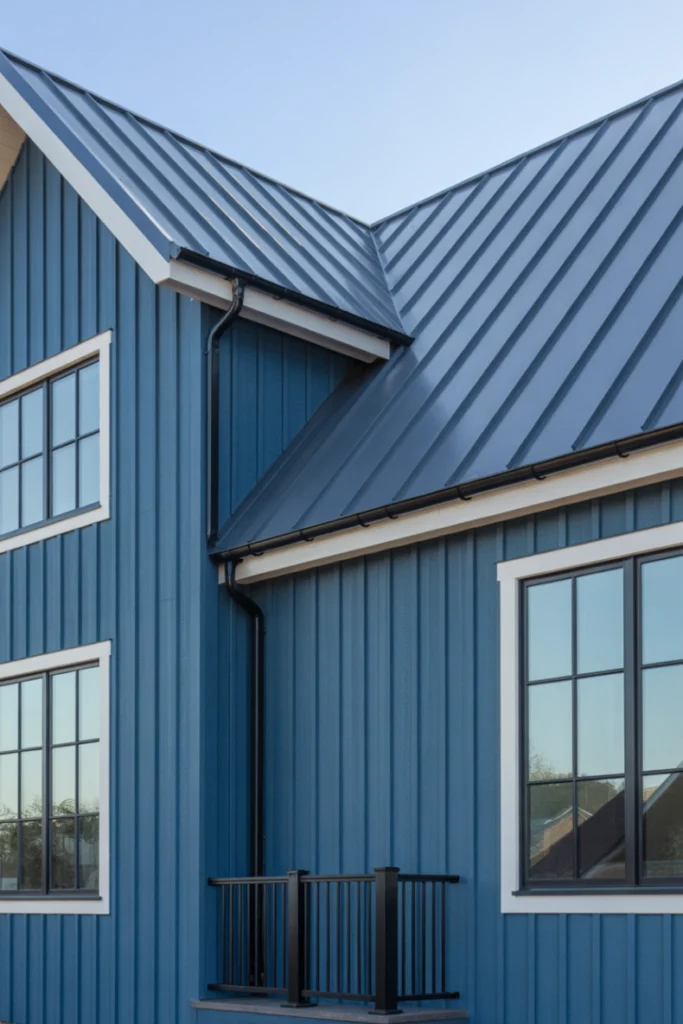
Blue siding with a metal roof is a modern farmhouse favorite, and for good reason: the sleek roofline sharpens the softness of the blue, and the combination is practical as well as attractive. Metal roofing lasts 40 to 70 years, sheds snow and rain, and reflects heat, which can lower cooling costs in warm climates.
A standing seam metal roof in charcoal, matte black, or dark bronze pairs best with blue, because it echoes the depth of the siding without matching it exactly. Avoid a blue roof with blue siding, since the two blues will clash or wash each other out. For the siding, mid to deep blues such as Benjamin Moore Gentleman’s Gray or Sherwin-Williams Bracing Blue work well with the clean lines of a metal roof. Add black window frames, a wood front door, and simple black gooseneck lights over the garage or entry. Keep the gutters and downspouts the same color as the roof so the roofline reads as one clean plane. The upfront cost of metal roofing is higher than shingles, but the long lifespan and low maintenance make it a strong investment, especially on a blue home where the roof is a major part of the look.
17. Deep Blue Exterior with Minimalist Landscaping
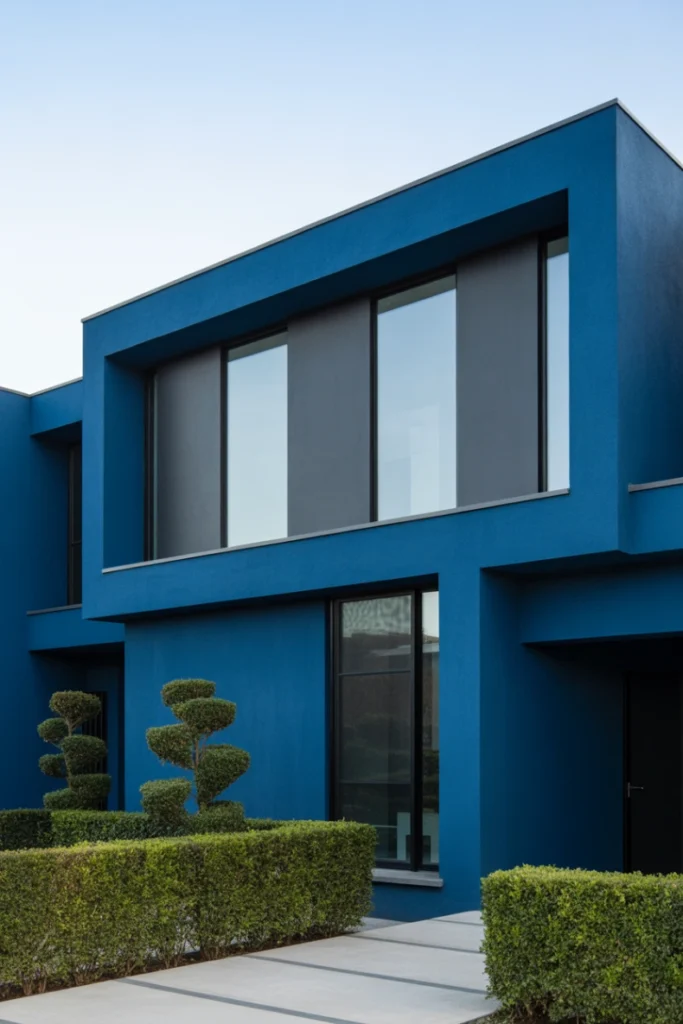
Deep blue with minimalist landscaping lets the color do all the talking. When the planting is simple and architectural, the house becomes the focal point, and the clean lines of the landscape make the deep blue feel intentional and modern rather than dark. This approach suits urban and modern homes with flat lawns and geometric beds.
Start with a deep blue such as Sherwin-Williams Naval or Benjamin Moore Evening Dove, and keep the trim minimal: thin black window frames, a flush black front door, and no shutters. For landscaping, choose a short list of plants and repeat them: ornamental grasses in gravel beds, a single Japanese maple or olive tree, and low boxwood hedging along the walkway. Use concrete pavers, gravel, or dark mulch, and skip flower beds entirely. Warm white path lights at 2700K and a single uplight on the front facade will make the deep blue glow after dark. The maintenance is low, the look stays sharp all year, and the house photographs beautifully. If you like the drama of dark exteriors but want to compare the full range, these dark exterior house ideas show how deep tones work across different home styles.
18. Blue Exterior with Natural Surroundings
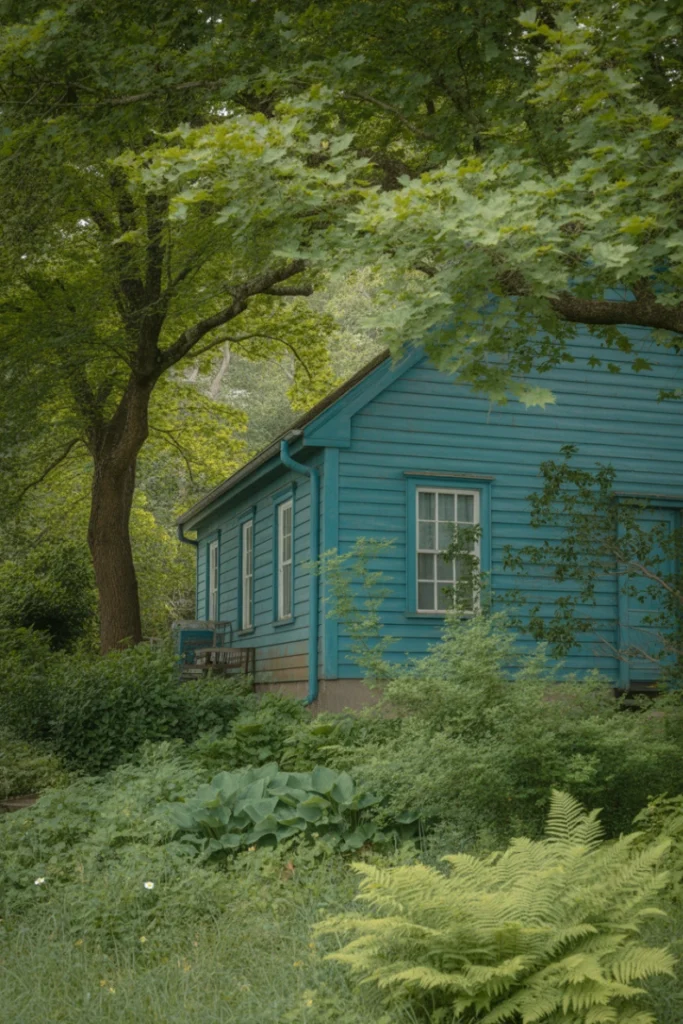
Blue is one of the few house colors that looks better the more nature surrounds it. Against green trees, open sky, and garden planting, blue siding feels harmonious rather than imposed, because it echoes the sky and the shade of distant hills. This makes it ideal for countryside and suburban homes with generous gardens.
Choose a blue that relates to your landscape: a soft dusty blue for a wooded lot, a coastal blue near water, or a deep navy for a formal garden with clipped hedges. Keep the trim warm white or cream so the house does not look cold against the greenery, and use natural materials where you can, such as a wood front door, stone steps, and cedar window boxes. Plant in layers: tall trees behind the house, medium shrubs at the corners, and low flowering plants along the foundation, so the blue siding is framed rather than hidden. Avoid planting anything that will grow against the siding and trap moisture; leave at least 12 inches of clear space between shrubs and the wall. The payoff is a home that feels calm, settled, and connected to its setting in every season.
19. Oversized Blue Exterior Design for Grand Homes
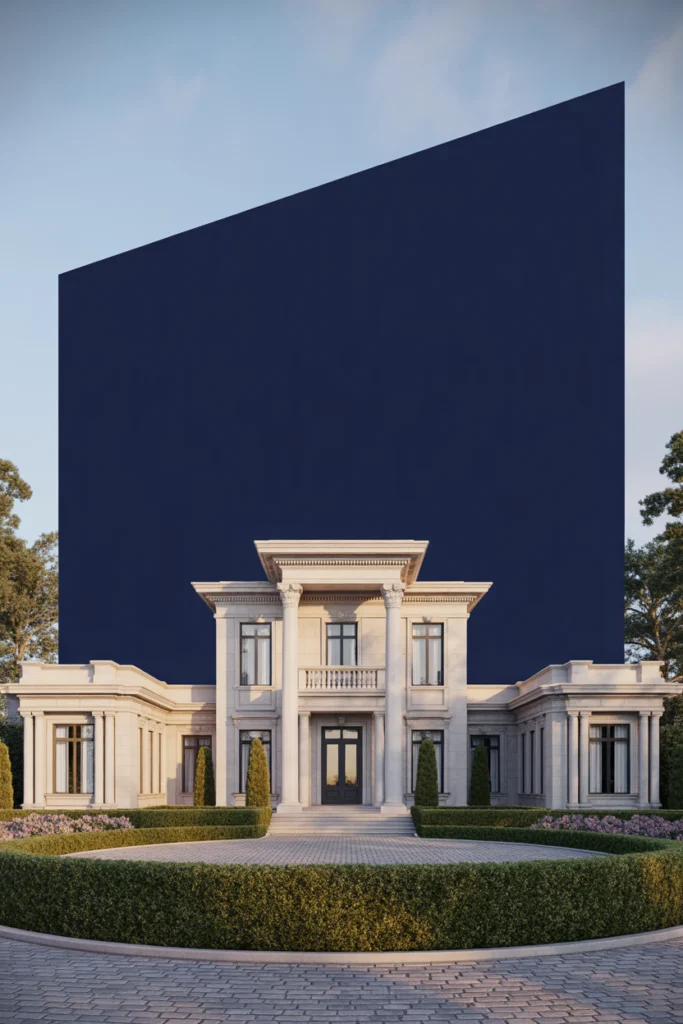
Large homes can carry bold blue in a way small houses cannot. Tall facades, wide fronts, and expansive rooflines give deep blue room to breathe, and the color adds grandeur without the heaviness that a dark neutral can bring. This look suits luxury homes, estates, and large properties with a long driveway or a formal entry.
On a grand home, use a deep blue such as Benjamin Moore Hale Navy or Sherwin-Williams Naval across the main body, and break up the scale with strong white trim, tall windows, and a prominent entry: a double front door, a portico with columns, or a stone entry surround. Keep the roof dark charcoal or black and the gutters the same color so the roofline stays clean. Symmetry helps enormously on a large blue facade, so match the window sizes and shutters on either side of the entry and flank the door with identical lanterns or topiary in matching planters. Add a circular drive or a wide stone walkway so visitors can step back and take in the full front. For more ways to make a grand entry feel welcoming, see these exterior house color ideas for palettes that pair well with bold blue.
Final Thoughts
Blue remains one of the most versatile exterior colors you can choose, and the right shade depends on your home’s style, size, and surroundings. Soft blues like sky and powder blue suit cottages and family homes, mid-tone coastal and slate blues work almost anywhere, and deep navy or royal blue gives larger or more modern homes real presence. Whatever shade you choose, test a large swatch on the sunniest wall first, pair it with trim that suits your roof, and add one warm material such as wood, brick, or stone to keep the look balanced. With those three decisions made, a blue exterior will give your home curb appeal that lasts for years.
Frequently Asked Questions
What is the best blue paint color for a house exterior?
There is no single best blue, because it depends on your home’s style and light. For a safe, timeless choice, try Benjamin Moore Hale Navy or Sherwin-Williams Naval for a deep blue, Sherwin-Williams Sea Salt for a coastal blue, and Benjamin Moore Beach Glass for a light blue. Always paint a large test swatch on the sunniest wall and look at it in morning and evening light before committing.
Does a blue exterior house affect resale value?
A well-chosen blue generally helps rather than hurts resale, because blue is one of the most widely liked exterior colors. Classic navy with white trim and soft coastal blues appeal to the broadest range of buyers. Very bright or unusual blues, such as royal blue on a whole house, can narrow your buyer pool, so keep bold shades to larger homes or use them as an accent on the door or shutters.
What trim color goes best with a blue house?
Bright white trim is the most popular and reliable partner for almost every blue, from pale sky blue to deep navy. Cream or warm white suits blues with warm undertones and brown roofs, while soft gray trim gives a cooler, more modern feel. Black trim works best with deep modern blues, and natural wood trim adds warmth to any shade.
Will a dark blue exterior make my house look smaller?
A dark blue can make a small house feel smaller if it is used without enough contrast. The fix is simple: use bright white trim at least 3.5 inches wide, keep the front door and porch light, and paint gables or the porch ceiling white to break up the dark surface. On a large or two-story home, dark blue usually adds presence rather than shrinking the house.
How often should I repaint a blue house exterior?
Most quality exterior paints last 7 to 10 years on a blue house, with pale blues needing a refresh sooner in strong sun because they fade faster. Dark blues hold their color longer but show dust and chalking more clearly. Wash the siding once a year, touch up the trim every few years, and repaint when you notice fading, peeling, or chalking on the sunniest walls.
More Ideas You Will Love
 12 Outdoor Decor Protection Tips: Prevent Sun Damage Easily
 16 Outdoor Rug Ideas That Withstand Summer Weather
 15 Summer Gardening Tips to Improve Soil Health
 11 Clever Ways to Create Privacy in Your Backyard for Summer
 12 Tips for Choosing Durable Outdoor Cushions for Hot Summers
 22 Laundry Room Ideas for Small Spaces – Stylish & Functional Makeovers