
24 Wardrobe & Armoire Ideas: Smart Storage for Every Room

A good wardrobe does far more than hold clothes. It sets the tone of the room, keeps mornings calm, and hides the clutter that makes a bedroom feel messy. The right choice depends on your space, your storage habits, and the style you love, whether that is a sleek built-in unit that disappears into the wall or a bold vintage armoire that becomes the star of the room.
Before you buy, measure twice and think about how you actually live. Count how much hanging space you need for dresses and coats, how many folded items you own, and where shoes, bags, and accessories will go. A wardrobe that is six inches too wide or two inches too shallow can be a daily frustration, while a well planned one makes getting dressed feel effortless.
In this guide, you will find 24 wardrobe and armoire ideas that cover every room and every style, from modern freestanding designs to rustic farmhouse pieces, with practical advice on sizes, materials, colors, and layout. Whether you are furnishing a master bedroom, a guest room, or a hallway, there is an idea here that will fit your space and your budget.
1. Modern Freestanding Wardrobe
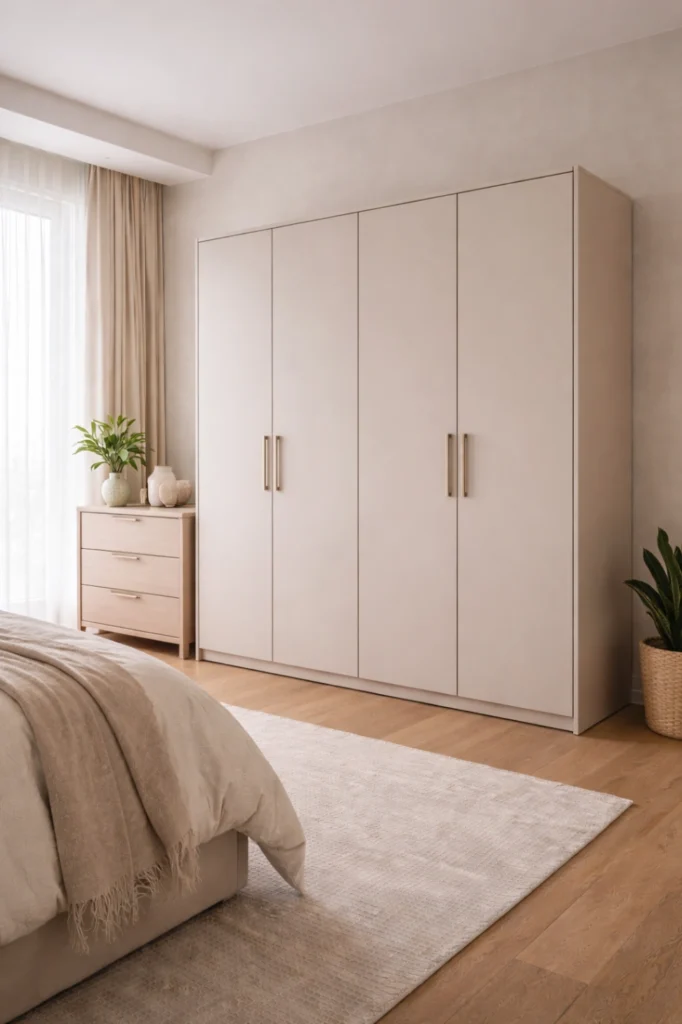
A modern freestanding wardrobe is the most flexible storage choice you can make, because it is not fixed to the wall. You can move it when you rearrange the room, take it with you when you move house, and replace it without a builder. Look for clean lines, flat fronts, and finishes in matte white, soft gray, pale oak, or matte black. Standard two-door models run 40 to 60 inches wide, 72 to 84 inches high, and 22 to 24 inches deep, which is deep enough for hangers to sit without crushing clothes.
Inside, the best freestanding wardrobes mix a full-length hanging rail with shelves and at least one drawer. Many designs add sliding doors or mirrored panels, which save floor space and bounce light around the room. Before you buy, check that the back panel is solid rather than thin cardboard, test the doors for a smooth close, and anchor the unit to the wall with the supplied strap, since tall freestanding wardrobes can tip. Place it against the longest clear wall, leave a few inches of breathing room on each side, and keep the top free of clutter so the clean silhouette does the work.
2. Built-In Wardrobe for Seamless Storage
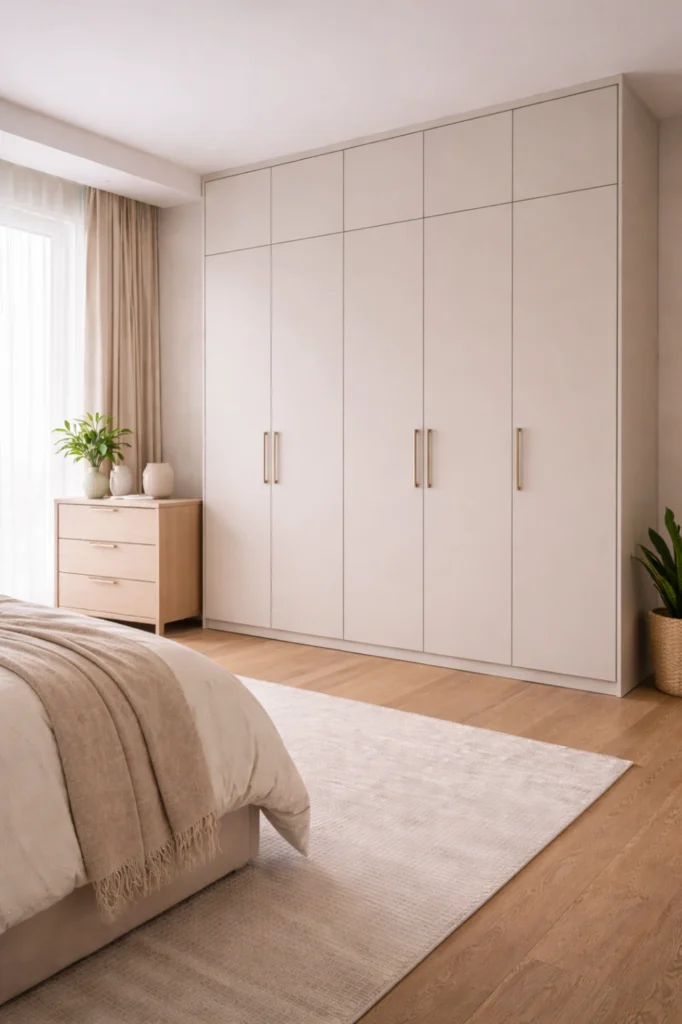
A built-in wardrobe is made to fit your wall exactly, floor to ceiling and corner to corner, so there are no gaps to collect dust and no wasted inches. It creates a calm, custom look that makes even a modest bedroom feel designed. The classic layout is a mix of double hanging space for shirts and trousers, one long hanging section for dresses and coats, drawers at waist height, and shelves up top for seasonal items and luggage.
Plan the interior before you choose the doors. A good rule is 60 percent hanging space, 25 percent shelves, and 15 percent drawers, adjusted to your own wardrobe. Sliding doors suit rooms where a swing door would hit the bed, while hinged doors give full access to the whole interior at once. If you are planning the rest of the room too, these bedroom design ideas show how a built-in wardrobe can anchor a complete scheme. Budget for a professional measure and install, because a built-in that is even half an inch out will show it every day.
3. Classic Wooden Armoire
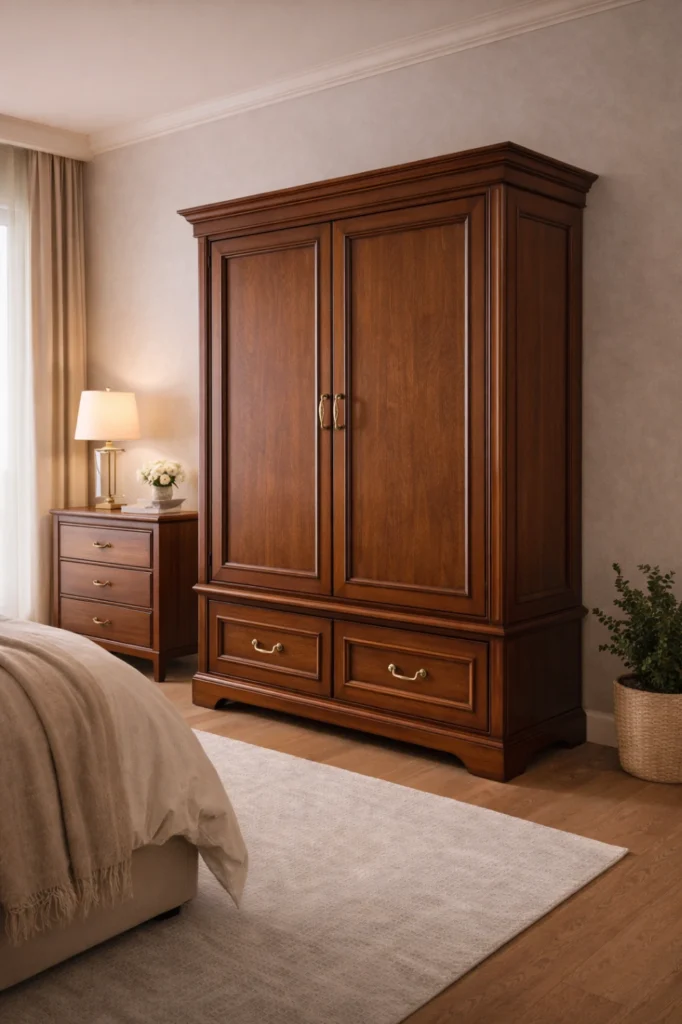
A classic wooden armoire brings warmth and history into a room in a way flat-pack furniture cannot match. Solid oak, walnut, mahogany, and cherry are the traditional choices, each with its own grain and tone. Oak is pale and sturdy, walnut is rich and dark, and mahogany has a deep red glow that deepens with age. Look for dovetail joints, solid wood drawer boxes, and doors that close with a satisfying weight, all signs of a piece that will last for decades.
Wooden armoires work far beyond the bedroom. In a living room, an armoire hides a television or a games console. In a dining room, it stores table linen and serving dishes. Style it with a small lamp, a framed print, or a vase of dried flowers on top, and keep the wood healthy with a weekly dust and a yearly coat of beeswax polish. If you buy secondhand, open every drawer, check for a musty smell, and measure the doorways it must pass through, because a solid wood armoire is heavy and awkward to move.
4. Minimalist Wardrobe with Handle-Less Doors
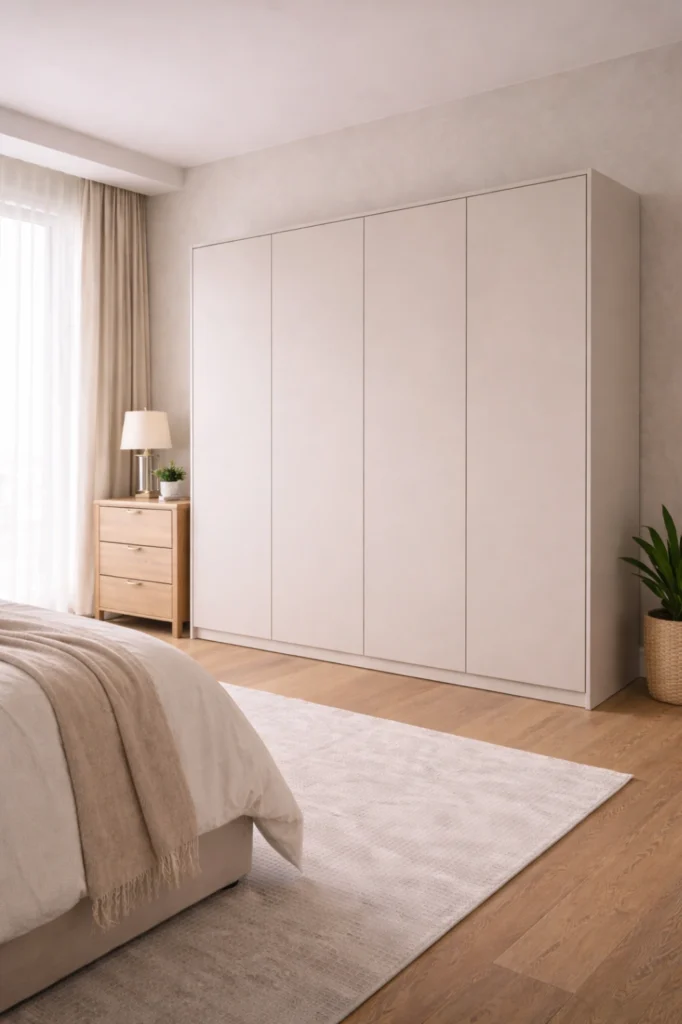
A handle-less wardrobe is built around one idea: nothing should interrupt the surface. Doors open with push-to-open mechanisms or recessed grooves cut into the edge of the panel, so the front reads as one smooth, calm plane. The look suits modern and Scandinavian bedrooms, where visual quiet is the whole point. Finishes that work best are matte white, pale oak, soft gray, and matte black, with slim vertical grooves or a single shadow gap as the only detail.
The practical payoff is real. There are no handles to catch clothing, bump into in a narrow room, or collect dust. Before you order, test the push mechanism in a showroom, because cheap versions can stick or need a firm shove. Recessed grooves are the more reliable option for daily use, and they are easier to keep clean. Keep the rest of the room simple too, with plain bedding and one or two accessories, so the wardrobe stays the quiet anchor of the space rather than competing with busy patterns.
5. Wardrobe with Sliding Doors
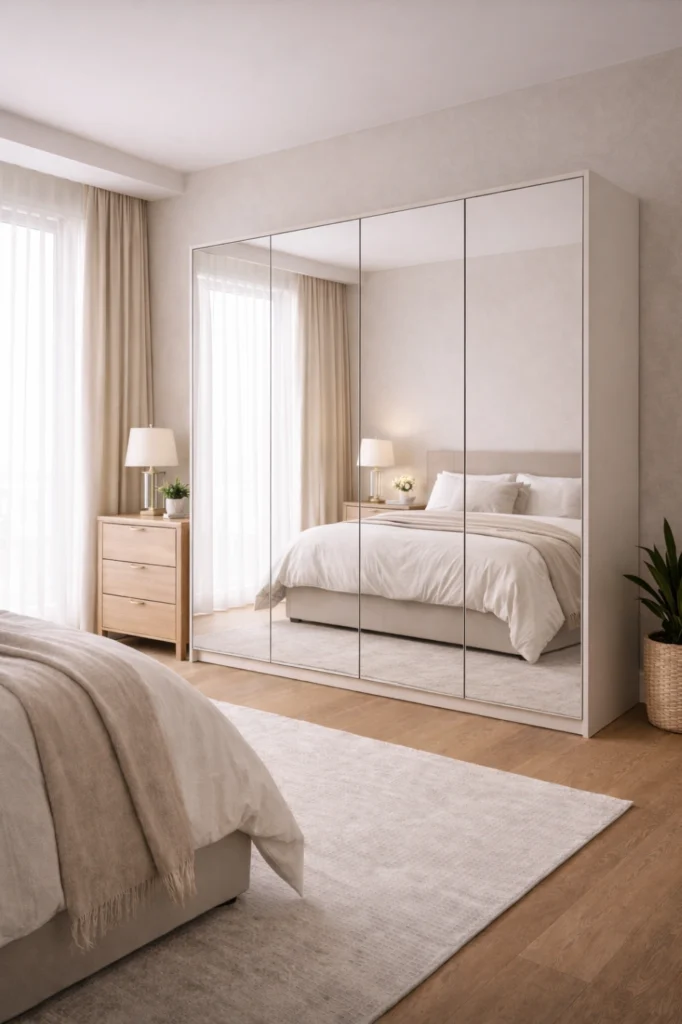
Sliding door wardrobes save real floor space, because the doors never swing out into the room. That makes them the smart choice for small bedrooms, apartments, and any layout where the bed sits close to the wardrobe wall. A standard two-door slider needs about 48 to 72 inches of width and 24 inches of depth, and the track system should glide smoothly with one finger, not grind or jump.
Choose your door finish to do double duty. Mirrored sliders reflect light and make a small room feel twice as big. Frosted glass hides clutter while still letting light through. Wood or matte panels keep the look calm and warm. One tradeoff to accept is that you can only open one half of the wardrobe at a time, so organize each side as its own zone, with daily clothes on the side you reach first. Vacuum the floor track every month, because dust in the track is the main reason sliders start to stick.
6. Mirrored Wardrobe for Visual Space
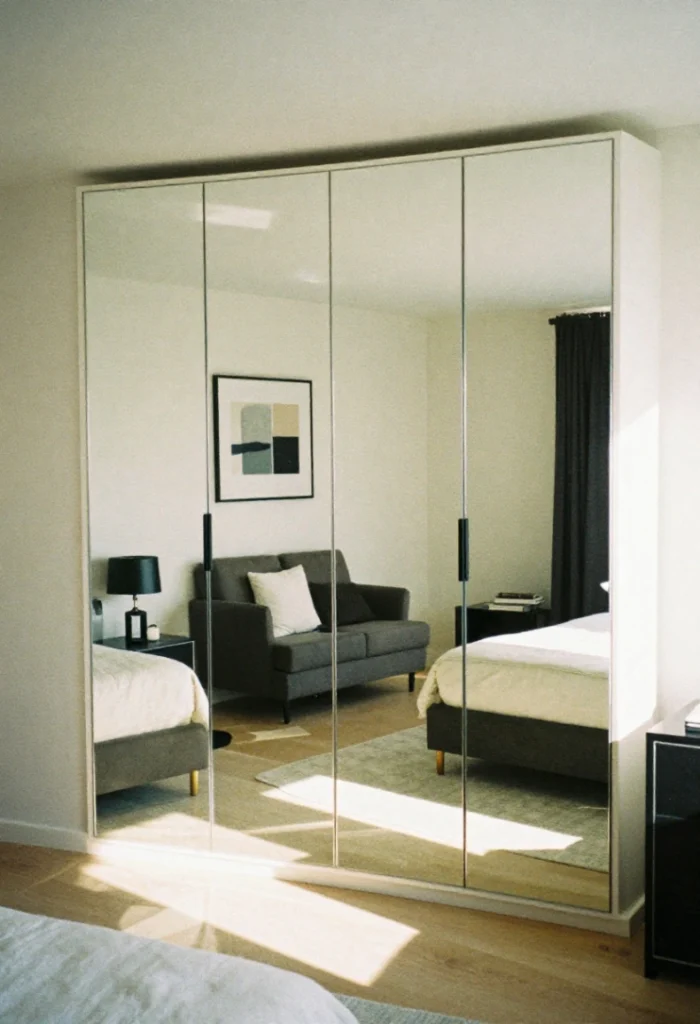
A mirrored wardrobe is storage and a full-length mirror in one piece, which is why it is so popular in small and dark bedrooms. The reflective surface bounces both natural and artificial light around the room, and the visual doubling effect can make a compact space feel far larger. Full mirrored fronts work best on sliding doors, while a single mirrored panel suits a hinged two-door wardrobe.
Placement matters. Put the mirrored wardrobe opposite or beside a window to catch the most light, and avoid placing it directly opposite the bed if reflected light will disturb your sleep. Keep the mirrors streak free with a microfiber cloth and a little glass cleaner once a week, and wipe fingerprints from the lower panels daily if you have children. For safety, choose mirrors with a safety backing film, which holds the glass together if it ever cracks, and anchor the unit firmly to the wall.
7. Wardrobe with Open Shelving Sections
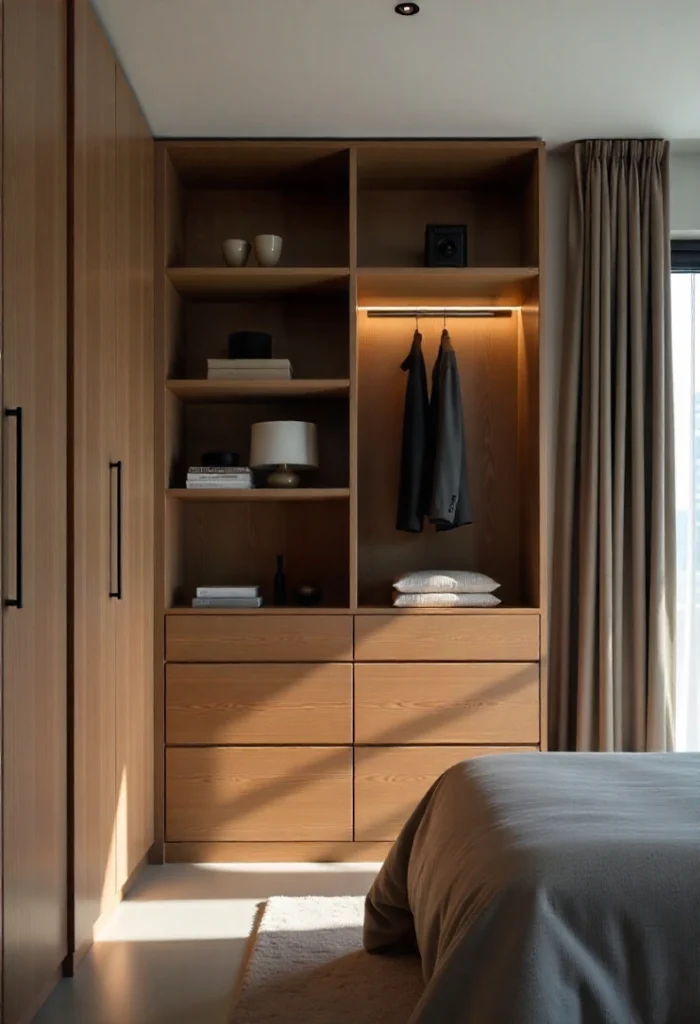
Open shelving built into a wardrobe breaks up a wall of closed doors and gives you a place to show the things you actually like. A typical layout puts open shelves at one end or in the center, with closed hanging space and drawers beside them. Use the shelves for folded sweaters, handbags, hats, or a few styled objects such as books, a plant, or a framed photo.
The trick is to style the open sections with the same discipline you use for a bookshelf. Group items in odd numbers, vary the heights, and leave some empty space so the shelves breathe. Folded clothes should be stacked no more than five or six high, with the neatest edge facing out. The only real downside is dust, so plan on a quick weekly wipe. If the open shelves start to look messy, swap loose items for matching woven baskets, which hide clutter while keeping the open, airy feel of the design.
8. Industrial-Style Wardrobe
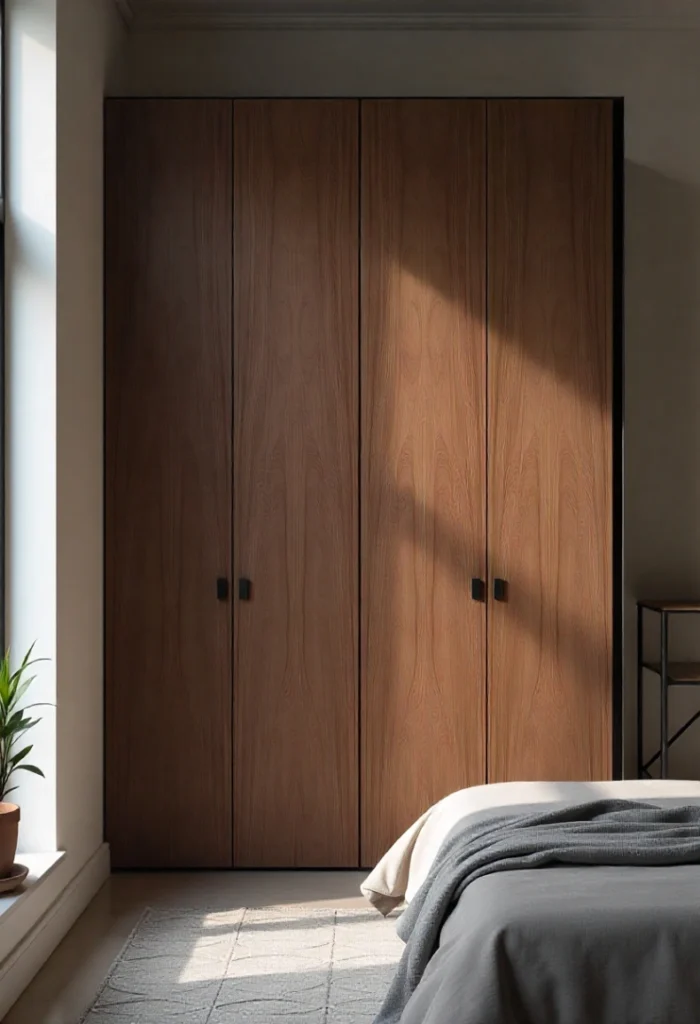
An industrial wardrobe pairs a black metal frame with wood panels for a bold, urban look that suits lofts, studios, and modern apartments. The usual materials are powder-coated steel, reclaimed pine or oak, and sometimes wire mesh or perforated metal doors. The raw, utilitarian feel works best against exposed brick, concrete, or dark painted walls, with Edison bulbs and leather or canvas textures nearby.
Before you buy, check the build quality where metal meets wood, because a well-made piece will feel solid and will not wobble when you pull a drawer or swing a door. Look for a frame with adjustable feet, which matters on uneven floors, and a weight rating that matches what you will store. Style it with restraint: the wardrobe is already a strong visual feature, so keep bedding and accessories in neutral tones and let the frame and wood grain carry the room. A canvas storage box or two inside keeps the open metal frame looking tidy.
9. Vintage-Inspired Armoire
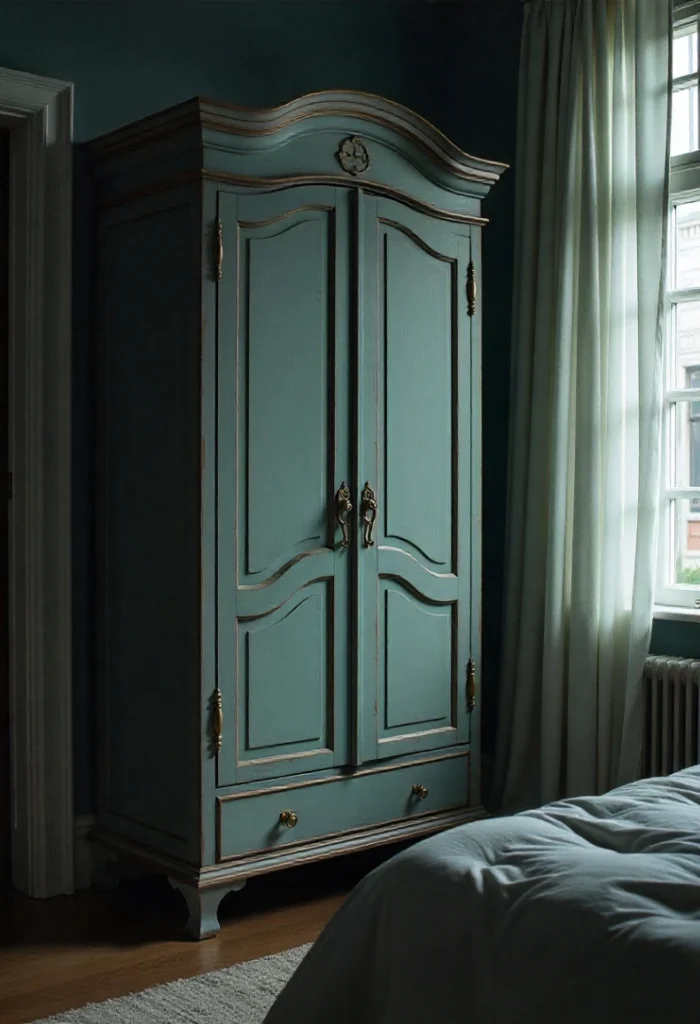
A vintage-inspired armoire earns its place through curved lines, turned legs, carved details, and finishes that look gently aged rather than brand new. Distressed paint in sage green, dusty blue, or cream is the classic route, while natural wood versions show off carved panels and brass or ceramic knobs. These pieces suit traditional, French country, and eclectic rooms, where they add a sense of history that a new flat-pack wardrobe cannot copy.
If you buy a genuine antique, pull every drawer out and check that it slides smoothly, sniff for damp or mustiness, and look for woodworm holes in the base and back. Measure the piece against your doorways and stairwells before delivery, since vintage armoires are often wider and taller than modern wardrobes. A popular DIY route is to repaint a plain wooden armoire with chalk paint, swap the knobs for brass ones, and line the drawers with scented paper. Style it with soft linen bedding, warm lighting, and a vase of dried flowers for a cozy, collected look.
10. Scandinavian Wardrobe Design
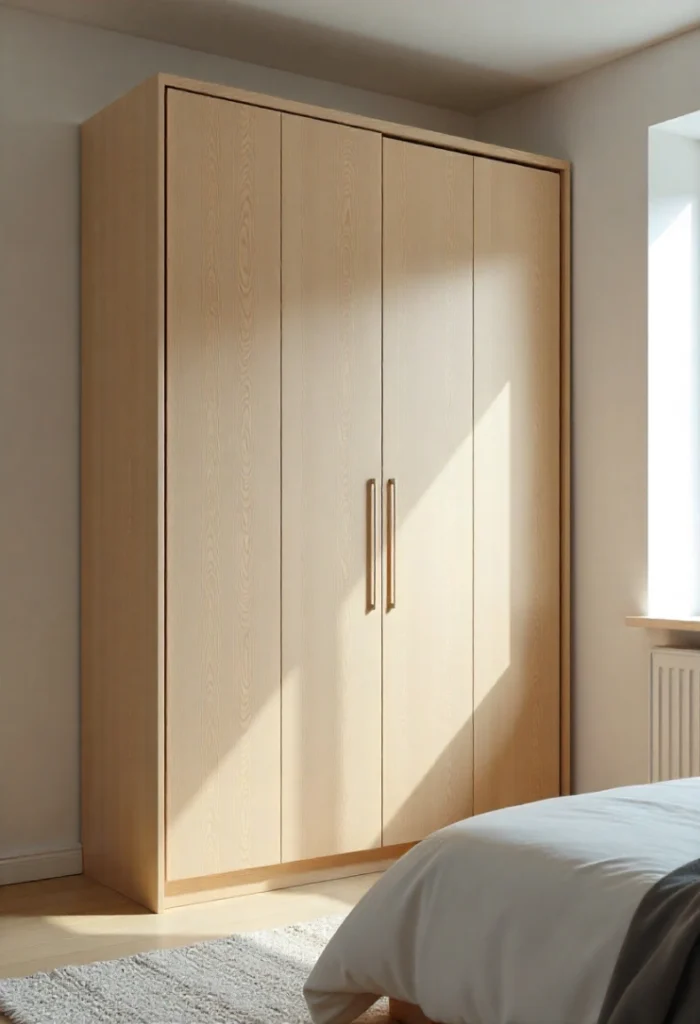
Scandinavian wardrobes are built on simplicity, light materials, and honest craftsmanship. Expect pale woods such as birch, ash, or light oak, tapered legs, clean lines, and almost no ornament. The palette stays calm, with whites, soft grays, and muted blues, which helps the wardrobe blend into bright, airy rooms without stealing attention. Inside, the layout is practical: a hanging rail, a few deep drawers, and shelves sized for folded clothes.
Style it the Scandinavian way, with nothing on top or just one ceramic vase with a few stems. Avoid piling on accessories, because the look depends on breathing room. For function, choose drawers with simple wooden dividers to keep folded clothes tidy, and pick a wardrobe with slightly raised legs so you can see the floor beneath it, which makes the room feel larger. It pairs naturally with pale wood furniture and linen bedding, and it works just as well in a hallway or a guest room as it does in a master bedroom.
11. Corner Wardrobe for Small Rooms
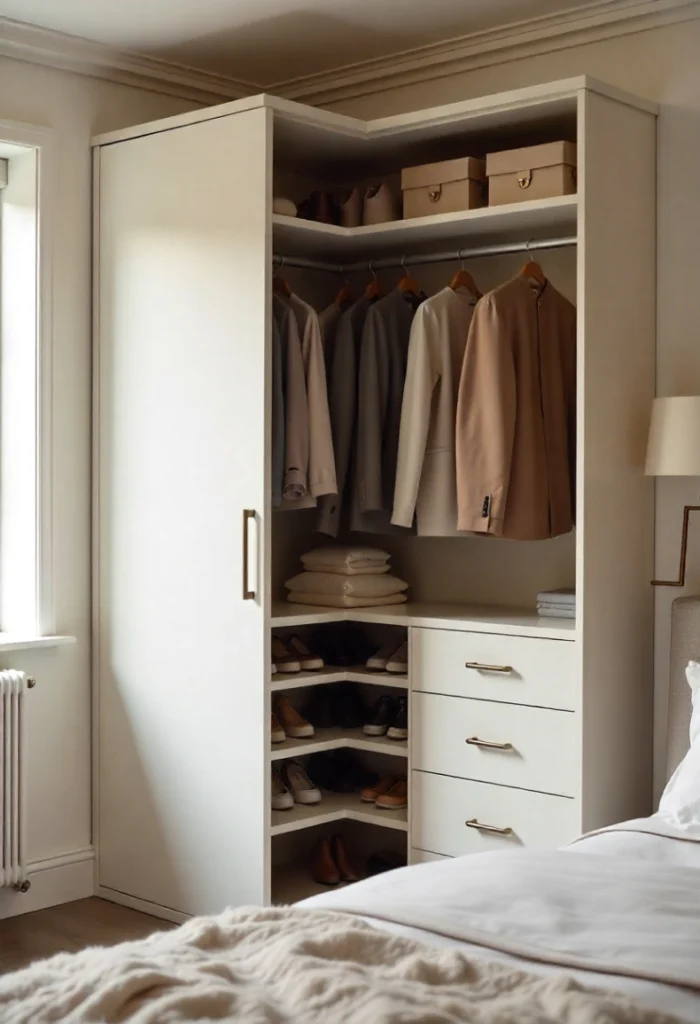
A corner wardrobe turns the most wasted spot in a bedroom into useful storage. Instead of leaving an awkward angle empty, an L-shaped or diagonal corner unit fills it with hanging space, shelves, and drawers, freeing up the rest of the room for the bed and a clear walkway. It is the best option for small bedrooms, box rooms, and attic spaces where a standard wardrobe would block a door or a window.
The interior matters more than the exterior here. Look for a carousel rail or pull-out hanging system in the deep corner, because that back space is useless if you cannot reach it. Shelves should be no deeper than 16 inches, so items do not get lost at the back. If you are working with a truly tight room, these small bedroom ideas show how a corner wardrobe can fit alongside the bed and storage without crowding the space. Measure the corner carefully, including skirting boards and ceiling slopes, and leave enough clearance for the doors to open fully.
12. Wardrobe with Integrated Lighting
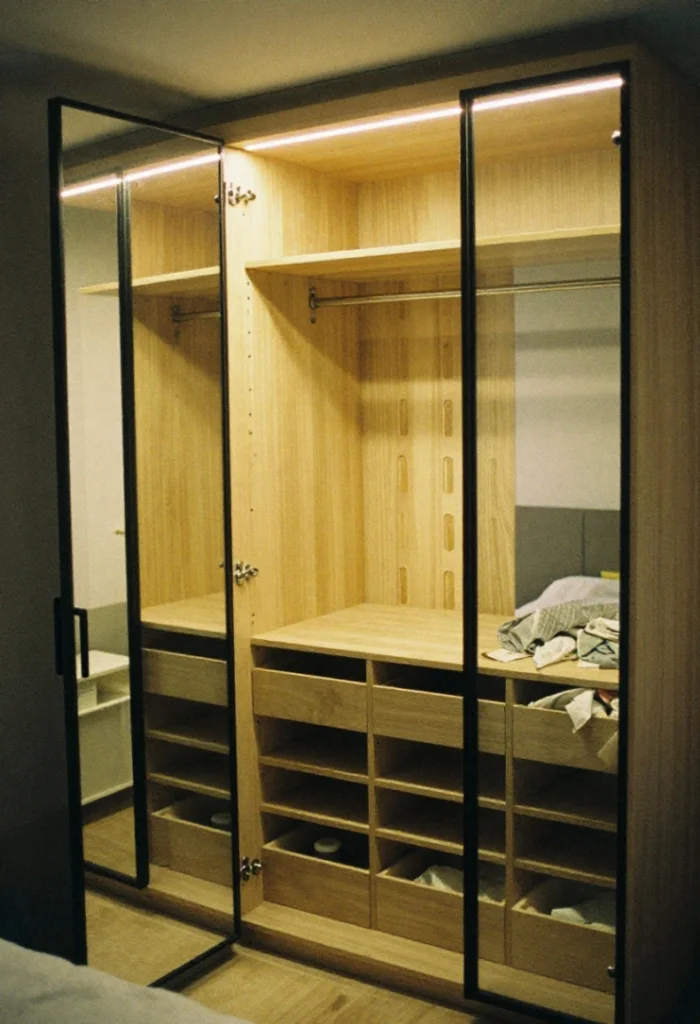
Integrated lighting turns a wardrobe from a dark box into a space you can actually use. LED strips mounted under shelves and along the sides of the hanging rail light every shelf evenly, so you can find the right shirt without pulling everything out. Warm white light at 2700 to 3000 Kelvin looks best, because it flatters clothes and skin tones, while cool white can make colors look harsh.
The simplest setup is a motion sensor that switches the lights on when the door opens and off when it closes, which also saves energy. Battery-powered LED strips are an easy retrofit for an existing wardrobe, while wired systems with a transformer give a cleaner finish in a new build. Keep the wiring hidden behind a slim channel or inside the carcass, and choose dimmable strips if the wardrobe faces the bed, so a late-night search does not flood the room with light. A lit wardrobe also adds a boutique feel that makes the whole bedroom feel more considered.
13. Multi-Functional Wardrobe
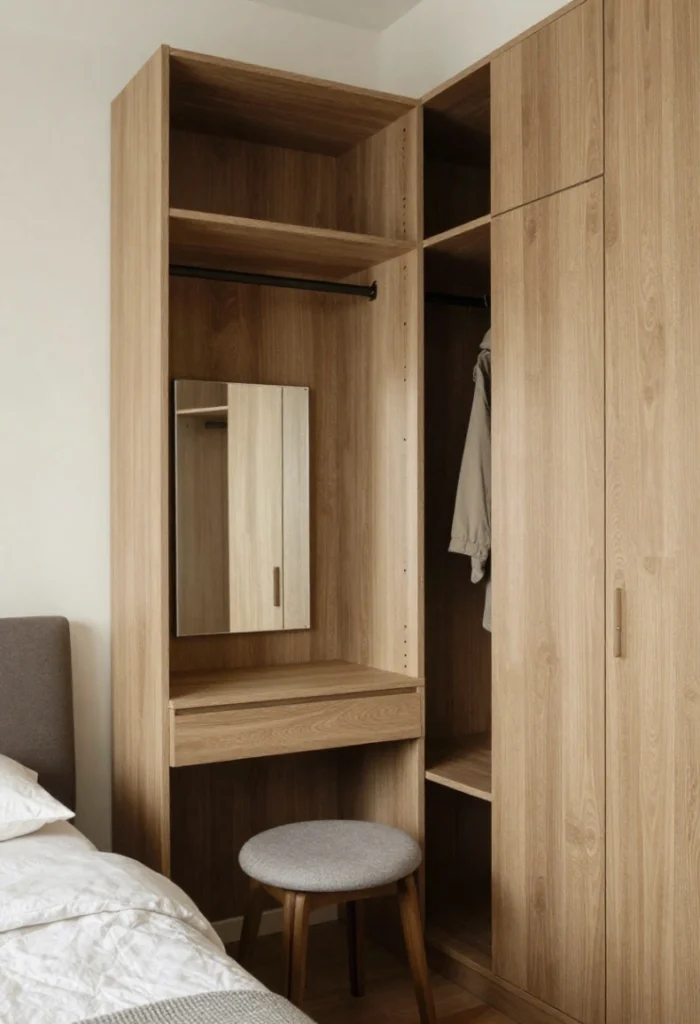
A multi-functional wardrobe does more than store clothes. The most useful versions combine a wardrobe with a fold-down desk, a dressing table, a mirror, or even a TV unit, which makes them ideal for studio apartments and small bedrooms where every piece of furniture must earn its place. A wardrobe with a pull-out desk, for example, gives you a workspace by day and hides it completely at night.
When you shop for one, test the moving parts in person. A fold-down desk should lock flat and level, a pull-out mirror should glide without wobbling, and the wardrobe doors should still open fully when the extra function is in use. Keep the weight balanced by storing heavier items low, and avoid overloading the desk section with books and equipment. The payoff is a room that feels larger and calmer, because one piece of furniture is doing the work of two or three.
14. Armoire for Living Room Storage
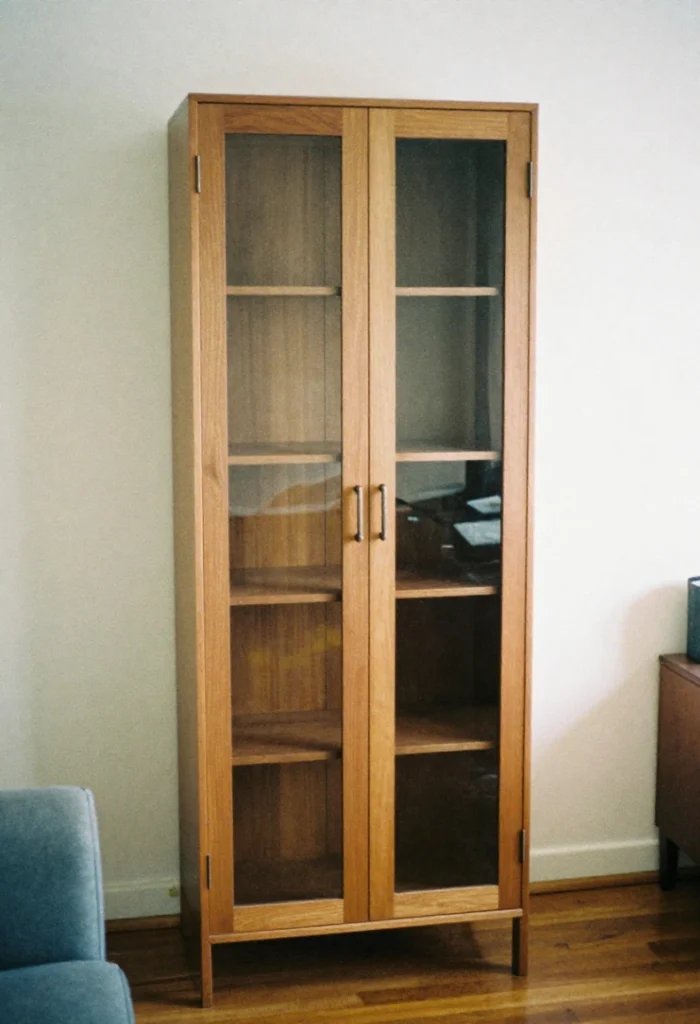
An armoire is not limited to the bedroom. In a living room, it becomes a handsome cabinet that hides everything you do not want on show: board games, blankets, books, a printer, or a television. Closed doors keep the room looking tidy in seconds, which is exactly what a living room needs when guests arrive unexpectedly. A wide, low armoire works as a sideboard under a television, while a tall one fills an empty wall without needing a full bookcase.
Match the armoire to the room rather than the bedroom it came from. A dark wood armoire suits a traditional living room, while a painted or lacquered one works in a modern space. Inside, add adjustable shelves so the same cabinet can hold tall vases one month and a stack of games the next. Style the top with a lamp, a stack of books, or a piece of art, and keep the doors closed when the room is in use, so the armoire reads as furniture, not storage.
15. Wardrobe with Drawers and Hanging Space
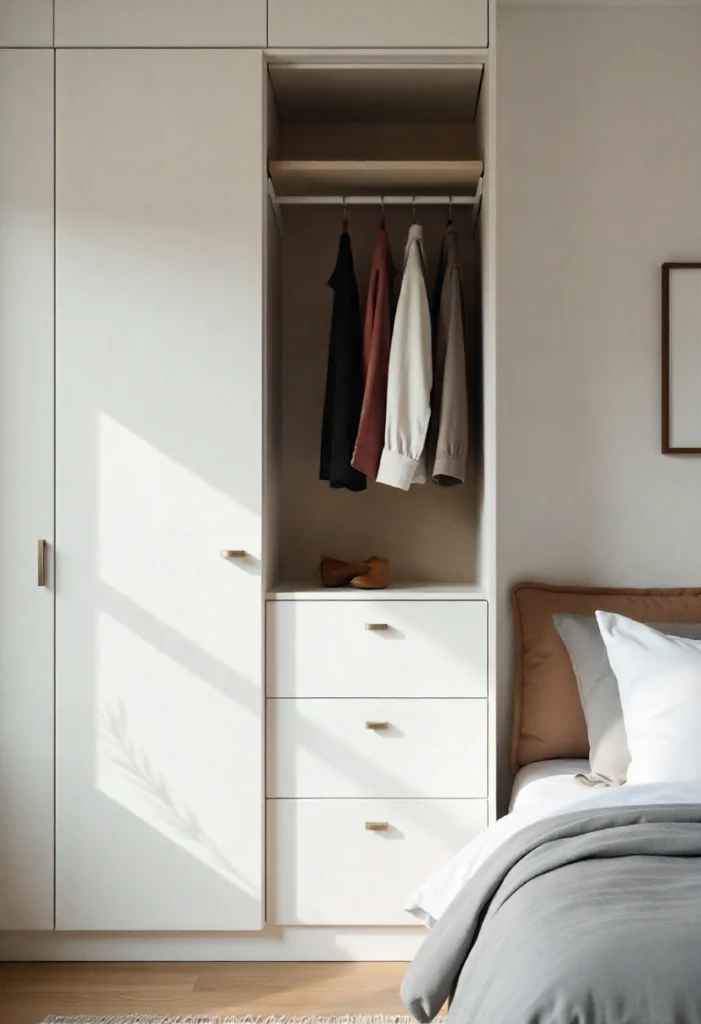
The most useful wardrobe layout is a simple combination: drawers on one side, hanging space on the other. Drawers take folded clothes, underwear, and accessories, while the hanging rail takes shirts, trousers, dresses, and coats. A good balance for most people is one full-length hanging section, one double hanging section, and a stack of three to five drawers, with the top drawer at least 6 inches deep so folded sweaters fit without bulging.
Organize the drawers by use, with daily items in the top drawer and seasonal or rarely used items at the bottom. Add simple dividers or small boxes inside the drawers to stop socks and accessories from sliding into a jumble. If you need more drawer storage than your wardrobe offers, a matching chest fills the gap neatly, and these chest of drawers ideas show styles that pair well with any wardrobe. Before you buy, open and close every drawer in the showroom and listen for a smooth, silent glide on soft-close runners.
16. Custom-Made Wardrobe
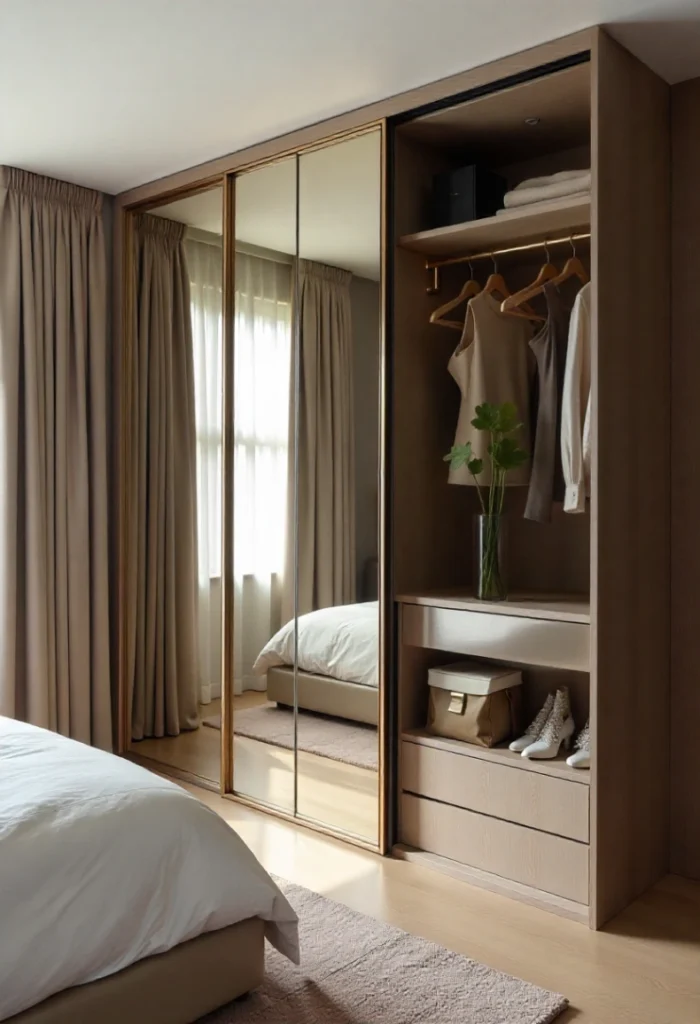
A custom-made wardrobe is built for your room and your habits, not for an average buyer. The maker measures your wall, your ceiling height, and even the slope of an attic roof, then designs the interior around what you actually own: long hanging for dresses, double hanging for shirts, deep drawers for knitwear, and a dedicated shelf for shoes and bags. That level of fit is impossible with an off-the-shelf unit, especially in older homes with uneven walls and unusual dimensions.
Expect the process to take four to eight weeks from measure to install, and budget roughly twice the price of a comparable flat-pack wardrobe. The investment pays off in storage you actually use, because every shelf and rail has a purpose. Ask the maker to show you the interior plan in 3D before production, confirm the finish samples in your own light, and agree in writing on the handle style, the internal lighting, and the delivery date. If you are furnishing the whole room around it, these bedroom furniture ideas will help you choose pieces that sit comfortably beside a custom unit.
17. Walk-In Wardrobe Concept
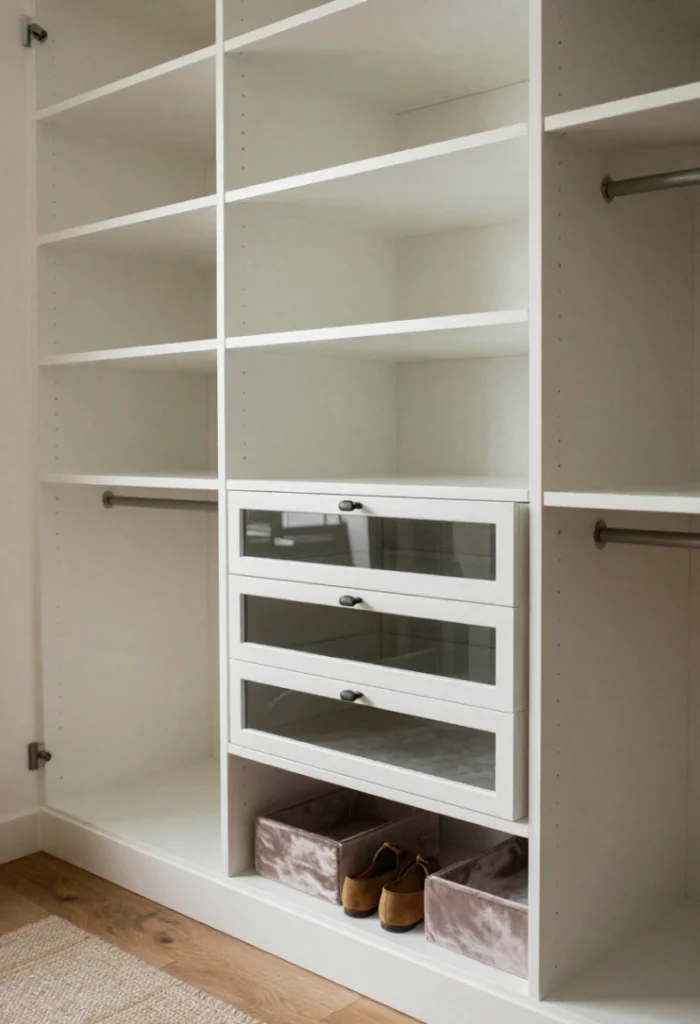
A walk-in wardrobe turns storage into a small room of its own, with dedicated zones for hanging clothes, folded items, shoes, and accessories. The layout usually runs along two or three walls, with a hanging rail at eye level, shelves above for seasonal storage, drawers at waist height, and a mirror at the far end. Even a space as small as 5 by 7 feet can work, as long as the layout leaves a clear 3-foot walkway down the middle.
Lighting and ventilation make or break a walk-in wardrobe. Use bright, even LED lighting on every wall, add a small mirror with a light around it for outfit checks, and make sure air can circulate, because a closed, stuffy wardrobe will smell musty within weeks. Keep daily clothes at eye level, shoes on low slanted shelves, and out-of-season items in labeled boxes on the top shelf. A walk-in wardrobe also adds real value to a home, so if you have a spare box room next to the master bedroom, converting it is one of the best storage upgrades you can make.
18. Wardrobe with Glass Doors
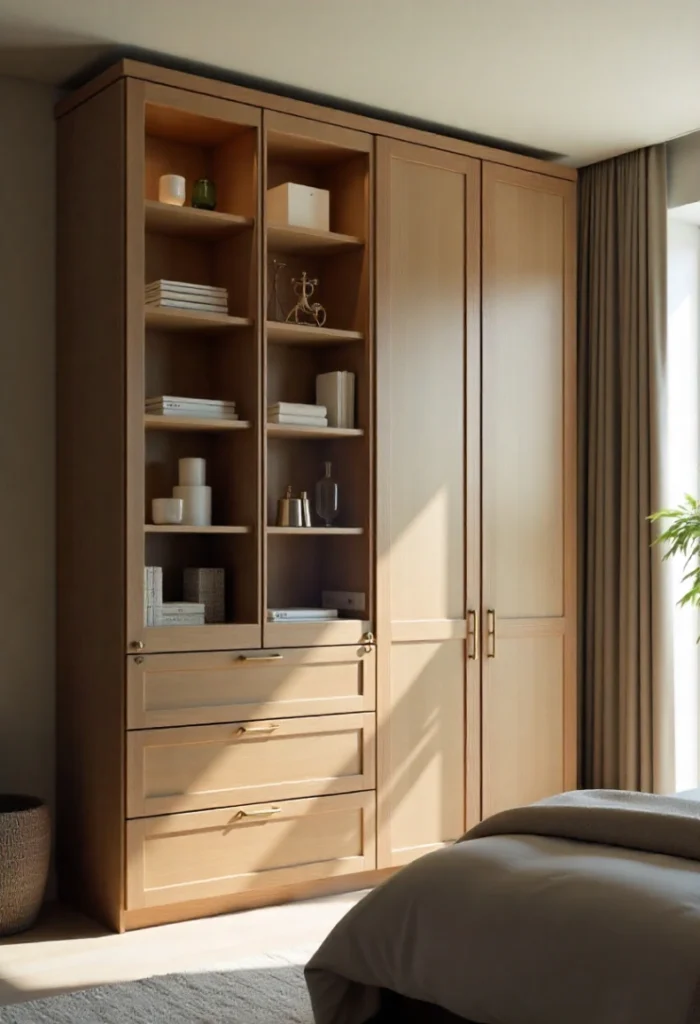
Glass door wardrobes create a boutique feel by letting you see your clothes, which makes choosing an outfit faster and keeps you honest about staying organized. Clear glass suits a tidy, color-coordinated wardrobe and a modern bedroom, while frosted or tinted glass gives privacy and hides a little mess. Smoked glass is a good middle ground, offering a glimpse of what is inside without showing every wrinkle.
The frames matter as much as the glass. Slim black metal frames suit contemporary rooms, while wood frames in oak or walnut feel warmer and more traditional. Keep the interior neat, because the glass makes clutter visible: use matching hangers, fold clothes in even stacks, and store out-of-season items in boxes on the top shelf. Clean the glass weekly with a microfiber cloth and glass cleaner, and choose tempered safety glass, which is stronger than standard glass and breaks into small, blunt pieces if it is ever damaged.
19. Rustic Wardrobe Design
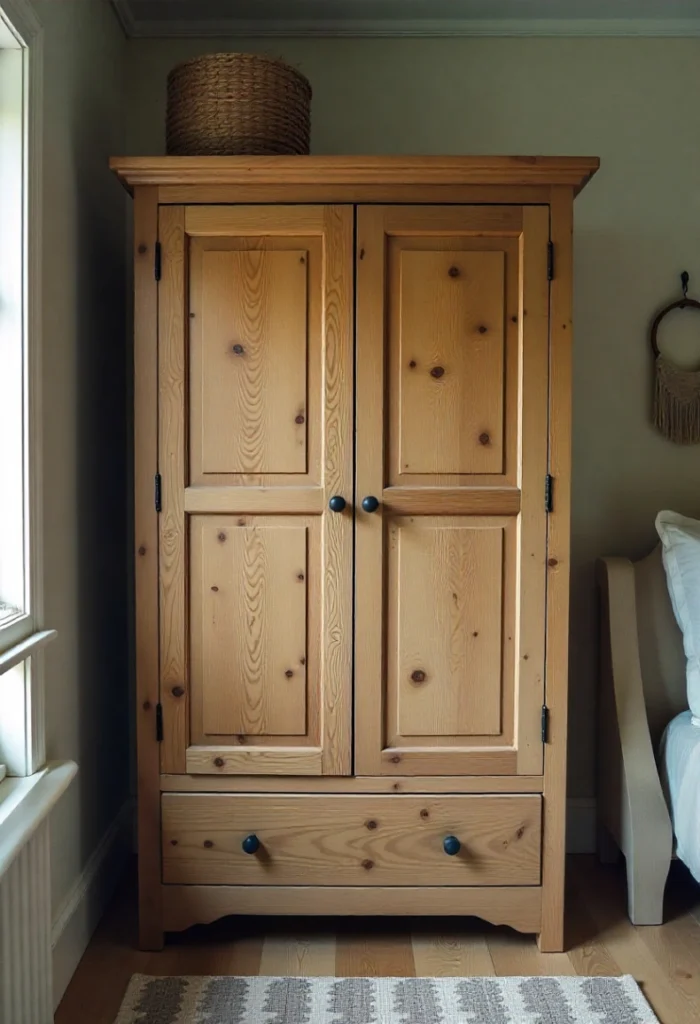
A rustic wardrobe is built from natural materials and honest construction: reclaimed wood, rough-sawn pine, iron hinges, and a finish that shows the grain rather than hiding it. It suits farmhouse, country, and cabin interiors, where it adds warmth and a sense of craft. Look for thick planks, visible knots, and simple joinery, and avoid glossy finishes, which fight the rustic character.
Style it with other natural textures, such as linen bedding, wool throws, woven baskets, and a jute rug, and keep the color palette warm and earthy: cream, sage, terracotta, and soft brown. Care is simple but regular: dust weekly, wipe spills quickly so they do not stain the raw wood, and refresh the finish once a year with a clear wax or oil. If you buy reclaimed wood, ask where it came from and check for old nails and woodworm, and let the piece acclimatize in your home for a few days before you load it with clothes.
20. Wardrobe for Entryway Storage
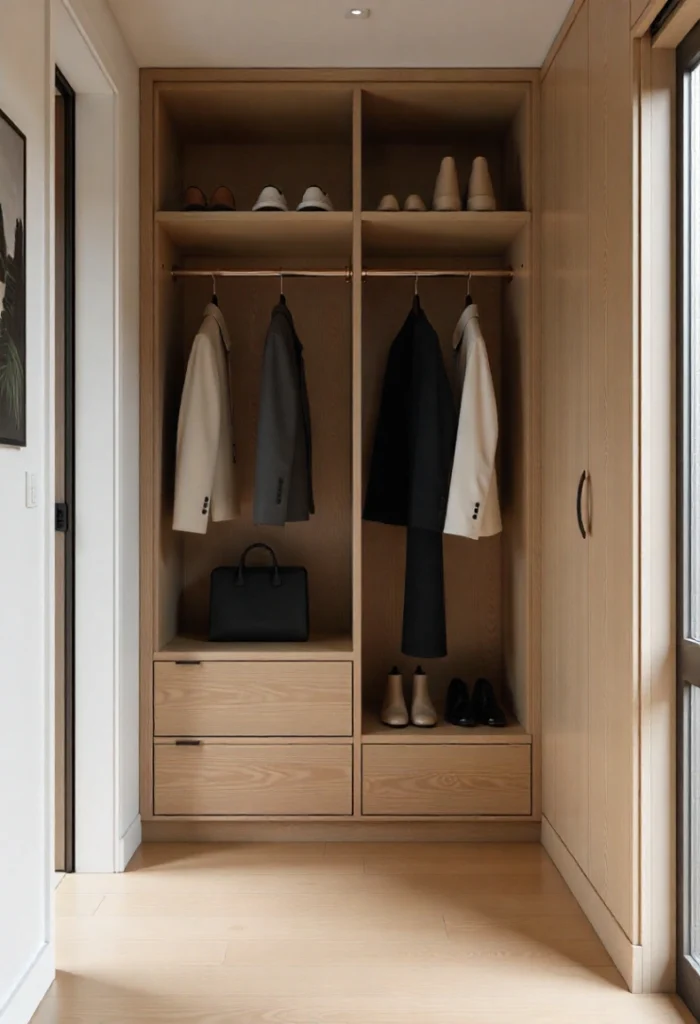
An entryway wardrobe keeps coats, shoes, bags, and keys in one place, so the front door area stays tidy instead of turning into a pile of jackets and muddy shoes. The best designs are slim, usually 16 to 20 inches deep, with a hanging rail for coats, a bench or low shelf for shoes, hooks for bags and dog leads, and a small drawer for keys, gloves, and sunglasses.
Measure the hallway before you buy, and leave at least 36 inches of clear walkway in front of the wardrobe so people can pass while someone is putting on a coat. Choose a finish that can take knocks, such as laminate or painted wood, because entryways get hard daily use. Add a mirror on the door for a last check before you leave, and put a small tray or bowl on top for keys and mail. If the hallway is narrow, a wardrobe with sliding doors or open hooks will work better than one with swing doors that block the passage.
21. Wardrobe with Built-In Mirrors
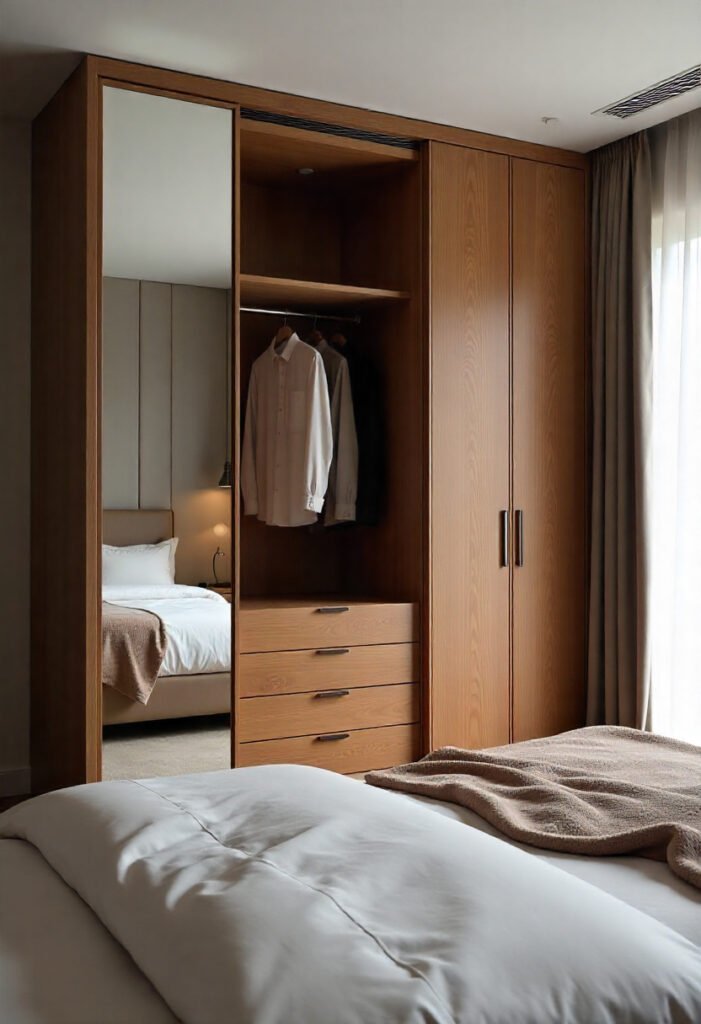
A wardrobe with built-in mirrors saves space by removing the need for a separate standing mirror, which is a real win in a small bedroom or a dressing area. The mirrors are usually set into the doors, either as full-length panels or as a framed section, so you can check your outfit the moment you take it out. They also reflect light, which brightens the room and makes it feel larger.
Full-length mirrored doors work best on sliding wardrobes, where the mirror stays in view while the door moves. On hinged doors, a mirror on one door is often enough, and it avoids the cost of mirroring both. Keep the mirrors clean with a microfiber cloth, because fingerprints show up fast at eye level, and check that the mirror is backed with safety film. Position the wardrobe so the mirror catches window light rather than facing the bed directly, which can be distracting at night.
22. Compact Wardrobe for Guest Rooms
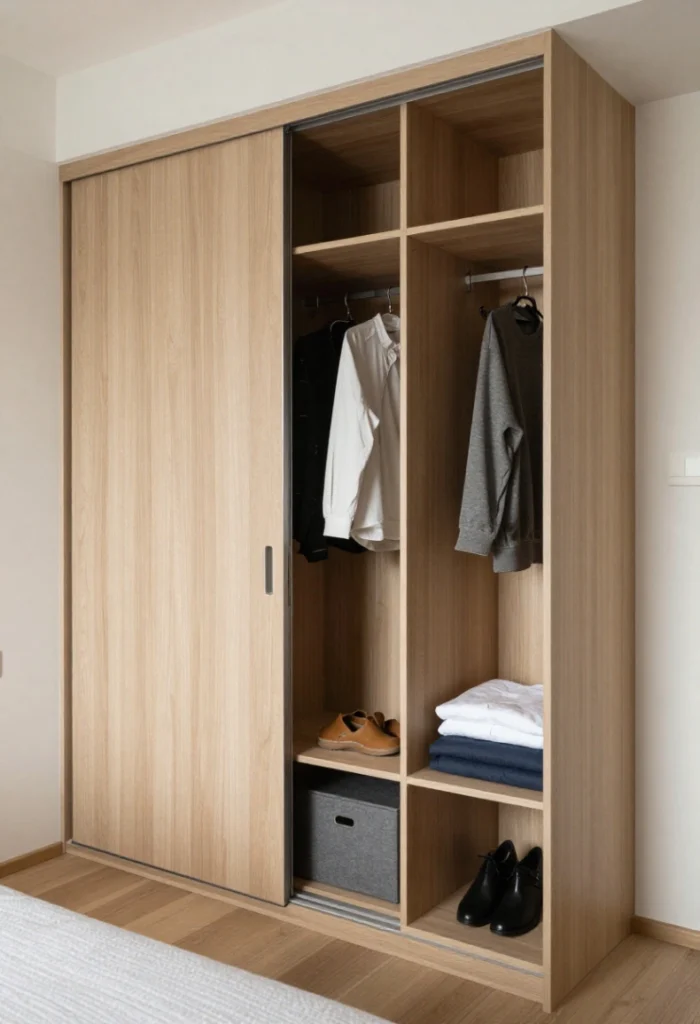
A guest room wardrobe needs to be welcoming without taking over the room. A compact two-door wardrobe, usually 36 to 48 inches wide and 72 inches high, gives guests enough hanging space for a few days, a shelf for folded clothes, and a drawer for personal items. Leave five or six matching hangers inside, a spare blanket on the top shelf, and the wardrobe will feel thoughtful rather than bare.
Choose a light finish and a simple design so the wardrobe suits any guest and any style of bedding. Avoid heavy, dark pieces in a small guest room, because they make the space feel cramped. If the room doubles as a home office, a compact wardrobe with a small drawer unit can hold office supplies as well as guest clothes. Keep the top of the wardrobe clear or use it for one decorative item, so the room feels calm and uncluttered the moment a guest walks in.
23. Wardrobe with Adjustable Shelving
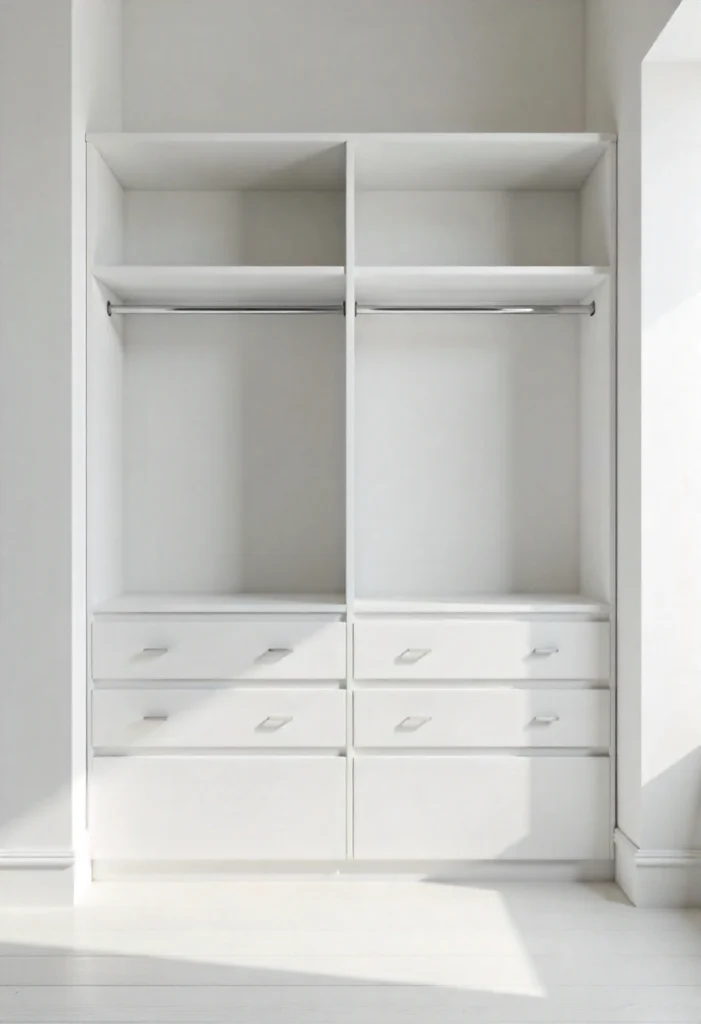
Adjustable shelving is the feature that keeps a wardrobe useful as your life changes. Shelves mounted on pegs or a track system can move up or down in 1-inch steps, so you can raise a shelf for tall boots, lower one for folded jumpers, or remove one entirely to make room for long dresses. It is the simplest way to future-proof a wardrobe without rebuilding it.
When you set up the shelves, start with your tallest items and work down. Keep the shelf you use most at eye level, put heavy items such as books and shoe boxes on the lowest shelf, and leave one shelf free for the things you have not bought yet. Check that the shelf pins are metal rather than plastic, because plastic pins can bend under a heavy load, and test that each shelf sits level before you load it. Adjustable shelving is especially valuable in a shared wardrobe, where two people with different needs use the same space.
24. Statement Armoire as a Focal Point
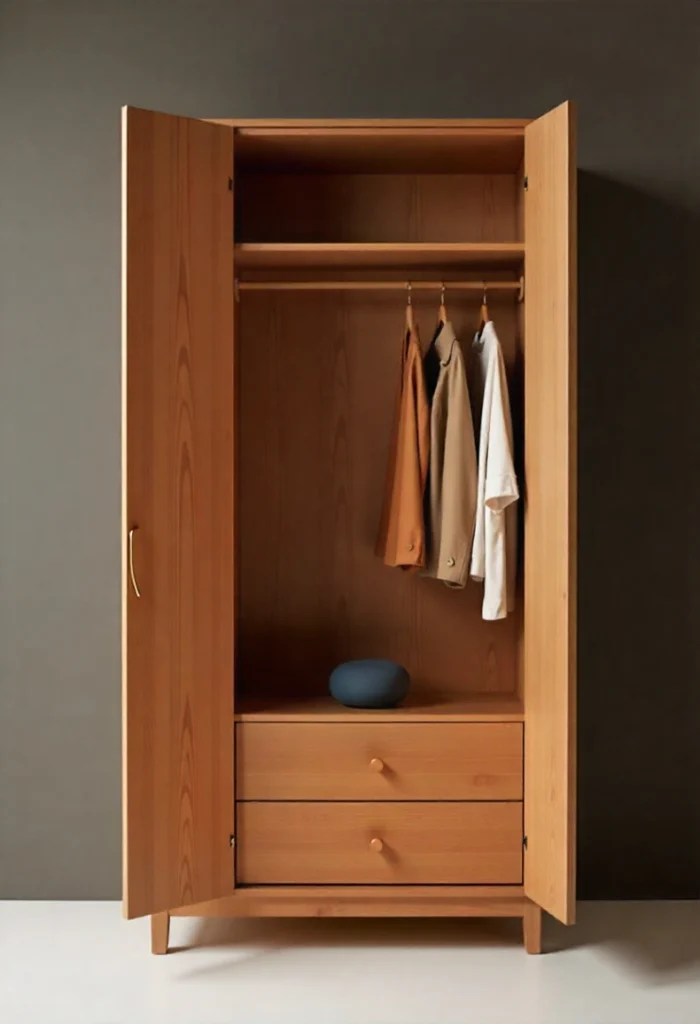
A statement armoire is chosen to be looked at, not just to store things. It might be painted in a bold color such as deep teal, emerald, or mustard, finished in high-gloss lacquer, or decorated with a hand-painted pattern, carved panels, or brass inlay. Placed against a plain wall, it becomes the focal point of the room, and everything else in the space is arranged around it.
The key is to let the armoire lead and keep the rest of the room calm. Choose bedding, curtains, and accessories in neutral tones that pick up one color from the armoire, rather than competing with it. Make sure the armoire is still practical: check the hanging depth is at least 22 inches, the doors open fully without hitting furniture, and the interior has a sensible mix of hanging space and shelves. A bold armoire also photographs beautifully, so it is a smart choice if you like to share your home online or you are styling a room to sell.
Conclusion
Wardrobes and armoires play a crucial role in maintaining an organized and stylish home. With these 24 wardrobe and armoire ideas, you can find smart storage solutions tailored to every room and lifestyle. From minimalist designs to statement pieces, each option demonstrates how thoughtful storage choices can enhance both function and aesthetics.
Start by measuring your space and listing what you actually need to store, then choose the style that fits your home and your habits. Whether you pick a flexible freestanding wardrobe, a seamless built-in unit, or a characterful vintage armoire, the right choice will make daily routines easier and your rooms calmer. By selecting the right wardrobe or armoire, you create a space that feels balanced, efficient, and visually appealing, proving that smart storage can truly transform your home.
Frequently Asked Questions
What size wardrobe do I need for a master bedroom?
For a master bedroom shared by two people, plan on at least 72 inches of total width, with one double hanging section each, plus drawers and shelves. A depth of 22 to 24 inches is the minimum for hangers to sit without crushing clothes. If your room allows, a 96-inch wide wardrobe with a mix of hanging space, drawers, and top shelves will cover daily clothes, seasonal storage, and accessories without feeling cramped.
Are sliding door wardrobes better than hinged door wardrobes?
Sliding doors are better when floor space is tight, because they never swing out into the room. Hinged doors are better when you want full access to the whole wardrobe at once and you have at least 24 inches of clear space in front of it. For small bedrooms and apartments, sliding doors usually win. For large bedrooms and walk-in wardrobes, hinged doors are more convenient.
How deep should a wardrobe be?
A wardrobe should be at least 22 inches deep inside, so standard hangers fit with a little clearance. A total depth of 24 inches is the most common and comfortable size. Shallower wardrobes of 16 to 20 inches work for entryways and children’s rooms, but they suit folded clothes and shoes better than hanging coats and dresses.
What is the difference between a wardrobe and an armoire?
A wardrobe is a general term for a tall cabinet used to store clothes, and it can be freestanding or built-in. An armoire is a specific type of freestanding wardrobe, traditionally made of wood with doors and drawers, and often used as a statement furniture piece. In practice, the two words are used interchangeably, but armoire usually suggests a more traditional, crafted, and decorative piece.
How do I keep my wardrobe organized long term?
Keep the layout simple and review it twice a year. Store daily clothes at eye level, seasonal items in labeled boxes on the top shelf, and shoes on low shelves. Use matching hangers, drawer dividers, and one in, one out rule when you buy something new. A ten-minute tidy once a week is enough to keep a well-planned wardrobe organized for years.
More Ideas You Will Love
 23 Small Bedroom Ideas for Stylish, Functional Comfort
 11 Earthy Dorm Room Ideas for a Cozy, Nature-Inspired Look
 22 Relaxing Bedroom Color Schemes for a Stylish Sleep Sanctuary
 12 White Bedroom Ideas for a Dreamy & Personalized Retreat in 2026
 23 Bed Frame Ideas: Modern & Stylish Choices for Every Bedroom
 18 Vintage Nursery Ideas for a Charming, Timeless Baby Room