
20 Pantry Furniture Ideas – Smart, Organized & Stylish Storage Solutions

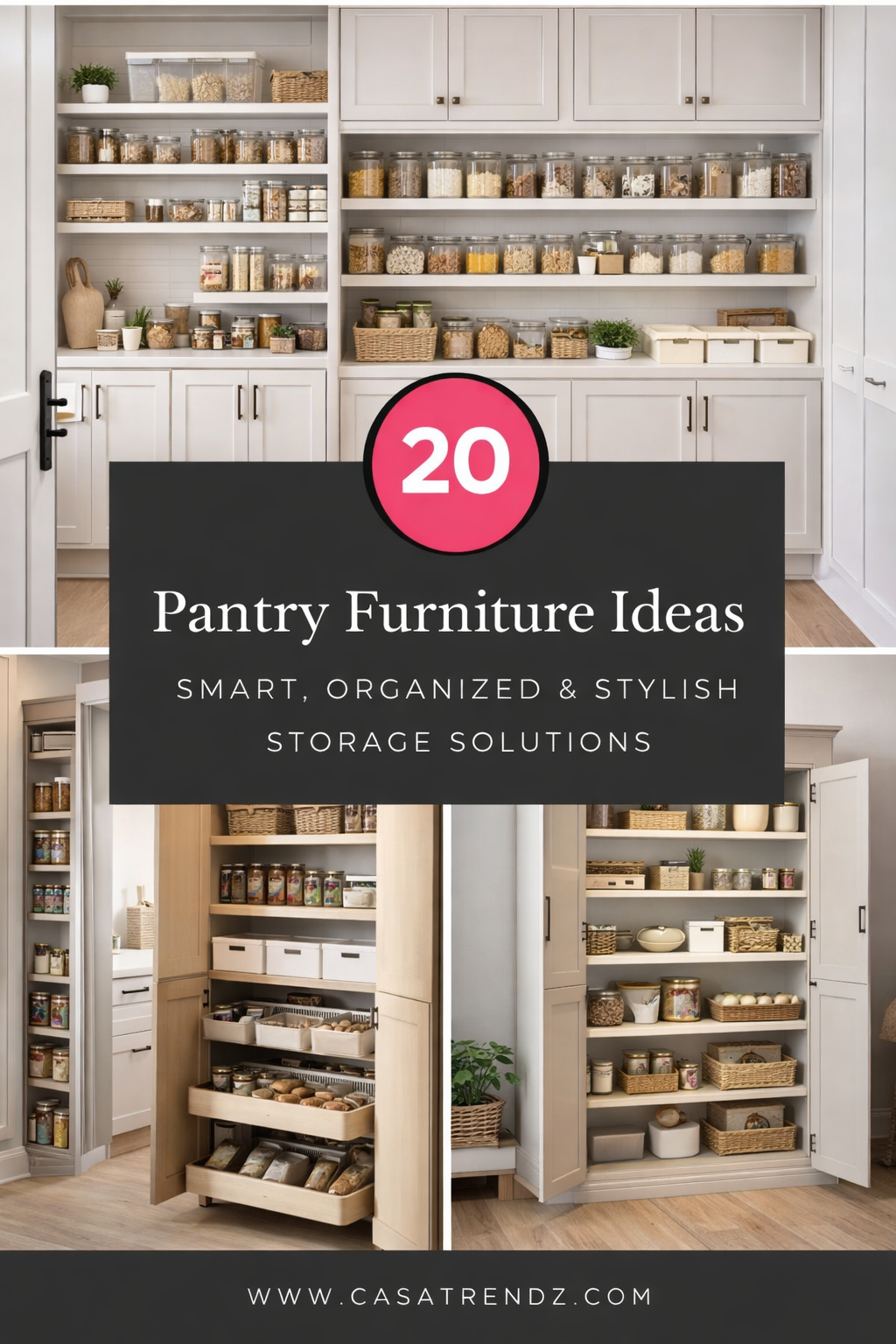
A pantry only works as well as the furniture inside it. When shelves are too deep, too high, or too few, food gets buried, cans expire at the back, and cooking turns into a daily treasure hunt. The right pantry furniture fixes all of that. It puts every item within reach, gives each category a clear home, and turns a cluttered closet into a calm, hardworking part of your kitchen.
In this guide, we share 20 pantry furniture ideas that focus on smart storage, easy access, and modern style. Whether you have a walk-in pantry, a small kitchen nook, or a single pantry cabinet, these ideas adapt to almost any layout and budget. Some are simple swaps you can finish in a weekend, while others are built-in upgrades worth planning during a remodel. Each one is designed to improve organization while making your pantry look better too.
Before you start, take stock of what you actually store. Count your tall items like cereal boxes and oil bottles, your wide items like baking trays, and your small items like spice jars. Measure your space, note the door swing, and check how deep your shelves really are. Those numbers decide which of the ideas below will help you most, so keep them handy as you read.
1. Floor-to-Ceiling Pantry Cabinets
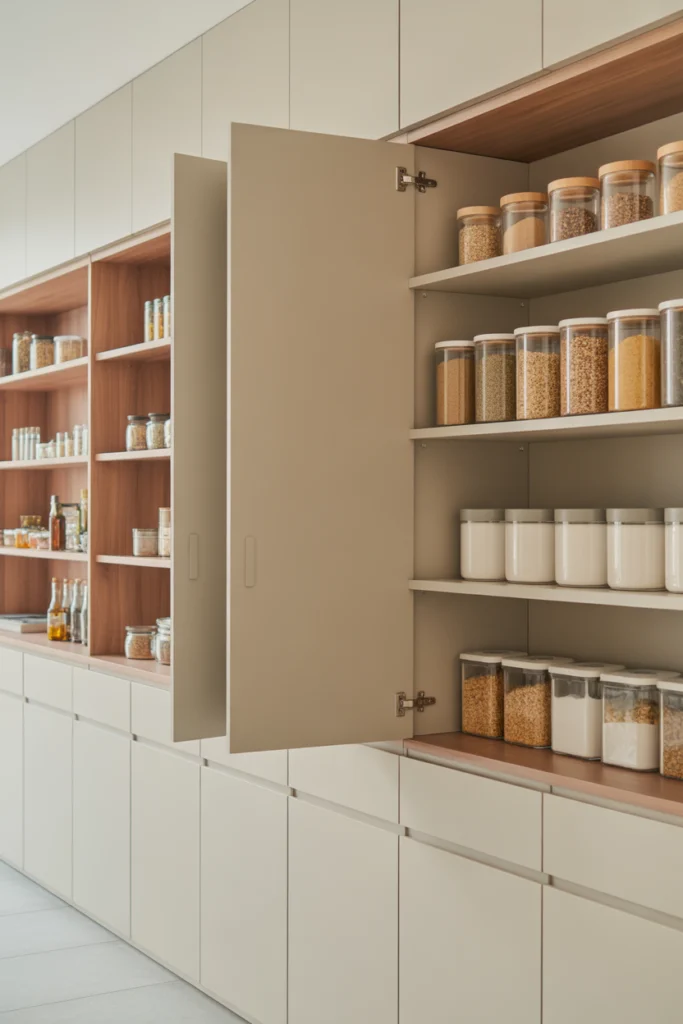
Floor-to-ceiling cabinets are among the most effective pantry furniture ideas for maximizing vertical space. A standard 8-foot ceiling gives you roughly 96 inches of height, and a tall cabinet uses nearly all of it. Reserve the top 18 to 24 inches for items you rarely touch, such as holiday platters, bulk paper goods, and seasonal baking supplies. Keep daily essentials between waist and eye level, roughly 30 to 66 inches from the floor, so nothing you use every day requires a step stool.
Inside, adjustable shelves are the key detail. Set shelf spacing at 10 to 12 inches for canned goods and jars, 14 to 16 inches for cereal boxes and small appliances, and one taller 18-inch bay for a stand mixer or slow cooker. A cabinet 24 inches deep and 36 inches wide holds a surprising amount, and two of them side by side can replace a whole wall of shallow shelving. Finish the doors in the same paint color as your kitchen cabinets, and the tall unit reads as built-in furniture rather than a storage box. Add a slim pull-out step or a folding library stool nearby so the top shelf stays useful instead of becoming a dead zone.
2. Pull-Out Pantry Shelving Units
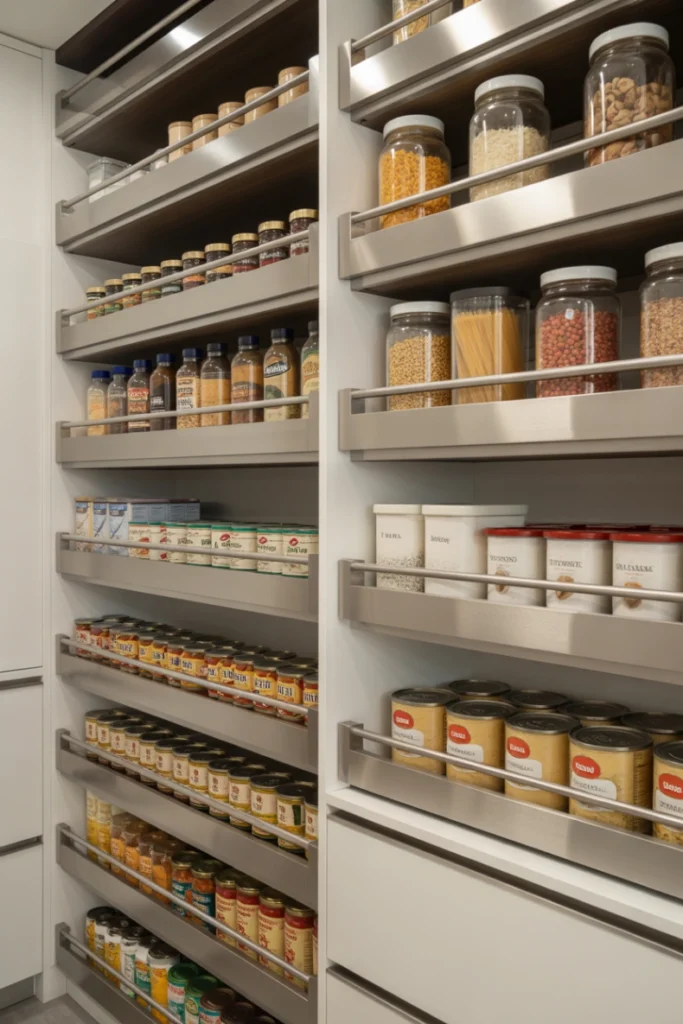
Pull-out shelving solves the oldest pantry problem: things vanishing at the back. A full-extension slide lets a shelf roll all the way out, so you can see and reach every jar without moving the front row aside. Look for ball-bearing slides rated for at least 75 pounds per shelf, and choose shelves 12 to 18 inches deep so they glide smoothly even when loaded with cans and bottles.
Installation is simpler than most people expect. Measure the inside width of your cabinet, subtract a quarter inch on each side for clearance, and order or build the shelf to fit. Mount the slides level, test the glide empty first, and then load heavier items at the bottom and lighter items up top. This kind of pantry furniture shines in narrow spaces, tall cabinets, and deep closets where fixed shelves waste the back third of the space. It also cuts food waste, because you can actually see the half-used bag of rice before buying another one.
3. Freestanding Pantry Cabinets
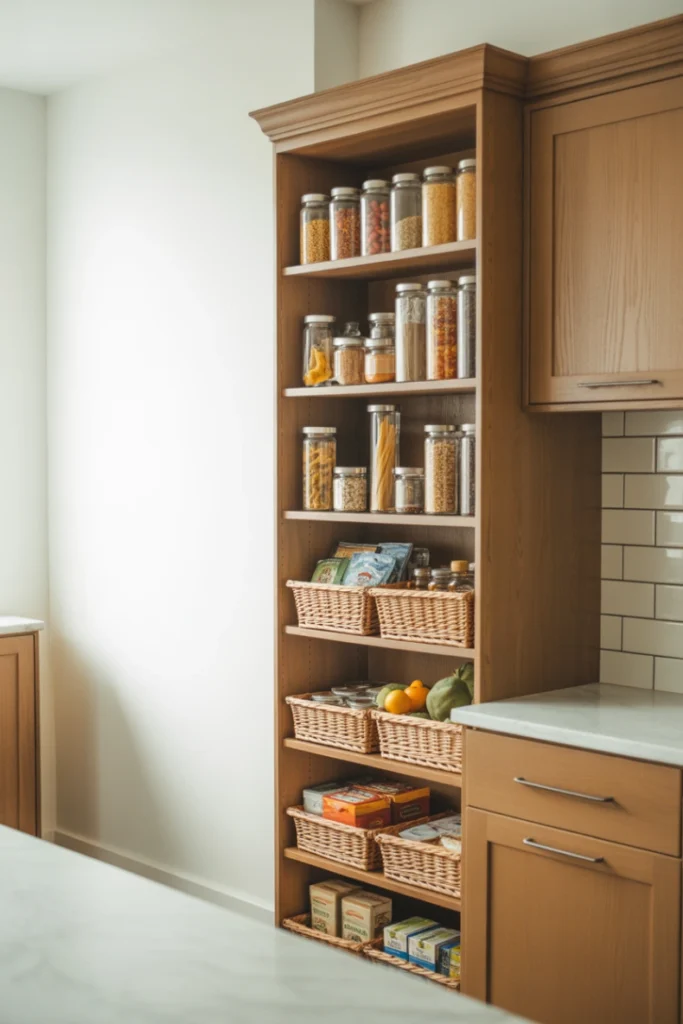
Freestanding pantry cabinets are the best pantry furniture ideas for kitchens without built-in pantry space. A standalone unit can sit against a wall, fill an unused corner, or flank the refrigerator, adding serious storage without any renovation. Common sizes run 30 to 36 inches wide, 72 to 84 inches tall, and 16 to 20 inches deep, which fits most kitchens without crowding the walkway.
When shopping, check three things: adjustable shelves, a sturdy back panel, and doors that close flush. Adjustable shelves let you reconfigure the interior as your needs change, while a solid back keeps the cabinet rigid when it is fully loaded. Style options range from painted shaker cabinets that match a farmhouse kitchen to slim metal-and-glass units for a modern look. Because the piece is not fixed to the wall, it is also a practical choice for renters. Anchor it to the wall with an anti-tip strap for safety, especially in homes with small children, and it will serve you for years.
4. Open Pantry Shelving Systems

Open shelving turns your pantry into a display you can actually use. With no doors in the way, you see every item at a glance, which makes meal planning and grocery lists faster and more accurate. Wood shelves 12 inches deep work well for most dry goods, while 10-inch shelves suit spice jars and small cans. Space the shelves 12 to 15 inches apart so tall boxes fit without wasted air above short jars.
The trick to keeping open shelves tidy is consistency. Decant flour, sugar, rice, and pasta into matching glass jars or clear containers, and label each one at eye level so anyone in the family can find things. Use woven baskets on the lower shelves for snacks and bread, and keep a small step stool nearby for the top row. Open shelving also invites a little decoration: a row of wooden cutting boards, a ceramic crock for utensils, or a trailing plant on the top shelf softens the look. Just keep the decor light so it never eats into real storage space.
5. Built-In Pantry Furniture
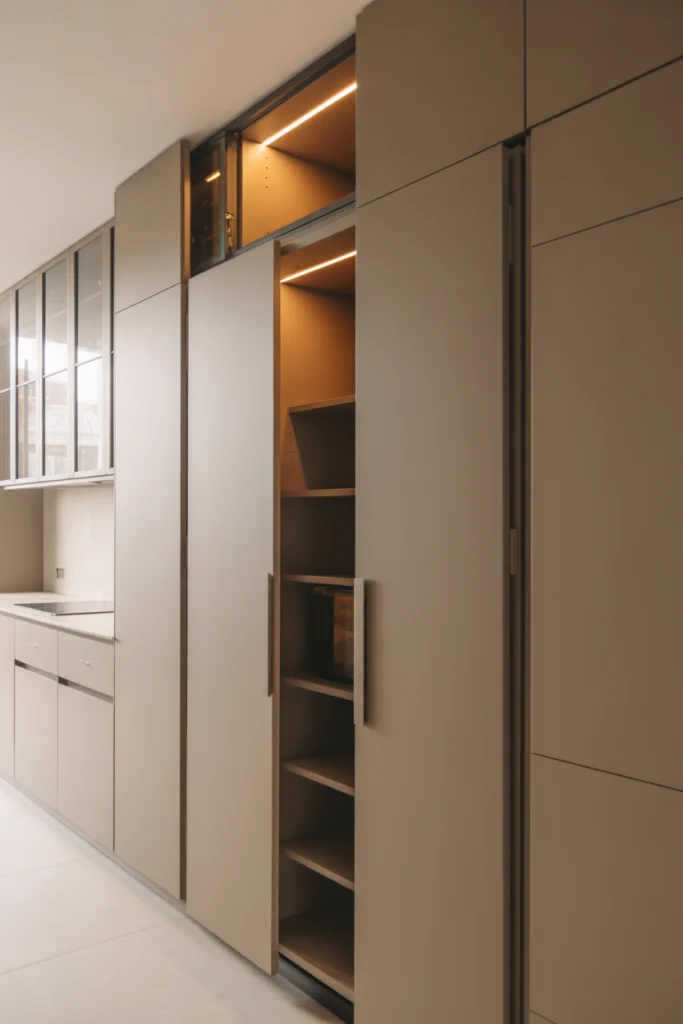
Built-in pantry furniture creates a seamless, custom look within the kitchen. Because it is measured and made for your exact space, a built-in uses every inch, including the awkward gaps around pipes, corners, and door frames that standard cabinets leave empty. A typical built-in run includes a mix of open shelves, deep drawers, pull-out trays, and a tall bay for brooms or a vacuum, all behind doors that match your kitchen cabinetry.
Plan the interior around how you cook. Put baking supplies together in one zone, breakfast items in another, and snacks at kid height so children can help themselves without climbing. Include at least one 18-inch deep drawer for heavy items like flour sacks and canned goods, since drawers carry weight better than shelves and keep everything visible. If you are comparing built-ins with standalone pieces, our pantry cabinet ideas show how different cabinet styles fit different kitchen sizes. Built-ins cost more upfront, but they add lasting value to the home and end the daily shuffle of items that never quite fit anywhere.
6. Corner Pantry Cabinets
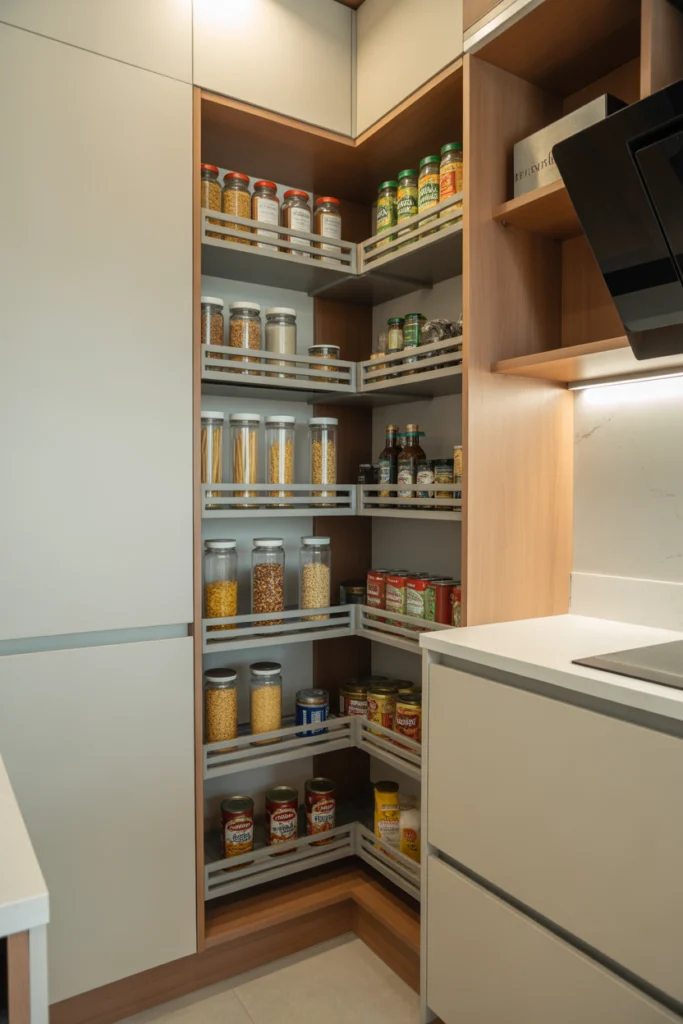
Corners are the most wasted space in most kitchens, and corner pantry cabinets are the fix. A corner unit turns a dead 90-degree angle into usable storage, often adding 6 to 10 cubic feet without expanding the kitchen footprint. The most useful designs are L-shaped cabinets with a rotating lazy Susan, a pull-out kidney-shaped shelf, or angled shelves that bring the back of the corner forward to you.
For a small kitchen, a 36-inch corner cabinet with two rotating trays works well for canned goods, oils, and sauces. In a larger pantry, a walk-in corner with U-shaped shelving gives you three walls of storage in a compact footprint. Keep the corner for bulky, less-used items like large pots, bulk packs, and small appliances, and save the easy-to-reach straight runs for daily essentials. The key is to choose hardware that moves smoothly under load, so test the rotation with a full tray before you commit.
7. Walk-In Pantry Shelving Furniture
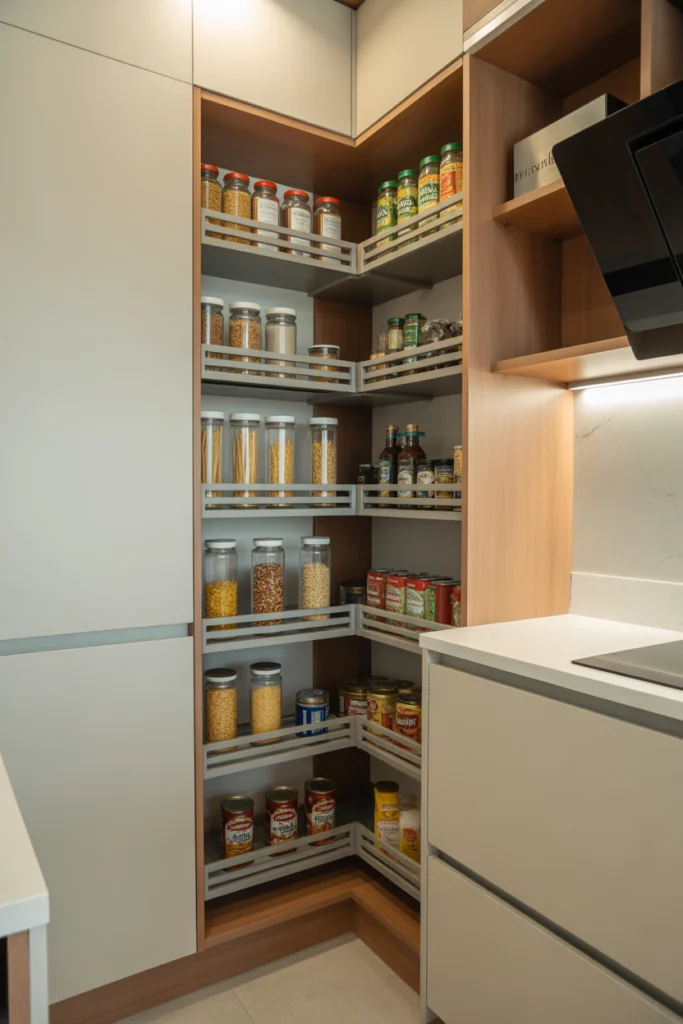
A walk-in pantry deserves furniture planned like a small room, not a big closet. Start with sturdy shelving along two or three walls, 12 to 16 inches deep, with the bottom shelf raised 6 inches off the floor for easy cleaning. Create clear zones: one wall for dry goods, one for canned and bottled items, and a third for appliances and bulk storage. Leave a 36-inch clear path down the middle so two people can pass without bumping elbows.
Adjustable shelf brackets are worth the small extra cost, because your storage needs will change with the seasons and with your family. Add a narrow countertop along one wall at 36 inches high for sorting groceries and small appliance use, and a row of hooks on the door for aprons and reusable bags. If you are starting from scratch, our walk-in pantry design ideas cover layouts for tight and generous spaces alike. Choose materials that wipe clean easily, such as painted wood or melamine, and add a motion-sensor light so the pantry is bright the moment the door opens.
8. Pantry Drawers for Easy Sorting
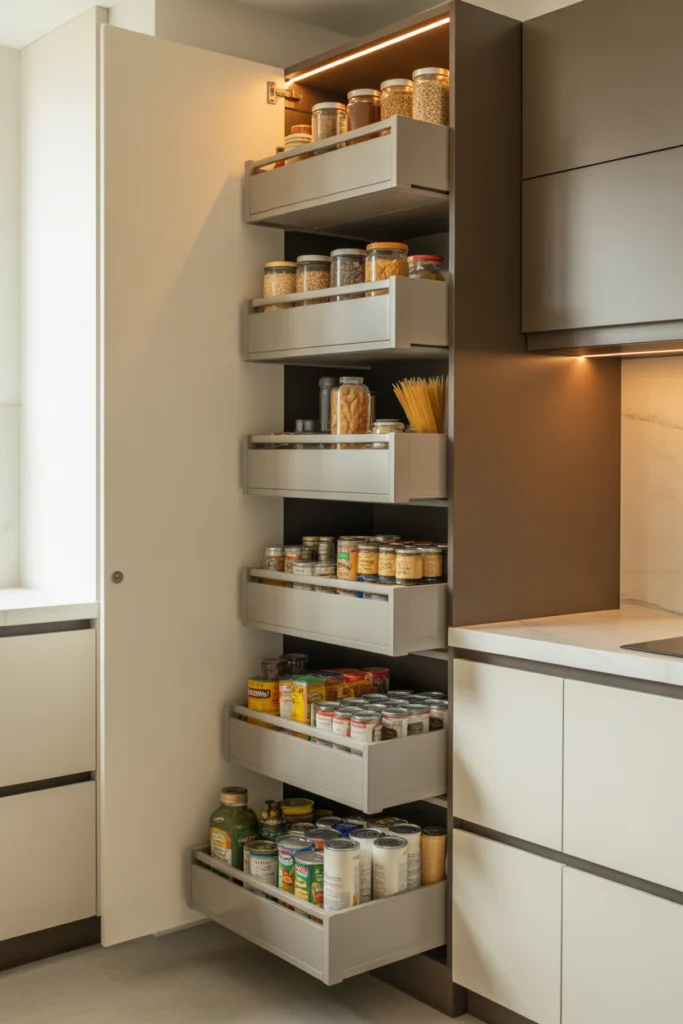
Drawers change how a pantry feels to use. Instead of reaching into a dark shelf and guessing what is behind the front row, you pull a drawer out and see everything at once. Deep drawers, 8 to 10 inches tall, are ideal for snacks, baking supplies, and packaged foods, while shallow 4-inch drawers suit spice packets, tea bags, and small jars. Full-extension, soft-close slides rated for 100 pounds keep even a fully loaded drawer gliding smoothly.
Sort by category and label the drawer fronts so the system survives busy weeks. One drawer for breakfast, one for baking, one for snacks, and one for lunchbox supplies covers most families. Add drawer dividers or small bins inside to stop items sliding around, and keep a printed list of what belongs where taped inside the door until the habit sticks. Drawers also work beautifully in lower cabinets that are hard to use as shelves, turning a dark base cabinet into the most-used storage in the kitchen. For the full system that ties drawers, shelves, and bins together, see our pantry organization ideas.
9. Modular Pantry Furniture Systems
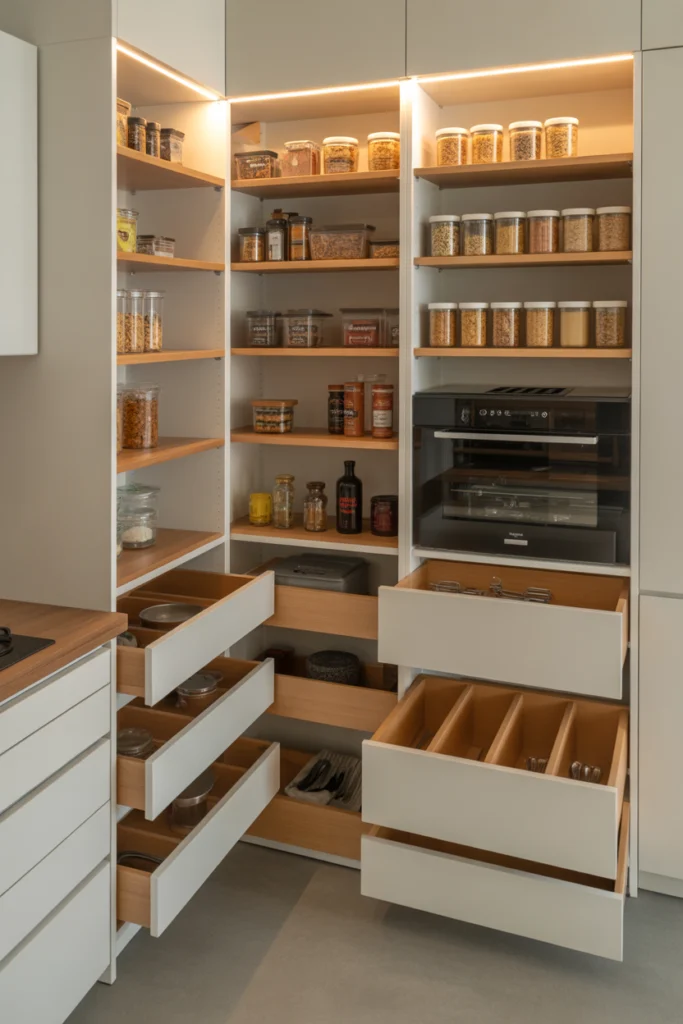
Modular pantry furniture systems are built to change with you. Instead of fixed shelves, you get a set of uprights, brackets, shelves, drawers, and baskets that you can rearrange whenever your storage needs shift. A growing family can add a snack shelf this year and a baking station next year, all on the same wall system. Most modular systems use vertical rails mounted to wall studs, with brackets that click in at any height.
Start with a basic kit sized to your wall, then add components as you learn what you actually need. A good starter setup is three shelves, one drawer unit, and two wire baskets per 36-inch-wide bay. Choose metal or melamine components for durability, and measure twice before mounting the rails so everything stays level. Modular systems suit renters too, since many versions are freestanding or use minimal wall fixings. Their real strength is flexibility: when your pantry outgrows its current layout, you move parts around instead of rebuilding the whole thing.
10. Pantry Furniture with Glass Doors
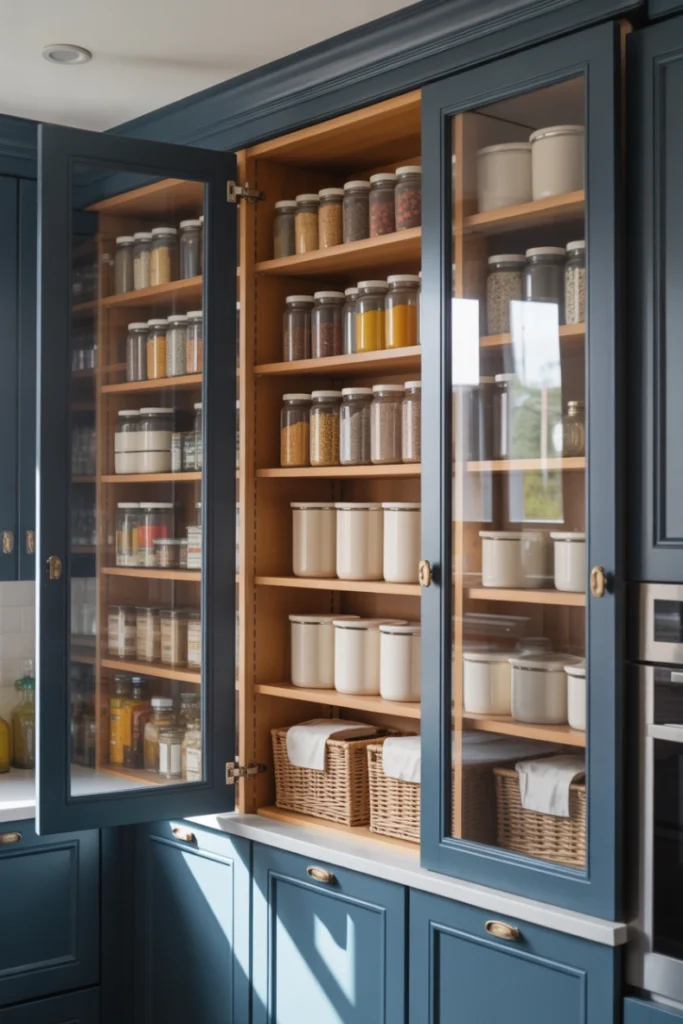
Glass-door pantry cabinets bring light and order to the kitchen. Clear glass lets you see exactly what is inside without opening the door, which speeds up cooking and stops duplicate buying. Frosted or reeded glass gives the same tidy look while hiding the inevitable clutter behind it, making it the better choice if your pantry is not always photo-ready. A standard glass-front cabinet is 24 to 36 inches wide, with shelves spaced 12 to 14 inches apart.
To make glass doors look their best, keep the contents consistent. Matching jars, uniform labels, and a limited color palette turn the cabinet into a feature instead of a mess. Group items by color or category, leave a little breathing room on each shelf, and avoid stacking boxes in uneven piles. Glass doors work especially well in kitchens where the pantry is visible from the living area, because they add depth and reflect light into the room. Wipe the glass weekly with a microfiber cloth, and the cabinet will keep looking intentional rather than improvised.
11. Sliding Pantry Cabinets

Sliding pantry cabinets are tall, narrow pull-out units that fit into gaps as slim as 6 to 12 inches wide, making them perfect for the awkward space beside the fridge or between the oven and the wall. A 6-inch-wide unit holds spice jars and oil bottles in two rows, while a 12-inch version handles canned goods, cereal boxes, and cleaning supplies. Full-extension slides let the whole unit roll out like a drawer, so nothing hides at the back.
Build or buy with weight in mind. A tall sliding unit loaded with cans can weigh 60 pounds or more, so choose heavy-duty slides rated for at least 100 pounds and a solid wood or metal frame. Add a soft-close mechanism to stop the unit slamming shut, and fit a small lip on each shelf so bottles do not slide off when the unit moves. Sliding cabinets are one of the smartest upgrades for narrow kitchens, because they turn a filler strip of dead space into some of the most-used storage in the room.
12. Pantry Furniture with Integrated Bins
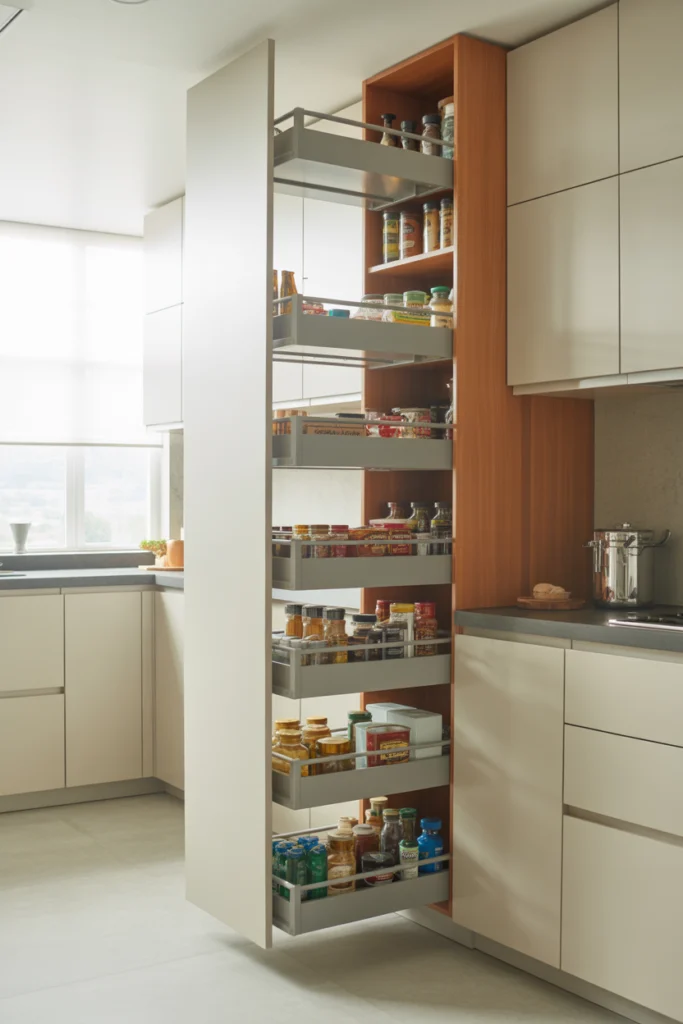
Integrated bins replace bulky packaging with clean, visible storage. Built-in bins with clear fronts or lids hold flour, sugar, rice, oats, pet food, and snacks in bulk, so you can see at a glance when supplies run low. A 10-quart bin fits about 12 pounds of flour, while a 20-quart bin holds a full 25-pound bag of rice. Tilt-out bins are great for potatoes and onions, since they keep produce ventilated and easy to grab.
Mount bins at waist height for the items you use daily, and keep less-used bulk bins lower down. Label each bin with its contents and the date you filled it, and wash the bins every few months to keep them fresh. Clear bins also cut waste: when you can see you still have half a bag of pasta, you will not buy another one. For dry goods that you buy in large quantities, integrated bins are the single most practical upgrade you can make, and they pair well with pull-out drawers for smaller items.
13. Pantry Furniture for Small Kitchens
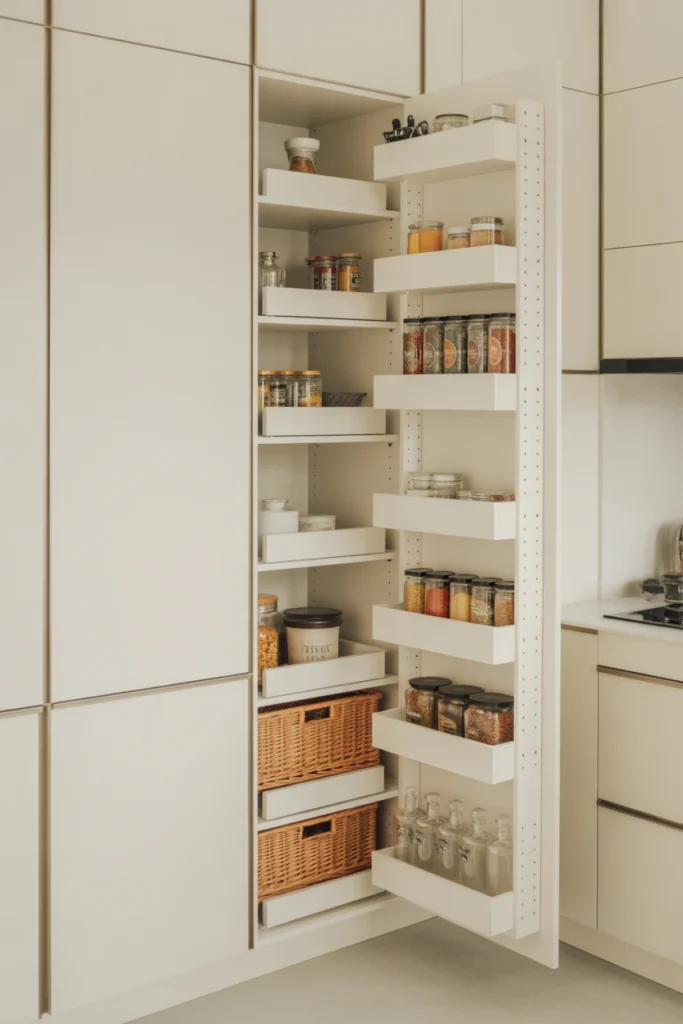
Small kitchens reward furniture that does more with less. Slim cabinets 12 inches deep, vertical shelving that runs to the ceiling, and narrow pull-out units can add serious storage without eating floor space. A 24-inch-wide tall cabinet with six shelves holds as much as a whole wall of shallow shelving, and it fits in a corner that would otherwise stay empty. Door-mounted racks add another layer, holding spices, foil, and small jars on space that is normally wasted.
The rule for small pantries is to store up, not out. Keep everyday items between knee and eye level, seasonal items up high, and heavy items down low. Use uniform containers so shelves look calm, and label everything so the system works even when you are in a hurry. If your whole kitchen is tight, our small kitchen ideas show how to stretch every inch of a compact space. Measure your doorways and walkways before ordering anything, and leave at least 36 inches of clear floor in front of the pantry so the doors open fully.
14. Pantry Furniture with Adjustable Shelves
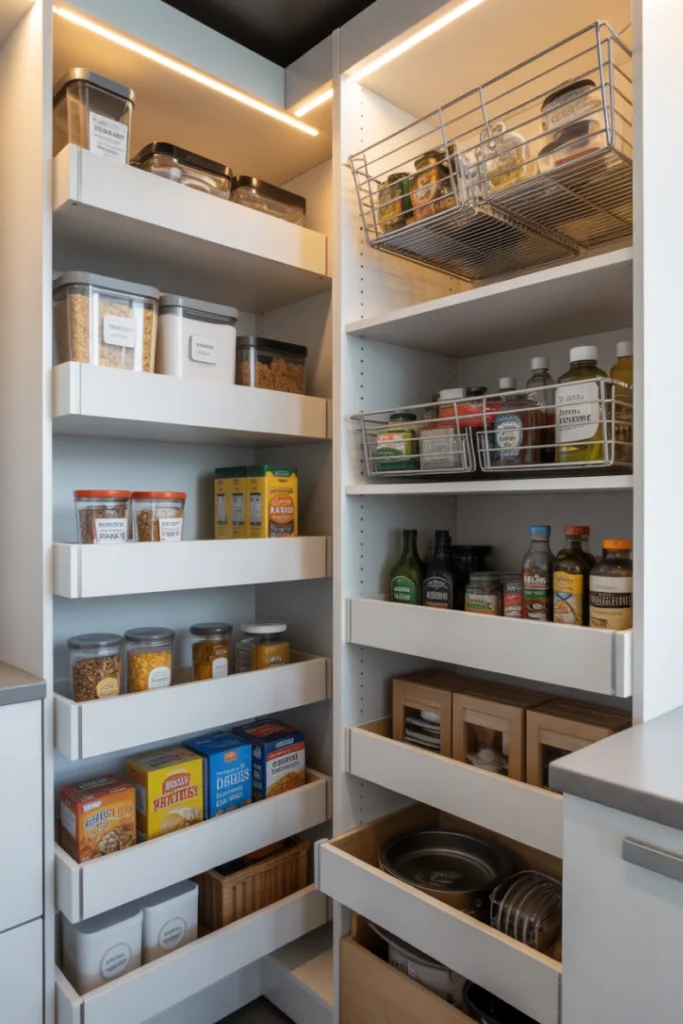
Adjustable shelves are the most versatile pantry furniture you can buy, because they adapt when your storage needs change. Shelf-pin holes drilled every inch or two let you move a shelf in minutes, raising it for tall cereal boxes and lowering it for short spice jars. Most systems support shelves 12 to 16 inches deep, with a weight limit of 40 to 60 pounds per shelf when the pins are set correctly.
When you set up adjustable shelves, plan for your tallest items first. Give one bay an 18-inch gap for the stand mixer and blender, then set the rest at 12 to 14 inches for cans and boxes. Keep a few spare shelf pins in a labeled bag taped inside the door so you can reconfigure without hunting for hardware. Adjustable shelving is especially useful in households where the pantry serves more than one purpose, such as storing cleaning supplies alongside food, because you can rezone the space as needs shift. It is a small detail that pays off every time your shopping habits change.
15. Pantry Furniture with Pull-Out Baskets
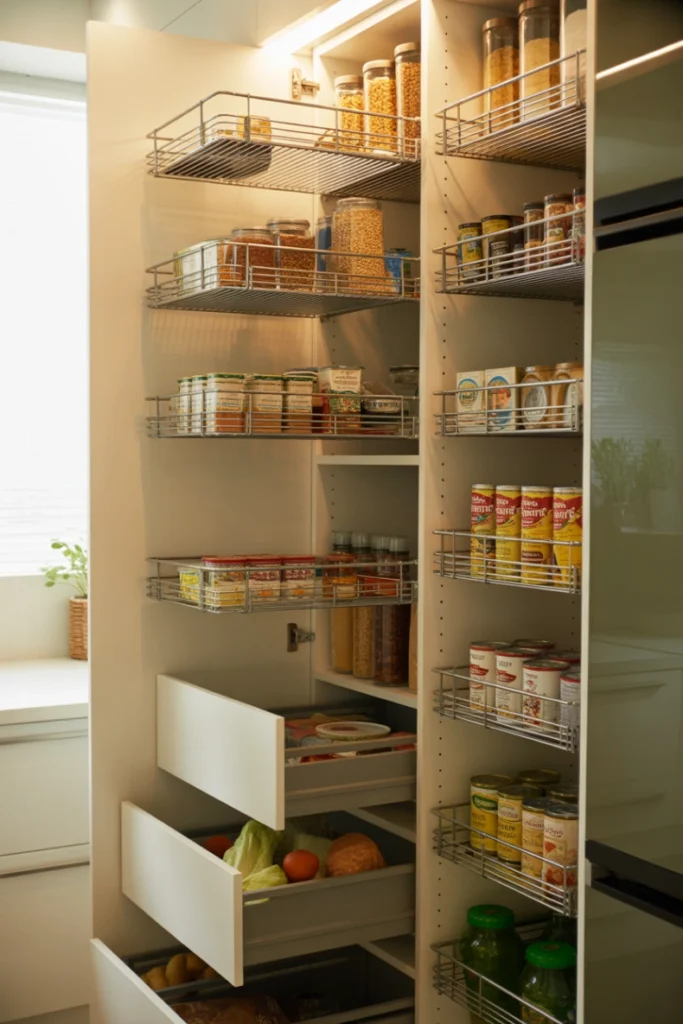
Pull-out baskets combine the airflow of open storage with the easy access of drawers. Wire baskets let air circulate around produce like onions, potatoes, and garlic, which keeps them fresh longer, while woven baskets add warmth and hide clutter. Standard sizes run 12 to 24 inches wide and 14 to 18 inches deep, fitting most cabinet openings, and full-extension slides make the whole basket roll out for easy loading and unloading.
Use baskets for the items that do not fit neatly on shelves: snack bags, bread, root vegetables, and kids lunch supplies. Line wire baskets with a washable liner so small items do not fall through, and label the front of each basket so everyone knows where things belong. Baskets also work well in open shelving, where they corral loose items into tidy groups. Clean them every few weeks by shaking out crumbs and wiping the wires, and they will stay fresh and functional for years.
16. Pantry Furniture with Counter Space
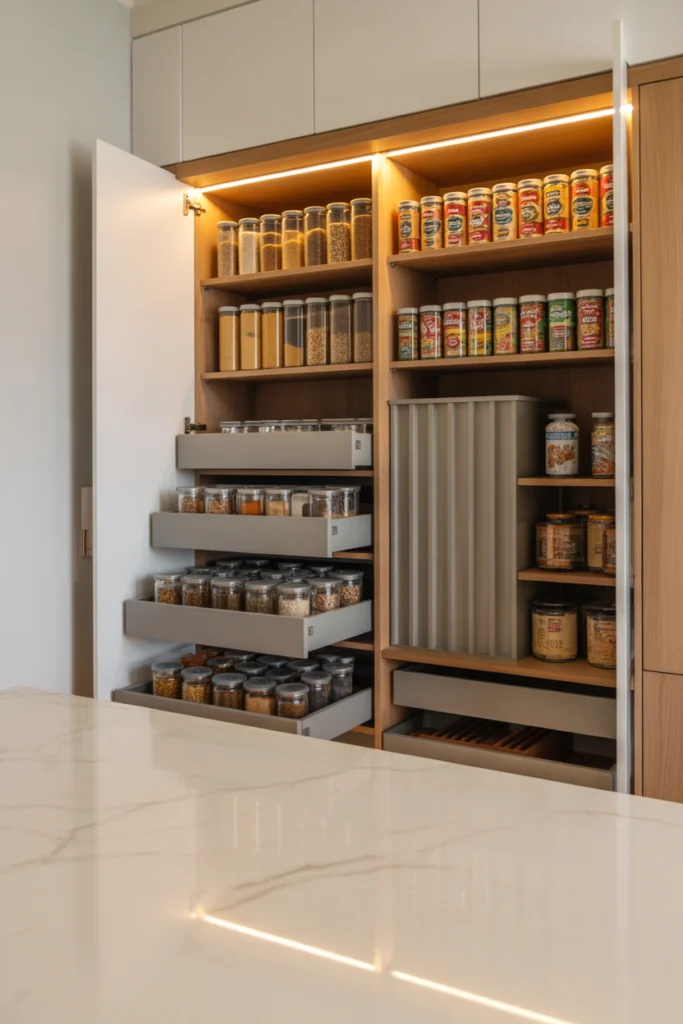
A small countertop inside the pantry turns storage into a workspace. A 24-inch-deep counter at standard 36-inch height gives you room to sort groceries, fill lunchboxes, and use small appliances like a toaster or coffee maker without crowding the kitchen counters. In a walk-in pantry, a counter along one wall with shelves above and drawers below creates a complete prep station.
Choose a durable, easy-clean surface such as butcher block, quartz, or laminate, and seal wood counters regularly to protect against spills. Add a couple of outlets above the counter so appliances can stay plugged in, and mount under-shelf lighting to keep the work surface bright. Keep the counter clear by giving everything a home elsewhere: appliances live in a cabinet or on a shelf, and only the tools you use daily stay out. A pantry counter is a small luxury that changes how the whole kitchen flows, because the messy jobs happen out of sight.
17. Hidden Pantry Furniture
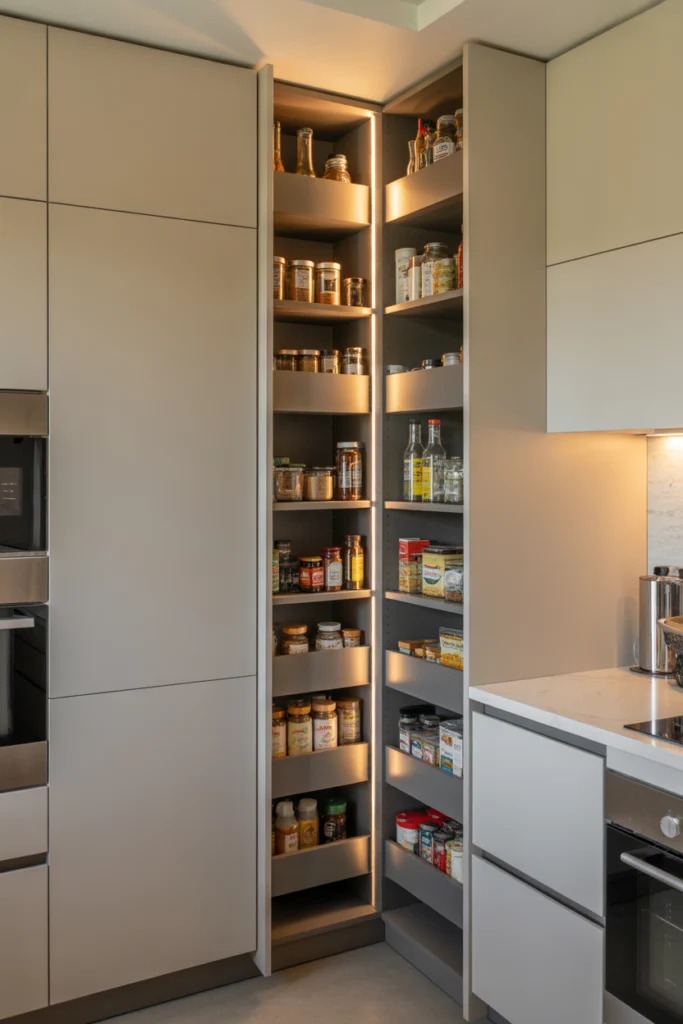
Hidden pantry furniture keeps storage out of sight and the kitchen looking calm. A pantry concealed behind a cabinet door, a flush panel, or a sliding barn door gives you full storage without a single visual clue. Popular designs include a tall cabinet that looks like a regular cupboard, a pantry door that matches the wall paneling, and a walk-in pantry hidden behind a bookshelf-style door.
The key to a good hidden pantry is hardware. Soft-close hinges, magnetic catches, and flush pulls keep the door aligned and easy to open, while a motion-sensor light inside means you never fumble in the dark. Plan the interior generously, since a hidden pantry often holds more than a visible one, and keep a simple zone system so you can find things quickly even without seeing them from the outside. Hidden pantries suit minimalist kitchens and open-plan homes, where a tidy, unbroken wall matters more than displaying the pantry itself.
18. Pantry Furniture with Labeling Systems
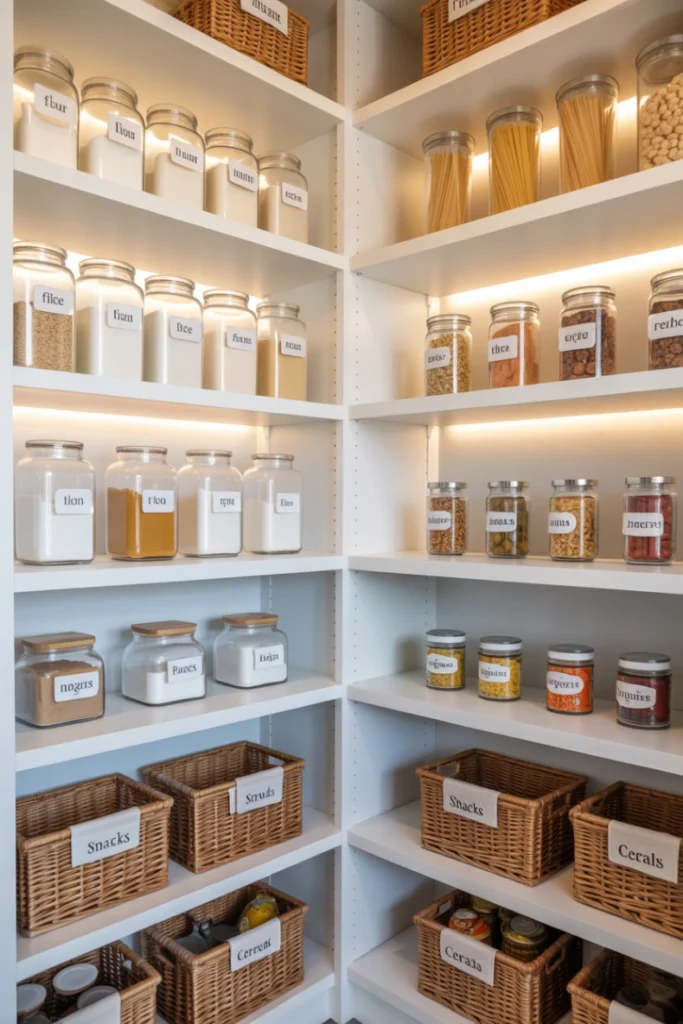
A labeling system is the cheapest upgrade with the biggest payoff. Clearly labeled shelves, bins, drawers, and jars mean anyone in the household can find what they need and put it back in the right place. Chalkboard labels suit a farmhouse look, printed labels fit a modern kitchen, and a label maker gives the cleanest, most durable result. Label the front of every container at eye level, and include the date on bulk items so you can rotate stock.
Build your labels around categories rather than individual products. A bin labeled “Baking” is more useful than one labeled “Flour,” because it holds flour, sugar, and baking powder together. Keep the wording short and consistent across the pantry, and update labels whenever you change a container. For families, labels also teach children where things belong, which keeps the pantry organized without constant reminders. Combined with uniform containers, a good labeling system makes even a small pantry feel calm and under control.
19. Pantry Furniture with Integrated Lighting
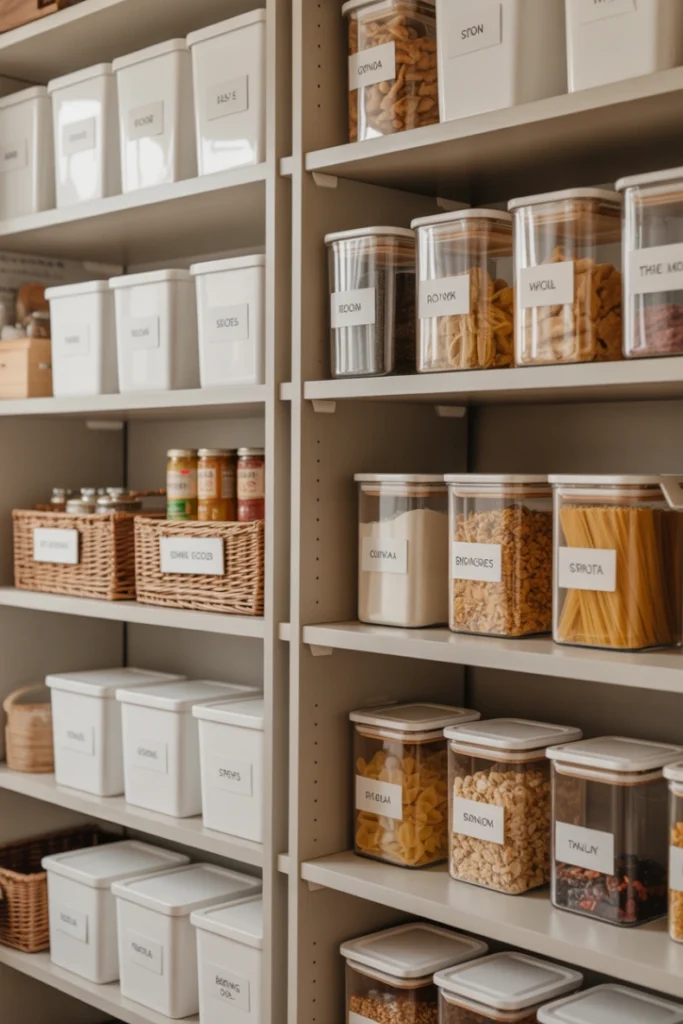
Integrated lighting makes a pantry easier and safer to use. LED strip lights mounted under each shelf eliminate shadows, so you can read labels without pulling items out. Warm white LEDs at 2700K to 3000K give food a natural look, while a motion sensor or door switch turns the lights on automatically when you open the pantry. Battery-powered strips work for a quick upgrade, but hardwired LED strips with a driver are brighter and never need charging.
Plan the lighting before you finish the shelves. Run a strip along the front edge of each shelf, recessed slightly so the light washes down the shelf below instead of shining in your eyes. Add a brighter light over any counter or work surface, and a small puck light in the darkest corner. Good lighting also shows off the pantry, making glass jars and neat rows look their best. It is a modest investment that improves every visit to the pantry, day or night.
20. Multi-Functional Pantry Furniture
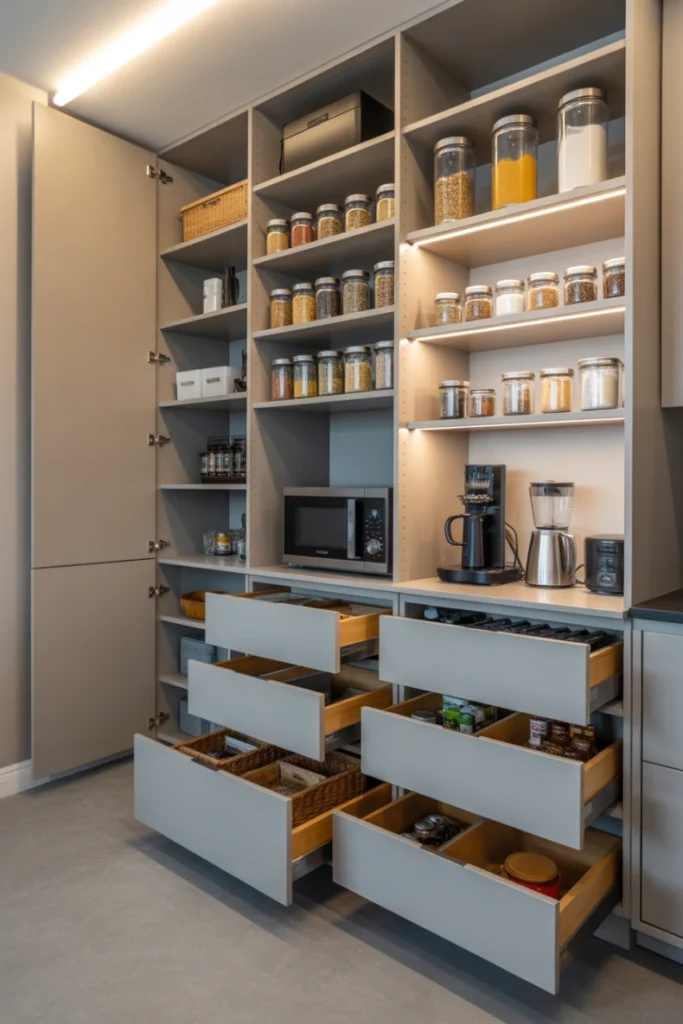
Multi-functional pantry furniture does two or three jobs in the space of one piece. A tall cabinet with a fold-down counter doubles as a prep station, a pantry unit with a built-in wine rack stores bottles alongside dry goods, and a bench with storage underneath holds both shoes and snacks in a mudroom pantry. The most useful designs combine closed storage for clutter with open shelves for display, plus a work surface or appliance garage for daily tasks.
When choosing multi-functional furniture, list the jobs you need it to do and check that each one works properly. A fold-down counter must lock securely and hold at least 20 pounds, an appliance garage needs an outlet and ventilation, and a pull-out ironing board should glide smoothly and lock in place. Measure carefully so the piece fits your space without blocking doorways or walkways. In small homes, multi-functional pantry furniture is often the difference between a pantry that works and one that constantly frustrates, because every inch earns its keep.
Final Thoughts
These 20 pantry furniture ideas show how smart design choices can transform pantry spaces into organized, efficient, and visually appealing storage areas. Whether your pantry is large or compact, the right furniture improves workflow, reduces clutter, and makes daily kitchen routines easier. Start with the problems that bother you most, such as items lost at the back of deep shelves or a pantry that never stays tidy, and pick the ideas that solve those problems first.
By selecting pantry furniture that balances functionality and style, you create a storage solution that supports both practicality and long-term organization. Measure your space, set a realistic budget, and tackle one zone at a time. A pantry that is easy to use stays organized on its own, and that is the real goal behind every idea in this guide.
Frequently Asked Questions
What is the best pantry furniture for a small kitchen?
For a small kitchen, slim tall cabinets, pull-out shelving, and door-mounted racks work best. A 24-inch-wide floor-to-ceiling cabinet adds a lot of storage without taking much floor space, and pull-out units use narrow gaps that would otherwise stay empty. Keep everyday items between knee and eye level, and use uniform containers so the space looks calm and organized.
How deep should pantry shelves be?
Pantry shelves work best at 12 to 16 inches deep. Twelve-inch shelves keep everything within easy reach and stop items from getting lost at the back, while 16-inch shelves suit bulk items and large containers. Avoid shelves deeper than 18 inches unless you add pull-out trays, because the back rows become hard to see and reach.
Are pull-out pantry shelves worth the cost?
Yes, pull-out shelves are one of the best pantry upgrades for the money. They cost more than fixed shelves, but they make every item visible and reachable, which cuts food waste and saves time. Choose full-extension slides rated for at least 75 pounds, and you will notice the difference every time you cook.
How do I keep an open pantry looking tidy?
Use matching containers and jars, label everything at eye level, and group items by category. Leave a little breathing room on each shelf instead of packing it full, and keep decorative items to a minimum. A quick five-minute tidy once a week is enough to keep an open pantry looking neat.
What materials work best for pantry furniture?
Painted wood, melamine, and metal are the most practical materials for pantry furniture. Painted wood suits traditional kitchens and can be touched up easily, melamine wipes clean and resists moisture, and metal shelving is strong and affordable. Choose materials that are easy to clean and sturdy enough to hold heavy items like canned goods and small appliances.
More Ideas You Will Love
 19 Wood Kitchen Design Ideas with Stylish Looks & Practical Tips
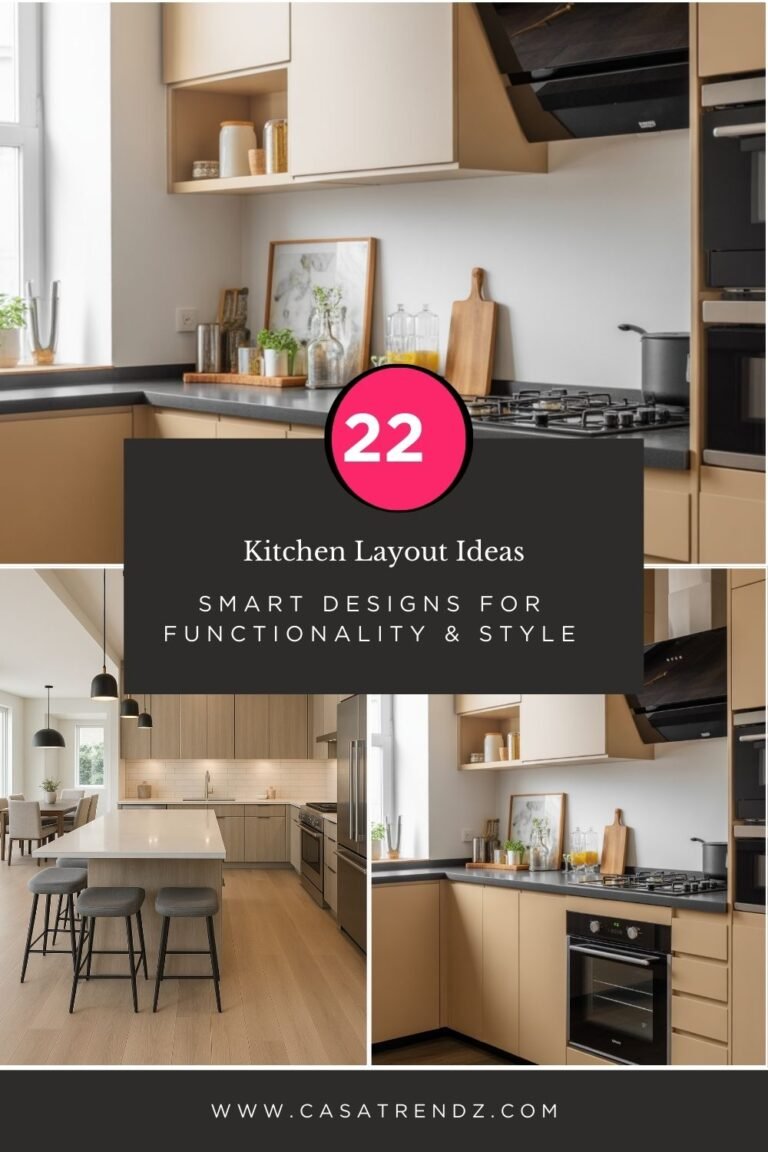 22 Kitchen Layout Ideas – Smart Designs for Functionality & Style
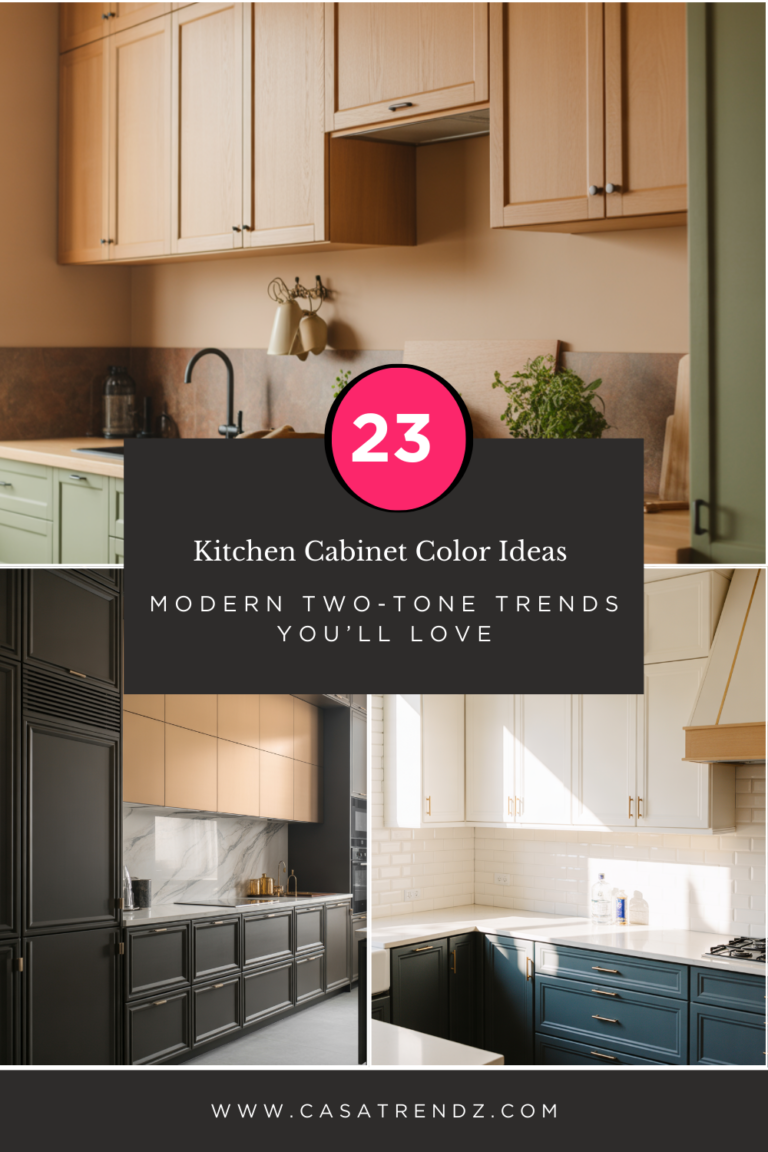 23 Kitchen Cabinet Color Ideas – Modern Two-Tone Trends You’ll Love
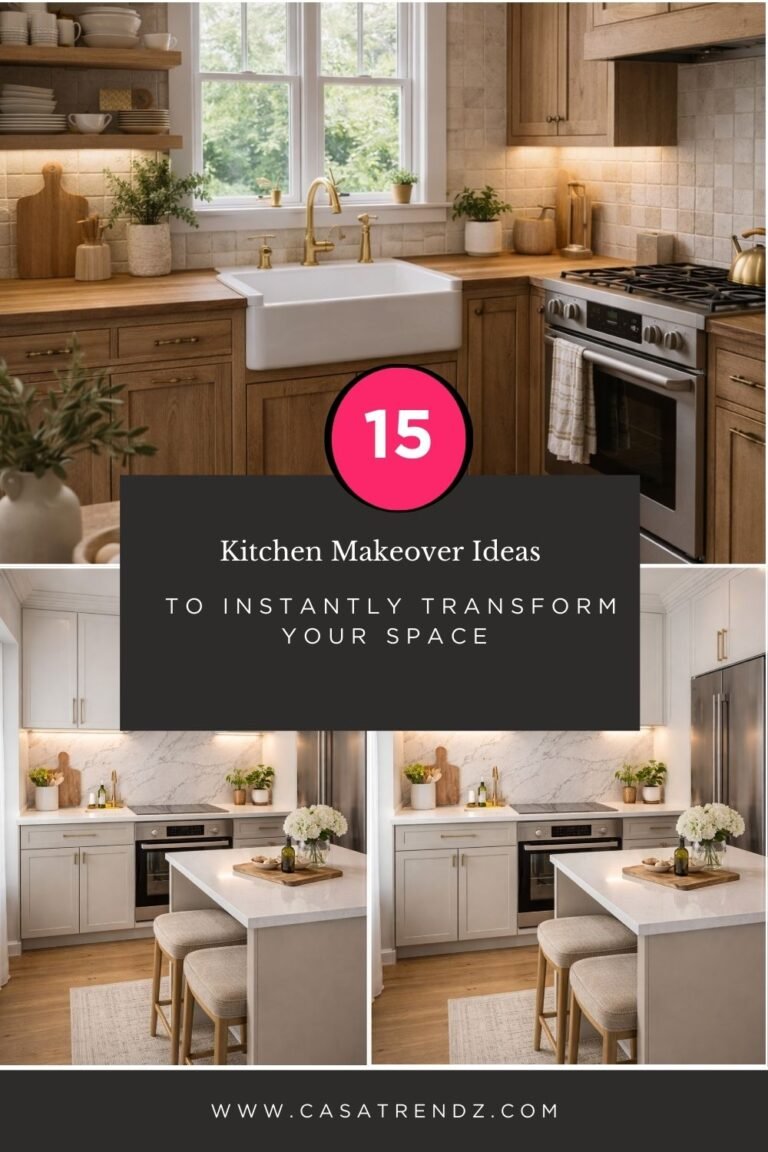 15 Kitchen Makeover Ideas to Instantly Transform Your Space
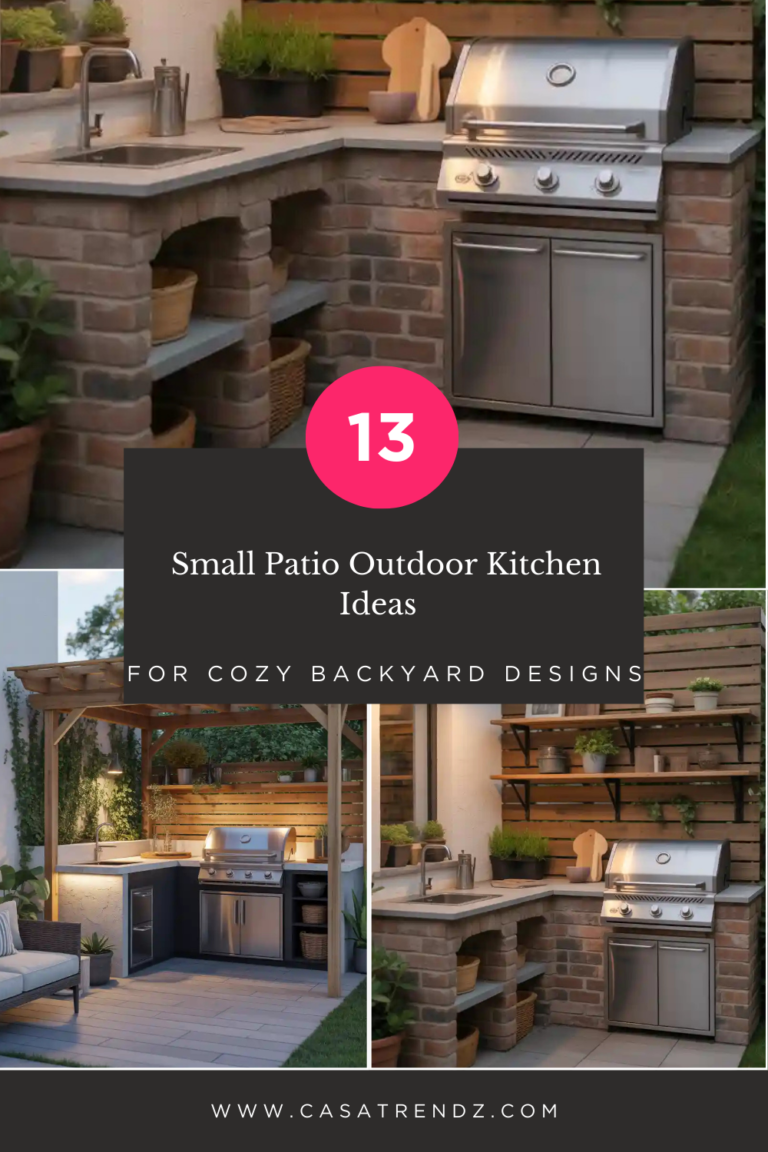 13 Small Patio Outdoor Kitchen Ideas for Cozy Backyard Designs
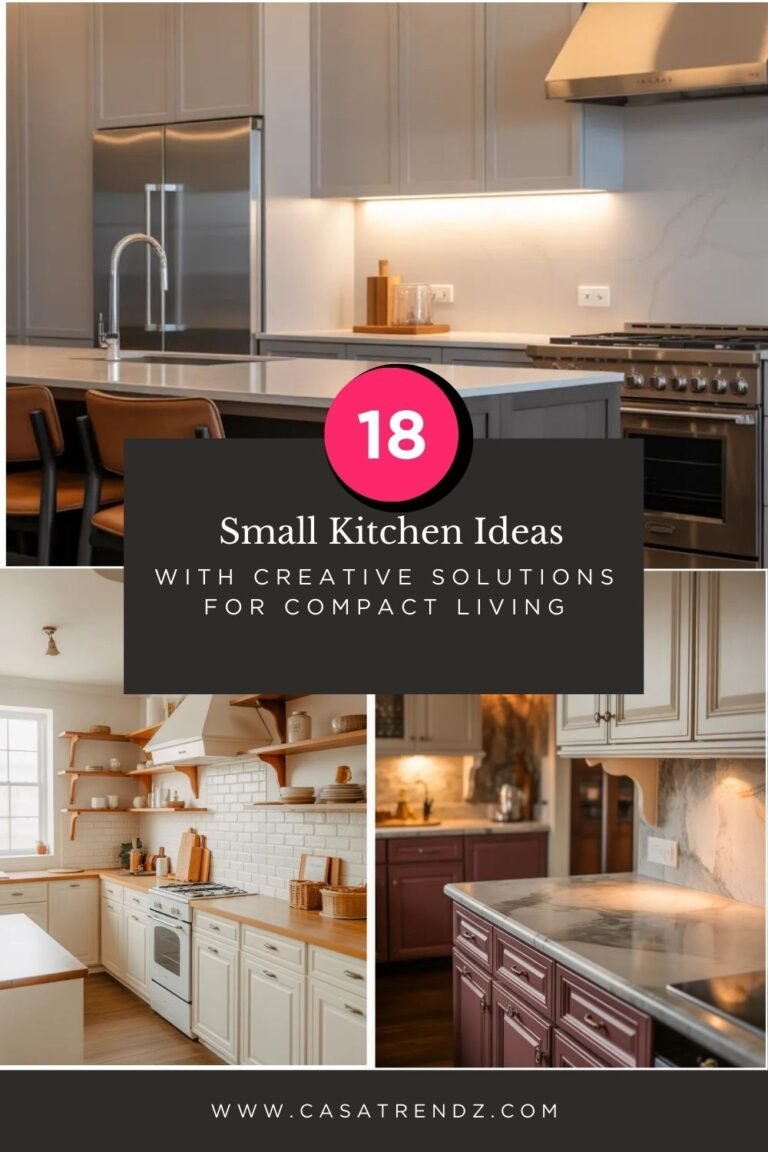 18 Small Kitchen Ideas with Creative Solutions for Compact Living