21 Open Kitchen-Living Room Ideas for 2026 – Modern & Space-Saving Designs
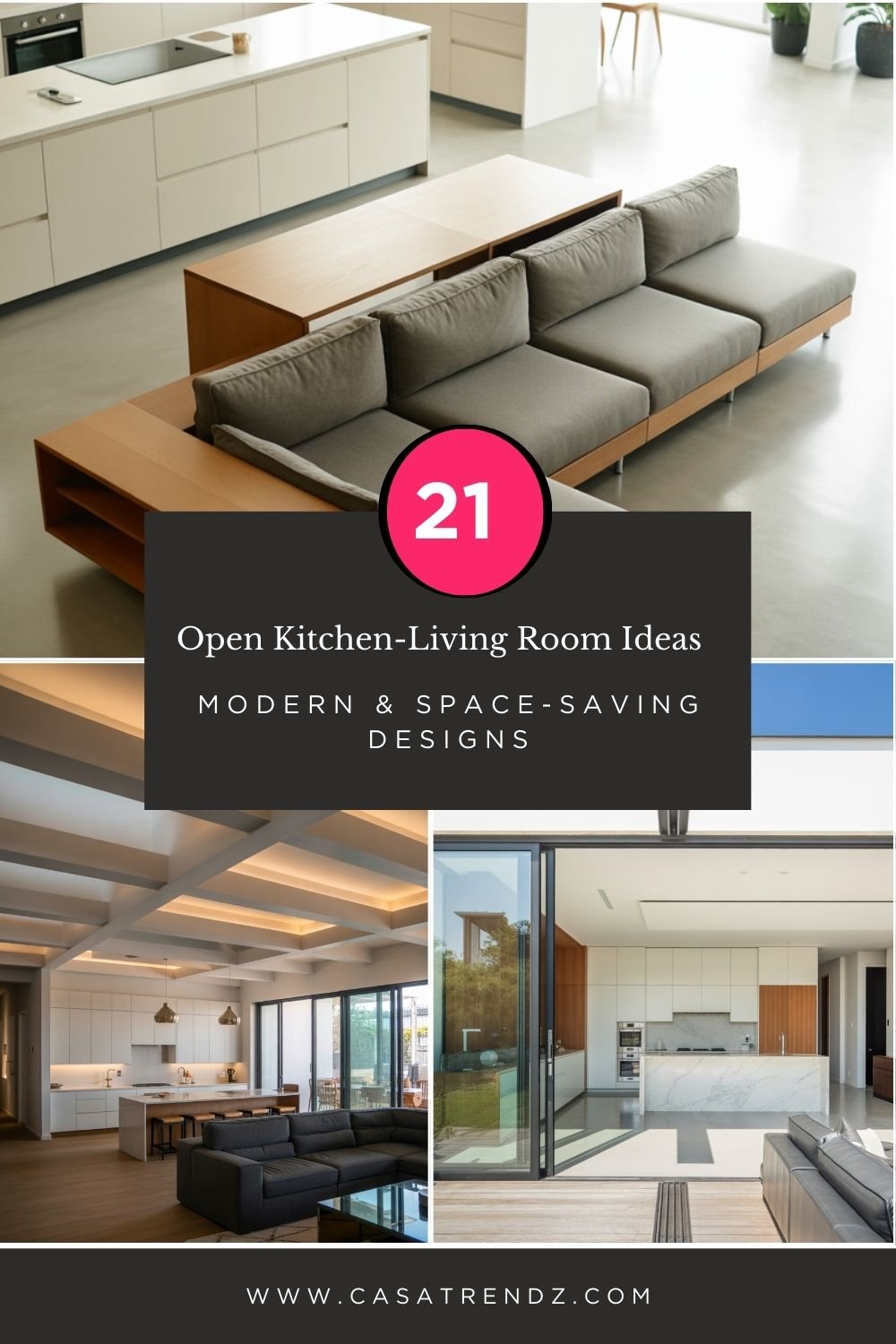
Open-concept living is evolving rapidly, and 2026 interior trends emphasize seamless flow, multifunctional layouts, and elevated comfort. Open kitchen-living room spaces are no longer just about removing walls they are about designing homes that feel connected, bright, and intelligently organized. Whether you have a compact apartment or a large family home, open layouts create an inviting atmosphere while maximizing usability.
Below are 21 open kitchen-living room ideas, each crafted with two detailed paragraphs (around 100 words each), plus an image-generation prompt under every idea. These ideas blend modern aesthetics with clever space-saving solutions, helping you design a beautiful and functional open-concept layout.
1. Unified Color Scheme for Seamless Flow
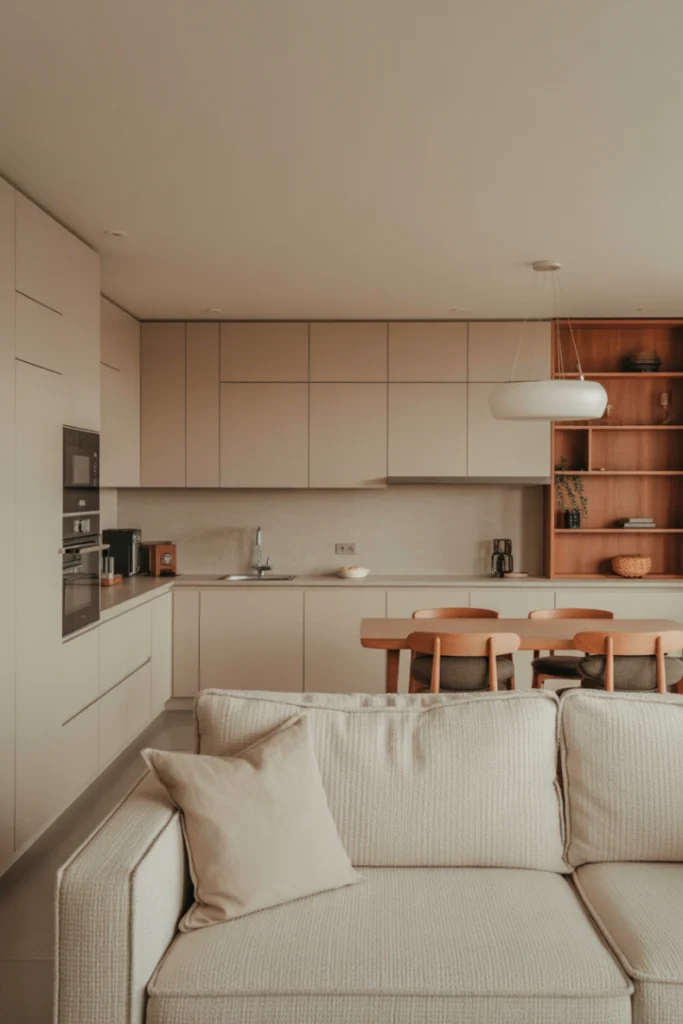
A unified color palette helps visually merge the kitchen and living room, creating cohesion in an open-concept space. Whether you choose soft neutrals, warm earth tones, or bold contemporary hues, a consistent color theme prevents the space from feeling chopped or cluttered. Light colors also help maintain an airy feel, while darker palettes can add elegance when balanced properly. The key is ensuring that cabinetry, furniture, and décor complement each other without matching too closely.
You can enhance this harmony using subtle variations in shade, texture, and material. For example, matte kitchen cabinets paired with a soft fabric sofa create visual depth while keeping the design unified. Add layered lighting and minimal decorative transitions to maintain a cohesive aesthetic. This approach ensures the kitchen and living room blend effortlessly into one inviting and well-balanced space.
2. Kitchen Island as a Divider
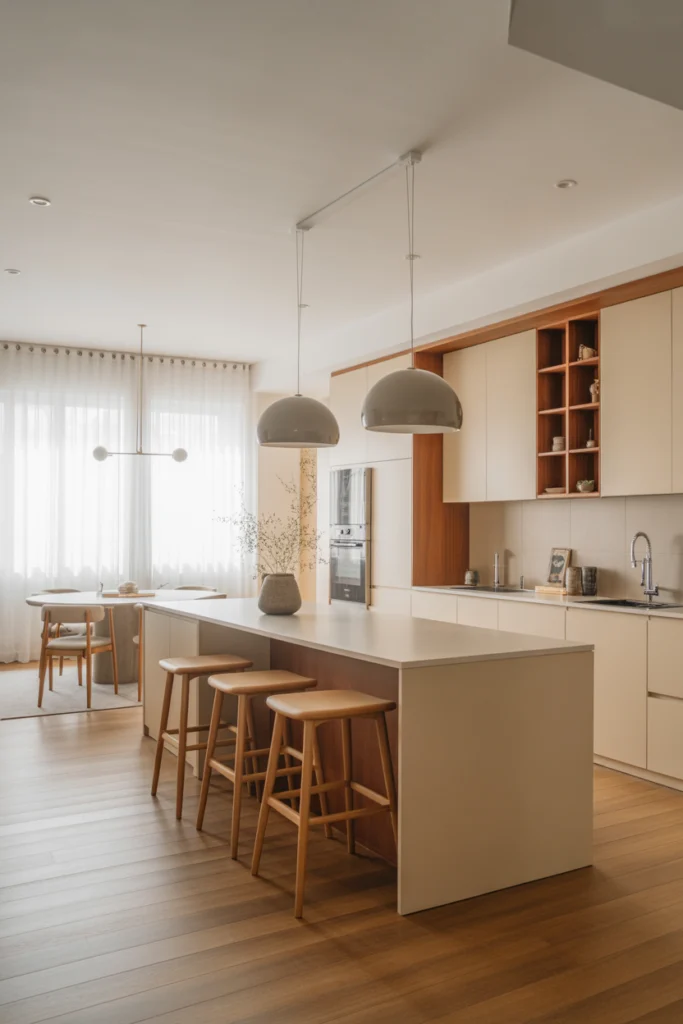
A kitchen island is one of the most effective elements for defining space in an open layout without putting up walls. It visually separates the kitchen from the living room while maintaining an open and airy feel. Islands can serve multiple purposes additional prep space, a breakfast bar, extra storage, or even a dining substitute for smaller homes. The island’s size, shape, and materials should harmonize with both areas to ensure visual continuity.
Many modern homeowners prefer multifunctional islands with built-in sinks, drawers, and seating to maximize usability. Adding pendant lights above the island creates a focal point that naturally anchors the layout. The island can also reflect the aesthetic tone of the living area by matching its color palette or contrasting intentionally for bold style. It’s a functional yet stylish divider ideal for contemporary open-concept living.
3. Open Shelving to Keep the Space Light
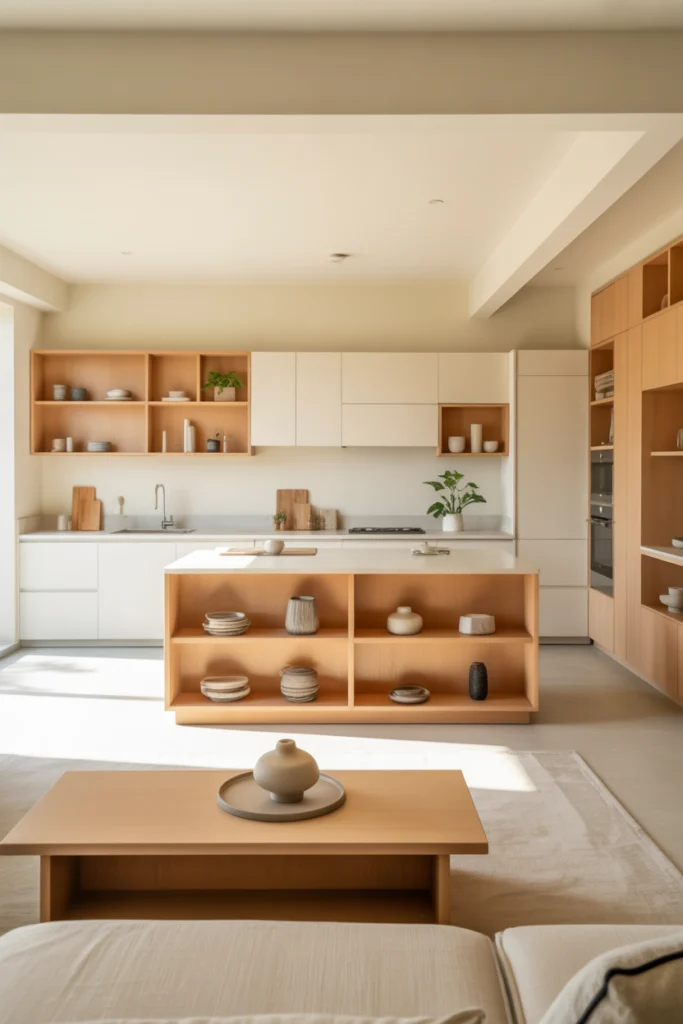
Open shelving enhances the flow between the kitchen and living room by avoiding the visual heaviness of large cabinets. It allows the eye to move freely across the space, making open layouts feel even larger. Shelves can display everyday items like dishes and glasses or decorative accents that contribute to the overall theme. This approach supports a modern, airy aesthetic and encourages organized living.
Using uniform dishware and carefully selected décor helps maintain a clean look. Natural materials like wood add warmth and soften the modern edges of an open-concept design. You can also incorporate greenery to bring freshness and continuity between the two zones. Open shelving is especially useful in compact homes where visual space is essential.
4. Matching Flooring for a Continuous Look
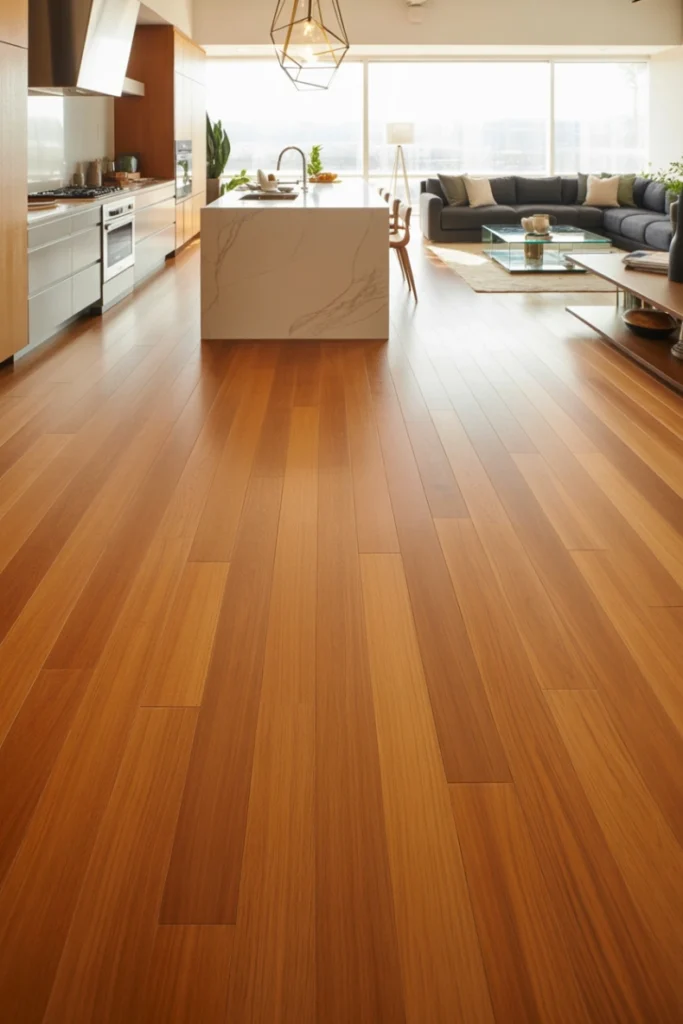
Using the same flooring throughout the kitchen and living room is one of the simplest ways to create a unified open-concept layout. When floors transition seamlessly, the space appears larger, more connected, and visually balanced. Materials like engineered wood, vinyl planks, and large-format tiles are popular choices that can handle the wear of kitchen use while maintaining a homely feel in the living area.
Selecting a durable and water-resistant option ensures longevity, especially in homes with kids or pets. A continuous floor also allows furniture placement to feel more fluid, accommodating various arrangements. It eliminates the abrupt shifts that often occur with separate rooms, ultimately enhancing the harmony of the open space.
5. Multi-Functional Furniture for Flexible Living
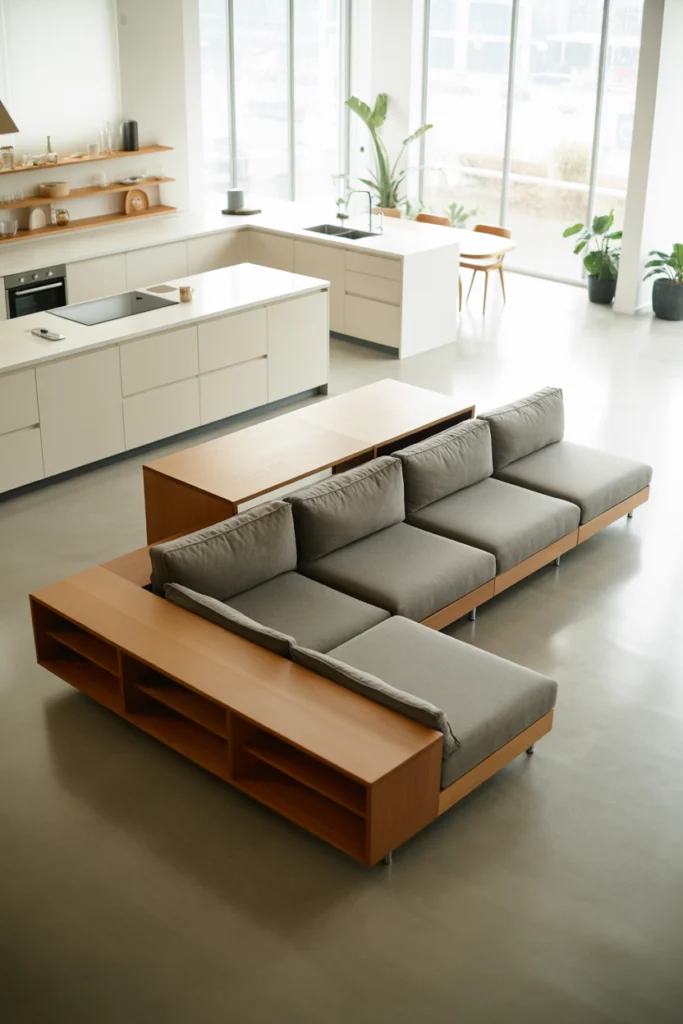
Multi-functional furniture plays a significant role in maximizing open-concept spaces. Pieces like expandable dining tables, modular sofas, and movable kitchen carts adapt to various daily needs. This flexibility is especially helpful in smaller homes where maintaining both comfort and functionality is essential. Furniture that can shift easily allows you to modify the layout depending on the activity.
Convertible pieces, such as ottomans with storage or coffee tables that rise into workspaces, minimize clutter and optimize usability. These additions help maintain a tidy, organized look while allowing the open layout to remain versatile. Choosing designs that complement the kitchen’s style makes the entire area feel cohesive. Function meets style perfectly in an adaptable space.
6. Statement Lighting to Define Each Zone
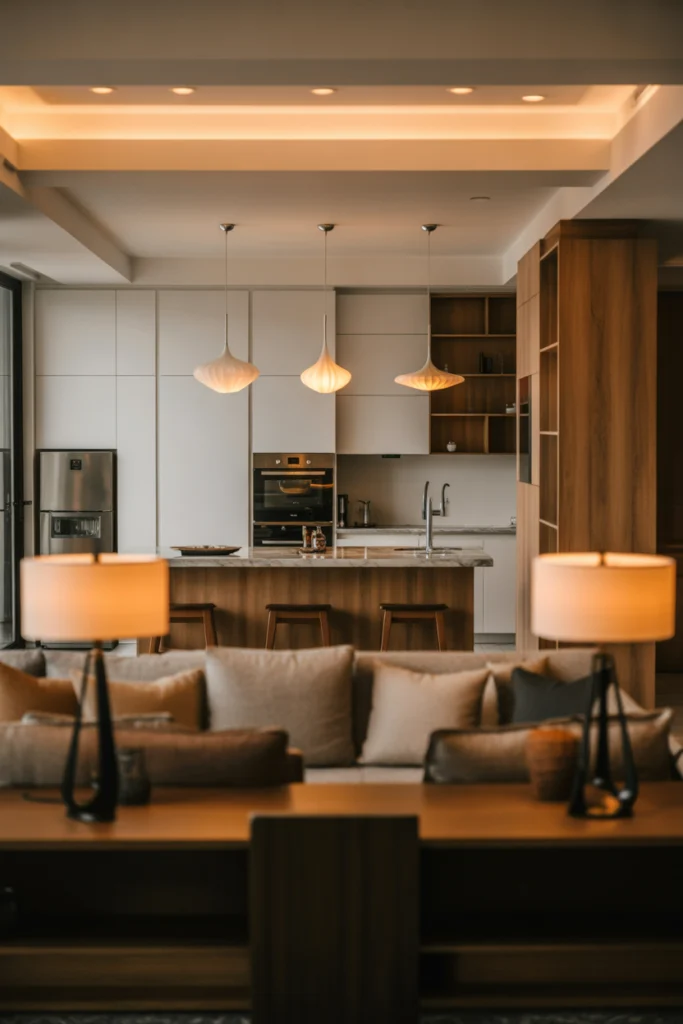
In an open-concept home, lighting acts as a powerful tool to distinguish between the kitchen and living areas. Pendant lights or chandeliers above the island create a defined cooking and prep zone, while floor lamps and soft ambient lighting enhance the comfort of the living room. Using different lighting styles helps maintain purpose without disrupting the overall cohesion of the layout.
Layered lighting task lights, ambient illumination, and accent fixtures adds depth and warmth. Choosing complementary finishes, like matte black or brushed gold, ensures the fixtures look connected without being repetitive. Good lighting enhances the ambiance, functionality, and personality of each zone.
7. Half Walls or Partial Partitions
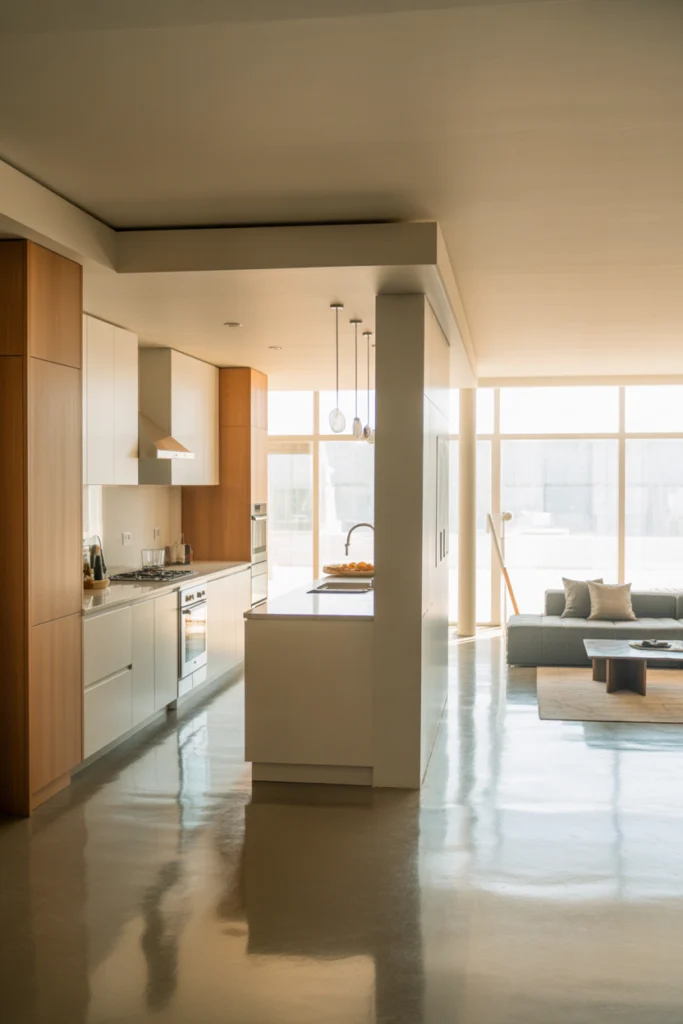
Partial partitions provide subtle separation while preserving the openness of the combined layout. These can include half walls, glass dividers, or built-in shelving that help define zones without blocking natural light. A partial divider adds structure and balance while keeping the space airy and connected.
This approach works well in homes where total openness may feel overwhelming or too exposed. It also allows décor styling on both sides, such as houseplants, décor items, or books. Whether you prefer a modern minimal divider or a textured statement piece, partial partitions blend practicality with style.
8. Consistent Lighting Temperature for Harmony
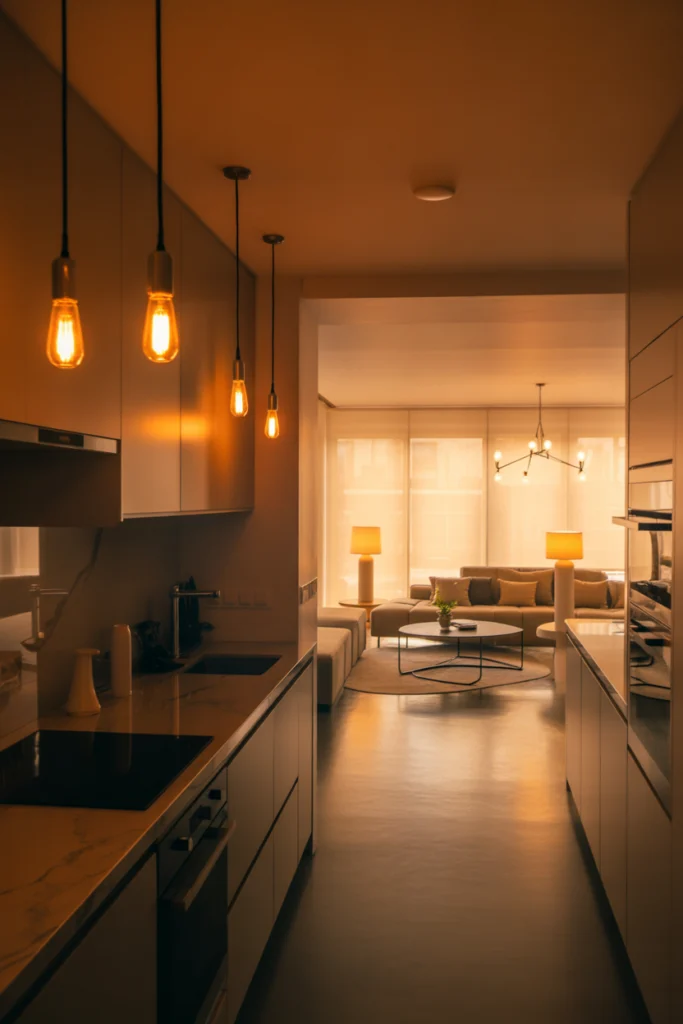
One often-overlooked detail in open-concept layouts is lighting temperature. Warm, cool, or daylight tones dramatically influence the mood of a space. Using consistent lighting across both the kitchen and living room creates harmony and ensures the design feels intentional. Mixed temperatures can make an open space look visually fragmented.
Sticking to one lighting temperature, such as warm white, enhances the cozy atmosphere typical of open living spaces. It also makes it easier to integrate different fixtures like pendants, sconces, and recessed lights. Uniform lighting ensures that every part of the room feels connected and thoughtfully designed.
9. Modern Minimalist Layout
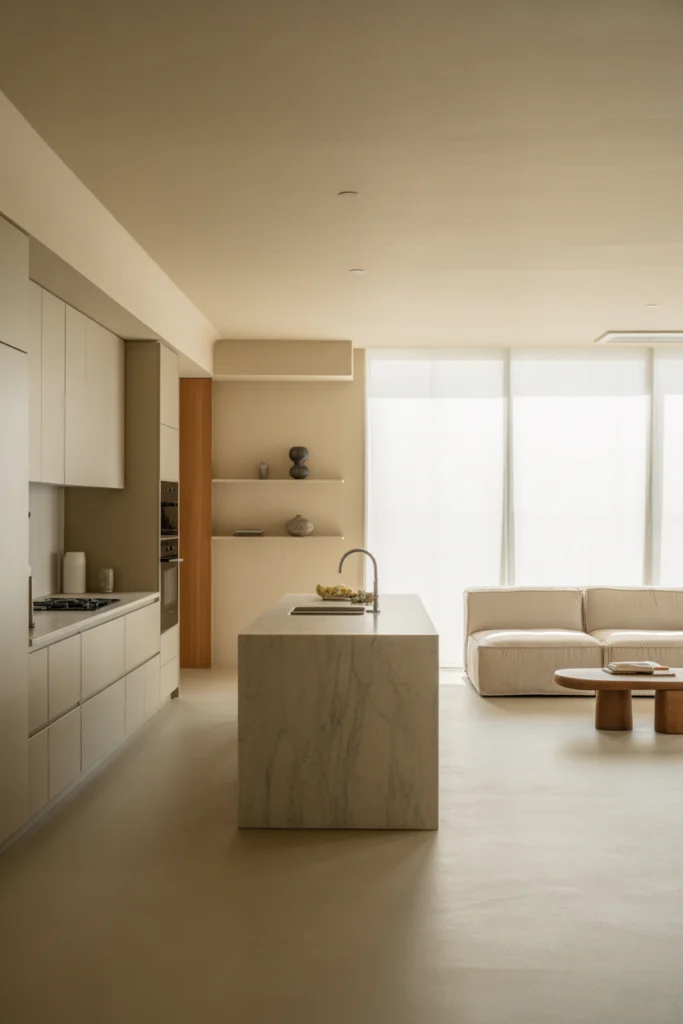
A minimalist layout enhances the sense of openness, making the kitchen and living room feel more spacious. By keeping furniture sleek and storage solutions hidden, clutter is minimized and visual flow improves. Neutral tones, clean lines, and simple décor support a calming atmosphere that suits modern open-concept homes.
This approach relies heavily on clever storage and functional furniture to maintain an uncluttered aesthetic. Avoiding excessive décor ensures each piece serves a purpose. The result is an elegant, contemporary environment that prioritizes space, clarity, and ease of movement
10. Accent Wall to Add Character
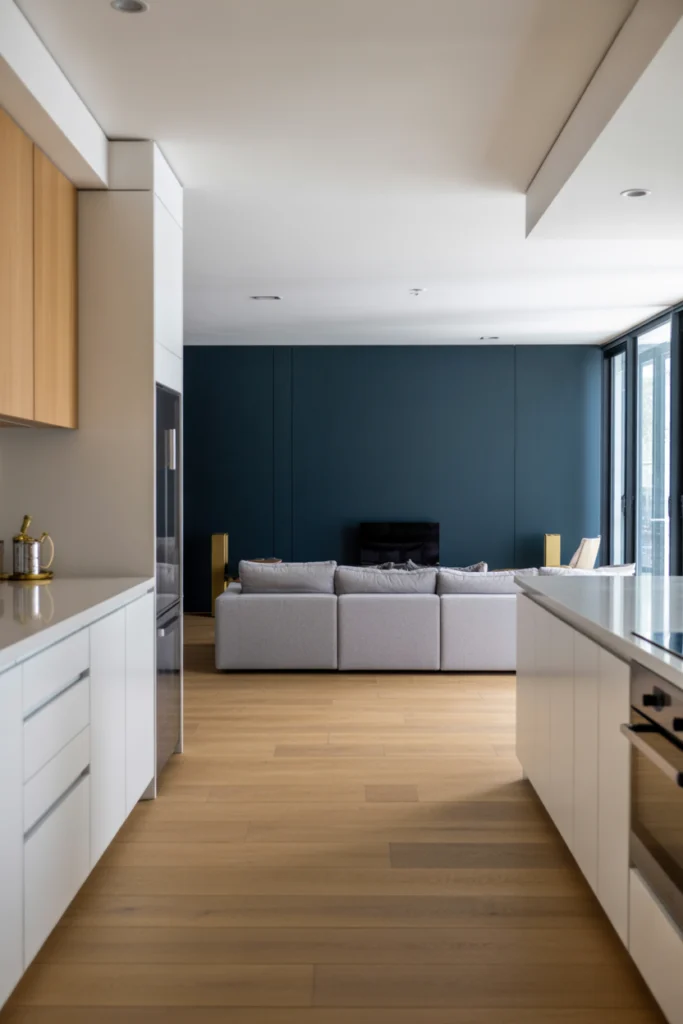
An accent wall is an excellent way to introduce personality without overwhelming the open layout. Whether painted in bold hues, covered with textured wallpaper, or finished with natural materials like wood or stone, it adds depth and visual interest. An accent wall can help designate the living room area, creating a cozy focal point.
Positioning the accent wall opposite the kitchen ensures balance and prevents the space from feeling cluttered. Choose colors or textures that complement kitchen cabinetry and finishes. This subtle design strategy enhances open living while maintaining a harmonious aesthetic.
11. Built-In Storage Across Both Zones
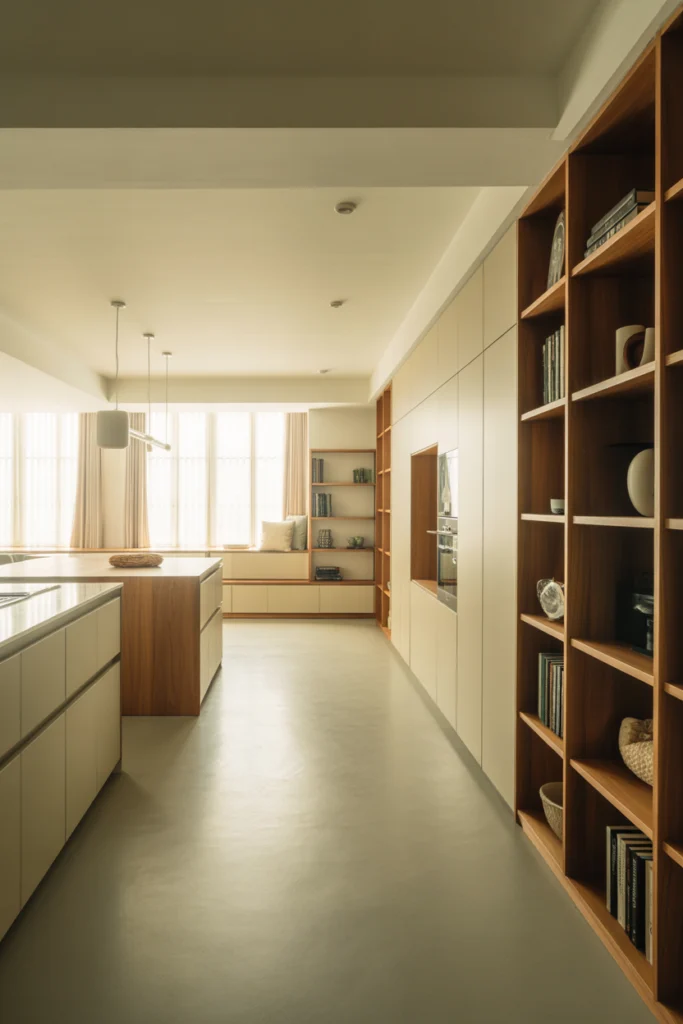
Built-in storage is a powerful solution for maintaining order in an open kitchen-living room layout. Floor-to-ceiling cabinets, wall-mounted units, and integrated shelving help keep both areas clutter-free. A streamlined storage system reduces visual noise and supports a cohesive aesthetic.
Smart storage solutions also ensure frequently used items are easy to access without being left out. Built-in units with matching finishes across the living and kitchen areas unify the design. This approach maximizes functionality while enhancing the overall polish of the space.
12. A Cozy Seating Area Near the Kitchen
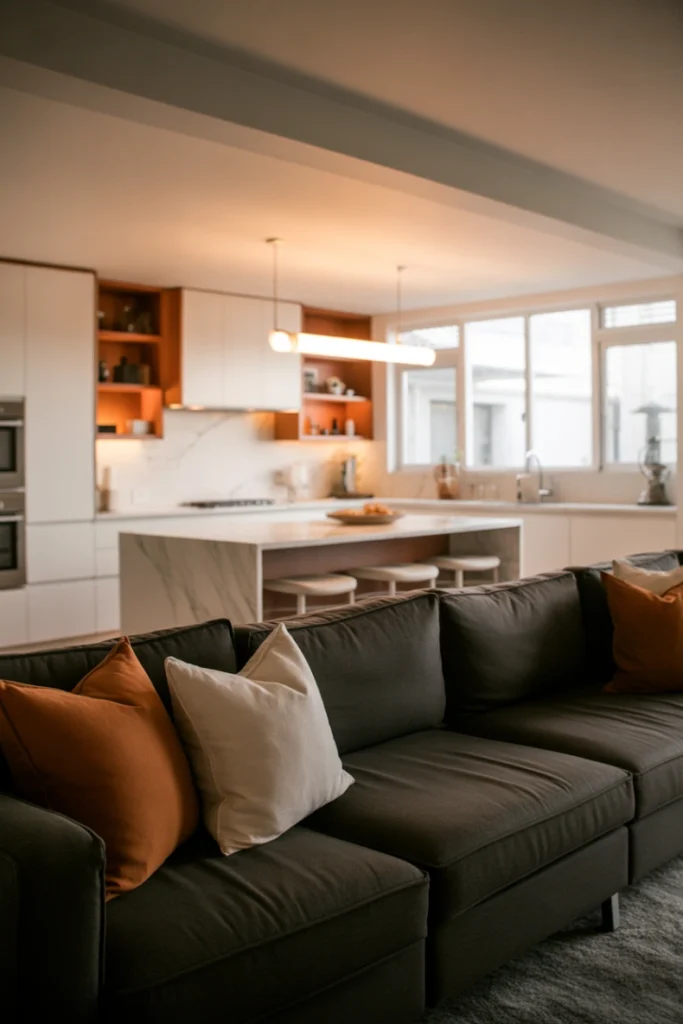
Designing a comfortable seating zone next to the kitchen encourages interaction and social connection. Whether it’s a small conversation nook or a full living room setup, this arrangement supports an inviting atmosphere. Guests or family members can relax and chat while meals are being prepared.
Using soft furnishings, layered textures, and warm lighting enhances the cozy vibe. Positioning seating strategically ensures an easy flow between the two areas. A well-designed seating zone makes the open layout more welcoming and functional.
13. Modern Rustic Combination
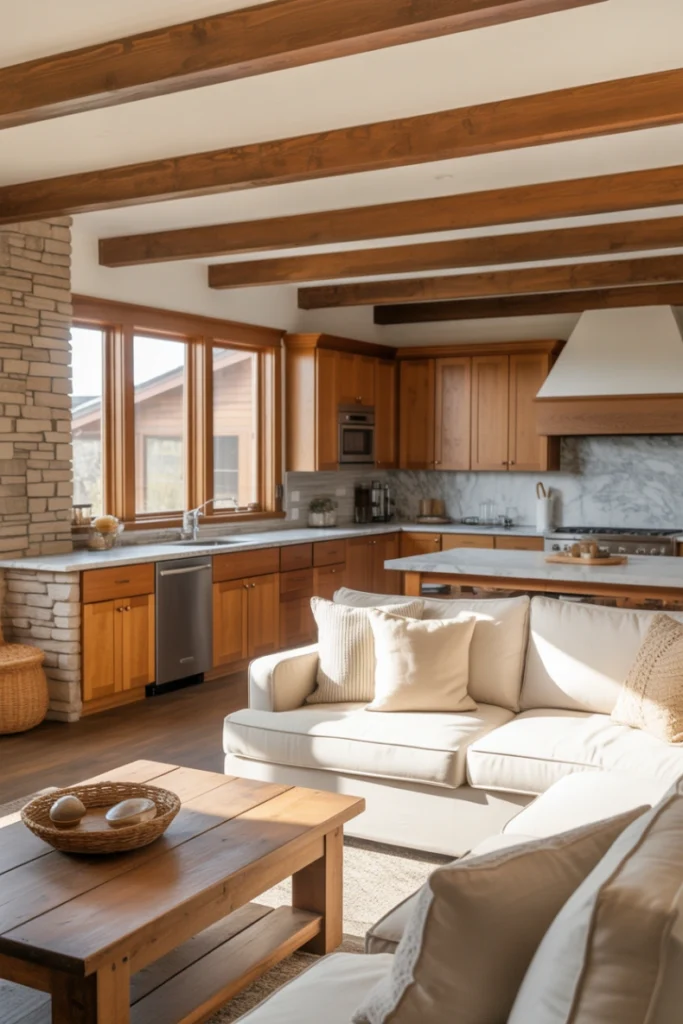
The modern rustic trend blends raw textures with sleek finishes, making it ideal for open-concept homes. Exposed wooden beams, stone accents, or reclaimed wood cabinetry paired with modern appliances create a balanced and grounded feel. This combination brings warmth to open spaces, which sometimes risk feeling too structured or cold.
Soft textiles, neutral colors, and warm lighting complement rustic elements perfectly. The contrast between polished and raw materials creates a dynamic yet inviting atmosphere. This design style appeals to homeowners seeking charm with contemporary comfort.
14. Smart Home Integration
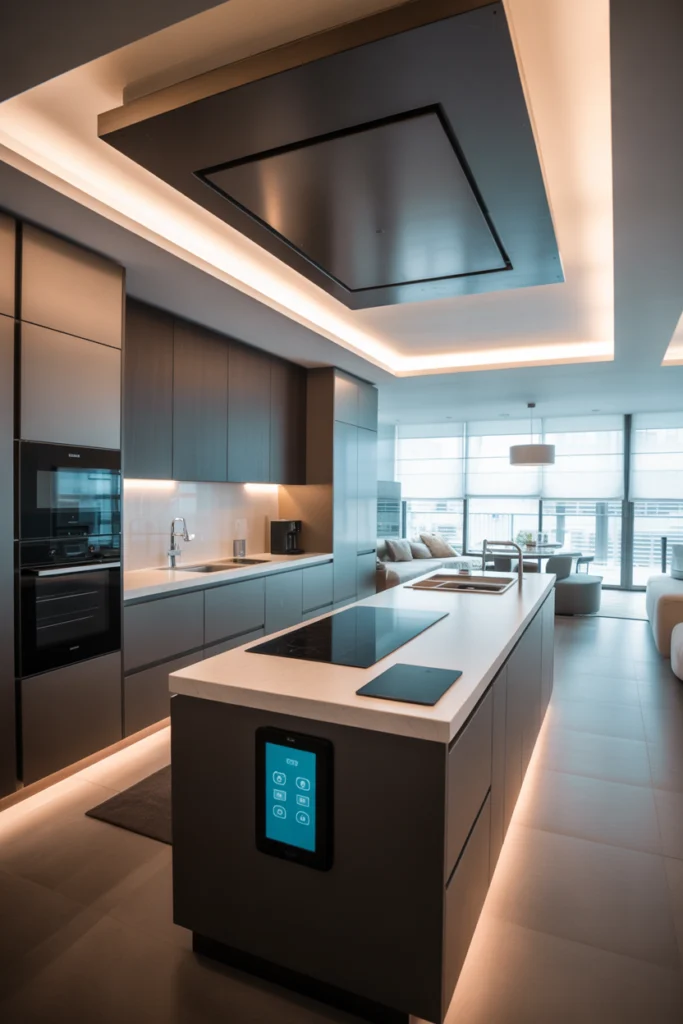
Technology plays a major role in shaping open-concept design in 2026. Smart lighting, voice-controlled assistants, and integrated appliances help streamline daily tasks and enhance comfort. These systems allow users to control ambiance, temperature, entertainment, and appliances effortlessly, supporting a seamless lifestyle.
Smart furniture and wireless charging stations keep the open space clean and organized. Hidden wiring and built-in smart panels maintain a sleek appearance. Technology blends with design to create an efficient, future-ready environment that enhances both the kitchen and living room.
15. Warm Earth Tones for Comfort
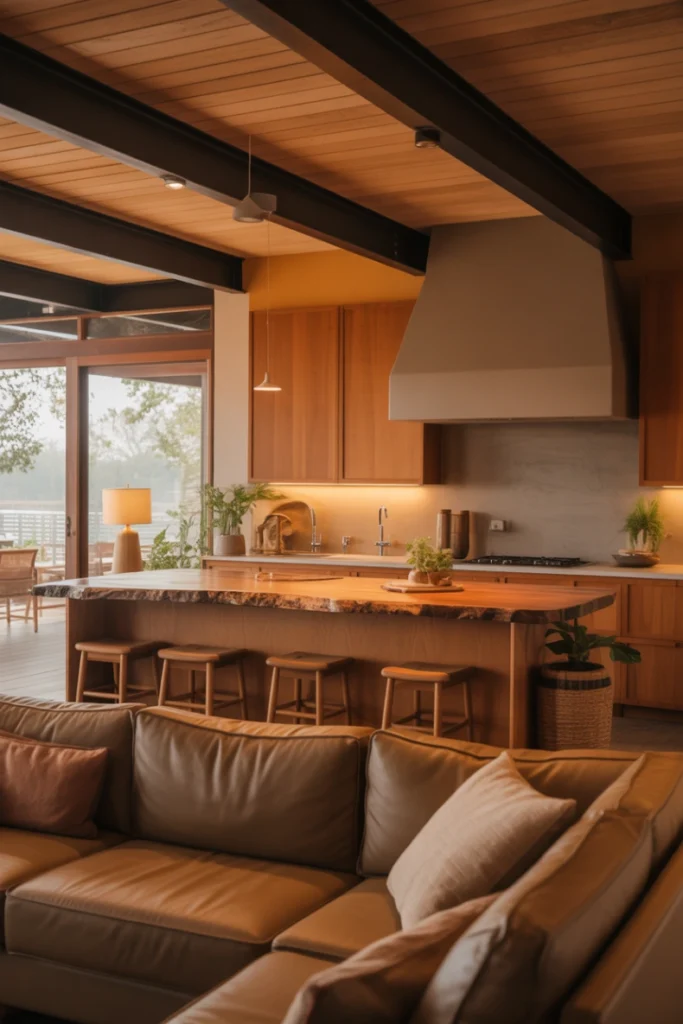
Earthy colors like terracotta, olive, sand, and warm browns bring a sense of calm to open spaces. These tones are trending for 2026 and suit both kitchens and living rooms. They create a naturally inviting environment that feels grounded and harmonious.
Pairing earth tones with natural materials enhances the aesthetic further. Wooden furniture, rattan accents, and handmade ceramics complement the palette beautifully. Gentle, warm hues ensure that the kitchen and living areas blend into a cohesive, comfortable space
16. Multi-Level Ceilings for Visual Structure
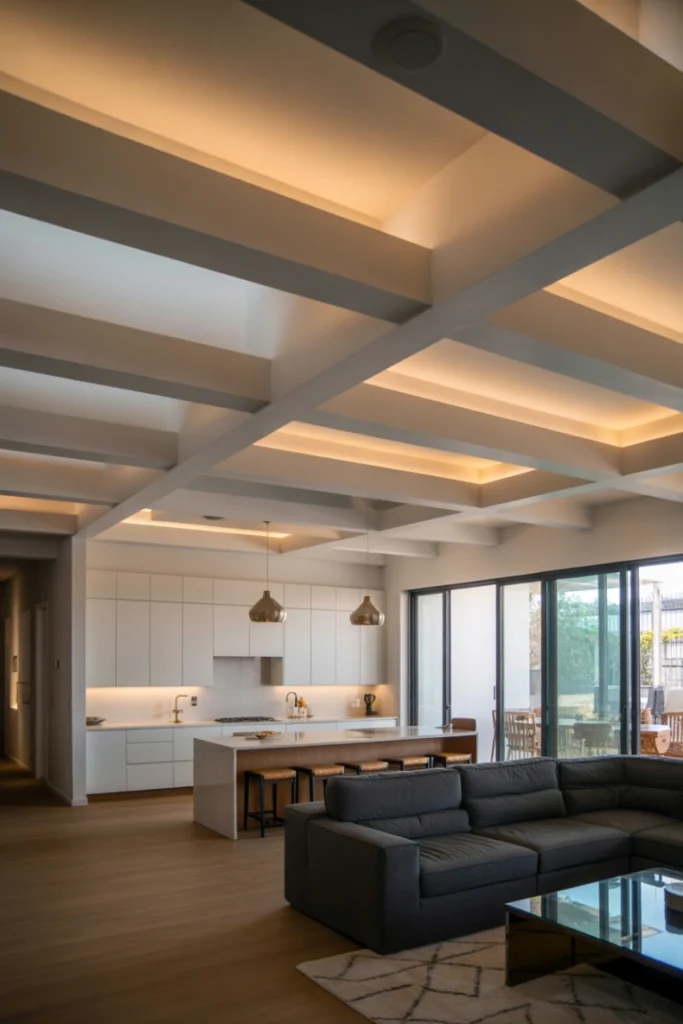
Ceiling designs can add subtle but effective separation in an open layout. A dropped ceiling above the kitchen, paired with a higher ceiling in the living room, helps define the zones without closing them off. Different ceiling textures, materials, or colors also add dimension and interest.
Integrated lighting such as cove lights or recessed fixtures further enhances the effect. Multi-level ceilings bring architectural depth to the space, making the open layout feel more intentional and sophisticated.
17. Glass Sliding Doors to Extend Space
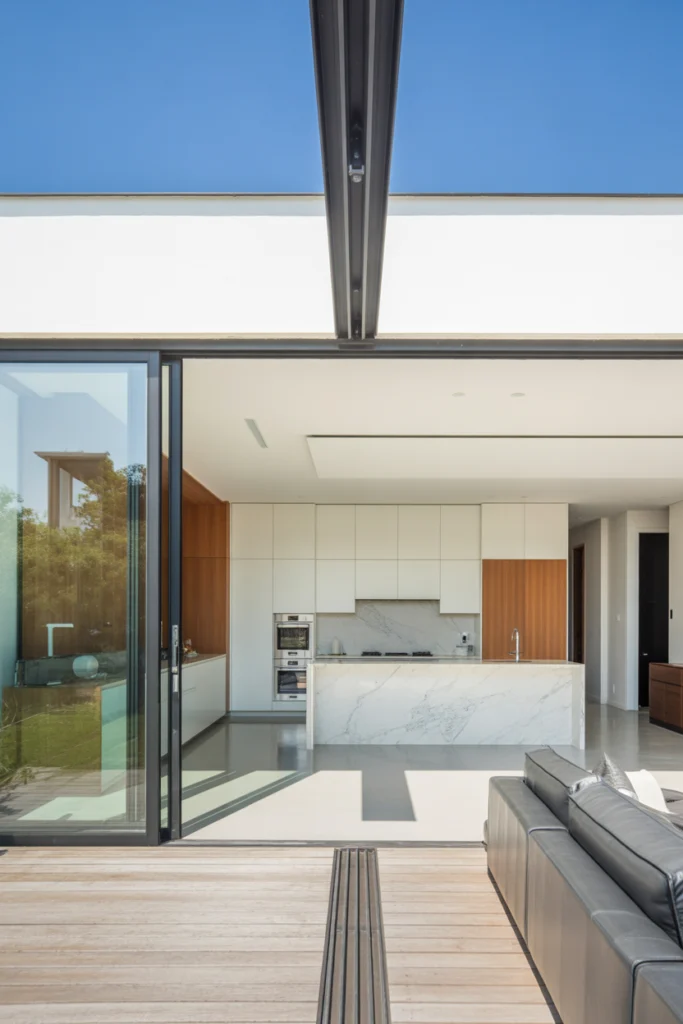
Glass sliding doors help open up the space even more by connecting the kitchen-living area to patios or balconies. This creates an indoor-outdoor flow that enhances natural light and ventilation. The open concept feels even larger when extended to outdoor spaces.
Frameless or minimal-frame doors maintain a sleek appearance. The design works beautifully for homeowners who enjoy entertaining or simply value expansive views. It brings fresh air, light, and openness into everyday living.
18. Textured Rugs to Ground the Living Area
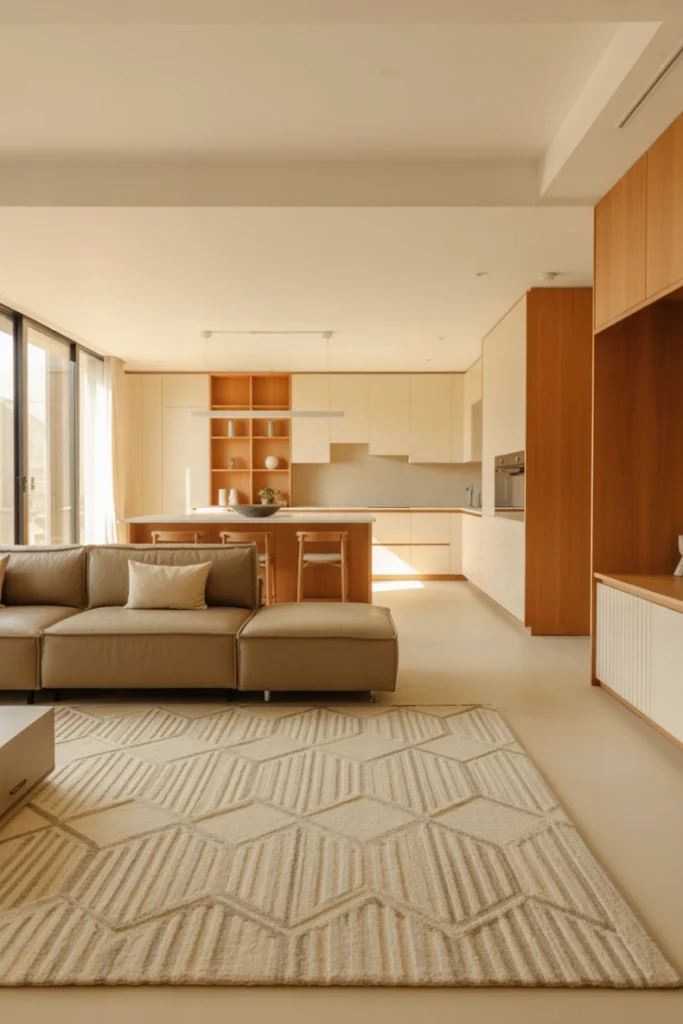
In open layouts, rugs help define the living room space and create a cozy foundation. Layering textures such as wool, jute, or woven blends adds warmth and visual interest. Rugs also soften the acoustics, improving comfort in large open areas.
Choosing colors and patterns that complement the kitchen keeps the design cohesive. A large area rug grounds the living room furniture, making the space feel intentionally arranged. This simple addition enhances both style and functionality.
19. Monochrome Design for Modern Elegance
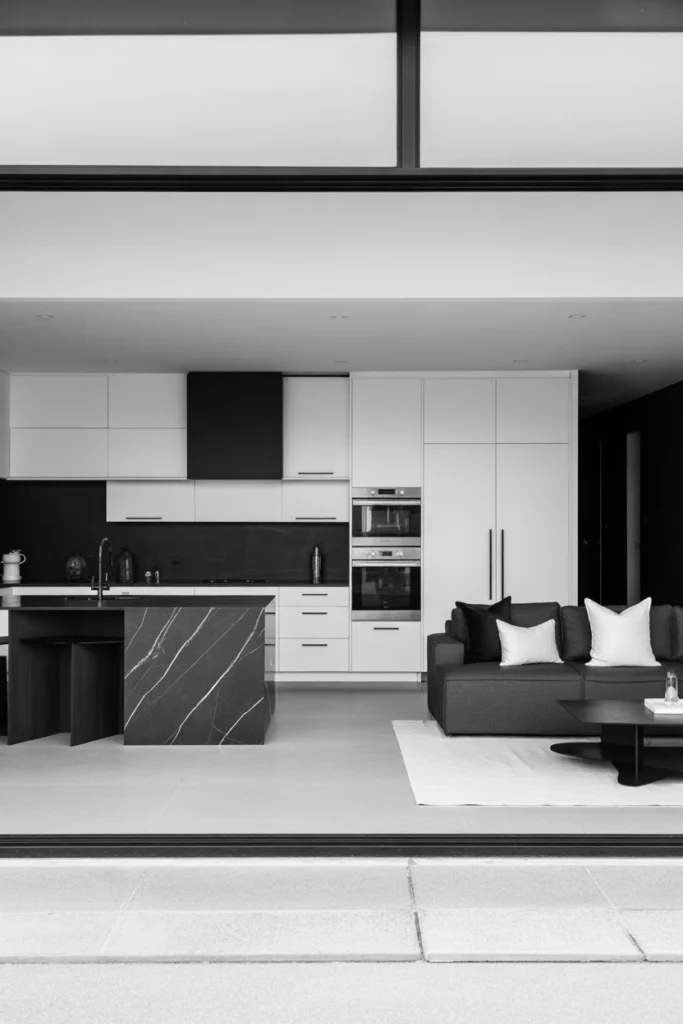
A monochrome palette creates a contemporary and polished feel in open-concept designs. Black, white, and gray tones work exceptionally well for modern kitchens and living rooms. This style relies on contrast, clean lines, and sleek finishes to maintain a sophisticated look.
Textures like matte black fixtures, glossy cabinets, and soft fabric upholstery help break monotony. Thoughtful styling ensures the space remains visually engaging rather than stark. Monochrome layouts reflect refined simplicity and a strong design identity.
20. Curved Furniture for Softness
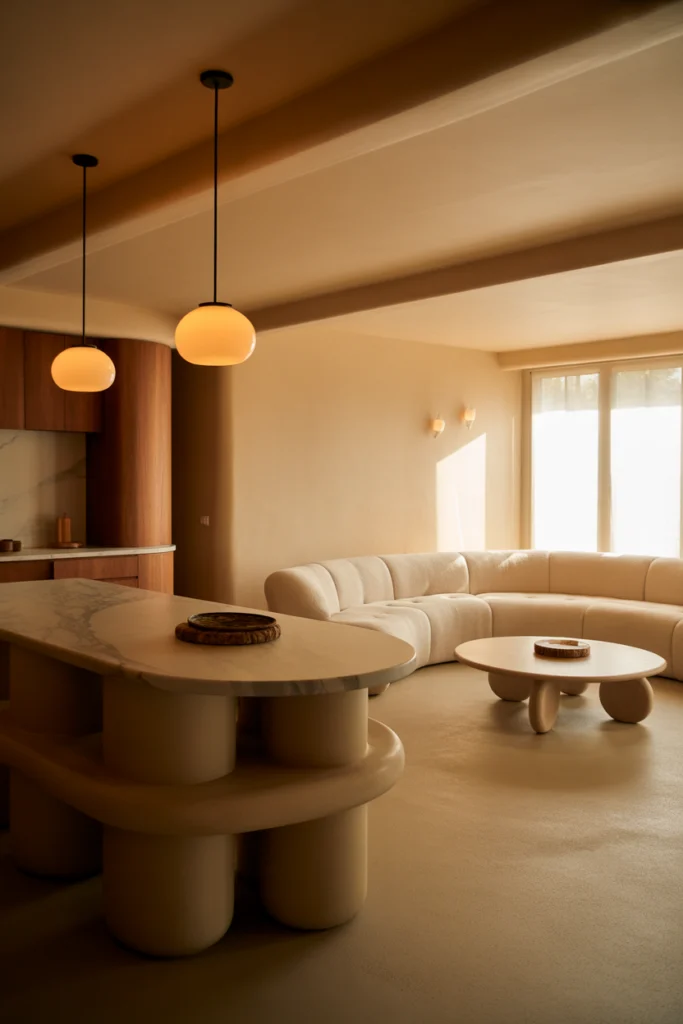
Curved sofas, round coffee tables, and soft-edged furniture bring fluidity and elegance to an open layout. Curves help break the rigid lines typical in kitchens, creating a warm and inviting living area. This trend is gaining popularity in 2026 for its ability to soften modern interiors.
Pairing curved furniture with soft lighting and natural materials enhances the effect. Flow becomes more intuitive and harmonious throughout the space. This approach balances structure and comfort beautifully in open-concept homes.
21. Natural Materials for a Calming Atmosphere
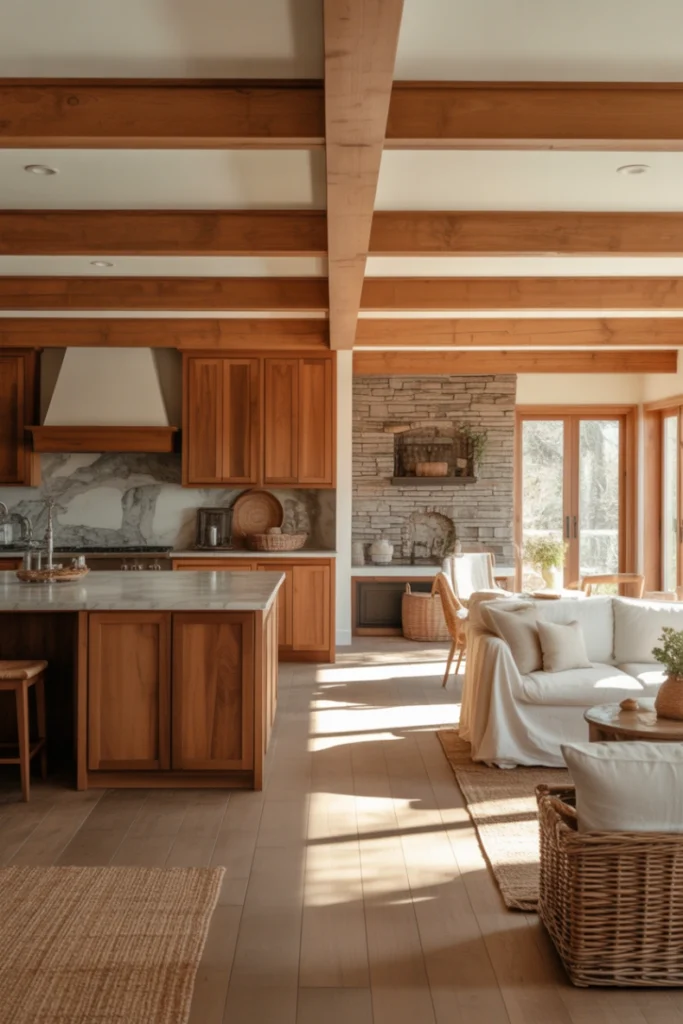
Using natural materials like stone, wood, clay, and linen elevates the organic feel of an open kitchen-living area. These elements bring warmth and authenticity, softening the space while adding texture. Natural materials blend seamlessly with almost any color palette or design style.
Sustainable and eco-conscious materials are especially popular in 2026 as homeowners seek healthier environments. From wooden beams to stone counters and woven baskets, these details enhance comfort and visual appeal. They make open spaces feel grounded and timeless.
Conclusion
Open kitchen-living rooms continue to define modern home design, especially in 2026. They offer flexibility, enhanced natural light, improved social interaction, and a sense of expansive comfort. Whether your space is small or large, thoughtful design choices like unified colors, intelligent lighting, natural materials, and multifunctional furniture help create a seamless and functional environment. By combining style with practicality, these 21 ideas help you transform your home into a sophisticated, open, and welcoming space that suits modern living perfectly.