
22 Green Kitchen Ideas – Fresh, Stylish & Refreshing Designs You’ll Love

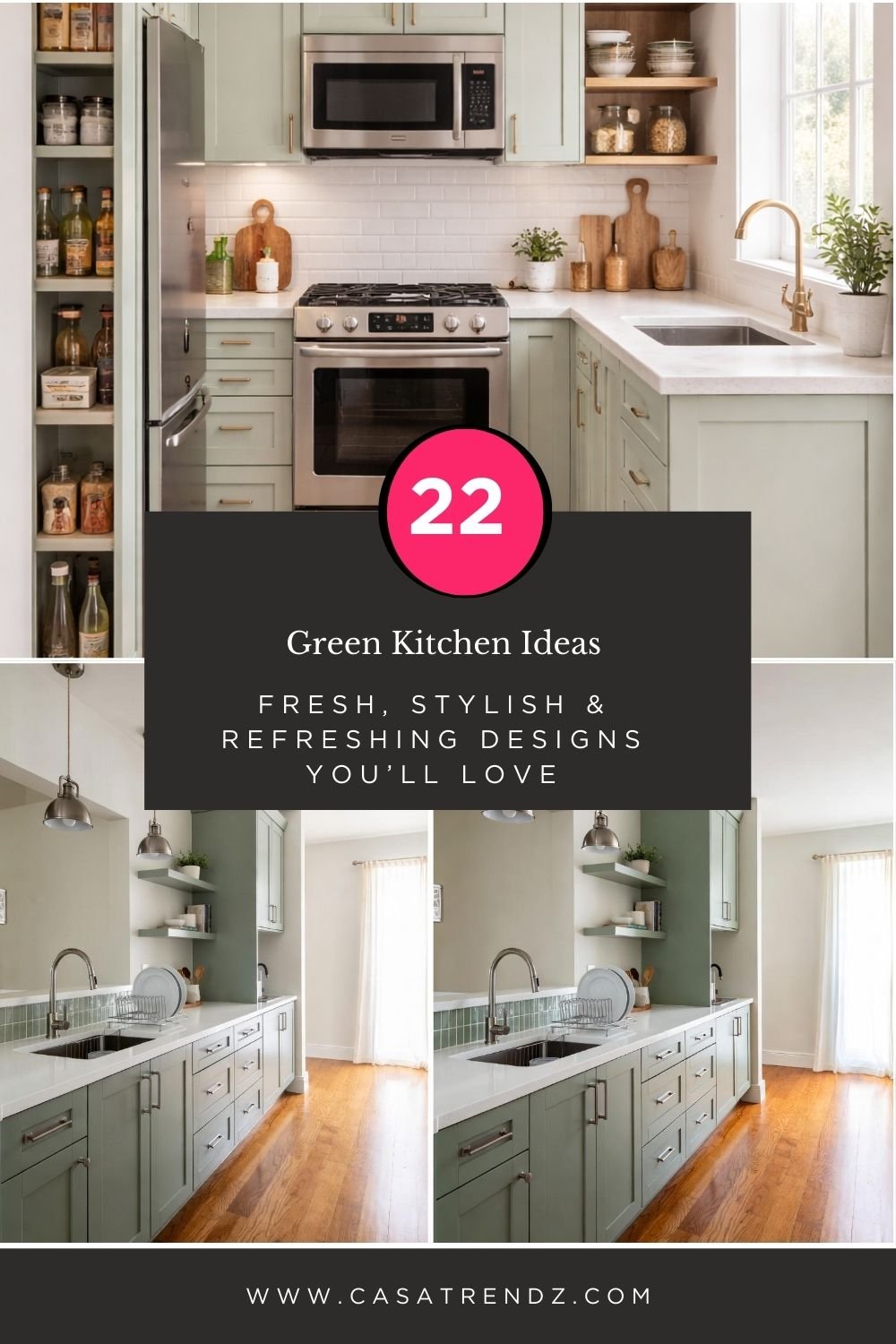
Green kitchens have become one of the most loved design trends in modern homes, and it is easy to see why. Green sits in that rare sweet spot between calm and bold: soft enough to live with every day, strong enough to give a kitchen real character. From pale sage that opens up a small galley to deep emerald that makes a large kitchen feel grounded and elegant, there is a shade for every layout, every budget, and every style, from farmhouse and coastal to sleek and contemporary.
What makes green so practical is how well it works with other materials. It pairs beautifully with white quartz, warm oak, brushed brass, matte black hardware, and natural stone, so you can change the mood of the whole room just by swapping the accents. A sage island with brass pulls feels classic and warm, while the same green with concrete counters and black steel feels modern and edgy. Green also hides everyday wear better than white, which matters in a room that gets used three times a day.
In this guide, you will find 22 green kitchen ideas with practical detail on shades, materials, finishes, and simple steps, so you can pick one idea to try or combine several into a full kitchen plan. Each section explains what to choose, what to pair it with, and what to watch out for, so the result looks intentional rather than improvised. If you are still weighing your palette, browse these kitchen color ideas first to see how green compares with other popular shades.
1. Sage Green Kitchen Cabinets
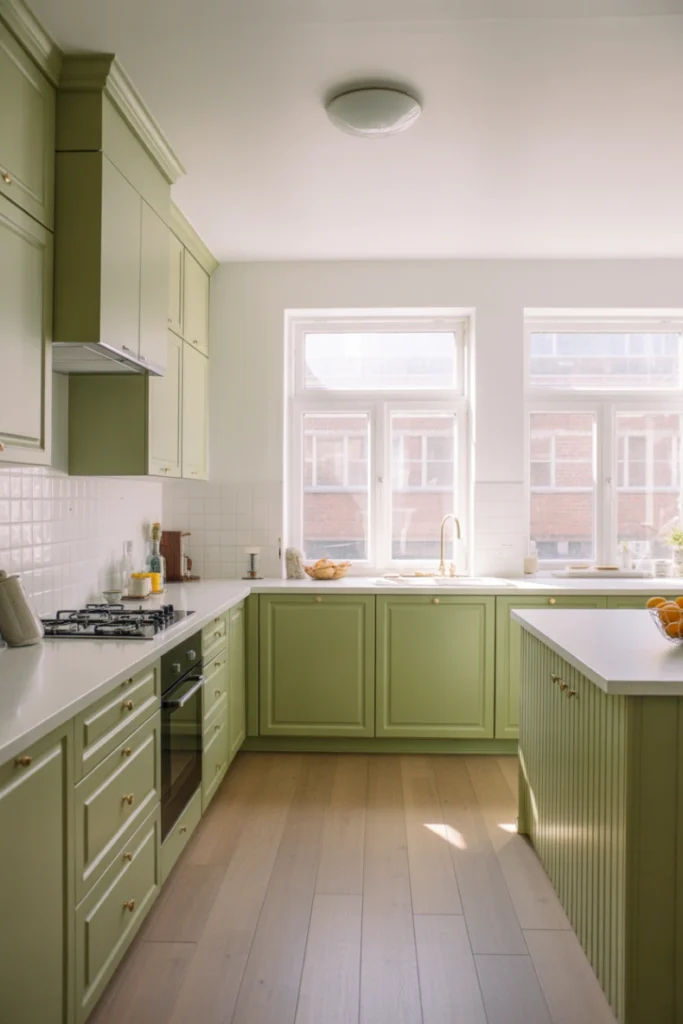
Sage green cabinets are one of the most popular choices for homeowners seeking a subtle yet refreshing kitchen design. This muted green shade, with its soft gray undertone, pairs beautifully with white walls, light wood flooring, and neutral countertops. Sage green creates a soft, airy feel that works especially well in small or medium kitchens, helping the space feel open and calming without looking bland. Try it on the lower cabinets first, with white or cream uppers, for a two-tone look that keeps the room bright.
Beyond aesthetics, sage green cabinets offer timeless appeal. They adapt easily to changing decor trends and work well with brass, black, or chrome hardware. Choose cup pulls in brushed brass for a farmhouse feel, or slim matte black bar pulls for a modern look. For the best result, paint a large sample board and check it in morning and evening light before you commit, since sage can look grayer in cool light and warmer in sunlight. Pair it with white quartz or butcher block counters and a simple white subway tile backsplash to let the color do the talking.
2. Dark Green Kitchen with Gold Accents
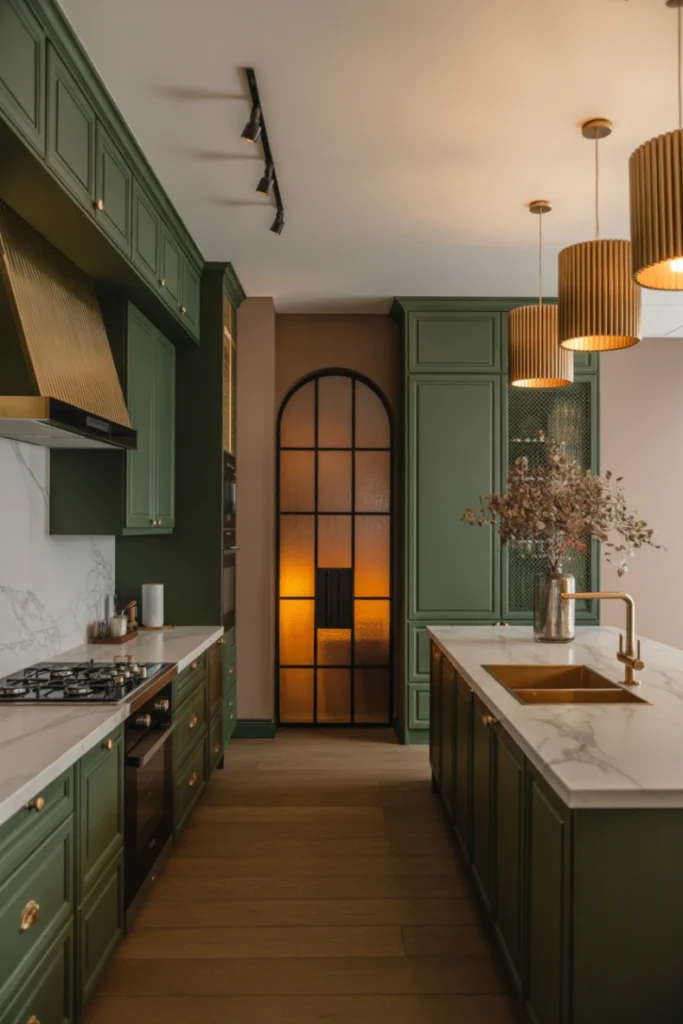
Dark green kitchens bring a sense of luxury and drama that few colors can match. When paired with gold or brass hardware, deep green cabinetry instantly elevates the space. This combination works particularly well in larger kitchens or open-concept layouts where darker tones will not feel overwhelming. Use the dark green on all the cabinetry for a full statement, or keep it to the island and a tall pantry wall if you want the drama in smaller doses.
The richness of dark green adds depth, while gold accents introduce warmth and refinement. Marble countertops with soft gold veining, glass pendant lights, and warm under-cabinet lighting in the 2700 to 3000 Kelvin range enhance the luxurious atmosphere. Keep the floor light, such as pale oak or light stone tile, so the room stays balanced. This style is perfect for homeowners who want a bold statement kitchen that feels upscale, elegant, and timeless.
3. Olive Green Kitchen Design
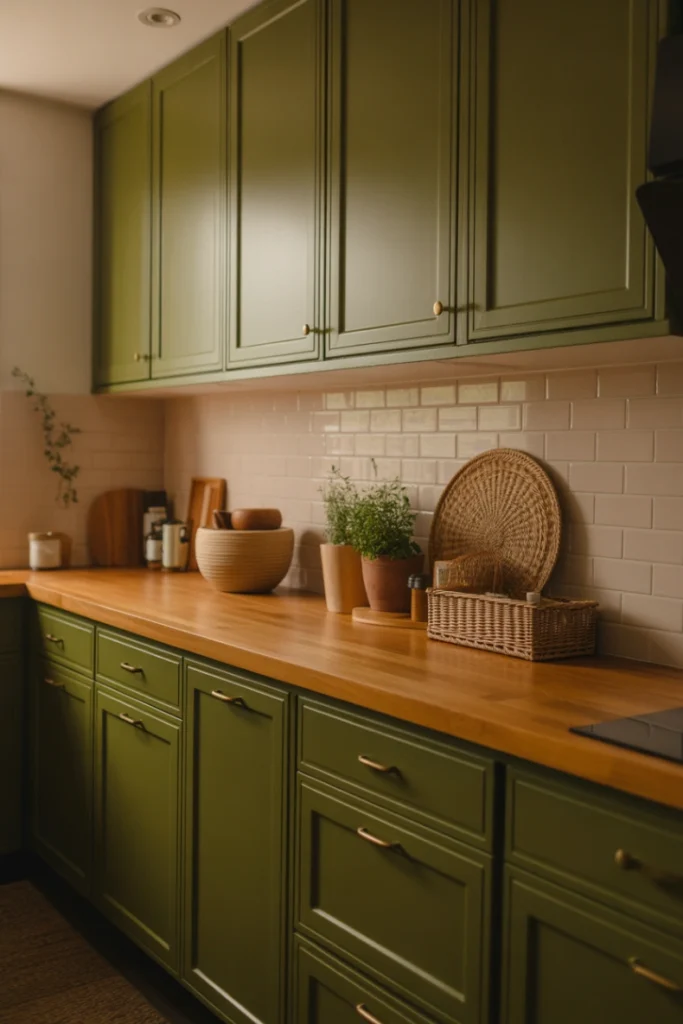
Olive green kitchens strike a perfect balance between earthy warmth and modern sophistication. This tone works exceptionally well with natural materials like wood, stone, and ceramic. Olive green cabinetry adds character while maintaining a grounded, organic feel that suits both rustic and contemporary homes. It is a great choice if you like green but find emerald too bold and sage too pale.
Paired with wooden countertops or neutral stone surfaces, olive green kitchens feel welcoming and lived-in. Add open shelves in warm oak, terracotta pots, and cream ceramic dishes to complete the earthy look. Oil-rubbed bronze or aged brass hardware suits olive best, since bright chrome can feel too cool against it. A matte finish keeps the color soft and natural. This color choice is ideal for homeowners who want a kitchen that feels cozy yet stylish, blending seamlessly with dining or living spaces in open-plan homes.
4. Mint Green Kitchen for a Fresh Look
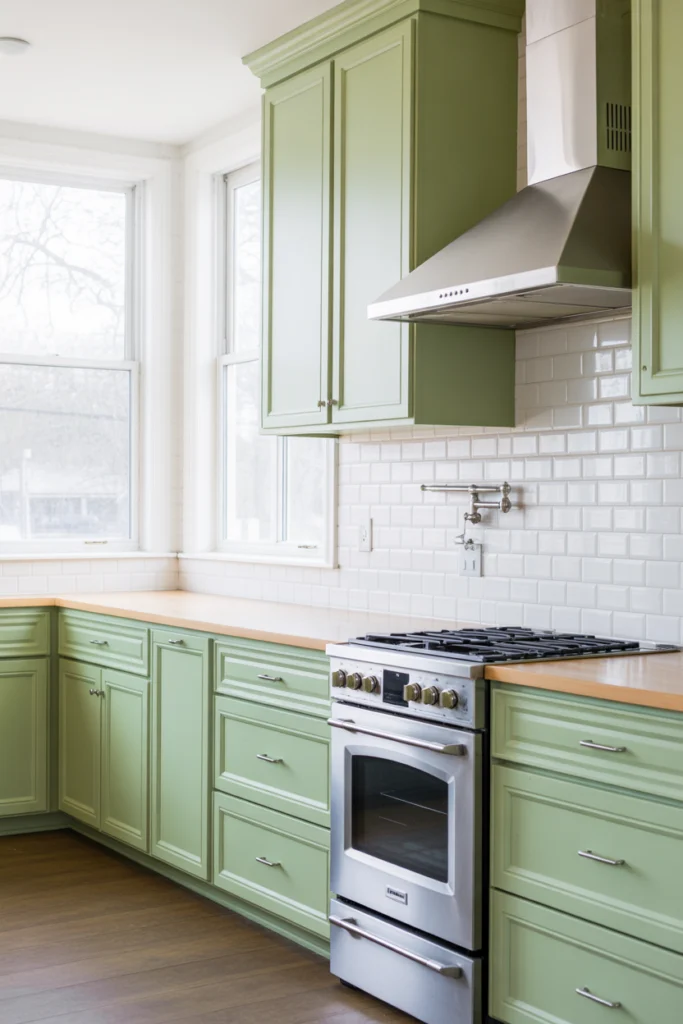
Mint green kitchens offer a refreshing and cheerful aesthetic that instantly brightens the space. This light green shade works beautifully in kitchens with plenty of natural light, creating a clean and uplifting atmosphere. Mint green pairs well with white tiles, stainless steel appliances, and minimalist decor, so the room feels fresh rather than busy.
This style is especially popular in smaller kitchens or apartments where lighter colors help expand the visual space. Keep the palette tight: mint cabinets, white walls, a white or pale gray countertop, and one metal finish throughout. A white subway tile backsplash with light gray grout adds subtle pattern without competing with the color. Mint adds personality without feeling overwhelming, making it perfect for homeowners who want a playful yet refined kitchen design. If the room gets little sun, choose a mint with a warm undertone so it does not read as cold blue.
5. Forest Green Modern Kitchen
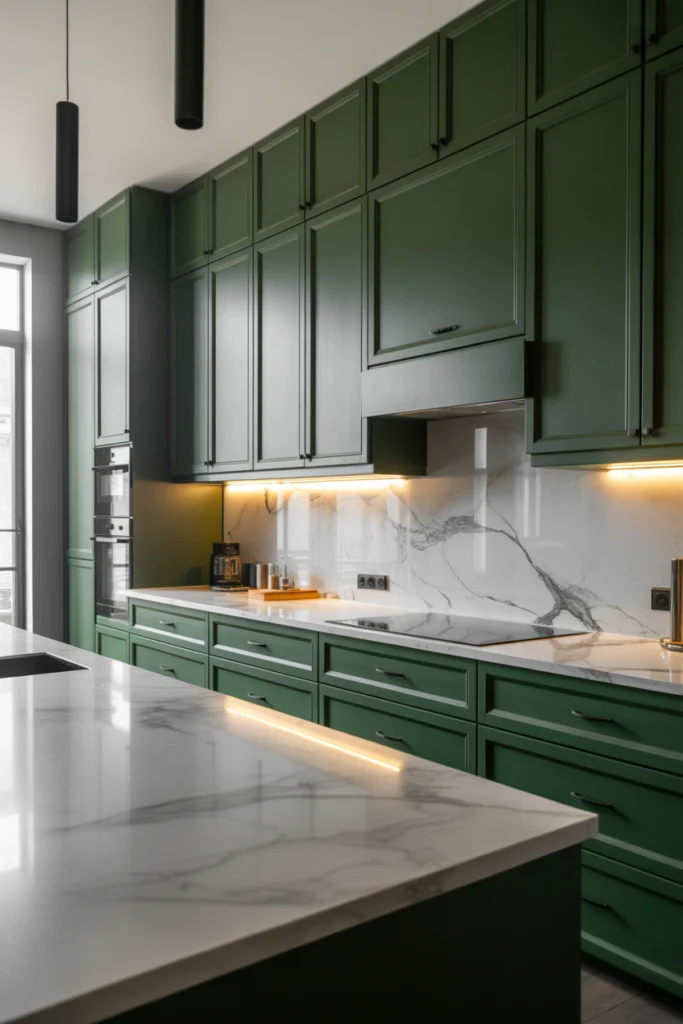
Forest green kitchens bring bold elegance inspired by nature. This deep, saturated shade creates a strong visual impact while still feeling grounded and organic. Forest green cabinetry pairs beautifully with marble countertops, matte black fixtures, and warm wood accents, giving the room a rich, layered look that suits modern design.
In modern kitchens, forest green works best with clean lines and minimal ornamentation. Use flat-panel or shaker doors, handle-less drawers, and a single slab backsplash to keep the look sleek. Strategic lighting is essential to balance the richness of the color: add under-cabinet LED strips, two or three pendant lights over the island, and a dimmer so you can soften the mood in the evening. Keep decor edited to a few pieces, such as a wooden cutting board and a green plant, so the color stays the star. This style is ideal for homeowners seeking a dramatic yet refined kitchen.
6. Green and White Kitchen Combination
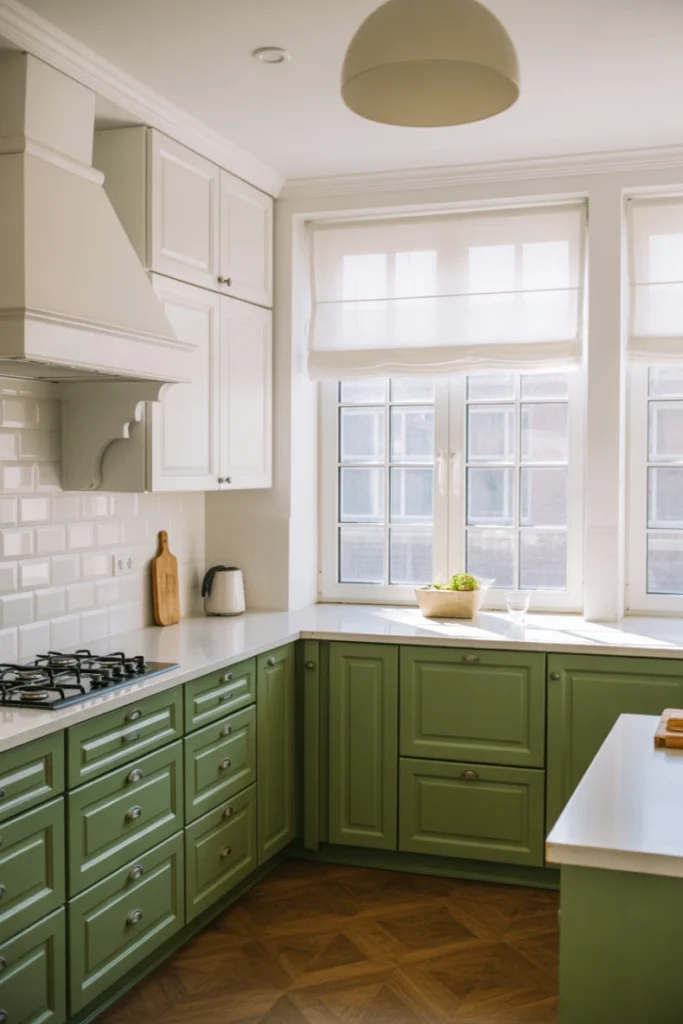
Green and white kitchens are a timeless classic that never goes out of style. White walls or upper cabinets keep the space bright, while green lower cabinets add depth and interest. This combination works well in both traditional and modern kitchens, and it suits almost any shade of green, from soft sage to deep emerald.
The contrast between green and white allows for creative flexibility in hardware, backsplash, and flooring choices. Try green lowers with white uppers, a white quartz countertop, and a patterned tile backsplash for a fresh look, or reverse it with green uppers and white lowers in a small kitchen to keep the floor level bright. Brass hardware warms the pairing, while matte black keeps it crisp and modern. Whether you choose sage, emerald, or olive green, pairing it with white ensures a balanced and harmonious kitchen design. For more ways to mix shades, see these modern kitchen ideas that use the same two-tone trick.
7. Matte Green Kitchen Cabinets
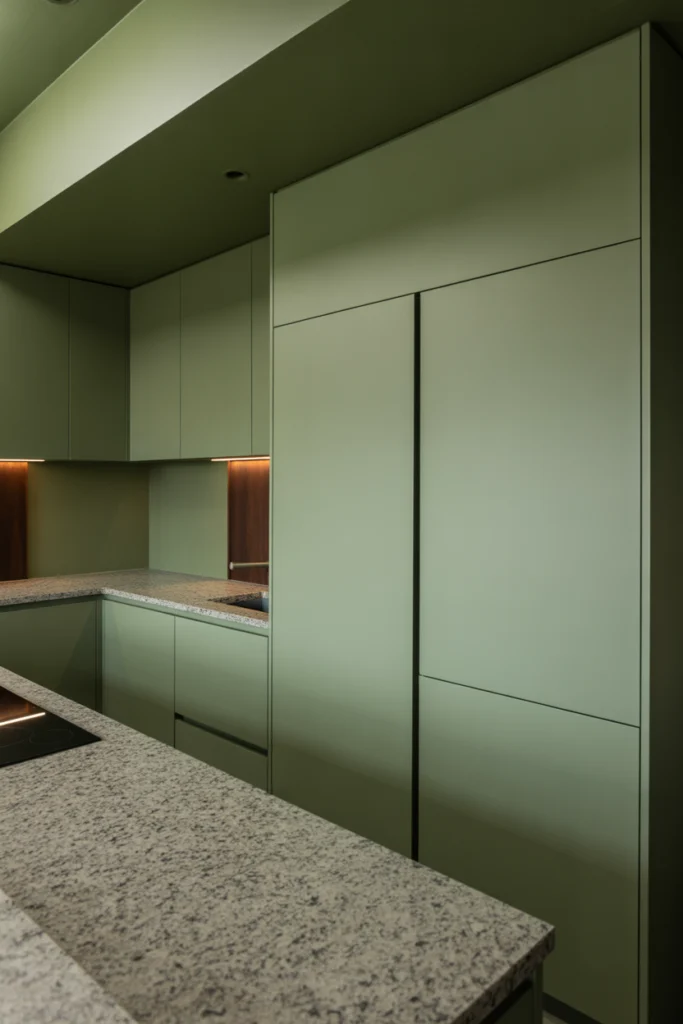
Matte green cabinets offer a contemporary twist on traditional green kitchens. The matte finish softens the color, reducing glare and creating a sophisticated, modern look. This style works particularly well with handle-less cabinetry and minimalist layouts, where the flat, velvety surface becomes part of the design.
Matte green kitchens feel calm and refined, making them perfect for homeowners who prefer understated elegance. Pairing matte green with stone countertops and subtle lighting enhances the texture and depth of the space. One practical bonus is that matte hides fingerprints better than gloss, though it can show grease marks near the stove, so wipe the doors around the cooking zone with a soft cloth and mild soap once a week. Choose a durable matte cabinet paint or a factory matte laminate for the best wear, and keep the backsplash simple so the finish stays the focus.
8. Green Kitchen with Natural Wood Elements
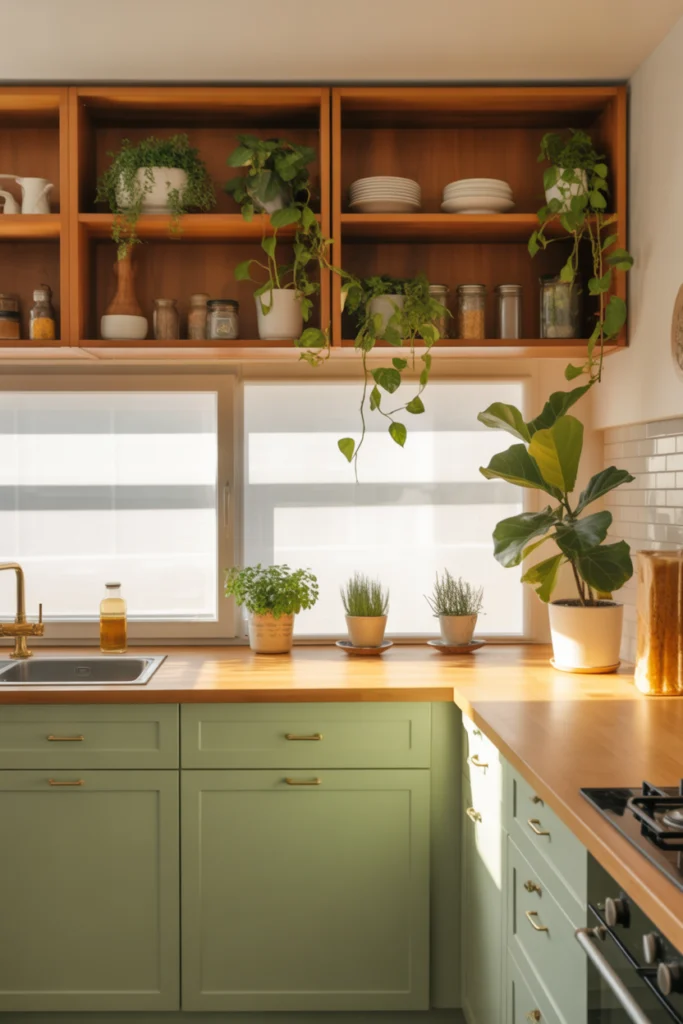
Combining green cabinetry with natural wood elements creates a warm and inviting kitchen environment. The green adds freshness, while wood introduces texture and warmth, resulting in a perfectly balanced design. White oak is the easiest pairing, since its pale, neutral tone suits every green, while walnut adds richness next to dark greens like forest or emerald.
This style works well in Scandinavian, farmhouse, and modern kitchens. Use wood on the island front, open shelves, or a butcher block countertop, and keep the ratio around one wood surface for every two green surfaces so the room stays green-led. Light or medium wood tones complement most shades of green, creating a cohesive look that feels both stylish and welcoming. Add a few green plants and woven baskets to strengthen the natural feel. If you love this warm pairing, these oak kitchen design ideas show how wood tones shape the whole room.
9. Emerald Green Luxury Kitchen
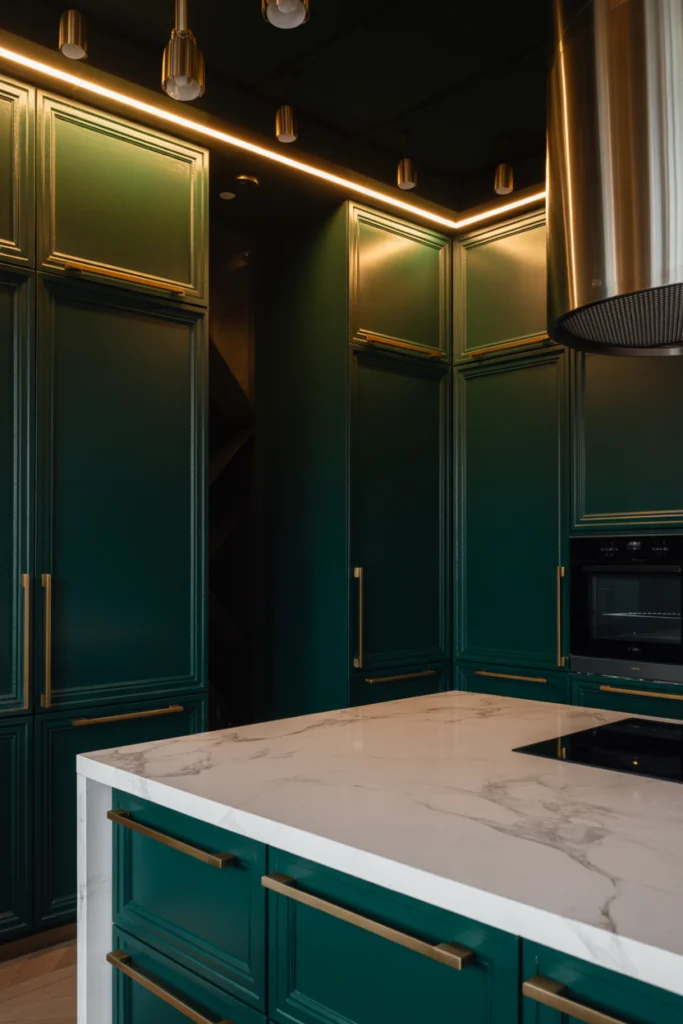
Emerald green kitchens are bold, glamorous, and undeniably luxurious. This jewel-toned green works best in spacious kitchens with ample lighting. When paired with marble surfaces and metallic accents, emerald green creates a striking, high-end aesthetic that makes the kitchen the showpiece of the home.
This style is ideal for homeowners who want their kitchen to feel like a statement. Use emerald on full-height cabinets or a large island, then balance it with white or pale gray marble, a statement chandelier or oversized brass pendants, and velvet or leather counter stools. Thoughtful lighting and refined decor ensure the space feels elegant rather than overpowering: keep the countertops mostly clear, choose one metallic finish, and let the deep green carry the drama. Avoid pairing emerald with too many competing patterns, since the color itself is already the pattern.
10. Green Kitchen Island as a Focal Point
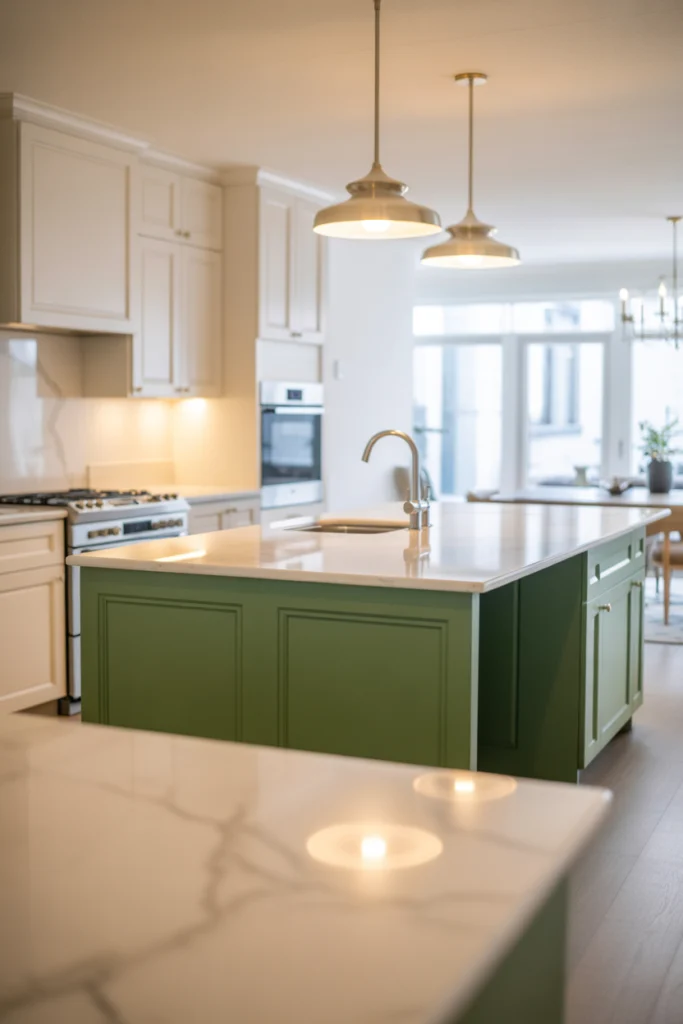
If you are hesitant to commit fully to green cabinetry, a green kitchen island is an excellent alternative. A bold green island instantly becomes the focal point of the space while keeping the rest of the kitchen neutral. It is also the cheapest way to try the trend, since painting or replacing one island costs far less than a full cabinet run.
This approach works well in open-concept kitchens where the island connects cooking, dining, and living areas. Keep the perimeter cabinets white, cream, or light wood, and choose a green two or three shades deeper than any other green in the room so the island reads as deliberate. Leave at least 36 inches of clearance on each side for comfortable movement, and hang two or three pendant lights above it to mark the focal point. A contrasting countertop, such as white quartz on a dark green island, sharpens the effect. It adds personality without overwhelming the overall design.
11. Pastel Green Kitchen Design
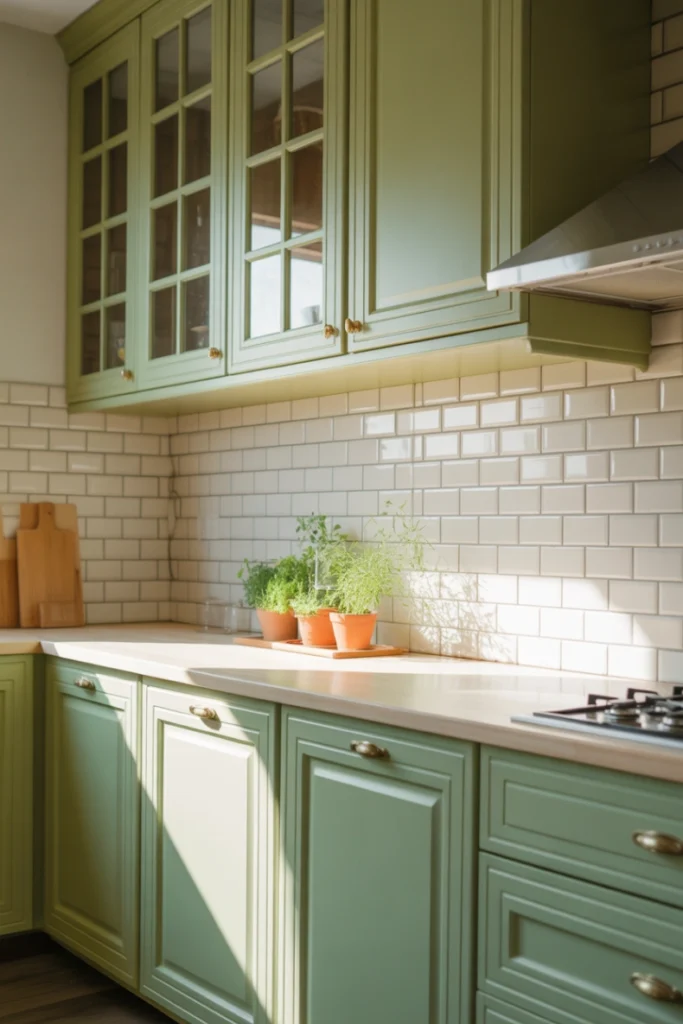
Pastel green kitchens offer a soft and charming aesthetic that feels light and approachable. This gentle hue works beautifully in vintage-inspired or contemporary kitchens, creating a relaxed atmosphere that suits slow mornings and family cooking alike. Pastel green is forgiving: it flatters both warm and cool light, and it pairs with almost any neutral.
Paired with white tiles and subtle decor, pastel green kitchens feel airy and welcoming. Keep the palette to three colors at most, such as pastel green, white, and light oak, so the soft color does not get lost among competing shades. Simple white knobs, a white farmhouse sink, and a few open shelves with pale ceramics complete the look. This style is perfect for homeowners who want a calm, refreshing kitchen without bold contrasts, and it works especially well in rentals or small spaces where a full remodel is not an option.
12. Green Kitchen with Black Accents
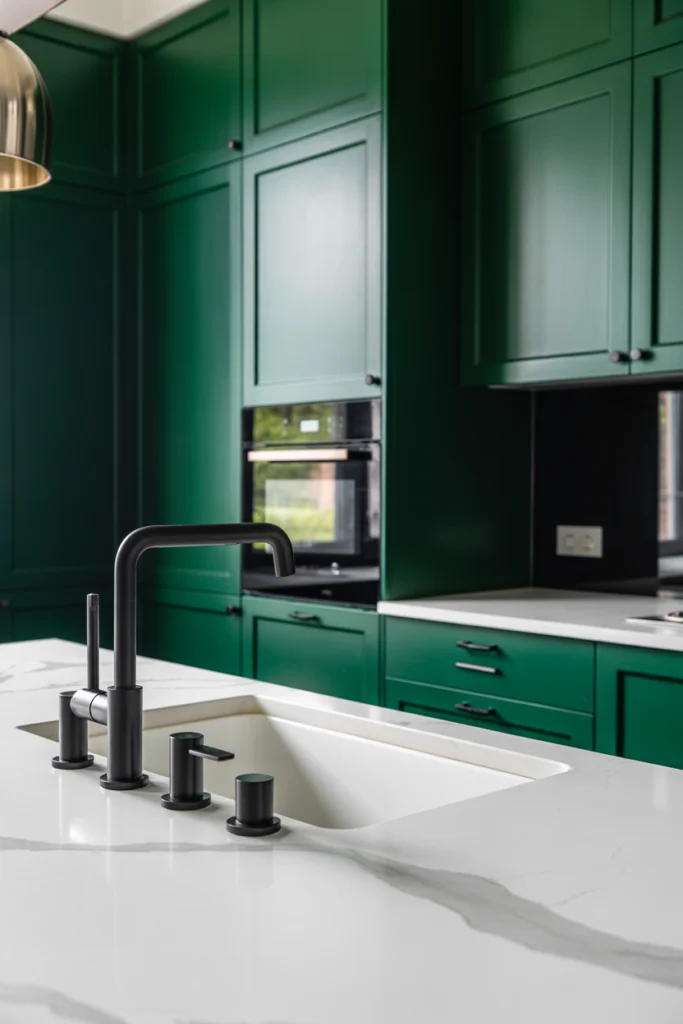
Adding black accents to a green kitchen creates a bold, modern contrast. Black hardware, fixtures, or light fittings ground the green tones and add visual interest, stopping a pale green from looking washed out and giving a dark green a crisp edge. Use black on the cabinet pulls, faucet, and pendant lights for a coordinated look.
This combination works well in contemporary kitchens where clean lines and strong contrasts define the design. Balance the black with a light countertop, such as white quartz, and a pale floor so the room does not feel heavy. In a small kitchen, keep the black to hardware and one light fixture rather than black cabinets or a black island, since too much dark can shrink the space. The result is a stylish, confident space with modern appeal that still feels warm because of the green.
13. Two-Tone Green Kitchen Cabinets
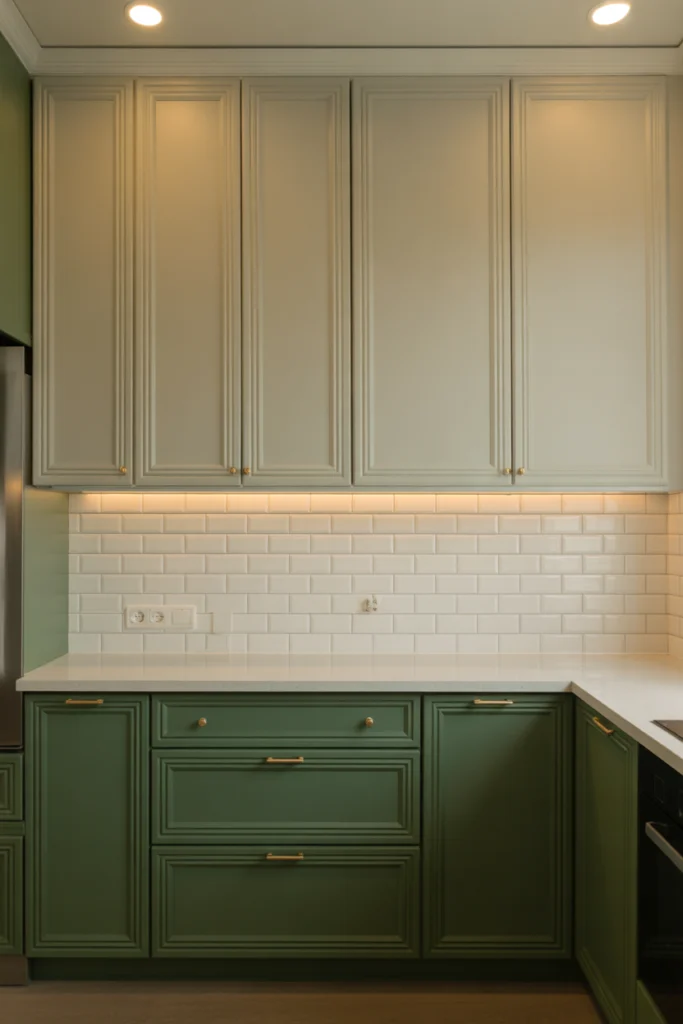
Two-tone green kitchens use different shades of green to create depth and dimension. Lighter greens on upper cabinets paired with darker greens below offer visual balance and sophistication, keeping the room bright at eye level while grounding it at the floor. A soft sage above and a deep forest below is a classic pairing that works in almost any kitchen.
This approach adds interest without overwhelming the space. Follow a simple ratio: roughly 60 percent of the room in the lighter shade, 30 percent in the darker shade, and 10 percent in a metal or wood accent. Keep the hardware in one finish across both greens so the two tones feel like one design rather than two separate kitchens. It is a great option for homeowners who want a unique kitchen design that still feels cohesive, and it works just as well with green paired with white or natural wood.
14. Green Kitchen with Marble Countertops
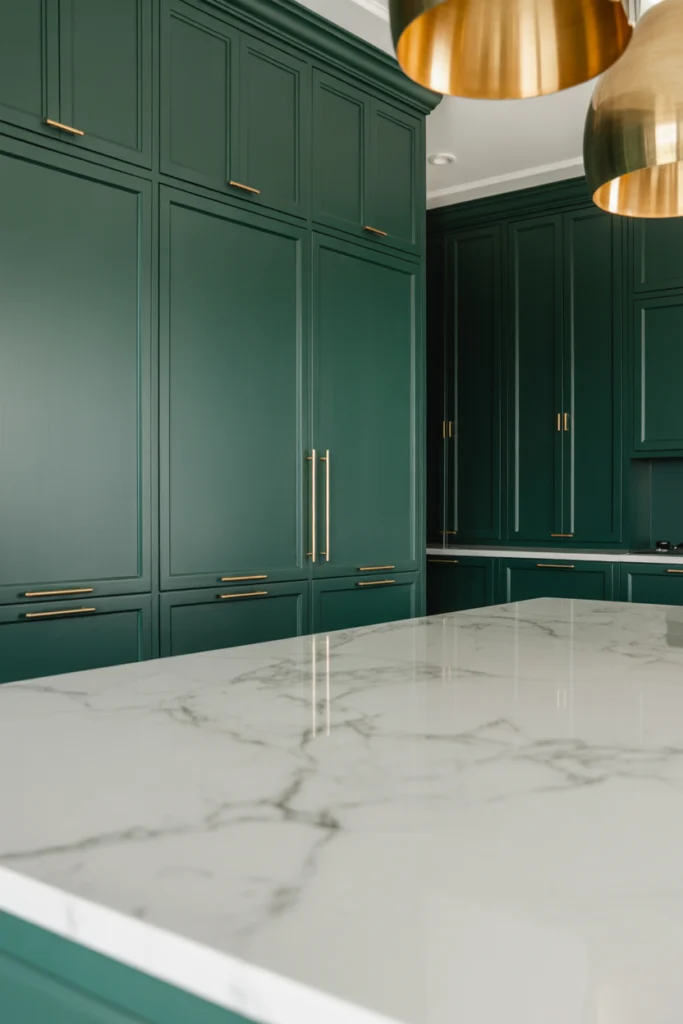
Marble countertops elevate any green kitchen by adding elegance and timeless beauty. The natural veining in marble complements green cabinetry, creating a refined and luxurious look. Carrara marble with soft gray veining suits sage and mint greens, while Calacatta marble with bolder gold veining pairs beautifully with dark greens like emerald and forest.
This pairing works across various green shades, from soft sage to deep emerald. Proper lighting enhances the marble texture, ensuring the kitchen feels bright and sophisticated: place under-cabinet lights so they wash across the countertop rather than pointing straight down. Remember that marble is porous, so seal it when installed and once a year after that, and wipe up acidic spills like lemon juice and vinegar quickly. If the maintenance worries you, white quartz with marble-like veining gives the same look with far less care. For help choosing the right palette around the stone, these kitchen color scheme ideas show how to balance bold cabinets with neutral surfaces.
15. Green Farmhouse Kitchen
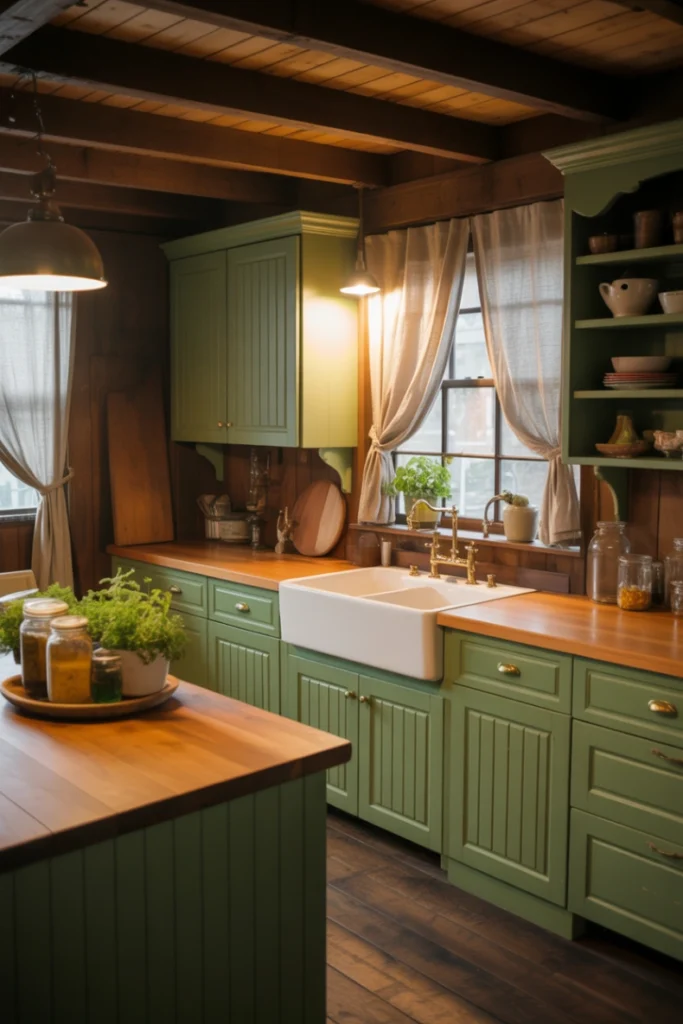
Green farmhouse kitchens blend rustic charm with modern comfort. Green cabinets paired with apron sinks, shiplap walls, and wooden accents create a cozy, inviting atmosphere that suits family life. Soft greens like sage, mint, and pale olive work best here, since they keep the farmhouse look relaxed rather than formal.
This style feels warm and welcoming, making it ideal for family homes. Add a white apron-front sink, cup pulls in aged brass, open shelves with everyday dishes, and a wooden beam or butcher block island to complete the look. Shiplap on one wall or the island front adds texture without much cost. Choose durable finishes, such as a scrubbable satin paint on the cabinets and a sealed wood countertop, so the kitchen stands up to daily use. Soft green tones work best to maintain a relaxed farmhouse aesthetic, and a few potted herbs on the windowsill add the finishing touch.
16. Minimalist Green Kitchen
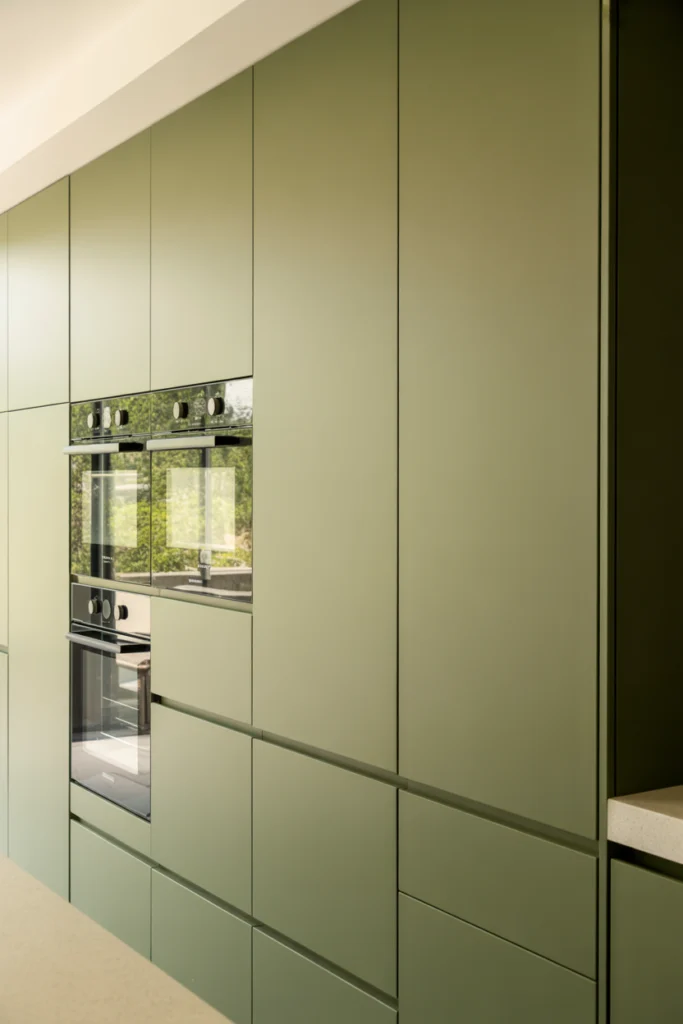
Minimalist green kitchens focus on simplicity, clean lines, and functionality. Subtle green tones add warmth without distracting from the minimalist design, so the room feels calm rather than stark. Choose a muted sage or a soft eucalyptus green, and keep the rest of the palette to white, light wood, and one metal.
Handle-less cabinets and integrated appliances keep the look sleek and uncluttered. This style is perfect for modern homes that prioritize simplicity and elegance, but it only works with good storage planning: include deep drawers, a tall pantry cabinet, and a drawer for small appliances so the countertops stay clear. Limit the room to two or three materials, keep decor to one or two pieces, and let the green be the only color. The result is a kitchen that feels spacious, calm, and easy to keep clean.
17. Green Kitchen with Open Shelving
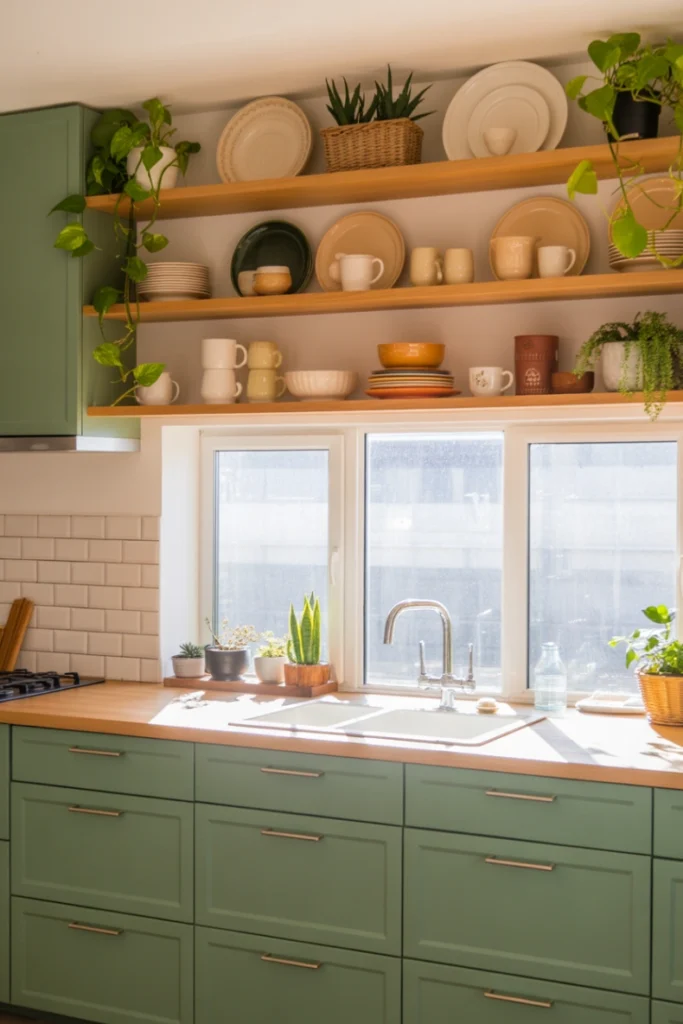
Open shelving paired with green cabinets adds personality and practicality. It allows homeowners to display dishware, plants, and decor while keeping the space open, and the green cabinetry provides a strong backdrop that highlights displayed items beautifully. Wood shelves work best against green, since the warm tone softens the color.
This design works well in smaller kitchens by reducing visual bulk. Replace one run of upper cabinets with two or three wood shelves, and style each shelf with three to five items, such as stacked white plates, a few glasses, and one small plant, leaving breathing room between groups. Keep everyday items on the lower shelf and decorative pieces higher up. Plan for dusting once a week, since open shelves collect grease near the stove. Green cabinetry behind the shelves makes even simple white dishes look styled, so you need fewer decorative pieces than you think.
18. Glossy Green Kitchen Cabinets
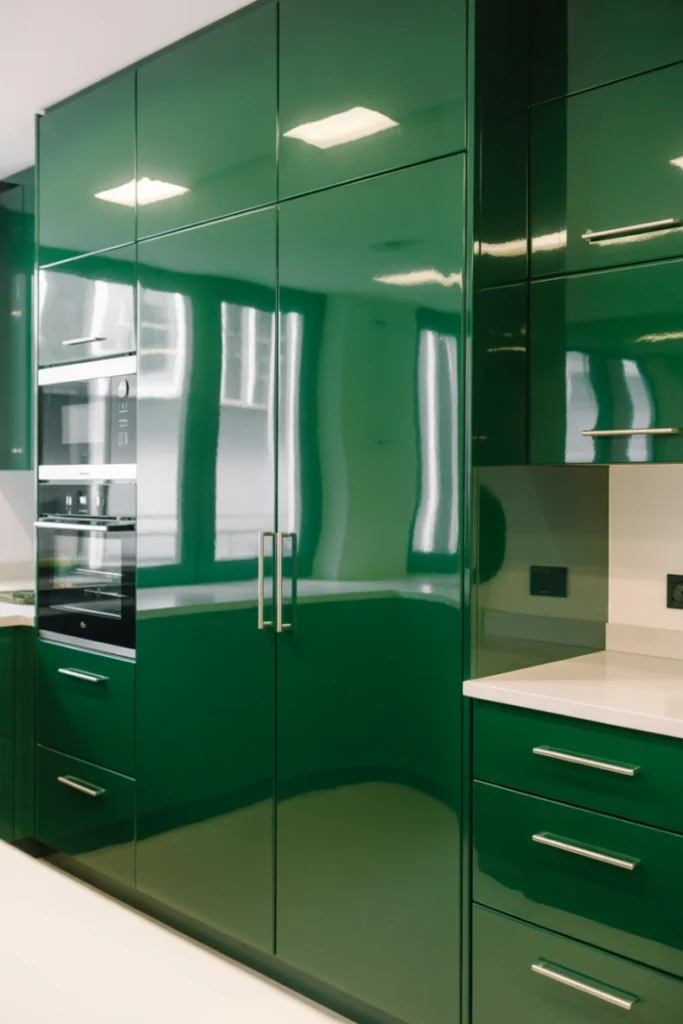
Glossy green cabinets reflect light, making kitchens feel brighter and more spacious. This finish works particularly well in contemporary and modern designs, and it is a smart choice for small or north-facing kitchens where every bit of reflected light helps. A high-gloss sage or emerald can make the room feel twice as bright as the same color in matte.
Paired with sleek hardware and minimal decor, glossy green kitchens feel fresh and dynamic. Proper lighting enhances the reflective surfaces for a polished look, so add under-cabinet strips and keep the ceiling lights on a dimmer. One trade-off is that gloss shows fingerprints and smudges more than matte, so keep a microfiber cloth handy and wipe the doors around the handles every few days. Choose a factory-applied high-gloss lacquer or acrylic door front rather than a DIY gloss paint for the smoothest, most durable finish.
19. Green Kitchen with Stone Backsplash
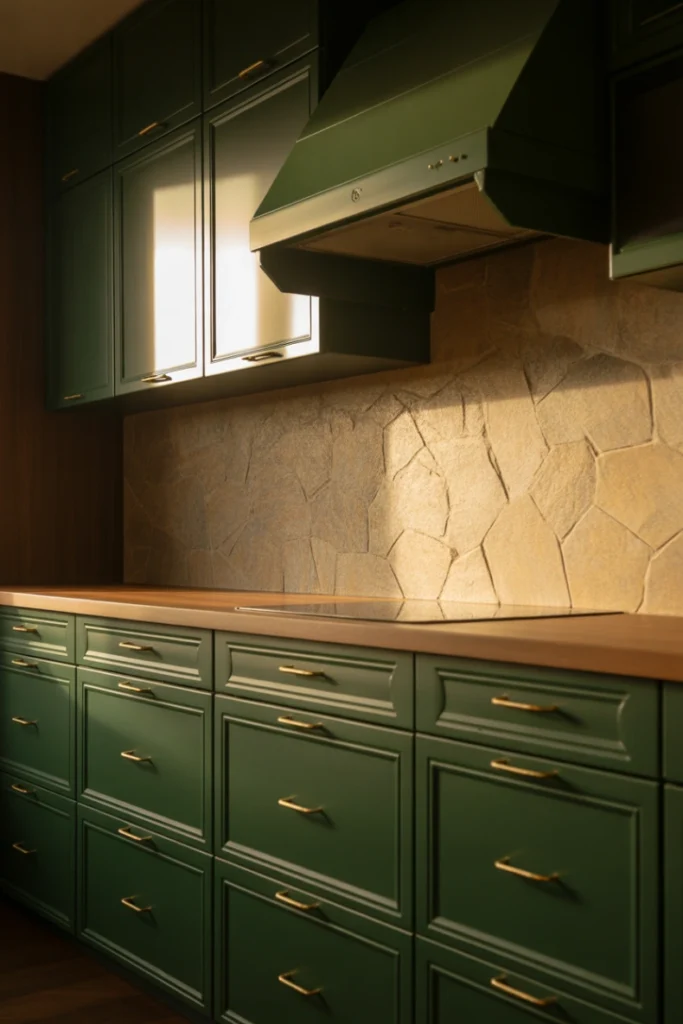
A stone backsplash adds texture and natural beauty to green kitchens. The combination enhances the organic feel of the space while maintaining elegance. Stacked stone, slate, and travertine all work well: slate suits dark greens, travertine suits sage and olive, and a pale stacked stone brightens a deep green kitchen without adding a new color.
Stone works well with earthy green tones, creating a cohesive, nature-inspired kitchen design that feels timeless and durable. Choose a grout color close to the stone so the joints disappear, and seal natural stone when it is installed and once a year after that to protect it from splashes. Run the stone from the countertop to the bottom of the upper cabinets, or take it all the way to the ceiling behind the range for a full feature wall. Keep the countertop simple, such as a honed white quartz, so the textured backsplash stays the star.
20. Retro-Inspired Green Kitchen
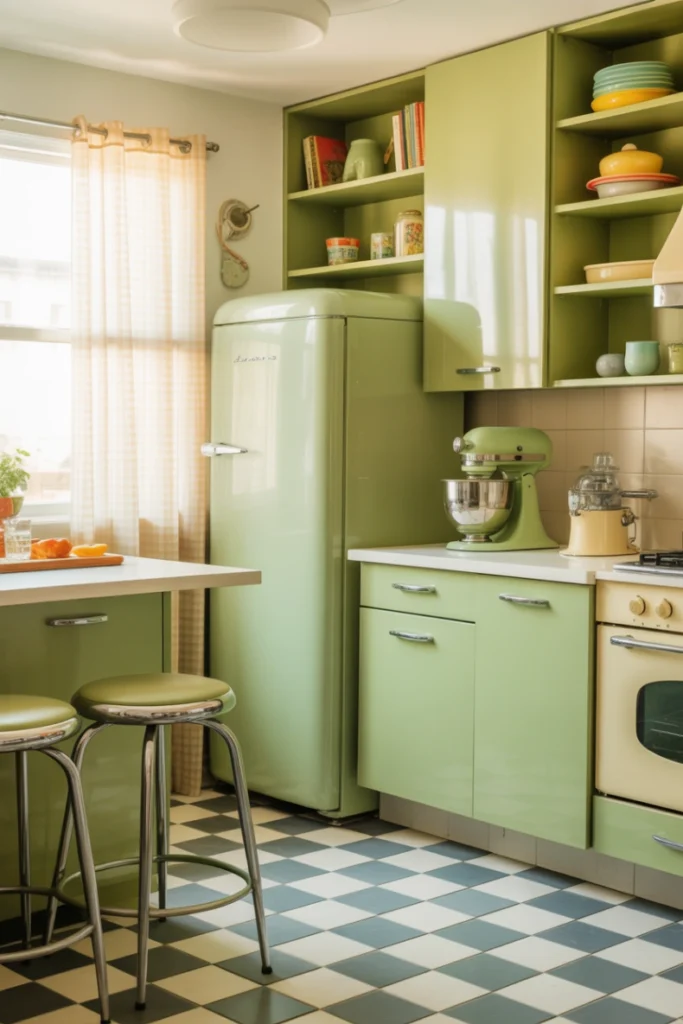
Retro green kitchens bring nostalgic charm with a modern twist. Soft green shades paired with vintage-style appliances and hardware create a playful yet stylish look, recalling mid-century kitchens without copying them exactly. Mint and pale pistachio green are the classic retro shades, and they pair well with cream rather than stark white.
This design works well in homes that embrace character and personality. Add chrome cup pulls, a checkerboard or patterned tile floor, and one vintage-style appliance, such as a rounded refrigerator or a retro kettle, to set the theme. Careful balance ensures the kitchen feels fun without looking outdated: keep the cabinets and countertops modern in quality, and let only the color, hardware, and one or two accessories carry the retro feel. A simple white or cream countertop keeps the look fresh rather than costume-like.
21. Green Kitchen with Brass Fixtures
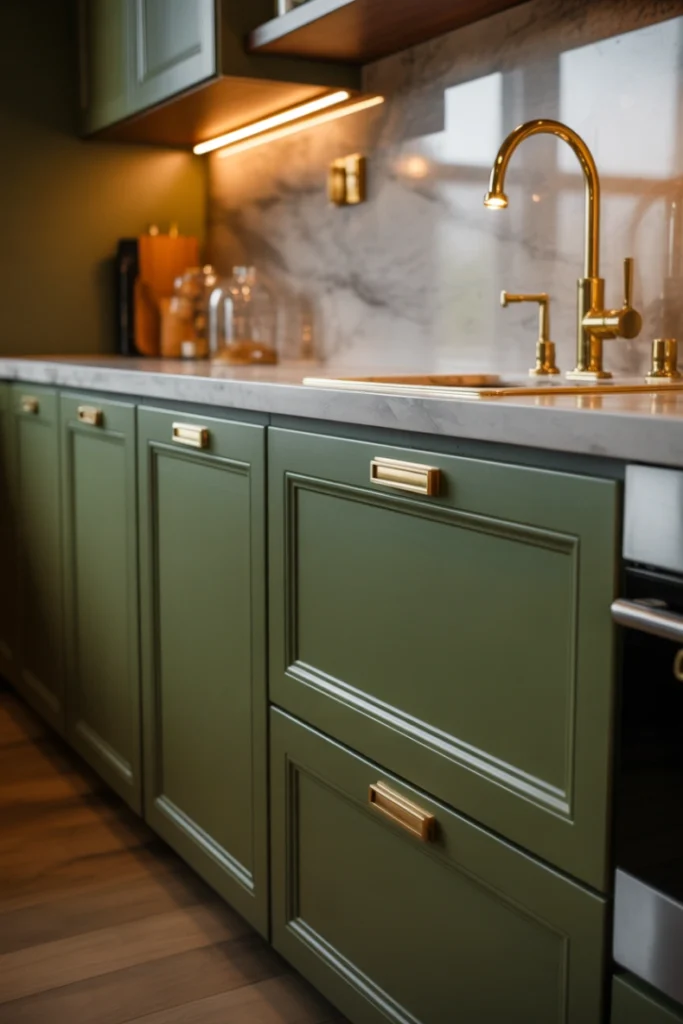
Brass fixtures add warmth and elegance to green kitchens. This combination enhances both modern and classic designs, creating a rich visual contrast that makes the green look deeper and the brass look brighter. Green cabinets paired with brass taps, handles, and lighting create a cohesive and luxurious aesthetic that feels timeless.
Use one brass finish throughout the room for the best result: lacquered brass stays bright and needs little care, while unlacquered brass develops a natural patina that suits farmhouse and vintage kitchens. Match the faucet, cabinet pulls, and pendant lights in the same finish, and keep the other metals out of the room. Brass works with every green, from pale sage to deep emerald, but it looks especially good against dark greens where the warm metal pops. Wipe unlacquered brass with a soft cloth and avoid harsh cleaners so the patina develops evenly.
22. Dark Green Small Kitchen Design
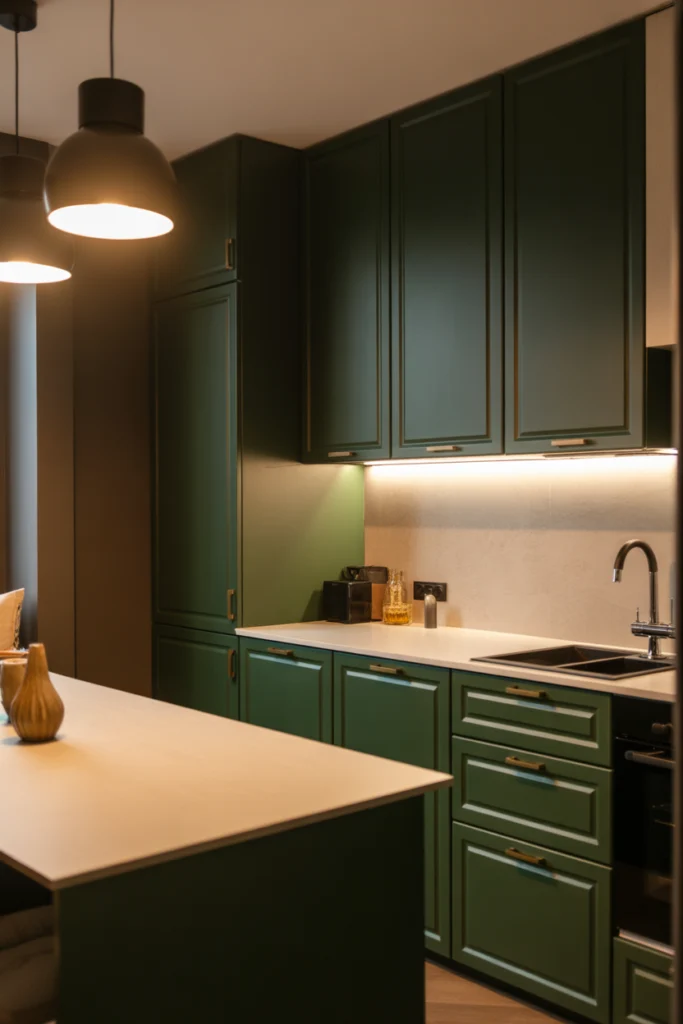
Dark green can work beautifully in small kitchens when paired with proper lighting and reflective surfaces. It adds depth and character without overwhelming the space, and in a compact room the rich color can actually make the kitchen feel more intentional and designed, rather than plain and cramped.
Using light countertops and strategic lighting ensures the kitchen remains bright and functional. Choose white or pale quartz counters, a light floor, and glass-front upper cabinets or open shelves so the eye travels through the room. Add under-cabinet LED strips, a light backsplash such as white subway tile or a mirror finish, and one statement pendant to keep the room glowing. Keep the hardware slim and the decor minimal. This design proves that bold colors can work in compact spaces, as long as every dark surface is balanced by a light one nearby.
Final Thoughts
Green kitchen ideas offer endless possibilities for creating a space that feels fresh, stylish, and timeless. From soft sage tones to bold emerald designs, green adapts beautifully to every kitchen style and size. Whether you prefer modern minimalism, rustic charm, or luxury aesthetics, green kitchens provide a versatile foundation that enhances both functionality and visual appeal.
By choosing the right shade, materials, and finishes, you can transform your kitchen into a space you will love for years to come. Start by testing large paint samples in your own light, pick the countertop after the cabinet color, and commit to one metal finish throughout. If you are unsure where to begin, start small with a green island or a single accent wall, then build the rest of the room around it.
Frequently Asked Questions
What is the best shade of green for a kitchen?
There is no single best shade, because it depends on your light and your style. Sage green suits almost every kitchen and works in small and large spaces alike. Dark greens like forest and emerald suit large, bright kitchens and classic or modern looks. Light greens like mint and pastel suit small or dark kitchens because they reflect light. Always test a large sample in your own kitchen before you commit.
Do green kitchen cabinets go out of style?
Green has stayed popular for many years because it is a classic, nature-inspired color rather than a short-lived trend. Soft sage and deep forest green have been used in kitchens for decades, and they still look current. Choosing a timeless shade, rather than a very bright or unusual one, makes the kitchen age gracefully, and green pairs easily with new hardware or decor if you want a refresh later.
What countertop goes best with green cabinets?
White quartz or white marble with light gray veining is the safest and most popular choice, since it keeps the room bright and suits every shade of green. Butcher block adds warmth and suits farmhouse and rustic kitchens, while dark soapstone suits a dramatic dark green kitchen. Pick the countertop after the cabinet color, and check the two together in daylight before you order.
What hardware looks best with green kitchen cabinets?
Brass and gold warm up green and feel classic, matte black adds a modern edge, and brushed nickel or chrome keeps the look cool and contemporary. Choose one metal and use it for the pulls, faucet, and light fittings so the room feels coordinated. Avoid mixing three different metals in one kitchen, since the green already gives the room plenty of character.
Can I paint my existing kitchen cabinets green?
Yes, painting is the cheapest way to get a green kitchen. Clean and degrease the doors, sand lightly, prime with a good bonding primer, then apply two coats of a durable cabinet paint in satin or semi-gloss. Remove the doors and hardware first for the smoothest finish, and allow each coat to dry fully before the next. A single weekend is usually enough for a small kitchen, and new hardware afterward makes the change look complete.
More Ideas You Will Love
 17 Kitchen Countertop Design Ideas You’ll Love for Any Style
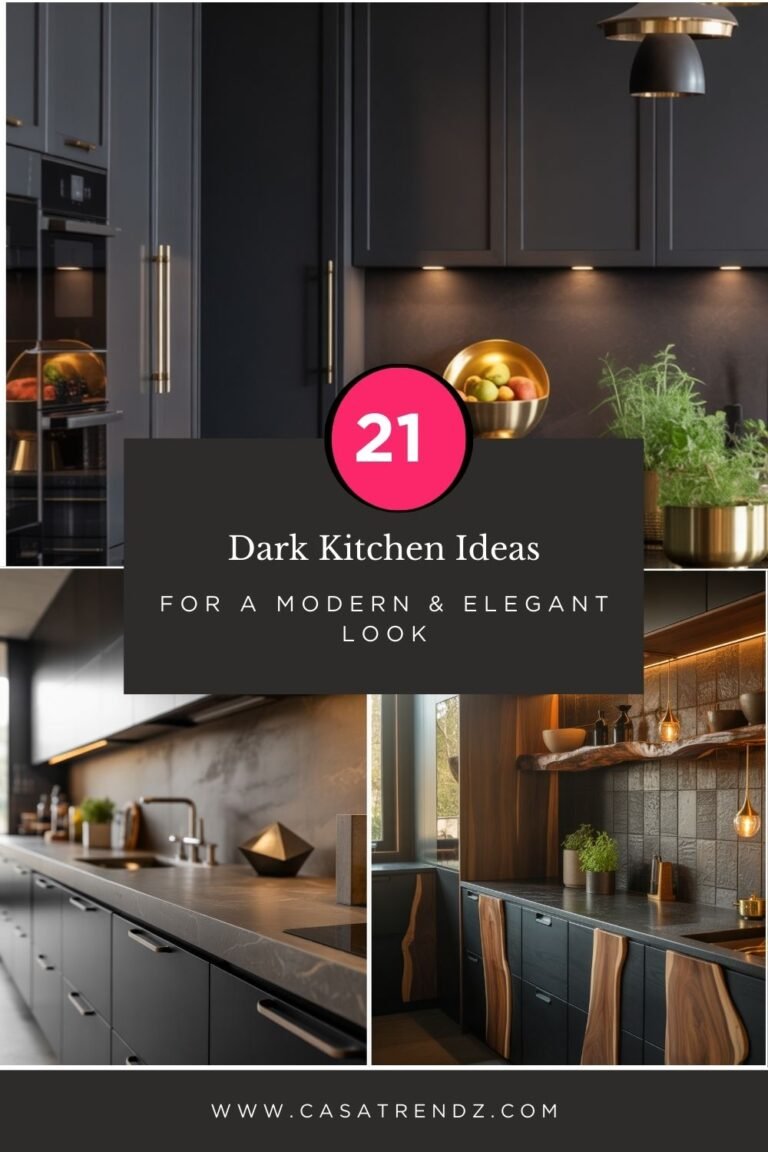 21 Dark Kitchen Ideas for a Modern & Elegant Look
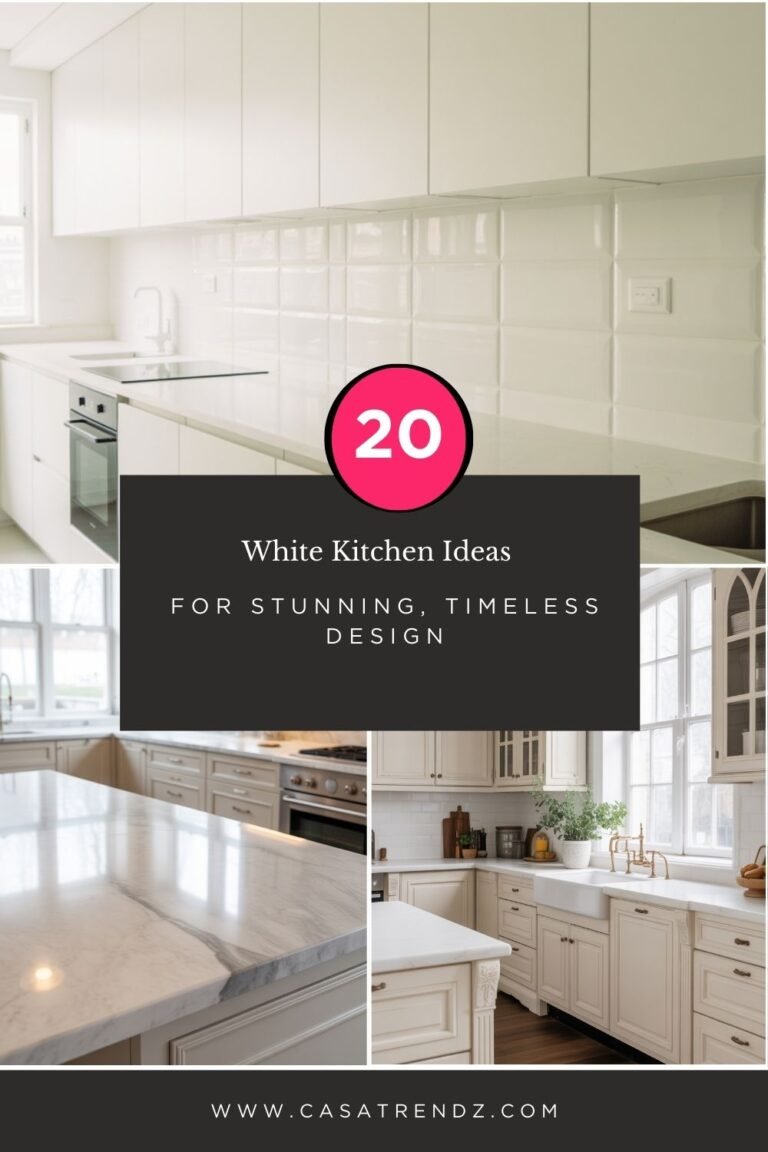 20 White Kitchen Ideas for Stunning, Timeless Design
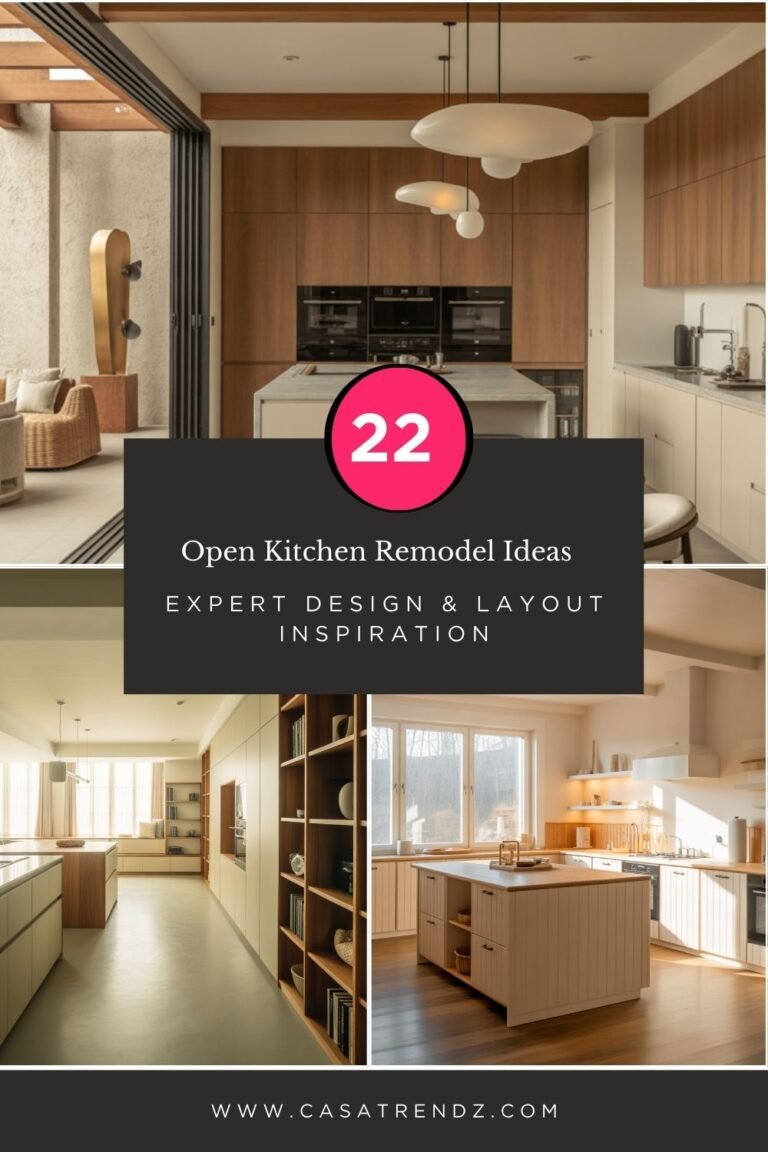 22 Open Kitchen Remodel Ideas for 2026 – Expert Design & Layout Inspiration
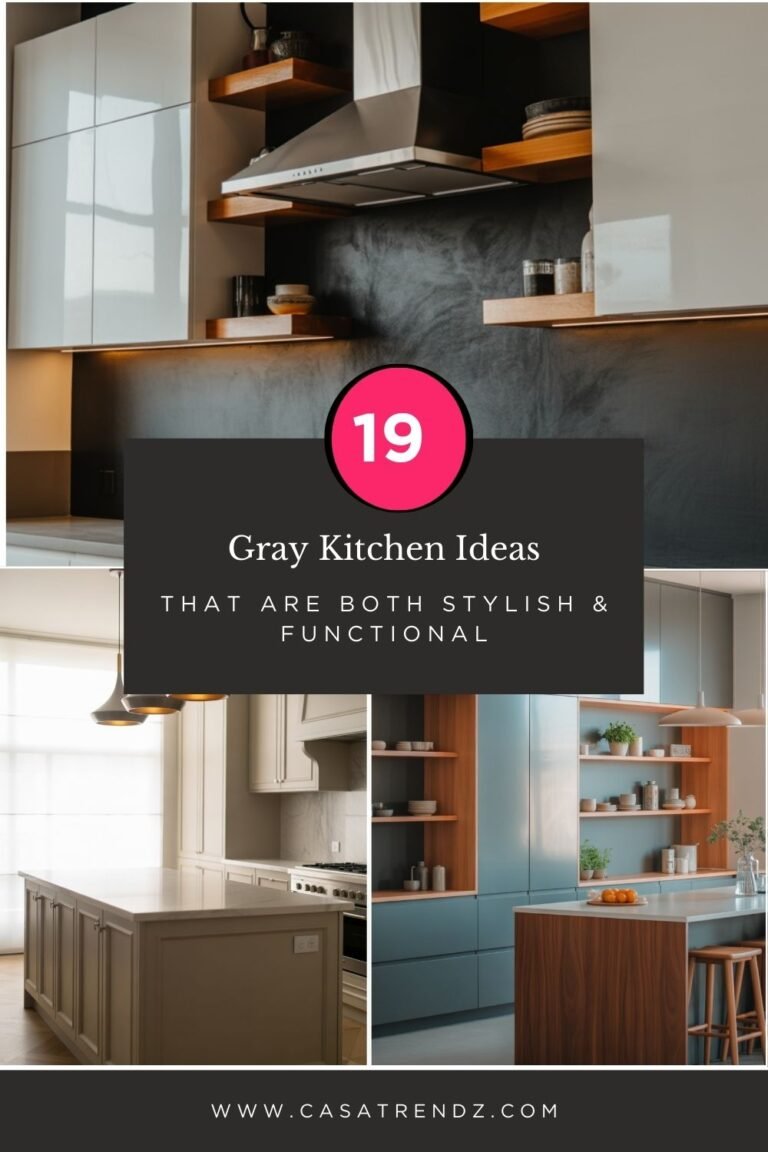 19 Gray Kitchen Ideas That Are Both Stylish & Functional
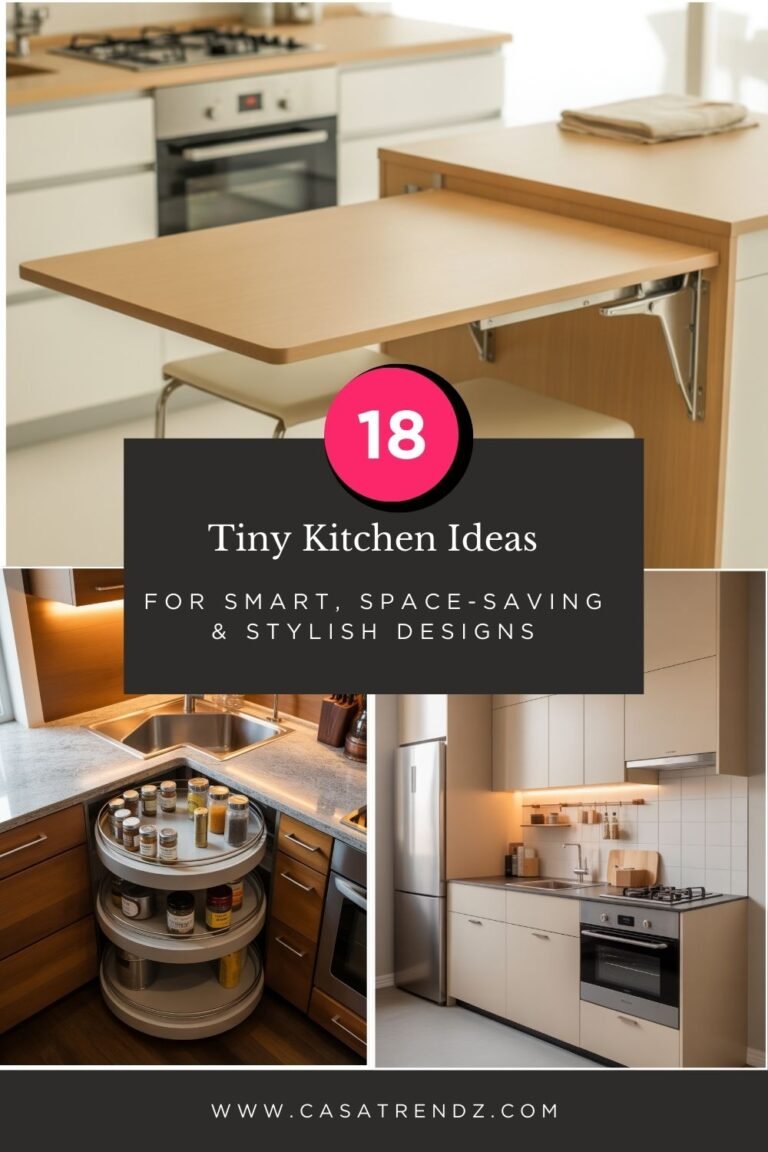 18 Tiny Kitchen Ideas for Smart, Space-Saving & Stylish Designs