
12 Common Summer Gardening Mistakes (And How to Avoid Them!)

Summer is the season when a garden finally shows off. Tomatoes swell on the vine, flowers open in bright color, and herbs grow fast enough to cut every week. The long days and warm soil give plants everything they need to grow quickly, and for a few months the garden feels almost unstoppable. But summer heat is a double edged sword. The same sun that powers growth can dry out soil in a day, stress roots, invite pests, and turn small careless habits into real damage before you notice anything is wrong.
Most summer gardening mistakes are not caused by laziness. They come from doing too much of a good thing, like watering every day, or from trusting a routine that worked in spring but no longer fits July heat. The good news is that nearly every one of these mistakes is easy to fix once you can spot it. A small change in timing, a layer of mulch, or a quick weekly check can be the difference between a garden that struggles through August and one that keeps producing right into fall.
This guide walks through the 12 most common summer gardening mistakes and shows you exactly how to avoid each one, with the measurements, materials, and step by step habits that actually work in hot weather. Fix even half of them and your plants will look healthier, your harvest will be bigger, and your garden will need less rescuing on the hottest days of the year.
1. Overwatering Your Plants
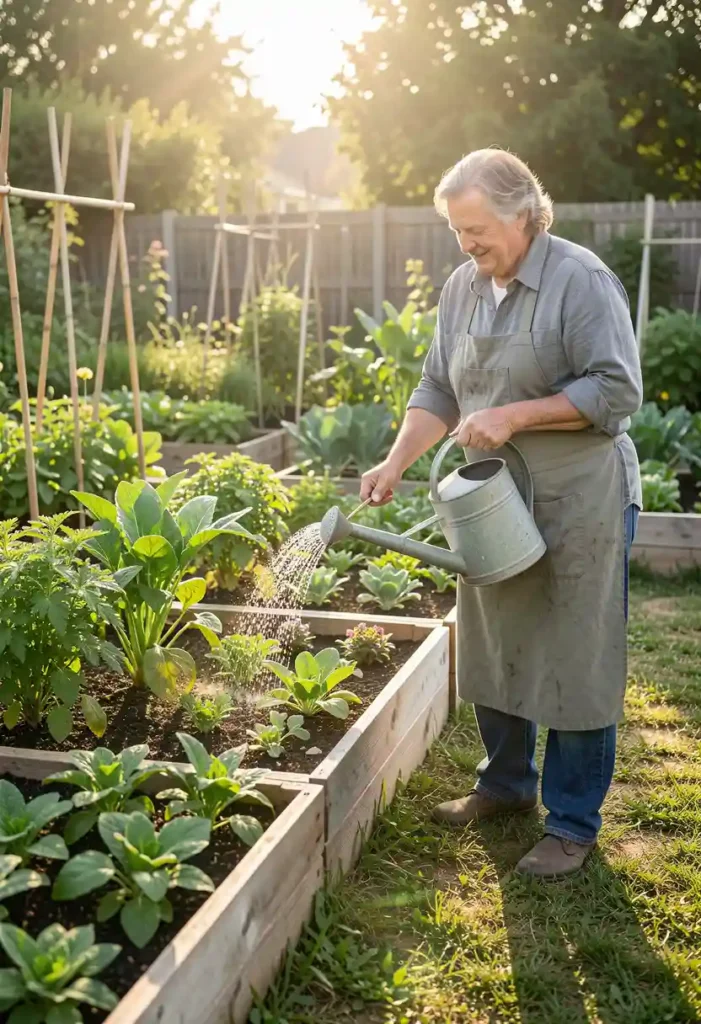
Overwatering is the most common summer gardening mistake, and it usually starts with good intentions. When the air feels hot and the soil surface looks dry, it is tempting to water every day. But a dry top inch of soil does not mean the roots are thirsty. Watering too often keeps the soil soggy, pushes oxygen out of the root zone, and creates the perfect conditions for root rot and fungal disease. Plants with waterlogged roots turn yellow, grow slowly, and wilt even though the soil is wet, which tricks many gardeners into watering even more.
The fix is simple: check before you water. Push your finger 2 inches into the soil near the base of the plant. If the soil feels moist at that depth, wait another day. If it feels dry, water deeply until moisture reaches 6 to 8 inches down, then let the top layer dry out again before the next watering. Most established garden plants do best with 1 to 1.5 inches of water per week, delivered in two or three deep soakings rather than a light sprinkle every day. Deep watering trains roots to grow downward, where the soil stays cooler and holds moisture longer.
Container plants are the exception, since pots dry out much faster than garden beds. In high heat, a large pot may need water every day, while a small pot can need it twice a day. Use pots with drainage holes, empty the saucer after watering, and choose a potting mix with perlite or coarse bark so excess water drains away instead of sitting around the roots. A cheap moisture meter, usually under 15 dollars, takes the guesswork out of the whole job and pays for itself the first time it stops you from drowning a tomato plant.
2. Watering at the Wrong Time of Day
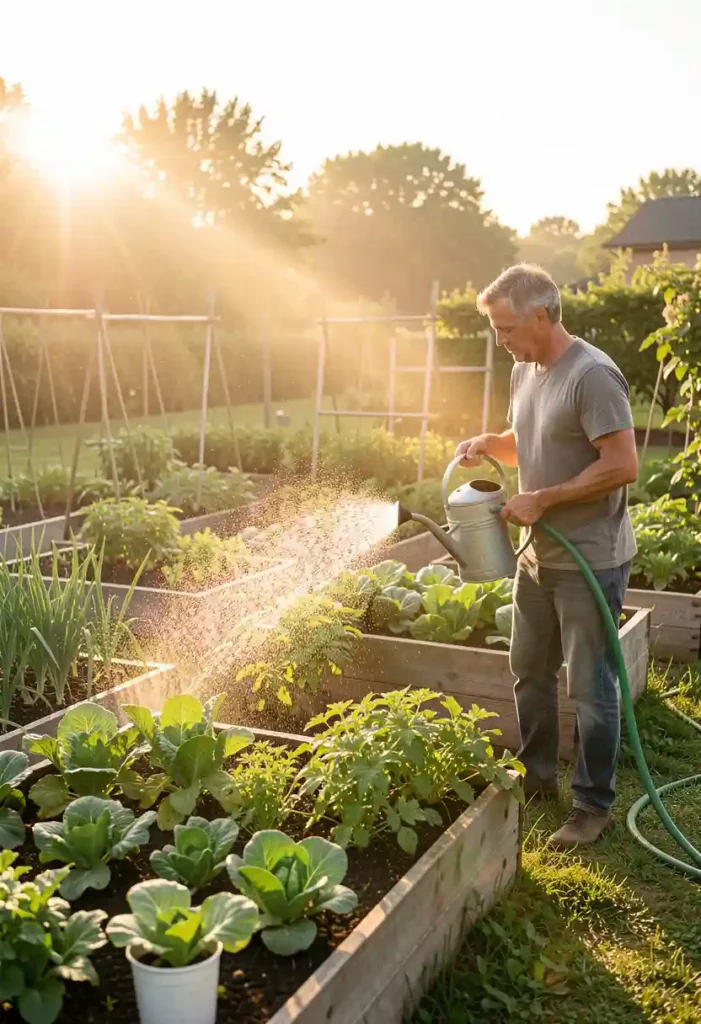
Watering at midday is one of the most wasteful habits in summer gardening. When the sun is at its strongest, between 11 in the morning and 3 in the afternoon, much of the water evaporates before it ever reaches the roots. What does reach the leaves can act like a magnifying glass in intense sun, scorching tender foliage, and wet leaves that stay damp into a hot afternoon invite fungal problems like powdery mildew and blight. A midday watering can easily lose half its water to the air.
The best time to water is early in the morning, between 6 and 9, when the air is cool and the sun is still low. Water applied then soaks deep into the soil, roots have all day to absorb it, and any drops on the leaves dry quickly once the sun rises. If mornings are impossible, late afternoon is the next best choice, but aim to finish by 5 so the foliage dries before nightfall. Wet leaves overnight are an open invitation to disease.
How you water matters as much as when. Aim the water at the base of the plant, not over the top. A soaker hose or drip irrigation line laid along the bed delivers water straight to the root zone and can cut water use by 30 to 50 percent compared with a sprinkler. For hand watering, use a watering can with a rose head or a hose with a gentle shower setting, and water slowly so it soaks in instead of running off. If you want to use every drop wisely, these water conservation gardening tips show how to mulch, collect rainwater, and schedule watering so less water does more work in your garden.
3. Ignoring Mulch
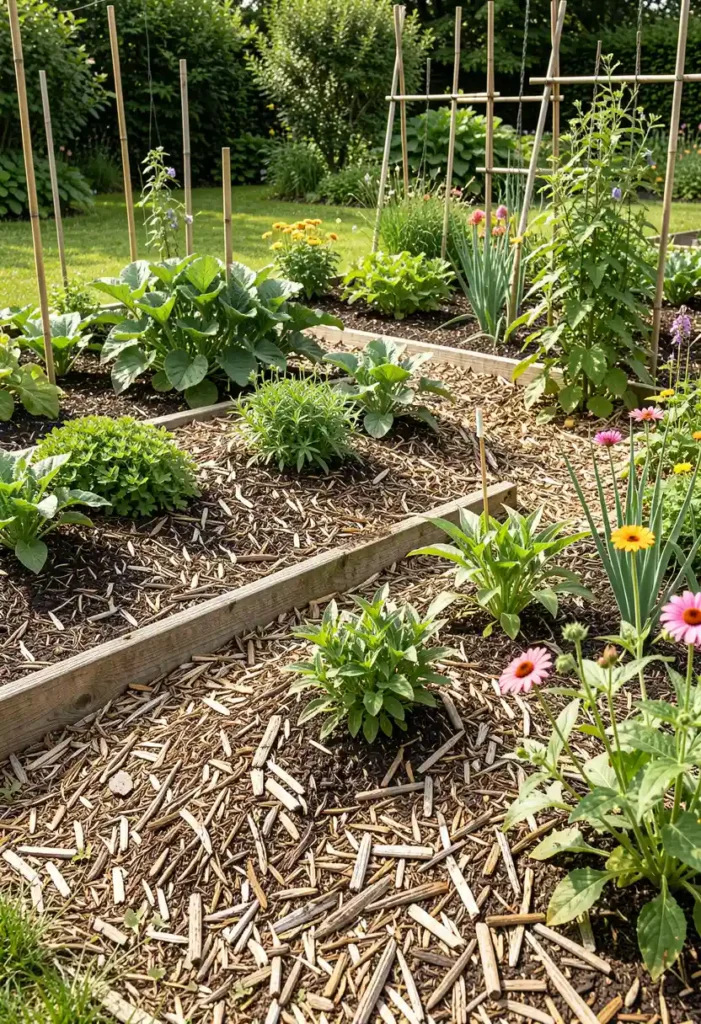
Skipping mulch is a mistake that costs your garden all summer long. Bare soil in July can reach 120 degrees Fahrenheit or more, which cooks shallow roots, dries out the top few inches within hours, and forces you to water constantly. Mulch acts like a blanket: it keeps soil cooler by 10 to 15 degrees, slows evaporation so moisture stays in the ground longer, and blocks sunlight so weed seeds cannot germinate. It also feeds the soil as organic mulch breaks down, improving structure and inviting earthworms.
Apply mulch in a layer 2 to 3 inches thick around plants, spreading it out to the drip line of the plant but keeping it 2 inches away from stems and trunks. Piling mulch against a stem traps moisture and invites rot and pests. The best summer mulches are organic: straw, shredded bark, wood chips, shredded leaves, or finished compost. Straw is ideal for vegetable beds because it is light, cheap, and breaks down fast. Wood chips last longer and suit paths and shrub beds. Avoid dyed mulch in vegetable gardens, since the colorants add nothing and the wood is often lower quality.
Replenish mulch once or twice during the season, since a 3 inch layer can settle to half that thickness by August. A quick top up takes ten minutes and immediately cuts your watering in half on hot weeks. If you want the full picture of why this one layer matters so much, read these reasons why your garden needs mulching this summer before your next trip to the garden center.
4. Planting Heat-Sensitive Plants Too Late
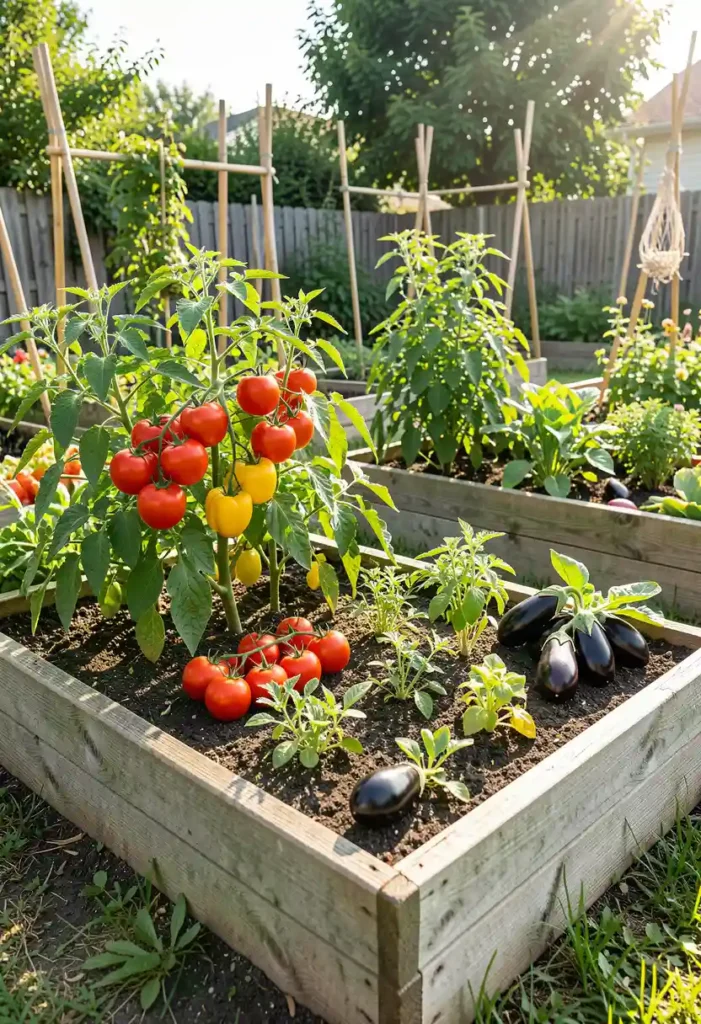
Planting at the wrong time is a quiet mistake that shows up weeks later as bolted lettuce, bitter spinach, and flowers that never open. Cool season crops like lettuce, spinach, peas, cilantro, and radishes thrive in spring temperatures of 60 to 70 degrees, but once daytime highs pass 80 degrees they bolt, which means they rush to flower and set seed instead of producing the leaves you want to eat. The leaves turn bitter, the plants stop growing, and the bed is wasted for the rest of the season.
The fix starts before you plant. Check the seed packet or plant label for the days to maturity and the heat tolerance, then count backward from your first expected heat wave, not from the last frost. In most regions, cool season crops should be in the ground 4 to 6 weeks before summer heat arrives. For summer itself, switch to heat lovers: tomatoes, peppers, eggplant, okra, sweet potatoes, beans, cucumbers, squash, and melons all grow best when daytime temperatures sit between 80 and 95 degrees.
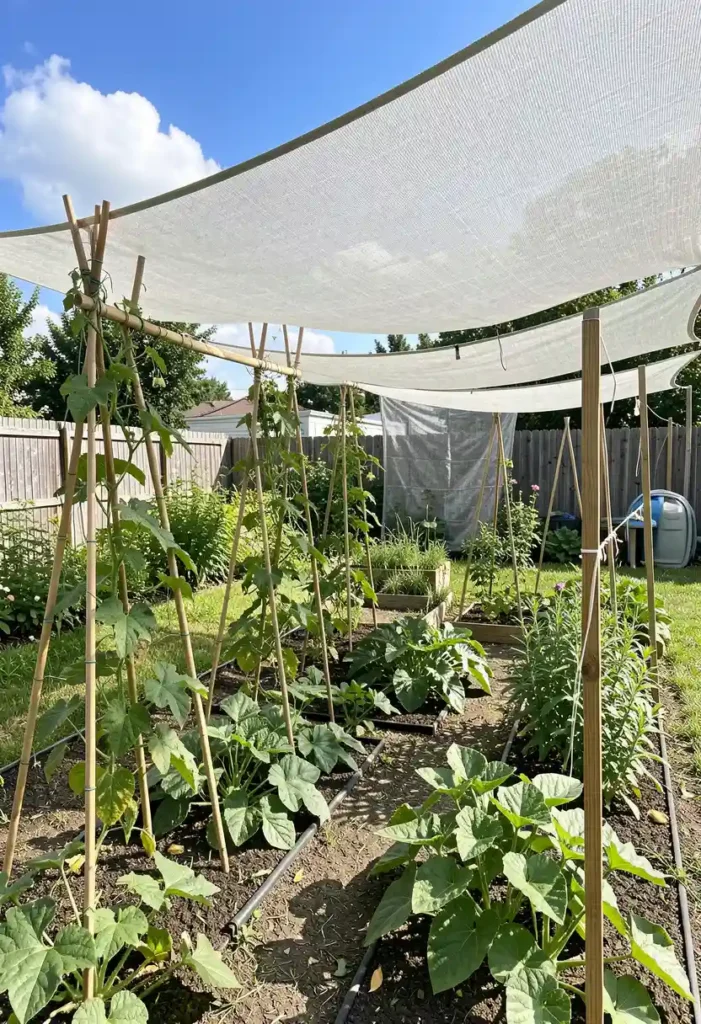
If you already have tender plants in the ground when a heat wave hits, give them temporary shade. A piece of shade cloth rated at 30 to 50 percent, draped over hoops or stakes 12 inches above the plants, can drop the temperature underneath by 10 degrees and buy you two or three extra weeks of harvest. Water these beds in the morning so the plants are fully hydrated before the heat peaks, and harvest leafy greens early in the day when they are crispest.
5. Forgetting to Check for Pests
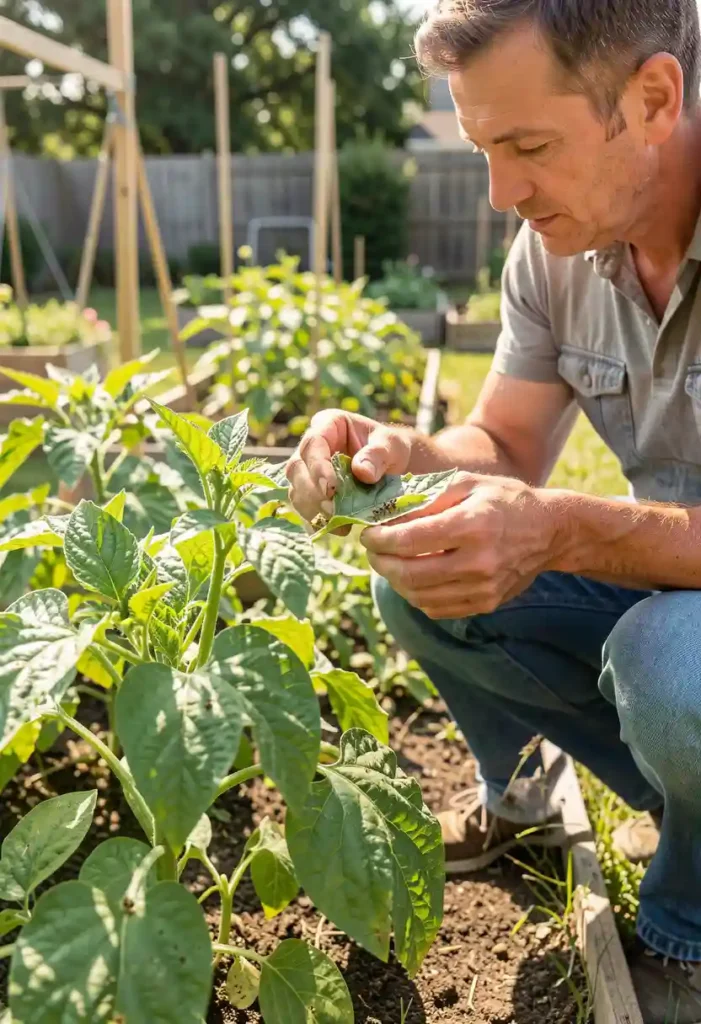
Warm summer weather is paradise for garden pests. Aphids, spider mites, whiteflies, caterpillars, and squash bugs can double their numbers in a few days, and a small problem spotted on Monday can be a full infestation by Friday. The mistake is not checking at all: most gardeners look at their plants from a distance, but pests hide on the undersides of leaves, inside curled new growth, and along the stems where they are easy to miss.
Make a quick inspection part of your routine, two or three times a week. Turn over a few leaves on each plant and look for clusters of tiny insects, fine webbing, sticky residue called honeydew, holes, or curled and yellowed foliage. Catching aphids early means you can blast them off with a strong jet of water from the hose, which is often all it takes. Hand pick caterpillars and drop them in a bucket of soapy water. For larger problems, spray insecticidal soap or neem oil in the evening, when bees are less active and the sun cannot burn wet leaves.
Prevention works better than any spray. Plant flowers like marigolds, nasturtiums, and alyssum near your vegetables to attract ladybugs, lacewings, and hoverflies that eat aphids. Keep the garden tidy, since piles of debris shelter slugs and squash bugs. Rotate crops each year so soil pests cannot build up in one bed. And when you need a gentle, chemical free approach, these organic pest control tips explain exactly which natural sprays and companion plants work best for each common summer pest.
6. Overcrowding Plants
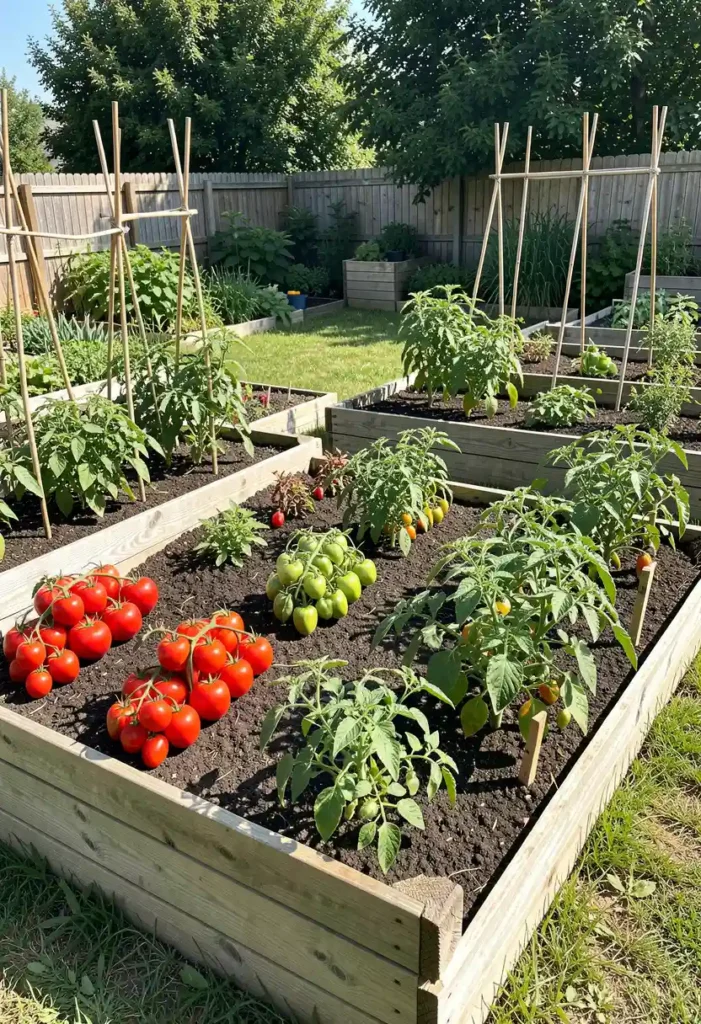
Cramming too many plants into a bed feels efficient, but it backfires all summer. Crowded plants compete for sunlight, water, and nutrients, so every plant grows weaker than it would alone. Air cannot move between packed leaves, and that still, humid air is exactly what fungal diseases like powdery mildew and blight need to spread. A crowded tomato bed can lose half its harvest to disease that good spacing would have prevented.
Follow the spacing on the seed packet or plant label, even when the seedlings look small and the bed looks empty. As a guide, space tomatoes 24 to 36 inches apart, peppers 18 inches apart, squash 36 to 48 inches apart, and lettuce 8 to 12 inches apart. Those gaps look wide in May, but by July the plants will fill them completely. If you want more plants in the same space, use vertical growing: train cucumbers, beans, and squash up a trellis or fence, which can double the number of plants in a bed without crowding them at ground level.
If a bed is already overcrowded, thin it now rather than waiting. Pull the weakest seedlings and compost them, or transplant the extras into another bed or a large container. Then prune the lower leaves of tomatoes and other tall plants to open up airflow, aiming for a clear 12 inches of open stem at the base. The remaining plants will reward you with bigger fruit, healthier leaves, and far fewer disease problems for the rest of the season.
7. Neglecting Soil Nutrition
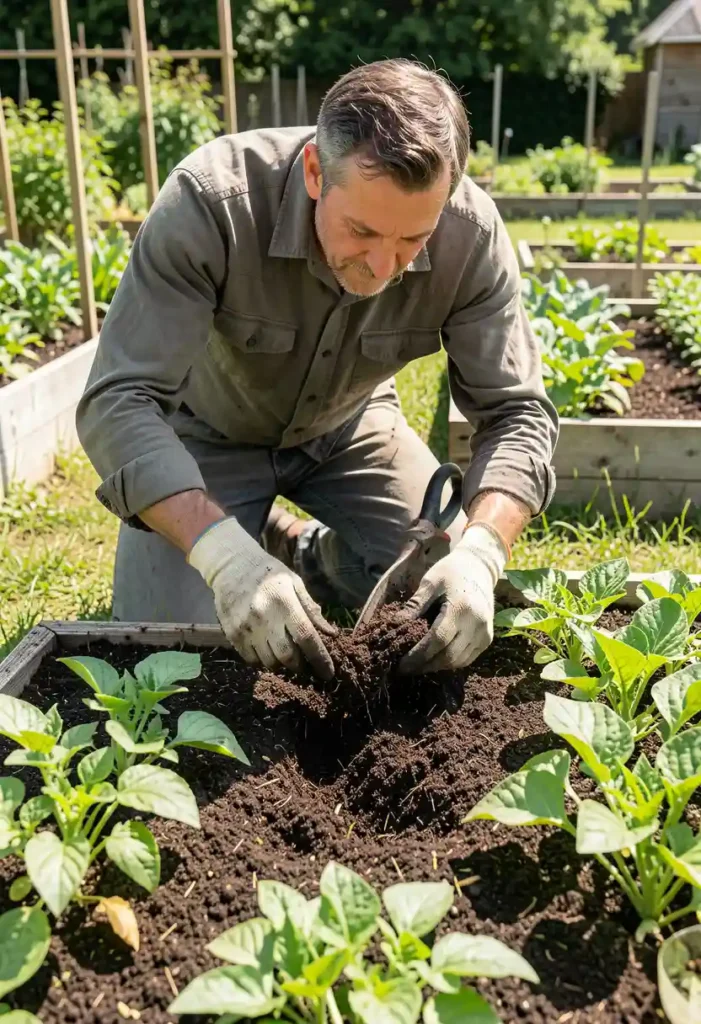
Summer plants grow fast, and fast growth eats nutrients fast. A tomato plant can pull a surprising amount of nitrogen, phosphorus, and potassium out of the soil in a single month, and by midsummer many beds are running on empty. The signs are easy to miss at first: pale or yellowing lower leaves, weak stems, fewer flowers, and fruit that stays small or ripens slowly. Gardeners often blame heat or water, but the real problem is an empty pantry.
Feed your garden little and often rather than in one big dose. Start the season by mixing 2 to 3 inches of finished compost into the top 6 inches of soil. Then side dress heavy feeders like tomatoes, peppers, and squash every 3 to 4 weeks with a handful of compost or a balanced organic fertilizer, such as a 5-5-5 blend, worked lightly into the soil around the plant and watered in well. Liquid feeds like compost tea or diluted fish emulsion work faster and are ideal for container plants, which lose nutrients every time you water.
Watch the leaves for clues about what is missing. Yellow lower leaves usually mean low nitrogen, while purple tinged stems can point to low phosphorus, and brown leaf edges often mean low potassium. A simple soil test kit, available for under 20 dollars, tells you exactly what your soil needs and saves you from guessing. Healthy soil is not just about fertilizer: the compost you add also improves soil structure, helps sandy soil hold water, loosens clay soil, and feeds the microbes that help roots absorb nutrients.
8. Ignoring Weeds
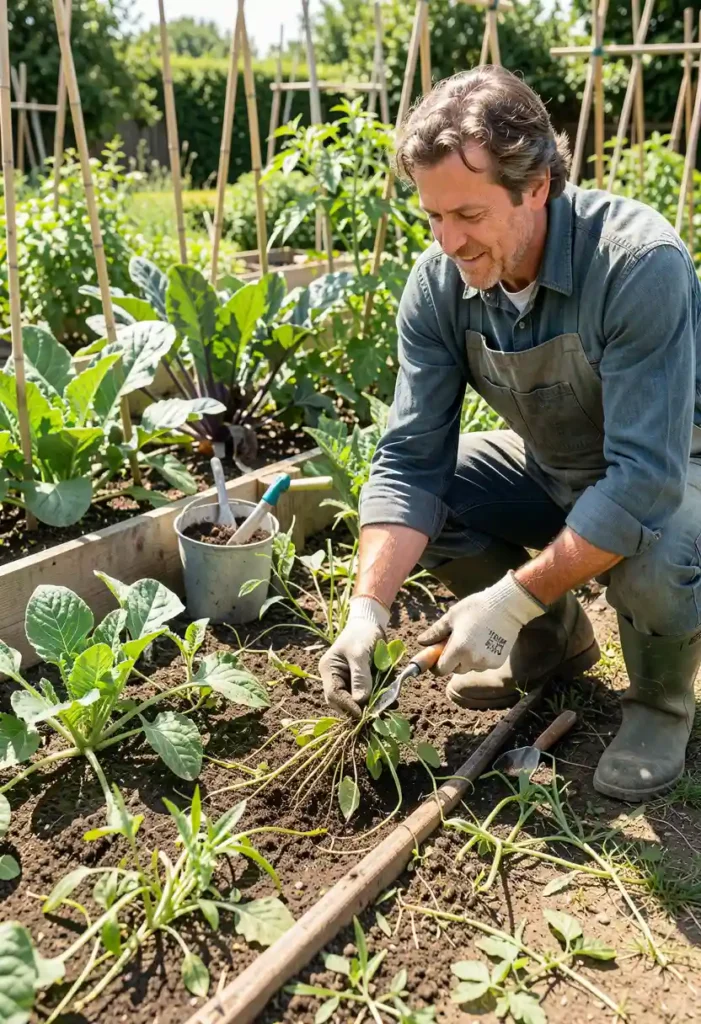
Weeds grow faster than anything else in a summer garden, and ignoring them for even a week can cost you. A single crabgrass plant can produce thousands of seeds, and weeds steal water, sunlight, and nutrients from your vegetables and flowers. Worse, dense weed growth shelters slugs, aphids, and other pests, and it blocks airflow around your plants, which invites disease. By August, an untended bed can be more weed than crop.
Weed little and often, and always pull weeds before they set seed. The best time is after rain or watering, when the soil is soft and roots slide out whole. Use a hand fork or a hoe for shallow weeds, and pull deep rooted weeds like dandelions with the whole taproot, since a broken root regrows. A sharp hoe used every week on dry soil slices weed seedlings off at the surface before they establish, and the whole job takes ten minutes per bed.
Prevention is easier than pulling. A 2 to 3 inch layer of mulch blocks most weed seeds from sprouting, and landscape fabric under paths and around shrubs stops weeds without chemicals. Water your plants, not the weeds: drip lines and soaker hoses wet only the root zone, while sprinklers water the whole bed and help weeds germinate everywhere. Spend ten minutes weeding every few days and the job stays small; leave it for a month and it becomes a weekend project.
9. Not Providing Shade for Sensitive Plants
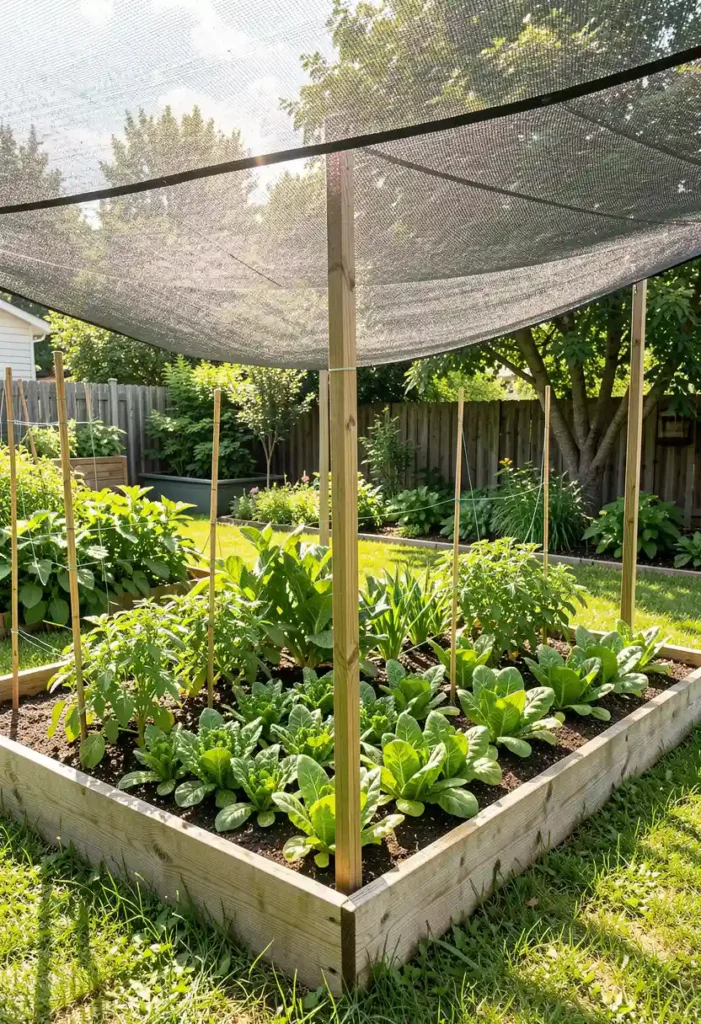
Not every plant loves full sun, even in summer. Leafy greens, young seedlings, herbs like cilantro and parsley, and many flowering plants wilt, scorch, and stop producing when the midday sun hits 90 degrees or more. The mistake is treating all plants the same: a tomato thrives in blazing sun, but lettuce planted in the same open bed will bolt and turn bitter within days. Heat stress shows up as wilting leaves, scorched brown edges, dropped flowers, and vegetables that stop setting fruit.
Give sensitive plants afternoon shade, which matters far more than morning shade. The sun between noon and 4 in the afternoon is the harshest, so a little cover during those hours makes a huge difference. Use a 30 to 50 percent shade cloth stretched over hoops or stakes, a patio umbrella moved over a bed, or taller plants like sunflowers and corn planted on the south side to cast natural shade. Move containers into a spot that gets morning sun and afternoon shade, which is the easiest fix of all since pots can be shifted in seconds.
Plan for shade before you plant. Place heat sensitive crops where a fence, wall, or tree blocks the afternoon sun, and reserve the sunniest beds for tomatoes, peppers, and other heat lovers. Water shaded beds in the morning so plants face the heat fully hydrated, and add an extra inch of mulch around stressed plants to keep their roots cool. If you need more ideas for cooling a hot spot, these easy ways to create shade in your garden cover everything from umbrellas and sails to living shade from trees and vines.
10. Skipping Regular Pruning
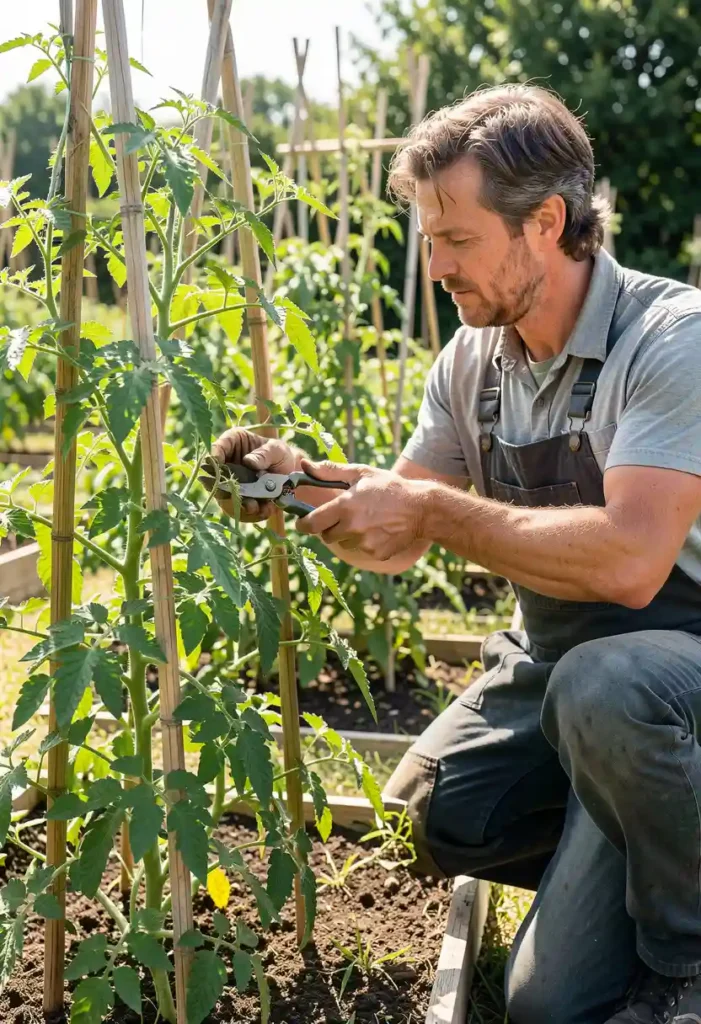
Skipping pruning is an easy habit to fall into during busy summer weeks, but unpruned plants waste energy on dead leaves, tangled stems, and spent flowers instead of new growth. Dead and damaged foliage invites disease, dense growth blocks airflow and light from the center of the plant, and spent flowers signal many plants to stop blooming. Tomatoes are the classic example: an unpruned plant can turn into a jungle of leaves with very little fruit.
Prune little and often, ideally once a week, with clean, sharp pruners. Start by removing dead, yellowed, or diseased leaves, cutting back to healthy green tissue. For tomatoes, pinch out the small shoots that grow in the joint between the main stem and a leaf branch, and remove the lowest leaves up to 12 inches from the soil so rain cannot splash soil borne disease onto the foliage. Deadhead flowers by snipping faded blooms just above the first set of healthy leaves, which encourages most flowering plants to produce a second flush.
Disinfect your pruners between plants with rubbing alcohol or a 1 to 10 bleach solution, especially after cutting diseased growth, so you do not spread problems from one plant to the next. Never remove more than a third of a plant at once, and avoid heavy pruning during a heat wave, since the sudden exposure can sunburn the inner leaves. A weekly ten minute pruning round keeps plants open, healthy, and productive, and it is the single easiest habit that separates a tidy, high yielding garden from a tangled one.
11. Forgetting to Harvest Frequently
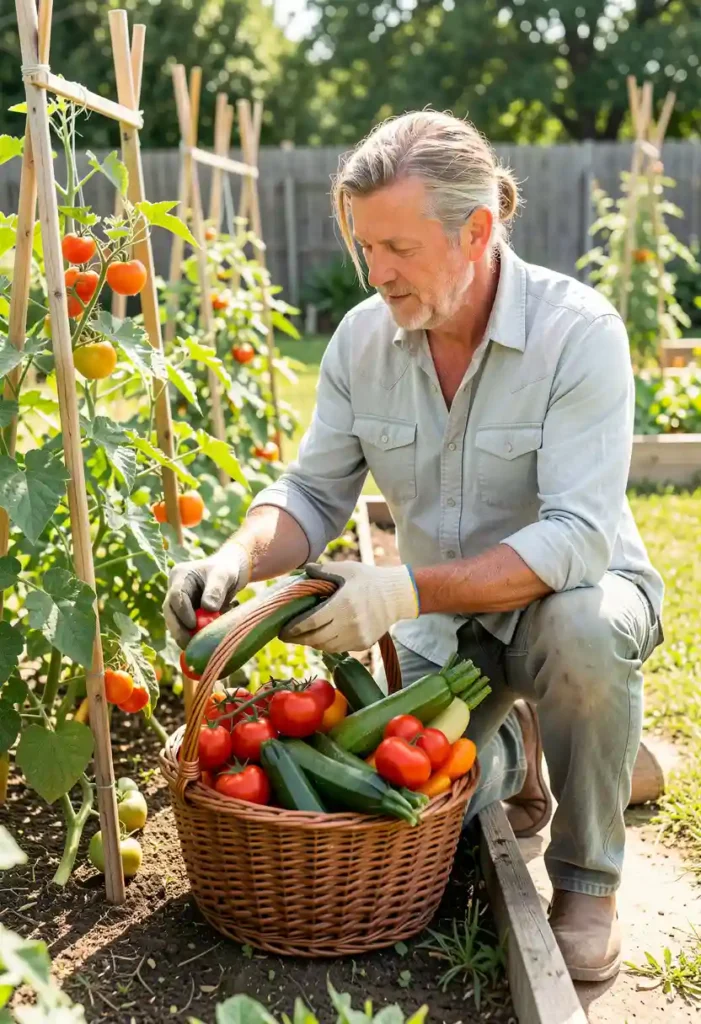
Forgetting to harvest is one of the most wasteful summer mistakes, because the garden keeps working even when you do not. Vegetables like zucchini, cucumbers, green beans, and okra grow astonishingly fast in warm weather, and a zucchini that was perfect on Tuesday can be a giant marrow by Friday. Worse, when mature fruit stays on the plant, many vegetables slow down or stop producing new flowers, since the plant thinks its job is done and puts its energy into ripening the existing fruit instead of making more.
Harvest every two to three days during peak summer, and check the plants daily when the weather is hot. Pick zucchini and cucumbers when they are 6 to 8 inches long, green beans when they are pencil thick and snap cleanly, and tomatoes when they are fully colored but still firm. Use scissors or pruners to cut fruit instead of pulling it, which can tear the stem and damage the plant. Harvest in the morning, when vegetables are cool and crisp, and get them into the shade or the fridge quickly.
Frequent harvesting keeps plants in production mode, so a single zucchini plant picked every other day can outproduce three plants that are left alone. If the harvest gets ahead of you, share the extra with neighbors, freeze it, or pick small and often for the best flavor. A quick daily walk through the garden with a basket takes five minutes and turns a chore into one of the most satisfying parts of summer gardening.
12. Ignoring Weather Changes
Summer weather changes fast, and gardeners who ignore the forecast pay for it. A heat wave can dry out containers in a single day, a sudden storm can snap stems and flatten tall plants, and a dry spell can stress a garden that was doing fine the week before. The mistake is sticking to a fixed routine, watering the same amount every day, regardless of what the sky is doing. Gardens need different care on a 100 degree day than on a mild, cloudy one.
Check the forecast every morning and adjust your plan. Before a heat wave, water deeply the evening before so the soil is fully charged, add an extra inch of mulch, and rig temporary shade over the most sensitive plants. Before a storm, stake tall plants like tomatoes, sunflowers, and dahlias with 5 to 6 foot stakes tied loosely with soft twine, and move lightweight pots and hanging baskets to a sheltered spot. After heavy rain, check that containers are draining and that beds are not waterlogged, and wait for the soil to dry slightly before walking on it, since wet soil compacts easily.
Keep a simple weather habit: a cheap rain gauge tells you exactly how much rain fell, so you know whether to water or skip a day. A max and min thermometer in a shady spot shows how hot the garden really gets, which is often 5 to 10 degrees hotter than the official forecast. With those two numbers and a quick glance at the forecast each morning, you can water, shade, and protect your plants before the weather hurts them instead of after.
Final Words
Summer gardening is one of the most rewarding things you can do with a patch of soil, but it rewards attention more than effort. The twelve mistakes in this guide are all small habits: watering a little too often, skipping the mulch, forgetting to check under the leaves, or leaving the harvest for one more day. Each one is easy to overlook, and each one is easy to fix once you know what to look for.
The real secret is routine. A five minute check every morning, a weekly pruning and weeding round, and a quick look at the forecast will catch almost every problem while it is still small. Start with the two or three mistakes that sound most familiar, fix those this week, and your garden will look better by the weekend. Keep the good habits going through August, and you will enjoy a healthier garden, a bigger harvest, and a lot less rescuing on the hottest days of the summer.
Frequently Asked Questions
How often should I water my garden in summer?
Most garden beds need 1 to 1.5 inches of water per week in summer, given in two or three deep soakings rather than a daily sprinkle. Water early in the morning, check the soil 2 inches down before watering, and water more often during heat waves. Containers dry out faster and may need water every day in high heat.
What is the best mulch for a summer vegetable garden?
Straw is the best all round choice for vegetable beds because it is light, cheap, keeps soil cool, and breaks down into the soil by the end of the season. Shredded leaves and finished compost also work well. Apply 2 to 3 inches thick and keep the mulch 2 inches away from plant stems.
Why are my tomato leaves turning yellow in summer?
Yellow leaves on tomatoes in summer are usually caused by overwatering, low nitrogen, or the natural aging of lower leaves. Check the soil moisture first: soggy soil points to overwatering, while dry soil with pale leaves points to low nutrients. Remove the yellow lower leaves, feed with compost or a balanced fertilizer, and make sure the plant gets deep, regular watering.
Can I save plants that are already heat stressed?
Yes, in most cases. Water deeply in the early morning, add shade cloth or move containers into afternoon shade, and mulch around the roots to cool the soil. Remove badly scorched leaves so the plant stops wasting energy on them. Most plants recover within a week if the roots are still healthy and the stress does not continue.
When should I stop planting vegetables in summer?
Keep planting heat loving vegetables like beans, squash, and cucumbers through midsummer, since they mature in 50 to 60 days. Stop planting cool season crops once daytime highs regularly pass 80 degrees. In late summer, start fall crops like lettuce, kale, and radishes 6 to 8 weeks before your first expected frost date.
More Ideas You Will Love
 16 Expert Tips to Hurricane-Proof Your Home Decor
 13 Trending Exterior House Color Ideas You’ll Love
 19 Christmas Holiday Decor Ideas for a Festive Home
 13 Halloween Fireplace Mantle Decor Ideas
 14 Front Porch Decor Ideas to Refresh Your Home for Summer
 13 Fall Porch Decor Ideas for a Cozy Seasonal Welcome