
20 Rustic Kitchen Ideas for a Cozy, Country-Inspired Makeover

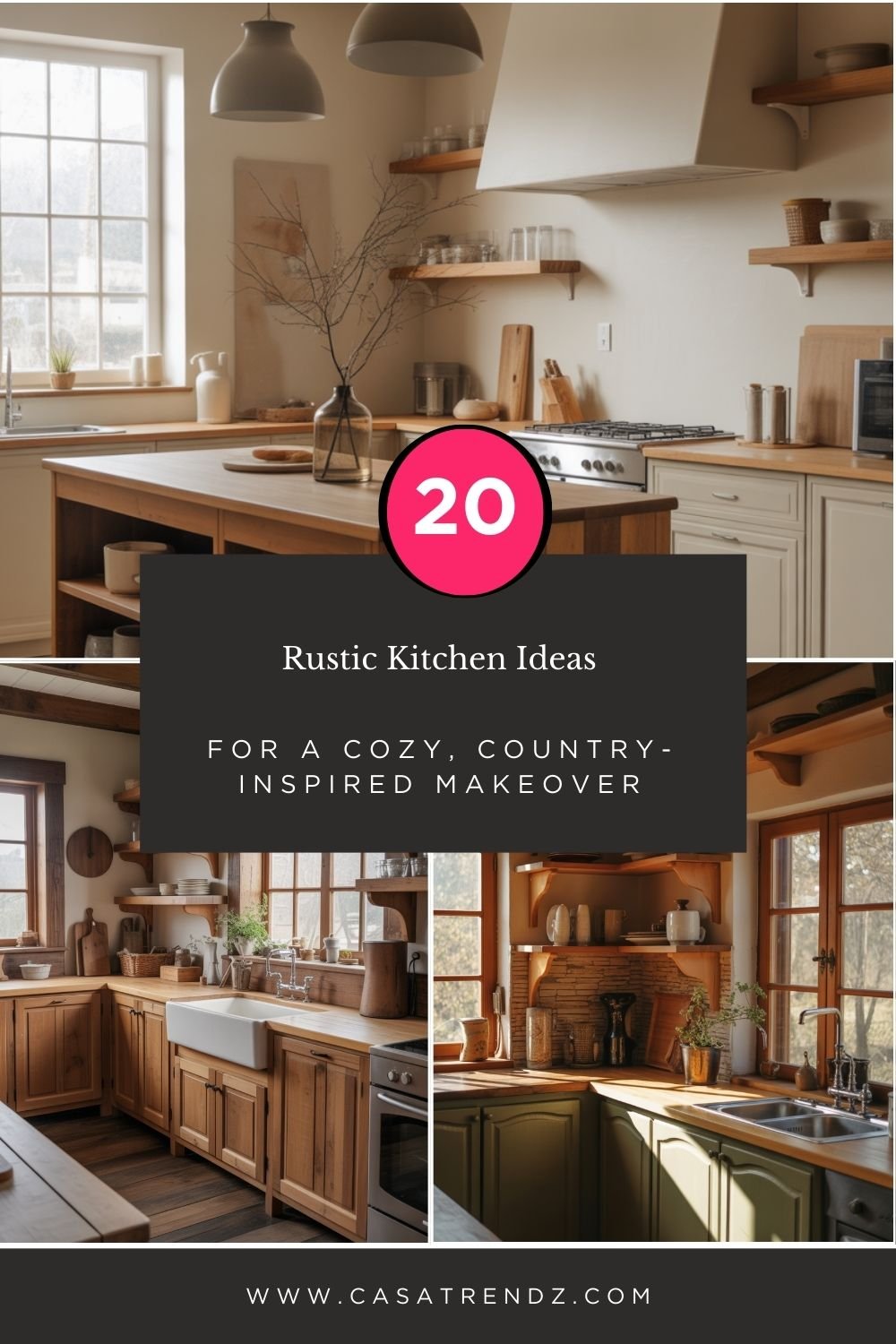
A rustic kitchen is warm, welcoming, and built to be lived in. It mixes natural materials, handcrafted details, and earthy textures in a way that feels timeless rather than trendy. Reclaimed wood, stone, brick, and aged metal all work together to create a space where family gathers, meals are cooked slowly, and nothing feels too precious to touch.
The best part of rustic style is how flexible it is. You do not need a farmhouse in the country to pull it off. A small city apartment kitchen can feel just as cozy with the right cabinets, lighting, and textiles. You can go all in with beams, stone, and a farmhouse sink, or you can start small with a butcher block countertop and a few copper accents.
This guide covers 20 rustic kitchen ideas that work in real homes. Each idea includes practical details on materials, measurements, colors, and step by step guidance, so you can plan your makeover with confidence and avoid costly mistakes. Pick the ideas that fit your space and budget, and build a kitchen that feels like the heart of your home.
1. Reclaimed Wood Cabinets
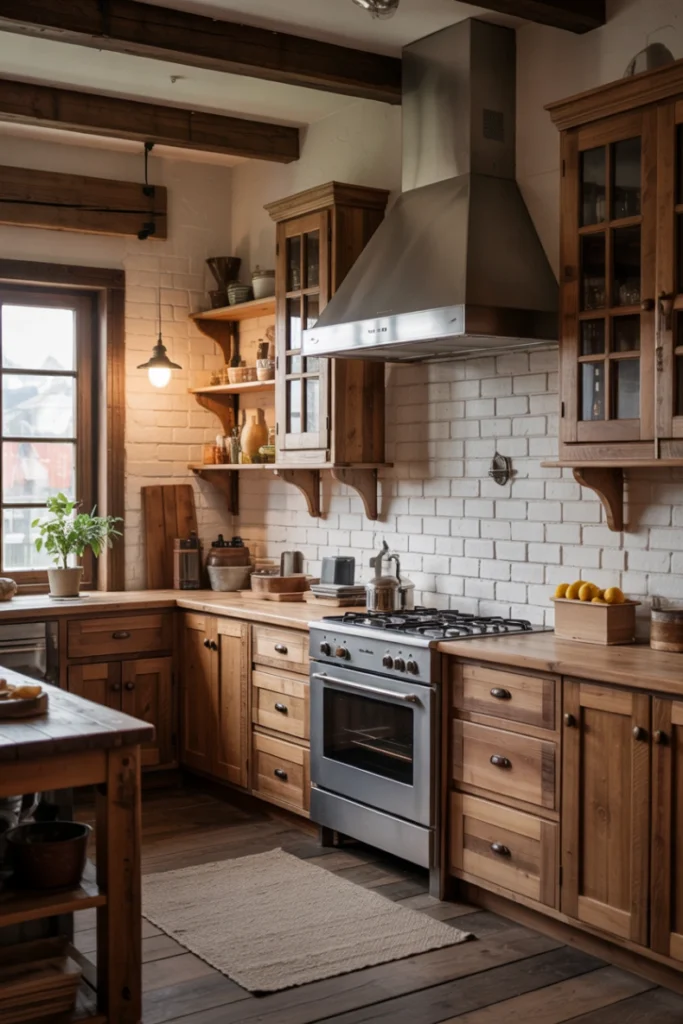
Reclaimed wood cabinets are the heart of a rustic kitchen. Old barn wood, factory beams, and salvaged timber carry knots, nail holes, and grain patterns that new wood simply cannot copy. Each cabinet door tells a small story, which is exactly what makes the kitchen feel personal and grounded instead of showroom perfect. Oak, pine, and walnut are the most common choices, with oak offering strength and a warm honey tone, pine giving a softer look, and walnut adding rich depth.
When sourcing reclaimed wood, look for boards that are at least three quarters of an inch thick and free of rot or insect damage. Ask the supplier whether the wood has been kiln dried, since that step kills pests and prevents warping after installation. A clear matte sealant protects the surface from kitchen moisture while keeping the natural texture visible. Avoid heavy gloss finishes, which make old wood look plastic and new.
Pair reclaimed cabinets with simple hardware and neutral countertops so the wood stays the star. Black iron pulls, aged brass knobs, or plain wooden pegs all work well. For more wood kitchen design ideas, look at how different wood tones can be mixed without clashing. Keep wall colors soft and warm, and let the cabinets carry the character of the room.
2. Farmhouse Sink as a Focal Point
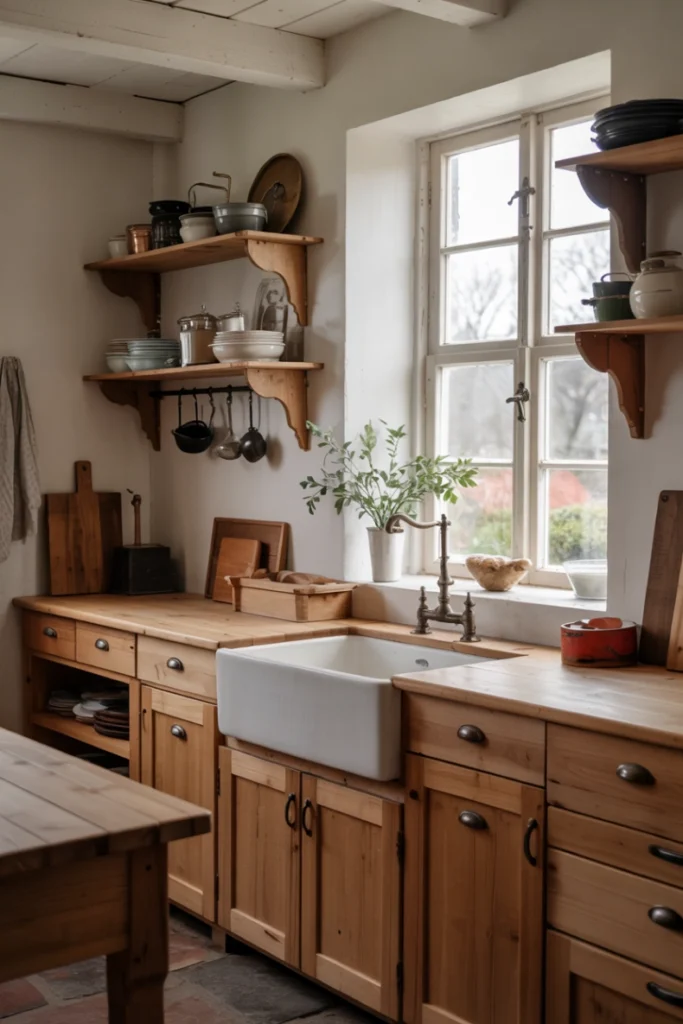
A farmhouse sink, also called an apron front sink, is one of the most recognizable features of a rustic kitchen. Its deep basin and exposed front panel create an old world look while giving you real working room for large pots, baking sheets, and roasting pans. A standard single bowl farmhouse sink measures 30 to 36 inches wide and 9 to 10 inches deep, which is plenty for most family kitchens.
Fireclay is the classic choice because it resists stains, chips, and heat, and its glossy white surface brightens the whole room. Porcelain over cast iron is heavier but just as durable, while hammered copper adds warmth and develops a rich patina over time. Copper needs a little more care, since acidic foods can mark the surface, so wipe it dry after use. Whichever material you choose, make sure your cabinet base is reinforced, because a fireclay sink can weigh 100 pounds or more before it is filled with water.
Install the sink so the apron front sits slightly proud of the cabinet face, usually by about a quarter inch, for a clean finished look. Pair it with a bridge faucet or a gooseneck faucet in oil rubbed bronze or unlacquered brass. Butcher block counters and open shelving nearby complete the picture and make the sink feel like it has always belonged there.
3. Exposed Wooden Beams
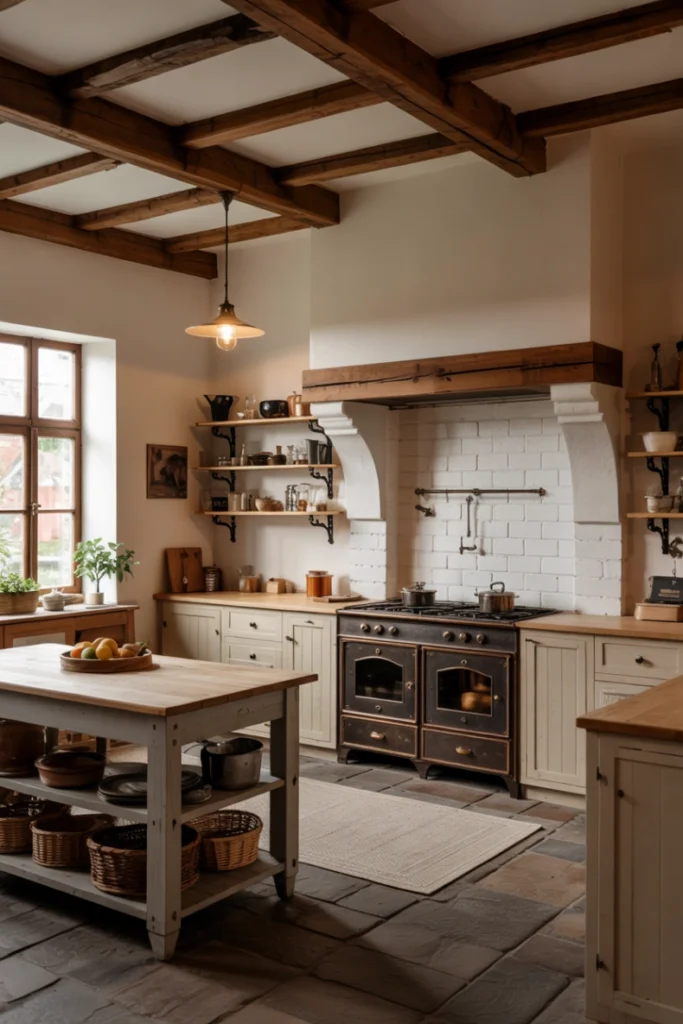
Exposed wooden beams add instant architecture to a kitchen. They draw the eye upward, add warmth overhead, and make even a newly built home feel established and full of history. Dark stained beams create a dramatic traditional look, while lighter or whitewashed beams feel softer and suit a modern rustic style. Either way, beams work best when they contrast slightly with the ceiling color so they read as a feature, not a shadow.
Real structural beams are wonderful if your home already has them, but most kitchens use decorative box beams made from three boards joined into a hollow U shape. These faux beams are light, easy to install, and cost far less than solid timber. Space them 4 to 6 feet apart across the ceiling, and keep them at least 7 feet above the finished floor so tall family members never bump their heads. For a vaulted ceiling, run one large beam along the ridge and smaller cross beams down the slopes.
Before installing beams, check that your ceiling can support the weight and that no wiring or ductwork sits in the way. Stain all sides of each beam before lifting it into place, since touch ups overhead are messy. Finish the look with warm recessed lights or small spotlights aimed at the beams, which brings out the grain in the evening and makes the whole ceiling glow.
4. Natural Stone Countertops
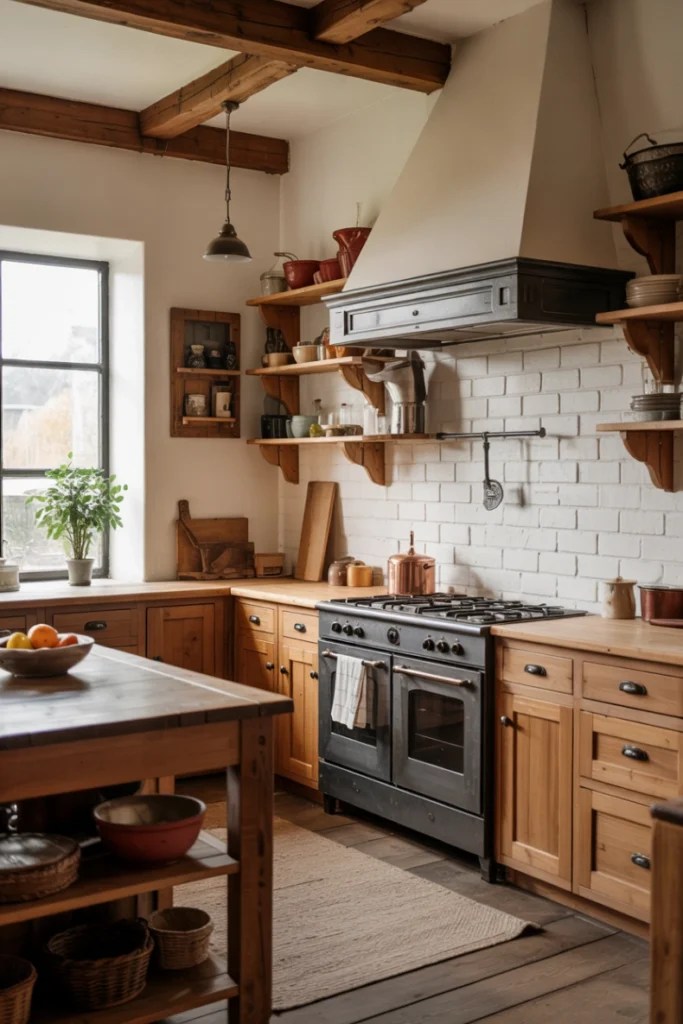
Natural stone countertops bring an organic, earthy quality that manufactured surfaces cannot match. Granite offers bold veining and excellent heat resistance, soapstone feels silky smooth and darkens beautifully with age, and limestone gives a soft, chalky look that suits a French country kitchen. Honed or matte finishes work best for rustic style, since they soften reflections and let the stone look natural rather than polished and formal.
Stone needs a little care to stay beautiful. Granite and limestone should be sealed once a year with a penetrating stone sealer, which takes about 30 minutes and protects against stains from coffee, wine, and cooking oil. Soapstone needs no sealing at all, just an occasional rub with mineral oil to deepen its color. Wipe up spills promptly, use cutting boards for acidic foods like tomatoes and citrus, and place hot pans on trivets to protect the seal.
Choose an edge profile that fits the rustic mood. A simple eased edge or a rough chiseled edge looks more handcrafted than a fancy ogee profile. Pair stone counters with wood cabinetry, a brick or stone backsplash, and warm metal hardware. The mix of hard stone and soft wood is what makes a rustic kitchen feel balanced and lived in rather than cold and stark.
5. Open Wooden Shelving
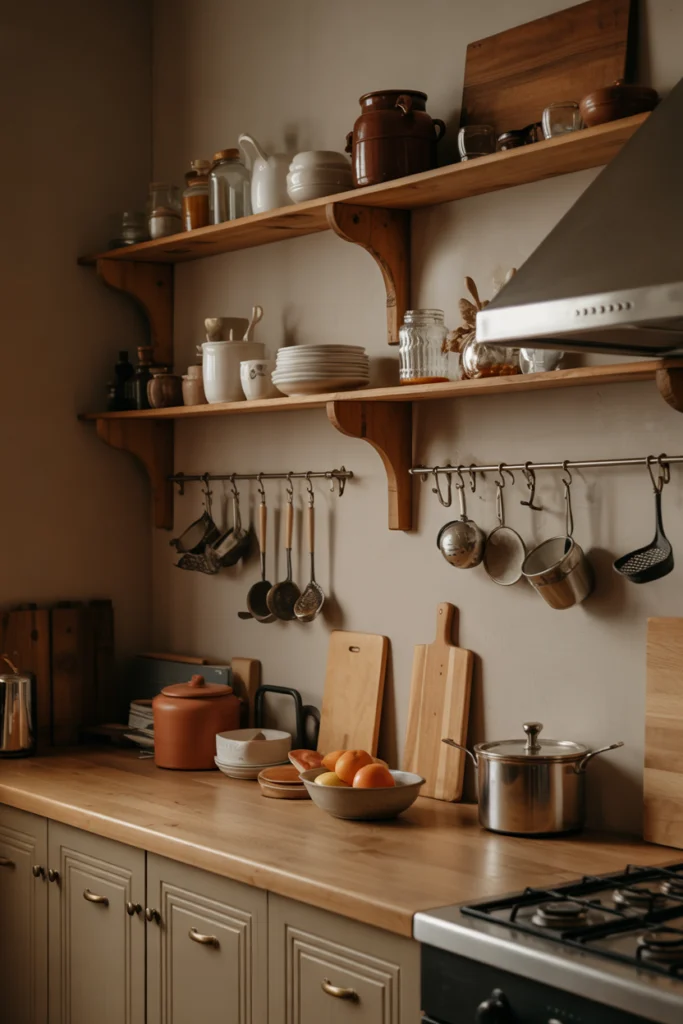
Open shelving makes a rustic kitchen feel airy, personal, and easy to use. Everyday dishes, glass jars, and cookware sit within reach, and the shelves themselves become part of the decoration. Rough cut or reclaimed wood shelves, about 10 to 12 inches deep, suit the style best, since they show off the grain and add texture to the wall. Brackets in black iron or aged brass add the handcrafted touch that completes the look.
Keep styling simple so the shelves feel curated rather than cluttered. Group items in odd numbers, mix heights, and leave some breathing room between stacks. Stack white dishes together, line up glass jars of pasta and grains, and add one small plant or a wooden cutting board for warmth. Limit each shelf to two or three types of items so the eye can rest. If you use the shelves daily, that natural rotation keeps them from gathering dust.
Plan the layout before you drill. Shelves work best between 15 and 18 inches above the countertop, with at least 12 inches of clearance between shelves for plates and bowls. Use heavy duty brackets anchored into wall studs, since a loaded shelf can weigh 40 pounds or more. If you are nervous about going fully open, try one bank of open shelves beside the sink and keep closed cabinets everywhere else.
6. Vintage-Inspired Appliances
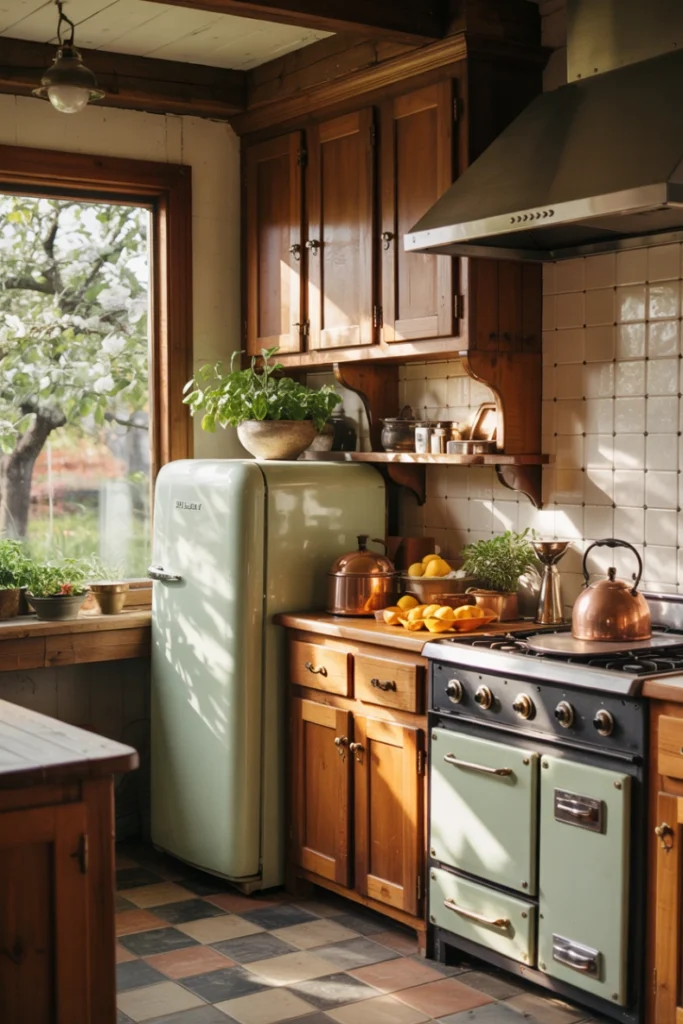
Vintage inspired appliances bring the charm of an old farmhouse kitchen without giving up modern performance. Rounded edges, chrome trim, and classic colors like cream, sage green, soft blue, and butter yellow give a refrigerator or range the look of a 1950s original while hiding a modern compressor, even heat, and energy efficient insulation inside. They are an easy way to add character to a kitchen that otherwise feels too new.
Choose one statement appliance rather than matching a full set, so the look stays charming instead of themed. A cream colored range with brass knobs is often enough to set the tone for the whole room. Check the measurements carefully, since retro style models can be deeper or wider than standard units, and leave at least one inch of clearance on each side for ventilation. Energy ratings matter too, so look for an Energy Star label to keep running costs reasonable.
Balance the retro piece with natural materials around it. Wood cabinetry, stone counters, and simple open shelving keep the appliance from looking like a prop. If a full vintage range is outside your budget, start smaller with a retro style toaster, kettle, or stand mixer in a matching color. These small touches add the same nostalgic feel for a fraction of the cost.
7. Brick or Stone Backsplash
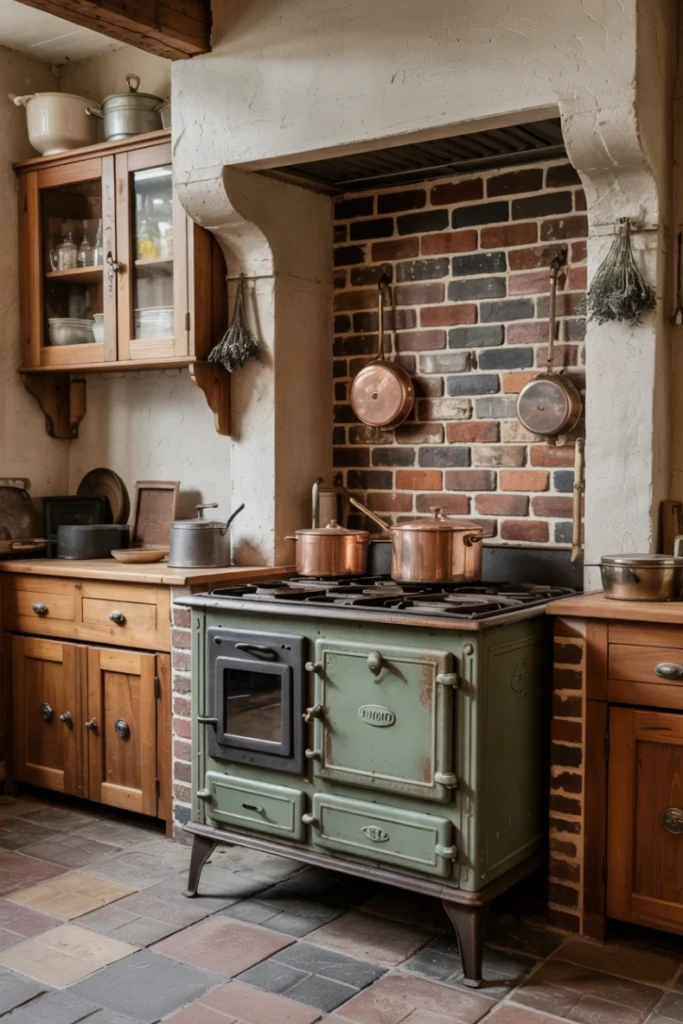
A brick or stone backsplash adds texture and honest craftsmanship to a rustic kitchen. Exposed brick brings instant warmth and a sense of history, while stacked stone adds weight and permanence. Both materials look best when they are allowed to show their natural variation, so avoid perfectly uniform tiles and embrace the small differences in color and shape.
Thin brick veneer is the easiest way to get the look, since it is only about half an inch thick and can be glued directly to drywall. Real brick needs more support and a mason, so veneer is the practical choice for most homes. To soften the look, brush a thin coat of diluted white paint over the brick, a technique called whitewashing, and wipe some of it away before it dries so the red shows through in patches. Seal the finished backsplash with a matte stone sealer to keep grease and moisture out of the pores.
Run the backsplash from the countertop to the bottom of the upper cabinets, usually 18 inches high, and take it all the way to the ceiling behind the range for a dramatic focal point. Use a sanded grout in a warm gray or cream tone, and keep grout lines narrow so the brick pattern stays dominant. Pair it with wood cabinets and a simple stone countertop, and the whole wall becomes the kitchen’s best feature.
8. Butcher Block Countertops
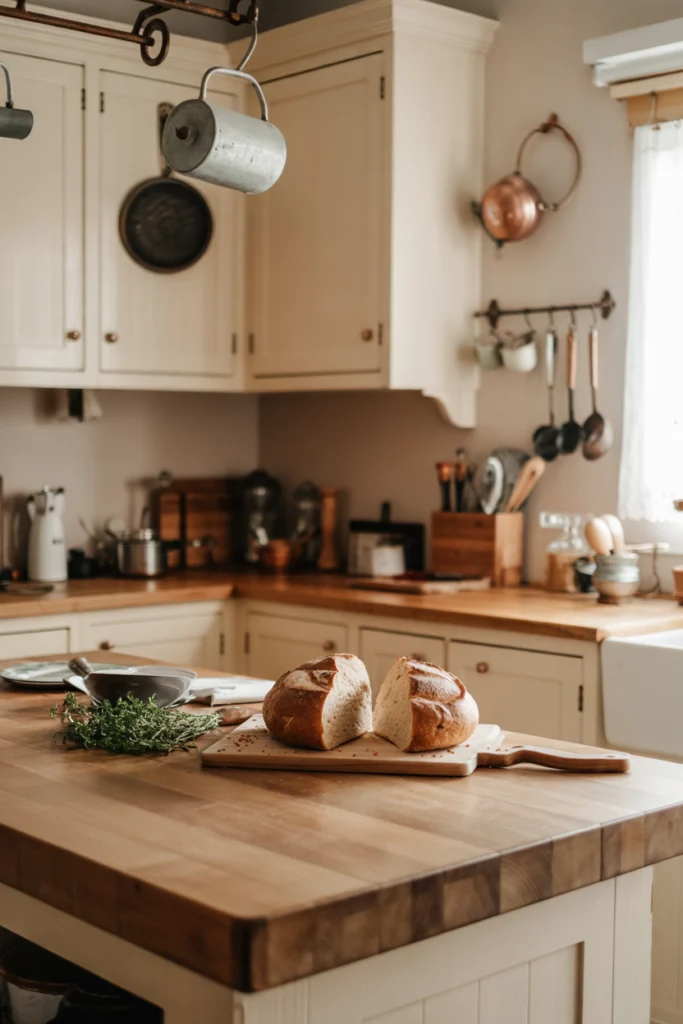
Butcher block countertops are a classic rustic choice because they are warm, practical, and beautiful all at once. Solid maple is the hardest and most durable option, walnut adds dark richness, and white oak offers a middle ground with strong water resistance. A standard thickness of one and a half inches feels substantial and looks right beside reclaimed cabinets and a farmhouse sink.
Wood counters need regular care, but the routine is simple. Oil the surface once a month for the first year with food safe mineral oil, then every two to three months after that. Apply the oil with a clean rag, let it soak in overnight, and wipe off the excess in the morning. If the surface gets scratched or stained, sand the spot lightly with 220 grit sandpaper and re oil it, and the mark will disappear. That ability to refinish is the real advantage of wood over stone.
Keep butcher block away from standing water by wiping the area around the sink dry after use, and never place a hot pan directly on the wood. Use a trivet or a folded towel instead. Pair butcher block with a farmhouse sink, simple iron hardware, and open shelving, and you get a workspace that is made for real cooking and only gets better looking with use.
9. Earthy Color Palette
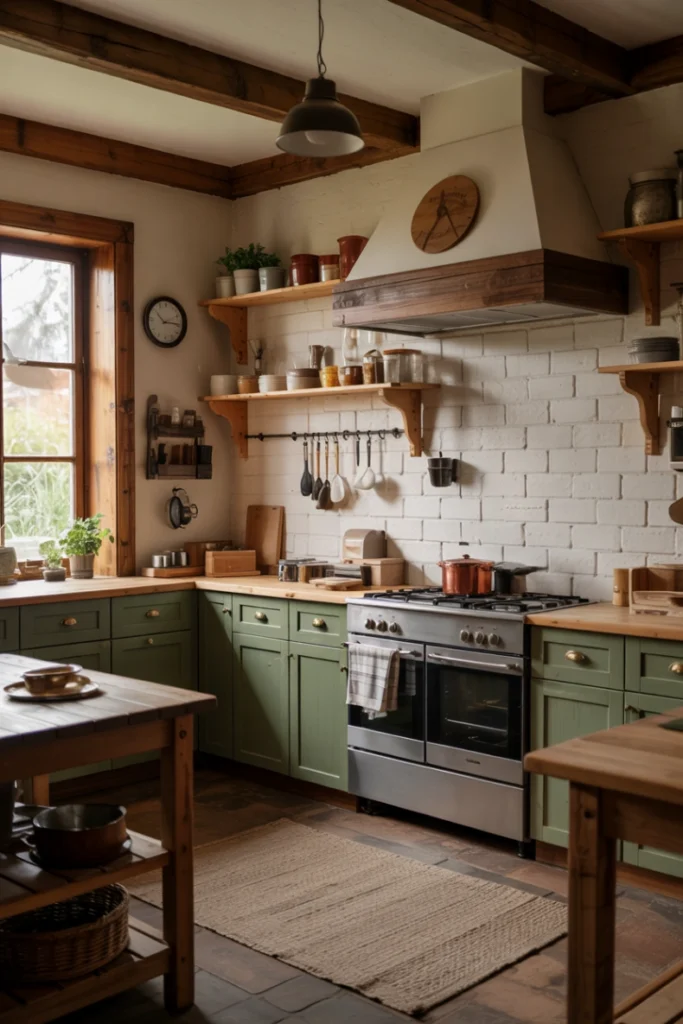
An earthy color palette is what makes a rustic kitchen feel calm and grounded. Warm browns, soft sage greens, muted creams, clay, terracotta, and natural grays all come from nature, so they sit comfortably together and never fight for attention. These colors work on walls, cabinets, and decor, and they make wood and stone look even better by giving them a soft background to stand against.
Use the 60-30-10 rule to keep the palette balanced. Let a warm neutral cover about 60 percent of the room, usually the walls and ceiling, give 30 percent to a second tone like sage cabinets or a wood island, and save the last 10 percent for accents such as terracotta pots, copper pans, or linen curtains. Paint the walls in a warm white with a hint of cream rather than a stark bright white, which can feel cold against wood. For cabinets, sage green, warm greige, or a soft mushroom tone all read as rustic without looking dated. If you want more kitchen color ideas, compare palettes side by side before you commit to paint.
Test paint colors in your own kitchen before buying a full gallon. Paint a large swatch on the wall, check it in morning light, afternoon sun, and evening lamplight, and live with it for two or three days. Colors shift a lot under different light, and a shade that looks perfect in the store can turn gray or pink at home. Once you find the right tones, repeat them in small doses through textiles, pottery, and wood finishes to tie the whole room together.
10. Handcrafted Cabinet Hardware
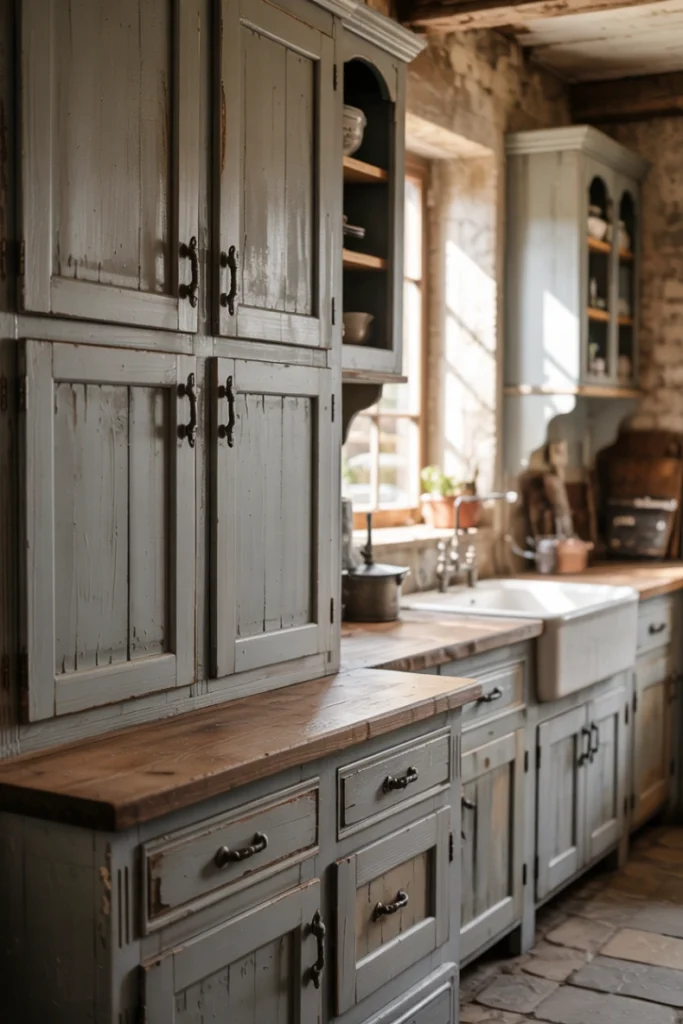
Cabinet hardware is a small detail with a big impact. Handcrafted knobs and pulls in wrought iron, oil rubbed bronze, or aged brass add the handmade feel that defines a rustic kitchen. Slightly imperfect finishes, hammered textures, and simple shapes all signal craftsmanship, while shiny chrome or polished nickel can feel too modern against reclaimed wood.
Cup pulls are the classic choice for drawers in a rustic kitchen, since their curved shape echoes old farmhouse furniture. Round knobs work well on cabinet doors, and long bar pulls suit wide drawers and pantry doors. As a rule of thumb, use pulls that are about one third the width of the drawer front, so a 18 inch drawer takes a 6 inch pull. Keep the finish consistent across the room, but do not be afraid to mix a knob on doors with a cup pull on drawers, since that combination looks natural and collected.
Install hardware with a simple template jig so every hole lines up perfectly, and drill from the front face to avoid splintering the wood. If your cabinets are old, fill the old holes with wood filler, sand smooth, and repaint or restain before drilling new ones. Good hardware is not expensive, and swapping it is one of the fastest ways to refresh a kitchen in a single afternoon.
11. Wooden Kitchen Island
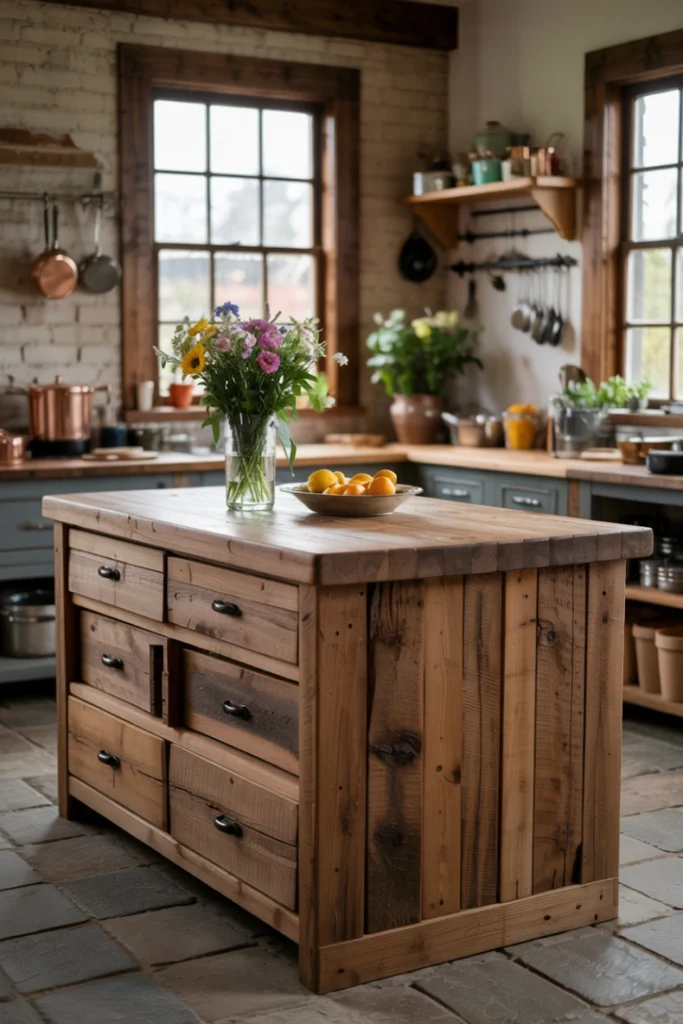
A wooden kitchen island is both a workspace and a gathering place. Built from reclaimed wood or solid timber, it adds warmth to the center of the room and gives the family a natural spot to cook, eat, and talk. An island with a butcher block top, open lower shelves, and turned legs has instant farmhouse character, while a simpler slab top on a plank base suits a cleaner rustic look. For more kitchen island ideas, think about how you actually use the space before choosing a style.
Size the island to your room. Leave at least 36 to 42 inches of walkway on every side so two people can pass comfortably, and keep the island length under two thirds of the kitchen length so the room does not feel crowded. For seating, allow 24 inches of width per stool and a 12 to 15 inch overhang on the countertop so knees fit underneath. A standard counter height of 36 inches works for cooking and casual meals, while a raised bar height of 42 inches suits a separate seating ledge.
Make the island work harder by adding storage inside. Deep drawers hold pots and pans, open shelves display cookbooks and baskets, and a built in wine rack or a pull out trash bin keeps clutter off the counters. Hang two or three pendant lights 30 to 36 inches above the island top, spaced about 24 to 30 inches apart, to light the work surface and anchor the island visually in the room.
12. Soft, Warm Lighting
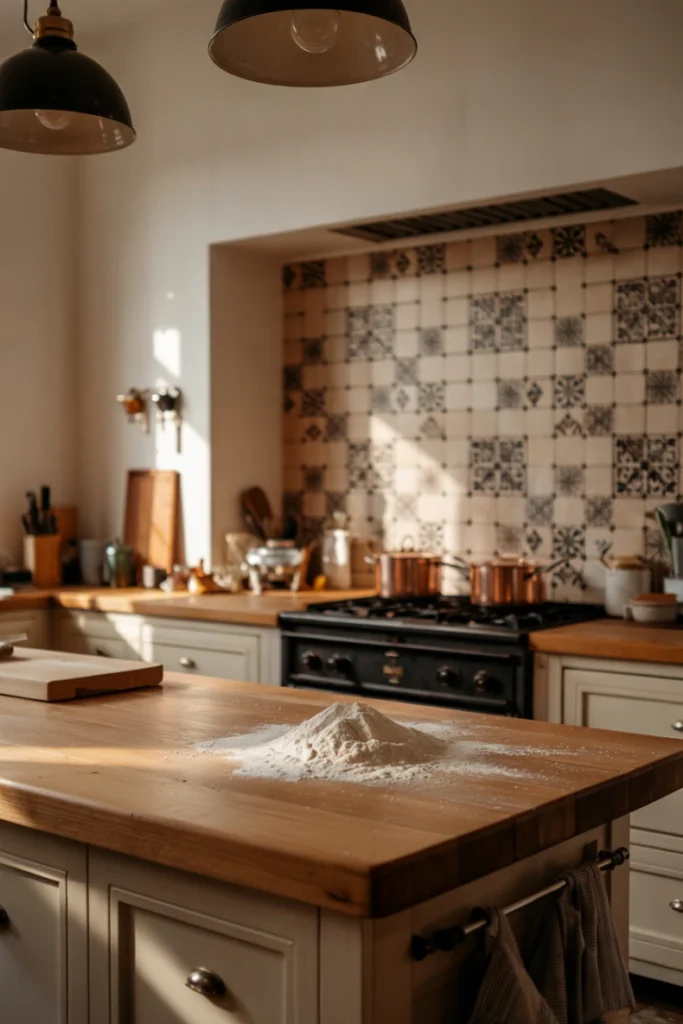
Lighting can make or break a rustic kitchen. Soft, warm light flatters wood, stone, and earthy colors, while harsh white light makes the same room feel cold and flat. Choose bulbs with a color temperature around 2700 Kelvin, which gives the golden glow of late afternoon sun. Avoid daylight bulbs rated 5000 Kelvin or higher in a rustic kitchen, since they wash out the warm tones you worked hard to create.
Layer three types of light for the best result. Ambient light from ceiling fixtures or recessed cans fills the room, task lighting under cabinets brightens the counters where you chop and read recipes, and accent lighting inside glass cabinets or above beams adds depth. Pendant lights with metal, glass, or woven shades work beautifully over an island or sink, and a dimmer switch on every circuit lets you shift from bright cooking light to a soft evening glow with one touch.
Place pendants 30 to 36 inches above the island or countertop, and space them evenly so the light pools overlap slightly. Under cabinet LED strips should sit toward the front edge of the cabinet so the light falls on the work surface rather than the backsplash. If your kitchen has a window, keep the glass clear of heavy curtains during the day, since natural light is the best complement to warm artificial light.
13. Rustic Flooring Materials
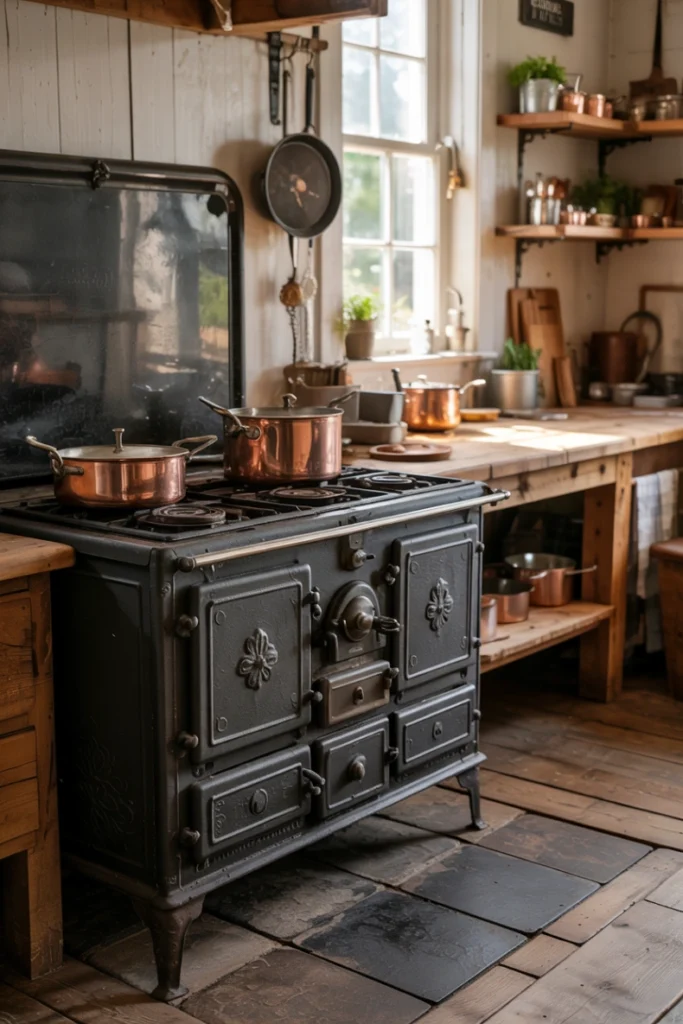
Flooring sets the foundation for a rustic kitchen, so choose materials that feel natural underfoot and age gracefully. Wide plank wood floors, with boards 5 to 7 inches wide, show off the grain and give the room a relaxed farmhouse feel. Stone tiles in slate or limestone add cool texture and durability, while brick pavers bring warmth and a sense of history. All three options look better with time, developing a patina that suits the rustic style.
Distressed or reclaimed wood flooring is the most forgiving choice, since dents and scratches blend into the weathered finish instead of standing out. Choose a matte or satin finish rather than high gloss, which shows every mark and looks too formal. In a busy kitchen, consider engineered wood with a thick wear layer, since it resists moisture better than solid planks and can still be refinished once or twice. For stone or brick floors, seal the surface once a year and use a grout sealer to prevent stains.
Soften hard floors with a washable runner or a flat weave rug in a natural fiber like jute or cotton. Place a runner along the main work zone between the sink and the stove, where it cushions your feet and catches spills. Choose a rug with a low pile so chairs and stools slide easily, and pick a pattern that hides crumbs, such as a faded stripe or a simple geometric weave.
14. Antique Furniture Accents
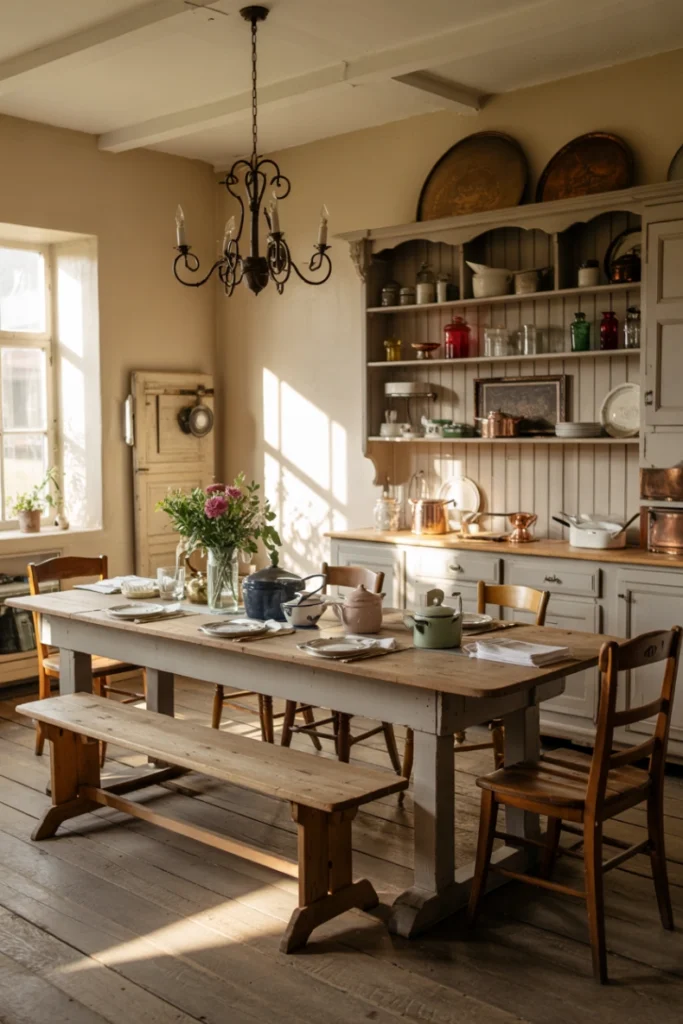
Antique furniture brings history and soul into a rustic kitchen. A vintage hutch, a weathered sideboard, or an old farmhouse table can serve as storage, a serving station, or a focal point that no new piece can copy. The worn edges, old hardware, and hand joined construction tell a story, and that sense of history is what makes a kitchen feel collected over time rather than bought in one trip.
Look for pieces with good bones and solid wood construction, even if the finish is rough. A sturdy oak hutch with a scratched top can be sanded and waxed in a weekend, while a wobbly pine sideboard may need new glue joints before it is useful. Check drawers for smooth runners, test doors for square alignment, and sniff for musty odors that signal water damage. Flea markets, estate sales, and architectural salvage shops are the best places to find pieces at fair prices.
Use antiques sparingly so the kitchen stays functional. One statement piece is usually enough, balanced by simpler modern elements like a clean faucet or plain pendant lights. Repurpose where it makes sense, so a sideboard becomes a coffee station, a hutch holds everyday dishes near the table, or an old ladder becomes a pot rack. The same warmth works beyond the kitchen too, and these farmhouse living room ideas show how to carry the look into the next room without repeating the same pieces.
15. Natural Textiles and Fabrics
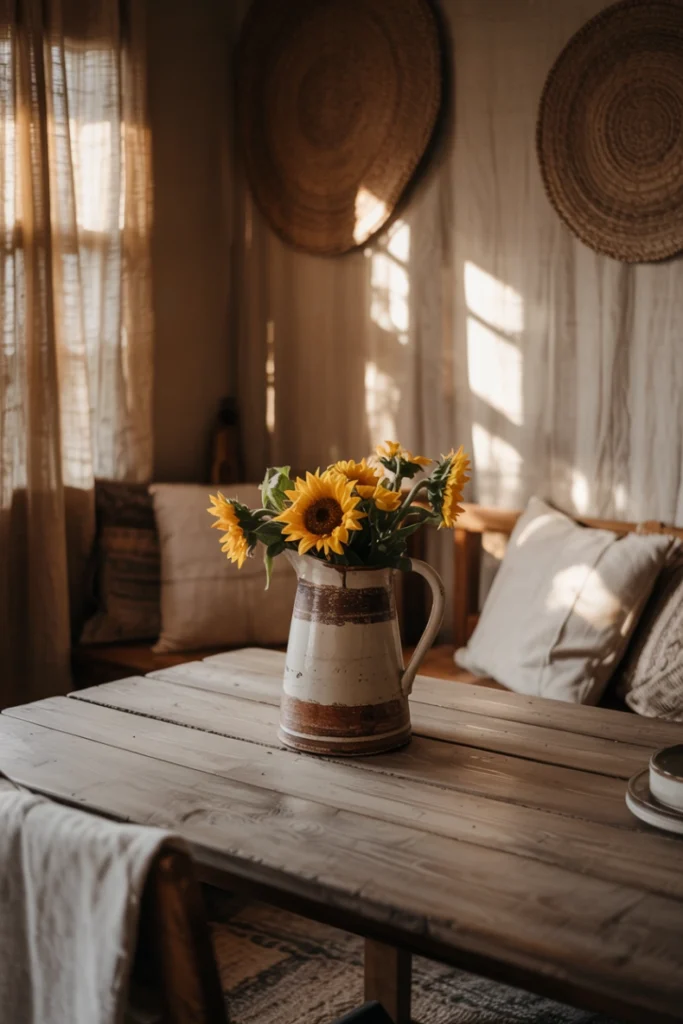
Textiles soften a rustic kitchen and make it feel comfortable rather than hard and echoing. Linen curtains, cotton dish towels, woven table runners, and jute rugs add warmth and texture without competing with wood and stone. Neutral colors and earthy patterns work best, since they support the palette instead of pulling attention away from it.
Choose fabrics you can wash easily, because kitchen textiles get dirty fast. Linen softens with every wash and suits cafe curtains and napkins, cotton is sturdy for dish towels and aprons, and wool works well for a thick rug by the sink. Layer two or three textures in the same corner, such as a linen curtain, a woven basket, and a cotton runner, so the space feels collected and cozy. Keep patterns simple, like stripes, checks, or small florals, and avoid large bold prints that clash with the wood grain.
Hang cafe curtains on the lower half of the window so you keep privacy while letting daylight in from the top. Use a rod with simple iron rings rather than a fussy valance. For the table, a runner in natural linen with a frayed edge adds instant farmhouse charm, and it protects the wood from hot dishes at the same time. Swap textiles with the seasons, using heavier wool in winter and light cotton in summer, to keep the kitchen feeling fresh all year.
16. Rustic Wall Décor
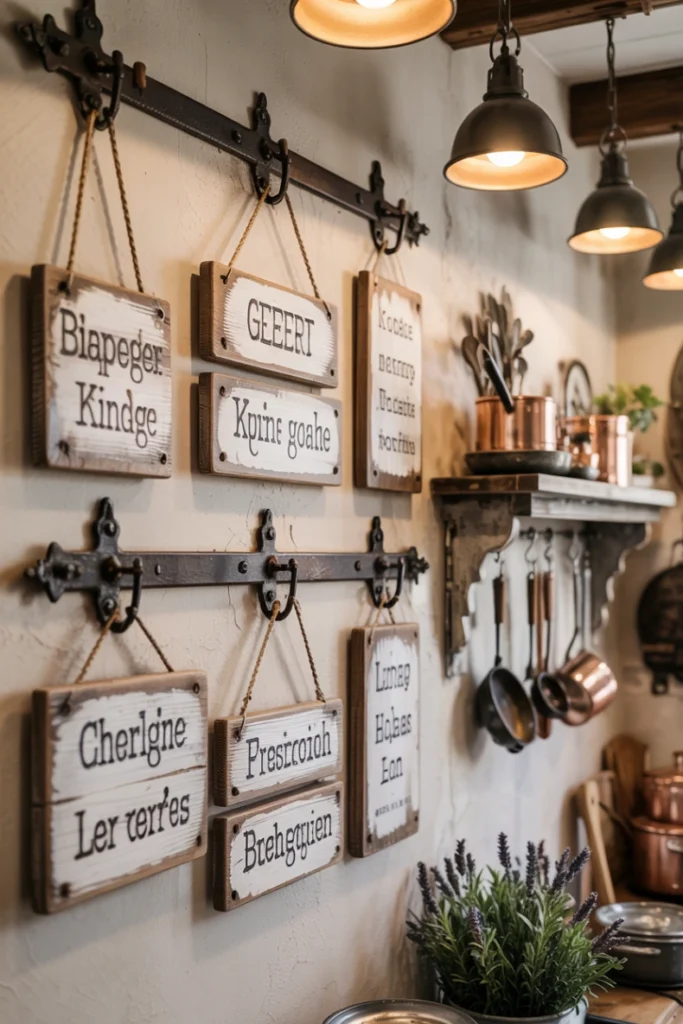
Wall decor gives a rustic kitchen its personality. Wooden signs with simple sayings, vintage clocks, framed botanical prints, and old mirrors all add interest without taking up counter space. The key is restraint, since a few well chosen pieces tell a better story than a wall covered edge to edge.
Hang one large piece as an anchor, such as a clock about 24 inches wide above the range or a framed print over the breakfast nook, then add one or two smaller pieces nearby. Keep the bottom of wall art at least 6 inches above the backsplash or countertop so steam and splashes do not damage it. Mix materials lightly, so a wood sign sits near a metal clock and a linen framed print, which keeps the wall from looking like a matching set from one store.
Choose pieces with natural textures and muted colors that match the rest of the room. A black and white farm photo, a pressed herb print, or a hand painted wooden sign all fit the style. Avoid plastic signs with glossy finishes and anything that looks mass produced. If you love a piece but it feels too new, sand the edges lightly and rub in a little dark wax to give it an aged look in minutes.
17. Distressed Finishes
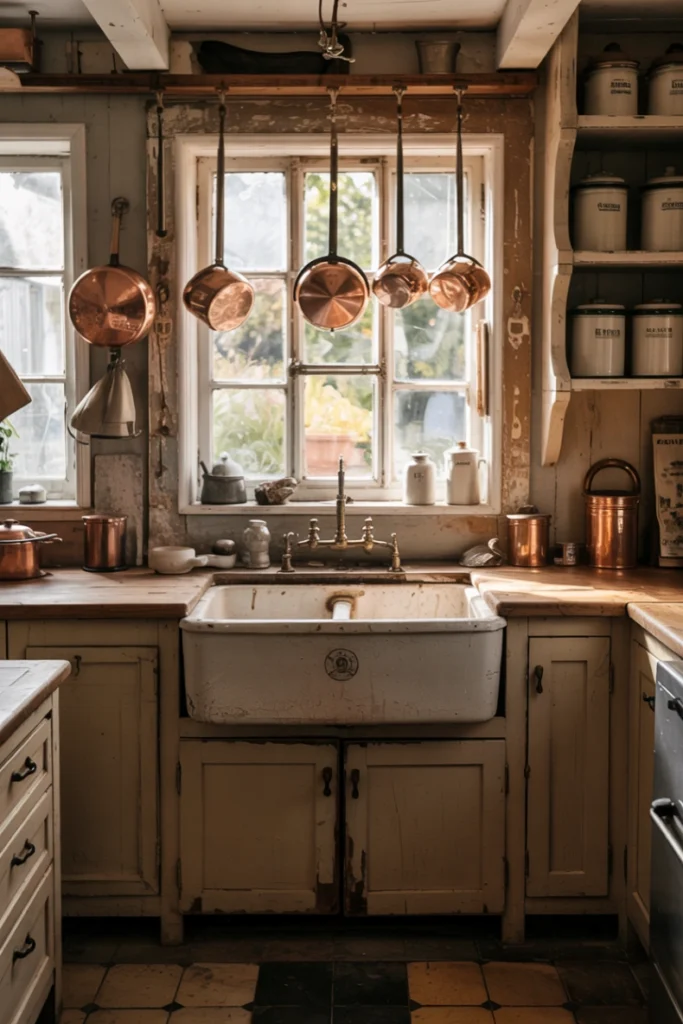
Distressed finishes are what make a rustic kitchen feel old in the best way. Weathered wood, chipped paint, and aged metal show the marks of use and time, which is exactly the opposite of a perfect showroom kitchen. A distressed island, a chippy painted hutch, or a worn table top all add depth and make the room feel honest and welcoming.
You can create a distressed look at home with simple tools. Paint a piece with chalk paint in a soft color, let it dry fully, then sand the edges and raised details lightly with 120 grit sandpaper until the wood shows through. Rub a dark wax into the sanded areas to age them further, and finish with a clear wax to protect the surface. For metal, a vinegar and salt solution speeds up rust and patina, but test it on a hidden spot first so the effect stays subtle.
Use distressing in small doses. One or two distressed pieces give the kitchen character, while too many make it look tired and neglected. Balance a distressed island with clean painted cabinets, or pair a chippy hutch with a smooth stone countertop. The contrast between worn and smooth is what keeps the look charming instead of shabby.
18. Cozy Breakfast Nook
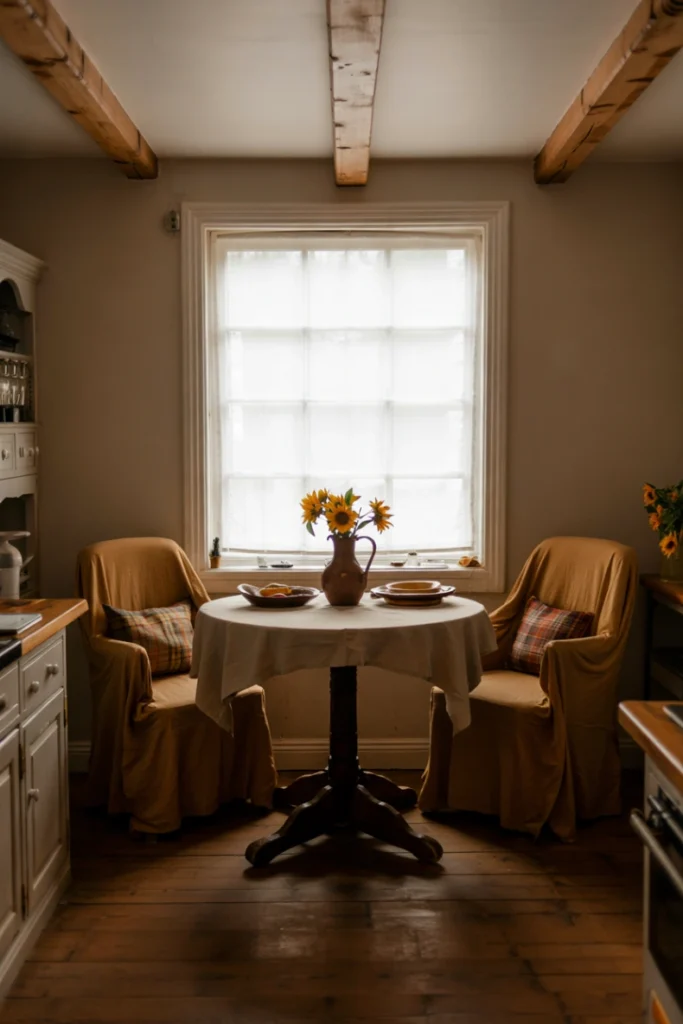
A breakfast nook turns an unused corner into the most loved spot in the kitchen. Built in benches or a simple wooden table with chairs create a casual place for morning coffee, homework, and long weekend breakfasts. Soft cushions, natural light, and wood finishes make the nook feel like a small retreat inside the room.
Build the nook to fit real people. A bench seat should be 16 to 18 inches deep and about 18 inches high, with a table top 30 inches high and at least 24 inches of width per person. Leave 30 inches between the table edge and the bench back so people can slide in and out easily. Add storage under the bench seats with lift up lids, which is perfect for table linens, placemats, and board games. Place the nook near a window if possible, since morning light makes the space feel bigger and more cheerful.
Style the nook with washable cushion covers in linen or cotton, a simple pendant light or a small wall sconce overhead, and a centerpiece that is easy to move, like a wooden tray with a vase of fresh herbs. Keep the table clear of clutter by giving everything a home in the bench storage. A nook that is comfortable and easy to clean gets used every single day, which is the best test of any kitchen idea.
19. Copper and Metal Accents
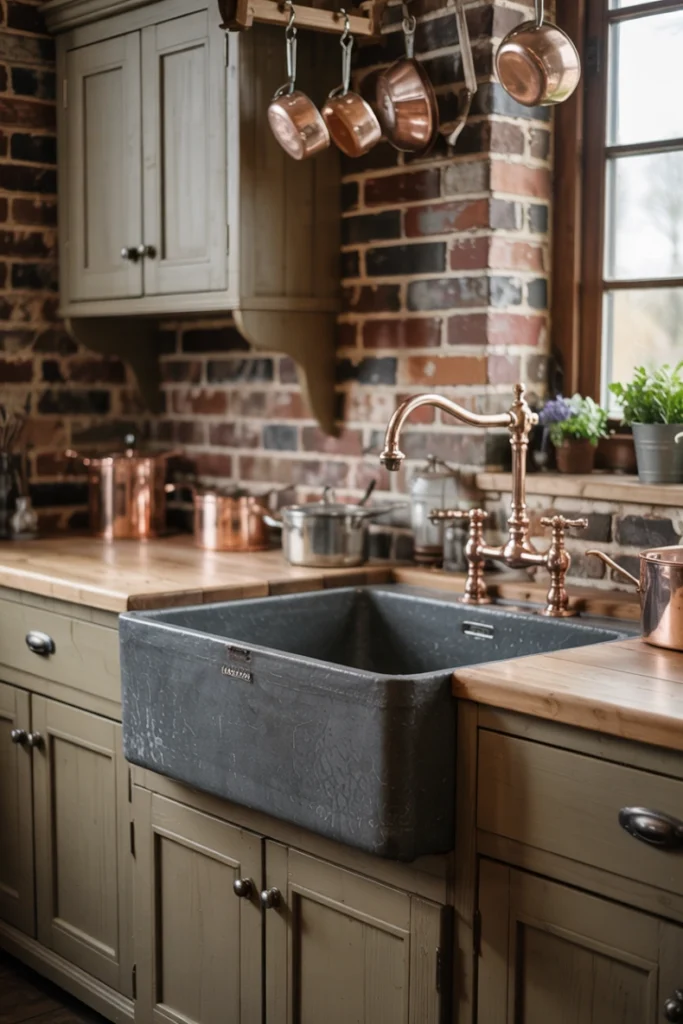
Copper and metal accents add warmth, shine, and contrast to a rustic kitchen. Copper pots hung from a rail, a copper range hood, iron shelf brackets, or a brass faucet all catch the light and break up the matte surfaces of wood and stone. The slight shine keeps the room from feeling flat, while the warm tones of copper fit perfectly with earthy colors.
Mix metals carefully so the look stays intentional. Choose one dominant metal, usually copper or aged brass, and use a second metal, like black iron, only for small details such as brackets and hinges. Keep the finishes in the same family, so warm metals pair with warm metals, and avoid mixing shiny chrome with aged copper in the same sight line. A copper pot rail above the island, with three or four everyday pans hanging from S hooks, is both decorative and practical.
Copper needs a little upkeep to stay bright. Wipe pans dry after washing to prevent water spots, and polish them once a month with a paste of lemon juice and salt if you like a bright shine. If you prefer the look of aged copper, leave the patina alone and simply wash with mild soap. Either way, copper only gets better with use, and a well used copper pot is one of the most beautiful objects in a rustic kitchen.
20. Nature-Inspired Greenery
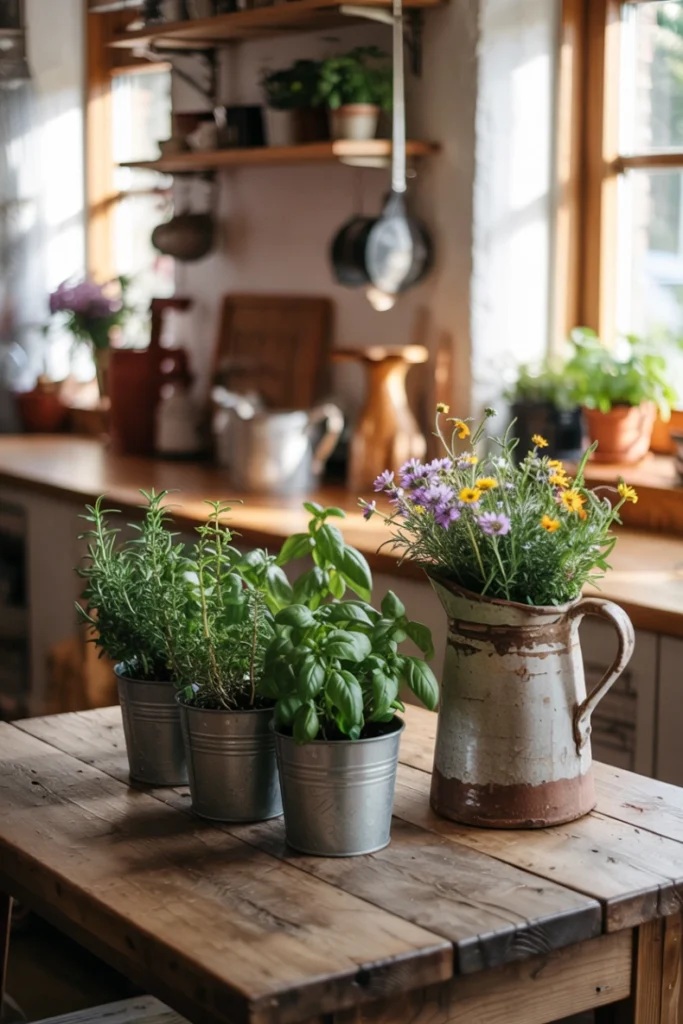
Greenery brings a rustic kitchen to life. Potted herbs on the windowsill, a hanging plant by the sink, or a vase of fresh flowers on the island add color, scent, and freshness that no decor item can copy. Plants soften hard surfaces, fill empty corners, and remind you that the kitchen is connected to the outdoors.
Start with herbs you actually cook with, such as basil, rosemary, thyme, and mint. A sunny windowsill that gets 6 hours of light a day is enough for most herbs, and small terracotta or ceramic pots suit the rustic look far better than plastic. Water herbs when the top inch of soil feels dry, and trim them often, since regular cutting keeps the plants bushy and gives you fresh flavor for cooking. For darker corners, try pothos or a snake plant, which tolerate low light and need water only every one to two weeks.
Style plants in groups of two or three at different heights, and use simple clay, ceramic, or woven baskets as pots. Hang a trailing plant from a ceiling hook near the sink, place a small herb garden on a wooden tray by the stove, and keep a vase of seasonal branches on the island. Fresh greenery is the finishing touch that makes all 20 of these ideas feel complete and alive.
Conclusion
Rustic kitchen ideas are about warmth, authenticity, and timeless beauty. By combining natural materials, handcrafted details, and earthy colors, you can create a cozy, country inspired kitchen that feels welcoming and works hard every day. Whether you start with reclaimed wood cabinets, add a farmhouse sink, or simply bring in copper accents and fresh greenery, each change moves the room closer to the kitchen you want.
These 20 ideas work best when you pick the ones that fit your space, your budget, and the way your family actually lives. Start with one or two projects, live with the results for a few weeks, and then add the next layer. A rustic kitchen built slowly, piece by piece, always looks more natural than one decorated in a single weekend. With thoughtful choices and a little patience, your kitchen can stay beautiful, comfortable, and full of character for years to come.
Frequently Asked Questions
What is the cheapest way to make a kitchen look rustic?
Start with paint, hardware, and textiles, which cost the least and change the look the most. Paint the cabinets in sage green or warm cream, swap the knobs for aged brass or black iron pulls, and add linen curtains and a jute runner. A butcher block cutting board, a few copper pans, and some potted herbs on the windowsill add the rustic feel for very little money. Save bigger projects like beams and stone counters for later.
Can I have a rustic kitchen in a small apartment?
Yes, rustic style works well in small kitchens because it is warm and simple rather than fussy. Use light wood tones and warm white walls to keep the space bright, add open shelving instead of heavy upper cabinets, and choose one focal piece such as a small farmhouse sink or a vintage style faucet. Keep the palette to three earthy colors and avoid oversized furniture so the room feels cozy rather than crowded.
How do I keep a farmhouse sink clean?
Rinse a fireclay or porcelain farmhouse sink daily and wipe it with a soft sponge and mild dish soap. For stains, make a paste of baking soda and water, rub it gently over the mark, and rinse well. Avoid harsh chemicals and steel wool, which can dull the glaze. A sink grid on the bottom protects the surface from pots and pans, and drying the sink after use prevents water spots.
What colors go best in a rustic kitchen?
Warm browns, sage green, muted cream, clay, terracotta, and soft gray are the best colors for a rustic kitchen. Use a warm neutral on the walls, a deeper earthy tone on the cabinets or island, and small accents of copper or terracotta for warmth. Avoid bright white, stark black, and cool blue grays, which can make wood and stone look cold instead of cozy.
Is butcher block a good choice for kitchen countertops?
Yes, butcher block is a good choice if you are willing to oil it regularly. It is warm, affordable, and easy to repair, since scratches and stains can be sanded out and re oiled. Oil the surface once a month for the first year and every two to three months after that. Keep it dry around the sink and use trivets for hot pans, and a butcher block countertop will last for many years.
More Ideas You Will Love
 14 Transitional Kitchen Ideas with Modern Cabinet Designs
 22 House Kitchen Ideas – Inspiring Designs for Your Dream Home
 20 Galley Kitchen Ideas That Make the Most of Small Spaces
 20 Creative Mini Kitchen Ideas – Stylish, Functional & Perfect for Small Spaces
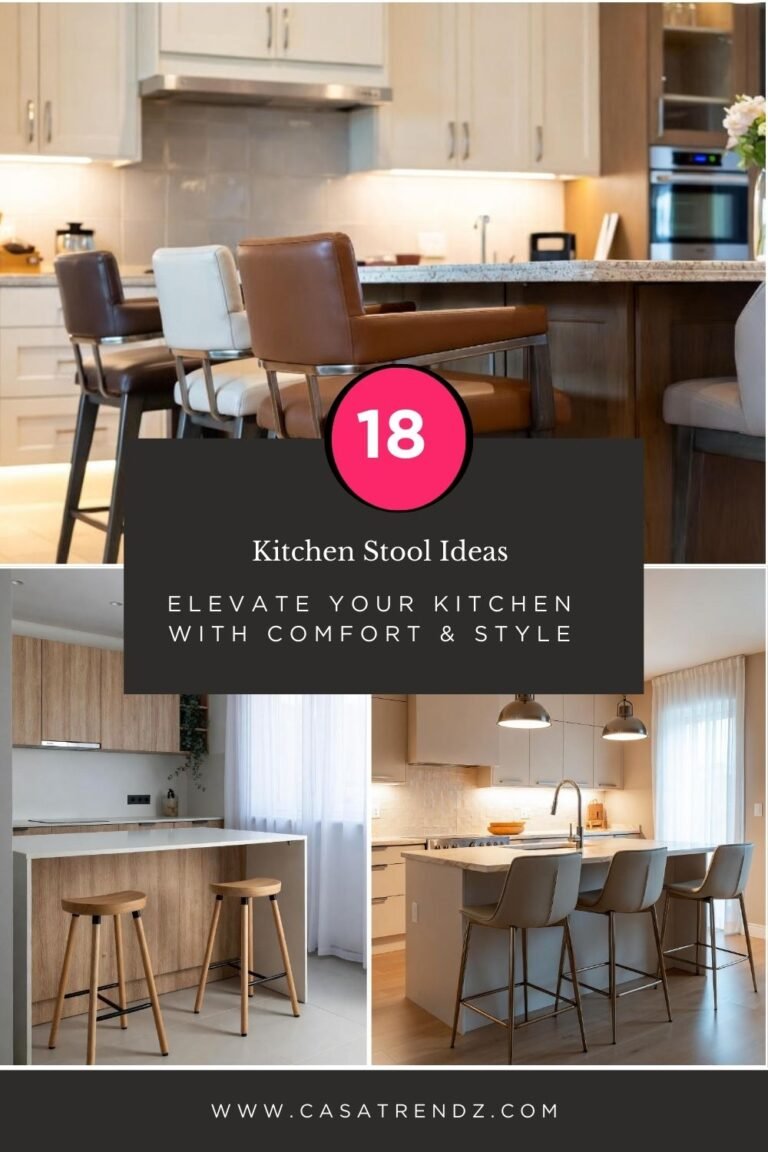 18 Kitchen Stool Ideas: Elevate Your Kitchen with Comfort & Style
 25 Kitchen Island Ideas: Stylish & Functional Designs for Modern Homes