
18 Kitchen Stool Ideas: Elevate Your Kitchen with Comfort & Style

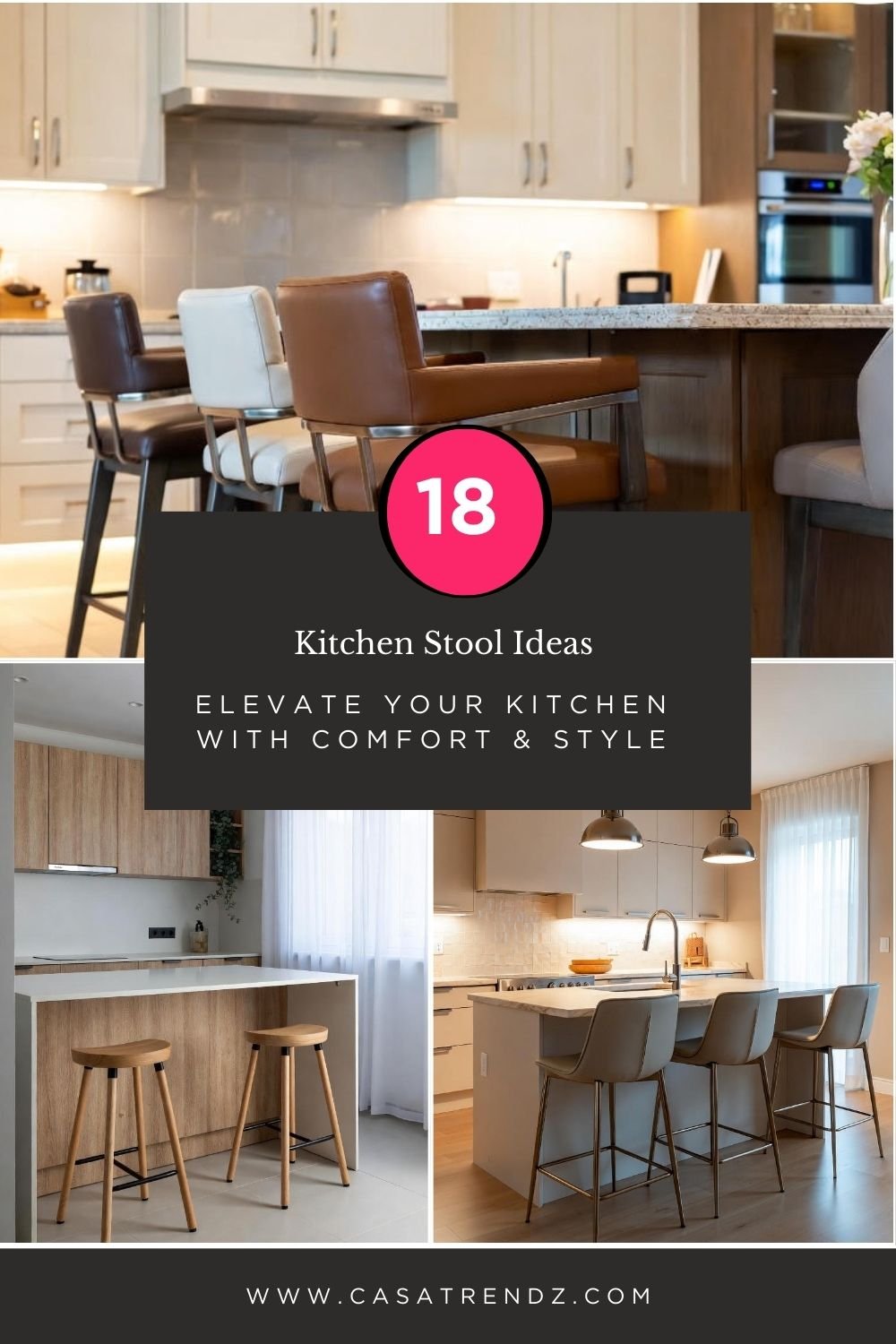
Kitchen stools do far more than give you somewhere to sit. The right set turns a kitchen island into the place where the day actually happens, where breakfast is eaten standing half awake, homework gets spread out next to the chopping board, and guests perch with a glass of wine while dinner cooks. Pick the wrong height or the wrong seat, though, and the island becomes a place nobody wants to use, with stools that wobble, pinch, or block the walkway every time someone passes.
In this guide, we share 18 kitchen stool ideas for every kitchen and every budget, each one explained with real sizes, materials, colors, and practical tips you can use before you buy. Before you order anything, measure your counter height, allow about 24 inches of width per person, and leave 10 to 12 inches between the seat and the underside of the counter so legs fit comfortably. A standard 36 inch high counter pairs with 24 inch stools, while a 42 inch bar needs 30 inch stools. Get those two numbers right and almost any style on this list will work in your home.
1. Classic Wooden Kitchen Stools
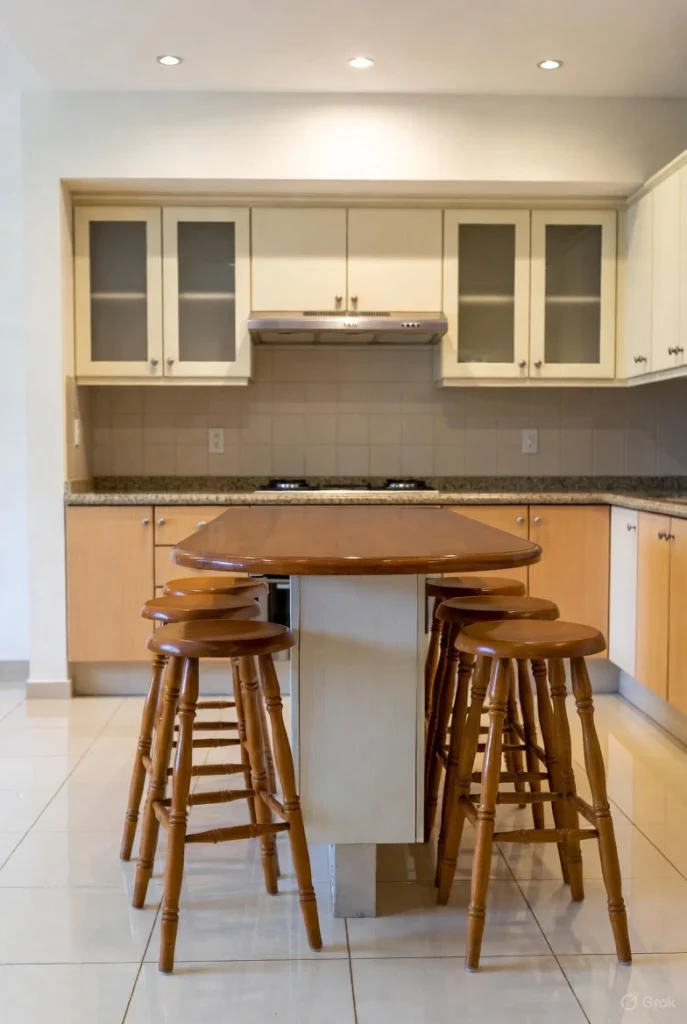
Classic wooden kitchen stools are the safest choice in this whole guide, and the reason is simple: wood suits almost every kitchen. A light oak stool warms up a white kitchen, a deep walnut seat adds richness next to gray cabinets, and a painted finish in cream or sage can match the rest of the room exactly. Wood works with farmhouse, traditional, coastal, and even modern kitchens, because the material itself is neutral and the shape can be as simple or as detailed as you like. Look for solid hardwood seats at least 1 inch thick, turned legs, and a stretcher bar between the legs that doubles as a footrest.
Wooden stools are also one of the most durable options you can buy. Solid oak, maple, or beech handles daily use for years, and a scuff or a water ring can usually be sanded out and re-oiled in an afternoon. For easy care, choose a stool with a hardwax oil or polyurethane finish, which resists spills far better than raw or waxed wood. Wipe the seat with a damp cloth, dry it straight away, and tighten the leg joints once a year. If you want the island itself to match this classic feel, our kitchen island ideas include several wood topped designs that pair beautifully with wooden stools.
2. Upholstered Kitchen Stools
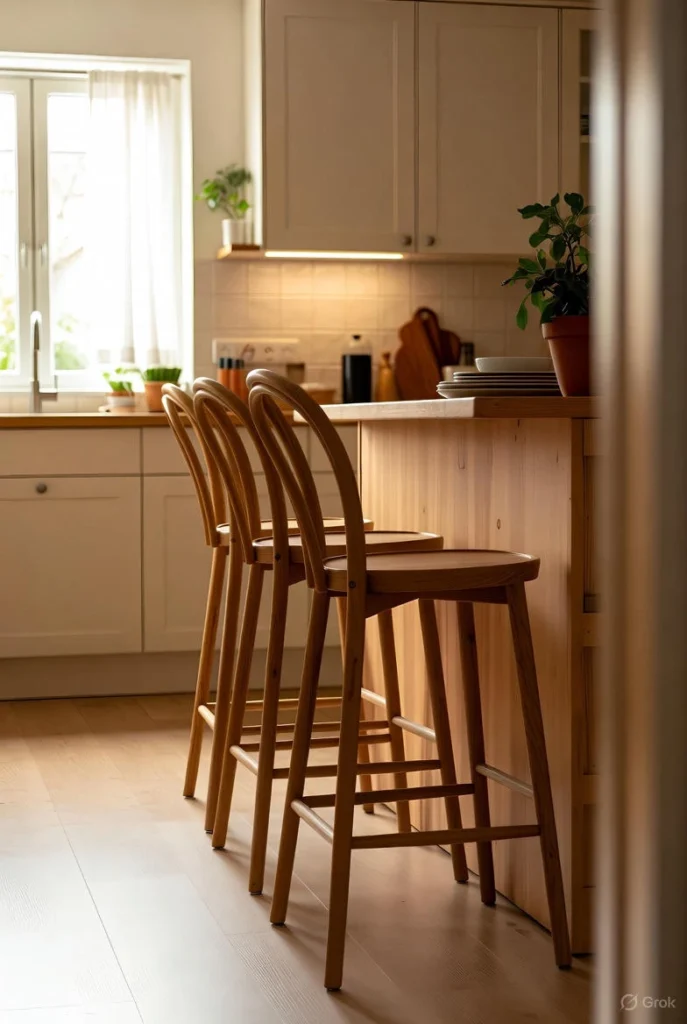
Upholstered kitchen stools are the choice when comfort comes first. A padded seat, and a padded back if you go that far, turns a quick perch into a chair you can sit on for a full meal, a long homework session, or an evening of conversation. Fabric upholstery softens the look of a hard kitchen and adds color and texture, while leather or faux leather brings a smarter, more tailored feel. In an open plan home, upholstered stools also help the kitchen blend into the living area, because they read as furniture rather than work seating.
The practical question with upholstery is always cleaning. In a kitchen, choose a performance fabric, a treated linen blend, or leather, all of which wipe clean or resist stains far better than plain cotton. Look for removable seat covers you can wash, and keep a fabric protector spray in the cupboard for the first few months. Seat height matters too: an upholstered stool with a 24 inch seat suits a standard counter, while a 26 inch seat can feel cramped unless your counter is higher than usual. Test the seat depth before you buy, about 16 to 18 inches deep is comfortable for most adults.
3. Backless Kitchen Stools
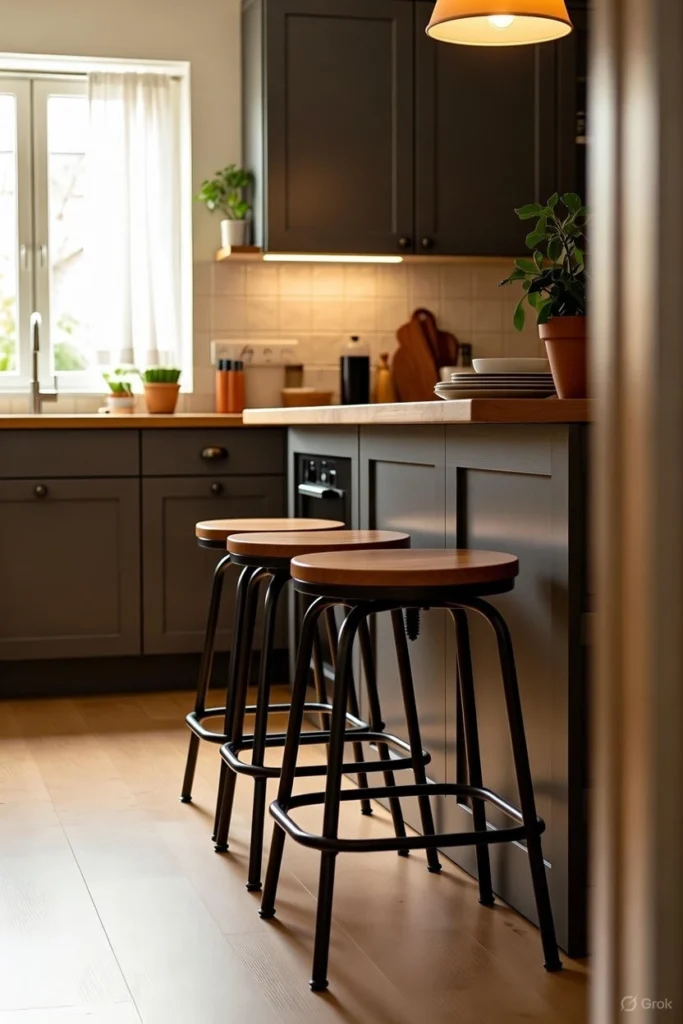
Backless kitchen stools are the best answer for a small kitchen or a narrow walkway. Without a back, the stool slides fully under the counter when it is not in use, which keeps the floor clear and the room looking open. A standard backless stool is about 17 to 18 inches wide and 24 inches high, so three of them fit along a 6 foot island with room to spare. This compact profile suits minimalist and Scandinavian kitchens especially well, where clean lines and empty surfaces are part of the style.
Comfort is the trade off, so choose the seat shape carefully. A contoured or saddle shaped seat supports you far better than a flat round top, and a built in footrest is almost essential, because dangling legs get tiring after ten minutes. A footrest ring or stretcher bar should sit about 7 to 9 inches above the floor for a 24 inch stool. Wood, metal, and upholstered versions all work, so pick the material that matches your kitchen and add a thin cushion if you want extra softness without the bulk of a full back.
4. Kitchen Stools with Back Support
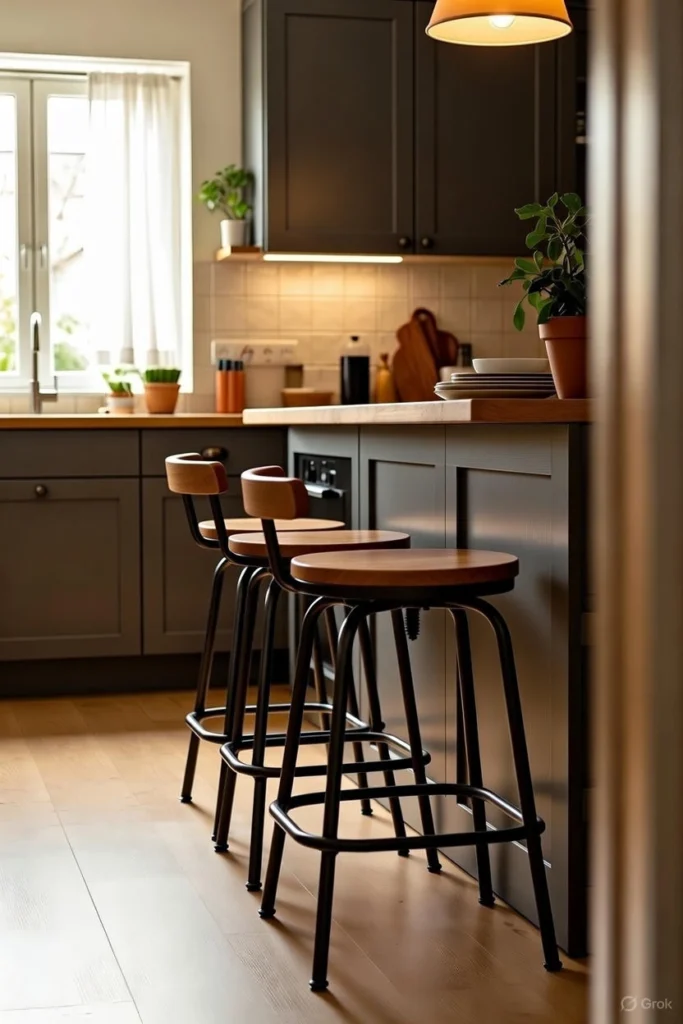
Kitchen stools with back support are worth the extra space they take up if anyone in your home sits at the island for more than a few minutes at a time. A low back, about 6 to 8 inches above the seat, gives your lower back something to lean on without blocking the view across the kitchen. A full height back, closer to 18 inches, feels more like a dining chair and is the right choice when the island is your main eating spot. Families with children and older relatives usually find backed stools far more comfortable for everyday meals.
The main cost of a back is floor space. A backed stool needs about 6 inches more depth than a backless one, and it cannot slide fully under the counter, so measure your walkway before you commit. Leave at least 36 inches behind the stools for someone to walk past while another person is seated. Style wise, backed stools come in every finish, from a classic wooden ladder back to a sleek upholstered panel. If your island doubles as a workspace, a low back keeps the view open while still supporting you through a long laptop session.
5. Swivel Kitchen Stools
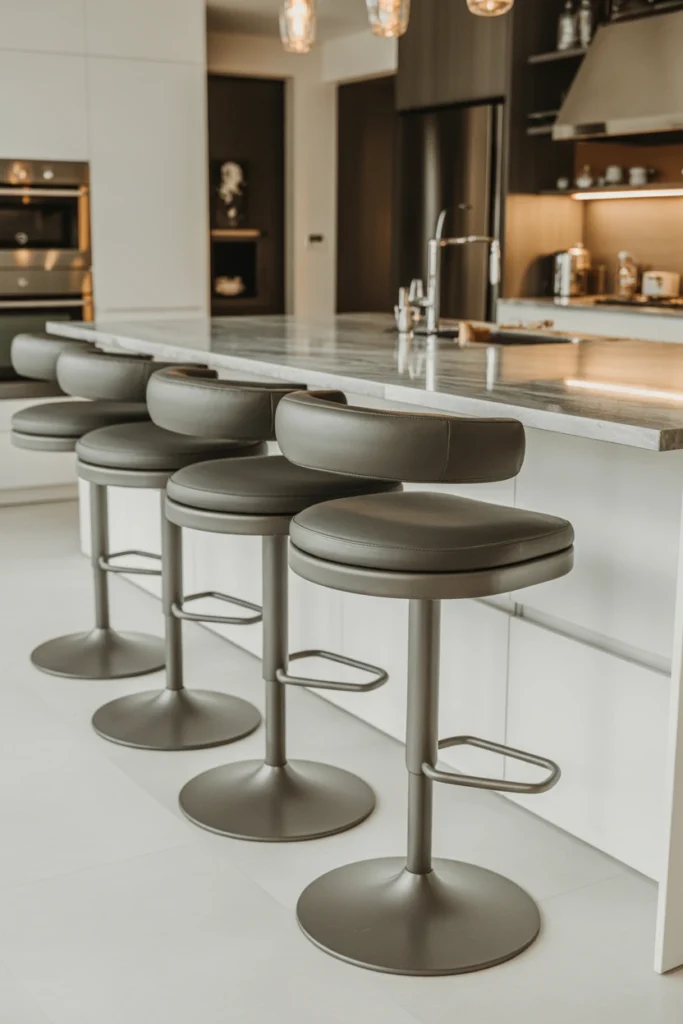
Swivel kitchen stools solve a small daily annoyance: the shuffle of pulling a stool out, sitting down, and pushing it back in. With a seat that turns a full 360 degrees, you simply sit and rotate into place, which is a real help in a busy kitchen where people come and go constantly. Swivel stools are especially practical at an island that faces the living room, because you can turn to talk to someone without moving the whole stool. Look for a smooth bearing mechanism and a seat that returns to center on its own.
When you shop for swivel stools, check the base before you fall for the seat. A heavy disc base or a four leg base with a wide footprint stops the stool from tipping when someone leans to one side. Many swivel designs also adjust in height, usually from 24 to 30 inches, which makes them flexible if your household uses more than one counter height. Keep the swivel range in mind with children, because a freely spinning seat is great fun and can also be a tipping risk, so a model with a lock or a limited turn is the safer pick for young families.
6. Metal Kitchen Stools
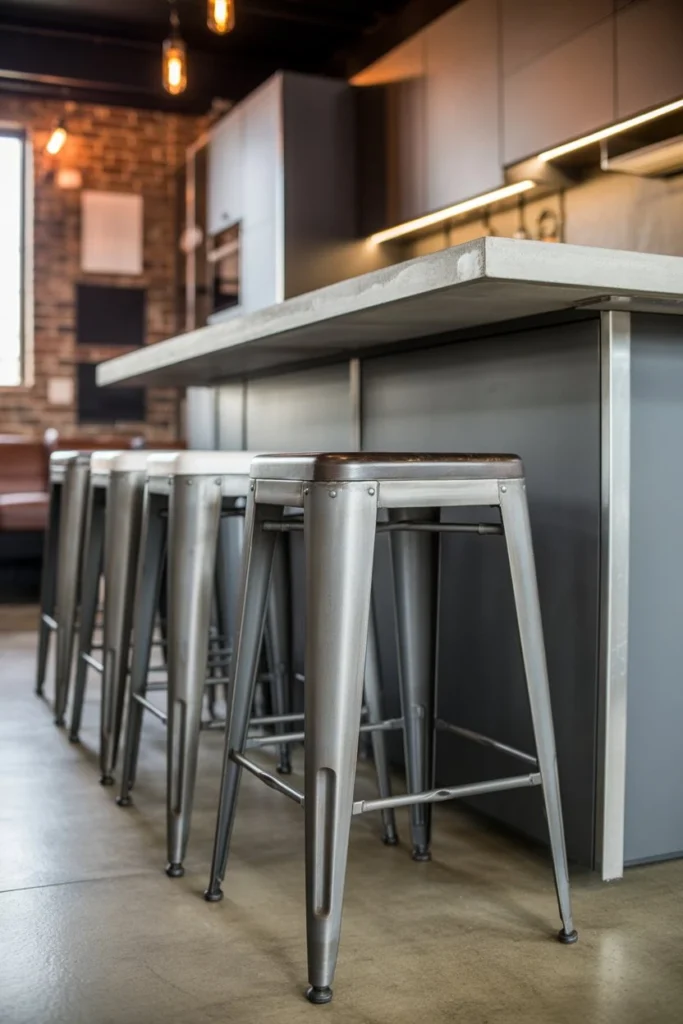
Metal kitchen stools bring an industrial or contemporary edge that wood alone cannot. A matte black steel frame, a brushed nickel base, or a galvanized Tolix style seat creates a bold contrast against warm wood cabinets or a stone countertop, and the look suits modern, urban, and loft style kitchens perfectly. Metal is also honest about what it is: slim lines, strong joints, and a finish that does not pretend to be anything else. Pair a metal frame with a wooden seat to soften the look, or go all metal for the full industrial effect.
Durability is the big advantage here. Powder coated steel resists scratches, wipes clean with a damp cloth, and does not stain from tomato sauce or coffee the way fabric can. The downside is comfort on a bare metal seat, which feels hard and cold in winter, so add a seat cushion or choose a design with a wooden or upholstered seat pad. Check the weight rating too, because a light tubular stool can feel flimsy under a heavier adult. A good metal stool weighs at least 12 to 15 pounds and sits firmly without rocking on a flat floor.
7. Adjustable Height Kitchen Stools
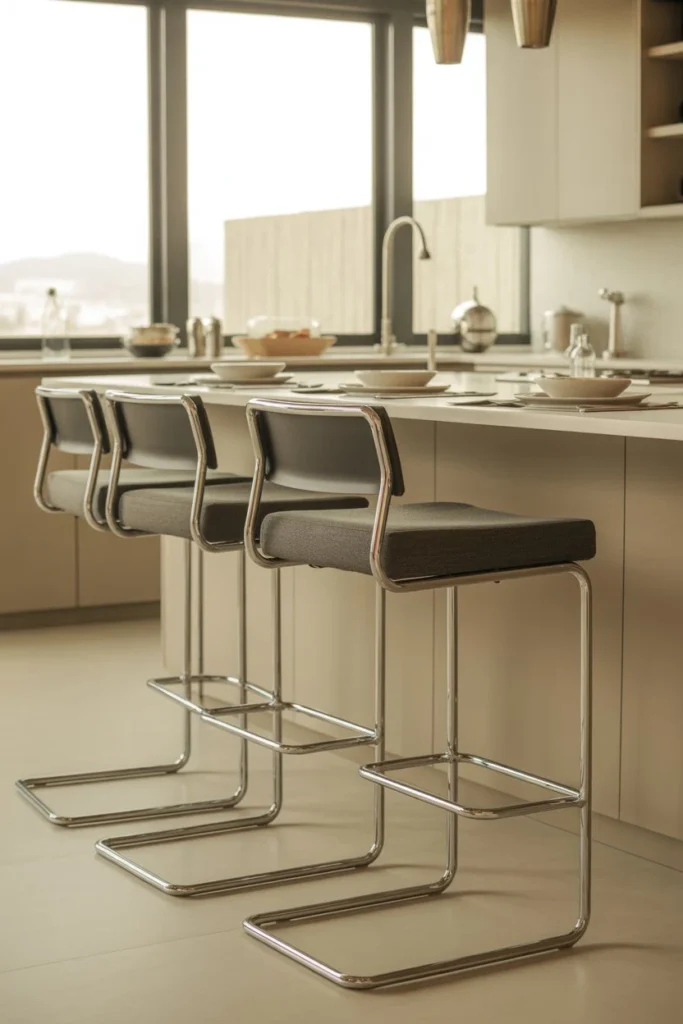
Adjustable height kitchen stools are the most flexible seating you can buy, and they earn their place in any household where people of different heights share one island. A gas lift mechanism, the same kind used in office chairs, lets the seat move smoothly from about 24 to 30 inches, so the same stool works at a standard counter, a raised bar, or a dining height table. This makes them ideal for families with children, for rental homes where the next kitchen may have a different counter height, and for anyone who has not yet settled on a fixed island design.
Before you buy, test the lift in person if you can. A good gas lift glides without sticking and locks firmly at any height, while a cheap one sinks slowly under weight or wobbles at full extension. Check the base diameter as well: a base of at least 16 inches across keeps the stool stable at its tallest setting. Keep the mechanism clean and avoid dragging the stool across the floor by its seat, which strains the lift. For more ideas on flexible layouts that suit adjustable seating, see our small kitchen ideas, where movable furniture does a lot of the work.
8. Counter-Height Kitchen Stools
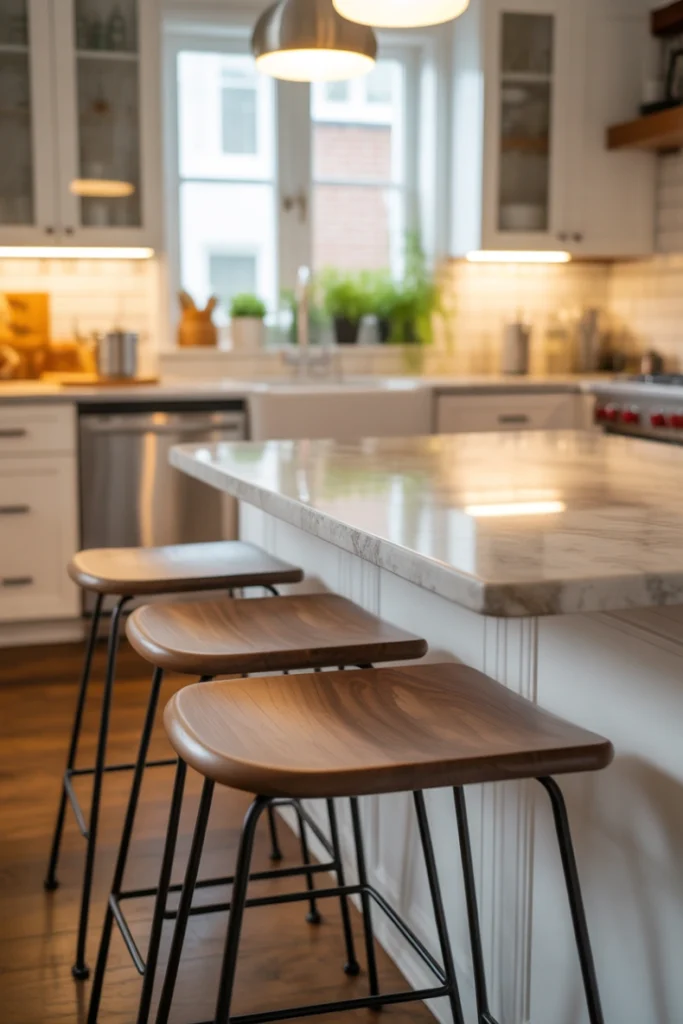
Counter-height kitchen stools are sized for the standard 36 inch kitchen counter, which is the most common height in American homes. The seat sits at 24 to 26 inches, leaving the recommended 10 to 12 inches of legroom between the seat and the underside of the counter. This is the measurement that matters most: too little clearance and your thighs press against the counter, too much and you feel like a child at the adults table. Measure your counter from the floor to the underside, subtract 10 to 12 inches, and that is your ideal seat height.
Counter-height stools come in every style on this list, from wood to metal to upholstered, so the height is a size, not a look. That is actually the point: once the height is right, you are free to choose the style that fits your kitchen. They work best at a kitchen island or a peninsula where the overhang is 12 to 15 inches deep, giving knees a comfortable place to go. Plan for one stool per 24 inches of counter length, and leave 6 inches between stools so elbows do not bump during meals.
9. Bar-Height Kitchen Stools
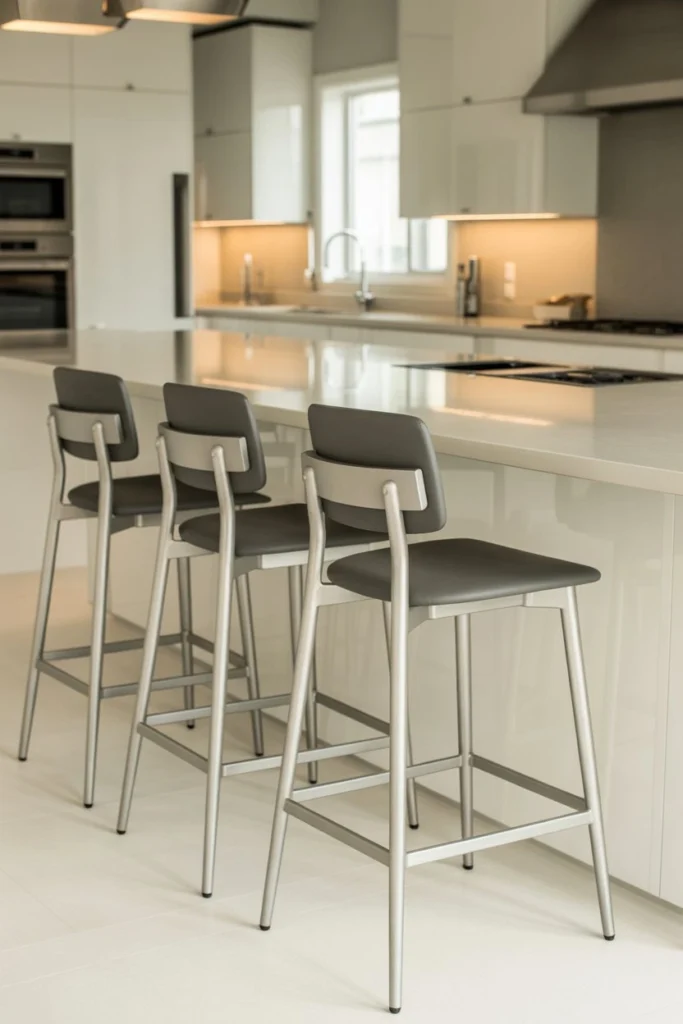
Bar-height kitchen stools are taller, with seats at 28 to 30 inches, made for raised counters and breakfast bars that stand 40 to 42 inches high. A bar-height setup gives the kitchen a cafe or cocktail bar feel, which suits open plan homes where the island faces the living room and guests gather on the far side. Because you sit higher, you get a better view across the room, and the taller stools naturally become a visual feature, so choose a design you are happy to show off.
Comfort depends almost entirely on the footrest. At bar height, your feet cannot reach the floor, so a footrest ring or stretcher bar is not optional, it is the thing that keeps your legs from aching after ten minutes. The footrest should sit about 12 inches above the floor for a 30 inch seat. Bar stools also need more clearance behind them, at least 36 to 42 inches, because people step up and down from a greater height. If anyone in the household has limited mobility, a bar-height seat can be hard to climb onto, so keep one counter-height spot in the kitchen as an easier alternative.
10. Rattan or Woven Kitchen Stools
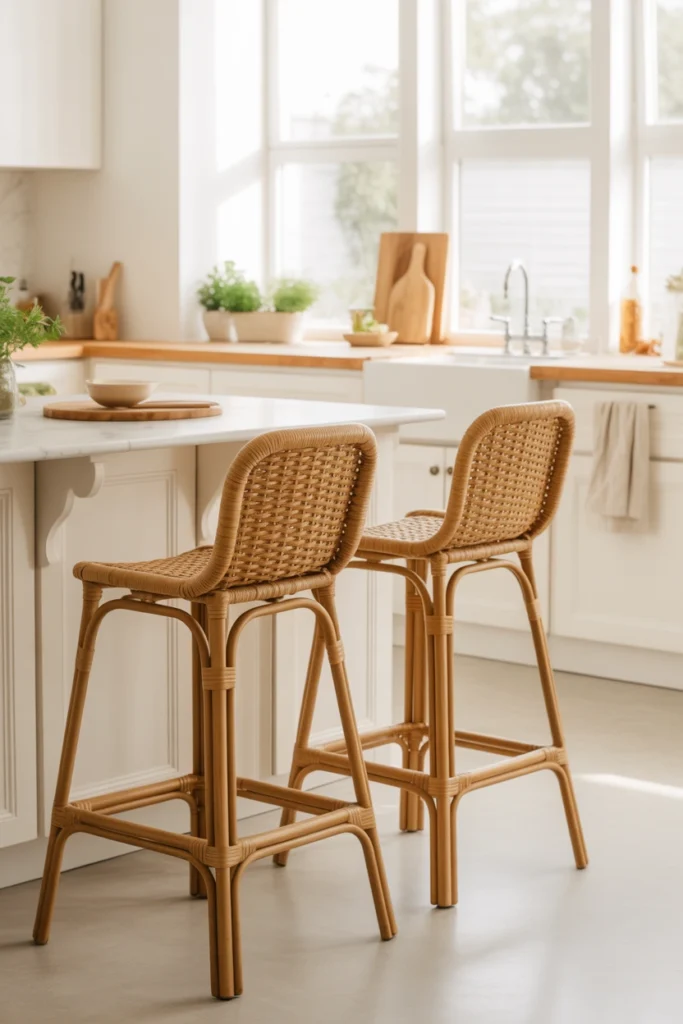
Rattan or woven kitchen stools add texture and natural warmth that smooth wood and metal cannot match. The open weave catches light, the honey colored cane softens a hard kitchen, and the handmade look suits bohemian, coastal, and relaxed farmhouse interiors. A woven seat also breathes in warm weather, which makes these stools comfortable in a sunny kitchen or a home without air conditioning. Choose natural rattan for a classic look, or a darker stained cane for a more modern feel.
Practical care matters with woven seats. Natural rattan is strong but it does not like standing water, so wipe spills straight away and keep the stools out of direct rain if your kitchen opens onto a patio. Add a thin seat cushion for comfort, because a bare woven seat can press into your legs over a long meal, and a cushion in a washable cotton or outdoor fabric is easy to remove and clean. Check the frame joints too: a well made rattan stool has a solid wood or metal frame underneath the weave, which keeps it sturdy for years rather than months.
11. Minimalist Kitchen Stools
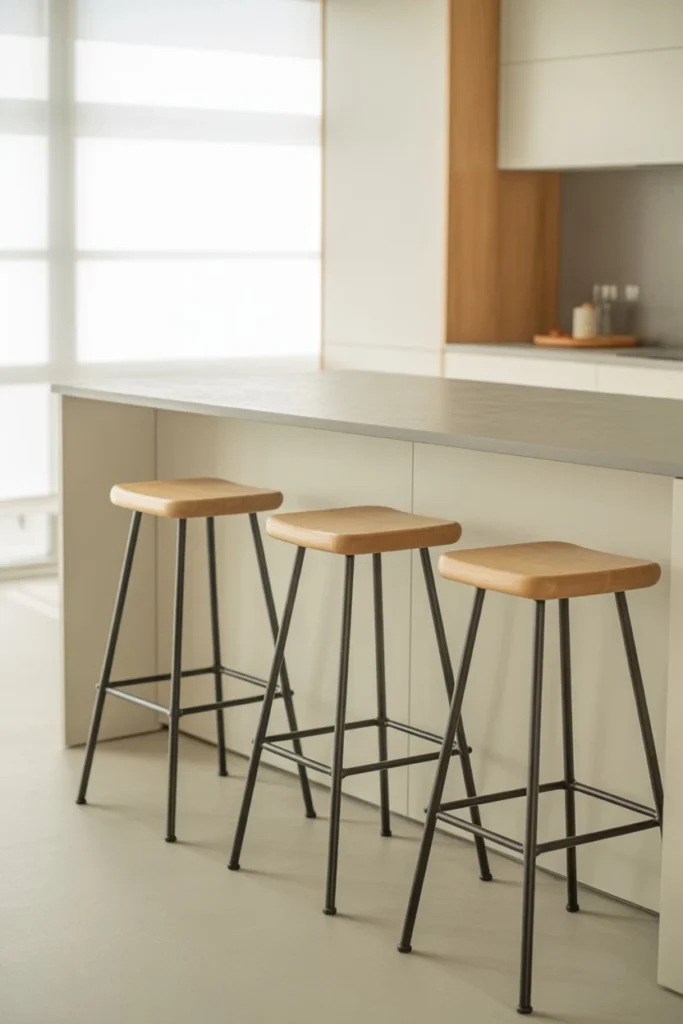
Minimalist kitchen stools prove that a seat can be beautiful precisely because it does so little. Clean lines, a single material, neutral colors, and no decoration define this style, which suits modern and Scandinavian kitchens where the rest of the room is already calm and uncluttered. A typical minimalist stool is a simple molded plywood seat on slim steel legs, or a single piece of bent wood, in white, light oak, gray, or matte black. The lack of fuss lets other elements, like a stone countertop or a pendant light, carry the style.
The secret to a minimalist stool that you actually enjoy sitting on is ergonomic shaping. A gently curved seat, a slight tilt, and legs set at a stable angle make a big difference, so sit on the stool before you buy it if you can. Avoid designs that are beautiful but rigid, because a flat, hard seat with no footrest becomes uncomfortable fast. Pair minimalist stools with a clean lined island and keep the countertop clear, since clutter fights the whole point of the style. For color palettes that keep a minimalist kitchen warm rather than cold, explore our kitchen color ideas for soft neutrals that work in real homes.
12. Kitchen Stools with Cushioned Seats
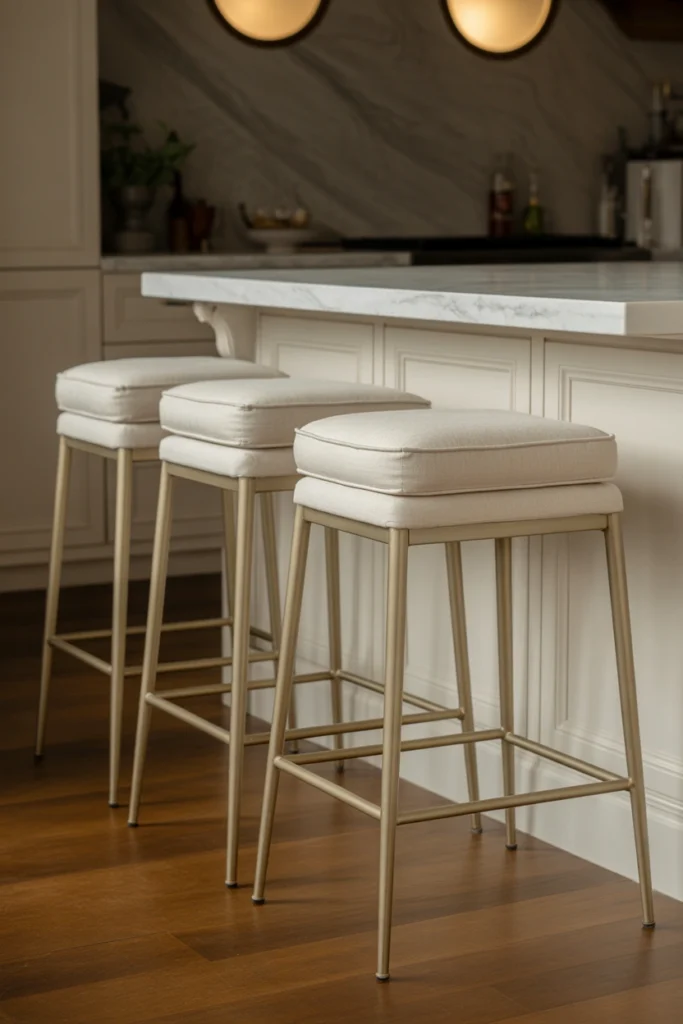
Kitchen stools with cushioned seats are the middle ground between a hard stool and a fully upholstered chair. A pad of 2 to 3 inches of high density foam, covered in fabric, vinyl, or leather, gives you softness for longer meals without the bulk of a padded back or arms. The seat stays slim enough to slide under the counter, and the cushion can often be removed or replaced when it wears out. This design suits transitional kitchens and family homes where the island is used for homework, work calls, and dinner alike.
Choose the cushion material for your real life, not for a photo. Vinyl and faux leather wipe clean in seconds and resist juice, sauce, and coffee, which makes them the practical pick for families with young children. Fabric cushions feel softer and look warmer, but they need a stain resistant treatment and a removable cover you can wash. Check how the cushion attaches: screws or Velcro strips hold it firmly, while a loose cushion slides around every time someone sits down. Replace the foam insert, not the whole stool, when it starts to flatten after a few years.
13. Farmhouse-Style Kitchen Stools
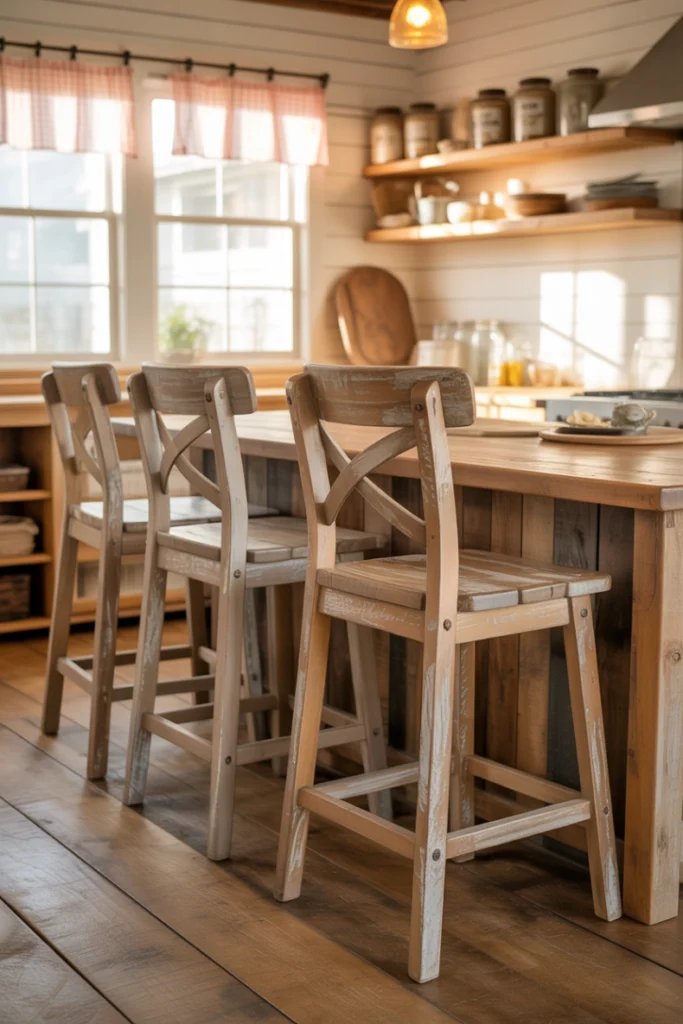
Farmhouse-style kitchen stools are all about warmth, charm, and a feeling that the kitchen has been lived in for years. Wooden frames, simple turned legs, distressed or whitewashed finishes, and a slightly chunky seat define the look. A farmhouse stool pairs naturally with a butcher block island, a shiplap wall, and open shelving, and it suits rustic kitchens, country homes, and anyone who wants the kitchen to feel welcoming rather than showroom perfect. Popular finishes include weathered oak, sage green, cream, and charcoal painted wood.
To keep farmhouse stools looking right, let the wood do the work and keep the styling simple. A woven seat pad, a linen cushion, or a bare wooden seat all fit the style, while shiny chrome or glossy plastic would fight it. Distressed finishes hide scratches and scuffs better than a perfect gloss, which is a real advantage in a busy family kitchen. If your island already leans farmhouse, our modern kitchen ideas show how to mix a classic farmhouse base with cleaner, more modern stools for a look that feels current rather than themed.
14. Leather Kitchen Stools
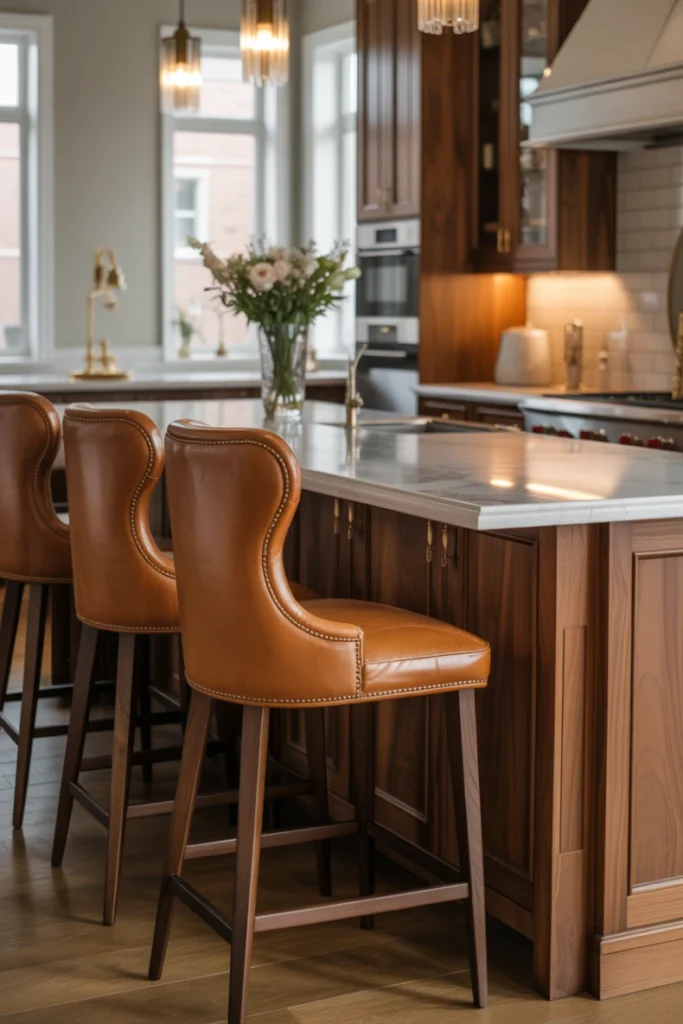
Leather kitchen stools bring a quiet sophistication that suits modern and upscale kitchens. A smooth leather seat in cognac, black, or dark brown adds richness next to a stone countertop, and the material ages gracefully, developing a soft patina rather than looking worn out. Leather is also practical: it wipes clean with a damp cloth, resists most spills, and does not hold cooking smells the way fabric can. Full grain and top grain leather last the longest, while bonded leather peels within a few years and is best avoided for daily use seating.
Care for leather stools is simple but regular. Wipe them weekly with a slightly damp cloth, condition the leather every six months to stop it drying and cracking, and keep them out of direct sunlight, which fades the color unevenly. In a hot kitchen, leather can feel sticky in summer, so a thin cotton cushion or a sheepskin pad solves that without hiding the look. Pair leather seats with black metal or dark wood frames for a tailored feel, and match the leather tone to another element in the room, like cabinet hardware or a pendant light, so the color feels intentional.
15. Kitchen Stools with Footrests
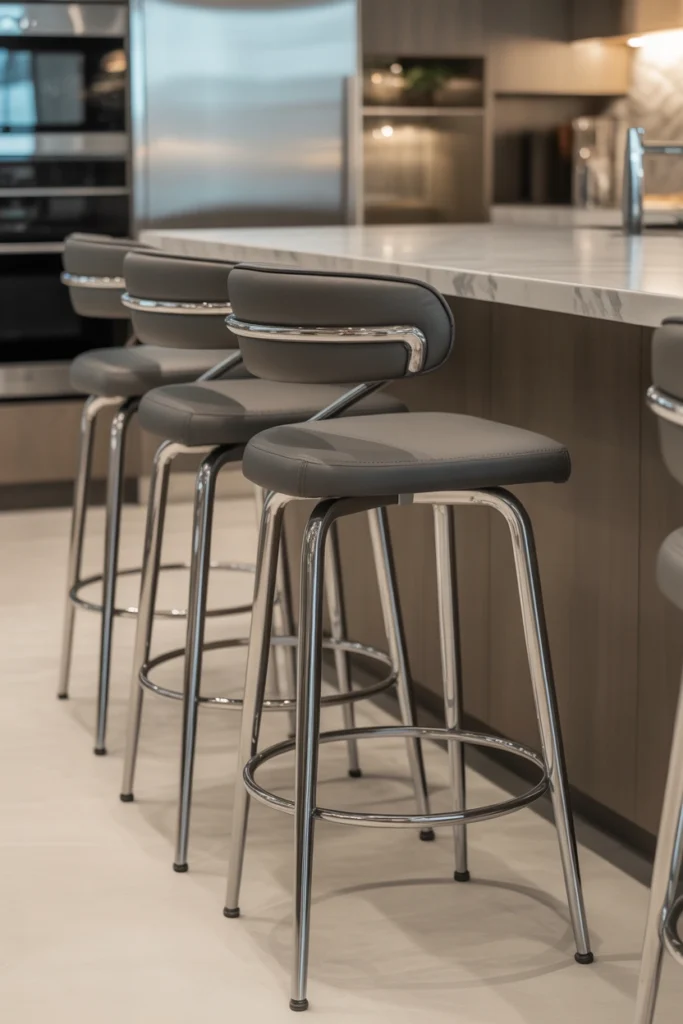
A footrest sounds like a small detail until you sit on a stool without one. Kitchen stools with footrests support your feet, take pressure off the backs of your thighs, and let you sit comfortably for far longer than a stool with nowhere to put your feet. The footrest can be a round metal ring, a wooden stretcher bar between the legs, or a flat step built into the base, and each style suits a different stool. A ring works on swivel stools, a stretcher bar suits four leg wooden stools, and a flat step fits heavier industrial designs.
The height of the footrest is what makes it work. For a 24 inch counter stool, the footrest should sit 7 to 9 inches above the floor. For a 30 inch bar stool, it should be about 12 inches up. If you are buying stools without a footrest, you can add a simple foot rail later, but it is far easier to buy a design that already includes one. Check that the footrest is fixed solidly and does not flex under weight, because a wobbly ring is worse than no ring at all. When you test a stool in a shop, sit for a full minute with your feet on the rest before deciding.
16. Transparent or Acrylic Kitchen Stools
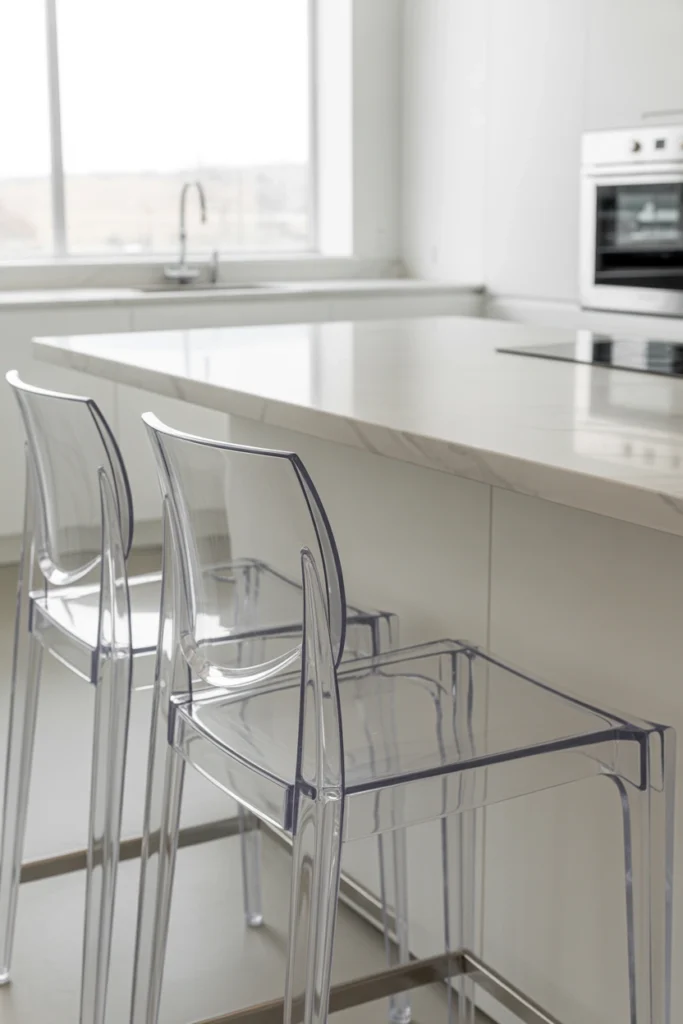
Transparent or acrylic kitchen stools are the trick for a small kitchen that needs seating without visual weight. Because you can see through them, they barely register in the room, which makes a tight kitchen feel larger and keeps the focus on the island or the view beyond. Acrylic suits modern and contemporary kitchens, and it pairs well with white cabinets, glass backsplashes, and light stone countertops. A clear ghost style stool, made famous by modern Italian design, is the classic version, but smoked gray and tinted acrylic are also available for a softer effect.
Acrylic is strong, a well made stool holds 250 pounds or more, but it scratches more easily than wood or metal, so treat it gently. Wipe it with a soft microfiber cloth and a mild soap solution, and never use an abrasive cleaner or a paper towel, which leaves fine marks. Keep acrylic stools out of strong direct sunlight, which can yellow the material over time. They are not the warmest or softest seat, so add a thin cushion if the stools get daily use, and choose a design with a footrest to make longer sits comfortable.
17. Colorful Kitchen Stools
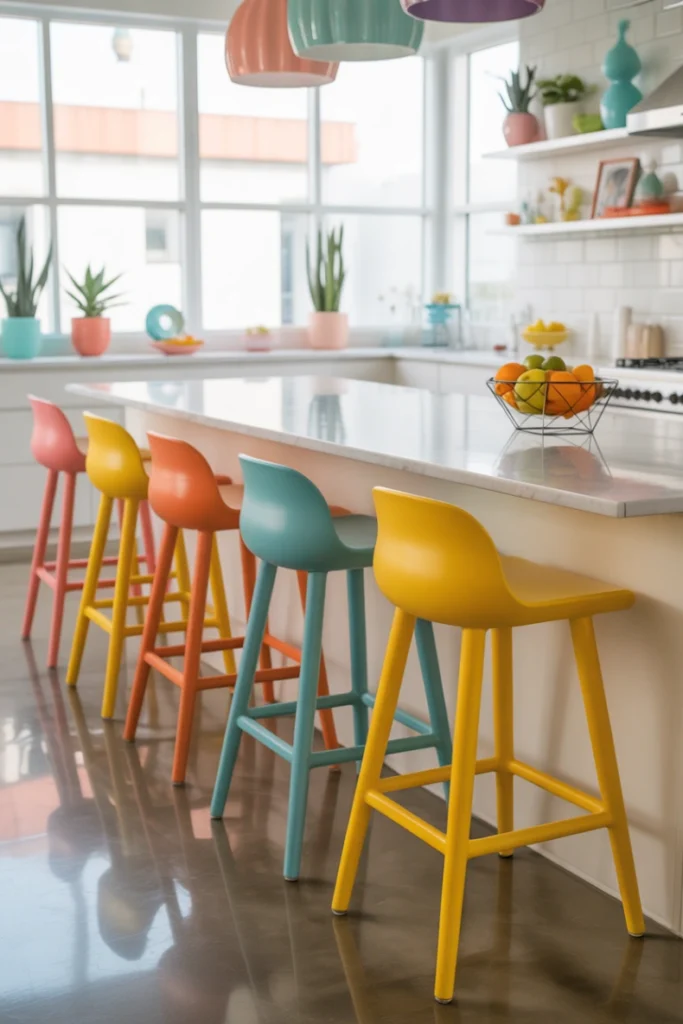
Colorful kitchen stools are the easiest way to add personality to a kitchen without repainting a wall or replacing a countertop. A set of stools in mustard yellow, teal, coral, or forest green turns a neutral kitchen into a lively space, and because stools are small, the color never overwhelms the room. This is also a low risk way to try a bold color: if you tire of it in a year, repainting or re-covering a stool costs far less than changing cabinets. Use one strong color for all the stools for a clean look, or mix two complementary colors for a playful feel.
Color works best when it connects to something else in the room. Pick up a color from your backsplash tiles, a piece of art, a rug, or the veining in your countertop, and repeat it on the stools so the choice feels deliberate. In a white kitchen, almost any color works, while in a kitchen with strong wood tones, warm colors like red, orange, and mustard sit more naturally than cool blues. Painted wooden stools are the easiest to customize: sand lightly, prime, and use a satin or semi gloss paint that resists scuffs and wipes clean.
18. Custom Kitchen Stools
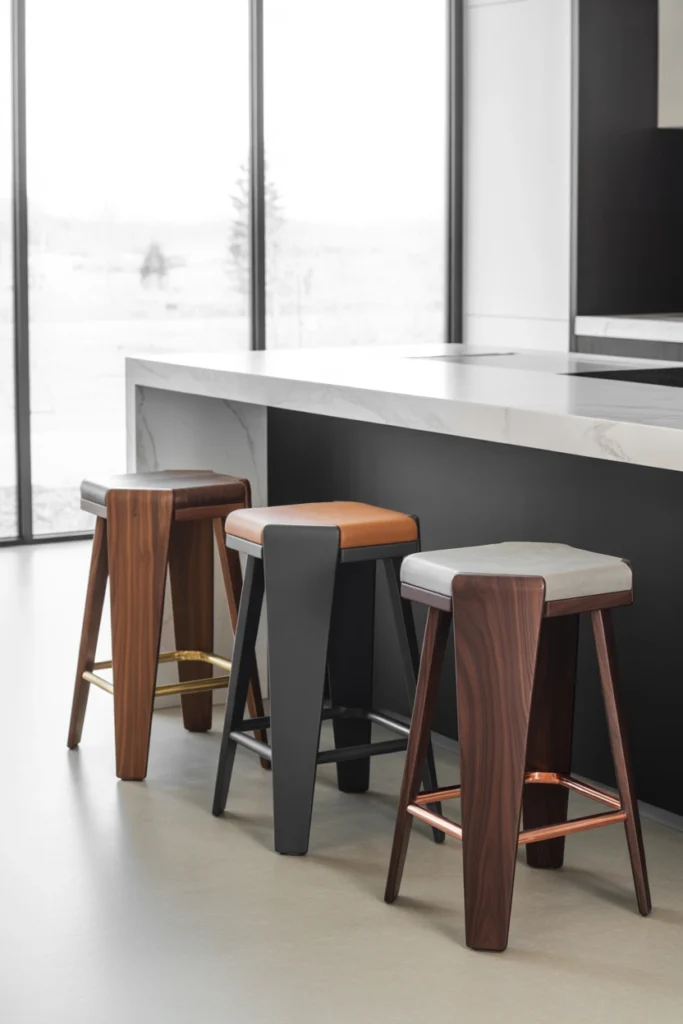
Custom kitchen stools are the answer when nothing off the shelf fits your space, your height, or your style. A local carpenter or furniture maker can build stools to your exact seat height, your exact counter overhang, and your exact width, which matters in kitchens with unusual islands, curved counters, or very tall or very short family members. You choose the wood, the finish, the seat shape, and the details, from a carved back to a specific stain that matches your cabinets. Custom stools also let you solve problems, like a stool that must fit under a 10 inch overhang, or a seat that must hold extra weight.
Custom work costs more and takes longer, usually 30 to 50 percent above a comparable ready made stool, with a wait of four to eight weeks. Before you commission a set, bring the maker your measurements, a photo of your island, and a clear list of how the stools will be used every day. Ask for a sample of the wood and finish first, and agree on the seat height in writing, because a one inch error is very noticeable when you sit down. A well made custom stool lasts decades, and because it was built for your kitchen alone, it fits in a way no mass produced stool can.
Conclusion
Kitchen stools play a vital role in both the functionality and style of modern kitchens. These kitchen stool ideas show how thoughtful design choices can enhance comfort, improve usability, and elevate your kitchen’s overall look, whether you choose a classic wooden stool, a sleek acrylic seat, or a fully custom design built for your family.
When selecting kitchen stools, start with the numbers, not the photo. Measure your counter height, work out your ideal seat height, check the legroom, and allow 24 inches of width per person. Then choose the material and style that fits how you really live: easy clean surfaces for busy families, backs for long meals, swivel for social kitchens, and color when the room needs personality. The right stools will not only complete your kitchen, they will make the island the place everyone wants to sit.
Frequently Asked Questions
What height should kitchen stools be for a standard counter?
For a standard 36 inch high kitchen counter, choose stools with a seat height of 24 to 26 inches. This leaves 10 to 12 inches of space between the seat and the underside of the counter, which is the comfortable legroom most adults need. For a 40 to 42 inch high bar, you need bar-height stools with a seat height of 28 to 30 inches. Always measure your own counter before ordering, because a one inch difference is noticeable when you sit down.
How many stools fit on a kitchen island?
Allow about 24 inches of counter width per person, with at least 6 inches between stools so elbows do not bump. A 6 foot island seats three people comfortably, a 7 to 8 foot island seats four, and a 10 foot island can seat five. If the island has a sink or cooktop in the middle, subtract that section before counting seats, and remember to leave 36 inches of walkway behind the stools.
Are backless stools comfortable for everyday meals?
Backless stools work well for quick meals and short sits, especially when they have a contoured seat and a footrest. For longer meals, homework sessions, or anyone with back trouble, a stool with a low or full back is far more comfortable. A good compromise is to mix the two: backless stools for the ends of the island and backed stools in the middle where people sit longest.
What is the best material for kitchen stools with children?
Wood, metal, vinyl, and leather are the most child friendly materials because they wipe clean and resist stains. Avoid light colored fabric upholstery unless it is a performance fabric with a removable, washable cover. Choose stools with a wide, stable base and no sharp corners, and skip freely spinning swivel seats for very young children unless the swivel can be locked.
How do I stop kitchen stools from scratching my floor?
Fit felt pads or silicone caps on every leg and replace them when they wear thin, usually every six to twelve months. On hard floors, a low pile rug or a clear floor mat under the island also protects the surface. Avoid dragging stools across the floor; lift them instead, and keep the floor free of grit, which acts like sandpaper under stool legs.
More Ideas You Will Love
 20 Pantry Cabinet Ideas for a More Organized & Beautiful Kitchen
 18 Small Kitchen Ideas with Creative Solutions for Compact Living
 15 Kitchen Makeover Ideas to Instantly Transform Your Space
 21 Dark Kitchen Ideas for a Modern & Elegant Look
 21 Black Kitchen Ideas – Bold, Elegant & Modern Designs for Every Home
 20 Kitchen-Dining Combo Ideas That Blend Style & Function