
21 Black Kitchen Ideas – Bold, Elegant & Modern Designs for Every Home

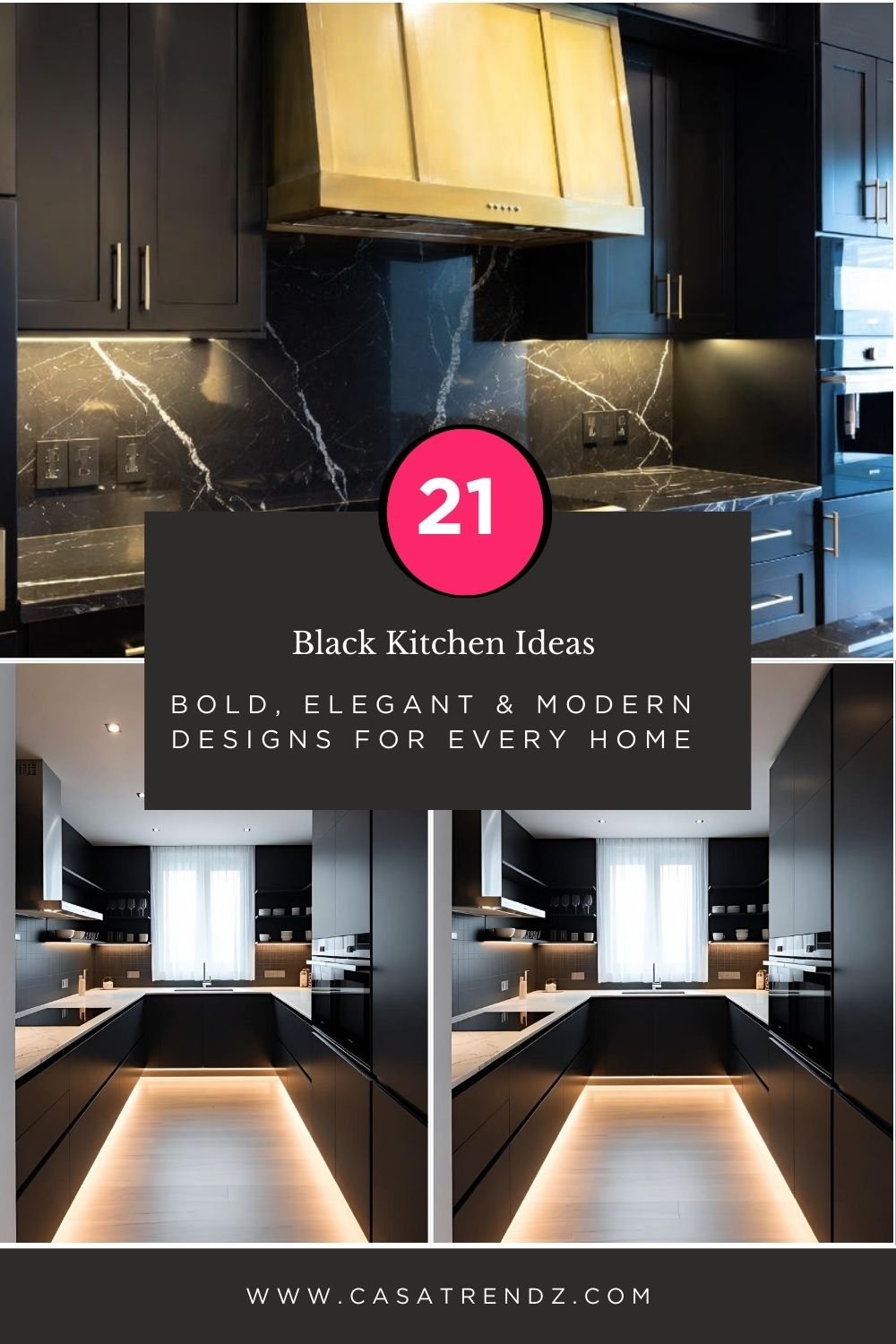
Black kitchens have become one of the most powerful design trends in modern interior design. Once considered risky, black is now celebrated for its ability to create depth, drama, elegance, and timeless sophistication. From sleek contemporary homes to rustic farmhouses and luxury apartments, black kitchens adapt beautifully across styles when paired with the right materials, lighting, and layouts.
A black kitchen works because black is a neutral, not a statement color on its own. It grounds a room the same way a dark floor or a deep wood table does, and it makes everything around it look sharper. White marble looks brighter next to black cabinets, brass hardware glows warmer, and natural wood reads richer. The trick is balance: every dark surface needs a light or warm partner nearby, and every shadowed corner needs a light source aimed at it.
In this article, you will discover 21 black kitchen ideas designed to inspire homeowners, renovators, and interior enthusiasts alike. Each idea explores a unique approach to black kitchen design, combining aesthetics with functionality, and includes the materials, measurements, and practical tips you need to make it work in a real home. Whether you prefer minimalist modern, warm rustic, or high-end luxury, these ideas will help you envision a black kitchen that suits your space perfectly.
1. Matte Black Minimalist Kitchen
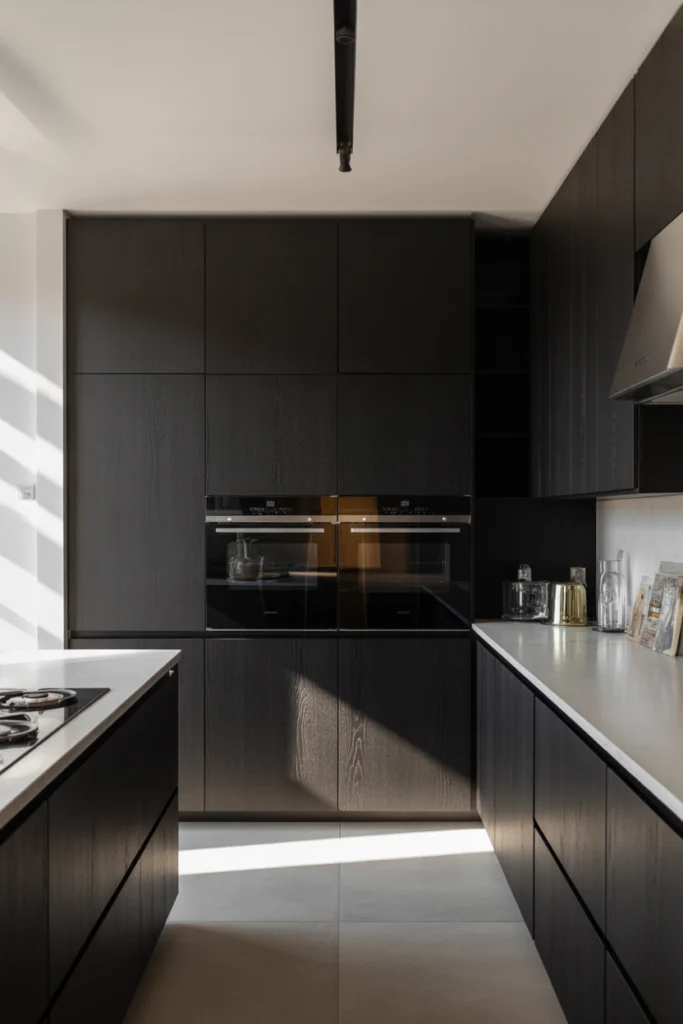
A matte black minimalist kitchen is the perfect choice for those who love clean lines and uncluttered spaces. Matte finishes absorb light rather than reflect it, creating a soft, refined look that feels modern and sophisticated. Handle-less cabinets, integrated appliances, and seamless surfaces help maintain a sleek appearance without visual noise. For the cleanest result, choose flat-panel slab doors in a matte lacquer or matte laminate, keep the palette to two materials at most, and hide small appliances behind a tall pantry cabinet or an appliance garage.
To balance the dark tones, minimalist black kitchens rely heavily on natural light and subtle contrasts. Light countertops, pale wood flooring, or white walls prevent the space from feeling heavy. Strategic lighting, such as under-cabinet LEDs, enhances functionality while highlighting the elegant simplicity of the design. Plan for at least 300 lumens per linear foot of under-cabinet strip lighting, and keep the countertop a light quartz or white laminate so the work surface stays bright even on a cloudy day. If you are choosing between matte paint and matte laminate, laminate is the more forgiving option, since it resists fingerprints better and wipes clean with a damp cloth.
Storage matters more in a minimalist kitchen than anywhere else, because there is nowhere for clutter to hide. Use full-height pull-out pantry units, deep drawers with dividers for pots and pans, and a single open shelf or none at all. A good rule is to keep the countertop clear except for one or two items you use daily, such as a kettle or a cutting board. Everything else belongs behind a door, which keeps the matte black surfaces looking calm and intentional rather than stark.
2. Black Kitchen with White Marble Countertops
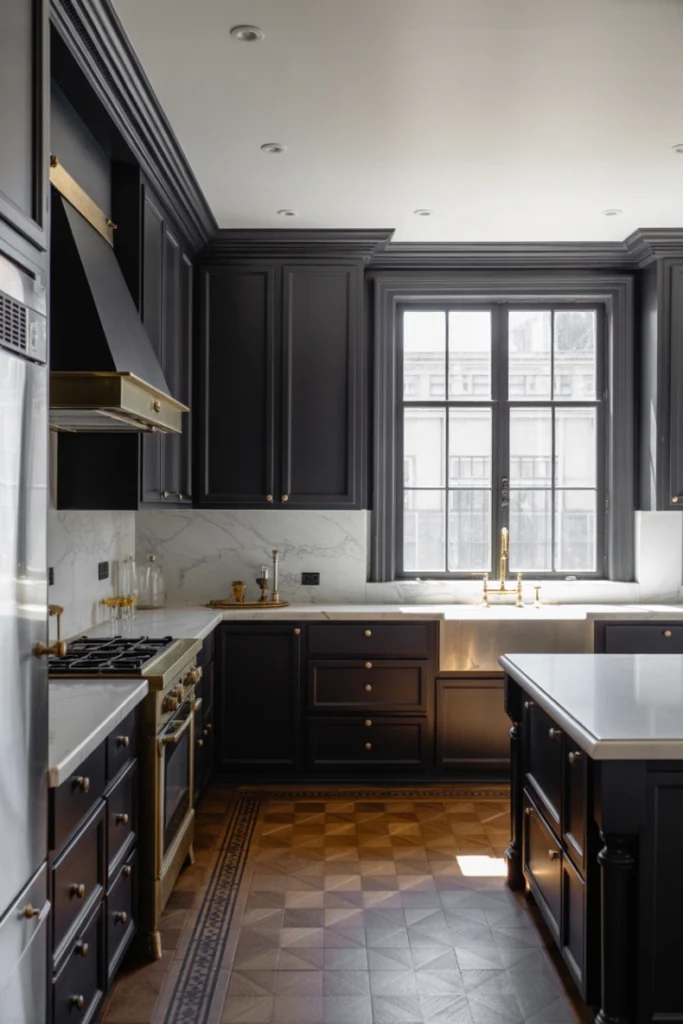
Pairing black cabinetry with white marble countertops creates one of the most timeless black kitchen ideas. The striking contrast instantly elevates the space, offering a balance of boldness and elegance. Marble’s natural veining adds texture and movement, preventing the kitchen from feeling flat or overly dark. Calacatta marble, with its bold grey and gold veining, makes the strongest statement, while Carrara marble, with softer grey veining, feels quieter and more classic. If real marble is outside your budget, a white quartz with marble-look veining gives you the same visual effect with far less maintenance.
This combination works beautifully in both modern and classic homes. Polished marble surfaces reflect light, helping to brighten the space, while black cabinets anchor the design. Brass or chrome fixtures further enhance the luxurious feel, making this style ideal for homeowners seeking sophistication without sacrificing warmth. Run the marble up the wall as a full-height backsplash for a seamless, high-end look, or keep the backsplash to a simple white subway tile if you want the countertop to be the star. For more color inspiration, explore our guide to kitchen color ideas to see how different palettes pair with dark cabinetry.
Real marble needs a little care to stay beautiful. Seal it when it is installed and again every 6 to 12 months, wipe up acidic spills like lemon juice, wine, and tomato sauce right away, and use cutting boards and trivets to protect the surface. If that sounds like too much upkeep, choose a honed marble finish, which hides etching better than a polished finish, or switch to quartz. Either way, keep the island countertop at a standard 36 inches high and at least 24 inches deep so it works comfortably for prep work and casual seating.
3. Black Kitchen with Warm Wood Accents
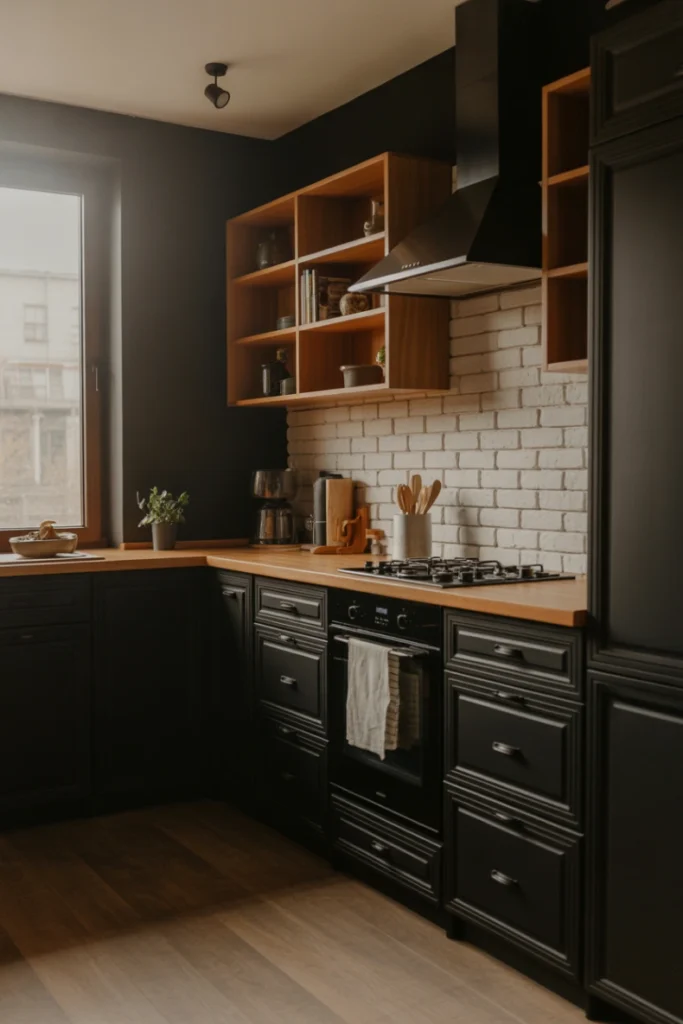
Introducing wood elements into a black kitchen softens the overall look and adds warmth. Wood accents can appear in countertops, open shelving, flooring, or island panels. The natural grain contrasts beautifully with black cabinetry, creating a welcoming and balanced environment. A butcher-block island top in white oak or walnut is one of the easiest ways to add warmth, and it doubles as a forgiving work surface that can be sanded and re-oiled when it gets marked.
This approach is especially popular in Scandinavian and Japandi-inspired interiors. Lighter woods such as oak or ash create an airy feel, while darker woods like walnut add richness and depth. When paired with warm lighting, a black kitchen with wood accents feels cozy rather than dramatic. Aim for a warm white light temperature, around 2700K to 3000K, for pendants and under-cabinet lights, and choose wood tones with warm undertones rather than grey ones, so the wood and the black feel like they belong together.
To get the balance right, let wood cover about 20 to 30 percent of the visible surfaces. That could mean wood open shelves on one wall, a wood island front, and wood bar stools, while the rest stays black and white. Mix no more than two wood tones in one kitchen, and repeat each tone at least twice so the look feels planned. Finish wood shelves with a matte hardwax oil, which protects against water and stains while keeping the grain visible, and keep them styled lightly with everyday items like bowls, cutting boards, and a small plant.
4. Modern Black Kitchen with Gold Hardware
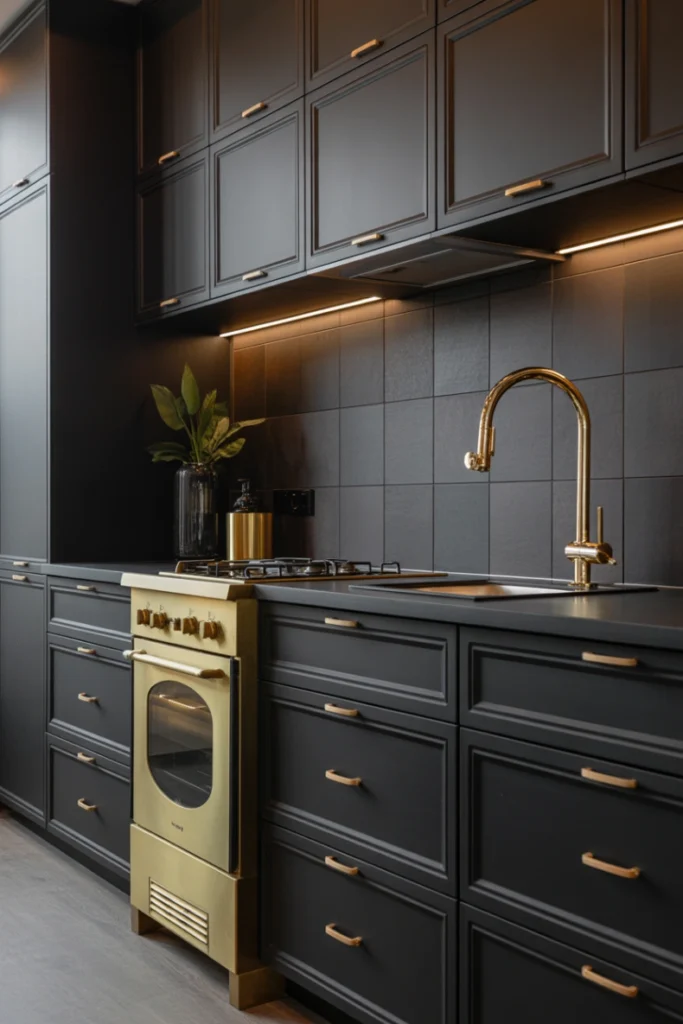
Gold hardware brings instant luxury to black kitchen ideas. Cabinet handles, faucets, and light fixtures in brass or gold tones stand out beautifully against dark cabinetry. This combination creates a refined, upscale aesthetic that feels both modern and glamorous. Brushed brass is the safest choice, since it reads warm without looking shiny or flashy, while polished brass and unlacquered brass develop a patina over time that many homeowners love.
To keep the look balanced, gold accents should be used thoughtfully rather than excessively. Matte black cabinets paired with brushed brass handles offer subtle elegance, while polished gold adds drama. Soft lighting enhances the metallic elements, making the kitchen feel inviting rather than overpowering. Pick one gold finish and repeat it across handles, faucet, and pendant lights, and keep the rest of the metals quiet. Mixing gold with chrome or stainless steel in the same sightline usually looks accidental, so choose one warm metal and let the appliances be the only exception.
When you are sizing hardware, a practical guide is to use bar pulls that are about one-third the width of the drawer front, so a 24-inch drawer gets an 8-inch pull. Knobs work best on doors, while bar pulls suit drawers. Install the faucet in the same brass finish as the handles for a cohesive look, and choose a faucet with a single lever if you want a clean silhouette. Gold hardware also pairs beautifully with a white marble countertop and a warm wood floor, which keeps the whole kitchen from feeling too dark or too formal.
5. Black Kitchen with Open Shelving
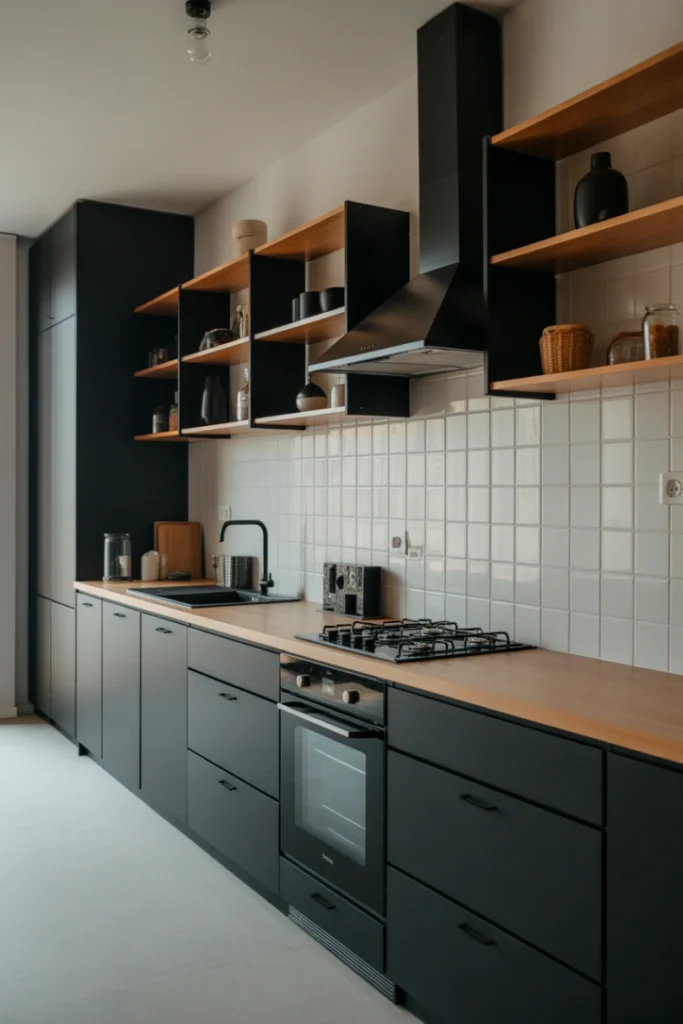
Open shelving introduces visual openness into black kitchen designs. Instead of solid upper cabinets, open shelves allow you to display dishware, plants, and decorative pieces, breaking up dark surfaces and adding personality. Two or three shelves in light wood or blackened steel work best, mounted on the wall where upper cabinets would normally sit, usually starting about 18 inches above the countertop.
This design works particularly well in smaller kitchens, where full black cabinetry could feel heavy. Light wood or metal shelves create contrast and help reflect light. The result is a kitchen that feels stylish, functional, and lived-in without losing its modern appeal. Keep the shelves to items you actually use and love, such as white plates, clear glasses, and a few cookbooks, and leave some empty space on each shelf so the display breathes. A good rule is to fill about two-thirds of each shelf and leave the rest open.
Open shelves do need a little more upkeep than closed cabinets, so plan for a quick weekly dusting and keep greasy items away from the cooking zone. Mount shelves into wall studs or use heavy-duty anchors rated for at least 50 pounds per shelf, since stacked plates and bowls get heavy fast. If you are unsure about giving up all your upper cabinets, try open shelving on one wall only and keep closed cabinets on the other, which gives you the airy look without losing storage.
6. Black and Grey Contemporary Kitchen
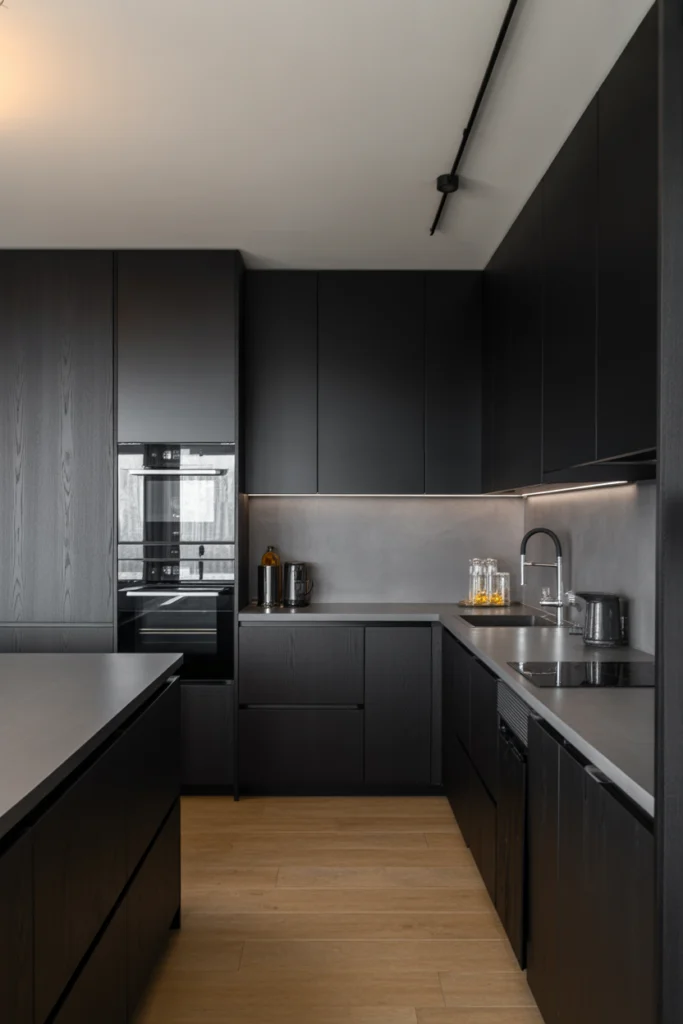
Combining black with shades of grey creates a sleek, modern color palette that feels refined and understated. Grey countertops, backsplashes, or flooring soften the intensity of black cabinetry while maintaining a cohesive look. A mid-grey quartz countertop or a light grey large-format tile backsplash is an easy starting point, and grey works with both warm and cool black paints, so you can tune the mood by choosing a grey with warm or cool undertones to match your cabinets.
This combination is ideal for contemporary homes that prioritize elegance and functionality. Matte finishes, integrated appliances, and subtle lighting enhance the modern aesthetic. The neutral tones make it easy to update the space with accessories or seasonal decor. Use three values of grey at most, for example light grey walls, mid-grey countertops, and charcoal lower cabinets, so the palette stays calm. Add texture through a matte finish on the cabinets, a honed stone countertop, and a woven or leather bar stool to keep the grey tones from feeling flat.
Lighting is what makes a black and grey kitchen feel alive rather than dull. Layer three types: recessed ceiling lights for general brightness, under-cabinet LEDs for task work, and one or two pendants over the island for warmth and focus. If your kitchen has a window, keep the window treatment minimal, such as a simple roller blind, so daylight does the heavy lifting. For a lighter take on the same idea, our white kitchen ideas show how the same layout can feel completely different with a pale palette.
7. Luxury Black Kitchen with Statement Island
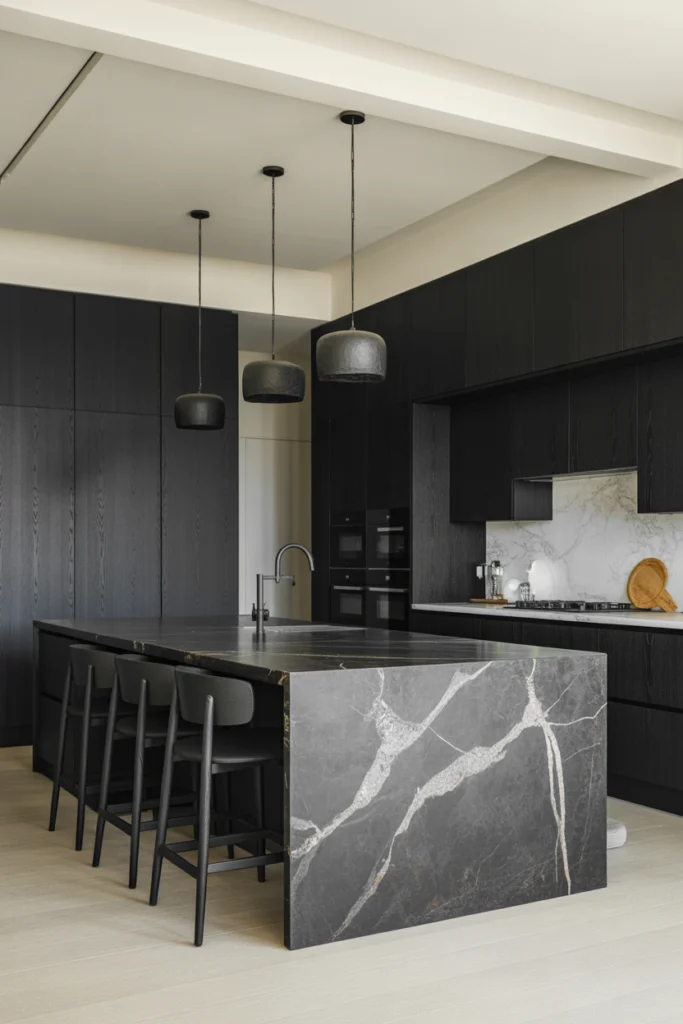
A statement island becomes the focal point of a luxury black kitchen. Oversized islands with waterfall countertops, seating, and integrated storage enhance both style and functionality. Black cabinetry paired with marble or quartz islands creates a dramatic yet elegant centerpiece. A waterfall edge, where the countertop material runs down the side of the island to the floor, is the single detail that makes an island feel custom and high-end.
This design works best in open-concept spaces where the kitchen connects seamlessly with dining or living areas. Pendant lighting above the island adds visual interest, while premium materials elevate the overall experience of the space. Size the island generously but leave at least 42 inches of clearance on the working sides and 48 inches where two people pass each other or the oven door swings open. Hang pendants 30 to 36 inches above the countertop and space them about 24 to 30 inches apart so the light pools evenly along the island.
Build storage into the island itself, with deep drawers on the kitchen side for pots and small appliances, and a seating overhang of 12 to 15 inches on the living side for comfortable knee room. Choose a countertop material that can take daily use, such as quartz or a sealed marble, and add a slim brass or black metal foot rail if you have bar stools. The island is also the best place to add a prep sink or a wine fridge, which keeps the main cooking wall clear and makes the kitchen work better for entertaining.
8. Black Kitchen with Industrial Style
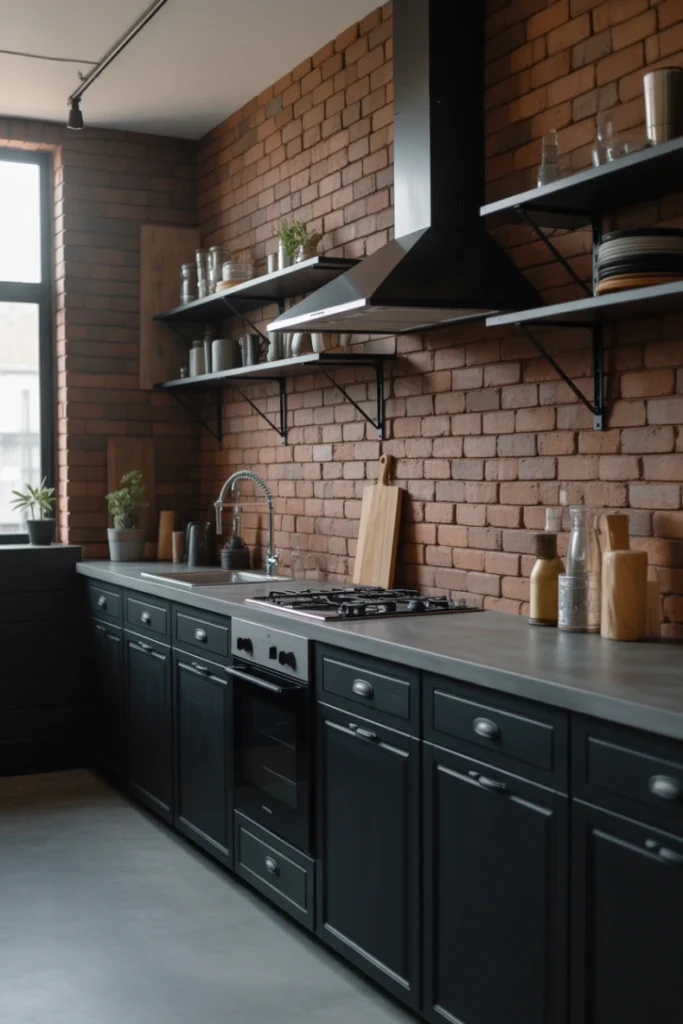
Industrial black kitchens combine raw materials like concrete, steel, and exposed brick with dark cabinetry. This style embraces texture and imperfection, creating a bold and edgy aesthetic that feels authentic and modern. A concrete-look countertop, black steel open shelving, and a brick or concrete-look backsplash are the core materials, and each one adds a different texture that keeps the black from feeling flat.
Metal accents, open shelving, and industrial lighting fixtures enhance the look. The black color palette grounds the design, while raw materials add visual interest. This approach is ideal for loft apartments and modern urban homes. Choose cage or dome pendant lights in blackened steel, use Edison-style LED bulbs for a warm glow, and let the hardware be simple and sturdy, such as iron bar pulls or pipe-style shelf brackets. Keep the cabinet doors flat and handle-less or use simple metal pulls so nothing competes with the raw materials.
To keep an industrial kitchen livable, balance the hard surfaces with a few soft ones. A wood cutting board left on the counter, linen bar stool cushions, and a woven rug near the sink all soften the room without breaking the style. Seal concrete countertops properly so they resist stains, and use a matte black faucet in the same finish as the cabinet hardware. If you live in a rental or want a lighter version of the look, you can get most of the effect with a black subway tile backsplash, steel shelves, and industrial pendants, without changing the cabinets at all.
9. Black Farmhouse Kitchen
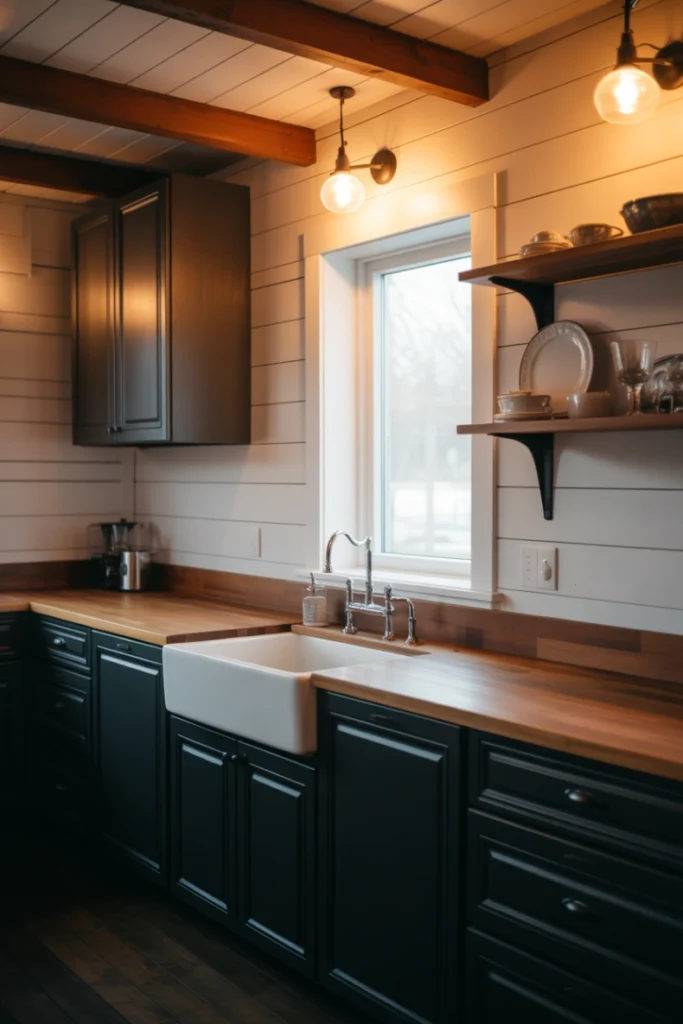
Black cabinetry can be surprisingly effective in farmhouse kitchens. When paired with shiplap walls, apron sinks, and rustic wood elements, black adds depth and contrast while maintaining a cozy, welcoming atmosphere. A white apron-front sink is the classic farmhouse anchor, and it looks especially good set into black cabinets, since the white porcelain breaks up the dark run and gives the eye a resting point.
This style blends traditional charm with modern sophistication. Vintage hardware, warm lighting, and natural textures prevent the space from feeling too formal. Black farmhouse kitchens feel timeless and inviting, perfect for family-oriented homes. Use cup pulls or bin pulls in oil-rubbed bronze or aged brass on the drawers, add a wood range hood cover or wood open shelves, and choose a warm white paint for the shiplap so the room feels bright. A butcher-block countertop on the island and a stone or quartz countertop on the perimeter is a practical mix that looks intentional.
Farmhouse kitchens are meant to be used hard, so choose materials that age gracefully. Painted cabinets in a durable satin finish wipe clean easily, a fireclay apron sink resists chips and stains, and a wood floor with a matte finish hides wear better than a glossy one. Add a large farmhouse table or an island with seating so the kitchen becomes the gathering spot, and finish with simple linen curtains or a woven roman shade at the window. The result is a kitchen that feels collected over time rather than decorated in one day.
10. Black Kitchen with Glass Cabinets
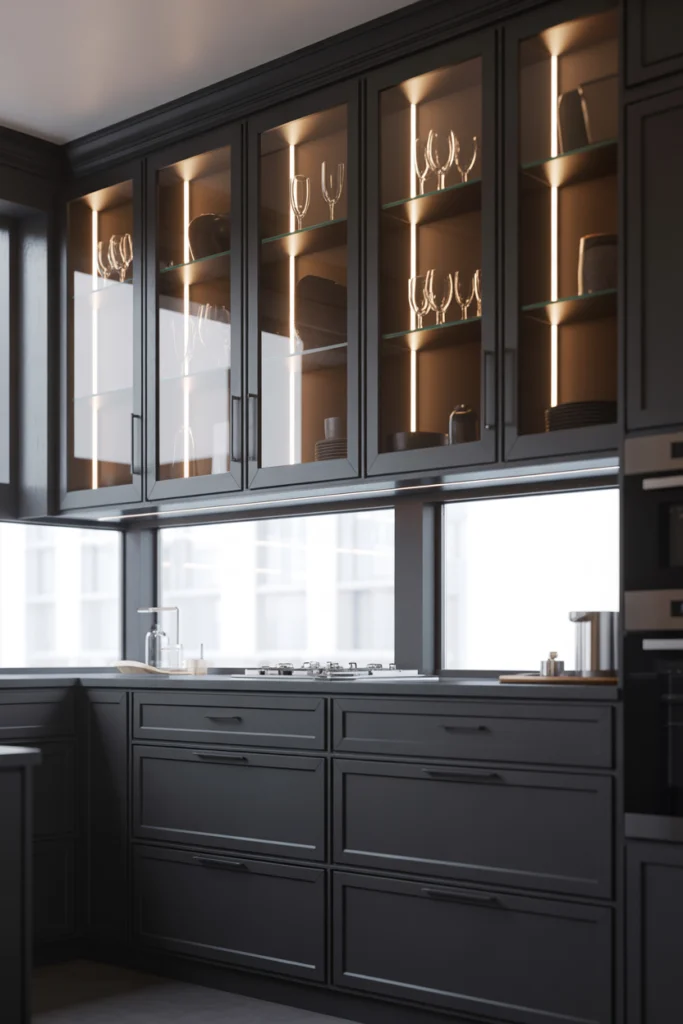
Glass-front cabinets lighten black kitchen designs by allowing light to pass through upper cabinetry. They also provide an opportunity to showcase dishware or decorative items, adding personality to the space. Clear glass works best when the contents are tidy and coordinated, while frosted or seeded glass hides everyday clutter and still lets light through. Use glass on just one bank of uppers, such as the cabinets flanking the range hood, for the biggest visual payoff.
This design is particularly effective in smaller kitchens, where solid black cabinets may feel overwhelming. Frosted or clear glass panels maintain elegance while reducing visual heaviness. Interior cabinet lighting enhances the overall look. Install a slim LED strip inside each glass cabinet, wired to the same switch as the under-cabinet lights, so the cabinets glow softly in the evening. Keep the shelves inside at two or three heights, and store matching sets of glasses and plates there so the display looks calm rather than busy.
Glass cabinets need the same care as open shelving, so only put items you are happy to display behind the glass. Everyday mugs and mismatched containers belong in solid cabinets, while white dishes, glassware, and a few serving pieces belong on show. Choose a black metal frame with thin mullions for a modern look, or a simple flat frame for a more classic feel. If fingerprints on the glass bother you, frosted glass or a seeded texture is the practical choice, since it shows far fewer marks than clear glass.
11. Small Black Kitchen Design
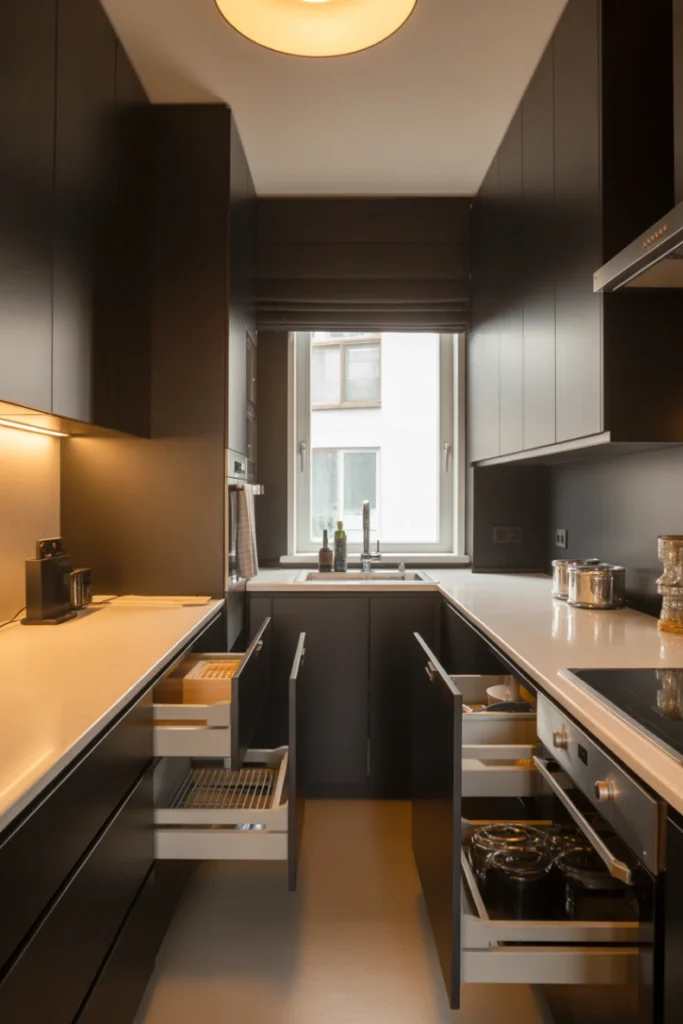
Black kitchen ideas are not limited to large spaces. With proper lighting and layout, black kitchens can work beautifully in small areas. Compact cabinetry, reflective surfaces, and strategic lighting help prevent the space from feeling cramped. The most important move is to keep the black to the lower cabinets and use a light color above, such as white uppers, open shelves, or a pale backsplash, so the room feels taller and brighter.
Vertical storage and open shelving maximize functionality, while light countertops and backsplashes create balance. Small black kitchens feel bold and modern when designed thoughtfully. Use full-height cabinets on one wall to gain pantry storage without taking floor space, choose a slim 24-inch-deep countertop on the non-cooking side if space is tight, and add a mirrored or glossy backsplash tile to bounce light around the room. A single-bowl undermount sink also frees up counter space compared with a double-bowl model.
Lighting makes or breaks a small black kitchen. Aim for a bright, even wash of light with recessed ceiling fixtures on a dimmer, plus under-cabinet LEDs so the work surface never sits in shadow. If you have a window, keep it uncovered or use a sheer blind. For layout ideas that make compact spaces work harder, see our modern kitchen ideas, which include several small-space layouts you can adapt to a black palette. Finally, keep the floor light, such as pale wood or light tile, since a dark floor plus dark cabinets can close a small room in fast.
12. Black Kitchen with Bold Backsplash
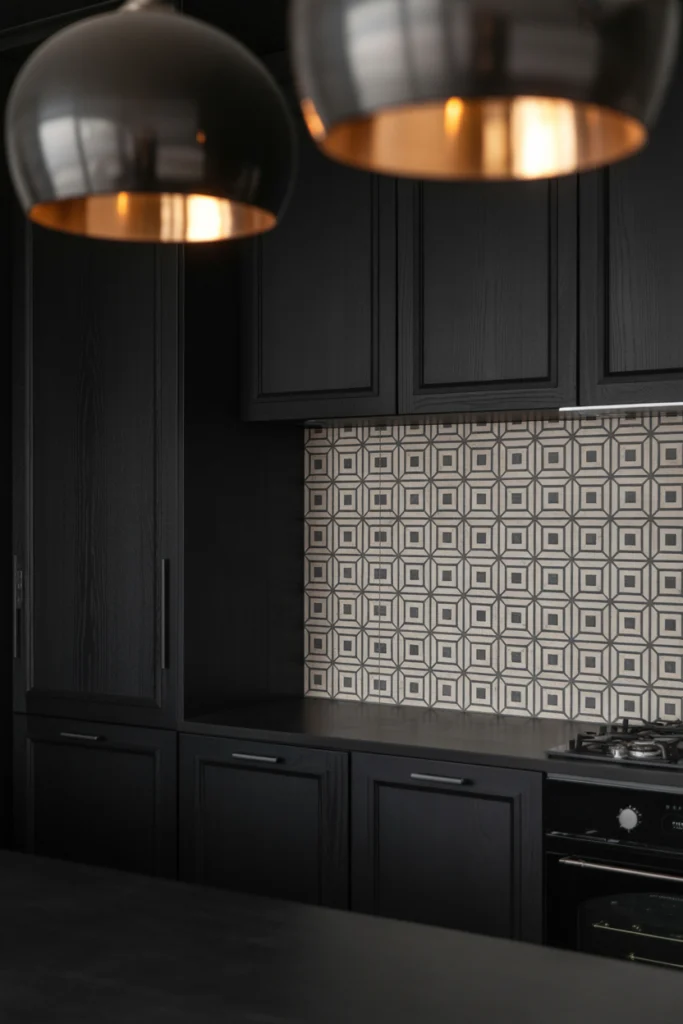
A bold backsplash adds character to black kitchen designs. Patterned tiles, marble slabs, or textured materials create visual interest and prevent the space from feeling flat. A patterned cement tile in black, white, and one accent color is a classic choice, while a full slab of veined marble behind the range makes a dramatic focal point with almost no grout lines to clean.
The backsplash acts as a focal point, complementing black cabinetry without overpowering it. This approach allows homeowners to experiment with design while keeping the overall palette cohesive. The safest way to go bold is to pick a backsplash with black in it, so it ties back to the cabinets, and to keep the countertop quiet, such as a plain white quartz or a light grey stone. Run the backsplash from the countertop to the bottom of the upper cabinets, or all the way to the ceiling behind the range hood, for a finished look.
When you are choosing tiles, think about cleaning as well as looks. Large-format tiles and slabs have fewer grout lines, which means less scrubbing near the stove. Glossy glazed tiles wipe clean easily and reflect light, while matte tiles hide water spots better. If you love a busy pattern, use it on the backsplash only and keep the floor and countertop plain, so the room has one star. Seal natural stone tiles after installation, and keep a spare box of tiles in case one cracks later, since dye lots change and an exact match is hard to find.
13. Black Kitchen with Integrated Appliances
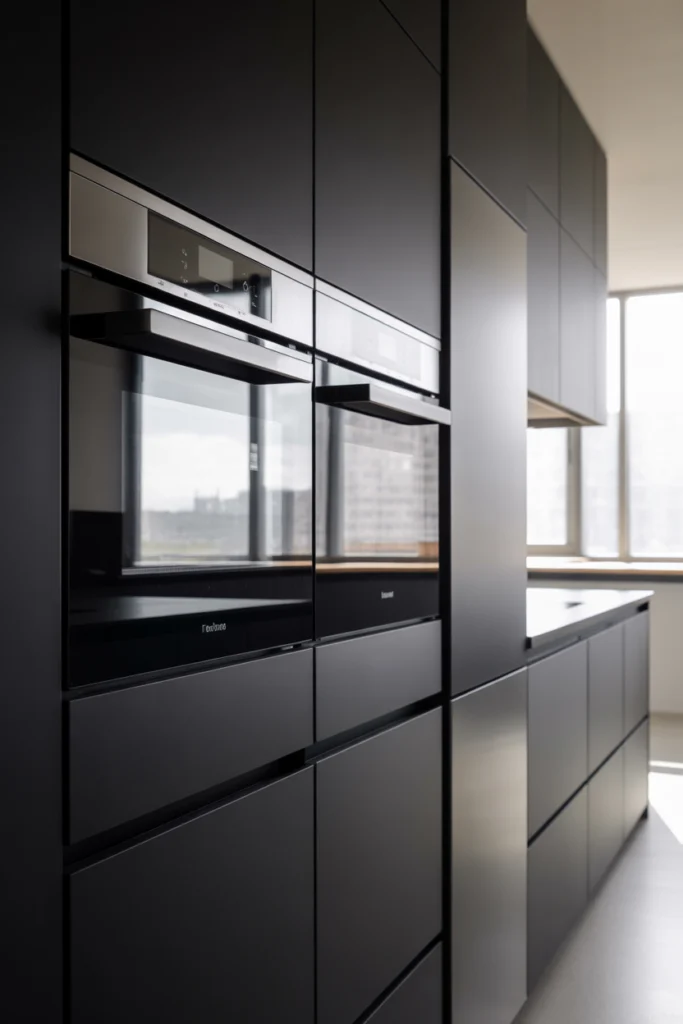
Integrated appliances maintain a seamless look in black kitchens. Appliances hidden behind cabinet panels create a clean, cohesive aesthetic that enhances modern design. A panel-ready fridge and dishwasher disappear into the cabinetry, and a built-in oven tower with matching black glass keeps the cooking wall calm. The result is a kitchen where the architecture, not the appliances, is what you notice first.
This approach emphasizes simplicity and functionality, making the kitchen feel streamlined and uncluttered. Integrated appliances are particularly popular in minimalist and contemporary black kitchen ideas. Plan for them early, since panel-ready appliances need exact cabinet dimensions and the panels must be ordered with the cabinetry. Leave a 2 to 3 millimeter reveal around each panel so the doors open freely, and choose handles that match the cabinet hardware so the appliance fronts read as ordinary cabinet doors.
Integrated appliances cost more than freestanding ones and need a little more planning, so budget for both the appliance and the custom panel. The payoff is a kitchen that looks larger and calmer, because there are no visual breaks from stainless steel fronts. Keep the range hood integrated too, either as a slim under-cabinet model or a flush ceiling unit, and hide the microwave in a tall cabinet or a drawer unit. If full integration is beyond your budget, integrating just the dishwasher and fridge still removes the two biggest visual interruptions for a modest cost.
14. Black Kitchen with Natural Light Focus
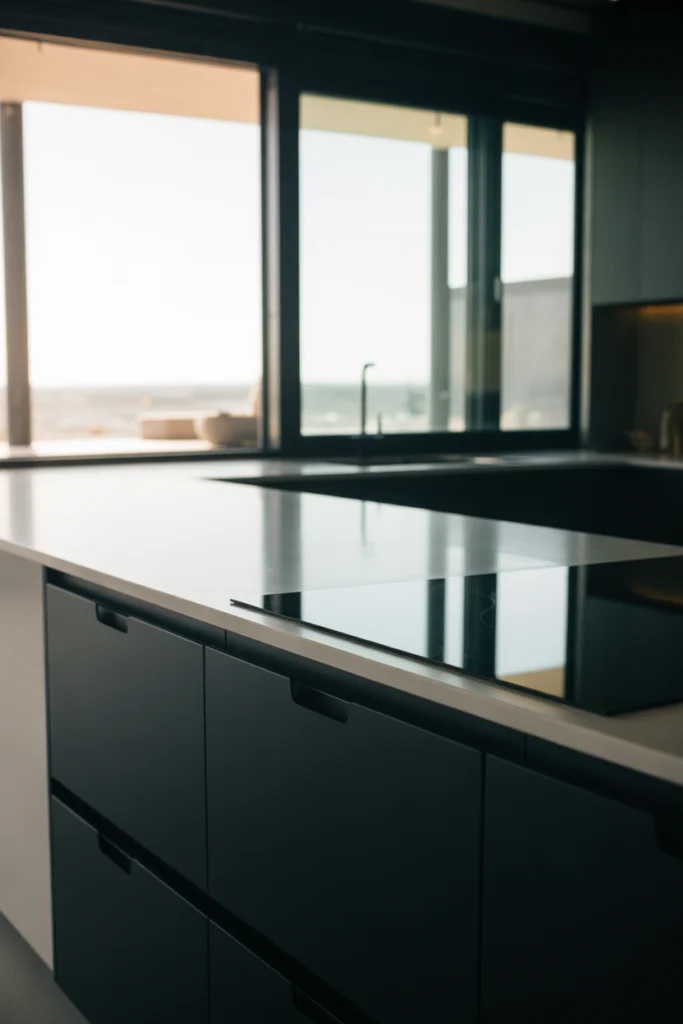
Natural light is essential in black kitchen design. Large windows, skylights, or glass doors help balance dark cabinetry, preventing the space from feeling closed or heavy. If you are renovating, enlarging a window over the sink is one of the best investments you can make in a black kitchen, since it puts daylight exactly where you work. A skylight over an island or a glass back door can have the same effect.
When combined with reflective surfaces and light flooring, natural light transforms black kitchens into bright, inviting spaces. This approach works well in both modern and traditional homes. Choose a light floor, such as pale oak or light limestone-look tile, and add reflective touches like a glossy backsplash, glass cabinet fronts, or a polished stone countertop. Keep window treatments simple, such as a sheer roller blind or no treatment at all, so nothing blocks the light you have.
If your kitchen has only one small window, you can still make it work. Paint the walls and ceiling a warm white to bounce light around, use a light countertop, and add a large mirror or a glossy tile backsplash opposite the window to reflect daylight deeper into the room. Add layered artificial light for evenings and cloudy days, with recessed fixtures on a dimmer and under-cabinet LEDs. The goal is a kitchen that feels bright at noon and warm at night, and that balance comes from pairing dark cabinets with as much light, natural or artificial, as the room can hold.
15. Black and Beige Kitchen Combination
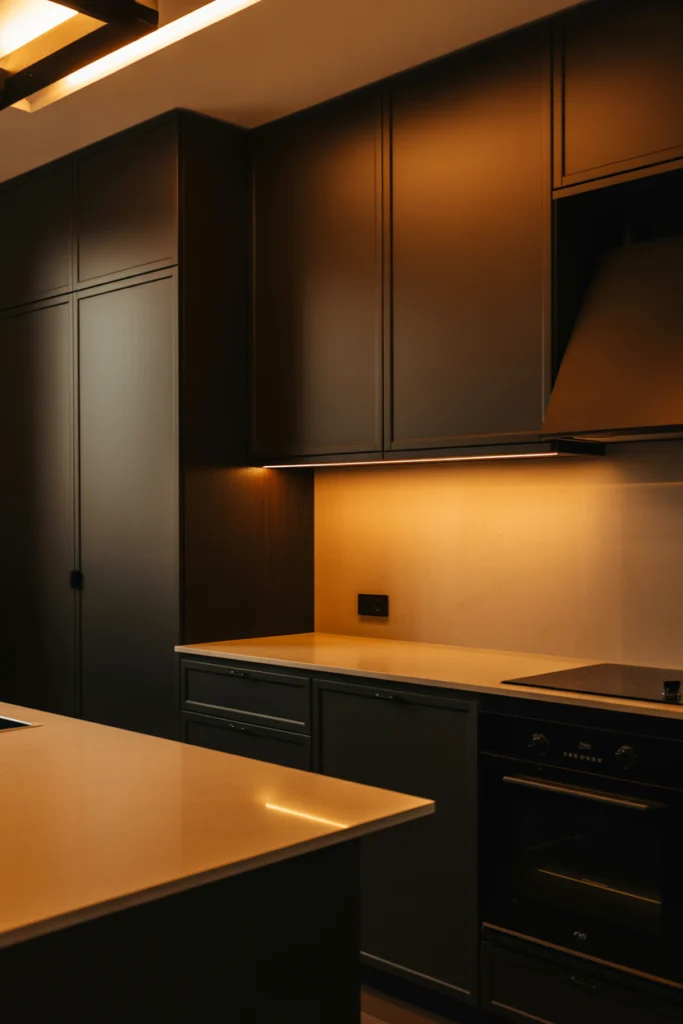
Black and beige kitchens offer a softer alternative to stark contrasts. Beige tones add warmth and subtle elegance, making black kitchens feel approachable and comfortable. Warm beige works better than cool grey-beige here, so look for beige with a hint of yellow or pink rather than a grey undertone, which can turn muddy next to black. Beige painted walls, a beige stone countertop, or beige wood flooring all soften the room without washing it out.
This combination is ideal for homeowners who want a modern look without excessive drama. Beige countertops, walls, or flooring complement black cabinetry beautifully. Try black lower cabinets with beige upper cabinets or a beige backsplash, and keep the hardware in warm brass or bronze to tie the two tones together. A beige runner rug or woven bar stool seats add softness underfoot and at the island, which matters in a kitchen with hard floors and dark cabinets.
Beige also gives you room to add color later. Terracotta pots, green plants, and warm wood accessories all sit comfortably in a black and beige kitchen, while a bold accent color like deep green or navy can be added through bar stools or a pendant light without clashing. Keep the beige consistent across the room, using one beige for the walls and a closely related tone for the countertop, so the palette feels calm. If you are unsure which beige to choose, test large swatches on the wall next to the black cabinets and look at them in morning and evening light before committing.
16. Black Kitchen with High-Gloss Finish
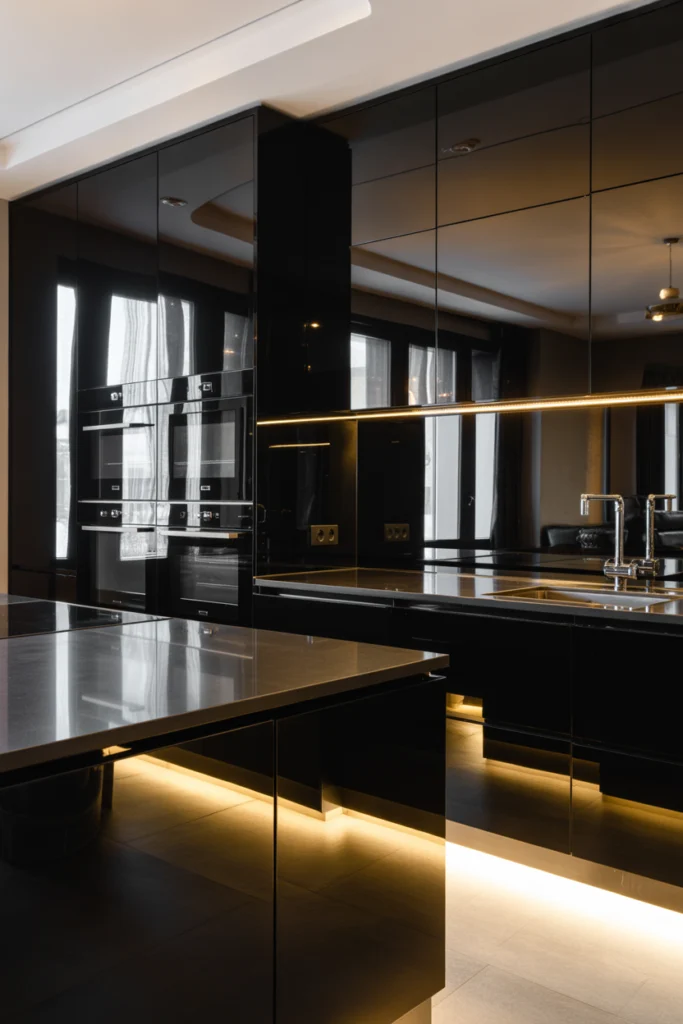
High-gloss black cabinetry reflects light, creating a polished and luxurious appearance. This finish works particularly well in contemporary kitchens with sleek surfaces and minimal detailing. Gloss lacquer or acrylic-front doors give the deepest shine, and they pair best with flat slab doors, since any raised panel or molding would break up the mirror-like surface.
Glossy finishes amplify light, making them suitable for smaller spaces when paired with proper lighting. The result is a bold yet refined kitchen design. Balance the shine with at least one matte surface, such as a honed stone countertop or a matte tile floor, so the room does not feel like a showroom. Keep the handles minimal, such as slim black bar pulls or push-to-open doors, and choose a simple white or light grey countertop so the glossy black stays the star.
High-gloss cabinets do show fingerprints and dust more than matte ones, so they suit households that do not mind a quick wipe down. Keep a microfiber cloth in a nearby drawer and wipe the most touched doors, such as the fridge and the bin cabinet, every day or two. Avoid abrasive cleaners, which can dull the finish, and use a soft cloth with mild soapy water instead. If fingerprints are a deal breaker, consider a gloss finish on the uppers only and a matte finish on the lowers, which are the doors you touch most, so you get the light and the shine where it shows and the practicality where it matters.
17. Black Kitchen with Stone Elements
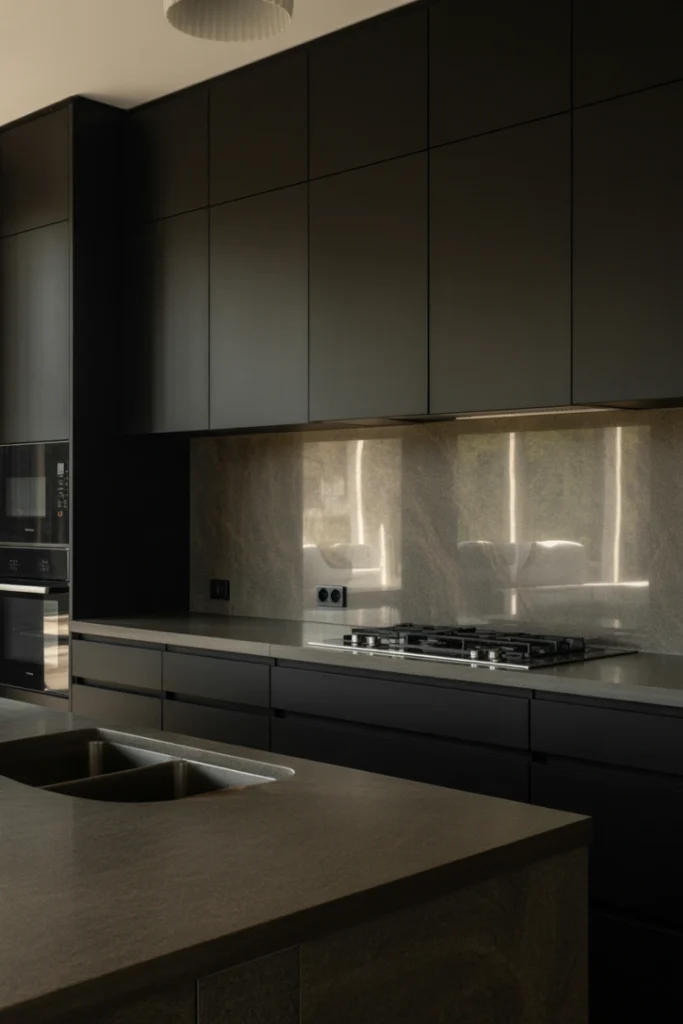
Stone elements add texture and durability to black kitchens. Granite, slate, or quartz surfaces complement black cabinetry while enhancing functionality. A granite or quartz countertop with visible veining or speckling adds movement, while a slate backsplash or a stone-clad range hood adds a rugged, natural texture that softens the smooth black cabinets.
Stone backsplashes and countertops introduce natural patterns, preventing the design from feeling too uniform. This combination feels grounded, elegant, and timeless. Choose one stone as the lead, such as a quartz countertop, and use a second stone sparingly, such as a slate tile on the backsplash or a stone shelf, so the room stays calm. Honed finishes feel softer and more natural, while polished finishes reflect more light and feel more formal, so pick the finish that matches the mood you want.
Stone is heavy and needs proper support, so confirm with your installer that the cabinets and island framing can carry a stone countertop, especially if you want a thick 2-inch edge or a waterfall side. Seal natural stone when it is installed and re-seal it once a year, and use trivets under hot pots to protect the surface. If you want the stone look without the weight or upkeep, a quartz with a stone pattern gives you the visual texture with a non-porous surface that never needs sealing. Either way, keep the stone in the same color family as the cabinets, with black, grey, or warm white tones, so the palette stays cohesive.
18. Black Kitchen with Open-Concept Layout
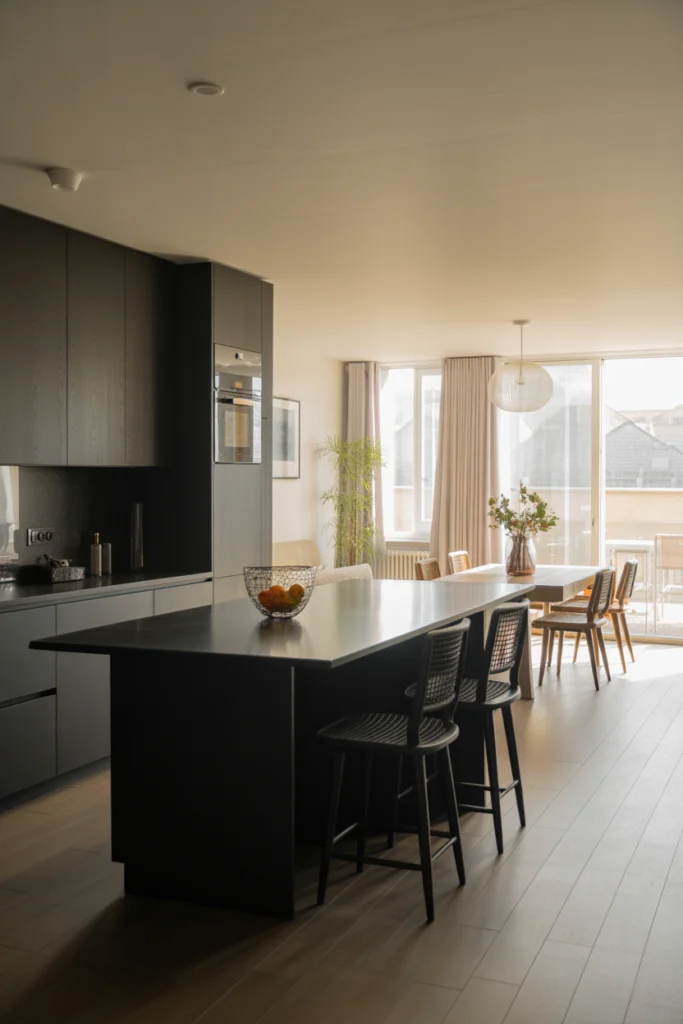
Open-concept black kitchens connect seamlessly with dining and living spaces. This layout allows black cabinetry to act as a bold anchor within a larger space. The kitchen becomes one zone in a bigger room, so the black cabinets read as a design feature rather than a dark box, especially when the island faces the living area and the seating is on the living side.
Proper lighting and material transitions ensure harmony across zones. Open layouts make black kitchens feel spacious and sociable rather than enclosed. Repeat one material across the zones, such as the same wood floor running from the kitchen into the living room, or the same black metal used in the kitchen pendants and the living room floor lamp, so the spaces feel connected. Define the kitchen zone with a rug under the dining table or a change in ceiling height, rather than a wall, so the open feel stays intact.
Ventilation and noise matter more in an open layout. Choose a range hood with a high extraction rate, at least 600 cubic feet per minute for a standard 30-inch range, and a quiet dishwasher rated at 44 decibels or lower, so cooking smells and noise do not travel into the living area. Keep the island clear of clutter, since it is visible from the sofa, and use the same paint color on the kitchen walls as the living room walls to keep the whole space calm. The payoff is a kitchen where the cook stays part of the conversation, and the black cabinets give the open room the anchor it needs.
19. Black Kitchen with Metallic Accents
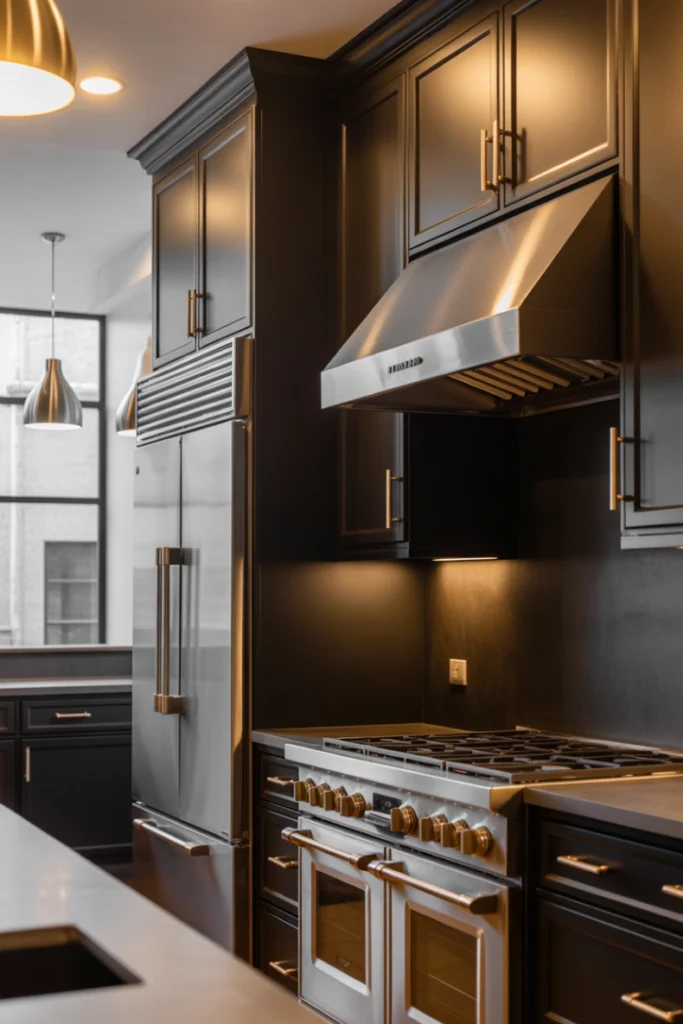
Beyond gold, metallic accents such as chrome, stainless steel, or copper add depth to black kitchens. These elements reflect light and enhance the modern aesthetic. Stainless steel appliances are the most common metallic in a kitchen, and they look intentional against black cabinets when the hardware and faucet share a similar cool tone. Copper brings warmth and a handcrafted feel, while chrome adds a crisp, polished shine.
Used in appliances, fixtures, or lighting, metallic finishes prevent black kitchens from feeling flat. The result is a dynamic, visually engaging space. Pick one metallic family and repeat it, for example stainless steel appliances with chrome hardware and a chrome faucet, or copper pendants with copper cabinet knobs and a copper pot rail. Mixing too many metals in one kitchen usually looks accidental, so keep it to one dominant metal and one accent at most.
Copper is a good choice if you want warmth without the formality of gold. A copper range hood, copper pendant lights, or a copper faucet all develop a living finish that changes over time, which suits a kitchen that is used daily. Chrome and stainless steel are the easiest to maintain, since they wipe clean and match most appliances. For a bolder look, try blackened steel or gunmetal hardware, which reads as a softer black and keeps the whole palette tonal. Whatever metal you choose, test it against your cabinet paint in daylight, since metals can look very different under showroom lighting than they do at home. If you are still weighing dark palettes, our dark kitchen ideas compare black with other deep tones so you can pick the one that fits your home.
20. Black Kitchen with Soft Lighting
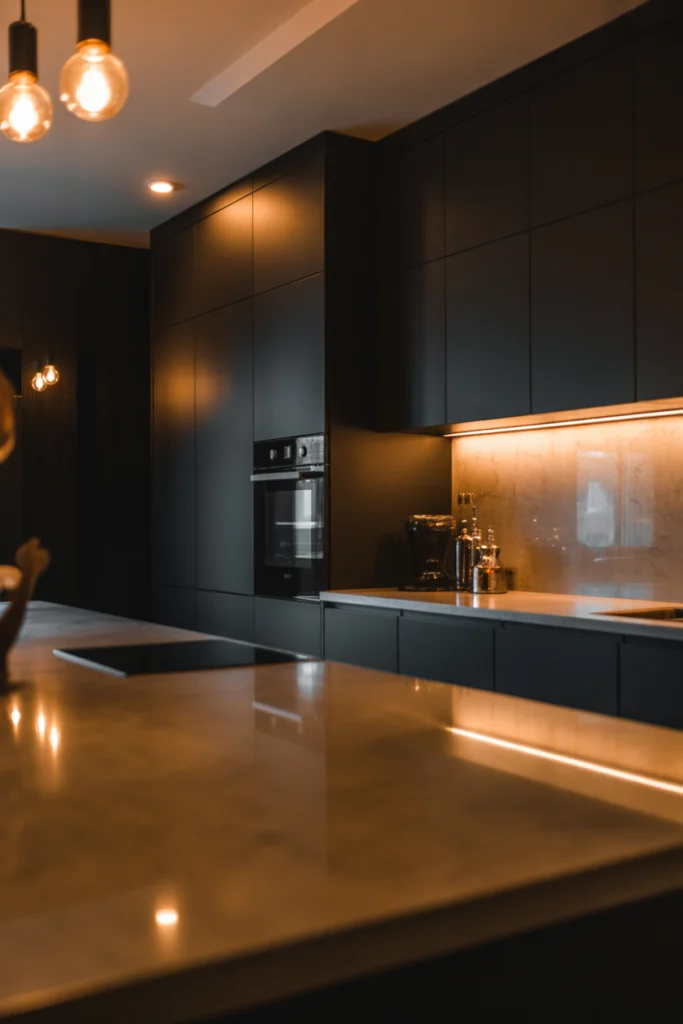
Lighting plays a crucial role in black kitchen design. Soft ambient lighting creates warmth and comfort, balancing dark tones. The goal is a kitchen that glows rather than glares, so use warm white bulbs, around 2700K, and put the main lights on dimmers so you can turn them down in the evening. A dimmer costs little and changes the room completely after sunset.
Layered lighting, including pendant lights, under-cabinet LEDs, and recessed fixtures, enhances both aesthetics and functionality. Soft lighting transforms black kitchens into inviting spaces. Plan three layers: recessed or flush-mount ceiling lights for general brightness, under-cabinet strips for task lighting at the countertop, and pendants or a small chandelier over the island for warmth and focus. Add a fourth layer if you can, such as toe-kick lighting under the base cabinets or interior cabinet lights, which make the kitchen feel finished at night.
Position matters as much as brightness. Hang pendants 30 to 36 inches above the island countertop, place recessed lights about 24 inches from the wall so they wash the cabinets rather than casting shadows on the work surface, and keep under-cabinet strips toward the front of the cabinet so the light falls on the countertop, not the backsplash. Use LED bulbs throughout for efficiency, and choose a high color rendering index, 90 or above, so food and materials look true to color. Done well, soft layered lighting is what makes a black kitchen feel cozy instead of dark.
21. Timeless Black Kitchen Design
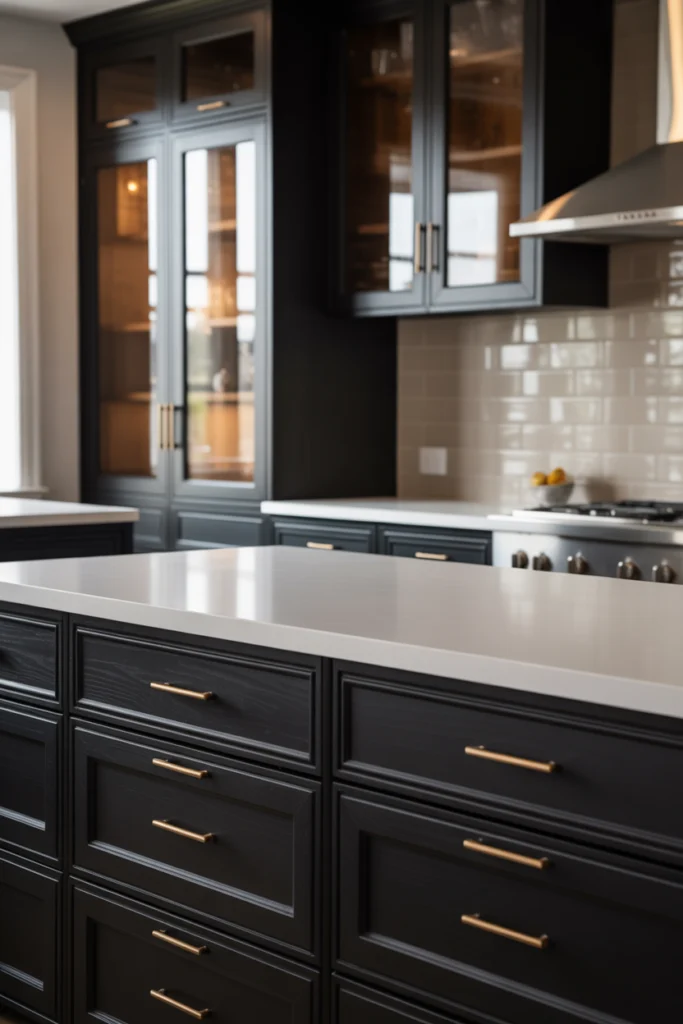
A timeless black kitchen focuses on balance, quality materials, and classic design elements. Neutral accents, durable finishes, and thoughtful layouts ensure longevity. Shaker-style doors, a white marble-look countertop, brass hardware, and a wood floor are a combination that has looked right for decades, because each element is a classic on its own and they work together without trying too hard.
Rather than following trends, timeless black kitchens prioritize functionality and elegance. This approach guarantees a kitchen that remains stylish for years to come. Choose materials that age well, such as solid wood, natural stone or quartz, and real brass, and avoid trendy finishes that date quickly. Keep the layout simple and practical, with the sink, stove, and fridge forming a comfortable work triangle, and leave enough counter space on both sides of the range for prep work.
The most timeless choice of all is to keep the black paint in a classic shade with a neutral undertone, such as a soft black or a charcoal with warm undertones, rather than a blue-black that can feel cold. Pair it with white walls, a light countertop, and warm metal hardware, and the kitchen will still look current in ten years. Update the look over time with small changes, such as new bar stools, a different pendant light, or fresh hardware, instead of another full remodel. A timeless black kitchen is not the most dramatic kitchen you can build, but it is the one you will still love living with long after the trends move on.
Conclusion
Black kitchen ideas offer endless possibilities for homeowners seeking bold, elegant, and modern designs. From minimalist matte finishes to luxurious marble accents and cozy farmhouse styles, black kitchens adapt beautifully to every space when designed thoughtfully. By balancing lighting, materials, and layout, black kitchens can feel inviting, functional, and timeless. Whether you are planning a full remodel or simply seeking inspiration, these 21 black kitchen ideas provide a comprehensive guide to transforming your space with confidence and style.
Before you start, pick the one idea that fits your home, your light, and your budget, and build the rest of the kitchen around it. A small kitchen with good light can carry a glossy black finish, while a large open kitchen can carry a statement island. Measure your space, test paint and material samples in your own light, and choose finishes you can live with and maintain. Done well, a black kitchen is not a risk at all. It is one of the most rewarding design choices you can make.
Frequently Asked Questions
Do black kitchens make a room look smaller?
Black cabinets can make a small kitchen feel smaller if the whole room is dark, but they do not have to. Keep the black to the lower cabinets, use light countertops, a pale backsplash, and a light floor, and add strong lighting. With those balances in place, a black kitchen feels bold and defined rather than cramped, even in a compact space.
Are black kitchen cabinets hard to keep clean?
Black cabinets show dust, fingerprints, and water spots more than white ones, especially in a high-gloss finish. Matte and satin finishes hide marks much better. A quick daily wipe with a damp microfiber cloth keeps them looking clean, and choosing a matte laminate or painted finish makes maintenance far easier than a glossy lacquer.
What countertop goes best with black cabinets?
White marble and white quartz are the most popular choices, because the contrast brightens the kitchen and the veining adds texture. Light grey quartz, butcher block, and warm beige stone also work well. Avoid a black countertop on black cabinets unless you add a light backsplash, since too much black in one place can make the work surface hard to see.
What paint colors pair well with a black kitchen?
Warm white, soft beige, and light grey are the safest wall colors for a black kitchen, since they reflect light and keep the room bright. For a bolder look, deep green, navy, or terracotta on one accent wall can add warmth and character. Always test paint swatches next to your black cabinets in both daylight and evening light before committing.
Are black kitchens still in style?
Yes, black kitchens remain a popular and enduring choice. Black is a classic neutral that has been used in kitchens for decades, and it works across modern, farmhouse, industrial, and luxury styles. The trend has shifted toward warmer pairings, such as wood accents, brass hardware, and soft lighting, which keep black kitchens feeling current rather than stark.
More Ideas You Will Love
 23 Oak Kitchen Design Ideas for Modern Cabinets & Timeless Decor
 17 Pantry Shelving Ideas for Smart and Chic Storage Solutions
 12 Hidden Walk-In Pantry Ideas for a Sleek Modern Kitchen Layout
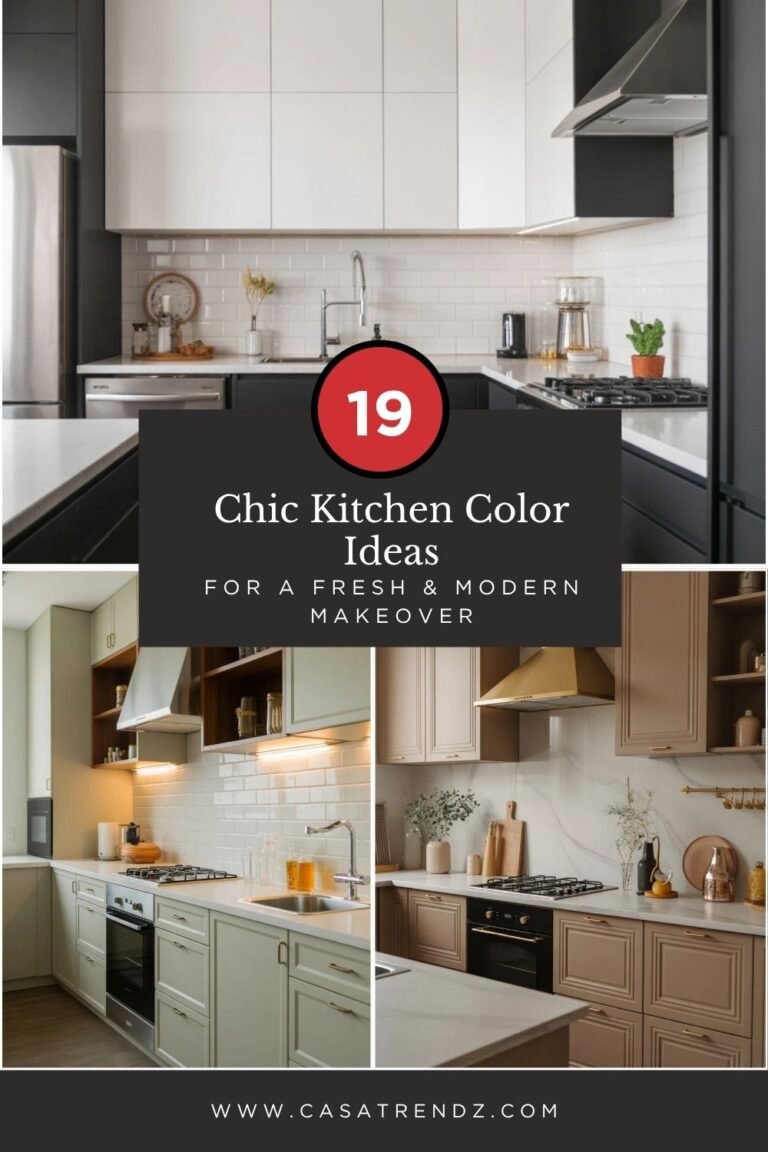 19 Chic Kitchen Color Ideas for a Fresh & Modern Makeover
 18 Farmhouse Christmas Kitchen Decor Ideas for 2025
 14 Cottagecore Kitchen Ideas: A Step-by-Step Design Guide