
23 Blue Kitchen Ideas – Trendy, Stylish & Elegant Designs for Modern Homes

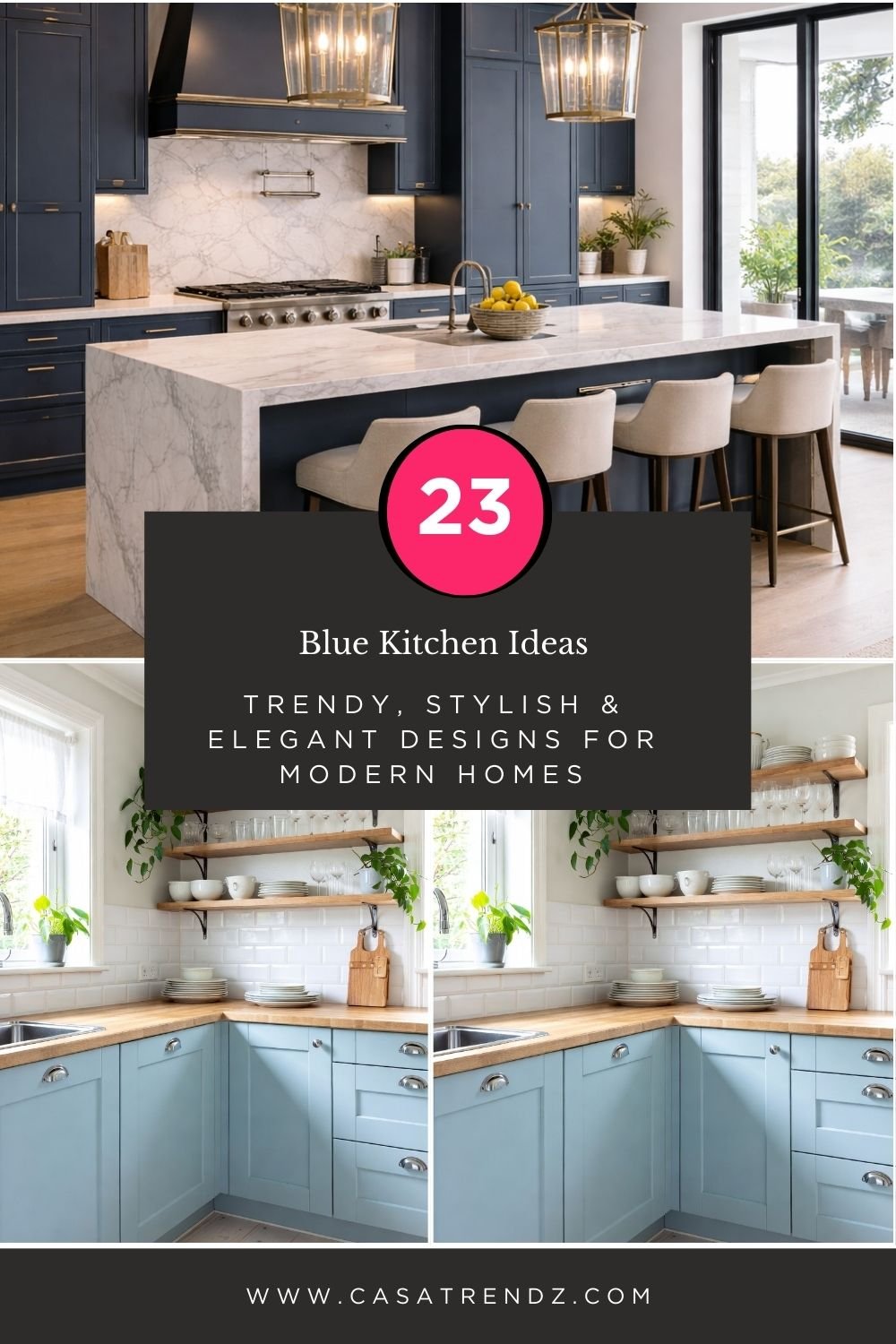
Blue kitchens have become one of the most loved design trends in modern homes, and it is easy to see why. Blue sits in that rare sweet spot between calm and bold: soft enough to live with every day, strong enough to give a kitchen real character. From pale sky blue that opens up a small galley to deep navy that makes a large kitchen feel grounded and elegant, there is a shade for every layout, every budget, and every style, from coastal and farmhouse to sleek and contemporary.
What makes blue so practical is how well it works with other materials. It pairs beautifully with white quartz, warm oak, brushed brass, matte black hardware, and natural stone, so you can change the mood of the whole room just by swapping the accents. A navy island with brass pulls feels classic and rich, while the same navy with concrete counters and black steel feels modern and edgy. Blue also hides everyday wear better than white, which matters in a room that gets used three times a day.
In this guide, you will find 23 blue kitchen ideas with practical detail on shades, materials, finishes, and simple steps, so you can pick one idea to try or combine several into a full kitchen plan. Each section explains what to choose, what to pair it with, and what to watch out for, so the result looks intentional rather than improvised.
1. Navy Blue Modern Kitchen
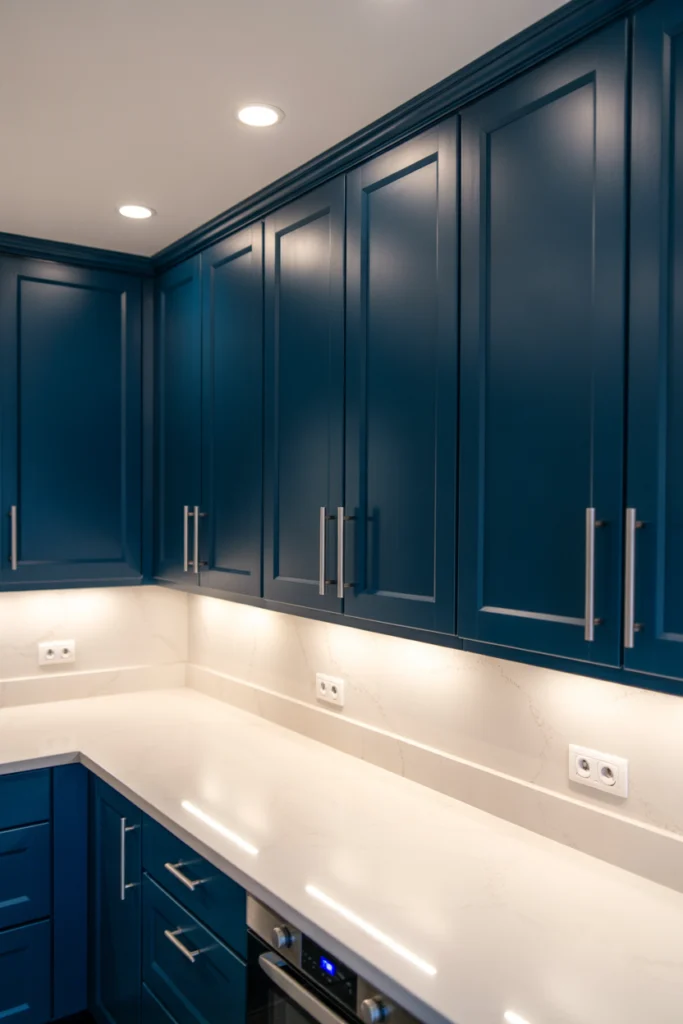
Navy is the safest way to go bold in a kitchen. Paint the lower cabinets in a deep navy such as Hale Navy or a similar rich tone, keep the uppers white or open, and let a light countertop do the balancing work. White quartz with faint gray veining, a pale oak floor, and a simple white subway tile backsplash keep the room bright even though the cabinets are dark. Navy works best when the room has good light, so if your kitchen has only one small window, add under-cabinet LED strips and a pair of pendant lights over the island or sink.
Choose hardware with intention. Brushed brass or satin gold pulls warm the navy up and stop it feeling cold, while matte black handles push the look toward modern and graphic. Keep the hardware consistent across the room, and match the faucet finish to it. For the walls, a warm white rather than a stark white softens the contrast. If you want to test the color first, paint one cabinet door or a large sample board and live with it for a week before committing to the full kitchen.
2. Light Blue Kitchen for an Airy Look
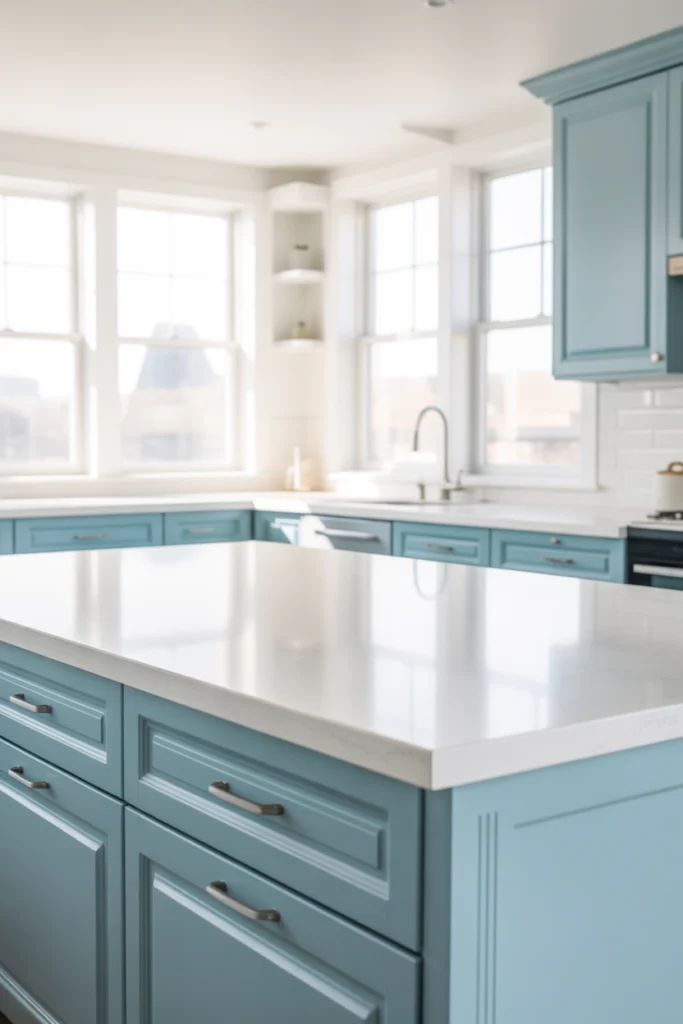
Light blue is the best choice for a small or north-facing kitchen because it reflects light instead of absorbing it. Try a pale powder blue or a soft sky blue on the cabinets, paired with white trim, a white ceiling, and light wood flooring. The room will feel taller and wider, especially if you carry the same blue onto a single accent wall or the inside of glass-front cabinets. Keep the countertops light too, such as white quartz or pale butcher block, so nothing visually weighs the room down.
The trick with light blue is to add one warm element so the room does not feel chilly. Natural wood open shelves, a woven pendant light, or brass cabinet knobs add just enough warmth. Avoid pairing light blue with cool gray floors, which can make the whole space feel washed out. Instead choose warm white walls and honey-toned wood. This palette is also very forgiving with everyday clutter, since soft blue hides smudges and fingerprints better than pure white.
3. Blue and White Kitchen Design
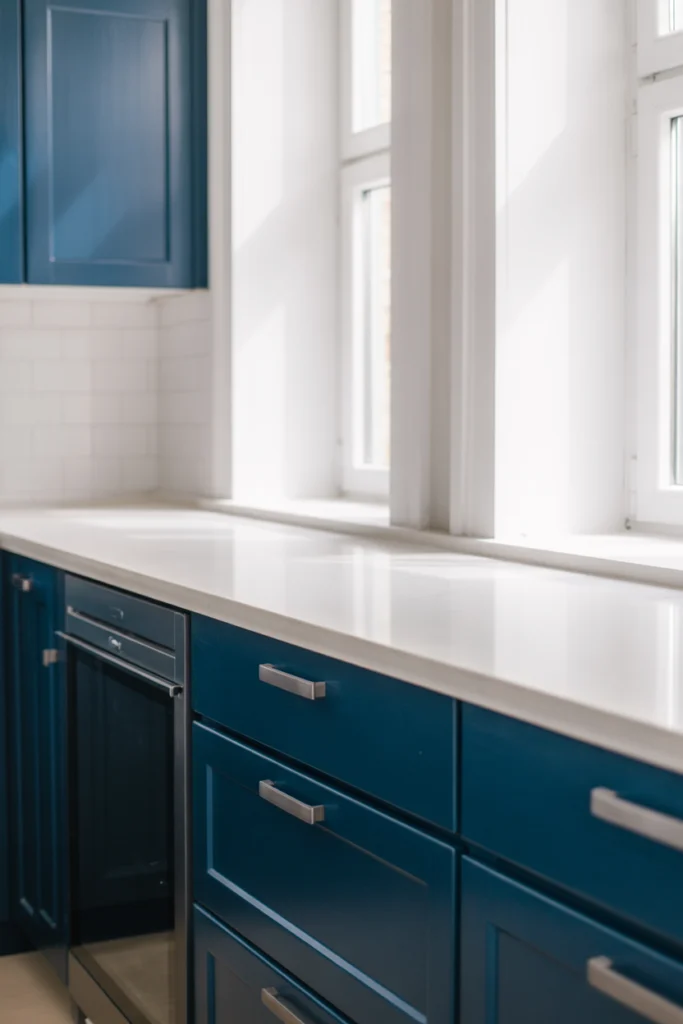
Blue and white is the classic pairing that never dates, and it works in almost any style of home. The formula is simple: blue cabinets or a blue island, white counters, white backsplash, and white trim. For a coastal feel, use a soft sea blue with beadboard panels and rope or rattan details. For a more formal look, use deep navy with white marble and polished nickel. The white keeps the blue feeling fresh, and the blue keeps the white feeling intentional rather than plain.
To keep the combination from looking flat, vary the textures. Pair smooth painted cabinets with a handmade-look tile backsplash, a honed marble counter, and woven bar stools. A patterned tile, such as a blue and white geometric or a classic fish scale, makes a beautiful backsplash without overwhelming the room. If your kitchen is open plan, repeat the blue in the adjoining room, perhaps in dining chairs or a rug, so the two spaces feel connected. For more color pairing inspiration, see these kitchen color ideas that show how blue works beside other shades.
4. Dark Blue Kitchen with Gold Accents
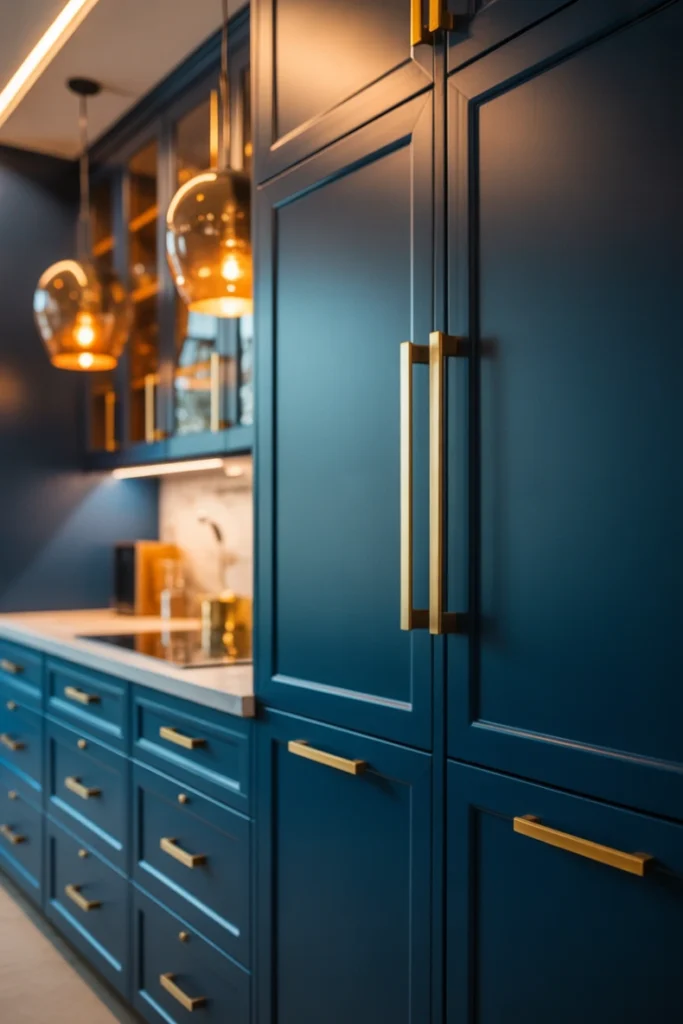
Dark blue with gold is the most luxurious combination in this guide, and it works because the warm metal stops the dark color feeling heavy. Use a deep midnight or inky blue on the cabinets, then add unlacquered brass or satin gold for the cabinet pulls, faucet, pendant lights, and even the range hood trim. The gold catches the light and draws the eye around the room, so the dark cabinets read as rich rather than gloomy.
Lighting matters more here than in any other blue kitchen. Layer three types: recessed ceiling lights for general brightness, under-cabinet strips for the worktops, and warm pendant lights over the island. Keep the backsplash light and reflective, such as a glossy white or pale blue tile, or a light marble with gold veining. A light floor, pale wood or large-format cream tile, lifts the whole scheme. Avoid using too many different metals: pick one gold tone and repeat it everywhere for a calm, expensive finish.
5. Blue Kitchen with Marble Countertops
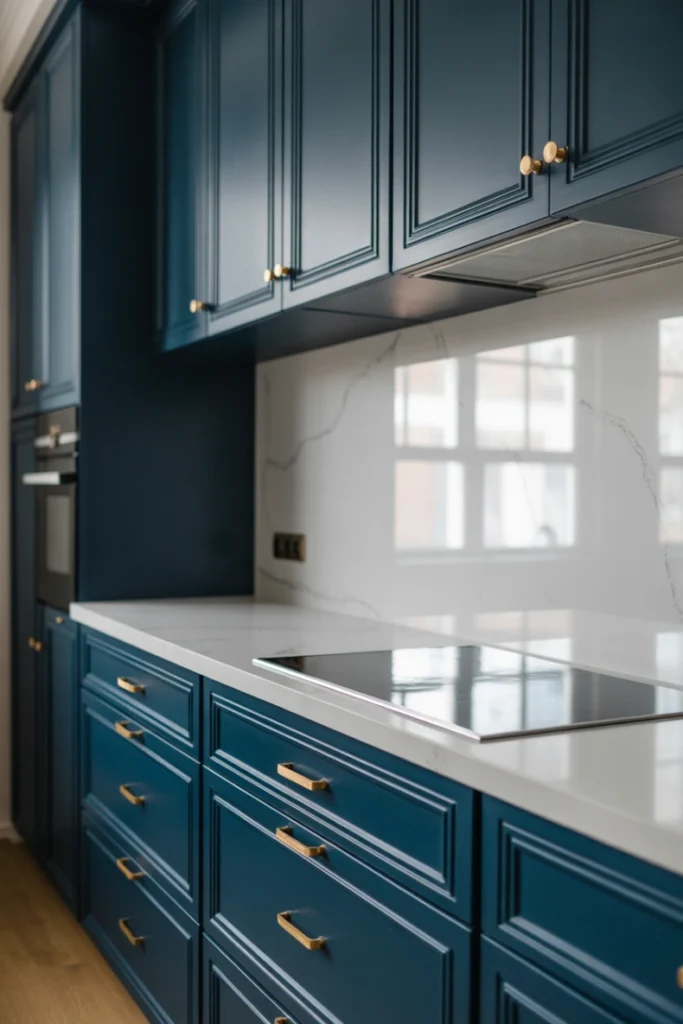
Marble is the natural partner for blue cabinets because its soft gray veining echoes the cool tones of the paint. A white marble with gentle gray or faint blue-gray veins looks stunning against navy or slate blue, and it suits both classic and modern kitchens. If real marble feels too high maintenance, a good quartz that mimics marble gives the same look with far less sealing and staining worry, which matters beside a sink and a hob.
Let the marble be the star by keeping the backsplash simple. A plain white subway tile or a single slab of the same marble up the wall keeps the eye on the stone. Carry the marble onto a small detail, such as a windowsill or a pastry shelf, to make the design feel considered. For the cabinets, a satin or eggshell paint finish is more practical than high gloss, since it hides fingerprints and is easier to wipe clean. Pair with brushed nickel or chrome hardware to pick up the cool tones in the stone. If you are planning the whole surface scheme, these kitchen countertop design ideas can help you compare stone, quartz, and butcher block side by side.
6. Two-Tone Blue Kitchen Cabinets
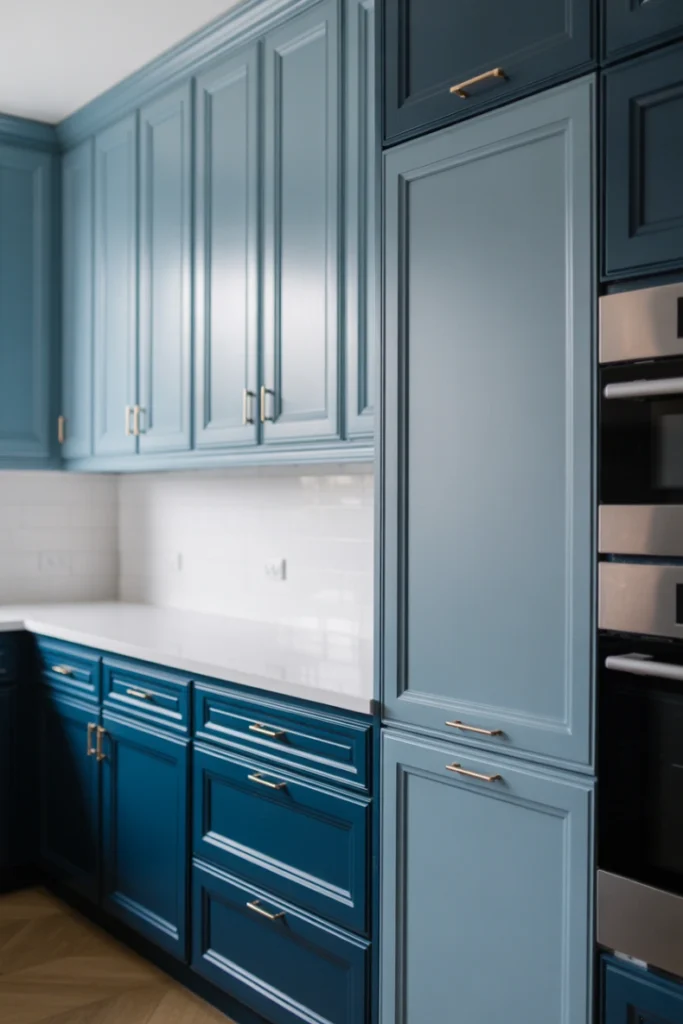
Two-tone cabinets are a simple way to add depth without adding color chaos. The most reliable formula is darker blue on the lower cabinets and a lighter blue, or white, on the uppers. The dark base grounds the room and hides scuffs near the floor, while the lighter uppers keep the room feeling open. Another option is a blue island with neutral perimeter cabinets, which gives you a bold focal point without committing the whole kitchen to color.
Choose shades from the same family so the two tones feel related rather than random. A deep navy base with a soft dusty blue above works well, as does a teal base with pale aqua uppers. Keep the countertop and backsplash the same on both sides so the room stays unified. If you use two blues, repeat each shade somewhere else in the room, for example the darker blue on bar stools and the lighter blue on a rug or window treatment, so the palette feels deliberate. Paint samples on large boards and view them together in daylight before you decide.
7. Coastal-Inspired Blue Kitchen
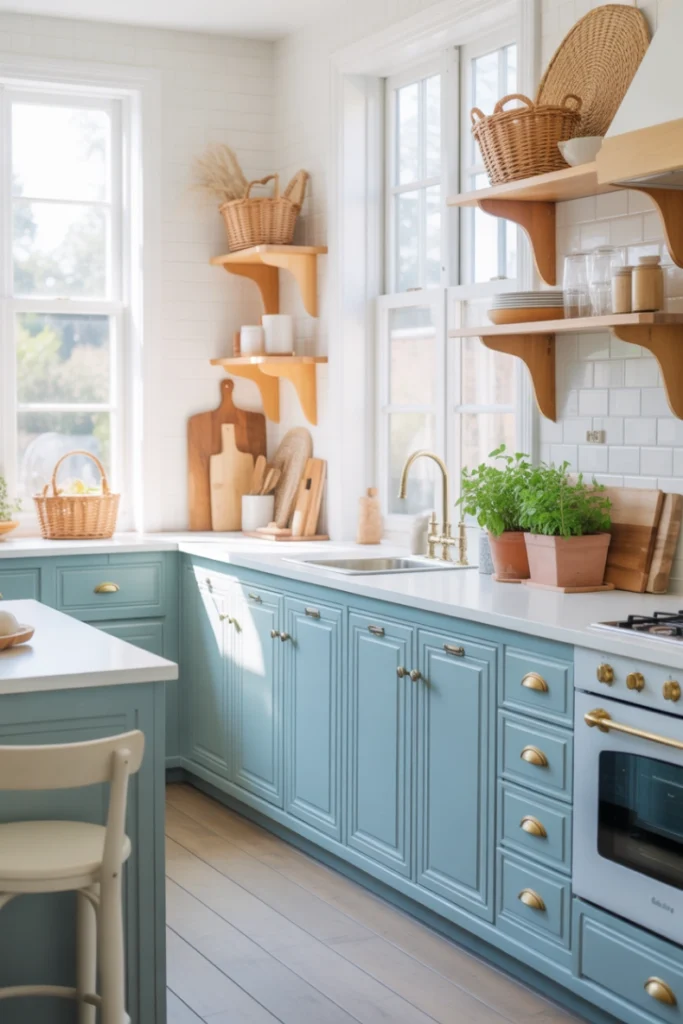
A coastal blue kitchen is all about light, air, and natural texture. Use soft sea blues, pale aqua, or a washed-out denim shade on the cabinets, then pair them with white shiplap or beadboard, a light wood floor, and woven textures such as rattan bar stools, a jute rug, and linen curtains. The look should feel relaxed and sunlit, never fussy. Open shelving with white dishes and clear glass adds to the breezy feeling.
Keep the palette to three colors at most: a soft blue, white, and one warm wood tone. Sandy or driftwood finishes work best, while dark walnut can feel too heavy for the coastal mood. Choose hardware in brushed nickel or a light weathered brass, and keep the lighting simple, such as white ceramic pendants or a rattan drum shade. A window over the sink is a bonus, so leave it uncluttered and let the daylight do the work. This style suits homes near the coast, but it also brings a holiday feeling to a landlocked kitchen.
8. Blue Kitchen with Wood Accents
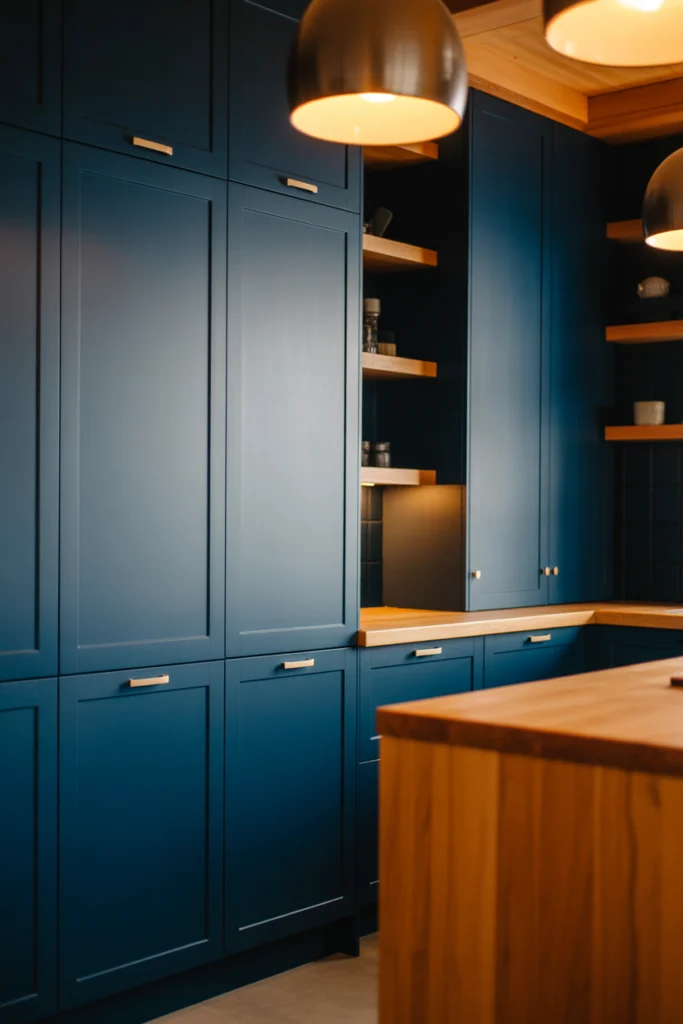
Wood is the best way to warm up a blue kitchen, because its golden tones balance the coolness of the paint. Try navy or slate blue cabinets with a warm oak island, open oak shelves, or a butcher block counter on one run. The wood adds texture and a handmade feeling, and it stops the room from feeling like a showroom. Light woods such as white oak and ash keep the look fresh, while walnut adds richness for a more traditional kitchen.
Use the wood in at least two places so it feels intentional: for example, open shelves plus a wooden range hood cover, or a butcher block island plus oak bar stools. Keep the wood tone consistent rather than mixing three different species. A matte or satin finish on the wood suits blue cabinets better than a high gloss. For the floor, a medium warm wood works with almost every shade of blue, and it is far more forgiving than tile when plates are dropped. This combination also ages gracefully, since both blue paint and natural wood develop character over time.
9. Matte Blue Kitchen Finish
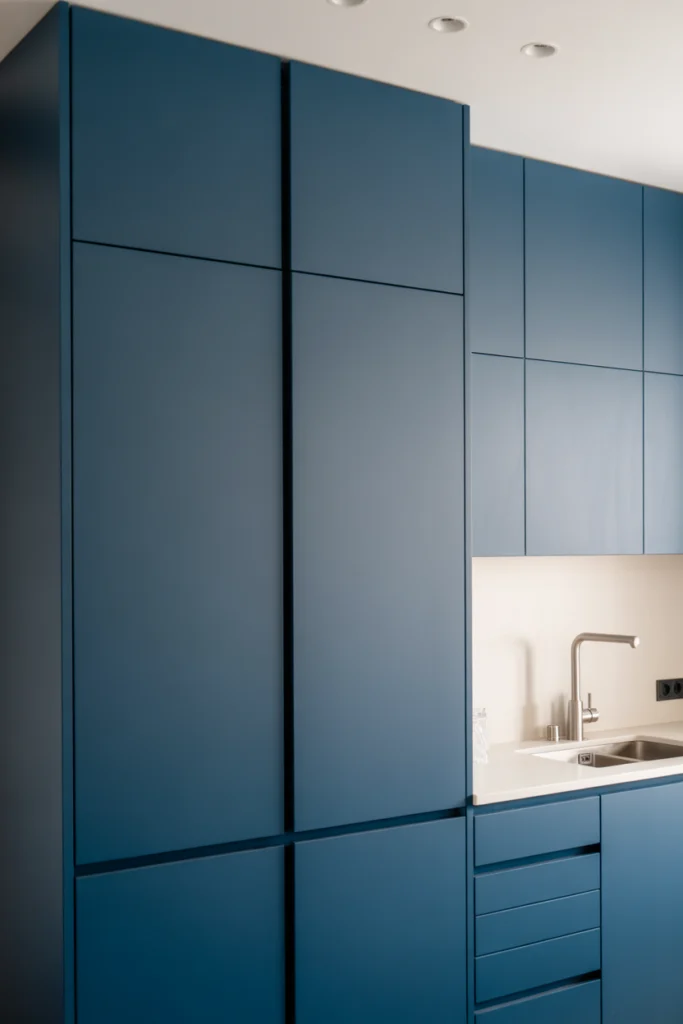
Matte blue cabinets feel modern and calm because they absorb light instead of reflecting it. A matte navy or slate blue gives the kitchen a soft, velvety depth that glossy finishes cannot match, and it hides fingerprints and small marks better than a high shine. The finish suits flat-panel or shaker doors, and it works especially well in minimalist or Scandinavian-inspired kitchens where texture matters more than shine.
Balance the matte surfaces with one or two reflective elements so the room does not feel flat. A glossy tile backsplash, a polished stone counter, or brushed metal hardware adds just enough contrast. Choose a washable matte paint or a factory-applied matte laminate, since a cheap flat paint will mark easily in a kitchen. Wipe cabinets with a soft damp cloth rather than an abrasive sponge. Pair matte blue with warm white walls and light wood to keep the room feeling bright, and add under-cabinet lighting so the worktops stay well lit.
10. Blue Kitchen Island Statement
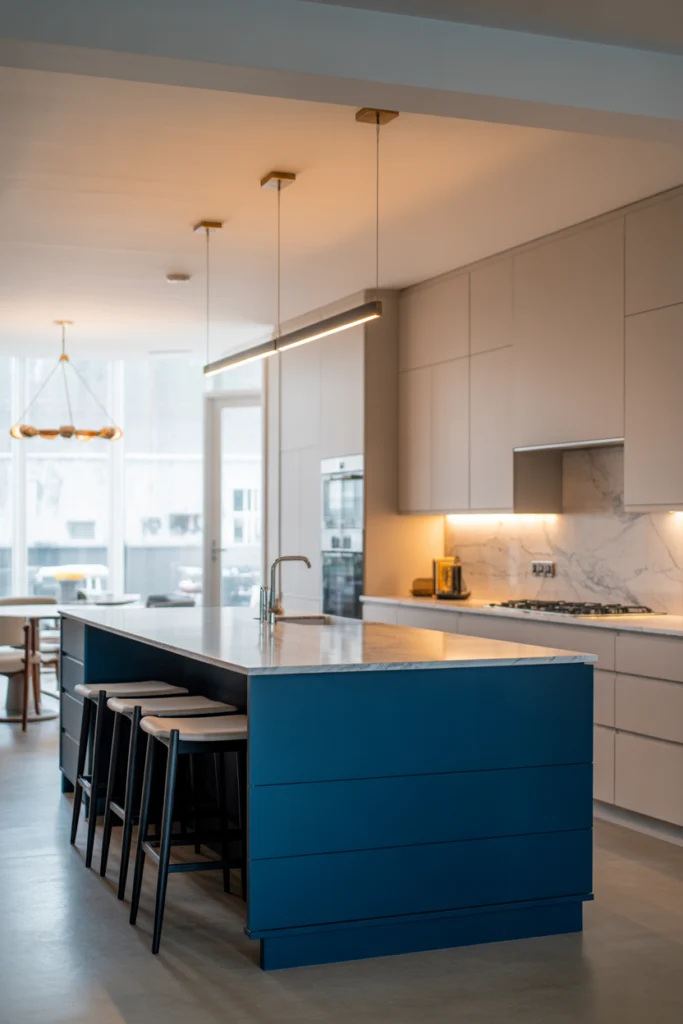
Painting just the island blue is the lowest-risk way to try the color, and it often looks better than a full blue kitchen because the island becomes a clear focal point. Choose a bold shade, such as navy, teal, or royal blue, for the island base, then keep the perimeter cabinets white or light gray. The contrast draws the eye in and gives the room a designed feel without a full repaint. This approach also suits renters and budget remodels, since one island is far cheaper to paint than a whole kitchen.
Make the island feel special with the details. Add a thicker countertop with a small overhang for seating, choose statement pendant lights above it, and pick hardware that stands out, such as brass pulls or leather tabs. The island color should appear somewhere else in the room, even in a small way, such as blue bar stools, a blue vase, or a patterned rug, so it feels connected to the rest of the space. Size matters too: an island should leave at least 36 to 42 inches of walkway on each side. For layout and seating ideas, browse these kitchen island ideas before you finalize the size and shape.
11. Blue and Gray Kitchen Combination
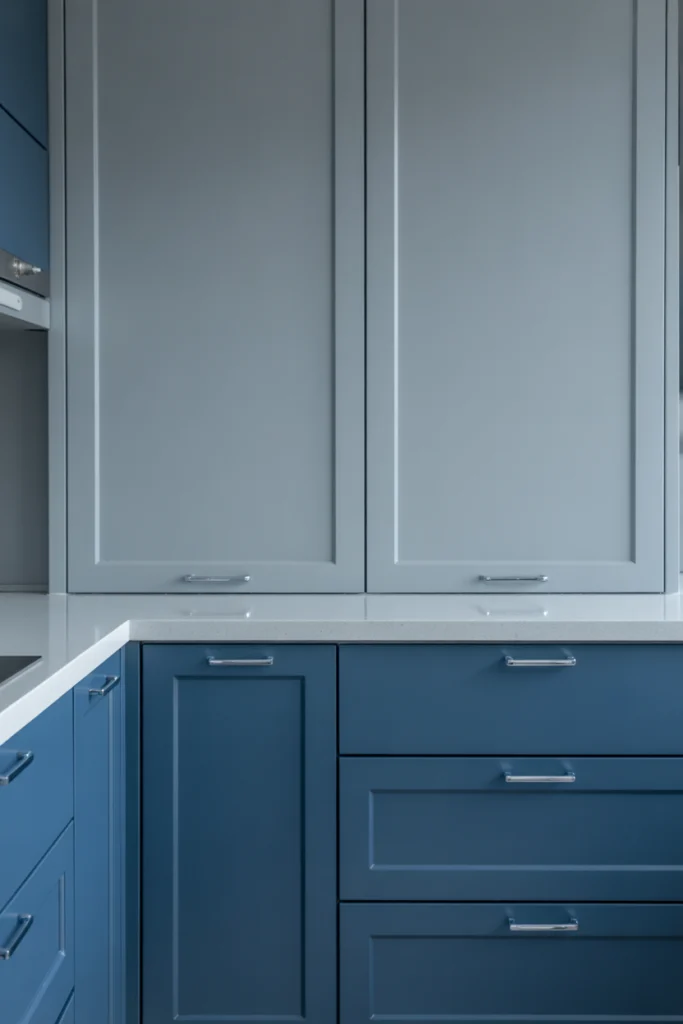
Blue and gray is a sophisticated pairing for modern and urban kitchens, because gray softens blue without dulling it. Try slate blue cabinets with warm gray walls, or a gray island with dusty blue uppers. The key is to choose a gray with a warm or blue undertone so the two colors blend, and avoid a cold concrete gray that can make blue look muddy. A light gray quartz counter and a pale gray tile backsplash tie the scheme together.
This palette works well with stainless steel appliances and matte black hardware, which add a contemporary edge. Add warmth through wood, such as oak stools or a walnut cutting board left on the counter, so the room does not feel too cool. If the kitchen is small, keep the gray light and use the blue only on the lower cabinets or the island. In a large kitchen, you can afford a deeper blue on all the cabinets with gray on the walls and floor. Test paint chips together under your actual kitchen lighting, since both colors shift noticeably between daylight and warm evening bulbs.
12. High-Gloss Blue Kitchen Cabinets
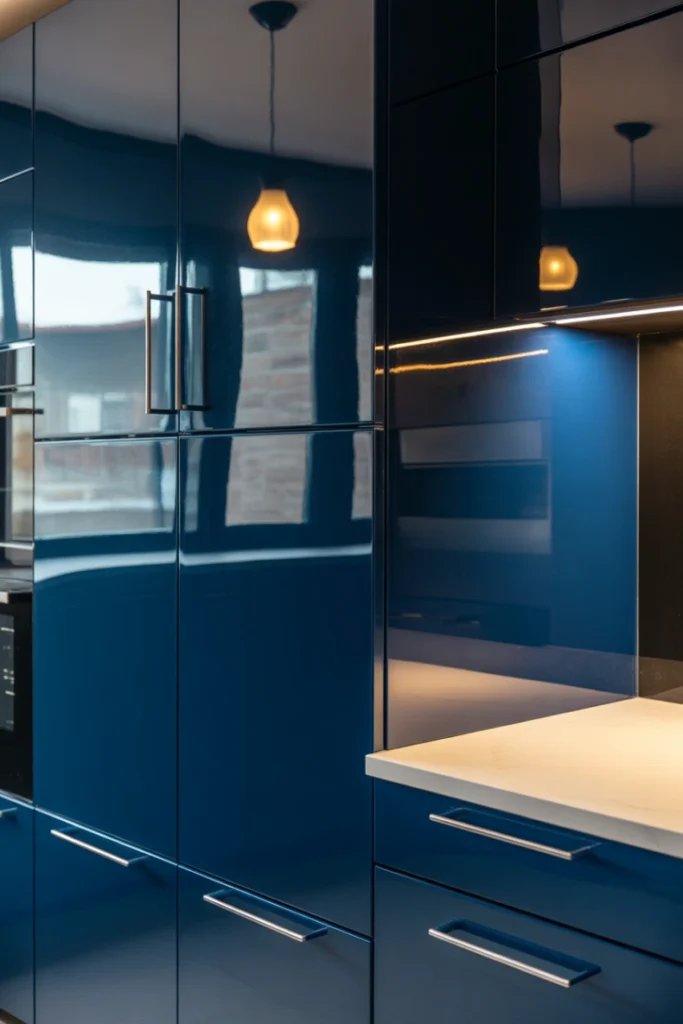
High-gloss blue cabinets make a kitchen feel brighter and more energetic because they reflect light around the room. A glossy royal blue or a lacquered navy looks striking in a contemporary kitchen, especially with handleless doors and a clean, flat-panel design. The shine also makes the color look deeper and richer than the same shade in a matte finish. This style suits open-plan homes and kitchens with plenty of natural light.
Gloss shows fingerprints and smudges more than any other finish, so choose it only if you are happy to wipe the doors regularly, and keep a microfiber cloth in a drawer for quick touch-ups. Pair gloss cabinets with a matte countertop, such as honed quartz or butcher block, so the room has contrast and the shine does not overwhelm. Keep the backsplash simple and light, and use slim, minimal hardware or push-to-open doors. In a small kitchen, limit the gloss to one run of cabinets and use a matte finish elsewhere to avoid a mirror-like effect.
13. Blue Kitchen with Patterned Backsplash
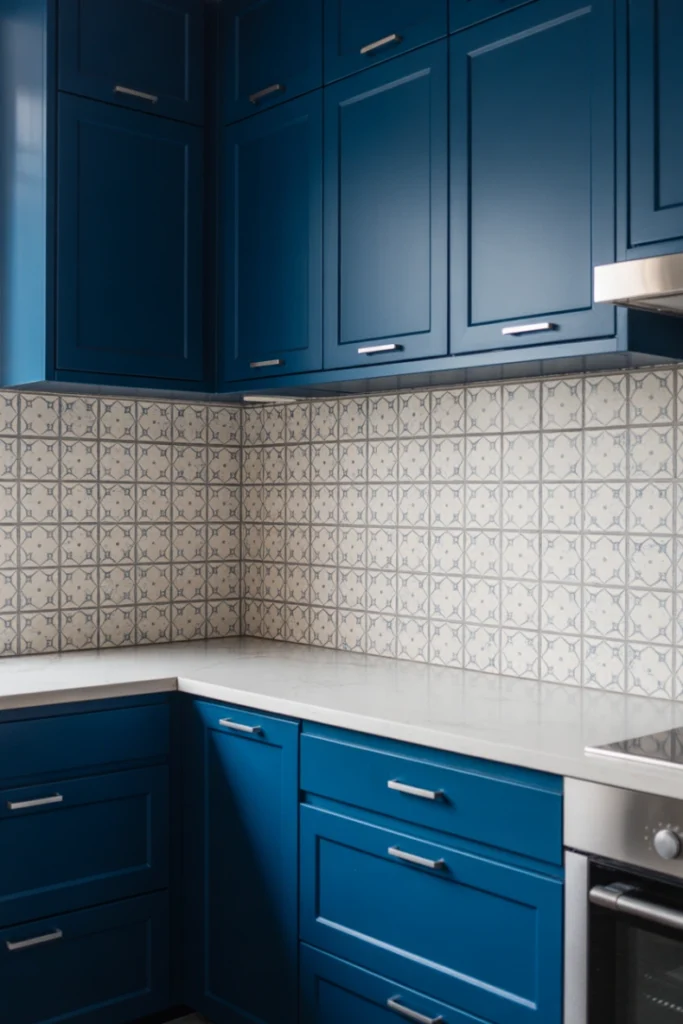
A patterned backsplash is the easiest way to add personality to a blue kitchen without repainting anything. Try a geometric tile in blue and white, a classic fish scale pattern in mixed blues, or a hand-painted Moroccan-style tile behind the hob. The pattern becomes the artwork of the room, so keep the cabinets a calm, solid blue and let the tile do the talking. A patterned backsplash also hides cooking splashes better than a plain white tile.
Restraint is the secret. Use the patterned tile on one wall only, usually behind the hob or the sink, and use a plain tile or a painted wall elsewhere. Pick up one color from the tile for a small detail, such as a vase or a tea towel, so the design feels tied together. If you love bold pattern but worry about commitment, try peel-and-stick tiles first: they look convincing from a normal distance and let you live with the pattern before you tile properly. Seal grout well in a kitchen, since a patterned tile with stained grout loses its charm fast.
14. Blue Kitchen with Black Hardware
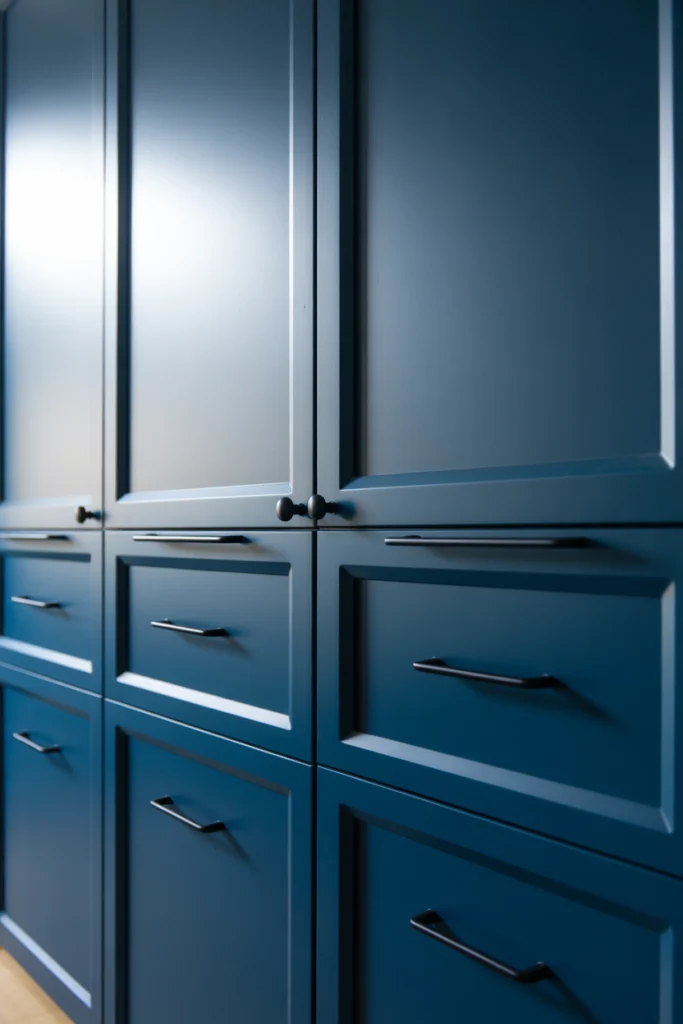
Black hardware gives a blue kitchen a crisp, modern edge. Matte black pulls, knobs, and a matching faucet create strong definition against blue cabinets, especially on lighter blues where the contrast is sharp. The combination suits shaker cabinets, flat-panel doors, and farmhouse styles alike, and it is one of the cheapest ways to update a kitchen: swapping hardware takes an afternoon and changes the whole look.
Keep the black consistent across the room. Match the cabinet pulls to the faucet, the pendant light fittings, and even the window frames if you can. Too many different black finishes, such as glossy, matte, and oil-rubbed, can look messy, so pick one and repeat it. Black hardware works best with a light countertop and a simple backsplash, since a busy pattern plus black hardware can feel heavy. If your cabinets are very dark navy, use a slightly larger pull so the black does not disappear into the paint.
15. Blue Shaker-Style Kitchen
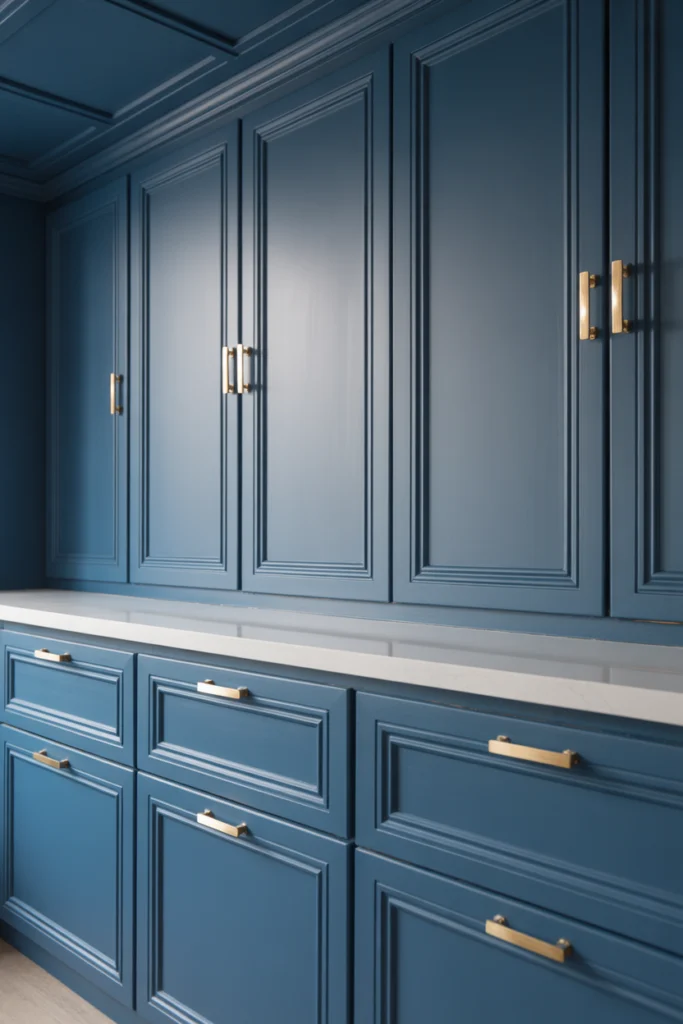
Shaker cabinets are the most versatile door style, and they look wonderful in blue because the simple frame lets the color shine. A dusty blue or a deep navy on shaker doors feels both traditional and current, and it works in farmhouse, cottage, and transitional homes. The recessed panel adds subtle shadow and craft, which keeps a painted kitchen from looking flat. Pair shaker blue cabinets with a white or cream countertop and a classic subway tile backsplash for a timeless result.
Choose the details carefully. Cup pulls and round knobs suit the traditional feel, while slim bar pulls push the look toward modern. A farmhouse sink, a wooden range hood cover, and open shelving with white dishes complete the classic version. For a transitional take, use brushed nickel hardware, a quartz counter with light veining, and a simple pendant light. Shaker cabinets are also easy to repaint later, so if you tire of the blue in a few years, a new color is a weekend project rather than a full remodel.
16. Blue Kitchen with Open Shelving
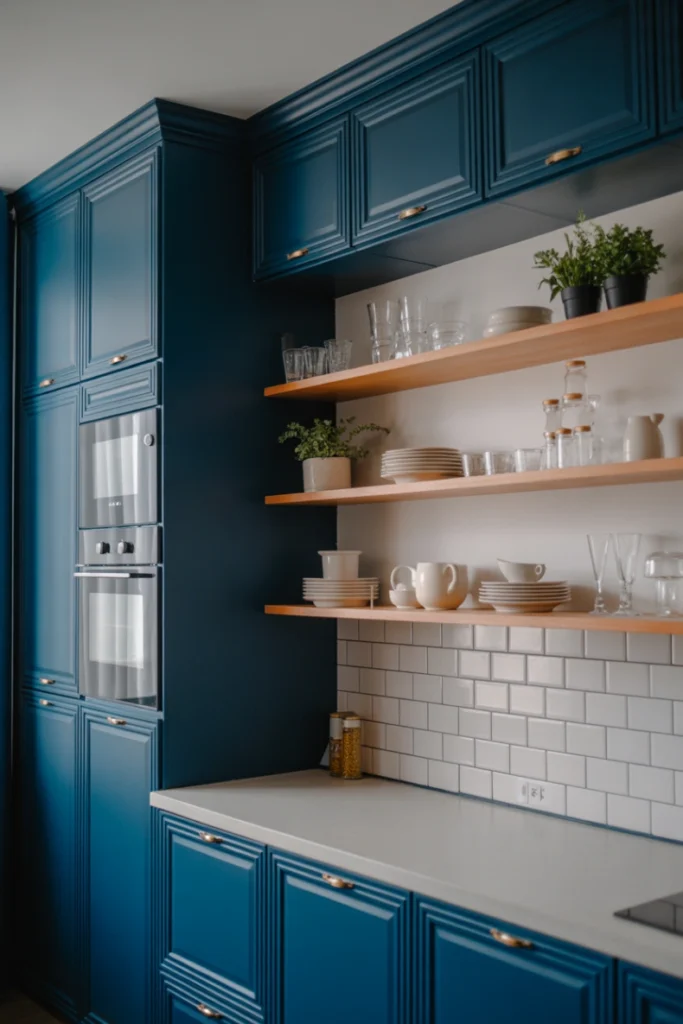
Open shelving lightens a blue kitchen visually by breaking up long runs of solid cabinetry. Replace one or two upper cabinets with thick wood shelves, and display white dishes, clear glass, and a few plants against the blue wall behind them. The shelves make the room feel larger and more personal, and they give you a place to show off pieces you actually love instead of hiding them behind doors.
Open shelves only work if you keep them tidy, so reserve them for items you use every day and keep the rest behind closed doors. Limit each shelf to one row of items with a little breathing space, and repeat a color, such as white dishes with one blue accent piece, so the display looks calm. Wood shelves warm up blue walls beautifully, while painted shelves in the same blue as the wall create a seamless look. Dust the shelves weekly, since open storage collects grease and dust faster than closed cabinets, especially near the hob.
17. Blue Kitchen with Integrated Appliances
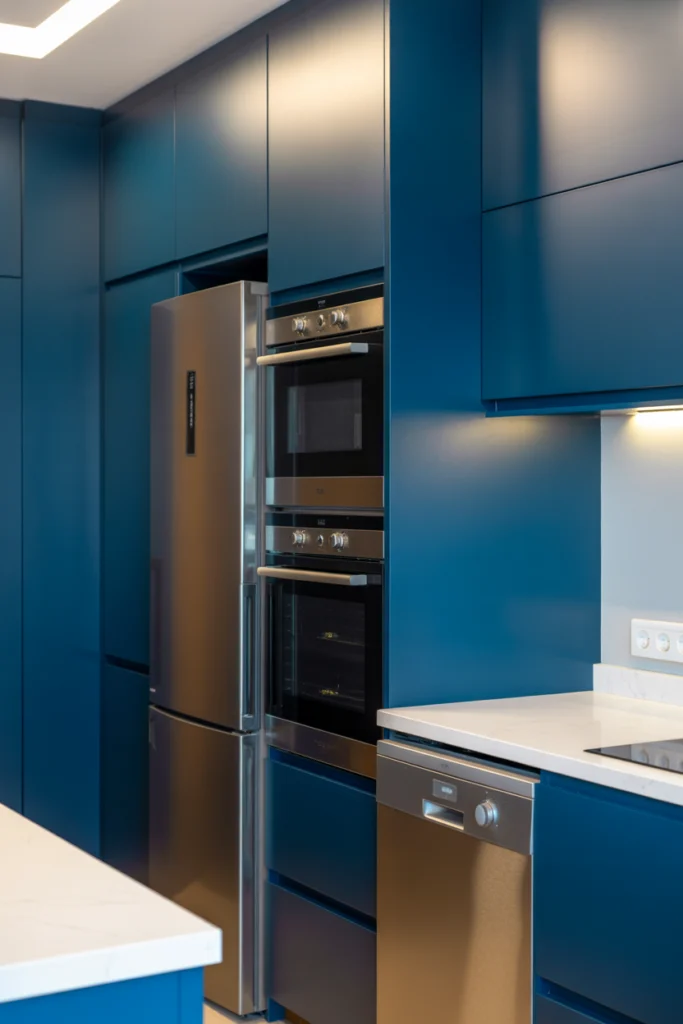
Integrated appliances keep a blue kitchen looking calm and seamless because the fridge, dishwasher, and even the hob disappear behind matching cabinet panels. The eye sees one continuous run of blue instead of a patchwork of steel and glass, which makes the room feel larger and more considered. This approach suits minimalist and handleless kitchens best, where clean lines are the whole point.
Plan integrated appliances early, since they need exact measurements and the panels must be ordered with the cabinets. Choose a panel-ready fridge and dishwasher from the start, and budget for the extra cost of the panels and the fitting. Keep one small display of steel, such as the oven or the faucet, so the kitchen still reads as a working room rather than a furniture showroom. Integrated appliances also make cleaning easier, since there are fewer gaps and edges to trap grease. If you are rethinking the whole layout, a look at kitchen color schemes can help you plan the palette around the appliances you already own.
18. Bold Royal Blue Kitchen
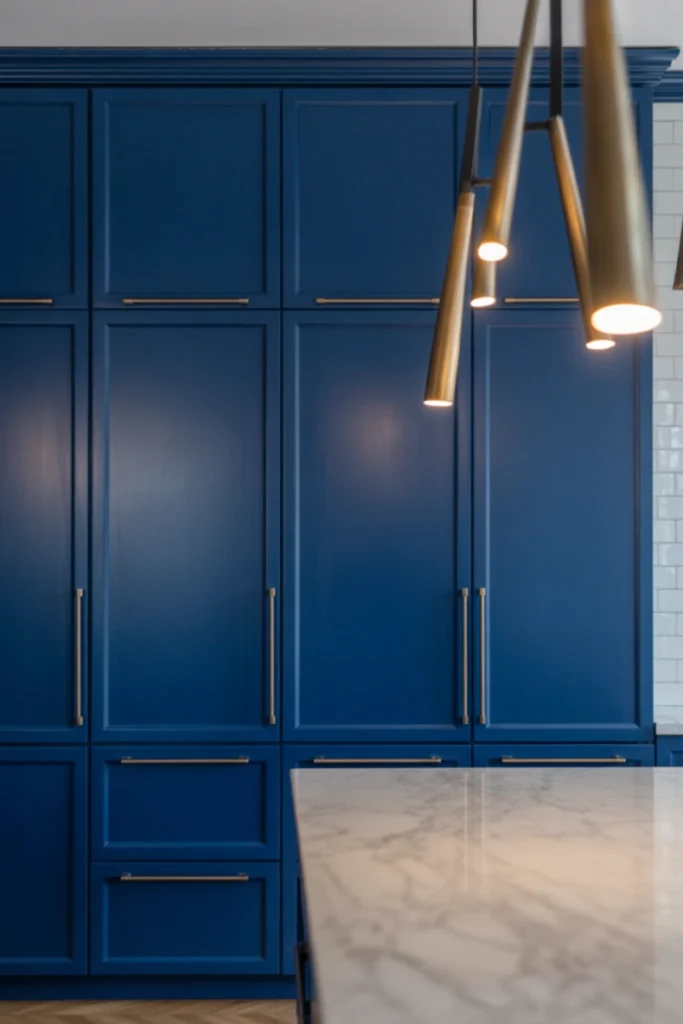
Royal blue is for homeowners who want their kitchen to make a statement. This vivid, confident shade brings energy to the room, and it works best when the rest of the palette stays calm: white counters, a pale backsplash, light wood floors, and simple hardware. The contrast lets the royal blue shine without the room feeling loud. Use it on all the lower cabinets, or on one feature wall of cabinets, and keep the uppers white or open.
Balance is everything with a strong color. Add a neutral anchor, such as a white island top or a natural wood table, and repeat a small touch of the same blue elsewhere, like bar stools or a pendant shade, so the color feels spread through the room rather than isolated. Avoid pairing royal blue with other strong colors, since two bold shades compete and tire the eye. Good lighting is essential: daylight keeps royal blue vivid, while warm evening light softens it. If you are nervous, start with a royal blue island and live with it for a month before painting the rest.
19. Blue Kitchen with Concrete Elements
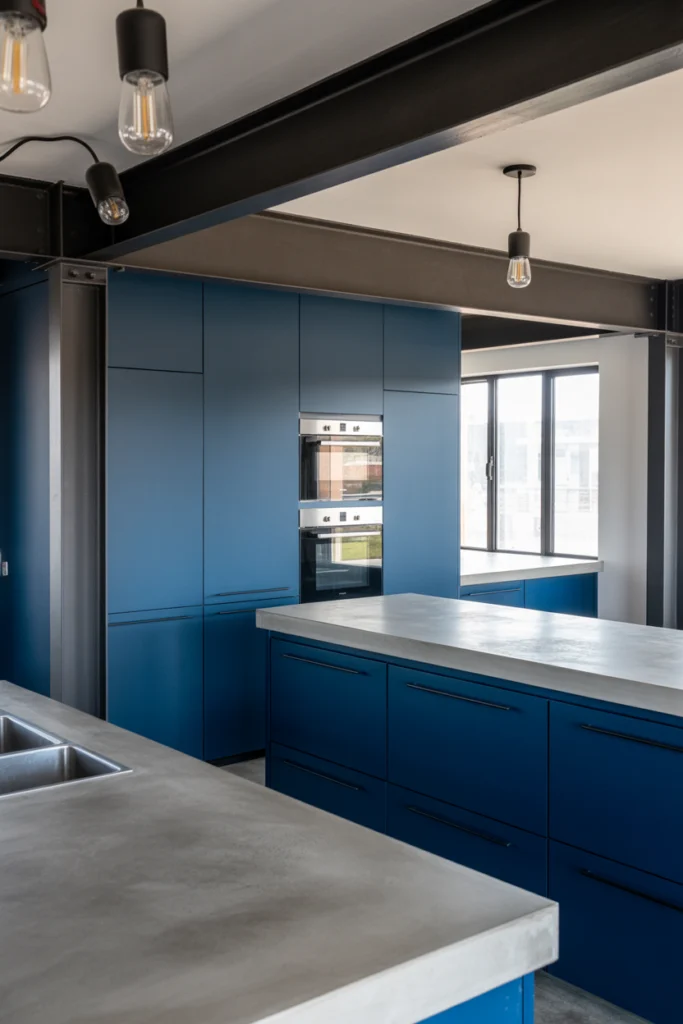
Concrete adds an industrial edge to a blue kitchen, and the cool gray of the material sits naturally beside cool blue paint. Try a polished concrete countertop with navy cabinets, a concrete floor with slate blue walls, or a concrete-look tile backsplash behind a blue range. The rough, matte texture of concrete contrasts beautifully with smooth painted cabinets, and the combination feels modern, urban, and unpretentious.
Concrete needs sealing to survive in a kitchen, so choose a reputable sealer and reapply it on schedule, especially around the sink. If real concrete feels too heavy or too expensive, concrete-look porcelain tiles or a quartz with a concrete effect give a similar look with less upkeep. Warm the scheme with wood, such as oak stools or a walnut shelf, and use black steel details for a loft feeling. Keep the lighting warm rather than cold, so the gray does not make the blue feel chilly. This style suits open-plan lofts and modern extensions particularly well.
20. Soft Pastel Blue Kitchen
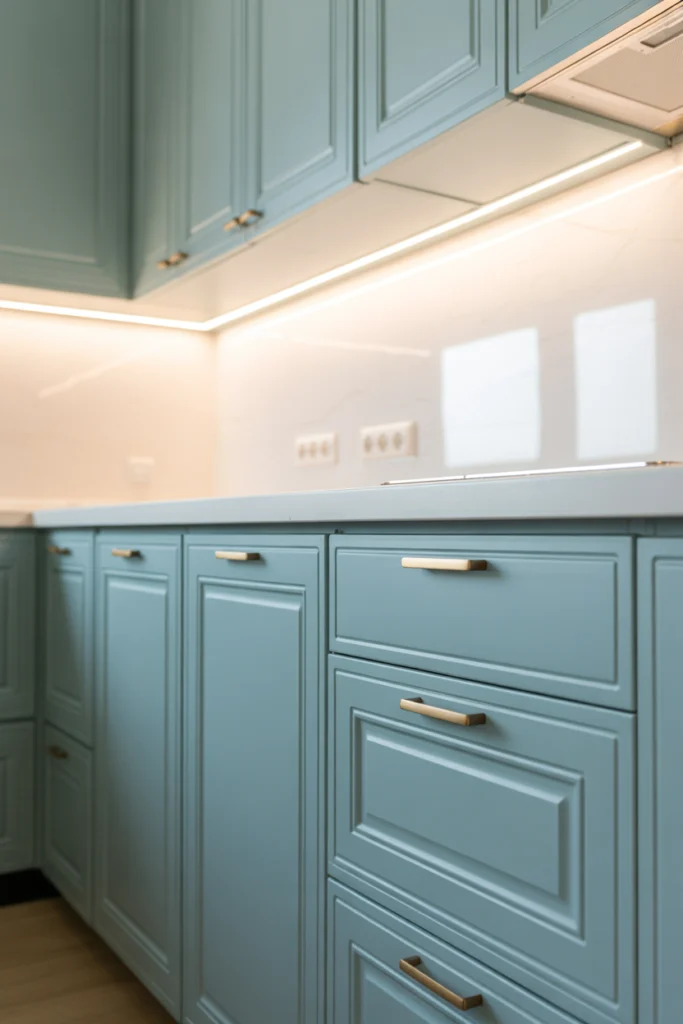
Pastel blue is the gentlest shade in this guide, and it is perfect for small, family-friendly, or cottage-style kitchens. A soft powder blue on the cabinets makes the room feel light and welcoming, and it pairs beautifully with cream walls, a white counter, and pale wood floors. The color is calm enough to live with for years, yet it still gives the kitchen a distinct identity that plain white lacks.
Because pastel blue is so light, the details matter. Use slightly deeper blue accessories, such as a patterned rug, a ceramic jug, or painted bar stools, to stop the room looking washed out. Add warmth with brass or copper hardware and a woven pendant light. Pastel blue also works well with vintage touches, such as a retro-style fridge in cream or a farmhouse sink. Keep the backsplash simple, perhaps a white subway tile with pale gray grout, so the soft color stays the focus. This shade is also a good choice if you plan to sell, since buyers find it cheerful without feeling committed to a bold color.
21. Blue Kitchen with Statement Lighting
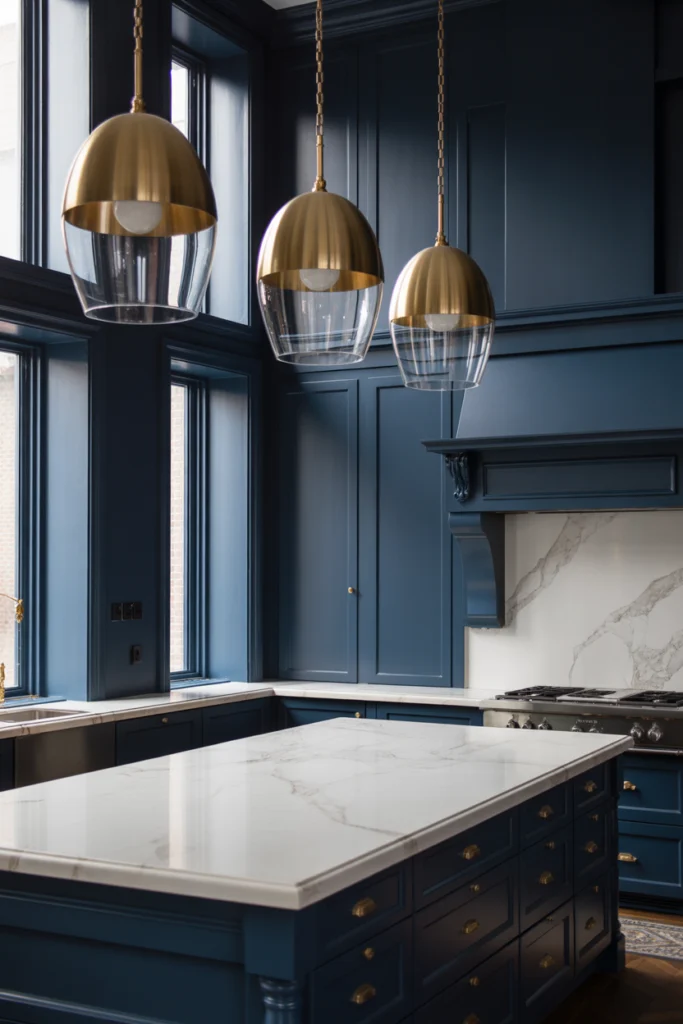
Statement lighting can transform a blue kitchen from plain to memorable in one move. Try a cluster of brass pendants over the island, a sculptural chandelier over the dining table, or oversized rattan shades in a coastal blue kitchen. The light fitting becomes the jewelry of the room, and against a blue backdrop, warm metals and natural textures stand out beautifully. Choose a fitting that matches the scale of the space: a small pendant over a large island will look lost, while an oversized shade in a tiny kitchen will overwhelm it.
Layer the statement piece with practical lighting. Under-cabinet strips light the worktops, recessed spots give general brightness, and the pendant provides the mood. Use warm white bulbs, around 2700 to 3000 Kelvin, so the blue paint looks rich rather than cold. If the pendants are the star, keep the rest of the hardware simple so nothing competes with them. Dimmers are worth the small extra cost, since they let you switch the same kitchen from bright cooking mode to a soft evening glow.
22. Blue Kitchen with Minimalist Design
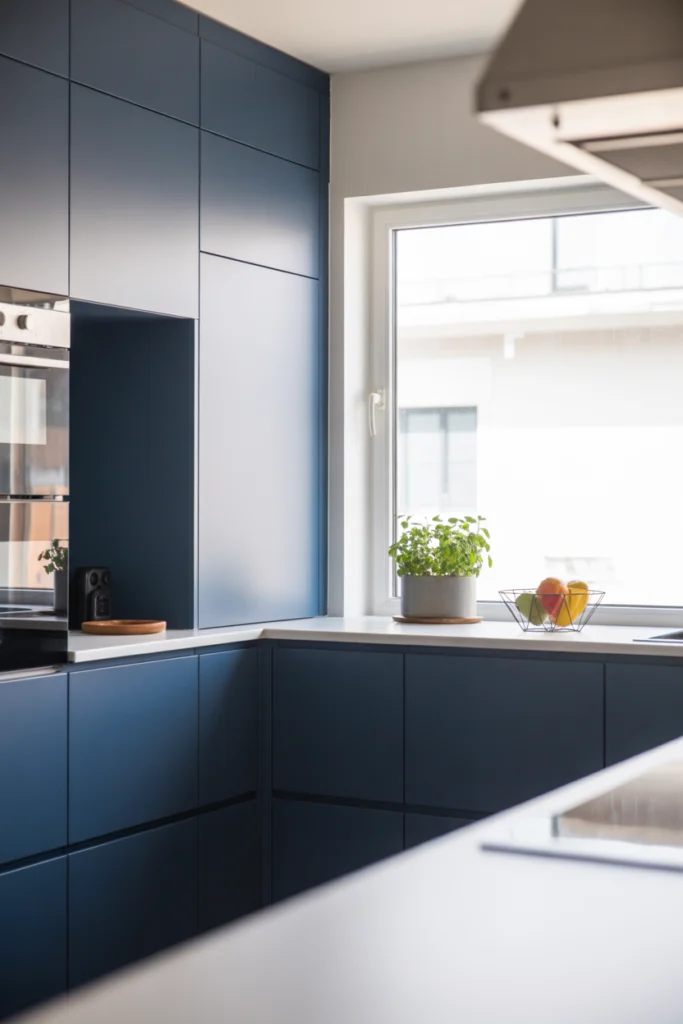
A minimalist blue kitchen works because the color does all the decorating. Choose one shade of blue, flat-panel handleless cabinets, a single countertop material, and almost no visible clutter. The blue becomes the feature, and the simplicity makes the room feel calm, spacious, and easy to keep clean. This style suits people who like clear counters, hidden storage, and a kitchen that looks tidy even on a busy morning.
Minimalism depends on good storage, so plan it carefully. Use deep drawers instead of cupboards, a tall pantry unit, and an appliance garage to hide the toaster and coffee machine. Keep the palette to blue, white, and one wood tone, and avoid decorative items on the counters. A single open shelf with two or three beautiful pieces is enough. The finish matters too: a matte or satin blue looks calmer than gloss in a minimalist room. Wipe the fronts regularly, since flat doors show every mark, and choose a washable paint that can handle daily cleaning.
23. Custom Blue Kitchen Design
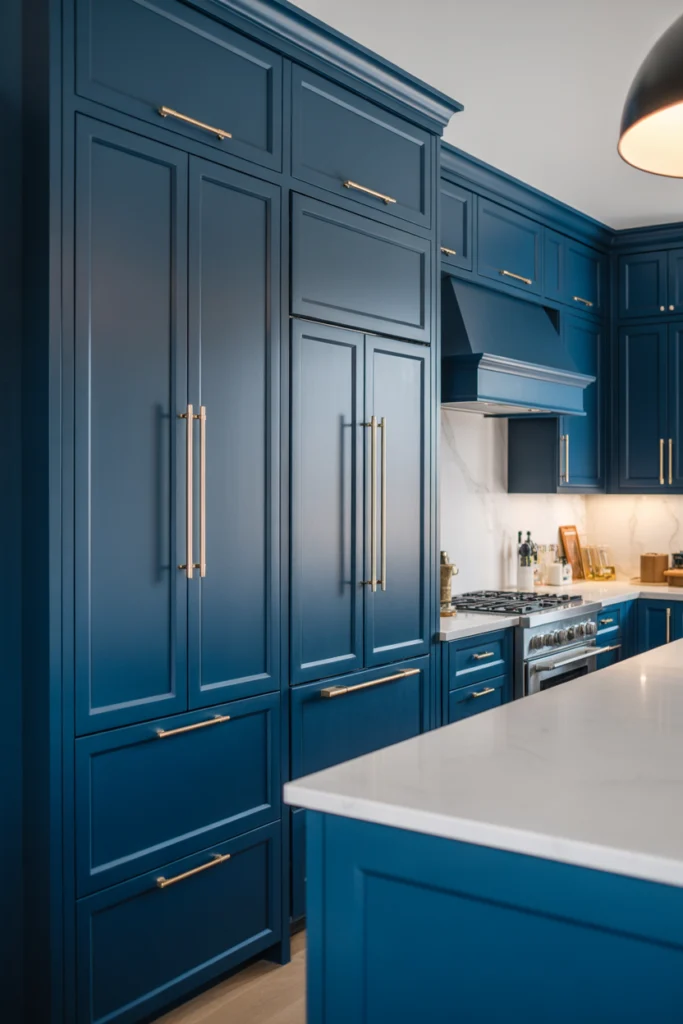
A custom blue kitchen is the best option when your space is unusual, whether it is a narrow galley, an open-plan room with awkward corners, or a period home with uneven walls. A custom design lets you choose the exact shade of blue, the exact cabinet sizes, and storage that fits your habits, such as a spice pull-out beside the hob, a baking tray divider, or a built-in breakfast nook. The result is a kitchen that looks made for the room, because it is.
Start by listing how you actually use the kitchen: who cooks, where the bins go, how much pantry space you need, and whether you eat in the kitchen or elsewhere. Share that list with your designer before you talk about colors, since the layout decides how good the kitchen feels every day. Choose a paint color with a sample door in the real room, and check it in morning and evening light. Custom kitchens cost more, but you can control the budget by mixing custom cabinets where they matter, such as awkward corners, with standard units elsewhere. A custom design also lets you plan the lighting, sockets, and storage together, so nothing is an afterthought.
Conclusion
These 23 blue kitchen ideas show how one color can suit almost any home, from a soft pastel cottage kitchen to a bold royal blue statement room. The secret is not the shade itself, but the way you pair it: light counters and good lighting for dark blues, warm wood and brass for cool blues, and simple hardware when the color is already doing the talking. Start with one idea that fits your room and your budget, test the paint in real light, and build from there.
Whether you paint a single island or a whole run of cabinets, blue rewards a thoughtful approach with a kitchen that feels calm, stylish, and personal. Take your time choosing the shade, keep the palette to a few well-chosen materials, and enjoy a kitchen that will still look good years from now.
Frequently Asked Questions
What is the best shade of blue for a kitchen?
There is no single best shade, because it depends on your light and your style. Navy suits large, bright kitchens and classic or modern looks. Light and pastel blues suit small or dark kitchens because they reflect light. Slate and dusty blues sit in the middle and work in almost any home. Always test a large sample in your own kitchen before you commit.
Do blue kitchen cabinets go out of style?
Blue has stayed popular for many years because it is a classic color rather than a short-lived trend. Deep navy and soft dusty blue have been used in kitchens for decades, and they still look current. Choosing a timeless shade, rather than a very bright or unusual one, makes the kitchen age gracefully.
What countertop goes best with blue cabinets?
White quartz or white marble with light gray veining is the safest and most popular choice, since it keeps the room bright and suits every shade of blue. Butcher block adds warmth, concrete adds an industrial edge, and dark soapstone suits a dramatic navy kitchen. Pick the countertop after the cabinet color, and check the two together in daylight.
What color hardware looks best with blue cabinets?
Brass and gold warm up blue and feel classic, matte black adds a modern edge, and brushed nickel or chrome keeps the look cool and contemporary. Choose one metal and use it for the pulls, faucet, and light fittings so the room feels coordinated. Avoid mixing three different metals in one kitchen.
Can I paint my existing kitchen cabinets blue?
Yes, painting is the cheapest way to get a blue kitchen. Clean and degrease the doors, sand lightly, prime with a good bonding primer, then apply two coats of a durable cabinet paint in satin or semi-gloss. Remove the doors and hardware first for the smoothest finish, and allow each coat to dry fully before the next.
More Ideas You Will Love
 18 Small Kitchen Ideas with Creative Solutions for Compact Living
 23 Tiny House Kitchen Ideas – Smart Space-Saving Designs You’ll Love
 21 Small Pantry Closet Ideas to Organize & Maximize Every Inch
 13 Easy Ways to Add Summer Colors to Your Kitchen
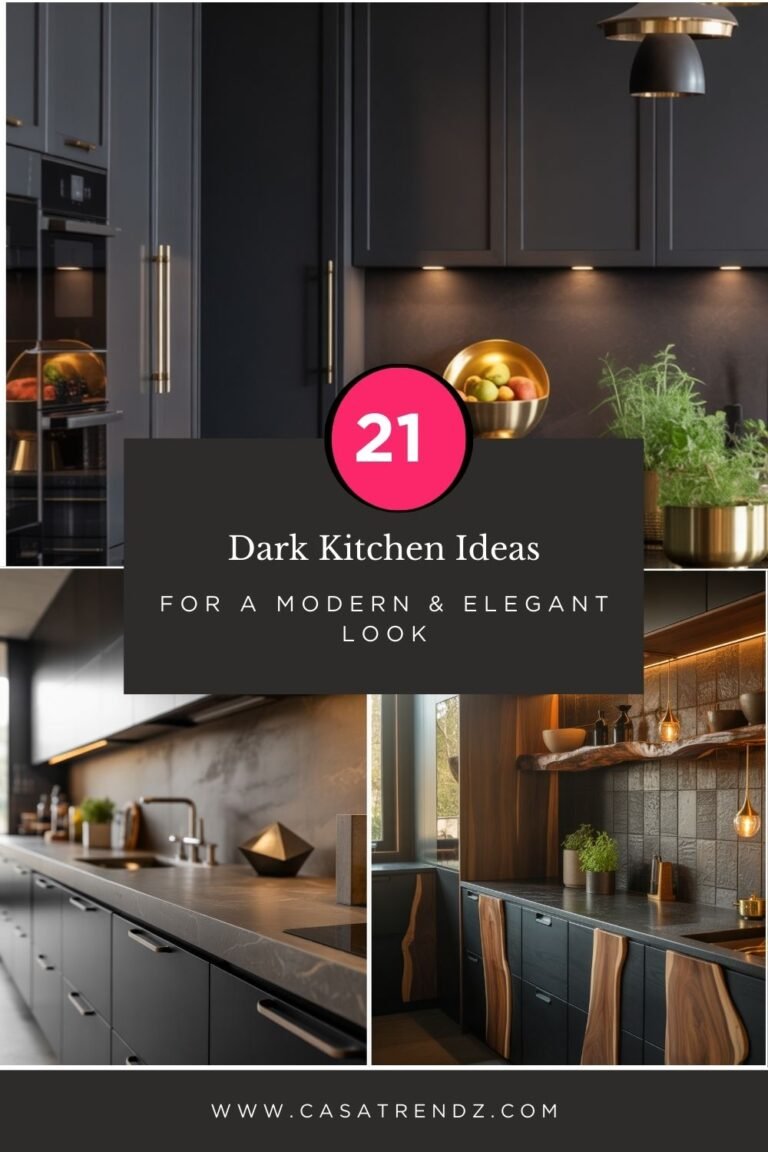 21 Dark Kitchen Ideas for a Modern & Elegant Look
 20 Kitchen Interior Ideas – Transform Your Space with Function & Style