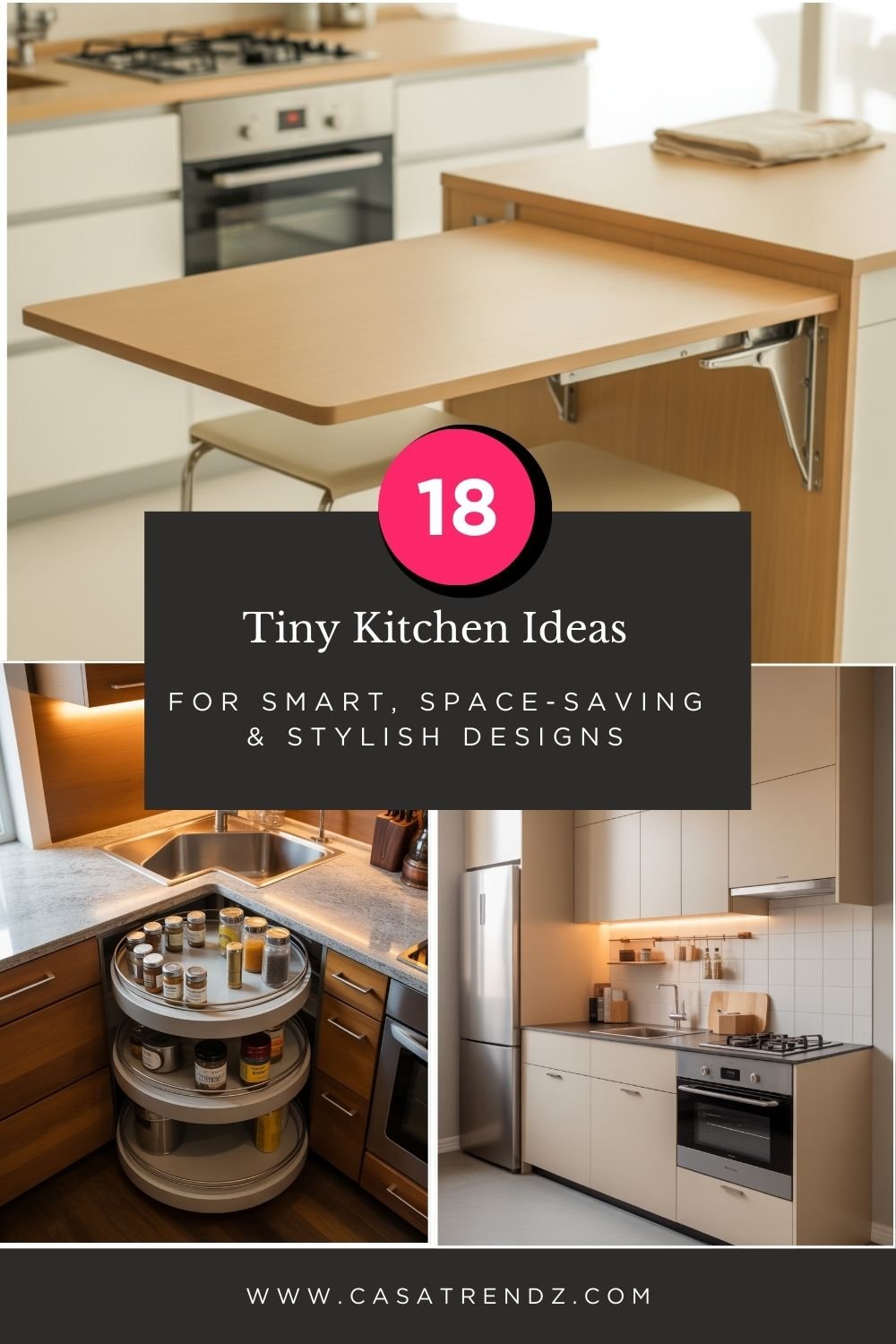
18 Tiny Kitchen Ideas for Smart, Space-Saving & Stylish Designs
Small kitchens can be challenging, but the right ideas turn limits into advantages. This article gives 18 practical, stylish Tiny Kitchen Ideas that focus on smart layouts, clever storage, and attractive finishes. Each idea includes two clear paragraphs (about 140 words each) and a ready-to-use image prompt for generation. Use these ideas to plan a compact remodel, stage a rental, or simply refresh a cramped cooking zone. The goal is functional beauty: designs that make small kitchens feel larger, work better, and look modern without expensive renovations.
1. One-Wall Kitchen with Efficient Zone Planning
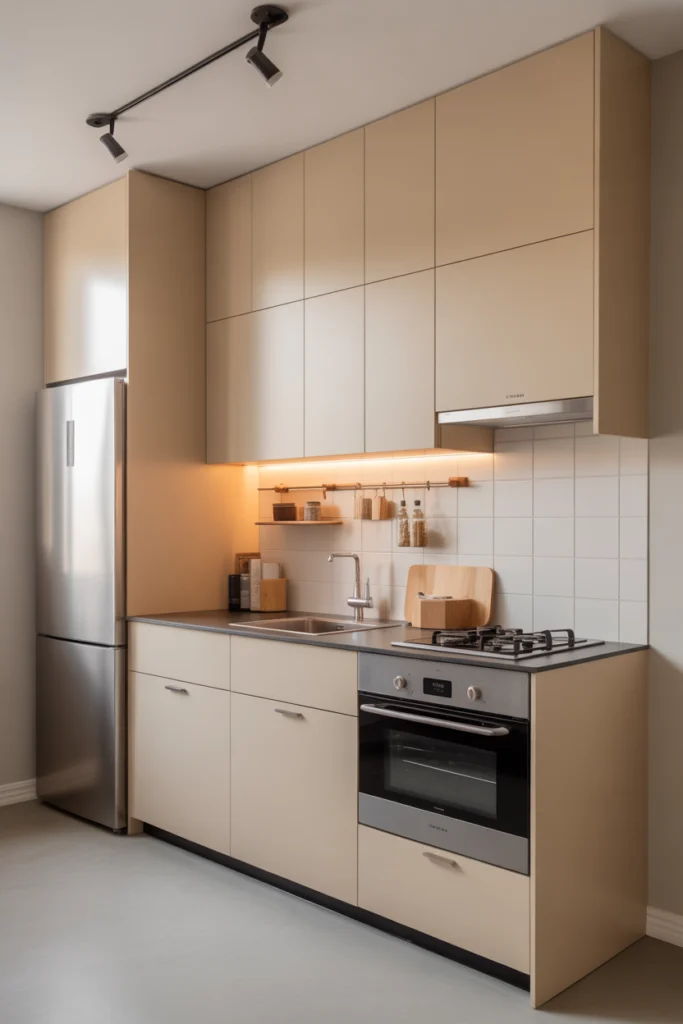
A one-wall kitchen is the classic small-space solution because it keeps everything compact and within reach. Plan clear zones for cooking, prep, and cleanup along the single run: place the cooktop and oven centrally, a sink nearby for easy transfer, and worktop space at both ends for prep and small appliances. Use vertical storage tall cabinets to the ceiling, open shelves, and wall-mounted racks to keep counters clear. Magnetic knife strips, rail systems, and hanging baskets free up valuable surface area. Good lighting over each zone, such as under-cabinet LEDs and a pendant over any breakfast nook, helps the space feel intentional rather than cramped.
Choose finishes and colors that visually widen the wall: light-reflective cabinet doors, gloss tiles, and a continuous backsplash that runs the full length create a unified look. Keep hardware minimal recessed pulls or slim bar handles to reduce visual clutter. Appliances scaled to the kitchen matter: choose a slim refrigerator or integrated models and a single-drawer dishwasher if needed. The one-wall layout pairs especially well with a narrow island on wheels or a fold-down table when occasional extra prep or dining space is required. This layout proves that careful planning and vertical thinking can make a tiny kitchen efficient and stylish.
2. Galley Layout with Double-Run Storage
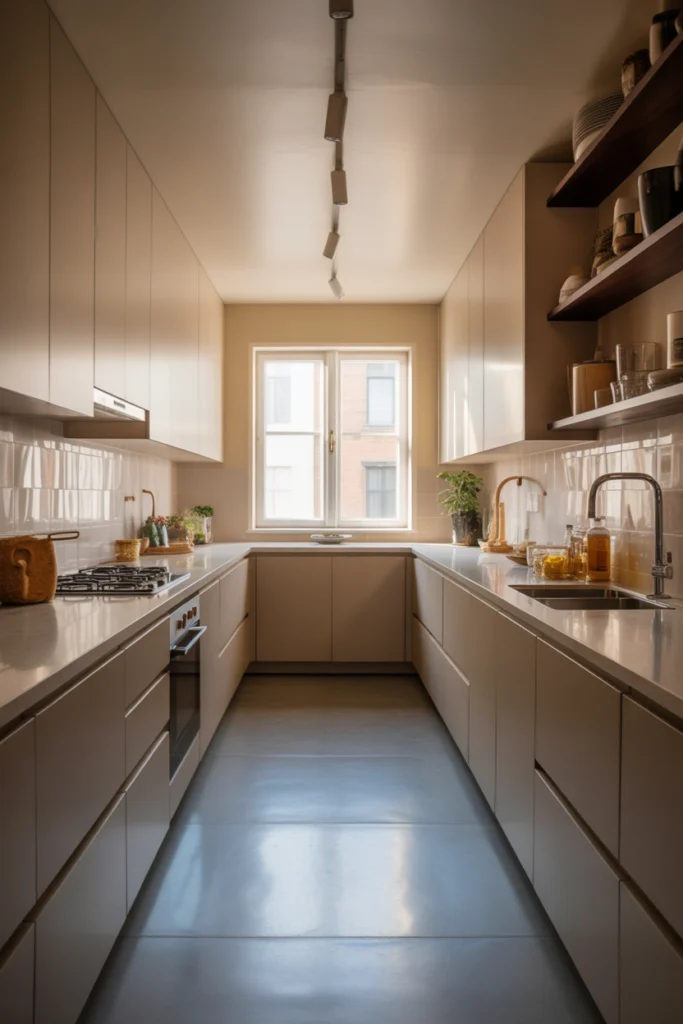
A galley kitchen uses two parallel runs to maximize storage and counter space in narrow rooms. Place the primary workspace stove and sink on one side and prep, refrigeration, and storage on the opposite run. This creates a work triangle that’s short and efficient. Use full-height cabinetry on both sides to store cookware and pantry items. Incorporate deep drawers for pots and drawers with dividers for utensils to reduce cabinet rummaging. Keep the walkway at least 36 inches wide to allow comfortable two-person movement when needed.
Lighting and finishes help the galley feel larger: bright overhead lights, reflective backsplash tiles, and lighter cabinet colors visually widen the corridor. If the layout allows, add a slim, pull-out pantry at the end of one run or a narrow, floor-to-ceiling cabinet for brooms and mops. Open shelving on upper walls near the sink or stove can display dishes and frequently used items while keeping the rest stored away. This efficient double-run approach makes every inch count while offering the storage capacity of a much larger kitchen.
3. Pull-Out Pantry and Slim Vertical Storage
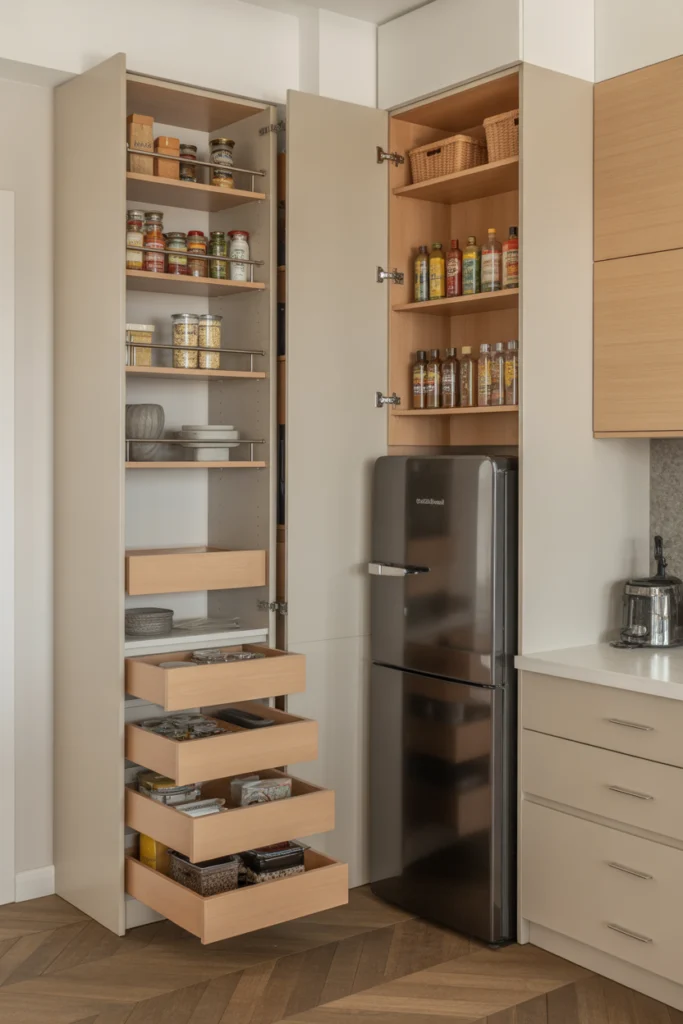
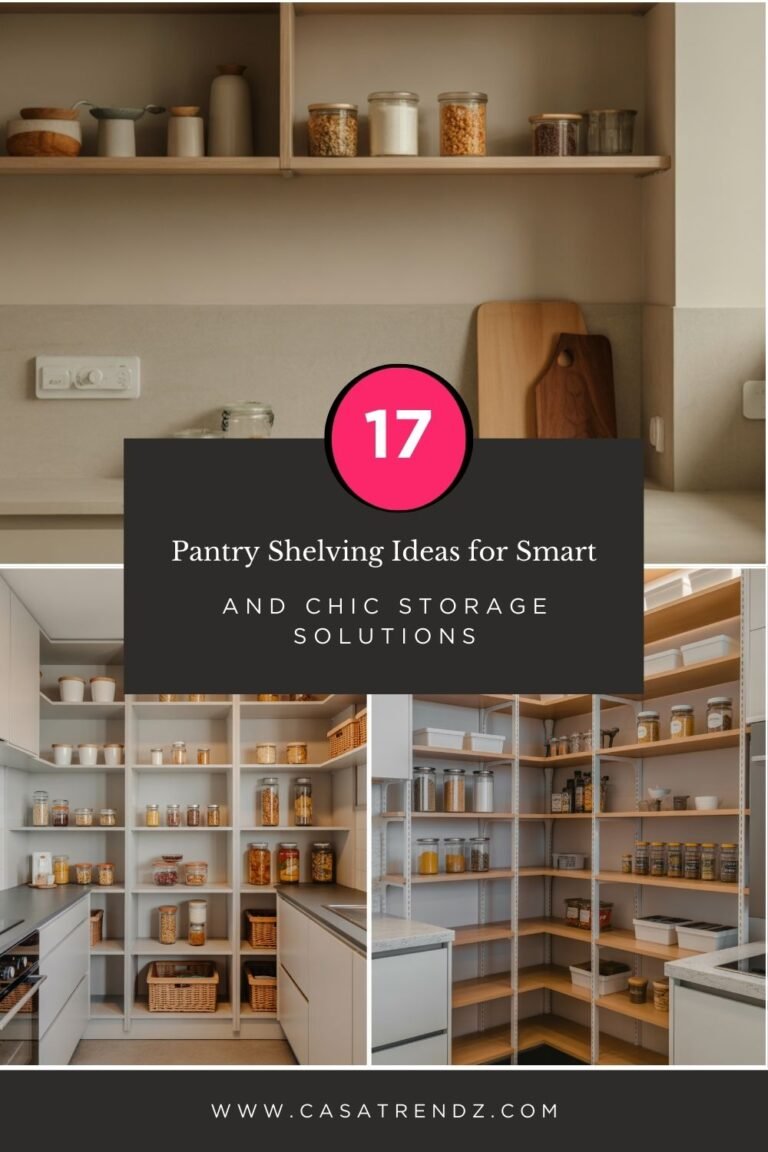
Pull-out pantries are perfect Tiny Kitchen Ideas because they use narrow gaps that are otherwise wasted. These slim vertical units fit between the fridge and wall or beside cabinets and store cans, spices, oils, and small appliances in a compact, organized way. Pull-out units can have adjustable shelves or specialized racks for bottles and spice jars. Because they fully extend, you can see and reach everything without moving items around, which reduces wasted purchases and improves meal prep speed.
Vertical storage doesn’t stop at pantries. Slim pull-out trays for baking sheets, cutting boards, or even a broom cupboard keep essentials tidy. Consider a pull-down spice rack inside a cabinet door or a vertical wine rack built into a cabinet end panel. Use narrow carousel units in corner cabinets to access deep, awkward spaces. When planning, measure gaps carefully many manufacturers make ready-to-install pull-outs in widths as narrow as 6 inches. Smart vertical systems take advantage of hidden spaces and add storage power without bulky, floor-eating furniture.
4. Fold-Down Table and Drop-Leaf Counters
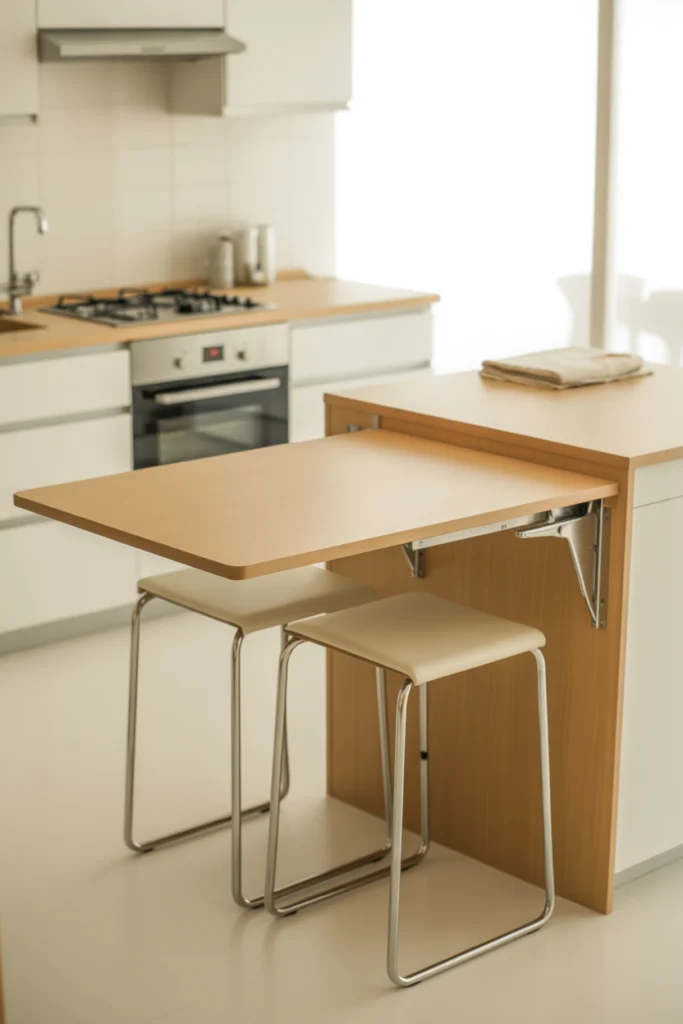
Flexible surfaces are essential in tiny kitchens, and fold-down tables deliver dining or prep space that disappears when not needed. Install a wall-mounted drop-leaf table that folds up as a decorative shelf or folded panel. For a stronger option, use a hinged counter extension from the main worktop that drops down and locks into place for meal prep or seating for two. Choose robust hardware and rounded edges for safety in tight traffic zones.
Drop-leaf solutions also suit islands: a small rolling island with a hinged leaf can provide extra counter area and a butcher-block top while doubling as a breakfast bar. Use stools that tuck fully under the leaf when closed. For renters, a simple mounted folding table with decorative brackets offers a non-permanent, stylish choice. These dynamic surfaces transform the kitchen’s function without permanent changes great Tiny Kitchen Ideas that balance usability and space-saving.
5. Integrated Appliances and Built-In Microwave Drawers
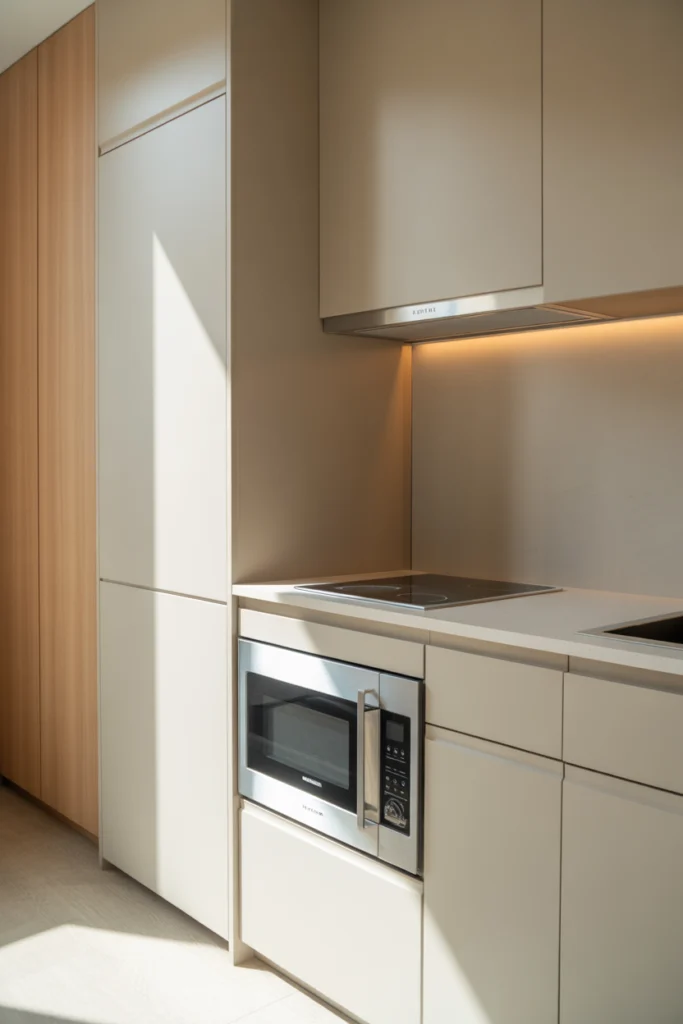
Integrated appliances help tiny kitchens look streamlined and larger by maintaining continuous cabinet lines. Panel-ready refrigerators and dishwashers disappear behind cabinetry, reducing visual clutter. A built-in microwave drawer placed under the counter or in a lower cabinet frees up upper cupboard space and keeps eye lines clean. Consider a combination oven-microwave drawer to save even more room.
Appliance choice matters: a narrow, taller fridge may fit better than a wide model; a slimline dishwasher or single-drawer dishwasher is ideal for tight households. Induction cooktops with built-in ventilation or downdraft fans reduce the need for bulky hoods. Wall ovens stacked vertically take less horizontal space than under-counter ranges. Integrated appliances deliver a custom-like look and allow the tiny kitchen to feel cohesive, modern, and highly functional.
6. Corner Solutions: Lazy Susans and Pull-Out Trays
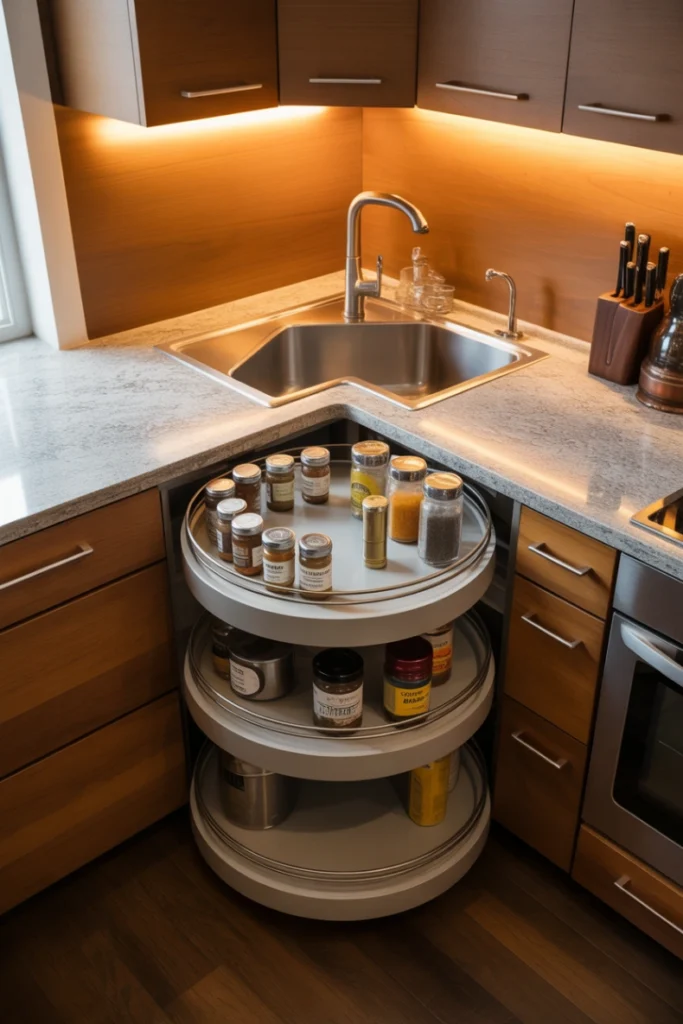
Corners often become dead space in small kitchens unless you plan for them. Lazy Susans or pull-out corner trays make the most of L-shaped or galley layouts by bringing items forward for easy access. Modern solutions include soft-close carousel shelves, pull-out waste bins, and blind-corner pull-out systems that glide out smoothly. These systems dramatically improve storage efficiency and reduce the frustration of reaching into a dark, deep corner.
Another corner option is to install a diagonal corner sink or a corner cooktop with dedicated pull-out storage below. Corner units can become showpieces when accented with lighting or a contrasting finish. Combine corner access solutions with vertical dividers for baking sheets and lids so everything has a place. Well-planned corner storage turns wasted inches into organized, usable square footage one of the most impactful Tiny Kitchen Ideas.
7. Multi-Functional Island on Castors
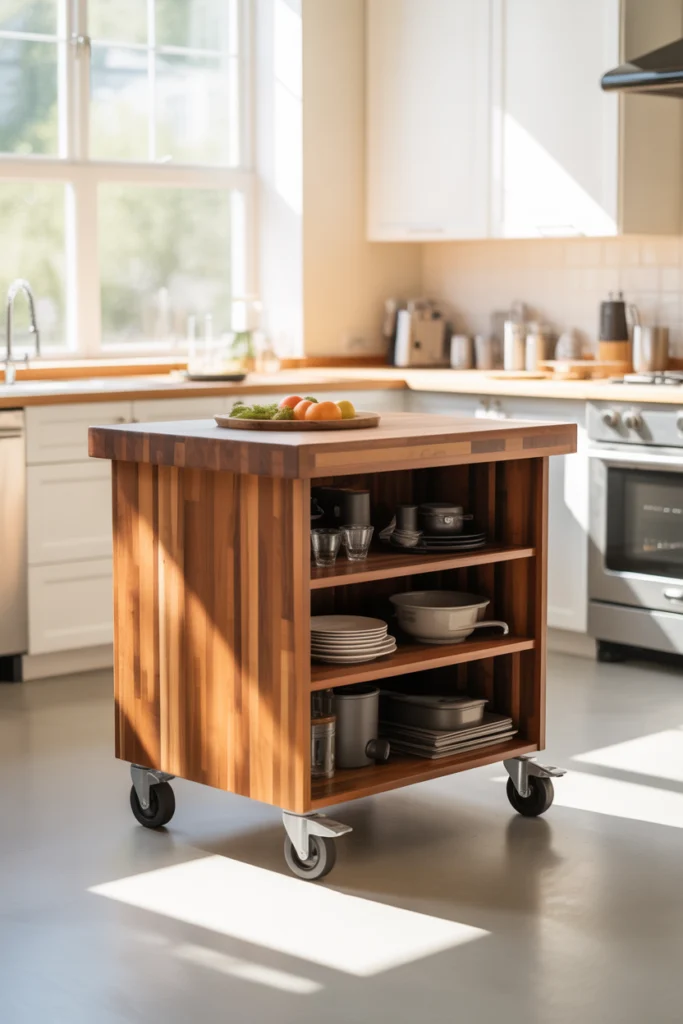
When space allows, a small island on castors is a flexible superstar for Tiny Kitchen Ideas. It can act as a prep station, dining spot, and storage module that you can roll away when not needed. Choose an island with shelves, drawers, and a durable top wood or composite butcher block works well for prep and adds warmth. Locking castors keep the unit safe in place during use.
Look for islands that include pull-out cutting boards, integrated trash bins, or drop-leaf extensions to increase their utility. If you often entertain, position the island near the kitchen edge to serve as a passing tray or buffet. A compact island also offers a place to hide small appliances like a toaster or food processor behind doors, keeping counters tidy. Mobility plus storage equals a tiny-kitchen game-changer.
8. Open Shelving with Strategic Styling
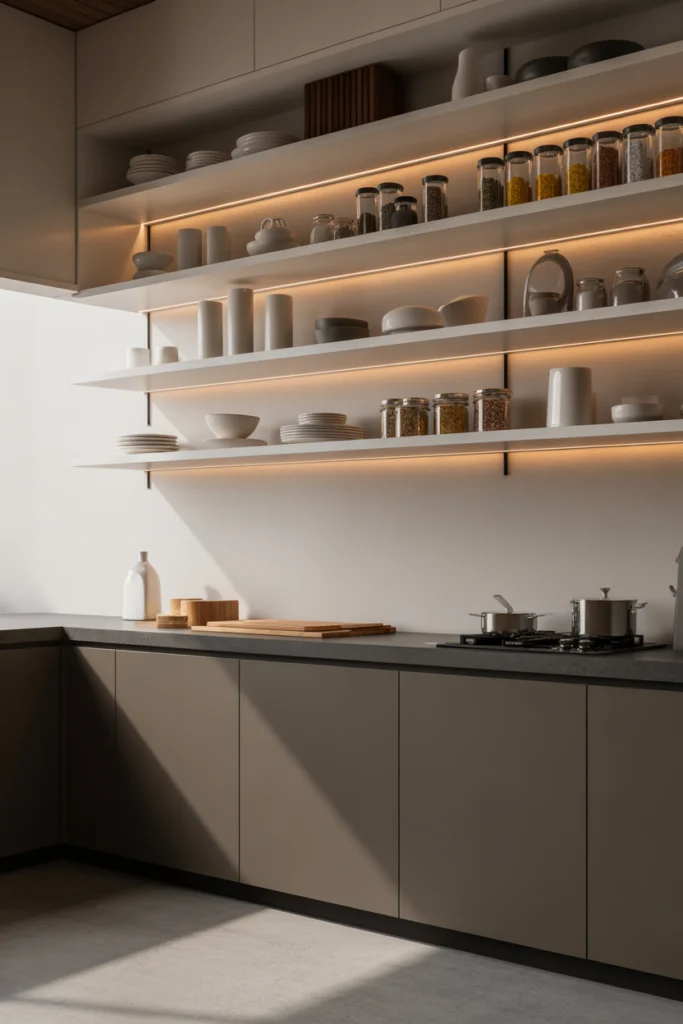
Open shelving frees wall space and makes a tiny kitchen feel more open by replacing bulky upper cabinets. Use a limited number of well-styled shelves to avoid a cluttered look: display everyday dishes, glassware, and a few decorative items. Keep heavier items on lower closed cabinets and reserve the open shelves for lighter, attractive pieces. Consistent dishware colors and uniform jars make the arrangement look intentional and neat.
To make open shelving work long-term, keep a strict editing rule avoid overfilling and rotate displays seasonally. Install under-shelf lighting to highlight layers and aid tasks at the counter. Mix closed cabinets for pantry needs with a short run of open shelves near the prep area to balance storage and openness. Open shelving can be both practical and stylish when curated with restraint and purpose.
9. Compact Corner Dining with Banquette Seating
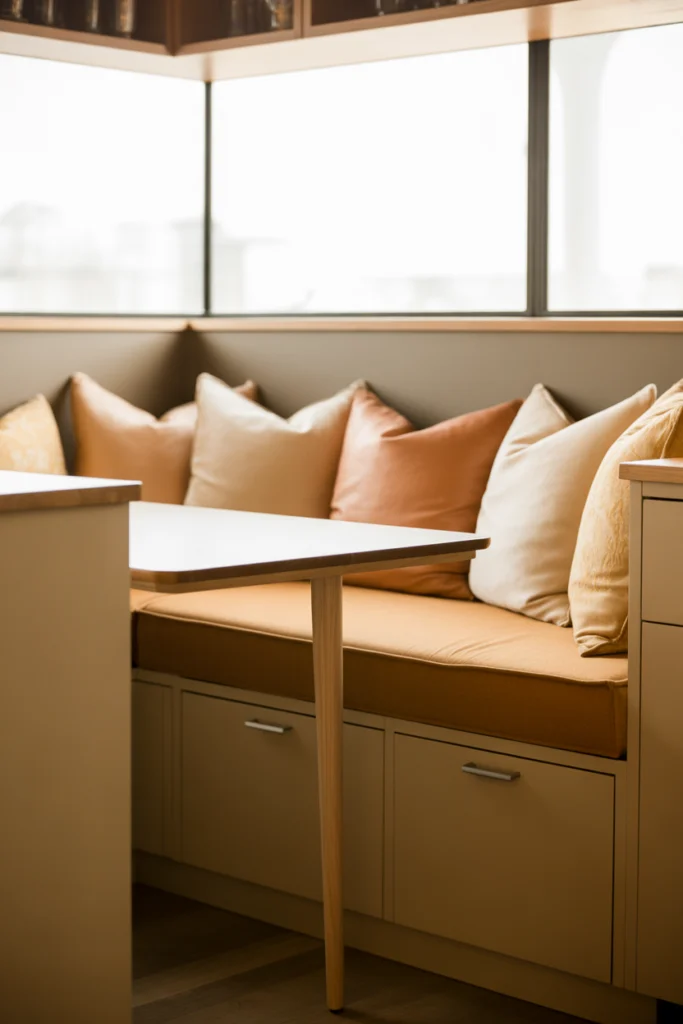
A built-in banquette tucked into a corner creates an efficient dining zone without needing a separate table footprint. Bench seating can include lift-up storage for linens, cookware, or seasonal items. Use a narrow rectangular table anchored to the wall, and choose slim, armless chairs on the opposite side for flexibility. Corner banquettes soften the room’s flow and encourage social cooking and dining in tight spaces.
Design the banquette with comfy cushions and durable, washable fabrics for everyday use. Bright fabrics or patterned cushions can make the dining nook feel intentional and cozy, adding personality to otherwise neutral kitchens. If space is extremely limited, a custom triangular table or a wall-mounted fold-away table with fixed bench seating gives similar benefits. This compact dining approach turns a tiny kitchen into a multi-use living area.
10. Vertical Rail Systems for Utensils and Pots
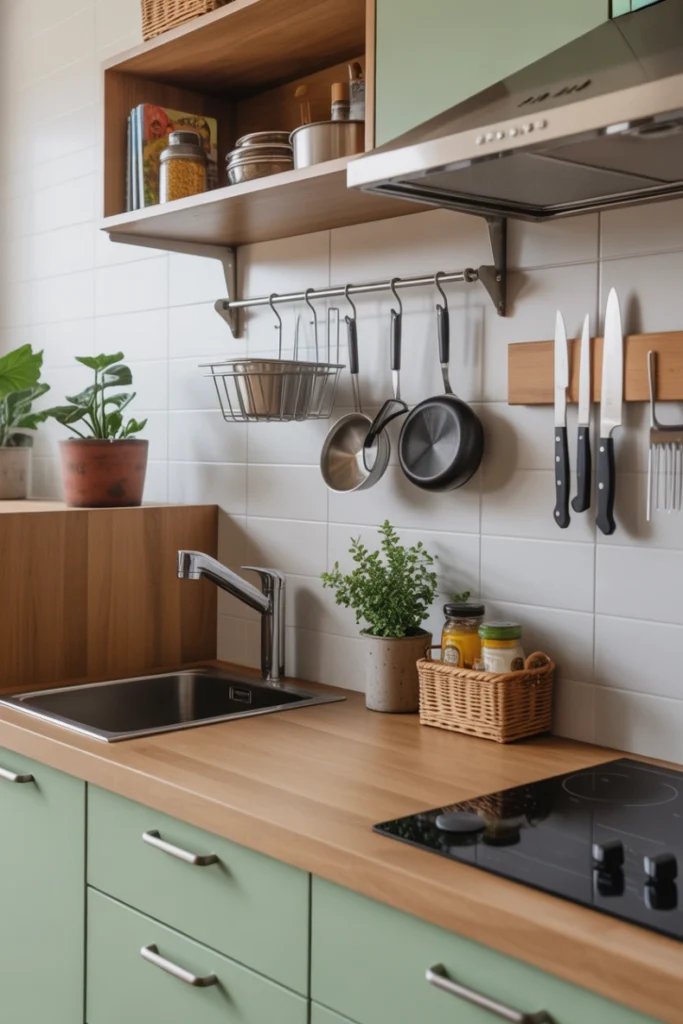
A wall-mounted rail system efficiently organizes the tools you use most often and frees counter and drawer space. Install rails above the countertop to hang pots, pans, ladles, and frequently used utensils. Add magnetic strips for knives and small hooks for measuring cups. A rail system creates an easy-to-reach zone for prepping and cooking while also adding a professional, bistro-style look to a tiny kitchen.
Choose durable materials like stainless steel or powder-coated rails, and plan the layout so heavier items are closer to the stove for safety. Combine rails with small shelves or hanging baskets for spices and oils. Keeping frequently used items visible reduces time spent digging through drawers and makes the kitchen feel more intentional. Rail systems are a low-cost Tiny Kitchen Idea with a big organizational payoff.
11. Integrated Lighting Layers to Expand Perception
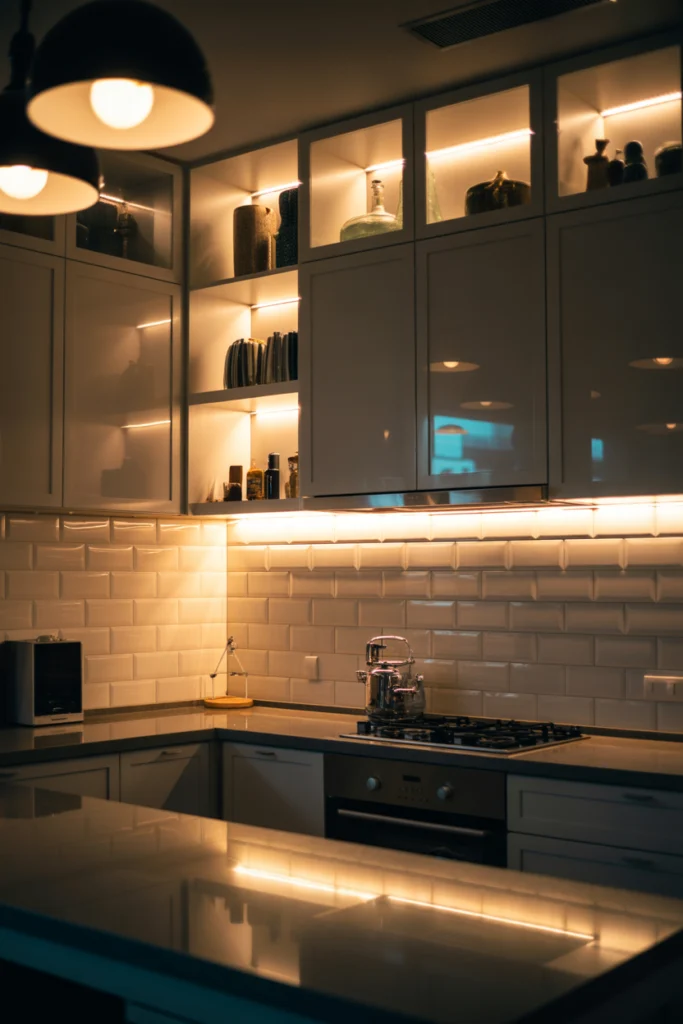
Lighting changes perception proper layers of light make a tiny kitchen feel larger and more functional. Combine overhead ambient lighting with task-level under-cabinet LEDs and accent lighting inside glass-front cabinets or open shelves. Bright, even task lighting over counters prevents shadows during prep, while warmer accent lights create a cozy atmosphere for dining and evening use.
Consider motion-sensor lights in pantry areas and dimmable circuits to adapt mood and function. Reflective surfaces like a glossy backsplash or stainless-steel appliances amplify light and add depth. If natural light is limited, use daylight-toned bulbs during the day and warmer tones in the evening to create balanced color rendering. A well-planned lighting scheme is an essential Tiny Kitchen Idea to expand both utility and ambiance.
12. Slimline Appliances and Combination Units
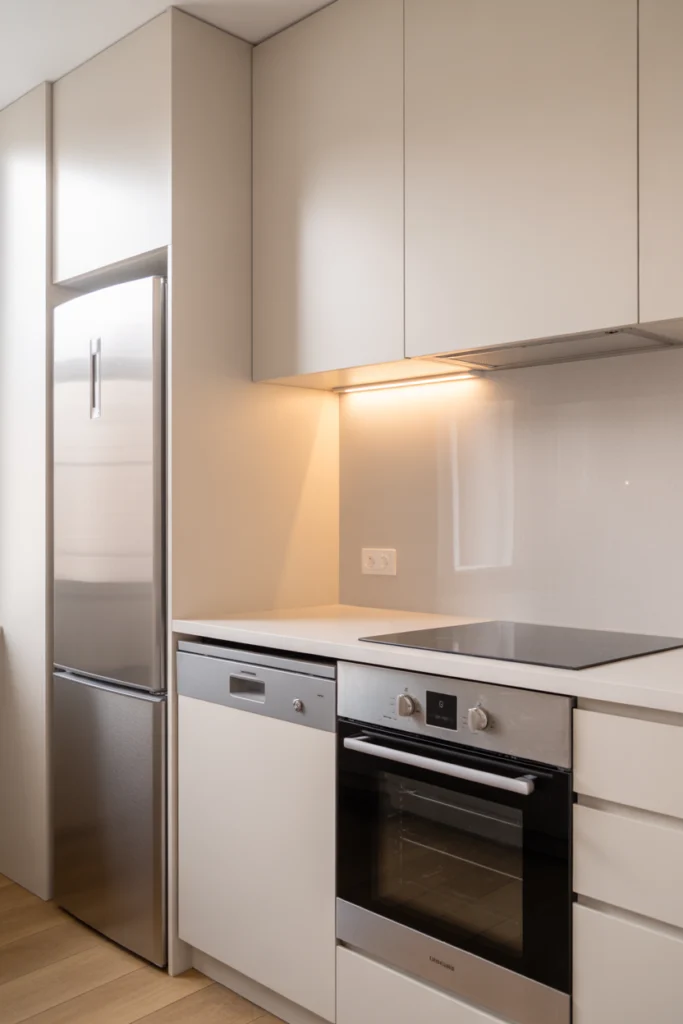
Choose slimline appliances to maximize usable space without sacrificing function. Narrow refrigerators, compact ovens, and combination washer-dryer units fit into tight kitchens and provide full features in smaller footprints. Look for 24-inch wide dishwashers or single-drawer dishwashers, and consider induction cooktops that come in single or two-burner formats for apartment living.
Combination appliances oven/microwave hybrids, fridge-freezer combos, and washer-dryer stacks reduce the number of individual units and free cabinetry space. Shop for models with clever storage features (folding shelves, removable bins) to keep versatility high. Prioritize energy-efficient units that lower utility bills while offering the functions you need. Smartly scaled appliances are core Tiny Kitchen Ideas that maintain a full kitchen experience in less space.
13. Light Colors with High-Contrast Accents
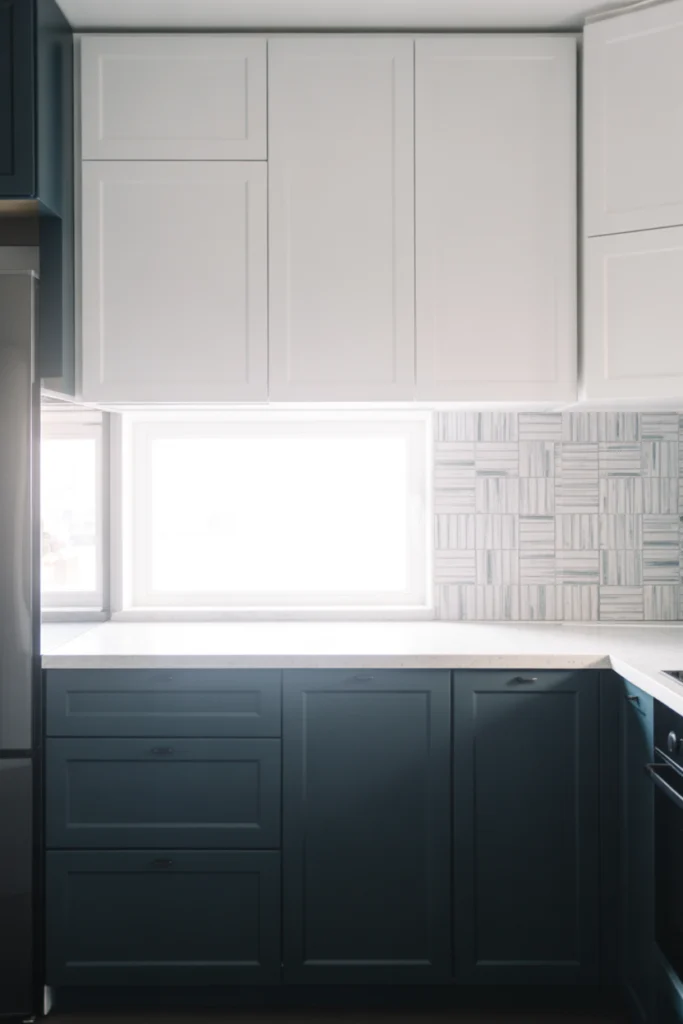
Use a light base palette—soft whites, pale grays, or warm beiges to visually expand a tiny kitchen, and add high-contrast accents to create personality. Painting upper cabinets or walls in lighter hues while reserving darker tones for the island, lower cabinets, or a single accent wall creates depth without shrinking the room. Contrasts guide the eye and give the impression of layered space.
Textures matter: mix matte cabinets with a glossy backsplash or metallic hardware for visual interest. Use a bold tile pattern behind the stove or a darker countertop to ground the design. Keep most surfaces calm to avoid a busy feel; accents should be deliberate and limited so the kitchen reads as airy and cohesive. This color strategy is an accessible Tiny Kitchen Idea that balances openness and style.
14. Hidden Trash and Recycling Pull-Outs
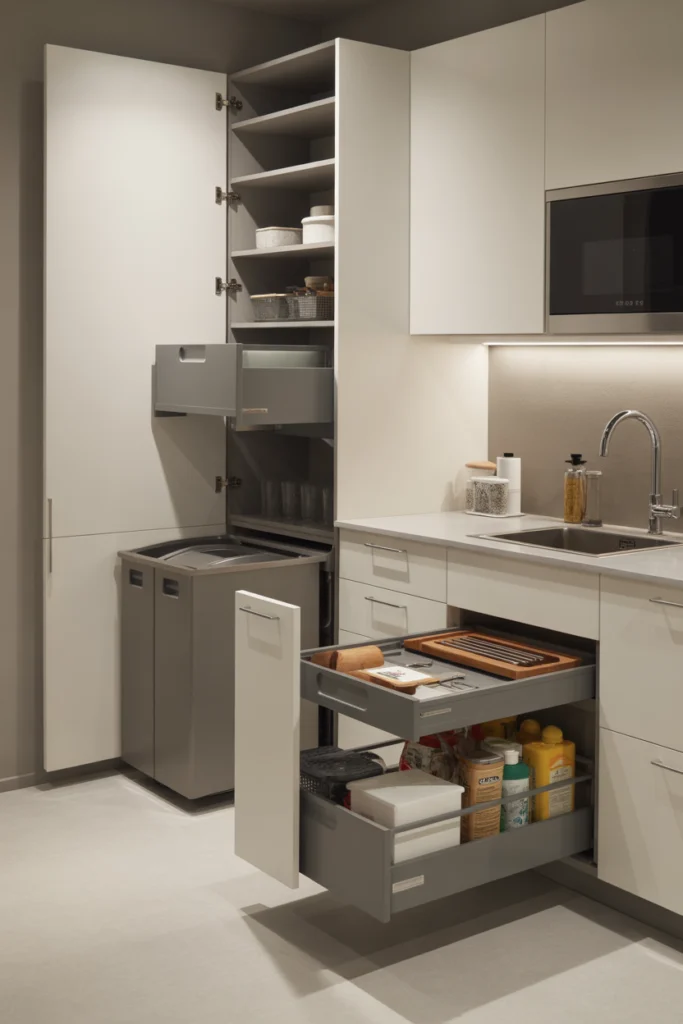
Waste bins often take up visible floor space and disrupt kitchen flow. Build pull-out trash and recycling units inside base cabinets to keep bins hidden yet easily accessible. These systems can include separate compartments for recycling, compost, and general waste, plus soft-close mechanisms to reduce noise and odor. Place the pull-out near the prep area or sink for quick disposal during cooking.
Some pull-outs combine with cleaning supply storage or include built-in liners to ease maintenance. If space is tight, use a shallow slide-out at the cabinet end or under the sink with a tilting mechanism. Concealed waste solutions improve hygiene and create a neater visual line in a tiny kitchen, making this simple upgrade a highly practical Tiny Kitchen Idea.
15. Mirrored or Glossy Backsplash to Amplify Light
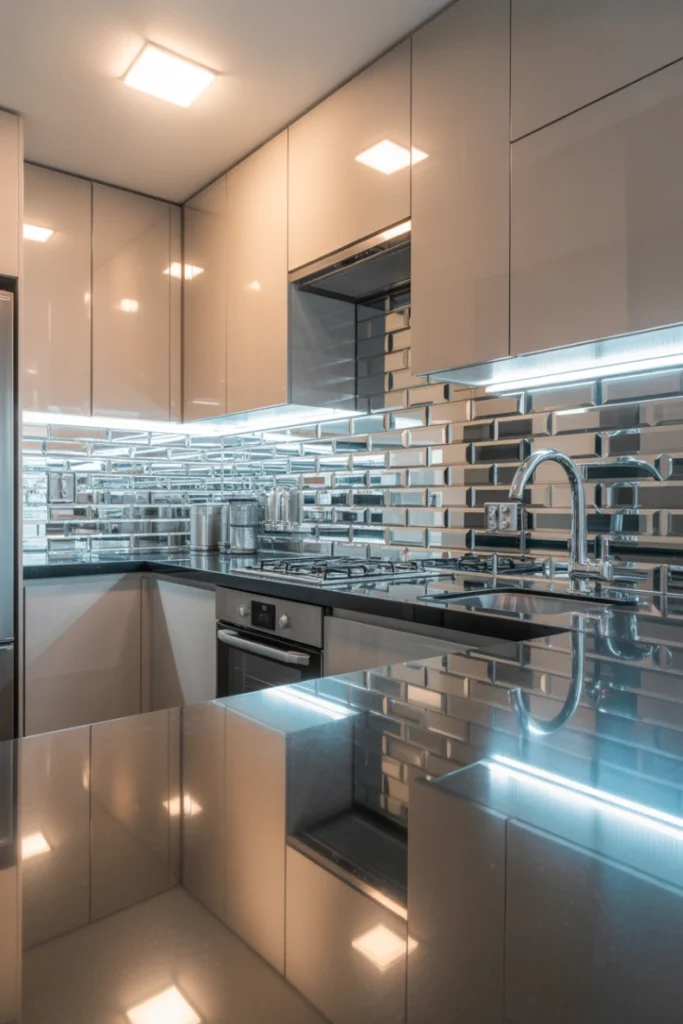
A mirrored or glossy backsplash reflects both natural and artificial light and visually enlarges a tiny kitchen. Glass, polished metal, or high-gloss tiles create a luminous surface that bounces light around the room. Choose a full-width mirrored panel behind the cooktop or sink to create a sense of depth and make the room feel double its size.
Keep the mirror clean and protected with tempered, easy-to-wipe surfaces behind high-heat areas. If a full mirror feels too showy, use glossy subway tiles or a reflective stainless-steel splash that is both practical and brightening. This trick is an effective Tiny Kitchen Idea for boosting perceived space without structural changes.
16. Under-Cabinet Appliances and Slim Range Hoods
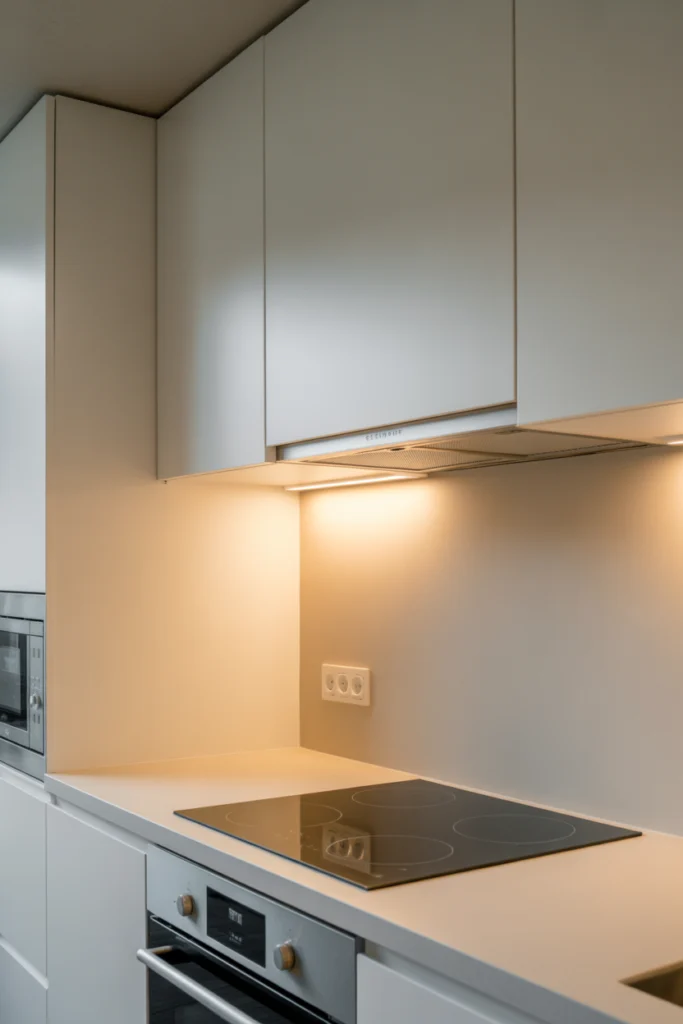
Saving upper wall space improves the feeling of openness. Use under-cabinet microwaves, compact dishwashers, and slim range hoods that tuck into cabinet architecture. Low-profile hoods above induction or low-output cooktops reduce the visual heft of ventilation equipment and keep sightlines clean. Under-cabinet microwaves at elbow height increase counter space and maintain accessibility.
Choose range hoods with strong extraction in a slim profile to avoid lingering cooking odors in small spaces. Some vents now integrate into the cooktop to eliminate overhead bulk entirely. By moving appliances out of eye level and into functional under-cabinet positions, you preserve wall area for shelving, windows, or art, which helps the tiny kitchen feel less boxed-in.
17. Minimalist Cabinetry with Concealed Handles
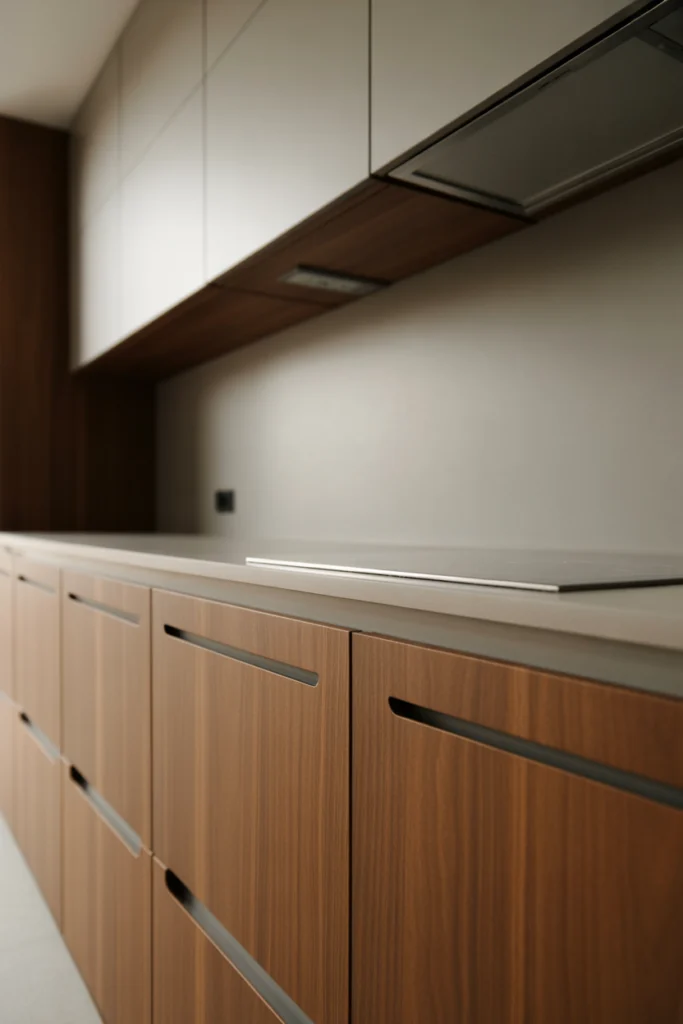
Minimalist cabinetry with handleless doors creates a clean, continuous surface that visually expands tiny kitchens. Push-to-open mechanisms or integrated recessed pulls maintain function without interrupting lines. This sleek aesthetic reduces visual noise and gives the space a modern, custom look. Combine handleless upper units with a tactile material wood or textured laminate on the lower cabinets for warmth.
For practicality, prioritize soft-close hinges and drawer organization inside the seamless shell. Hidden storage solutions such as toe-kick drawers and internal pull-outs keep items organized without visible clutter. The minimalist approach makes even very small kitchens feel calm and intentional while still offering full functionality one of the most elegant Tiny Kitchen Ideas.
18. Smart Organization: Labels, Containers & Consistent Systems
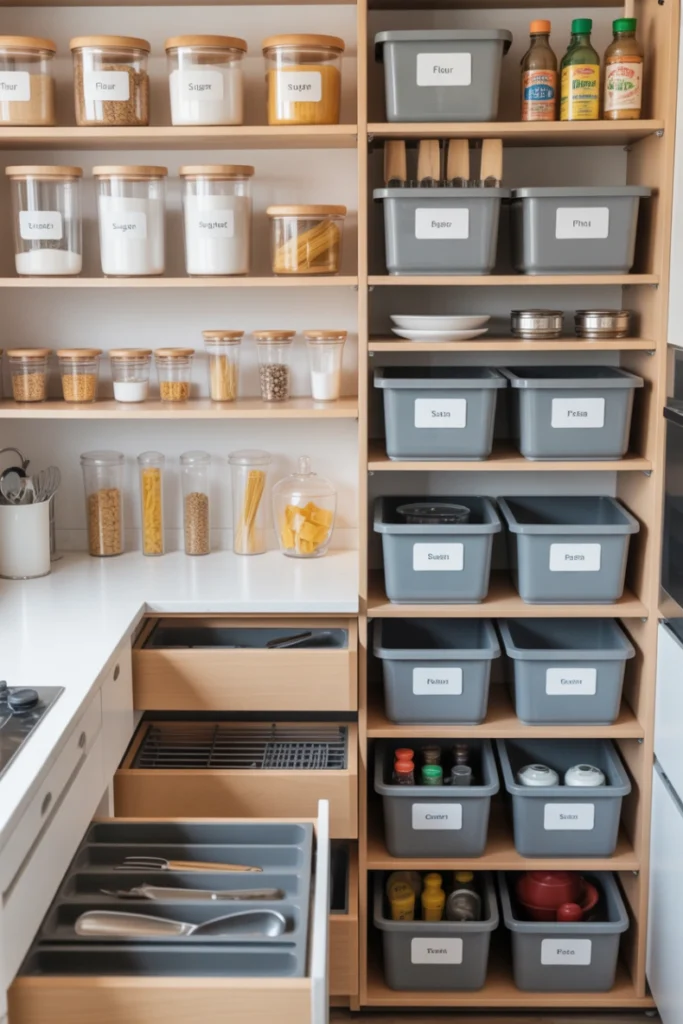
Organization turns small kitchens from chaotic to calm. Use clear labeled containers for dry goods, stackable bins for cabinets, and uniform jars for spices to reduce visual clutter and speed up meal prep. Install drawer dividers for cutlery and tools, and use tiered shelf risers inside cupboards for canned goods. Labels and consistent containers make restocking fast and keep inventories readable at a glance.
Create zones for tasks baking, breakfast, coffee, and meal prep and store related items together. Use small hooks inside cabinet doors for measuring spoons or pot lids, and magnetic strips inside doors for spice tins or scissors. Schedule a quarterly edit to purge unused items and keep only what you use regularly. A well-implemented organizational system is the backbone of successful Tiny Kitchen Ideas: it makes small spaces not only livable but enjoyable.
Conclusion
Tiny kitchens demand creativity and careful choices, but with smart layouts, integrated appliances, clever storage, and thoughtful lighting, they become highly functional and beautiful. These 18 Tiny Kitchen Ideas cover practical strategies—from pull-out pantries and movable islands to mirrored backsplashes and minimalist cabinetry—so you can adapt solutions to your specific space and budget. Whether you’re renovating, staging, or updating small rental kitchens, these concepts help you make every inch count and turn constraints into design strengths.