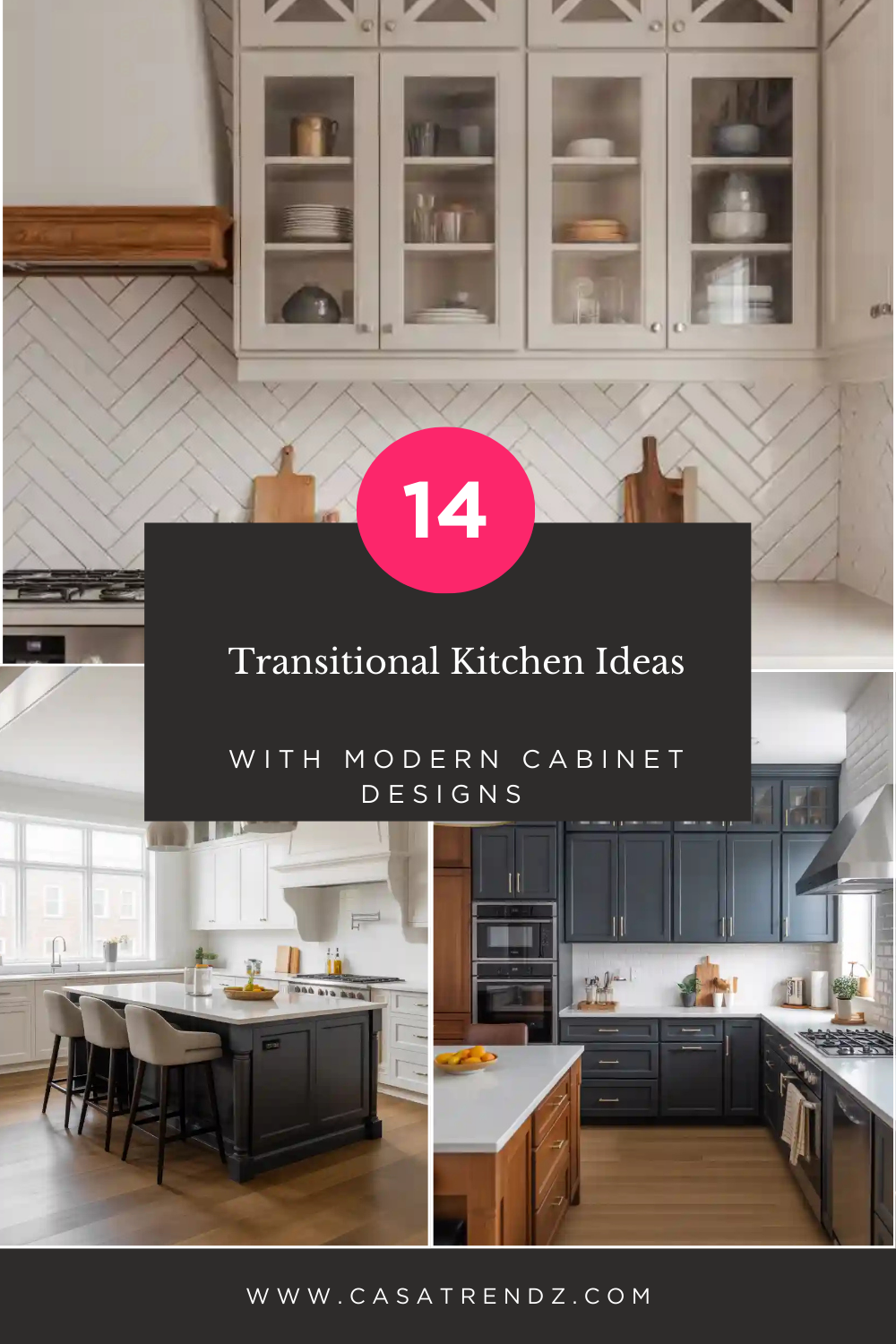
14 Transitional Kitchen Ideas with Modern Cabinet Designs
Designing a kitchen that feels timeless yet fresh can be challenging. Transitional style offers the perfect balance between classic elegance and contemporary simplicity. In this guide to 14 Transitional Kitchen Ideas with Modern Cabinet Designs, you’ll discover how to blend clean-lined cabinetry with warm textures, subtle detailing, and functional layouts.
Transitional kitchens are all about harmony pairing sleek finishes with traditional touches, mixing wood tones with soft neutrals, and creating spaces that feel inviting without looking dated. Modern cabinet designs play a major role in achieving this aesthetic, offering streamlined silhouettes while allowing room for character through hardware, color, and materials. Whether you’re planning a full renovation or a simple cabinet refresh, these ideas will inspire a kitchen that feels both current and enduring. Each concept below includes detailed design tips and a ready-to-use image generation prompt to help you visualize your dream space.
1. Shaker Cabinets in Soft Neutral Tones
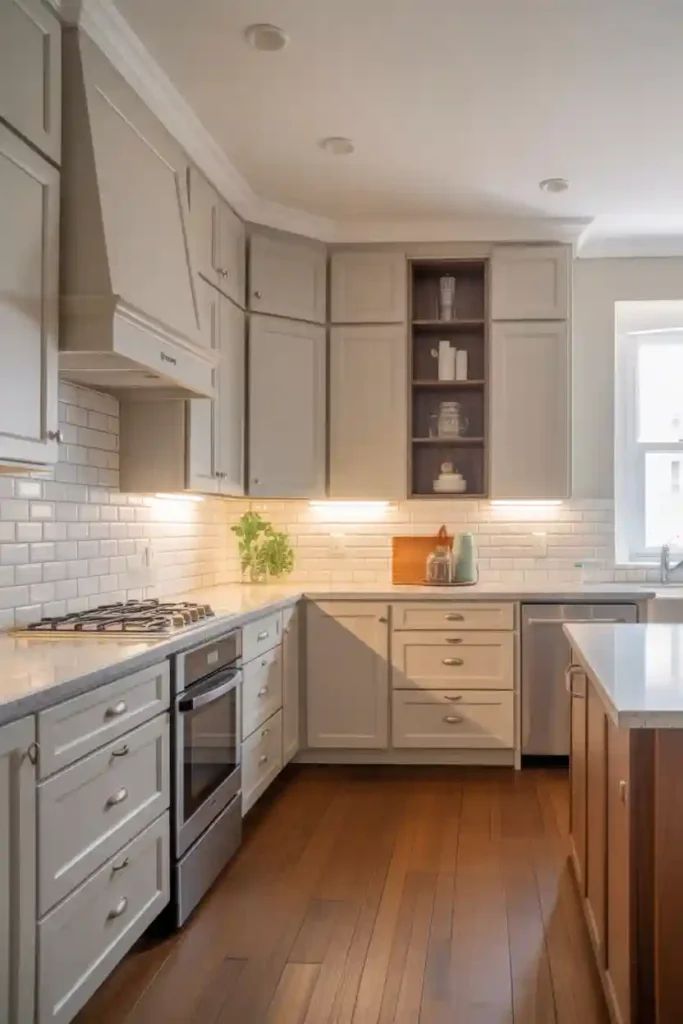
Shaker cabinets are a cornerstone of transitional kitchen design because they strike the perfect balance between traditional detail and modern simplicity. Their clean, recessed-panel doors feel structured but not ornate, making them ideal for blending styles. Choose soft neutral tones like warm white, greige, taupe, or light beige to maintain an airy and timeless look.
Pair these cabinets with brushed nickel or matte black hardware for a subtle modern touch. Quartz countertops in marble-inspired patterns add elegance without overwhelming the space. A simple subway tile backsplash keeps the look cohesive while preserving classic appeal. To elevate the design, incorporate under-cabinet lighting that highlights the cabinetry’s clean lines. Wood flooring in medium tones can add warmth and prevent the kitchen from feeling too stark.
2. Two-Tone Cabinets with a Modern Edge
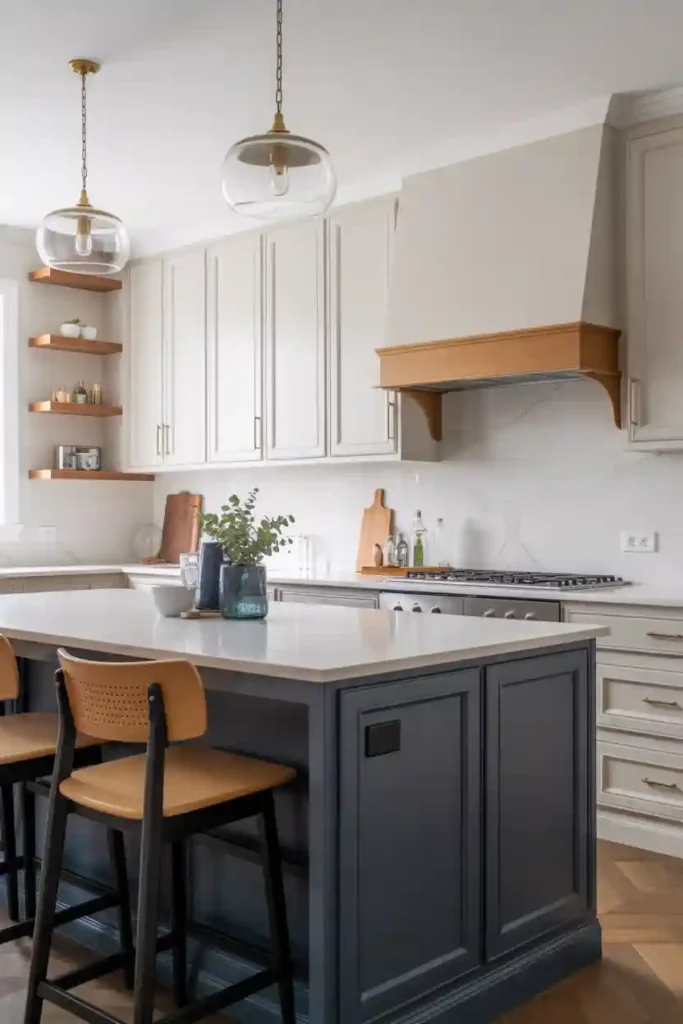
Two-tone cabinetry instantly adds dimension to a transitional kitchen. A popular combination includes light upper cabinets and darker lower cabinets, such as white paired with navy, charcoal, or deep green. This design keeps the space feeling open while grounding it visually. Flat-panel or slim shaker doors create a modern edge without eliminating warmth. Choose minimal hardware in brass or matte black for subtle contrast.
Incorporate a waterfall island countertop to introduce a contemporary focal point. Open shelving on one wall can soften the look and display decorative pieces. Balanced lighting is key. Pendant lights with simple glass or metal shades reinforce the transitional feel. Two-tone cabinets offer flexibility and personality while maintaining a polished, cohesive appearance.
Read Also: 12 Easy Outdoor Fire Pit Area Ideas – Your Step-by-Step Guide
3. Glass-Front Upper Cabinets
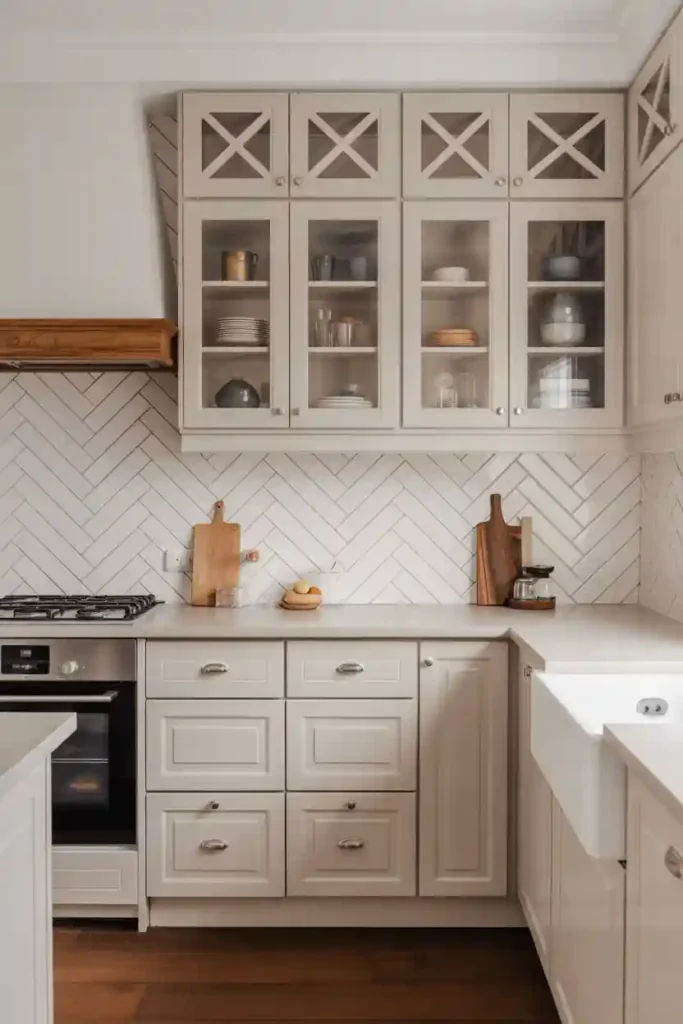
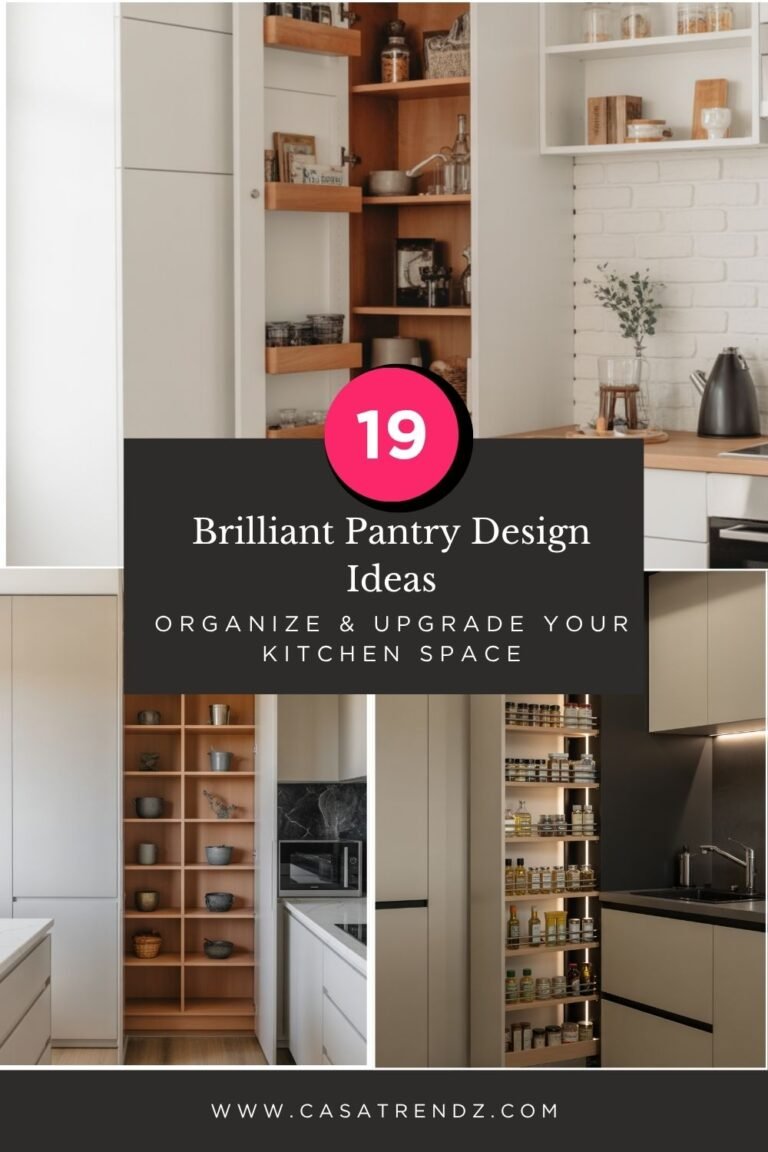
Glass-front cabinets introduce lightness and visual interest while keeping the kitchen feeling sophisticated. Choose clear or lightly frosted glass to maintain a modern aesthetic. Use modern shaker or slim-profile cabinet frames in neutral shades. Inside the glass cabinets, style simple dishware, glassware, or curated décor pieces for a clean display.
Pair this look with stone countertops and subtle backsplash patterns like herringbone tile for depth. Avoid overly ornate details to preserve balance. Integrated lighting inside glass cabinets can highlight the contents and create warmth during evening hours. This design blends traditional display charm with contemporary structure, making it perfect for transitional kitchens.
4. Warm Wood Cabinets with Sleek Hardware
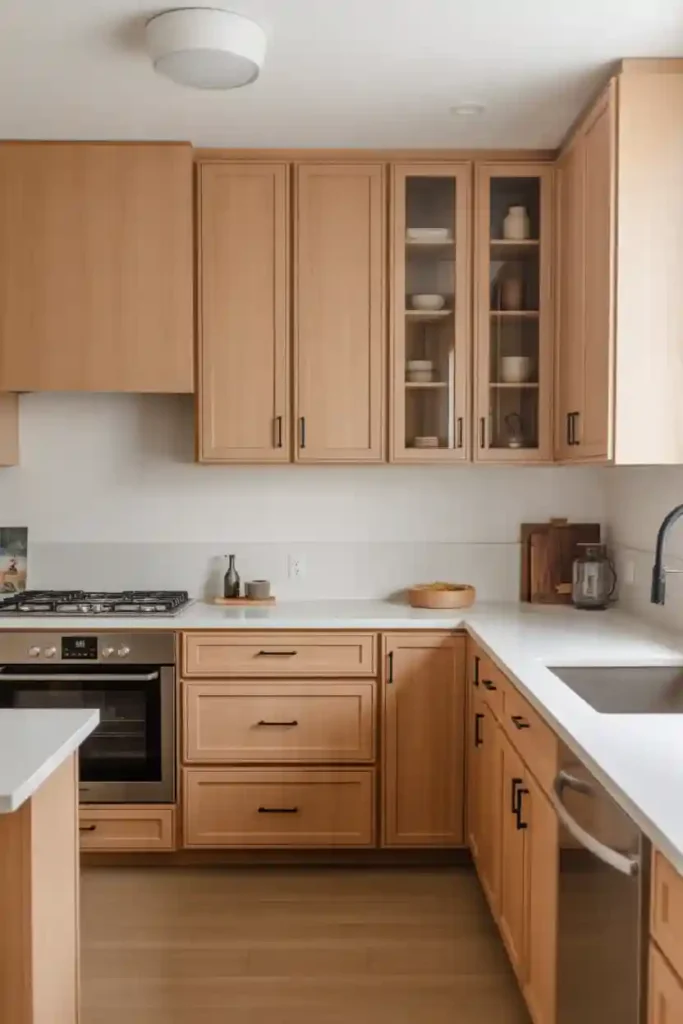
Blending natural wood tones with streamlined hardware creates a welcoming transitional atmosphere. Choose light oak, walnut, or white oak cabinets with flat-panel or minimal shaker designs. Pair them with slim black or brushed brass pulls to keep the look current. Balance the warmth with light countertops such as white quartz or subtle marble.
Incorporate matte black fixtures and minimal pendant lighting for contrast. Keep the backsplash simple to let the wood grain shine. Wood cabinetry adds organic warmth while maintaining modern clarity through clean lines and simple detailing.
5. White Cabinets with Bold Island Contrast
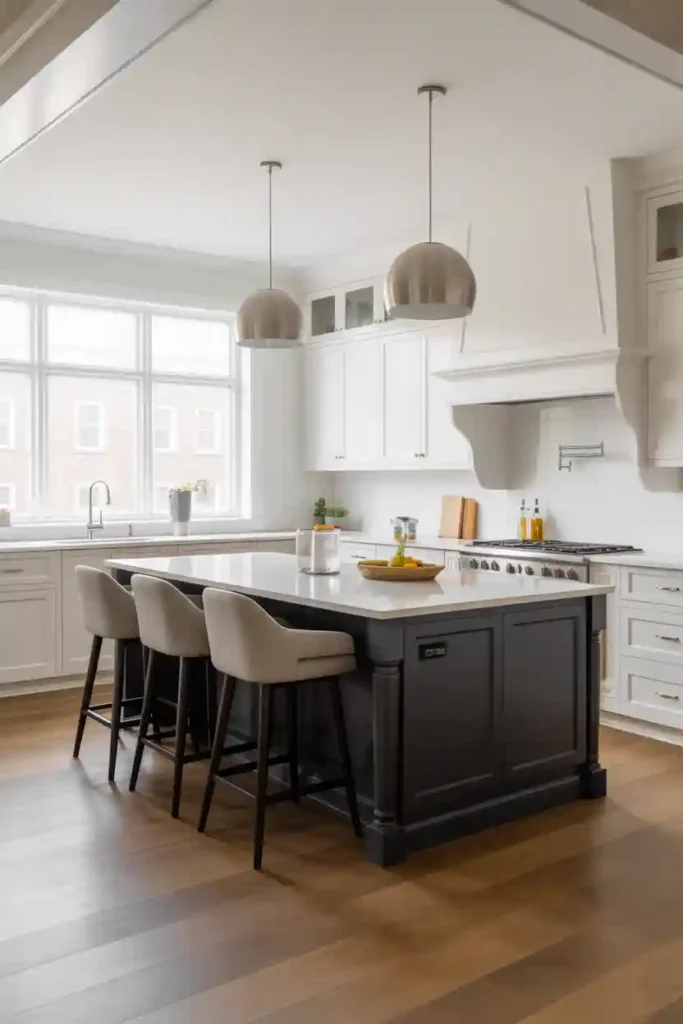
White cabinetry is timeless, but adding a contrasting island elevates the design. Choose crisp white shaker cabinets along the perimeter and a darker painted island in navy, charcoal, or forest green. Opt for modern bar stools and sleek pendant lights to reinforce contemporary influence. Keep countertops consistent throughout for cohesion.
Add subtle crown molding to bridge traditional and modern elements without overpowering the space. This layout keeps the kitchen bright while introducing personality through the island centerpiece.
6. Minimalist Slab Cabinets with Classic Accents
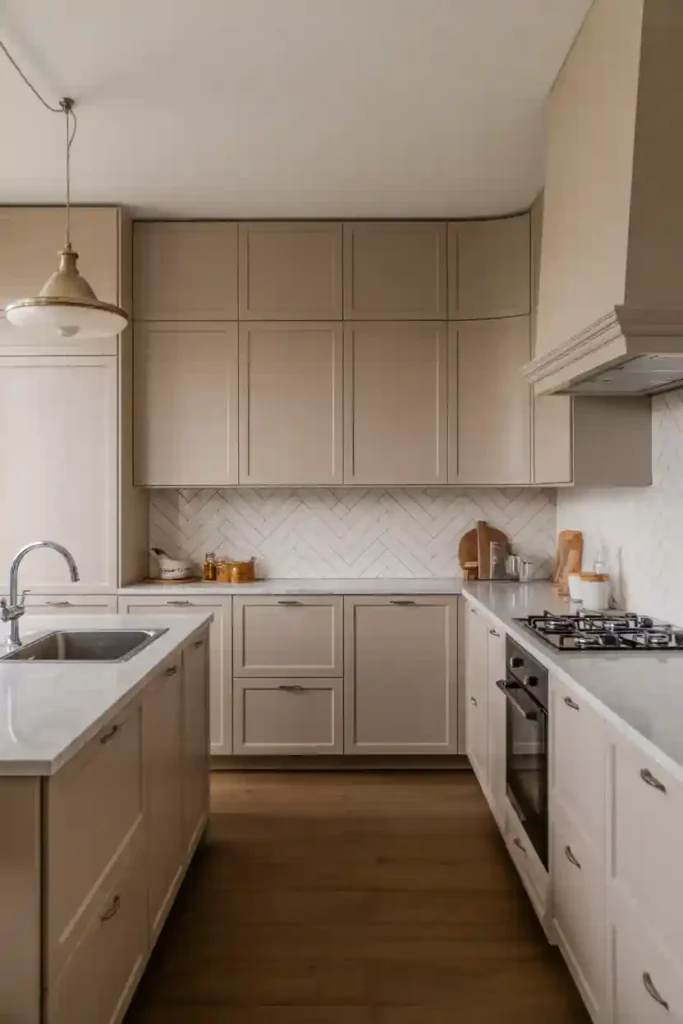
Minimalist slab cabinets are a defining feature of modern design, but when styled thoughtfully, they fit beautifully into a transitional kitchen. The key is pairing their smooth, flat surfaces with softer, more traditional elements. Choose slab cabinets in warm white, soft greige, or muted taupe to avoid a stark contemporary feel. Handleless designs or slim edge pulls maintain clean lines without overwhelming the space.
To balance the sleek cabinetry, introduce classic materials like marble or marble-look quartz countertops. A timeless backsplash pattern such as herringbone or stacked subway tile adds subtle texture. Traditional-style pendant lights with simple silhouettes can further bridge the gap between old and new. Wood flooring in medium tones warms up the space and prevents it from feeling too minimalist. You can also incorporate crown molding or subtle trim details around windows to maintain transitional harmony. This blend creates a kitchen that feels streamlined yet welcoming modern, but never cold.
7. Soft Gray Cabinetry with Brass Hardware
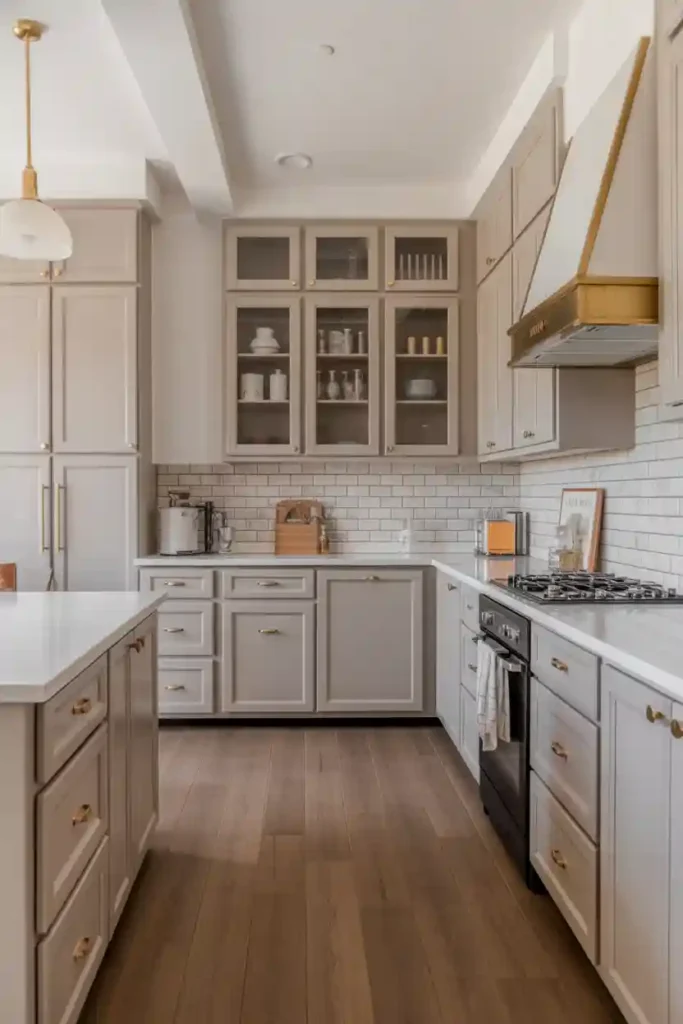
Soft gray cabinetry offers a refined alternative to white while maintaining brightness and versatility. In transitional kitchens, gray acts as a calming neutral that works seamlessly with both traditional and contemporary elements. Choose shaker or slim-profile cabinet doors in a warm gray tone rather than a cool blue-gray to keep the space inviting. Pair the cabinets with brushed brass or satin brass hardware for understated luxury. Brass instantly elevates the design without overpowering it. Complement this combination with white quartz countertops and a light subway tile backsplash to maintain balance.
Incorporate warm wood flooring or subtle wood accents, such as open shelving or bar stools, to add organic texture. Layered lighting including under-cabinet LEDs and simple pendant fixtures = enhances depth and highlights the cabinet finish. This style feels elegant, timeless, and polished while still offering modern clarity. It’s perfect for homeowners who want a sophisticated look that won’t feel dated over time.
8. Open Shelving Mixed with Closed Cabinets
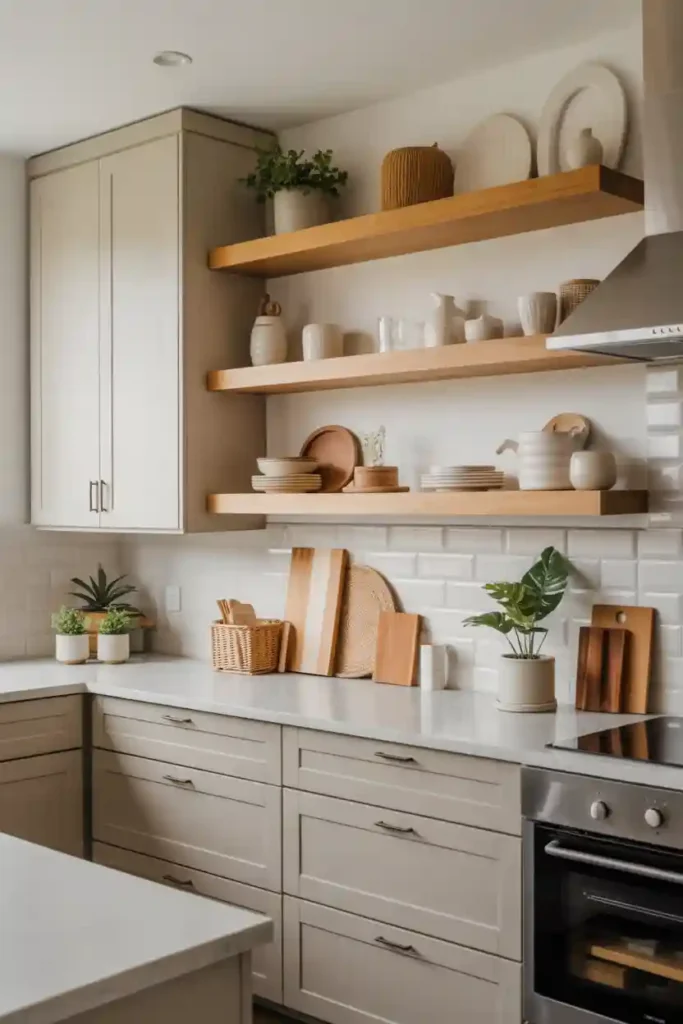
Blending open shelving with modern cabinet designs adds character while preserving function. Transitional kitchens benefit from this mix because it softens the structured look of cabinetry and creates visual breathing space. Keep the majority of storage behind clean-lined shaker or slab cabinet doors, and introduce two or three floating shelves in natural wood. Style the shelves intentionally. Display neutral dishware, glass jars, small plants, or curated décor pieces to avoid clutter. Keeping items cohesive in color helps maintain a polished look. Choose warm wood tones for shelving to contrast subtly against light cabinets.
Balance the open elements with practical storage below. Deep drawers and concealed cabinets maintain organization and efficiency. Under-shelf lighting can highlight decorative items while adding warmth during evening hours. This combination brings personality into the kitchen without compromising its modern cabinet structure. The result is layered, inviting, and perfectly transitional.
9. Matte Finish Cabinets for Subtle Sophistication
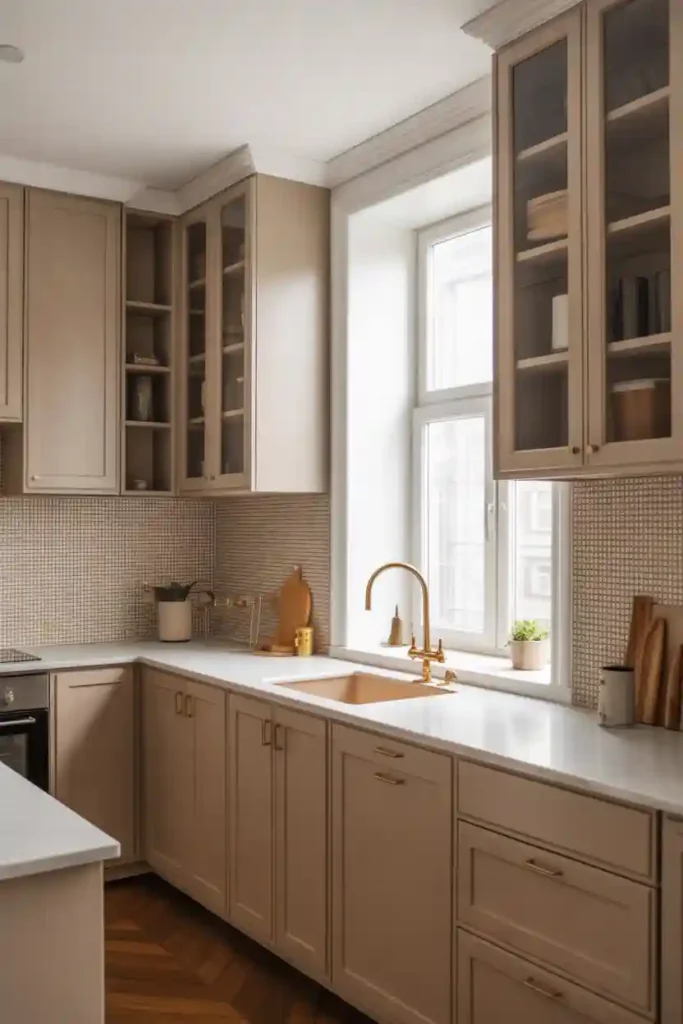
Matte finish cabinets introduce a soft, contemporary elegance to transitional kitchens. Unlike glossy surfaces, matte cabinetry absorbs light and creates a calm, understated atmosphere. Choose matte white, taupe, charcoal, or muted sage for a refined look that feels current yet timeless. Flat-panel or slim shaker doors work especially well with matte finishes. Integrated handles or slim metal pulls enhance the clean silhouette. Pair the cabinets with lightly veined quartz or marble countertops to add visual movement without overwhelming the design.
Textural contrast is essential when using matte surfaces. Incorporate a slightly textured backsplash, such as handmade-look tiles, to prevent the space from feeling flat. Warm metallic fixtures like brushed brass or champagne bronze introduce subtle shine that complements the matte cabinetry. Layered lighting is also important. Under-cabinet lighting and pendant fixtures ensure the kitchen feels warm rather than muted. This approach results in a kitchen that feels sophisticated, balanced, and effortlessly modern.
10. Large Kitchen Island with Storage-Focused Design
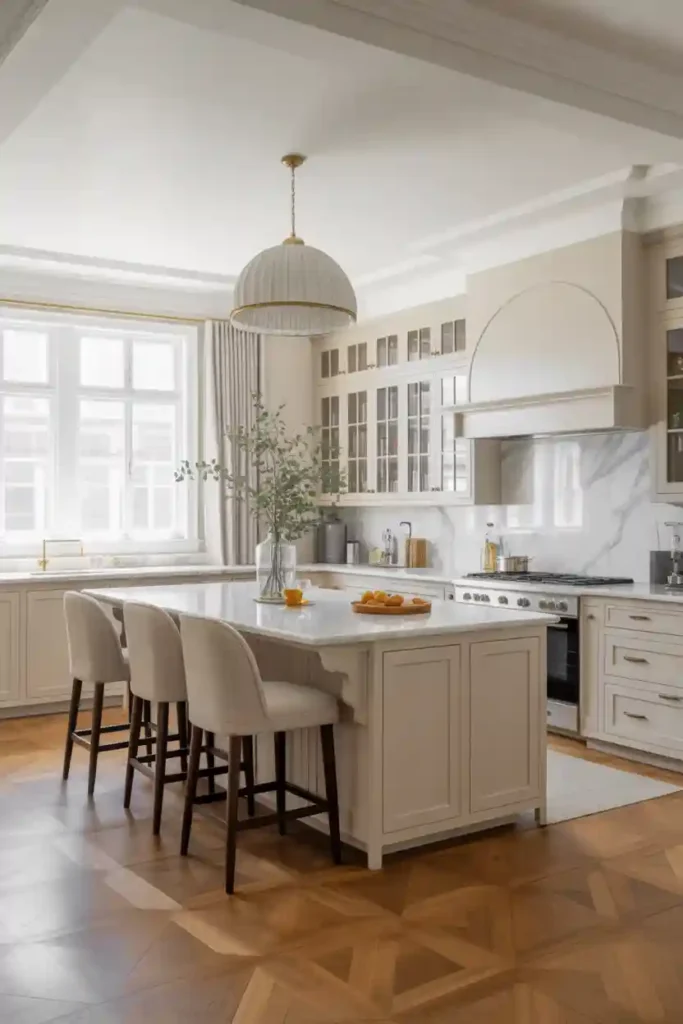
A spacious island is the heart of many transitional kitchens, especially when paired with modern cabinet designs that prioritize both style and functionality. In this layout, the island becomes more than just a prep station it serves as storage hub, gathering space, and visual anchor. Choose shaker or slim flat-panel cabinets for the island base to maintain clean lines. Deep drawers for pots and pans, hidden pull-outs, and integrated trash storage maximize efficiency while keeping clutter out of sight.
To enhance the transitional feel, select a quartz or marble-look countertop with subtle veining. Waterfall edges can add a contemporary touch, while traditional pendant lights above the island help maintain balance. Upholstered counter stools introduce softness and comfort. Consider painting the island in a slightly darker shade than the perimeter cabinets to create gentle contrast without overpowering the room. This design approach ensures your kitchen feels organized, welcoming, and beautifully cohesive modern in function yet timeless in appeal.
11. Floor-to-Ceiling Cabinetry for Seamless Design
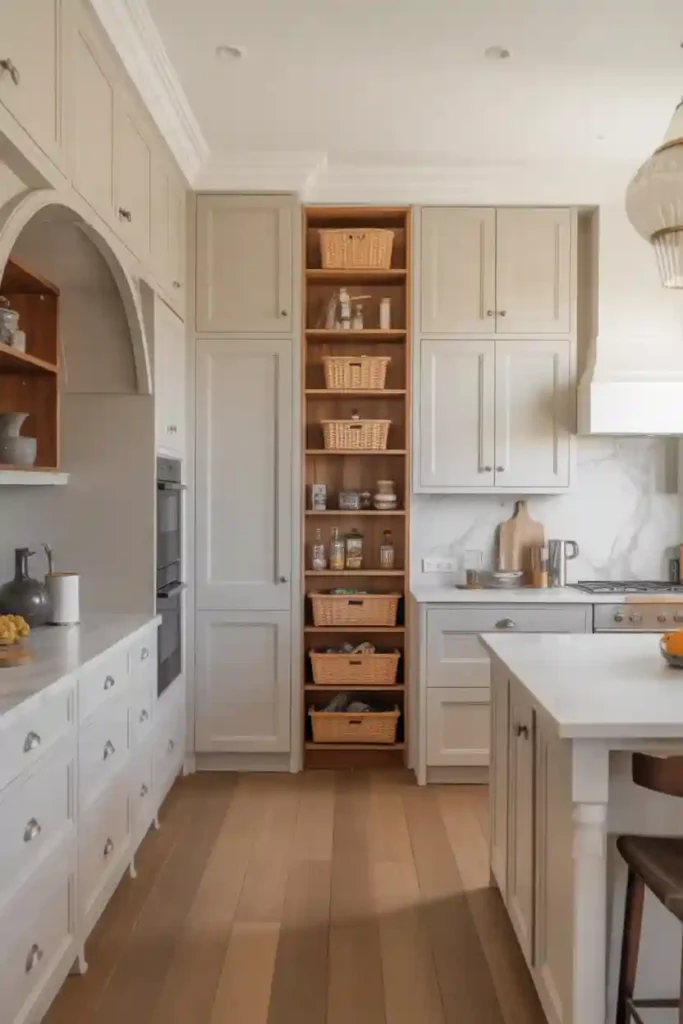
Extending cabinets all the way to the ceiling instantly elevates a transitional kitchen. This design choice eliminates awkward gaps above cabinetry, creates a streamlined silhouette, and maximizes storage space. Choose modern shaker or slim-profile cabinet doors in soft white, cream, or light gray for a timeless base. Floor-to-ceiling cabinetry gives the kitchen a built-in, custom feel. Add subtle crown molding at the top to bridge modern simplicity with traditional refinement. Consistent hardware throughout keeps the look cohesive and uncluttered.
Pair tall cabinets with integrated pantry storage and concealed appliances to maintain visual harmony. Balance the vertical emphasis with horizontal design elements like a statement backsplash or a large island. This layout works particularly well in kitchens with high ceilings, as it draws the eye upward and enhances spaciousness. The result is polished, efficient, and beautifully transitional where modern cabinet structure meets classic proportion and elegance.
12. Integrated Appliances for Clean Lines
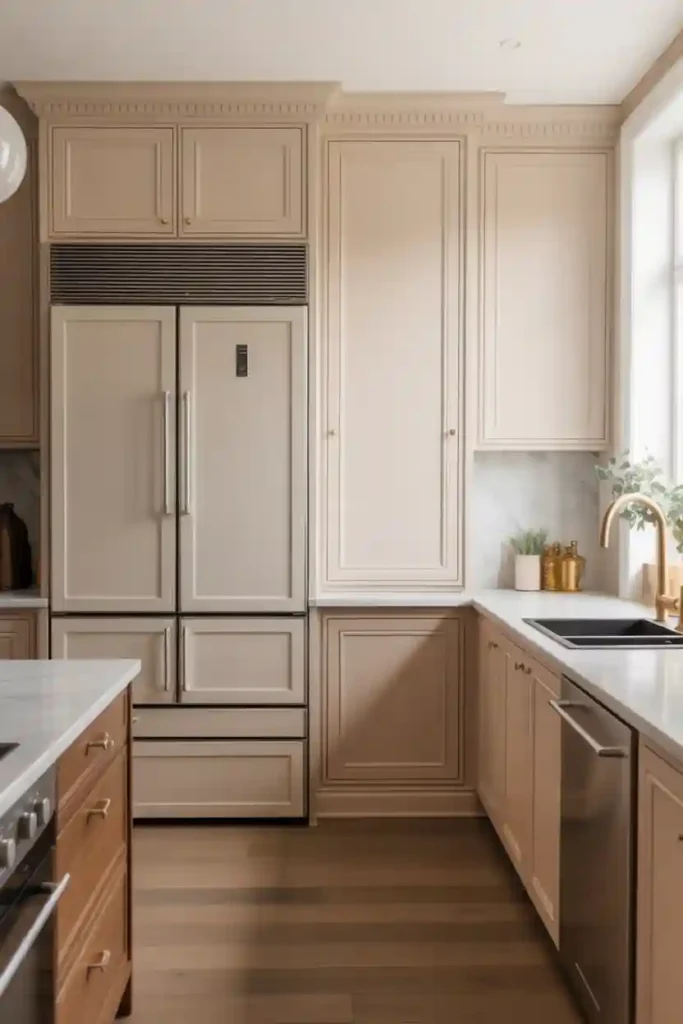
One of the most sophisticated ways to highlight modern cabinet designs in a transitional kitchen is by incorporating integrated appliances. Panel-ready refrigerators and dishwashers blend seamlessly with surrounding cabinetry, creating a smooth, uninterrupted visual flow. Choose cabinet fronts that perfectly match adjacent doors to maintain consistency. Slim shaker or flat-panel styles work especially well for this approach. This integration keeps the kitchen feeling calm and uncluttered, which is a defining element of transitional design.
Balance the sleek cabinetry with warmer materials like wood flooring or subtle brass fixtures. A classic backsplash pattern can soften the modern integration and prevent the space from feeling overly contemporary. Integrated appliances also improve overall cohesion, making the kitchen appear larger and more refined. This design choice is ideal for homeowners seeking a clean, streamlined layout that still feels inviting and layered rather than stark or minimal.
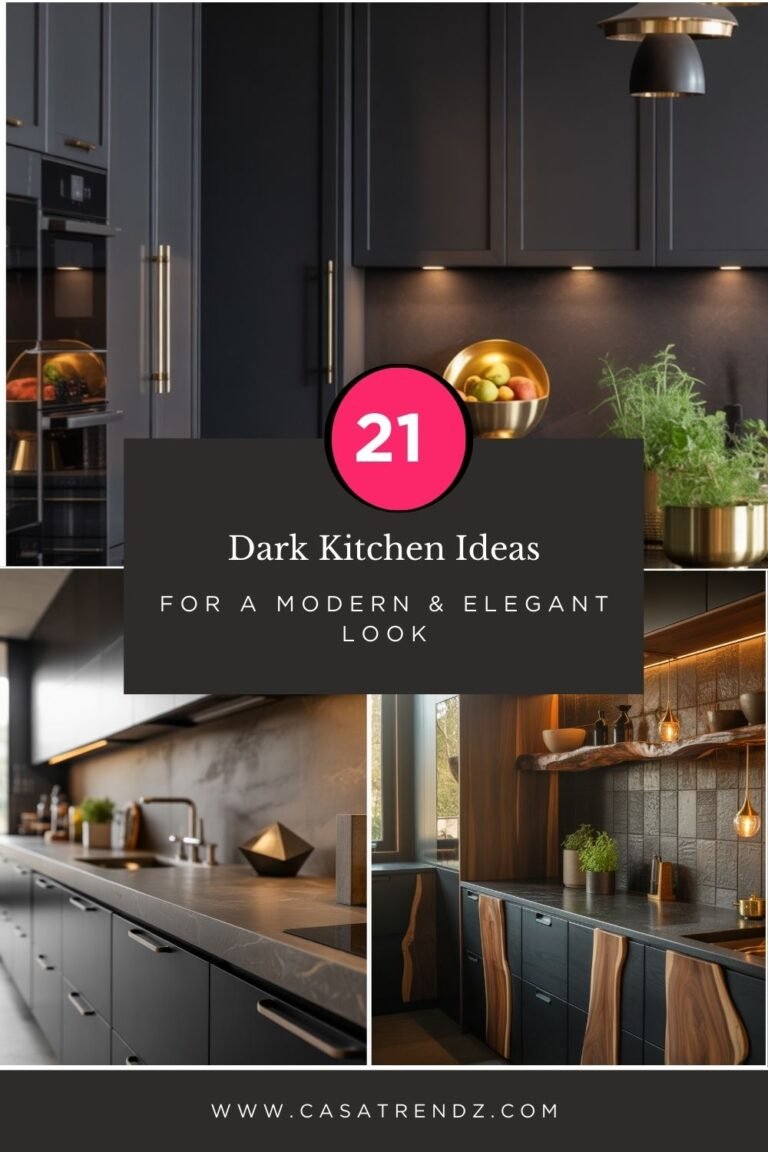
13. Dark Cabinets with Light Countertops
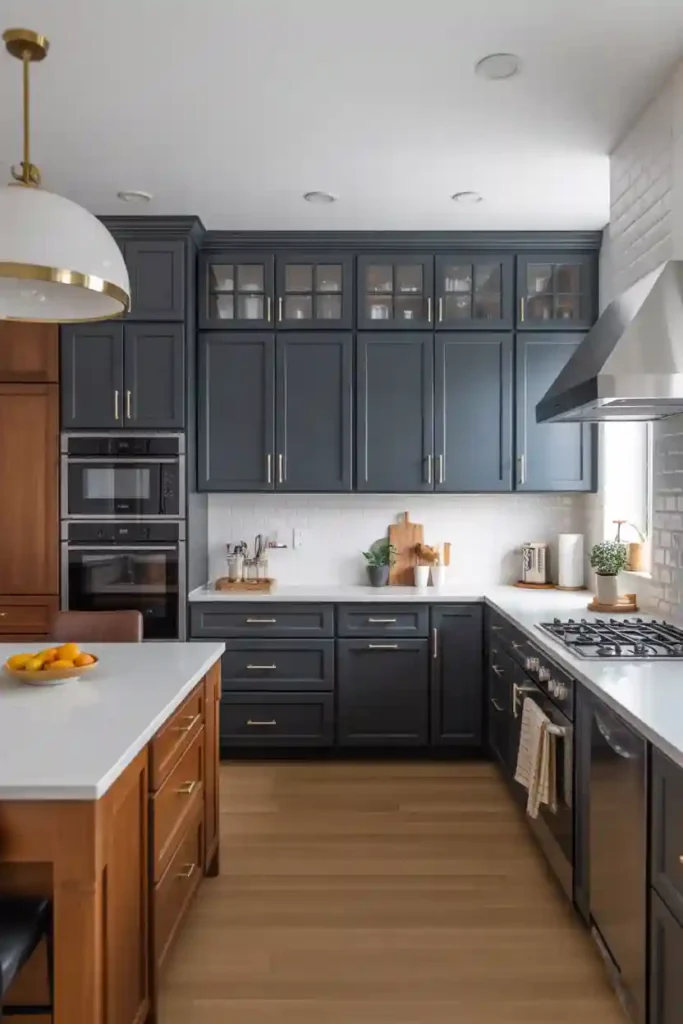
Dark cabinetry can make a bold statement while still fitting beautifully within a transitional aesthetic. Deep charcoal, espresso, or navy cabinets add depth and drama, especially when paired with light countertops and backsplashes. To maintain balance, choose simple shaker or slab-style cabinet doors without ornate detailing. Light quartz or marble countertops create contrast and prevent the kitchen from feeling heavy. A white or cream backsplash further enhances brightness.
Warm metallic hardware, such as brushed brass or bronze, softens the darker tones and adds a subtle touch of luxury. Adequate lighting is essential combine recessed ceiling lights, under-cabinet LEDs, and statement pendants to keep the space well-lit. Incorporating wood accents, like open shelving or bar stools, adds warmth and prevents the dark cabinetry from dominating the room. This approach results in a kitchen that feels bold yet refined a perfect balance between modern sophistication and timeless comfort.
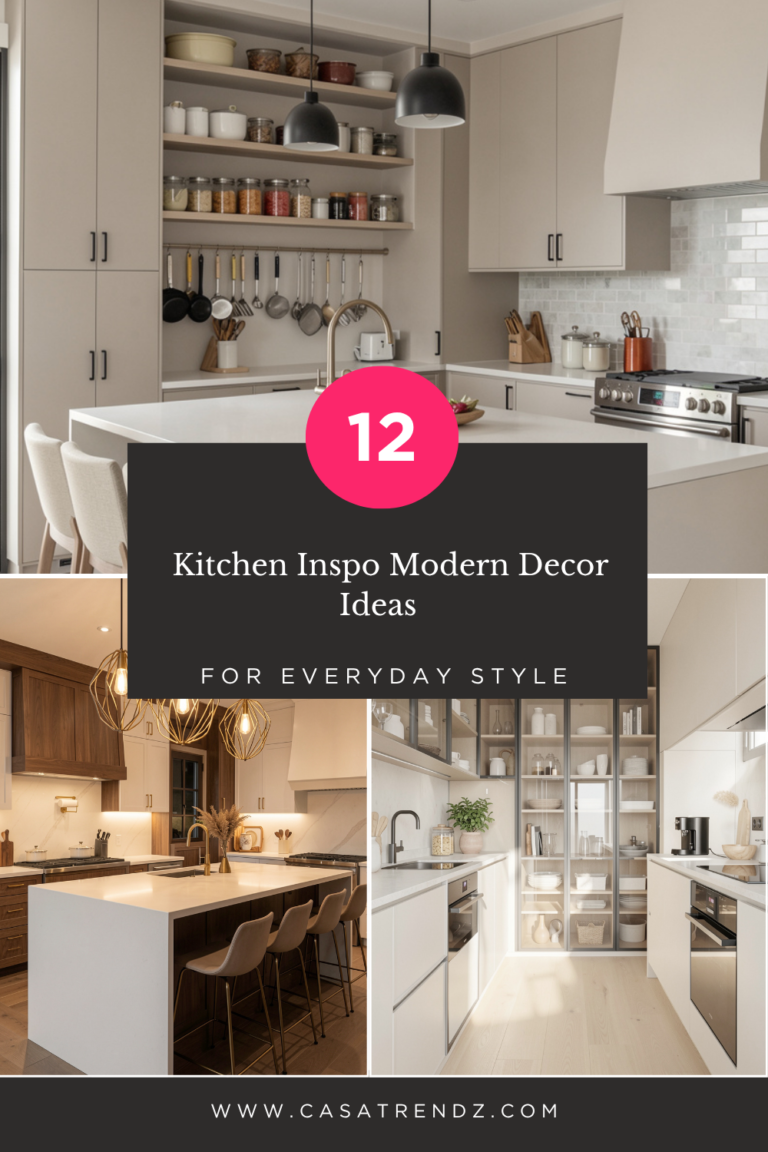
14. Neutral Palette with Textural Layers
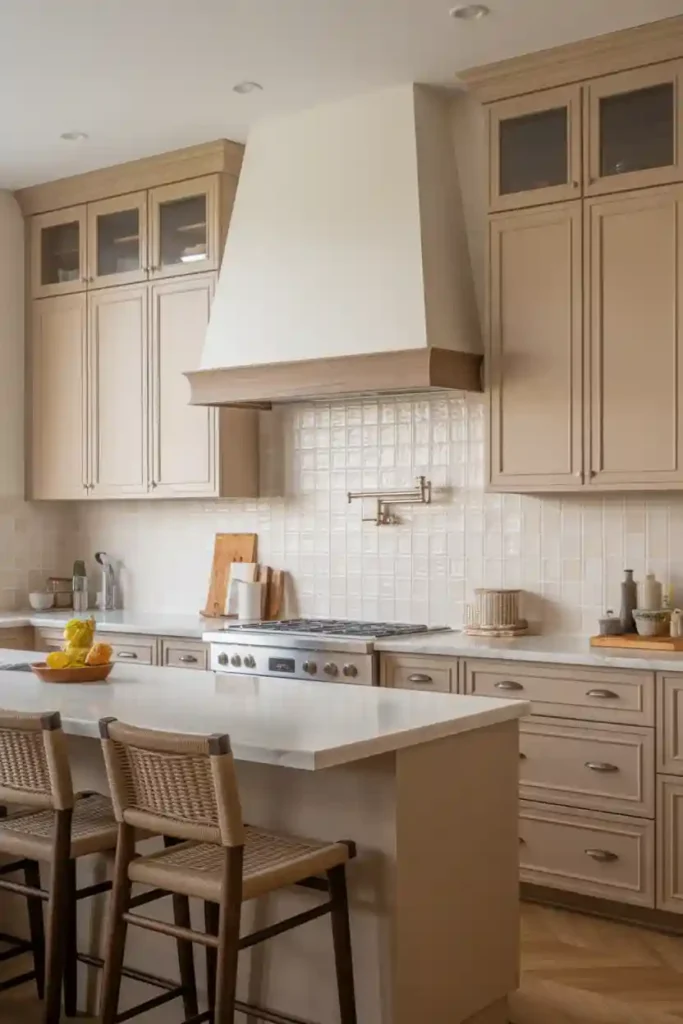
A neutral color palette is a hallmark of transitional kitchens, but the key to avoiding a flat or bland appearance is layering texture. Start with modern shaker cabinets in soft cream, beige, or warm gray. These tones create a calm foundation that feels timeless. Introduce textural contrast through materials such as veined quartz countertops, handmade-look backsplash tiles, woven bar stools, and natural wood accents. Brushed metal hardware adds subtle shine without overpowering the palette.
Keep the design cohesive by maintaining a limited color range while varying finishes and materials. Layered lighting enhances depth combine pendant lights, under-cabinet strips, and natural daylight. This approach ensures the kitchen feels serene yet visually interesting. By focusing on texture rather than bold color, you create a space that remains elegant and adaptable for years to come the essence of transitional style paired with modern cabinet design.
Final Words
Designing a kitchen that feels both current and timeless is all about balance. With these 14 Transitional Kitchen Ideas with Modern Cabinet Designs, you’ve seen how clean cabinet lines can coexist beautifully with warm textures, classic finishes, and thoughtful details. Transitional style isn’t about choosing between traditional or modern it’s about blending the best of both in a way that feels effortless and refined.